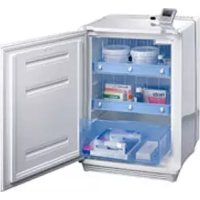
USER MANUAL DS301H DOMETIC
© 2021 Domatic Group. The visual appearance of the contents of this manual is protected by copyright and design law. The underlying technical design and the products contained herein may be protected by design, patent or be patent pending. The trademarks mentioned in this manual belong to Domatic Sweden AB. All rights are reserved.
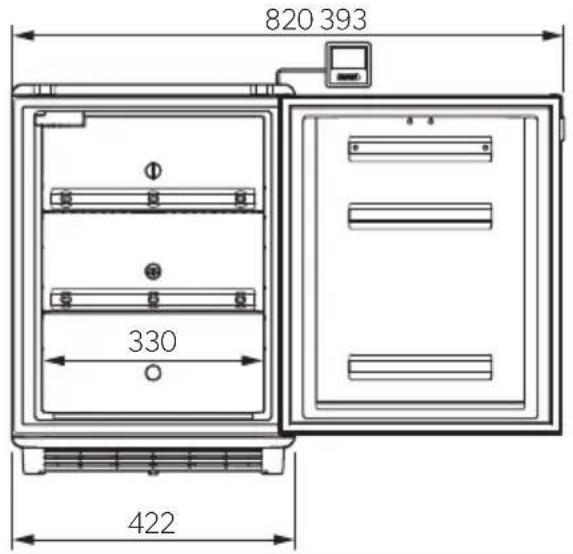
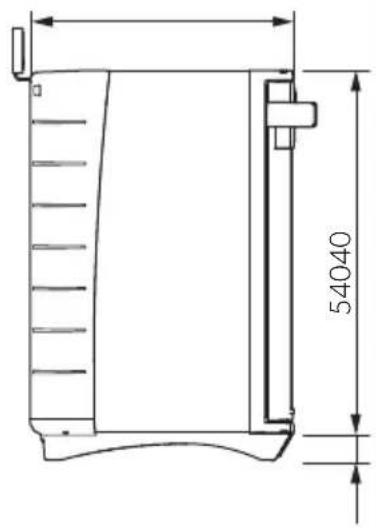
15
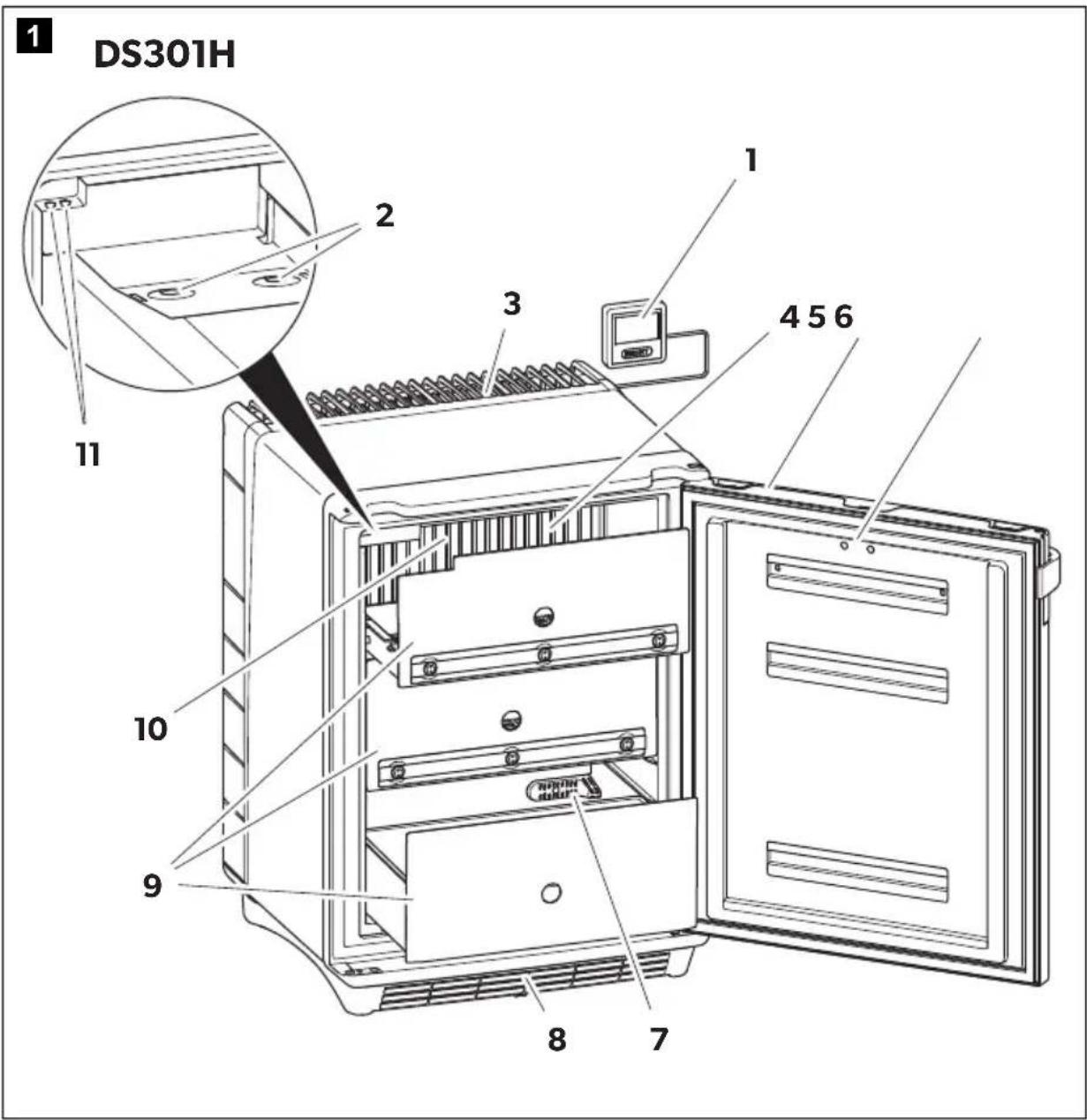
DS301H
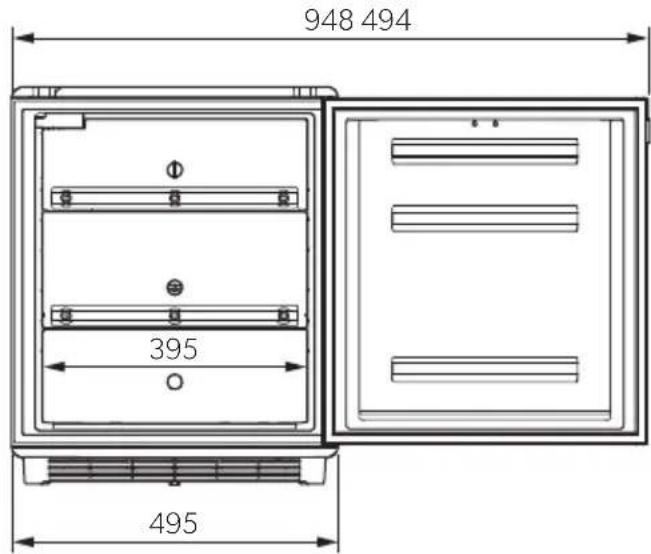
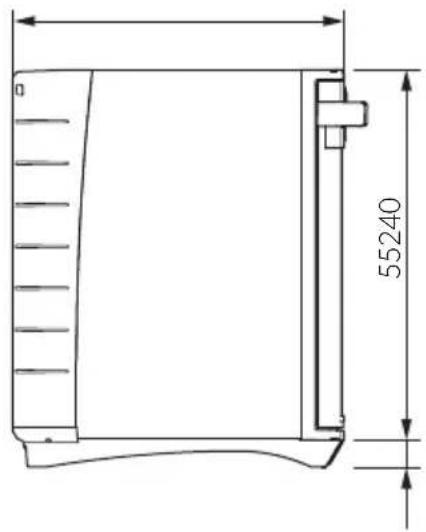
16
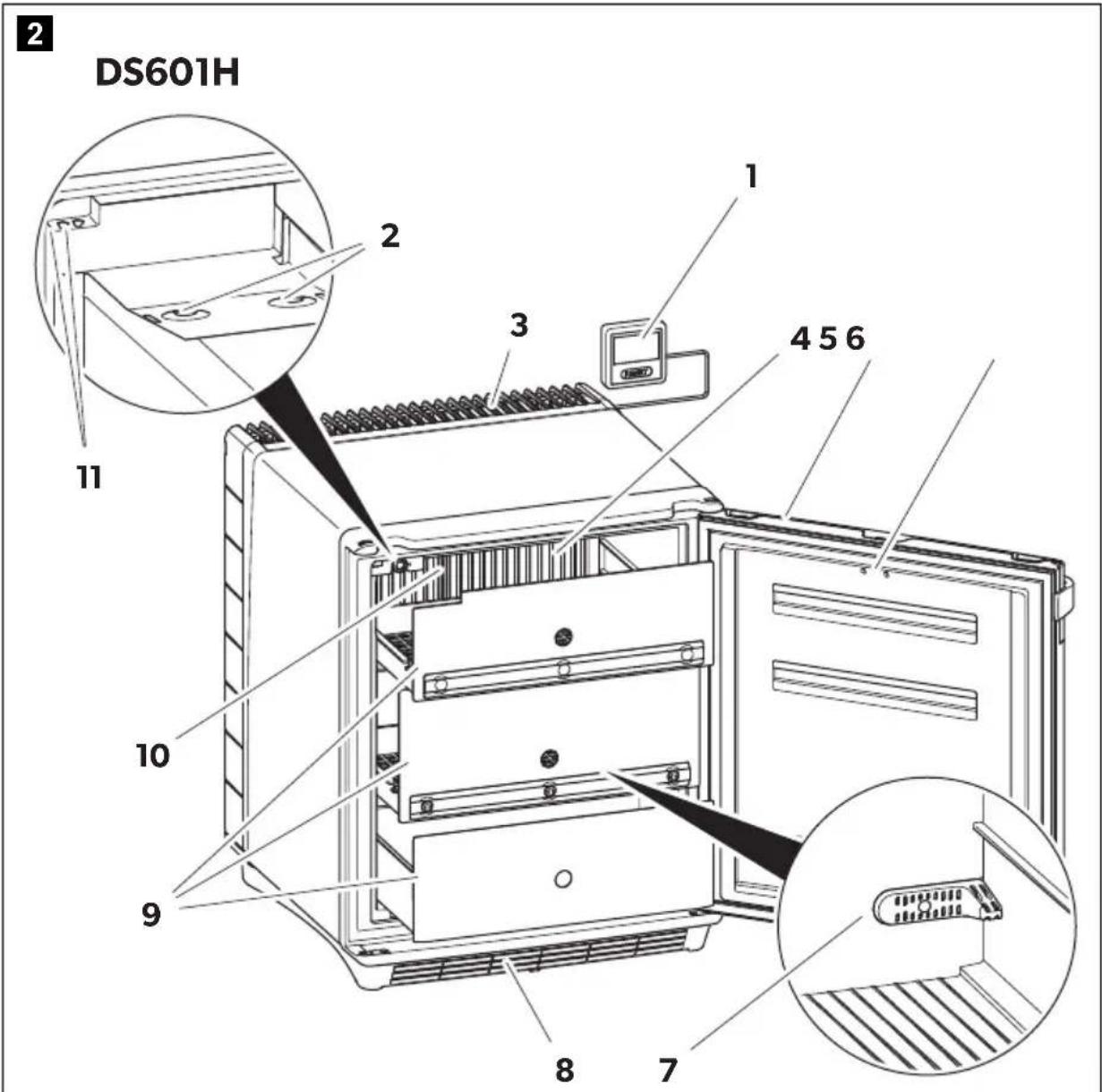
DS601H
Please read these instructions carefully and follow all instructions, guidelines, and warnings included in this product manual in order to ensure that you install, use, and maintain the product properly at all times. These instructions MUST stay with this product.
By using the product, you hereby confirm that you have read all instructions, guidelines, and warnings carefully and that you understand and agree to abide by the terms and conditions as set forth herein. You agree to use this product only for the intended purpose and application and in accordance with the instructions, guidelines, and warnings as set forth in this product manual as well as in accordance with all applicable laws and regulations. A failure to read and follow the instructions and warnings set forth herein may result in an injury to yourself and others, damage to your product or damage to other property in the vicinity. This product manual, including the instructions, guidelines, and warnings, and related documentation, may be subject to changes and updates. For up-to-date product information, please visit documents.dometic.com, dometic.com.
Table of contents
1 Explanation of symbols. 9
2 Safety instructions 10
3 Scope of delivery 12
4 Intended use 13
5 Technical description 14
6 Installing and connecting the refrigerator 15
7 Using the refrigerator 18
8 Cleaning and maintenance. 20
9 Troubleshooting 21
10 Warranty 21
11 Disposal. 21
12 Technical data 22
1 Explanation of symbols

DANGER!
Safety instruction: Indicates a hazardous situation that, if not avoided, will result in death or serious injury.

WARNING!
Safety instruction: Indicates a hazardous situation that, if not avoided, could result in death or serious injury.

CAUTION!
Safety instruction: Indicates a hazardous situation that, if not avoided, could result in minor or moderate injury.

NOTICE!
Indicates a situation that, if not avoided, can result in property damage.

NOTE
Supplementary information for operating the product.
2 Safety instructions
2.1 General safety

WARNING! Failure to obey these warnings could result in death or serious injury.
Electrocution hazard
- Ensure that the refrigerator has been installed by a qualified technician in accordance with the Domatic installation manual.
- Do not operate the refrigerator if it is visibly damaged.
- If this refrigerator's power cable is damaged, it must be replaced by the manufacturer, service agent or a similarly qualified person in order to prevent safety hazards.
- This refrigerator may only be repaired by qualified personnel. Inadequate repairs may cause serious hazards.
Fire hazard
Explosion hazard
- Do not store any explosive substances, such as spray cans with propellants, in the refrigerator.
Health hazard
-
Never open the absorber unit. It is under high pressure and can cause injury if it is opened.
-
This refrigerator can be used by children aged from 8 years and above and persons with reduced physical, sensory or mental capabilities or lack of experience and knowledge if they have been given supervision or instruction concerning use of the refrigerator in a safe way and understand the hazards involved.
Children shall not play with the refrigerator.
- Cleaning and user maintenance shall not be made by children without supervision.
- Children aged from 3 to 8 years are allowed to load and unload the refrigerator.

CAUTION! Failure to obey these cautions could result in minor or moderate injury.
Risk of crushing
- Do not put your fingers into the hinge.

NOTICE! Damage hazard
- Check that the voltage specification on the type plate is the same as that of the power supply.
- The refrigerator is not suitable for storing substances which are caustic or contain solvents.
- The insulation of the cooling device contains flammable cyclopentane and requires special disposal procedures. Deliver the cooling device at the end of its life-cycle to an appropriate recycling center.
- Keep the drainage outlet clean at all times.
- Do not open the refrigerant circuit under any circumstances.
- Only carry the refrigerator upright.
2.2 Operating the refrigerator safely

DANGER! Failure to obey these warnings will result in death or serious injury.
Electrocution hazard
- Do not touch exposed cables with your bare hands.

CAUTION! Failure to obey these cautions could result in minor or moderate injury.
Electrocution hazard
- Before starting the refrigerator, ensure that the power supply line and the plug are dry.
Health hazard

NOTICE! Damage hazard
- Do not use electrical devices inside the refrigerator unless they are recommended by the manufacturer for that purpose.
- Do not place it near naked flames or other heat sources (heaters, direct sunlight, gas ovens etc.).
- Ensure that the ventilation vents are not covered.
- Never immerse the refrigerator in water.
- Protect the refrigerator and the cable against heat and moisture.
3 S C O P E O F D
Quantity Description
1 Refrigerator
1 Handle
1 Battery (CR1632)
Quantity Description
1 Short installation and operating manual
4 Intended use
The medication refrigerator (also referred to as refrigerator) is designed to keep heat sensitive medicines between +2^ and +8^ in enclosed buildings, such as:
- In hospitals, and health centers
- In retirement homes, and nursing homes
The refrigerator is not suitable for installation in caravans or mobile homes.
This refrigerator is not intended to be used as a built-in appliance.
The refrigerator is designed exclusively for cooling and storing medicines and vaccines in closed containers.
It's not suitable for storing any kind of body fluids like e.g. blood or plasma, or any body parts like e.g. human organs.
- It's not suitable for cooling and storing of beverages and foods, storing fresh foods, or freezing foodstuffs.
This refrigerator is only suitable for the intended purpose and application in accordance with these instructions.
This manual provides information that is necessary for proper installation and/or operation of the refrigerator. Poor installation and/or improper operating or maintenance will result in unsatisfactory performance and a possible failure.
The manufacturer accepts no liability for any injury or damage to the product resulting from:
- Incorrect assembly or connection, including excess voltage
- Incorrect maintenance or use of spare parts other than original spare parts provided by the manufacturer
- Alterations to the product without express permission from the manufacturer
- Use for purposes other than those described in this manual
Domatic reserves the right to change product appearance and product specifications.
5 Technical description
5.1 Function description
The device is a refrigerator with absorption cooling. Ammonia is used as the refrigerant.
All materials used in the refrigerator are compatible for use with medicines and medicinal products.
The refrigerant circuit is maintenance-free.
The refrigerator is intended for freestanding use. The cooling unit cover protects the warm parts of the cooling units. The foot frame with ventilation openings ensure sufficient ventilation.
The electronics checks the refrigerator's function. If it registers a problem it shuts down the refrigerator and the interior light flashes continuously.
Two door sensors check whether the door is open. If the door is kept open for more than 20 s, the refrigerator emits an audible warning signal. After another 40 s it emits another audible warning signal.
The separate digital thermometer shows and stores the minimum and maximum inner temperatures from the last reset so that you can check whether the medicines have been stored at the appropriate temperatures.
5.2 Control elements
| No. in
fig. 1, page 3, Explanation
fig. 2, page 4 | |
| 1 Digital thermometer | |
| 2 Interior light | |
| 3 Cover for cooling unit | |
| 4 Evaporator | |
| 5 | D | o | o | r | | |
| 6 Door lock (optional) | |
| 7 | A | i | r | s | e | n |
| 8 Foot frame | |
No. in
fig. 1, page 3, fig. 2, page 4
Explanation
9Drawer
10 Evaporator sensor
11 Door sensor
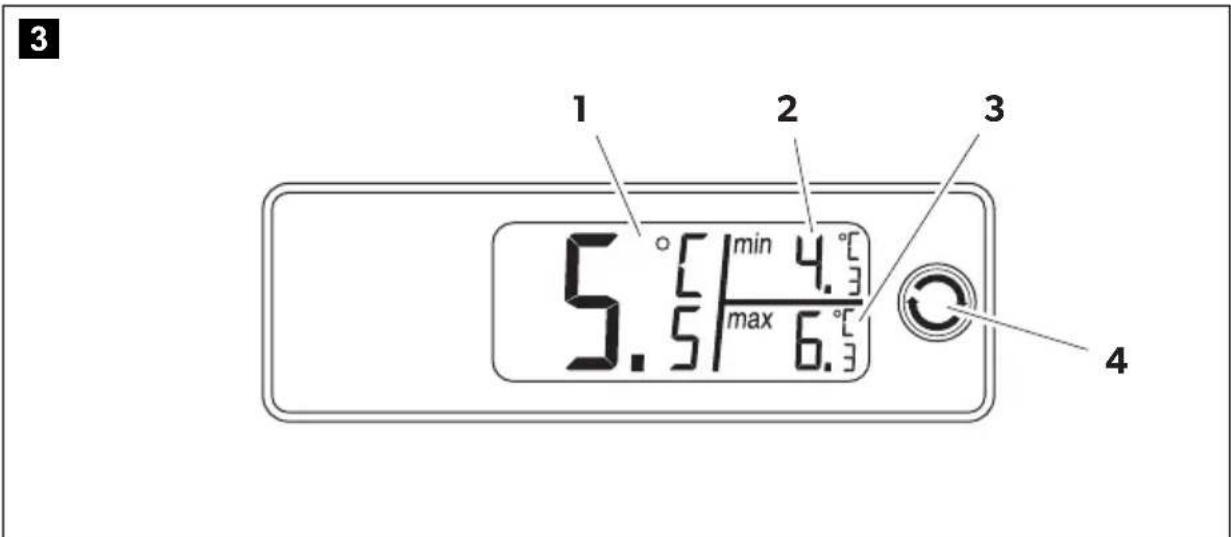
Key to fig. 3, page 4
No. Explanation
1 Current inner temperature (in ^ C )
2 Minimum inner temperature (in ^ C )
3 Maximum inner temperature (in ^ C
4 Reset button
5.3 Internal ventilation
The refrigerator is fitted with an internal ventilation.
The fan is operating when the door is closed.

NOTICE!
The airflow to the fan must never be impeded by blocking or covering the ventilation slots.
To prevent warm outside air from being unnecessarily sucked in, the fan automatically switches off when the door is opened.
If the fan incidentally stops, the refrigerator emits an audible warning signal (continuous signal).
6 Installing and connecting the refrigerator
6.1 Unpacking the refrigerator
- Check that the packaging is not damaged.
-
Remove the cardboard packaging.
-
Check that the refrigerator is not damaged.
If you find damage on the packaging or at the refrigerator resulting from transport, report it immediately to the transportation firm.
6.2 Instructions for installing the refrigerator
Observe the following when installing the refrigerator:
-
Observe the following installation dimensions:
-
D S 3 0 1 H : f i g . 15, page 8
-
D S 6 0 1 H : f i g . 16, page 8
-
Keep objects clear of openings in the housing or installation structure (such as ventilation slots, etc.).
6.3 Installing the refrigerator
Observe the following to set up the refrigerator:
- Ensure that the cover for protecting the hot components of the cooling unit is present.
- Ensure that the floor frame is in place to provide adequate air circulation.
Place the refrigerator on a level surface. Use a water level to check this.
6.4 Connecting the refrigerator to the power supply

NOTICE!
- Connect the refrigerator to a separate circuit to prevent malfunctioning due to problems with other electrical equipment. Never connect the refrigerator to a single socket with other electrical equipment by means of a multi-socket.
-
UKonly: The refrigerator is supplied with a plug fitted with 3 A fuse. In case this fuse has to be to changed, a 3 A ASTA approved (BS 1362) fuse must be used.
-
Connect the digital thermometer (see separate operating manual).
- Connect the plug of the connection cable into the AC mains.
The display turns on.
For the first two seconds the display will not show temperature values; it shows "...". Then the temperature read from the sensor is shown.
6.5 Mounting and removing the door handle
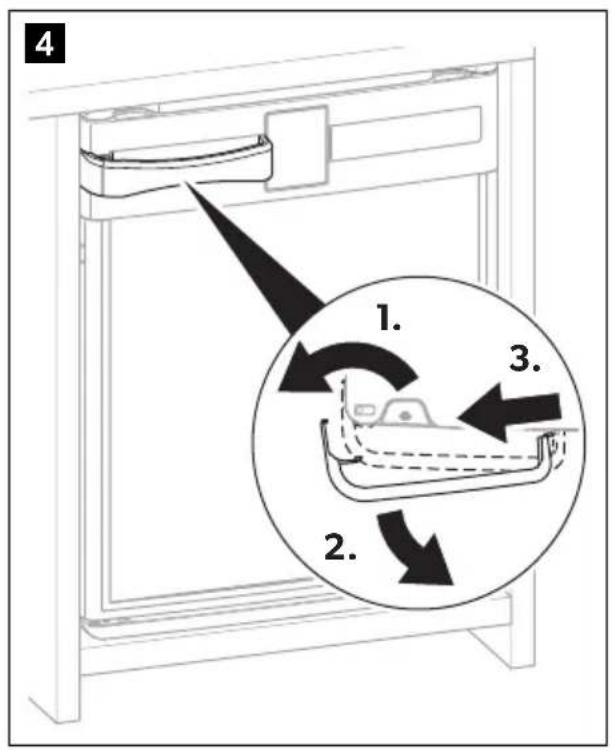
- Mount the handle as shown (fig. 4, page 5).
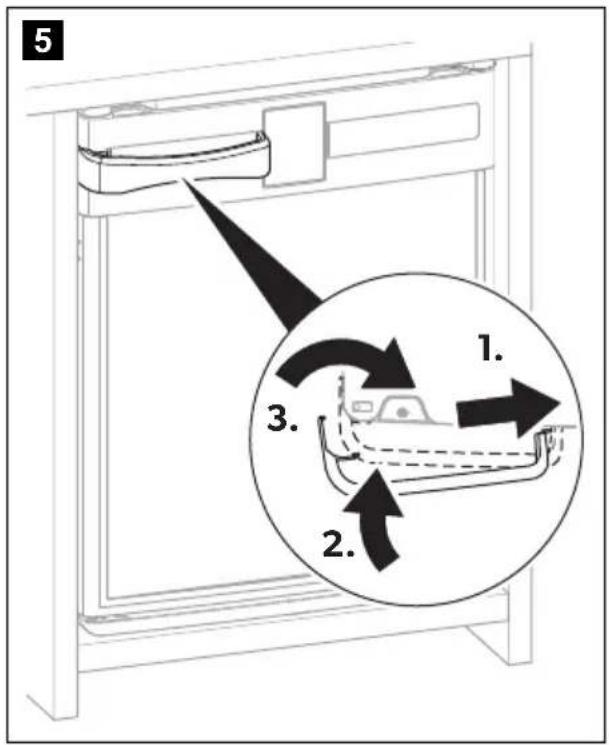
- Remove the handle as shown (fig. 5, page 5).
6.6 Changing the door hinge

WARNING! Electrocution hazard
Before performing any work on the refrigerator, unplug the power plug.

NOTICE! Risk of damage!
The refrigerator may only lie on its side briefly.
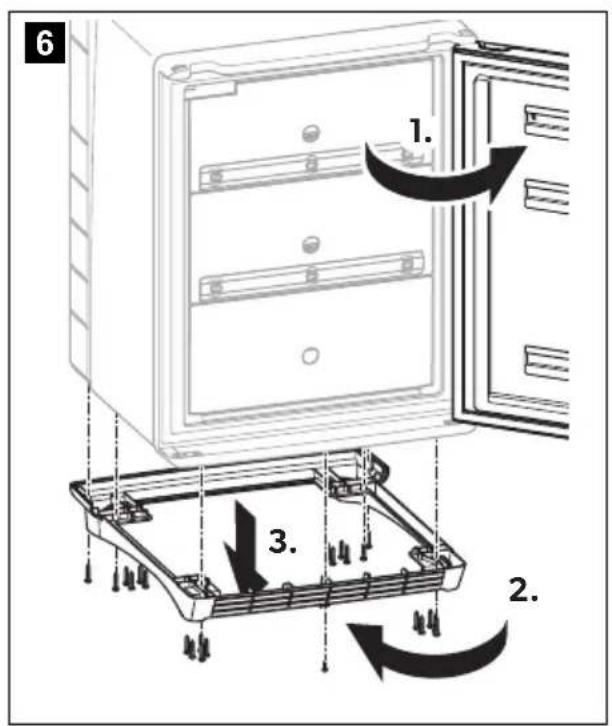
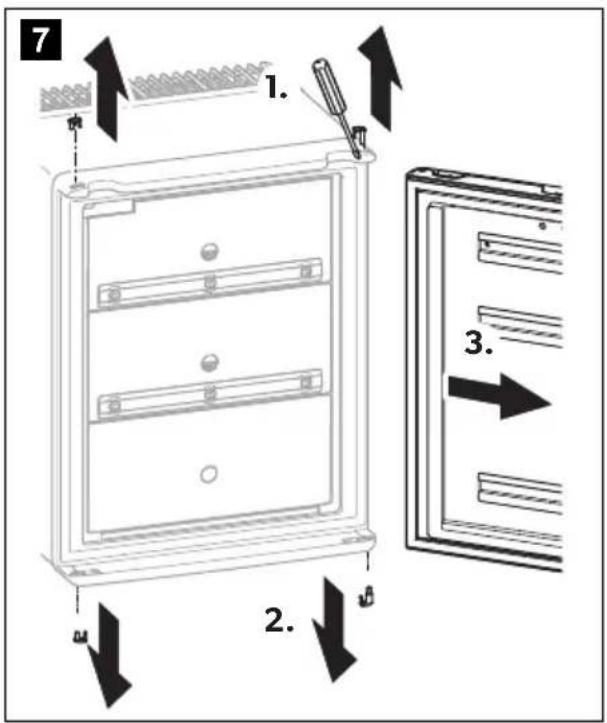
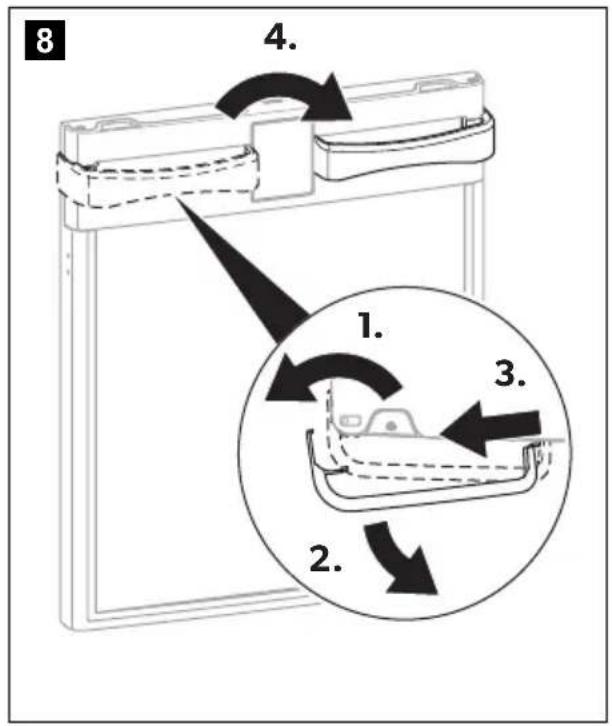
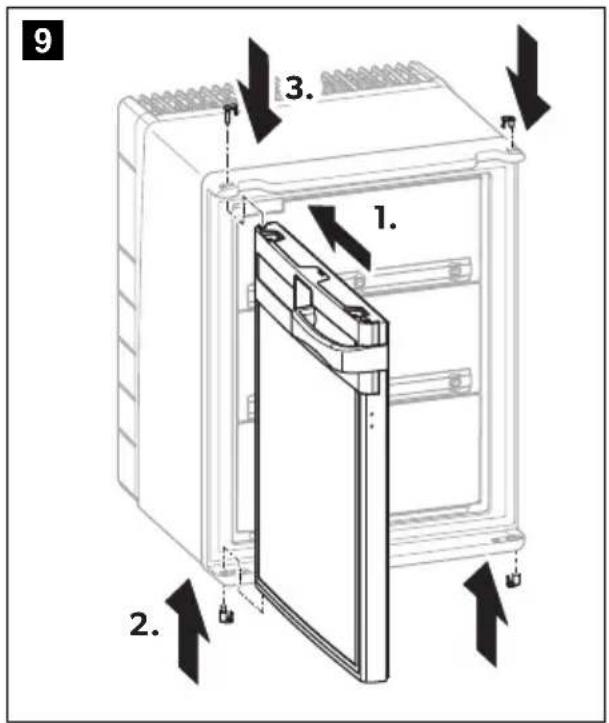
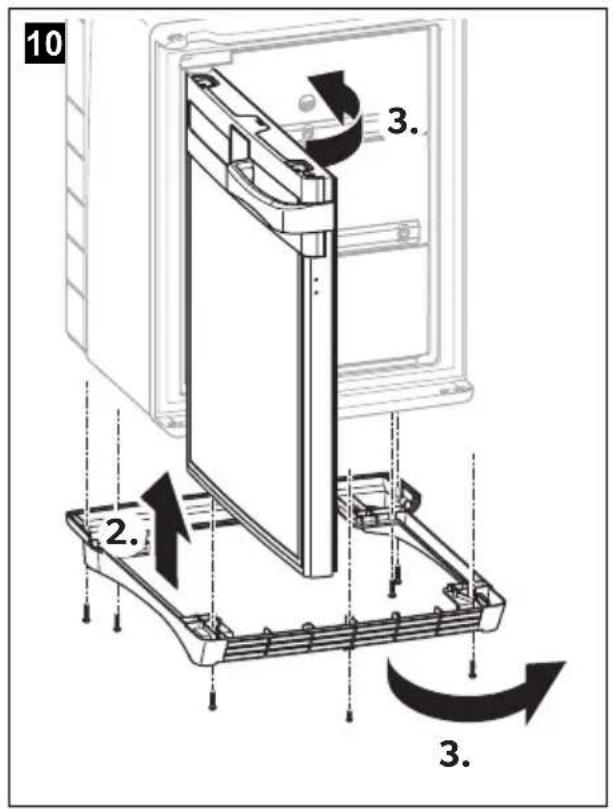
You can change the hinge of the door, so that it opens to the left rather than the right.
Proceed as shown to change the door hinge (fig. 6, page 5 to fig. 10, page 6).
6.7 Replacing the door panel

NOTICE! Risk of damage
The refrigerator may only briefly lie on its side.
The door panel has the following dimensions:
| Model Width Height Thickness |
| DS301H 383 ± 0.5 mm 395 ± 0.5 mm | 2 mm |
| DS601H 449 ± 0.5 mm 408 ± 0.5 mm |
If necessary, disassemble the door handle (chapter "Mounting and removing the door handle" on page 17).
If necessary, remove the retaining ring of the door lock.
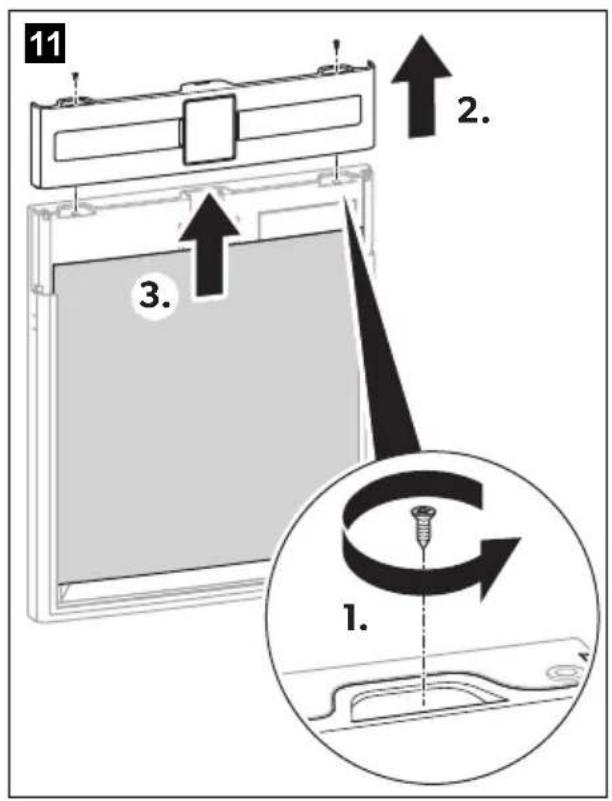
Proceed as shown to remove the decorative plate (fig. 11, page 7).
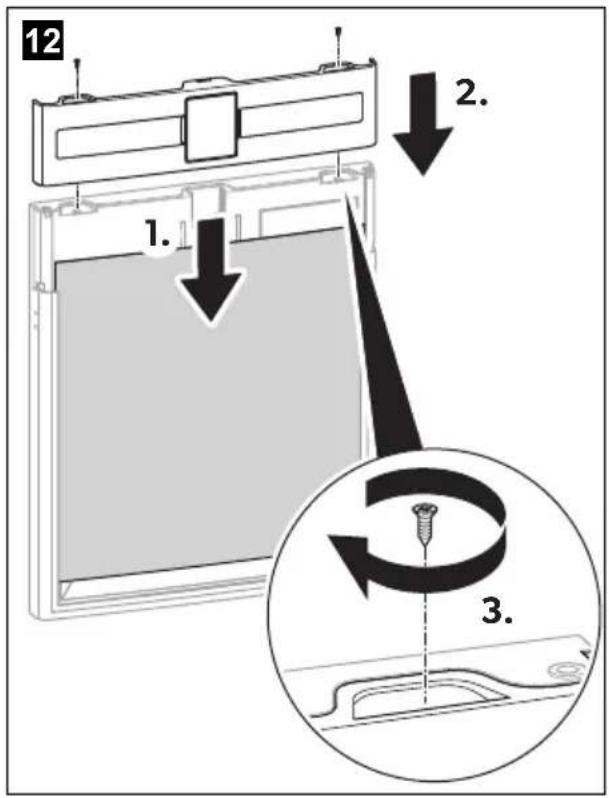
Proceed as shown to mount the decorative plate (fig. 12, page 7).
7 Using the refrigerator
7.1 Before first use
Before first use, clean the refrigerator inside and outside with a damp cloth for hygienic reasons (see also chapter "Cleaning and maintenance" on page 20).
7.2 Saving energy
- Only open the medication refrigerator as often and for as long as necessary.
- Avoid unnecessarily low temperature settings.
- For optimal energy consumption, position the shelves and drawers according to their position on delivery.
- On a regularly basis, make sure the door seal still fits properly.
- Clean dust and dirt from the condenser at regular intervals.
7.3 Switching on

CAUTION!
Do not store medicines and medicinal products before the operating temperature range has been reached.
7.4 Using the refrigerator

CAUTION!
Always leave some space between the refrigerated goods in the refrigerator to ensure efficient and even cooling. If the drawers are packed too tightly there may be unacceptable temperature values.

NOTICE! Damage hazard
Only store heavy objects in the bottom drawer of the refrigerator.
7.5 Temperature values

NOTE
The temperature values are shown in ^ C . This cannot be changed.
The thermometer stores the values of the minimum and maximum inner temperature since the last reset.
To reset these values:
Press the RESET button for 5 seconds.
7.6 Setting the temperature
The refrigerator is equipped with an automatic temperature regulation function. The temperature cannot be set.
7.7 Defrosting the refrigerator
The refrigerator is frost free. It is recommended to inspect the interior of the refrigerator on frost formation every three to four weeks.
If frost is visible in the interior, proceed as follows:
- Disconnect the refrigerator from the mains.
- Remove the drawers (see chapter "Removing the drawers" on page 20).
- Leave the door open.
- After defrosting wipe out the cabinet interior with a clean, damp cloth.
- Assemble the drawers.
7.8 Switching off and storing the refrigerator
If you do not intend to use the refrigerator for a long time, proceed as follows:
- Disconnect the refrigerator from the mains.
- Clean the refrigerator (see chapter "Cleaning and maintenance" on page 20).
- Leave the door slightly open.
This prevents smells from building up.
7.9 Removing the drawers
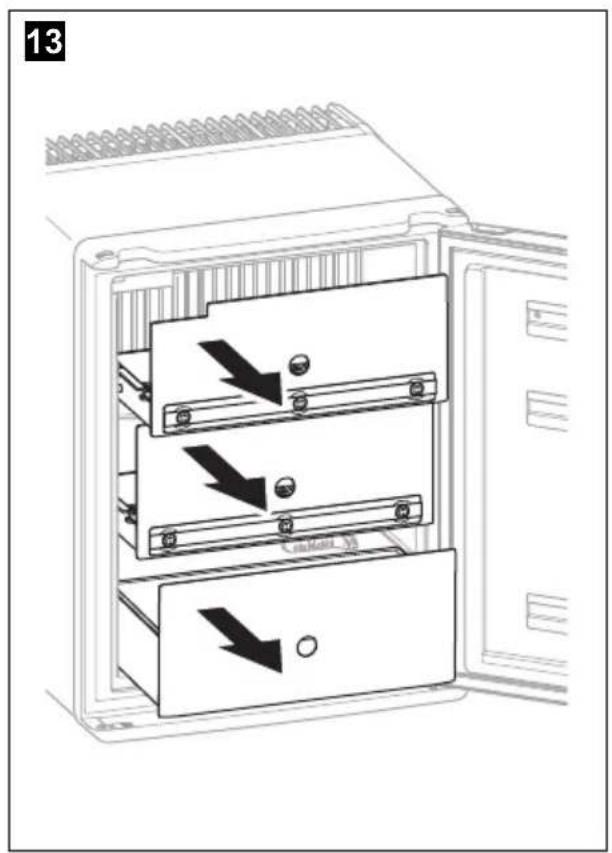
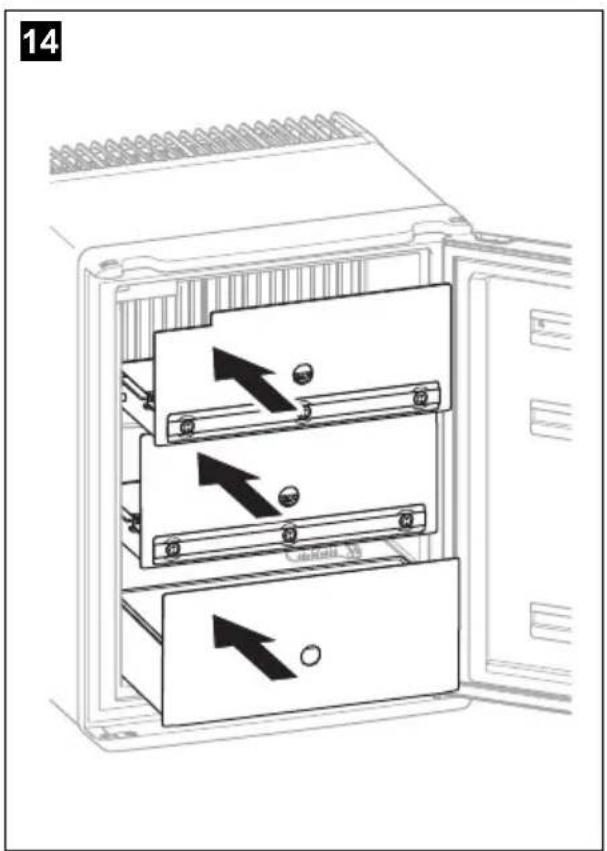
You can remove the drawers, e.g for cleaning.
Proceed as shown (fig. 13, page 7 and fig. 14, page 7).
8 Cleaning and maintenance

WARNING! Electrocution hazard
Always disconnect the refrigerator from the mains before you clean and service it.

NOTICE! Damage hazard
- Do not use abrasive cleaning agents or hard objects during cleaning as these can damage the refrigerator.
- Never use hard or sharp tools to remove ice or to free objects frozen onto the device.
- Do not use any mechanical tools or any other tools to speed up the defrosting process.
Clean the refrigerator regularly and as soon as it becomes dirty with a damp cloth.
Make sure that no water drips into the seals. This can damage the electronics.
Wipe the refrigerator dry with a cloth after cleaning.
Check the condensate drain regularly.
Clean the condensate drain when necessary. If it is blocked, the condensate collects on the bottom of the refrigerator.
Clean the door seals regularly.
Clean the grid on the back of the refrigerator with a vacuum cleaner regularly.
9 Troubleshooting
| Fault Possible cause Remedy |
| Water is leaking into the inside of the refrigerator. | The condensate drain duct is clogged. | Clean the drain. |
| Water is leaking onto the floor. | There is too much water in the water container. | Clean the water container. |
10 Warranty
The statutory warranty period applies. If the product is defective, please contact your retailer or the manufacturer's branch in your country (see dometic.com/dealer).
For repair and warranty processing, please include the following documents when you send in the product:
- A copy of the receipt with purchasing date
- A reason for the claim or description of the fault
11 Disposal
Place the packaging material in the appropriate recycling waste bins wherever possible.
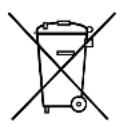
If you wish to finally dispose of the product, ask your local recycling centre or specialist dealer for details about how to do this in accordance with the applicable disposal regulations.

NOTICE!
An insulating gas is used in the refrigerator (see type plate). Check with the relevant local government authority or your local waste disposal company about proper disposal and make sure that the refrigerator and all materials are disposed of professionally.
12 Technical data
| DS301H DS601H | |
| Input voltage: 220 – 240 V | |
| Rated input power: 65 W 85 W | | |
| Total volume: 28 l 53 l | | |
| Energy consumption: 0.86 kWh/24 h 1.05 kWh/24 h | | |
| Cooling capacity: +2 °C to +8 °C |
| Climate class: SN | |
| Intended ambient temperature use: | +10 °C to+32 °C |
| Noise emission: | 0 dB(A) |
| Propellant: | Cyclopentane |
| Refrigerant: | Ammonia |
| Dimensions H x W x D: | fig. 15, page 8 | fig. 16, page 8 |
| Weight: | 15 kg | 20 kg |
| Inspection/certification: | CE UK CA |
For the current EU declaration of conformity for your device please refer to the respective product page on dometic.com or contact the manufacturer directly (see dometic.com/dealer).
5 Description technique
7.9 Retirar as gavetas
I PocHeHne K CnMbOJam

ONACHOCTb!
Yka3aHne no TexHnke 6e3oNaChOCTN, yKa3bIbAIOUe Ha ONaCHyIO CNTyaCNIIO, KOTOPaB BeTeK CMePTN INIIN cepBe3HOITpaBMe, ecNI ee He npedotBpATNTb.

PPEyPExKdEHNE!
Yka3aHne no Texnke 6e3oNaChOCTN, yKa3bBaIOUe Ha onaChyIO CNTyaUIO, KOTopra MoXeT PnVBecTN K CMePTN INI N cepBe3HOJ TpaBMe, ecNI ee He npedOTBpaTNTb.

OCTOPOXHO!
Yka3aHne nO Texnke 6e3OnacHOCTN, yKa3bBaIOUe Ha ONaChyIO CNTyaCNIIO, KOTopA MoXe TnpVBecT N TpaBMaM IeKoI INIcpeDHeI TJeCTN, ecII ee He npedOTbPaTHTb.

BHIMAHHE!
Yka3aHne Ha cHTyaUIO, KOtopa MoXeT npVBecTN K MaTePnaIbHOMy yuep6y, ecn ee He npedotBpaTNTb.

YKA3AHNE
KoJInueCTBOHaIMeHOBaHne
1 Oxnpntenb
P y 4 K a
1 AkkymnyTop (CR1632)
1 KpaKaIHHCTpyKUINnoMOHTaKyI3KcPnyatauIN
Pn pa3MeHenn yuHTbIbAaTe cneDuOoee:
He 3aKpbBaIte OTBepCTnA (BeHTnIaUNoHbIe IeNn T. n.) B KOpnyce NnB KaMepe XoNoDnblHnKa.
6.3 YcTaHOBKa XOJIoNJIbHNKa
Pn yctaHOBKe XoNODINbHnKa yuHTbBaIte cneDyIOoee:
- Y6eIITecb B HaNnUH KpbIuKn IaIHTbI rOpAUX KOMNOHeHToB XONODINbHOarperata.
- Y6eIITecb, yTo HaNoIbHaJa pAma HaxOITcRa Ha MecTe dIra oBeCneuHnHaIpeXa- IeN CnpKpyIcuIN BO3duXa.
YcTaHOBnTe XOnOAnbHnK Ha pOBHyIO NOBepxHocTb. Ipy npOBepKn 3TOrO nCpONb-3yIte BaTePnac.
6.4ПрсоeннехолдьнkaКлкчecкoI cETN

BHIMAHHE!
-
ПоdkночTe xONoDnBnK K OTdENoH OeN, YTO6bl IpeDToBpaTITb BbIXoI n3 CTpo I3-3a npo6Iem C dpyrIM 3NeKtpOo6OpyDoBaHnEM. HnkOrda He noDKnOuaTe xONoDnBnK K OdHOB pO3eTKe C dpyrIM 3NeKtpOo6OpyDoBaHnEM C NOMOuM MHOrOPO3eTOUHbIX IepexODHnKOB.
ToIbko UK: XoIOnOaIIbHnK OcHaWeH BnIKoN C npEdoXpaHnteMe H a 3 A. B cnyae 3aMeHbI eTOrO npEdoXpaHnteR Heo6xOIMo IcNoIb3OBaTb npEdoXpaHnteB Ha 3 A, oIo6peHHbI ASTA (BS 1362).
-
ПоДКПЮЧИТЕ сифробов Термометр (сM. OTДЕЛБНУО ИНСТРУКПИО NOЭКСПУАТAU).
- BcTaBbTe BnKy coeHInTeIbHOrO Ka6eR B po3eKy cEtN nepemehoro ToKa.
√ DnCnneBkJIIOuHaeTcra.
IepBbIe DBe CeKyHbI Ha DnCnIee He OTo6paxaIoTc3NaueHnTeMnepaTypb; OH Noka3bIBaet «...». 3aTeM OTo6paxaETc TeMnepaTypa, CUnTaHHa C DaTuNka.
6.5 MoHTaxn dEmoHTax pyuKn DBepn
- YctaHOBInTe pyuKy, KaK noka3aHo Ha pncyHke (pnc. 4, ctp. 5).
- Chinmite pyky, kaK noka3aHo Ha pncyHke (pnc. 5, ctp. 5).
6.6ПepeBewBaHneДверцы

ПЕДУПЕХДECHИЕ!Опасноctь порахени злестуческIM TOKOM
IpeaBbINONHeHnEM NIO6bIX pa6OT C XOJODINbHNKOM BbIHbTe BNkky I3 p03eTKI.

BHIMAHHE! Onachoctb nobpexdeHn!
XoIOIbHnK pa3peWaeTcra CTaBtHa 6OK TOnbKO Ha KOpOTKoe BpeMra.
Bb moxete nepeBecntb DBepu, yTo6bl DBepua OTKpbIbIaIacb BnEBO, a He BnpaBO.
YcTaHOBka NeTnI npOn3BOaNTcR CneDyUOuIM o6pa3oM (pnc. 6, cTp. 5- pnc.10, ctp.6).
6.7 3aMeHa DeKopaTbHOn NaHeN DBePcbl

BHIMAHNE! Onachoctb noBpeXdHnA
XoNoDnBnK pa3peWaeTcStaBtB Ha 6OK ToIbKO Ha KOpOTKoe BpeMra.
dometic.com/sales-offices