
KLS 1600 - Garden vacuum ATIKA - Free user manual and instructions
Find the device manual for free KLS 1600 ATIKA in PDF.



| Brand | ATIKA |
| Model | KLS 1600 |
| Category | Garden vacuum cleaner |
| Product type | Vacuum, blower, leaf shredder |
| Motor power (P1) | 1600 W |
| Voltage | 230 V ~ 50 Hz |
| Rotation speed | 11 000 min⁻¹ |
| Blowing air speed (nozzle) | 200 km/h |
| Blowing air speed (hose) | 400 km/h |
| Max suction air volume | 900 m³/h |
| Collection bag volume | 25 L |
| Weight | 6.8 kg |
| Protection class | II (double insulation) |
| Measured sound power level | 104.8 dB(A) |
| Guaranteed sound power level | 108 dB(A) |
| Sound pressure level | 93.6 dB(A) |
| Hand-arm vibration | < 4.38 m/s² |
| Main functions | Suction, blowing, shredding |
| Height adjustment | Yes, variable mechanism |
| Maintenance and cleaning | Clean with a cloth or brush; do not use pressurized water; wash the bag by hand if necessary |
| Safety | Double insulation; use a 30 mA residual current device; wear PPE (goggles, noise-cancelling headphones, gloves) |
| Spare parts and repairability | Spare parts available through the manufacturer or authorized after-sales service; use only original parts |
| Warranty | See enclosed warranty statement |
Frequently Asked Questions - KLS 1600 ATIKA
User questions about KLS 1600 ATIKA
0 question about this device. Answer the ones you know or ask your own.
Ask a new question about this device
Download the instructions for your Garden vacuum in PDF format for free! Find your manual KLS 1600 - ATIKA and take your electronic device back in hand. On this page are published all the documents necessary for the use of your device. KLS 1600 by ATIKA.
USER MANUAL KLS 1600 ATIKA
Laubsauger, -blaser, -hacksler
Garden vac, blower, shredder
Original instructions - Safety instructions - Spare parts
F
Page 13
Keep the instructions in a safe place for future use.
Contents
| Declaration of Conformity | 7 |
| Extent of delivery | 7 |
| Description of the device | 7 |
| Symbols operating manual | 7 |
| Symbols machine | 7 |
| Operating times | 8 |
| Proper use | 8 |
| Residual risks | 8 |
| Safety instructions | 8 |
| Assembly | 9 |
| Start-up | 9 |
| Working with the garden vac | 10 |
| Care and maintenance | 11 |
| Storage | 11 |
| Possible Problems | 11 |
| Technical data | 12 |
| Guarantee | 12 |
| Spare parts | 12 |
Declaration of Conformity
according to EC Directive 2006/42/EC
We,
ATIKA GmbH & Co. KG
herewith declare under our sole responsibility that the product
Garden vac, blower, shredder type KLS 1600
Serial number: see last page
is conform with the above mentioned EC directives as well as with the provisions of the guidelines below:
2004/108/EC, 2006/95/EC, 2000/14/EC
Following harmonized standards have been applied:
EN 60335-1/A13:2008; IEC 60335-2-100:2002; prEN 15503:2006;
EN 62233:2008; EN 55014-1:2006; EN 55014-2/A1:2001;
EN 61000-3-2:2006; EN 61000-3-3/A2:2005
Conformity assessment procedure: 2000/14/EC - Appendix V.
Measured level of the acoustic output LwA 104.8 dB (A).
Guaranteed level of the acoustic output L_WA108dB (A).
Keeping of technical documents at:
ATIKA GmbH & Co. KG - Technical department
Schinkelstr. 97 - 59227 Ahlen - Germany
Ahlen, 29.04.2010
A. Pollmeier, management
Extent of delivery

After unpacking, check the contents of the box
That it is complete
Check for possible transport damage
Report any damage or missing items to your dealer, supplier or the manufacturer immediately. Complaints made at a later date will not be acknowledged.
1 preassembled unit of equipment
1 handle
1 operating bar
1 blow hose
2 extension blow tubes
1 collecting bag
1 operating manual
1 warranty declaration
1 assembly and operating instruction sheet
Description of the device


1 Handle
10 Collecting bag
2 On/Off switch
11 Extension blow tube
3 Cord grip
12 Carrying handle
4 Cable clip
13 Motor
5 Connector
14 Turning knob for height adjustment
6 Hook for collecting bag
15 Blow nozzle
7 Blow hose
16 Holder
8 Mains plug
17 Suction funnel
9 Operating bar
Symbols operating manual

Threatened hazard or hazardous situation. Not observing this instruction can lead to injuries or cause damage to property.

Important information on proper handling. Not observing this instruction can lead to faults in the machine.

User information. This information helps you to use all the functions optimally.

Assembly, operation and servicing. Here you are explained exactly what to do.

Please refer to the attached assembly and operating instruction sheet for references to figure numbers in the text.

···
Symbols machine

Carefully read operator's manual before handling the machine. Observe instructions and safety rules when operating.

Shut off engine and remove power cord before performing cleaning, maintenance or repair work.

Danger - objects may be thrown out at high speed when motor is running. Keep people, pets and domestic animals out of the danger area.

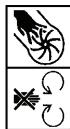
Beware of the rotating tool.
Keep hands and feet out of openings while machine is running.

Wear eye and ear protection.

Protect against moisture.
Operating Times
Please consider the individual country specifications.
Proper use
- The garden vac/blower/shredder is only suitable for light, dry materials, such as leaves and garden waste such as grass, small twigs and pieces of paper.
The vacuuming, blowing and shredding of
heavy materials, such as metal, stones, branches, fir cones or broken glass
combustible materials such as cigarette butts, barbecue coal
flammable, toxic or explosive materials is explicitly forbidden.
- Never use the machine in areas with harmful dust and liquids or as a wet vacuuming machine, because of the risk of physical injury.
- Any other use than for vacuuming, blowing and shredding is not allowed.
- The garden vac/blower/shredder is only designed for private use in accordance with its proper purpose.
- Regarded as machine for private gardens and allotments are those units which are not employed in public grounds, parks, sports grounds, and in agriculture and forestry.
- Every other form of use is considered improper use. The manufacturer accepts no liability for any damages resulting from improper use, and any risk is in this case borne solely by the user.
- The intended usage also includes compliance with the operating, servicing and repair conditions prescribed by the manufacturer and following the safety instructions included in the instructions.
- The relevant accident prevention regulations for the operation as well as the other generally acknowledged occupational medicine and safety rules must be complied with.
- Unauthorised modifications at the garden vac will exempt the manufacturer from any liability for damages of any kind arising from this.
- Only persons who are familiarised with the device and informed about possible risks are allowed to prepare, operate and service this device. Repair works may only be carried out by us or by a customer service agent nominated by us.
- The machine may not be used in a potentially explosive environment or be exposed to the rain.
Residual risks

Even if used properly, residual risks can exist even if the relevant
safety regulations are complied with due to the design determined by the intended purpose.
Residual risks can be minimised if the "Safety information" and the "Intended usage" as well as the whole of the operating instructions are observed.
Observing these instructions, and taking proper care, will reduce the risk of personal injury or damage to the equipment.
- Failure to observe the safety precautions can lead to injury to the operator or damage to property.
Stones and soil may be thrown off. - Risk from electricity, by using non-standard electrical connections.
- Touching live parts of opened electrical components.
- Impairment of hearing when working on the machine for longer periods of time without ear protection.
In addition, in spite of all the precautionary measures taken, non-obvious residual risks can still exist.
Safety instructions

When improperly handled a garden vac may be dangerous. If technical tools are used, the fundamental safety precautions must be used to preclude the risks of fire, electric shock and injuries to persons.
Before commissioning this product, read and keep to the following advice. Also observe the preventive regulations of your professional association and the safety provisions applicable in the respective country, in order to protect yourself and others from possible injury.

Pass the safety instructions on to all persons who work with the machine.

Keep these safety instructions in a safe place.
- Make yourself familiar with the equipment before using it, by reading and understanding the operating instructions.
- Do not use the machine for unsuitable purposes (see "Normal intended use" and "Working with the vacuum cleaner").
- Ensure that you have stand in a secure standing position and maintain your balance at all times. Do not bend forwards.
- Be observant. Attend to what you do. Start working with rationality. Do not use the device when you are tired or under the influence of drugs, alcohol or medicaments. One moment of carelessness when using the device can result in serious injuries.
Wear suitable work clothes:
-
do not wear loose-fitting clothes or jewellery; they can catch in moving parts.
Gloves and nonskid footwear
Trousers to protect the legs -
Wear protective clothing:
-
safety goggles
-
ear protection (Sound intensity level at workplace can exceed 85 dB (A))
-
Keep your workplace in an orderly condition! Untidiness can result in accidents.
-
Be careful when stepping back! Risk of stumbling!
If you come across to foreign objects, please power off the device and remove those foreign objects. However before you restart the device, check it for possible damages and have it repaired if necessary.
Take into consideration environmental influences: -
Do not use the device in moist or wet ambience.
Do not expose the device to rain. -
Do only work with sufficient visibility conditions. Provide for good illumination.
-
Keep bystanders and animals away from your working area.
Do not allow other persons, especially children, to touch the tool or cable. - Switch off the machine if persons, in particular children or pets, are close to you or if you change your working area.
Within his area of work the operator is responsible for third parties. - Children and youngsters less than 16 years of age and people who have not read the operating manual must not operate the machine.
- Keep children away from machine.
- Never operate the machine if other persons are in the immediate vicinity.
The user is responsible for accidents with other people or their property. - Never leave the saw unattended.
- Do not overload the machine! You work better and safer in the given performance range.
- Only operate the machine with complete and correctly attached safety equipment and do not alter anything on the machine that could impair the safety.
- Faulty or damaged parts in the device must be replaced immediately.
- Never leave the machine powered when tipping it over on its side. The machine is designed for operating in upright posture.
-
Do not spray machine with water (this is hazardous due to live components).
-
Switch the machine off and remove the mains plug from the socket when
carrying out repair works
- carrying out servicing and repair works, removal of faults
- checking the leads to see whether these are caught up or damaged
- changing over from vacuuming to blowing
- transporting
- leaving unattended (even during short interruptions)
- unusual noises and vibrations
Thoroughly maintain your garden vac:
Make sure that the ventilation apertures are free.
- Keep handles dry and free of oils and grease.
- Follow the maintenance instructions and the instructions for spool exchange.
- Check the machine for possible damage
Before continuing to use the machine, the protective devices must be inspected to ensure that they work perfectly and with their intended function
- Check whether movable parts function perfectly and do not stick or whether parts are damaged. All parts must be correctly installed and fulfil all conditions to ensure perfect operation of the saw
- Damaged guards and parts must be properly repaired or exchanged by a recognized, specialist workshop; insofar as nothing else is stated in the instructions for use.
- Damaged or illegible safety warning labels should be replaced immediately.
- Store the unused machine in a dry locked place away from the reach of children.

Electrical safety
- Design of the connection cable according to IEC 60245 (H 07 RN-F) with a core cross-profile section of at least
1.5 ~mm^2 for cable lengths up to 25 ~m
2.5 ~mm^2 for cable lengths over 25 ~m - Long and thin connection lines result in a potential drop. The motor does not reach any longer its maximal power; the function of the device is reduced.
- Plugs and coupler outlets on connection cables must be made of rubber, non-rigid PVC or other thermoplastic material of same mechanical stability or be covered with this material.
- The connector of the connection cable must be splash-proof.
- When running the connection line observe that it does not interfere, is not squeezed, bended and the plug connection does not get wet.
- Wind off completely the cable when using a cable drum.
- Do not use the cable for purposes for which it is not meant. Protect the cable against heat, oil and sharp edges. Do not use the cable to pull the plug from the socket.
- Protect yourself against electric shocks. Avoid touching earthed parts with your body (e.g. pipes, heating apparatus, cookers, fridges etc.).
- Do never connect a damaged cable to the mains. Do not touch a damaged cable before it is disconnected from the mains. A damaged cable may cause contact with live parts.
- Do not use any defective connection cables.
- When working outdoors, only use extension cables especially approved and appropriately labelled for outdoor use.
- Do not set up any provisional electrical connections.
- Never bypass protective devices or deactivate them.
- Only hook up the machine by means of a fault-current circuit breaker (30 mA).

The electrical connection or repairs to electrical parts of the machine must be carried out by a certified electrician or one of our customer service points. Local regulations - especially regarding protective measures - must be observed.

Repairs to other parts of the machine must be carried out by the manufacturer or one of his customer service points.

Use only original spare parts. Accidents can arise for the user through the use of other spare parts. The manufacturer is not liable for any damage or injury resulting from such action.


Assembly

Connect the leaf sucker to the power supply system only after having finished the complete assembly.
2
Mount the operating bar (9).
3
Mount the handle (1).
4
Fix the cable on the operating bar (9) using the cable clip (4).
5
Slip the collecting bag (10) on.
6
Turn the handle of the collecting bag clockwise to secure the collecting bag.
7
Hang up the collecting bag.
8
Plug the connector of the blow hose (7) in the suction funnel (17)
9
Hang up the blow hose (7).
10
Put the extension blow tubes (11) in their receivers on the machine to properly keep them.
Start-up
- Check that the machine is completely and correctly assembled.
Before using the shredder, make sure each time that
there are no faulty connections (tears, cuts, etc.)
there are no damage at the machine
all screws are tight

Mains connection
- Compare the voltage given on the machine model plate e.g. 230V with the mains voltage and connect the machine to the relevant and properly earthed plug.
Only use connection cables with sufficient diameters. - Do not use any defective connection cables.
- Connect the machine via a 30mA fault current safety switch.
Use connecting or extension cables up to a length of 1.5m featuring a core cross section of at least 25mm^2

Fuse protection: 10 A

Mounting of the extension cable
11
- Plug the female connector of the extension cable on the male connector of the device.
- Thread the extension cable through the pull relief device (3) as a loop and hang it up.
- Make sure that the extension cable has enough free motion.
Switching on/off
Do not use any device where the switch can not be switched on and off. Damaged switches must be repaired or replaced immediately by the customer service.
11
The ON/Off switch (2) is integrated in the handle (1).
Switching on:
Put the On/Off switch (2) to I.
Switching off:
Put the On/Off switch (2) to O

In the case of a power failure the machine does not automatically put switch to . Put the On/Off switch immediately to to prevent any rental starting of the machine when the power supply recovers.
Working with the garden vac

Before starting any work read and understand
the safety notes,
following additional instructions on how to work with this machine.
- The machine may only be operated by persons over the age of 16 years, and who have read and understood these operating instructions.
- Wear your safety gear (goggles/vizor, gloves) for protection from possible injuries.
- Make sure to have a safe and tidied up work area. Remove from the working area objects which might be thrown off.
Before starting your work make sure that:
no other persons or animals stay within the working area,
you can always step back without any barriers,
you have always a secure standing position,
- handles and holding devices are dry and clean.
- Never aim the suction/blowing pipe at people or animals. Never blow objects in the direction of people of animals.
- Spectators must observe safety clearance of min. 5 ~m .
- Beware of swirling and flying objects. Be particularly aware of recoiling effects from brickwork or house walls (e.g. stones).
- Switch off the machine before crossing gravel or grit paths.
- Do not operate the machine with wet hands or during damp weather.
- Never put objects manually into the suction opening.
- Always ensure that the connection lead runs back away from the machine. Otherwise there is a risk of stumbling, slipping or falling.
-
Never operate the machine
-
without the bag,
- without closing the zip fastener of the bag

If persons who have blood circulation problems are too often exposed
to vibrations damages to the nervous system or to blood vessels may occur.
You can reduce vibrations
by thick and warm working gloves,
- shorter working time (have longer breaks).
See a doctor if your fingers swell, you don't feel well or your fingers become numb.
Instructions for using as vac/shredder

Before using the machine, ensure that the bag has been fitted, is not
aged or worn and the zip fastener has been closed.
- Switch the machine on. 11
- Material to be removed is sucked into the machine via the suction funnel (17) and shredded there.
- Move the machine slowly and evenly over the material. Do not press it into the leaves.
- The suction power decreases when the bag is full. Switch the machine off and disconnect from the mains. Open the zip fastener and empty the bag.
- After completion of work:
Switch off the machine and disconnect the mains plug.
Detach the collecting bag from the hook (6). 7
Turn the handle on the collecting bag anticlockwisely and pull it off.
6
Push the connector (5) on. 12
Turn the connector clockwise to secure the blow hose (7). 13
Start the machine to remove residues from it.

Take up leaves in good time! - It is advisable to take up fallen leaves
when the weather is dry and as soon as they have fallen. Wet leaves are a problem, together with leaves that have already begun to rot or are on big piles.
Instructions for use as blower
Blow method 1: Blowing with the blow nozzle (15). 14

Remove the collecting bag from the machine if it is still fixed on the machine.
7 Detach the collecting bag from the hook (6).
6 Turn the handle on the collecting bag anticlockwisely and pull it off.
Push the connector (5) on.
13 Turn the connector clockwise to secure the blow hose (7).
11 Start the machine.
Air is blown out of the machine through the blow nozzle (15).
Move the machine slowly and systematically from one side to the other to clean the area.
Blow method 2: Blowing with the blow hose
The blow hose is flexible and versatile, so you can clean/blow out corners and surfaces that are difficult to access.

Remove the collecting bag from the machine if it is still fixed on the machine.
7 Detach the collecting bag from the hook (6).
6 Turn the handle on the collecting bag anticlockwisely and pull it off.
15 Pull off the connector of the blow hose (7).
16 Insert one extension blow tube (11) in the connector of the blow hose (7).
17 Insert the second extension blow tube.
11 Start the machine.
18 Move the blow tube slowly and systematically some centimeters above the ground.
19 When interrupting your work you can hang up the blow tube in the holders (13) on the machine.
Height adjustment
The leaf sucker is equipped with a height adjustment mechanism. Hence you can work not only on an even ground but also on an uneven ground.
Working on an uneven ground
20 Loosen the turning knob (14). The handle is then adjustable.
21 Move the handle up and down to adjust the leaf sucker to the ground conditions.
Working on an even ground
20 Loosen the turning knob (14). The handle is then adjustable.
21 Move the operating tube (9) up and down to adjust the required height of the suction funnel (17).
22 Horizontal position of the suction funnel (17)
This position is ideal when cleaning even paved areas and paths such as doorways, terraces, footpaths ...
The suction performance is very high in this position.
23 Tilted position of the suction funnel (17)
This position is ideal for working on lawn or uneven paved areas and paths.
The suction performance is somewhat lower in this position.

What can I vacuum and blow?
YES
light, dry materials, e.g. dry leaves and garden waste such as grass, small twigs and pieces of paper
NO
heavy materials such as metal, stones, branches, fir cones or broken glass

Do not use the machine to vacuum or blow any burning, explosive or smoking items such as cigarettes, matches or hot ash.

Do not vacuum or blow any liquids, in particular flammable liquids such as fuel. Do not use the machine in the vicinity of such substances.
Care and maintenance

Before each maintenance and cleaning work :
- switch off device
- wait until the cutting thread is stationary.
- pull out main plug
Use only original parts. Other parts can result in unexpected damages and injuries.
Maintenance and repair work beyond this is only allowed to be carried out by the manufacturer or authorized service staff.

Please proceed as follows to preserve the functioning ability of your n vac.
- Remove dust and dirt with a cloth or a brush.
- Do not clean the machine with running water or high-pressure cleaners.
- Do not use solvents for the synthetic parts (petrol, alcohol, etc.) as these can damage the synthetic parts.
Cleaning the bag
Empty the collecting bag after completion of your work.

Detach the collecting bag from the hook (6).
Turn the handle on the collecting bag anticlockwisely and pull it off.
Shake the bag thoroughly.
Turn it inside out and brush the bag out thoroughly.
- Wash the bag when extremely soiled or at least once a year, by hand in mild soap suds.

If the zip fastener is stiff, rub dry soap into the zip.

For your own safety, regularly check the bag for any signs of damage.
Always replace a damaged bag immediately.
Storage

Remove the mains plug from the socket.
- Store unused equipment in a dry, locked place out of the reach of children.
- Before a longer storage observe the following in order to prolongate the service life of the machine and to guarantee a smooth running operation:
thoroughly clean the machine.
- Check the machine for perfect condition to ensure a safe use of it after a longer period of storage.
Possible problems
| problem | possible cause | remedy |
| Motor won't start | No mains power (power failure) | Check fuse (10 A) |
| Connection lead defect | Replace lead or have lead checked (electrician) ▲ Never use defect lead | |
| Motor or switch defect | To solve the problem, contact the manufacturer or an authorised company. | |
| Material is not sucked in properly (reduced vacuuming power) | Machine is clogged or blocked | Eliminate the blocking, call the service if required. |
| Bag too full | Empty bag | |
| Extension cable too long, or cross-section too small. Socket too far away from main connection, and cross-section of connection lead too small. | Extension cable at least 1,5 mm², maximum 25 m long. Cross-section of at least 2,5 mm² in longer cables. |
Technical data
| Type | KLS 1600 |
| Model | KLS 1600 |
| Motor power P1 | 1600 W |
| Motor | AC-motor 230 V ~ 50 Hz |
| Speed n | 11000 min-1 |
| Blowing air flow (max. air velocity) | Blow nozzle: 200 km/h Blow hose: 400 km/h |
| Suction power (max. air flow) | 900 m³/h |
| Hand arm vibration (as per EN 1033/DIN 45675) | avhw = < 4.38 m/s² |
| Bag (volume) | 25 l |
| Protection class | II – protective insulated ☑ |
| Weight | 6.8 kg |
| Sound power level LWA (as per 2000/14/EG) | measured sound power level 104.8 dB (A) guaranteed sound power level 108 dB (A) |
| Sound pressure level LPA (as per 2000/14/EG) | 93.6 dB (A) |
Guarantee
Please observe the enclosed terms of guarantee.
Spare parts
1
Ordering spare parts:
Available from the manufacturer or dealer
Orders must quote the following information:
Colour of the machine
- Spare parts no.
Description/designation of the part
Quantity required
Model no. of the vacuum cleaner
Example: orange, 381266, collecting bag, 1, KLS 1600
| Pos.-Nr. | Spare part no. | Designation |
| 4 | 381273 | Cable clip |
| 7 | 381264 | Blow hose |
| 9 | 381265 | Operating bar |
| 10 | 381266 | Collecting bag |
| 11 | 381267 | Extension blow tube |
| 18 | 381268 | Small wheel |
| 19 | 381269 | Hubcap (small wheel) |
| 20 | 381270 | Large wheel |
| 21 | 381271 | Hubcap (large wheel) |
| 22 | 381272 | Safety label |
2004/108/CE, 2006/95/CE, 2000/14/CE
BkIIOUBaHe / N3KJIIOUBaHe
He n3non3BaIte ypeI, npKoTo npBkHIOvBaTeIeIrT He MoKe da 6bJe BkHIOvBaHn H3KJIIOvBaH. NOBpeIeHN pReKbCBaUc CneIeBa da 6bDat nonpaBeHHO tceBn3HaTc cnyXba IuN da 6bDat 3aMeHEnC HOBn.
11 KIIOyT 3a BKNIOUBAHe/IM3KIOUBAHe (2) ce HAMIPA B pBKOXBatkata (1).
BkIIOUbaHe:HaTnCHTe KJIoua 3a BkIIOUbaHe/m3KIOUbaHe (2) Ha I
N3KJIIOUBAHe: HaTNCHETe KNIOHa 3a BKJIOUBAHe/N3KJIOUBAHe Ha
Ipi npkebcahe Ha Toka ypeBt He npebKIOUba aBTOMaTHUHO HaHaTnCHete He3a6abH0 KIOUa 3a BKLIOUbaHe/3KIOUbaHe HaO, 3a Da MOKe Ipi BKIOUBAHTo Ha TOKa OTHOBO Da 6bJe IpeDOTbpaTeHO HeoAcbHOTo BKIOUBAHe OTHOBO Ha ypeda.
Yka3aHnna 3a pa6oTa

Ipei3aOpBaHeHa pa6Ota o6bPheBnMaHne Ha
yka3aHnTa 3a 6e30nachOCT
CneBaunTe DoBJIHInTeJHnYka3aHa 3a pa60ta.
- Camo Лица над 16 roДини, кою са почец и pa3бралпьковорстото за ekсллοаташи, могатда обслужbat урEDA.
Hocete Baunite npednata3n cpeictBa (npednata3n ounila/ npednata3en Bn3bop, pkbauu, npedna3HO cpeictBO 3a clyxa, obykni, 3auniteH npotIB Xlb3raHe, DblbI paHTaIOH), 3a da ce npednata3TE OT b3MOxHN HapaHyaBaan.
Iporpxkete ce 3a obe3oNaceHO n nopeDeHO pa60THO MxCTO. OTrpaHete npEmdTe, KOTo Moar Da 6bDat N3XBpJIeHN HaJaJIeH,OT o6cera Ha pa60Ta.(HaPImep KAmbH)
-
Ппдзлочьане на paбota obe3neчete toba, -Вобсera на paбota де не се hamnpat dpytn liuca nii jxmbOTHn
-
da 6bIe ocInrypeNo 6e3npenTCTBHeO tKIOHraBaHe 3a Baac hazad
-
da6bdeocnrypeha6e3oNacha cToika
-
pBkoXBATKIne nIbprkaHnTe da 6bDat cyxu n UcTn.
Hnkora He HacoUbaIte 3acmyKbAuaTa/3nDyXBaIaTa Tpb6a KbM IInu nn JxB0THN. CbIoo TaKa n He n3DyXBaIe npEIMeTN B NocOKaT, KbDETO CEHAMPAT IInu nn JxN BoTHN.
Ha6IIOdaTeIte Tp86Ba Da cna3BaT 6e3oNaCHO pa3cToHHe OT MInHMajHo 5 m.
BnHMaHHe 3a n3BnBaUc Ce HArOpE KaTo BnXpyUka N JTeAun HaOKoI npedmetn. OcoBeHO onaCHO pnp TOBa e epeKTbT OT BpUaHeTO obaTH npu yadap do 3ndObe uIn CTehn Ha crpaDATA.
I3KJIIOUeTe ypea, KOrato npemHHabeTa ne YacbJIeCTn PbTmua.
He n3no13baIte ypea c mokpn pbue n npn BnaJHo BpeMe.
HeIbHHeTe HnIO pBHyBO B3acMyKBaUINoOTBOP.
IocTabyTe npCbeHnHteJIHH npoBODnK BnHaHn Ha3ad daJeU Otpeda. B npotvBeH cnya CbIeCTByBa OnaCHOCT O tCbBaHe, POnxTb3BaHe nn NaDaHe.
He 06cIyKbaiTe HIKoRa ypeJa npri 3acMykBaHe
- 6e3 top6a7a c6bipane Ha OTnabka,
C He3aTBopeH cIn Ha TOp6aTa 3a Cb6npaHe Ha OTnaDbKa
Bnhar npdpbxkaTe NCTn npoence Te 3a BeHTnJInpahe.
Korato Niura c npoblemn B KpbBoo6paueHneTo 6bDat n3IOXeHNpeKaIeHO yeCTO Ha BVpaun, Moat da Ce NOBRT yBpeJdHna HApBbHATA CNTema IIN HA KpbBOHOCHNTe CbDOBE.
MeToI Ha n3dUyBaHe 2: n3dUyBaHe C n3dUyBaI MapKyu
Bne moxete da ce DnKnte Cbo6oJHo c n3dyXbaaata Tpb6a n no To3n Naunm Moxete da n3dyXbaTe bIin n da NouchTBe/T3dyXbTe Tpydno DoctbnHn Piooun.

OCTpahete topbata 3a cbbpahe Ha otnaIbka ot ypeia, korgato topbata 3a cbbpahe Ha otndaIbka BCE ose e 3akpeneha KbM ypeia.
7 Ocbobodete top6ata 3a cbbupahe Ha otnaibka ot Kykata (6).
3abptete pbkoxbatkata Ha Top6ata 3a cbbnpahe Ha OTnadka B Nocoka, o6paTHa Ha yacOBHnKOBaTa CTeNka N ChemTe Top6ata 3a cbbnpahe Ha OTnadka.
15 ⅢbaTeIyepaHaN3dyXbaunMapkyu(7).
16 IocTabeTe yIbIJIeTIeJIHATA n3dYXBaUa TpIb6a (11) B 5uyepa Hn3dYXBauJMaKpyu7.
17 IocTaBe T BOpTa yIbJnxTEnHa n3dYxBaa Ta Tpb6a.
11 BkIIOUeTe UpeJa.
18 DvIXeTe n3dYbAaTa Tp6bata 6abHO npaBHomepHO Ha HRAKOJIKO CaHTIMeTpHa Nd 3emrTa.
19 Pn npeKbCbaHe Ha pa6oTa Ma6eTe Da 3aKaHTe N3dyXbaaTa Tp6Ba B DpbKacHte (13) Ha ypea.
HactpoiBaHe Ha BucOuHaTa
UpeBt 3a 3acMyKBaHe Ha Jncta e ChabDen c BapnpaMexAH3bM 3a peryInpae He BncoynHata. Iopadn Ta3n pinnHa Bne MoKeTe da pa60Tnte He caMo Ha paBHa noCb, Ho cbIo Taka n Ha hepBHa.
Pa6oTa Bbpxy HepaBHa nOuBa
20 Ocbo6oJeTe BbptTzma ce 6yToH (14). Cera pBkoXBaTkatae cbo6oJHO IOdBvKHa.
21 DvIXeTe pKoXBaTKaTa Harope N HanoIy, 3a da npncnOco6Ne TyeJa 3a 3acMyKBaHe Ha JInCTA KbM CbCTOHNIETo HA IOYBaT.
Pa6oTa Bbpy paBHa noUba
20 Ocbo6oJeTe BbptTzma ce 6yToH (14). Cera pBkoXBaTKaTa e Cbo6oJHO NOdBnKHa.
21 DnBxKeTe HnPaBnBaIaI npbT (9) Harope nIi HaIoNy, 3a Da NaCTpOITe Heo6XoIIMata BnCOUHa Ha 3acMyKBaIaIa Iyuep (17).
22 nIocKo noIooKeHne Ha 3acMyKBauny uyepe (17)
Toba noIOnJKeHne e nIeAJIHO 3a noUcHTBaHETo Ha paBn MeCTa I nbTIIu, POKPNTN C nbTHa HAcTNIka, KaTO BXODObE 3a npeBO3H cpeDCTBA, Tepacn, nbTEKn 3a neUexOdiu ...
BToBaIIOJoxKeHne MoUHocTtHa 3aCMyKBaHe e MHOrO rOJIyMa.
23 HAKLOHeHO NOLOXeHne Ha 3acMyKBauny uyepe (17)
Toba noIooKeHne e nIeAnHO 3a paBoTa Bbpxy TpeBa IINBbpxy HepaBHN MeCTa N TbTIuHa, NOKPITN C yIuYen NaBax.
BToBaNoJoxKeHHe MoUHocTtHa Ha3acMyKbaHe e nocna6a.
Kora mora da 3acmykbam n da n3dyxbam

JIeKn N CyXn MaTePnaIaN, NaHpImep CyXn IInCTa N OTNaIbUcN O T rpaIHaTa KATO TpeBa, MaJIKN KJIOHN XapTneHn NapYeHua

TeKIM MaTePnaJI, KaTO HApnPImep MeTaN, KAMbHn, KNOHn, IINuapKn NIN CUYNEHO CTbKIO

He 3acmykBaIte n He n3dyXbaIte cypea ropeu, n36yXJIbU nIIN nyuee nn pedeMeTn KaTO ciIrapu, KnbpuTeHn KLeuKn IInn ropeua nenen.

He 3acmykBaIte nHn H3dyXBaIte TeYHocTn, OcObeHO HnKaKBr rOpIMN TeYHOCt N Kato 6eH3mH. He n3noJ3BaIte ypeJa n B 6JIIN3OCT Do TAKINBA BEIeCTBa.
Texnuecka noDpBxka

IpeiBcKa pa6oTa no nOdpbXkKaTu nOuNCBaHTo:
- da 6bIe n3KnIOuehen ypeDa
- da Ce n3ya Ka NOKoHa peXeunr KOHeu
- da ce n3BaDn ⅡeNceJa 3a eIeKtpuYeckaTa MpeKa
Ia ce n3noJ3BaT cAmO opnHaJIHn YactN. Ipyr N actN Morat da npedn3BVKAT HnepeBdIMN NOpeDn HapaHbAHNA.
N3JIIN3aIu N3BbH TOBa pa6oTn NO nycKaHTo B EKcIIOaTaUma MORat da 6bDat N3BbPbBaHn eDInHCTBeHO OT pOn3BOJnteJIa IIN OT CepBn3Hna CEHTbp 3a KJIInEHTn.
O6bpeTe BHMaHHe Ha CJIeHOTo, 3a Da 3ana3nte pa60tococ6hocCTTa Ha ypeDa 3a 3acMyKbaHe Ha IIncTa.
- OtrpaHbAaTe npax n 3ambpcBaHnca npazan nnu YeTaKa.
MaunHata Da He 6bJe noHCTBaHa C TeaAa Boda IIN NoHCTBaIc cpeiCTBa PoD BnCOKO HnIraHe.
3a qactte OT pIactMaca He n3IIO3BaTe pa3TBOpITeIN (6eH3nH, anKoxoN, N. T. H.), TbI KATO TE MOrat Da yBpeJr pIactMacOBITE qactn.
Bb3MOxHN HeN3npaBHOCTN
2004/108/EF, 2006/95/EF, 2000/14/EF
2004/108/CE, 2006/95/CE, 2000/14/CE.
2004/108/EF, 2006/95/EF, 2000/14/EF
2004/108/WE, 2006/95/WE i 2000/14/WE.
2004/108/UE, 2006/95/UE, 2000/14/UE.
2004/108/EC, 2006/95/EC u 2000/14/EC.
Былли пименны сениюшцеоглобанные сандаръ! EN 60335-1/A13:2008; IEC 60335-2-100:2002; prEN 15503:2006; EN 62233:2008; EN 55014-1:2006; EN 55014-2/A1:2001; EN 61000-3-2:2006; EN 61000-3-3/A2:2005
CoTbETCTBnOeHka npoeDypa:
2000/14/EG-Пиложене V
3aMepeHbI yPoBeHb 3BykoBoM MoUHOCTn LwA 104,8 dB (A).
Onachoctb ot O6paacbBaHoux qacheT np pa6oTaOuem DInrataTe - He DoIpyCKaTB B OnaChyU 3OHy NOCTOPOHHX, a TAKKe DomauHHX XINBOTbIX N CKOT.
OcteperaTecb BpaaHoozerocpa6oery opraHa.He BCTabJIpyKn HnBOTBepCTNBA BpeMa6oTbI MaunHbl.

Hocntb cpectBa dIa 3aunTbI rna3 n Cnyxa.

IpeoxpaHraTb OT Bnarn.

3NeKtpnueckne np6bopbl He ydaTb B 6bTOBO MycOp. YcTroocBa, pInnaDnEeKHO n yNakOBky HnapBnABy h aYtNIm3aUIO B COOTBETCTBNM C tpe6oBAnHMM OkpyXaOuSe cpebl. B COOTBETCTBNM C EbponeiCKO dpeKTHBO 2002/96/EG no CTapblm 3NeKtpnueckm N 3NeKtpOnHbIM np6bopam BoIbSe HneprOOrhIbe K nCpOJIb3OBAHIO 3NeKtpOnpnp6bOpbl DOnkHbbl OTdIbHo Co6paTbcs n HnapBnABytcbNa Ha yUTINmaUIO B COOTBETCTBNM C tpe6oBAnHMM 3aUHTbl OkpYkaOuSe cpebl.
Bpempa60tbl
Ipoocb6a co6nOdaTb pernoHaNbHbIe npednncanna.
Bn6paHIO MOXHO yMeHbIHTb:
TOJCTbIMTTeJIbIMPaobOUMyKaBUNaAM
3a CHTyCTPOINCTBA YAcTbIX DInITeJIbHbIX NpepeBIOB.
Ecnn Baun nanbUbi OTeKnBbl YyBCTByeTe HeDOMaHne nn naBcBi notepaun yyBCTBntelbHocTb, oBpaNTecb K Bpaay.
Yka3aHnI NO NcNoJIb3OBAHnIO MExaHn3Ma B KaYeCTBe nHeBMaTHueCKOrO c6OpHnKa I N3MeJIbUHTeJIa
Hnkorga He 3Kcnpyntyte yctpoictBO 6e3 npneMHoro Meuka, C He3aTeHtBtIM 3AMKOM "MOHne" npneMHoro Meuka.
- BkIIOUHTe yCTPOJCTBO. 11
- C6bpaembl MaTePnJI B7rHnBaTcR Chee3 BCacbIbAUoUm nATpy6ok (17)ByctpOcTB0N N3MeJIbuaeTcR.
- MeIeHNO I paBHomepHO BOITe yCTPOINCTBOM HAD CObpaemblM MaTePnaIOM. He BxImaIte yCTPOINCTBO JINCTBY.
-
Порибовдтельhoeсь BCasываня умehьшаетс, ecпnpimнь Meшok HanonHeH. Вьключite yctpoiCTBO n 3BJIeKITE cTeByO wTeNCelbHyIO BnIky n3 po3etkn. PacTerHIne 3amOK "MOnHIO" onopoxhIne npmHbI MeSHOK.
-
IIO OKOHuaHm pa60tbl:
BbIKJIOHTb yCTPOIcTBO u BbITaIHTb cTeBOI sTeKepe.
OTcENITb npHeMHbI MeHOK OT KpOuKa (6). 7
NIOBepHyb pyuKy npHemHoro MeUka npOTnB XoJa YacOBoi CTpeJIKN n CHrTb npHemHbI MEJOK. 6
BCTaBHTb npCooEINHtEnbHbI naTpy6ok (5). 12
PpOBepHytbpncOeHNHInTbHbI naTpbyok no xOdy yacoboB CTpeKN, YTObblaФнкCpOBaTb DytbeBOw 13JnAHR (7).
BknIOHTb yctpoCTBO, YTO6bI ydaIINb n3 HERO OCTaTKn.
CboeBpeMeHNO npOn3BODInTe noI6bOp IncTbbl! - PekOMeHnyetcAoBnpatb JnCTBy nO Bo3MOXHOCTn B cyxHy nOrOdy n KaK MoXHO cKOpeeNoCne InCToNaJa. Ybnpatb MOKpyu InCTby 3aTpduHntelHo.ToKeOTHCNTcN K JInCTbym, yxe HaxOJaUIMcB Ipocece pa3IOXeHnI NnCObpaHHbIM B 60JIbShne KyuN.
Yka3aHnno nCNoIb3OBaHnU yCTpoiCTBa B KaueCTBe pa3dyBaTeJIa
MetoIpa3yBaHnIa:pa3yBaHne npn nOmoi NyTbeBoro conna (15). 14

Ydannb npnemhmy MeoK c yctpoCTBa, ecn OH e e ne DbeWeH K Hemy.
7 OtueneHb npneMhB MeoK ot KpOuKa (6).
6 NObepHyTb pyKy npHemHOro MeuKa npOTnb XOa YacBOB CTpeKNI IN CHrTb npHemHbIMeUOK.
12 Bctabntb npncoeHNHnIbHbI naTpy6ok (5).
13 PpOBePHyTb pIncOeHInHTenbHn nAtpy6ok no xOdy yacoboi CTpeKN, YTO6bI 3aФИKcHPOBaT bDyTBeBOW mHaHR (7).
11 BkIIOHTb yCTpoICTBO.
14 N3 yctpoiCTBa chepe3 dyTbeBOe conno (15) BblybaetcnoTOK BO3dyxa.
Metod pa3dyBaHn2:pa3dyBaHne npn nomoOn dyTbeBOro shaHaPaBotar cDyTbeBOI trpy6o, Bbl pacnonaraete cbo6oOJ DeiCTBm n COCTOHHN OUYUATb/BblYBaTb yIbI n TpyHNOOCtUHIIe MeCTa.

Ydannb npnemhbl MeoK c yctpoCTBa, eCNI OH eEe noDbWeH K Hemy.
7 OTcIeNTb npHemhMy MeWOk OT KpHouKa (6).
6 NObepHyTb pyHky npHeMHO MeuKa npOTnb XoJa YacBOB CTpeKNI IN CHaTB npHeMHbMeUOK.
15 13Bnueb naTpy6ok naTpy6ok dyTbeBoro shaHra (7).
16 BCTaBnTb ydHnHtEnbHyO dYtBeByIO Tpy6y (11) B naTpbyok DytbeBOrO 7laHaRa (7).
17 HacaIaTb BTOpyU ydIIINHtEnbHyU dYtBeByU Tpy6y.
11 BkIIOHTb yCTpoIcTBO.
18 MeIeHNO I paBHomepeHO BOINTe yCTPOINCTBOM B HECKOJIbKIX caHTmEtpax OT rpyHTa.
19 Bo BpeM nepepbIbOB B pa6Ote MOxH0 NOdBeuBaTb DytBeByTO Tpy6y B dePkaTeN (13) Ha yCTpoICTBE.
HactpoIka no BbICote
HactoJee noJoxe HnBJeTcN IeAJIbHbIM nIy ONUCTKN POBbIX MOeHbIX PloUaJe N DopoXeK, Bbe3IOB, Teppac, TpoTyapOB ...
B 3tOM pOJIOXeHn DOCTnIgAETc8 60JIbIaM MOUHOCTB BCaCbIBaHnI.
23 HakoHnHoe noJoxeHne BCacbIbaUoJero natpy6ka (17) 3TO noJoxeHne YBnETCa NDeaJIbHbIM DnIy BblOnHeHna pa60T Ha ra3OHe IIN Ha HePOBbIX MoSeHbIX PIOUaJx IN DOpOxxkax. B 3tOM noJoxeHn MOuHocTB BCacbIbaHn Mehwe.
TO MOxHOn YTO HeNb3a Co6npaTb pa3dyBaTb?
MOXHO
JIerKHe n cyxne MaTePnaJIbI, HanpImep, cyxHy IInCTBy n pactnTeJIbHble OTxOJI caIOBOcTBA: TpaBv, He6oJIbUne BEtKN u KNoOuKn 6yMaHn
HEnb3
TaeBle Maepnbl, HapnpMep, MeaII, KaMHn, cyb, eIOBbie uuKn nIin bntoe cTeknlo
3anpeaetc co6npaTb nnn pa3dyBaTb c nomooh daHHOуctpoiCTBa roprzne, B3pbIBOONaChbIe nnn TaKHe TlneUOnne npedMeTbI, KAK CNrapeTbI, CnHKn nnroPrruyu 30ny.
3anpeaetcobipatbnnpa3dybatbKNDKOCTN,BOco6eHHOCTn TAKMEBOCNPAmeHNOUINecr,KAK6eHNH.
Takke 3anpeaetcnaonb30BaTb yctpoCTBO B6n3n TaKnx MaTePnaIIOB.
Texo6cnyxmbHne n oucnctka

Ipeep BCeMn pa6oTAMn IO texHnueckOMy o6cnyxHBaHIO n OuchTe Heo6xOIMO:
BbIKHIOHTbCTAHOK
-DOxJaTbcOCTaHOBKnpeKyuIeHHTN
- BbItaunlt cTeBOI uTekep
3aunthbte yctpoeCTBa, ydaneHHbIe dIpy npoBeHnE TExNHueCKOrO 06cnykBaHnI OuNCTKn, Heo6xOdmo o63ateJbHO BHOyCTaHaBnBaTb HaJIeKAsIMM 6pa3OM N KOHTPOIpOBaTb.
Pa3pe7aetcN cnoIb30BaTb TOLBko OpiuHaJIbHbIe 3aIuaCTn. Ipyrne DeTANMOrY 6bITb PnUHHoH HeIpeDcKa3yEmbIX NOBpExdHIn N TpaBM.
Bce npytne paobtbo nO texnueckomy o6cnykBaHHIO uOnCTke, kPOMe OINcaHbIX B HacToaIeM pa3deJIe, pa3peJaaTcBblONIHrTb TOnlkbO IN3ROTOBNTeHIO INIΦnPMAM, KOtOpbIE NM yN0NJHOMOeHbI.
I DnA coXpaHEnna pa6oTocnoc6hoCTn IHeBMaTHueckn c6OpHNK Heo6xOdImo Co6JIoDaT b CneDyUOme npabuHa.
- Ydānājī Te nbɪb n 3aŋp³rēHnɪe cānφeTko nɪn KnCTOчKoN.
He nCnoIb3yIe dIy ChTkn MaunHbI BODOpOBoHyO BoMy Iannapat dIy OChCTKn IOD BcOKIM DaBJIeHnEM.
He noIb3yTebc pactBOpnteMa (6eH3InOM, cNPTOM n T.D.) ONUCTKn PIACTMaccOBbIX DeTanei, pactBOpnteIN MOrY T NOpeDHTb IX.
OuNTka npHemHoro Meoka
PpneMHbI MeWOK cneJeT onopoxHryt b nocNe OKOHuaHnpa6oT.
7 OTcENITb npHemhBmEoK OT KpOuKa (6).
6 IIOBepHyb pyky npHemHoro MeuKa npOTnb XoJa YacBOI CTpeIKN IN CHaTb npHEmHbIMeUOK.
TsqatelbHO BbITpXHyTb pIneMHbI MeoK.
BbIbepHyTb MeJooK Han3HaHky, YTO6bl OUcNtB eO eoTKoJ.
B cIyueae cIbHoro 3aRpa3HeHn Heo6xOIMo He pexe OndHO roa B roJ BpyHyIO npOMbIBaTb PnEmHbIMeOOK B Cna6omMbIbHOM pactBope.
Ecn 3amok "MOHnna" 3acteINBaetcA C TpydOM,TO Heo6xOIMO HATnpaTb er0 3y6bary CyXIMMbIOM.
B uejx co6tbeHHo 6e0nacHcO n peryaHPO npOBepiTe npemhBm Mewok Ha hainuie NobpeJdeHn. NobpeJdeHbI npMeHbIMeWOk HeoXoHMO He3aMeDInTeJIbHO 3aMeHrTb.
XpaHeHne

Bbitauntb ceteBOB wTekep.
XpaHntb HEnCIOIb3OBAHHBcYCTPOJCTBa CXYOM MecTe, 3aMbIkaEMOM Ha KJIOnu HeNoCTyINOM DnIeTei.
Ipeed nnTbHm XpaHHeHem Heo6xOdImo B ceJax npOJIeHn Cpoka cnYk6bl n oBeCneueHn IerKocn XoJa npi O6cnyKuBaHn:
IpoBecn TtataTeIbHyO ONUCTky.
IpoKoHTpOJInpOBaTb HaNJExKaUeC COCTOAHHe MaUNHbI, YTO6bI NocLe npOdoXnTeJbHorO xpaHEHr OecneHtB HaNEXKHOcNpOJIb3OBAHHe yCTPOIcTBA.
Bo3MOxHbIe HencnpaBHOCTn
Lbet yctpoictBa
No 3auchn
HaMeHOBaHne 3aIyactn
Heo6xOaIMoe KOINueCTBO
HaMeHOBaHHe NHeBMaTHueCKOr SoBpHnKa JInCTbeB
Hannmupe: opaHkeBb, 381266, npHemhMy MeoK, 1, KLS 1600
A. Pollmeier, Jednatel
Rozsaḥdodávky

2004/108/ES, 2006/95/ES, 2000/14/ES.
Uporabljeni so bili naslednjih harmonizirani standardi:
EN 60335-1/A13:2008; IEC 60335-2-100:2002; prEN 15503:2006;
EN 62233:2008; EN 55014-1:2006; EN 55014-2/A1:2001;
EN 61000-3-2:2006; EN 61000-3-3/A2:2005
Postopek za ugotavljanje skladnosti: 2000/14/ES - Dodatek V.
Izmerjen nivo hrupa LwA 104,8 dB (A).
Garantirani nivo hrupa LwA 108 dB (A).
A. Pollmeier, Yonetici
Teslimat kapsami

Teslimati aldiktan sonra karton iceriigini aşagidaki hususlara gore kontrl edin