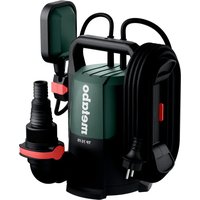
TP 75 SF - Water pump METABO - Free user manual and instructions
Find the device manual for free TP 75 SF METABO in PDF.


User questions about TP 75 SF METABO
0 question about this device. Answer the ones you know or ask your own.
Ask a new question about this device
Download the instructions for your Water pump in PDF format for free! Find your manual TP 75 SF - METABO and take your electronic device back in hand. On this page are published all the documents necessary for the use of your device. TP 75 SF by METABO.
USER MANUAL TP 75 SF METABO
Original instructions
1. Declaration of Conformity
We, being solely responsible, hereby declare: this clear water pump (designation: TP...) / waste water pump (designation: SP...) / combined pump (designation: KP...), identified by type and serial number 1), meets all relevant requirements of directives 2) and standards 3). Technical documents for 4) - see page 3.
For UK only:
UK We as manufacturer and authorized person to compile the technical file, see *4) on page 3, hereby declare under sole responsibility that these submersible pressure pumps, identified by type and serial number *1) on page 3, fulfill all relevant provisions of following UK Regulations S.I. 2016/ 1091,S.I.2008/1597,S.I.2012/3032 and Designated Standards see *3) on page 3.
2. Specified Conditions of Use
This clear water pump (designation: TP...) is designed for conveying clarified water in domestic homes and gardens.
This waste water pump (designation: SP...) is designed for conveying clarified and waste water in domestic homes and gardens.
- The suspended solids content in the dirty water must not exceed 5% .
- The particle sizes of the solids in the dirty water must not exceed the maximum particle size specified in the technical data.
- Any other use is considered to be not as specified and not allowed.
This combination pump (designation: KP...) is designed for conveying clarified and waste water in domestic homes and gardens.
- The suspended solids content in the dirty water must not exceed 5% .
- The particle sizes of the solids in the dirty water must not exceed the maximum particle size specified in the technical data.
- Any other use is considered to be not as specified and not allowed.
Typical application areas:
- Irrigating and watering gardens and grassy areas from underground springs, wells or cisterns.
- Use as an industrial water pump.
- Drainage of containers, water tanks, soakaways and flooded rooms
The pump is not intended for:
- Industrial or commercial use
- Continuous circulation (for instance in a pond)
The pump is not suitable for conveying:
- drinking water
-food
salt water -
explosive, flammable, aggressive, or hazardous materials (e.g. chemicals), as well as sewage and oils
-
liquids over 35^
- sandy water and sanding liquids (this does not apply for waste water pump (SP...)) and does not apply for combined pumps (KP...)
Devices may be used by persons with reduced physical, sensory or mental capabilities or lack of experience and knowledge if they have supervised or have been given instructions regarding the safe use of the device and understand the hazards involved.
Unauthorised modifications to the pump and the use of parts that are not tested and approved by the manufacturer are prohibited.
All improper use of the pump is regarded as nonspecified use; this can result in unpredictable damage! The user bears sole responsibility for any damage caused by inappropriate use.
Generally accepted accident prevention regulations and the enclosed safety information must be observed.
3. General Safety Information

For your own protection and for the protection of your power tool, pay attention to all parts of the text that are marked with this symbol!

WARNING - Read the operating instructions to reduce the risk of injury.

WARNING - Read all safety warnings, instructions, illustrations and
specifications provided with this device. Failure to follow all instructions listed below may result in electric shock, fire and/or serious injury.
Save all warnings and instructions for future reference.
Always pass on these documents to a new user together with the power tool.
4. Special Safety Instructions
The device may not be used by children.
Cleaning and maintenance may not be performed by children.
Children may not play with the device.
The provisions of DIN VDE 0100-702 and -738 must be observed when the pump is being used in swimming pools and garden ponds and in the protected areas around them.
The pump must not be used if there are persons in the water.
All local regulations pertaining to the safe operation of submersible pumps must also be followed.
Always unplug before carrying out any work on the pump. Ensure that the pump and connected accessories are depressurised.
ENGLISHen
The following residual risks do principally exist when operating pumps and can not be fully eliminated - even by employing safety devices.
4.1 Danger from the environment!
Do not use the pump in potentially explosive locations or near flammable liquids or gases!
4.2 Danger from hot water!
Do not operate the pump against a closed pressure line for longer than 5 minutes. Water that circulates inside the pump is heated up.
Hot water can cause damage and leaks on the pump and the connection lines, allowing hot water to escape. Danger of scalding!
In the event of a fault, unplug the pump from the power supply system and allow it to cool. A specialist must check the system to make sure it is in perfect working order before it can be used again.
4.3 Risk of electric shock!
The pump must be supplied with a rated residual current of max. 30mA through a residual-current device (RCD).
Disconnect the pump from the mains before carrying out installation, maintenance and cleaning work or dismantling the pump.
Do not touch the plug with wet hands! Always pull on the plug and not the power cable to disconnect it.
Connect it only to an earthed outlet that is properly installed, earthed and tested.
National installation specifications must be observed.
The earthed outlet or the plug connection with an extension cable must be located in a flood-proof area and protected from water.
Extension cables must have sufficient conductor cross sections. Cable reels must be fully unrolled.
Do not buckle, squeeze, drag or drive over the power cable or extension cables; protect them from sharp edges, oil and heat.
Place extension cable so that it can not get into the fluid to be pumped.
Unplug power cable;
-
before any work on the pump;
-
if there are people in the swimming pool or garden pond.
The electrical connections must not be under water and must be located in a flood-proof area. The connections must be splash-proof for outdoor use.
4.4 Danger due to pump defects or malfunctions!
Check the pump for possible damage - especially the mains cable, mains plug and electrical components before each use. Risk of fatal electric shock!
A damaged pump must only be reused after it has been correctly repaired.
Do not attempt to repair the pump yourself! Only professionals are allowed to carry out repairs on pumps.
To prevent water damage, such as flooded rooms, caused by deficiencies or faults on the device:
- Provide appropriate safety measures, e.g. alarm device or collection tank with monitoring
The manufacturer is not liable for any damage caused by:
-
Improper use of the pump.
-
The pump was overloaded through continuous operation.
-
Failure to operate and store the pump in a frost-free environment.
-
Unauthorised modifications being made to the pump. Repairs to pumps must only be carried out by qualified electricians!
-
Use of spare parts which have not been tested and approved by the manufacturer.
-
Use of unsuitable installation materials (fittings, connection lines etc.).
When using universal swivel couplings (bayonet couplings), only use versions with an additional securing ring to ensure safe sealing.
Contamination of the fluid could be caused by lubricant leakage.
5. Overview
See page 2.
1 Clamping elements on the cable storage
2 Cable storage
3 Support rail
4 Cable holder
5 Clamping elements on the cable holder
6 Float switch
7 Float switch cable
8 Multi-adapter
9 Connecting piece
10 Handle (to remove the multi-adapter)
11 Elbow
12 Pump base *
13 Bayonet catch *
14 Suction area
15 Transport handle (also for securing a rope)
- Not included in scope of delivery / depends on model
6. Installation, setup, before commissioning
6.1 KP 160-20 SF: Set to waste water / clarified water / flat suction
Note: The max. grain size is indicated on the bayonet catch (13).
Fig. G
For waste water and clarified water: Turn the pump base (12) clockwise and pull down, then turn counter-clockwise. (The conveying capacity is greatest in this position).
For flat suction of clarified water: turn the pump base (12) clockwise and push up, then turn counter-clockwise.
6.2 Attaching the (2) cable storage
Fig. A. Press the clamping elements (1) together and push the cable storage (2) onto the support rail (3) from above. Wind up if needed or for storage.
6.3 Attaching the (4) cable holder
Fig. B. Press the clamping elements (5) together and push the cable holder (4) onto the support rail (3) from above.
Attaching the float switch: see Section 6.4.
6.4 Attaching the float switch cable Cable length:
See Fig. C. Attach the cable (7) of the float switch (6) so that the distance between the cable holder (4) and float switch is (6) min. 100mm . If this minimum distance is not maintained there is a danger that the float switch will not switch on the submersible pump on and off.
It is possible to adjust the switch on / switch off point by changing the distance between the cable holder (4) and float switch (6):
- "Short" float switch cable: On and Off positions are close together.
- "Long" float switch cable: On and Off positions are far apart.
Clamp the cable (7) into the cable holder as shown (4). Ensure that it is attached so that it cannot slip out or come loose.
Never pull on the cable to change its position in the cable holder! It could be damaged. Loosen the cable in the cable holder and clamp it once again in the cable holder in the desired position.
Changing the height of the cable holder (4) / switching height setting:
The switch on / switch off behaviour can be adjusted depending on the desired height by completing these steps:
- Press the clamping elements (5) together and push the cable holder (4) up / down.
- Release the clamping elements (5) so that the cable holder snaps into place.
The float switch must always be able to move up and down to allow the pump to be switched on and off. Otherwise, the pump could run dry and be damaged.
6.5 Connecting the discharge line
Fig. F. Press the handle (10) and remove the multi-adapter (8) from the rotating elbow (11).
Note: for optimal pumping capacity, saw off the multi-adapter (8) so that it matches the interior
diameter of the discharge line. (So as to not unnecessarily reduce the interior diameter).
Slide the discharge line onto the multi-adapter (8) and secure with a hose clamp. Or screw on a discharge line with a suitable thread.
(The pressure line and hose clamp are not included in the scope of delivery. Follow the manufacturer's installation instructions.)
Push the multi-adapter (8) onto the elbow (11) until it snaps into place. Make sure that the guard is placed securely.
The discharge line can burst during operation if non-pressure-resistant components are installed or they are assembled incorrectly. Injuries are possible if highly pressurised fluids are ejected!
All discharge line components must be pressure-resistant and installed correctly.
Suitable installation materials:
- pressure-resistant (min. 10 bar)
-heat-resistant (min. 100^)
6.6 Fastening the rope
Risk of electric shock! Do not lift the pump by the mains cable or the pressure hose. These are not designed for tensile load.
Attach a sturdy rope to the transport handle (15) to lower the pump into the water.
6.7 Preparing mains connection.
Before commissioning, check that the rated mains voltage and mains frequency stated on the type plate match your power supply.
Risk of electric shock! Observe chapter 4.3.
7. Operation
If the water level is too low, the pump runs dry. This leads to increased wear and damage to the pump. Make sure that the water level is always sufficient and that dry running can be excluded. If the water flow stops, switch off the pump immediately.
Run the pump for a maximum of 5 minutes if the pressure line is closed (tap or spray nozzle) because otherwise overheating of the water in the pump can cause damage.
7.1 Automatic mode
(Automatic activation/deactivation)
The float switch (6) switches the pump on and off automatically depending on the water level.
See Fig. D When the water level is high enough, the float switch faces upward: the pump switches on. When the water level drops, the float switch faces down: the pump switches off.
The switch on / switch off behaviour can be adjusted to requirements, by:
- Changing the height of the cable holder (4), AND
ENGLISHen
- By changing the distance between the cable holder (4) and float switch (6). Pay attention to chapter 6.4.
The pump could run dry and be damaged. The float switch must always be able to move up and down to allow the pump to be switched on and off.
7.2 Flat suction (with TP..., KP...) / Manual mode
- Attach the float switch (6) in the position shown (see Fig. E), thereby setting the pump to continuous operation.
- For KP....: set flat suction: adjust the suction basket to the "top" position (see chapter 6.1).
- Only suction shallow water for a short period of time.
- During flat suction, monitor the pump and unplug it immediately if the pump is sucking in air.
Risk of material damage from dry running of pump! The pump can overheat and be damaged as the cooling function of the pumped medium is not active during suctioning of shallow water.
7.3 Installation
In order for the float switch (6) to function properly it must be able to move freely. Space required: approx. 50 × 50 cm .
Do not exceed the maximum permitted submersion depth (see chapter 13. technical data).
When submerging the pump, hold it at a slight angle so that no air cushion forms underneath that would prevent suction. Then set it upright once again. Ensure sufficient upright stability.
Install the pump such that the suction area (14) cannot be blocked by foreign objects. If necessary place the pump on a support surface.
The pump can also be operated floating on a rope to keep the pump away from deposited sand or dirt:
-
Lower the pump by a rope into a well or shaft. The mains cable and pressure hose must not be subjected to tensile stress.
-
Attach the rope.
Switching on and off
Switching on: Insert the mains plug into a mains socket. Caution! The pump may start immediately.
Switching off: Pull the mains plug.
7.4 If there is a risk of frost
Frost (< 4^) destroys the pump and accessories as both always contain water!
Disassemble the pump and accessories and store them in frost-free conditions (see chapter 8.2) if there is a risk of frost.
8. Maintenance, storage
Danger! before any work on the pump:
- Unplug power cable;
- Ensure that the pump and connected accessories are depressurised.
- Repair and maintenance work other than that described in this section should only be carried out by qualified specialists.
8.1 Regular maintenance
Check pump and accessories for damage, in particular electrical and pressurised components, and repair if necessary.
Check pressure lines for leaks.
Regularly clean the pump:
- Rinse pump with clean water. Remove persistent contamination with a brush.
- To rinse the inside of the pump:dip pump into a container of clean water and switch on briefly.
8.2 Disassembling and storing the pump
- Unplug power cable;
- Open the discharge line (open the water tap or spray nozzle), allow water to drain off completely.
- Drain the pump completely. To do so, remove the discharge line.
- Wind the cable on the cable storage (2).
- Attach the float switch (6) in the position shown (see Fig. E).
- Store the device in a frost-free room (min. 5^ ).
- Keep out of the reach of children.
9. Troubleshooting
Danger! before any work on the pump:
- Unplug power cable;
- Ensure that the pump and connected accessories are depressurised.
Pump is not running
-
No mains voltage.
-
Check cables, plug, outlet and mains fuse.
-
Mains voltage too low.
-
Use an extension cable with an adequate conductor diameter.
-
Overload protection: automatic switch-off in case of imminent overheating.
-
After cooling down the pump starts by itself.
-
Remedy the cause for overheating. Water too warm? Long-term pumping with closed pressure line? Is the suction area clogged, is the pump blocked by foreign objects?
-
Float switch does not switch pump ON when water level rises.
-
Make sure the float switch can move unrestrictedly.
- Have the pump repaired if the pump does not switch on despite sufficient mobility of the float switch.
Motor hums, but does not start
- Pump blocked by foreign objects.
- Clean the pump. See chapter 8.
Pump does not deliver correctly
-
Discharge hose kinked.
-
Straighten discharge hose.
-
Suction area clogged.
- Clean, see chapter 8.
- Discharge hose leaky.
- Seal discharge hose; tighten screw fittings.
- Delivery head too high.
- Observe max delivery head (see 'Technical Specifications').
The pump runs very noisily
-
Pump is sucking air.
-
Ensure that there is an adequate supply of water.
- Foreign objects are present (clean pump)
Pump runs continuously
-
Float switch does not reach cut-out position.
-
Make sure the float switch can move unrestrictedly.
10. Accessories
Use only genuine Metabo accessories.
Use only accessories that fulfil the requirements and specifications listed in these operating instructions.
See www.metabo.com or the catalogue for a complete range of accessories.
11. Repairs
Danger! Repairs to this pump must only be carried out by qualified electricians!
If the mains connection cable of this pump is damaged, it must be replaced by the manufacturer or an authorized service centre to avoid hazard.
Contact your local Metabo representative if you have Metabo pumps requiring repairs. For addresses see www.metabo.com.
For shipping: Empty the pump completely.
You can download a list of spare parts from www.metabo.com.
12. Environmental Protection
Observe national regulations on environmentally compatible disposal and on the recycling of disused pumps, packaging and accessories.
Packaging materials must be disposed of according to their labelling in accordance with municipal guidelines. Further information can be found at www.metabo.com in the "Service" section.
Only for EU countries: never dispose of power tools in your household waste! According to European Directive 2012/19/EU on Waste from Electric and Electronic Equipment and implementation in national law, used power tools must be collected separately and recycled in an environmentally-friendly manner.
13. Technical Specifications
Explanatory notes regarding the specifications on page 3.
Subject to change in accordance with technical progress.
The pump characteristic curve (diagram on page 3) shows the conveying capacity that can be reached depending on the conveying height (suction hose diameter = pressure connection diameter).
U = Mains voltage
f = Frequency
P1 =Rated input power
I = Rated power
F = Fuse min.
L = Length of the mains connection cable
F_V, = Max. conveying capacity
F_h, = Max. conveying height
Fp,max =Max. conveying pressure
Tmax =Max. submersion depth
Max. supply temperature
Kmax =Max. grain size
1 =Protection type
S_2 =Protection class
A=dimensions (lwxh)
m1 =Weight (with mains cable)
m2 =Weight (without mains cable)
AC power
The technical specifications quoted are subject to tolerances (in compliance with relevant valid standards).
FRANÇAISfr
Notice originale
Respeitar as normas de instalacao nacionals.
6. Montering, oppstilling, for idriftsetting
6.1 KP 160-20 SF: still inn på skittenvann / rentvann / flatsuging
Merk: Maks. partikkelstorrelse star angitt pa bajonettlukkingen (13).
Fig. G.
For skittenvann og rentvann: drei pumpefoten (12) med klokken og trekk den nedover; drei deretter mot klokken. (I donne stillingen er transportytelsen størst).
For flatsuging av rentvann: drei pumpefoten (12) med klokken og skyv den oppover; drei deretter mot klokken.
Pumpen lager mye stoy
-
Pumpen suger inn Luft.
-
Forsikre deg om at det er nok vann i systemet.
-Fremmedlegemer (rengjor pumpen)
Pumpen gár permanent
Sorg for, at pumpen star stabilt.
evpyoioe/aevpyoioe i n BuOievny avia.
MaTaBaalovTac Tnv anoTaon avaEoa OTn Bao Kaawdiou (4) kai Tov diaKoTTN ME nAomega (6) puOmuZeta anoToaon avaEoa oTo onmuio evpyooinc kai aneVeypOoiinoc:
- DIAKONTNc ME Nwtnpa OTo Kovto Kaawdo: Ta oneia evpyooinong kai anevpyooinong Bpiokovta Kovta to eva sto aAlo.
- Diakontns me nawnpa oTo akpu kaawdio Ta oneia evpyooinonc kai anevpeyonoinoc Bpiokovtau pa to eva ano to aAlo.
Hacoc He npn3haueHn IJI BnKOpNCtAHH B TAKHX yMOBax:
- npomnclobe a6o npofoeciHne BnKOpncTaHHa
-Be3nepepeBHa uHpKyIaIi (HaPnKlaI,CTaBOK)
Hacoc He npn3NaueHn DJI NaOaCi TaNX piDHH:
-ПИТHA BOda
-xapuobi npoodykTN
- COLOHA BODA
- Bn6yOHe6e3neuHi,JIerKo3aMncti, arpeCnBHi a60 He6e3neuHi dIra 3dOpOB'matepiAn (HapnKnla,IximHi peareHTn),a TaKoJh fekalbHi BOHN,ONBn
-piDHH3 TempepaTPOU Bnue 35°C
- BODa 3 NICKOM Ta a6pa3nBHMn peOBNHAMn (ue He CTOCyETbca HAcociB JIJI 6pydHOI BOHn (SP...) Ta KOM6IOHOBAHnx HAcociB (KP...))
Oco6n 3 06MeJHcHmN fI3NcHmN, ceHCOPHmN / pO3yMOBIMM MOKJIINBOCTrMn a6o 3 HeIOCTaTHiM DOCBiIDOM i 3HaHHaMn MOKHyTB KOpNCTyBaTNCa YIM npIIaDM TiIbKn NiD KOHTPOeM DoCBiDJeHOI Oco6n a6o nICsI INCTpykTaKy UoDo 6e3neuHOI ekCnlyaTaUii npIaN dy N yCBiIDOMlIOUToB NOB'ra3aHI 3 qIM He6e3neKn.
3abopohreTbcra camobilbHe BheceHHa 3MH B KOHCTpyKciio Hacocca, a TaKoX BNKOpNCtaHHa Detalei, 0e He npouwn BNnpObyBaHHa I He DO3BOJIeHi Do 3actocyBaHHBnPo6HKOM.
Буд-як ВИКОПСТАНHAн haCOCa 3 nopyшENHЯm правий НOrO eKcNlyaTauQi BBAJkaCTbCS ВИКОПСТАнHЯМ He 3aПрИЗHAчeHЯM,Як MOжЕ ПрИЗВecТи Do HeNepeD6aueHEnx 36nTkIb Ta TpavM! 3a NOUKOДЖEHЯ,Ю ВИNHКЛ N BHaCJIIDOK ЕССПЛУаТAUII He 3aПрИЗHAчeHЯM,Hece ВIDNOVIДALbHICr TB HKNIOUHO KOpIcSTyBaY. Heo6xIqHNo DoTpPIMyBaTncsA 3aRaJIbHOBn3HaHInx ПравиД 3anO6iraHЯ HeuacHm BUnJaKam i ВКlaJaDEHnx yKa3iBOK i3 TexHikn 6e3neKn.
3. 3araJIbHI BHa3iBKN 3 TexHikn 6e3neKn

3aIra BaWoI 6e3neKr Ta 3axncty eIeKTPoiHCTpyMeHTa BiD NOIshKOJHeHb DOTpIMyITecb yKa3iBOK, N03HaueHnx CImMBOJOM!

NONEPEDHEHH-3 METOIO 3HNHEHH pIN3IKy OTpIMaHH TpaBM npoHTaIe IHCPTpyKciO 3 EKnlyaTauii.

PONEPEDHEHHA - PpOHTaIte BcIBbHa3iBHN 3 TexHInn 6e3neHn, IHCTpyHcuII, Tpaui Ta CneuNphiauii, HadaH 3 cHmIaDOM. HeBnKoHaHH Ycix HaBeDeHnx HnXueYhciM oMe Ipn3BecTH Do ypaKeHHaTPuHMM CTpyMOM, POHeKi Ta/a6o TAAHHxM.
36epiraTe npaBnla Ta Bha3iBKn 3 Texhikn 6e3neKn JI Ma6yTHbOro BNHOpNCtAHN. IpepaBaHTe Baaw npnilad Tlkbn pa30m 3 cmm DOKyMeHTamn.
4. CneuJIbHi npaBnla texHikn 6e3neKn
ДiTЯМЗa6OpoHEnoEKcNlyaTyBaTn npHlaI.
ДiTЯМЗбОрносу CamOCTiHOBNkoHOBaTH OuHcHnI TeXHlYeObCyRObYBaHH npHlaNy.
He 6epitbc8a MepeKeBy BnIky BOIOrHMpykami! 3aBKn TargHItb 3a WTeNceIbHy BnIky, a He 3a Ka6eIb.
Hacocdo3BOJREbCnIKIOUaTHTilbKnDo
po3eTOk i3axNCHM KOHTaKTOM,AKI HaleKHM
yHOM BCTaHOBLeHi,3a3emLeHi i nepeBipeHi.
Heo6xioHNO doTpmyBaTnCra HaioHaJIbHnX npnnnciB 0do MOHTaKy i BCTaHOBJeHHR.
Po3eTka i3 3a3emJIOUOUM KOHTaKToM a6o
WTeNCeJIbHe 3'EDHaHHa 3 NOOBKyBaIbHNM
Ka6eJIem NOBHHI 3HAXOINTCb y 3axNtEHomy BiD
NoBEHi Micci Ta 6TyN 3axNtEHI BiD BODn.
IodOBKyBaIbHi Ka6JI IOBHHI MaTHIOCTaTHi nonepueHn nepepi3 JIN. Ka6JI MaOTb 6yTN NOBHICTU p03MOTahi 3 bapa6aHa.
He donyckaIte nepernHaHHa, 3atncKaHHa, po3ryBaHH a6o Haia3dy Ha Ka6eIb JINBLeHH i NOOBkyBaIbHn Ka6eIb; 6epeKITb BiD KOHTaKTy
3 rOcTpHMn KpOMKaMn, OINBn i BNCOKNX TemnepaTyp.
IOnOBKyBaBn KabeN Heo6XiH No pOKHaDaTn TaK, 0o6 BIn He KOHTaK TyBaB 3 piHIO, kHy NotpiHO nepeKauyBaTN.
BntTyrHyTN MepeKeBn wTekep 3 po3eTKn:
6. MoHTaH, BCTaHOBJIeHHa, nepeD BBeDeEHnM BeKcNlyaTaciIO
6.1 KP 160-20 SF:HaIauTByBaHHaNOBepxHeBOrO BCMOKTyBaHHa/ nepeKauyBaHHa 3a6pydHeHOi / YnCToI BOHN
Bka3iBka: MaKcImaJIbHn po3mip yactOK Bka3aHO Ha 6aioHeTHOMy 3aTbopi (13).
MaJ.G.
3a6pydHeHa Ta YnCTa BOda: NOBepHyTu 6a3OBy PnHTy HAcoca (12) 3a rOAnHHNKOBIO CTpiIKoIO i NOTrHyTu BHN3, NOTIM NOBepHyTu nPoTI rOAnHHNKOBoi CTpiIKu. (Y cIbOMy pIoJKeHHi WBNIDKICTb NOTOKy MaKcImMaJIbHa).
Поверхнеб BCMOКТУВаHHЯ UNHCTоI BODи: NOBEPHyTN 6a3OBy PnHTy Hacoca (12) 3a FOINHHNKOBIO CTpiJIKOIO I NOTARHyTN BROPY, NOTIM NOBEPHyTN pOTTu FOINHHNKOBIO CTpiJIKN.
6.2 BcTaHOBLeHnBiDJIeHnHaJa Ka6eIIO (2)
MaI. A. CTHCHyTH fikCaTOpn (1) i BCTaHOBHTN BiDIIeHHn IJ KabeJIIO (2) 3BepxHy Ha HAnpMHy TpIMaHa (3). HamOtBuTaH KabeJb 3a noTppe6n Ta nID Yac 36epirAHn.
6.3 BcTaHOBLeHHa TpImaHa Ka6eIIO (4)
MaI. B. CTnchTyN fikCaTOpN (5) i BCtAHOBHTN TpIMauch Ka6eJIIO (4) 3BepxH Ha HAnpMHy TpIMaHa (3).
BCTaHOBHTI nonlaBKOBI BUMHKaU: nVB. po3di6.4.
6.4 KpinJIeHHa6eIIO nonJaBHOBOBOM BHMnKaaya
OBHHHa Ha6eIIO:
INB.MaI.C.PnEHaTHNa6eJIb(7) NnonlaBKOBOBnIMnKaaya(6)TaK,Oo6 BiDCTaHbMIXTpImaemKa6eJIIO(4)Ta
NONlaBKOBN BMnKaHem (6) CTAHOBnla
OHaHMeHwe 100 MM).Y pa3i HeDoTPMaHHa piei
MIHimaIbHOI BiCTaHI icHy e PN3NK, 00
NONlaBKOBN BMnKaH He 3MOKe BBIMKHyTN/
BMMKHyTN 3aRn6HN HaOC.
3MiHIOUCh BiIDCTaHb MIK TpIMaYe KabeJIIO (4) Ta NONJIaBKOBM BIMHKaYeM (6),MOJHa HalaWTyBaTH BiIDCTaHb MIK TOYKaMH BBIMKHHeHHa Ta BIMKHeHH:
-NonlaBKOBN BIMNKaH Na «KOPOTKOMy Ka6eJI»: TOUka BBiMKHeHHI TOUka BIMKHeHHI 3HaXoJrTbCnOpy.
-NonlaBKOBI BUMKau Ha «IOBROMy Ka6eJI»: MIK TOUKO BBIMKHeHHI TOUKO BUMKHeHHB EJIKA BiDCTaHb.
3aφikcyTe Ka6eIb (7)ВТрмач Ka6eIIO (4),Ян noka3aHO.пepekohaTecra,цo Ka6eJIb HadiHNO 3aφikcoBaHn i He 3iCKOB3He Ta He BiD'EDHaETbcR.
YKoDHomy pa3i He TgHiTb 3a Ka6eIb, 06 3miHHTn Ioro NIOLOXHeHHB TpImaHi Ka6eJIHO!
KabeIb moKe 6yTu nOuHokHeHn. Nocla6Te KaebIy TpImaui KaeIIO Ta 3HOBy 3aΦiHCyIte Ioro y TpImaui KaeIIO B NOTPi6HOMy NOLOKeHHI.
3MiHa BucOTn TpImaay Ka6eHIO (4)/ peryIIOBaHHBucOTn nepemHKaHHa:
PeknM yBIMKHeHHRA/BMNKHeHHa MOxHa peryIOBaTn 3aJIeXHO BiD nOtpi6HOI BNCOTn:
-CTnchutytn fikcatopn (5)i nepemictntn Tpmau Ka6eHIO (4) Bropy / BHN3.
-BiDnycHTnΦikcTOp,io6 TpImaH Ka6eIIO (5) 3aΦiKcyBaBCy.
IOnlaBKOBN BIMNKauch 3aBXJn NOBHNHeH pyxatncBROPy Ta BHN3 Jn3a6e3neueHHBA MKNaHH Ta BIMNKaHH Hacoca. B iHoumy pa3i HAcOC MOKe npaOBoTn 6e3 BoN, 0o CnpuHHTb Ioro NOnkoDKeHH.
6.5ПлдклоченнHaipnHOrTo Tpy6onpoBody
MaI. F. HaTnCHyTH HaTnCKHn eJeMeHT (10) i 3HrTu MyIbTnaJaanTeP (8) 3 oBeptoBO r KoJIHa (11).
Bka3iBka:ДЯ ONTImaJIbHOI npOyKTHBHOCTI BIDpi3aTN MyIbTnAdaNTep (8) TaK, 9o6 NOrO 3OBHIHni DiameTp 36irABc3 BVHTpiHIM DiameTpOM HAnipHOI liHii. (LIO6 6e3 nOTpe6n He 3MeHShyBaTu BHyTpiUHIn DiameTp).
BctaHOBHTu IHaHr HAnipHOI LiHII Ha MylbTnadaanTeP (8) i 3akpinTHxOMyTOM. A6o HApTyHTu HAnipHn Tpy6OpobiD 3 BiIDNoBIDHOIO p3b60IO.
(Hanipn Tpy6oPobi Ta XOMyT He BXOaTb B KOMnIeKt NoCTaBKn. Heo6XiJHO DoTPMByBaTHCb BkA3iBOK BnPo6HnKa 0oDo MOHTaKy.)
BCTaHOBTM MyIbTnAanTep (8) Ha KOJIHO (11) do BiDyTHoI fikcauII. IpeBipTe uJbHicTB nocaIKN.
HerepMeTnHi DeTal i HeKBaIiFikOBaHm MOHTaK MoKyTb Pn3BecTn Do po3pNBy HanipHoro Tpy6oPBOyu NiD Yac EKcnLyatauii PiHa, 10 BnpuBaETbcra NiD BnCOKM TtCKOM, MoKe TpaMbYBaTN Bac!
Yci deTani HanipHoro Tpy6oNpOBOy NOBHHI BHTPmYBaTH NCK; IX MOHTaX 3diINCHIOETbCRA KBaIIiΦIKOBaHIMN faxIBcMn.
HaJIeKHi MaTepiAII nIa MoTHaXHnX pO6iT:
-BNTpmyOTb TnCK (M.H. 106ap)
- Tenzocini (Mn. 100°C)
6.6 Φικαίστη ορος
He6e3neKa ypaKeHH eNeKtpnHIM cTpyMOM! 3a6OpOHeNo NiDiBiUyBaTu HaCoc Ha Ka6eI JINBLeHH a6o HanipHomy Tpy6oNpOBoDi. BOH He np3HaueHi dR BnKOpncTaHH 3a HaaBHOCTi HabaHTaKeHH npu po3TayBaHHi.
Дя onyckaHH Haocay y Body Heo6xidno npKpInNT MцHm Tpoc 3a pyky Jra TpaHCnOpTyBaHH (15).
6.7IiDROTOBHa 3'cHaHHa 3 MepeKeIO HnBJIeHHJ
IpeB BBeDeHnM B EKcNlyatauio Heo6xIDHO nepeKoHaTnc, 0o Bka3aHi Ha nacnopTHi Ta6nuiCi npnaLy Hanpyra Ta yactota B MepeKi BiINOBiAIOb NapaMeTpam BaWoI eEeKtpomepeKi.
He6e3neKa ypaKeHH eJeKtpnHm cTpyMOM! DnB. po3dI 4.3.
7. EKcnpnyataci
A Ka pibHb BODn 3aHaT0 Hn3bKn, HAcoc npaueBpeKmci cyxoro Tepra. Lepn3BONDt DO nIDBnueHO 3HOCy Ta noHKoJKeHHaHacoca. Heo6xIHO CTeHNr, 0o6 pIBeHb BOn 3aBKn6yb DoCTaTHIM dJa 3axNcTy BiDpo6OTn Hacyxo. Y pa3i BiDcyTHOCTi NOToKY BoNnOTpi6Ho HeraHb BIMKHHTn Haoc.
Ipn 3aKpntomy HanipHomy Tpy6oNPOBodi (BOdHn KpaH a60 po3nIOBaJIbHa HacaHa) HAcoc He NOBHeH npauOBaTH 6JIbWe 5 XBnH, IHaKHe Ype3 nepeRpiBaHH BOn HaCOC MOKe 6yTN NooKOJKeHN.
7.1 ABTomaTHHn peKHM
(aBTOMaTHUHe BBIMKHeHHB/BUMKHeHHA)
NonlaBKOBN BmHKauch6) aBTOMaTHUHO BMnKaTa BmKae HAcOC 3aJeKHO BiD pIBH BOHN.
MnB. MaJ. D. RaKIO pIBeHb BOH DOcHTb BWCOKN, NONJIaBKOBI BmIKaY NiDHaMaETbcra BROPy: HAcOC BMKAeTbcra. RaKIO pIBeHb BOH NaDaE, NONJIaBKOBI BmIKaY ONyCKaETbcra: HAcOC BMIMKaETbcra.
Ppoec BBIMKHeHHBIMMKeHHMOxHa aanTyBaTu Do notpe6 y TaKn cnoci6:
- 3MInHTN BnCOTy PO3TaUyBaHHr TpIMaHa Ka6eJIIO (4) TA
- 3MiHHTN BiDCTaHb MIX TpMaueM Ka6eIIO (4) i IONJIaBKOIBM BmIKaueM (6). DnB. po3dI 6.4.
BnKOpncTaHH Haocca 6e3 BoH N MoKe CnpuHHTN IORO NOWKoJKeHH.
NonabkoBn BmHKauch 3abKdN IOBHeH pyxatncBropy Ta BHN3Ig 3a6e3neueHHB MKNAHHa TBA BMNKaHH HaCOca.
7.2 Поверхнебе BCMOHTуВаHHЯ (ДЯТР...., KP...) / руни ржим
1.BcTaHOBHTI nonlaBKOBN BmNkaU (6) y BkazHe NIOJKeHHa (INB. MaI.E) dIaKTnBaui peKIMy TpNBaoIe EKcnnyatauii.
2.ДЯ KP...:HaIaWtYBaHHNoBepxHOBOro BCMOKTyBaHHB:BCTaHOBHTNΦiNbTp BCMOKTyBaJIbHOI LiHIIy «BepxH» NOLOXHeHHA (nVB.p03di 6.1).
3.Лише КорOTКочacheNoBepxHeBE BCMOKTyBaHHr.
4.Пдчас nobepxheBOrO BCMoHTyBaHHCTeHHTn 3a HAcOCOM i HeraiHo BiD'cHaTHNoro BID MepeKi, RaHIO BiD6yBaETbcraBCMoHTyBaHH NOBITpR.
MOXJIINBE NOUKOJHHeHHa MaHaYepe3 pO6Otu 6e3 PiHN! PpHnA MoKe
neperpitncra Ta nouKoHTncra, ockIbKn y pa3i NOBepxHEBO BCMOKtYBaHHc CepeIOBNIe, 0nepeKaUyETbcra, He 3daTHe OXOLOKyBaTN KOMNOHeHTn npHlaNy.
7.3 BctaHOBJIeHHA
Lio6 nonlaBkoBn BmNkau (6) npaIOBaB npaBnIbHo, He NOBHHo 6yTu nepeuKOd Noro nepemieHNo. Heo6xIDHn IpocTip npi6JIn3HO 50 cm x 50 cm.
3a6oHHeNo npeBnUyBaTH MaKcHMaJIbHO 103BOJeHy rIi6nHy 3aHypeHHa (INB. PO3dI 13. «TexHiXapaKTepnCTnKN»).
IiD yac OnyckaHH TpHMaTH Haoc NiD HeBEnKIM KyTOM, 3aNo6iTT YTBOpEHNO NobITpHaO NoDyHKn Ha DHi, Jka nepeWKOHaTmE BCMOKTyBaHHIO. Notim 3HOBy BnipBHTn.
IpeekohaTeC8, 1o Haoc BCTaHOHeHOHaHIO.
Hacoc Heo6xIDHO BCTaHOBHTn TaK, 0630Ha BCMOKTyBaHHr (14) He 6yla 3a6JIOKOBHa CTOpOHIMn ppeMeTaM. 3a Notpe6n BCTaHOBHTn Hacoc Ha NOBepXHIO.
Hacoc TaKoK MoKHa BnKOpNCToBbATn NiDiBiWeHm Ha Tpoci, 063ano6irtn HAKONNuHeHHIO ncky a60 6pyDy B Hacoci:
1.Дя onyckaHHHaocBa KOLIOJ3b a6o CBepdIOBHy Heo6xIDHO BnKOpNCTOByBaTH TpOc.3a6OpOHeNo npNKlaDaTn PO3TgYBaJIbHe 3ycIIJIrdo Ka6eJIIO JKNBLeHH Ta HAnipHOrO ⅢlaHra.
2. Heo6xidno 3akpinntu Tpoc.
YBIMKHeHHI BIMKHeHH
BbIMHHeHHa: BCTaBHTM MepeKeBn WTeKep y po3eTKy. YBara! Hacoc 3anycKaetbcra 3a notpe6n oDpa3y.
BmKHeHH: BHTaHyTu MepeKeBn uTeKeep 3 p03eTKn.
7.4 y pa3i He6e3neKn 3amep3aHH
3a Hn3bKnX TempepaTyp (< 4°C) pyHnyoTbcna Hacoc i npnilaDn, OChiNb BOHn NOCTiINHO MICTA Tb BODy!
Y pa3i He6e3neKn 3aMep3aHn Hc06xIDHO DeMOHTyBaTn HAcO i npilaIra Ta 36epirAtn ix B 3axuEHomy BiD Hn3bKnX Tempepatyp Micci (INB. po3di 8.2).
8. Texhüne 06cnyroByBaHHa, 36epiraHHa

He6e3neka!
Ipeed BnKoHaHHaM 6yDb-ayKnx po6i3
HACOCOM:
-BinHrtn MepeKeBn uTekep 3 pO3eTKN.
- NpekeHoaTnC, 10 Haoc i nid'EdHaHe npuIaIn He 3NaXoJTBcR nD TnCKOM.
- Onncahi dani p60Tu 3 TexHIORO
O6CnyroBvBaHH i peMOHTy DO3BOJAEbC
BnKOHyBaTN TiIbKn φaxiBqM.
8.1 Perylahe texhichne 06cnyrobyBaHHa
Ipeekohatnc, 0n Hacoc i BiDIOBIDHe npnaad, OcO6JIbBO eEeKTPnHi DeTani Ta KOMNOHEHTn NiD TnCKOM, He NowKOJKeHi, 3a Notpe6n BiDaTu B peMOHT.
IpeBipTN repMeTuHicTb HanipHoro Tpy6o npOBOy.
PeryIaRhe uHHeHHHaCocA:
1.Помпн Haoc YHcTOO BODIO.CtiiKi 3a6pydHeHH BnDaJIHTN 3a DOnOMOrO IO uITKn.
2.ПомИВаHHЯ HAcOca 3cepeДиHn: 3aHypNTn HacOC y pe3epByap 3 YNCTOIO BODoI O Ta yBIMKHyTN Ha KOpOTkn Yac.
8.2 Demontax i 36epiraHHaHocca
-BnHrTm MepeKeBn uTekep 3 po3eTKn.
-BiKpnIte HanipHn Tpy6oPobiD (noBepHiTb BOIOnpOBiDHH KpaH a6o conlO), NOBHCtIO cnycTiB BODy.
-ПовсICTO CNOPOKHHTN HAcOC,ДЯ ΚьОг:3HRTN HanipHy LiHiIO
- HamotaTn KaebIb Ha BiDIIeHHe Ira Ka6eIIO (2)
- BCTaHOBHTN NOJIaBKObN BUMnKaU (6) y Bka3aHe NIOJOKeHHr (INB. MaI.E).
-36epiratn Hacoc Heo6xIDHO He3aMeP3aOyOM npmiueHHi (Mn.5°C).
-36epiratnB Heoctynnx IaI Tei Micx.
9. YcyHeHHa HeCnpaBHOcTei

He6e3neka!
Ipeed BnKoHaHHm 6yDb-kaNX po6it 3
HACOCOM:
-BinHrtn MepeKeBn 1TeKep 3 po3eTKn.
- NpekoHaTnC, 1o Hacoc i nid'edHane npnaIaIHe 3NaOyTBcR nID TnCKOM.
Hacoc He npauoE
- Hanpyra Mepexi BiCyTHa.
-Перевіріte кабел,штікір,po3eTKу i 3anobiKHHK. - Hanpyra mepeki 3aHaTo Hn3bKa.
-BnKOpncTOByTe nOoBxUBaIbHn Ka6eJIb 3 DOCTaTHIM NonepeuHm nepepi3OM HINJ. - 3axnCT BiD nepeBaHTaKeHHa: aBTOMaTnHe BIMKHeHHy y pazi 3arpo3n Neperpipy.
-Пися oxoIoJHKeHHHaCoc 3aNyCTnTbCn ABTOMaTHUHO. - Ycynthe npnHy neperpibaHna.3aHaTo rapaBa? TpBaIe nepeKaUyBaHH npn 3akPitOMy HanipHomy Tpy6OpnoBoi? 30Ha
BCMOKTyBaHHa3acMHeHa,Hacoc 3a6lokoBaHO CTOpOHHIMnpeMetamn?
Hacoc He nodae Body HaileHHM YHOM
- Hanipnien trpyboprobid nepekpyeHH.
-BinnpaMHTn HanipHn Tpy6OpPobiD. - 3OHa BCMOKTyBaHHa 3acMieHa.
-OuHCTHTN,INB.0o3JIN8. - HanipHn Tpy6oPobiD HeRepeMTeuHn.
-3a6e3neuHTn repMeTnUHicTb HanipHoro Tpy6oNpOBOy, 3aTgHyTuPi3b6oBi 3'cHaHHra. - 3aHaTo BeInka BnCota noJaYi.
-ДOTPIMyBaTnCMAKcMaJIbHOrO3HaueHHBnCOTnNoaqi(INB.«TexHiuHiXapaKTepnCTnKn>)
HaMipHmIyM nIy hac po6Otn Hacoca
Hacoc BCMOKTy e NobiTpa.
- IpekeKaHTeC, 30 3anac BOnn DoCTaTHiN.
-CTOPOHNI ppeMeTN (OYNCTNTN Haoc)
Hacoc noctiNo npaioe
-NonlaBKOBI BUMKau He DoCrae HNHHbOPOJIOKeHHa.
- NepekoHaTecr, 0o nonlaBKObN BmHKaMae DOCTaTHI diana3OH nepemiuHn.
10. Ппладя
BnKopncToByTe TlIbKn opnirHaJIbHe npuJaMetabo.
BnKOpNCToByBaTn TijbKn npnaJa, rKe BiINOBiJaE BmOram i XapaKTepNCTHkAm, HabeJeHm y ciN IHcTpkyu 3 ekCnlyaTaui.
Повни acopтимент пиладя дИВ. Ha calTi www.metabo.com a6oВ kaTalO3i.
11. PeMoHT

Hebe3neka! PemOH TcBOrO HAcoca NOBHHHbI, BnKoHyBaTu TiIbKn KBaJIΦIKOBaHi faxIBci-ETpNIk!
Y pa3i noxkoJHHeHH Ka6eJIIO JNIBJeHHa bOro Hacoca 3 MIPkyBaHb 6e3neKn Tpe6a 3a6e3neHTn Ioro 3aMHy Bnpo6HnKOM a6o faxIbem cepBicHOI cnJx6n.