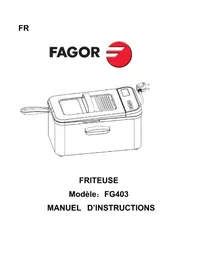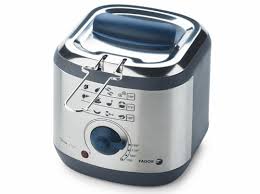
F-110 - Deep fryer FAGOR - Free user manual and instructions
Find the device manual for free F-110 FAGOR in PDF.



| Brand | FAGOR |
| Model | F-110 |
| Product type | Electric deep fryer |
| Power supply | 230 V ~ 50 Hz |
| Power | 1000 W |
| Oil capacity | 1 L (between min and max levels) |
| Dimensions (approx.) | 30 x 25 x 20 cm |
| Weight (approx.) | 2.5 kg |
| Adjustable temperature | Yes, via thermostat (160 °C – 190 °C) |
| Indicator light | On/Off and heating |
| Removable basket | Yes, with detachable handle |
| Lid | With handle |
| Power cord | Retractable or stored in compartment |
| Bowl material | Stainless steel or non-stick coating (not specified) |
| Safety | Automatic shut-off (not specified); do not immerse; do not use water on oil fires |
| Maintenance and cleaning | Clean with warm soapy water; do not use solvents or abrasive detergents; do not immerse the housing |
| Use with solid fat | Possible, after pre-melting |
| Recommended preheating | 15 minutes |
| Number of frying sessions with one oil | 10 to 15 times maximum, or 6 months |
| Oil storage | In an airtight container in the refrigerator |
Frequently Asked Questions - F-110 FAGOR
User questions about F-110 FAGOR
0 question about this device. Answer the ones you know or ask your own.
Ask a new question about this device
Download the instructions for your Deep fryer in PDF format for free! Find your manual F-110 - FAGOR and take your electronic device back in hand. On this page are published all the documents necessary for the use of your device. F-110 by FAGOR.
USER MANUAL F-110 FAGOR
The manufacturer reserves the right to modify the models described in this User's Manual.
1.DESCRIPTION DEL PRODUCTO (Fig 1)
- Tapa freidora
- Asa de la tapa
- Asa cestillo
- Cestillo
- Cuba
- Mando termostato
- Indicador luminoso marcha/paro
- Cable
2. CHARACTERISTICAS TECNICAS
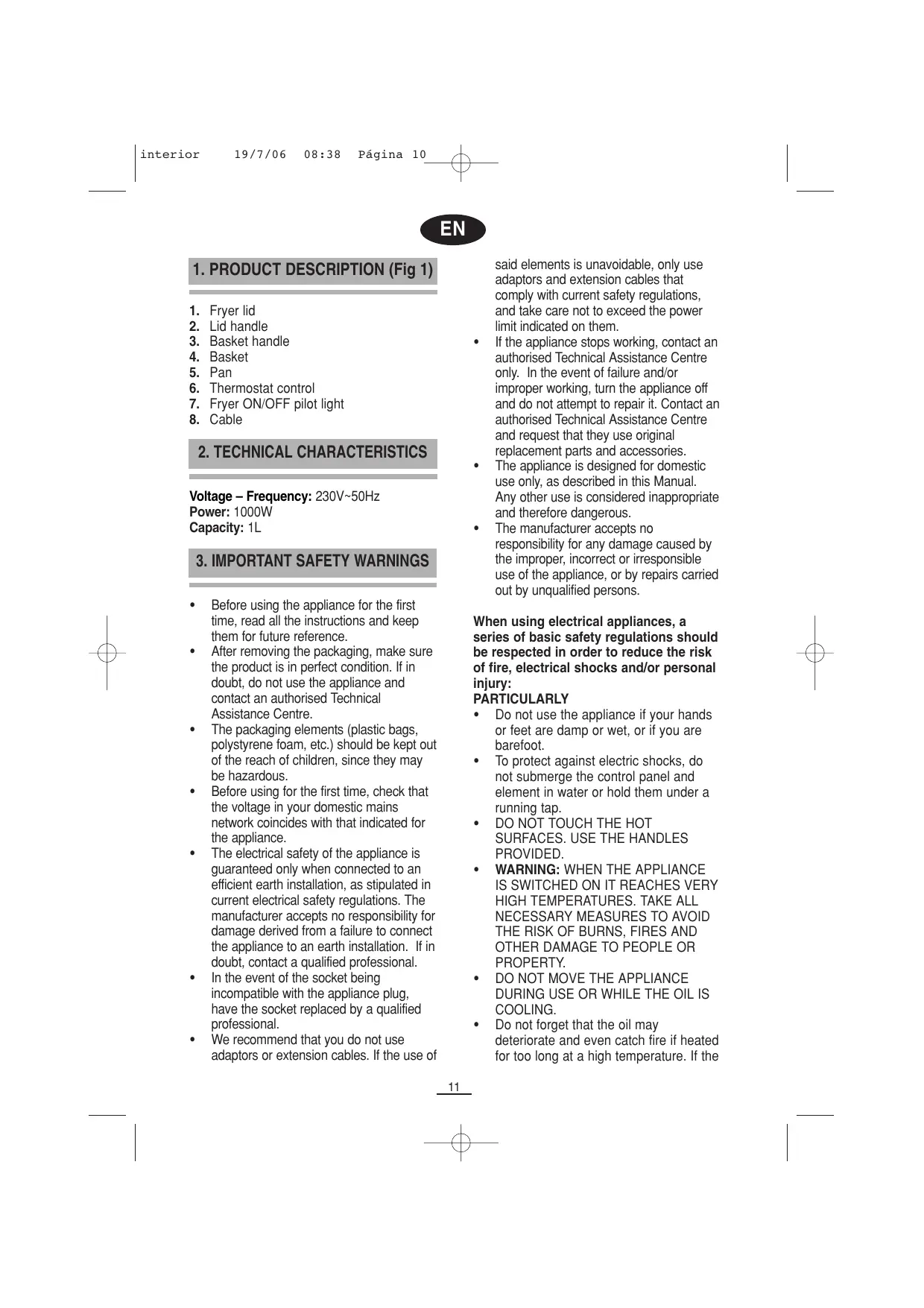
1.PRODUCT DESCRIPTION (Fig 1)
- Fryer lid
- Lid handle
- Basket handle
- Basket
- Pan
- Thermostat control
- Fryer ON/OFF pilot light
- Cable
2. TECHNICAL CHARACTERISTICS
Voltage - Frequency: 230V 50Hz
Power: 1000W
Capacity: 1L
3. IMPORTANT SAFETY WARNINGS
- Before using the appliance for the first time, read all the instructions and keep them for future reference.
After removing the packaging, make sure the product is in perfect condition. If in doubt, do not use the appliance and contact an authorised Technical Assistance Centre. - The packaging elements (plastic bags, polystyrene foam, etc.) should be kept out of the reach of children, since they may be hazardous.
- Before using for the first time, check that the voltage in your domestic mains network coincides with that indicated for the appliance.
- The electrical safety of the appliance is guaranteed only when connected to an efficient earth installation, as stipulated in current electrical safety regulations. The manufacturer accepts no responsibility for damage derived from a failure to connect the appliance to an earth installation. If in doubt, contact a qualified professional.
- In the event of the socket being incompatible with the appliance plug, have the socket replaced by a qualified professional.
We recommend that you do not use adaptors or extension cables. If the use of
said elements is unavoidable, only use adaptors and extension cables that comply with current safety regulations, and take care not to exceed the power limit indicated on them.
- If the appliance stops working, contact an authorised Technical Assistance Centre only. In the event of failure and/or improper working, turn the appliance off and do not attempt to repair it. Contact an authorised Technical Assistance Centre and request that they use original replacement parts and accessories.
- The appliance is designed for domestic use only, as described in this Manual. Any other use is considered inappropriate and therefore dangerous.
- The manufacturer accepts no responsibility for any damage caused by the improper, incorrect or irresponsible use of the appliance, or by repairs carried out by unqualified persons.
When using electrical appliances, a series of basic safety regulations should be respected in order to reduce the risk of fire, electrical shocks and/or personal injury:
PARTICULARLY
- Do not use the appliance if your hands or feet are damp or wet, or if you are barefoot.
- To protect against electric shocks, do not submerge the control panel and element in water or hold them under a running tap.
DO NOT TOUCH THE HOT SURFACES. USE THE HANDLES PROVIDED.
WARNING: WHEN THE APPLIANCE IS SWITCHED ON IT REACHES VERY HIGH TEMPERATURES. TAKE ALL NECESSARY MEASURES TO AVOID THE RISK OF BURNS, FIRES AND OTHER DAMAGE TO PEOPLE OR PROPERTY.
DO NOT MOVE THE APPLIANCE DURING USE OR WHILE THE OIL IS COOLING. - Do not forget that the oil may deteriorate and even catch fire if heated for too long at a high temperature. If the
4. RECOMMENDATIONS FOR USE
oil were to catch fire, unplug the appliance immediately and place the lid on the pan. This will cut off the oxygen supply, thereby smothering the fire. For your own safety, never use water to put out the fire.
- Unplug the appliance while not in use or before carrying out any maintenance or cleaning operation.
- To switch the appliance off, first turn the switch to its '0' position and then unplug the cable from the mains.
- Do not leave the appliance unattended while in use. Switch the appliance off whenever you leave the room, even if it is only for a brief moment.
- Let the oil cool before cleaning and storing the appliance.
- Do not use the appliance if the power cable or plug are damaged, or in the event of breakdown or improper functioning. Regularly check the power cable for damage.
- The user should never try to replace the appliance's cable. If the cable were to become damaged or need replacing, take the appliance to a Technical Assistance Service authorised by the manufacturer for examination, repair or adjustment.
- Do not let the cable hang over the edge of the table or worktop, or come into contact with hot surfaces.
- Never pull on the cable to unplug the appliance.
- Do not leave the appliance on or near a gas burner or electric hotplate, or inside or near a hot oven or a microwave oven.
While in use, keep the appliance out of the reach of children and the disabled. - Never use the appliance outside or expose it to the elements (rain, sun, frost, etc.).
- When you decide to dispose of the appliance definitively, unplug it and render it unserviceable by cutting the power cable, for example.
We recommend that you use vegetable oil suitable for frying at high temperatures. You can also use liquid or solid fat. If you use solid fat, take the necessary precautions to prevent the element from overheating (see 'Using with solid fat').
- Do not use the fryer with too little oil/fat or with no oil/fat. The oil/fat level should be between the minimum and maximum marks indicated on the pan (5). Before switching the fryer on, make sure the oil level is correct.
5. USING WITH SOLID FAT
If you use solid fat for frying, make sure you take the following precautions:
- Melt the fat in a pan over a low heat.
- Carefully pour the melted fat into the fryer, taking care not to exceed the MAX level mark.
See 'Instructions for use'. - If you are going to use the solid fat left over in the fryer from earlier cooking operations, make several holes in it using a fork.
- Next, set the thermostat (6) to 160^ , leave to heat for a minute and then return the thermostat to '0'. Repeat this operation at intervals of various minutes, until the fat has melted completely.
6. BEFORE USING FOR THE FIRST TIME
- Remove the basket (4) and place the handle (3) in its working position (Fig. 2). To do so, press the handle and insert it into its housing (Fig. 2)
- Remove all packaging material from inside the pan. Clean the basket and pan with soapy water. Rinse and dry well before reassembling (See the section entitled 'Cleaning'). DO NOT IMMERSE THE FRYER IN WATER.
7. INSTRUCTIONS FOR USE
- Place the appliance on a flat, stable, horizontal surface well away from the edge, and make sure that the cable is not hanging over the side of the table or work surface and is not touching any hot surfaces.
- Remove the cable from its housing at the back of the fryer.
- Remove the lid (1), holding it by the handle. (2)
Before filling the fryer with oil or fat, all the parts should be assembled and completely dry. - Pour oil or fat into the pan up to between the maximum and minimum level marks etched on the inside. If using solid fat, melt it first in a separate pan before pouring into the fryer (See 'Using with solid fat').
- Do not mix different types of oil or fat.
Do not add new oil or fat to used oil or fat.
Plug the fryer into the mains. - Select the necessary temperature by using the temperature control setting. The pilot light will come on and the heating element will start to function Caution: you must pre-heat the fryer for 15 minutes after switching it on in order to reach the selected temperature. During this time, the pilot light will come on and go off for 3 or 4 cycles. After 15 minutes, the oil temperature will be stable and can therefore be used to fry the food. This step may make the fryer perform better.
- Select the required temperature using the temperature control knob. When selecting the temperature, be guided by the information given on the packaging of the food to be fried or by the information table on the fryer.
- When the pilot light switches off (10-15 minutes), this indicates that the oil/fat has reached the selected temperature. The pilot light will continue to switch on and off in keeping with the thermostat cycles throughout the entire cooking period. If you wish to carry out a number of continuous frying operations, wait until
the pilot light has switched off before placing the next item of food in the oil/fat.
- Place the basket with the food slowly into the oil to prevent any water in the food from causing the oil to bubble up over the sides of the pan.
- Keep a close eye on the whole frying process.
After frying
- Remove the basket from the pan, shake a little and then hook into the draining position (Fig. 3). Place the food on a tray over a piece of absorbent kitchen paper. While you are doing this, the oil will have time to reach the right temperature for the next frying operation (the pilot light will switch off once again).
- Use a strainer to remove any loose particles of fried food that may have come off the main pieces and are floating in the oil. Leaving them to toast will have a negative effect on the quality of the oil.
- When you have finished frying, turn the thermostat switch to the '0' position and unplug the appliance from the mains. If the fryer is used often, submerge the basket in the oil and place the lid over the top for protection.
- Wait for the oil to cool completely before disassembling and cleaning the fryer.
- If you are not going to use the fryer for a while, we recommend that you store the oil or liquid fat in airtight recipients, either in the fridge or in a cool place. Fill the recipients by straining the oil or liquid fat through a fine sieve to eliminate any left-over particles of food.
If you have used solid fat, leave it to solidify in the pan and then store the fryer with the fat still in it. (See 'Using with solid fat').
8. CLEANING
Before cleaning, unplug the fryer and wait for it to cool.
- Remove the basket and disassemble the handle. Clean the lid, the basket and handle, the pan and the outer housing in warm soapy water. Rinse thoroughly and dry well.
- Do not use solvents, abrasive detergents or metal scourers to clean the fryer.
9. PRACTICAL ADVICE
Oils and fats
Always use oils/fats appropriate for frying at a high temperature. In other words, use oils that contain polyunsaturated acids or vegetable margarines.
- Replace the oil or fat regularly. Never add new oil to used oil.
- Do not leave the oil/fat at a high temperature for any longer than necessary. If you have to wait for a long time between two frying operations, turn the control knob to a low temperature, otherwise you will have to change the oil/fat more frequently.
In general, the oil/fat will darken in colour more quickly when frying protein-rich food (meat or fish).
- If used for frying potatoes, the oil can be reused between 10 and 12 times, providing you remove all loose particles after each frying operation. Never, under any circumstances, use the same oil for more than 6 months. After this period, the oil should be thrown away.
Always replace the oil if it starts to bubble when heated, smells or tastes rancid, has darkened or has lost its fluidity.
If you do not use the fryer often, we recommend that you keep the oil or fat in air-tight glass recipients, preferably in the refrigerator. It is not a good idea to leave the oil in the fryer for long periods of time.
Chips
Follow the instructions given below for flavoursome and crunchy chips:
- Do not use very new potatoes (new potatoes generally give poor results). Cut the potatoes into sticks.
- Rinse the cut potatoes under the cold tap. This will stop them sticking together when fried.
- Dry with a clean cloth or absorbent kitchen paper.
- The chips should be fried in two stages:
- Stage 1: 160^ C for 10-15 minutes.
- Stage 2: 190^ C for 5-8 minutes.
- If the chips are frozen, fry in accordance with the instructions given on the packet.
Frozen foods
- Frozen foods significantly lower the temperature of the oil when inserted into the pan. Therefore, you should never fry large quantities at the same time.
- Let the appliance heat up once again to the optimum frying temperature before adding another portion of deep frozen food.
- Adjust the thermostat control in accordance with the instructions given on the packet. If no such instructions are given, turn the control knob to the highest temperature (190^) .
These instructions should also be followed in the case of some types of food which require special treatment, such as croquettes, for example. - Deep frozen foods often contain an excessive amount of ice, which should be removed before frying.
10. INFORMATION FOR THE CORRECT DISPOSAL OF ELECTRICAL AND
ELECTRONIC APPLIANCES
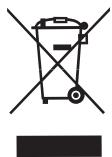
At the end of its working life, the product must not be disposed of as urban waste. It must be taken to a special local authority differentiated waste collection centre or to
a dealer providing this service. Disposing of
a household appliance separately avoids possible negative consequences for the environment and health deriving from inappropriate disposal and enables the constituent materials to be recovered to obtain significant savings in energy and resources.
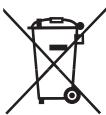
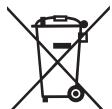
To remind you that you must collaborate with a selective collection scheme, the symbol shown appears on the product warning you not to dispose of it in traditional refuse containers.
For further information, contact your local authority or the shop where you bought the product.
FR
1.DESCRIPTION DU PRODUIT (Fig.1)
m = 311 ;
6. IPIN ANO TH INPQTH XPHSH
ByalTe To kaAa(4) kai yupioTe Tn xeipola(3) oE tho nou va mnpoeite va Tnv niavte. Iiaote Tn lah kai EiaayaveTe Tnv meo aOn theon unooxns Tns (Eik.2).
ApaipéoTe ola ta uIká Tc
oukeuaiaac nou unapxouv 0to
eowtepiKó Tou doxieou.
IIuvTe to kalαθi kai to doxeio λaiou με
oanaovl kai vepó. ΣtpayyioTe kai
oteywote kala npotou ta tonoθeTnoTe
Eava ot θeon touc (Bλeπe nap.
"Kaapiaoos").
MHN TOIONGETEITE TH ΦPITEZA MEESA ΕE NEPO.
7. TPOIOX XPHSE
TooTheTnote TOnoukeun EInavwOe mia opiOvTiA kai OtaEepn EtnpavEvia, maKpia ano TIC yWViEc TNS kai mny apnvTe TO kalwio va Kpeetai ano To akpo Tou TpanEziou n TNS Kouzivac. Mny ayyiTe TIC EepmaivovEvEc EtnpavEvic.
Σηκώτε Στο ταλυμμα Στης φριτέζας (1) πιανόντας Στο Σπον εἰδικήλβή (2).
IpoTu yEmuOeTe Tn φpIeZa με λaDl n λioc θa npéπi va exTe OTeyVwOeI kαla ta Eapntμata ts κai va ta exTe tooθeTnoeI OT θεon tous.
Báλe λádi n iato m eoa oToV kádo λaloiou, tooo wote va qTavéi avμεoa oTnV EλaxiTn Kai OTo mEyIOTn Oaθm Tou doxeiou nou θa δite OTo εωτepikó Tou. Av xŋoμoioηoTe λinoc oE oTEpa μopφ, θa npēnei npwta va To λIoεte MEAσa oEv aKεuoc kal eTa va To pIeTe MEOA oTn φpIeZa (βλeπe Tny Evotnta eTov tItLo "Aeitoupyia Tns φpIeZac M EλinoC oE oTEpa μopφ").
Mny avaieiyvete diaopetiké iDn AInous n laoiu. Mny npooteve naotna laoiu n AInous oTo Aabi/Alios nou hon exTe Xpnoipoinoei.
Baalte n qpiTeZa oTny npizca.
2. TEXHnueCKn XAPAKTEPNCNIK
Hansechen - YecToTa: 230V~50Hz
Mouhocr: 1000 W
KanaumTeT:1L
3. BAXHIN IPIPABNJIA 3A CINYPHOCT
- Пгдпьрватуунтpeба на ураза поче te TE BHMATEHNO INCTpyKuNTe n Ги заразе 3a 6bdeuzn KOHCyIITaUIN.
CleI KaTo pa3oNaKOBaTe ypeJa npOBepeTe DaJIe E B Do6po CbCToHHe. B clyaH Na cBmHHe He ro n3PON3BaIte H Ce O6bPHeTe 3a NOMOu KbM UnpaBOMOuE HcHTbP 3a TexHnuecka POndRpXkKa. - Onakobbuchnmt MaTePnaJ (HaIIOHOBn PIIIKOBe, CTIpONOp) Tp6Ba Da 6bDe CbXpaHBAH daJeU OT Deu, TbKATO ppeCTabJIbRa NOTEHuaJeH N3TOUHk Ha ONaCHOCT.
- Прени пьвату унотpeba на уразда проверете дали нанрженьeto на Ваша телектуесka мржа отrogарна отбелязаното вьрху уразда.
- Enejktpnuecka tca cnryphoct ha ypea ce rapaHTnpa cAmO B cnuya, ye CbIyT e BKJIIOUeH KbM eFNIKACHO 3a3EmeHa INcTaJauzna, Taka KaKTo ro npedBnJdAeNcTBaUNTe HOpMN 3a eNejKTPnuecka cnIpyhoCT. Ipon3BODInTeJH He HOCN OTROBOPHOCT 3a BpeDn pRnuINHeH ON LInCata Ha eFNIKAcHO 3a3EMBAHe Ha INcTaJauZna. B cnuyaH h CbMHeHne,
Opbuatae Ce KbM npocnoHaIO KBaHnucnPauh CneuaIaNT.
B clyaHa hecbBmecT mexy Baunn KOtakn uenceNa Ha ypea cmHeTe KOtakTa C npIIOxOJaU, KaTO ce o6bPheTe 3a IOMoU KbM KbAnOpupan CneuaJIInCT.
He npenopbUbame ynoTpe6ata Ha aadantepn, pa3kloHnteIn nn ydbJnxnteIn. Ako n3nO13BaHeTo m e HANOxNTeJIHO, n3nO13BaIte CaMo Te3n, KOITo OTROBAPrHT Na DeiCTBaIuTe HOPMn 3a CnIpyHOCt, BHIMaBaIKn Da He npemHaBaTe MoUHOCCTTA Ot6JIa3aHa Ha aadantepa nn ydbJnxnteHNn Ka6en.
B clyaHa aabapn n/nn HnnpabuHnO fynkUOnHpaNe n3KnUoHeTe ypeDa 6e3 da ce ONTBaTe Da ro nOpPABrTe.ObbPheTe ce 3a NOMOc Camo KbM ynpabOMOeH OT npOn3BOJNTeTn TEXHueCKn cepBn3 n N3NCKaIte pni nOpPBAkTa My Da 6bDat N3PON3BaHN OpunHaJIH pe3epBHN qactn n akcecoapn.
To3n ype3 e npedHa3HaueH cAmo 3a DomawHa yN0Tpe6a, Taka KaTO e OINcAHO B Ta3N KHNKCA C INCTpyKUn. BcKa dpyra yN0Tpe6a ce cHTa 3a HeaKeBatha n KaTO Taka 3a onacha.
IpOIN3BOIDTEJIAT He HOCN OTROBOPHOCT 3a BpeIN pPUNHEnH O T HENpaBnHa, rpeuHa nIIb6eOTROBOPHa yNoTpe6a Ha ypeDa, KaKTo n 3a BpeIN B CNeIcTBHe Ha nonpaBkA Ha ypeDa n3BbPseHa OT HeYNbJHOMOSeHO JInCe.
Pnynotpe6aTaHa eJekTpueeckuypeu Tpr6Ba Da 6bDat Cn3BaHn HAKO OCHOBn npabnla 3a cnrypnoct C ueJ da 6bJe HamaIe npcKa ot noXkap, eJekTpueecku yapn u/nnBpeu npuunHeH Ha Xopa,
A UMEHHO:
He n3noI3BaIte ypeia, ako kpaKaTa an pIeTe Bn ca mokpn nn BnaXn, KaKTo n aKO CT6Oci.
Kato 3auntha mRpka cpeuy eJektpueckn ydapn He NotanTKe KHTpOJIHn I naHeI nePeOTaHa Ha ypeDa BbB BOda, HNTo TmMInTe NOD Teuaq KpaH.
HE NINNAITE ROPEUITE IOBbPXHOCTN.3A LcELTA IN3IOJ3BAIITE DpBXKNTE.
BHIMAHNE! IO BPEME HA PA6OTA
ΦΡΙΤΟΡΗΝΚβTp ΜΟCTΙΑ ΣΟ
MHΟΓΟΒΙΝΚΟΥ ΕΜΠΕΡΑΤΥΝΙ.
HEΟXBΟΥΝΙΜΟΕ ΑДΑΒ3ΜΑΜΕ
MEPKI, 3A ΑДΑ Ι3БΕΗΤΕ ΠΝΚΑ
OT Ι3ΓΑΡΑΗΝΙ, ΜΟχΑΝΙ ΙΙΙ
ДРΥΓΙΝΙ Bγδ3MOχΗΝΙ BPEДΙ έH XΟΡΑ
ΙΙΙ NΕΣΙ.
HE MECTETE YPEDA IOKATO PABOTI NJIIN IOKATO I3CTNBA OJIMOTO.
He 3a6pa3nIte, Ye Ma3HnTe MoRat da ce pa3rpaIANT IIN DOpN 3aIaNIT npn PPOJbJIKHTeHOTO IM 3aRpBAhe Do BnCOKn TEMpepatyn. B CnyauHa 3aNaJIbAHe N3KNIouHe Te3a6abHO yPeDa I NOCTaBete KanaKa, 3a Da 3aDyuHIne PJIaMbka. 3a BaWaTa CnryphocT HkORA He N3PON3BaITe BODa.
I3KJIIOUBaIte ypeDa, KOraTO He ro I3PON3BaTe IINI PpeDN HEROBOTO IOHCTBaHe IINI NODpBxKa.
3a da n3KJIIOUHTe ypea e Heo6xOIMo IbPBO da nocTaNTE npeBkIIOUBaTeIa Bn03uIgN "O", cIeI KOeTO da ro N3KJIIOUHTe OT KONTAKTa.
Hikora He ocTabrTe pa6oTeu ypeI 6e3 Ha3Op. NkJIOUBaIte ro dopu I KOrato ige OTCbCTBaTe 3a KpaTko.
I3yakBaIteMa3HnHaTa da I3CTnHe npedn noHcTbAHe IIN cbxpaHHe Ha ypeDa.
He n3noI3BaIte ypea ako 3axpaHbAsnT My Ka6eI nn IJn IeNcIbT My ca NOBpeDeHn, KaKTo n B CnyaHa aBapra Nn HEnpaBnIHO fynKIOHnIpaHe. IpOBePraBaiTe peoBHO daJIIN 3axpaHbAsnT Ka6eI ce HAMIPA B Do6po CbCTOHNie.
IOTpe6nteJrT haTo3n ypeJ He Tp8Ba Da ce OINTBa da CMeHra3axpaHbaunry My Ka6eJ. B cnyaJ, ye CbunrT e NOBpeH en IJn e Heo6xOIMo Da 6bJe CMeHen 6pbuajTe Ce EInHCTBEHO KbM UnpaBOMOueH OT npOn3BOJNTeJIr cepBn3 3a TexHnueCKa POndpbXkKa 3a HerOBnI pereJed n CMHa.
He octabayte KaBeJa Da BnCn OT KpaHa Macata Nm KxHHeHcKn PJIOT, KaKToN Da BIn3a B KOHTaKT C RopeuINOBbpxHOCTN.
Hikora He n3KJIIOUBAIte ypea ot Mpekata c Ibprnane Ha Kaeba.
He nocTaBnTe ypea B 6Iin3OCTdo ra3OBu IIN eJekTpueeCKN KOTIOH, BbTpe IIN B HEnoCpeDCTBeHa 6Iin3OCT do ropeuI cyprHn IIN MKNpOBbJHOBV neuKn.
CbxaHbAaTe ypea no BpeMe Ha pa6oTa daJeU OT Deua nn Xopa c yBpeXdAnH.
He n3no3BaIe ypeHa oTknITn npocTaHCTBa, HnTo ro n3laRaIte Ha aTMocpepHi BInrHnA (DbXkD, CJIbHcE, Ied n dp.n.).
Korato peuHte Da He n3nOJ3BaTe noBueYe yPeJa e npenOpbUHTeJIHO da Ro HappaBInTe HEn3nOJ3BaEM, KaTo HApPImep CpexKeTe 3axpaHbaunMy Ka6eJ.
4. INPENOPbKN 3A yNITPPE6A
- Прелорьаме уnotpe6ату на pactителни Ma3нин похдаши 3a пьжichte рп всоки температуни. Може да Изольотe Teчни сл Тьрни Ma3нин. Ако Изольотe Тьрни Ma3нин B3IMmaite Мерки, 3a дпретоватe перразанeto на peotana (Вж. "Уnotpe6а на Тьрни Ma3нин").
He n3no3BaIte ypea c MaIKo Ma3HnHa IIN 6e3 Ma3HnHa. HbOTO Ha Ma3HnHaTtpr6Ba Da 6bJe MeJy OT6eJIra3aHOTo B pe3epBOapa 3a Ma3HnHa (5) MInHMmaJIHO IMAKcIMaJIHO HbO. Ppei Da BKIOHTe pPrtIOpHnKa IPOBepTe DaII NHBOTo Ha Ma3HNHaTa e DOCTaTB4HO.
5. YNOTPEBA HA TBbPDA MA3HnHA
Ako 3a IIpbxkeHe I3non3BaTe TBbpda Ma3HnHa e Heo6xOIMa Da B3ImaTe CJIeHNITe MEPKn:
Pa3TOnTe Ma3HnHaTa B OToJeHeN CbI Ha 6aBeH OrbH.
- ɪЗсипөгіе Внмателно Ma3нинота в peэрвога на српшорнika до OTблэзаго мakсимално НИВО MAX.
Bx. "Haun Ha ynoTpe6a".
Ako ce KaHnTe Da n3NoJ3BaTe TBbPdaTa Ma3HnHa, KOTo CE HAmipa BbB PpNTOpHnKa OT npEdxOHa yNtpe6a, Hapabete DynuN Bu He C NOMoUta Ha BVNIua.
Clek KaTo HaIacnTe TepMoCTaTa (6) Ha TempepaTpa 160° octabeTe ypeda Da ce 3arpee B npOdbJIkeHne Ha eHa MNHyTa, CJIeD KOeTO OTHOBO NOCTabete TepMoCTaTa Ha "0". NObTOpTe CbUaTa ONepaunr Ipe3 INHTepBaJIn OT IIO HRAKOLKO MNHyTN, DOKaTO Ma3HHaTa He Ce pa3TONn HAIBJHO.
3. MEPbI IPEDOCTOPOXHOCTN
Ipeed nepBbIM nCNoJIb3OBAHnEM daHHOro np6Opa BHmAteJbHO npOHTiTe HAcTOrIe ee pyKOBODCTBO NO 3KcIIyatauM IN COxpaHnTe erO dJa NocJeDyUOxN KOhCyJbTauN.
CnB yNaKOBky, y6eHntEcB B
IeNoCTHOCTn np6opa. Ppi
BO3NkHOBeHN COMHeHNI
ObaaJteCB B cepTnΦnIpOBAHHbI
UeHTP TEXHnueCKOrO oCbJyKnBaHnI.
3JIeMeHTbI ynaKOBKn (PnlaCTNKOBbie nakeTbI, POnlncTpOJbHaN peHa N T.D.) CNeDyET XpaHtB BdAnOT DeTei, TAK KAK OHN MOYT CTaTB NOTEHuaNbHbIMN ICTOCHIKAMN ONaCHOCTN.
Пеледпелвимисользованемприборубдпесь,чToнаряжениВ домашен сети COOTBEТСТBYETЗначени,указаанHomу на приборe
3JleKtpnuecka6e3oNaChocb npinbopa rapaHTnpyETcTToIbKO B Cnyae,ecNI OH npaBnJIbHO 3a3EmJIeN COJIaCHO DeIcTBYIOUIM HOpMaM 3JeKtpnuecko6e3oNaChocTn. Ipon3BOJntJIb He Hecet OTBeTCTBeHHOCtN 3a yIep6, pInuHHeHHbI BCIECDTBE N OTCytCTBna 3a3EmJIeHHa. PInu HaJIuHHm COMHeHHN OTHOCTeJIbHO 3a3EmJIeHHa OBpaTNTeCb K KBaJIINΦuICpOBaHHbIM CneUmaJIncTaM
B cnyuae hecoBmeCTnMoCtN ceTeBOI pO3eTKCu CO IITeNCbHOB BNIKoI npi6opa IPOIN3BeDInTe Heo6xOdMHyU 3aMeHy PO3eTKu, PpI6eRHyB K NOMOuKBAJIINΦIUPOBAHbIX CNEUAnICTOB
He pekomeHnyeTcNcNoJIb3ObaTb aIaIaTePbI n/nn ydInnHTeIi. B cIyuae Heo6XoIMIOCTn CJeIyET NcNOJIb3OBA TbONbKO aIaIaTePbI n ydINnHTeIi, COOTBETCTBYIOUne DeIcTBYIOUm HOpMaM 6e3ONaCHOCTn. PpI 3tOM HuxHO CNeIDITb, YTO6bI He 6bl IpeBbIeH IpeDeJ MOuHOCtN, yKa3aHHbI Ha aIaIaTepe n/nn Ha ydInnHTeIe.
- Ecni npnbop nepectan pa6oTaTb,
obpaaataeTcB TOnbKO B
cepTnDnupoBaHHb LcHtp
Texnueckoro 06cnyxuBaHHa. B clyuae
noIOMKn I/IIIn HnepaBnBHO pa6tbl
npnbopa BbIKIOHTe erO n He
IbTAntecb NoCHNtB. O6pATNTcB B
cepTnDnupoBaHHb CEHTP
Texnueckoro 06cnyxuBaHHa N
Tpe6yTe, YTO6bl 6bln INCNoJIb3OBAHbl
OpunHaJIbHbIe 3aJaChbIe Yaactn I
pnHa,IaJnxKHOCTn.
-Данньл пибор спpoeКтюван ИпредианчehEN ДяИ Испolyзоваян TОлькВ ДOMaшинx уСLOВЯХ,ΚАЗ STО ONИСАНВ HACTOЯЧЕМ РУКОДCTBE. Испolyзоваян пибopa В ЛЮБIx Дуггх УIELX paccMaTPnBaETСАΚ Heправильhoe И,ΚАССЕДСТВЕ, onaCHOE.
- ПОНЗВОДNTeЛь He HecET OTBETCTBEHHOCTN 3a BO3MOXKHBIE NOBPEKДЕнЯ,HaHECEHNBIE ПиНЕпавильHOM,OшИБОЧHOM ИПИ 6e3OTBETCTBEHHom IcIПь3OBaHIN INPn6Opa N/INI INPn peMOHTe, PON3BeDEHHom HEKBaJIINФИЦЮВаньIMпepcoHAlOM.
Ppi nCnOJIb3OBaHmN 3JIeKTPuYeCKnx
PpIbOpOB Tpe6yETcB BbIIOJNHrTb
HeCKoJIbKO OCHOBHbIX NpaBnJ
6e3OpanchOCTn C cJIbIbO ChNXeHnR pNcKa
NoXkapa, 3JIeKTPuYeCKnx pa3pIDoB
n/nnn HaHeCEHn TpaBM JIoDAM:
BOCOSEHHOCTN
He npikacaiTebc K npnbopymokpbimn nnBlaJXbIMnyKaAMn nnHOraMn, nI6o 6dyu pa3yTbIM.
nONOMKINHnHnPaBnJbHO np6Tobl. Perynapno npOBepaTe uHyp nTAnHa Ha NaIuNue NOBpeXDeHn.
Пльзовать He Должень
camocToTЯтBJHo 3amehrTa shHyp
питаня данHoro пибopa.В сlyuae
nobpeKdENHn Ин HeO6xOДIMOCtN
3amehbI shHpya ПИТаHЯOBpaAaITecb
Tolbko B ceHTp TEXHnueCKoro
obcIyknBaHn, cepTnФицIpOBaHHbI
пpon3BoDInTeJIem,ДЯ erO рОверК,
peMOHTa Илп peYlnPObKN.
He donyckaIte, yTo6bI shHyp nHTaHnB CBncaJ C KpaT CTOna nn CTOneUHNcBi nn YTo6bI OH KacAICI rOpAHX NOBepxHOCTeI.
BbHIMMaIuTeNCeJIbHyIO BUNKy u3 pO3eTKn, HNKoIa He TAnHe 3a UHyp NHTaHIA.
He octabJnIte npnbop Cbepxu nInn B6n3n ra3oBOrO nInn 3neKtpueckoro 06orpeBaTeJI, BHyTpNiIN BO3ne rOpJeN PnNTbl NnM NKpOBONHOBOn neH.
Pacnonaratapepaotoaioi npnbop BdaIOnOT dTeu INHbAINIOB.
He nCnoJb3yIte np6Op Ha OTKpbITOM BO3DyXe Hne DoNcyckaIte BO3DeIcTBnHa HrEo aTMocpePbIX RAJIeHn (doXdb, coJIHeuHbIe JIyu, IeI n T.D.).
Korda Bbl nokeIaeTe HAcceIa OTka3aTbca OT np60pa, peKOMeHnyETcA OTKJIIOHTb EROOT 3JNEKTPOCeTI N CSeIaTb ERO Hepa6OHM, HApPIMep,OTpe3aB UHy pNTaHIN
4.3AMEUAHNIO NIO NCIOJIb3OBAHNI0
- PeKOMeHdyetycNcNoJIb3OBAtbpactNTeJIbHOeMaCJIO,piRIOdHOeIJnJXapeHnI pIi BbICOKNX TempepaTpyax.TaKKe MoXHO cNoJIb3OBAtB XnIKneIIN TBePdIe XnPbl. IpnNCIOJIb3OBAHmN TBepDOro XnPa HxKHO pInHrTb Mepbl PpeOCTOpOXHOCHTN CZeJIbIO pPeDynpexKDeHn nepepeBaHarpeBaTeJIbHOro 3JemeHtA (CM.pa3dEN "IVcNoJIb3OBAHHe C TBepDbIM XnIpom").
He nCnOJIb3yIte pPntIOpHNUc c MaJIbM KOINueCTBOM NII 6e3 Macla/Jnpa.
YpOBeHb Macna/Jknpa DOnJxKeH HaxOINTBcMexKdy MNHMmaJIbHOI MaKcIMaJIbHOI OTMeTKaMI, HaHeceHHbIMn Ha EMKOCTN (5).PpeD BKJIIOUeHNiEM FpNTIOHnCubl y6eIITecB B NaIJIeXaUeM yPOBHe MaCJa.
5.ИСПОЛьЗOBAHNE C TBEPДыIM XINPOM
BbIMoIte KOp3HHy n EMMKocTb BMbIbHOB BOe.
DaIte BOe CTeuch N XOPOo BO BcCyUInTe
yKa3aHHBe JeTaJIN, NepeD TEM KaK CHOba
yCTaHOBt bNx Ha npi6op (Cm. pa3Je1 "UcTka").
HE IIOrpyKAaTE PFPITOPHNUv BBOy.
7.ИHCTPYKlM NIO NCIOJIb3OBAHNIQ
UctaHOBnTe npb6Op Ha pOBHyIO uCTOuHByIO rOp3oHTaJIbHyIO NOBepxHoCTb, BdaIOn OT KpaEB, IN He DOnyckaiTe, YTO6bl UHyp NITaHIN CBVCan Ype3 KpaI CTJOna IINI CTJeShnCbi IIN KacaJIcRrOpaYnx NOBepxHocTei.
- ɪЗblɛknte shhyp nɪtənɪyaɪ ɪz OTCeKa B 3aɪdHeɪ qʌctɪn φɒpɪTHOpHɪnʌbl.
- CHINMITE KpbIuKy (1), DepeXacb 3a pyuKy (2).
Ipeed Tem KaHanOpHnTb pInTHOpHnUy MaclOM NIN JxIpOM, BCE etaII np6opAp DOnJXHbI 6bITb yCTaHOBJIeHHbIMN IN NOJIHOCTbIO CyXIMM.
HaJIeTe MaCNo IJIN JxNp B EMKoCTb, TaK YTO6bI yPObEh HAXOJINcM EJy MInHIMaJIbHO IN MAKcIMaJIbHO OTMeTKaMn, HaHeCEHHbIMBByTPn EMKOCTn. EcIN Bbl NCNoJIb3yeTe TBepdbI JxNp, erO cHaayJa HxJHo paCnlaBnTb B DpyToR EMKoCTn, INIiMb NOTOM 3aIITb BO φpntIOpHnUc (CM. pa3dJe "IVcnoJIb3OBAHne C TBepdbIM KIpom").
He cmeunBaTe MacNo nJn Jnnpa3nUHbIX BnOb. He do6abJIteHOBOE MacNo nJn JnP B yXeNCnOJIb3OBAHHoe MacNo nJn JnP.
BkIIOUHTe pprHOpHnCBy B ceTb 3JIeKTPoNITaHnI.
BkIIOUHTe npi6Op, haxaB KhoNkY BkJIIOUeHnA/BbIKIOUeHnA (6).
C nOMOuBOp peryIaTopa TempepaTypbI BbIepeNte JeJaemyIO TempepaTypy. CBeTOBoI INDnKATOp 3aROpNTc, I HArpeBaTeJIbHbI 3JIeMeHT NaHHeT HArpeBaTbCra.
BHMaHHe: nocIe BkIIOUeHn HxHO DaTb HarpeTbC B TeueHne 15 MNHT, YTObI OHa DOCTUNBaBb6paHHo TEMpePaTybl.Bo Bpemr Yka3aHHOro HarpeBaHn CBtOBoINHdkaTOp 6yTe3aRopatbCn rachytb 3-4 pa3a. Ipo npoeCTbn 15 MNHT TemepaTypa Macna Cta6nn3npyetc, INB HEM MOXHO 6yTeJ XapNTb PPOyKtbl.
I NICTKe 0PNTHOpHNUbI, PNOJOKDnTe, POKa MaCNo PONHOCTbO OCTbIHET.
EcnnФpntHOpHnua He 6ydt EcnoJIb3OBAtbcraCTO,peKOMeHnyETc XpaHnTb MaCIO INJIKN KINB PIIOTHO 3aKpbItbIX EMKOCTX B XIOIOJIbHnke INI B IPOXJaHOM MeCTe. HanONHnTE EMKOCTM MaclOM INI Jxipom, IpOnyCTVB IX Chepe3 MEIKOE CNTO C CEJIbU O ydaJIeHnRA ChTNU pOdykTOB.
Ecnn BbI nCnOJIb3OBAJIN TBepDbI JNIP, IIOJoxKdITe, NOKa OH CHOBA 3aTBepeET HeNOCpeIcTBENHO B EMKOCTN, IN y6epNTe pPrtIOpHNIcy C XInPOM BHyTpN. (CM. pa3JeI "NCnOJIb3OBAHne c TBepDbIM KInPOM").
8.ИСТКА
JaHna Onpaun MoKet yIyUwHnTb npOn3BOuNTeNbHOCTb pOHTOpHnUbl.
- Пи Вьборе Temnéратурbl
pyKOBODCTByNTecb Инфорmaцneи На
yypakobke пpoуКТа, KOTOpbI Bbl
coBupaTeCbжapntb, Лбо
opneHTnpoBOUHOn Tablincei,
nmeHoueCn Ha ФпгИтюрнUE.
Korda cBeTOBOn INHnKaTOp nOraCHet (Upe3 10-15 MInHyT), MacNo/Jxnp DOCTnHET BbIbpaHHo TEmnepaTypbI. CBeTOBOn INHnKaTOp 6ydet npOdoJXaTb 3aRopaTbcr I rachTyb B COOTBeTCTBmC zIKJaMn TepMOCTaTa B TeueHne BCero BpemEn JxapEnHa. EcnB bI XeJLaete npOn3BecTe JxapEnHe HeckOJIbKO pa3 NOpriD, TO nepeD TEM KAK XapITb OChepdHyIO npOuNIO pODoYKTOB, CNeDuyeT NOdoXDaTb, NOKa CBeTOBOn INHnKaTOp nOraCHet.
IorpykaIte KOp3nHy c npOdyKTamn B MacNo C OCTOPOKHOCTbIO, YTObI BOda, CoepKaaJcAraC B npOdyKtax, He pa36pbI3rNBAIacb pni COpNIKOCHOBHm C MacJOM.
Cneinte 3a npoceccom xapeHnA.
TocneKapenHn
- ИзBLEKNTe KOP3INHy I3 EMKOCtN, сlerka CTpAXHNTe ee n NOBcTe B NOLOXKeHne ДЯ CTEKaHnR (Pnc. 3). ПOMeCTInTe npOdyKTbI Ha 6blIO, npeDbapNTeIbHO NocTeJIIB Ha erO dHO BnITbIbAIOUeE 6ymaxHoe kYxOHHe pIoTHeuCe. B 3TO BpeM MaCNo BO φpINTOpHnCe BHOb JDOCTrHET Heo6xOdIMoT TempePaTypbI DЯ HOBOrO XaPeHnR (3eJIeHbI CBetOBO INHmIKaTOP ChObA NoracHT).
Пользусь Дуршагом,ИЗВLEКITEчасиblжареньхлpoДУКТOB,KOTOPBLEMORЛN OTДЕЛNTbСЯ N OCTaTbСЯBMACJI.Иxдальншee obЖakapINBaHne 6byet yxduTaTB KaYeCTBO MaCJa. - ПО OKONЧАн И Харазеня NOВЕРНITE пегеключATEь ТермocтATER ПОLOЖЕНИ "0", OTKЛЮЧITE пибор от сети ЗLEКТРОПТАнИ.Есл фрпгОНNUca ИСПОЛБЗУЕТС У actO, ПогузITe KOP3Ину B MacIo 和 HAKPOIte КрblшКо, YTO6БI 3aUNTITb MacNo.
- Ipeed Tem KaK pIpcTynITb K pa36OpKe
Ipeed TEM KAK pnpCTyNTb K YnCTKe fprntHOpHNzbl, BbIKNIOHTe ee n3 po3eTKn I NOOxDNTe, NOKA OHa OCTbIHET.
- I3BnEKeNTe KOp3nHy n CnHmnte C Hee pyuKy.
- BbIMOnTe KpbIshky, Kop3nHy c pyKoI, EMKocTb pPrtIOpHnCiB i N BHeUHNI KOpNyc B rOpyeMblbHO BDe. 3aTeM OONOCnTe n BbICyUInTe nx.
He nCnOJIb3yIte dIa YIcCTKn cpNTHOpHnIci bI a6pa3INBHe Me MOIOUne CpeIcTBA N MTeAIIHNeCKNe MOaJIKN.
9. ПАКТИСЕСКЕ PEKOMEДАЦИN
Macna nnKmpbl
IcnoIb3yIte BnIbI MaCna/Jnpa, npiroDhbIe DnI JxapEnHn PnB BlicOKnx TempePaTpyax,TO eCTb TaKHe, KOTOpbIE COdePkAT NOniHHeNaIeHNbIe KNCIObTI (pactNTeJIbHbIe MaCna),NJn pactNTeJIbHbIe MaprapuHbl.
- Peryulapno Mehnye MaNo nn Jxnp. HnkOrda He do6abnTe CBexkee macNo B yxe NcNoIb3ObaHHoe.
He npdepkmbaTe BbICOKyU TeMnepaTypy Macna/Jnpa 60nbue BpeMeH, Yem Heo6xOIMo. UctahabInBaTe peryIaTOp Ha Hn3Kyo
Tempepaty B cnyuae dInTeIbHoro nepepbIbMaekdyXapEnnMn.B IpOTNBOM cNyae npndetc MeHrTb MacNo/xxnp 60nee yacto.
- KaK npaBnIO, MacNo/Jkp TemHeET 6bIcTpee, ecIn B HEm JkaprTCn IpOdykTbI, 6oRaTbIe IpOTeHAmN (MrcOnn pbl6a).
- Пи жарени картосяя масло/жр можно Incпьзовать 10-12 pa3, ecп посе жарени каддор поцу они差别ь масло/жр OT octabшхсь в hem части пordукт.В Любом слчаe, He Incпьзуйтмасло/жр бolee чem 6 месаць.П пошесви уkaазан Horo CSPOKa mасло/жр следует удалит.
BJIIO6OMcIyueae,3aMeHnTeMaCNo, eCNI npi HArpeBaHmO OHO HaunHaet 6ypnITb,eCNI OHO paxHeT nIN IMeET npINBkyc IporopKIOCTN, eCNI erO cBT nOTemHeJ,JIbO ecNI OHO nOTepaIOn TEKYueCb.
Ecnn BbI nCnOJIb3yeTe cPpNTOpHnUy He yacto,TOpeKOMeHNdyETcXpaHnTb MaCNo NJIJ XNpB 3aKpbITbIX CTekJIaHHbIX EMKoCTAx,KeJaTeJIbHO BXoJOnJIbHnke.He peKOMeHNdyETcR OCTaJIaTb MaCIO BO cPpNTOpHnCe B TeueHne DInTEJIbHOro BpeMeHi.
Xapehbi kaptopeJIb
YTO6bJXapeHbI KAPToOpEnIPOnyuINcB BKYChbIM XpCYTAAUM, HxKHO CNeDoBaTb CNeDyUOUM yKa3aHnM:
He nCnoJIb3yIte OueHb MOnIOdoi KapToOpB (JapeHne paHnero KapToOpEJa, KaK npaBnIo, He daET xopoUnx pe3yIbTaTob). IpopeXbTe KapToOpEJI BΦopMe NaIoChek (PpIzM).
- PpOMoTe nope3aHbI KApTOpeJIb NOB OBOIpOBoHbIM KpaHOM. 3To npEDoTbPaTNT CInnAHe KycOcKOB KapTOpeJIr pRJxapeHmN.
Ocuynte Kycoukni KapTopeIaHCToI caJIeTkoI INI BnITbIbAIOUM IONOTeHcEM.
KaptofoJIb cIeNyET XkapuTb B Dba 3Tana:
-Первь:160°CBteueHne10-15 MInHT.
Btopo: 190^ BteueHne5-8MnHyT.
- Ecnn KaptopeB 3amopoxKe, erO HuxHo JkapntB COOTBeTCTBn C INHCTpyKUaMn Ha erO ynaKOBKe.
3amopoxkHHbI npOyKTbl
3amopoxeHHbIe npOyKbI pInn POMeUeHmB MaCNo 6byT cyueCTBeHNO CHXKaT bero TEmpeaTyp. IToTomy Hx He cJeDyET NOpEuaT B O pNtHOpHNuY B 6oJIbux KOnIYeCTBaX.
- Плобждпг, пoka прибор нагpeетс до ONТIMально TemпераТурь Дя Кареня, пered Tem КадnomeCTиВ Нero HOByIO NOpUIO npOdyKTOB rny6OKo3amOpo3KN (T.e. Плобжды,TOKa CBToBOI INДИКaTOP ChOBa nOracHET).
- UctaHOBInTe pyHKy TepMOCTata B COOTBETCTBnC yKa3aHnA Mm, IMeHOzIMnCnHa ynaKOBKe pOdykTa rIy6oKo 3amOp03Kn. Ecnn TaKne yKa3aHnR OTCyTCTByIOT, yCTaHOBInTe TepMOCTat Ha BbICOKyIO TempepaTypy (190^)
- 3TOMy npabiny TaKxe HuxHo CNeIOBaTb PnJ XapEnH NHeKOToPbIX BnIOB IPOyKTOB, Tpe6yUOxN TuaTeIbHOrO pnproTOBLeHnA, HApPIMep, KpOKet (BnD KOTJIET - PpIM. nepeB.).
- Пюдктblлубokоим Заморози частocodeжатн6ыltOTHOOKONIчeCTBOlbda,КOTOpbIпереджарehnempekOMEHdyETcYdALNTb.
10. INHΦOPMAÇI N O ΠРABNJIbHOY UTHJIN3AÇM N 3JEKTPUÇECKNX I 3JEKTPOHHbIX PIPNUBOPOB
13/14
Iocne OKOHaHn cpoKa cnJXbI, daHnb I np6Op He dONKeH yTNIN3NPOBaTbCBA MecTe C 6blTOBbIMN OTXoAMn. OH MOxET 6blTb nepeDaH B CNeuHaNbHbIe CEHTpbI
DnΦcpehenuropoBaHHoro c6opaOTXoOB, HaxOJaIuneC B BeDMCTBe MyHUNIpaJIbHbIX BlaCTeI, IIN aEHTAM, paB0TaUcIM B daHHo Ccpeye ycnyr. Pa3dJIbHaJ
yTININ3aIIN 6bITOBbIX 3JIeKTPoPnIObOpOB
N03B0JrET N36ExKaTb BO3MOXhBX
HeraTINBbIX NOCJIeDCTBm DIA OKpyJauOSei
CpeDbI IN 3DOPOBbI JIOJeI, KOToPbIE MOrY
IMeTB MeCTO BCJIeDCTBne HEnpAInlbHOI
yTININ3aIIN, a TaKxIe N03BOJrE T NOBTOHO
NCIOJB3OBaTb MaTePnAlbI, BxOJaUeNBE
COCTAB 3TNx PnIObOPOB, I Do6tbcS, TaKIM
O6pa3OM, cyueCTBeHHOn 3KOHOMMn 3Heprn
n pecypcoB.
HTo6bI NODcEPKHyTB Heo6xoDMocOb
pa3DeJIbHO yTININ3aIIN, Ha DaHHOM
Pnp6ope HaHeceN 3HaK, PpeDuPpeJdaIOuSi
O 3AnPeTe NCIOJIb3OBaHNr TpaDiuONHbIX
MycOpNbIX KOHTeHepOB.
DJIa NOnyehnI 6OJIe Peo6HO
INHΦopMaUcN CBAXITecb C MeCTHbIM
OprAHOM Blnactn INIcMara3INHom, IDe Bbl
PnpOBeJI NaHHbI pOdyKT.