
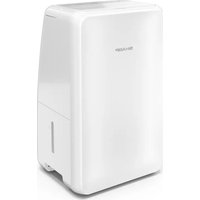
UD-P204P-W - Dehumidifier SHARP - Free user manual and instructions
Find the device manual for free UD-P204P-W SHARP in PDF.
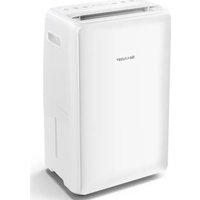


| Product type | Dehumidifier |
| Brand | Sharp |
| Model | UD-P204P-W |
| Dimensions (W x H x D) | 355 x 567 x 259 mm |
| Weight | 15.5 kg |
| Power supply | 220-240 V AC / 50 Hz |
| Power consumption (max) | 330 W |
| Dehumidification capacity (30°C, 80% RH) | 20 L/day |
| Dehumidification capacity (27°C, 60% RH) | 11 L/day |
| Airflow | 175 m³/h |
| Recommended room area | 35 to 46 m² |
| Refrigerant | R290 (propane) - 60 g |
| Water tank capacity | 3.8 L |
| Power cord length | 2 m |
| Standby power | 0.25 W |
| Operating modes | Dehumidification, Drying (laundry), Ventilation |
| Humidity control | Adjustable from 40% to 70% or continuous (CO) |
| Timer | 1 to 8 hours (auto shut-off) |
| Special functions | Grille oscillation, child lock, auto defrost, auto shut-off full tank, continuous drainage |
| Air filter | Washable, regular cleaning recommended |
| Maintenance | Clean the filter with a vacuum or water, do not use solvents |
| Safety | Compressor protection, temperature sensor, shut-off when tank is full, child safety |
| Operating temperature | 5 °C to 35 °C |
| Country of origin | Not specified |
Frequently Asked Questions - UD-P204P-W SHARP
User questions about UD-P204P-W SHARP
0 question about this device. Answer the ones you know or ask your own.
Ask a new question about this device
Download the instructions for your Dehumidifier in PDF format for free! Find your manual UD-P204P-W - SHARP and take your electronic device back in hand. On this page are published all the documents necessary for the use of your device. UD-P204P-W by SHARP.
USER MANUAL UD-P204P-W SHARP
Sharp Consumer sp. z o.o. (Poland)
ul. 10,4128 customer, Poland
Made in China
www.sharpconsumer.eu
SHARP
User manual
UD-P16 / UD-P164, UD-P20 / UD-P204
Ochumidifi
The following section is a section of the text:

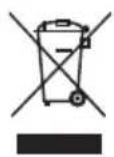
Attention:
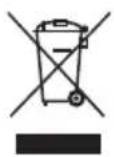
Your product is marked with this symbol.
It means that used electrical and electronic products should not be mixed with general household waste. There is a separate collection system for these products.
A. Information on Disposal for Users (private households)
1. In the European Union
Attention: If you want to dispose of this equipment, please do not use the ordinary dustbin!
Used electrical and electronic equipment must be treated separately and in accordance with legislation that requires proper treatment, recovery and recycling of used electrical and electronic equipment.
Following the implementation by member states, private households within the EU states may return their used electrical and electronic equipment to designated collection facilities free of charge*.
In some countries* your local retailer may also take back your old product free of charge if you purchase a similar new one.
* Please contact your local authority for further details.
If your used electrical or electronic equipment has batteries or accumulators, please dispose of these separately beforehand according to local requirements. By disposing of this product correctly you will help ensure that the waste undergoes the necessary treatment, recovery and recycling and thus prevent potential negative effects on the environment and human health which could otherwise arise due to inappropriate waste handling.
2. In other Countries outside the EU
If you wish to discard this product, please contact your local authorities and ask for the correct method of disposal. For Switzerland: Used electrical or electronic equipment can be returned free of charge to the dealer, even if you don't purchase a new product.
Further collection facilities are listed on the homepage of www.swico.ch or www.sens.ch.
B. Information on Disposal for Business Users
1. In the European Union
If the product is used for business purposes and you want to discard it:
Please contact your SHARP dealer who will inform you about the take-back of the product. You might be charged for the costs arising from take-back and recycling. Small products (and small amounts) might be taken back by your local collection facilities.
For Spain: Please contact the established collection system or your local authority for take-back of your used products.
2. In other Countries outside the EU
If you wish to discard of this product, please contact your local authorities and ask for the correct method of disposal.
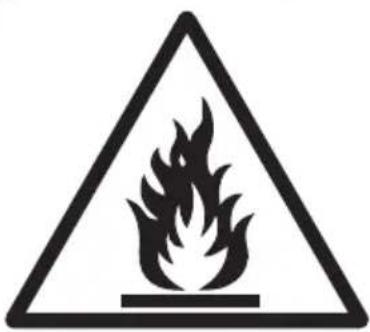
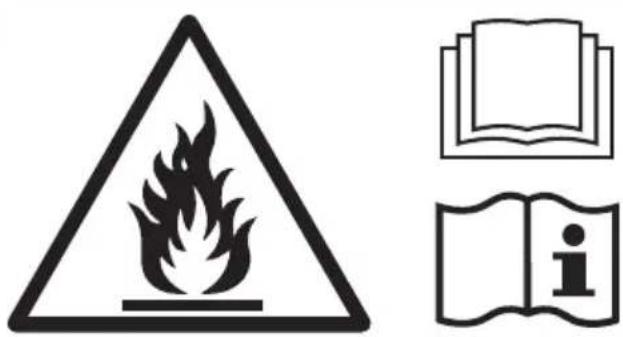
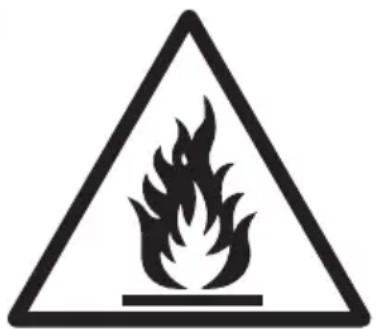
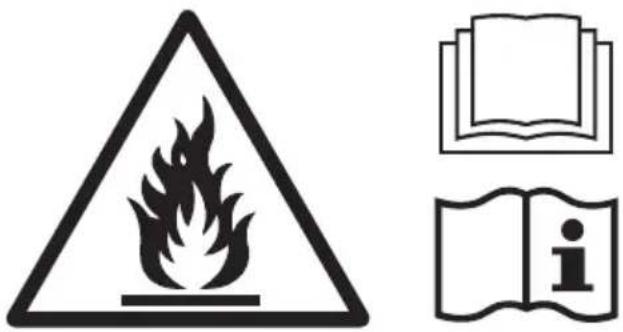
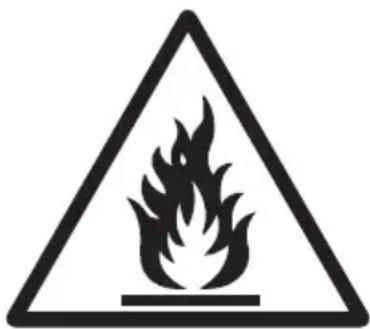
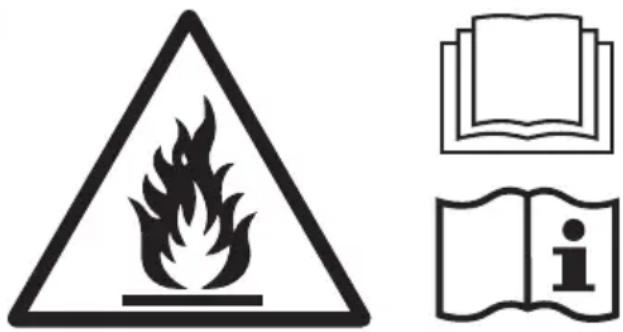
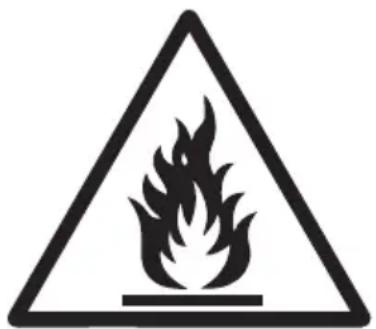
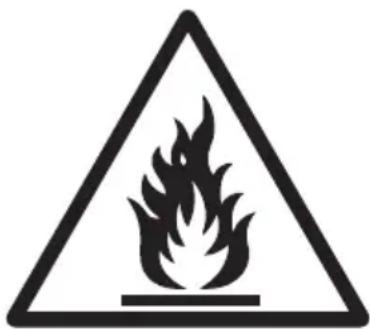
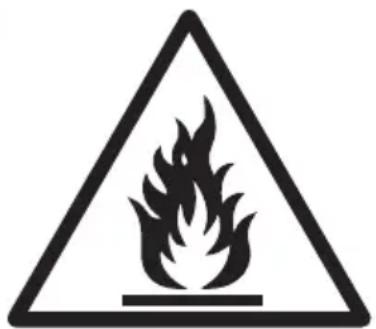
Flammable material. This appliance contains R290/Propane, a flammable refrigerant. Do not attempt to re-gas the appliance. Do not release refrigerant to the atmosphere.
www.sharpconsumer.com/contact/
www.sharpconsumer.com/support/ www.sharpconsumer.com/
documents-of-conformity/
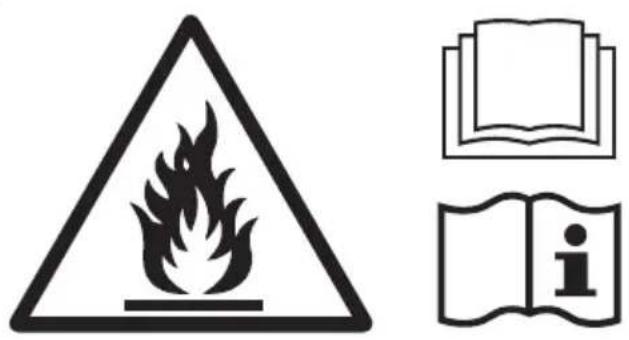
Additional warnings for appliances with R290 refrigerant gas (refer to the rating plate for the type of refrigerant gas used). READ THIS USER MANUAL CAREFULLY BEFORE USING THE APPLIANCE.
R290 refrigerant gas complies with European environmental directives.
This appliance contains approximately 55g of R290 refrigerant gas. Do not pierce or burn.
Maintenance and repairs requiring the assistance of other qualified personnel must be carried out under the supervision of specialists in the use of flammable refrigerants.
For appliances using R290 refrigerants, a service and operation manual, please refer to the ENGINEER INFORMATION section of this user manual.
Please read before operating your new Dehumidifier.
- The dehumidifier draws air in through the air intake via the dust filter. This air is cooled to release the moisture and then exits the unit via the louvered vent at the top.
- The dehumidifier is designed to remove moisture from the air and collect this in its internal water tank for disposal. The process to remove moisture can take many hours and is not instantaneous. Depending on the size of the room and sources of moisture, not all moisture will be removed from the air.
- Do not install and use the unit before carefully reading this instruction guide. Please keep this manual for product warranty and future use.
- Use your dehumidifier with the correctly specified mains supply voltage.
- Do not place the machine near any heat sources, as this may cause damage to the cabinet or cause a fire.
- Do not expose the unit to direct sunlight, as this will avoid the discoloring of the plastic parts.
- Do not operate the machine in places with dust or corrosive, flammable, or explosive gas.
- Provide guidance if used by children.
- Do not disassemble, repair, or replace the unit's spare parts by yourself. Only allow a professional person to repair the appliance.
- Place the machine on a flat and stable surface to prevent vibration and noise.
- Unplug from the mains supply when not in use.
- Never cover the machine when it is running. Make sure the air inlet and outlet are not blocked while in use.
- Do not spray water on the unit, as spraying water may cause malfunctioning and electric shock.
- Never pull the mains plug when your hands are damp or wet. Always switch off before unplugging to avoid electric shock.
- If you are not going to use the dehumidifier for a long time, turn off and unplug the mains plug, then pour away any water in the tank and wipe it clean.
- Do not pull the mains cable, as this may cause damage.
- Do not insert your fingers or items into the unit as this may cause damage or electric shock. • Before moving, pour the water out of the tank.
- When used in a low temperature and high humidity environment, please set the unit operating in laundry mode. In this condition the dehumidifier will operate continuously.
- Note: When drying clothes, please do not hang the clothes above the outlet as this will prevent water from dropping into the unit.
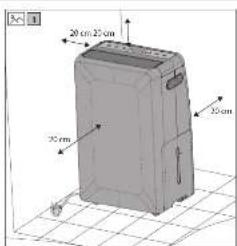
- When the machine is running, should make sure the minimum distance between the unit and the wall or other obstacles from all sides (top ≥ 60 cm; front ≥ 60 cm; back ≥ 50 cm; left ≥ 20 cm; right ≥ 20 cm).
- The appliance shall be installed in accordance with applicable country wiring regulations.
- Disconnect from the mains supply when cleaning the appliance.
- Children should be supervised to ensure that they do not play with the appliance.
- Cleaning and user maintenance shall not be carried out by children without supervision.
- If the mains lead is damaged, it must be replaced by the manufacturer, its service agent or similarly qualified persons in order to avoid a hazard. • This appliance is for indoor use only and not for laundry room use.
IMPORTANT SAFETY INSTRUCTIONS
Always follow basic safety precautions when using electrical appliances, including the following:
WARNING – Always observe the following to reduce the risk of electrical shock, fire, or injury:
- Read all instructions before using the product.
- Only use with a 220-240 V AC/50 Hz mains supply.
- This appliance can be used by children aged from 8 years and above and persons with reduced physical, sensory or mental capabilities or lack of experience and knowledge if they have been given supervision or instruction concerning use of the appliance in a safe way and understand the hazards involved. Children shall not play with the appliance. Cleaning and user maintenance shall not be made by children without supervision.
- If the power cord is damaged, it must be replaced by the manufacturer, its service agent, a Sharp authorized Service Centre or similarly qualified persons in order to avoid a hazard. Contact the nearest Service Centre for any problems, adjustments, or repairs.
- Do not repair or disassemble the product yourself.
- Be sure to remove the mains supply before performing maintenance, when removing and attaching and replacing the filter, and when not using for a long time. Failure to do so can cause a short circuit resulting in electrical shock or fire.
- Do not use the product if the power cord is damaged or if the connection to the wall outlet is loose.
- Do not insert fingers or foreign objects into the Air Inlet or Air Outlet.
- When removing the mains plug, always hold the plug and never pull on the cord. Failure to do so can cause a short circuit resulting in electrical shock or fire.
- Do not damage the power cord. Failure to do so can cause electric shock, heat generation, or fire.
- Do not remove the mains plug when your hands are wet.
- Do not use this product near gas appliances or fireplaces. When the product is operated with gas appliances in the same room, ventilate the room periodically, otherwise it may cause carbon monoxide poisoning.
- Do not operate the product in rooms where aerosol insecticides are present.
- Do not operate the product in rooms where there is oily residue, incense, sparks from lit cigarettes, or chemical fumes in the air.
- Keep the product away from water.
- Be cautious when cleaning the product. Strong corrosive cleansers can damage the exterior.
- When carrying the Main Unit, first remove the Water Tank, and then hold the Main Unit by the handles on both sides.
- Do not drink the water in the Water Tank.
- Clean the Water Tank regularly.
- When the Main Unit is not in use, dispose of the water in the Water Tank. Leaving water in the Water Tank can cause mold, bacteria, and bad odors. In rare cases, such bacteria can be a health hazard.
CAUTIONS CONCERNING OPERATION
- Do not block the Air Inlet or Air Outlet.
- Do not place the product near or on hot objects, such as stoves or heaters, or where it may come into contact with steam. Always operate the product in an upright position.
- Do not move the product when it is in operation.
- If the product is on easily damaged flooring, an uneven surface, or thick-piled carpet, lift it up when moving.
- Do not operate the product without the Air Intake cover properly installed.
- Clean the exterior with a soft cloth only. Do not use volatile fluids or detergents. The product surface may be damaged or cracked with Benzine paint thinner, alcohol or polishing powder.
- Do not sit on or lean on the product.
Installation
BEFORE FIRST USE Let the machine stand for 4 hours as this will allow the refrigerant to settle.
- Your dehumidifier must be operated in an enclosed area to be most effective.
- Close all doors, windows, and other outside openings to the room. The effectiveness of the dehumidifier depends on the rate at which new moisture-laden air enters the room.
- Place the dehumidifier in a location that does not restrict airflow through the front of the unit.
- A dehumidifier operating in a room will have little or no effect in drying an adjacent enclosed storage area, such as a closet, unless there is adequate circulation of air in and out of the area. It may be necessary to install a second dehumidifier in the enclosed area for satisfactory drying.
- Ensure that the unit is placed on a stable and flat surface. If the surface is not stable, there is a risk that the unit may be unstable and cause excessive vibration and that water will be released.
- The dehumidifier must have at least 20 cm of free space around it. Refer to the ☐ 1 on page 1.
Locating the Unit
Avoid locations where furniture, fabrics, or other objects can come in contact with the product and interfere with the Air Inlet and Air Outlet. Avoid locations where the product is exposed to condensation or drastic changes in temperature. Appropriate room temperature is between 5 °C to 35 °C.
Place the product on a level and stable surface with sufficient air circulation. Place the product in the centre of the room for better air circulation. When placed on heavy carpet, the product may vibrate slightly.
Avoid locations with grease, oil smoke, alcohol, hypochlorous acid, or chemicals in the air. Doing so can cause the product exterior to crack. The surrounding walls and floor of the product may become dirty over time. When using the product for an extended period of time at the same location, periodically clean the walls and floor adjacent to it.
Operating environment
• Working temperature: 5 °C to 35 °C. - This machine is suitable for indoors, e.g. Living room, study, office room, warehouse, basement, underground garage. - Make sure the door and window are closed before turning on the unit to get the best result. - Ensure that the unit is placed on a stable and flat floor surface. If the floor's surface is not even, there is a risk that the unit may be unstable and topple over. Also excessive vibration and noise may result.
Components diagrams – parts names
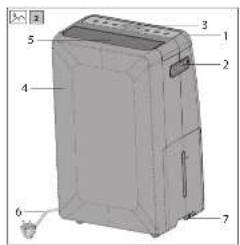
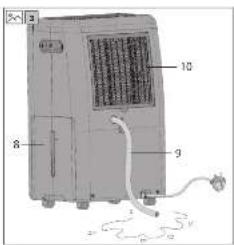
Refer to the 2 and 3 on page 1 for the location of the following parts:
- Top casing
- Handle
- Control panel
- Front cover
- Louver (air outlet)
- Mains lead and plug
- Castor
- Water tank
- Drain pipe (not supplied)
- Air intake and dust filter
Operating Introduction – How to operate
Control panel
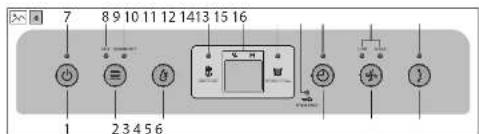
Refer to the control panel on page 1, item 4.
The name and function of control panel
- POWER – Press this button to switch the power on and off.
- MODE – Press this button to set the laundry mode or dehumidify mode
- HUMIDITY – Press this button to set the desired humidity.
- TIMER/LOCK - Press this button to set the machine shutdown time. The display will show the shutdown time accordingly. Press this button for 3 seconds to turn on or off the child lock function; the lock icon will show or disappear on the display.
- SPEED - Press this button to adjust the fan speed (there are 2 fan speeds).
- SWING - Press this button to turn on or off the swing function.
- ON/OFF INDICATOR - Lights up when the unit is on, turns off when the unit is off.
- DRY INDICATOR - Turns on during the laundry function.
- DEHUMIDIFYING INDICATOR - Turns on when the unit is dehumidifying.
- DEFROST INDICATOR - Lights up when the unit is in the defrost mode.
- DISPLAY - Shows the current status of the dehumidifying function (humidity in the air) and other functions.
- TANK FULL – Lights up when the water tank is full.
- KEY LOCK INDICATOR – When the key lock is active, this indicator lights up.
- TIMER ON INDICATOR – When the timer is active, this indicator lights up.
- FAN SPEED INDICATOR – When the speed of the fan is high or low the respective light illuminates.
- LOUVER ON INDICATOR – When the louver is in operation, this indicator turns on.
Operating introduction
Power on
Plug in the appliance to the mains supply and press the POWER button, it will start and the air outlet louver will open.
When powered on, the unit will start to dehumidify with the fan set to high. The compressor will activate after three minutes.
If the appliance is turned off via the POWER switch and not unplugged from the mains supply, it will start up again in the same mode.
Power off
While the appliance is operating, press the POWER button to turn it off.
Mode setting button
You can change the mode of the dehumidifier to dry clothes or dehumidify. To do this press the MODE button.
- Laundry Function: When the DRY indicator is illuminated the unit will continually dehumidify whatever the ambient humidity is. The fan speed will be locked in the laundry function and can not be changed.
- Dehumidify Function: When the DEHUMIDIFY indicator is illuminated the unit will dehumidify the air. While in this mode, the fan speed can be set and the humidity setting can be controlled.
Humidity setting
To change the humidity level, press the humidity setting button, each time the button is pressed, the display will change as follows CO\~40%\~45%\~50%\~55%\~60%\~65%\~70%\~CO. After setting the humidity level, the display will revert to the current moisture level detected by the internal sensor.
When the machine detects that the ambient humidity is 2 % lower than the set humidity, the machine will stop dehumidifying, the fan will keep working in low speed. When the machine detects that the ambient humidity is 2 % higher than the set humidity, the machine will start dehumidifying and the fan come back to work at set speed. When the ambient humidity is ≤30 %, the LO icon will be displayed; When the ambient humidity is ≥80 %, the HI icon will be displayed.
CO means Continuously dehumidify whatever the ambient humidity is. The machine default setting is CO when switch on the machine in the beginning.
When operating in the laundry function, the machine is running in CO status.
Timer
To start the timer function, press the TIMER button; the timer indicator will illuminate. On each press of the TIMER button, the display will change from 1 to 8 hours in 1 hour steps. 0H means that the timer mode is canceled.
While in the timer mode, if the water tank is full or if it enters the auto defrost mode, the unit will stop.
Fan Speed setting
To control the speed of the fan, press the FAN button. There are two fan speeds which are low or high; each time the FAN button is pressed, the speed of the fan toggles between these two speeds. Note that the fan speed can not be set while in the laundry mode.
Swing
To make the air outlet louver open and close continually, press the SWING button. Pressing the SWING button again disables this function.
Lock function
To prevent accidental operation of the unit, the keypad can be locked.
Memory function
- If the unit is turned off via the POWER button, when turned back on again it will resume from the function it was turned off in. Note that if the timer was set or if the unit was in the lock mode, these settings are not stored.
- If the mains power is disconnected while the unit is operating, it will not start automatically when the mains is reconnected. When the mains power is applied again, you will need to press the POWER button to restart operation. The unit will start up in the initial mode.
Water tank full auto-stop function
When the water tank is full, the unit will stop operation, the air outlet louver will close and a buzzer will sound. To reset, remove the water tank, empty and replace. When the empty water tank is put back into the unit, it will restart. Note that the compressor will take about 3 minutes to operate.
Auto defrost
If the unit is used in a low temperature environment, the internal evaporator may be covered by frost. In order to make sure the machine operates normally, the machine has auto-defrost function. Should the internal sensor detect a temperature of ≤-1\ °C the machine will enter auto-defrost function. That means it will run continuously in the dehumidification mode for 30 minutes, then the machine will start the defrost cycle, the DEFROST light will illuminate, the compressor will stop and that fan will operate at high speed.
When the temperature of the evaporator is ≥2 °C and the unit has been in defrost mode for 10 minutes, the auto-defrost mode will turn off and the compressor turns on. At this point, the unit will start to dehumidify and the DEFROST light will turn off.
While in defrost mode, if the temperature of the evaporator is ≥0 °C for two minutes, the defrost function is cancelled.
Compressor protection function
Should there be a problem with the unit causing the compressor to stop, the compressor will turn off for 5 minutes. Normally, the compressor will restart after 5 minutes. If it does not, unplug the unit for an hour and try again. If it still does not start, call for service.
High/Low temperature protection function
If the unit detects that the ambient temperature is outside of the normal operating range of 1 °C to 39 °C, it will shut down and the error code C2 will flash in the display. When the normal operating range is reached, unplug the appliance from the mains supply for 30 seconds, reconnect the supply, and turn the unit on.
Low humidity protection function
If the unit detects low humidity of < 30%, the display will indicate LO and it will stop any dehumidifying action and the fan will operate at the lowest speed.
If the humidity is over 80%, the display will indicate HI and keep dehumidifying.
High temperature fan speed switch function
When the unit is dehumidifying in a high temperature environment and the fan speed is set to low, it will switch automatically to high speed. This is to prevent excessive load on the compressor. When the ambient air temperature reduces, the fan speed will return to the low setting.
Error codes
There are a number of error codes which may appear in the display, these are as below. When the error code is displayed, it will flash. If any of these error codes are experienced, call for service.
C1 – Indicates that there is a fault with the evaporator temperature sensor. In this condition, the unit will stop working.
C2 – Indicates that there is a fault with the ambient air temperature sensor. In this condition, the unit will stop working.
C8 - The temperature of the evaporator is checked every 8 minutes. If it is within 3°C of the ambient air temperature for 5 consecutive checks, the unit will shut down and display error code C8.
Continuous drainage function
If continuous drainage is required, this can be achieved by fitting a 15 mm inner diameter pipe to the drainage hole on the rear of the unit. When installed, water will drain through the pipe and not into the water tank.
Ensure that the drainage pipe runs downwards and is not bent or damaged in any way so that water runs freely out of the unit. When fitting the drainage pipe, make sure it is pushed all the way into the drainage hole so that it goes over the drain outlet, which is located about 70 mm inside the unit from the rear cover.
Refer to item 3 on page 1 for the location of the drainpipe connection port.
Maintenance
When cleaning your dehumidifier:
- Use a soft, clean cloth.
- Do not use alcohol, gasoline, or other benzene-based chemical solvents.
- To clean the filter, remove it and use a vacuum cleaner to clear any dust that may have built up. If necessary, wash it with water, then place it in a ventilated area until dry.
- Unplug the unit from the mains supply before cleaning.
Other advice:
- Before moving the unit, unplug it from the mains supply and empty the water tank.
- If the unit will not be used for a long time, unplug it from the mains supply, empty the water tank, and wait for 2 days to ensure the inside is completely dry before packing. Always store the unit in an upright position.
- Do not tilt the unit horizontally or turn it upside down.
- If the unit requires repair, seek help of a professional person.
Engineer information
1. Cabling
Ensure that any cabling is not subject to wear, corrosion, excessive pressure, vibration, sharp edges or any other adverse environmental effects. Also be aware of any effects caused by aging or continual leaks. A halide torch (or any other detector using a naked flame) must not be used.
2. Detection of flammable refrigerants
DO NOT use any possible sources of ignition to search for refrigerant leaks. A halide torch (or any other detector using a naked flame) must not be used.
3. Leak detection methods
The following leak detection methods are deemed acceptable for systems containing flammable refrigerants.
Electronic leak detectors can be used to detect flammable refrigerants, but the sensitivity may not be adequate, or may need re-calibration (detection equipment shall be calibrated in a refrigerant-free area).
Ensure that the detector is not a potential source of ignition and is suitable for the refrigerant used. Leak detection equipment shall be set at a percentage of the LFL of the refrigerant and shall be calibrated to the refrigerant employed and the appropriate percentage of gas (25% maximum) is confirmed.
Leak detection fluids are suitable for use with most refrigerants but the use of detergents containing chlorine must be avoided as the chlorine may react with the refrigerant and corrode the copper pipework.
If a leak is suspected, all naked flames must be removed/extinguished. If a leakage of refrigerant is found which requires brazing, all of the refrigerant gas must be recovered from the system, or isolated (by means of shut off valves) in a part of the system both before and during the brazing process.
4. Removal and evacuation
When breaking into the refrigerant circuit to make repairs - or for any other purpose – conventional procedures shall be used. However, it is important that best practice is followed since flammability is a consideration. The following procedure shall be adhered to:
Remove refrigerant.
Purge the circuit with inert gas.
Evacuate.
Purge again with inert gas.
Open the circuit by cutting or brazing.
The refrigerant charge shall be recovered into the correct recovery cylinders. The system shall be "flushed" with OFN to render the unit safe. This process may need to be repeated several times. Compressed air or oxygen shall not be used for this task.
Flushing shall be achieved by breaking the vacuum in the system with OFN and continuing to fill until the working pressure is achieved, then venting to atmosphere, and finally pulling down to a vacuum. This processing shall be repeated until no refrigerant is within the system.
When the final OFN charge is used, the system shall be vented down to atmospheric pressure to enable work to take place. This operation is vital if brazing operations on the pipework are to take place. Ensure that the outlet for the vacuum pump is not close to any ignition sources and there is ventilation available.
5. Charging procedures
In addition to conventional charging procedures, the following requirements shall be followed.
Ensure that contamination of different refrigerants does not occur when using charging equipment.
Hoses or lines shall be as short as possible to minimize the amount of refrigerant contained in them.
Cylinders must be kept upright.
Ensure that the refrigeration system is earthed prior to charging the system with refrigerant.
Label the system when charging is complete (if not already).
Extreme care must be taken not to overfill the refrigeration system. Prior to recharging the system is must be pressure tested with OFN. The system must be leak tested on completion of charging but prior to commissioning. A follow up leak test must be carried out prior to leaving the site.
6. Decommissioning
Before carrying out this procedure, it is essential that the engineer is completely familiar with the equipment and all its details. It is recommended good practice that all refrigerants are recovered safely. Prior to the task being carried out, an oil and refrigerant sample must be taken in case analysis is required prior to re-use of reclaimed refrigerant. It is essential that electrical power is available before the task is commenced.
Become familiar with the equipment and its operation.
Isolate system electrically.
Before attempting the procedure ensure that:
Mechanical handling equipment is available and being used correctly, the recovery process is always supervised by a competent person, and recovery equipment and cylinders conform to the appropriate standards.
a) Pump down refrigerant system, if possible. b) If a vacuum is not possible, make a manifold so that refrigerant can be removed from various parts of the system. c) Make sure that cylinder is situated on the scales before recovery takes place. d) Start the recovery machine and operate in accordance with manufacturer's instructions. e) Do not overfill cylinders. (No more than 80% volume liquid charge). f) Do not exceed the maximum working pressure of the cylinder, even temporarily. g) When the cylinders have been filled correctly and the process completed, make sure that the cylinders and the equipment are removed from site promptly and all isolation valves on the equipment are closed off. h) Recovered refrigerant shall not be charged into another refrigeration system unless it has been cleaned and checked.
7. Labelling
Equipment shall be labeled stating that it has been de-commissioned and emptied of refrigerant. The label shall be dated and signed. Ensure that there are labels on the equipment stating the equipment contains flammable refrigerant.
8. Recovery
When removing refrigerant from a system, either for servicing or decommissioning, it is recommended good practice that all refrigerant is recovered into cylinders. Ensure that only appropriate refrigerant recovery cylinders are employed. Ensure that the correct number of cylinders for holding the total system charge are available. All cylinders to be used are designated for the recovered refrigerant and labeled for that refrigerant, i.e. special cylinders for the recovery of refrigerant. Cylinders shall be complete with pressure relief valve and associated shut-off valves in good working order. Empty recovery cylinders are evacuated and, if possible, cooled before recovery occurs.
The recovery equipment shall be in good working order with a set of instructions concerning the equipment that is at hand and shall be suitable for the recovery of flammable refrigerants.
In addition, a set of calibrated weighing scales shall be available and in good working order. Hoses shall be complete with leak-free disconnect couplings and in good condition. Before using the recovery machine, check that it is in satisfactory working order, has been properly maintained, and that any associated electrical components are sealed to prevent ignition in the event of a refrigerant release. Consult the manufacturer if in doubt. The recovered refrigerant shall be returned to the refrigerant supplier in the correct recovery cylinder, and the relevant Waste Transfer Note arranged. Do not mix refrigerants in recovery units and especially not in cylinders.
If compressors or compressor oils are to be removed, ensure that they have been evacuated to an acceptable level to make certain that flammable refrigerant does not remain within the lubricant. The evacuation process shall be carried out prior to returning the compressor to the suppliers. Only electric heating to the compressor body shall be employed to accelerate this process. When oil is drained from a system, it shall be carried out safely.
9. Fuses
The fuses below are mounted on the PWB.
FUSE 1: Walter 2010; AC 250V; T: 2A
FUSE: Walter 2010; AC 250V; T:6.3A or 5A
Troubleshooting
| Problem Cure | |
| Dehumidifi er does not work | Check that the unit is plugged into the mains supply and turned on.Check that the water tank is not full. If it is full, empty the tank. |
| Does not dehumidify | Check that the water tank is installed correctly.Check that the water tank is not full. If it is full, empty the tank.Clean the air fi Iter.Ensure that the air flow through the unit is not obstructed. |
| Does not remove enough moisture from the air | Reduce ventilation (closed doors and windows).Ensure that there are not too many sources of humidity.Ensure that the unit is not being used to dehumidify a room in excess of the size noted in the specifi caitons. |
| Unit does not run smoothly on the castors | Ensure that the castors are clean and not clogged with debris. |
What to do if the product interferes with radio or TV reception.
If the dehumidifier interferes with radio or television reception, try one or more of the following measures:
- Adjust or reposition the receiving antenna.
- Increase the distance between the product and the radio or TV.
- Connect the equipment into an outlet on a circuit different from that of the radio or TV receiver.
- Consult the dealer or a qualified radio or TV technician.
Technical specification
| Model UD-P16 / UD-P164 UD-P20 / UD-P204 | |||
| Dehumidifi cation (Litres per day) | 30 °C, 80% RH 16 20 | ||
| 27 °C, 60% RH 9 11 | |||
| Rated voltage | 220-240 V AC /50 Hz | 220-240 V AC /50 Hz | |
| Power consumption (W) | 35 °C, 90% RH | 310 W | 330 W |
| 30 °C, 80% RH | 270 W | 280 W | |
| 27 °C, 60% RH | 230 W | 250 W | |
| Air flow volume ( m3/h ) | 146 | 175 | |
| Room Size ( m2 ) | 29 to 38 | 35 to 46 | |
| Refrigerant | R290 | R290 | |
| Refrigerant volume (g) | 50 60 | ||
| Water tank capacity (l) | 3,8 | 3,8 | |
| Unit size (W x H x D in mm) | 355 x 567 x 259 | 355 x 567 x 259 | |
| Weight (kg) | 15,4 | 15,5 | |
| Cord length (cm) | 200 | 200 | |
| Standby power (W) | 0,25 | 0,25 | |
NOTE:
- RH - Relative Humidity
- Room size based on JEMA (Japan Electrical Manufacturers' Association) standard.
Caution:
www.sharpconsumer.com/support/
www.sharpconsumer.com/documents-of-conformity/

www.sharpconsumer.com/contact/
www.sharpconsumer.com/support/
www.sharpconsumer.com/documents-of-conformity/
www.sharpconsumer.com/contact/
www.sharpconsumer.com/support/ www.sharpconsumer.com/
documents-of-conformity/

www.sharpconsumer.com/contact/
www.sharpconsumer.com/support/ www.sharpconsumer.com/
documents-of-conformity/


www.sharpconsumer.com/contact/





IMPORTANT SAFETY INSTRUCTIONS
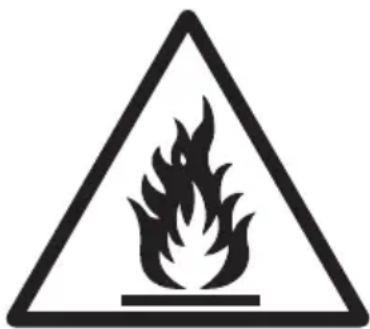

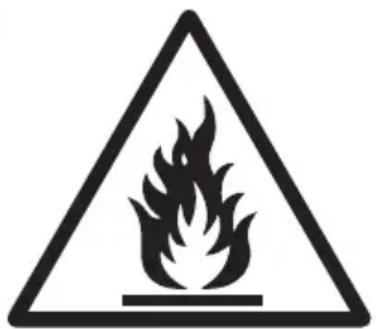

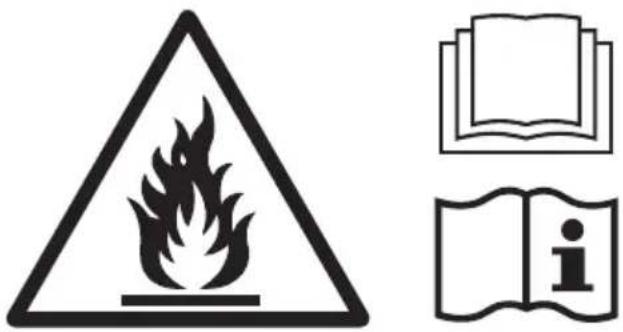
Flammable material. This appliance contains flammable refrigerant R290/Propane. Do not attempt to recharge the appliance with gas. Do not release refrigerant into the atmosphere.
www.sharpconsumer.com/support/
www.sharpconsumer.com/documents-of-conformity/
For service, visit www.sharpconsumer.com/contact/, and for warranty rights, visit www.sharpconsumer.com/support/ or contact the supplier from whom you purchased the product.
Declarations of conformity are available at www.sharpconsumer.com/documents-of-conformity/
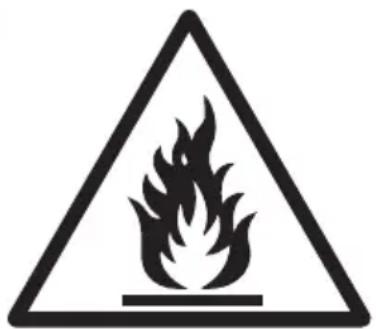

Additional warnings for appliances with refrigerant gas R290 (see the type plate for the refrigerant used)
CAREFULLY READ THIS USER MANUAL BEFORE USING THE APPLIANCE
IMPORTANT SAFETY INSTRUCTIONS
Always follow basic precautions when using electrical appliances, including the following:
WARNING – To reduce the risk of electric shock, fire, or injury:
www.sharpconsumer.com/contact/
www.sharpconsumer.com/support/
www.sharpconsumer.com/documents-of-conformity/
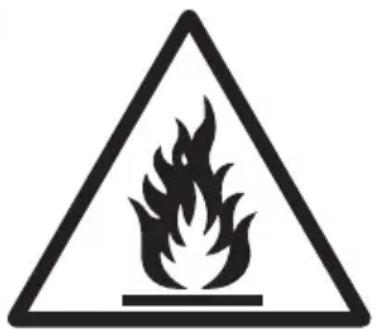

www.sharpconsumer.com/contact/
www.sharpconsumer.com/support/
www.sharpconsumer.com/documents-of-conformity/
www.sharpconsumer.com/contact/

www.sharpconsumer.com/support/ www.sharpconsumer.com/ documents-of-conformity/

www.sharpconsumer.com/contact/
www.sharpconsumer.com/support/ www.sharpconsumer.com/
documents-of-conformity/

www.sharpconsumer.com/support/
www.sharpconsumer.com/documents-of-conformity/

www.sharpconsumer.com/contact/
www.sharpconsumer.com/support/ www.sharpconsumer.com/
documents-of-conformity/

www.sharpconsumer.com/contact/
www.sharpconsumer.com/support/
www.sharpconsumer.com/documents-of-conformity/
www.sharpconsumer.com/support/
www.sharpconsumer.com/documents-of-conformity/
www.sharpconsumer.com/support/
www.sharpconsumer.com/documents-of-conformity/

IMPORTANT SAFETY INSTRUCTIONS
www.sharpconsumer.com/support/
www.sharpconsumer.com/documents-of-conformity/
For service information, visit www.sharpconsumer.com/contact/, and for your warranty rights, visit www.sharpconsumer.com/support/ or contact the store where you purchased your product.
Declarations of conformity are available at www.sharpconsumer.com/documents-of-conformity/
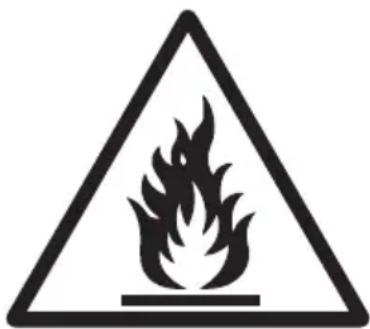

Flammable material. This device contains R290/propane flammable refrigerant. Do not attempt to put gas into the device. Do not release the refrigerant into the atmosphere.
www.sharpconsumer.com/contact/
www.sharpconsumer.com/support/
www.sharpconsumer.com/documents-of-conformity/
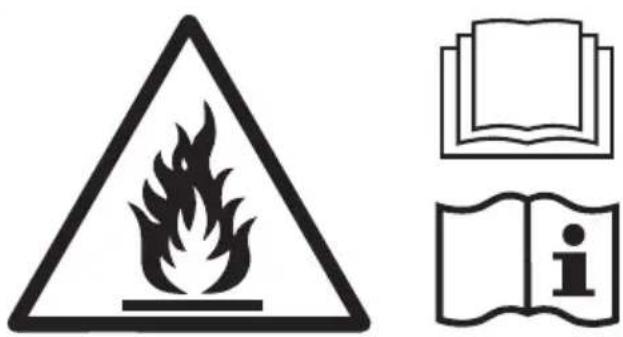
Additional warnings for devices with R290 refrigerant (see the specification plate for the type of refrigerant used)
READ THIS USER MANUAL CAREFULLY BEFORE USING THE DEVICE
www.sharpconsumer.com/contact/
www.sharpconsumer.com/support/
www.sharpconsumer.com/documents-of-conformity/

www.sharpconsumer.com/support/
www.sharpconsumer.com/documents-of-conformity/



- USER MANUAL
- ATTENTION
- INFORMATION ON DISPOSAL FOR USERS (PRIVATE HOUSEHOLDS)
- IN THE EUROPEAN UNION
- IN OTHER COUNTRIES OUTSIDE THE EU
- INFORMATION ON DISPOSAL FOR BUSINESS USERS
- ADDITIONAL WARNINGS FOR APPLIANCES WITH R290 REFRIGERANT GAS (REFER TO THE RATING PLATE FOR THE TYPE OF REFRIGERANT GAS USED). READ THIS USER MANUAL CAREFULLY BEFORE USING THE APPLIANCE
- PLEASE READ BEFORE OPERATING YOUR NEW DEHUMIDIFIER
- IMPORTANT SAFETY INSTRUCTIONS
- ALWAYS FOLLOW BASIC SAFETY PRECAUTIONS WHEN USING ELECTRICAL APPLIANCES, INCLUDING THE FOLLOWING
- WARNING – ALWAYS OBSERVE THE FOLLOWING TO REDUCE THE RISK OF ELECTRICAL SHOCK, FIRE, OR INJURY
- CAUTIONS CONCERNING OPERATION
- INSTALLATION
- LOCATING THE UNIT
- OPERATING ENVIRONMENT
- COMPONENTS DIAGRAMS – PARTS NAMES
- OPERATING INTRODUCTION – HOW TO OPERATE
- CONTROL PANEL
- THE NAME AND FUNCTION OF CONTROL PANEL
- OPERATING INTRODUCTION
- POWER ON
- POWER OFF
- MODE SETTING BUTTON
- HUMIDITY SETTING
- TIMER
- FAN SPEED SETTING
- SWING
- LOCK FUNCTION
- MEMORY FUNCTION
- WATER TANK FULL AUTO-STOP FUNCTION
- AUTO DEFROST
- COMPRESSOR PROTECTION FUNCTION
- HIGH/LOW TEMPERATURE PROTECTION FUNCTION
- LOW HUMIDITY PROTECTION FUNCTION
- HIGH TEMPERATURE FAN SPEED SWITCH FUNCTION
- ERROR CODES
- CONTINUOUS DRAINAGE FUNCTION
- MAINTENANCE
- WHEN CLEANING YOUR DEHUMIDIFIER
- OTHER ADVICE
- ENGINEER INFORMATION
- CABLING
- DETECTION OF FLAMMABLE REFRIGERANTS
- LEAK DETECTION METHODS
- REMOVAL AND EVACUATION
- CHARGING PROCEDURES
- DECOMMISSIONING
- LABELLING
- RECOVERY
- FUSES
- TROUBLESHOOTING
- WHAT TO DO IF THE PRODUCT INTERFERES WITH RADIO OR TV RECEPTION
- TECHNICAL SPECIFICATION
- NOTE
- CAUTION
- ADDITIONAL WARNINGS FOR APPLIANCES WITH REFRIGERANT GAS R290 (SEE THE TYPE PLATE FOR THE REFRIGERANT USED)
- ALWAYS FOLLOW BASIC PRECAUTIONS WHEN USING ELECTRICAL APPLIANCES, INCLUDING THE FOLLOWING
- WARNING – TO REDUCE THE RISK OF ELECTRIC SHOCK, FIRE, OR INJURY
- ADDITIONAL WARNINGS FOR DEVICES WITH R290 REFRIGERANT (SEE THE SPECIFICATION PLATE FOR THE TYPE OF REFRIGERANT USED)
Brand : SHARP
Model : UD-P204P-W
Category : Dehumidifier