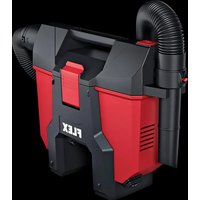
VC 2 L MC Hip 18.0-EC - Vacuum Cleaner Flex - Free user manual and instructions
Find the device manual for free VC 2 L MC Hip 18.0-EC Flex in PDF.


| Brand | Flex |
| Model | VC 2 L MC Hip 18.0-EC |
| Product type | Cordless portable vacuum cleaner |
| Power supply | 18 V lithium-ion battery (compatible with FLEX) |
| Operating modes | Off / Eco / Full power |
| Dust class | L (non-flammable dry dusts, exposure limit > 1 mg/m³) |
| Tank capacity | 2 litres |
| Filter type | Microfilter cartridge (option HEPA FE-HEPA) |
| Filter cleaning | Semi-automatic via button (3 to 5 presses) |
| Dust bag | Usable (filter bag FS-F, ref. 530.573) |
| Included accessories | Flexible hose, suction nozzle, shoulder strap, carrying harness |
| Approximate weight | 3.5 kg (without battery) |
| Use | Indoor, dry, professional (hotels, schools, workshops, construction sites) |
| Thermal protection | Yes (motor stops in case of overheating) |
| Battery attachment | Audible click-in, removal via button |
| Maintenance | Clean exterior with damp cloth; filter washable in cold water |
| Repairs | Only by FLEX authorized service center |
| Spare parts | Available at www.flex-tools.com |
| Certified standards | CE, EN 60335, EN 55014 |
Frequently Asked Questions - VC 2 L MC Hip 18.0-EC Flex
User questions about VC 2 L MC Hip 18.0-EC Flex
0 question about this device. Answer the ones you know or ask your own.
Ask a new question about this device
Download the instructions for your Vacuum Cleaner in PDF format for free! Find your manual VC 2 L MC Hip 18.0-EC - Flex and take your electronic device back in hand. On this page are published all the documents necessary for the use of your device. VC 2 L MC Hip 18.0-EC by Flex.
USER MANUAL VC 2 L MC Hip 18.0-EC Flex
natural_image
Line drawing of a mechanical device with no visible text or symbolsnatural_image
Technical line drawing of a mechanical device with an upward arrow indicating process (no text or symbols present)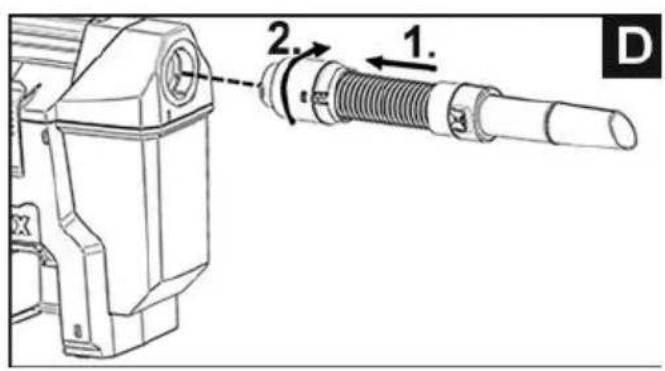
natural_image
Four sequential line drawings of a person wearing a full-body safety harness, viewed from front to back (no text or symbols)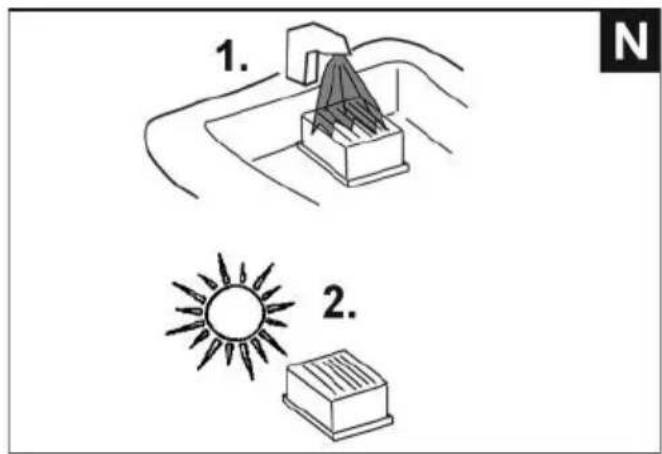
| VC 2 L MC Hip 18.0-EC | ||
| K (EN 60335-2-69) L | ||
| U | V | 18 |
 | Ah | AP 18.0/5.0AP 18.0/8.0 |
  | min | AP 5.0 Ah ≈ 22AP 8.0 Ah ≈ 35 |
  | min | AP 5.0 Ah ≈ 14AP 8.0 Ah ≈ 22 |
m  | kg | AP 18.0/5.0 = 0,72AP 18.0/8.0 = 1,1 |
| Max. p_u | Pa 20.700 | |
| Max. Vl/min 1.150 | ||
  m m | kg 2,7 | |
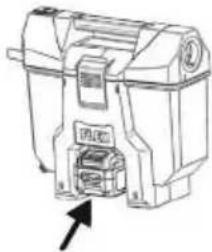 m m | kg AP 18.0/8.0 = 3,8 | |
 A, B, C A, B, C | mm | A x B x C340 x 290 x 135 |
| V | I | 2 |
| L_pA | dB(A) 69,3 | |
| L_WA | dB(A) 85,2 | |
| a_nv | m/s2< 2,5 | |
Verwendete Symbole

WARNUNG!
Symbols used in this manual

WARNING!
Denotes impending danger. Non-observance of this warning may result in death or extremely severe injuries.

CAUTION!
Denotes a possibly dangerous situation. Non-observance of this warning may result in slight injury or damage to property.

NOTE
Denotes application tips and important information.
Symbols on the device

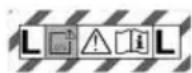
Before switching on, read the operating manual.
The device is suitable for the following applications:
A device of dust category L is suitable for the collection of dry, non-flammable dust, wood chips and mildly hazardous dust with an exposure level of >1 mg/m ^3 . The device must be fitted with a suitable filter that equates to the hazard category of the dusts to be collected.
■ Only remove hazardous substances according to IEC/EN 60335-2-69 (category L) using a suitable vacuum cleaner. Using the device to collect other hazardous substances is not permissible.
For your safety

WARNING!
Before using the power tool, please read and follow:
— these operating instructions,
— the currently valid site rules and the regulations for the prevention of accidents.
This power tool is state-of-the-art and has been constructed in accordance with the acknowledged safety regulations. Nevertheless, when in use, the power tool may be a danger to life and limb of the user or a third party, or the power tool or other property may be damaged. The power tool may be used only
- as intended,
— in perfect working order.
Faults which impair safety must be repaired immediately.
Intended use
A series of extensive tests was carried out to ensure that this vacuum cleaner works efficiently and safely provided it is correctly maintained and used in accordance with the instructions.
The product described here is a vacuum cleaner for commercial use, e.g. in hotels, schools, factories, businesses, offices and also in the construction industry and for the renovation of buildings. It is suitable for dry use only.
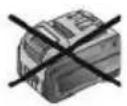
■ This device is designed for dry use only.
■ This device is designed to be used only in enclosed spaces.
■ This device may only be stored in enclosed spaces.
The device is suitable for the following applications:
For the collection of dry, non-flammable dust, wood chips and mildly hazardous dust with an exposure level of > 1 mg/m ^3 (dust category L).
Safety instructions

WARNING!
Warning notice! Read all safety notices and general instructions. Failure to observe the safety notices and other instructions can result in electric shock, fire and/or serious injury. Keep all safety information and general instructions for later reference.
This product is not intended to be used by persons (including children) with physical, sensory or mental disabilities or by persons without the relevant experience and/or knowledge.
The device may only be used by persons who are familiar with its operation, have been trained in safe handling of the device and understand the dangers associated with it. The device is not designed for use by children.
■ Children must be supervised to ensure that the device is not used incorrectly. Do not allow unsupervised children to clean the device or perform maintenance tasks on it.
■ Do not use water, oil, grease or cleaning agents.
■ Do not use benzine or other flammable liquids for cleaning purposes.
- Observe the procedure with which covers from compartments that are not dustproof have to be removed for cleaning.
Usage and care of rechargeable batteries
The device works with the rechargeable batteries listed in the product specifications.
Observe the special regulations and instructions for transport, storage and use of lithium-ion batteries.
■ Do not expose the rechargeable batteries to high temperatures, direct sunlight or fire.
■ Do not dismantle, diminish or burn rechargeable batteries and do not expose them to temperatures above 80^ C.
■ Do not use or recharge batteries that show signs of damage or have fallen on the ground. In this event, always contact your FLEX Service.
If the rechargeable battery cannot be touched due to excessive heat build-up it is likely to be faulty. In this case, place the product in a fire-safe area, far away from flammable materials where it can be kept under observation and allowed to cool down. In this event, always contact your FLEX Service.
Additional safety instructions

WARNING!
Risk of explosion!
Certain materials can generate explosive vapours or mixtures through the intake of air.
The following materials must never be removed/vacuum cleaned:
■ Explosive or flammable gases, liquids and dust particles (reactive dust particles)
■ Reactive metallic dust particles (e.g. aluminium, magnesium, zinc) in combination with strong alkaline or acidic cleaning agents
■ Hot, burning or glowing objects that have a temperature in excess of 40^ C. At temperatures above 40^ C there is a risk of fire.
■ Not suitable for extracting harmful dust (according to dust categories M and H).
■ The device must not be operated in areas with a risk of explosion. Furthermore, the substances listed may result in materials of the device becoming corroded.
Work area safety
- Keep onlookers, children and visitors away from the area in which the vacuum cleaner is being used. Distractions can cause loss of control over the vacuum cleaner.
■ With vacuum cleaner, ensure that there is a sufficient exchange of air L in the room if the exhaust air is recirculated. Observe the applicable statutory safety regulations.
Electrical safety
■ Never expose the vacuum cleaner to rain or wet conditions. Water ingress in the vacuum cleaner increases the risk of electric shock.
Personal safety
■ Stay alert. Watch what you are doing and use common sense when operating electrical equipment. Do not use electrical equipment when fatigued or under the influence of drugs, alcohol or medication. Severe injuries can ensue the moment attention is lost during the operation of electrical equipment.
■ Use personal protective equipment and always wear eye protection. Depending on the type and purpose of the electrical equipment/power tool, the risk of injury is mitigated by wearing safety equipment (dust mask, non-slip safety footwear, hard hat/helmet or ear defenders).
■ Do not use the vacuum cleaner in extremely dusty conditions.
- Liquid may leak out of the rechargeable battery if the equipment is used incorrectly. Avoid any contact with the liquid. Liquid discharged from the rechargeable battery can cause skin irritation or burns. If parts of the body come into contact with the liquid, rinse them with water straightaway. In the event of the liquid coming into contact with the eyes, flush the eyes with copious amounts of water and consult a medical doctor.
General instructions for operating and handling electrical equipment/vacuum cleaners
- Keep electrical equipment out of reach of children when it is not in use. Prevent the device being used by persons who are not familiar with it or these instructions. Electrical equipment becomes hazardous in the hands of inexperienced persons.
- Look after the electrical equipment well. Check that all moving parts function correctly and do not seize. Ensure that the function of the electrical equipment is not impaired by broken or damaged parts. Have damaged parts repaired before using the electrical equipment. Many accidents are caused by poorly maintained electrical equipment.
■ Use electrical equipment, accessories, tools/attachments etc. as per these instructions. Take heed of the working conditions and the work to be performed. Use of the electrical equipment for operations other than those intended could result in hazardous situations.
■ Use the right tool/device for the task at hand. Do not use the device for operations for which it was not designed.
■ Only use it in the way intended and in a serviceable condition.
■ Do not bring the vacuum cleaner into operation unless the filter is fitted. - Do not bring the device into operation accidentally. Switch the device off before inserting the rechargeable battery and before lifting or transporting it. Never carry the device with a finger on the main switch. Always remove the rechargeable battery when the device is not being used, before maintenance work, before replacing accessories and when preparing it for transport as well as during transport.
■ Do not sit or stand on the device.
■ Before initial use, the operator must be provided with information, instructions and training on how to use the device and the substances with which it is to be used. This must also include a procedure for the safe removal and disposal of the extracted material.
■ The manufacturer or an appointed person shall carry out a technical inspection at least once per year. The filter is inspected for damage, for example, and the air-tightness of the device as well as correct operation of the controls are checked.
■ When performing maintenance or repair work, all contaminated items that cannot be cleaned sufficiently must be disposed of. Use non-transparent sacks in accordance with the applicable regulations to dispose of this waste.
■ This device is designed to be used only in enclosed spaces.

CAUTION!
Do not use the vacuum function in the vicinity of a person's head when using the nozzle and suction hose.

CAUTION!
Safety equipment serves to protect the user and must not be manipulated or circumvented.
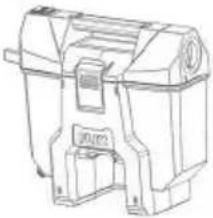
Overview (Figure A)
1 Container
2 Slot for battery
3 ON/OFF/ECO switch
4 Storage location for nozzle
5 Filter cleaning button
6 Handle
7 L a t c h
8 Inlet opening
9 Locking flange for carrying system
10 Cuff
11 Hose
12 Locking clip
13 Suction nozzle
14 Dust bag
15 Filter guard
16 Filter
17 Carrying system
Instructions for use
Before initial operation
■ Carefully read the safety instructions in this manual before bringing the device into operation for the first time.
■ Unpack the power tool and accessories and check that no parts are missing or damaged.
Removing suction head (Figure B)
■ Open latch (1.) and remove suction head (2.).
Using the dust bag (Figure C)
To remove the dirt/dust from the dust container without any dust escaping, a dust bag can be used.
■ Insert the bag in the dust container. Secure the bag at the front of the dust container in the snap hook.
Connecting suction hose (Figure D)
■ Push cuff into inlet opening (1.) and engage in clockwise direction (2.).
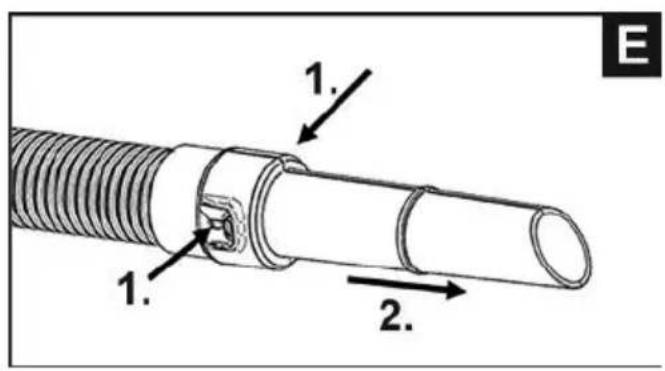
Remove nozzle (Figure E)
■ To remove, press in locking clips simultaneously (1.) and remove nozzle (2.).
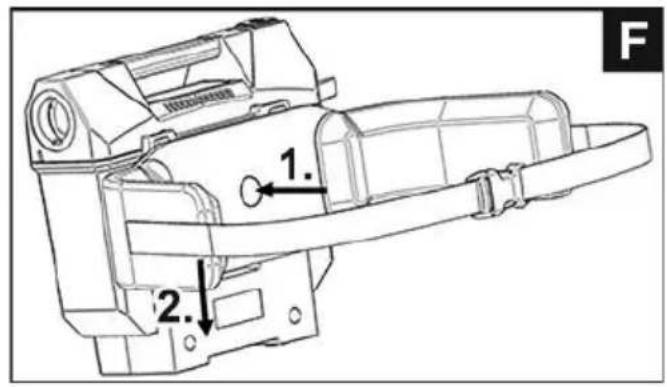
Removing strap (Figure F)
■ To remove, press in locking button (1.) and remove belt (2.).
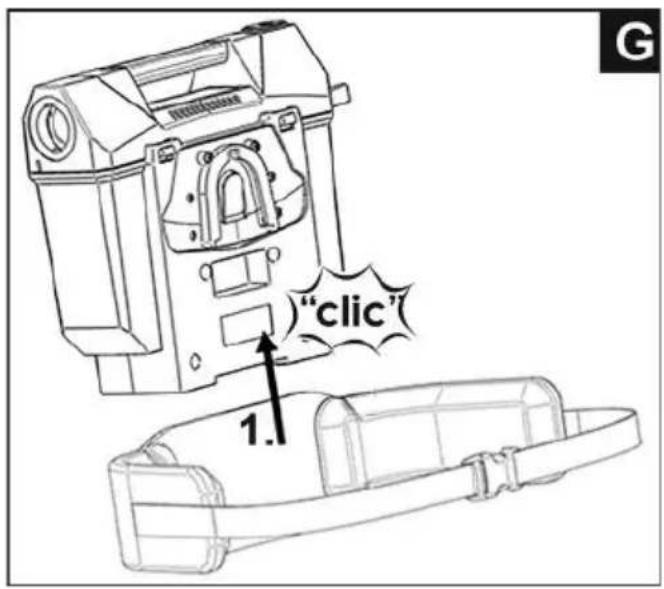
Attaching strap (Figure G)
■ To attach, push onto locking flange (1.) until audible engagement.
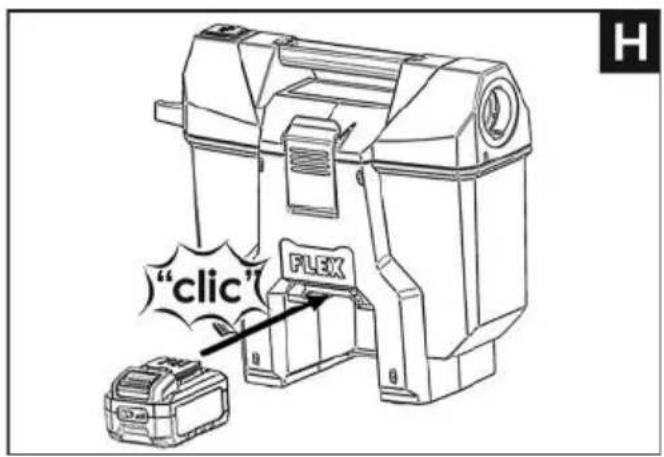
Handling the rechargeable battery (Figure H)
Use a suitable 18V FLEX rechargeable battery. Before inserting the battery, ensure that the device is switched off.
■ Insert the rechargeable battery in the guide. The rechargeable battery must engage with an audible "click".
■ Make sure that the rechargeable battery is seated securely.
■ To remove the rechargeable battery, press the button on the battery and pull the battery out.
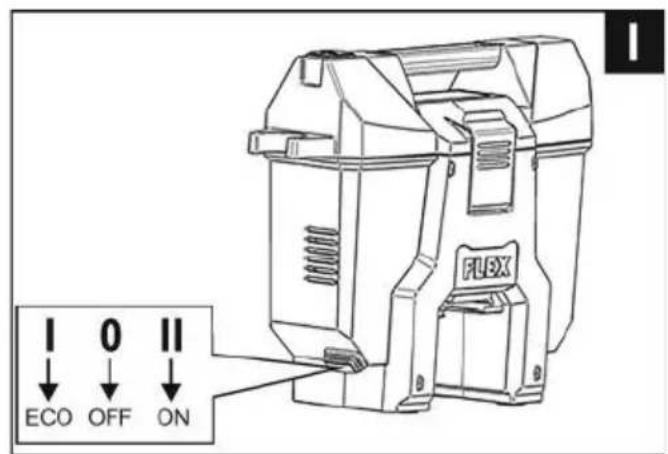
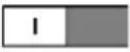
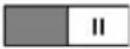
Switching ON/OFF/ECO (Figure I)
The main switch of the equipment has three positions:
$$ I = E C O $$
$$ 0 = O F F $$
$$ \mathbb {I} = \mathsf {O N} $$
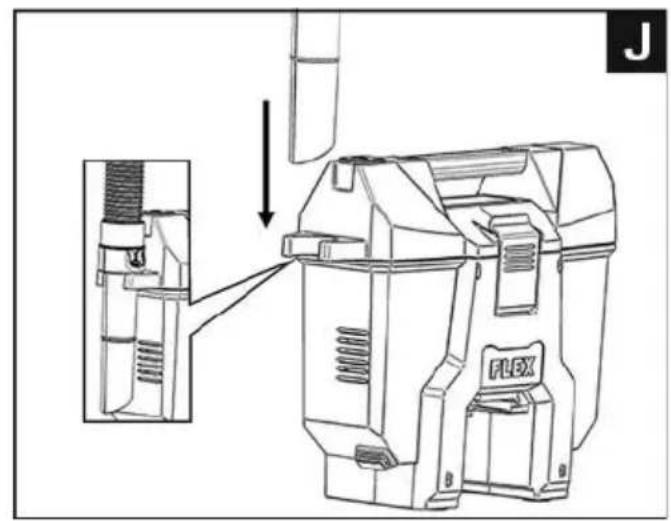
Holder for suction nozzle (Figure J)
The suction nozzle can be attached to the side holder.
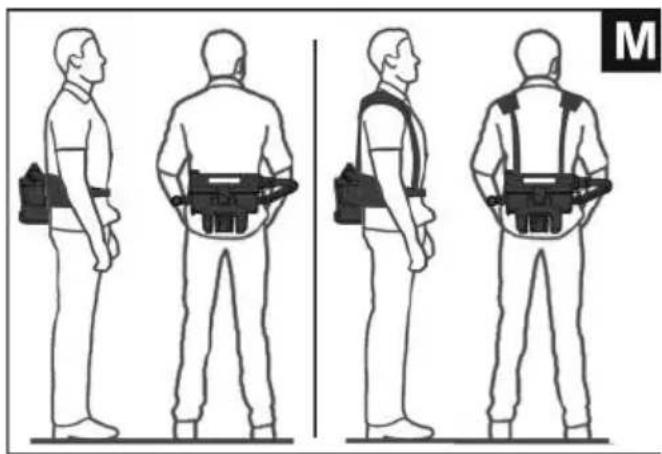
Using the carrying system (Figure M)
■ To use the carrying system, insert the clasps in the fasteners. Carry the vacuum cleaner as shown in figure M.
Troubleshooting
Machine does not start:
■ The battery is discharged. Charge the battery and try again.
■ The battery is too hot or too cold. Allow the battery to cool down or warm up slowly to room temperature.
■ Thermal overload trigger. See below.
Motor stops:
A thermal overload protector will shut off the motor if the motor temperature is too high. If this happens, turn the switch off. Wait 15-30 minutes for the motor to cool. Turn switch on and resume operation.
Suction power is reduced:
■ The bag could be full. It will need to be emptied if this is the case.
■ The hose and nozzle may be clogged. They will need to be cleaned if this is the case.
■ Any of the above may be damaged and need to be replaced.
■ The filter may be clogged. Use the Filter Cleaning System to clean the filter.
■ Replace the filter or make sure the filter is installed properly.
■ The hose connection is loose and need to be tightened.
The battery does not engage with an audible double click.
■ The locking mechanism on the battery or the insert on the suction device is soiled. Clean these and push the battery in until it engages.
Static shocks:
■ If the environment is too dry, add moisture to air. If possible, use a humidifier.
In case the relative humidity of air is low, please note that this situation will not have any effect on use of the vacuum cleaner.
Maintenance and care

NOTE
This vacuum cleaner has an integrated thermal overload protection feature to protect the motor against high temperatures. This can happen under strenuous operating conditions. If the motor switches off during operation, switch off the device using the main switch and allow the motor to cool down for 15-30 minutes. The device can then be switched back on again.

WARNING!
— Before cleaning and executing service work, switch off the equipment and remove the battery. For mains powered equipment, pull out the plug.
— Switch off the device before changing to a different function.
- Maintenance work may only be carried out on this device by authorised customer service centres or specialists who are familiar with the relevant safety regulations.
— Observe the local safety regulations for portable, commercially used equipment.
— The manufacturer or an appointed person shall carry out a technical inspection at least once per year. The filter is inspected for damage, for example, and the air-tightness of the device as well as correct operation of the controls are checked.
- When performing maintenance or repair work, all contaminated items that cannot be cleaned sufficiently must be disposed of. Use non-transparent sacks in accordance with the applicable regulations to dispose of this waste.
— The outside of the device must be thoroughly cleaned and freed of any hazardous substances. Alternatively, the equipment can be encased before it is removed from the hazard area.
— Once they are removed from the hazardous area, all items of the device are deemed to be contaminated. Suitable measures must be implemented to prevent the dust from spreading.
- Danger of harmful dust. Always wear disposable clothing and masks (P2 or higher) during maintenance work (e.g. filter replacement).
Cleaning

NOTE
Do not use cleaning agents containing silicone for cleaning.
— No external assistance is required for the execution of basic maintenance and cleaning.
— The outside of the device and the inside of the container must be cleaned at regular intervals with a damp cloth.
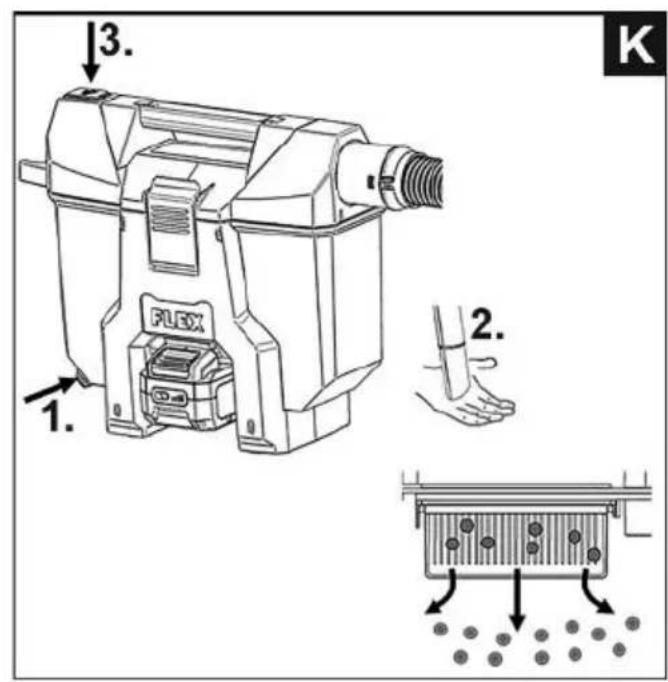
Filter cleaning system (Figure K)
The device is equipped with a semi-automatic filter cleaning system. It cleans the filter and restores the suction power.
■ Switch on the device (1) to use the filter cleaning system.
■ Close nozzle pipe in the opening of the device (2) to stop air flow and to generate the maximum vacuum in the dust container.
■ Press the filter cleaning button 3 to 5 times to clean the filter (3.).
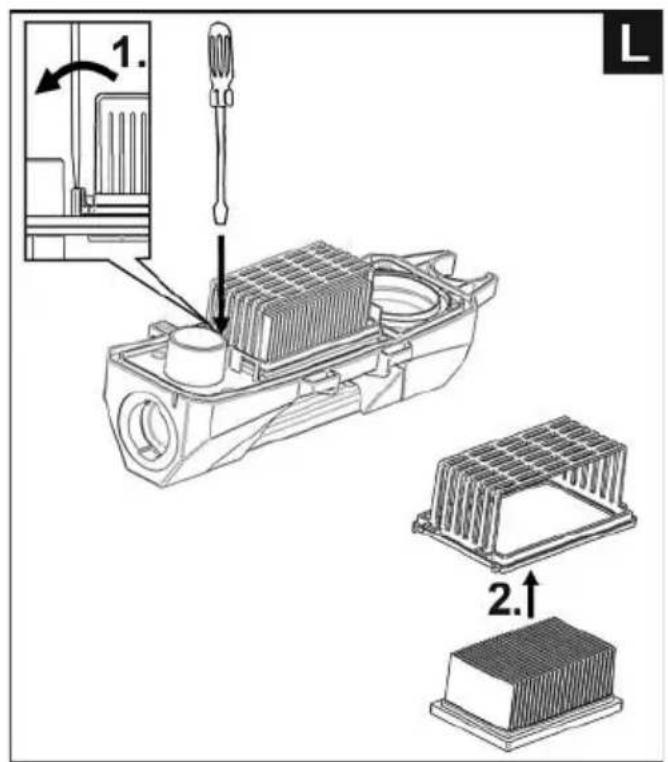
Changing the filter (Figure L)
After an extended period of use, the filter must be replaced by a new one. If the filter is heavily soiled or clogged, manually cleaning must be carried out as semi-automatic filter cleaning will not be sufficient to clean the filter.
■ To remove the filter, unclip the filter guard (1.) and remove the filter (2.).
■ Install the filter in the reverse order of removal. Make sure that the screw is not overtightened.
Repairs
Have repairs carried out by an authorised customer service centre only.
Spare parts and accessories
Other accessories can be found in the manufacturer's catalogues. Exploded drawings and sparepart lists can be found on our homepage: www.flex-tools.com
| Item Part number | |
| Shoulder strap 530.572 | |
| Filter bag FS-F (VE5) 530.573 | |
| Filter element FE-HEPA 530.616 |
Disposal information

WARNING!
Render redundant power tools unusable by removing the power cord.

EU countries only
Do not throw electric power tools into the household waste!
In accordance with the European Directive 2012/19/EU on Waste Electrical and Electronic Equipment and transposition into national law used electric power tools must be collected separately and recycled in an environmentally friendly manner.

NOTE
Please ask your dealer about disposal options!

Declaration of Conformity
We hereby declare that the product described on page 6 corresponds with the following standards or normative documents:
EN 60335-1:2012+A11:2014+A13:2017+1:2019+
A2:2019+A14:2019
EN 60335-2-69:2012
EN 62233:2008
EN 55014-1:2017+A11:2020
EN 55014-2:2015, in accordance with the provisions of the directives 2014/30/EU, 2006/42/EG, 2011/65/EG, 2014/53/EU.
Responsible for technical documents:
Klaus Peter Weinper
Head of Quality
Department (QD)
09.01.2023
Declaration of Conformity
We as the manufacturer: FLEX Elektrowerkzeuge GmbH, Business address: Bahnhofstr. 15, 71711 Steinheim, Germany
declare under our sole responsibility, that the product(s) described under „Technical specifications“ fulfills all the relevant provisions of The Supply of Machinery (Safety)
Regulations S.I. 2008/1597 and also fulfills all the relevant provisions of the following UK Regulations:
Electromagnetic Compatibility Regulations S.I. 2016/1091, The Restriction of the Use of Certain Hazardous Substances in Electrical and Electronic Equipment
Regulations S.I. 2012/3032 and are manufactured in accordance with the following designated Standards: BS EN 60335-1+A15:2012, BS EN 60335-2-69:2013, BS EN 62233:2008, BS EN 55014-1:2017, BS EN 55014-2:2015
Place of declaration: Steinheim, Germany. Responsible person: Peter Lameli, Technical
Contact details for Great Britain:
FLEX Power Tools Limited,
Unit 8 Anglo Office Park, Lincoln Road, HP 12, 3RH Buckinghamshire,
United Kingdom.
Peter Lameli
Technical Head
Klaus Peter Weinper
Head of Quality
Department (QD)
09.01.2023
Symboles utilisés

AVERTISSEMENT!
Retirer la buse (illustration E)
Peter Lameli Technical Head
Klaus Peter Weinper Head of Quality Department (QD)
09.01.2023
Interruptor ON/OFF/ECO (figura I)
3 Aan/uit/Eco-schakelaar
Peter Lameli Technical Head
Klaus Peter Weinper Head of Quality Department (QD)
09.01.2023
PÅ/AV/∅KO-bryter (Figur I)
Hovedbryteren til produktet har tre stillinger:
I = ECO
0 = AV
II = PÅ
Peter Lameli Technical Head
Klaus Peter Weinper Head of Quality Department (QD)
09.01.2023
Byta filter (Figur L)
Peter Lameli Technical Head
Klaus Peter Weinper Head of Quality Department (QD)
09.01.2023
Peter Lameli Technical Head
Klaus Peter Weinper Head of Quality Department (QD)
09.01.2023
Peter Lameli Technical Head
Klaus Peter Weinper Head of Quality Department (QD)
09.01.2023
Klaus Peter Weinper
Head of Quality
Department (QD)
09.01.2023
Klaus Peter Weinper
Head of Quality
Department (QD)
09.01.2023
$$ 0 = \text { V A L J A } $$
$$ \mathbb {I} = \text { SISSE } $$

- Verwendete Symbole
- WARNUNG!
- Symbols used in this manual
- WARNING!
- CAUTION!
- NOTE
- Symbols on the device
- For your safety
- Intended use
- Safety instructions
- Usage and care of rechargeable batteries
- Additional safety instructions
- Work area safety
- Electrical safety
- Personal safety
- General instructions for operating and handling electrical equipment/vacuum cleaners
- Overview (Figure A)
- Instructions for use
- Before initial operation
- Removing suction head (Figure B)
- Using the dust bag (Figure C)
- Connecting suction hose (Figure D)
- Remove nozzle (Figure E)
- Removing strap (Figure F)
- Attaching strap (Figure G)
- Handling the rechargeable battery (Figure H)
- Switching ON/OFF/ECO (Figure I)
- Holder for suction nozzle (Figure J)
- Using the carrying system (Figure M)
- Troubleshooting
- Machine does not start:
- Motor stops:
- Suction power is reduced:
- The battery does not engage with an audible double click.
- Static shocks:
- Maintenance and care
- Cleaning
- Filter cleaning system (Figure K)
- Changing the filter (Figure L)
- Repairs
- Spare parts and accessories
- Disposal information
- Declaration of Conformity
- Symboles utilisés
- AVERTISSEMENT!
- Retirer la buse (illustration E)
- Interruptor ON/OFF/ECO (figura I)
- PÅ/AV/∅KO-bryter (Figur I)
- Byta filter (Figur L)
Brand : Flex
Model : VC 2 L MC Hip 18.0-EC
Category : Vacuum Cleaner