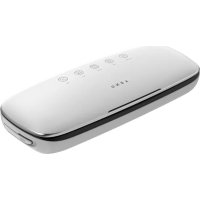
VS2 - Vacuum packaging machines AENO - Free user manual and instructions
Find the device manual for free VS2 AENO in PDF.



| Product type | Vacuum packaging machine |
| Brand | AENO |
| Model | VS2 (AVS0002 / AVS0002-UK) |
| Power supply | 220 V, 50 Hz |
| Power | 120 W |
| Pumping performance | Up to 4.5 l/min |
| Maximum vacuum | -75 kPa |
| Vacuum time | Up to 20 seconds per bag |
| Sealing time | Up to 13 seconds per bag |
| Seal width | 2 mm |
| Maximum bag width | 30 cm |
| Maximum heating temperature | +200 °C |
| Operating modes | Dry, Moist, Pulse |
| Control | Automatic and pulse (manual) |
| Dimensions (L × W × H) | 375 × 150 × 70 mm |
| Package contents | Vacuum sealer, 5 bags 15×20 cm, 5 bags 20×30 cm, container adapter, quick start guide, warranty card |
| Care and cleaning | Clean the sealing strip after each use; wipe with a soft cloth dampened with hot water or soapy solution; do not use harsh detergents |
| Safety | Do not immerse the appliance; do not touch hot sealing strip; use only special bags; do not vacuum liquid foods |
| Spare parts and repairability | Use only accessories recommended by the manufacturer; repairs must be carried out by a qualified technician |
| Warranty | 2 years from the date of purchase |
| General information | Made in China; manufacturer: ASBISc Enterprises PLC, Cyprus; full manual available at aeno.com/documents |
Frequently Asked Questions - VS2 AENO
User questions about VS2 AENO
0 question about this device. Answer the ones you know or ask your own.
Ask a new question about this device
Download the instructions for your Vacuum packaging machines in PDF format for free! Find your manual VS2 - AENO and take your electronic device back in hand. On this page are published all the documents necessary for the use of your device. VS2 by AENO.
USER MANUAL VS2 AENO
Vacuum Sealer VS2, VS2-UK
(Models: AVS0002, AVS0002-UK)


AENO
6 aeno.com/documents
c)
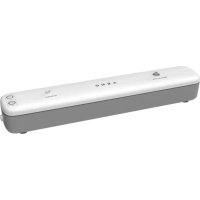
ENG The AENO vacuum sealer is designed for vacuum packaging of foodstuffs in order to extend their shelf life, for pickling or sous vide cooking.
Model: AVS0002 (Plug Type C), AVS0002-UK (Plug Type G).
Specifications
Voltage: 220 V; Frequency: 50 Hz. Power: 120.0 W. Capacity: up to 4.5 L/min. Vacuum degree: -75 kPa. Vacuum sealing time: up to 20 sec. Single heat seal: up to 13 sec. Heating wire width: 2 mm. Bag width sealable: up to 30 cm. Maximum heating temperature: up to +200 °C. Modes: "Dry", "Moist". Control: automatic, pulse (manual). Dimensions (L×W×H): 375×150×70 mm.
Scope of delivery (figure a)
Vacuum sealer AENO, vacuum bags (15×20 cm (5 pcs), 20×30 cm (5 pcs)), adapter (vacuum hose) for vacuuming containers, quick start guide, warranty card.
Limitations and Warnings
- Please read this document carefully before using the unit. The complete manual is available for download at aeno.com/documents.
- Before powering on for the first time, make sure that the power supply corresponds to the connection parameters of the device (frequency and voltage) from the technical specifications section.
- Do not use the device if the power cord and/or plug is damaged. The unit should be repaired by a qualified technician.
- Do not immerse the device, power cord and/or plug in water or other liquids. Do not install the unit on wet or hot surfaces or near external heat sources.
- To avoid getting burned, do not touch the welding strip (9) and the weld after soldering until they have cooled down.
- After each use of the vacuum sealer, especially if plastic particles from the bag are left on the welding bar, it is necessary to clean it. Unplug the unit by
8 aeno.com/documents
removing the power cord plug from the outlet and allow to cool. Wipe the surface of the device with a soft cloth soaked in warm water or a weak soap solution. Then wipe with a soft cloth soaked in clean water and wipe dry. Do not use harsh detergents, abrasive pastes, polishes or detergents containing acids or solvents.
- Use "Moist" mode only for products with a small amount of liquid.
- Do not vacuum liquid food, it is only suitable for sealing.
- Use only special bags for vacuum sealers.
- The adapter (vacuum hose) supplied with the vacuum sealer is only used to evacuate air from special vacuum containers.
- It is recommended to dry wet foods with a clean towel or cloth before vacuuming.
- Before putting vacuum-packed foods into microwave, make a hole in the package or open the outlet valve in the container to release steam.
- Use only manufacturer-recommended accessories, consumables and/or replacement parts. For more information see the full manual available for download at aeno.com/documents.
- After use the device should be left to cool down.
- During storage in order not to deform the seal (12) and thus not to impair the performance of the device, it is recommended to close the cover loosely without locking the locks (8).
- Do not allow children to use and/or play with the device.
Device control
Automatic vacuuming and/or sealing of packages
- Connect the device to a power source by connecting the power cord to the device and then plugging the power cord into a power outlet.
- Place the food in a vacuum bag. Gently secure the open edge of the bag with
aeno.com/documents 9
bag clips (7) (see Fig. b).
- Press lightly on both sides of the cover. After a characteristic click both fasteners (8) will close automatically.
- Select Mode. To switch between modes, press the "Dry/Moist" button (1) on the device body. The "Dry" mode corresponds to the blue indicator (6) on the control panel and the "Moist" mode corresponds to the red one.
- Press the "Vac Seal" button (3) on the unit to start the vacuuming and sealing process or the "Seal" button (4) to start the sealing process only.
- When sealing is complete, the light on the control panel will turn off and then after a few seconds it will start blinking again.
- Press the buttons (15) on the device at the same time, the cover will open automatically.
- Remove the bag.
Vacuuming and sealing soft products
For working with soft and delicate products it is recommended to choose the manual (pulse) control. This type of control allows you to control the intensity of air pumping so as not to spoil the appearance of the products.
To do this instead of steps 4 and 5 of the "Automatic Vacuuming and/or Sealing of Bags" section, press and hold the "Pulse" button (2) until the vacuuming level you want is reached, while maintaining the shape of the bag contents and then press the "Seal" button (4) to seal the bag.
Vacuum packing in containers
- Put the food into vacuum container and close the lid.
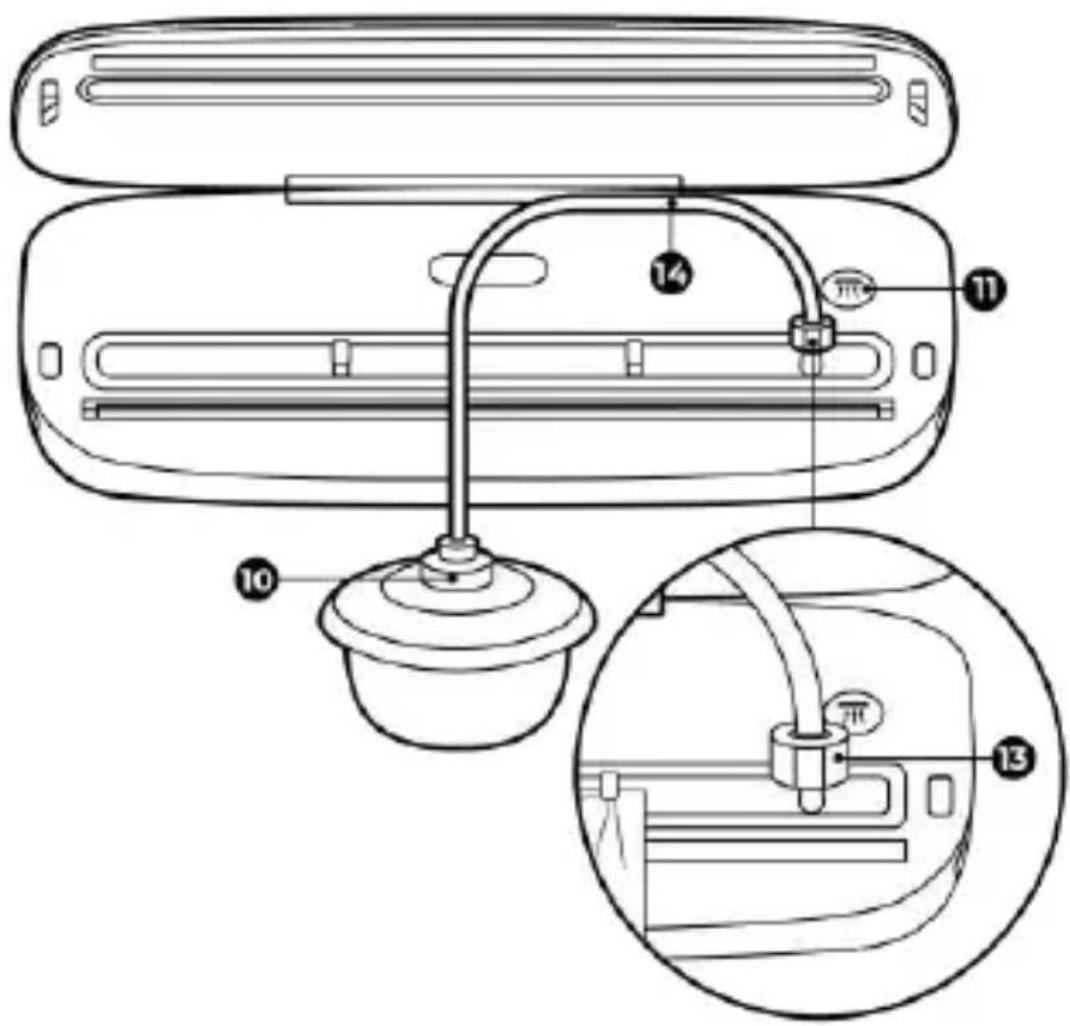
- Connect the container outlet valve (13) and the air extraction hole (10) on the vacuum sealer with vacuum hose (14) (see fig. c).
- Make sure that there is no air leakage between the lid and the container.
- Press the canister button (11) on the device to start the vacuum process.
10 aeno.com/documents
- When the air has been vacuumed press again the button (11) on the device body, disconnect the adapter and close the container outlet valve.
Interrupting the vacuuming and/or sealing process
Press the "Stop" button (5) to stop all the operations.
Note. At least 30 sec must elapse before the next start of the vacuum packer to prevent the heating element from overheating.
Recommendations on the shelf life of vacuum-packed food Cold storage (+5 °C +/- 3 °C):
- raw meat – up to 8–9 days;
- fish and seafood – up to 4–5 days;
• sausages – up to 10–14 days; - vegetable – up to 7–10 days;
- fruit – up to 14–20 days;
- egg – up to 30–50 days.
Freeze storage (-16 °C to -20 °C):
- meat, fish, seafood – up to 1 year.
Indoor temperature (+25 °C +/- 2 °C):
- bread – up to 6–8 days;
- biscuit, cereals/flour, nuts, dried fruit, tea – up to 1 year.
Note. A complete list of products and storage times is available in the complete user manual at aeno.com/documents.
Troubleshooting
- There were traces of a package on the welding strip. Possible cause: overheating of the welding strip. Solution: Allow the device to cool for 90 sec.
- After sealing air appears in the bag. Possible cause: piercing the bag with sharp petioles, fish bones, pasta, etc. Solution: replace the bag, remove the protruding sharp parts.
- The sealing seam is not strong. Possible reason: insufficient sealing time. Solution: Repeat the sealing process.
ATTENTION! If your problem persists, please contact your local supplier or the service center for support. Please do not disassemble the device or try to repair it on your own.
natural_image
Simple line drawing of a trash bin with crossed lines indicating no text or symbols (no text or labels)These symbols indicate that you must follow the Waste Electrical and Electronic Equipment (WEEE) and Waste Battery and Battery Regulations when disposing of the device, its batteries and accumulators, and its electrical and electronic accessories.
According to the rules, this equipment must be disposed of separately at the end of its service life. Do not dispose of the device, its batteries and accumulators, or its electrical and electronic accessories together with unsorted municipal waste, as this will harm the environment. To dispose of this equipment, it must be returned to the
point of sale or turned in to a local recycling facility. You should contact your local household waste disposal service for details.
ASBISc reserves the right to modify the device and to make edits and changes to this document without prior notice to users.
The warranty period and service life is 2 years from the date of purchase of the product.
Information about the manufacturer: ASBISc Enterprises PLC, Iapetou, 1, Agios Athanasios, 4101, Limassol, Cyprus. Made in China.
For current information and details on the device description and specification, as well as connection process, certificates, warranty and quality issues, see relevant Installation and Operation Manuals available for downloading at aeno.com/documents. All trademarks and names herein are the property of their respective owners.
12 aeno.com/documents
natural_image
Simple line drawing of a trash bin with crossed lines indicating no waste or discharge (no text or symbols)natural_image
Simple line drawing of a trash bin with no text or symbolsnatural_image
Simple line drawing of a trash bin with crossed lines indicating no waste or plastic (no text or symbols)natural_image
Simple line drawing of a trash bin with crossed lines indicating no text or symbols (no text or labels)natural_image
Simple line drawing of a trash bin with crossed lines indicating no waste or plastic (no text or symbols)natural_image
Simple line drawing of a trash bin with crossed lines indicating no waste or discharge (no text or symbols)Na cca +5 °C (+/-3 °C):
- sirovo meso – do 8–9 dana;
- riba i plodovi mora – do 4–5 dana;
- kobasice – do 10–14 dana;
- povrće – do 7–10 dana;
- voće --do 14–20 dana;
- jaja – do 30–50 dana.
Od -1 °C do -20 °C:
- meso, riba, plodovi mora – do 1 godine.
Na cca +25 °C (+/-2 °C):
- kruh – do 6–8 dana;
46 aeno.com/documents
- kolačići, žitarice/brašno, orasi, sušeno voće, čaj – do 1 godine.
Napomena. Potpuni popis namirnica i rok trajanja dostupan je u cijelom korisničkom priručniku na aeno.com/documents.
Rješavanje problema
- Na brtvenoj ploči ima tragova plastike od kesa. Mogući uzrok: pregrijavanje brtvene ploče. Rješenje: ostavite uređaj da se hladi 90 sekundi.
- U zatvorenoj kesi nakon brtvljenja ima zraka. Mogući uzrok: probijanje kesice oštrim peteljkama, ribljim kostima, tjesteninom itd. Rješenje: zamijenite kesicu, uklonite oštre dijelove koji strše.
- Krhki brtveni šav. Mogući uzrok: nedovoljno vrijeme brtvljenja. Rješenje: ponovite postupak brtvljenja još jednom.
POZOR! Ako ništa od navedenoga ne riješi vaš problem, obratite se svom dobavljaču ili servisnom centru. Nemojte rastavljati uređaj i ne pokušavajte ga sami popraviti.

natural_image
Simple line drawing of a trash bin with crossed lines indicating no waste or plastic (no text or symbols)Ovaj simbol znači da prilikom odlaganja uređaja, njegovih baterija i akumulatora te njegovog električnog i elektroničkog pribora morate slijediti propise o zbrinjavanja otpada električne i elektroničke opreme (WEEE) te o zbrinjavanju otpadnih baterija i akumulatora. U skladu s propisima ova oprema prikuplja se odvojeno na kraju uporabnog roka. Uređaj, njegove baterije i akumulatori te njegov električni i elektronički pribor ne smiju se odlagati skupa s nerazvrstanim komunalnim otpadom jer to šteti okolišu. U svrhu urednog odlaganja ovakve opreme, morate je vratiti u prodajno mjesto ili u vaš lokalni centar za reciklažu. Za detaljne informacije obratite se lokalnoj službi za zbrinjavanje komunalnog otpada.
ASBISc zadržava pravo modificiranja uređaja te unošenja dopuna i izmjena u ovaj dokument bez prethodne najave korisnicima.
Jamstveni rok i radna trajnost je 2 godine od datuma nabavke proizvoda.
Podaci o proizvođaču: ASBISc Enterprises PLC, Iapetou, 1, Agios Athanasios, 4101, Limassol, Cyprus (Cipar). Proizvedeno u Kini.
Ažurirane informacije i detaljan opis uređaja te upute za spajanje, certifikati, podaci o tvrtkama koje primaju reklamacije glede kvalitete i jamstva dostupne su za preuzimanje na poveznici aeno.com/documents. Svinavedeni zaštitni znakovi i njihova imena su vlasništvo njihovih vlasnika.
natural_image
Simple line drawing of a trash bin with crossed lines indicating no waste or discharge (no text or symbols)natural_image
Simple line drawing of a trash bin with crossed lines indicating no waste or plastic (no text or symbols)
Uju hunphpnuwuhzutpp izuwuwynid tü, np uwppn, ipuu uupunlngutpni ni lynunwuhysutpp lu hthynpwulqu bi hthynpnuwjhü wupnwqwutpp niunhhqwgutjhu wtnp t htwnutp hthynpwulqu bi hthynpnuwjhü wupnwynnuiutph wpwnwnpnjejuü pəwhnüttph (WEEE) i uupunlngh i uupunlngh pəwhnüttph htun yupultqni yuünfuwrwnqtinhü: <ωuδωμγι yuünfütph, ndjuu wupnwynpnui p dwnwnpijejuü dwuhtunh wlpwnhg htunn túpəwlu t puduu niunhhqwghwjh: Uwpn, uupunlngutpp i lynunwuhysutpp, húswtu iuu li hthynpwulqu i lthynpnuwjhü wupnwqwutpp sh yupulth niunhhqwguti sntuwwlqulnpud puwnpwujhi pəwhnüttph htun, puuh np nu lyfuwuh zpgwlu uħgwufujnhä: Uju uwpph niunhhqwghwjh hwudip, wjü wtnp t utpwnwnpduh yuδawmph lbtun lyu huiu uuh unquwui yhp wuzwuw lun: Uwupwuw uhtlnpajntup unwwnl huidn wuhpwdtzun t nhuu unquwui ytugwnwuh puuhniutph nyusguw duwwnlpjnl:
natural_image
Simple line drawing of a trash bin with crossed lines indicating no waste or plastic (no text or symbols)natural_image
Simple line drawing of a trash bin with crossed lines indicating no waste or discharge (no text or symbols)gl bodāmngmdo zgmcnlsbdmbl, ndd omjzbo dmfgmdocmmdol, dolo bsgsngdol qs szygmsgmdol qs dolo gmgdym qs gmgdmbwco slgbsgmdol gwsgmois ojd36 ybcq psog3s o gmgdym qs gmgdmbwco sgtgzmommdol bsbgbdols (WEEE) qs bsgsngols qs szygmsgmdol bsbgbdol oszopsb dmdmdol nggmsgdo. hggmsgdo osbsdsq, gl dmfgmdocmds gjzgdaqgsdgs gsm-gsm39 gwsgml dolo lssgdmosbmdol zqpol dmmml. sh gswssgmon dmfgmdocmds, dolo bsgsngdo qs szygmsgmdo, slg3y dolo gmgdym qs gmgdmbwco slgbsgmdo smlmfobgdym
natural_image
Simple line drawing of a trash bin with crossed lines indicating no waste or plastic (no text or symbols)natural_image
Simple line drawing of a trash bin with crossed lines indicating no waste or discharge (no text or symbols)Esant maždaug +5 °C (+/- 3 °C):
natural_image
Simple line drawing of a trash bin with crossed lines indicating no waste or discharge (no text or symbols)natural_image
Simple line drawing of a trash bin with crossed lines indicating no waste or plastic (no text or symbols)natural_image
Simple line drawing of a trash bin with no text or symbolsnatural_image
Simple line drawing of a trash bin with crossed lines indicating no waste or plastic (no text or symbols)natural_image
Simple line drawing of a trash bin with crossed lines indicating no waste or plastic (no text or symbols)natural_image
Simple line drawing of a trash bin with no text or symbolsnatural_image
Simple line drawing of a trash bin with crossed lines indicating no waste or plastic (no text or symbols)natural_image
Simple line drawing of a trash bin with crossed lines indicating no waste or plastic (no text or symbols)natural_image
Simple line drawing of a trash bin with crossed lines indicating no waste or plastic (no text or symbols)


- Vacuum Sealer VS2, VS2-UK
- Specifications
- Scope of delivery (figure a)
- Limitations and Warnings
- Device control
- Automatic vacuuming and/or sealing of packages
- Vacuuming and sealing soft products
- Vacuum packing in containers
- Interrupting the vacuuming and/or sealing process
- Recommendations on the shelf life of vacuum-packed food Cold storage (+5 °C +/- 3 °C):
- Troubleshooting
- aeno.com/documents
- Na cca +5 °C (+/-3 °C):
- Od -1 °C do -20 °C:
- Na cca +25 °C (+/-2 °C):
- Rješavanje problema
- Esant maždaug +5 °C (+/- 3 °C):
Brand : AENO
Model : VS2
Category : Vacuum packaging machines