CUDL - Refrigerator Nuna - Free user manual and instructions
Find the device manual for free CUDL Nuna in PDF.



| Product Type | Soft baby carrier |
| Brand | Nuna |
| Model | CUDL |
| Minimum child weight | 3.5 kg (8 lb) |
| Maximum child weight | 16 kg (35 lb) |
| Carrying modes | Back-facing, front-facing, back carry, with infant insert |
| Minimum age | 0 months (with infant insert) |
| Recommended maximum age | 9 months and up (depending on weight) |
| Materials | Fabric (unspecified), magnetic buckles |
| Care and cleaning | Machine wash with laundry bag, follow care label |
| Safety | Compliant with EN 13209-2:2015 and ASTM F2236-16a; warnings against fall and suffocation hazards |
| Spare parts | Original Nuna parts recommended; contact customer service for replacement parts |
| Warranty | Customized warranty from date of purchase; registration required |
| Included accessories | Bib (x2), buckle covers, head support, sun hood, infant insert |
| Model number | Not specified in the manual |
Frequently Asked Questions - CUDL Nuna
User questions about CUDL Nuna
0 question about this device. Answer the ones you know or ask your own.
Ask a new question about this device
Download the instructions for your Refrigerator in PDF format for free! Find your manual CUDL - Nuna and take your electronic device back in hand. On this page are published all the documents necessary for the use of your device. CUDL by Nuna.
USER MANUAL CUDL Nuna
natural_image
Illustration of a person wearing a dark blue suit with white trim, standing in a U-shaped frame (no text or symbols)IMPORTANT! READ ALL INSTRUCTIONS CAREFULLY BEFORE ASSEMBLING AND USING THE SOFT CARRIER.
KEEP INSTRUCTIONS
FOR FUTURE USE
natural_image
Diagram of a mechanical component with a striped band and directional arrow (no text or symbols)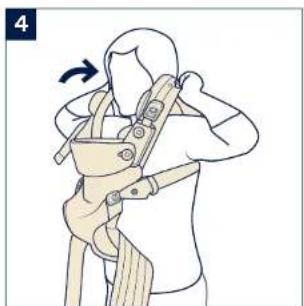
natural_image
Illustration of a person wearing a biceps support system, with an arrow indicating motion (no text or symbols)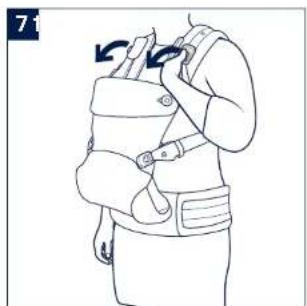
natural_image
Line drawing of a person wearing a full-body medical harness and belt, with arrows indicating motion direction (no text or symbols)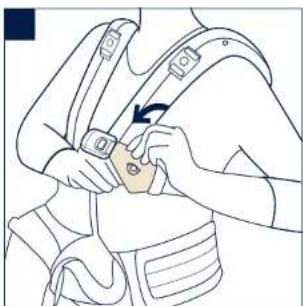
natural_image
Illustration of a person adjusting a belt buckle (no text or symbols present)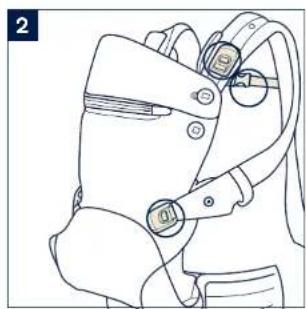
natural_image
Line drawing of a person wearing a medical or surgical device with buttons and straps (no text or symbols)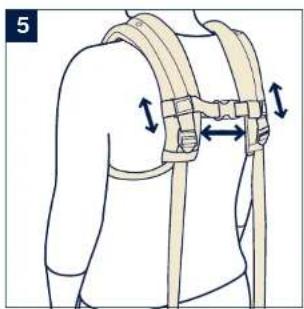
natural_image
Illustration of a person wearing a harness and belt, with arrows indicating movement or force direction (no text or symbols)
natural_image
Illustration of a person holding a medical device with a belt, no text or symbols present
natural_image
Line drawing of a person wearing a full-body harness and belt, with a hand pointing to the chest area (no text or symbols)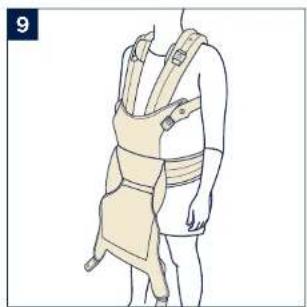
natural_image
Line drawing of a person wearing a full-body medical harness (no text or symbols)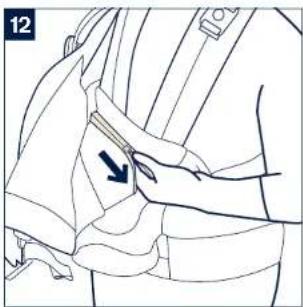
natural_image
Line drawing of a person's shoulder and shoulders with a black arrow pointing to a specific anatomical feature (no text or symbols present)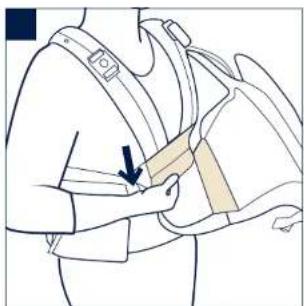
natural_image
Line drawing of a person adjusting a belt buckle (no text or symbols)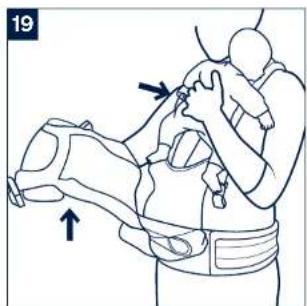
natural_image
Line drawing of a person wearing a backpack and holding a belt (no text or symbols)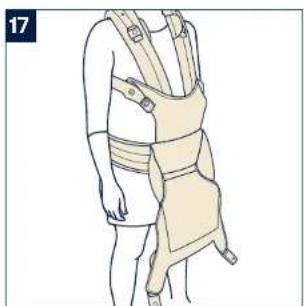
natural_image
Line drawing of a person wearing a full-body safety harness (no text or symbols)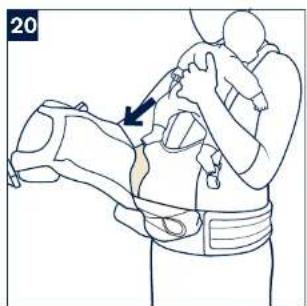
natural_image
Illustration of a person performing CPR on another individual (no text or symbols present)
natural_image
Line drawing of a person's seatbelt with a belt buckle (no text or symbols)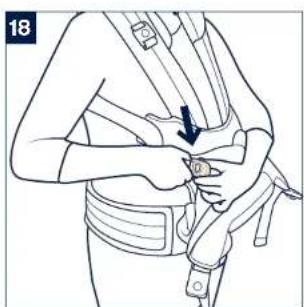
natural_image
Line drawing of a person adjusting a belt buckle, with a black arrow indicating the belt buckle (no text or symbols present)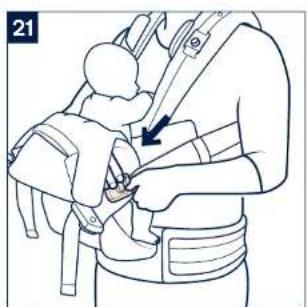
natural_image
Illustration of a person adjusting a backpack with an arrow indicating the point of change (no text or symbols present)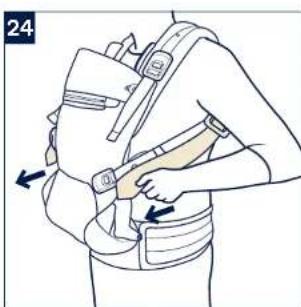
natural_image
Illustration of a person wearing a full-body medical harness and belt, with arrows indicating movement or force direction (no text or symbols)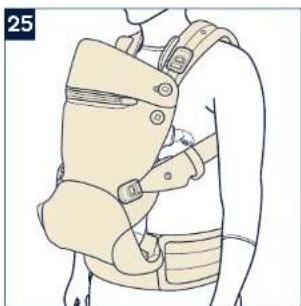
natural_image
Line drawing of a person wearing a beige baza life vest (no text or symbols)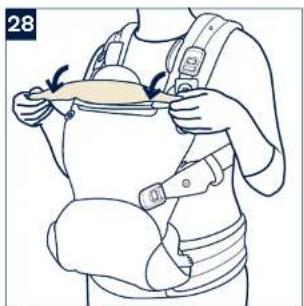
natural_image
Illustration of a person adjusting a medical device with a bandage, no text or symbols present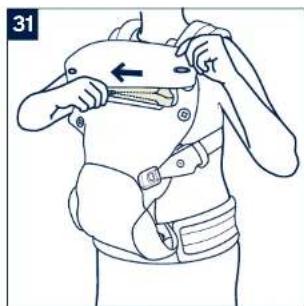
natural_image
Illustration of a person adjusting a helmet with a belt, showing hand positioning and movement (no text or symbols)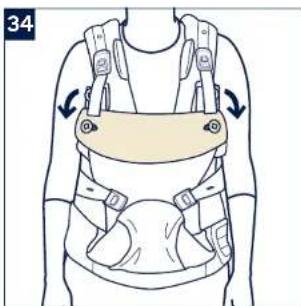
natural_image
Line drawing of a person wearing a full-body harness with belt and straps, no text or symbols present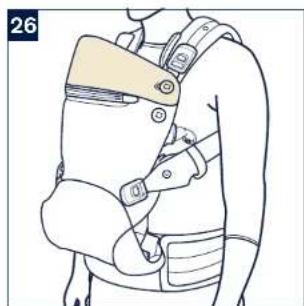
natural_image
Line drawing of a person wearing a full-body medical harness (no text or symbols)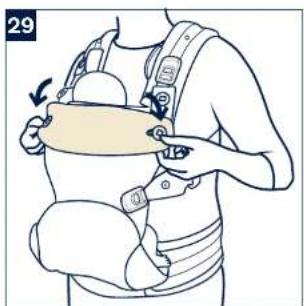
natural_image
Illustration of a person wearing a full-body medical harness and belt, with no visible text or symbols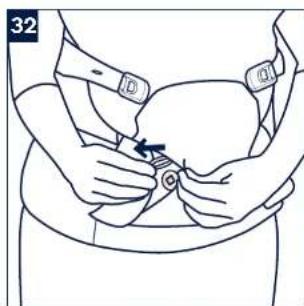
natural_image
Line drawing of a person adjusting a zipper on a baby (no text or symbols)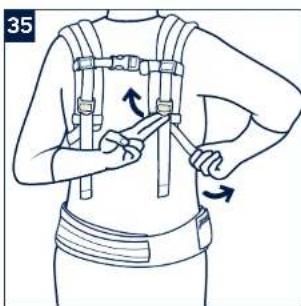
natural_image
Illustration of a person adjusting a chest brace with straps (no text or symbols)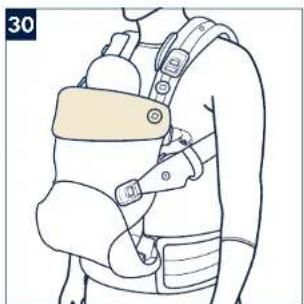
natural_image
Line drawing of a person wearing a full-body medical harness and backpack (no text or symbols)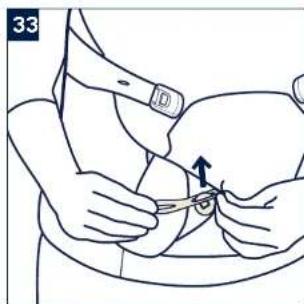
natural_image
Line drawing of a person performing a medical procedure on a patient's abdomen, with an arrow indicating the point of care (no text or symbols present)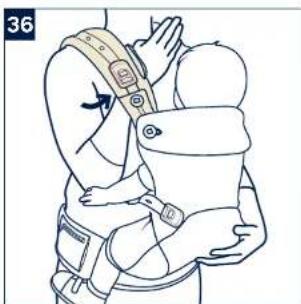
natural_image
Line drawing of a person carrying a baby in a sling (no text or symbols)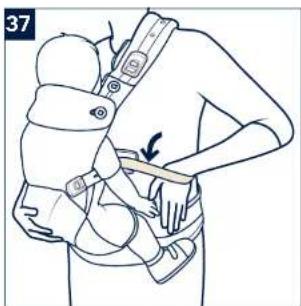
natural_image
Line drawing of a person carrying a full-body medical device, no text or symbols present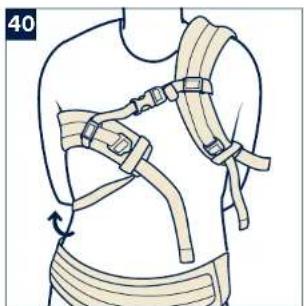
natural_image
Illustration of a person wearing a full-body medical harness and belt, with no visible text or symbols.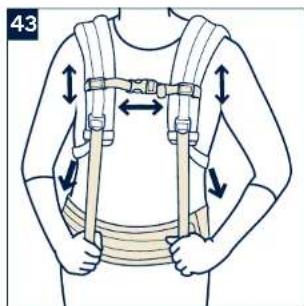
natural_image
Illustration of a person wearing a full-body medical harness with straps and buttons (no text or symbols)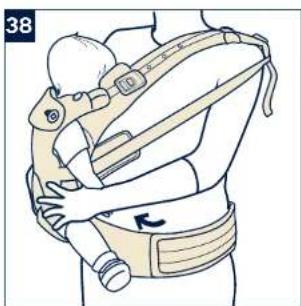
natural_image
Illustration of a person carrying a baby in a full-body medical harness (no text or symbols)
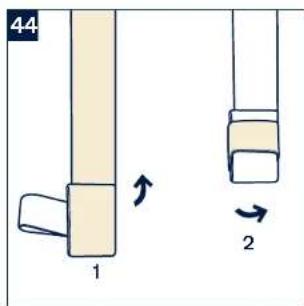
natural_image
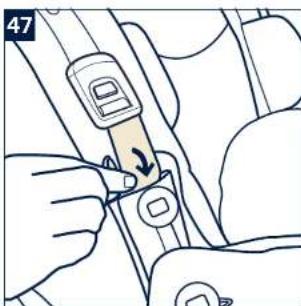
Illustration of a car seatbelt buckle being inserted, showing the buckle and seat (no text or symbols)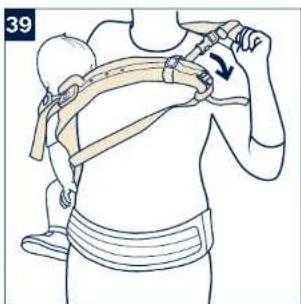
natural_image
Line drawing of a person carrying a child's torso with a belt and straps (no text or symbols)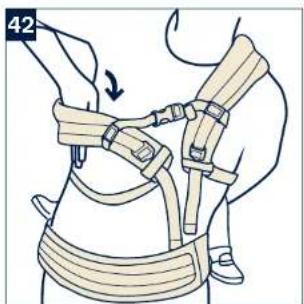
natural_image
Illustration of a person wearing a full-body harness and belt, with no visible text or symbols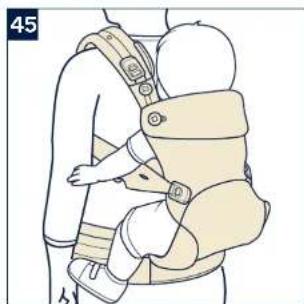
natural_image
Illustration of a person carrying a baby in a full-body harness (no text or symbols)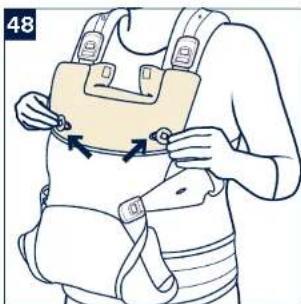
natural_image
Illustration of a person wearing a vest with straps and a backpack, holding an object (no text or symbols present)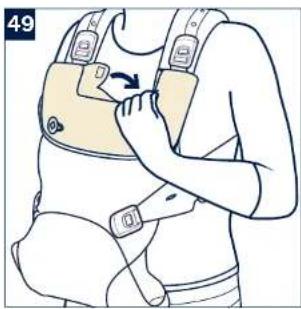
natural_image
Illustration of a person wearing a full-body medical harness and belt, holding a device with an arrow indicating rotation (no text or symbols present)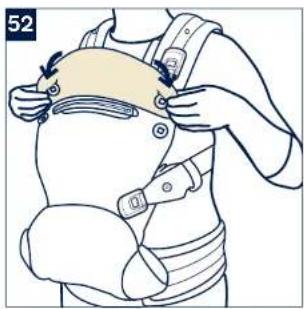
natural_image
Illustration of a person adjusting a chest brace (no text or symbols present)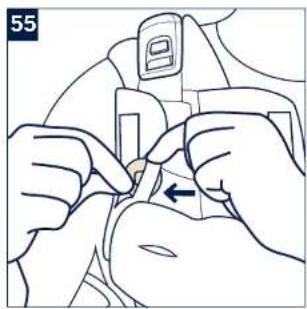
natural_image
Line drawing of hands adjusting a small object with an arrow indicating direction (no text or symbols)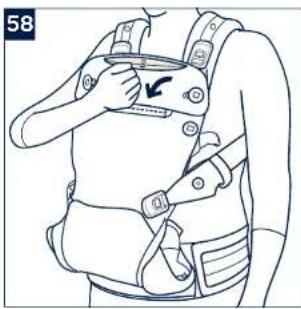
natural_image
Line drawing of a person wearing a full-body medical harness and belt, with no visible text or symbols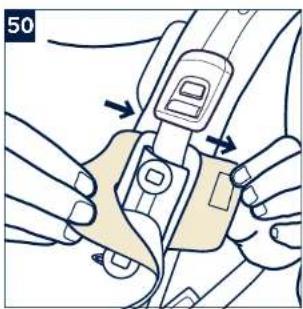
natural_image
Line drawing of a person's seatbelt being adjusted for a button (no text or symbols)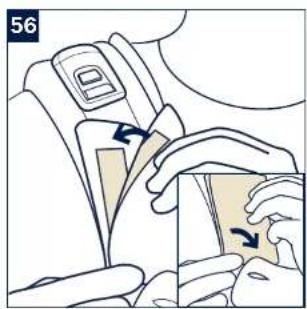
natural_image
Illustration of hands fastening a car seatbelt with arrows indicating motion (no text or symbols)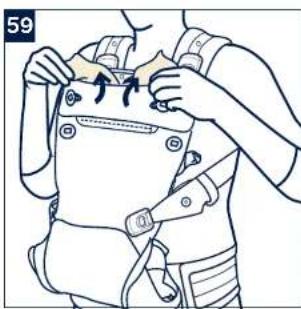
natural_image
Illustration of a person adjusting a backpack with arrows indicating motion (no text or symbols)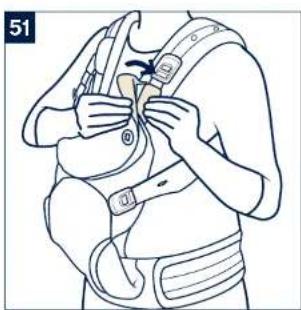
natural_image
Line drawing of a person wearing a full-body harness and belt, holding an object (no text or symbols)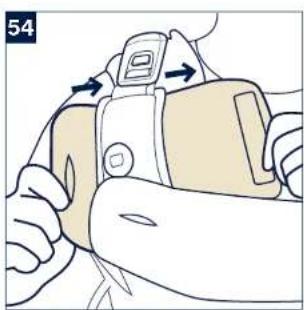
natural_image
Illustration of a hand adjusting a beige belt buckle with a zipper, showing adjustment arrows (no text or symbols)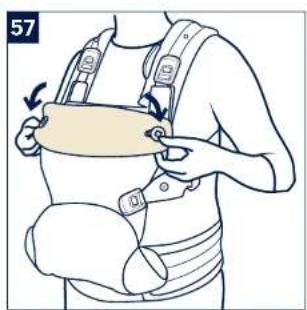
natural_image
Illustration of a person wearing a full-body harness and belt, holding a belt (no text or symbols)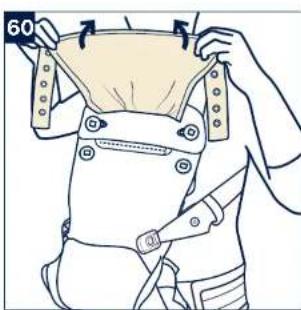
natural_image
Illustration of a person adjusting a garment with a belt, showing a hand holding the top part (no text or symbols present)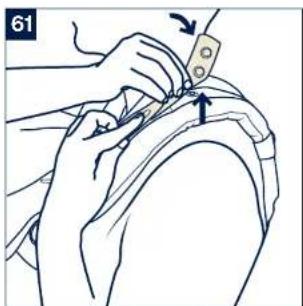
natural_image
Illustration of a person performing a medical procedure on a shoulder (no text or symbols present)Designed around your life

Contents
English (EN)
Product Information
Product Registration 3
Warranty 3
Contact 3
Child Usage Requirements
Warnings 5
Parts List 7
Product Set Up 9
Product Use 10
Facing In 12
Head Support 13
Facing Out
Back Carry
Accessories
| Bib | 16 |
| Harness Covers | 16 |
| Hood | 17 |
Cleaning and Maintenance
Francals (FR) 19
Deutsch (DE) 37
Espanol (ES) 55
Nederlands (NL) 65
Italiano (IT) 75
Portuguese (PT) 85
Polish (PL) 95
Czech (CZ) 105
Russian (RU) 115
Greek (GR) 125
Slovenian (SL) 135
Swedish (SV) 145
Norwegian (NO) 155
Danish (DA) 163
Finnish (FI) 171
Slovak (SK) 179
Korean (KO) 189
Turkish (TR) 197
Romanian (RO) 20
繁中 217
简中
225
E
Product Information
Model Number:
Manufactured in (date):
Product Registration
Please fill in the above information. The model number and the manufactured in date are located on a label on the product. Fill out the prepaid registration postcard attached to the product and mail it today.
To register your product please visit www.nunababy.com/usa/register-gear
Warranty
We have purposely designed our high-quality products so that they can grow with both your child and your family. Because we stand by our product, our gear is covered by a custom warranty per product, starting from the day it was purchased. Please have the proof of purchase, model number and manufactured in date available when you contact us.
For warranty information please visit www.nunababy.com/usa/warranty
Contact
For replacement parts, service, or additional warranty questions, please contact our customer service department
In the USA
infousa@nunababy.com
www.nunababy.com
1.855.NUNA.USA
In Canada
2520 Av Marie-Curie, St-Laurent, QC, H4S 1N1
1-800-667-4111
info@nunababy.ca
www.nunababy.ca
Nuna International BV
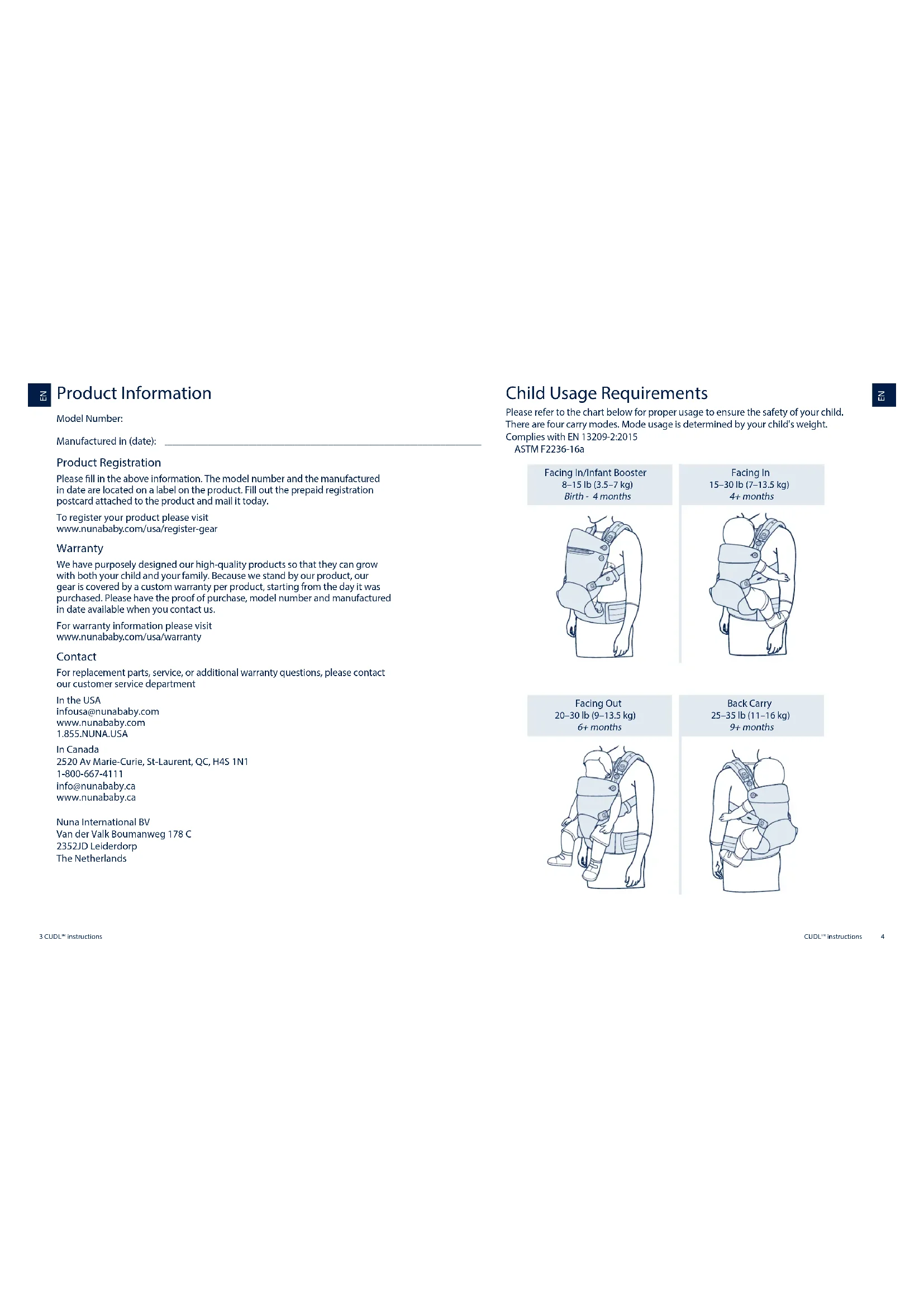
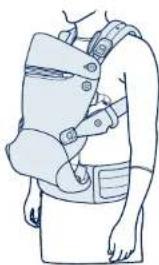
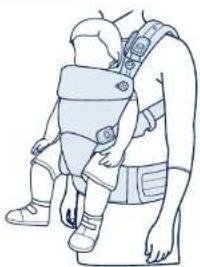
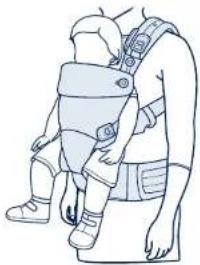
Please refer to the chart below for proper usage to ensure the safety of your child. There are four carry modes. Mode usage is determined by your child's weight.
Complies with EN 13209-2:2015
ASTM F2236-16a
Facing In/Infant Booster
8-15 lb (3.5-7 kg)
Birth - 4 months
Facing In
15-30 lb (7-13.5 kg)
4+ months
natural_image
Line drawing of a person wearing a full-body medical harness (no text or symbols)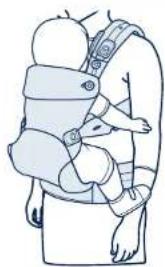
natural_image
Line drawing of a person wearing a baby's life vest (no text or symbols)Facing Out
20-30 lb (9-13.5 kg)
6+ months
Back Carry
25-35 lb (11-16 kg)
9+ months
natural_image
Line drawing of a person in a seated body wearing a full-body safety harness (no text or symbols)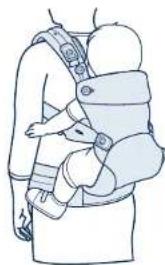
natural_image
Line drawing of a person wearing a baby's lifebuoy (no text or symbols)WARNING
FALL AND SUFFOCATION HAZARD
FALL HAZARD - Infants can fall through a wide leg opening or out of carrier. Follow instructions for use.
- Adjust leg openings to fit baby's legs snugly.
- Before each use, make sure all buckles, fasteners, and adjustments are secure.
• Take special care when leaning or walking.
• Never bend at waist; bend at knees. - Only use this carrier for children between 8 lb (3.5 kg) and 35 lb (16 kg).
SUFFOCATION HAZARD - Infants under 4 months can suffocate in this product If face is pressed tight against your body.
- Do not strap baby too tight against your body.
- Allow room for head movement.
- Keep infant's face free from obstructions at all times.
WARNING
Check to assure all buckles, snaps, straps, and adjustments are secure before each use.
Check for ripped seams, torn straps or fabric and damaged fasteners before each use.
Stop using the carrier if parts are missing or damaged.
Child must face towards you until he or she can hold head upright.
Ensure proper placement of child in product including leg placement.
Make sure baby's legs are straddling the seat and arms extend through arm holes.
Regularly check that your child is comfortably and securely seated in the baby carrier, especially when using as a back carrier.
To prevent hazards from falling, ensure that your child is securely positioned in the carrier.
Hold your baby closely at all times until correctly attached.
The infant booster must be used for children weighing 8–15 lb (3.5 kg–7 kg) and should ONLY be used with your child facing in.
Premature infants, infants with respiratory problems, and infants under 4 months are at greatest risk of suffocation.
For low birth weight babies and children with medical conditions, seek advice from a health professional before using the product.
When using the soft carrier, monitor your child.
Be aware of hazards in the domestic environment e.g. heat sources, spilling of hot drinks.
Take care when bending or leaning forward or sideways.
Your balance may be adversely affected by your movement and that of your child.
This baby carrier is designed for use by adults while walking, standing or sitting only.
This baby carrier is not suitable for use during sporting activities.
DO NOT use this soft carrier if you use a pacemaker, as the magnetic buckles can interfere with the pacemaker.
NEVER use a soft carrier when balance or mobility is impaired because of exercise, drowsiness, or medical conditions.
NEVER use a soft carrier while engaging in activities such as cooking and cleaning which involve a heat source or exposure to chemicals.
NEVER wear a soft carrier while driving or being a passenger in a motor vehicle.
NEVER lie down or sleep with baby in the baby carrier.
N
Parts List
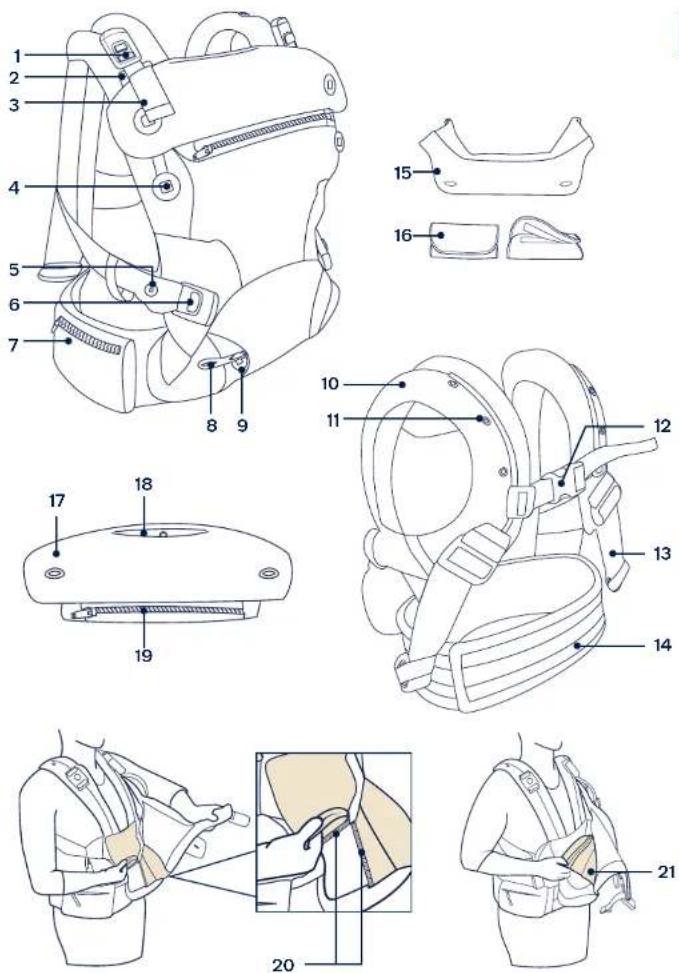
Make sure all parts are available before assembly. If any part is missing, please contact Nuna. No tools are required for assembly.
1 Shoulder Buckle
2 Shoulder Buckle Strap
3 Shoulder Buckle Adjustment
4 Head Support Button
5 Leg Hole Adjustment Button
6 Side Buckle
7 Waist Pocket
8 Seat Width Strap
9 Seat Width Button
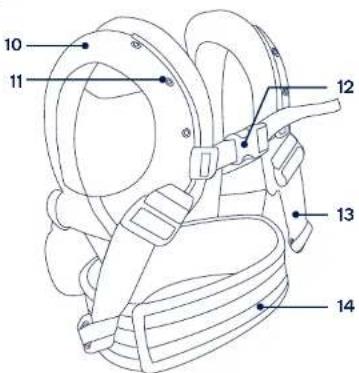
10 Shoulder Strap
11 Hood Snaps
12 Yoke
13 Shoulder Adjustment Strap
14 Waist Band
Removable Parts
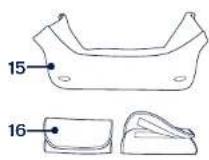
15 Bib (x2)
16 Harness Covers
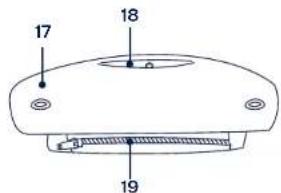
17 Head Support
18 Hood Pocket
19 Head Support Zipper
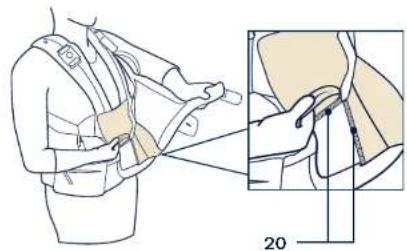
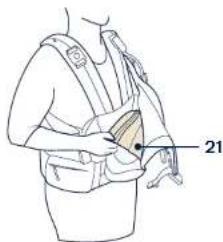
Infant Booster
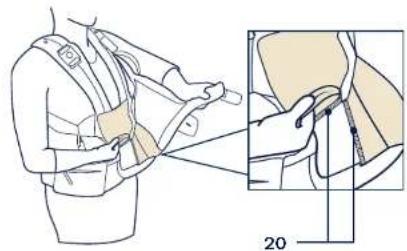
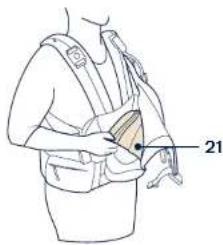
20 Infant Booster
(Unzipped/Not in Use)
21 Infant Booster
(Zipped/In Use)
N
Product Set Up
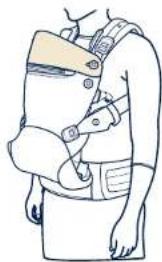
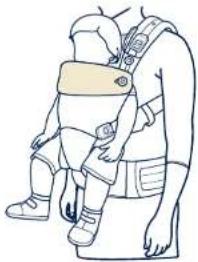
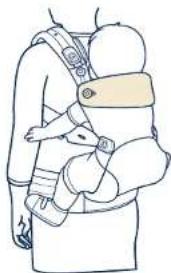
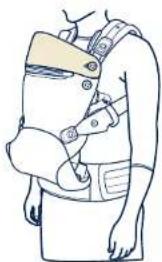
Based on the chart below, position the head support according to your baby's weight.
Your baby's head should be supported until he or she has strong head control (approximately 4 months of age).
Facing In/Infant Booster
8-15 lb (3.5-7 kg)
Birth - 4 months
Facing In
15-30 lb (7-13.5 kg)
4+ months
natural_image
Line drawing of a person wearing a backpack and belt (no text or symbols)OR

natural_image
Line drawing of a person wearing a full-body harness (no text or symbols)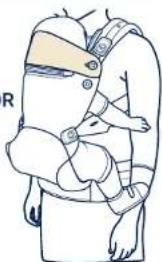
natural_image
Illustration of a person wearing a backpack and holding a bag, with no visible text or symbols.Facing Out
20-30 lb (9-13.5 kg)
6+ months
natural_image
Line drawing of a person wearing a full-body fitness equipment (no text or symbols)Back Carry
25-35 lb (11-16 kg)
9+ months
natural_image
Line drawing of a person carrying a baby in a sling (no text or symbols)Product Use
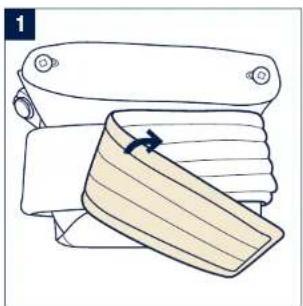
1 - Open the waist band. (1)
2 - Make sure the yoke, shoulder buckles, and side buckles are connected. (2)
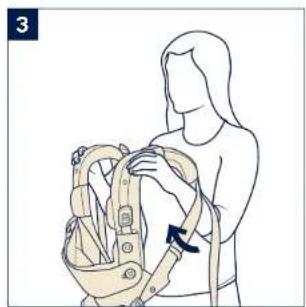
3 - Holding the carrier in front of you, slide your arms through the shoulder straps. (3)
4 - Pull the carrier over your head. (4)
5 - Adjust the height and width of the yoke vertically and sideways to achieve a comfortable fit. The yoke should rest between your shoulder blades. (5)
6 - Secure the waist band behind your back, engaging the hook and loop to hold the band firmly in place. (6)
To remove the carrier, reverse the steps above.
DO NOT remove the carrier while your child is in it.
Opening Baby Carrier
1 - Release both shoulder buckles. (7)
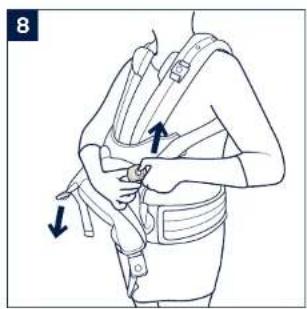
2 - Release both side buckles. (8)
3 - The carrier is open. (9)
4 - If your child weighs more than 15 lb (7 kg), the leg hole adjustments are not needed. Slide the leg hole adjustment button out of the button hole on the shoulder strap near the side buckle. (10)
Leg hole adjustments MUST be used for children less than 15 lb (7 kg) to decrease the size of the leg hole and prevent sliding without pinching or chafing your child's leg.
EN
EN
Infant Booster
The infant booster MUST be used if your child weighs less than 15 lb (7 kg).
1 - With the shoulder and side buckles attached on one side, locate the unzipped infant booster inside the carrier. (11)
2 - Zip the infant booster sides together. (12)
When your child grows out of the infant booster:
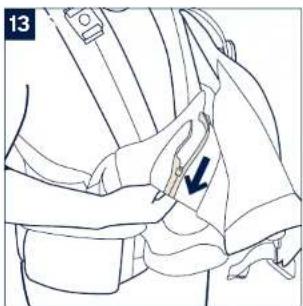
3 - Unzip the infant booster. (13)
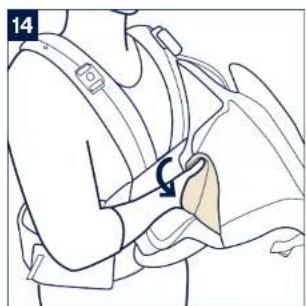
4 - Fold the long side underneath itself and secure the hook and loop along the length of the fabric. (14)
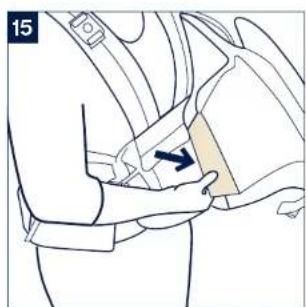
5 - Tuck in the corners. (15)
6 - Make sure the zipper on the short side is covered by the fabric. Both parts of the zipper should now be covered. (16)
Facing In
Infant Booster
8-15 lb (3.5-7 kg)
Birth - 4 months
15-30 lb (7-13.5 kg)
4+ months
natural_image
Line drawing of a person wearing a backpack and harness (no text or symbols)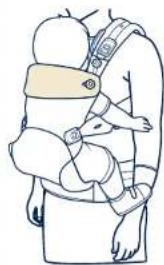
natural_image
Illustration of a person carrying a baby in a full-body medical harness (no text or symbols)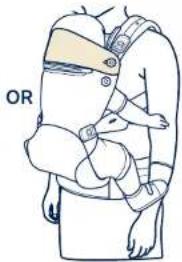
natural_image
Illustration of a person wearing a backpack and holding an object, with no visible text or symbolsSecuring Your Child
We recommend sitting down while securing your child in the carrier, as it provides better control.
1 - Begin with the carrier fully open (and the infant booster secured if your child weighs less than 15 lb [7 kg]). (17)
2 - Attach one side buckle. (18)
3 - Hold your child securely against your chest with one hand, and use the other to raise the front of the carrier. (19)
4 - Guide your child's leg down and through the opening between the seat/booster and the attached side buckle. (20)
5 - Use one hand to hold the carrier and your child against you, and use the other to secure the other side buckle. (21)
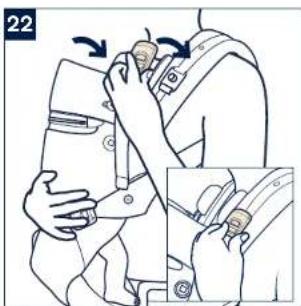
6 - Holding your child in the carrier with one hand, secure the shoulder buckles one at a time. (22)
7 - Gently pull both shoulder buckle adjustments down to adjust the fit. (23)
N
N
8 - Adjust the shoulder straps by gently pulling both shoulder adjustment straps evenly out in front of you. (24)
9 - Make sure your child is comfortable and securely seated in the baby carrier. Adjust the straps around your child and check to make sure all buckles and snaps are secure. Allow room for your child's head movements and keep child's face free from obstructions. (25)
You child should be positioned close to you, high on your body.
Ke your child's face visible to you at all times.
Head Support
1 - For a child weighing 8–15 lb (3.5–7 kg), secure the head support so that it is up and supporting the child's head and neck area. Attach the head support to the upper head support buttons. Only fold the head support down when the child is able to hold his or her head up (approx. 4 months). (26)
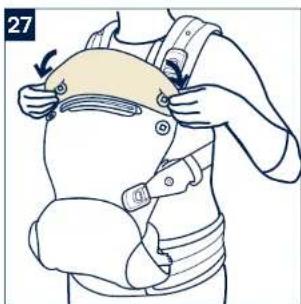
2 - To fold down, slide both upper head support buttons out of the button holes on the head support. (27)
3 - Fold the head support down. (28)
4 - Attach both bottom head support buttons into the button holes on the head support. (29)
5 - Make sure your child is comfortable and securely seated in the baby carrier. Adjust the straps around your child and check to make sure all buckles and snaps are secure. Allow room for your child's head movements and keep child's face free from obstructions. (30)
6 - To remove the head support, unzip it from the carrier. (31)
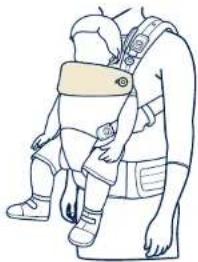
Facing Out
20-30 lb (9-13.5 kg) 6+ months
natural_image
Line drawing of a person wearing a full-body harness and standing in a seated position (no text or symbols)Seat Width Strap
1 - Locate both the seat width strap and the seat width button inside the front fabric pocket. (32)
2 - Attach the seat width button into either of the button holes on the seat width strap, depending on how much you need to narrow the seat for your child. (33)
The heat width is properly adjusted if your child's thighs are supported.
3 - Fold the head support down so your child's face will be above the top edge of the carrier. The carrier is now ready for you to secure your child. (34) Follow the same steps for securement as Facing In mode (page 12), but face your child outward.
EN
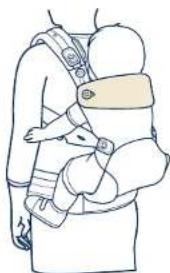
Back Carry
25-35 lb (11-16 kg) 9+ months
natural_image
Line drawing of a person carrying a baby in a sling (no text or symbols)Back Carry Position
We recommend practicing this method a few times without a child in the carrier before attempting it with your child.
Child should NEVER be facing out (away from you) in back carry mode.
1 - With your child in the baby carrier facing inward, loosen both shoulder adjustment straps (DO NOT unbuckle). (35)
2 - Slide your right arm out of the right shoulder strap while cradling your child with your left arm. (36)
3 - Slide your left arm under the shoulder adjustment strap on the side while cradling your child with your right arm. (37)
4 - Cradling your child with your right arm, guide your child to your right hip using your left arm. (38)
5 - Still supporting your child, grab the shoulder strap with your left hand and pull it down over your shoulder. (39)
6 - Slightly lean forward and move your child onto your back. (40)
7 - Slide your left arm up through the shoulder adjustment strap on the side while cradling your child behind your back with your right arm. (41)
8 - Slide your right arm down through the shoulder strap while cradling your child with your left arm. Both shoulder straps should now be secure around your shoulders. (42)
9 - Pull down on the shoulder adjustment straps to tighten. Adjust the yoke up or down vertically and side to side. (43)
10 - Roll up the excess length of the shoulder adjustment straps and use the elastic loop to wrap around the rolled up strap to store it out of the way. (44)
11 - Make sure your child is comfortable and securely seated in the baby carrier. Adjust the straps around your child and check to make sure all buckles and snaps are secure. Allow room for your child's head movements and keep child's face free from obstructions. (45)
Accessories
Bib
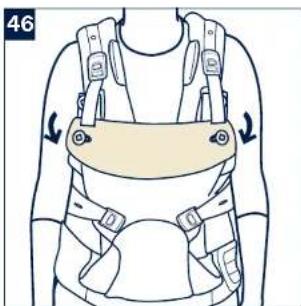
1 - Make sure the head support is folded down and secured in place with the lower head support buttons. (46)
2 - Store the extra length of the shoulder buckle adjustment in the pocket on the shoulder buckle strap. (47)
3 - Cover the front of the head support with the front of the bib and slide both head support buttons through the button holes on the bib. (48)
4 - Fold and tuck the bib over the top edge of the head support. (49)
5 - Wrap both side edges of the bib around the shoulder buckle strap. The back edge of the bib is slid between the shoulder strap and shoulder buckle strap. The front edge of the bib is laid over the shoulder buckle strap. (50)
6 - Attach the sides of the hook and loop. Make sure the bib is laying flat and is secure to the top edge of baby carrier. (51)
Harness Covers
1 - Unbutton the head support and fold it down. (52)
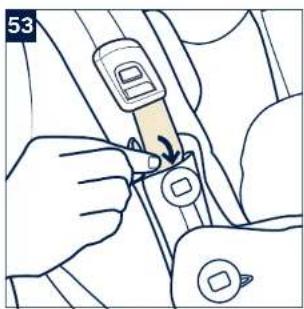
2 - Store the extra length of the shoulder buckle adjustment in the pocket on the shoulder buckle strap. (53)
3 - Slide the harness cover between the shoulder strap and the shoulder buckle strap. (54)
4 - Slide the button on the shoulder buckle strap through the button hole on the harness cover. (55)
5 - Attach the hook and loop. Make sure the bottom edge of the harness cover is tucked behind the head support. (56)
6 - Repeat on the other side. When both harness covers are secure, attach both bottom head support buttons into the button holes on the head support. (57)

Hood
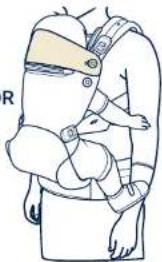
1 - Make sure the head support is up and secured in place with the upper head support buttons. Undo the snap on the pocket located on the top edge of the head support. (58)
2 - Pull the hood out of the hood pocket. (59)
3 - Adjust the hood to the desired position to shade your child. (60)
4 - Attach three snaps on the hood strap to the three snaps on the shoulder strap. Repeat for the other side. (61)
Make sure the hood is not covering your child's mouth or laying too tightly over their head.
Cleaning and Maintenance
Refer to the care label attached to the carrier fabric for washing and drying instructions. Carrier MUST be washed inside a mesh laundry bag.
It is normal for fabric to fade from sunlight and to show wear and tear after a long period of use, even when used normally.
For safety reasons, only use original Nuna parts.
Check regularly that everything functions properly. If any parts are torn, broken, or missing, stop using this product.
©2019 Nuna International B.V. Nuna and all associated logos are trademarks.

IMPORTANT! LISEZ TOUTES LES INSTRUCTIONS AVANT D'ASSEMBLER ET D'UTILISER LE PORTE-BÉBÉ SOUPLE.
CONSERVEZ LES INSTRUCTIONS POUR UNE UTILISATION FUTURE.
Sommaire
infousa@nunababy.com
www.nunababy.com
1.855.NUNA.USA
Au Canada
2520 Av Marie-Curie, St-Laurent, QC, H4S 1N1
1-800-667-4111
info@nunababy.ca
www.nunababy.ca
natural_image
Line drawing of a person wearing a backpack and belt (no text or symbols)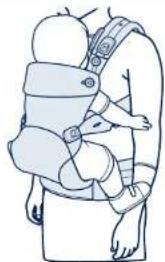
natural_image
Line drawing of a person wearing a baby's gait with straps (no text or symbols)Porté sur le dos
20-30 lb (9-13,5 kg)
6 mois et plus
Porté sur le dos
25-35 lb (11-16 kg)
9 mois et plus
natural_image
Illustration of a person wearing a full-body safety harness, standing beside another person (no text or symbols present)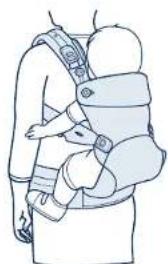
natural_image
Line drawing of a person carrying a baby in a life vest (no text or symbols)
AVERTISSEMENT
RIŞQUE DE CHUTE ET D'ÉTOUFFEMENT
- Do not strap baby too tight against your body.
- Allow room for head movement.
- Keep infant's face free from obstructions at all times.
AVERTISSEMENT
natural_image
Line drawing of a person wearing a backpack and belt (no text or symbols)natural_image
Line drawing of a person carrying a baby in a sling (no text or symbols)OR
natural_image
Line drawing of a person wearing a backpack and holding an object, with no visible text or symbols.natural_image
Line drawing of a person wearing a full-body medical harness and standing on a chair (no text or symbols)natural_image
Line drawing of a person carrying a baby in a life vest (no text or symbols)natural_image
Line drawing of a person wearing a full-body medical harness (no text or symbols)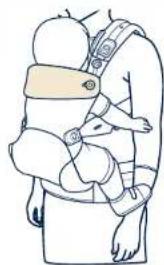
natural_image
Line drawing of a person carrying a baby in a sling (no text or symbols)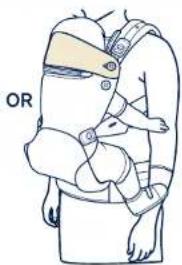
natural_image
Illustration of a person wearing a hooded jacket with hands placed on the chest (no text or symbols)natural_image
Line drawing of a person wearing a full-body harness and standing on a platform (no text or symbols)natural_image
Line drawing of a person wearing a baby's gait (no text or symbols)https://www.nunababy.com/gr/warranty
Kontakt
natural_image
Line drawing of a person wearing a full-body harness and standing (no text or symbols)natural_image
Line drawing of a person carrying a baby in a life vest (no text or symbols)⚠️WARNUNG
Produkt aufbauen
natural_image
Line drawing of a person wearing a backpack and belt (no text or symbols)natural_image
Illustration of a person wearing a full-body harness and seatbelt (no text or symbols)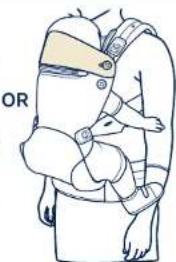
natural_image
Illustration of a person wearing a medical or ergonomic device with no visible text or symbolsnatural_image
Line drawing of a person in a seated position wearing a full-body harness (no text or symbols)natural_image
Line drawing of a person carrying a baby in a sling (no text or symbols)Produkt verwenden
Babytrage anlegen
natural_image
Line drawing of a person wearing a backpack and harness (no text or symbols)
natural_image
Illustration of a person carrying a baby in a life vest (no text or symbols)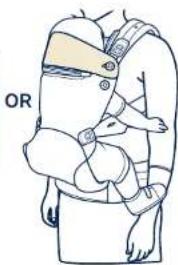
natural_image
Illustration of a person wearing a hooded garment with hands placed on the chest (no text or symbols)Ihr Kind sichern
natural_image
Line drawing of a person wearing a full-body medical harness (no text or symbols)Sitzbreitenriemen
natural_image
Line drawing of a person carrying a baby in a sling (no text or symbols)infousa@nunababy.com
www.nunababy.com
1.855.NUNA.USA
infousa@nunababy.com
www.nunababy.com
1.855.NUNA.USA
Nel Regno Unito
infouk@nunababy.com
www.nunababy.com
Cumpre as normas EN 13209-2:2015 ASTM F2236-16a
infousa@nunababy.com
www.nunababy.com
1.855.NUNA.USA
В Великобритании
infouk@nunababy.com
www.nunababy.com
©2019 Nuna International B.V.
To ©2019 Nuna International B.V.
infousa@nunababy.com
www.nunababy.com
1.855.NUNA.USA
| Storbritannien
infouk@nunababy.com
www.nunababy.com
infousa@nunababy.com
www.nunababy.com
1.855.NUNA.USA
I Storbritannien
infouk@nunababy.com
www.nunababy.com
Brugskrav
infousa@nunababy.com
www.nunababy.com
1.855.NUNA.USA
infousa@nunababy.com
www.nunababy.com
1,855.NUNA.USA
명국
infouk@nunababy.com
www.nunababy.com
아이 사용 요구 사항
infousa@nunababy.com
www.nunababy.com
1.855.NUNA.USA
Ingiltere'de
infouk@nunababy.com
www.nunababy.com
infousa@nunababy.com
www.nunababy.com
1.855.NUNA.USA
În Regatul Unit
infouk@nunababy.com
www.nunababy.com



- IMPORTANT! READ ALL INSTRUCTIONS CAREFULLY BEFORE ASSEMBLING AND USING THE SOFT CARRIER.
- Designed around your life
- Contents
- English (EN)
- E
- Product Information
- Product Registration
- Warranty
- Contact
- WARNING
- FALL AND SUFFOCATION HAZARD
- N
- Parts List
- Removable Parts
- Infant Booster
- Product Set Up
- Product Use
- Opening Baby Carrier
- EN
- When your child grows out of the infant booster:
- Facing In
- Securing Your Child
- Head Support
- Facing Out
- Seat Width Strap
- Back Carry
- Back Carry Position
- Accessories
- Bib
- Harness Covers
- Hood
- Cleaning and Maintenance
- IMPORTANT! LISEZ TOUTES LES INSTRUCTIONS AVANT D'ASSEMBLER ET D'UTILISER LE PORTE-BÉBÉ SOUPLE.
- Sommaire
- AVERTISSEMENT
- RIŞQUE DE CHUTE ET D'ÉTOUFFEMENT
- Kontakt
- ⚠️WARNUNG
- Produkt aufbauen
- Produkt verwenden
- Babytrage anlegen
- Ihr Kind sichern
- Sitzbreitenriemen
- В Великобритании
- | Storbritannien
- I Storbritannien
- Brugskrav
- 아이 사용 요구 사항
- Ingiltere'de
Brand : Nuna
Model : CUDL
Category : Refrigerator