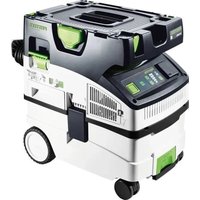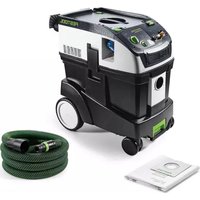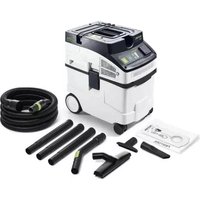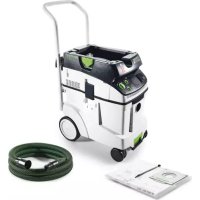
Cleantec CTH 48 - Vacuum Cleaner FESTOOL - Free user manual and instructions
Find the device manual for free Cleantec CTH 48 FESTOOL in PDF.



User questions about Cleantec CTH 48 FESTOOL
0 question about this device. Answer the ones you know or ask your own.
Ask a new question about this device
Download the instructions for your Vacuum Cleaner in PDF format for free! Find your manual Cleantec CTH 48 - FESTOOL and take your electronic device back in hand. On this page are published all the documents necessary for the use of your device. Cleantec CTH 48 by FESTOOL.
USER MANUAL Cleantec CTH 48 FESTOOL
Declaration of Conformity
We as the manufacturer Festool GmbH, Wertstraße 20, 73240 Wendlingen, Germany declare under our sole responsibility that the product(s):
Designation:
Designation of Type(s):
Serial number(s) 11:
Mobile dust extractor
CTH 26 E/a
10523105
fulfills all the relevant provisions of the following UK Regulations:
S.l. 2008/1597
Supply of Machinery (Safety) Regulations 2008
S.l. 2016/1091
Electromagnetic Compatibility Regulations 2016
S.I. 2012/3032
Restriction of the Use of Certain Hazardous Substances in Electrical and Electronic Equipment Regulations 2012
and are manufactured in accordance with the following designated standards:
BSEN 60335-1:2012 + A2:2019
BS EN 60335-2-69:2012
BS EN 55014-1:2017
BS EN 55014-2:2015
BS EN IEC 61000-3-2:2019
BS EN 61000-3-3:2013
BS EN IEC 63000:2018
in the specified serial number range (S-Nr.) from 40000000 - 49999999
UK CR
Place and date of declaration: Wendlingen, 07.10.2021
Signed on behalf of and in name of Festool GmbH
Markus Stark
Head of Product development
i. V. R. Breuerts
Ralf Brandt
Head of Productconformity
| Absaugmobil | Seriennummer * |
| Mobile dust extractors | Serial number * |
| Aspirateurs | N° de série * (T-Nr.) |
| CTH 26 E/a | 202403, 202404, 10523101, 10523105 |
| CTH 48 E/a | 202405 |
de EU-Konformitätserklarung. Wir erklären in alleiniger Verantwortung, dass这点es Produkt mit allen relevanten Anforderungen folgender EU-Richtlinien übereinstimm, und folgende Normen oder normative Dokumente zugrunde gelegt wurden:
en EU Declaration of Conformity. We declare under sole responsibility that this product complies with all the relevant requirements in the following EU Directives, and following standards and normative documents were applied:
fr Déclaration de conformité de l'UE. Nous déclarons, sous notre seule responsabilité, que ce produit satisfait à toutes les exigences pertinentes des directives UE suivantes et repose sur les normes ou documents normatifs suivants :
es Declaracion UE de conformidad. Declaramos bajo esta responsabilitad que este producto cumple todos los requisitos relevantes de las siguientes directivas de la UE y que se han toado como base lassiguidentes normas o documents normativos:
Dichiarazione di conformità UE. Dichiariamo molto nella sua responsabilità che il presente prodotto sa conforms a tutti i requisiti di rilevanza definite nelle seguenti Direttive UE e che siano stati applicati le seguenti norme o i seguenti documenti normativi:
nl EU-conformiteitsverklaring. Wij verklaren en stellen ons ervoor verantwoordelijk dat dit product volledig voldoet aan alle volgende EU-richtlijnen en volgende normen of normatieve documenten daaraan ten grundslag gelegd werden:
SV EU-forsakran om overensstammelse. Vi forklarar pa eget ansvar attenna produkt uppfyller alla relevanta krav enligt foljande EU-direktiv och baseras pa foljande normer erler normgivande dokument:
fi EU-vaatimustemmukaisuusvakuutus. Vakuutamme yksinomaisella vastuulla, etta tama tuote tayttaa seuraavien EU-direktivien kaikki olennaiset vaatumukset ja se on seuraavien standardien tai standardiasiakirjojen mukainen:
da EU-overensstemmelseserklaring. Vi erklær er med eneansvar, at dette produit er i overensstemmelse med alle relevante krav i ffolgende EU-direktiver, og at ffolgende standarder eller normative dokumenter danner grundlag for det:
nb EU-samsvarserklaring. Vi erklærer under eneansvar at detteprodukter oppfyller alle relevante kravifolgende EU-direktiver og at folgende standarder ullormative dokumenter er blitt lagt til grunn:
pt Declaração de conformidade UE. Sob)nossa inteira responsabilitadé,declar Ramos que este produits estáde acordo com todas as exigências relevantes das seguides direitivas UE, tendo sido tomadas por base as seguides normas ou documents normativos:
ru Deklapaun o cooTBeTCTBn EC. Mblco BCEN OTBeTCTBeHHocTbIO 3aBnREm, YTO DaHHa npOdyKcIg COoTBeTCTByeT BcEM pPIMHeHbIM Tpe6oBaHnM cNeDyUoXx DnpeKtNB EC, cTaHapToB n HopMaTHBbIX DOkymeHTOB:
CS Prohlášeni o shodě EU. Prohlášujeme s veskériou odpovednosti, ze tento vyrobek splhuje vsechny príslušné požadavky nasledujících směrnic EU a ze byly použity nasledujíci normy nebo normativné dokumenty:
pl Deklaracja zgodnosci UE. Niniejszym oswiadczamy na watasna odpowiedzialnosc, ze produkt ten spetnia wzystkie obowiazujuce wymogi nastepujacych dyrektyw UE, norm lub dokumentów normatywnych.
2006/42/EC, 2014/30/EU, 2011/65/EU
EN 60335-1:2012 + A11:2014 + A13:2017 + A1:2019 + A2:2019 + A14:2019,
EN 60335-2-69:2012, EN 55014-1:2017 + A11:2020,
EN 55014-2:2015, EN IEC 61000-3-2:2019
EN 61000-3-3:2013, EN IEC 63000:2018

Signed on behalf of and in name of/
Head of Product Development

Ralf Brandt
Head of Product Conformity
1 Safety warnings. 16
2 Symbols. 17
3 Technical data. 17
4 Intended use. 18
5 Machine features. 18
6 Operation. 18
7 Settings. 19
8 Working 20
9 Service and maintenance. 21
10 Accessories 23
11 Environment. 23
12 General information. 23
1 Safety warnings
1.1 General safety instructions
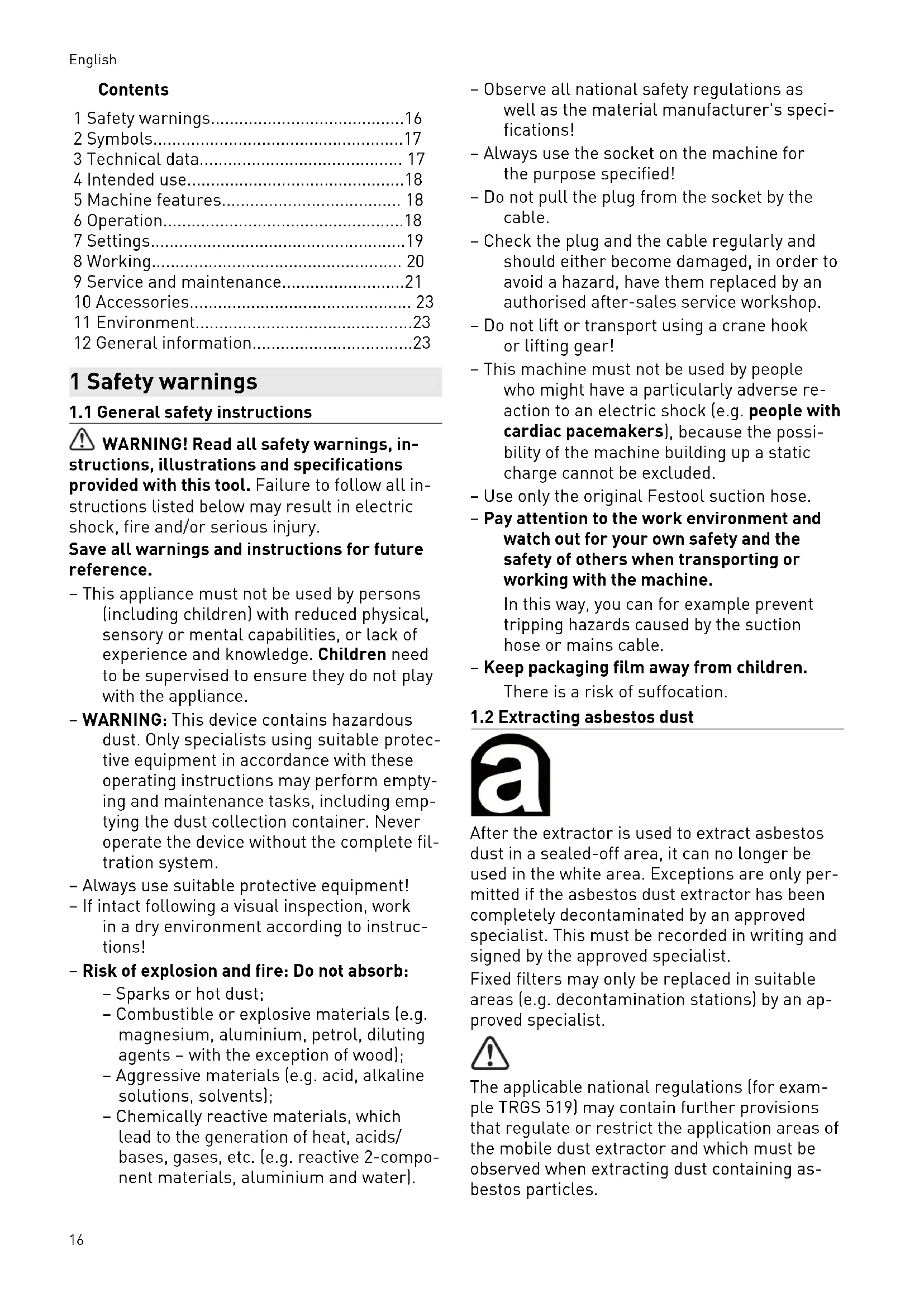
WARNING! Read all safety warnings, instructions, illustrations and specifications provided with this tool. Failure to follow all instructions listed below may result in electric shock, fire and/or serious injury.
Save all warnings and instructions for future reference.
- This appliance must not be used by persons (including children) with reduced physical, sensory or mental capabilities, or lack of experience and knowledge. Children need to be supervised to ensure they do not play with the appliance.
- WARNING: This device contains hazardous dust. Only specialists using suitable protective equipment in accordance with these operating instructions may perform emptying and maintenance tasks, including emptying the dust collection container. Never operate the device without the complete filtration system.
- Always use suitable protective equipment!
- If intact following a visual inspection, work in a dry environment according to instructions!
- Risk of explosion and fire: Do not absorb:
- Sparks or hot dust;
- Combustible or explosive materials (e.g. magnesium, aluminium, petrol, diluting agents - with the exception of wood);
- Aggressive materials (e.g. acid, alkaline solutions, solvents);
-
Chemically reactive materials, which lead to the generation of heat, acids/ bases, gases, etc. (e.g. reactive 2-component materials, aluminium and water).
-
Observe all national safety regulations as well as the material manufacturer's specifications!
- Always use the socket on the machine for the purpose specified!
- Do not pull the plug from the socket by the cable.
- Check the plug and the cable regularly and should either become damaged, in order to avoid a hazard, have them replaced by an authorised after-sales service workshop.
- Do not lift or transport using a crane hook or lifting gear!
- This machine must not be used by people who might have a particularly adverse reaction to an electric shock (e.g. people with cardiac pacemakers), because the possibility of the machine building up a static charge cannot be excluded.
- Use only the original Festool suction hose.
- Pay attention to the work environment and watch out for your own safety and the safety of others when transporting or working with the machine.
In this way, you can for example prevent tripping hazards caused by the suction hose or mains cable.
- Keep packaging film away from children.
There is a risk of suffocation.
1.2 Extracting asbestos dust

After the extractor is used to extract asbestos dust in a sealed-off area, it can no longer be used in the white area. Exceptions are only permitted if the asbestos dust extractor has been completely decontaminated by an approved specialist. This must be recorded in writing and signed by the approved specialist.
Fixed filters may only be replaced in suitable areas (e.g. decontamination stations) by an approved specialist.

The applicable national regulations (for example TRGS 519) may contain further provisions that regulate or restrict the application areas of the mobile dust extractor and which must be observed when extracting dust containing asbestos particles.
2 Symbols

Warning of general danger

Risk of electric shock

Read the operating manual and safety warnings.

Wear a dust mask.

Do not dispose of it with domestic waste.

Caution! Contains asbestos!
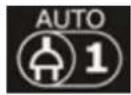
Electrical outlet module with automatic switch-on
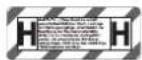
≤slant 0.1 mg / m^3 (dust class H)

UKCA marking: The United Kingdom Conformity Assessed symbol is a marking for products being placed on the market in the United Kingdom. It is a manufacturers indication that the product is in conformance with the relevant regulations in the UK.
3 Technical data
| Mobile dust extractors | ||
| Power consumption 350 - 1000 W | ||
| Maximum appliance socket connected load EU | CH, DK | 2400 W |
| GB 230 V/ 110 V | 1100 W | |
| 1800 W/ 500 W | ||
| Max. suction capacity (air), turbine [3] | 234 m³/h (3900 l/min) | |
| Max. vacuum, turbine¹ | 24000 Pa | |
| Filter surface area 6318 cm² | ||
| Suction hose D 27 / 32 mm x 3,5 m AS | ||
| Length of the net cable 7,5 m | ||
| Sound pressure level as per EN 60704-2-1 / Uncertainty K 71 dB(A) / 3 dB | ||
| Protection category IP X4 | ||
| Container capacity CTH 26 E/a 26 l | ||
| CTH 48 E/a 48 l | ||
| Dimensions L x W x H CTH 26 E/a 630 x 365 x 540 mm | ||
| CTH 48 E/a 740 x 406 x 1005 mm | ||
| Weight CTH 26 E/a 13,9 kg | ||
| CTH 48 E/a 18,8 kg | ||
| Minimum volume flow [m3/h] [l/s] | |
| 21 mm 25 6.9 | |
| 27 mm/IAS 41 11.4 | |
| 32 mm 58 16.1 | |
| 36 mm 73 20.3 | |
| 42 mm 100 27.8 | |
| 50 mm 141 39.2 | |
| CTH 26 E CTH 48 E | |
| FIS-CTH (3x) [L, M, H[4]) | 497541 497542 |
| HF-CT H 498995 498995 |
4 Intended use
The mobile dust extractor is designed for extracting hazardous dust with limit values corresponding to dust class 'H' in accordance with EN 60335-2-69, including wood and paint dust. The mobile dust extractor is suitable for extracting dust containing carcinogenic and pathogenic particles as well as asbestos dust. The mobile dust extractor is suitable for heavy-duty applications and industrial use in accordance with EN 60335-1 and EN 60335-2-69.

The user is liable for improper or non-intended use.
5 Machine features
The specified illustrations appear at the beginning of the Operating Instructions.
[1-1] Sealing plug
[1-2] Intake opening
[1-3] Module slot
[1-4] Appliance socket
[1-5] Hose store
[1-6] Handle
[1-7] SysDoc
[1-8] Hose diameter setting
[1-9] Suction power adjuster
[1-10] Switch
[1-11] Warning sticker
[1-12] Locking clip
[1-13] Dust container
[1-15] Brake
6 Operation

WARNING
Unauthorised voltage or frequency! Risk of accident
The mains voltage and the frequency of the power source must correspond with the specifications on the machine's name plate.
In North America, only Festool machines with the voltage specifications 120V / 60Hz may be used.
6.1 Initial commissioning
- Open the locking clips [2-2] and remove the top section of the machine [2-1].
- Remove the accessories from the dirt trap [2-3] and the packaging!
- Cover the text field of the warning sign [1-11] with the supplied adhesive label in your country's language.
- Insert the plug [1-1] at the cover plate (see figure [1a]).
- Place a filter bag or safety filter bag in the dirt trap in line with legal requirements (see section 7.7, 7.8).
Replace the top section [2-1] and close the locking clips [2-2]. - Attach the cord holder to the reverse of the mobile dust extractor (see figure [3]).
Connect the suction hose to the machine.
6.2 Switching on/off
- Insert the mains plug into an earthed socket.

WARNING
Risk of injury from tools starting up unexpectedly
Before setting the switch to the "AUTO" or "MAN" position, make sure that the connected tool is switched off.
The switch [1-10] serves as an on/off switch.
"0" switch position
Appliance socket [1-5] is disconnected from the power, mobile dust extractor is switched off.
"MAN" switch position
Appliance socket [1-5] is connected to the power, the mobile dust extractor starts.
"Auto" switch position
Appliance socket [1-5] is connected to the power, the mobile dust extractor starts when the connected tool is switched on.
7 Settings
7.1 Adjusting the hose diameter
- Adjust the hose diameter adjuster [1-8] to match the diameter of the connected hose.
This ensures that the air speed in the extractor hose is measured correctly (see section "Volumetric flow monitoring").
7.2 Connecting electric power tools

WARNING
Risk of injury
Observe the maximum appliance socket connected load (see chapter "Technical data")
- Switch off the electric power tool.
Connect the electric power tool to the appliance socket [1-4].
7.3 Connecting pneumatic tools

WARNING
Risk of injury
- Switch off the air tool.
If the compressed air module [1-3] (496141) is installed, the automatic switch-on function of the mobile dust extractor also works in combination with pneumatic tools.
We also recommend installing the VE service unit (495886). The service unit filters and lubricates the compressed air and enables an adjustment of the air pressure. An IAS adapter (454757) is available to connect Festool pneumatic tools to the IAS system.
The operating pressure of the tool must be 6 bar for the automatic switch-on unit to function correctly.
7.4 Adjusting the suction power
at the rotary knob [1-9].
7.5 Applying the brake
Folding out the black brake lever [1-15] prevents the mobile dust extractor from rolling. To achieve this, lift the front end of the mobile dust extractor slightly and push the black brake lever downwards until it latches into place. Push the green lever [1-14] to release.
7.6 Temperature cut-out
A temperature cut-out switches the mobile dust extractor off when it reaches a critical temperature to prevent overheating.
A temperature cut-out switches the mobile dust extractor off when it reaches a critical temperature to prevent overheating.
- Switch off the mobile dust extractor, allow to cool for about 5 minutes then switch on again.
Not possible to switch on: contact Festool service workshop.
7.7 Changing the filter bag (SC-FIS-CT26/48)
Removing the filter bag [4]
- Open the locking clips [2-2] and remove the top section of the machine[2-1].
- Remove the filter bag.
- Dispose of the used filter bag in accordance with statutory regulations.
Clean the dust container [2-3].
Inserting the filter bag [5]
- Insert a new filter bag (SC-FIS-CT26/48) in the inlet port of the dust container and interlock it. Important: be aware that the locking engages.
Make sure that the filter bag is not pinched between the top and bottom sections.
Replace the top section [2-1] and close the locking clips [2-2].
7.8 Changing the safety filter bag (FIS-CTH 26/48)

Always use the safety filter bag for absorbing Class H dust.
Removing the safety filter bag [6]
- Close off the extractor opening [1-2] using the sealing plug [1-1].
-
Open the locking clips [2-2] and remove the top section of the machine[2-1].
-
Knock the material of the plastic bag upwards and close the lateral openings with the adhesive tabs.
- Close the plastic bag around the filter bag using the cable ties supplied.
Remove the safety filter bag - Dispose of the used safety filter bag in accordance with statutory regulations.
Clean the dust container [2-3].
Inserting the safety filter bag [7]
- Insert a new safety filter bag (FIS-CTH 26/48) on the inlet nozzle of the container and lock in position. Important: Ensure the lock is snapped in.
- Place the plastic bag over the edge of the container. The lateral openings on the safety filter bag must be positioned inside the dirt trap.
![FESTOOL Cleantec CTH 48 - Inserting the safety filter bag [7] - 1](/content/2026/03/560727/images/64b75b73937f1c9b2d5c04de71f131cdcb64d3b20acbb1dc1a33cd527765e293.jpg)
Ensure the contacts are [10-2]free.
![FESTOOL Cleantec CTH 48 - Inserting the safety filter bag [7] - 2](/content/2026/03/560727/images/b7b03f9b89ff441b112ba6e01e29ec1d401ddaae5bad55f484950cc75cd281a6.jpg)
Make sure that the filter bag is not pinched between the top and bottom sections.
Replace the top section [2-1] and close the locking clips [2-2].
7.9 Volumetric flow monitoring
For safety reasons, an acoustic warning signal sounds if the air speed in the suction hose falls below 20m / s
| Possible causes Solution | |
| Value set on the suction power adjust-ment [1-9] is too low. | Set the suction power adjustment to a higher value (see section 7.4). |
| Rotary knob [1-8] not set to the correct hose diameter. | Set the correct suction hose diameter (see section 7.1). |
| Suction hose blocked or kinked. Eliminate the block or straighten the hose. | |
| Filter bag full. Insert a new filter bag (see section 7.1). | |
| Dirty main filter. Change the main filter (see section 9.1). | |
| Electronic monitoring malfunction. Have the fault rectified by a Festool service workshop. | |
8 Working
8.1 Handling
Hose holder: After finishing work, you can feed the suction hose through the opening [8-2] and place it in the hose holder.
SysDoc Systainer storage area: A Systainer can be fastened to the storage area with the four slides or the T-Loc lock [8-1].
8.2 Extracting dry materials


CAUTION
Hazardous dust
Damage to the respiratory passage
Always use a safety filter bag and an appropriate main filter when extracting hazardous materials.
- Do not use the machine if the volumetric flow monitoring function is inactive.

When extracting large quantities of oak or beech wood dust or dust that exceeds
the permitted limit values, only extract from a single machine (electric or air tool).
Observe the following when extracting dust generated by operating electric power tools: If the exhaust air is discharged back into the room, the air renewal rate L within the room must be sufficient. The volume of air discharged back into the room must not exceed 50% of the fresh air volume flow (room volume VR x air renewal rate LW ). Observe all the relevant regional regulations.
Remember: A moist main filter clogs more quickly when extracting dry materials. Therefore, dry the main filter before extracting dust or replace the damp filter with a dry one.
8.3 The antistatic system
Friction inside the extraction hose causes static electricity to develop during extraction. Operating personnel may receive unpleasant electric shocks while working. The mobile dust extractor is fitted with an antistatic system as standard to discharge any static electricity that may develop. However, always use the enclosed antistatic extraction hose.
8.4 After finishing work

Pull the plug from the socket when the machine is not in use and prior to main
tenance and cleaning work.
- Switch off the mobile dust extractor and pull out the mains plug.
Wind up the mains power cable.
Empty the dirt trap. - Close off the extractor opening [1-2] using the sealing plug [1-1].


WARNING
Hazardous dust
Damage to the respiratory passage
Wipe down the mobile dust extractor and clean all accessories thoroughly using the extractor (inside and out) before removing from the working area.
Parts that you were not able to clean thoroughly must be sealed in an airtight plastic bag prior to transportation.
Wear a dust mask!

The machine shall be stored indoors only.
- Place the mobile dust extractor in a dry room inaccessible to unauthorised users.
Observe for dust reduced transport:
Observe for dust reduced transport:
- Ensure a secure fixation during transport.

Only transport the appliance with closed sealing plug.
9 Service and maintenance

WARNING
Risk of injury, electric shock
Always pull the mains plug from the socket before performing any servicing and maintenance work.
- All maintenance and repair work which requires the motor housing to be opened should always be carried out by an authorised service workshop.

Customer service and repairs must only be carried out by the manufacturer or service workshops: Find the nearest address at: www.festool.com/Service
Always use original Festool spare parts. Order no.at: www.festool.com/Service
Damaged safety devices and components must be properly repaired or replaced in a recognised specialist workshop, unless otherwise indicated in the operating manual.
Observe the following information:
- Dust-related inspection (e.g. for filter damage, tightness of the machine and function of the control devices) by the manufacturer or an instructed person at least once a year.
- In addition, the effectiveness of the machine's filter should be tested at least annually or more frequently, as may be stipulated in national regulations. The test procedure that can be used to test the machine's effectiveness is specified in EN 60335-2-69 AA.22.201.2. If the machine fails the test it must be repeated with a new main filter.
- Dispose of components that cannot be cleaned. Use impermeable bags to do so. Observe the applicable disposal provisions!
- Provided maintenance personnel or other persons in the vicinity are not endangered, the user must dismantle and clean the machine prior to performing maintenance work. Appropriate precautionary measures include decontaminating the machine prior to disassembly, making provisions for locally filtered forced ventilation at the location of machine disassembly, cleaning the maintenance area and appropriate personal protective equipment.

Information on sending devices to the repair workshop
i Contact the repair workshop before sending any devices in order to clarify any potential hazards related to extracted hazardous substances. Where applicable, the repair workshop will send you a special plastic bag.
Pay attention to the following information, which is intended to protect persons during transportation and in the repair workshop:
Clean the device thoroughly (inside and out).
- Remove the filter/disposal bag.
- Where applicable, pack the device in the plastic bag that has been provided so that it is air-tight.
- Attach a list of the extracted hazardous substances on the outside of the air-tight packaging.
9.1 Changing the filter element


WARNING
Dust raised during changing filter bag and main filter
Wear a dust mask!
If you are disposing of asbestos, wear disposable clothing.

WARNING
Risk of injury
- Do not reuse the essential filter element after removal out of the machine.
NOTICE
Motor damage
- Never operate the extractor without a filter element fitted as the motor may become damaged.
- Open the locking clips [2-2] and remove the top section of the machine [2-1].
Turn the top section of the machine so that the main filter [9-1] is facing upwards (Fig. [9]). - Remove the two safety bolts [9-3] on the lever [9-4] using a screwdriver.
- Fold over the lever [9-4] and remove the retainer [9-2] with the main filter.
- Insert the retainer with the main filter in the safety bag supplied.
- Remove the main filter from the retainer.
- Remove the retainer from the safety bag.
- Close and dispose of the safety bag in accordance with statutory regulations.
Clean any dust deposits from the area behind the main filter.
Insert a new main filter in the frame. - Insert the retainer [9-2] with the main filter and fold over the lever [9-4] until it engages in position.
- Tighten the safety screws[9-3].
Replace the top section [2-1] and close the locking clips [2-2].
9.2 Emptying the dirt trap
The dirt trap [2-3] can be emptied once the top section has been removed.
Regularly clean the level sensors after the dust extraction [10-1] using a soft cloth and check them for damage.
10 Accessories
The order numbers for the accessories and filters can be found in the Festool catalogue or on the Internet at "www.festool.com".
10.1 Modules
The following modules for upgrading the mobile dust extractor are available in the accessories programme. Modules must be fitted to the module slot [1-3] by an authorised service workshop:
- Compressed air module,
- Socket module with permanent power supply,
- Socket module with automatic switch-on unit (not suitable for GB 110 V version),
- Energy box module (EAA) for using the automatic switch-on unit on the EAA.
You can find more detailed information on the modules at "www.festool.com".
11 Environment

Do not dispose of the device in the household waste! Recycle devices, accessories and packaging. Observe appli-national regulations.
EU only: In accordance with the European Directive on waste electrical and electronic equipment and implementation in national law, used power tools must be collected separately and handed in for environmentally friendly recycling.
Information on REACH: www.festool.com/reach
12 General information
Imported into the UK by
Festool UK Ltd
1 Anglo Saxon Way
Bury St Edmunds
IP30 9XH
Great Britain
Sommaire
Causes possibles Solution
[1-2] Aanzuigopening
[1-3] Moduleslot
[1-4] Toestelcontactdoos
[1-5] Slangdepot
[1-6] Handgreep
[1-7] SysDoc
[1-8] Instelling slangdiameter
[1-9] Zuigkrachtregeling
[1-10] Apparaatschakelaar
Varning for allman risk

Varning for elstotar

7.7 Udskifting of filter pose (SC-FIS-CT26/48)
Fjernelse af filterpose [4]
Abn lukkeklemmerne [2-2], og tag maski-nens overdel [2-1] af.
Fjern filterposen.
Bortskaf den brugte filterpose i overensstemmelse med gaeldende lovbestemmelier.
Rengør stovbeholderen [2-3].
Sette inn filterpose [5]
He BbI6paCbIbAaTe BMeCTe C 6bITOBbIMN OTXoJaMn.
![FESTOOL Cleantec CTH 48 - Sette inn filterpose [5] - 1](/content/2026/03/560727/images/b5f9716c6c1a333d37e6bed2f8fa609c74ed3b1d8ae203e07930d1342b5c6b85.jpg)
BHHMaHHe! CoepKnT ac6ecT!
![FESTOOL Cleantec CTH 48 - Sette inn filterpose [5] - 2](/content/2026/03/560727/images/3b4ff8108352094fcc0d943b3b8454fdfe34adee3434f11e68fe1be6664700ea.jpg)
Po3eTka c ycTpoiCTBOM aBTOMaTHueCKOTo BKJIoueHnI
![FESTOOL Cleantec CTH 48 - Sette inn filterpose [5] - 3](/content/2026/03/560727/images/1ccc6b572c21de7c7526e9f61b75721b36eca8fdbf33cb907a07d84f11713078.jpg)
≤slant 0,1M /M^3 (Knaacc nbln H
![FESTOOL Cleantec CTH 48 - Sette inn filterpose [5] - 4](/content/2026/03/560727/images/0130607530f1ce0397d31029e2996f5d817da7bc1304a796e14f32032bb911a9.jpg)
MapknpoBkaEAC:PoTbepXdaetco-OTBeTCTBnE 3NeKtpOnHcTpymeHTaOCHOHBIM Tpe6ObaHnM DnpeKTHB EbpA3NCKOTO 3KOHOmUeCKOro CO103a.
![FESTOOL Cleantec CTH 48 - Sette inn filterpose [5] - 5](/content/2026/03/560727/images/be8e04c7381861497d751ab931762e6e4ad932f7f3ea602245b3968f7d9eefb2.jpg)
YkpanHcKn CmBOn SEPRO noTBepeJXdaet COOTBeTCTBne 3JeKtpOnHCTpyMeHTa OCHOBHbIM Tpe6oBaHNrM DnpeK-THB YkpanHbl.
3 Texnueckne daHHbIe
7.4 PerylnpOBka HHTeHcNBHOCTN BCacbIBaHHa
C NOMOUsbBnHTa-6apaUka [1-9].
7.5 YctaHOBKa TopMo3a
Pn 3aTMyToM pbyaRe TOpMO3HOro MexAHN3Ma YepHO rBeta [1-15] npedotbpaaaetcra OKaTbBAHne nbIeUdAJIIOJero aannapata. Jnla 3TOrO Heo6xOIMo npinOnHraTb nepeDnIO yacTB aannapata N HAdABNTb Ha pbyar BHN3 Do fNKcaCUN. Jn O'TnyCKaHnR TopMO3a HaxMnte Ha pbl-ur 3eJeHOro zBeta [1-14].
7.6 3aunTa oT neperpeBa
3aunta ot neperpeBa OTKIOUoAeT nbIeYdJIaIou- uanapat do DoCTNXeHn KpNTuYeCKo TEm- nepaTypbl.
3aunTa oT nepepeBa OTKIOUaET nbIeYda- IaHUsn annapat Do OocTKKeHHa KpNTuCeCKoTempepatbl.
BbIKIOHTe nbIeYdAaIouuAn annapat, daTe emy 0ctbITb B TeueHne npm.5 MNHyT, NOdkIOHTe.
i AnnapaT He BkIIOuaeTcra: o6paTnTeCb B Ma-CTepckyo CepBnCHOn cIyX6bl Festool.
7.7 3aMeHa MeuKa-Пылесборнka(SC-FIS-CT26/48)
I3BleueHne MeSha-nylnc6OpHnka [4]
- [2-2]Pa36IoknpyTe 3aXmHbIe cKo6bl I CHIMITE BepxHIOU qAcTb aAnnapaTa [2-1].
- N3BneKeNTe MeWOK-NbIeNec6OpHnK.
YTNIN3NpyTe NcNOJb30BaHHbIM MeWIOK-Nbl- Iec6OpHbK B COOTBeTCTBnC 3aKHOdaTeJIb-HbIMN PpeDnncAHnMn.
Ouncnttepe3epByapIraIrp3n [2-3].
YcTaHOBKa MeuKa-nbIeSc6OpHnKa [5]
BcTaBbTe HOBBI MeWIOK-Пылесборнк (SC-FIS-CT26/48) (pnc. [4]). BaXHo: ropNoBuHy
MeuKa- nIeSc6OpHnKa IIOTHo HacaIte Ha BnyckHo WtUcep.
CleIe NTe 3a TeM, YTo6bIM MeUOK- nblnc6OpHnK He OKa3aJcra 3aXaTbIM MeXdY BepxHei HnXkHe yacTAM.
- YctaHOBNTe BepxHIOU qactb [2-1] Ha MeCTO n 3aΦNKcnpyIte 3axMHBie cKO6bl [2-2].
7.8 3aMeHa ycHJIeHHOro MeuKa- nblIec6OpHnka (FIS-CTH 26/48)
IcnoJb3yItepecnnpaTop!
- Pn ydaenHn ac6eToBoi nbIIN HaeBaI-Te oN Hopa3oByu oJexky!