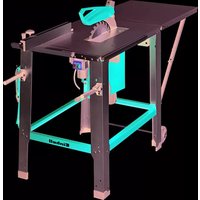
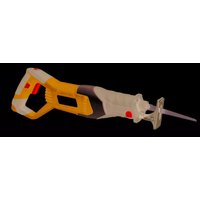
USER MANUAL TCTS 1200 EINHELL
- Safety regulations
- Layout and items supplied
- Proper use
- Technical data
- Before starting the equipment
- Assembly
- Using the saw
- Operation
- Replacing the power cable
- Cleaning, maintenance and ordering of spare parts
- Disposal and recycling
- Storage
GB

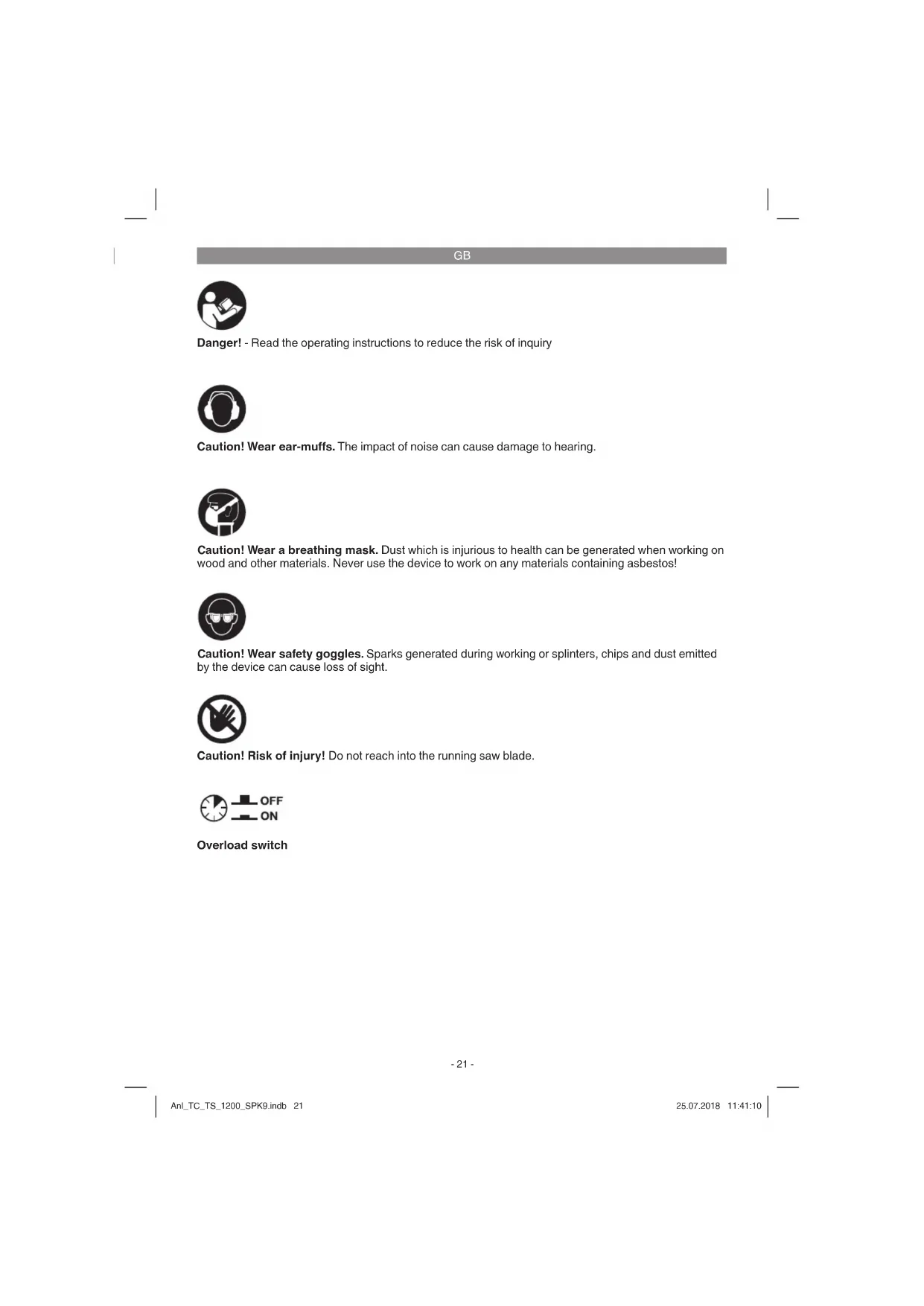
Danger! - Read the operating instructions to reduce the risk of inquiry

Caution! Wear ear-muffs. The impact of noise can cause damage to hearing.

Caution! Wear a breathing mask. Dust which is injurious to health can be generated when working on wood and other materials. Never use the device to work on any materials containing asbestos!

Caution! Wear safety goggles. Sparks generated during working or splinters, chips and dust emitted by the device can cause loss of sight.

Caution! Risk of injury! Do not reach into the running saw blade.

OFF
ON
Overload switch
GB
Danger!
When using the equipment, a few safety precautions must be observed to avoid injuries and damage. Please read the complete operating instructions and safety regulations with due care. Keep this manual in a safe place, so that the information is available at all times. If you give the equipment to any other person, hand over these operating instructions and safety regulations as well. We cannot accept any liability for damage or accidents which arise due to a failure to follow these instructions and the safety instructions.
1. Safety regulations
The corresponding safety information can be found in the enclosed booklet.
Danger!
Read all safety regulations and instructions. Any errors made in following the safety regulations and instructions may result in an electric shock, fire and/or serious injury.
Keep all safety regulations and instructions in a safe place for future use.
2. Layout and items supplied
2.1 Layout (Fig. 1-3, 5, 6, 8, 10, 14)
- Sawing table
2 Saw blade guard
3 Push stick
4 Saw blade
5 Splitter
6 Table insert
7 Parallel stop
8 Hand wheel
9 Locking grip
10 Base frame
11 On/Off switch
12 Locking knob
13 Rubber foot
14 Cross stop
15 Screw
16 Extractor adapter
17 Countersunk head screw
18 Hole (splitter)
19 Fastening screw
20 Screw
21 Groove
22 Scale
23 Stop rail
24 Holder
25 Slot
26 Screw
27 Slot
28 Bottom saw blade cover
29 Tool hook
30 19/8 mm ring wrench
31 10/8 mm ring wrench
32 Cover plate
33 Screws for table insert
a Clamping plate
b Washer
2.2 Items supplied
Please check that the article is complete as specified in the scope of delivery. If parts are missing, please contact our service center or the sales outlet where you made your purchase at the latest within 5 working days after purchasing the product and upon presentation of a valid bill of purchase. Also, refer to the warranty table in the service information at the end of the operating instructions.
- Open the packaging and take out the equipment with care.
- Remove the packaging material and any packaging and/or transportation braces (if available).
Check to see if all items are supplied.
- Inspect the equipment and accessories for transport damage.
If possible, please keep the packaging until the end of the guarantee period.
Danger!
The equipment and packaging material are not toys. Do not let children play with plastic bags, foils or small parts. There is a danger of swallowing or suffocating!
Sawblade guard
- Push stick
- Parallel stop
Cross stop
Assembly material
19/8 mm ring wrench
10/8 mm ring wrench
Original operating instructions
Safety information
GB
3. Proper use
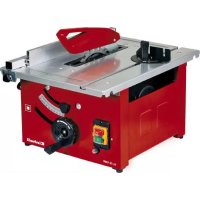
The bench-type circular saw is designed for the slitting and cross-cutting (only with the cross stop) of all types of timber commensurate with the machine's size. The equipment is not to be used for cutting any type of round wood.
The equipment is to be used only for its prescribed purpose. Any other use is deemed to be a case of misuse. The user / operator and not the manufacturer will be liable for any damage or injuries of any kind caused as a result of this.
Please note that our equipment has not been designed for use in commercial, trade or industrial applications. Our warranty will be voided if the machine is used in commercial, trade or industrial businesses or for equivalent purposes.
The equipment is to be operated only with suitable saw blades (saw blades made of HM or CV) It is prohibited to use any type of HSS saw blade and cutting-off wheel.
To use the equipment properly you must also observe the safety information, the assembly instructions and the operating instructions to be found in this manual. All persons who use and service the equipment have to be acquainted with these operating instructions and must be informed about the equipment's potential hazards. It is also imperative to observe the accident prevention regulations in force in your area. The same applies for the general rules of health and safety at work. The manufacturer will not be liable for any changes made to the equipment nor for any damage resulting from such changes. Even when the equipment is used as prescribed it is still impossible to eliminate certain residual risk factors. The following hazards may arise in connection with the machine's construction and design:
4. Technical data
AC motor 220-240V 50Hz
Power P .S1 900 W / S6 40% 1200 W
Idle speed n. .4800 min'
Cutting-off wheel .210 x 30 x 2,6 mm
Number of teeth .24
Table size .525 x 400 mm
Cutting height max. .45 mm / 90°.. .27 mm / 45°
Height adjustment infinite 0 -45 mm
Tilting saw blade infinite 0^ -45°
Extractor socket .O 36 mm
Weight approx. 16 kg
Protection class: II
Thickness of the splitter 2.2 mm
Operating mode S6 40% : Continuous operation with idling (cycle time 10 minutes). To ensure that the motor does not become excessively hot, it may only be operated for 40% of the cycle at the specified rating and must then be allowed to idle for 60% of the cycle.
Danger!
Sound and vibration
Sound and vibration values were measured in accordance with EN 61029.
Operation
LpA sound pressure level 93,7 dB(A) KpA uncertainty 3 dB L_WA sound power level 106,7dB(A) K_WA uncertainty 3 dB
The quoted values are emission values and not necessarily reliable workplace values. Although there is a correlation between emission and immission levels it is impossible to draw any certain conclusions as to the need for additional precautions. Factors with a potential influence on the actual immission level at the workplace include the duration of impact, the type of room, and other sources of noise etc., e.g. the number of machines and other neighboring operations. Reliable workplace values may also vary from country to country. With this information the user should at least be able to make a better assessment of the
GB
dangers and risks involved.
Wear ear-muff s.
The impact of noise can cause damage to hearing.
Keep the noise emissions and vibrations to a minimum.
Only use appliances which are in perfect working order.
Service and clean the appliance regularly.
Adapt your working style to suit the appliance.
Do not overload the appliance.
- Have the appliance serviced whenever necessary.
- Switch the appliance off when it is not in use.
Caution!
Residual risks
Even if you use this electric power tool in accordance with instructions, certain residual risks cannot be rules out. The following hazards may arise in connection with the equipment's construction and layout:
- Lung damage if no suitable protective dust mask is used.
- Damage to hearing if no suitable ear protection is used.
5. Before starting the equipment
Before you connect the equipment to the mains supply make sure that the data on the rating plate are identical to the mains data.
Warning!
Always pull the power plug before making adjustments to the equipment.
- Unpack the bench-type circular saw and check it for damage which may have occurred in transit.
The machine has to be set up where it can stand firmly, e.g. on a work bench, or it must be bolted to a strong base.
- All covers and safety devices have to be properly fitted before the machine is switched on.
It must be possible for the saw blade to run freely.
- When working with wood that has been processed before, watch out for foreign bodies such as nails or screws etc.
Before you actuate the On/Off switch, make sure that the saw blade is correctly fitted and that the machine's moving parts run smoothly.
6. Assembly
Danger! Pull out the power plug before carrying out any maintenance, resetting or assembly work on the cutting-off machine!
6.1 Fitting / removing the saw blade guard (Fig. 3)
- Mount the saw blade guard (2) on the splitter (5) so that the screw fits through the hole (18) in the splitter.
- Do not tighten the screw (15) too far - the blade guard must be able to move freely.
- To remove the saw blade guard, proceed in reverse order.
Warning!
The guard hood (2) must always be lowered over the workpiece before you begin to cut.
- To prevent increased likelihood of injury the table insert should be changed whenever it is worn or damaged.
- Remove the saw blade guard (2).
- Remove the screws (33)
Take out the worn table insert (6).
To fit the replacement table insert, proceed in reverse order.
6.3 Adjusting the splitter (Fig. 5-9)
Danger! Pull out the power plug.
- Set the blade (4) to the lowest cutting depth, move to the 0^ position and lock in place.
- Remove the cover plate (see 6.4)
Slacken the fixing screw (19).
The distance between the blade (4) and the splitter (5) should be 3 - 5mm
- Retighten the screw (19) and refit the cover plate (32).
6.4 Fitting/replacing the blade (Fig. 5.6)
Danger! Pull out the power plug!
- Undo the screws (17) on the cover plate (32) on the underside of the saw.
- Undo the screws (c) on the lower saw blade guard (28) and swing it up.
- Caution! Turn the nut in the direction of rotation of the saw blade.
Take off the outer flange and pull the old saw blade off the inner flange by dropping the blade at an angle.
Clean the blade flange thoroughly before fitting the new blade.
GB
- Mount and fasten the new saw blade in reverse order.
- Caution! Note the running direction. The cutting angle of the teeth must point in running direction, i.e. forwards (see the arrow on the blade guard).
- Close the saw blade guard and screw it in place with the screws (c). Then fasten the cover plate (32) again with the screws (17).
- Check to make sure that all safety devices are properly mounted and in good working condition before you begin working with the saw again.
The saw is equipped with an extractor port (16) for chips.
This makes it easy to connect to any extractor.
- Never use the equipment without the suction function.
- Regularly check and clean the suction channels.
7. Using the saw
7.1.ON/OFF switch (Fig.1)
To turn the saw on, press the green button "I". Wait for the blade to reach its maximum speed of rotation before commencing with the cut.
To turn the machine off again, press the red button "0".
The motor of this equipment is protected against overload by an overload switch (10). If the rated current is exceeded, the overload switch (10) will shut down the equipment.
- Let the equipment cool down for several minutes.
Press the overload switch.
- Press the green button, to switch on the equipment.
7.2.Cutting depth (Fig.1)
Turn the hand crank (8) to set the blade (4) to the required cutting depth.
Turn anti-clockwise:
larger cutting depth
Turn clockwise:
smaller cutting depth
7.3. Parallel stop
7.3.1. Stop height (Fig. 2, 11-14)
- Fit the parallel stop to the saw table by screwing the holder (24) to the table: On the outside of the table: locking knobs (12) and washer (b). On the inside of the table: clamping plate (a). Then use the screws (26) to screw the stop rail (23) and the holder (24) together.
The parallel stop (7) supplied with the bench-type circular saw has two different guide faces.
- For thick material you must use the stop rail (23) as shown in Fig. 11, for thin material you must use the stop rail as shown in Fig.12.
To change over the stop rail (23) to the lower guide face you have to slacken the two knurled screws (26) in order to disconnect the stop rail (23) from the holder (24).
- Remove the two knurled screws (26) through the one slot (27) in the stop rail (23) and insert in the other slot (25).
- Remount the stop rail (23) on the holder (24).
The procedure for changing over to the high guide face is similar.
7.3.2 Cutting width (Fig. 14)
The parallel stop (7) has to be used when making longitudinal cuts in wooden workpieces.
The parallel stop (7) can be mounted on either side of the saw table (1).
The parallel stop (7) can be set to the required dimension with the help of the scale (22) engraved on the saw table (1).
- Tighten the two locking screws (12) in order to fix the parallel stop (7).
Make a trial cut in order to measure the width before you cut the actual workpiece itself. This will help you avoid any inaccuracies in the scale or setting.
7.3.3 Setting the stop length (Fig. 11, 13)
- The stop rail (23) can be moved in longitudinal direction in order to prevent the workpiece from becoming jammed.
- Rule of thumb: The rear end of the stop comes up against an imaginary line that begins roughly at the center of the blade and runs at an angle of 45^ to the rear.
- Set the required cutting width
- Slacken the knurled screws (26) and push the stop rail (23) forward until it touches the imaginary 45^ line.
- Retighten the knurled screws (26).
GB
- Slide the cross stop (14) into the groove (21) of the table.
Slacken the knurled screw (20).
- Turn the cross stop (14) until the arrow points to the angle required.
Retighten the knurled screw (20).
Important!
- Do not push the stop rail (23) too far toward the blade.
The distance between the stop rail (23) and the blade (4) should be approx. 2cm
7.5 Setting the angle (Fig. 15)
- Undo the locking grip (9).
- Adjust the saw blade angle by moving the hand wheel (8).
Lock the locking grip.
8. Operation
Warning!
After every new adjustment we recommend you to make a trial cut in order to check the new settings.
After switching on the saw, wait for the blade to reach its maximum speed of rotation before commencing with the cut.
Take extra care when starting the cut!
- Never use the equipment without the suction function.
Regularly check and clean the suction channels.
Longitudinal cutting (also known as slitting) is when you use the saw to cut along the grain of the wood. Press one edge of the workpiece against the parallel stop (7) while the fl at side lies on the saw table (1). The guard hood (2) must always be lowered over the workpiece. When you make a longitudinal cut, never adopt a working position that is in line with the cutting direction.
- Set the parallel stop (7) in accordance with the workpiece height and the desired width. (See 7.3.1, 7.3.2).
- Switch on the saw.
- Place your hands (with fingers closed) flat on the workpiece and push the workpiece along the parallel stop (7) and into the blade (4).
Guide at the side with your left or right hand
depending on the position of the parallel stop) only as far as the front edge of the guard hood.
Always push the workpiece through to the end of the splitter (5).
The offcut piece remains on the saw table (1) until the blade (4) is back in its position of rest.
- Secure long workpieces against falling off at the end of the cut (e.g. with a roller stand etc.).
8.1.2.Cutting narrow workpieces (Fig. 17)
Be sure to use a push stick (3) when making longitudinal cuts in workpieces smaller than 120 mm in width. A push block is supplied with the saw! Replace a worn or damaged push stick immediately.
8.1.3.Cutting extremely narrow workpieces (Fig. 19)
- Be sure to use a push block when making longitudinal cuts in very narrow workpieces with a width of 30mm and less.
The low guide face of the parallel stop is best used in this case.
There is no push block supplied with the saw! (Available from your specialist dealer). Replace the push block without delay when it becomes worn.
8.1.4. Making bevel cuts (Fig. 15/19)
8.1.5. Making cross cuts (Fig. 20)
- Slide the cross stop (21) into one of the grooves (21) in the table and adjust to the required angle. (See 7.4.) If you also want to tilt the blade (4), use the groove (21) which prevents your hand and the cross stop from making contact with the blade guard.
- Press the workpiece firmly against the cross stop (14).
- Switch on the saw.
- Push the cross stop (14) and the workpiece toward the blade in order to make the cut.
- Warning!
Always hold the guided part of the workpiece.
GB
Never hold the part which is to be cut off.
- Push the cross stop (14) forward until the workpiece is cut all the way through.
- Switch off the saw again. Do not remove the offcut until the blade has stopped rotating.
9. Replacing the power cable
Danger!
If the power cable for this equipment is damaged, it must be replaced by the manufacturer or its after-sales service or similarly trained personnel to avoid danger.
10. Cleaning, maintenance and ordering of spare parts
Danger!
Always pull out the mains power plug before starting any cleaning work.
10.1 Cleaning
- Keep all safety devices, air vents and the motor housing free of dirt and dust as far as possible. Wipe the equipment with a clean cloth or blow it with compressed air at low pressure.
We recommend that you clean the device immediately each time you have finished using it.
Clean the equipment regularly with a moist cloth and some soft soap. Do not use cleaning agents or solvents; these could attack the plastic parts of the equipment. Ensure that no water can seep into the device. The ingress of water into an electric tool increases the risk of an electric shock.
10.2 Carbon brushes
In case of excessive sparking, have the carbon brushes checked only by a qualifi ed electrician.
Danger! The carbon brushes should not be replaced by anyone but a qualifi ed electrician.
10.3 Maintenance
There are no parts inside the equipment which require additional maintenance.
10.4 Ordering spare parts and accessories
Please provide the following information when ordering spare parts:
Type of unit
Article number of the unit
GB

For EU countries only
Never place any electric power tools in your household refuse.
To comply with European Directive 2012/19/EC concerning old electric and electronic equipment and its implementation in national laws, old electric power tools have to be separated from other waste and disposed of in an environment-friendly fashion, e.g. by taking to a recycling depot.
Recycling alternative to the return request:
As an alternative to returning the equipment to the manufacturer, the owner of the electrical equipment must make sure that the equipment is properly disposed of if he no longer wants to keep the equipment. The old equipment can be returned to a suitable collection point that will dispose of the equipment in accordance with the national recycling and waste disposal regulations. This does not apply to any accessories or aids without electrical components supplied with the old equipment.
The reprinting or reproduction by any other means, in whole or in part, of documentation and papers accompanying products is permitted only with the express consent of the iSC GmbH.
Subject to technical changes
GB
We have competent service partners in all countries named on the guarantee certificate whose contact details can also be found on the guarantee certificate. These partners will help you with all service requests such as repairs, spare and wearing part orders or the purchase of consumables.
Please note that the following parts of this product are subject to normal or natural wear and that the following parts are therefore also required for use as consumables.
| Category Example | |
| Wear parts* V-belt, carbon brushes, table insert, push stick | |
| Consumables* Saw blade | |
| Missing parts | |
- Not necessarily included in the scope of delivery!
In the effect of defects or faults, please register the problem on the internet at www.isc-gmbh.info. Please ensure that you provide a precise description of the problem and answer the following questions in all cases:
Did the equipment work at all or was it defective from the beginning?
Did you notice anything (symptom or defect) prior to the failure?
- What malfunction does the equipment have in your opinion (main symptom)?
Describe this malfunction.
GB
Warranty certificate
Dear Customer,
All of our products undergo strict quality checks to ensure that they reach you in perfect condition. In the unlikely event that your device develops a fault, please contact our service department at the address shown on this guarantee card. You can also contact us by telephone using the service number shown. Please note the following terms under which guarantee claims can be made:
- These guarantee terms apply to consumers only, i.e. natural persons intending to use this product neither for their commercial activities nor for any other self-employed activities. These warranty terms regulate additional warranty services, which the manufacturer mentioned below promises to buyers of its new products in addition to their statutory rights of guarantee. Your statutory guarantee claims are not affected by this guarantee. Our guarantee is free of charge to you.
- The warranty services cover only defects due to material or manufacturing faults on a product which you have bought from the manufacturer mentioned below and are limited to either the rectification of said defects on the product or the replacement of the product, whichever we prefer. Please note that our devices are not designed for use in commercial, trade or professional applications. A guarantee contract will not be created if the device has been used by commercial, trade or industrial business or has been exposed to similar stresses during the guarantee period.
-
The following are not covered by our guarantee:
-
Damage to the device caused by a failure to follow the assembly instructions or due to incorrect installation, a failure to follow the operating instructions (for example connecting it to an incorrect mains voltage or current type) or a failure to follow the maintenance and safety instructions or by exposing the device to abnormal environmental conditions or by lack of care and maintenance.
- Damage to the device caused by abuse or incorrect use (for example overloading the device or the use or unapproved tools or accessories), ingress of foreign bodies into the device (such as sand, stones or dust, transport damage), the use of force or damage caused by external forces (for example by dropping it).
-
Damage to the device or parts of the device caused by normal or natural wear or tear or by normal use of the device.
-
The guarantee is valid for a period of 24 months starting from the purchase date of the device. Guarantee claims should be submitted before the end of the guarantee period within two weeks of the defect being noticed. No guarantee claims will be accepted after the end of the guarantee period. The original guarantee period remains applicable to the device even if repairs are carried out or parts are replaced. In such cases, the work performed or parts fitted will not result in an extension of the guarantee period, and no new guarantee will become active for the work performed or parts fitted. This also applies if an on-site service is used.
-
To make a claim under the guarantee, please register the defective device at: www.isc-gmbh.info. Please keep your bill of purchase or other proof of purchase for the new device. Devices that are returned without proof of purchase or without a rating plate shall not be covered by the guarantee, because appropriate identification will not be possible. If the defect is covered by our guarantee, then the item in question will either be repaired immediately and returned to you or we will send you a new replacement.
Of course, we are also happy offer a chargeable repair service for any defects which are not covered by the scope of this guarantee or for units which are no longer covered. To take advantage of this service, please send the device to our service address.
Also refer to the restrictions of this warranty concerning wear parts, consumables and missing parts as set out in the service information in these operating instructions.
F
Sommaire
Chere cliente, cher client,
Uttag for spanutsugning 36 mm
Proti smerhodinovychrucicek:
větě hloubká Čezu
Ve smeru hodinovych rucicek:
menš hloubka rezu
7.3 Paralelni doraz
7.3.1 Vyska dorazu (obr. 2, 11-14)
2. CoCTaB yCTpoIcTBA n COCTaB yNaHOBHN
2.1 Onncanhe yctpoiCtba (pnc. 1-3, 5, 6, 8, 10, 14)
1 CTon nJIbI
2 3aunTa nIbHOro noIoTHa
3ToIkaTeIb
4 NnIbHOe NOIOTHO
5 PacnOpHbI KJIIN
6 BCTaBkcaTOna
7 NapannenbHyynpBc6ope
8 Maxobnik
9ФИКСИРУЮДАpyKOrTHa
10 BbIIOUaTeJIb nepeIpy3KIN
11 PepeKIOHouaTeIb "BKNIOUeHO-BbIKIOUeHO"
12 KhoNka c hKcauee noLoKeHHa
13 PeznoBov onopa
14 PonepeuHbI ynp
15 BnHT
16 PepexoHnK dIa oTcabBaUoJero yCTpoiCTBa
17 BnHT
18 OTBepCTne (KINH)
19 KpeenHbI BNHT
20 BnHT
21 Na3
22山kana
23 YnpHaa HnHa
24Дерха teь
25 Ppope3b
26 BnHT
27 Ppope3b
28 HnKnH3aunTa nIbHoro noIoTHa
29 Kpok dIJI INHcTpymeHa
30 KolbueBOI raeHbIKIOU 19/8 MM
31 KolbueBOI raeHbI KIOU 10/8 MM
32 MetaJIIMHecka KpbIiKa
33 BHTOBaBCTaBka CToJa
a 3aKHMHa nlaHka
bPonknaHnhaWan6a
2.2 CoCTAB KOMNJIeKTA yCTPOIcTBA
IpoBepbTe KOMnJIeHTOcTb H3dEINHa OCHOBAHN ONHCaHHOro 06bema NocTaBH.N.
PnO6HApUKeHN HeOcTaTHa KOMNoHEtOB
O6paTHeB B NaH CEPBNCbY cHTp
HIM Ma3aHN, B KOtpom Bb NpIO6peHN
yCTPOICTBO, HE NO3dHee Yem B TeYeHne 5-TN
paOchX dHe Nocle npIO6PeTeHN H3dEIN,
PpeBbVB DcETCBNTbHyIO KBITaHUNIO O
OKynke.O6patte BNMaHme Ha TabiCy c
yKa3aHNEM rapaHTHbIX cPoOB B DOKUMeHTe C
HnΦopMaueNe O cEBuCCHOM OCJyKuBaHN.
OTKpoTe ynaKOBky N BbIHbTe OCTopoXHO n3 ynaKOBKn yCTpOcTBO.
- YdaJIte ynaKOBOCHbI MaTePnA1, a TaHKe npHCNOC6JIeHn 3aJITbI yCTPOIcTBa npn ynaKOBbIbAHn I TpaHCnOpTIpOBKe (npn HAnuHn).
PpOBepbTe KOMnIeKTHoCTb yCtpoiCTBa.
- Поверытей устюсТВО И пинадлесностп
- На НалчпЕ BO3нКшХ пи
- ТраHCNotPOBKE NOВpeждени.
Coxpahnre yanaohbny no Bo3MOxHocTNO nCTeHnrcpoKa rapaHTnHbIX 0683aTeJbCTB.
RUS
Onachoctb!
YcTpoIcTO b ynaHOBKa He ABJIOTc
dETCHMM HpywHKAM! 3anpeeHO detHM
HRpaTb C nlaCTNHOBBIMn NaKeTaMn,
IIeHNKAMn MEHKmDetaJAMn ONaCHOCTb
3AHIOUaETcB TOM, YTO OHN MORYT
nporNoTHTb Hn Nn Norh6Hyb OT ydyWba!
3aunTa NnIbHOro NoIOTHa
TOK-TOKateIb
- NapaJIeJIbHbIyynop
- PonepeuHbI ynp
MOHTaXHbIMaTePnA
HobbeBraeHybKIOU 19/8 MM
KolbueBOIraeHbIKIOU 10/8 MM
OpnHHaJIbHoe pyKOBoDCTBO no 3KcIyatauIN
Yka3aHnno TeXHHKe 6e30NaCHOCTN
6.1 MoHTaHHdEMoHTaHH 3aunntbI NnIbHoro nIoTHa (pnc.3)
UcTaHOBnTe 3aunTy NnIbHOro NoIOTHa (2) Ha paCnOpHbI KJIIN (5) TaK, YTO6bI BnHT BXOIN B OTBepCTne (18) paCnOpHOrO KJIIna.
He 3aTnBaTe BNHT (15) CInuKOM CInbHO; 3aunTa NInbHOrO nOnToHa DoJIKHc CBO6oHDo DBIrTaBcR.
- DEmoHTaK OcyIeCTBnIeTcB O6paTHOINocJIeIOBaTeIbHOCTN.
IpeynpeJHHeN!peepHaJALom pacnIOBKn 3aunTy nIbHOrO noIoTHa (2) Heo6xOIMO onyCTHTb Ha paCnINIBaEmbIMatepnai.
6.2 3aMeHa BCTaBKn cTOna (pnc.4)
-ПиИЗHOSEИЛNOВPEKДECHINHEO6XODMO 3aMeHHTb BCTaBky CTOJa,ВпOTNHBOM Clyuae CyIeCTByET NObIiWeHHa ONaCHOCTb TpaBMnPOBaHЯ.
CHMMTe 3auNTy NnIbHoro noIoTHa (2).
OTKpyTHTe BNT (33).
N3BNeKnTe N3HOweHHyIO BCTaBky CTOna (6).
MOHTaK HOBoB BCTaBKn CTOna OcyuceTBnETCB BOpaTHoN NocJeIOBaTeJIbHOCTN.
6.3 PerynnpOBHa pacnOpHoro KInHa (pnc. 5-9)
Onachoctb! BbTaunTb wTeNceIb n3 po3eTHN
HactpoTeIynnbHoroNoIOtha(4)camHy H3kyoIpy6nHypacnIOBHN,ycTaHOBHT erO B noIOxKeHne 0^ n3aФNKcnpyTe.
- DEmoHTnpyTe MeTaJIInueckKyIO KpbIuHy (CM. n.6.4).
Ocna6bTe KpeenKHHBn BnHT (19).
PacctoHHe MeKdy NIIbHbIM NOIOTHom (4) npacnOpHbIM KINHom (5) DOJIHKHO COCTABJrTb 3-5 MM.
- CHOBA 3aTaNHTe BnHT (19) n yctaHOBNTe MeTaJIHnueCkyo KpbIshy (32).
6.4 MoHTaH/3aMeHa NJIbHOrO NOIOTHa (pnc.5,6)
OnachocTB!N3BLeHnTe WTeKepeDnnoKJIoueHnK Cetn H3 po3eKn!
- OTKpyTTE BUNTBI (17) Ha MeTaJIINHeCKOKNpbIuKe (32) Ha HnKHeN CTOpOHe NINbI.
- OTKpyTnTe BnHTbI (c) Ha HnKHe 3aunTe nHbHOro noNoTHa (28) n OTKpoTe erO.
BHMaHHe! BpaaTe raHy B HanpaBneHn BpaueHn NlIbHOro NoIToHa.
- DEmoHTpyuTe BHeuHnI ΦlaHeu n CHMmTE CTapoe NINbHOe NOLOTHOC BHyTpeHHero ΦlaHaNo DNarOHaNnB HAnpaBHeHn BHn3.
TtataeIbHo OuHCTHTe 1aHaUcbl NlIbHOrO NOLOTHa nepeD MOHTaKOM HOBOrO NlIbHOrO NOLOTHa.
- YcTaHOBnTe HOBOE NINJbHoe NOJIoTHO, BbIIOJIHNVB DeIcTBnB BOpaTHo NocJeIOBaTeJIbHOCTN, IN3aKmnte erO
BHHMaHHe! Co6IIOdaJIte HAnpaBJIeHne BpaAeHn, COKC 3y6beB JOJHHeN COOTBeTcBOBaTb HApaBLeHIno BpaAeHn, TO eCTb OH JOJHKeH 6bITb HApaBJIen BnpePd (CM. CTpeKHy Ha 3auNTe NINbHOrO nIoToHa).
3aKpOte 3auNTy NnIbHoro nolOTHa n npKpyTnte ee BInHTAMn (c).3aTeM cHOba
RUS
3aKpeHnTe MeTaJIInueckHy KpbIuKy (32) BHTAMN (17).
PepKdEe npoOJIHnTb paOToy c nIIO, Heo6xOJIMO npoBepntb fynKuHOaJIbHoCTb 3aunTHbIX npncnocO6JIeHNI.
6.5 OTCOC ONHIOK (pnc.10)
- NIIa cHa6KeHa nAtpy6KoM OTCoca (16) ONIOK.
Ee moKHO JERHO NOcOeDnHHTb K IIObOMy yCTpoiCTBy OTCoca ONIIOK.
IcnoJIb3yTe yCTpOncTBO TOnb0 COeTaHnC npncnoc6JeHnEM dIa OTCocA BO3dyxa.
Perynphno npoBepaTe n ouuauTe KaHabIOTcoca BO3dyxa.
7.3aMeHaHa6eI NHTAHN 3JIeKTPocetN
7.1 PpeKIOUOATEbBHKIOUeHO BBIKHOUeHO> (pnc.1)
HaKaBa Ha 3eJeHyo KHOpy «I», MoJHo BKNIOHb NIIy. IpeEi HauJOM NIIeHnI HeO6XoIMMo BblJaTb NOKa NIIbHoe NOJIoTHO He JOCTHnHT CBOeMaKcMmaJIbHO CKOpocTn BpaueHnI.
TObbCHOBaBbIKIOHTbNIIy,HEo6XoHMO HKaTaHaKpaChyHOKNOHky 一 0
Bniratelb 3TOO yCTPOINCTBA 3auuueH OT neperpy3KN NOCpeDCTBOM MAKcmaJIbHORO BblIOUATE1A (10).
PnPipeBbIeHmHOMHaJIbHOrTOKa MaHCIMaJIbHbI BbIKIOuTeJIb (10) BBIKIOUaET yCTpOJCTBO.
IIOOHNITHe HcKOJIbKO MmHYT, NOKa yCTPOJCTBO He OCTbIHET.
HaKMnTe MaKcMaJIbHbI BbIKNoaTeJIb.
BkhIOHTe yCTpOiCTBO,HaHab Ha 3eJeHyo KHOHky 丨 ^
7.2Iy6nHa paacnnIOBKn (pnc.1)
IytemBpaaehnmaXOBnka(8)MOHHO HactpoNTb Heo6xOIMmyo Iy6hHy paCNIIOBHN dIINbHOrO nIoTHa(4).
POTHB YACOBOCTpeJKN:
6oIb7aTny6nHa paCNIIOBKn
No yacobon cTpeJHe:
MehbwaarIyubnHa pacnIOBKN
RUS
7.3.2 ⅢnnpHa paacnnIOBKn (pnc.14)
- Pnp npdoIbHn paCnIOBKe DpeBeCNbI Tpe6yETcNcNoIb3OBAHne npaJIeIbHorOynopa (7).
- NapaJIJIeJIbHbI yIop (7) MOJHO MOHTnPOBaTb Ha O6eHX CTOpOHx CToJa nnbl (1).
- Pnnoomouu kkaJIb (22) Ha cToJe nIbI (1) MOKHO yCTaHOBtB Heo6XoIMMb pa3Mep DIA napaIIeJIbHOrO ynopa (7).
3aTnHTe Dba CToNOpHbIX BnHTa (12),YTO6bI 3aФнксрOBaTB npaPAnleBhBy ynp (7).
IpeKdyeM npCtynatb K pacnHIOBKe Detaln,BbINOLHNTe np6hbl paCNlDIAH3MEpeHNsWipnHb.3To n03BOJNTN36EHaTb HeTOHOCTHN WkaJIb HAcTPOHNI.
7.3.3 PerynpoBbA nnHbI ynpa (pnc. 11, 13)
Длппгдотьршиязашмеленя paclnINlBaemOrMaTePnaJaMOxHc MemeaTb ynpHyu shHy (23)В npdoJbHom HappaBHeHIn.
OchOBHoe npabHIO:3aDHN KHOeU ynpoapcoPnKacaetc C BOObpaKaHaemoiIINHeiKOTOPa HauHnaETc PnIMepHO B CEHTpeNHLbHOrO NIOToHA INPOXoNT Ha3aNDnDyTLOM 45^
HactpoiKa Heo6xOIMoIuPnHbI paCNIIOBKN
- Oclabte BnHTb c HakaTaHHo rOIOBHO (26) npeDbHraTe ynpHy oHHy (23), noka OH He cOpnKocHeTc a BOo6paXaEMoI nnHne, npoxoJaueNoy yrJom 45°.
- CHOBA 3aTRAHHTe BnHTbI C HaKaTaHHoI roJOBKOI (26).
7.4 PonepeuHbI ynp (pnc. 14)
- PpeBnHbTe nonepueHbI ynp (14) B na3 (21) cTolna nbl.
Ocna6bTe BnHT (20).
- NobopauBaIte nonepueHbI ynp (14), noka cTpeKa He 6ydt yka3bIbTa b Ha Heo6xOHMoe 3aueHne yrla.
CHOBA 3aTAHNTe BHT (20).
BhimaHne!
He cDnraIte ynpHyo shHy (23) cInuKOM daJIeKO B HappaBHeHIN nIbHoro noIoTHa.
PaCToHHe MeKdy yNOpHOI uHIOH (23) n NlBbIM NOIOTHom (4) DOJXHO COCTaJIaTb OKOJO 2 CM.
7.5 Perynipobha yrna (pnc.15).
Pa36Iokpynte fHKcnpuyuoypkyoHTky (9).
- Iepemecntte yroLOK NIIbHOrO NOIOTHa, cDINHyB MAXOBNK (8).
3a6loKnpyIteΦHKcnpyUOyU pyKoAHTy.
8. Pa6oyn peHm
PpeynpeKdienie!
MbpeKOMeHcyem nocLe KaHdoHOBo peYnnpOBHNOCyIeCTBtNpObHoe NIIeHne DnToro, TTObI npOBepTb OTpeYnnpOBaHHbE BInHHbI.
Pocne BKNIOUeHn PINbI NIOOHNTE, NOKa HE 6yDET OCTNHYTO MAKCMaJIbHOE YNCLO 6OBOPOTOB INbHoro NOIOTHa, PpeKeDe YEM BBINOJNHrTa paCNIOBky.
BydbTe BnMaTeBbHb npn pacNIOBKe!
IcnoJIb3yIte yCTpOncTBO TOLko BOcHTAHNN C npNCnOC6JIeHHeM dIg OTCocB 03dyxa.
- Peryulapno npOBepaTe n ouHuaTe KaHaJIbI OTCOca BO3dyxa.
8.1.1 BbInoJIHeHHe npOdoIbHOH paCnIOBKn (pnc. 16)
Pn3OM MaTePnaI paCINJIbAeTcB B npDoJbHOM HapRaBHeHH.
Oda KaPnNnBaemOr MaTepnna npnKMaetc KnapaJIeIbHomyynopy7,a nlocka CTOpHaOnnpaETc Ha cTolnnbl1(1).
3aunTa nIbHoro noIoTHa (2) dOnJHa 6bItb BcERda onUeHa Ha paCnINBaEmb MaTePnaI. Ipn npOdoBHO paCnIOBHe onepatop HNkorDa He doJIKeH haxODInbCS Ha IINHN paCnIOBKn.
OtperyIpyTe npaJIeJIbHbI ynp (7) B COOTBETCTBn C BBICOTOn paCINJIInBaEMORo MaTePnAna. (CM.n.7.3.1, 7.3.2)
BknHnHTe nny.
HaIOXHTe IaOHOHa paCnINIBaEMbIMaTePnAJI, DEpKa NaJIbUbBMECTe, INepemEuaIte PaCnINBAEmbIMaTePnAJI BDoJI npaIIeJIbHorO yOpA (7) B HApapBLeHIn NINbHorO NoJIoTHa (4).
HapabJIte paCnINBaemb MaTePnaI c6bHy JeBoi Hn npaBoi pyKoi (B 3aBNCIMoCTN OT NIOJKeHn NaPaJIeJIbHOy ynpa)do nepeDHe KpOMKn 3aunTHoro KOHyxa.
Bcerda npotaKnBaTe paCnInNaembl MaTePnaI Do KOHa pacnOpHOro KlnHa (5).
- OTxOdbpaacnIOBKnOCTaIOTcHa cTOne
RUS
nibly(1),noka nibbHoe noltoHO (4) He 6ydet CHOBa HaxoNtbcB Hepa6oOem nOIOXeHN.
PepdoxpanTe dInHHbI paCNINBaEMbIM MaTePnAI OT OpiOKnDIBaHnB B KOHcpe pacNIOBKn! (HanpIMep, npn NOMOu polNKOBOnOpbl T.D.)
8.1.2 PacnIOBHa y3HOro MaTePnAna (pnc. 17)
IpoOJbHa paCnHIOBKa MaTePnaIOB
mHInHO MeHee 120 MM o63aTeJIbHO doJHXa
BbINOHNbTcB C NOMoCbTO TOnKaTeJIa (3).
ToJIkaTeJIb He BXoNT B O6bEM NOCTABNI.
O63aTeJIbHO 3aMeHMy Te N3HoWHeHbI NIN
NoBpeJDeHHbI ToJIkaTeJIb.
8.1.3.PacnIOBkaOyeHb y3HOrO MaTePnAna (pnc. 18)
Длгпрдьног рациLOВК OЧь y3knx MaTePnAIOB WIPINHO 30 MM M MeHbWe 6Ora3aTeJbHO INCNoJb3yIte DepeBcHHbI TOKAteJb.
Pn3OM CJeDyET PpeNoeCTb 6oJee H3KyoHapRaBIAOuyIO NOBepxHOCTb npaJIeIbHOrO yNopa.
- DepeBHHbI ToNkAteJIb HE BxOaNT B coCTab HApOp! (Bbl MoHete npNo6peTn INB CneuINsnpOBaHHOM MaarAnHe) CBoeBPemEHo 3aMeHReIe N3HOweHHbI DepeBHHbI ToNkAteJIb.
8.1.4. BbInonHeHne KocO paCnHIOBHN (pnc. 15/19)
Kocara pacnnnoBbKa 6o3aTeNbHo BbInOnHReTc C nObl3ObaHnem npaIeIbHoro ynopa (7).
- YctaHOBnTe HJHHe 3NaYeHne yTnAnbHoro nOToHa (4). (Cm. nyHt7.5)
- OtperynpyTe npaJIeJIbHbI ynp (7) B 3aBNCIMOCTN OT uHpINHbI N BbICOTbl paCNIINBaEMORo MaTePnaIa (CM. nyHKT 7.3.1).
BbINOHNTE paCNIIOBky B COOTBeTCTBUN C WnPnHOJ paCNIINBaEMORo MaTePnAJa (CM. n.8.1.1,8.1.2n8.1.3).
8.1.5. BbINOJIHHeHne IonepeuHoi paCnHIOBKn (pnc.20)
- PpeBnHbTe nonepuHbI ynp (14) B OdIN H3 DByx Na3OB (21) cTOna NIIbI N OTPyNpyIte Heo6XOpMoe 3HaueHHe yrna. (cm.7.4). EcIn NIIbHOe NoToTHO (4) DONoHNtELHo Tpe6yETc YcTaHOBHT NOJ HaHIOHOM, IcNoJIb3yIte na3 (21), KOTOpBI npEoTbPaTNT KOtAnT BaWei pyKn I nonepuHoro ynpa C 3aunTOI nnBHoro noLoTHA.
CnIbHo npHmTe paCnIINBaEmbMaTePnAknnonepuHOMynopy(14).
BkIIOUHTe Nnny.
ДлЯ ВьЮЛнЕНИЕ расипLOВКИ пеpeДБИГАй.Te nonepeHbIy ynp(14)иpacnsHbAeMbI mATEHnJI B HAnpRaBleHIN ПИьHOrO nIoJToHa.
PpeDynpKdeneH! Bcerda ydeprknaBaiTe hnapabIeMbI paacnIIBaEMbMaTepeHa, a He Cbo6OHyIO Otpeaemyu Yactb Maepnala.
Bcerda nepemeuaiTe nonepeunyynop (14) do noHoi paNIOBn MaTePnAna.
BbIIOUHTe NJy. YdaJIte OTXOdbI paCNIIOBKn TOnbHO nocJe OCTaHOBKn NIIbHOrO NOLOTHa.
9. 3aMeHa Ha6eJa CeTeBOro NHTAHN
OnachocTb!
Bo n36eKaHne onaHocTe 3aMeHy
nOBpeJHeHHoro Ka6EJIc ceteBOro NITaHnI
OINCbIBaEMORO yCTPOiCTBA DOJIKeH
pon3BOuNTb N3rTOBHTel, ero CnyK6a
cepBnCa Hn KTO-ln6 Do pyroC nOIO6HO
KBaIIHnKaUne.
10.OuNCTHa,Texo6CnyHbAHne 3aHa3 3anachbIX DeTalei
Onachoctb!
Ipeep BCempa6oTaMn no OunchTe Heo6xoJMO BbHyTb uTeKepeH3 po3eTK 3JIeKTPocetN.
10.1 OuHcTHa
Copepknte 3aunTHbIe npncoc6JIeHnA, BEHTINIAUONHbIe IeHN H Kopnyc DInrAteTc Bc06DnHbIMn HacOJbHO 3TO BO3MOxHO OT Nblnn npr3n. Ipotpnte YcTpoMCTBO NCToB BetoWbIO nnPnoyTe CkAtbIM Bo3dyXOM NOH3KIM DaJIeHnEM
RUS
MbypeKomeHMyemOuHuaTbYcTpoCTBO cpa3y nocJe KaJDoRo NcNoJIb3OBAHN.
PeyIaRHO OuNuaIte yCTPOINCTBO BlnHNOBETObO C HeoJIbIIM KOnIeCTBOMJNDKOrO Mbln. He IcNoJIb3yIte CpeDCTBAДЯ OChCTKN HIn PaCTBOpBI; OH N MOrYTNOBPeDITb PIACTMaccOBble YactnycTPOINCTBa.CIeIHTe 3a Tem, YTObi BOJa HE nonaBoBHyTpB yCTPOINCTBa.InonaDHe BOBi B aJIeKTPnueCKoe yCTPOINCTBONOBbIaET OnaCHOCTb NoJyEHHa YdapaTOKOM.
10.2 YroIbHbIe 电ETK
Pnpye3MepHom 6pa3OBAHN NcKp cdaTe
fpe3y B CneuaHn3npoBaHHyIO MaCTpeckyIO nI npOBepKn yOrbHbIX UeTOK.
Onachoctb!YroIbHbIe ueTkn pa3peaetcTaMeHbT TOJIbKO CneuaJIACHTy 3JIeKTPNKU.
10.3 Texo6cnyKuBaHne
BHytpn yctpoiCTBa HET NHKaKnx DeTaeJe, HxkdaOuXxCB TExHnuecKOM yxoJe.
10.43aHa3 3anaChbix qacte npHaJnHexHocTei
Pn3aKa3e 3anaChbix YactEn HeoXoDmO yKa3aTb CNeDyIOUne DaHHeIe:
TNYcTpOCTBa
apTNkyIbHbI HOMep yCTpOcTBA
- IeHTHnKaunHOHHb HOMep yctpoCTBa
HOMep HEO6xOdmo3aNaChOHyactn
AktyalbHbeIeHbI INHOpMaHIO MOHHO HaHTNa caTe www.isc-gmbh.info.

PehomeHaia!I
xopoWero pe3yNbTata
pa6OtblMbpeHOMeHdyem
BbICOKoHaeeCTBeHHbIe
npuHaJeHHocTH
kwb!www.kwb.eu
welcome@kwb.eu
10.5 TpaHcnpOpBbKa
ДлгТраHCNOpTINPOBKNMaUNHbI NOHIMaJIte eeToIbKO3aCTOINbI.HeNCNoIb3yIte 3aunTHbIe pncnOC6JIeHn(3aunTy nINbHOro noIoTHa,ynOpHbIe WInHbI)ДЯ3aRpy3Kn, pa3rpy3Kn IN TpaHCNOpTINPOBKN.
RUS

ToIbKO dIa CTpaH EC
3anpeuho BbIbpaBt bJIeHTponHCTpyMeNT BobHHbI DomaunHm Mycop.
Cornacno ebponecko dnpkeTbE 2012/19/EG oNcNoIb3OaHbIX 3JeKtpuechnx H3JeKtpoHHbix yctpoCTBax npeaIIN3aun B npabOBn CnCTeME COOTBeTCTByUoJe CTPaHbI Heo6xOIMMO HCNoIb3OaHHbI 3JeKtpuCheKn INCHTpymEt YTHIN3nPOBaTb OTDeJIbHO NHaPpABIArTa Ha BTOpHHyIO nepepaOToKy dIra OxpaHbIKpyKaioSe cpebl.
BtopuHna nepepa6oTka - aIbTePhaTHBa 063aTeNbHO ONcblnke yctpoNCTBa Haaad IN3rTOBOTeJIIO: BnaIeue 3neKTPnuChEOy yctpoCTBa B Clyae N36abIeHHra ON CO6CTBEHHOCTN 683aH, B HAeCTBe aIbTePhaTHbbl ONcblnK H3aD IN3rTOBnTEJIO, COeIcTBBOaTB HADJeKaIeYTHIN3aIIN. PInpweJIeB HerODHocTb yctpoNCTBO MOKeT 6bITb pepeHaHO B pnpemHbI pyHKT, KOTpobII OcyuEcBHT LkHNDAUH B COOTBeTcBN C 3aKOHOM CTpaHbI O cHKINHOM IPOH3BOdCTBe N o6paueHN C Mycopom. 3To He OTHOCNTCR K npINOHeHHbIM K npIeDuEMy B HerODHocTb O6OpDobAHUNo DOONHInTeHBm YcTpoCTBaM H BCNOMaTeHBm CpeCDtBAm HE CoepJauHM 3neKTPnuCeKHe qactH.
IpeeneaTbBAHne IINI pOue BnDpa3MHOKeHNA DOKUMHeH N COpOBoNTeBbIX JNCTOB npOdyuKmHn PnPMbI, NOHOCbIO INI HAcTHUHO, pa3peSeHNO pOn3BOIDt TOJbKO C OdHO3HaHOrO pa3peSeHn ISG GmbH.
CoxpaHReTc npaBO Ha TexHueckne N3MeHeHH
RUS
HΦopMaζηo cepBnCHOM 6cIyKHBaHH
Bo Bcex ctpaHax, yKa3aHHbIX B rapaHTnHOM CBnTeJIbCTBe, y Hac IMeIOTcKOMNeTeHTHbIE cepBnCHbe napThepbI, KOHTAChBE daHHBe KOtOpbIX Bbl HauDeT B rapaHTnHOM CBnTeJIbCTBe. OHn Bcerda B Baewm pacnopJKeHN nI dpeWeHIn NIOb6x BonpocOB, CB3aHHbIX C o6cIyKNBaHNEM, HannpMeP, IJr peMOHaT, NoCTaBN 3aNpacteN b6bCTpon3HaWBAUOuXcx DeTaJe, a TaHOke npno6peTeHN paCXoNDbIX MaTePnaIOB.
CneyetobHbMaHHeHaTo,HTOB3OMn3dEHNcNeDeyOuueJeTaIINoDBepKeHbI cTeCTBeHHOMy H3HOcy Nm H3HOcy B CBA3N Ceknnyataune / cneyIOueJeTaN Tpe6yOTcB KaeeCTBe paCXODhIx MaTePnaNoB.
- He 06a3aTeIbHO BxOaT B 06bEm NoCTaBn!
PnObHApyHeHHeEeKToB HnHEnCnpaBHOCTeMbI npocIM Bac 3aBHTo TAKOM Cnyae B cETN INTepHer Ha caTe www.isc-gmbh.info. ObpaTHe BHImaHne Ha ToCHoe ONHa HeHCnpaBHOCTn B IIO60m CNYae OTBeTbe Ha cNeDyUOuhe Bonpocbl:
- UcTPOIcTBO yHe pa6oTANO HNO 6bIIO HeNCpPaBHBIM C Camoro HauJa?
Bam 6pocnIOcB YTO-JIbO B rIa3a nepeD Bo3HKnHOBeHHem HeNCnpaBHOCTN (npn3HaK nepeD HncnpaBHOCTbIO)?
KaHyo HeCNpabHocTB HmeeT yCTPOiCTBO, NO BaMeMy MHeHIO (OCHOBHO npn3HaK)? OnnHTe 3Ty HeCNpabHocTB.
RUS
TapaHTnHoe CBnTeTeJIbCTBO
YbHaemnoknyntelbHua, yBaHaemnoknyntelb,
HnN pOdyNTbl npOxOaT TuaTeBHeHnKoHTpOJI KaeCTBa.EcIIN 3To yCtpoiCTBO BCE He 6ydet
fynHIOHOpaBb 63eyPEnHO, Mbl npocIM Bac opaTHbcra Hnaw cepBncbHn OTdJe no aDpecy,
yKa3aHHOMy B 3OTm rapaHTnHOM TaIOHe. Mbl TaKHe OXOTHO OTBeTM Ha BaAn BonpocbNo TelefoHy,
HomeR KOtporo npBbeHnKe. Pn npdeBraHnHn rapaHTnHbIX Tpe6oBaHn DeCTbyOT cIeDyoUne
ycLOBna.
- HactoIe npaBnla rapaHTn DeiCTbYOT NCHIOUHTeB OTOHOENN NOJb3ObaTeJe, T.e. fHHecknx IuC, KOtOpBie He HamepeBaIOCTc HcNOJIb3OBAbT b HactoIeue N3dEIne B pAmhax CBOe npocecMOHaBnOH INpyrO CamOToTERTbHOB DeAteLbHOCTn. HactoIe npaBnla rapaHTm peryIpyOT DONoJIbHTBHe yCIOBnA OKa3AHnRA rapaHTnHBx YCnyT, KOtOpBie HINKeYOMaHTbI npOn3BOIDNTeB ObceNeIBaET NOKyNaTEJAM CBOX HOBbY cTPOJCTB D BOIOHENE K YcIOBnAR m rapaHTn B COOTBeTCTBN C 3aHOHOM. 3TN rapaHTnHbE o63aTeNbCTBa He 3aParNABoT BaHn 3aKoHNbIE rapaHTnHbIE tpe6oBaHN.HaHI npaHTnHbIE ycLytn dIra Bac 6ecnIaTHbl.
- RapaHTHnHbIe ycnyr paacnpocTpaHrOcTc TOLbHO HA DeEeKtBt HOBOrO yCTPOrCTBa HNKeYOMrHYTO rno3BOHTeJI, KOTOpoe Bbl pno6peJI, C83aHHbIe c HeOCTaKOM MATEpHaJIa NIN IpnON3BOdCTBeHHbIM bApKOM, IN ORpAHuYBaIOcTc NO HaMeWy BbOpy UcTaPHeHm TaKHX DeEeKtOB uYcToPcTBa NII 3aMeHOH yCTpoiCTBa.YUHTte, YTO HauHIy UcToPoiCTBa HE npDeHaaHaeHbI JN CNOJb3oBAHnB I PpOMbIJIeHHbIX ZcJIAX, BpeMecLHeHOM PpON3BOdCTBE H Na IpoQeCCHOHaJIbHO OHObE. NoTOMy rapaHTHnHbI dORoBOP CHTaTeC HNeIcCTBtJIbHIM, eCNl yCTPOrCTBO NcNoJIb3oBAIOCb B TeueHne RapaHTnHOrO cPoKa H Na CyTapHbN, PpOMbIJIeHHbIX npEipnPaTRnX II BpeMecLeHHOM PpON3BOdCTBeA, A tAOke NOBepraIOcb CONOTABMOH HarpyKe.
-
Haa rapaHTna He pacnpoctpaHareTcHa:
-
NOBpeKdEHHy yCtpoHCTBa, Bo3NHkUHe B pe3yIbTaTe HecO6JIIODeHHy pyKOBODCTBa NO MOHTaKy IIN HeNpabInbHO MOHTaHa, HecO6JIIODeHHy pyKOBODCTBa NO kCNpyATAuHN (HapnIMep, pni NOKJIOueHHN K CETN C HEnpaBnJIbHbIM HAprrKeHHem IIN POdom TOHa), HecO6JIIODeHHy Tpe6oBaHH N KAcateJIbHo TEXHueCKOrO 0cClyHnBaHH N Tpe6oBaHH TexHnK 6e3OnaCHocTN, Bo3DEiCTBn HA yCTPOrCTBO AHOAmalbHbIX YcNoBn OKpyKaIoUe Chedbl Nn HHeOCTaTOHOrO YXoDa N TeXHHueCHOrO 0cClyHnBAHH;
-
NOBpeKdHn yCtpoiCTBa, BO3HKnIe B pe3yIbTaTe HnPaBnIbHO rHn HeHaJdEkaeero
ICNoIb3OBAHn (HanpIMep, nepeprzHa cYcTPOiCTBa IIN npimHeHHe He dOnyueHbIX K
HCNoIb3OBAHn Hacadok IIN npHaNAdJeKHoCTe), nonaDaHH B ycTPOiCTBO nocToPOHHx
PpeMeTob (HanpIMep, neceKa, kAMHeN IIN bblN, noBpeZdHn pnp TpaHcNoptPiPoBe),
PpimHeHn CInbl IIN BHeWHX Bo3DeiCTBn (HapIMep, nobpeKeHHeH npn paDEHN)
-
NOBpeKdEHHy yCTpoCTBA HIN YACTeY cTPOCTBA, CB3aHbIe C H3HOCOM B C8R3N C 3KcJIpyatauNe, O6bHbIM HIN DpyrIM ECTeBHbIM H3HOCOM.
-
RapaHTHnHbI cPOK coCTaBnAET 24 MeCA, OTCyET HauHHeTcO Co Dn HOKynHycToPcTBA. RapaHTHbIe npaba Heo6xOIMO ppebBnAe Tdo nCTeueHHa Cpoka rapaHTHn B TeueHHn DBYx HeDeJIb NocE ToTO KAK 6yEt ObHApYHeHa HEnCpABHOCTb.3aBJeHHa Ha rapaHTHnHOE 0cbLHyHNBaHne NocE HeCTeueHHa Cpoka rapaHTHn He npHHMaKOTc. PeMOHT IIN 3aMeHa YcPoIcTBa HE BeET K npOJNeHHo RapaHTHnHOrO cPOKa, TaHoE pN oka3aHHn TaKoi YeClynnOTcET HOBOrO rapaHTHnHO rpoKA Ho yCTpoCTBO IIN BO3MOKHO yCTaHOBLeHHbIe DetAIJI He HAuHaHaeTc3 3aHOBO. 3To ycNoBE DeiCTByET TaKe npO6paueHHn B MecTHbI cepBNCbI OTdI.
5.Длпрдьгеленя rapaHTHbIX tpe6oBaHn CO6uHTe O HeNcnpaBHOCTHa yctpoCTBa Ha caTe www.isc-gmbh.info.ПиroTOBtE KBNTauHIO O noKnyHe uIIN DpyrNe DOka3aTeJIbCTBa npHO6peTHeBAm HOBOrO YCTPOICTBa. OKa3aHne rapaHTHbIX ycIg prnMeHITelbHO K yCTpoCTBaM, HappaBHeHbIM Ha paccMOtePHe 6e COOTBeTCTByOuHx IOKa3aTeJIbCTB INI PhmEHHO TabInuHKn, NcIIIOuaTcER BnHy HeIOCTaTKa DAHHbX IIN DEHTNfHKaUN TAKHX yCTpoCTB.EcIn HAwa rapaHTHpacPoTcPaHReTcA Ha HeNcnpaBHOCTb yctpoCTBa,Bbl HeMeJdLEHNO nOLyHTe OTpeMOHTnoBoAHoe nIIHOBoe YCTPOICTBO.
Camo coboi pa3ymeetc, mblMOHem TaKHe yctpaHHTb npn ONlate 3atpTa HEnCnpaBHOCTN yCTpoCTBA, KOTOpBie He BXoJAT B O6bem rapaTmHbIX ycIg nII npn NCTeHenn Cpoka rapaHTn. IJIr 3TOrO Bam Heo6xOIMo BbICaTb ycTpoCTBO Ha aDpe NaWei CnyH6bi cepBnca.
YTo Hacaetc 6bIcTpo3HaunBaOxxC, paXoNDhIX DetaJIe N HeDocTaOxH KOMnoHETOB, Mbl o6paaaem BHnMaHHe Ha OpaHnueHn 3ToI rapaHTn COIaCHO IHΦOpMauN O cepBnCHOM 06CnyKnBaHH NaO pkoBOdCTBaNo kCNyatauN.
SLO
Vsebina
Evnpwon yia to epbic
GB explains the following conformity according to EU directives and norms for the following product
Noise: measured LWA = dB (A); guaranteed LWA = dB (A)
P = KW; L/0 = cm
Notified Body:
2012/46/EU
Emission No.:
Standard references: EN 61029-1; EN 61029-2-1; EN 55014-1; EN 55014-2; EN 61000-3-2; EN 61000-3-3
Dong/Product-ManagementWelshseignter/Genera/Manager
First CE:16
Art-No.:43.407.47
I-No.:11016
Subject to change without notice
Archive-File/Record: NAPR013367
Documents registrar: Waseheimer Korbianin Wiesenweg 22, D-94405 Landau/Isar
EH 07/2018 (02)