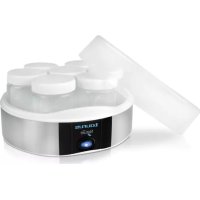
Nature - Yogurt maker TAURUS - Free user manual and instructions
Find the device manual for free Nature TAURUS in PDF.



| Product type | Yogurt maker |
| Brand | Taurus |
| Model | Nature |
| Number of jars | 7 glass jars |
| Total capacity | 1 liter of milk |
| Materials | Plastic body, glass jars |
| Power supply | 220-240 V ~ 50/60 Hz |
| Power | 50 W (estimated) |
| Dimensions (L x D x H) | Approximately 25 x 20 x 18 cm |
| Weight | Approximately 1.2 kg |
| Main functions | Yogurt fermentation, keep warm, automatic shut-off |
| Indicator light | Yes, operation indicator |
| Switch | On/Off |
| Safety | Automatic shut-off at end of cycle, overheat protection |
| Cleaning | Jars and lids dishwasher safe (delicate cycle) |
| Included accessories | 7 glass jars with lids, user manual and recipes |
| Warranty | 2 years |
| Recommended ambient temperature | 20 to 32 °C |
| Fermentation time | 6 to 15 hours depending on milk and temperature |
| Yogurt storage | Up to 8 days in refrigerator (plain), 5 days for others |
Frequently Asked Questions - Nature TAURUS
User questions about Nature TAURUS
0 question about this device. Answer the ones you know or ask your own.
Ask a new question about this device
Download the instructions for your Yogurt maker in PDF format for free! Find your manual Nature - TAURUS and take your electronic device back in hand. On this page are published all the documents necessary for the use of your device. Nature by TAURUS.
USER MANUAL Nature TAURUS
natural_image
Line drawing of a circular container with three cylindrical objects inside, and two smaller cylindrical containers beside it (no text or symbols)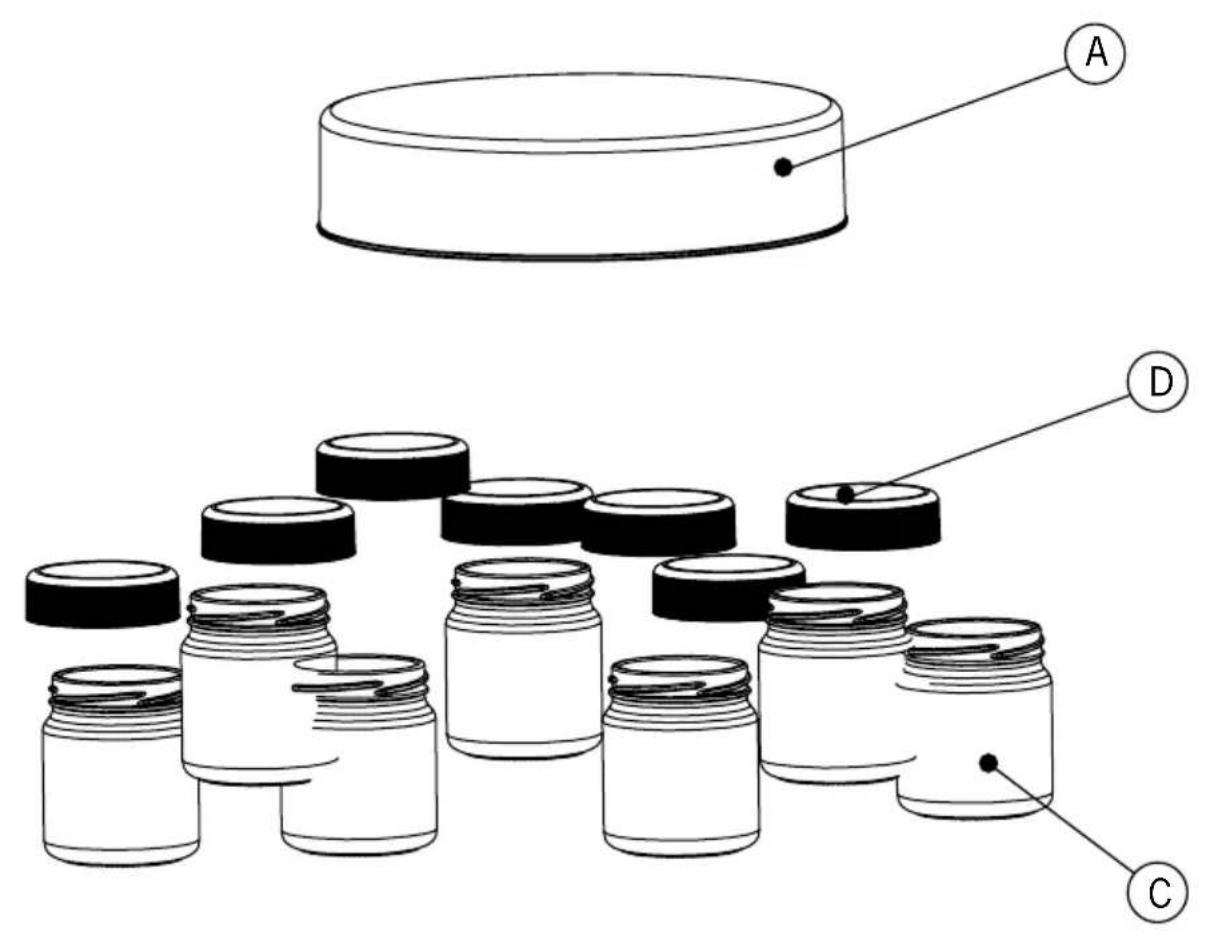
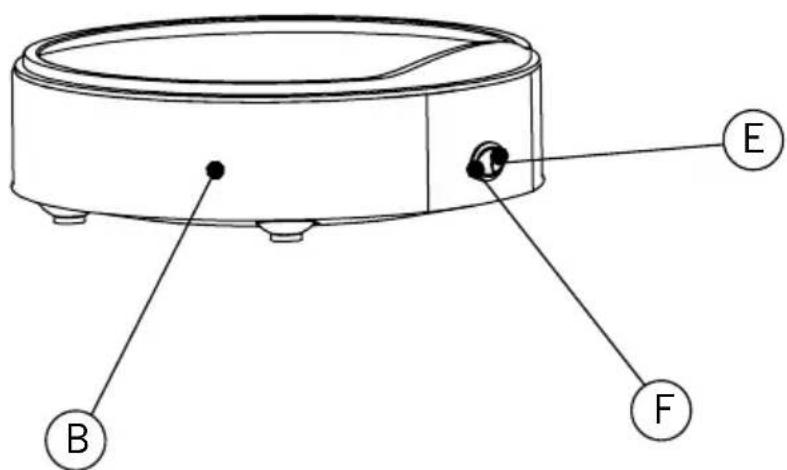
text_image
B F EYogurtera
Nature
Many thanks for choosing to purchase a TAURUS brand product.
Thanks to its technology, design and operation and the fact that it exceeds the strictest quality standards, a fully satisfactory use and long product life can be assured.
Description
A Lid
B Body
C Pots
D Pot lids
E On/off switch
F Pilot light
Safety advice and warnings
- Read these instructions carefully before switching on the appliance and keep them for future reference. Failure to follow and observe these instructions may result in an accident. Failure to follow and observe these instructions may result in an accident.
- Clean all the parts of the product that will be in contact with food, as indicated in the cleaning section, before use.
Use or working environment:
- Keep the working area clean and well lit. Cluttered and dark areas invite accidents.
- Do not place the appliance on hot surfaces, such as cooking plates, gas burners, ovens or similar.
- Do not place the appliance where it can reach the sunlight.
- Keep children and bystanders away when using this appliance.
- The appliance should be used and kept over a flat and stable surface.
- The appliance should be situated in a room where the room temperature is between 20^ C and 32^ C. This will enable it to work as efficiently as possible.
Electric safety:
- Do not use the appliance if the cable or plug is damaged.
- Ensure that the voltage indicated on the nameplate matches the mains voltage before plugging in the appliance.
- The appliance's plug must fit into the mains socket properly. Do not alter the plug. Do not use plug adaptors.
- Do not leave the appliance out in the rain or exposed to moisture. If water gets into the appliance, this will increase the risk of electric shock.
- If any of the appliance casings breaks, immediately disconnect the appliance from the mains to prevent the possibility of an electric shock.
-
Do not use the appliance if it has fallen on the floor, if there are visible signs of damage or if it has a leak.
-
Do not force the electrical wire. Never use the electric wire to lift up, carry or unplug the appliance.
- Do not wrap the cable around the appliance.
- Do not allow the connection cable to come into contact with the appliance's hot surfaces.
- Keep the appliance away from heat sources and sharp edges.
- Check the state of the power cord. Damaged or tangled cables increase the risk of electric shock.
- Do not touch the plug with wet hands.
Personal safety:
- Do not touch metal parts or the body when it is operating, as it may cause serious burns.
- Be careful of residual steam when opening the lid.
Use and care:
- Fully unroll the appliance's power cable before each use.
- Do not use the appliance when empty.
- Do not use the appliance if the on/off switch does not work.
- Do not move the appliance while in use.
- Disconnect the appliance from the mains when not in use and before undertaking any cleaning task.
- This appliance is for household use only, not professional or industrial use.
- This appliance is not a toy. Children should be supervised to ensure that they do not play with the appliance.
- This appliance is intended for adult use. Ensure that this product is not used by the disabled, children or people unused to its handling.
- This appliance should be stored out of reach of children and/or the disabled.
- Check that the lid is closed properly before starting the appliance.
- Do not use the appliance in damp environments.
Service:
- Any misuse or failure to follow the instructions for use renders the guarantee and the manufacturer's liability null and void.
Instructions for use
Before use:
- Make sure that all the product's packaging has been removed.
- Before using the product for the first time, clean the parts that will come into contact with food in the manner described in the cleaning section.
- To prepare the yogurts you will need a litre of milk and ferment
\*Choosing the milk:
- Preferably choose whole milk or semi-skimmed milk (long life UHT or powdered milk). This milk doesn't need to be boiled before being used. Do not use skimmed milk.
- Whole milk will provide more ferments and
aromas.
- Fresh or pasteurised milk must be boiled previously. They should be left to cool and the cream removed. These types of milk contain more vitamins and dietary minerals.
- To obtain thicker yogurts, add 2 or 3 dessert spoons of powdered milk.
- Use the milk at room temperature or heat it slightly (37°C - 40°C).
\*Choosing the ferment
Choose:
A - Use a yogurt (preferably whole milk yogurt) with an expiration date as far in advance as possible.
B - Use freeze-dried ferment (it can be purchased in supermarkets, pharmacies or specialist shops). Respect the activation time recommended on the ferment instructions.
C - Use the yogurt that you have made yourself. Do not use it more than 5 times.
Preparing the yogurt
- Carefully mix a litre of milk with the ferment. To obtain a homogenous mix, beat the yogurt until the mixture is smooth. Then add the milk while continuing to stir. Make sure froth doesn't form.
Starting the machine:
- Unroll the cable completely before plugging it in.
- Connect the appliance to the mains.
- Remove the protective lid (A).
- Put the mixture into the pots (C)
- Place the pots (C), without their lids (D), in the yogurt maker.
- Put the protective lid (A).
- Turn the appliance on using the on/off switch (E).
- The pilot light (F) comes on.
- It will take between 6 and 15 hours to obtain a good yogurt depending on the type of milk and room temperature.
- Turn the appliance off, using the on/off switch (E).
- Remove the protective lid (A) preventing condensation from getting inside the pots.
- Place the lids on the pots (D).
- Place the pots in the fridge for a minimum of 2 hours before eating. If you wait 24 hours, they will have a thicker consistency.
Observations:
- Natural yogurts can be kept in the fridge for a maximum of 8 days and other types can be kept there for 5 days.
- Do not put the appliance in the fridge.
Once you have finished using the appliance:
- Unplug the appliance to the mains.
- Clean the appliance
Cleaning
- Disconnect the appliance from the mains and let it cool before undertaking any cleaning task.
- Clean the equipment with a damp cloth with a few drops of washing-up liquid and then dry.
- Do not use solvents, or products with an acid or base pH such as bleach, or abrasive products, for cleaning the appliance.
- Do not submerge the appliance in water or any other liquid, or place it under a running tap.
-
The appliance is suitable for cleaning in hot soapy water or in a dishwasher (using a soft cleaning program):
-
Lid (A)
- Pots (C)
- Pot lids (D)
Anomalies and repair
- Take the appliance to an authorised technical support service if problems arise. Do not try to dismantle or repair without assistance, as this may be dangerous.
- If the connection to the mains has been damaged, it must be replaced and you should proceed as you would in the case of damage.
- If any anomaly is detected, check the following table:
| Anomalies | Causes Solutions | |
| Yogurts are too liquid in consistency. | The milk used isn't sufficiently rich in proteins. | As semi-skimmed milk was used, add 2 pots of powdered milk - 1 pot of semi-skimmed milk and 1/2 of full milk. |
| The yogurt maker has been moved, bumped or vibrated. | Do not move the yogurt maker during the process. | |
| The ferment is no longer active. | Change the ferment. | |
| Draft | Do not take out the pots or open the yogurt maker before the cycle has ended. Keep the yogurt maker out of drafts. | |
| Fermentation time too short | Re-connect the appliance. | |
| Lumps | The milk was too hot. | Next time add the ingredients at a lower temperature. |
| The ingredients haven't been mixed together enough. | Beat the yogurt until obtaining a smooth mixture. Then add the milk while stirring continuously.Don't let froth form. | |
| The milk has turned sour. | Check that the milk has not gone off. | |
| (Whey) liquid on the surface of the yogurt. | The yogurt has been in the appliance for too long. | Remove the whey if you wish or eat the yogurts as they are. Next time, make sure the yogurts are taken out of the yogurt maker earlier. |
| The milk was too hot when the ferment was added. | Remove the whey if you wish or eat the yogurts as they are. Next time, make sure the ingredients are added at room temperature. | |
| Yogurts are too acidic. | The yogurt has been in the appliance for too long. | Reduce the fermentation time. |
For EU product versions and/or in case that it is requested in your country:
Ecology and recyclability of the product
- The materials of which the packaging of this appliance consists are included in a collection, classification and recycling system. Should you wish to dispose of them, use the appropriate public containers for each type of material.
- The product does not contain concentrations of substances that could be considered harmful to the environment
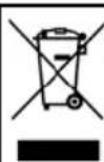
- This symbol means that in case you wish to dispose of the product once its working life has ended, take it to an authorised waste agent for the selective collection of waste electrical and electronic equipment (WEEE)
This appliance complies with Directive 2006/95/EC on Low Voltage and Directive 2004/108/EC on Electromagnetic Compatibility.
| RECIPES | |
| logurts amb xarops | |
| 1 litre of milk1 natural yogurt or 1 sachet of ferment5 dessert spoons of fruit syrup or 4 desert spoons of elderflower syrup | Pour the yogurt or ferment into a container. Add the syrup and slowly pour in the milk while stirring the mixture continuously. Pour the mixture into the pots. |
| Soya yogurt | |
| 1 litre of soya milk1 natural yogurt or 1 sachet of ferment | Pour the yogurt or ferment into a container and mix with milk. Pour the mixture into pots. |
| Pineapple yogurt | |
| 1 litre of milk1 natural yogurt or 1 sachet of ferment2 slices of pineapple4 dessert spoons of pineapple juice. | Cut the slices into small cubes and divide between pots. Pour the yogurt or ferment into a container.Gradually add the milk and the juice. Pour the mixture into the pots.Variations: the following fruits can also be used: strawberries (10 units), mandarins (4 units), orange (1 unit), banana (1 unit). |
| Note: fresh fruit can be very acidic which can kill off the ferment and prevent the yogurt making process. To prevent this, add the fruit just before eating or cook it first. | |
| Chocolate or coffee yogurt | |
| 1 litre of milk1 natural yogurt or 1 sachet of ferment3 dessert spoons of powdered chocolate or chicory. | Pour the chocolate or chicory into a container.Carefully add a glass of warm water and stir. Add the yogurt or ferment while stirring continuously and add the rest of the milk. Pour the mixture into pots. |
| Jam yogurts | |
| 1 litre of milk1 natural yogurt or 1 sachet of ferment4 dessert spoons of jam. | Mix the jam with a little milk in a container. Add the yogurt or ferment and mix. Add the rest of the milk and mix. Pour the mixture into the pots. |
Yaourtière Nature
i her Client,