
MAGICSAFE MSG 150 - Portable Refrigerator DOMETIC - Free user manual and instructions
Find the device manual for free MAGICSAFE MSG 150 DOMETIC in PDF.



| Product type | Gas detector |
| Brand | DOMETIC |
| Model | MAGICSAFE MSG 150 |
| Dimensions (W x H x D) | 80 x 156 x 51 mm |
| Power supply | 10-32 V DC |
| Power consumption | 1.3 W |
| Operating temperature | 0 °C to +40 °C |
| Alarm sound level | Approx. 85 dB at 3 m |
| Protection type | IP 20 |
| Detected gases | Ether, chloroform, butane, ethane, trichloroethylene |
| LED indicators | Green LED (ready), orange LED (fault), red LED (alarm) |
| Functions | Narcotic gas detection, audible and visual alarm, monthly test, mute function |
| Connection | 12/24 V socket or fixed connection with additional switch |
| Accessory compatibility | External siren (9101600008), RV-AMP-SW switch, MS660/DVS90 alarm systems |
| Maintenance | Clean with a damp cloth; do not use detergents |
| Warranty | Manufacturer standard, contact after-sales service |
| Safety instructions | Use only in vehicles with engine off; install near sleeping area |
| Package contents | Gas detector, mounting plate, fixing material |
| Disposal | Recycle according to local regulations |
Frequently Asked Questions - MAGICSAFE MSG 150 DOMETIC
User questions about MAGICSAFE MSG 150 DOMETIC
0 question about this device. Answer the ones you know or ask your own.
Ask a new question about this device
Download the instructions for your Portable Refrigerator in PDF format for free! Find your manual MAGICSAFE MSG 150 - DOMETIC and take your electronic device back in hand. On this page are published all the documents necessary for the use of your device. MAGICSAFE MSG 150 by DOMETIC.
USER MANUAL MAGICSAFE MSG 150 DOMETIC
COMPLEMENTARY PRODUCTS
ALARM SYSTEMS
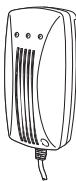
MSG150
EN
Gas detector
Installation and Operating Manual 10
DE
Gas detector
Please read this instruction manual carefully before installation and first use, and store it in a safe place. If you pass on the product to another person, hand over this instruction manual along with it.
Table of contents
1 Explanation of symbols. 11 2 Safety and installation instructions 11 3 Scope of delivery 12 4 Accessories/expansions 13 5 Intended use. 13 6 Technical description 13 7 Mounting the MagicSafe MSG150 14 8 Connecting the gas detector 14 9 Operating the MagicSafe MSG150. 17 10 Alarm. 18 11 Troubleshooting 19 12 Maintaining and cleaning the gas detector 19 13 Warranty 20 14 Disposal. 20 15 Technical data. 20
1 Explanation of symbols

WARNING!
Safety instruction: Failure to observe this instruction can cause fatal or serious injury.

CAUTION!
Safety instruction: Failure to observe this instruction can lead to injury.

NOTICE!
Failure to observe this instruction can cause material damage and impair the function of the product.

NOTE
Supplementary information for operating the product.
2 Safety and installation instructions
The manufacturer accepts no liability for damage in the following cases:
- Damage to the product resulting from mechanical influences and excess voltage
- Alterations to the product without express permission from the manufacturer
- Use for purposes other than those described in the operating manual
2.1 General safety

WARNING!
- Only use the device as intended.
- Disconnect the device from the mains:
Before cleaning and maintenance After use Before changing a fuse
- The device may not be used if the device itself or the connection cable are visibly damaged.
- If the power cable for this device is damaged, it must be replaced by the manufacturer, customer service or a similarly qualified person in order to prevent safety hazards.
- This device may only be repaired by qualified personnel. Inadequate repairs may cause serious hazards.
- This device can be used by children aged 8 years or over, as well as by persons with diminished physical, sensory or mental capacities or a lack of experience and knowledge, providing they are supervised, or have been taught how to use the device safely and are aware of the resulting risks.
- Electrical appliances are not toys. Always keep and use the device out of the reach of children. Children must be supervised to ensure that they do not play with the device.

NOTICE!
- Before start-up, check that the voltage specification on the type plate is the same as that of the power supply.
- Never pull the plug out of the socket by the connection cable.
- Store the device in a dry and cool place.
2.2 Operating the device safely
- Only operate the appliance in vehicles when the engine is switched off.
- Do not operate the device outdoors.
- Once a month and after longer periods of disuse, test the function of the device by pressing the (fig. 3 4, page 5) pushbutton.
3 Scope of delivery
| No. in fig. 2, page 3 | Quan-tity | Description | Ref. no. |
| 1 | 1 | Gas detector | 9600000368 |
| 2 | 1 | Installation panel | |
| - | 1 | Fastening material |
4 Accessories/expansions
| Description | Ref. no. |
| External siren | 9101600008 |
| Additional switch | RV-AMP-SW |
5 Intended use
MagicSafe MSG150 (ref. no. 9600000368) is a gas detector that detects noxious gases before they can take effect. MSG150 has been designed for use in vehicles to detect noxious gases which have an ether, chloroform, butane, ethane, or trichloroethane basis.

NOTE
With a voltage range of 10 to 32 V DC, the gas detector is suitable for use in both cars and trucks.
6 Technical description
The MSG 150 gas detector can be used as a warning device in many areas to detect gases with a narcotic effect before they can take effect.
The gas detector contains a sensor and an acoustic signal generator and is connected to a 12/24 V DC voltage supply, e.g., the cigarette lighter in a vehicle.
In addition to this, the gas detector contains an internal relay. An external siren or signal lamp can be connected to this.
The connection terminal for the relay connection can be found on the back of the gas detector (fig. 3, page 4).
| No. in fig. 3, page 4 | Description |
| 1 | Relay contact 1 |
| 2 | Relay contact 2 |
You can operate the gas detector in three ways:
- As a single device, in combination with the external siren (ref. no. 9101600008)
- In combination with the MagicSafe alarm system MS660 or DVS90
7 Mounting the MagicSafe MSG150
7.1 Tools required
For mounting you will require the following tools:
- Measuring ruler (fig. 1, page 3)
- Centre punch (fig. 1 2, page 3)
- Hammer (fig. 13, page 3)
- Drill bit set (fig. 1 4, page 3) Electric drill (fig. 1 5, page 3)
- Screwdriver (fig. 1 6, page 3)
7.2 Mounting the gas detector
Note the following when selecting a place to fit the gas detector:
Note the length of the cable. - The gas detector should be mounted in the vicinity of the sleeping area at the height of the mattress.
Select a suitable installation location.

NOTICE!
Before making any drill holes, ensure that no electrical cables or other parts can be damaged by drilling.
Hold the mounting panel on the chosen location and mark the two drill holes (fig. 5, page 5). Screw the mounting panel tight with the two self-tapping screws (fig. 6, page 5). Insert the gas detector on the mounting panel (fig. 7, page 5). Insert the plug of the gas detector in the socket of your 12/24 V=volte supply. The green LED on the gas detector (fig. 8 1, page 5) flashes for approx. 10 min. The sensor is then brought to the operating temperature.
When the green LED glows constantly, the gas detector is ready for operation.
8 Connecting the gas detector
8.1 As a single device
If you use the gas detector as a single device, you can either
- Switch it on with the 12/24 V = plug
- Switch it on with the RV-AMP-SW additional switch (accessory), if there is no 12/24 V = socket in the sleeping area.
Connecting the gas detector using the 12/24 V = plug
Insert the 12/24 V = plug into a socket with a constant 12/24 V = supply. This socket should be connected with the vehicle battery. An acoustic signal sounds and the green LED (fig. 8 1, page 5) flashes for approx. 10 minutes. During this time the gas detector conducts a system test and the sensor is brought to operating temperature.
Connecting the gas detector so that it is hardwired
If you wish to give the gas detector a permanently wired connection and switch it on with the RV-AMP-SW additional switch, please use the circuit diagram fig. 9, page 6.
Disconnect the 12/24 V = plug from the cable. Remove around 10 cm of the outer insulation on the end of the cable. Connect the black, yellow and orange cable to the bodywork earth (terminal 31). Connect the red cable to the output of the RV-AMP-SW additional switch. Connect the input of the switch with a 1 A fuse to the positive battery pole.
8.2 In combination with the external siren (ref. no. 9101600008)
If you wish to connect the gas detector with the external siren, please use the circuit diagram fig. 10, page 6.
Mounting the external siren
The external siren can be mounted in the engine compartment.
When mounting it, ensure that the installation location is
- Not in an area exposed to splashing water
- Not near the exhaust system
- Cannot be accessed from underneath the vehicle, to ensure that it cannot be sabotaged. Mount the external siren with the acoustic horn facing downwards.
Connecting the alarm siren

NOTE
If your vehicle does not have a 12V = - continuous positive cable in the mounting area, you can also connect the input to the vehicle battery using a 1 A fuse.
Connect the black cable of the siren to the bodywork earth (terminal 31). Connect the red cable of the siren to the relay contact 2 (fig. 3 2, page 4). Connect the relay contact 1 (fig. 3 1, page 4) to the 12V = continuous positive. The cable must be fused with at least a 1 A fuse.
8.3 In combination with an MS660 or DVS90 alarm system
If you wish to use the gas detector in combination with
- the MS660 alarm system, please use the circuit diagram fig. 11, page 7
- the DVS90 alarm system, please use the circuit diagram fig. 12, page 8

NOTICE!
If you are combining the MagicSafe MSG150 with the DVS90 alarm system, you need to configure the alarm system as follows:
- Set output 2.6 to "Status-Armed" and input 2.5 to "Trigger".
Gas detector with MS660
Disconnect the 12V plug from the cable. Remove about 10 cm of the outer insulation on the end of the cable. Connect the black cable to the bodywork earth (terminal 31). Connect the yellow and orange cable (fig. 11, page 7) with the white cable of the alarm system (pin 15, 15-pin plug). Connect the red cable with 12V continuous positive. The cable must be fused with at least a 1 A fuse. If the gas detector is to be switched as the main alarm on the MS660 external alarm system, connect
- relay contact 1 (fig. 11, page 7) to the bodywork earth (terminal 31) and
- relay contact 2 (fig. 11, page 7) to the grey/white cable (pin 4, 9-pin plug) of the alarm system.
Gas detector with DVS90
Disconnect the 12/24V plug from the cable. Remove about 10 cm of the outer insulation on the end of the cable. Connect the black, yellow and orange cable to the bodywork earth (terminal 31). Connect the red cable with the green/red cable (P2, pin 6 (fig. 12, page 8). The cable must be fused with at least a 1 A fuse. If the gas detector is to be switched as the main alarm on the DVS90 external alarm system, connect
- relay contact 1 (fig. 12, page 8) to the bodywork earth (terminal 31) and
- relay contact 2 (fig. 12, page 8) to the black/grey cable (P2, pin 5) of the alarm system.
9 Operating the MagicSafe MSG 150
To avoid false alarms caused by cooking, using deodorants, heavy smoking and alcohol consumption, the vehicle should be ventilated thoroughly before retiring to bed and then the gas detector should be switched on.
| No. in fig. 6, page 5 | description |
| 1 | Green LED The green LED flashes for approx. 10 minutes after the gas detector has been connected to a voltage supply or switched on with the RV-AMP-SW auxiliary switch. While the LED is flashing, the sensor is brought to the operating temperature. When the green LED glows constantly, the gas detector is ready for operation. |
| 2 | Orange LED: The orange LED glows if a fault occurs. |
| 3 | Red LED (alarm) The red LED flashes if an alarm has been triggered. In addition to this, a siren sounds an alarm signal. (See also chapter “Alarm” on page 18.) |
| 4 | Pushbutton This pushbutton is a test button and also mutes the system. Test pushbutton > Press this pushbutton once a month or after extended periods of disuse to check the system is functioning. ✓ The orange and red LEDs flash and a siren sounds. Mute switch > Press this pushbutton if you wish to switch off the sound during an alarm. ✓ The red LED continues flashing and a brief signal sounds every 45 seconds. Then the system is armed again. |
Switching on the MSG150 as a single device or in combination with the external siren (ref. no. 9101600008)
Insert the 12/24V plug in a socket or switch on the gas detector with the RV-AMP-SW auxiliary switch. An acoustic signal sounds and the green LED (fig. 8 1, page 5) flashes for approx. 10 minutes. During this time the gas detector conducts a system test and the sensor is brought to operating temperature.
If an alarm occurs, an acoustic signal sounds over the internal siren and the red LED (fig. 8 3, page 5) glows. If the external siren is connected, an additional acoustic signal sounds over the external siren.
To interrupt the internal alarm, press the pushbutton (fig. 8 4, page 5).
Switching on the MSG150 in combination with the MS660 or DVS90
Switch the MS660 or DVS90 alarm system on as usual: On the remote control of the respective device, press
- the lower button (MS660)
- the NO button of the vehicle or additional hand transmitter (DVS90).
A checkmark: An acoustic signal sounds and the green LED (fig. 8 1, page 5) flashes for approx. 10 minutes. During this time the gas detector conducts a system test and the sensor is brought to operating temperature.
If an alarm occurs, an acoustic signal sounds over the internal siren and the red LED (fig. 8 3, page 5) glows. The internal relay sends an earth signal to the alarm input of the external alarm system. The external alarm system immediately triggers an external alarm using the vehicle indicators and the vehicle horn or siren.
To interrupt the internal alarm, press the pushbutton (fig. 8 4, page 5). To deactivate the external alarm, press the following on the remote control of the respective device:
The top button (MS660) - The NC button of the vehicle or additional hand transmitter (DVS90).
10 Alarm
If an alarm is signalled, proceed as follows:
Determine the cause of the alarm immediately.
Instruct children and anybody still asleep to leave the vehicle or boat. Open all doors and windows as quickly as possible. Avoid striking matches or any naked flames and turn off any sources of combustion immediately. Turn off all gas-powered devices. Avoid causing sparks (do not use any electrical switches). Rectify the cause or leave the vehicle or the boat.
False alarm
For your safety, the gas detector is set to be very sensitive. For this reason the sensor also reacts to other gaseous media. Using aerosols (e.g. propellants in spray cans) or thick tobacco smoke, heavy alcohol fumes or steam arising from cooking can trigger an alarm even though no gas or anaesthetic gas is present.
11 Troubleshooting
If the device is not ready for operation (the green LED does not glow), proceed as follows:
Make sure the power supply is 12 or 24 V. If the voltage is less than this, or the voltage supply has been interrupted, the gas detector does not function.
Check the fuse in the plug, if the gas detector is connected using a 12 V plug.
Checking the fuse in the 12/24 V plug
In the tip of the plug, there is a fuse to protect the gas detector.
If the thin metal connection in the middle between the two metal caps is broken, the fuse is defective and must be replaced.

NOTICE!
Make sure that you only use the same fuse type in the plug. Damage to the device resulting from using inappropriate fuse types is excluded from guarantee claims under the terms of the warranty.
To replace the fuse, proceed as follows:
Pull the adapter sleeve (fig. 4, page 4) off of the plug.
Unscrew the screw (fig. 4 5, page 4) out of the upper half of the housing (fig. 4 1, page 4). Carefully lift the upper half of the housing off the lower half (fig. 4 6, page 4). Take out the contact pin (fig. 4 3, page 4). Replace the defective fuse (fig. 4 2, page 4) with a new fuse that has the same rating. Re-assemble the plug in the reverse order.
12 Maintaining and cleaning the gas detector

NOTICE!
Do not use sharp or hard objects or cleaning agents for cleaning as these may damage the product.
Occasionally clean the product with a damp cloth.
13 Warranty
The statutory warranty period applies. If the product is defective, please contact the manufacturer's branch in your country (see the back of the instruction manual for the addresses) or your retailer.
For repair and guarantee processing, please include the following documents when you send in the device:
- A copy of the receipt with purchasing date
- A reason for the claim or description of the fault
14 Disposal
Place the packaging material in the appropriate recycling waste bins wherever possible.

If you wish to finally dispose of the product, ask your local recycling centre or specialist dealer for details about how to do this in accordance with the applicable disposal regulations.
15 Technical data
| MagicSafe MSG150 | |
| Ref. no.: | 9600000368 |
| Dimensions (W x H x D): | 80 x 156 x 51 mm |
| Input voltage range: | 10 V= to 32 V= |
| Power consumption: | 1.3 W |
| Operating temperature: | 0 °C to +40 °C |
| Signal volume: | Approx. 85 dB at a distance of 3 m |
| Protection class: | IP 20 |
Approvals


6 Description technique
The manufacturer does not accept any liability for damage in the following cases:
- Damage to the device due to mechanical impact or overloading
- Changes to the product, modifications made without the express permission of the manufacturer
- Use for purposes other than those specified in these instructions
2.1 Basic safety instructions

Warnings
- Use the device only for its intended purpose.
- Disconnect the device from the power supply
- after each use - before replacing the fuse
It is forbidden to put the device into operation if it or the connecting cable has visible damage. In case of damage to the device or its cable, it must be replaced by the manufacturer, a service center, or similarly qualified personnel to avoid hazards. - Repair of this device may only be carried out by specialists. Incorrectly performed repairs can lead to serious dangers.
This device can be used by children aged 8 and above, as well as persons with reduced physical, sensory, or mental capabilities, or lack of experience and knowledge, if they are supervised or have been instructed on the safe use of the device and understand the dangers that may arise. - Electrical appliances are not toys!
Therefore, keep and use the device out of reach of children. It is also necessary to constantly ensure that children do not play with the device.

ATTENTION!
- Before putting into operation, compare the values indicated on the nameplate with the characteristics of the power source to be used. Do not pull the plug out of the socket by the cord. Store the device in a dry, cool place.
2.2 Safety precautions when working with the device
- Use the device in a vehicle only when the engine is switched off. Do not operate the device outdoors. Every month, during longer breaks in operation, check the operation of the device by pressing the button (Fig. 3 4, p. 5).
3 Scope of delivery
| № ha pnc. 2, ctp. 3 | KoI- BO | HannMeNoBaHne | Apt. № |
| 1 | 1 | Сигнанлзатор ragа | 9600000368 |
| 2 | 1 | Мотжнaya пала | |
| - | 1 | Крелений мaterpillar |
4 Accessories/expansion
| Наменоваиме | Apr. № |
| Вnevшая сирера | 9101600008 |
| Донорител新股ы вьклочател | RV-AMP-SW |
5 Intended use
MagicSafe MSG150 (art. no. 9600000368) is a gas detector that detects narcotic vapors before they take effect. MSG150 is designed for use in vehicles to detect narcotic gases based on alcohol, chloroform, butane, ethane, and trichloroethylene.

INSTRUCTIONS
The gas alarm device can be used both in trucks and in passenger cars, depending on the model from 10 to 32 V.
Technical description
The gas alarm device MSG150 can be used as a universal gas alarm device for detecting narcotic gases in case they begin to have an effect.
The gas alarm device has a sensor, as well as an acoustic alarm, and is connected to a 12/24 V power source, for example, to a car cigarette lighter.
In addition, the gas alarm device has an internal output to which, for example, a siren or a strobe lamp can be connected.
The connection terminals for connection are located on the rear side of the gas alarm device (Fig. 3, page 4).
Installation of the external siren
The external siren can be installed in any space.
Choose the installation method so that it
is not in the splash zone, is not near the exhaust manifold, and is not accessible from below, to prevent external interference.
Install the external siren with the horn facing down.
Connecting the siren cable

NOTE
If the vehicle does not have a permanent 12V DC power supply in the installation area, it can be connected through a 1A fuse to the vehicle battery.
Connect the siren cable to the housing (ground). Connect the red cable of the siren to the relay contact 2 (Fig. 3.2, page 4). Connect the relay contact 1 (Fig. 3.1, page 4) to the permanent 12V DC. The wire must be protected by a 1A fuse.
8.3 Combination with MS660 and DVS90 signaling systems
If you want to connect a gas detector in combination
with the MS660 signaling system, use the connection diagram in Fig. 11, page 7. With the DVS90 signaling system, use the connection diagram in Fig. 12, page 8.

ATTENTION!
If the MagicSafe MSG150 is combined with the DVS90 signaling system, it is necessary to perform the configuration of the system software in the base:
- Set output 2.6 to "Status output", and output 2.5 to "Disabler".
Gas detector with MS660
Disconnect the 12V plug from the cable. Strip about 10 cm of the outer insulation from the end of the cable. Connect the black wire to the housing (terminal 31). Connect the yellow and orange wires (Fig. 11, page 7) to the white wire of the signaling system (contact 15, 15-pin connector). Connect the red wire to a constant 12V supply. The wire must be protected by a fuse at 1A. If the gas detector is to be switched on as the main alarm signal to the external signaling system MS660, then connect
- relay contact 1 (Fig. 11, page 7) to ground (terminal 31), and
- relay contact 2 (Fig. 11, page 7) to the gray-white wire (contact 4, 9-pin connector) of the signaling system.
Gas detector with DVS90
Disconnect the 12/24V plug from the cable. Strip about 10 cm of the outer insulation from the end of the cable. Connect the black, yellow, and orange wires to the housing (terminal 31). Connect the red wire to the green-red wire (P2, contact 6) (Fig. 12, page 8). The wire must be protected by a fuse at 1A. If the gas detector is to be switched on as the main alarm signal to the external signaling system DVS90, then connect
- relay contact 1 (Fig. 12, page 8) to ground (terminal 31), and
- relay contact 2 (Fig. 12, page 8) to the gray-gray wire (P2, contact 5) of the signaling system.
9 Control of MagicSafe MSG150
The device is designed to operate in conjunction with gas analyzers, using refrigerants, corrosive gases, flammable gases, and other gases, as well as the gas analyzer itself.
See Fig. 3, p. 5
Name
Green LED
The green LED lights up approximately one minute after the gas analyzer is connected to the power supply or after the RV-AMP-SW is turned on. While the LED is lit, the sensor is warming up to its operating temperature.
When the green LED starts flashing intermittently, it means the gas analyzer is ready for operation.
2 Orange LEDs
The orange LED lights up when a malfunction occurs.
3 Red LED (Alarm)
The red LED lights up during alarm signaling.
Additionally, an audible alarm sounds.
(See also Chapter "Alarm Signaling" on p. 146.)
See Fig. 8, p. 5
Name
4
Khonka
3To KHOIIKA CnyKIN KHOIIKOI PIOBepKIN BbIKIOUaTeJIeM 3ByKa.
Khoika npobepkn
Haxmamte 3y KhoNky pa3 B meCz nINI pOcne dInTeBnIx nepepbOB B pa6ote, yTO6bI npOBepNTb cyHKIOHOPOBaHne. √ MngraITo opaHkeBbI IN KpaChbI CBTeOAnIObI, IN 3ByuHT CnHApCnPeHbI.
BbiknioateIb 3Byka
HaxmITE 3Ty KHONKY, ECIN BBy XOTINE OTKNIQUHTb 38YK BO BPEM CNTHaHIN3a- KpaChbIcBToIOIO npOIOJXaet MfAtpb, H cyT8 45 cekyH38yHT KOpOTKm CnIHan. Nocne 3TOrO cnCTema ChOBa AKTNBUPyETc.
BknioeHne MSG 150 B kaueCTBe OTaJIbHOro yctPoIcTBA HnB KOM6HaUNC BHeUHeN cnpeHoi (apt. N9 9101600008)
BCTaBte 12/24 B=8 po3eKy ININ BKIOHHTe CnHaIN3atop r3a DOnONHITeHBbIM BbIKHOATEm RV-AMP-SW. 3buynt akcyteckn ciHan, n 3eHbB CBeToDIOd (pnc. 8 1, ctp. 5) MInraet OKOIO DecaT MInHyT.
B TeueHHe 3TO R BpeHn CnHaHn3aTOp Ra3a BbInOnHReT CnCTeMHb TeCT, N DaTuNK DoBOOHTcdo pa6ooy TeMnepaTypb.
10 AbarHnHa CnHaHn3aun
PnBKNIOUeHm ABAPINHO CINHAN3aUN CO6NIOaIte CNEyOuIN NOPAOK DeICTBNI:
He3aMeIeYcTaHOBtpe npuHcypa6aTbBaHnCnHaN3aHn.
Iotppe6yIte OT dTei N cIaIx nIOeI pOKHyTb ABTOMO6nIb INN KATEp. He3aMeIINTeIbHO OTKpoIte BCE OKHa IDbepn. 136eraIte OTKpbITOrO OTHN HNe3aMeINTeNBHO OTKNIOHTe RopeKEN PNTbI. OTknOuHTe Bce ra3OBbI np6Opbl. 136eraaiote o6pa3oBAHnI NCKp (He haxmamTe 3neKTPnuueckne BbIKIOuateTNI). YcTpaHnTe npuHnHy nIN nOKnHBTe aBTOMO6nB nIN KaTeP.
JIoXHoe cpa6aTbIBAHne
Bueenx ObecneueHn 6e3oNaChOCTn CnHnIaTOp rata Meemt OueHb YCbCTBnteHbHyIO HAcToPky. PiOTOMy aatNc PcaabTaBAET n HApTMe rA0o0bpa3hle cpebl. NcNoB3oBaHme a3o3oJe (HaNPmep, R3a-BtCeNTHeB a HpO3oBnHO yIaNKOBe), CnBbHb Ta6aHbH bIM, CnBbHe Icnapae HnCnPTbHX HAnITKOB INn Nap pnpnrTOBBeHNn PIIuMOny Bb3bAtb Cpa6aTbBaHne CnHnIa3uN, XOTa R3nn HApKOTUeCKn Ra3 OTCYCTBYKOT.
11 Troubleshooting
If the device is not ready for operation (the green LED is not lit), follow the steps below:
Make sure that the supply voltage is 12 V or 24 V. If the supply voltage was interrupted, the gas analyzer will not work. Check the fuses in the socket, if the gas analyzer is connected to 12/24 V.
Checking the fuses in the 12/24 V socket.
To protect the gas analyzer, there are two fuses in the socket.
If the metal fuse link between the two metal caps is broken, this indicates that the fuse is defective and must be replaced.

CAUTION!
Only fuses of the same type should be installed in the socket. The use of unsuitable fuses is excluded from the warranty and liability for damages.
When replacing fuses, follow the steps below:
Remove the compensation sleeve (Fig. 4 4, p. 4) from the socket. Unscrew the screw (Fig. 4 5, p. 4) from the upper part of the housing (Fig. 4 1, p. 4).
Carefully remove the upper part of the housing from the lower one (Fig. 4 6, p. 4). Pull out the contact pins (Fig. 4 3, p. 4). Replace the defective fuse (Fig. 4 2, p. 4) with a new one with the same parameters. Reassemble in reverse order.
12 Maintenance of the gas analyzer

CAUTION!
Do not use sharp objects or abrasive agents, as this may damage the product.
Regularly wipe the product with a damp cloth.
dometic.com/sales-offices


- COMPLEMENTARY PRODUCTS
- ALARM SYSTEMS
- PLEASE READ THIS INSTRUCTION MANUAL CAREFULLY BEFORE INSTALLATION AND FIRST USE, AND STORE IT IN A SAFE PLACE. IF YOU PASS ON THE PRODUCT TO ANOTHER PERSON, HAND OVER THIS INSTRUCTION MANUAL ALONG WITH IT
- TABLE OF CONTENTS
- EXPLANATION OF SYMBOLS
- WARNING
- CAUTION
- NOTICE
- NOTE
- SAFETY AND INSTALLATION INSTRUCTIONS
- GENERAL SAFETY
- OPERATING THE DEVICE SAFELY
- SCOPE OF DELIVERY
- ACCESSORIES/EXPANSIONS
- INTENDED USE
- TECHNICAL DESCRIPTION
- MOUNTING THE MAGICSAFE MSG
- TOOLS REQUIRED
- MOUNTING THE GAS DETECTOR
- CONNECTING THE GAS DETECTOR
- AS A SINGLE DEVICE
- CONNECTING THE GAS DETECTOR USING THE 12/24 V = PLUG
- CONNECTING THE GAS DETECTOR SO THAT IT IS HARDWIRED
- IN COMBINATION WITH THE EXTERNAL SIREN (REF. NO. 9101600008)
- MOUNTING THE EXTERNAL SIREN
- CONNECTING THE ALARM SIREN
- IN COMBINATION WITH AN MS660 OR DVS90 ALARM SYSTEM
- GAS DETECTOR WITH MS
- GAS DETECTOR WITH DVS
- OPERATING THE MAGICSAFE MSG
- SWITCHING ON THE MSG150 AS A SINGLE DEVICE OR IN COMBINATION WITH THE EXTERNAL SIREN (REF. NO. 9101600008)
- SWITCHING ON THE MSG150 IN COMBINATION WITH THE MS660 OR DVS
- ALARM
- FALSE ALARM
- TROUBLESHOOTING
- CHECKING THE FUSE IN THE 12/24 V PLUG
- MAINTAINING AND CLEANING THE GAS DETECTOR
- WARRANTY
- DISPOSAL
- TECHNICAL DATA
- APPROVALS
- DESCRIPTION TECHNIQUE
- BASIC SAFETY INSTRUCTIONS
- WARNINGS
- ATTENTION
- SAFETY PRECAUTIONS WHEN WORKING WITH THE DEVICE
- ACCESSORIES/EXPANSION
- INSTRUCTIONS
- INSTALLATION OF THE EXTERNAL SIREN
- CONNECTING THE SIREN CABLE
- COMBINATION WITH MS660 AND DVS90 SIGNALING SYSTEMS
- CONTROL OF MAGICSAFE MSG
- NAME
- KHONKA
- KHOIKA NPOBEPKN
- BBIKNIOATEIB 3BYKA
- BKNIOEHNE MSG 150 B KAUECTBE OTAJIBHORO YCTPOICTBA HNB KOM6HAUNC BHEUHEN CNPEHOI (APT. N9 9101600008)
- ABARHNHA CNHAHN3AUN
- JIOXHOE CPA6ATBIBAHNE
- CHECKING THE FUSES IN THE 12/24 V SOCKET
- MAINTENANCE OF THE GAS ANALYZER
Brand : DOMETIC
Model : MAGICSAFE MSG 150
Category : Portable Refrigerator