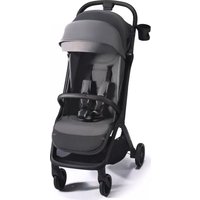
USER MANUAL MOOV 2 XL Kindercraft
natural_image
Line drawing of a two-wheeled baby stroller with twin wheels and a canopy (no text or symbols)
MOOV 2 XL USER GUIDE
(AR) عربه اطفال
(CS) Kočárek
(DE) Buggy
(EN) Stroller
(ES) Silla de paseo
(FR) Pousette
(HU) Babakocsi
(IT) Passeggino
(NL) Kinderwagen
(PL) Wózek
(PT) Carrinho de bebé
(RO) Cărucior
MANUAL DE INSTRUÇÕES
MANUAL DE UTILIZARE
AR....12
CS 16
DE....19
EN 22
ES....25
FR 28
HU 32
IT 35
NL 39
PL....42
PT 46
RO....49
RU 52
SK 56
SV 59
Iustrace jsou pouze orientační a nepředstavují plné zobrazení produktu./Die gezeigten Bilder dienen nur als Referenz, das tatsächliche Produkt kann von der Abbildungabweichen./The illustrations are for illustration only and do not represent the product./Las ilustraciones son meramente orientativas y no constituyen una representación completa del producto./Les illustrations sont données à titre indicatif et ne constituent pas une représentation complète du produit./Az illusztrációk csak tájékoztató jellegűek és eltérhetnek a valós terméktől./Le immagini sono inserite a scopo dimostrativo e non rispecchiano appieno le caratteristiche del prodotto./De afbeeldingen dienen uitsluitend ter illustratie en geven geen volledig beeld van het product./Ilustracje mają charakter pogladowy i nie stanowią pełnego odwzorowania produktu./As ilustrações têm uma função informativa e não são uma representação fiel do produto./ Ilustrațiile sunt doar pentru referință și nu reprezintă produsul complet./Иллюстрации приведены только для справки и не представляют весь продукт./Obrázky slúžia len na ilustráciu a nie sú úplným predstavením produktu./Illustrationer är endast för referens och representerar inte hela produkten.
natural_image
Technical line drawing of a mechanical device with no visible text or symbols
natural_image
Simple line drawing of a curved pipe or tube with two ends and a label '3' above (no text or symbols on the diagram itself)
natural_image
Two identical diagrams of bicycle wheels with no text or symbols, labeled '4' in the top right corner.
natural_image
Two identical circular diagrams showing a steering wheel with three blades and a central hub, labeled '5' in the top right (no text or symbols on the diagrams themselves)
natural_image
Simple line drawing of a curved mechanical or architectural component with two protruding pins (no text or symbols)
natural_image
Top-down line drawing of a car interior showing seat, dashboard, and steering wheel (no text or symbols)
natural_image
Line drawing of a curved mechanical device with two connectors and a handle, labeled with number 8 (no text or symbols on the diagram itself)
natural_image
Simple line drawing of a curved mechanical or architectural component with no text or symbols
natural_image
Simple line drawing of a mechanical part with a curved cutout and a label '15' (no text or symbols on the object itself)
natural_image
Simple line drawing of a gray, irregularly shaped object with no text or symbols
natural_image
Two mechanical clamps labeled L and R, shown side by side without any text or symbols on the clamps themselves.
natural_image
Simple line drawing of a rectangular object with intersecting lines, labeled '16' at the top (no other text or symbols)
natural_image
Technical line drawing of a mechanical device with a circular annotation highlighting a specific component (no text or symbols present)
natural_image
Mechanical diagram showing a tire being adjusted to a mechanical assembly (no text or symbols present)
natural_image
Line drawing of a stroller with wheels and handle (no text or symbols)
B
D
natural_image
Diagram showing a hand holding a car tire with an attached lever and a wheel, no text or symbols present.
F
natural_image
Technical line drawing of a car interior with side and top views (no text or symbols)
|
natural_image
Line drawing of a mechanical component with no visible text or symbols
J
natural_image
Line drawing of a baby stroller with a canopy and side-mounted arms (no text or symbols)
K
natural_image
Mechanical assembly diagram showing two circular components labeled 'D' and 'C' connected to a central shaft (no text or symbols beyond labels)
L
natural_image
Mechanical assembly diagram showing a lever mechanism with two directional arrows indicating movement (no text or labels)

natural_image
Line drawing of a hand holding a tool with an arrow indicating direction (no text or symbols)
natural_image
Line drawing of a hand holding a tool with arrows indicating movement or force (no text or symbols)
natural_image
Diagram showing a mechanical device with a cylindrical component and an arrow pointing to it, no text or symbols present.
natural_image
Line drawing of a stroller with a labeled letter Q (no text or symbols on the device itself)
natural_image
Line drawing of a vintage two-wheeled cart with wheels and a seat cover, labeled 'R' (no text or symbols on the diagram itself)
U
natural_image
Illustration of a baby stroller with inset close-up details (no text or symbols)
natural_image
Line drawing of a two-wheeled baby stroller with wheels and handle (no text or symbols)
W
natural_image
Line drawing of a baby stroller with two wheels and a curved handle (no text or symbols)
V
natural_image
Mechanical component diagram showing a piston and shaft assembly with an arrow indicating a specific point (no text or labels present)
X

natural_image
Diagram of a vehicle suspension system with two wheels and a hand holding the wheel (no text or labels)
AA
natural_image
Technical line drawing of a mechanical linkage system with wheels and a dial (no text or symbols)
cc
natural_image
Mechanical diagram showing a tire being adjusted to a bracket with a hand operating the wheel (no text or symbols present)
Z
BB
natural_image
Diagram of a bicycle suspension system showing wheel and suspension components (no text or labels)
DD
natural_image
Technical line drawing of a mechanical assembly with a magnified inset showing internal components (no text or symbols)
AR
ال,’م,”م,”م,”م,”م,”م,”م,”م,”م,”م,”م,”م,”م,”م,”م,”م,”م,”م,”م,”م,”م,”م,”م,”م,”م,”م,”م,”م,”م,”م,”م,”م,”م,”م,”م,”م,”م,”م,”م,”م,”م,”م,”م,”م,”م,”م,”م,”م,”م,”م,”م”
V. PREMĚNA KORBIČKY V SEDADLO
Thank you for purchasing a Kinderkraft product. Our products have been designed for your child's safety and comfort. The buggy is an ideal solution for those who value quality, modernity and functionality. Please read the manual carefully and follow its recommendations.
IMPORTANT - READ CAREFULLY AND KEEP FOR FUTURE REFERENCE.
WARNING!
The following applies to the pram body: WARNING!
The following applies to the pushchair: WARNING!
- This seat unit is not suitable for children under 6 months
- Always use the restraint system
The product is intended for children from 6 months old to 22 kg or 4 years whichever come first.
Applies to Kinderkraft car seat:
- Kinderkraft MOOV 2 XL is available also in a set with a compatible Kinderkraft car seat.
- The product is intended for children from birth to 13 kg.
- If the seat is used together with the chassis, it does not replace a cot or bed. For sleep, place the child in a suitable pram body, cot or bed.
- Use only parts and accessories supplied or recommended by the manufacturer.
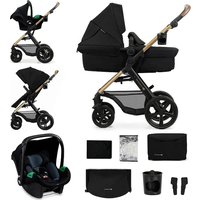
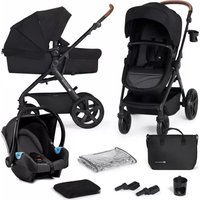
I. ELEMENTS OF THE STROLLER
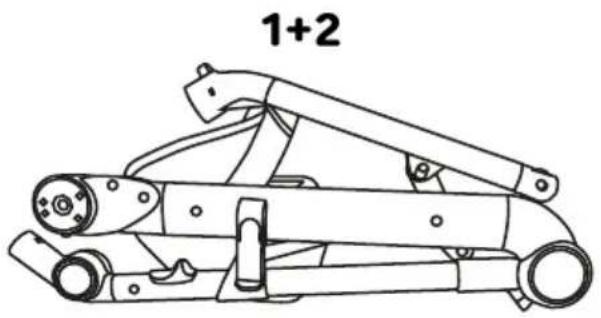
- Frame with a basket (2)
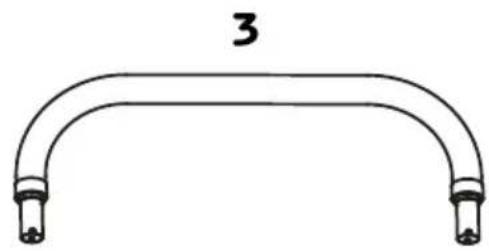
- Parent handle
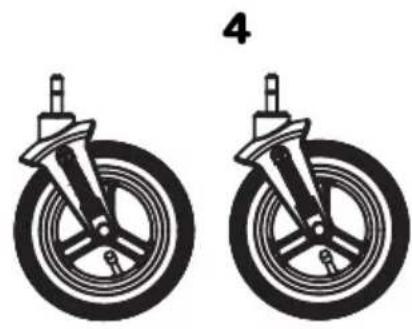
- Front wheels x2
- Rear wheels x2
- Safety bar
- Seat/carrycot 2in1
- Part of the frame (seat/carrycot)
-
Canopy
-
Cover for feet
- Car seat adapters x2
- Bag and strap with fasteners for mounting on pushchair frame(13)
- Mattress
- Cup holder
- Rain cover
- Mosquito net
II. INSTALLATION OF THE STROLLER'S FRAME
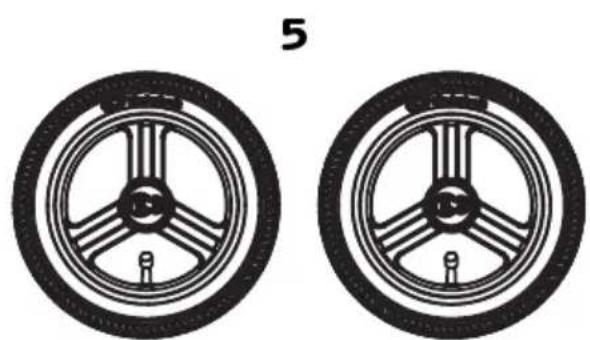
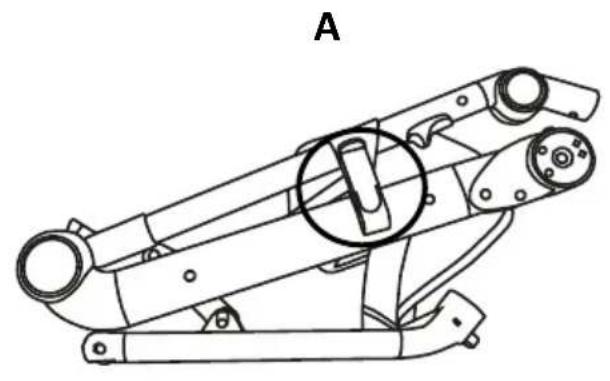
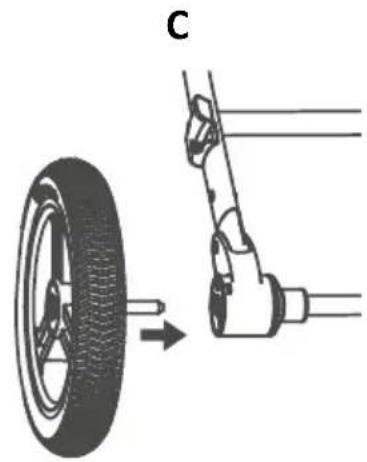
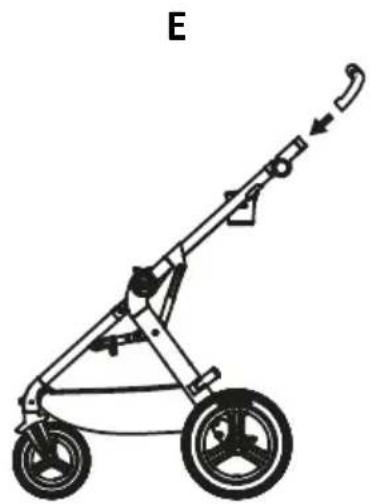
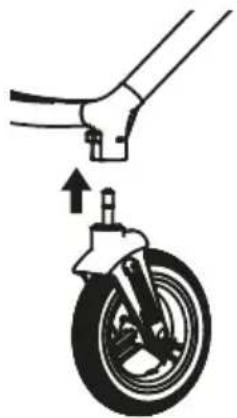
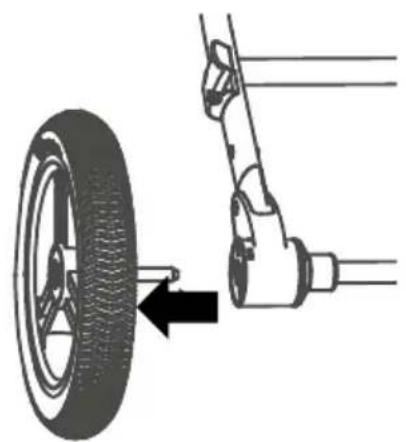
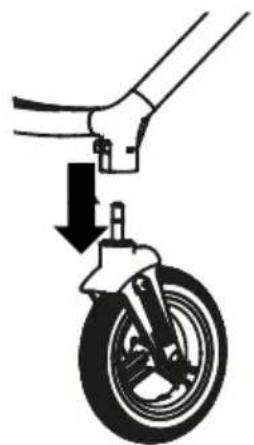
In order to pre-unfold the frame (1) with a basket (2), unlock the hook (Fig. A), and then simultaneously pull both free ends of the frame until you hear a lock click (Fig. B). Slide axles of rear wheels (5) into the appropriate holes until you hear a locking sound (Fig. C). Slide front wheels (4) into holes until you hear a lock click (Fig. D). Slide ends of the parent handle (3) into free ends of the frame (Fig. E). Make sure that latches are secured.
WARNING! The buggy has pumped wheels. Do not exceed the maximum permissible pressure in the wheels, the value is indicated on the wheel tyres.
WARNING! Before using the buggy, make sure that all the wheels are properly installed.
III. INSTALLATION OF THE PRAM BODY
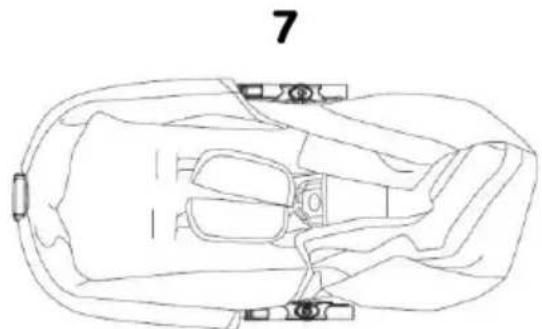
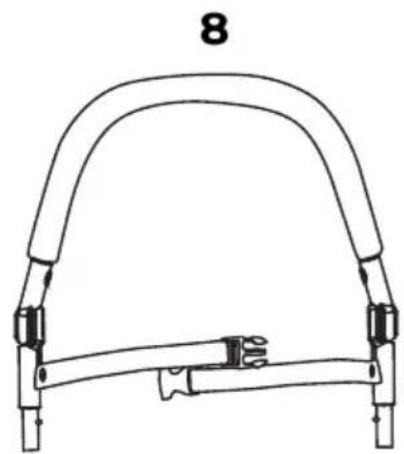
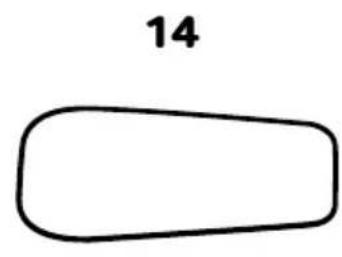
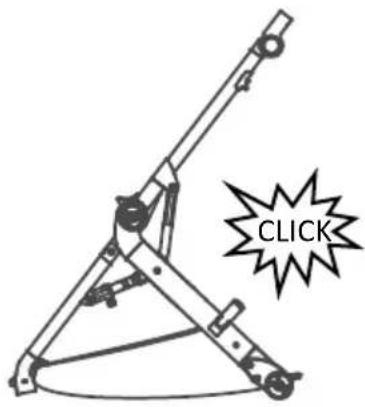
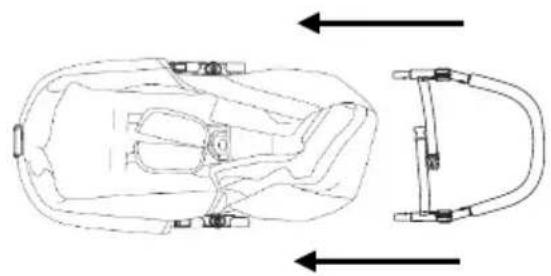
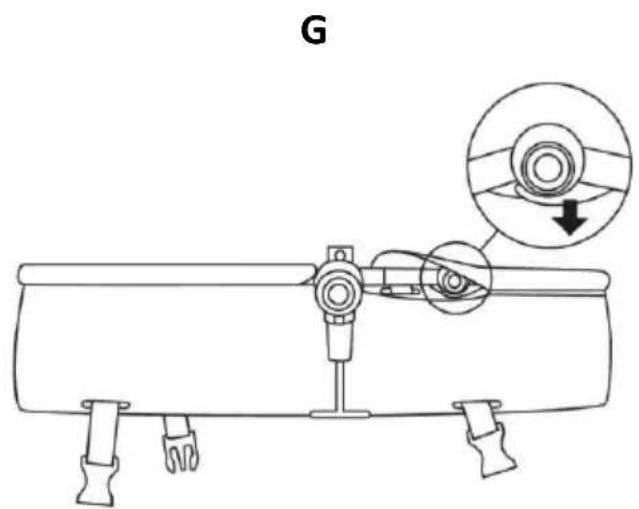
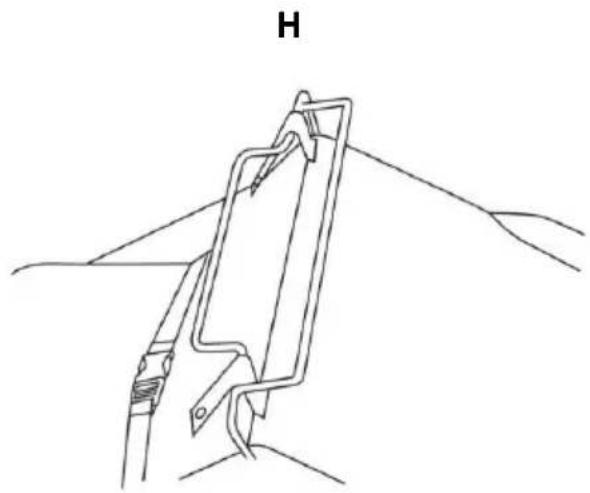
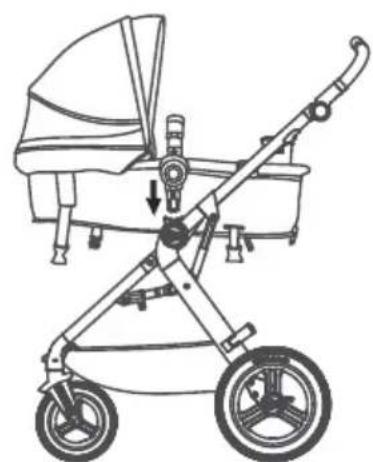
Start the assembly of the carrycot by inserting the loose part of the frame (8) into holes in the carrycot (7) (Fig. F). Make sure that latches are secured. Then put straps located on the loose part of the frame through holes in the carrycot/seat cover and close the zipper around the perimeter of the attached part (Fig. G). Set the bar under the carrycot with the use of straps and secure with snap fasteners (Fig. H). The carrycot can now be secured to the stroller's frame (you will hear a locking sound on both sides of the stroller) (Fig. I). When using the stroller (carrycot version), straps on the sides of the seat (2 on the left side and 2 on the right side) and under the footrest must remain unfastened. NOTE! Shoulder straps, lap straps and the crotch strap must be removed through holes located in the seat. The disassembly of the belts is described in chapter XI. Place the mattress (14) in the carrycot. NOTE! When the child starts to sit independently, attach an additional harness to the attachment points shown in the picture (Fig. J).
WARNING! THE PRAM BODY CAN ONLY BE MOUNTED FACING BACKWARDS (the child faces the person pushing the buggy).
IV. ASSEMBLY/DISASSEMBLY OF THE SAFETY BAR, SHADE, COVER FOR LEGS AND CUP HOLDER
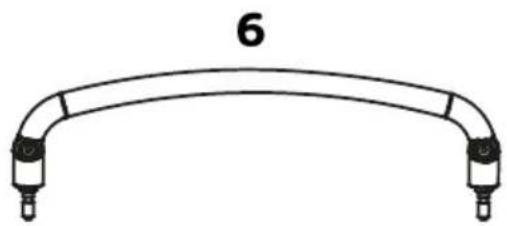
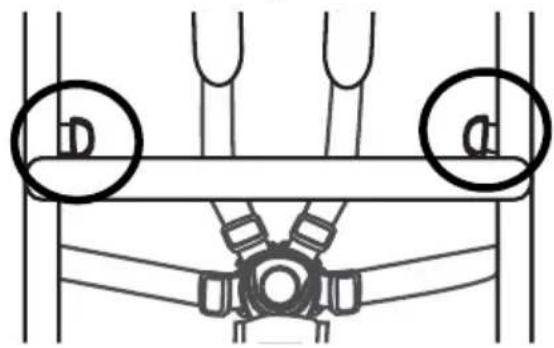
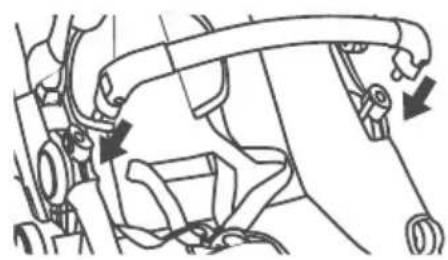
The safety bar (6) can be used in both the carrycot and buggy versions. Slide ends of the safety bar into the adequate holes until you hear a lock click on both sides (Fig. K). The safety bar can be partially or fully detached from the frame by pressing a button on its side/sides.
NOTE! INSTALL THE CANOPY BEFORE USING THE BUGGY
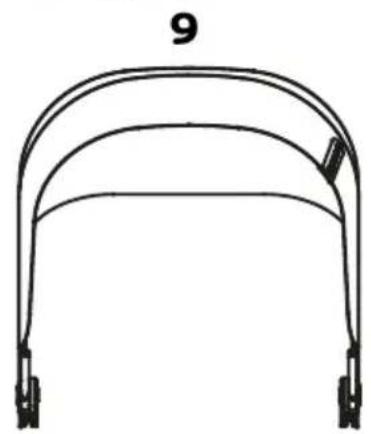
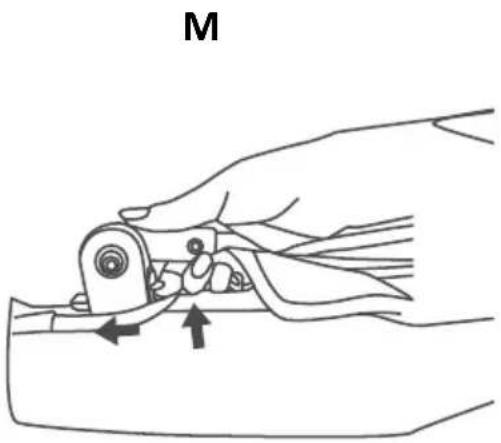
Start the installation of the shade (9) by sliding plastic fasteners over the rails on the carrycot/seat frame (Fig. L). Correct fixing is signaled with a gentle click. Finally, secure the shade with Velcro fasteners and snap fasteners – fastening them to the carrycot/seat. In order to disassemble the shade, press buttons (Fig. M) and remove the fasteners from guides.
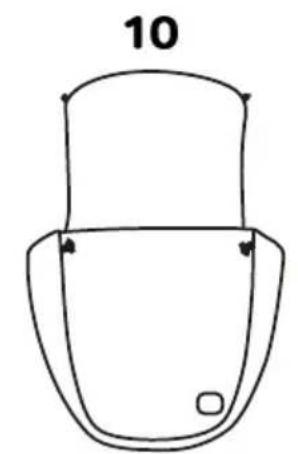
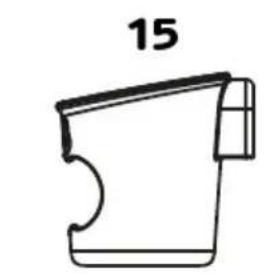
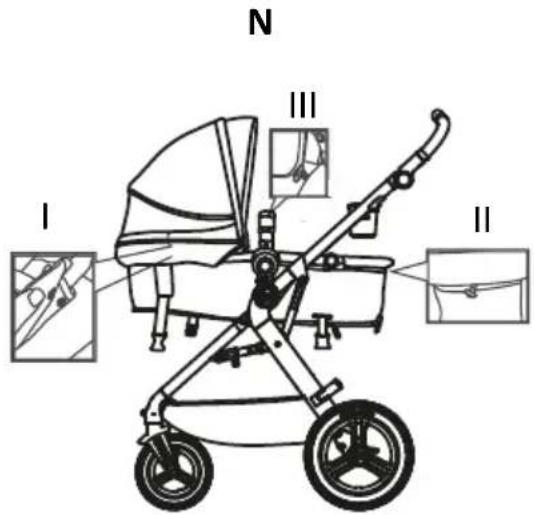
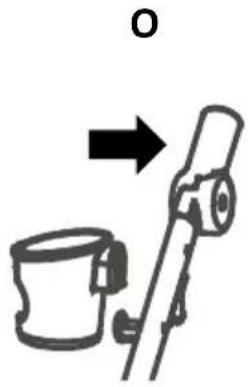
Start the assembly of the leg cover (10) by inserting the cover and then fastening both sides of the cover with sheathing using snap fasteners – as shown in Figures N-I. Put the button through the loop on the sheathing and then wrap the cover on both sides of the safety bar and secure with buttons (Figures N-II and N-III). The cup holder (15) can be mounted on the right side of the stroller – on a spindle (Fig. O).
V. TRANSFORMING A PRAM BODY INTO A SEAT
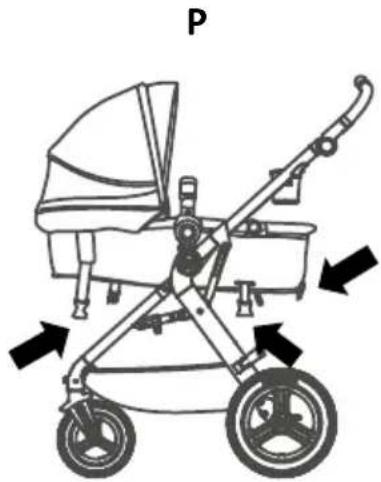
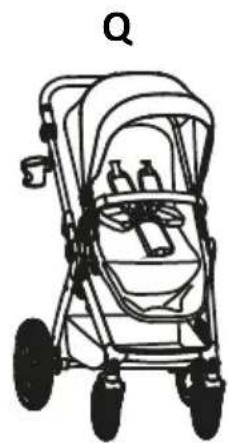
In order to transform the carrycot into the seat, first connect ends of the removed straps behind the backrest under the seat and under the footrest (Fig. P). After the correct fastening of belts, the seat should look as shown in Figure Q (the method for adjusting the seat angle is described in chapter X). The should/lap straps and the crotch strap should be fitted (assembly/disassembly of the straps is described in chapter XI).
VI. ASSEMBLY OF THE BAG, MOSQUITO NET AND RAIN COVER
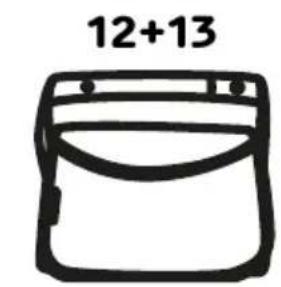
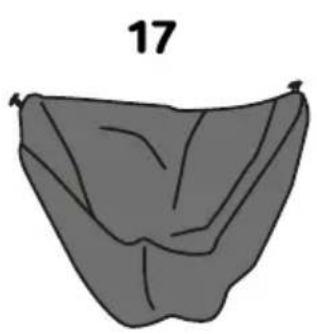
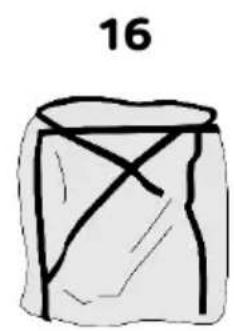
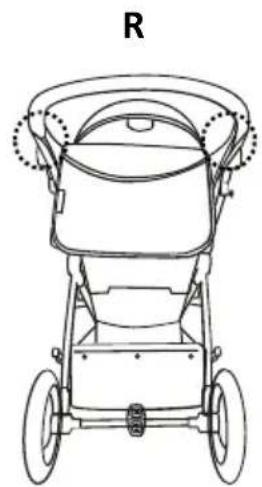
The stroller's set includes: a bag (12) and strap with fasteners for mounting on pushchair frame(13), a rain cover (16) and a mosquito net (17). Hang the bag on the parent's handle and secure with fasteners (Fig. R).
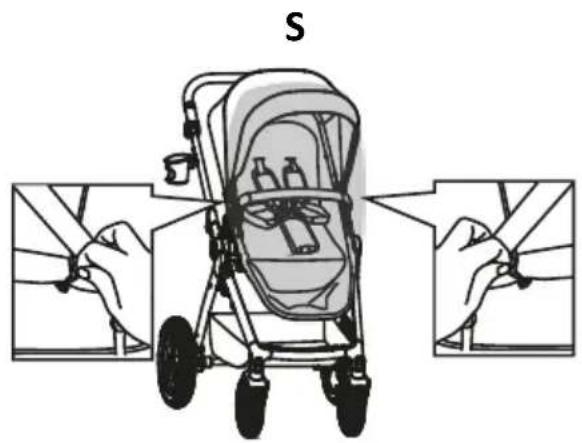
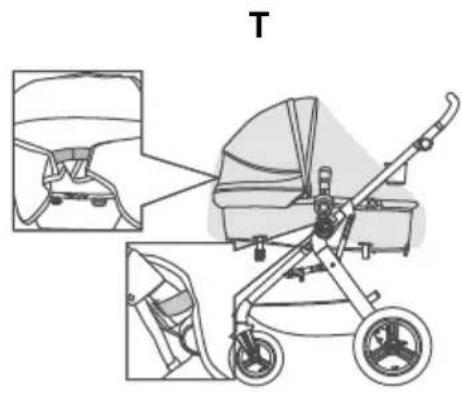
Install and secure the mosquito net by inserting buttons through loops (Fig. S). Place the rain cover over the stroller and secure it with Velcro fasteners to the back and side of the backrest (Fig. T).
VII. ASSEMBLY/DISASSEMBLY OF THE CAR SEAT
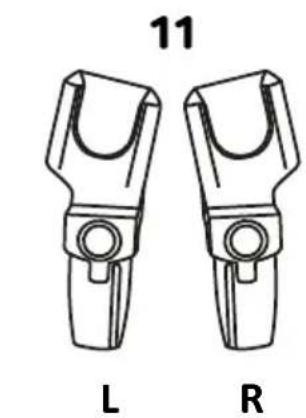
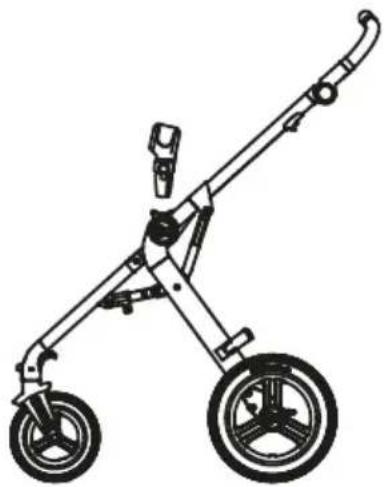
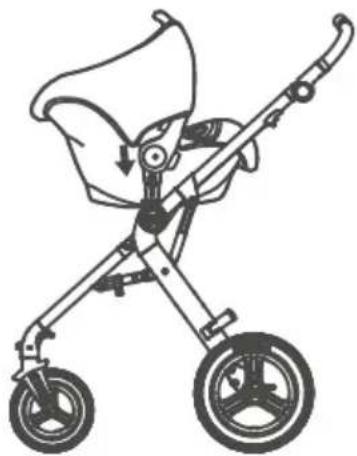
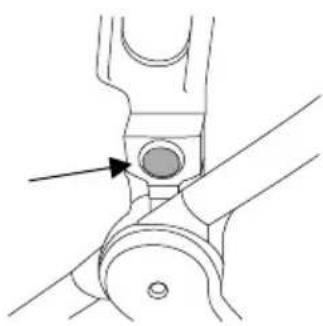
Slide adapters (11) into the holes in the frame until you hear a locking sound (Fig. U). The adapters should be slightly tilted towards the parent. Slide the seat onto adapters and make sure that it is properly secured. The stroller along with a seat is shown in Figure V. To remove the adapters from the stroller, press lock buttons on each of adapters (Fig. W).
WARNING! The car seat must be always placed on the frame back to the direction of travel (the child should face the person pushing the buggy).
The stroller is equipped with a foot parking brake on the rear axle. Press the brake pedal downwards to activate the brake. To unlock, lift the pedal up (Fig. X).
IX. DISASSEMBLY OF THE STROLLER
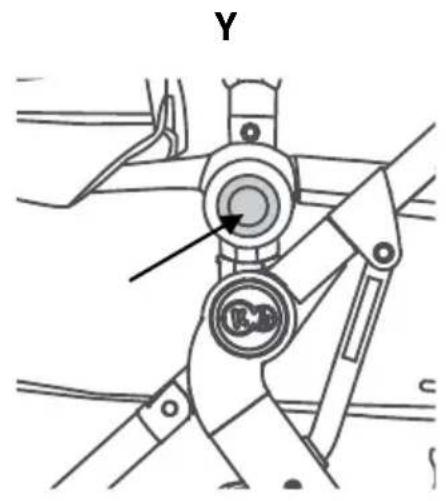
In order to disassemble the carrycot/seat from the frame, press buttons on both sides (placing your fingers on the bottom of buttons as shown in the picture (Fig. Y)) and lift the carrycot/seat. After removing the carrycot/seat or the car seat, rotate the cup holder to the side, push the button and simultaneously pull levers on both sides of the frame.
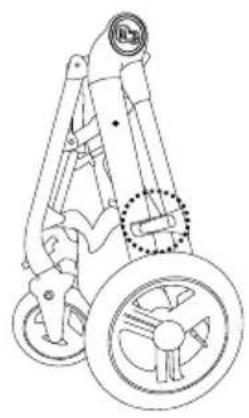
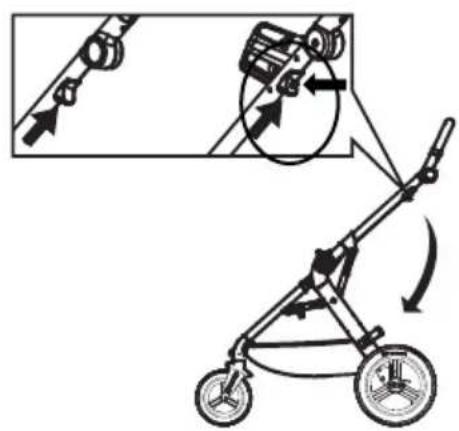
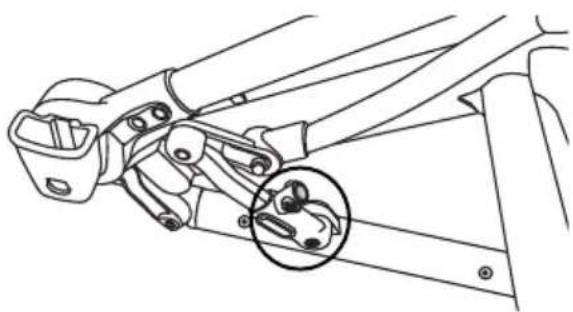
Finally, push the parent handle down (Fig. Z). Correctly assembled frame should be secured with the lock on the side (Fig. AA). If necessary, front (Fig. BB) and rear (Fig. CC) wheels can be detached from the frame by pressing buttons. It is possible to minimize dimensions of the stroller after folding. To do this, press buttons on both sides of the frame – as shown in the figure (Fig. DD).
The carrycot/seat sheathing can be removed for washing. In the first step, remove the shade (see point IV). Then, unfasten two zippers, remove side straps from the sheathing (located in the area of child's legs) and unfasten snaps under the carrycot/seat. In the next step, remove shoulder/lap strap and the crotch strap, as well as remove the stiffening insert from the seat.
X. ADJUSTMENT OF THE STROLLER
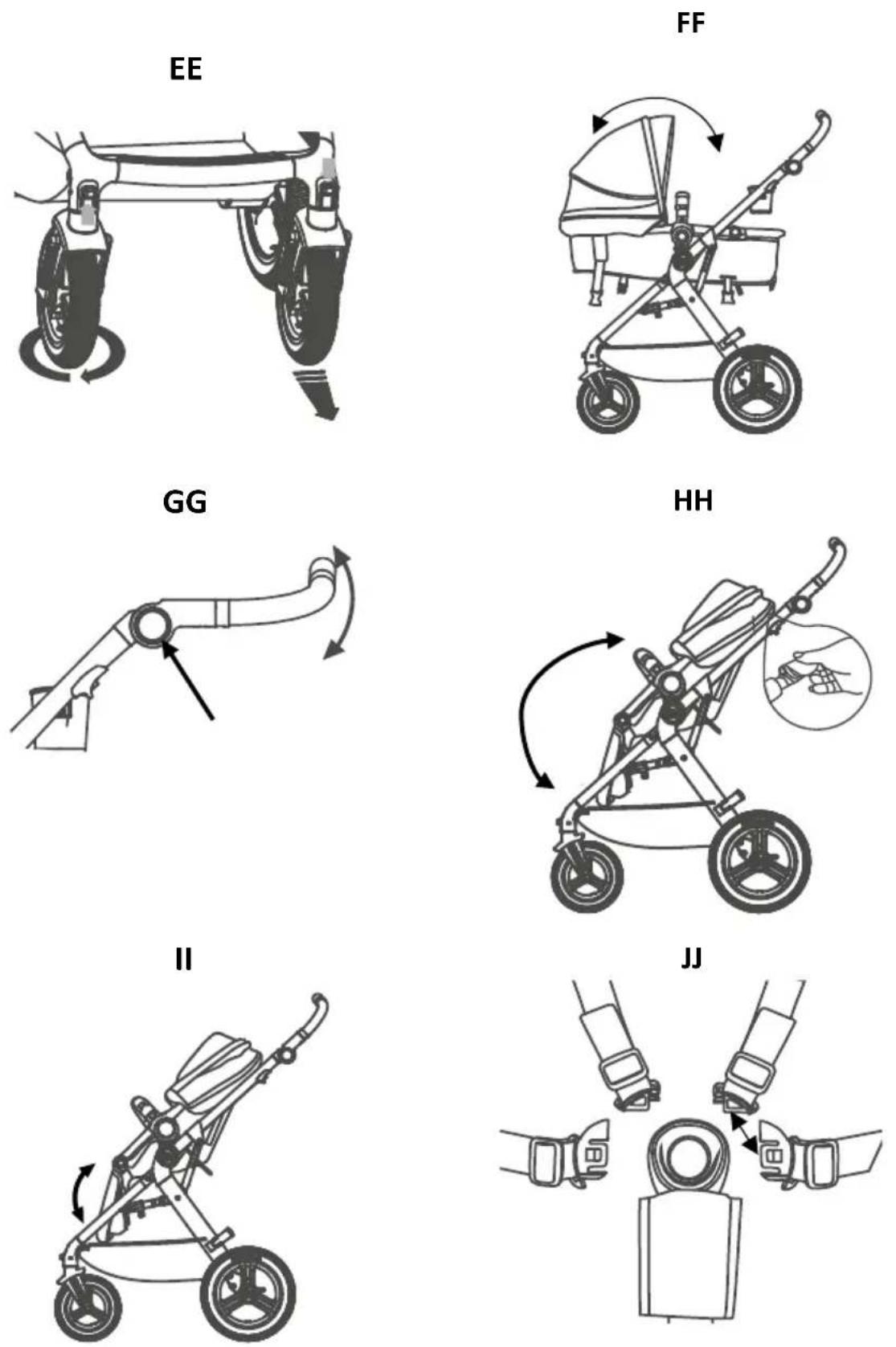
Front wheels of the stroller can be locked for driving straight ahead. Enable this mode by lowering the lock sliders (Fig. EE). Pull sliders upwards to unlock front wheels. The shade can be enlarged by opening the zipper on the outer side of the sheathing (Fig. FF).
To adjust the parent handle, press lock buttons on both sides of the stroller and adjust the handle to a comfortable height (Fig. GG).
The angle of the seat can be adjusted with the lever located on the top of the backrest (Fig. HH). The seat has 2 positions: reclining and sitting.
The footrest can be adjusted in one of two positions – simultaneously press buttons on both sides of the footrest (Fig. II). The seat can be adjusted in order to ensure that the child is facing the parent or the direction of travel. To do this, press buttons on both sides of the seat, move buttons and push them back until you hear a click.
XI. SAFETY BELTS
To secure your child, connect the lap and shoulder belt hooks and slide them into the center buckle until they click into place (Fig. JJ). Safety belts should be adjusted each time in order to ensure that the child is properly secured.
Unfastening the belts should be started by pressing the button in order to open the buckle.
For the smallest children, who cannot sit up independently, belts (in a carrycot version) should be disassembled. The seat/carrycot has attachment points for an additional harness.
Safety belts can be installed/disassembled. For assembly/disassembly, put shoulder straps, lap straps and the crotch strap through holes in the seat. Shoulder straps can be mounted in one of two heights.
XII. CARE AND MAINTENANCE
The buyer is responsible for proper installation of all functional elements as well as for carrying out all required maintenance and adjustments in order to keep the buggy in good technical condition.
The buggy must be periodically checked for potential problems. Significant measures to be applied to ensure the child's safety and prevent shortening of the product life have been presented below:
- Check the strength and safety of all rivets and connections.
- Check all wheel locking equipment and tyres. If necessary, replace or repair.
- Check if all safety devices work properly, particularly the main and additional fasteners that should move freely at any time.
Please, stop using the buggy if there are doubts as to its proper use or a suspicion of any danger.
If the wheels squeak, apply a thin layer of silicone. Do not use oil or grease based products as they attract dirt, which makes buggy movement difficult.
XIII. CLEANING
If the elements of the buggy chassis have been exposed to saltwater, rinse with tap water as soon as possible.
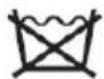
Do not wash. Clean the product gently with a damp cloth and a mild detergent

Hand wash at max. 40°.

Wash at max. 30°C, gentle process

Do not dry in a tumble dryer

Do not bleach

Do not dry clean

Do not iron
Do not fold or store the product when it is wet and never store it in wet conditions, as it can lead to mould growth.
Sheathing of the carrycot/seat – Do not wash. The product can be washed gently with a damp cloth and a mild detergent. Do not tumble dry. Do not clean chemically. Do not iron. Do not bleach.
Mattress - Hand wash at max. 40°. Do not tumble dry. Do not clean chemically. Do not iron. Do not bleach.
Shade, Basket, Rain cover – Do not wash. The product can be washed gently with a damp cloth and a mild detergent. Do not tumble dry. Do not clean chemically. Do not iron. Do not bleach.
Footcover, bag – Machine was at max. 30°C, gentle process. Do not bleach. Do not iron. Do not tumble dry. Do not clean chemically.
Mosquito net - Hand wash at max. 40°. Do not tumble dry. Do not clean chemically. Do not iron. Do not bleach.
XIV. WARRANTY
The full text of the Terms and Conditions of the Warranty is available on the website WWW.KINDERKRAFT.COM
ES
ESTIMADO CLIENTE!
International contact:
support@kinderkraft.com
+44 20 4525 0748
بستع/VÝROBCE/HERSTELLER/MANUFACTURER/FABRICANTE/FABRICANT/CYARTÓ/FABBRICANTE/FABRIKANT/PRODUCENT/FABRICANTE/PRODUCÁTOR/ПРОИЗВОДИТЕЛЬ/ÝROBCA/TILLVERKARE: