
BF 43-2 - Grass trimmer ATIKA - Free user manual and instructions
Find the device manual for free BF 43-2 ATIKA in PDF.


| Product type | Grass trimmer / Brush cutter petrol |
| Brand | ATIKA |
| Model | BF 43-2 |
| Max. engine power | 1.2 kW (1.63 PS) |
| Displacement | 42.7 cm³ |
| Max. engine speed | 7500 min⁻¹ |
| Max. spool speed | 6600 min⁻¹ |
| Max. blade speed | 7100 min⁻¹ |
| Cutting diameter (spool) | 440 mm |
| Cutting diameter (blade) | 255 mm |
| Line diameter | 2.5 mm |
| Line length | 2.5 m |
| Fuel tank capacity | 1.2 L |
| Petrol/oil mixture ratio | 40:1 |
| Weight (without fuel, tool or guard) | 7.1 kg |
| Weight (brush cutter configuration) | 8.1 kg |
| Weight (grass trimmer configuration) | 7.9 kg |
| Recommended spark plug | BOSCH L8RTF (or equivalent BM6A) |
| Electrode gap | 0.6–0.7 mm |
| Vibration (hand-arm) | 9.661 m/s² |
| Sound pressure level (grass trimmer, full load) | 99.5 dB(A) |
| Guaranteed sound power level | 113 dB(A) |
| Ignition | Electronic |
| Clutch | Centrifugal |
| Functions | Grass trimmer and brush cutter (interchangeable blade) |
| Included accessories | Cutting blade, spool of line, harness, guard, assembly tools, mixing container |
Frequently Asked Questions - BF 43-2 ATIKA
User questions about BF 43-2 ATIKA
0 question about this device. Answer the ones you know or ask your own.
Ask a new question about this device
Download the instructions for your Grass trimmer in PDF format for free! Find your manual BF 43-2 - ATIKA and take your electronic device back in hand. On this page are published all the documents necessary for the use of your device. BF 43-2 by ATIKA.
USER MANUAL BF 43-2 ATIKA
Original instructions – Safety instructions – Spare parts
Do not operate machine before having read the operating instructions, understood all the notes and assembly the machine as described here.
Keep the instructions in a safe place for future use.
Contents
| Extent of delivery | 18 |
| EC Declaration of Conformity | 18 |
| Symbols on the device | 19 |
| Symbols original instructions | 19 |
| Operating times | 19 |
| Proper use | 19 |
| Residual risks | 20 |
| Hand- Arm Vibrations | 20 |
| Safety instructions | 20 |
| - Personal protective equipment | 21 |
| - Safety instructions – before working | 21 |
| - Safety instructions – operating | 21 |
| - Safety instructions – while working | 22 |
| - General safety instructions | 22 |
| - Behaviour in an emergency situation | 22 |
| - Safe handling of fuels | 22 |
| Description of device / spare parts | 22 |
| Assembly | 23 |
| - Mounting the protective hood | 23 |
| - Thread knife assembly | 23 |
| - Assembling / Disassembling the drive unit / lower tube shaft | 23 |
| - Mounting the handle | 23 |
| - Fixing the carrying strap | 23 |
| - Mounting / Removing the thread spool | 23 |
| - Mounting / Removing the cutting blade | 24 |
| Before the first start-up | 24 |
| Preparing for start-up | 24 |
| - Fuelling | 24 |
| - Mixing | 24 |
| - Fuelling of the device | 24 |
| Start-up | 25 |
| - Starting the machine | 25 |
| - Starting with cold engine | 25 |
| - Stopping the engine | 25 |
| - Stopping the engine in an emergency | 25 |
| - Starting with warm engine | 25 |
| Work instructions | 25 |
| - Working with brush cutter | 26 |
| - Working with the gras trimmer | 26 |
| Maintenance and care | 26 |
| - Maintenance | 27 |
| - Replacing the thread spool roll | 27 |
| - Sharpening or replacing the thread knife | 27 |
| - Cutting blade | 27 |
| - Cleaning the air filter | 27 |
| - Checking / replacing the fuel filter | 28 |
| - Checking / replacing the spark plug | 28 |
| - Checking the ignition spark | 28 |
| - Silencer / exhaust outlet | 28 |
| - Lubricate the gearbox | 28 |
| - Checking or adjusting the idle speed | 28 |
| - Cleaning | 28 |
| Transport | 29 |
| Storage | 29 |
| Technical data | 30 |
| Maintenance and cleaning schedule | 31 |
| Possible faults | 32 |
| Guarantee | 32 |
Extent of delivery
After unpacking, check the contents of the box
▶ for completeness
▶ for possible transport damage
Report any damage or missing items to your dealer, supplier or the manufacturer immediately. Complaints made at a later date will not be acknowledged.
- 1 drive unit with upper tube shaft, handle and safety switch
• 1 lower tube shaft with angular gear - 1 carrying strap
- 1 handle
- 1 safety guard
- 1 cutting blade
• 1 transport guard for cutting blade
- 1 thread spool
- 1 fuel mixing tank
- 1 accessories bag
• 1 assembly and operating instruction sheet
• 1 warranty declaration
• 1 original instructions
EC Declaration of Conformity
according to Directive 2006/42/EC
Altrad Lescha Atika GmbH Josef-Drexler-Str. 8, 89331 Burgau - Germany
declare under our sole responsibility, that the product
Benzin-Freischneider / Grastrimmer (Petrol-grass trimmer / brush cutter) model / type BF 43-2
Serial number: 000001 - 020000
is conform with the above mentioned EC directives as well as with the provisions of the guidelines below: 2014/30/EC and 2000/14/EC.
Conformity assessment procedure: 2000/14/EC - Appendix V. Measured sound power level LWA 107.7 dB (A). Guaranteed sound power level LWA 113 dB (A).
The following harmonized standards have been applied: EN ISO 11806-1:2011, EN ISO 14982:2009
EK9-BE-55 (v2):2020, EK9-BE-56 (v4):2020, EK9-BE-98 (v2):2020
Duly authorised person for the compilation of technical documents:
Altrad Lescha Atika GmbH - Technical department Josef-Drexler-Str. 8 - 89331 Burgau - Germany
ppa.
Burgau, 05.08.2021 ppa./G. Koppenstein Engineering design management
Symbols on the device
 | Carefully read the operator's manual before handling the machine. Observe instructions and safety rules when operating. |
 | Wear hard hat if there is a risk of falling parts.Wear hard hat, eye and ear protection. |
 | Wear protective gloves. |
 | Wear safety shoes. |
 | Keep children, bystanders and animals at a distance from your working area. Safety distance at least 15 m. |
 | Be aware of kickback. |
 | Make sure that the cutting head cannot contact any foreign objects during starting and operation. |
 | Danger - objects may be thrown out at high speed. |
 | Risk of injury at feet by contact with the cutting tool at a no-covered area. |
 | Petrol and oil are a fire hazard and can explode.Fire, open light and smoking are prohibited. |
 | max. speed of thread spool 6600 rpm |
 | max. speed of cutting blade 7100 rpm |
 | Warning of hot surfaces.Danger of burning! |
 | Do not touch hot engine parts. Such parts may remain hot for a short time even after the machine has been stopped. |
 | Fuel mixture 40:1 |
 | Engine switched off: stopEngine started: ↑ |
 | Starting position: Choke position for "cold start" |
 | Operating position: Choke position for "warm start and working" |
 | This product complies with European regulations specifically applicable to it. |
Symbols original instructions
 | Threatened hazard or hazardous situation. Not observing this instruction can lead to injuries or cause damage to property. |
 | Important information on proper handling. Not observing this instruction can lead to faults. |
 | User information. This information helps you to use all the functions optimally. |
 | Assembly, operation and servicing. Explanation of what exactly needs to be done. |
 | Important notes for environmentally compatible conduct. Failure to observe these instructions may lead to environmental damage. |
  | Please refer to the attached assembly and operating instruction sheet for references to figure numbers in the text. |
Operating hours
Before initiating the device please observe the provisions pertaining to corresponding laws (regional provisions) for the noise control.
Proper use
- This brush cutter may only be used for mowing grass and for cutting shrubbery and brushwood in private households.
- This grass trimmer is designed for cutting grass and similar soft vegetation and for trimming lawn edges in private and hobby garden areas which are not accessible with a lawnmower.
- The device is not allowed to be used in public gardens, parks, sports centres or at roadsides as well as in agriculture and forestry.
- This brush cutter/ grass trimmer is not allowed to be used for cutting or chopping:
— hedges, shrubs and bushes,
- flowers,
– in terms of composting.
Otherwise, there is a risk of injury.
- The intended usage also includes compliance with the assembly, operating, servicing and repair conditions prescribed by the manufacturer and following the safety instructions included in the instructions.
- Any other use is deemed not to be use as prescribed. The manufacturer is not liable for any type of damage resulting from this: the user bears the sole risk.
-
Unauthorised modifications at the lawn trimmer will exempt the manufacturer from any liability for damages of any kind arising from this.
-
Only persons who are familiar with the device and informed about possible risks are allowed to prepare, operate and service this device. Repair work may only be carried out by us or a customer service agent authorised by us.
- The machine may not be used in a potentially explosive environment or be exposed to rain.
Residual risks
Even if used properly, residual risks can exist even if the relevant safety regulations are complied with due to the design determined by the intended purpose.
Residual risks can be minimised if the "Safety information" and the "Intended usage" as well as the whole of the operating instructions are observed.
Observing these instructions and taking proper care will reduce the risk of personal injury or damage to the equipment.
- Warning! This device generates an electromagnetic field during operation. Such a field may affect active or passive medical implants under certain circumstances. To reduce the risk of serious injuries we recommend persons who carry medical implants to consult their doctor and the manufacturer of the medical implant before operating this device.
- Health impairment resulting from exposure to hand arm vibration if the machine is used too long or is not properly guided and maintained.
- Risk of injuries of fingers and hands by contact with the rotating cutting tool.
- Risk of injury at feet by contact with the cutting tool at a no-covered area.
• Stones and soil may be thrown off. - Impairment of hearing when working on the machine for longer periods of time without ear protection.
Information on how to avoid noise:
Some noise exposure from this machine is unavoidable. Schedule noisy work to times during which it is allowed. Respect all rest times and restrict the work duration to the minimum. You as the operator and bystanders should wear a suited hearing protection.
- Burning when touching hot parts.
- Carbon monoxide poisoning when using the device in closed or poorly ventilated rooms.
- Fire danger
In addition, in spite of all the precautionary measures taken, non-obvious residual risks can still exist
Vibrations (hand arm vibrations)
Vibration: ahveq = 9.661 m/s²
Measuring uncertainty K = 1.5 m/s ^4
Warning!
The actual vibration emission level during the use of the machine may differ from that indicated in the operating instructions or indicated by the manufacturer. This may be caused by the following factors to be minded before and during the use:
– Proper use of the machine
– Correct operation of the machine
– Proper condition of the machine for use
– Sharpness and correct assembly of the cutting tools
- Proper assembly of the operating handles on the machine body
When working for extended periods, vibrations in the hands of the operator may impede the flow of blood (white finger syndrome).
The white finger syndrome is a disease of the vessels where the small blood vessels on fingers and toes suddenly start to cramp. The affected areas are no longer sufficiently supplied with blood and appear extremely pale as a result. The frequent use of vibrating devices may cause nerve damage in persons with impaired blood circulation (e.g., smokers, diabetics).
When you feel uncomfortable or notice discoloration of skin on your hands during the use of the machine, stop working immediately. Observe sufficient break times to rest. Failure to have sufficient break times may result in a hand-arm vibration syndrome.
The extent of exposure depending on the type of work or machine use should be estimated and appropriate breaks taken. In this way, the extent of exposure can be considerably reduced over the entire work time. Minimise the risk caused by vibrations. Maintain this machine according to the instructions in the manual.
Avoid the use of this machine at temperatures under 10^ C. Create a work schedule in order to minimise vibration exposure.
Safety instructions
Observe the following advice in order to protect yourself and other persons against possible injuries.
Before starting this device, read and keep to the following advice. Also observe the preventive regulations of your professional association and the safety provisions applicable in the respective country, in order to protect yourself and others from possible injury.
National regulations can restrict the use of this machine.
Pass the safety instructions on to all persons who work with the machine.
i Keep the instructions in a safe place for future use.
- Make yourself familiar with the equipment before using it, by reading and understanding the operating instructions.
- Do not use the machine for unsuitable purposes (see "Normal intended use").
- Be attentive. Be careful what you do. Behave sensibly when working. Do not use the device when you are tired, sick or under the influence of drugs, alcohol or medicaments. One moment of carelessness when using the device can result in serious injuries.
- Children and young persons under 16 years of age as well as persons who have not read the instruction manual are not allowed to operate this product.
Personal protective equipment
- Never work without suited protective equipment:
- Do not wear loose-fitting clothes or jewellery; they could be caught by movable parts.
— Wear a hair-net if your hair is long - Certificated hardhat in situations where injuries to the head must be expected (e.g. when chopping or releasing trees).
- Visor
- Ear protection
- Protective jacket with striking colour
– Cut-proof trousers and gloves - ⚠️ When using the brush cutter, slip-resistant boots (safety boots) with cut protection and protective toe caps as well as gloves with cut protection must be used.
- Slip-resistant shoes are permitted when used as grass trimmer.
– Fire extinguisher and spade (sparks may occur during working) - First-aid material
- Mobile telephone if required
Safety instructions – before working
Carry out the following checks before the initiation and regularly during the working process. Observe the relevant sections in the operating instruction manual:
• Is the device assembled completely and properly?
• Is the device in good and safe condition?
- Are the handles clean and dry?
- Check to make sure the cutting unit stops while the motor is idling.
- Check the machine for loose fasteners, fuel leakage and damaged parts such as cracks in the tool.
• Before starting your work make sure that:
- no other persons, children or animals stay within the working area,
– you can always step back without any barriers, -
your standing area is free from foreign objects, brushwood and branches,
— you always have a secure standing position. -
Is the workplace free of risks to stumble? Keep your workplace in an orderly condition! Untidiness can result in accidents. Risk of stumbling.
-
Before trimming, remove all foreign objects (e.g. stones, branches, wires, etc.). While working watch out for further foreign objects.
• Take into consideration environmental influences: -
Do not work under insufficient light conditions (e.g. fog, rain, snow flurry or twilight). If you can no longer see details within the falling area – risk of accident.
- Do not use the device near inflammable liquids or gases - Risk of fire.
- The operator is responsible for accidents or risks which occur to other persons or their properties.
Safety instructions - operation
- Never saw with only one hand. Hold the device always firmly with both hands.
- Never work
– with stretched arms
— on hardly accessible places above shoulder height
— standing on a ladder, a staging or a tree.
• Always work on non-skid and flat ground.
Avoid abnormal posture. Provide a safe standing position and keep at any time the balance.
Always use the carrying strep supplied.
- Change your working posture from time to time. Observe sufficient break times to rest.
- To have a break stop the machine and place it so that nobody is at risk. Secure the device against unauthorized access.
Safety instruction – while working
- Never work alone. Keep acoustic and visual contact to other persons at all times to allow immediate first aid in emergency cases.
- Risk to third parties! Keep children, bystanders and animals away from your working area. Make sure that a distance of at least 15 m to the machine is observed during operation.
- Immediately stop the engine at imminent danger or in emergency cases
- Never leave the device running unattended.
- This petrol grass trimmer produces harmful substances! Never run the device in closed or poorly ventilated rooms. Provide for a sufficient

change of air when working in wells, trenches or confined spaces. There is the risk of carbon monoxide poisoning or death by suffocation.
- Immediately stop working when you feel unwell (e.g. headache, dizziness, nausea, etc.). Otherwise there is an increased risk of accidents.
- Make sure that the cutting tool is free before starting the engine.
- Before starting the engine, make sure that your hands and feet are kept at a safe distance to the cutting tool.
- Caution! The cutting tool may after-run. Do not try to slow it down by hand.
- Start cutting only when the cutting tool has reached the full rotational speed.
- Do not overload the machine! You work better and safer in the given performance range.
• Take breaks when working so that the engine can cool down. - Do not place a hot machine in dry grass or onto inflammable objects.
- Never touch the silencer and the engine while the machine is running or shortly after it was stopped. Danger of burning!
- Never bring the cutting tool in contact with rigid objects (stones, trunks).
General safety instructions
- Stop the machine and remove the spark plug connector from the spark plug when
– the cutting tool comes in contact with stones, nails or other foreign objects
– carrying out repair works
- maintenance and cleaning
- removal of faults
- transport and storage
– replacing the cutting tool
– Leaving the machine (also during temporary interruption)
- Maintain the machine carefully:
- Follow the maintenance instructions and the instructions for tool exchange.
- Keep the handholds dry and free from resin, oil and grease.
- Always keep the machine including tool in a good condition.
- Make sure to check the machine before any use and after dropping or other impacts to ensure that it is in a proper condition.
- Check the machine for possible damage:
- Before continuing to use the machine, the protective devices must be inspected to ensure that they work perfectly and with their intended function. Only operate the machine with complete and correctly attached safety equipment and do not alter anything on the machine that could impair the safety.
- Check whether the movable parts function perfectly and do not stick or whether the parts are damaged. All parts must be correctly installed and fulfil all conditions to ensure perfect operation.
- Damaged guards and parts must be properly repaired or exchanged by a recognized, specialist workshop; insofar as nothing else is stated in the instructions for use.
– Damaged or illegible security labels have to be replaced.
- Do not allow any tool key to be plugged in! Before switching on, check always that all tools are removed.
- Store unused equipment in a dry, locked place out of the reach of children.
- Note that a failure to maintain the unit properly, any use of non-conform spare parts or a removal / modification of safety devices can result in damages to the machine and to serious injuries of the person who works with it.
Do not carry out repair operations on the machine other than those described in section "Maintenance and care" but contact the manufacturer or authorized customer service centre.
⚠ Use only original spare parts. Accidents can arise for the user through the use of other spare parts. The manufacturer is not liable for any damage or injury resulting from such action.
Behaviour in an emergency situation
- Initiate all required first aid measures suited for the injury and seek qualified medical advice as quickly as possible.
- Protect the injured person against further injuries and immobilise the injured person.
Safety instructions - Safe handling of fuels

Fuels and fuel vapours are inflammable and may cause serious injury on the skin or when inhaled. Therefore be careful and provide sufficient ventilation when handling with fuels.
- Do not smoke and avoid open flames when fuelling.
- Wear gloves when fuelling.
-
Do not fuel in closed rooms.
-
Stop the device and allow it to cool down.
- Carefully close the tank cap after fuelling and check that it does not get loose during operation.
- Avoid spilling of fuel or oil. Clean the device immediately when you have spilled fuel or oil. Change your clothes immediately when you have spilled fuel or oil on them.
• Make sure that no fuel can enter the soil.
- Check that there is no leakage on the tank cap and fuel lines. If there are leaks this product may not be started.
- Never use a device with damaged ignition cable and spark plug connector. Risk of sparking.
• Transport and store fuels and oil
– only in containers approved and marked for this purpose.
– not close to combustible and highly flammable materials as well as sparks and open flames.
- Keep children away from fuels.
- Go away at least three meters from the fuelling place to start the device.

Description of device
Please refer to the attached assembly and operating instruction sheet.
| Pos. | Denomination | Order-No |
| 1 | Drive unit | |
| 2 | Lower tube shaft with angular gear | 385810 |
| 3 | Handle with safety switch | |
| 4 | Carrying strap | 385805 |
| 5 | Handle | 382826 |
| 6 | Safety guard | 385806 |
| 7 | Cutting blade | 385804 |
| 8 | Thread spool | 385803 |
| 8A | Thread spool roll | 385838 |
| 8B | Spool cover | 385839 |
| 8C | Washer | 385840 |
| 8B | Compression spring | 385837 |
| 9 | Fuel mixing can | 380786 |
| 10 | Locking handle | |
| 11 | Allen key, size 4 | |
| 12 | Allen key, size 5 | |
| 13 | Open-end wrench, size 8/10 | |
| 14 | Socket wrench | |
| 15 | Screwdriver | |
| 16 | Cable tie | |
| 17 | Gas cable | |
| 18 | Air filter cover | 385820 |
| 19 | Spark plug connector | |
| 20 | Silencer | |
| 21 | Cranking handle | |
| 22 | Fuel tank | 385814 |
| 23 | Tank cap | 385817 |
| 24 | Choke lever | |
| 25 | Priming pump | |
| 26 | Suspension eye | 385825 |
| 27 | Angular gear | |
| 28 | Safety guard holder | 385807 |
| 29 | Thread knife | 385808 |
| 30 | Safety handle | |
| 31 | Throttle lever lock | |
| 32 | Cold start switch | |
| 33 | ON/OFF switch | |
| 34 | Throttle lever | |
| 35 | Operating instruction manual | 385800 |
| 36 | Assembly and operating instruction sheet | 385801 |
| 37 | Safety label | 385830 |
| 38 | Air filter cover | 385821 |
| 39 | Air filter | 385822 |
| 40 | Fuel filter | 385819 |
| 41 | Spark plug | 385841 |
| 42 | Hexagon nut | 385834 |
| 43 | Cover | 385833 |
| 44 | Spacer washer | 385832 |
| 45 | Thumb screw | 385835 |
| 46 | Accessories bag - fitting tools | |
| 47 | Transport guard for cutting blade | 385836 |
| 48 | Transport guard for thread knife | |
| 49 | Snap hook for the carrying strap | 385842 |
| A | Hexagon screw |
| B | Hexagon socket screw |
| C | Holder |
| D | Cylinder bore |
| E | Quick acting closure |
| F | Protective cap |
| G | Unlocking button |
| H | Screw |
| I | Handle holder |
| J | Screw |
| K | Strap end |
| L | Drive shaft |
| N | Bottom part of the spool |
| P | Screw M4x10 |
| Q | Grease nipple |

Assembly
Mounting the protective hood
5 Loosen the 4 hexagon nuts (A) on the safety guard holder (28) using the delivered open-end wrench (13) and Allen key (11). Loosen the hexagon socket screw (B) using the Allen key (11) and fold aside the holder (C).
6 Slide the safety guard (6) on its holder (28).
6 Fold the holder (C) down and retighten the 4 nuts (A) and the hexagon socket screw (B).
Thread knife assembly
27 Screw the thread knife (29) with the three screws M4x10 (P) as shown to the protective hood (6).
Do not overtighten the screws.
Assembling / Disassembling the drive unit / lower tube shaft
7 Loosen the thumb screw (45) on the drive unit (1). Pull off the protective cap (28).
8 Push the locking lever (10) down and slide the lower tube shaft (2) against the stop into the coupling at the drive unit (1) until it engages.
→ The hole (D) in the lower tube shaft (2) must hereby be exactly aligned with the unlocking button (G).
9 Release the locking lever (10) and tighten the thumb screw (45).
For dismantling, release the thumb screw (45), press the locking lever (10) down and pull of the lower tube shaft (2) from the drive unit (1).
Mounting the handle
10 Use the Allen key (11) to loosen the screws (H) of the handle holder. Plug the handles (3) and (5) up to the middle in the handle holder (I). Tighten the screws (H).
Adjust both handles to a convenient work position before starting the machine.
The handle holder can be adjusted to your body height in addition to the handle inclination. Loosen the screws (J) on the rear side of the handle holder using the Allen key (11) and move the handle holder to a position that is convenient for you. Tighten the screws (J).
→ Fix the throttle cable (17) on the drive unit (1) and on the handle (3) using the cable ties (16).
⚠️ Make sure when fastening that the throttle cable (17) is not twisted or kinked.
Fixing the carrying strap
11 Hook the carrying strap (4) in the suspension eye (26).
Make sure that the snap hook (49) of the carrying strap is assembled and hooked in as shown in figure .
Mounting the thread spool (grass trimmer)
12 Align the hole in the protective cape with the hole on the angular gear (27) and lock the drive shaft using the screwdriver (15).
12 13 Unscrew the hexagon nut (42) clockwise. Use the socket wrench (14) for this purpose. Remove the cover (43) and the spacer washer (44).
14 Screw the thread spool (8) counterclockwise on the drive shaft (L).
To this end, lock the drive shaft again in the angular gear (27) using the screwdriver (15).
Removing the thread spool
14 Align the hole in the protective cape with the hole on the angular gear (27) and lock the drive shaft using the screwdriver (15).
14 A Unscrew the thread spool (8) clockwise.
Mounting the cutting blade (brush cutter)
12 13 Remove the hexagon nut (42), cover (43) and the spacer disk (44) as described under "Assembling the thread spool".
→ 15 Put the cutting blade (7) on the drive shaft (L) followed by the spacer washer (44) and cover (43). Screw the hexagon nut (42) counterclockwise on the drive shaft.
16 Tighten the hexagon nut (42) using the socket wrench (14).
To this end, lock the drive shaft (L) in the angular gear (27) using the screwdriver (15).
Removing the cutting blades
16 To this end, lock the drive shaft (L) in the angular gear (27) using the screwdriver (15).
16 A Loosen the hexagon nut (42) clockwise using the socket wrench (14).
15 Remove the hexagon nut (42), cover (43) and the spacer disk (44) and the cutting blade (7).

Before the first start-up

The engine of the machine is supplied without gasoline and oil in it. Fuel the device as described under "Fuelling".

Preparing for start-up
Fuelling

Utmost care is required when handling fuel and oil. Do not smoke. Keep away open flames (risk of explosion).

This product is operated by a mixture from regular petrol (unleaded) and two-stroke engine oil.
Petrol: Octane number at least 91 ROZ unleaded
- Do not fill in leaded petrol, diesel or other non-approved fuels.
- Do not use petrol having a smaller octane number than 91 ROZ. This may lead to severe engine damages due to increased engine temperatures.
- If you frequently operate the product at high speeds, you should use petrol with a higher octane number.

The use of unleaded petrol is recommended for environmental protection reasons.
Two-stroke engine oil:
acc. to JASO FC or ISO EGD specifications
- Do only use two-stroke engine oil for air-cooled engines.
Do not use
- four-stroke oil or two-stroke oil for water-cooled outboard engines.
— mixtures ready for use from petrol stations.
Mixing
Ratio of mixture 40:1
| Petrol | Two-stroke engine oil |
| 1 litre | 0.025 litres |
| 2 litres | 0.050 litres |
| 5 litres | 0.125 litres |
| 10 litres | 0.250 litres |
- Measure the oil quantity accurately as a small deviation of it has a large effect on the ratio of mixture in particular for small fuel quantities.
- Do not change the ratio of mixture. This will lead to more residues of combustion, a higher fuel consumption, a decrease of output or damages to the engine.
i Mix petrol and oil in the supplied fuel mixing can (26).
- Fuels have only a limited shelf-life. Outdated fuels and fuel mixtures may result in starting problems. Therefore, mix only that quantity of fuel which you can use.
- Only store fuels in containers approved and identified for this. Keep fuel containers in a dry and safe area.
- Make sure that fuel containers are kept out of the reach for children.

Make sure to dispose of fuel remainders and liquids used cleaning according to relevant regulations and in an environmentally compatible manner.
Fuelling of the device

- Stop the engine and allow it to cool down.
- Wear protective gloves.
- Avoid eye and skin contact.
- Strictly follow the instructions under "Safe handling of fuels"
- Stop the engine and allow it to cool down.
- Wear protective gloves.
- Avoid eye and skin contact.
- Strictly follow the instructions under "Safe handling of fuels"

- Only fuel the device outdoors or in sufficiently ventilated rooms.
- Clean the area around the filler neck. Contamination in the tank may result in malfunction.
17 Carefully open the tank cap (23) to allow possible overpressure to relax.
→ Shake the container once more before pouring the fuel into the tank.
Carefully fill the fuel mixture up to the lower edge of the filler neck. Avoid spilling of fuel or oil. Clean the device immediately when you have spilled fuel or oil.

Make sure that no fuel can enter the soil.
Carefully close the tank cap after fuelling and check that it does not get loose during operation.
Check that there is no leakage on the tank cap and fuel lines. If there are leaks this product may not be started.
→ Clean the tank cap and the area around it.

Go away at least three metres from the fuelling place to the machine.
Start-up
Caution! Prior to starting the machine learn how to put it out of action in emergency cases.
You may not start to operate the machine until you have read these operating instructions, observed all the instructions given and installed the machine as described!
Check the device before each use for
— possible damages,
- loose fastening elements,
- correctly assembled and intact covers and protective devices.
→ 4 Make sure that the throttle lever lock (31), cold start push button (32), ON/OFF switch (33), throttle lever (34) on the safety handle (30) and the complete machine function properly.
Starting the machine
This machine is equipped with a centrifugal clutch. The cutting tool starts rotating with idle speed after starting. Place the machine on a solid ground for starting. Firmly hold the machine and make sure that neither the cutting tool nor the throttle lever comes into contact with fixed objects.
Always keep your hands and feet at a safe distance to the cutting tool.
18 Put the machine on the ground.
Assume a safe standing position.
⚠️ Make sure that the cutting tool has no contact with the ground.
Starting with cold engine
- 2A Firmly press on the fuel pump (25) several times until petrol (gasoline)/foam is visible in the priming pump.
-
4 Slide the ON/OFF switch (33) on the safety handle (30) to ↑.
-
Operate the following in this order
- throttle lever lock (31)
- throttle lever (34)
-
cold start switch (32) When the cold start switch (32) engages, the engine receives the correct petrol (gasoline)/air mixture.
-
2B Put the choke lever (24) to the OFF position N.
-
18 Firmly hold the machine and pull the cranking rope on the cranking handle (21) slowly up to the first resistance and then further rapidly and vigorously. Repeat this several times if required.
Do not fully pull out the cranking rope and slowly guide the cranking handle back to make sure that the cranking rope is correctly wound up.
- When the engine audibly ignites for the first time slide the choke lever (24) to the ON position [↑].
- Rapidly pull the cranking rope on the cranking handle (21) once more.
⚠️ If the engine does not start, repeat the steps 4 through 7.
- 4 Once the engine has warmed up for approx. 1 minute, operate the throttle lever (34) by slight tapping. The cold start button (32) comes free and the engine idles.
The cutting tool must stand still while idling.
Then, you can accelerate the engine to the desired working speed using the throttle lever (34) with the throttle lever lock (31) pressed.
Before trimming or cutting, accelerate to moderate or high speed. Working with too low speed over a longer time may damage the drive unit.
The engine will idle when you release the throttle trigger.
The cutting tool continues to run after for a short time.
Stopping the engine
→ 4 Release the throttle trigger (34)
Put the ON/OFF switch (33) to its bottom position

Stopping the engine in an emergency
Stop the machine immediately in case of an emergency or impending danger.
4 Put the ON/OFF switch (33) to its bottom position

Place the device immediately on the ground.
Do not throw the device on the ground, this may damage the device or cause injuries.
Starting with warm engine
Start the device as described under "Starting with cold engine" but leave the choke lever in its operating ON position [↓].
Working instructions
⚠️ You may not start to operate the machine until you have read these original instructions, observed all the instructions given and completely and properly assembled the machine!
⚠ Always keep your hands and feet at a safe distance to the cutting tool.
Carrying strap

11 Always apply the carrying strap (4) when working with this machine. Only with the carrying strap will you have the machine under safe control when working.
Never wear the carrying strap diagonally over shoulder and chest, but only on one shoulder. In this way, you can quicker remove the machine from your body if you get in a dangerous situation.
Adjust the carrying strap so that convenient and safe carrying of the machine is ensured.
19 With the carrying strap (4) correctly adjusted, the cutting tool hangs balanced parallel above the ground. In this way, you can work effortless.
Immediately replace a damaged carrying strap. Quick acting closure (E)
There is an easily accessible quick acting closure on the carrying strap. It ensures that you can quickly remove the machine from the carrying strap in a dangerous situation.
11 To disconnect it jerkily pull on the strap end (K) of the quick acting closure.
Working with the brush cutter
⚠️ Kickback – backstroke
When working with metal blades, a kickback of the whole machine or a sudden pull forwards may occur if fixed objects (trees, branches, stones or the like) are hit. Such a kickback occurs abruptly without advance warning and may result in loss of control of the machine and hazards to the operator. There is a particular hazard in badly visible and overgrown areas.
To keep the control in case of kickback
- Always hold the machine firmly with both hands when working.
- Make sure that you have a safe stand. Keep your feet conveniently spread and be always alert to a possible kickback.
- Do not overestimate your abilities and always keep your balance when working.
- The cutting blade should have reached its full speed before cutting.
When brush-cutting, stones and debris may be thrown up and cause serious injuries. Make sure that the protective hood is safely mounted.
⚠️ Failure to install rotating parts (cutting blades) correctly may result in severe accidents. Check the cutting blade for secure seating before starting your work.
Mowing
- Incline the machine slightly forward and uniformly move it from right to left with adequate speed. This way, the cut material falls on the already mowed area.
-
Cut higher grass and denser growth in several passes. For this, shorten the upper portion of the material to be cut at first by moving the device to the right. Then, move the device to the left and cut the lower portion of the material to be cut.
-
When working on slopes mow in stripes. Mow a stripe parallel to the slope. Move then back on the mowed area and mow the next stripe.
- Adjust the engine speed and cutting height to the prevailing conditions. If the engine speed is too low, scrub can entangle in the cutting tool or the cutting tool may get stuck in the scrub.
⚠️ If grass, scrub or other objects entangle in the cutting tool or if the device vibrates abnormally, immediately stop the engine and check the machine.
— A blocked angular gear may cause coupling damage.
- Never remove jammed material while the cutting blade is still rotating. Wait until the cutting blade stands still.
- If the cutting blade is dull, broken or bent, replace it by a genuine spare part.
Working with the grass trimmer
Trimming
- Incline the machine slightly forward and uniformly move it from left to right with adequate speed.
- You will get the best trimming results when you cut dry grass.
- Do not guide the cutting thread directly at walls and paving stones. Otherwise it will wear off prematurely.
- Cut higher grass and denser growth in several passes to prevent the spool head from becoming blocked.
⚠ A blocked spool head may cause coupling damage.
- Adjust the engine speed and cutting height to the prevailing conditions. If the engine speed is too low, scrub can entangle in the cutting tool or the cutting tool may get stuck in the scrub.
⚠️ If grass, scrub or other objects entangle in the cutting tool or if the device vibrates abnormally, immediately stop the engine and check the machine.
— A blocked spool head may cause coupling damage.
- The cutting thread is after-running once the lawn trimmer has been cut off. Therefore wait until the thread is stationary before you restart the product.
- When the thread spool is empty replace it by a genuine thread spool.
Thread follow-up
During trimming, the cutting thread wears (becomes shorter) or it may tear off so that it can no longer cut grass.
Such a kickback occurs abruptly without advance warning and may result in loss of control of the machine and hazards to the operator. If the cutting thread exceeds the maximum cutting diameter it will be shortened by the integrated knife within the protective hood.
Maintenance and care

Before each maintenance and cleaning work
- Stop the engine.
- Wait until the cutting device does not longer move.
- Remove the spark plug connector.

- Attention! Sharp edges. Wear protective gloves in order to avoid injury to the hands.

- Do not carry out maintenance work close to open flames. Risk of fire!
Maintenance and repair work other than those described in this chapter is only allowed to be carried out by service staff.
Use only original parts. Other parts can result in unexpected damages and injuries.
For maintaining and cleaning, removed security devices must unconditionally be mounted properly and proved again.
Maintenance
The cutting tool will not come to a standstill immediately after cut-off. Before starting any service work wait until all parts are stationary.
To guarantee a long and reliable usage of the device carry out the following maintenance works regularly.
Check the machine for obvious defects such as
– loose fastening elements
- worn or damaged components
— bent, broken or damaged cutting tool
— leaks from the fuel tank cap or fuel lines
Necessary repair works or maintenance works have to be carried out before the usage of the machine.
Note that a failure to maintain the unit properly, any use of non-conform spare parts or a removal / modification of safety devices can result in damages to the machine and to serious injuries of the person who works with it.
Replacing the thread spool roll
To replace the thread spool dismantle it first from the drive shaft (L).
14 To this end, lock the drive shaft (L) with the screwdriver (15). Now turn the thread spool clockwise.
20 Press the lock on the bottom part of the spool (N) of the thread spool. Turn the spool cover (8B) clockwise.
21 Remove the thread spool (8A), washer (8C), compression spring (8D) and washer (8C).
Remove dirt and grass residues.
22 Place a washer (8C) in the bottom part of the spool (N). Insert the new thread spool roll (8A).
Thread each thread individually into one of the two thread guides in the bottom part of the spool (N).
→ 23 Place a washer (8C) into the thread spool roll (8A) and the compression spring (8D) in the bottom part of the spool (N).
→ 24 ⓘ Make sure to check that the clamped thread lies above the thread guide.
25 Place the spool cover (8B) on the bottom part of the spool (N).
Turn the thread spool upside down.
Make sure the locks in the bottom part of the spool lie above the recesses in the spool cover. Press the bottom part down with force. At the same time, press in the locks in the bottom part of the spool. Turn the bottom part of the spool counterclockwise until this lock engages.
26 i Proceed as follows if the thread needs to be wound up.
A Bend the thread in the middle and place it into the slot of the divider. Hold the thread spool roll as shown in the illustration. Pull the thread in the direction of the arrow.
B Wind the thread tautly on the thread spool roll by rotating the roll clockwise.
C Clamp both threads into the slots to prevent the thread from unwinding while inserting the thread spool roll.
Sharpening or replacing the thread knife
→ 27 Unscrew the thread knife (29).
Clamp the thread knife into a vice and sharpen it with a flat file.
Make sure not to change the angle of the knife and file only in one direction.
File carefully.
Screw down the thread knife again as shown.
Do not overtighten the screws.
Do not use unsharpened or damaged thread knives. A damaged thread knife must be replaced by a new one.
Cutting blade
⚠️ Safe and efficient working is only possible with a correctly sharpened and intact cutting blade.
Therefore, check the cutting blade for dull edges, bents, cracks or other damages on a regular basis.
Have dull cutting blades sharpened by a specialist/service workshop.
Both sides of the cutting blade may be used. Turn round the cutting blade once and continue to work with the brush cutter until both sides of the cutting blade are dull-edged.
⚠️ Replace damaged cutting blade by new one.
Cleaning the air filter
Clean the air filter from dust and dirt on a regular basis to prevent
- starting problems,
– loss of output,
– excessive fuel consumption.
Clean the air filter every 8 operating hours, or more frequently in dusty environments (every 10 hours).
2B Put the choke lever (24) to the position OFF to prevent dirt from entering the carburettor
28 Loosen the screw with the Allen key (12) and remove the air filter cover (18).
29 Remove the air filter cover (38).
→ Remove the air filter (39).
Wash the air filter in a lukewarm soapy solution.
Do not puff/blow out dirt particles; otherwise there is a risk of eye injury.
Allow the air filter to dry well and reinsert it.
① Damaged air filters must be replaced without delay.
Checking / replacing the fuel filter
30
Check the fuel filter (40) if required. A contaminated fuel filter restricts the fuel supply.
Open the tank cap (23) and pull the fuel filter (40) through the opening using a wire hook.
Slight contamination:
Pull the fuel filter from the fuel line and clean it in petroleum ether.
⇒ Bad contamination:
Replace the fuel filter.
Checking / replacing the spark plug

- Do not touch the spark plug or the spark plug connector while the engine is running. High voltage!
- Risk of burning on the hot engine.
- Wear protective gloves.
Check the spark plug and the spark gap on a regular basis.
For this proceed as follows:
Allow the engine to cool down.
31 Pull the spark plug connector (19) from the spark plug (41).
32 Remove the spark plug using the supplied spark plug wrench (14).
The spark gap must be 0.6 to 0.7 mm.
→ Clean the spark plug when it is contaminated.
Install the spark plug in reverse order.

Do not overtighten the spark plug.
A loose spark plug may overheat and damage the engine.
i Tightening the spark plug too firmly may damage the thread in the cylinder head.
Replace the spark plug:
– every 100 hours or once in a year (whichever case comes first)
— when the insulating body is damaged,
– when the electrodes show excessive erosion,
- when the electrodes show excessive dirt or oil.
Use the following spark plug type: BOSCH L8RTF
Checking the ignition spark
Remove the spark plug (41).
Firmly connect the spark plug connector (19).
Use an insulated pair of tongs to press the spark plug against the engine body (away from the spark plug hole).
Put the ON/OFF switch (33) to the position↑.
Pull the cranking rope.
① If there is no spark visible between the electrodes, the spark plug may be defective.
Silencer / exhaust outlet
2 Check the silencer (20) on a regular basis.
i Clean the exhaust outlet on a regular basis.
Do not clean the silencer when the engine is hot. Danger of burning!
Lubricate the gearbox
13
i Lubricate the gearbox every 8 to 25 operating hours. Use SHELL ALVANIA RL3, for example, or an equivalent grease brand.
→ Put the grease gun onto the zerk fitting (Q).
→ Force some grease into the zerk fitting.
Checking or adjusting the idle speed
The carburettor is factory-set to the correct idle speed so that the correct fuel-air mixture is fed to the engine.
The idle speed is set correctly when the engine runs evenly and the cutting tool is stopped.
Check the idle speed only with
- warmed up engine,
- clean air filter.
In the cases below the carburettor (idle speed) has to be corrected:
– Cutting tool rotates while idling
- Speed too high)
– Erratic running or lack of acceleration (idle speed too low)
– Adjustment to weather conditions and temperatures

An incorrect carburettor adjustment results in severe engine damages. Do not continue working with the machine in such a condition.
Contact a specialist workshop and have the carburettor adjustment done.
Cleaning
i Clean the device thoroughly after each application so that the faultless function is kept.
- Clean and oil all moving parts regularly.
- Clean the case with a soft brush or a dry cloth.
- Do not clean the machine under running water or using a high-pressure cleaner.
- Do not use solvents (gasoline, alcohol, etc.) for plastic parts, otherwise such parts may be damaged.
- Keep handles dry and free of oil and grease.
⚠️ Water, solvents and polishing agents shall not be applied.
- Make sure that the ventilation slots for the engine cooling are free (risk of overheating).
Transport

Before each transport:
- switch off device
STOP
- wait until the cutting device does not longer move
- Carry the device balanced on the shaft or hanging from the carrying strap.
33 34 To avoid injuries or damages, secure the cutting blade (7) and thread knife (29) against touching by mounting the respective transport guard (47 and 48). - When transporting the product in a car put it only in the boot or on a separate loading area. Do not throw the device when loading it. Secure the device against tipping over, damages and fuel spillage.
Check the device for damages if it was subjected to hard jolts during transport.
Storage
- Keep unused machines in a dry and closed area out of the reach of children.
■ Always store the machine in places where gasoline vapour cannot come into contact with open flames or sparks (e.g. not close to a stove, oven or water heater with pilot light). - Allow the engine to cool down before storing the machine.
■ To store the device do not rest it on the protective hood but best store it suspended. You may swivel the handles inward to safe space.
■ Secure the cutting blade (7) with the transport guard (47).
① Note the following to extend the service life of the device and to ensure smooth operation:
Normal storage
Storage of the device during a working break (working break not longer than 6 weeks).
- Carry out a thorough cleaning and maintenance.
- Check the device for perfect condition to ensure reliable use.
- Empty the fuel tank completely.
① Always drain the tank in the open or in sufficiently ventilated rooms.
i Dispose of remaining fuel in an environmentally compatible manner.
- Operate the engine until the carburettor is empty.
Start the engine for this purpose and allow it run at idle speed until it stops. The carburettor now contains no more fuel.
Fuel residues in the carburettor may cause starting problems or damages.
-
Allow the engine to cool down.
-
Treat all movable parts with an environmentally friendly oil
i Never use any grease!
Long-term storage
Storing the device during an operating break of several months, e.g. winter break.
First carry out points 1 - 6.
- Remove the spark plug connector.
- Remove the spark plug. Then fill a little amount of engine oil (approx. 1 teaspoon) into the cylinder. Slowly pull out the cranking rope handle to distribute the oil. Re-mount the spark plug.
① Before any use of the device you have to remove and clean the spark plug.
Technical Data
| Model / Type | BF 43-2 | |
| Year of construction | see last page | |
| Max. engine performance | 1.2 kW (1.63 PS) / 7500 rpm |  |
| Engine displacement | 42,.7 cm3 |  |
| Engine speed at idling n0 | 3000 rpm |  |
| Engine speed at recommended max. spindle rotational frequency | 9000 rpm |  |
| Max. cutting tool speed | ||
| ► Brush cutter | 7100 rpm | [426D] |
| ► Grass trimmer | 6600 rpm | |
| Cutting diameter with thread spool | ∅ 440 mm |  |
| Thread diameter / thread length | ∅ 2.5 mm / 2.5 m |  |
| Cutting diameter with cutting blade | ∅ 255 mm |  |
| Blade thickness | 1.6 mm | |
| Ignition system | electronic ignition |  |
| Spark plug | L8RTF | |
| Spark gap | 0.6 – 0.7 mm |  |
| Fuel tank-volume | 1.2 l (1200 cm3) |  |
| Ratio of mixture (fuel/two stroke oil) | 40:1 |  |
| Hand arm vibration (measured according to ISO 22867) | 9.661 m/s2 | |
| Measuring uncertainty K | 1.5 m/s2 | |
| Weight (without fuel, cutting tools, protective cover, carrying strap) | 7.1 kg. | |
| Weight | ||
| ► Brush cutter | 8.1 kg | |
| ► Grass trimmer | 7.9 kg |
Noise emission (according to ISO 22868)
| Sound pressure level L_pA | ||
| ► Brush cutter (Load / No-load) | 80.3 dB (A) / 98.4 dB (A) | |
| ► Grass trimmer (Load / No-load) | 83.4 dB (A) / 99.5 dB (A) | |
| Measuring uncertainty K | 3 dB (A) | |
| Measured sound power level L_WA | ||
| ► Brush cutter | 105.4 dB (A) | |
| ► Grass trimmer | 107.7 dB (A) | |
| Measuring uncertainty K | 3 dB (A) | |
| Guaranteed sound power level L_WA 113 dB (A) | 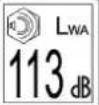 |
Maintenance and cleaning schedule
| Maintenance work | Before each use | After each use | Every 8 hours | Every 25 hours | Every 100 hours | If required / damaged | Each season |
| Fuelling | ■ | ||||||
| Check the thread spool / cutting blade | ■ | ■ | |||||
| Replace the thread spool / cutting blade | ■ | ||||||
| Throttle trigger / throttle lock-out switch / ON/OFF switch - Functional test | ■ | ||||||
| Throttle trigger / throttle lock-out switch / ON/OFF switch - Have it replaced | ■ | ||||||
| Cranking rope - Functional test | ■ | ||||||
| Cranking rope - Have it replaced | ■ | ||||||
| Clean fuel filling filter | ■ | ||||||
| Change fuel filling filter | ■ | ||||||
| Cleaning the air filter | ■ | ■ | |||||
| Replace air filter | ■ | ||||||
| Check the spark plug and the spark plug connector | ■ | ■ | |||||
| Replace the spark plug | ■ | ■ | |||||
| Clean the silencer | ■ | ■ | |||||
| Lubricate the angle gear | ■ | ||||||
| Check the machine | ■ | ■ | |||||
| Clean the machine | ■ | ■ | |||||
| Safety label | ■ |
Possible faults


Before each fault clearance:
- switch off device
- wait until the cutting device no longer moves
– pull off the spark plug connector - wear gloves
After each fault clearance, put into operation and recheck all security installations.
| Fault | Possible cause | Removal |
| Motor does not start. | Incorrect starting sequenceAir filter contaminatedFuel filter fouledSpark plug fouledNo fuel supplyFault in the fuel lineCranking mechanism defectiveSpark plug connector not placed onNo ignition sparkEngine flooded.Motor defectiveCarburettor defective | Observe the correct starting sequenceClean or replace the air filterClean or replace the fuel filterClean or replace the spark plugFill the fuel tank.Check the fuel line for kinks or damagesContact the customer service.Screw off, clean and dry the spark plug. Then pull the cranking rope several times and reinstall the spark plugPlace on the spark plug connector.a) Clean or replace the spark plug.b) Check the ignition cable.c) Fault cannot be eliminated?Contact the customer serviceContact the customer serviceContact the customer service |
| Engine starts and is stalled immediately | Incorrect idle adjustment | Contact the customer service |
| Device does not work with full power | Machine overloaded.Cutting thread too short/broken.Device overloaded as grass too high.Air filter contaminatedCarburettor incorrectly adjustedSilencer blocked | Do not excessively press during trimmingFollow up the cutting thread.Trim the grass in several passes.Clean or replace the air filterContact the customer serviceClean the outlet of the silencer |
| Device works with interruptions | Carburettor incorrectly adjustedSpark plug fouled | Contact the customer serviceClean or replace the spark plug. Check the spark plug connector |
| The brush cutter does not work with full output | Cutting blade dull or damagedDevice overloaded as grass too high | Have the cutting blade sharpened or replace itTrim the grass in several passes. |
| The grass trimmer does not work with full output | Cutting thread too short/broken.Device overloaded as grass too high. | Follow up the cutting thread.Trim the grass in several passes |
| Cutting thread is not followed up. | No more thread on the spool.Cutting thread entangled. | Replace the thread spool.Recoil the cutting thread. |
| Smoke | Incorrect fuel mixtureCarburettor incorrectly adjusted | Use two-stroke oil, ratio of mixture 40:1Contact the customer service |
① In case of further faults or inquiries please contact your local dealer.
Guarantee
Please observe the enclosed terms of guarantee.

i.A./G. Koppenstein
2000/14/ES - Dodatek V
Izmerjen nivo zvočne jakost LWA 107,7 dB (A).
Garantirani nivo zvočne jakosti L_WA 113 dB (A).
Uporabljeni so bili naslednjih harmonizirani standardi:
EN ISO 11806-1:2011, EN ISO 14982:2009
EK9-BE-55 (v2):2020, EK9-BE-56 (v4):2020,
EK9-BE-98 (v2):2020



- Extent of delivery
- EC Declaration of Conformity
- Symbols on the device
- Symbols original instructions
- Operating hours
- Proper use
- Residual risks
- Information on how to avoid noise:
- Vibrations (hand arm vibrations)
- Warning!
- Safety instructions
- Personal protective equipment
- - Never work without suited protective equipment:
- Safety instructions – before working
- Carry out the following checks before the initiation and regularly during the working process. Observe the relevant sections in the operating instruction manual:
- Safety instructions - operation
- Safety instruction – while working
- General safety instructions
- - Stop the machine and remove the spark plug connector from the spark plug when
- Behaviour in an emergency situation
- Safety instructions - Safe handling of fuels
- Description of device
- Assembly
- Mounting the protective hood
- Thread knife assembly
- Assembling / Disassembling the drive unit / lower tube shaft
- Mounting the handle
- Fixing the carrying strap
- Mounting the thread spool (grass trimmer)
- Removing the thread spool
- Mounting the cutting blade (brush cutter)
- Removing the cutting blades
- Before the first start-up
- Preparing for start-up
- Fuelling
- Petrol: Octane number at least 91 ROZ unleaded
- Two-stroke engine oil:
- Mixing
- Fuelling of the device
- Start-up
- Check the device before each use for
- Starting the machine
- Starting with cold engine
- Stopping the engine
- Stopping the engine in an emergency
- Starting with warm engine
- Working instructions
- Carrying strap
- Working with the brush cutter
- ⚠️ Kickback – backstroke
- To keep the control in case of kickback
- Mowing
- Working with the grass trimmer
- Trimming
- Thread follow-up
- Maintenance and care
- Maintenance
- Check the machine for obvious defects such as
- Replacing the thread spool roll
- Sharpening or replacing the thread knife
- Cutting blade
- ⚠️ Safe and efficient working is only possible with a correctly sharpened and intact cutting blade.
- Cleaning the air filter
- Checking / replacing the fuel filter
- Checking / replacing the spark plug
- Allow the engine to cool down.
- Replace the spark plug:
- Checking the ignition spark
- Silencer / exhaust outlet
- Lubricate the gearbox
- Checking or adjusting the idle speed
- Cleaning
- Transport
- Before each transport:
- Storage
- Normal storage
- Long-term storage
- Possible faults
- Guarantee
Brand : ATIKA
Model : BF 43-2
Category : Grass trimmer