BionicBack BB-1 - Tripod Mafell - Free user manual and instructions
Find the device manual for free BionicBack BB-1 Mafell in PDF.


| Product Type | Back support exoskeleton stabilizer |
| Brand | Mafell |
| Model | BionicBack BB-1 |
| Dimensions (W x H x D) | 55 x 37 x 33 cm |
| Weight | 1180 g |
| Materials | PP, PE, PES, PA, stainless steel, natural rubber, cotton |
| Max. waist circumference | 120 cm |
| Max. thigh circumference | 67 cm |
| User height | 150 to 200 cm |
| Main functions | Dynamic support (repetitive bending) and static support (postural maintenance) |
| Adjustments | Shoulder straps, chest strap, abdominal strap, thigh straps, dynamic and static supports |
| Standard equipment | 1 stabilizer, 1 tool kit, 1 extension kit, 1 instruction manual |
| Operating temperature | 0 °C to +40 °C |
| Maintenance | Clean hygienic pads (40°C, no fabric softener, flat drying); visual inspection before use; semi-annual checklist |
| Wear parts | Elastic elements (~1 million cycles); free-running cord and sheaths |
| Optional accessories | Interchangeable pad kit BB-PWS (ref. 095269, 5 pieces) |
| Manufacturer | hTRIUS GmbH, Brunnenstrasse 10, D-72160 Horb / Neckar |
| Distributor | MAFELL AG, Beffendorfer Strasse 4, D-78727 Oberndorf / Neckar |
| Certification | EC Declaration of Conformity |
Frequently Asked Questions - BionicBack BB-1 Mafell
User questions about BionicBack BB-1 Mafell
0 question about this device. Answer the ones you know or ask your own.
Ask a new question about this device
Download the instructions for your Tripod in PDF format for free! Find your manual BionicBack BB-1 - Mafell and take your electronic device back in hand. On this page are published all the documents necessary for the use of your device. BionicBack BB-1 by Mafell.
USER MANUAL BionicBack BB-1 Mafell
Please read all safety information and instructions. Failure to observe the safety information and instructions can cause serious injuries. Retain all safety information and instructions for future reference.
AVERTISSEMENT
GB - EC Declaration of Conformity
We herewith confirm that the Exo Stabiliser BionicBack BB-1 complies with the EU directives quoted. The standards listed were used for design and construction. Empowered person for the configuration of the technical documents: hTRIUS GmbH
natural_image
Line drawing of a person wearing a full-body harness and backpack (no text or symbols)natural_image
Line drawing of a person adjusting a necktie with a tool, no text or symbols presentnatural_image
Medical illustration showing a surgical procedure on a patient's torso with arrows indicating force or movement (no text or labels present)natural_image
Line drawing of a person adjusting a belt buckle, hands visible adjusting the belt (no text or symbols)natural_image
Line drawing of a person adjusting a safety belt, no text or symbols presentnatural_image
Line drawing of a person adjusting a belt using scissors (no text or symbols)natural_image
Line drawing of a person wearing a full-body harness and safety harness, viewed from the side (no text or symbols)natural_image
Medical illustration showing a hand performing a catheter insertion procedure on a patient's abdomen (no text or labels)natural_image
Line drawing of a person's lower body wearing a belt buckle, with no text or symbols present.natural_image
Line drawing of a person wearing a harness and pants, holding a belt (no text or symbols)natural_image
Medical illustration showing two different surgical techniques for a human leg, with no visible text or symbols.natural_image
Line drawing of a person in a bent posture with arms and backpacks, no text or symbols present
natural_image
Line drawing of a person in a bent posture with backpacks, no text or symbols presentnatural_image
Line drawing of a hand holding a wristwatch with a device attached (no text or symbols)natural_image
Illustration of hands using a tool to cut or draw a piece of material (no text or symbols present)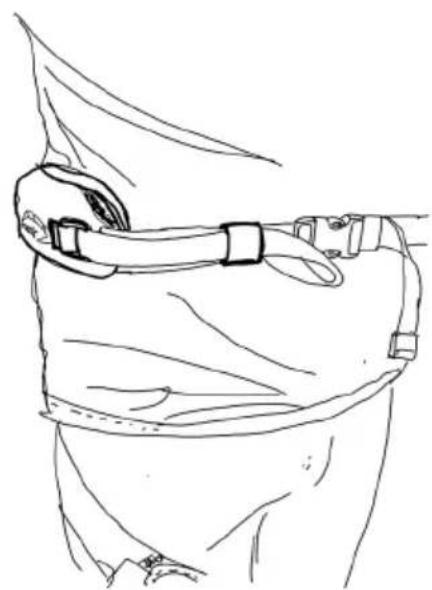
natural_image
Line drawing of a person wearing a wristband and holding an arm, with no visible text or symbols8 Im Betrieb
natural_image
Line drawing of a person wearing a helmet and harness, with no visible text or symbolsnatural_image
Technical line drawing of a person wearing a full-body safety harness (no text or symbols)18 Haftung
1 Signs and symbols 22
2 Product information 22
2.1 Manufacturer's data 22
2.2 Distributor 22
2.3 Technical data 22
2.4 Scope of supply....22
3 Notes regarding hazards resulting from misuse....23
4 Residual risk arising from use in the area of application 23
5 Intended use of the BionicBack 24
6 Product description....24
7 Putting into operation 25
8 During operation....35
9 Taking out of operation....35
10 Maintenance....35
11 Maintenance checklist for the semi-annual inspection 36
12 Wear parts....36
13 Cleaning/hygiene 36
14 Replacing the hygiene pads 36
15 Storage 36
16 Repair / Service/ Disposal 36
17 Optional accessories....37
18 Liability 37
1 Signs and symbols
This symbol indicates tips for the user and other useful information.
2 Product information
for Exo Stabiliser BionicBack BB-1 with product no. 095262
2.1 Manufacturer's data
hTRIUS GmbH, Brunnenstrasse 10, D-72160 Horb / Neckar, Phone +49 (0) 7451/554690
2.2 Distributor
MAFELL AG, Beffendorfer Straße 4, D-78727 Oberndorf / Neckar, Phone +49 (0)7423/812-0, Fax +49 (0)7423/812-218, e-mail: mafell@mafell.de
2.3 Technical data
| Weight | 1180 g |
| unisex | |
| Dimensions 55 x 37 x 33 cm | |
| Materials used | Synthetic materials: PP, PE, PES, PAMetal: High-grade steel, stainless steelTextile fabric constituents: PES, natural rubber, PA 6.6, cotton |
2.4 Scope of supply
1 Exo stabiliser BionicBack BB-1
1 Tool bag TZ-WT30
1 Extension kit
1 Instruction manual
3 Notes regarding hazards resulting from misuse
 | You must not use the BionicBack to lift loads that you could not lift without it. |
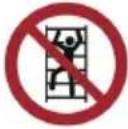 | While wearing the BionicBack, you are only permitted to climb ladders, scaffolding stairs and similar objects if no support is activated. Before starting to climb, you must deactivate the dynamic and static support. Failure to do so increases your risk of falling because your ability to keep your balance will be restricted. |
 | You are only permitted to use the BionicBack in the vicinity of freely accessible rotating or moving machine components if you have tucked any protruding strap ends into the elastic loops provided for this purpose (see Chapter 7, step 14 and 15). Failure to do so can result in protruding straps and parts being pulled in or entrained. |
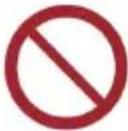 | The BionicBack is no fall protection! The BionicBack must not be used as climbing harness and its wearer must not be lifted or secured by hooking the BionicBack into belts or straps. The BionicBack must thus not be used as fall protection. |
4 Residual risk arising from use in the area of application
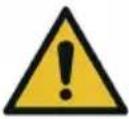 | Take off the BionicBack if you experience any muscle or joint pain. |
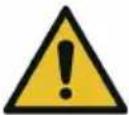 | In the event of a pre-existing medical condition of your musculoskeletal system, do not use the BionicBack without consulting a doctor beforehand. |
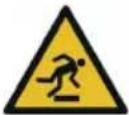 | Pay attention to a secure footing when you don or take off the BionicBack. Once you have made all the adjustments, pay attention if there are any restrictions to your balance or range of motion. Start your activities only after you have done this. |
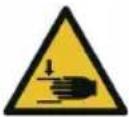 | Free-standing structures can hook into or persons can reach into protruding elements of the BionicBack. Caution, risk of falling and risk of entrapment. |
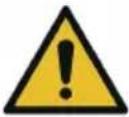 | Movements can cause hair to get pulled into half-open elements of the BionicBack. Long hair must be tied up accordingly. |
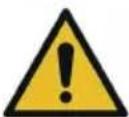 | Wearing the BionicBack in settings involving high temperatures can cause increased sweating. Regular cleaning and regular rest periods are recommended under these circumstances. |
Other information:
- The BionicBack must only be used in ambient temperatures between 0 °C...+40 °C.
-
The standard size of the BionicBack is suitable for the following body dimensions:
-
Waist circumference up to 120 cm
• Thigh circumference up to 67 cm
• Body height from 150 cm to 200 cm
If required, an extension kit is included in the scope of supply.
- The BionicBack can be used both indoors and outdoors. The BionicBack must be protected
from heavy rainfall and permanent direct solar radiation.
5 Intended use of the BionicBack
The BionicBack is worn on the back like a backpack and must be adjusted to the body dimensions of the wearer before use. If used correctly, the BionicBack supports the wearer by supporting bent over body positions and reinforcing bending movements. This can reduce harmful stresses caused by repetitive and prolonged activities.
6 Product description
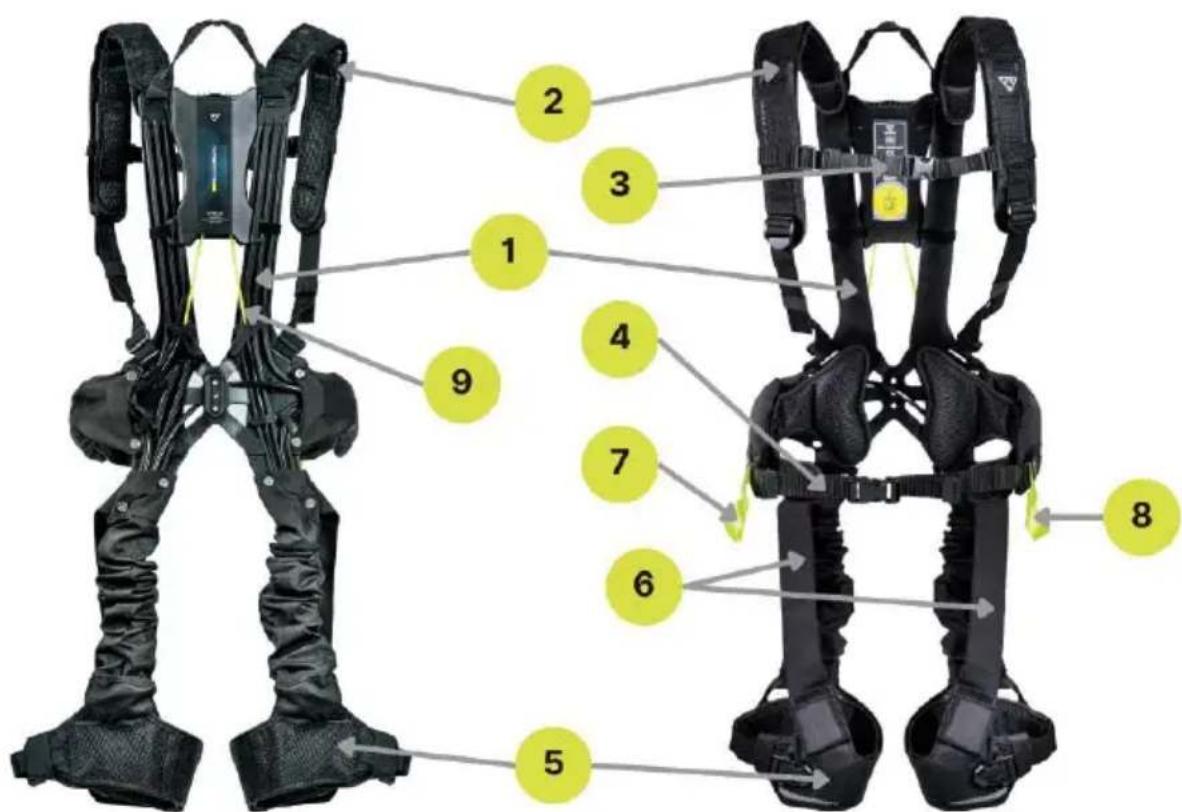
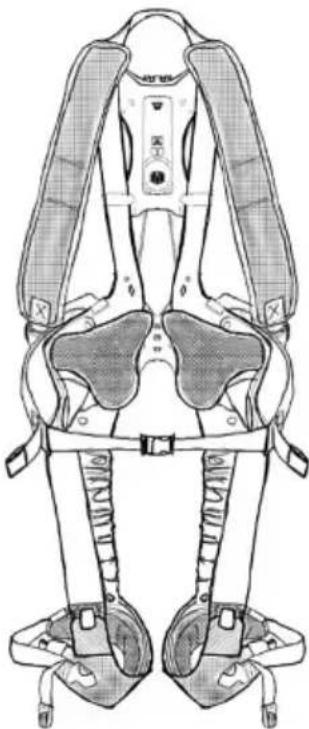
- Bionic back part
- Shoulder straps with pad
- Height-adjustable chest strap with click fastener
- Waist strap with click fastener
-
Leg shell with pad and click fastener
-
Adjustable retaining strap with Velcro connection to the leg shell
- Adjustment strap dynamic support (right)
- Adjustment strap static support (left)
- Freewheel rope
The colour or appearance of the actual physical product can deviate from the illustration, depending on the product version.
7 Putting into operation
Preparation
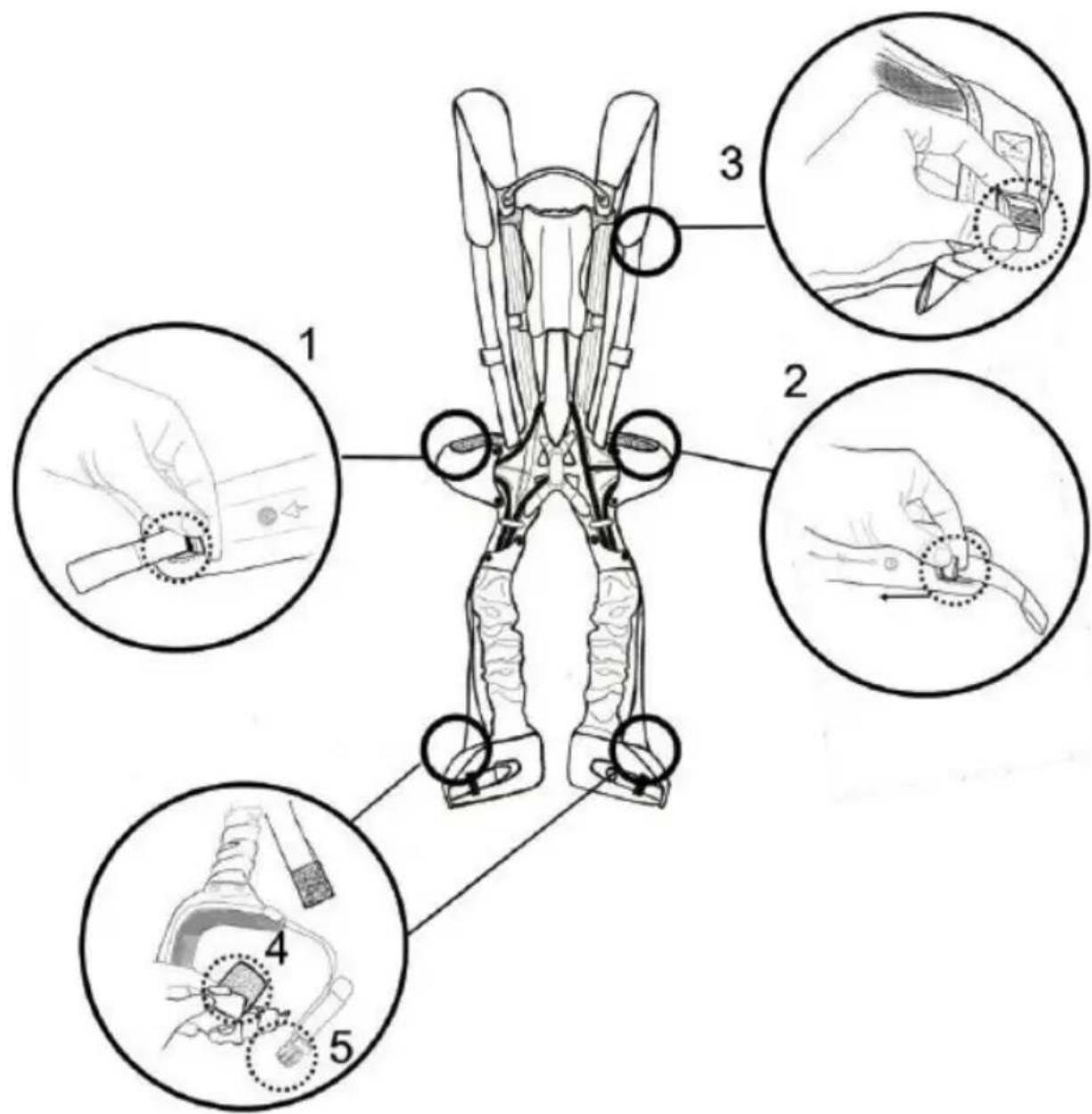
- & 2. Open the adjustment buckles at the hip elements on the left and right.
- Extend the shoulder straps to their full length.
- Release the Velcro fastener of the retaining strap from the leg shell.
- Open the click buckles of the leg shells.
- Open the click buckles at the waist and chest strap.
Step 1: Donning
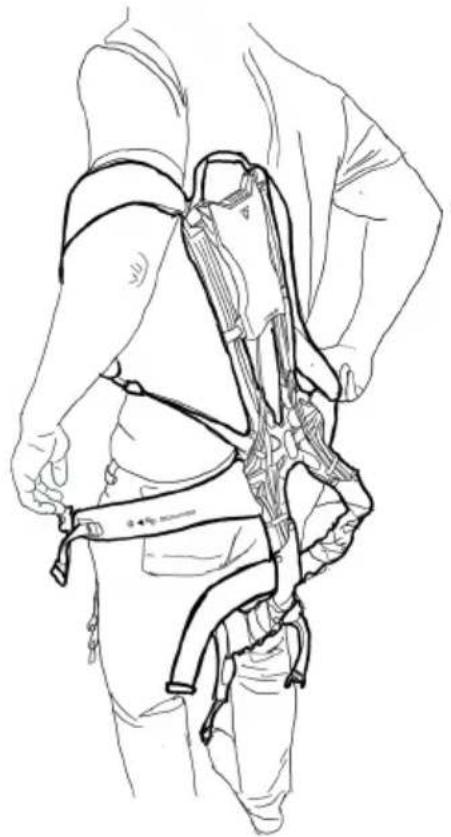
- Simply don the BionicBack like you would a backpack.
• All buckles and fasteners are open. - Slip both arms into the shoulder straps.
natural_image
Line drawing of a person wearing a full-body harness and backpack (no text or symbols)Step 2: Closing the chest strap
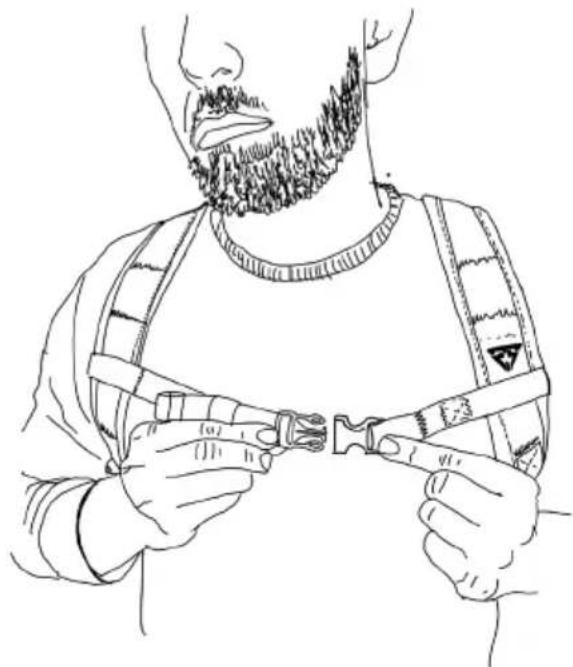
- Close the click buckle of the chest strap.
natural_image
Line drawing of a person adjusting a necktie with a tool, no text or symbols presentStep 3: Adjusting the chest strap
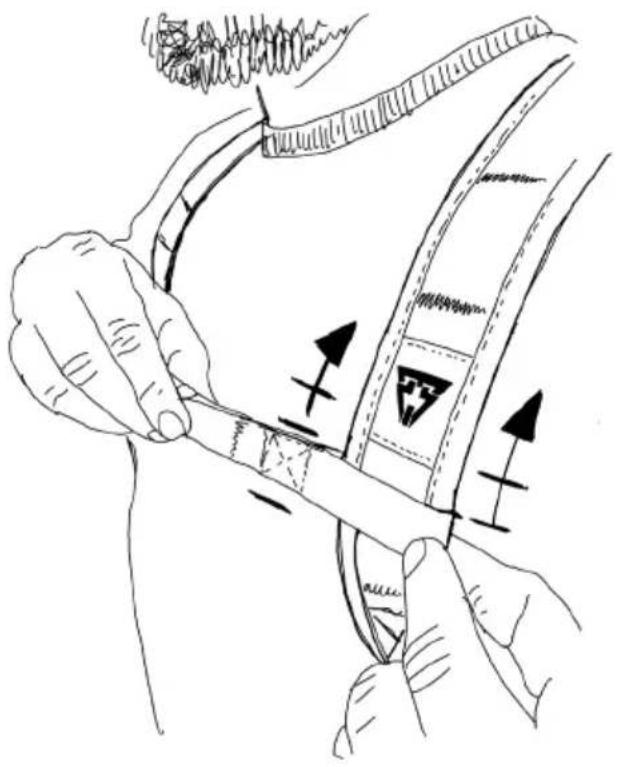
- The height of the chest strap can be adjusted by sliding it along the shoulder strap.
- Position the chest strap approx. 5 cm below the collarbone.
- Shorten the chest strap by pulling on the belt strap.
natural_image
Medical illustration showing a surgical procedure on a patient's abdomen, with arrows indicating movement or force (no text or labels present)Step 4: Closing the waist strap
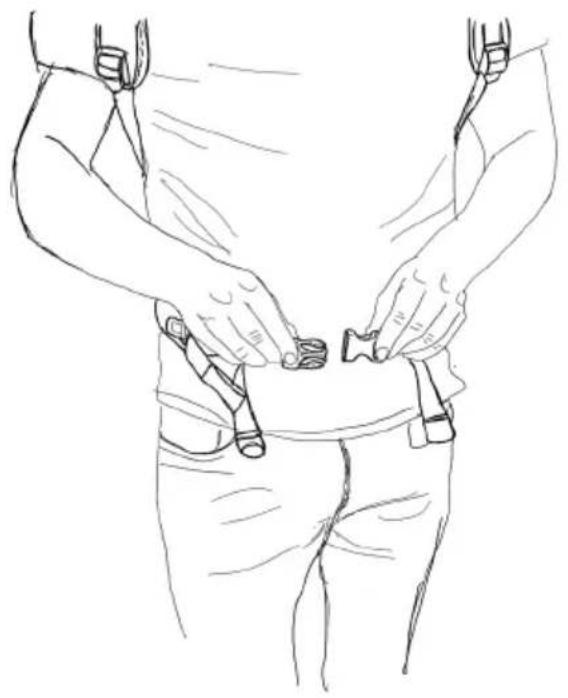
- Close the click buckle of the waist strap at the level of the navel.
natural_image
Line drawing of a person adjusting a belt buckle, hands visible adjusting the belt (no text or symbols)Step 5: Adjusting the waist strap
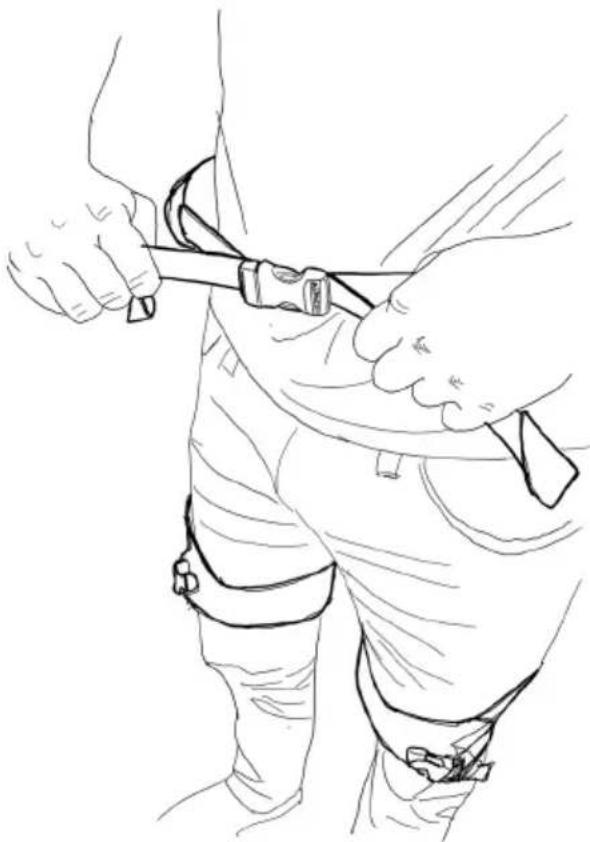
• Alternately pull the waist strap sideways to the left and right to pull it tighter.
- Pay attention to a centred fit - the waist strap can have a comfortably loose fit.
natural_image
Line drawing of a person adjusting a safety belt, no text or symbols presentStep 6: Adjusting the shoulder strap
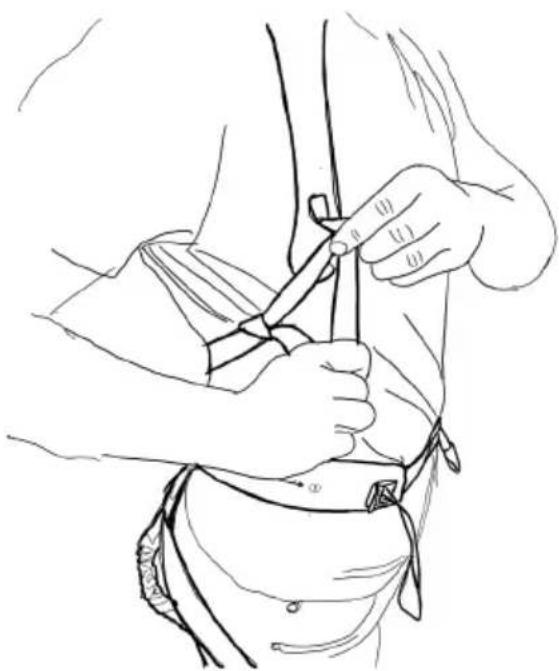
- Pull at the top belt to shorten the shoulder strap.
- Pay attention that you do not adjust the shoulder straps too tightly. The mobility of your arms should not be restricted.
natural_image
Line drawing of a person adjusting a belt using scissors (no text or symbols)Pay attention that you have positioned the system correctly.
The shaping of the back part snugly moulds to the natural shape of your back.
Thus, compressive forces are introduced at the correct points and your posture is supported.
The waist strap is approximately located at the level of the navel.
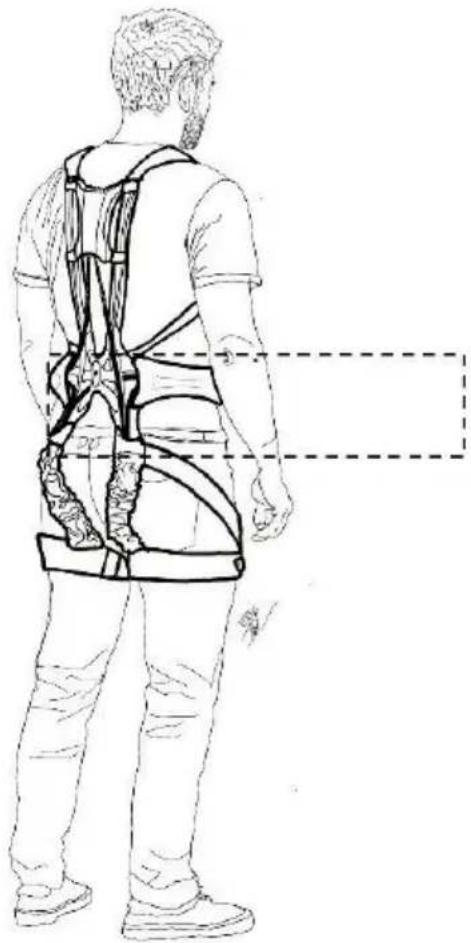
natural_image
Line drawing of a person wearing a full-body harness and safety harness, viewed from the side (no text or symbols)Step 7: Closing the leg shell
- Close the click fastener of the leg shell.
- The leg shell should be positioned in the middle of the thigh - between hip and knee.
- Pull the end of the belt strap to pull the leg shell tighter.
• Pay attention to a comfortable fit.
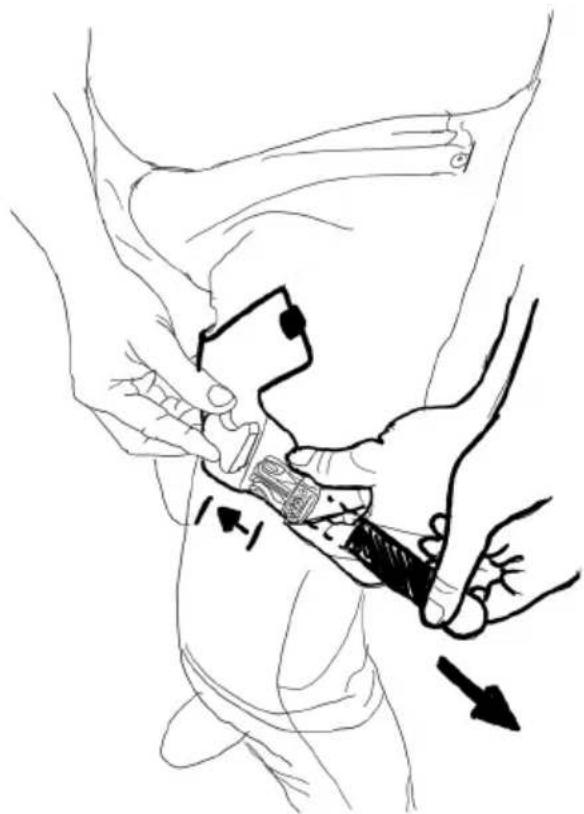
natural_image
Medical illustration showing a hand performing a procedure on a patient's abdomen, with arrows indicating movement (no text or symbols present)Step 8: Closing the Velcro of the retaining strap
- Place the retaining strap around your thigh.
- Open the Velcro clamp at the leg shell and insert the end of the retaining strap.
- The length of the retaining strap can be variably adjusted.

natural_image
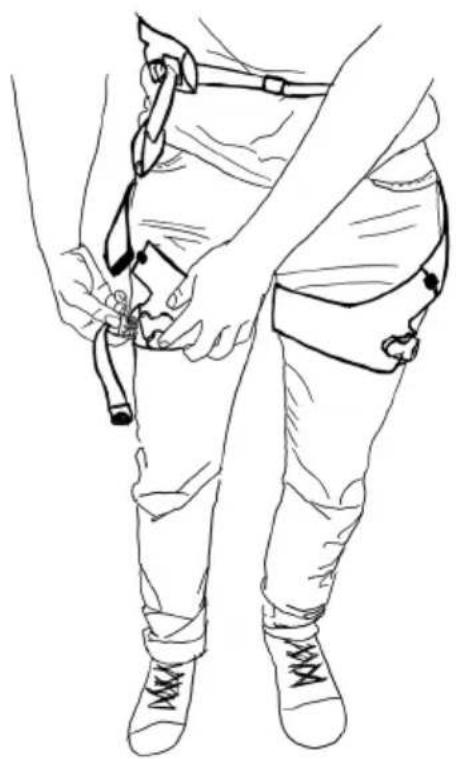
Line drawing of a person's lower body wearing a belt buckle, with no text or symbols present.Step 9: Second leg
- Repeat step 7 and 8 for your other leg.
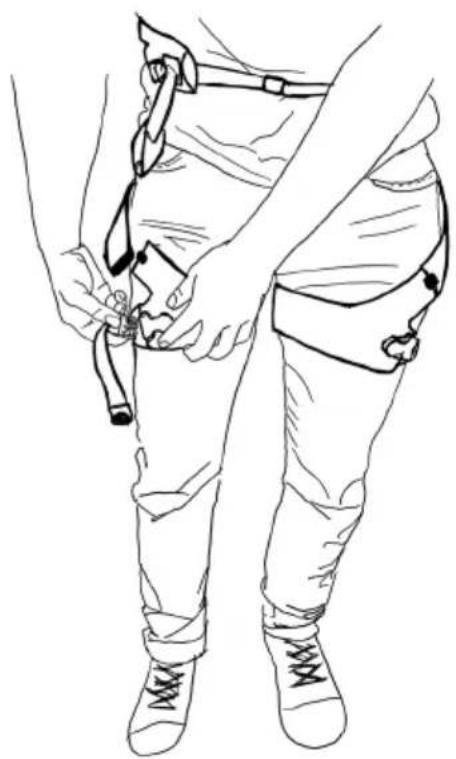
natural_image
Line drawing of a person wearing a harness and pants, holding a belt (no text or symbols)Step 10: Adjusting the dynamic support
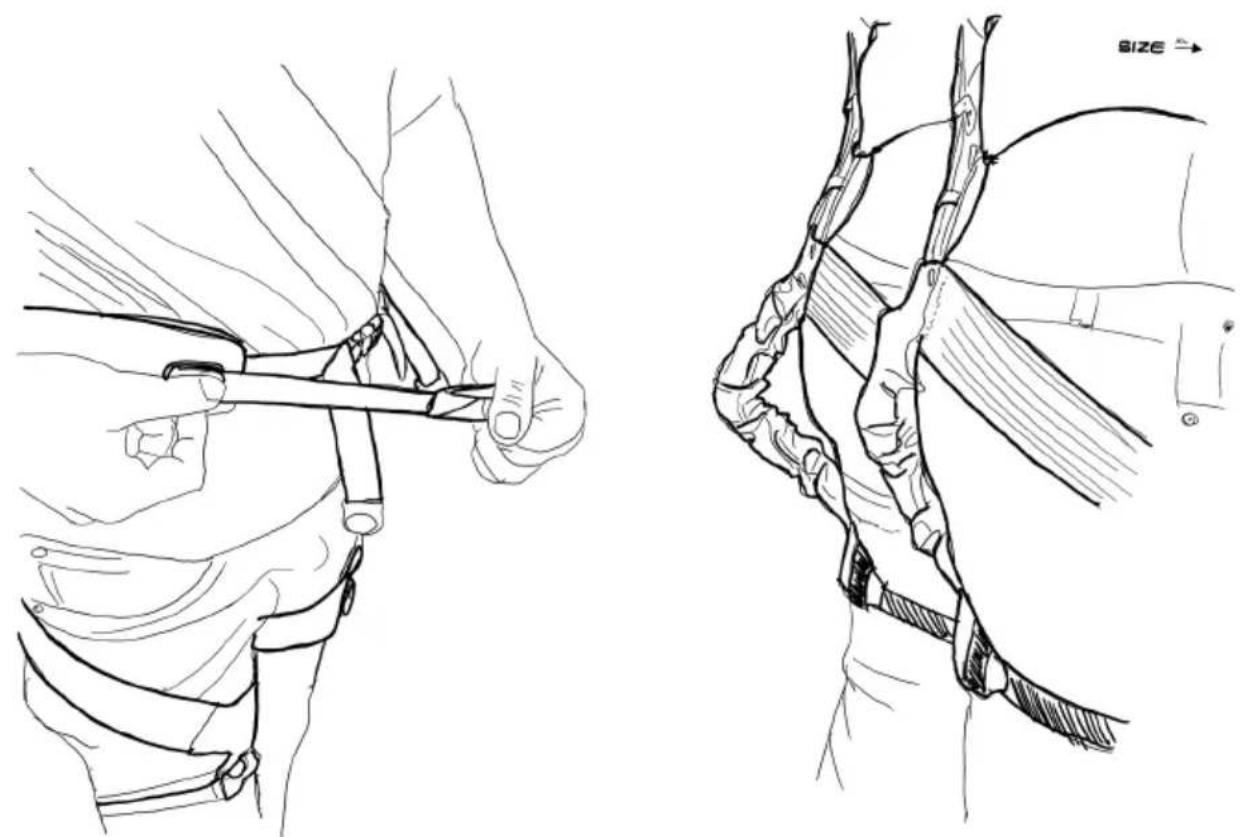
natural_image
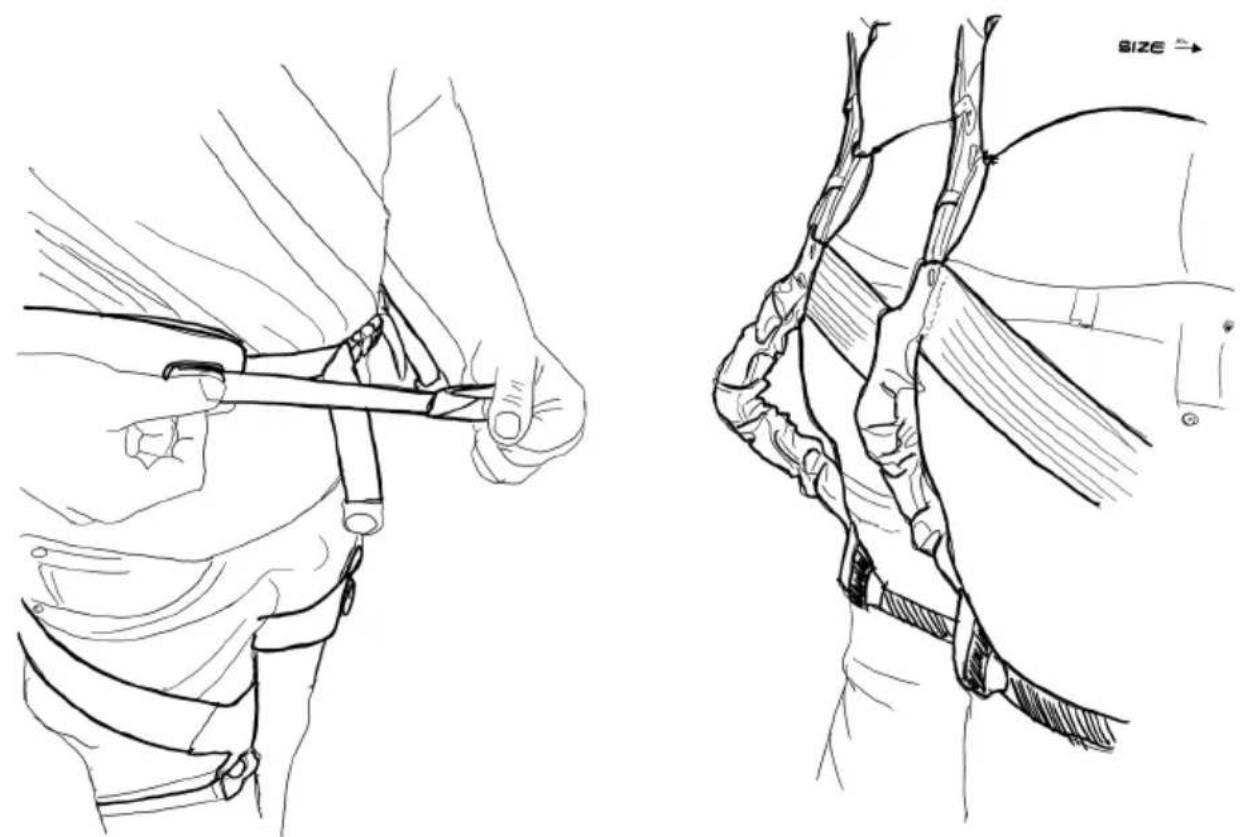
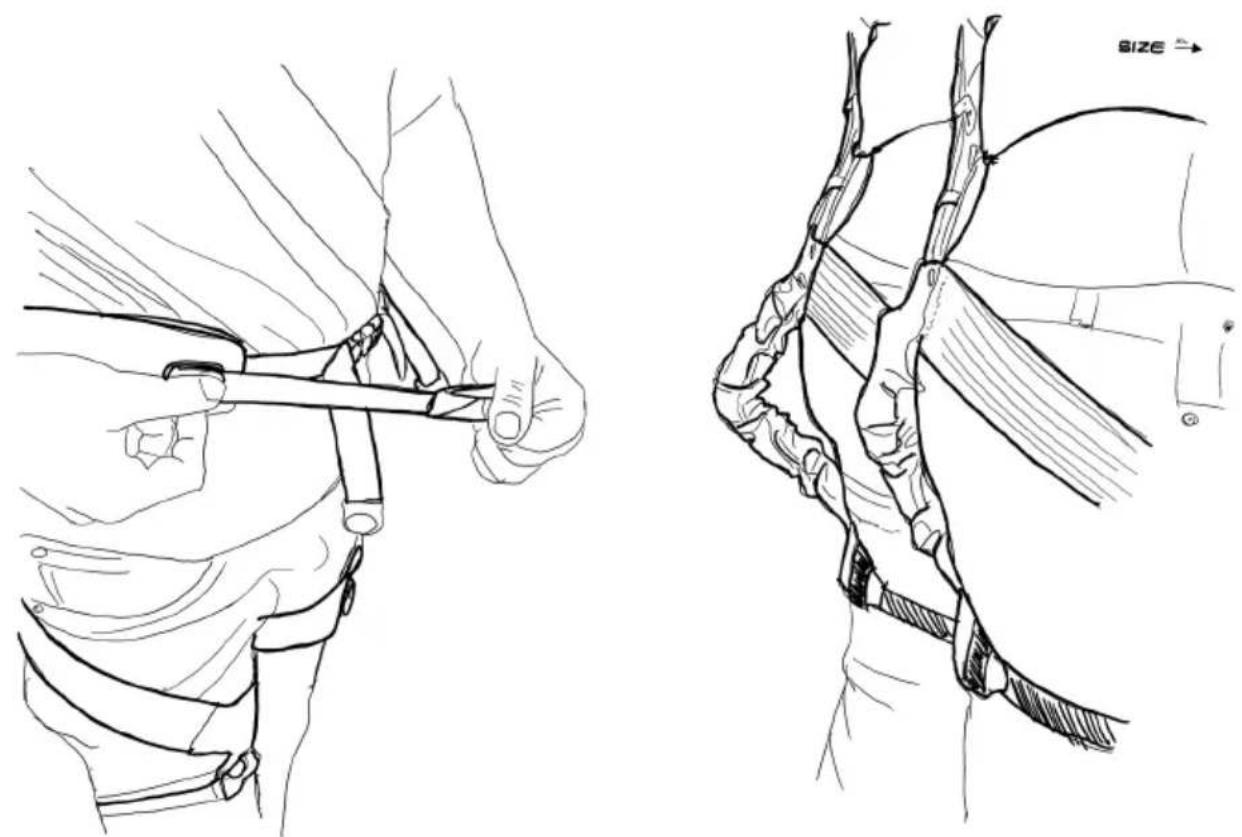
Medical illustration showing two different surgical or mechanical techniques for a hand holding a tool, with no visible text or symbols.- Use the red adjustment strap on the right hand side to adjust the infinitely variable dynamic support.
• To do so, pull the red adjustment strap out of the hip shell and close the adjustment buckle. - The textile shell at your buttocks contracts and adapts to your body.
- You can change the setting at any time by opening the adjustment buckle.
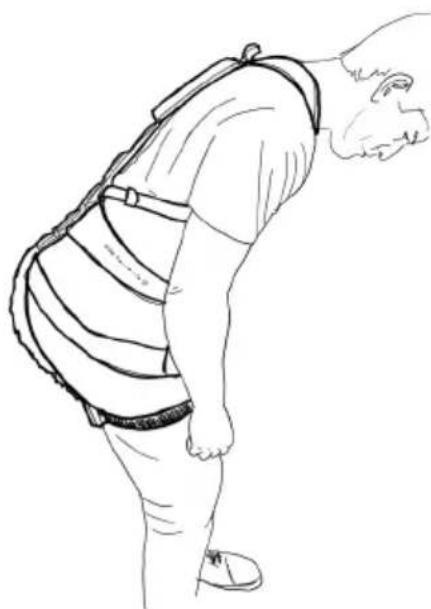
Step 11: Testing the dynamic support
- The dynamic setting is perfectly suited to flexible and deep lifting.
- Test the support by performing many different lifting operations.
- To change the setting, open the adjustment buckle by pulling the adjustment strap to the side. This deactivates the support so it can be readjusted.
natural_image
Line drawing of a person in a bent posture with arms and backpacks, no text or symbols present
With the dynamic adjustment on the right hand side, support is already activated in the system and it is fully operational.
If you have to frequently bend down deeply it can be sufficient to only work with the dynamic support.
For less dynamic applications, there is another adjustment option: The static support can be additionally activated on the left hand side.
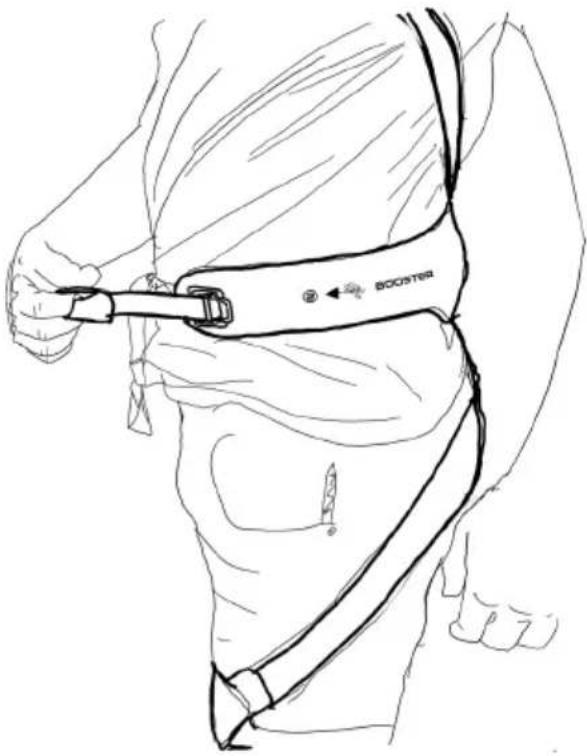
Step 12: Adjusting the static support
- The static support on the left hand side is activated in addition by means of the red adjustment strap.
- To do so, pull the red adjustment strap out of the hip shell and close the adjustment buckle.
- Open the buckle again to change the adjustment or to deactivate the support.
Step 13: Testing the static support
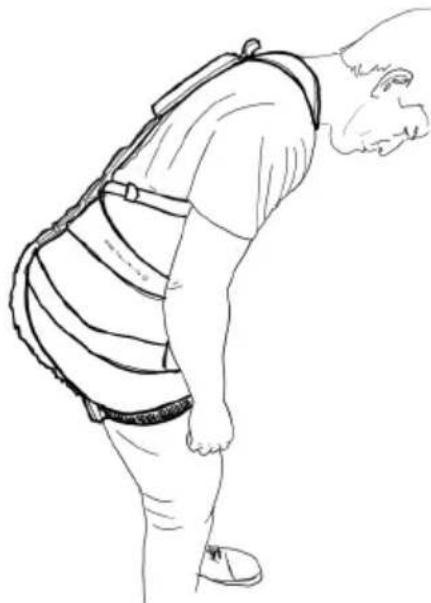
- Also test the static support by performing different bending movements.
- Depending on the setting, the static support takes effect after a certain bending angle and has a cushioning effect.
• Find the right setting for your work.
natural_image
Line drawing of a person in a bent posture with backpacks, no text or symbols presentStep 14: Stowing away the ends of the belt strap
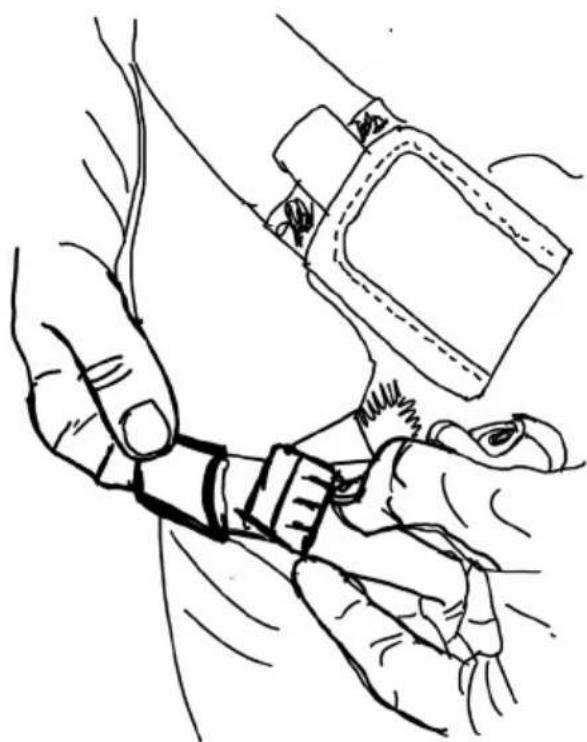
- As soon as the settings of the belt straps are suitable, you can stow away the ends of the belt strap in the elastic loops.
- This applies to the protruding strap ends at the chest, waist and leg straps.
natural_image
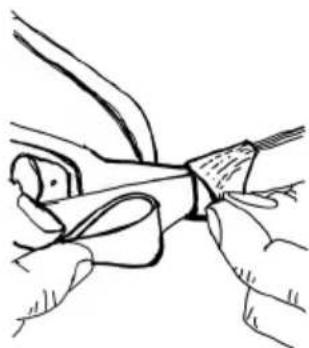
Line drawing of a hand holding a wristband with a device attached (no text or symbols)Step 15: Stowing away the adjustment straps
• After adjusting the support, you can now also stow away the protruding red adjustment strap in the elastic loops of the waist strap.
natural_image
Line drawing of hands holding a tool or device, no text or symbols present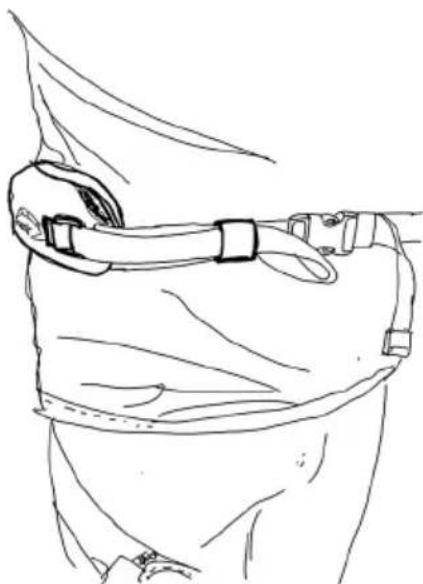
natural_image
Line drawing of a person wearing a medical or surgical device with arms and straps (no text or symbols)8 During operation
To experience ideal support from the BionicBack, there is an individual combination of settings for every application and every body. The best way to find this individual combination is to initially test many different settings.
For this purpose, you can at any time also adjust the position of your shoulder, waist and leg straps.
Below you will find a few potential scenarios and hints to find the suitable setting:
| Scenario Hint | |
| The BionicBack prevents you from bending forward. | The BionicBack offers light support against a hunched back but should by no means block your bending movement. Test the system again without support (open the adjustment buckles at the left and right hip shell) and then bit by bit make the adjustment on the left hand side and then on the right hand side. Determine a suitable setting for your bending movement in this manner. |
| The leg shells slide up and down your thighs. | Have you set the adjustable retaining strap to the correct length? Have you secured the retaining strap on the leg shell? This will keep the leg shell in position. If you have already done this, it may be helpful to pull the leg shells somewhat tighter. |
| The support is rather weak although both setting ranges have been fully exhausted. | For shorter and/or more slender persons it is recommended to pull the leg shells somewhat further down the thigh in direction of the knee and to adjust them more tightly there. This pretensions the support modules so they can take effect sooner. |
9 Taking out of operation
To take off the BionicBack, first deactivate both supports by opening the adjustment buckles in both hip elements. If you then bend slightly forward, the system will automatically extend. Expand all straps one after the other, release the retaining straps and open the fasteners. Now you can slip out of the shoulder straps.
Expanding the hip and shoulder straps before opening the fasteners will make it easier to don the BionicBack next time.
10 Maintenance
| Maintenance interval Activity | |
| Before use Visual inspection of the components for damage. | |
| Weekly/as required | Cleaning the system. (see Cleaning/Hygiene) |
| Semi-annually | Maintenance according to maintenance checklist. |
11 Maintenance checklist for the semi-annual inspection
| Components | √ |
| All mechanical components are in good order.The textile fabrics exhibit no open gaps or holes. | |
| The elastic components continue to offer adequate elastic recoil force. | |
| The fastening buckles at the waist and legs close tightly and securely. | |
| The red freewheel rope is not damaged.No abrasion chips emerge from the rope guide tubes. |
12 Wear parts
The following components are wear parts and should Secure a cleaned set of pads in these positions. be regularly checked: (Caution: Hip pad left/right according to illustration)
Elastic force elements
After removing the hygiene pads, you can wipe the BionicBack with a damp cloth.
components can lose their elasticity. In addition, environmental influences such as UV radiation, high
operating temperatures or ozone ventilation can
For storage, the BionicBack and its components must be hung up in a dry environment and only in dry condition. Avoid direct solar radiation. negatively influence the service life. Please check the elastic recoil force of the components during the semi-annual inspection interval.
Freewheel rope and rope guide tubes:
On visual inspection, the force transmission components must not exhibit any damage. Dirt can cause signs of wear to appear in the course of the service life.
In case of damage, please contact your Mafell specialist dealer or our service at service@mafell.de, phone +49 (0)7423/812-260.
13 Cleaning/hygiene
For regular cleaning or for cleaning when a BionicBack is used by several persons, the hygiene pads - 5 in total - can be removed and cleaned or replaced.
Cleaning instructions for the hygiene pads:
Do not use any fabric softener, dry in a flat position after cleaning.
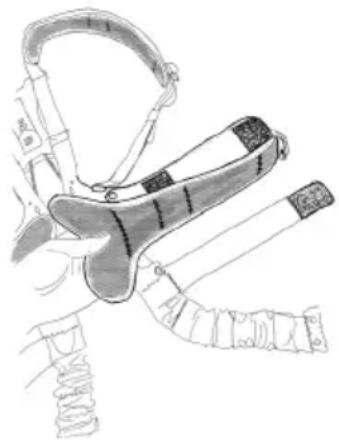
14 Replacing the hygiene pads
natural_image
Line drawing of a person wearing a safety harness and climbing gear (no text or symbols)- Release the Velcro connection of the individual hygiene pads from shoulder shell, hip shell and leg shell.
After removing the hygiene pads, you can wipe the
145 Storage
For storage, the BionicBack and its components must be hung up in a dry environment and only in dry condition. Avoid direct solar radiation.
16 Repair / Service/ Disposal
In case of damage or queries regarding the need for an maintenance or disposal, please contact your Mafell specialist dealer or our service at service@mafell.de, phone +49 (0)7423/812-260.

17 Optional accessories
- Pad replacement kit BB-PWS (hygiene pads, 5 pieces) - Order No. 095269
natural_image
Technical line drawing of a person wearing a full-body safety harness (no text or symbols)18 Liability
A safe operation of the BionicBack is guaranteed if you observe the safety instructions regarding its use and maintenance.
MAFELL AG cannot be held liable for the following:
- Personal injuries or damage to property due to non-observance of the information and recommendations in the instruction manual.
- Personal injuries or damage to property due to changes to the product or inappropriate use as well as use of non-original spare parts.
Français
Sommaire
natural_image
Line drawing of a person wearing a full-body harness and backpack (no text or symbols)natural_image
Line drawing of a person adjusting a belt buckle, no text or symbols presentnatural_image
Medical illustration showing a surgical procedure on a patient's torso with arrows indicating force or movement (no text or symbols present)natural_image
Line drawing of a person adjusting a belt buckle, hands visible adjusting the belt (no text or symbols)natural_image
Line drawing of a person adjusting a safety belt, no text or symbols presentnatural_image
Line drawing of a person adjusting a belt using scissors (no text or symbols)natural_image
Line drawing of a person wearing a full-body harness and safety harness, viewed from the side (no text or symbols)natural_image
Medical illustration showing a hand performing a procedure on a patient's abdomen, with arrows indicating movement (no text or symbols present)natural_image
Line drawing of a person's lower body wearing a belt buckle, with no text or symbols present.natural_image
Line drawing of a person wearing a harness and pants, holding a belt (no text or symbols)natural_image
Medical illustration showing two different surgical or mechanical techniques for a hand holding a tool, with no visible text or symbols.natural_image
Line drawing of a person in a bent posture with arms and backpacks, no text or symbols present
natural_image
Line drawing of a person in a bent posture with backpacks, no text or symbols presentnatural_image
Line drawing of a hand holding a wristband with a device attached (no text or symbols)natural_image
Line drawing of hands holding a tool or device, no text or symbols present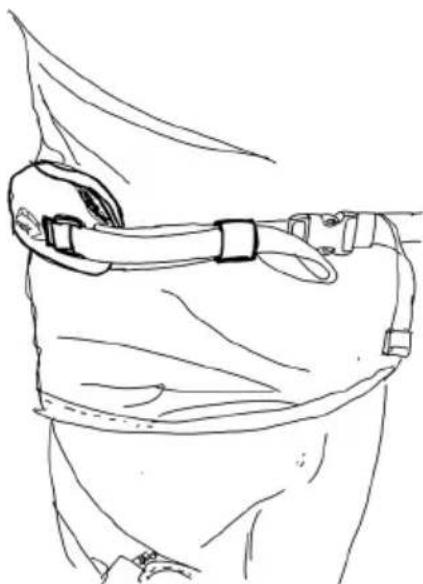
natural_image
Line drawing of a person wearing a medical or surgical device with arms and straps (no text or symbols)natural_image
Line drawing of a person wearing a helmet and harness, with no visible text or symbolsnatural_image
Technical line drawing of a person wearing a full-body safety harness (no text or symbols)18 Responsabilité
natural_image
Line drawing of a person wearing a full-body harness and backpack (no text or symbols)natural_image
Line drawing of a person adjusting a necktie device (no text or symbols present)natural_image
Medical illustration showing a surgical procedure on a patient's abdomen, with arrows indicating movement or force (no text or symbols present)natural_image
Line drawing of a person adjusting a belt buckle, hands visible adjusting the belt (no text or symbols)natural_image
Line drawing of a person adjusting a safety belt, no text or symbols presentnatural_image
Line drawing of a person adjusting a belt using scissors (no text or symbols)natural_image
Line drawing of a person wearing a full-body harness and safety harness, viewed from the side (no text or symbols)natural_image
Medical illustration showing a hand performing a catheter insertion procedure on a patient's abdomen (no text or labels)natural_image
Line drawing of a person's lower body wearing a belt buckle, with no text or symbols present.Passo 9: Seconda gamba
natural_image
Line drawing of a person wearing a harness and pants, holding a belt (no text or symbols)natural_image
Medical illustration showing two different surgical or mechanical techniques for a hand holding a tool, with no visible text or symbols.natural_image
Line drawing of a person in a bent posture with arms and backpacks, no text or symbols present
natural_image
Line drawing of a person in a bent posture with backpacks, no text or symbols presentnatural_image
Line drawing of a hand holding a wristwatch with a device attached (no text or symbols)natural_image
Illustration of hands using a tool to cut or draw a piece of material (no text or symbols present)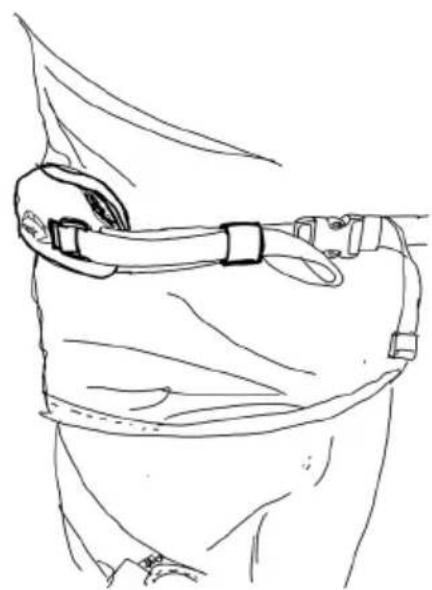
natural_image
Line drawing of a person wearing a wristband and holding an arm, with no visible text or symbols8 Utilizzo
natural_image
Line drawing of a person wearing a safety harness and climbing gear (no text or symbols)natural_image
Technical line drawing of a person wearing a full-body safety harness (no text or symbols)18 Responsabilità
natural_image
Line drawing of a person wearing a full-body harness and backpack (no text or symbols)natural_image
Line drawing of a person adjusting a necktie with a tool, no text or symbols presentStap 3: borstriem instellen
natural_image
Medical illustration showing a surgical procedure on a patient's abdomen, with arrows indicating movement or force (no text or symbols present)natural_image
Line drawing of a person adjusting a belt buckle, hands visible adjusting the belt (no text or symbols)Stap 5: heupriem instellen
natural_image
Line drawing of a person adjusting a safety belt, no text or symbols presentStap 6: schouderband instellen
natural_image
Line drawing of a person adjusting a belt using scissors (no text or symbols)natural_image
Line drawing of a person wearing a full-body harness and safety harness, viewed from the side (no text or symbols)Stap 7: beenbevestiging sluiten
natural_image
Medical illustration showing a hand performing a procedure on a patient's abdomen, with arrows indicating movement (no text or symbols present)natural_image
Line drawing of a person's lower body wearing a belt buckle, with no text or symbols present.Stap 9: tweede been
natural_image
Line drawing of a person wearing a harness and pants, holding a belt (no text or symbols)Stap 10: dynamische ondersteuning instellen
natural_image
Medical illustration showing two different surgical or mechanical techniques for a hand holding a tool, with no visible text or symbols.natural_image
Line drawing of a person in a bent posture with arms and backpacks, no text or symbols present
natural_image
Line drawing of a person in a bent posture with backpacks, no text or symbols presentnatural_image
Line drawing of a hand holding a wristwatch with a device attached (no text or symbols)Stap 15: verstelriemen opbergen
natural_image
Illustration of hands using a tool to cut or draw a piece of material (no text or symbols present)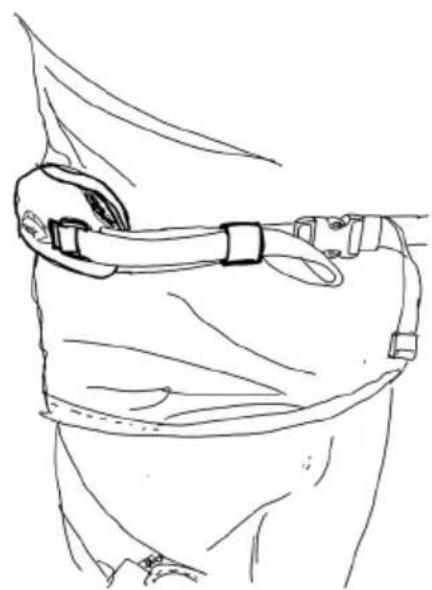
natural_image
Line drawing of a person wearing a wristband and holding an arm, with no visible text or symbolsnatural_image
Line drawing of a person wearing a medical or surgical device with straps and tubing (no text or symbols)natural_image
Technical line drawing of a person wearing a full-body safety harness (no text or symbols)natural_image
Line drawing of a person wearing a full-body harness and backpack (no text or symbols)Paso 2: Cerrar la correa pectoral
natural_image
Line drawing of a person adjusting a necktie with a tool, no text or symbols presentnatural_image
Medical illustration showing a surgical procedure on a patient's torso with arrows indicating force or movement (no text or labels present)Paso 4: Cerrar la correa abdominal
natural_image
Line drawing of a person adjusting a belt buckle, hands visible adjusting the belt (no text or symbols)Paso 5: Ajustar la correa abdominal
natural_image
Line drawing of a person adjusting a safety belt, no text or symbols presentPaso 6: Ajustar la correa del hombro
natural_image
Line drawing of a person adjusting a belt using scissors (no text or symbols)natural_image
Line drawing of a person wearing a full-body harness and safety harness, viewed from the side (no text or symbols)natural_image
Medical illustration showing a hand performing a catheter insertion procedure on a patient's abdomen (no text or labels)natural_image
Line drawing of a person's lower body wearing a belt buckle, with no text or symbols present.Paso 9: Segunda pierna
natural_image
Line drawing of a person wearing a harness and pants, holding a belt (no text or symbols)natural_image
Medical illustration showing two different surgical techniques for a human leg, with no visible text or symbols.natural_image
Line drawing of a person in a bent posture with arms and backpacks, no text or symbols present
natural_image
Line drawing of a person in a bent posture with backpacks, no text or symbols presentnatural_image
Line drawing of a hand holding a wristwatch with a device attached (no text or symbols)natural_image
Illustration of hands using a tool to cut or draw a piece of material (no text or symbols present)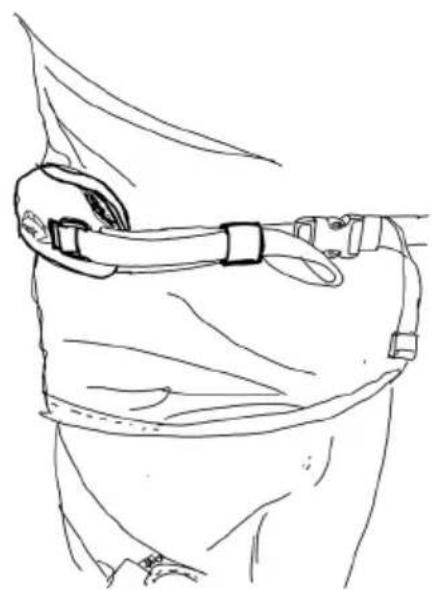
natural_image
Line drawing of a person wearing a wristband and holding an arm, with no visible text or symbols8 En funcionamiento
natural_image
Line drawing of a person wearing a safety harness and holding a tool, with no visible text or symbols.natural_image
Technical line drawing of a person wearing a full-body safety harness and seatbelt (no text or symbols)18 Responsabilidad
natural_image
Line drawing of a person wearing a full-body harness and backpack, viewed from behind (no text or symbols)natural_image
Line drawing of a person adjusting a necktie with a tool, no text or symbols presentnatural_image
Medical illustration showing a surgical procedure on a patient's abdomen, with arrows indicating movement or force (no text or symbols present)natural_image
Line drawing of a person adjusting a belt buckle, hands visible adjusting the belt (no text or symbols)natural_image
Line drawing of a person adjusting a safety belt, no text or symbols presentnatural_image
Line drawing of a person adjusting a belt using scissors (no text or symbols)natural_image
Line drawing of a person wearing a full-body harness and safety harness, viewed from the side (no text or symbols)natural_image
Medical illustration showing a hand performing a procedure on a patient's abdomen, with arrows indicating movement (no text or symbols present)natural_image
Line drawing of a person's lower body wearing a belt buckle, with no text or symbols present.natural_image
Line drawing of a person wearing a harness and pants, holding a belt (no text or symbols)natural_image
Medical illustration showing two different surgical or mechanical techniques for a hand holding a tool, with no visible text or symbols.natural_image
Line drawing of a person in a bent posture with arms and backpacks, no text or symbols present
natural_image
Line drawing of a person in a bent posture with backpacks, no text or symbols presentnatural_image
Line drawing of a hand holding a wristwatch with a device attached (no text or symbols)natural_image
Illustration of hands using a tool to cut or draw a piece of material (no text or symbols present)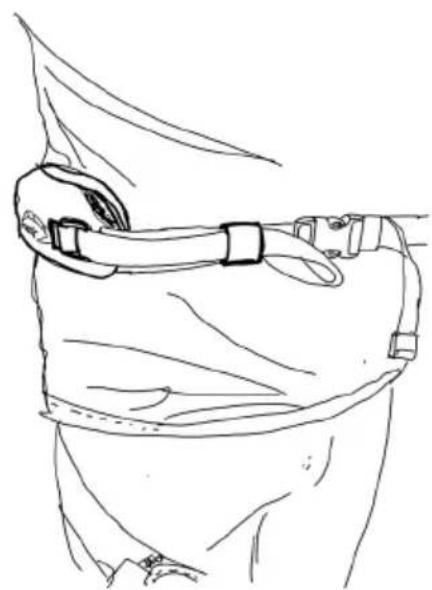
natural_image
Line drawing of a person wearing a wristband and holding an arm, with no visible text or symbols8 Käytön aikana
natural_image
Line drawing of a person wearing a medical or surgical device with attached straps and tubing (no text or symbols)natural_image
Technical line drawing of a person wearing a full-body safety harness (no text or symbols)18 Vastuu
natural_image
Line drawing of a person wearing a full-body harness and backpack (no text or symbols)natural_image
Line drawing of a person adjusting a necktie with a tool, no text or symbols presentnatural_image
Medical illustration showing a surgical procedure on a patient's abdomen, with arrows indicating movement or force (no text or symbols present)Steg 4: Stänga midjebälte
natural_image
Line drawing of a person wearing a belt buckle and holding a small object, no text or symbols presentnatural_image
Line drawing of a person adjusting a safety belt, no text or symbols presentnatural_image
Line drawing of a person adjusting a belt using scissors (no text or symbols)natural_image
Line drawing of a person wearing a full-body harness and seatbelt, viewed from the side (no text or symbols)natural_image
Medical illustration showing a hand performing a procedure on a patient's abdomen, with arrows indicating movement (no text or symbols present)natural_image
Line drawing of a person's lower back wearing a belt buckle, showing the grip and seat assembly (no text or symbols)Steg 9: Andra benet
natural_image
Line drawing of a person wearing a harness and pants, holding a belt (no text or symbols)natural_image
Medical illustration showing two different surgical or mechanical techniques for a hand holding a tool, with no visible text or symbols.natural_image
Line drawing of a person in a bent posture with arms and backpacks, no text or symbols present
natural_image
Line drawing of a person in a bent posture with backpacks, no text or symbols presentSteg 14: Stuva undan bandändar
natural_image
Line drawing of a hand holding a wristwatch with a device attached (no text or symbols)Steg 15: Stuva undan justeringsband
natural_image
Illustration of hands using a tool to cut or draw a piece of material (no text or symbols present)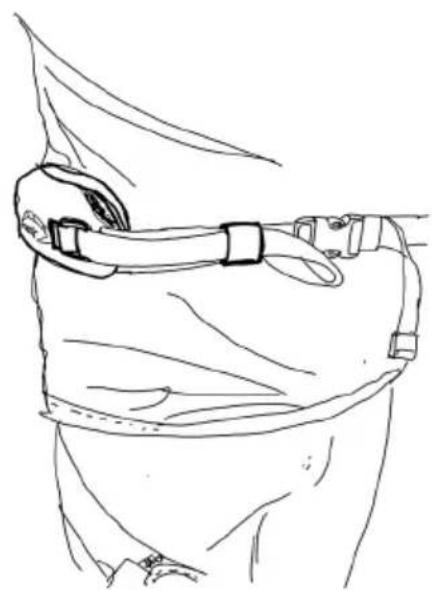
natural_image
Line drawing of a person wearing a wristband and holding an arm, with no visible text or symbols8 Vid användning
natural_image
Line drawing of a mechanical device with attached straps and tubing (no text or symbols)natural_image
Technical line drawing of a person wearing a full-body safety harness (no text or symbols)18 Ansvar
natural_image
Line drawing of a person wearing a full-body harness and backpack (no text or symbols)Trin 2: Brystremmen lukkes
natural_image
Line drawing of a person adjusting a necktie with a tool, no text or symbols presentTrin 3: Brystremmen justeres
natural_image
Medical illustration showing a surgical procedure on a patient's abdomen, with arrows indicating movement or force (no text or labels present)Trin 4: Taljeremmen lukkes
natural_image
Line drawing of a person adjusting a belt buckle, hands visible adjusting the belt (no text or symbols)Trin 5: Taljeremmen indstilles
natural_image
Line drawing of a person adjusting a safety belt, no text or symbols presentTrin 6: Skulderremmen indstilles
natural_image
Line drawing of a person adjusting a belt using scissors (no text or symbols)natural_image
Line drawing of a person wearing a full-body harness and safety harness, viewed from the side (no text or symbols)Trin 7: Benelementet lukkes
natural_image
Line drawing of a medical procedure on a patient's abdomen, showing hand placement and movement arrows (no text or symbols)natural_image
Line drawing of a person's lower body wearing a belt buckle, with no text or symbols present.Trin 9: Det andet ben
natural_image
Line drawing of a person wearing a harness and pants, holding a belt (no text or symbols)Trin 10: Den dynamiske støtte indstilles
natural_image
Medical illustration showing two different surgical or mechanical techniques for a hand holding a tool, with no visible text or symbols.natural_image
Line drawing of a person in a bent posture with arms and backpacks, no text or symbols present
natural_image
Line drawing of a person in a bent posture with backpacks, no text or symbols presentnatural_image
Line drawing of a hand holding a wristwatch with a device attached (no text or symbols)natural_image
Illustration of hands using a tool to cut or draw a piece of material (no text or symbols present)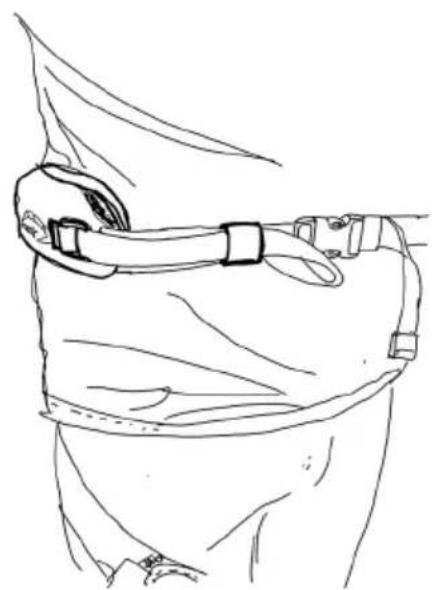
natural_image
Line drawing of a person wearing a wristband and holding an arm, with no visible text or symbols8 I drift
natural_image
Line drawing of a person wearing a harness and jacket, with no visible text or symbols16 Reparation/Service/Bortskaffelse
natural_image
Technical line drawing of a person wearing a full-body safety harness (no text or symbols)18 Ansvar
natural_image
Line drawing of a person wearing a full-body harness and backpack, viewed from behind (no text or symbols)natural_image
Line drawing of a person adjusting a neck buckle, no text or symbols presentnatural_image
Medical illustration showing a surgical procedure on a patient's abdomen, with arrows indicating movement or force (no text or symbols present)natural_image
Line drawing of two hands adjusting a belt buckle, no text or symbols presentnatural_image
Line drawing of a person adjusting a safety belt, no text or symbols presentnatural_image
Line drawing of a person adjusting a belt using scissors (no text or symbols)natural_image
Line drawing of a person wearing a full-body harness and safety harness, viewed from the side (no text or symbols)natural_image
Medical illustration showing a hand performing a procedure on a patient's abdomen, with arrows indicating movement (no text or symbols present)natural_image
Line drawing of a person's lower body wearing a belt buckle, with no text or symbols present.Шаг 9: вторая нога
natural_image
Line drawing of a person wearing a harness and pants, holding a belt (no text or symbols)natural_image
Medical illustration showing two different surgical techniques for a human leg, with no visible text or symbols.natural_image
Line drawing of a person in a bent posture with arms and backpacks, no text or symbols present
natural_image
Line drawing of a person wearing a high leg and holding a high-stance BOCOster bar (no text or symbols on the diagram itself)natural_image
Line drawing of a person in a bent posture with backpacks, no text or symbols presentnatural_image
Line drawing of a hand holding a wristwatch with a device attached (no text or symbols)natural_image
Illustration of hands using a tool to cut or draw a piece of material (no text or symbols present)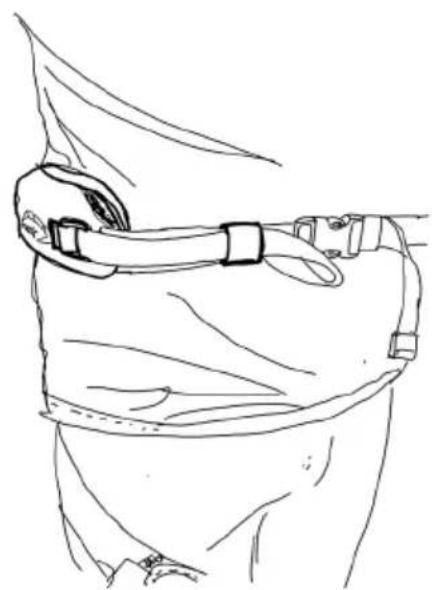
natural_image
Line drawing of a person wearing a wristband and holding an arm, with no visible text or symbols8 Эксплуатация
natural_image
Line drawing of a person wearing a helmet and holding a tool, with no visible text or symbolsnatural_image
Technical line drawing of a person wearing a full-body safety harness (no text or symbols)natural_image
Line drawing of a person wearing a full-body harness and backpack (no text or symbols)natural_image
Line drawing of a person adjusting a necktie with a tool, no text or symbols presentnatural_image
Medical illustration showing a surgical procedure on a patient's abdomen, with arrows indicating movement or force (no text or labels present)natural_image
Line drawing of a person wearing a belt buckle and holding a small object, no text or symbols presentnatural_image
Line drawing of a person adjusting a safety belt, no text or symbols presentnatural_image
Line drawing of a person adjusting a belt using scissors (no text or symbols)natural_image
Line drawing of a person wearing a full-body harness and safety harness, viewed from the side (no text or symbols)natural_image
Line drawing of a medical procedure on a patient's abdomen, showing hand placement and movement arrows (no text or symbols)natural_image
Line drawing of a person's lower body wearing a belt buckle, with no text or symbols present.Krok 9: Druga noga
natural_image
Line drawing of a person wearing a harness and pants, holding a belt (no text or symbols)natural_image
Medical illustration showing two different surgical techniques for a human leg, with no visible text or symbols.natural_image
Line drawing of a person in a bent posture with arms and backpacks, no text or symbols present
natural_image
Line drawing of a person in a bent posture with backpacks, no text or symbols presentnatural_image
Line drawing of a hand holding a wristwatch with a device attached (no text or symbols)natural_image
Illustration of hands using a tool to cut or draw a piece of material (no text or symbols present)
natural_image
Line drawing of a person wearing a wristband and holding an arm, with no visible text or symbols8 W trakcie pracy
natural_image
Line drawing of a person wearing a helmet and harness, with no visible text or symbolsnatural_image
Technical line drawing of a person wearing a full-body safety harness (no text or symbols)18 Odpowiedzialność
natural_image
Line drawing of a person wearing a full-body harness and backpack (no text or symbols)natural_image
Line drawing of a person adjusting a necktie device (no text or symbols present)natural_image
Medical illustration showing a surgical procedure on a patient's abdomen, with arrows indicating movement or force (no text or symbols present)natural_image
Line drawing of a person adjusting a belt buckle, hands visible adjusting the belt (no text or symbols)natural_image
Line drawing of a person adjusting a safety belt, no text or symbols presentnatural_image
Line drawing of a person adjusting a belt using scissors (no text or symbols)natural_image
Line drawing of a person wearing a full-body harness and safety harness, viewed from the side (no text or symbols)natural_image
Medical illustration showing a hand performing a procedure on a patient's abdomen, with arrows indicating movement (no text or symbols present)natural_image
Line drawing of a person's lower body wearing a belt buckle, with no text or symbols present.Krok 9: Druhá noha
natural_image
Line drawing of a person wearing a harness and pants, holding a belt (no text or symbols)natural_image
Medical illustration showing two different surgical or mechanical techniques for a hand holding a tool, with no visible text or symbols.natural_image
Line drawing of a person in a bent posture with arms and backpacks, no text or symbols present
natural_image
Line drawing of a person in a bent posture with backpacks, no text or symbols presentnatural_image
Line drawing of a hand holding a wristwatch with a device attached (no text or symbols)natural_image
Illustration of hands using a tool to cut or draw a piece of material (no text or symbols present)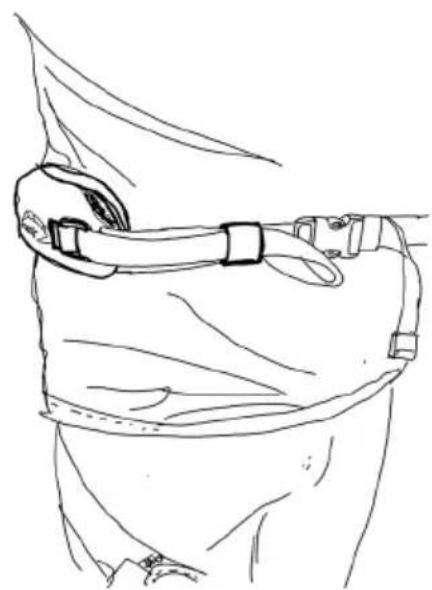
natural_image
Line drawing of a person wearing a wristband and holding an arm, with no visible text or symbols8 Během provozu
natural_image
Line drawing of a person wearing a helmet and harness, with no visible text or symbolsnatural_image
Technical line drawing of a person wearing a full-body safety harness (no text or symbols)18 Ručení
natural_image
Line drawing of a person wearing a full-body harness and backpack (no text or symbols)natural_image
Line drawing of a person adjusting a necktie with a tool, no text or symbols presentKorak 3: nastavljanje prsnega pasu
natural_image
Medical illustration showing a surgical procedure on a patient's abdomen, with arrows indicating movement or force (no text or symbols present)natural_image
Line drawing of a person wearing a belt buckle and holding a small object, no text or symbols presentKorak 5: nastavljanje trebušnega pasu
natural_image
Line drawing of a person adjusting a safety belt, no text or symbols presentnatural_image
Line drawing of a person adjusting a belt using scissors (no text or symbols)natural_image
Line drawing of a person wearing a full-body harness and safety harness, viewed from the side (no text or symbols)natural_image
Medical illustration showing a hand performing a catheter insertion procedure on a patient's abdomen (no text or labels)natural_image
Line drawing of a person's lower body wearing a belt buckle, with no text or symbols present.Korak 9: druga noga
- Ponovite koraka 7 in 8 za drugo nogo.
natural_image
Line drawing of a person wearing a harness and pants, holding a belt (no text or symbols)natural_image
Medical illustration showing two different surgical techniques for a human leg, with no visible text or symbols.natural_image
Line drawing of a person in a bent posture with arms and backpacks, no text or symbols present
natural_image
Line drawing of a person in a bent posture with backpacks, no text or symbols presentKorak 14: pospravljanje koncev pasnih trakov
natural_image
Line drawing of a hand holding a wristwatch with a device attached (no text or symbols)natural_image
Illustration of hands using a tool to cut or draw a piece of material (no text or symbols present)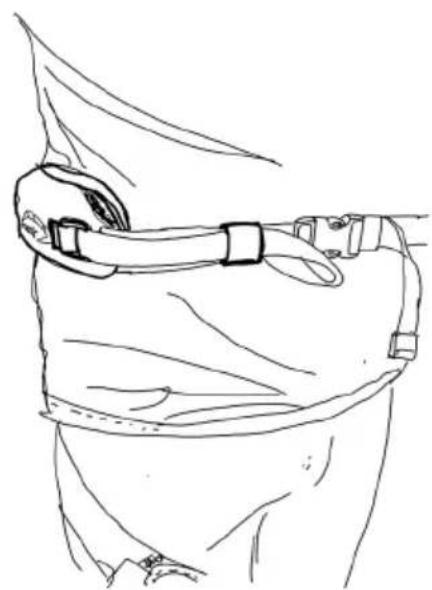
natural_image
Line drawing of a person wearing a wristband and holding an arm, with no visible text or symbols8 Med delovanjem
natural_image
Line drawing of a person wearing a helmet and harness, with no visible text or symbolsnatural_image
Technical line drawing of a person wearing a full-body safety harness (no text or symbols)18 Jamstvo
natural_image
Line drawing of a person wearing a full-body harness and backpack (no text or symbols)natural_image
Line drawing of a person adjusting a necktie with a tool, no text or symbols presentnatural_image
Medical illustration showing a surgical procedure on a patient's torso with arrows indicating force or movement (no text or labels present)Krok 4: Uzavretie bedrového popruhu
natural_image
Line drawing of two hands adjusting a belt buckle, no text or symbols presentnatural_image
Line drawing of a person adjusting a safety belt, no text or symbols presentKrok 6: Nastavenie popruhu ramien
natural_image
Line drawing of a person adjusting a belt using scissors (no text or symbols)natural_image
Line drawing of a person wearing a full-body harness and safety harness, viewed from the side (no text or symbols)Krok 7: Uzavretie škrupiny na nohu
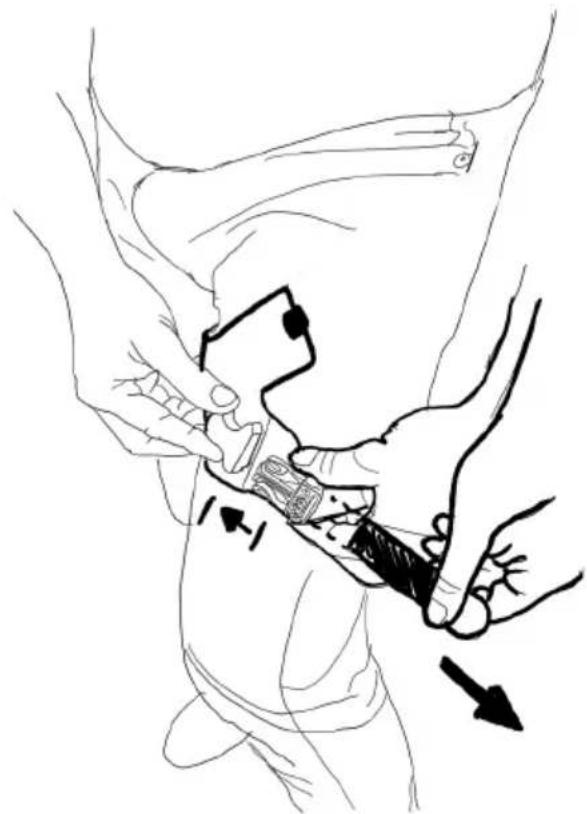
- Zatvorte blokovací uzáver škrupiny na nohu.
- Škrupina na nohu by mala byt umiestnená v strede stehna - medzi bedrami a kolenom.
- Zatiahnite za koniec popruhu, aby ste utiahli škrupinu na nohu.
• Dávajte pozor na pohodlné upevnenie.
natural_image
Medical illustration showing a hand performing a catheter insertion procedure on a patient's abdomen (no text or labels)natural_image
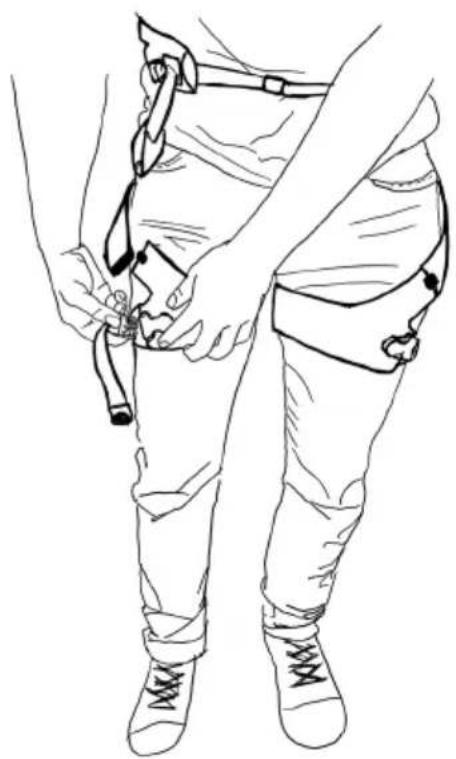
Line drawing of a person's lower body wearing a belt buckle, with no text or symbols present.Krok 9: Druhá noha
• Zopakujte pre druhú nohu kroky 7 a 8.
natural_image
Line drawing of a person wearing a harness and pants, holding a belt (no text or symbols)natural_image
Medical illustration showing two different surgical techniques for a human leg, with no visible text or symbols.natural_image
Line drawing of a person in a bent posture with arms and backpacks, no text or symbols present
natural_image
Line drawing of a person in a bent posture with backpacks, no text or symbols presentnatural_image
Line drawing of a hand holding a wristband with a device attached (no text or symbols)natural_image
Line drawing of hands holding a tool or device, no text or symbols present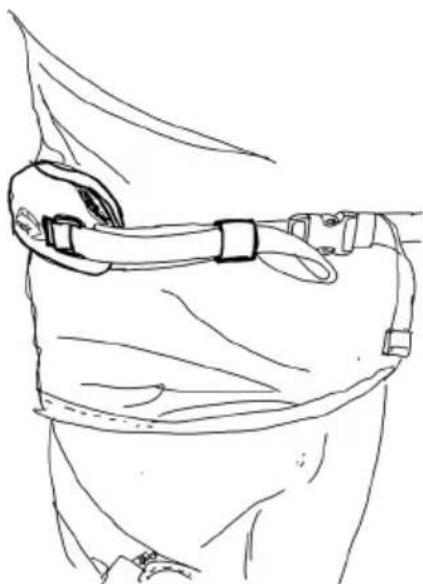
natural_image
Line drawing of a person wearing a medical or surgical device with arms and straps (no text or symbols)8 V prevádzke
natural_image
Line drawing of a person wearing a helmet and harness, with no visible text or symbolsnatural_image
Technical line drawing of a person wearing a full-body safety harness (no text or symbols)18 Ručenie
MAFELL AG
Beffendorfer Straße 4, D-78727 Oberndorf / Neckar
Telefon +49 (0)7423/812-0
Internet:
E-Mail:
Fax +49 (0)7423/812-218
www.mafell.de
mafell@mafell.de
- AVERTISSEMENT
- GB - EC Declaration of Conformity
- Im Betrieb
- Haftung
- Signs and symbols
- Product information
- Manufacturer's data
- Distributor
- Technical data
- Scope of supply
- Notes regarding hazards resulting from misuse
- Residual risk arising from use in the area of application
- Other information:
- Intended use of the BionicBack
- Product description
- Putting into operation
- Preparation
- Step 1: Donning
- Step 2: Closing the chest strap
- Step 3: Adjusting the chest strap
- Step 4: Closing the waist strap
- Step 5: Adjusting the waist strap
- Step 6: Adjusting the shoulder strap
- Step 7: Closing the leg shell
- Step 8: Closing the Velcro of the retaining strap
- Step 9: Second leg
- Step 11: Testing the dynamic support
- Step 12: Adjusting the static support
- Step 13: Testing the static support
- Step 14: Stowing away the ends of the belt strap
- Step 15: Stowing away the adjustment straps
- During operation
- Taking out of operation
- Maintenance checklist for the semi-annual inspection
- Wear parts
- Elastic force elements
- Freewheel rope and rope guide tubes:
- Cleaning/hygiene
- Replacing the hygiene pads
- Storage
- Repair / Service/ Disposal
- Optional accessories
- Liability
- Français
- Sommaire
- Responsabilité
- Passo 9: Seconda gamba
- Utilizzo
- Responsabilità
- Stap 3: borstriem instellen
- Stap 5: heupriem instellen
- Stap 6: schouderband instellen
- Stap 7: beenbevestiging sluiten
- Stap 9: tweede been
- Stap 15: verstelriemen opbergen
- Paso 2: Cerrar la correa pectoral
- Paso 4: Cerrar la correa abdominal
- Paso 5: Ajustar la correa abdominal
- Paso 6: Ajustar la correa del hombro
- Paso 9: Segunda pierna
- En funcionamiento
- Responsabilidad
- Käytön aikana
- Vastuu
- Steg 4: Stänga midjebälte
- Steg 9: Andra benet
- Steg 14: Stuva undan bandändar
- Steg 15: Stuva undan justeringsband
- Vid användning
- Ansvar
- Trin 2: Brystremmen lukkes
- Trin 3: Brystremmen justeres
- Trin 4: Taljeremmen lukkes
- Trin 5: Taljeremmen indstilles
- Trin 6: Skulderremmen indstilles
- Trin 7: Benelementet lukkes
- Trin 9: Det andet ben
- I drift
- Reparation/Service/Bortskaffelse
- Шаг 9: вторая нога
- Эксплуатация
- Krok 9: Druga noga
- W trakcie pracy
- Odpowiedzialność
- Krok 9: Druhá noha
- Během provozu
- Ručení
- Korak 3: nastavljanje prsnega pasu
- Korak 5: nastavljanje trebušnega pasu
- Korak 9: druga noga
- Korak 14: pospravljanje koncev pasnih trakov
- Med delovanjem
- Jamstvo
- Krok 4: Uzavretie bedrového popruhu
- Krok 6: Nastavenie popruhu ramien
- Krok 7: Uzavretie škrupiny na nohu
- V prevádzke
- Ručenie
Brand : Mafell
Model : BionicBack BB-1
Category : Tripod