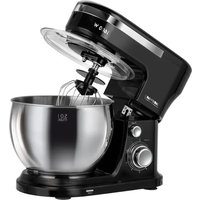
MRK-21 - Food Processor MPM - Free user manual and instructions
Find the device manual for free MRK-21 MPM in PDF.


| Product type | Stand mixer |
| Brand | MPM |
| Model | MRK-21 |
| Power supply | 220-240V~ 50-60Hz |
| Rated power | 1400 W |
| Maximum power | 1600 W |
| Stainless steel bowl capacity | 5.0 L |
| Plastic bowl capacity | 4.0 L |
| Number of speeds | 6 speeds + Pulse function |
| Movement | Planetary |
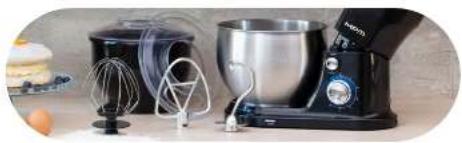
| Included accessories | Whisk, beater, dough hook |
| Maximum total food weight | 1.2 kg |
| Recommended continuous operation time | Up to 5 minutes for heavy doughs, thermal protection after 8 minutes |
| Bowl type | Stainless steel (5L) and plastic (4L) |
| Cleaning accessories | Hand washing recommended (not dishwasher safe) |
| Cleaning housing | Damp cloth |
| Safety | Head lock, overheat protection, automatic shut-off |
| Approximate dimensions (L x W x H) | 35 x 25 x 35 cm |
| Approximate net weight | 6 kg |
Frequently Asked Questions - MRK-21 MPM
User questions about MRK-21 MPM
0 question about this device. Answer the ones you know or ask your own.
Ask a new question about this device
Download the instructions for your Food Processor in PDF format for free! Find your manual MRK-21 - MPM and take your electronic device back in hand. On this page are published all the documents necessary for the use of your device. MRK-21 by MPM.
USER MANUAL MRK-21 MPM
EN We wish you satisfaction from using the product and invite you to check a wide range of other MPM appliances
PLANETARY FOOD PROCESSOR
PROCESADOR DE ALIMENTOS PLANETARIO
ROBOT PLANET AIRL
PLANARS ROBOTCEP
PLANE AREA
PLANETARINIS ROGICAS
PLANETARY SKOMBAINS
RELOREN MACHINE
FORCED: IL CAJARI PLAN IAR
natural_image
Exterior view of a modern kitchen stand mixer with a bowl and control panel (no visible text or symbols)cz NAVOD K OBSLUZE 3
DE BEDIENUNGSANLEITUNG 9
EE KASUTUSJUHEND 16
EL EXEIPATIO XPH21E 22
EN USER MANUAL 29
ES MANUAL DE INSTRUCCIONES 35
FR MANUEL DE L'UTILISATEUR 42
HU HASZNALATI UTASITAS 49
IT MANUALE D'USO 55
LT VARTOTOJO VADOVAS 62
LV LIETOTAJA ROKASGRAMATA 68
NL GEBRIJIKERSHANDLEIDING 74
PL NSTRUKCJA OBSLUGI 81
RO MANUAL DE UTILIZARE 88
RU АНСПРУКЦИЯ ПО ОБСЛУЖИВАНИЮ 95
SK POUŽIVATELSKA PRIRUCKA 102
UA ПОСІБНИК КОРИСТУВАЧА 108
MPM and S.A.
In the case of which
Ferriomemialleuera - p#r#y##s##d#
natural_image
Close-up of kitchen utensils including a blender, mixing bowl, and whisk on a table (no visible text or symbols)A. For anti-aliasing light exposure / HgCl_2O (in reading with optical exposure / Drought shock / Barech, Iversay )
BEZPEČNOSTNÍ POKYNY PŘI POUŽÍVÁNÍ
DEMONTÁŽ PŘÍSLUŠENSTVÍ
- Tiltable head
- Speed control knob
- Drive shaft with pin (attachment mounting location)
- Stainless steel bowl, 5.0 L capacity
- Plastic bowl, 4.0 L capacity
- Head lock button
-
Base with a place to attach the bowl
-
Cover of
a. stainless steel bowl with a ca-pacity of 5.0 L
b. plastic bowl with 4.0 L capacity - Stirrer for multi-component masses
- Stirrer for beating light masses
- Dough stirrer
PREPARATION FOR WORK - GENERAL REMARKS
- Remove the device from the packaging, remove all foil bags, labels, polystyrene fillers and transport locks.
- Before using the device for the first time, thoroughly wash all accessories that might come into contact with food
- Remember to assemble/disassemble accessories (bowl, stirrer, etc.) only when the device is not connected to the power source.
- Before connecting the device to the power source, make sure that the speed control knob (2) is in the "O" position.
ASSEMBLY OF ACCESSORIES
STEP 1 - BOWL ASSEMBLY
- Release the tillable head (1) by pressing the head lock lever (6), then gently lift the tilting head until a click (the sound of the lock triggering) can be heard.
- Place the bowl (4;5) in the base (7), then turn it (4;5) clockwise so that the protrusions on the bowl engage with the latches on the base (7).
STEP 2 - MOUNTING THE BOWL COVER
- Slide the cover (8) over the edge of the housing covering the drive shaft with the pin (3). Then, turn the cover (8) clockwise (the direction marked with the closed padlock symbol). Please note if the opening for adding ingredients is facing outwards so that the tillable head (1) does not hinder access to the opening.
STEP 3 - ATTACHING THE STIRRERS
- Push (until a resistance can be felt) one of the three dedicated stirrers (9, 10, 11) onto the drive shaft pin (3). Make sure that the spline on the pin fits into the mounting hole of the stirrer. Then turn the stirrer counterclockwise until the tab locks against the edge of the stirrer mounting hole.
WORKING WITH THE DEVICE
After attaching the stirrers (9, 10, 11), the device is ready for operation. Press the head lock button (6) and gently
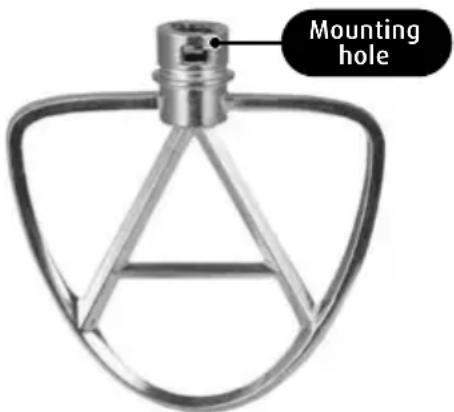
lower the tillable head (1) until you a click can be heard (the sound of the lock triggering). Make sure the tillable head is properly locked. Then place the food in the bowl (4;5) through the hole in the bowl cover (8), connect the device to the power supply and set the desired speed with the speed control knob (2).
CAUTION! In the case of the PULSE function, the speed control knob (2) must be held down. After releasing the knob (2), it automatically returns from the PULSE position to the "O" position, which turns the device off.
CAUTION! Do not press the head lock button (6) during the operation of the robot!
After work is finished, set the speed control knob (2) to the "O" position and disconnect the device from the power source.
REMOVING ACCESSORIES
The accessories can be dismantled after the tillable head (1) has been inseminated.
The accessories are released from the latches when turned counterclockwise. Before turning, the stirrers (9, 10, 11) must first be released from the lock, i.e. pushed deeper onto the drive shaft pin until resistance is felt. After dismantling the mixers (9, 10, 11) is finished, the bowl cover (8) should be removed.
USING THE FOOD PROCESSOR
APPLICATION OF INDIVIDUAL ATTACHMENTS
| Stirrer for mixing multi-component masses (9) | Mixing light and heavier masses, such as: dough, shortcrust pastry, minced meat and fish masses, butter and pudding creams, cheese masses, mashed potatoes as well as other vegetables, bases for cakes and loose cake ingredients. |
| Stirrer for beating light masses (10) | Whipping products that must be well aerated, such as: eggs, egg whites, sponge cake, whipped cream, meringues, creams, mayonnaise. |
| Kneading stirrer (hook) (11) | Kneading dough, especially yeast dough and kneading such as: bread, rolls, cakes, pancakes, pizza, choux pastry, pasta, breaded stripes. |
CAUTION! Do not leave knives, metal spoons, forks, etc. in the bowl while the appliance is operating.
CAUTION! The maximum total weight of food prepared with the appliance must not exceed 1.2 kg.
CAUTION! Mixing time of heavy masses must not exceed 5 minutes of continuous operation of the device; after this time, wait until the device cools down. The device has a built-in overheating protection mechanism that turns off the device after 8 minutes of continuous work. To turn the device on again, turn the speed control knob (2) to the "O" position, and after the device has cooled down, set the required speed again.
PLANETARY MOVEMENT OF THE SNAP-INS
During the operation of the planetary mixer, the stirrer rotates in a complex motion: around its axis and at the same time around the circumference of the bowl. Thanks to this, during one full round, the stirrer works thoroughly inside the bowl, which shortens the working
time and ensures greater efficiency of mixing. Therefore, the mixing time given in most recipes should be shortened.
The shape of the bowl and attachments has been designed in a way ensuring no need of constant scraping and pushing the ingredients from the walls of the bowl during the work of the robot. It is fully sufficient to clean the walls of the bowl once or twice during one mixing cycle. Disconnect the robot from the power supply before attempting such an action!
The robot may become warm during operation. Under heavy loads and after a long mixing cycle, the top of the robot head can become very warm. It's a fully normal occurrence.
CLEANING AND MAINTENANCE
- Make sure that the speed control knob (2) is in the "O" position.
- Disconnect the device from the power source.
- The tillable head (1) may become hot during prolonged use. Allow the device to cool down before working.
- Clean the housing of the device with a damp cloth.
- Clean the stirrers (9, 10, 11) under running water and with a detergent.
It is recommended to clean the accessories immediately after the operation is done. This ensures removal of any leftovers, preventing them from drying out, which makes washing more effective and easier as well as ensures the lesser chance of bacteria infestation.
CAUTION! Mixers (9, 10, 11) should not be washed in a dishwasher as it may damage them.
OPERATION OF THE DEVICE AT INDIVIDUAL SPEED RANGE
The robot has speed regulation in the range of 1-6 and the PULSE (P) function, used for short-term operation at maximum speed.
| Work speed | Work type Application | |
| 1 Pre-mixing | Slow pre-mixing, mixing all types of dough and dry ingredients. In this speed range, add flour and dry dough products as well as liquid ingredients until the mass is dry. Do not mix or knead yeast dough at this speed. | |
| 2 Slow mixing | For mixing at slow pace. This speed is ideal for kneading yeast, shortbread and pound cakes. Also to be used in the first phase of mashing potatoes and other vegetables as well as during adding liquid fat or flour to the dough. | |
| 3 Mixing, whipping | Used for kneading medium-heavy doughs, like shortbread dough. Speed range ideal for adding sugar and white to the meringues. This is the average speed of mixing masses, e.g. minced meat, pâtés and cakes. | |
| 4 Whipping | Medium-fast whipping, good for the initial phase of mayonnaise preparation, adding the ingredients of the custard cream. It is used to finish lighter masses that require aeration. | |
| 5 Fast whipping | Whipping creams and foam out of whites. | |
| 6 Very fast whipping | Whipping egg whites, whole eggs and whipped cream, used in the final phase of preparing mashed potatoes. | |
| P PULSE | Short-term mixing at maximum speed. | |
TEHNILISED SPETSIFIKATSIOONID
SAFETY INSTRUCTIONS FOR USE
-Read the instructions carefully before use.
-Take special care when children are near the device.
- Do not use the device for purposes other than those for which it was intended.
-Use of accessories not recommended by the manufacturer may cause damage to the device or personal injury.
- Do not immerse the device, cable or charger in water or other liquids.
-Do not leave the device unattended during operation.
- Disconnect the device from the power supply each time when the device is left unattended and before any assembling, disassembling, or cleaning works.
- Never use a damaged device, including one with a damaged cord or plug, in which case have it repaired at an authorised service centre.
-Do not use the device outdoors.
- Do not hang the power cable on sharp edges or allow it to come into contact with hot surfaces.
- Do not let the power cord hang over the edge of the table/counter.
-Do not touch the device with wet hands.
-The device is intended for domestic use only.
- Remember to keep a safe distance from rotating parts of the appliance during operation. Contact with them may result in personal injury or (i) damage to property, e.g. by pulling out loosely hanging items of clothing / jewellery etc.
- Place foodstuffs only with the dedicated pusher - do not put your hand into the chamber of the running appliance, do not place foodstuffs in the appliance with accessories not intended for this purpose, e.g. forks, spoons, etc.
- NOTE! The cutting blades are very sharp, avoid touching them while emptying or cleaning the appliance – it may result in serious injury.
- Clean the device, in particular parts being in direct contact with food, before first use, immediately after finishing work and if the device has not been used for a long time. The procedure is
described in details in the “CLEANING AND MAINTENANCE” section.
- Do not place the device near other electric cookers, burners, ovens, etc.
-Always ensure that all parts of the device are correctly fitted before starting work.
-Do not place the device on a hot surface.
- The device may be used by people with reduced physical, sensory or mental abilities, as well as those without prior knowledge or experience in using such types of device, provided that they either are supervised or have been instructed and fully understood the training content.
- Children are not allowed to perform cleaning and maintenance tasks.
- The device must be kept away from children. Keep the device and cable out of the reach of children.
-Children should be supervised to ensure that they do not play with the equipment/device.
- Disconnect the device from the power supply each time when the device is left unattended and before any assembling, disassembling, or cleaning works.
- Turn off the device before making any changes in equipment or before approaching any moving parts during use.
-Do not connect the plug to the power socket with wet hands.
- Do not pull the plug out of the power socket by pulling the cord.
-Use the device on a smooth and stable surface.
- For the safety of children, please do not leave freely accessible parts of the packaging (plastic bags, cardboard boxes, polystyrene, etc.).
- WARNING! Do not allow children to play with the film. Danger of suffocation!
DEVICE DESCRIPTION
- Tiltable head
- Speed control knob
- Drive shaft with pin (attachment mounting location)
- Stainless steel bowl, 5.0 L capacity
- Plastic bowl, 4.0 L capacity
- Head lock button
-
Base with a place to attach the bowl
-
Cover of
a. stainless steel bowl with a capacity of 5.0 L
b. plastic bowl with 4.0 L capacity - Stirrer for multi-component masses
- Stirrer for beating light masses
- Dough stirrer
PREPARATION FOR WORK - GENERAL REMARKS
- Remove the device from the packaging, remove all foil bags, labels, polystyrene fillers and transport locks.
- Before using the device for the first time, thoroughly wash all accessories that might come into contact with food
- Remember to assemble/disassemble accessories (bowl, stirrer, etc.) only when the device is not connected to the power source.
- Before connecting the device to the power source, make sure that the speed control knob (2) is in the "O" position.
ASSEMBLY OF ACCESSORIES
STEP 1 - BOWL ASSEMBLY
- Release the tillable head (1) by pressing the head lock lever (6), then gently lift the tilting head until a click (the sound of the lock triggering) can be heard.
- Place the bowl (4;5) in the base (7), then turn it (4;5) clockwise so that the protrusions on the bowl engage with the latches on the base (7).
STEP 2 - MOUNTING THE BOWL COVER
- Slide the cover (8) over the edge of the housing covering the drive shaft with the pin (3). Then,
turn the cover (8) clockwise (the direction marked with the closed padlock symbol). Please note if the opening for adding ingredients is facing outwards so that the till-able head (1) does not hinder access to the opening.
STEP 3 - ATTACHING THE STIRRERS
- Push (until a resistance can be felt) one of the three dedicated stirrers (9, 10, 11) onto the drive shaft pin (3). Make sure that the spline on the pin fits into the mounting hole of the stirrer. Then turn the stirrer counterclockwise until the tab locks against the edge of the stirrer mounting hole.
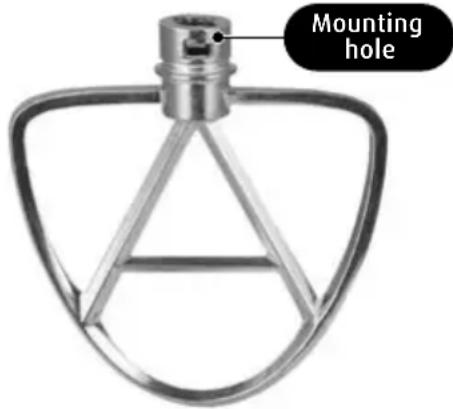
WORKING WITH THE DEVICE
After attaching the stirrers (9, 10, 11), the device is ready for operation. Press the head lock button (6) and gently lower the tillable head (1) until you a click can be heard (the sound of the lock triggering). Make sure the tillable head is properly locked. Then place the food in the bowl (4;5) through the hole in the bowl cover (8), connect the device to the power supply and set the desired speed with the speed control knob (2).
CAUTION! In the case of the PULSE function, the speed control knob (2) must be held down. After releasing the knob (2), it automatically returns from the PULSE position to the "O" position, which turns the device off.
CAUTION! Do not press the head lock button (6) during the operation of the robot!
After work is finished, set the speed control knob (2) to the "O" position and disconnect the device from the power source.
REMOVING ACCESSORIES
The accessories can be dismantled after the tillable head (1) has been inseminated.
The accessories are released from the latches when turned counterclockwise. Before turning, the stirrers (9, 10, 11) must first be released from the lock, i.e. pushed deeper onto the drive shaft pin until resistance is felt. After dismantling the mixers (9, 10, 11) is finished, the bowl cover (8) should be removed.
USING THE FOOD PROCESSOR
APPLICATION OF INDIVIDUAL ATTACHMENTS
| Stirrer for mixing multi-component masses (9) | Mixing light and heavier masses, such as: dough, shortcrust pastry, minced meat and fish masses, butter and pudding creams, cheese masses, mashed potatoes as well as other vegetables, bases for cakes and loose cake ingredients. |
| Stirrer for beating light masses (10) | Whipping products that must be well aerated, such as: eggs, egg whites, sponge cake, whipped cream, meringues, creams, mayonnaise. |
| Kneading stirrer (hook) (11) | Kneading dough, especially yeast dough and kneading such as: bread, rolls, cakes, pancakes, pizza, choux pastry, pasta, breaded stripes. |
CAUTION! Do not leave knives, metal spoons, forks, etc. in the bowl while the appliance is operating.
CAUTION! The maximum total weight of food prepared with the appliance must not exceed 1.2 kg.
CAUTION! Mixing time of heavy masses must not exceed 5 minutes of continuous operation of the device; after this time, wait until the device cools down. The device has a built-in overheating protection mechanism that turns off the device after 8 minutes of continuous work. To turn the device on again, turn the speed control knob (2) to the "O" position, and after the device has cooled down, set the required speed again.
PLANETARY MOVEMENT OF THE SNAP-INS
During the operation of the planetary mixer, the stirrer rotates in a complex motion: around its axis and at the same time around the circumference of the bowl. Thanks to this, during one full round, the stirrer works thoroughly inside the bowl, which shortens the working time and ensures greater efficiency of mixing. Therefore, the mixing time given in most recipes should be shortened.
The shape of the bowl and attachments has been designed in a way ensuring no need of constant scraping and pushing the ingredients from the walls of the bowl during the work of the robot. It is fully sufficient to clean the walls of the bowl once or twice during one mixing cycle. Disconnect the robot from the power supply before attempting such an action! The robot may become warm during operation. Under heavy loads and after a long mixing cycle, the top of the robot head can become very warm. It's a fully normal occurrence.
CLEANING AND MAINTENANCE
- Make sure that the speed control knob (2) is in the "O" position.
- Disconnect the device from the power source.
- The tillable head (1) may become hot during prolonged use. Allow the device to cool down before working.
- Clean the housing of the device with a damp cloth.
- Clean the stirrers (9, 10, 11) under running water and with a detergent.
It is recommended to clean the accessories immediately after the operation is done. This ensures removal of any leftovers, preventing them from drying out, which makes washing more effective and easier as well as ensures the lesser chance of bacteria infestation.
CAUTION! Mixers (9, 10, 11) should not be washed in a dishwasher as it may damage them.
OPERATION OF THE DEVICE AT INDIVIDUAL SPEED RANGE
The robot has speed regulation in the range of 1-6 and the PULSE (P) function, used for short-term operation at maximum speed.
| Work speed | Work type Application | |
| 1 Pre-mixing | Slow pre-mixing, mixing all types of dough and dry ingredients. In this speed range, add flour and dry dough products as well as liquid ingredients until the mass is dry. Do not mix or knead yeast dough at this speed. | |
| 2 Slow mixing | For mixing at slow pace. This speed is ideal for kneading yeast, shortbread and pound cakes. Also to be used in the first phase of mashing potatoes and other vegetables as well as during adding liquid fat or flour to the dough. | |
| 3 Mixing, whipping | Used for kneading medium-heavy doughs, like shortbread dough. Speed range ideal for adding sugar and white to the meringues. This is the average speed of mixing masses, e.g. minced meat, pâtés and cakes. | |
| 4 Whipping | Medium-fast whipping, good for the initial phase of mayonnaise preparation, adding the ingredients of the custard cream. It is used to finish lighter masses that require aeration. |
| 5 Fast whipping | Whipping creams and foam out of whites. |
| 6 Very fast whipping | Whipping egg whites, whole eggs and whipped cream, used in the final phase of preparing mashed potatoes. |
| P PULSE | Short-term mixing at maximum speed. |
TECHNICAL DATA
| Model | MRK-21 |
| Power supply | 220-240V~ 50-60Hz |
| Rated power 1400W | |
| Maximum power | 1600W |
| Availability of the shutdown and standby mode available | |
| Power consumption in standby mode - | |
| Power consumption in the shutdown mode 0,36W | |
| Power consumption in network standby mode | - |
| Automatically goes into standby mode after - | |
| Automatically goes into the shutdown mode after - | |
| Network standby mode, if the device has a connection function with the appli cation | - |
| Length of mains cable 1,04 m. |

ATTENTION! MPM agd SA reserves the right to make technical changes!
This manual has been machine translated.
Proper disposal of the product (waste electrical and electronic equipment)
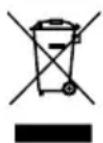
Marking on the product indicates that after the service-life of the product expires, it should not be disposed with other type of municipal waste. Used equipment may have a negative impact on the environment and health of people due to potentially containing hazardous substances, mixtures and components. Mixing electric waste with other types of waste or disassembling those in an unprofessional manner may cause a release of substances that are hazardous to the environment and health.
Used equipment should be handed-over to a point for collection of electric waste. In order to obtain detailed information regarding the electric waste collection points, the user should contact the municipal point of electric waste collection or used equipment processing department.
APPLICATION DES DIFFÉRENTS ACCESSOIRES
BESCHRIJVING VAN HET APPARAAT
WERKEN MET HET APPARAAT
WERKING VAN HET APPARAAT OP BEPAALDE SNELHEIDSINTERVALLEN
Legible signature of the buyer
- BEZPEČNOSTNÍ POKYNY PŘI POUŽÍVÁNÍ
- DEMONTÁŽ PŘÍSLUŠENSTVÍ
- PREPARATION FOR WORK - GENERAL REMARKS
- ASSEMBLY OF ACCESSORIES
- STEP 1 - BOWL ASSEMBLY
- STEP 2 - MOUNTING THE BOWL COVER
- STEP 3 - ATTACHING THE STIRRERS
- WORKING WITH THE DEVICE
- REMOVING ACCESSORIES
- USING THE FOOD PROCESSOR
- PLANETARY MOVEMENT OF THE SNAP-INS
- CLEANING AND MAINTENANCE
- OPERATION OF THE DEVICE AT INDIVIDUAL SPEED RANGE
- SAFETY INSTRUCTIONS FOR USE
- DEVICE DESCRIPTION
- ATTENTION! MPM agd SA reserves the right to make technical changes!
- Proper disposal of the product (waste electrical and electronic equipment)
- BESCHRIJVING VAN HET APPARAAT
- WERKEN MET HET APPARAAT
- WERKING VAN HET APPARAAT OP BEPAALDE SNELHEIDSINTERVALLEN
Brand : MPM
Model : MRK-21
Category : Food Processor