CS505AC - Saw Vonroc - Free user manual and instructions
Find the device manual for free CS505AC Vonroc in PDF.



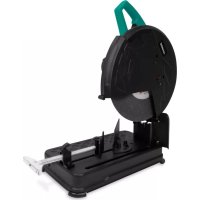
| Product type | Abrasive saw (metal cut-off saw) |
| Brand | Vonroc |
| Model | CS505AC |
| Power supply | 220-240 V~, 50/60 Hz |
| Power consumption | 2300 W |
| No-load speed | 4300 rpm |
| Blade diameter | 355 mm |
| Blade bore | 25.4 mm |
| Cutting capacity at 90° (rectangular) | 115 x 125 mm |
| Cutting capacity at 90° (L-section) | 135 x 135 mm |
| Cutting capacity at 90° (circular) | ∅ 125 mm |
| Cutting capacity at 45° (rectangular) | 110 x 102 mm |
| Cutting capacity at 45° (L-section) | 110 x 110 mm |
| Cutting capacity at 45° (circular) | ∅ 110 mm |
| Weight | 15.8 kg |
| Sound pressure level (LpA) | 92 dB(A) (K=3) |
| Sound power level (LwA) | 105 dB(A) (K=3) |
| Vibration (ah,AG) | 2.90 ± 1.5 m/s² |
| Protection class | Class II (double insulation) |
| Main functions | Angular cut 0-45°, adjustable depth stop, swivel vice, transport lock, spark guard |
| Maintenance and cleaning | Regular cleaning with a soft cloth; carbon brush replacement (wear < 6 mm) |
| Safety | Locking switch, movable blade guard, emergency stop (switch release), double insulation |
| Spare parts and repairability | Disc 355x25.4 mm, carbon brushes, disc flange; repair by authorized center |
| General information | Legal warranty, indoor use only, compliant with EU directives |
Frequently Asked Questions - CS505AC Vonroc
User questions about CS505AC Vonroc
0 question about this device. Answer the ones you know or ask your own.
Ask a new question about this device
Download the instructions for your Saw in PDF format for free! Find your manual CS505AC - Vonroc and take your electronic device back in hand. On this page are published all the documents necessary for the use of your device. CS505AC by Vonroc.
USER MANUAL CS505AC Vonroc
natural_image
White icon of a hammer and scale on a black background (no text or symbols)EN Original Instructions 06
natural_image
Close-up of a hand adjusting a mechanical component with a curved arrow indicating rotation (no text or symbols visible)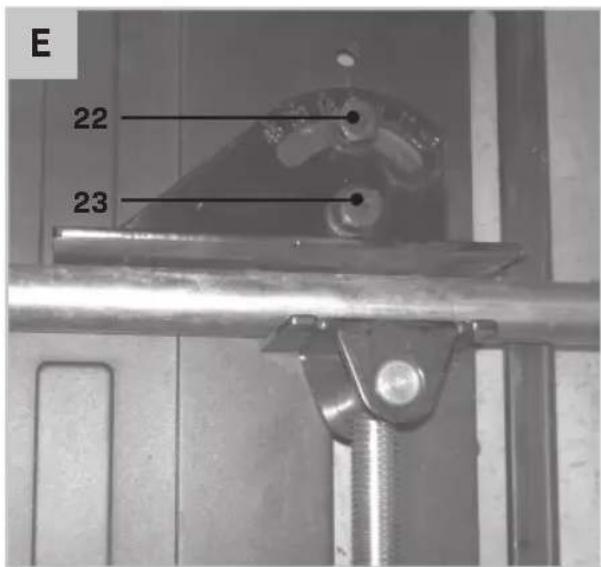
natural_image
Close-up of a metal clamp securing a cable, no visible text or symbolsVONROC
1.SAFETYINSTRUCTIONS
Read the enclosed safety warnings, the additional safety warnings and the instructions. Failure to follow the safety warnings and the instructions may result in electric shock, fire and/or serious injury. Save the safety warnings and the instructions for future reference.
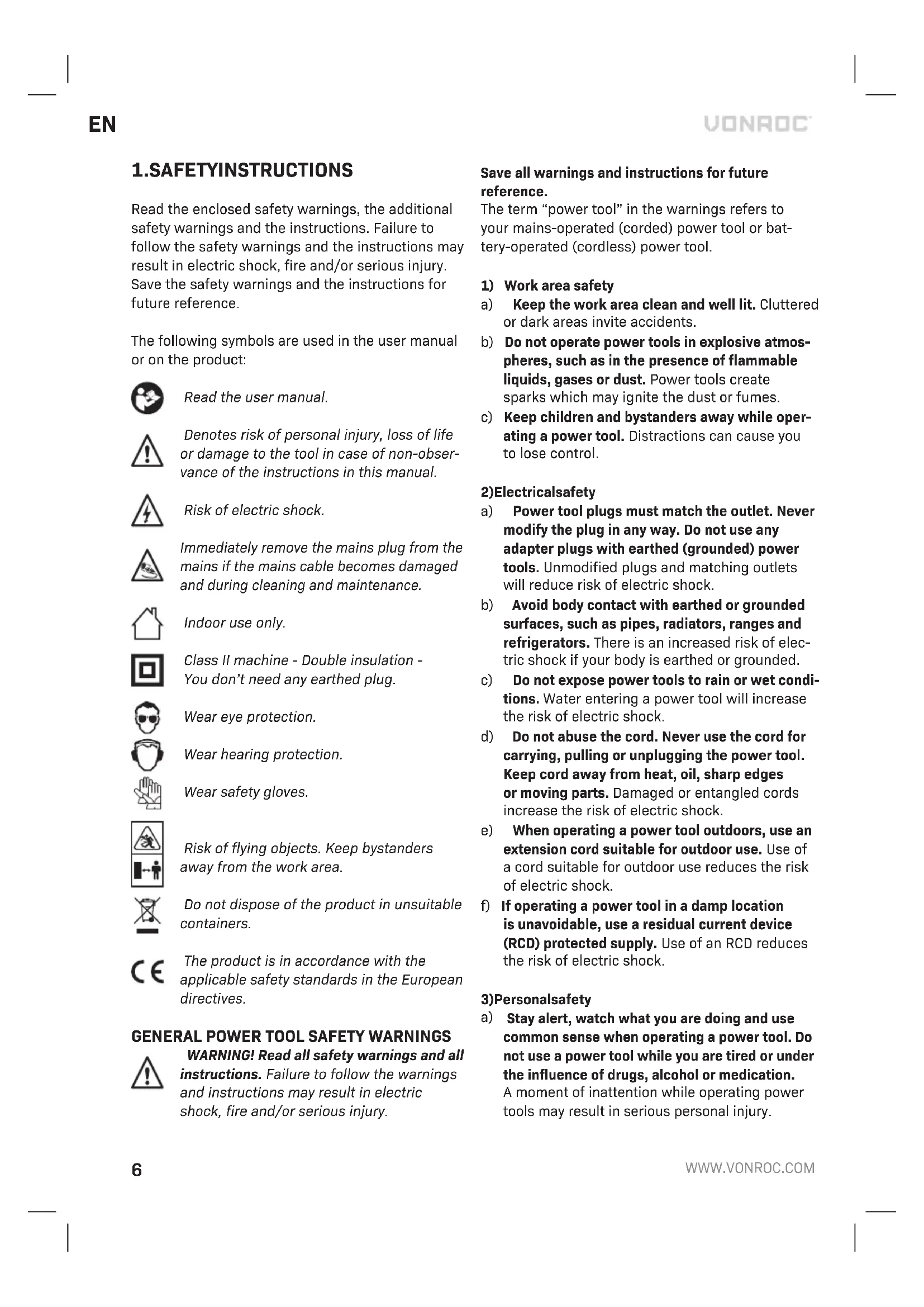
The following symbols are used in the user manual or on the product:

Read the user manual.

Denotes risk of personal injury, loss of life or damage to the tool in case of non-observance of the instructions in this manual.

Risk of electric shock.

Immediately remove the mains plug from the mains if the mains cable becomes damaged and during cleaning and maintenance.

Indoor use only.

Class II machine - Double insulation - You don't need any earthed plug.

Wear eye protection.

Wear hearing protection.

Wear safety gloves.

Risk of flying objects. Keep bystanders away from the work area.

Do not dispose of the product in unsuitable containers.

The product is in accordance with the applicable safety standards in the European directives.

GENERAL POWER TOOL SAFETY WARNINGS

WARNING! Read all safety warnings and all instructions. Failure to follow the warnings and instructions may result in electric shock, fire and/or serious injury.
Save all warnings and instructions for future reference.
The term “power tool” in the warnings refers to your mains-operated (corded) power tool or battery-operated (cordless) power tool.
1) Work area safety
a) Keep the work area clean and well lit. Cluttered or dark areas invite accidents.
b) Do not operate power tools in explosive atmospheres, such as in the presence of flammable liquids, gases or dust. Power tools create sparks which may ignite the dust or fumes.
c) Keep children and bystanders away while operating a power tool. Distractions can cause you to lose control.
2) Electricalsafety
a) Power tool plugs must match the outlet. Never modify the plug in any way. Do not use any adapter plugs with earthed (grounded) power tools. Unmodified plugs and matching outlets will reduce risk of electric shock.
b) Avoid body contact with earthed or grounded surfaces, such as pipes, radiators, ranges and refrigerators. There is an increased risk of electric shock if your body is earthed or grounded.
c) Do not expose power tools to rain or wet conditions. Water entering a power tool will increase the risk of electric shock.
d) Do not abuse the cord. Never use the cord for carrying, pulling or unplugging the power tool. Keep cord away from heat, oil, sharp edges or moving parts. Damaged or entangled cords increase the risk of electric shock.
e) When operating a power tool outdoors, use an extension cord suitable for outdoor use. Use of a cord suitable for outdoor use reduces the risk of electric shock.
f) If operating a power tool in a damp location is unavoidable, use a residual current device (RCD) protected supply. Use of an RCD reduces the risk of electric shock.
3) Personalsafety
a) Stay alert, watch what you are doing and use common sense when operating a power tool. Do not use a power tool while you are tired or under the influence of drugs, alcohol or medication. A moment of inattention while operating power tools may result in serious personal injury.
b) Use personal protective equipment. Always wear eye protection. Protective equipment such as dust mask, non-skid safety shoes, hard hat, or hearing protection used for appropriate conditions will reduce personal injuries.
c) Prevent unintentional starting. Ensure the switch is in the off-position before connecting to power source and/or battery pack, picking up or carrying the tool. Carrying power tools with your finger on the switch or energising power tools that have the switch on invites accidents.
d) Remove any adjusting key or wrench before turning the power tool on. A wrench or a key left attached to a rotating part of the power tool may result in personal injury.
e) Do not overreach. Keep proper footing and balance at all times. This enables better control of the power tool in unexpected situations.
f) Dress properly. Do not wear loose clothing or jewellery. Keep your hair, clothing and gloves away from moving parts. Loose clothes, jewellery or long hair can be caught in moving parts.
g) If devices are provided for the connection of dust extraction and collection facilities, ensure these are connected and properly used. Use of dust collection can reduce dust related hazards.
h) Do not let familiarity gained from frequent use of tools allow you to become complacent and ignore tool safety principles. A careless action can cause severe injury within a fraction of a second.
4) Power tool use and care
a) Do not force the power tool. Use the correct power tool for your application. The correct power tool will do the job better and safer at the rate for which it was designed.
b) Do not use the power tool if the switch does not turn it on and off. Any power tool that cannot be controlled with the switch is dangerous and must be repaired.
c) Disconnect the plug from the power source and/or the battery pack from the power tool before making any adjustments, changing accessories, or storing power tools. Such preventive safety measures reduce the risk of starting the power tool accidentally.
d) Store idle power tools out of the reach of children and do not allow persons unfamiliar with the power tool or these instructions to operate the power tool. Power tools are dangerous in the hands of untrained users.
e) Maintain power tools. Check for misalignment or binding of moving parts, breakage of parts and any other condition that may affect the power tool's operation. If damaged, have the power tool repaired before use. Many accidents are caused by poorly maintained power tools.
f) Keep cutting tools sharp and clean. Properly maintained cutting tools with sharp cutting edges are less likely to bind and are easier to control.
g) Use the power tool, accessories and tool bits etc. in accordance with these instructions, taking into account the working conditions and the work to be performed. Use of the power tool for operations different from those intended could result in a hazardous situation.
h) Keep handles and grasping surfaces dry, clean and free from oil and grease. Slippery handles and grasping surfaces do not allow for safe handling and control of the tool in unexpected situations.
5)Service
a) Have your power tool serviced by a qualified repair person using only identical replacement parts. This will ensure that the safety of the power tool is maintained.
SAFETY INSTRUCTIONS FOR CHOP SAWS - CUTTING INSTRUCTIONS
- Only ever use the cutting edge (never the side) of the disc for cutting. Avoid putting sideways pressure on the disc, and in particular, making it jam.
- Keep hands and body away from the disc. Whilst cutting with the machine, do not wear loose clothes which could get caught in it.
- Treat the disc cutting saw with care, never drop it, always store it in a safe, dry place. Avoid excessive temperatures and humidity.
- Ensure that all disc flanges and other fitted parts are in good condition and assembled according to instructions. Damaged or missing parts can lead to disc damage. Always use the flanges delivered with the machine.
- Never work with damaged discs, as these can be dangerous. When changing the disc, first switch off the machine. Rotate the disc by hand and inspect it for unevenness, twists or shearing. If you find any of these, get the disc removed and replace it with a new one. Also replace the disc if it falls to the floor. It may
have become fragile even if you cannot see any ostensible damage.
-
Before you begin cutting, do a test run, i.e. take a step back, switch on the motor and ensure that the disc is functioning correctly. After changing the disc, let the saw run for three minutes; thereafter, before doing any routine work, let it test-run for one minute.
-
Whilst the machine is running, never try to remove a work piece or to clamp a work piece in. Always wait until the disk stops turning completely before removing any work piece or change the settings.
-
Before installing the disc, always inspect the resin and rubber treated disc for shearing.
-
Always cross-check the maximum operating speed of the disc cutting saw with the maximum permitted speed of the motor. Never exceed the maximum permitted operating speed indicated on the disc.
-
Never try to mount a disc onto the machine by force, or to change the size of the axles. Never use discs which do not fit. Only use discs which fit the machine.
-
Do not attempt to attach saw blades to the machine, as it is not designed to cut wood.
-
Do not start cutting until the motor has reached full speed.
-
If, while operating the machine, the disc no longer turns or the motor sounds overloaded, switch off the machine immediately.
-
Keep easily flammable or fragile objects away from the machine. The machine operator must avoid letting his or her hands, face or feet come into contact with the sparks caused when cutting.
-
Position your machine firmly on a flat, even surface.
-
Only operate the machine at the voltage stated on the nameplate.
-
Never touch a sawn-off workpiece, always let it cool down first.
-
Never attempt to cut workpieces which exceed the permitted size.
-
During cutting, never position yourself in the direction of cutting. Always remain to one side.
-
Always leave safety devices installed.
-
Always ensure that you cut slowly and carefully. Avoid applying the disc to the workpiece with a jerky motion.
-
Never push the workpiece towards the disc while holding it in your hands. Always use the
clamp to fix the workpiece.
- Keep hands away from the cutting disk. Never cut work pieces where manual support is needed closer than 15cm from the rotating disk.
- Make sure the work piece is properly supported.
- Never use cutting fluids. These fluids could ignite or cause electrical shock.
- Do not cut cast-iron materials.
- Do not cut plastics, wood or synthetic materials.
- Do not cut magnesium.
Electrical safety
Always check that the voltage of the power supply corresponds to the voltage on the rating plate.
- Do not use the machine if the mains cable or the mains plug is damaged.
- Only use extension cables that are suitable for the power rating of the machine with a minimum thickness of 1.5 mm ^2 . If you use an extension cable reel, always fully unroll the cable.
2.MACHINEINFORMATION
Intended use
The chop saw has been design for cutting steel materials in various shapes.
TECHNICAL SPECIFICATIONS
| Model No. CS505AC | |
| Mains voltage 220V-240V~ | |
| Mains frequency 50/60Hz | |
| Power input 2.300 W | |
| Rated speed 4300/min | |
| Saw blade dimensions 355mm x 25.4mm | |
| Sound pressure L_PA | 92 dB(A) K=3 |
| Sound capacity L_WA | 105 dB(A) K=3 |
| Vibration a_h, AG | 2.90+1.5 m/s ^2 |
| Weight | 15.8kg |
| Max. cutting capacity at 90°- Rectangular- L shape- Circular | 115mm x 125mm135mm x 135mm 125mm |
| Max. cutting capacity at 45° | |
| - Rectangular | 110mm x 102mm |
| - L shape | 110mm x 110mm |
| - Circular | ∅ 110mm |
Vibration level
The vibration emission level stated in this instruction manual has been measured in accordance with a standardized test given in EN 62841; it may be used to compare one tool with another and as a preliminary assessment of exposure to vibration when using the tool for the applications mentioned.
- Using the tool for different applications, or with different or poorly maintained accessories, may significantly increase the exposure level.
- The times when the tool is switched off or when it is running but not actually doing the job, may significantly reduce the exposure level.
Protect yourself against the effects of vibration by maintaining the tool and its accessories, keeping your hands warm, and organizing your work patterns.
DESCRIPTION
The numbers in the text refer to the diagrams on pages 2-5.
- Upper safety guard
- Movable safety guard
- Cutting disk
- Spark deflector
- Workpiece clamp
- Handle grip
7a. On/Off switch
7b. Lock-off button - Carbon brush cover
- Spindle lock button
10A. Depth stop bolt
10B. Depth stop nut
-
Transport lock pin
-
Workpiece rear clamp
-
Workpiece front clamp
-
Stopper lever
-
Workpiece spindle
-
Disk exchange wrench
-
Machine spindle
-
Big inner washer
-
Big outer washer
-
Small washer
-
Disk bolt
3. OPERATION

Before exchanging blades or adjusting the machine, first remove the power plug from the wall socket.
Removing the transport lock (Fig. B)
The machine has a transport lock pin (11) which keeps its position low and makes it easy to transport the device and store it. The lock button blocks the up/down movement of the saw. And must be de-activated before using the saw.
- Remove the transport lock by pushing the machine down a little. While pushing down, the transport lock pin (11) can be pulled out with the other hand.
- After the pin (11) has been pulled out, the machine is able to move up and down freely.
Activating the transport lock (Fig. B)
- Push the machine down to its lowest position.
- Then push the transport lock pin (11) until it slides in place.
Adding / removing a cutting disk (Fig. A, B, C)

Always remove the mains plug before changing disks.

When changing disks always check related safety instructions.
Removing a cutting disk
- Take the disk wrench (16) from the machine base.
- Removing the disk is easier when the movable safety guard (2) is moved up.
- Press the spindle lock button (9) in order to block the movement of the machine spindle.
- Keep pressing the spindle lock button (9). Place the wrench (16) on the disk bolt and turn it slightly until the button (9) is pushed in to the max and the spindle rotation is blocked.
- Remove the bolt (21), small washer (20), the big outer washer (19).
- Then remove the cutting disk (3).
Mounting a cutting disk
- In case this has not been done yet, remove the bolt (21) by turning it counterclockwise, then remove small washer (20) and the big outer washer (19).
- Place the cutting disk (3) on the machine spindle.
- First add the big outer washer (19), then the small washer (20) and then the fixing bolt (21) according to fig C. and tighten it by hand until the spindle starts rotating.
- Press the spindle lock button (9) in order to block the movement of the machine spindle.
- Keep pressing the spindle lock button (9). Place the wrench (16) on the disk bolt and turn it slightly in clockwise direction.
- When the spindle lock blocks the rotation, tighten the disk bolt by using the wrench (16).
- Loosen the spindle lock button and ensure the spindle lock button is not blocking the spindle anymore.
Then check if the wheel is assembled correctly:
- Turn the disk (3) by hand a few rounds to check if it is turning freely and if it is aligned well.
- Turn the machine on and let the machine run for at least 3 minutes.
Switching the machine on/off (Fig. B)
- To start the machine, press and hold the lock-off button (7b) and press the on/off switch (7a).
- To stop the machine, release the on/off switch (7a).
The workpiece clamp (5) (Fig. A, B, D)
- Place the workpiece material between front clamp (13) and rear clamp (12).
- Raise the stopper(14) like shown in Fig. D. and rotate the screw handle (15) forward until the front clamp (13) touches the work piece.
- Then move the stopper (14) down (to lock the spindle) and securely fix the workpiece by turning the screw handle (15).
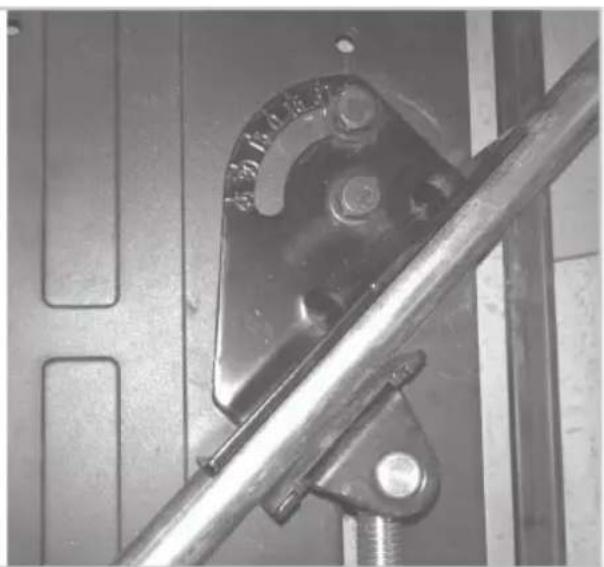
Cutting at angles (Fig. E)
The machine permits cutting at angles from 0^ to 45^ by adjusting the rear clamp (12).
- Loosen the 2 M10 hexagon socket head bolts (22 & 23) which hold the rear clamp (12) until the vice can move.
- Then set the rear clamp (12). to the correct angle and tighten both bolts (22 & 23) again.
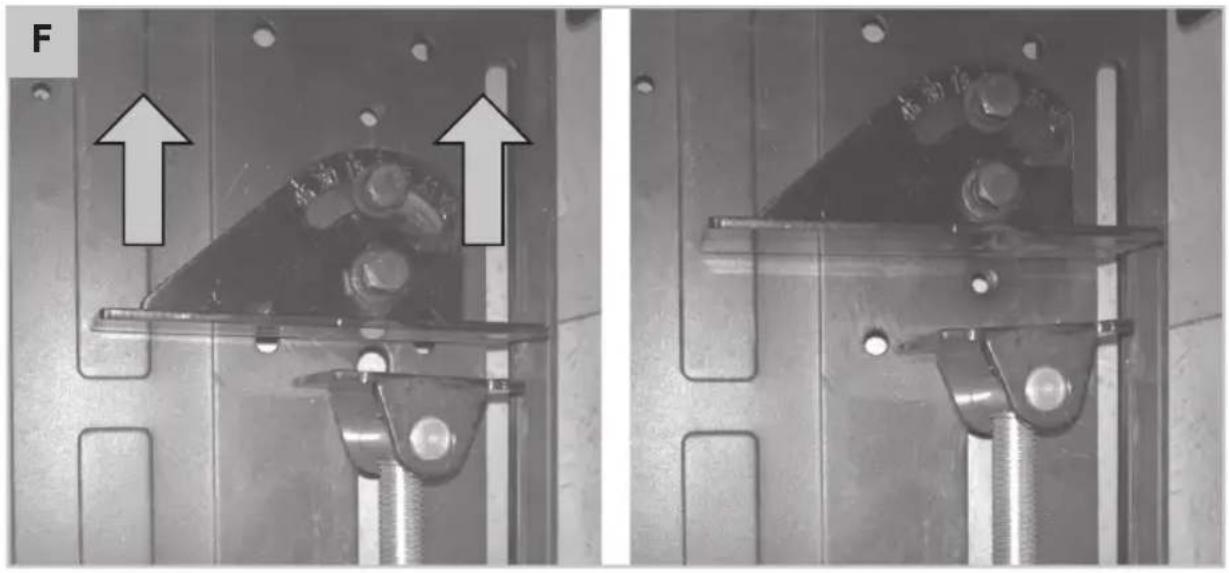
Moving the rear vice (to cut bigger work pieces) (Fig. F)
The vice permits a maximum workpiece size of 160mm when shipped from the factory. The vice can be adjusted in to the rear to permit workpiece size of 195 mm like shown in the right picture (fig. F).
- Loosen the 2 M10 hexagon bolts (22 & 23) on the rear clamp (12) completely.
- Move the clamp (12) backwards and fix the bolts (22 & 23) to the rear connection holes again.
Adjusting the depth stop (Fig. B)
The machine is equipped with a depth stop bolt, with this bolt the maximum cutting depth can be adjusted.
- If the depth cutting depth needs to be adjusted, loosen the lower nut (10B), then adjust the depth setting by turning the upper bolt (10A) to the desired positions.
- Then fix the lower nut (10B) again.
Cutting procedure
In order to cut material always follow the following procedure:
- Make sure the workpiece is clamped and supported well before starting the machine.
- Start the machine in upper position let it run for a while until it reaches max. speed.
- Ensure the blade is turning freely without vibration.
- Gently move down the machine until it touches the material.
- Keep pushing the handle with little force, make sure the blade speed is not dropping.
- Release the on/off switch after cutting and move the machine up gently.
- Only remove the workpiece when the cutting disk has stopped running completely.

Don't apply excessive force on the handle when cutting, the blade and machine will wear out faster and it does not result in faster cutting.
Inspecting and replacing the carbon brushes
The motor has 2 carbon brushes which will wear out during use. It's important to check the status of the carbon brushes, a worn-out carbon brush might result in bad performance and motor damage.
Removing carbon brushes (Fig. B)
- Ensure the mains plug is removed from the wall socket.
- Remove the carbon brush cover (8).
- Remove the carbon brushes by gently pulling the spring.
- Check wear on the brush block, when less than 6mm is left the carbon brush is worn out and needs to be replaced immediately.
- Repeat on the other side.
Inserting carbon brushes again (Fig. B)
- Ensure the mains plug is removed from the wall socket.
- Insert the carbon brushes and push the spring back in place.
- Add the carbon brush cover (8) while keeping the spring pushed, and turn the cover clockwise.
- After both carbon brushes are re-installed, test if machine is running smoothly without sparks.

Always replace both carbon brushes.
4.MAINTENANCE

Always disconnect the machine from the main power supply before carrying out any maintenance work.
Clean the machine casings regularly with a soft cloth, preferably after each use. Make sure that the ventilation openings are free of dust and dirt.
Remove very persistent dirt using a soft cloth moistened with soapsuds. Do not use any solvents such as gasoline, alcohol, ammonia, etc. Chemicals such as these will damage the synthetic components.
ENVIRONMENT

ulty and/or discarded electrical or electronic apparatus have to be collected at the appropriate recycling locations.
Only for EC countries
Do not dispose of power tools into domestic waste.
According to the European Guideline 2012/19/EC for Waste Electrical and Electronic Equipment and its implementation into national right, power tools that are no longer usable must be collected separately and disposed of in an environmentally friendly way.
WARRANTY
VONROC products are developed to the highest quality standards and are guaranteed free of defects in both materials and workmanship for the period lawfully stipulated starting from the date of original purchase. Should the product develop any failure during this period due to defective material and/or workmanship then contact VONROC directly.
The following circumstances are excluded from this guarantee:
- Repairs and or alterations have been made or attempted to the machine by unauthorized service centers;
- Normal wear and tear;
- The tool has been abused, misused or improperly maintained;
- Non-original spare parts have been used.
This constitutes the sole warranty made by company either expressed or implied. There are no other warranties expressed or implied which extend beyond the face hereof, herein, including the implied warranties of merchantability and fitness for a particular purpose. In no event shall VONROC be liable for any incidental or consequential damages. The dealers remedies shall be limited to repair or replacement of nonconforming units or parts.
The product and the user manual are subject to change. Specifications can be changed without further notice.
DECLARATION OF CONFORMITY CS505AC - CHOP SAW
(EN) We declare under our sole responsibility that this product is in conformity with directive 2011/65/EU of the European parliament and of the council of 8 June on the restriction of the use of certain hazardous substances in electrical and electronic equipment is in conformity and accordance with the following standards and regulations:
(DE) Der Hersteller erklärt eigenverantwortlich, dass dieses Produkt der Direktive 2011/65/EU des Europäischen Parlaments und des Rats vom 8. Juni 2011 über die Einschränkung der Anwendung von bestimmten gefährlichen Stoffen in elektrischen und elektronischen Geräten entspricht. den folgenden Standards und Vorschriften entspricht:
(NL) Wij verklaren onder onze volledige verantwoordelijkheid dat dit product voldoet aan de conform Richtlijn 2011/65/EU van het Europees Parlement en de Raad van 8 juni 2011 betreffende beperking van het gebruik van bepaalde gevaarlijke stoffen in elektrische en elektronische apparatuur en in overeenstemming is met de volgende standaarden en reguleringen:
(FR) Nous déclarons sous notre seule responsabilité que ce produit est conforme aux standards et directives suivants: est conforme à la Directive 2011/65/EU du Parlement Européen et du Conseil du 8 juin 2011 concernant la limitation d'usage de certaines substances dangereuses dans l'équipement électrique et électronique.
(ES) Declaramos bajo nuestra exclusiva responsabilidad que este producto cumple con las siguientes normas y estándares de funcionamiento: se encuentra conforme con la Directiva 2011/65/UE del Parlamento Europeo y del Consejo de 8 de junio de 2011 sobre la restricción del uso de determinadas sustancias peligrosas en los equipos eléctricos y electrónicos
(IT) Dichiariamo, sotto la nostra responsabilità, che questo prodotto è conforme alle normative e ai regolamenti seguenti: è conforme alla Direttiva 2011/65/UE del Parlamento Europeo e del Consiglio dell'8 giugno 2011 sulla limitazione dell'uso di determinate sostanze pericolose nelle apparecchiature elettriche ed elettroniche.
(SV) Vi försäkrar under vårt eget ansvar att denna produkt överensstämmer med Europaparlamentets och rådets direktiv 2011/65/EU av den 8 juni om begränsning av användningen av vissa farliga ämnen i elektrisk och elektronisk utrustning och är i överensstämmelse och enlighet med följande standarder och föreskrifter: