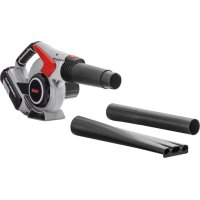
LB 4060 - Vacuum Cleaner AL-KO - Free user manual and instructions
Find the device manual for free LB 4060 AL-KO in PDF.



| Brand | AL-KO |
| Model | LB 4060 |
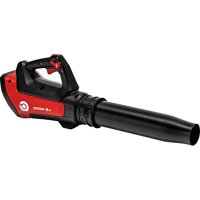
| Product type | Cordless leaf blower |
| Intended use | Domestic for garden (leaves, grass, debris) |
| Power supply | 40 V max lithium-ion battery (not included) |
| Recommended battery capacity | 4 Ah or 5 Ah (ref. 113280 / 113524) |
| Recommended charger | Ref. 113281 (not included) |
| Charging time | Max. 120 minutes |
| Speed regulator | Yes, continuous by pivoting |
| Included nozzles | 2 nozzles: round jet nozzle (large surfaces) and flat nozzle (precision) |
| Sound pressure level (LpA) | 89.5 dB(A) measured |
| Guaranteed sound power level | 96 dB(A) |
| Weight (approx.) | Approx. 2.5 kg (without battery) |
| Total length (approx.) | Approx. 80 cm (with nozzle attached) |
| Warranty | Legal period according to country (manufacturing defects) |
| Maintenance | Clean after use, store dry |
| Spare parts | Blower nozzles, battery, charger |
| Safety | Read the complete manual before use; wear PPE (goggles, hearing protection) |
Frequently Asked Questions - LB 4060 AL-KO
User questions about LB 4060 AL-KO
0 question about this device. Answer the ones you know or ask your own.
Ask a new question about this device
Download the instructions for your Vacuum Cleaner in PDF format for free! Find your manual LB 4060 - AL-KO and take your electronic device back in hand. On this page are published all the documents necessary for the use of your device. LB 4060 by AL-KO.
USER MANUAL LB 4060 AL-KO
natural_image
Line drawing of a mechanical device with lever and base mount (no text or symbols)


Inhaltsverzeichnis
Deutsch 6
English 25
Nederlands 43
Français....62
Español 83
Italiano....102
Slovenščina 121
Hrvatski....140
Polski 158
Česky 179
Slovenská 197
Magyarul....216
Dansk 235
Svensk 253
Norsk 271
Suomi 289
Lietuvių 307
Latviešu 326
Русский 345
Україна 367
© 2017
AL-KO KOBER GROUP Kötz, Germany
This documentation or excerpts therefrom may not be reproduced or disclosed to third parties without the express permission of the AL-KO KOBER GROUP.


LB 4060
Art.-Nr. 113610

LpA = 79,5 dB(A), K = 3,0 dB(A)
DIN EN ISO 3744

< 1,91 m/s² (K = 1,5 m/s²)
DIN EN 28662-1

x_1 ca. 250 km/h


B05-3640
Art.-Nr. 113280

B05-3650
Art.-Nr. 113524

36 V (40 V max.) 36 V (40 V max.)

4,0 Ah 5,0 Ah

90 min 120 min

max. 32 min max. 45 min
www.al-ko.com/service-contacts
Wolfgang Hergeth Managing Director
Benannte Stelle
1 About these operating instructions 27
1.1 Legends and signal words.... 27
2 Product description 27
2.1 Designated use 27
2.2 Possible foreseeable misuse.... 27
2.3 Residual dangers 27
2.4 Scope of supply 27
2.5 Symbols on the appliance 28
2.6 Safety and protective devices 28
2.7 Product overview (01) 28
3 Safety instructions 29
3.1 General safety instructions for power tools 29
3.1.1 Electrical safety 29
3.1.2 Personal safety 30
3.1.3 Use and handling of the electrical tool 30
3.1.4 Safety in the workplace 31
3.1.5 Use and handling of the rechargeable battery-operated tool 32
3.1.6 Service 32
3.2 Safety instructions for leaf blowers.... 33
3.2.1 Operator 33
3.2.2 Safety in the workplace 33
3.2.3 Safety of persons, animals and property.... 33
3.2.4 Noise pollution 34
3.2.5 Vibration load 35
4 Installation.... 36
4.1 Mounting the blowing tubes (02) 36
5 Start-up 37
5.1 Charging the rechargeable battery 37
6 Operation 37
6.1 Inserting and pulling out the rechargeable battery (04, 05).... 37
6.2 Operating the leaf blower (03).... 37
7 Working behaviour and working technique.... 38
8 Transport 38
9 Storage 39
9.1 Storing the rechargeable battery and charger 39
10 Maintenance and care 39
11 Disposal 39
12 After-Sales / Service 40
13 Help in case of malfunction.... 41
14 Guarantee.... 42
15 EU declaration of conformity.... 42
1 ABOUT THESE OPERATING INSTRUCTIONS
The German version is the original operating instructions. All additional language versions are translations of the original operating instructions.
It is essential to carefully read through these operating instructions before start-up. This is essential for safe working and trouble-free handling.
■ Always safeguard these operating instructions so that they can be consulted if you need any information about the appliance.
■ Only pass on the appliance to other persons together with these operating instructions.
■ Comply with the safety and warning information in these operating instructions.
1.1 Legends and signal words

DANGER!
Denotes an imminently dangerous situation which will result in fatal or serious injury if not avoided.

WARNING!
Denotes a potentially dangerous situation which can result in fatal or serious injury if not avoided.

CAUTION!
Denotes a potentially dangerous situation which can result in minor or moderate injury if not avoided.
IMPORTANT!
Denotes a situation which can result in material damage if not avoided.

NOTE
Special instructions for ease of understanding and handling.
2 PRODUCT DESCRIPTION
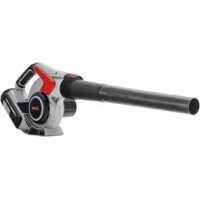
These operating instructions describe a hand-operated, rechargeable battery-powered leaf blower.
2.1 Designated use
This rechargeable battery-powered leaf blower is designed for private use. It can be used for:
■ Blowing away and collecting leaves, grass, dirt and refuse.
Before starting work, assemble the respective accessories that are enclosed.
Any other use, as well as unauthorised conversions or add-ons, are regarded as contrary to the intended use and will result in invalidation of the warranty as well as loss of conformity (CE mark); the manufacturer will thus decline any responsibility for damage and/or injury suffered by the user or third parties.
2.2 Possible foreseeable misuse
The appliance is designed neither for commercial use in public parks and sports facilities, nor for use in farming and forestry.
2.3 Residual dangers
Even during correct use of the appliance, there is always a certain residual risk that cannot be excluded. Depending on the use, the following potential risks can be derived from the type and construction of the appliance:
■ Throwing out of cuttings, soil and small stones
■ Inhalation of cuttings particles if no breathing protection is worn.
■ Damage to the hearing if no hearing protection is worn.
2.4 Scope of supply

NOTE
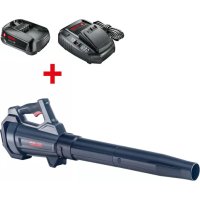
The rechargeable battery and charging unit are not included in the scope of delivery and must therefore be purchased separately.
The rechargeable battery and charger must be purchased separately:
Lithium ion rechargeable battery, 40 V max., 4 Ah
Order No. rechargeable battery 113280, order No. charger 113281
Lithium ion rechargeable battery, 40 V max., 5 Ah
Order No. rechargeable battery 113524, order No. charger 113281
2.5 Symbols on the appliance
Symbol Meaning


Pay special attention when handling this product.
Read the operating instructions before starting operation.
Danger due to objects being thrown out.
Keep other people out of the danger area.
Do not reach into the fan.
Danger due to rotating parts
Read the operating instructions before maintenance work
Wear protective glasses and ear defenders.
Protect the appliance against rain and moisture.
2.6 Safety and protective devices

WARNING!
Risk of injury
Defective and disabled safety and protective devices can lead to serious injury.
■ Have any defective safety and protective devices repaired.
■ Never disable safety and protective devices.
2.7 Product overview (01)
The product overview (01) provides an overview of the machine.
No. Component
| 1 Lower blowing tube with round nozzle, for large areas |
| 2 Upper blowing tube |
| 3 Locking button |
| 4 Air speed regulator |
| 5 Hand grip |
| 6 Rechargeable battery* |
| 7 Charger with mains plug* |
| 8 Lower blowing tube with flat nozzle, for precision work |
| 9 Instructions for use |
* Not included in the scope of delivery.
3 SAFETY INSTRUCTIONS

DANGER!
Lack of knowledge of the safety instructions can pose a danger of extremely severe or even fatal injury.
Lack of knowledge of the safety instructions and operating instructions can lead to extremely serious and even fatal injury.
- Observe all safety instructions and instructions for use in these operating instructions as well the operating instructions which are referred to before you start using the appliance.
- Keep all supplied documents in a safe place for future reference.
3.1 General safety instructions for power tools

WARNING!
Read all safety instructions, instructions, illustrations and technical data that are provided with this power tool.
Failure to comply with the following instructions can lead to an electric shock, fire and/or series injuries.
- Keep all safety instructions and other instructions for future reference.
The term "power tool" used in the safety instructions refers to mains-operated power tools (with mains cable) and to rechargeable battery-operated power tools (without mains cable).
3.1.1 Electrical safety
■ Avoid physical contact with earthed surfaces such as on pipes, heaters, cookers and refrigerators. There is an increased risk of electric shock if your body is earthed.
- Keep electric tools out of the rain and away from moisture. Water getting into an electrical tool increases the risk of an electric shock.
3.1.2 Personal safety
■ Be alert, pay attention to what you are doing and take a cautious approach to working with a power tool. Do not use a power tool if you are tired or under the influence of drugs, alcohol or medicines. A moment's in-attentiveness when using the power tool can result in serious injury.
■ Wear personal protective equipment, and always use safety goggles. The injury risk can be reduced by wearing personal protective equipment such as a dust mask, non-slip safety shoes, long trousers, a protective helmet or ear defenders, depending on the type and application of the power tool.
- Avoid starting to operate the machine inadvertently. Ensure the switch is in the off-position before connecting to power source and/or rechargeable battery, picking up or carrying the tool. Accidents can be caused by leaving your finger on the switch when you carry the power tool or when you connect it to the power supply.
■ Remove the adjusting tools or spanner before you switch on the power tool. A tool or spanner that is in a rotating part of the machine can cause injury.
■ Avoid an abnormal bodily posture. Make sure you can stand safely and keep your balance at all times. This will enable you to control the power tool better if something unexpected happens.
■ Wear suitable clothing. Do not wear baggy clothing or jewellery. Keep your hair, clothes and gloves away from moving parts. Loose clothing, jewellery or long hair can be snagged on moving parts.
3.1.3 Use and handling of the electrical tool
- Do not overload the power tool. Use the appropriate power tool for the job you are doing. Using the appropriate power tool will enable you to work more effectively and safely in the specified performance range.
■ Do not use a power tool if it has a defective switch. A power tool that can no longer be switched on or off is dangerous and must be repaired.
■ Disconnect the plug from the socket and/or remove the rechargeable battery before you make adjustments to the appliance, change replacement tool parts or put the appliance away. This precautionary measure will prevent the machine from starting inadvertently.
- Keep unused power tools out of the reach of children. Do not allow people to use the power tool if they are not familiar with it or have not read these instructions. Power tools are dangerous if they are used by inexperienced people.
■ Look after power tools and the insertion tool with care. Check whether moving parts function perfectly and do not stick, whether there are any broken parts or parts that are damaged in such a way that the function of the power tool is impaired. Have damaged parts repaired before using the power tool. Many accidents are caused by failure to maintain power tools properly.
- Keep cutting tools sharp and clean. Carefully maintained cutting tools with
sharper cutting edges are less likely to stick and are easier to control.
■ Use power tools, accessories, insertion tools, etc. according to these instructions. When doing so, take account of the working conditions and the activity to be undertaken. Using power tools for applications other than the intended purpose can result in dangerous situations.
- Keep the grips and grip surfaces dry, clean and free from oil and grease. Slippery grips and grip surfaces prevent safe operation and control of the power tool in unforeseen situations.
3.1.4 Safety in the workplace
- Keep your working area clean, and make sure it is well illuminated. Untidiness or dimly lit working areas can lead to accidents.
- Do not work with the power tool in a potentially explosive atmosphere with the presence of flammable liquids, gases or dust. Power tools give rise to sparks that can ignite the dust or vapours.
- Keep children and other people away from the power tool when using it. If you are distracted, you may lose control of the power tool.
3.1.5 Use and handling of the rechargeable battery-operated tool
■ Only recharge batteries with chargers that are recommended by the manufacturer. Using a charger intended for one particular type of rechargeable battery with a different type of rechargeable battery represents a fire risk.
■ Only use batteries in the power tools that are intended for this purpose. Using other batteries can lead to injuries and represents the risk of fire.
- Keep the unused rechargeable battery away from paper clips, coins, keys, nails, screws or other small metal objects that could short-circuit the contacts. A short circuit between the rechargeable battery contacts can result in burns or fire.
■ Incorrect use can result in fluid leaking out of the rechargeable battery. Avoid coming into contact with it.
In case of inadvertent contact, rinse off with water. If the fluid gets into your eyes, additionally seek medical assistance. Leaking rechargeable battery fluid can lead to skin irritations or burns.
■ Do not use a damaged or changed rechargeable battery. Damaged or changed batteries can behave unpredictably and lead to fire, explosion or a risk of injury.
- Do not expose a rechargeable battery to fire or high temperatures. Fire or temperatures over 130 °C can cause an explosion.
■ Comply with all of the instructions for charging, and never charge the rechargeable battery or the rechargeable battery-operated tool outside of the temperature range specified in the operating instructions. Incorrect charging or charging outside of the permissible temperature range can destroy the rechargeable battery and increase the risk of fire.
3.1.6 Service
■ For your own safety, only have your power tool repaired by qualified specialist per-
sonnel using genuine spare parts. This ensures that the power tool remains safe.
■ Never maintain damaged batteries. All rechargeable battery maintenance should only ever be undertaken by the manufacturer or authorised customer service points.
3.2 Safety instructions for leaf blowers
3.2.1 Operator
■ Young people under 16 years of age and people who do not know the operating instructions are not allowed to use the appliance. Observe any country-specific safety regulations concerning the minimum age of the user.
- Do not operate the appliance if you are under the influence of alcohol, drugs or medication.
3.2.2 Safety in the workplace
■ Work only in daylight or under very bright artificial light.
■ Before work, remove any hazardous products and objects from the working area, e.g. explosive and inflammable products, hot ashes, combustion residues, smouldering cigarettes, branches, pieces of
glass, sharp objects, pieces of metal, stones.
■ Operate the appliance only on solid and level ground and not on sharp inclines.
■ Pay attention to stability.
■ When working, move cautiously and slowly. Do not run. Watch out for obstacles.
■ When working on a slope:
■ Never work on a smooth and slippery slope.
■ Always ensure that you are standing securely.
■ Always blow the leaves near to the ground.
■ Never work up a slope.
3.2.3 Safety of persons, animals and property
■ Only use the appliance for the purposes for which it is intended. Any non-intended use can lead to injury and property damage.
■ You are responsible for accidents and endangering other persons or your property.
■ Only switch on the appliance when there are no persons and/or animals in the working area.
- Maintain a safe distance to persons or animals, or switch off the appliance if persons or animals approach.
■ Never aim the blowing tube at persons or animals.
■ Never blow refuse in the direction of persons or pets.
■ During operation, keep your eyes and ears away from the intake opening. - Do not reach into the vacuum and vent grilles when the motor is running. Injuries can occur due to rotating appliance parts.
■ Always switch off the appliance when it is not needed, e.g. when changing the work area, during maintenance and care work. - Immediately switch off the appliance if there is an accident in order to avoid further injuries and/or property damage.
■ Never operate the appliance with worn or defective parts. Worn or defective appliance parts can cause serious injuries. - Keep the appliance out of the reach of children.
■ Switch off the appliance before crossing gravel paths.
■ Do not lay the appliance down on gravel whilst switched on.
3.2.4 Noise pollution
A certain level of noise exposure from this appliance is inevitable. Carry out noisy work at approved and specified time periods. Observe rest periods as necessary and restrict the duration of the work to a minimum. For your personal protection and protection of persons in the vicinity, appropriate hearing protection must be worn.
3.2.5 Vibration load

WARNING!
Danger due to vibration
The actual magnitude of the vibration emissions during the use of the appliance may deviate from that stated by the manufacturer. Observe the following influencing factors before or during use:
■ Is the appliance being used as intended?
Is the material being cut or processed in the proper manner?
■ Is the appliance in a proper condition of use?
Is the cutting tool properly sharpened or is the correct cutting tool installed?
Are the handle grips and any optional vibration grips mounted, and are they firmly attached to the appliance?
■ Only operate the appliance at the motor speed required for the respective work. Avoid using the maximum speed in order to reduce noise and vibrations.
■ The noise and vibrations of the appliance can increase due to improper use and maintenance. This leads to damage of the health. In this case, immediately switch off the appliance and have it repaired by an authorised service workshop.
The degree of stress due to vibration depends on the work to be performed or on the use that the appliance is put to. Estimate the stress and plan appropriate work breaks. This considerably reduces stress due to vibration over the entire working time.
■ Extensive use of the appliance exposes the operator to vibrations, which can lead to circulatory issues ("white fingers"). To avoid this risk, wear gloves and keep your hands warm. If any symptoms of "white fingers" occur, immediately consult a physician. These symptoms include: Numbness, loss of feeling, tingling, itching, pain, reduced muscular strength, changes in the colour or condition of the skin. Normally these conditions affect the fingers, hands or pulse. The risk increases at low temperatures.
■ Take long breaks during your working day so you can recover from the noise and the vibrations. Plan your work in such a way that the use of appliances that generate strong vibrations is spread over several days.
If you notice an unpleasant sensation or discolouration of the skin on your hands when using the appliance, stop work immediately. Take sufficient work breaks. Without sufficient breaks, a hand/arm vibration syndrome can occur.
- Minimise your risk of being exposed to vibrations. Maintain the appliance according to the instructions in the operating instructions.
If the appliance is used frequently, contact your dealer to purchase anti-vibration accessories (e.g. handles).
- Avoid working with the appliance at temperatures below 10 °C. Define how the vibration load can be limited in a work plan.
4 INSTALLATION

WARNING!
Danger if assembly is not carried out completely!
Operation of an incom- pletely assembled appli- ance can result in serious injury.
■ Only operate the appliance when it is fully assembled.
- Do not insert the battery into the appliance until it is fully assembled.
- Check that all safety and protective devices are in place and functioning correctly before switching on.
4.1 Mounting the blowing tubes (02)
- Push the upper blowing tube (02/1) onto the appliance (02/a) until it engages at the locking button (02/3).
- Slide the selected lower blowing tube (02/2) onto the upper blowing tube (02/b).
- Check the fastened blowing tubes to ensure they are seated firmly.
5 START-UP
5.1 Charging the rechargeable battery

CAUTION!
Danger of fire during charging!
Due to heating of the charger, there is a danger of fire if it is placed on an inflammable surface and is not adequately ventilated.
■ Always use the charger on a non-inflammable surface or in a non-combustible environment.
■ If available: Keep the ventilation slots free.

NOTE
Fully charge the rechargeable battery before using it for the first time. The rechargeable battery can be charged in any charge status. Interrupting charging does not damage the rechargeable battery.

NOTE
When charging, the rechargeable battery is protected from overcharging due to automatic detection of the charge status and thus can remain connected to the charging unit for some time, but not permanently.
The temperature range for charging should be between 5 °C and +45 °C. The charging time until full charge is max. 120 minutes. If the operating time of the rechargeable battery is reduced in spite of it being fully charged, the rechargeable battery is at the end of its service life and must be replaced by a new original rechargeable battery.
6 OPERATION

WARNING!
Risk of injury due to detaching appliance parts
Appliance parts detaching during operation can lead to serious injury.
■ Before switching on the appliance, check that all appliance parts are firmly attached.
6.1 Inserting and pulling out the rechargeable battery (04, 05)
Inserting the rechargeable battery (04)
- Push (04/a) the rechargeable battery (04/2) onto the rechargeable battery rail (04/1) until it engages.
Pulling out the rechargeable battery (05)
- Press (05/a) and hold the unlock button (05/1).
- Pull out (05/b) the rechargeable battery (05/2).
6.2 Operating the leaf blower (03)

CAUTION!
Risk of injury and damage to property
Persons or animals can be injured and soiled by the air jet and blown away material.
It is essential to make sure that the air jet and blown away material does not negatively affect persons or animals or damage objects.
■ Note the wind direction.

NOTE
Never work against the wind to ensure that you and persons behind you are not soiled.
- Stand securely.
Switching on the leaf blower
- Turn (03/a) the air speed regulator (03/1) forwards until the desired air speed is achieved. The leaf blower runs.
Switching off the leaf blower
- Turn (03/b) the air speed regulator (03/1) backwards to the stop. The leaf blower is switched off.
7 WORKING BEHAVIOUR AND WORKING TECHNIQUE
■ Angle the machine forwards slightly, and walk forwards slowly.
■ Sweep the machine to the right and left in order to blow away the leaves.
■ Do not overload the appliance during work.
■ After use, remove the rechargeable battery and check the appliance for damage.
8 TRANSPORT
Before transporting, carry out the following measures:
- Switch off the appliance.
- Remove the rechargeable battery from the appliance.
- Pack the battery properly.

NOTE
The nominal energy of the rechargeable battery is less than 100 Wh. Therefore, heed the following transport instructions.
The li-ion rechargeable battery contained in the appliance is subject to the hazardous goods law, but can be transported under simplified conditions:
The undamaged rechargeable battery can be transported on public roads by the private user without further conditions provided it is packaged for retail sale and the transport serves personal purposes. The weight limits
for batteries sent separately must be observed:
Max. 30 kg total weight per package when transported by road, rail and water
No upper limit for air transport but max. 2 pieces per package
If damage to the battery (e.g. due to the appliance falling) is suspected, transport is not permissible.
■ Commercial users who carry out the transport in connection with their main activity (e.g. delivery from and to building sites, or demonstrations) can also take advantage of this simplification.
In both cases, it is essential to take the mandatory precautions mentioned above to prevent any leakage of the contents. In other cases, it is essential to comply with the regulations of the hazardous goods law. In the case of non-compliance, severe penalties can be imposed on the sender and possibly the transporter.
Additional notes on transport and shipment
■ Only transport or ship lithium-ion rechargeable batteries in an undamaged state.
- Secure the appliance in such a way as to prevent it from starting to operate inadvertently during transport.
- Secure the appliance with strong outer packaging (cardboard shipment box). Use the manufacturer's original packaging if possible.
■ Ensure correct identification and documentation of the consignment during transport or dispatch (e.g. by parcel or forwarding):
When transporting by road, rail and water, a warning sticker must be applied to the packaging when the battery/batteries accompany the appliance. No warning sticker is necessary if the battery/batteries are installed or fitted into the appliance, since the outer packaging/original packaging must already comply with specific regulations.
A warning sticker must always be placed on the packaging when transporting by air. The maximum weight limits for batteries sent together with the appliance must be observed: max. 5 kg battery weight per package and max. 2 pieces per pack-
age, if the battery/batteries are accompanying the appliance.
■ Please find out in advance whether transport is possible with the selected service provider, and show your shipment.
We recommend involving a hazardous goods specialist in the preparation of the shipment.
Please heed any other national regulations.
9 STORAGE
Thoroughly clean the appliance after each use and – if present – attach all covers. Store the appliance in a dry, lockable place out of the reach of children.
Carry out the following jobs before intervals in work lasting for longer than 30 days:
■ Thoroughly clean the appliance and store it in a dry place.
9.1 Storing the rechargeable battery and charger

DANGER!
Danger of explosion and fire!
Persons will be fatally or severely injured if the rechargeable battery explodes because it was stored in front of naked flames or heat sources.
■ Store the rechargeable battery in cool and dry conditions, but not in front of naked flames or heat sources.

NOTE
When charging, the rechargeable battery is protected from overcharging due to automatic detection of the charge status and thus can remain connected to the charging unit for some time, but not permanently.
■ Store the rechargeable battery in a dry, frost-free place at a storage temperature of 0 °C - 35 °C and with a state of charge of approx. 40 - 60 %.
■ Due to the risk of short-circuit, do not store the rechargeable battery in the vicinity of metal objects or items containing acids.
■ Recharge the rechargeable battery for approx. 2 hours after approx. 6 months' storage.
10 MAINTENANCE AND CARE
- Do not get the machine wet or expose it to moisture. Do not spray with water.
■ Remove the rechargeable battery and check the appliance for damage each time after use.
■ Regularly check the machine is in good working order. - Check the appliance's electrical contacts for corrosion, clean with a fine wire brush if necessary and then spray with a contact spray.
11 DISPOSAL
Information on the German Electrical and Electronic Equipment Act (ElectroG)

■ Electrical and electronic appliances do not belong in household waste, but should be collected and disposed of separately.
■ Used batteries or rechargeable batteries that are not installed permanently in the old appliance must be removed before disposal. Their disposal is regulated by the battery law.
- Owners or users of electrical and electronic appliances are obliged by law to return them after use.
The end user bears personal responsibility for deleting his personal data from the old appliance to be disposed of.
The symbol of the crossed-through rubbish bin means that electrical and electronic appliances may not be disposed of in the household rubbish.
Electrical and electronic appliances can be handed in at no charge at the following places:
■ Public service disposal or collection points (e.g. municipal building yards)
■ Points of sale of electrical appliances (stationary and online) provided traders are obliged to take them back or offer this voluntarily.
These statements only apply to appliances that are installed and sold in the countries of the European Union and are subject to European Directive 2012/19/EU. Different provisions may apply to the disposal of electrical and electronic appliances in countries outside the European Union.
Information on German Battery Act (BattG)

■ Used batteries and rechargeable batteries do not belong in household waste, but should be collected and disposed of separately.
For safe removal of batteries or rechargeable batteries from the electrical appliance and for information on their type or chemical system, follow the further information within the operating or installation instructions.
- Owners or users of batteries and rechargeable batteries are obliged by law to return them after use. The return is limited to the handover of customary household quantities.
Used batteries can contain harmful substances or heavy metals that can cause damage to the environment and human health. Reuse of the used batteries and use of the resources contained therein contributes to the protection of these two essential commodities.
The symbol of the crossed-through rubbish bin means that batteries and rechargeable batteries may not be disposed of in household rubbish.
In addition, if the symbol Hg, Cd or Pb appears under the rubbish bin, this stands for the following:
■ Hg: Battery contains more than 0.0005 % mercury
Cd: Battery contains more than 0.002 % cadmium
Pb: Battery contains more than 0.004 % lead
Rechargeable batteries and batteries can be handed in at the following places at no charge:
■ Public service disposal or collection points (e.g. municipal building yards)
■ Points of sale of batteries and rechargeable batteries
■ Disposal points of the common take-back system for the used batteries of appliances
■ Disposal point of the manufacturer (if not a member of the common take-back system)
These statements apply only to rechargeable batteries and batteries that are sold in the countries of the European Union and that are subject to European Directive 2006/66/EU. Different provisions can apply to the disposal of rechargeable batteries and batteries in countries outside the European Union.
12 AFTER-SALES / SERVICE
In the event of questions of warranty, repair or spare parts, please contact your nearest AL-KO Service Centre.
These can be found on the Internet at: www.al-ko.com/service-contacts
13 HELP IN CASE OF MALFUNCTION

CAUTION! Risk of injury
Sharp-edged and moving appliance parts can lead to injury.
■ Always wear protective gloves during maintenance, care and cleaning work.
| Malfunction Cause Remedy | ||
| Appliance does not blow. Attachment blocked. Clean the attachment. | ||
| Engine does not run. Rechargeable battery is flat. Charge the rechargeable battery. | ||
| Motor keeps cutting out. Air speed regulator is defective. | Contact an AL-KO service centre. | |
| Motor cuts out. Motor protection switch has switched off. | Wait until the motor protection switch switches the machine back on. | |
| Rechargeable battery operating time is significantly shorter. | Rechargeable battery discharged because it has not been used for some time. | Charge the rechargeable battery. |
| The service life of the rechargeable battery has expired. | Replace the rechargeable battery. Only use genuine accessories from the manufacturer. | |
| Rechargeable battery cannot be charged. | Rechargeable battery contacts are dirty. | Contact an AL-KO service centre. |
| Rechargeable battery or charging unit is defective. | Order replacement parts. Contact an AL-KO service centre. | |
| Rechargeable battery is too hot. | Allow the rechargeable battery to cool down. | |

NOTE
If you encounter any malfunctions that are not listed in this table or that you cannot rectify yourself, please contact our customer service.
14 GUARANTEE
We will resolve any material or manufacturing faults on the appliance during the legal warranty period for claims relating to faults, in accordance with our choice either to repair or replace. The legal warranty period is determined by the legislation of the country in which the appliance was purchased.
Our warranty promise applies only if:
■ These operating instructions are heeded
■ The appliance is handled correctly
■ Original spare parts have been used
The warranty becomes void in the case of:
■ Unauthorised repair attempts
■ Unauthorised technical modifications
Non-intended use
The guarantee excludes:
■ Paint damage that can be attributed to normal wear and tear
■ Wear parts that are marked with a frame xxxxxx (x) on the spare parts card
The guarantee period commences with purchase by the first end user. The date on the proof of purchase is decisive. In the event of a guarantee claim, please take this guarantee declaration and the original proof of purchase, and contact your dealer or the nearest authorised customer service centre. This statement does not affect the purchaser's statutory claims for defects against the vendor.
15 EU DECLARATION OF CONFORMITY
We hereby declare that this product in its marketed form conforms to the requirements of the harmonised EU Directives, EU safety standards and the product-specific standards.
| Product | Manufacturer | Duly authorised person for technical file |
| Rechargeable battery leaf blower | AL-KO Geräte GmbH | Andreas Hedrich |
| Ichenhauser Str. 14 | Ichenhauser Str. 14 | |
| Serial number | D-89359 Kötz | D-89359 Kötz |
| G2043012 | Germany | Germany |
| Type | EU directives | Harmonised standards |
| LB 4060 | 2006/42/EC | EN 60335-1:2012+A11:2014 |
| 2014/30/EU | EN 50636-2-100:2014 | |
| Sound power level | 2000/14/EC | EN 62233:2008 |
| EN ISO 3744 | 2011/65/EU | EN 55014-1:2006+A2:2011 |
| measured/guaranteed | EN 55014-2:2015 | |
| 89.5 dB(A) / 96 dB(A) |
| Named position | Conformity evaluation | Kötz, 19/07/2017 |
| TÜV Industrie Service GmbH | 2000/14/EC Appendix VI | Wolfgang Hergeth |
| TÜV Süd Group | ||
| Westendstraße 199 | Wolfgang Hergeth | |
| 80686 MUNICH | Managing Director |
VERTALING VAN DE ORIGINELE GEBRUIKERSHANDLEIDING Inhoudsopgave
2 PRODUCTOMSCHRIJVING
WAARSCHUWING! Risico op letsel
www.al-ko.com/service-contacts
13 AIDE EN CAS DE PANNES

ATTENTION !
Risque de blessures
15 DÉCLARATION DE CONFORMITÉ CE
www.al-ko.com/service-contacts
13 AYUDA EN CASO DE AVERÍA

¡PRECAUCIÓN!
Riesgo de lesiones
www.al-ko.com/service-contacts
13 SUPPORTO IN CASO DI ANOMALIE

CAUTELA!
12 SERVISNA SLUŽBA/SERVIS
www.al-ko.com/service-contacts
13 POMOČ PRI MOTNJAH

PREVIDNO! Nevarnost telesnih poškodb
www.al-ko.com/service-contacts
13 POMOC W PRZYPADKU USTEREK

OSTROŻNIE!
Wolfgang Hergeth Managing Director
PŘEKLAD ORIGINÁLNÍHO NÁVODU K POUŽITÍ
Obsah
www.al-ko.com/service-contacts
13 POMOC PRI PORUCHÁCH

POZOR!
Nebezpečenstvo zranenia
www.al-ko.com/service-contacts
13 HIBAELHÁRÍTÁS

VIGYÁZAT!
Sérülésveszély
12 Kundeservice/service.... 250
www.al-ko.com/service-contacts
13 HJÆLP VED FORSTYRRELSER

FORSIGTIG!
Fare for kvæstelse
12 Kundeservice/service.... 286
7 ARBEIDSFREMTREDEN OG ARBEIDSTEKNIKK
10 VEDLIKEHOLD OG PLEIE
www.al-ko.com/service-contacts
13 PAGALBA ATSIRADUS SUTRIKIMU

ATSARGIAI!
Pavojus susižaloti
www.al-ko.com/service-contacts

- Inhaltsverzeichnis
- ABOUT THESE OPERATING INSTRUCTIONS
- Legends and signal words
- DANGER!
- WARNING!
- CAUTION!
- IMPORTANT!
- NOTE
- PRODUCT DESCRIPTION
- Designated use
- Possible foreseeable misuse
- Residual dangers
- Scope of supply
- Symbols on the appliance
- Safety and protective devices
- Risk of injury
- Product overview (01)
- SAFETY INSTRUCTIONS
- General safety instructions for power tools
- Electrical safety
- Personal safety
- Use and handling of the electrical tool
- Safety in the workplace
- Use and handling of the rechargeable battery-operated tool
- Service
- Safety instructions for leaf blowers
- Operator
- Safety in the workplace
- Safety of persons, animals and property
- Noise pollution
- Vibration load
- Danger due to vibration
- INSTALLATION
- Danger if assembly is not carried out completely!
- Mounting the blowing tubes (02)
- START-UP
- Charging the rechargeable battery
- Danger of fire during charging!
- OPERATION
- Risk of injury due to detaching appliance parts
- Inserting and pulling out the rechargeable battery (04, 05)
- Inserting the rechargeable battery (04)
- Pulling out the rechargeable battery (05)
- Operating the leaf blower (03)
- Risk of injury and damage to property
- Switching on the leaf blower
- Switching off the leaf blower
- WORKING BEHAVIOUR AND WORKING TECHNIQUE
- TRANSPORT
- Additional notes on transport and shipment
- STORAGE
- Storing the rechargeable battery and charger
- Danger of explosion and fire!
- MAINTENANCE AND CARE
- DISPOSAL
- Information on the German Electrical and Electronic Equipment Act (ElectroG)
- Information on German Battery Act (BattG)
- AFTER-SALES / SERVICE
- HELP IN CASE OF MALFUNCTION
- CAUTION! Risk of injury
- GUARANTEE
- EU DECLARATION OF CONFORMITY
- VERTALING VAN DE ORIGINELE GEBRUIKERSHANDLEIDING Inhoudsopgave
- PRODUCTOMSCHRIJVING
- WAARSCHUWING! Risico op letsel
- AIDE EN CAS DE PANNES
- ATTENTION !
- Risque de blessures
- DÉCLARATION DE CONFORMITÉ CE
- AYUDA EN CASO DE AVERÍA
- ¡PRECAUCIÓN!
- Riesgo de lesiones
- SUPPORTO IN CASO DI ANOMALIE
- CAUTELA!
- SERVISNA SLUŽBA/SERVIS
- POMOČ PRI MOTNJAH
- PREVIDNO! Nevarnost telesnih poškodb
- POMOC W PRZYPADKU USTEREK
- OSTROŻNIE!
- PŘEKLAD ORIGINÁLNÍHO NÁVODU K POUŽITÍ
- Obsah
- POMOC PRI PORUCHÁCH
- POZOR!
- Nebezpečenstvo zranenia
- HIBAELHÁRÍTÁS
- VIGYÁZAT!
- Sérülésveszély
- HJÆLP VED FORSTYRRELSER
- FORSIGTIG!
- Fare for kvæstelse
- ARBEIDSFREMTREDEN OG ARBEIDSTEKNIKK
- VEDLIKEHOLD OG PLEIE
- PAGALBA ATSIRADUS SUTRIKIMU
- ATSARGIAI!
- Pavojus susižaloti
Brand : AL-KO
Model : LB 4060
Category : Vacuum Cleaner