 ManualGo.com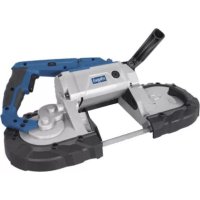
MBS1100 - Saw SCHEPPACH - Free user manual and instructions
Find the device manual for free MBS1100 SCHEPPACH in PDF.



Download the instructions for your Saw in PDF format for free! Find your manual MBS1100 - SCHEPPACH and take your electronic device back in hand. On this page are published all the documents necessary for the use of your device. MBS1100 by SCHEPPACH.
USER MANUAL MBS1100 SCHEPPACH
Metal band saw Translation of original instruction manual
Explanation of the symbols on the equipment Warning! Danger to life, risk of injury or damage to the tool are possible by ignoring! Read the operating instructions to reduce the risk of inquiry! Wear safety goggles! Wear ear-muffs! Wear a breathing mask! Important! Risk of injury. Never reach into the running saw blade! Wear protective gloves. Warning! Before installation, cleaning, alterations, maintenance, storage and transport switch off the device and disconnect it from the power supply. Sawband direction Protection class II (double shielded) www.scheppach.com / service@scheppach.com / +(49)-08223-4002-99 / +(49)-08223-4002-58
Manufacturer: scheppach Fabrikation von Holzbearbeitungsmaschine GmbH Günzburger Straße 69 D-89335 Ichenhausen Dear Customer, We hope your new tool brings you much enjoyment and success. Note: According to the applicable product liability laws, the manufacturer of the device does not assume liability for damages to the product or damages caused by the product that occurs due to:
- Non-compliance of the operating instructions,
- Repairs by third parties, not by authorized service technicians,
- Installation and replacement of non-original spare parts,
- Application other than specied,
- A breakdown of the electrical system that occurs due to the non-compliance of the electric regu- lations and VDE regulations 0100, DIN 57113 / VDE0113. We recommend: Read through the complete text in the operating in- structions before installing and commissioning the device. The operating instructions are intended to help the user to become familiar with the machine and take advantage of its application possibilities in accord- ance with the recommendations. The operating instructions contain important infor- mation on how to operate the machine safely, pro- fessionally and economically, how to avoid danger, costly repairs, reduce downtimes and how to in- crease reliability and service life of the machine. In addition to the safety regulations in the operating instructions, you have to meet the applicable regula- tions that apply for the operation of the machine in your country. Keep the operating instructions package with the machine at all times and store it in a plastic cover to protect it from dirt and moisture. Read the instruction manual each time before operating the machine and carefully follow its information. The machine can only be operated by persons who were instructed con- cerning the operation of the machine and who are in- formed about the associated dangers. The minimum age requirement must be complied with.
In addition to the safety instructions contained in this operating manual and the specic regulations of your country, the technical rules generally accepted for the operation of machines of the same type must be observed. We cannot accept any liability for damage or acci- dents which arise due to a failure to follow these in- structions and the safety instructions.
3. Scope of delivery
- Open the packaging and remove the device care- fully.
- Remove the packaging material as well as the packaging and transport bracing (if available).
- Check that the delivery is complete.
- Check the device and accessory parts for trans- port damage.
- If possible, store the packaging until the warranty period has expired. Attention! The device and packaging materials are not toys! Children must not be allowed to play with plastic bags, lm and small parts! There is a risk of swallow- ing and suffocation!
The portable metal band saw with speed setting is exclusively suited for cutting wood, tubes, proles and thin non-ferrous metals. The shape of the workpieces must be such that safe clamping in the machine vice is possible and such that the workpiece is prevented from jumping out during the sawing process. The machine is to be operated only with suitable saw blades. To use the machine properly you must also o serve the safety regulations, the assembly instruc- tions and the operating instructions to be found in this manual. All persons who use and service the machine have to be acquainted with this manual and must be in- formed about the machine’s potential hazards. It is also imperative to observe the accident preven- tion regulations in force in your area. The same ap- plies for the general rules of occupational health and safety. The manufacturer shall not be liable for any changes made to the machine nor for any damage resulting from such changes. Even when the machine is used as prescribed it is still impossible to eliminate certain residual risk fac- tors. The following hazards may arise in connection with the machine’s construction and design:
- Damage to hearing if ear-muffs are not used as necessary.
- Harmful emissions of wood dust when used in closed rooms.
- Contact with the blade in the uncovered cutting zone.
- Injuries (cuts) when changing the blade.
- Injury from catapulted workpieces or parts of work- pieces.
- Tilting of the workpiece due to inadequate support.
- Catapulting of pieces of timber and workpieces. Please note that our equipment has not been de- signed for use in commercial, trade or industrial ap- plications. Our warranty will be voided if the machine is used in commercial, trade or industrial businesses or for equivalent purposes.
5. General safety instructions for
- WARNING Read all warnings and instructions. Failure to apply all warnings and instructions can lead to electrical shock, re and/or serious injury.
- Keep all warnings and instructions handy for future consultation.
- The term “power tool” used in the warnings refers to power tools that are connected to a source of electrical energy (with an electrical cable). 1 Workplace safety
- Keep your working area clean and well lit. Clut- tered or dimly lit workspaces can lead to accidents.
- Do not operate power tools in areas where explo- sions could take place, or in which ammable liq- uids, gases or dust are present. Power tools can create sparks, which can cause dust or fumes to ignite.
- Keep children and bystanders away from the pow- er tool when it is being used. Distractions could cause you to lose control over the equipment. 2 Electrical safety
- The terminal plug of the tool must t into the outlet. The plug may not be modied in any way. Do not use an adaptor plug together with grounded power tools. The original plugs and the appropriate out- lets reduce the risk of an electrical shock.
- Avoid contact with grounded surfaces, such as pipes, radiators, stoves and refrigerators. There is an increased risk of electrical shock, if your body is grounded.
- Keep power tools away from rain or wet conditions. Penetration of water into the power tool increases the risk of electrical shock.
- Do not use the cable for any purpose other than that for which it was made. Do not use it to carry the tool, hang it up, or to pull the plug out of the outlet. Keep the cable away from heat, oil, sharp corners or parts of the equipment that move. Dam- aged or entangled cords increase the risk of elec- trical shock.
- When operating the power tool outdoors, only use extension cords that are suitable for outdoor use. The use of an appropriate extension cord reduces the risk of an electrical shock.
- If the power tool must be used in a damp environ- ment, use a residual current protective device. The use of such a device reduces the risk of electrical shock. www.scheppach.com / service@scheppach.com / +(49)-08223-4002-99 / +(49)-08223-4002-58
- Be attentive, watch what you are doing and use the power tool sensibly. Do not use power tools when you are tired or under the inuence of drugs, alco- hol or medicines. One moment of inattention while using a power tool can result in serious injury.
- Wear personal protective equipment and always wear protective glasses. Wearing personal pro- tective equipment, such as a dust mask, slip-free safety shoes, protective headwear or ear protec- tion, depending on the type and use of a power tool reduces the risk of injury.
- Avoid unintentional start-ups. Make sure that the power tool is shut off before it is connected to the power supply, or is carried. If you have your nger on the switch of the tool while carrying it, or have the tool turned on, or connected to a power supply, this behaviour can lead to accidents.
- Remove the adjustment aides or the spanners be- fore turning on the power tool. A tool or wrench that is located in a rotating part of the machine, can lead to injuries.
- Avoid abnormal posture. Make sure that the op- erator is standing rmly and can maintain balance. This allows the operator to maintain control over the power tool in unexpected situations.
- Wear appropriate clothing. Do not wear loose clothing or jewellery. Keep hair, clothing and gloves away from the moving parts. Loose cloth- ing, jewellery or long hair can get caught in the moving parts.
- If dust vacuums or catching systems can be in- stalled on the tool, make sure that these are cor- rectly connected and assembled. The use of a dust exhaust unit can reduce hazards caused by dust. 4 Use and treatment of the power tool
- Do not overtax the tool. Use the appropriate tool for the work that is to be done. With the correct power tool, you can work better and more safely.
- Do not use a power tool where the switch is defec- tive. A power tool that cannot be turned on and off is dangerous and must be repaired.
- Disconnect the plug from the wall outlet before you make adjustments to the tool, change parts or put the tool away. This precaution prevents inadvert- ent start-ups of the tool.
- Store power tools that are not in use out of reach of children. Do not let anyone use the tool who does not have experience with it, or who has not read these instructions. Power tools can be dangerous when they are used by inexperienced people.
- Take good care of your power tools. Make sure that movable parts function properly and do not jam, see that parts which inuence the use of the ma- chine are not broken or damaged. Repair damaged parts before operating the tool. Many accidents are caused by poorly maintained power tools.
- Keep cutting edges sharp and clean. Properly maintained cutting tools with sharp cutting edges jam less often and are easier to control.
- Use power tools, accessories, and equipment ac- cording to these instructions. Taking into account the working conditions and the work being per- formed. The use of power tools other than those in- tended for the tool itself can lead to dangerous situ- ations. 5 Service
- Only let qualied service personnel repair your tool and always use original replacement parts. This guarantees that the power tool remains safe to use. Warning! This electric tool generates an electro- magnetic eld during operation. This eld can impair active or passive medical implants under certain conditions. In order to prevent the risk of serious or deadly injuries, we recommend that persons with medical implants consult with their physician and the manufacturer of the medical implant prior to operat- ing the electric tool. Additional safety instructions - portable band saws
- When performing work during which the cutting de- vice could come into contact with concealed power lines, hold the electrical tool by the insulated han- dle surfaces. Contact between the cutting tool and a live power line can also electrify metal device parts and lead to an electric shock.
- Keep your hands away from the sawing area and saw blade.
- Before use, always ensure that the portable band saw is clean.
- Stop operation immediately, if you notice anything unusual.
- Prior to using the tool, always make sure that all components are properly and safely tted.
- Always proceed with caution when tting or remov- ing the band saw blade.
- Always keep your hands away from the cutting path of the band saw blade.
- Before sawing, always wait until the motor has reached full speed.
- Always keep the handles dry, clean and free of oil and grease. Hold the tool rmly during work.
- Always remain alert, in particular when performing repetitive, monotonous tasks. Always make sure your hands are in the correct position in relation to the saw blade.
- Never remove the workpiece stop.
- Maintain a distance from end pieces, which fall down after sawing. They may be hot, sharp and/or heavy. They could cause serious injuries. www.scheppach.com / service@scheppach.com / +(49)-08223-4002-99 / +(49)-08223-4002-58
- Air intakes often cover moving parts and should be kept clear. Loose-tting clothing, jewellery and long hair may become caught in the moving parts.
3 dB sound power level L
3 dB Wear hearing protection. The effects of noise can cause a loss of hearing. Total vibration values (vector sum - three directions) determined in accordance with EN 60745. Vibration A
(front handle) = 6,62 m/s
- The specied vibration emission value has been measured according to a standardised testing pro- cedure and can be used for comparison of one electric tool with another;
- The specied vibration emission value can also be used for an initial assessment of the load.
- The vibration emission value can vary from the specied value during the actual use of the elec- tric tool, depending on the type and the manner in which the electric tool is used;
- Try to minimise stress from vibrations as low as possible. Some examples of means for reducing the vibration stress are wearing gloves while us- ing the tool and limiting work time. In doing so, all parts of the operating cycle must be taken into ac- count (such as times in which the electric tool is switched off or times in which it is switched on, but is not running under a load).
7. Remaining hazards
The machine has been built using modern technolo- gy in accordance with recognized safety rules. Some remaining hazards, however, may still exist.
- Risk of injury for ngers and hands by the rotating saw band due to improper handling of the work piece.
- Risk of injury through the hurling work piece due to improper handling, such as working without the push stick.
- Risk of damaging your health due to wood dust and wood chips. Wear personal protective cloth such as goggles. Use a tting dust extractor.
- Risk of injury due to defective saw band. Regu- larely check saw band for such defects.
- Risk of injury for ngers and hands while changing saw band. Wear proper gloves.
- Risk of injury due to starting saw band while switching on the machine.
- The use of incorrect or damaged mains cables can lead to injuries caused by electricity.
- Wear only close tting clothes. Remove rings, bracelets and other jewelry.
- For the safety of long hair, wear a cap or hair net. Even when all safety measures are taken, some remaining hazards which are not yet evident may still be present.
- Remaining hazards can be minimized by follow- ing the instructions in „General safety instructions“ „Proper Use“ and in the entire operating manual.
Before commissioning
- The saw band must be able to run freely.
- In case of previously machined wood, be aware of any foreign bodies, such as nails or screws, etc.
- Before pressing the on/off switch, make sure that the saw band is correctly tted, and that moving parts run smoothly.
- Before connecting the machine, make certain that the data on the type plate matches with the mains power data. Operating switch (g. 3) CAUTION: Before connecting the machine to the mains power supply, make certain that the on/off switch is work- ing correctly, and that it returns to the “OFF” position when released.
Handle (g. 4) m For safety reasons, please disconnect the power cable from the mains.
- The handle (1) allows the user to maintain a rm hold during use.
- The handle (1) can be turned into any arbitrary position.
- To do so, loosen the Allen screw.
- Now turn the handle (1) into a comfortable and safe working position and tighten the screw again rmly. Switching on the lamp (g. 3)
- To switch on the lamp, press the „I (ON)” side of the lamp switch (3). To switch off, press the „O (OFF)” side of the switch. NOTE:
- Wipe any dirt off the lamp lens with a dry cloth. Be careful to avoid scratching the lamp lens, because this can severely reduce the light intensity.
- Do not use thinners or spirit to clean the lamp. Such solvents may damage the lamp.
- Always switch the lamp off after work by pressing the „O (OFF)” side. Speed setting wheel (g. 3) The machine speed can be set between 0.7 m/s and 2.4 m/s by turning the speed setting wheel (4). By turning the setting wheel towards the number 6 you increase the speed, whilst turning it towards 1 reduces the speed. Choose a suitable speed for the workpiece to be cut. m CAUTION: The speed setting wheel (4) can only be turned up to 6 and back to 1. If it is forcibly turned past 6 or beyond 1, it may no longer be possible to adjust the speed. m CAUTION: Never change the speed while the machine is run- ning device. Adjusting the workpiece stop (g. 5) m For safety reasons, please disconnect the power cable from the mains
- During normal operation, the workpiece stop must be secured in the lowest position.
- If the workpiece stop should butt against an obsta- cle at the end of a cut, e.g. a wall or similar, loosen the two screws and slide the plate upwards. Se- cure the workpiece stop after sliding, by tightening the two screws rmly. Sawing process 1 Fasten the material to be sawn in a vice or an al- ternative clamping device. 2 Bring the workpiece stop (9) in contact with the workpiece, and whilst doing so hold the saw blade away from the workpiece. Switch the saw on. 3 Once the saw has reached the desired speed, tilt the main body of the tool slowly and cautiously such that the band saw blade comes into contact with the workpiece. Do not exert any additional pressure, over and above the weight of the main body of the tool. Be careful to avoid the band saw blade coming suddenly and abruptly into contact with the surface of the workpiece. This results in serious damage to the band saw blade. In order to achieve the maximum service life of the band saw blade, ensure that no sudden impacts arise at the start of the sawing process. 4 Straight cuts can be achieved if the band saw blade is ush with the side surface of the motor housing. Be aware of your viewing angle in this case. Twisting the saw blade or holding it at an angle causes the cut to run alongside the cutting line, and this reduces the service life of the saw blade. NOTE: If the band saw becomes jammed or stuck in the workpiece material during sawing, release the switch immediately to avoid damage to the band saw blade and motor. 5 The net weight of the tool delivers the most ef- cient downward cutting pressure. If the pressure is increased by the operator, the saw blade be- comes slower and the service life of the cutting edge is reduced. 6 End pieces that are so heavy they would cause injuries if they were to fall should be supported. Wearing safety shoes is strongly recommended. End pieces may be hot and sharp. 7 If possible, hold the saw tight in both hands. If only one hand is placed on the saw during an applica- tion, the other hand should be kept away from the saw blade area and it is necessary to avoid the saw falling against the clamped or supported ma- terial after cutting. Tips for better sawing (g. 13) The following recommendations should be applied as a guideline (see table of recommended sawing positions). The results are dependent on the operator and the respective sawn material.
- Never twist the band saw blade during the cutting process.
- Never use liquid coolant with portable band saws. The use of liquid coolants causes deposits on the bands and reduces the capacity.
- If severe vibrations arise during cutting, make sure that the sawn material is securely clamped. If the vibrations continue, replace the band saw blade. Removing the saw blade (g. 6-11) Attention: Pull out the mains plug!
- Rotate the saw blade tensioning lever (11) in a clockwise direction to the stop, in order to relieve the saw blade tension (see Figure 1). www.scheppach.com / service@scheppach.com / +(49)-08223-4002-99 / +(49)-08223-4002-58
- Turn the saw over and place it down on a work- bench or table like this
- Loosen the screws (a) and remove the saw blade guard (8).
- Start to remove the saw blade at the top part of the saw blade guard (12) and continue right around the pulleys (13). When removing the saw blade, the tension may be relieved and the saw blade may jump off. SAW BLADES ARE SHARP. WEAR GLOVES WHEN HANDLING THEM (Fig. 7 + 8).
- Check the guide rollers (15) and remove all coarse chips that may be in here. Jammed chips may pre- vent the guide rollers from turning and lead to at spots.
- Rubber bands (14) are located on the pulleys (13). The rubber bands should be checked for loose- ness or damage with a blade change. Wipe chips off the rubber bands on the pulleys. This extends the service life of the bands and prevents the saw blade from slipping. Fitting the saw blade (g. 6-11)
- Position the saw blade such that the teeth are on the base and are angled in the direction of the workpiece stop, as shown in Figure 9.
- Slide the saw blade into the guide rollers (15), as shown in Figure 10.
- Hold the saw blade rmly in the guide rollers, run it around both pulleys (13) and through the work- piece stop (9)
- Make sure that the saw blade is inserted fully in the guide rollers (15) and sits straight against the rubber bands (14).
- Turn the saw blade tensioning lever (11) anticlock- wise to the stop, and then turn the saw over care- fully, so that the pulleys lie on the workbench or table. Make sure that the teeth point away from the band saw.
- Tighten the saw blade guard (8) again.
- Attention! Band saw must not be operated without saw blade protection
- Switch the saw on and off a few times, to ensure that the saw blade is sitting correctly. m CAUTION:
- Maintain physical distance from the saw band area during this test. Mounting the metal band saw on the saw table (g. 14)
- Place your metal band saw on the support arm (17).
- Fix the metal band saw to the support arm (17) with 3 screws.
- Tighten the screws after installation. Clamp workpiece (g. 15-17)
- First open the lever (20) counterclockwise.
- Pull the movable clamping jaw (18) backwards.
- Place the workpiece on the front xed clamping jaw (19).
- Slide the movable clamping jaw (18) towards the workpiece.
- Clamp the workpiece with the lever (20). Support arm 0°- 45° (g. 18) With the metal band saw, oblique cuts of 0°-45° to the working surface can be made.
- Open the locking handle (21)
- Set the support arm (17) to the desired angle.
- Retighten the locking handle (21). m Attention Due to the dead weight of the metal band saw, a short touch is enough to tilt the support arm down- wards. m Risk of injury Sawing with the saw table (g. 19+20) With the saw, mitre cuts can be made to the left from 0°- 45° to the working surface.
- Set the desired angle as described under point (support arm 0°-45°).
- Clamp your workpiece as described under Point (Clamp workpiece). m Attention Keep the power cord away from the saw range.
- Switch the bandsaw on. m Attention By the dead weight of the metal band saw a short touch is enough that the support arm tilts down. Keep your hands away from the sawing area. m Risk of injury
- When the saw reaches the desired speed, slowly tilt the main body of the tool and carefully down- wards so that the band saw blade comes into con- tact with the workpiece. Wends you do not apply any additional pressure that could be caused by the weight of the main body of the tool. Careful- ly avoid that the band saw blade suddenly and strongly in contact with the surface of the work- piece. This leads to severe Damage to the band saw blade. To achieve maximum lifetime of the band saw blade is to be achieved. to ensure that at the beginning of the sawing process no sudden impact occurs. NOTE: If the band saw is blocked during sawing or in the workpiece material is stuck, release the switch immediately and swivel the band saw up again to avoid damage to the band saw blade and motor.
- The tool‘s own weight provides the most efcient downward cutting pressure. If the pressure is in- creased by the operator, the saw blade slows down and the life of the blade is reduced.
- After the sawing process, swivel the band saw back into the starting position. Make sure that the machine does not tilt down again. www.scheppach.com / service@scheppach.com / +(49)-08223-4002-99 / +(49)-08223-4002-58
m Attention Wait until the saw blade has come to a complete standstill before removing the workpiece.
9. Working instructions
The following recommendations are examples of the safe use of band saws. The following safe working methods should be seen as an aid to safety. They cannot be applied suitably completely or comprehen- sively to every use. They cannot treat every possible dangerous condition and must be interpreted care- fully.
- Loosen the sawband when the machine is not in operation (e.g. after nishing work). Attach a no- tice on the tension of the saw band to the machine for the next user.
- Collect unused sawbands and store them safely in a dry place. Check for faults (teeth, cracks) before use. Do not use faulty sawbands!
- Wear suitable gloves when handling sawbands.
- All protective and safety devices must be securely mounted on the machine before beginning work.
- Never clean the sawband or the sawband guide with a hand-held brush or scraper while the saw- band is running. Resin-covered sawbands impair working safety and must be cleaned regularly.
- For your own protection, wear protective glasses and hearing protection. Wear a hairnet if you have long hair. Roll up loose sleeves over the elbows.
- Always position the sawband guide as near the workpiece as possible when working.
- Insure that the workpiece does not roll when cut- ting round pieces.
10. Cleaning and maintenance
Warning! Prior to any adjustment, maintenance or service work disconnect the mains power plug! General maintenance measures Wipe chips and dust off the machine from time to time using a cloth. In order to extend the service life of the tool, oil the rotary parts once monthly. Do not oil the motor. When cleaning the plastic do not use corrosive prod - uct. Cleaning Keep all safety devices, air vents and the motor housing free of dirt and dust as far as possible. Wipe the equipment with a clean cloth or blow it with com- pressed air at low pressure. We recommend that you clean the device immedi- ately each time you have nished using it. Clean the equipment regularly with a moist cloth and some soft soap. Do not use cleaning agents or solvents; these could attack the plastic parts of the equipment. Ensure that no water can seep into the device. The ingress of water into an electric tool i creases the risk of an electric shock. Maintenance Brush inspection (g. 21) Check the carbon brushes after the rst 50 operat- ing hours with a new machine, or when new brushes have been tted. After carrying out the rst check, repeat the check every 10 operating hours. If the car- bon is worn to a length of 6 mm, or if the spring or contact wire are burned or damaged, it is necessary to replace both brushes. If the brushes are found to be usable following removal, it is possible to reinstall them. Service information Please note that the following parts of this product are subject to normal or natural wear and that the fol- lowing parts are therefore also required for use as consumables. Wear parts*: Carbon brushes, saw blade, table in- lays; v-belt
- Not necessarily included in the scope of delivery!
Store the device and its accessories in a dark, dry and frost-proof place that is inaccessible to children. The optimum storage temperature is between 5 and 30˚C. Cover the electrical tool in order to protect it from dust and moisture. Store the operating manual with the electrical tool.
12. Electrical Connection
The installed electric motor is connected and is ready to work. The connection complies with the relevant VDE and DIN regulations. The customer-side mains supply and the used exten- sion line must meet these regulations. Important information In the event of an overloading the motor will switch itself off. After a cool-down period (time varies) the motor can be switched back on again. www.scheppach.com / service@scheppach.com / +(49)-08223-4002-99 / +(49)-08223-4002-58
Please provide the following information in the event of any enquiries:
- Type of current for the motor
13. Disposal and recycling
The equipment is supplied in packaging to preven it from being damaged in transit. The raw materials in this packaging can be reused or recycled. The equip- ment and its accessories are made of various types of material, such as metal and plastic. Defective components must be disposed of as special waste. Ask your dealer or your local council. Old devices must not be disposed of with house- hold waste! This symbol indicates that this product must not be disposed of together with domestic waste in compliance with the Directive (2012/19/EU) pertaining to waste electrical and electronic equipment (WEEE). This product mustbe disposed of at a designated collection point. This can occur, for example, by handing it in at an authorised collecting point for the recycling of waste electrical and electronic equipment. Improper handling of waste equipment may have negative consequences for the environment and human health due to poten- tially hazardous substances that are often contained in electrical and electronic equipment. By properly disposing of this product, you are also contributing to the effective use of natural resources. You can obtain information on collection points for waste equipment from your municipal administration, public waste dis- posal authority, an authorised body for the disposal of waste electrical and electronic equipment or your waste disposal company.
- The product meets the requirements of EN 61000- 3-11 and is subject to special connection condi- tions. This means that use of the product at any freely selectable connection point is not allowed.
- Given unfavorable conditions in the power sup- ply the product can cause the voltage to uctuate temporarily.
- The product is intended solely for use at connec- tion points that a) do not exceed a maximum permitted supply im- pedance “Z”, or b) have a continuous current-carrying capacity of the mains of at least 100 A per phase.
- As the user, you are required to ensure, in consul- tation with your electric power company if neces- sary, that the connection point at which you wish to operate the product meets one of the two require- ments, a) or b), named above. Defective Electric Connection Lines Often, insulation damages occur on electrical con- nection lines. Causes are:
- Drag marks if connection lines are led through win- dow or door clearances.
- Kinks due to improper attachment or routing of the connection line.
- Cuts caused by running over the connection line.
- Insulation damages caused by pulling the connec- tion line out of the wall socket.
- Fissures caused by the ageing of the insulation. Such defective electric connection lines must not be used and are hazardous due to the insulation dam- ages. Regularly check the electrical connection lines for damages. Please make sure that the connection lines are disconnected from the mains supply during the check. Electrical connection lines must comply with the rel- evant VDE and DIN regulations. Only use connection lines labelled with H05VV-F. The labelling of the connection cable with the type specication is required. AC motor
- The mains voltage must be 220 - 240 V~
- Extension cables up to 25 m long must have a cross-section of 1.5 mm
Connections and repairs of electrical equipment may only be carried out by an electrician. www.scheppach.com / service@scheppach.com / +(49)-08223-4002-99 / +(49)-08223-4002-58
Problem Possible cause Help Motor does not work Motor, cable or plug defective, fuses burnt Arrange for inspection of the machine by a spe- cialist. Never repair the motor yourself. Danger! Check fuses and replace as necessary The motor starts up slowly and does not reach oper- ating speed. Voltage too low, coils damaged, capaci- tor burnt Contact the utility provider to check the voltage. Arrange for inspection of the motor by a specialist. Arrange for replacement of the capacitor by a specialist Motor makes excessive noise Coils damaged, motor defective Arrange for inspection of the motor by a specialist The motor does not reach its full power. Circuits in the network are overloaded (lamps, other motors, etc.) Do not use any other equipment or motors on the same circuit Motor overheats easily. Overloading of the motor, insufcient cooling of the motor Avoid overloading the motor while cutting, remove dust from the motor in order to ensure optimal cooling of the motor Saw cut is rough or wavy Saw blade dull, tooth shape not appro- priate for the material thickness Resharpen saw blade and/or use suitable saw blade Workpiece pulls away and/or splinters Excessive cutting pressure and/or saw blade not suitable for use Insert suitable saw blade Saw blade is not running straight
- Guide has been wrongly set
- Set the saw blade guide according to the oper- ating instructions
- Select a saw blade according to the operating instructions Burn marks appear on the wood during the cutting work
- Change the saw blade
- Select a saw blade according to the operating instructions Saw blade jams during cutting work
- Deposits on the saw blade
- Guide has been set poorly
- Change the saw blade
- Set the saw blade guide according to the oper- ating instructions www.scheppach.com / service@scheppach.com / +(49)-08223-4002-99 / +(49)-08223-4002-58