EasyManual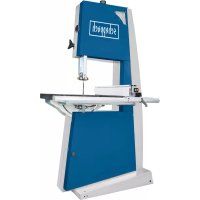
Basa 5.0 - Saw SCHEPPACH - Free user manual and instructions
Find the device manual for free Basa 5.0 SCHEPPACH in PDF.



User questions about Basa 5.0 SCHEPPACH
0 question about this device. Answer the ones you know or ask your own.
Ask a new question about this device
Download the instructions for your Saw in PDF format for free! Find your manual Basa 5.0 - SCHEPPACH and take your electronic device back in hand. On this page are published all the documents necessary for the use of your device. Basa 5.0 by SCHEPPACH.
USER MANUAL Basa 5.0 SCHEPPACH
Band Saw Translation from the original instruction manual
- Curved and irregular cuts
- Cuts for dovetails and tenons
- On-edge cuts of squared beams Please consult also the working hints in the opera- ting instructions Motor 230 V / 50 Hz 400 V / 50 Hz Consumption P1 (kW) 2,30 2,90 Output P2 (kW) 1,50 2,20
1. After unpacking, check all parts for any trans-
port damage. Inform the supplier immediately of any faults.
2. Later complaints cannot be considered.
3. Make sure the delivery is complete.
4. Before putting into operation, familiarize your-
self with the machine by carefully reading these instructions.
5. Use only original scheppach accessories,
wearing or replacement parts. You can nd replacement parts at your scheppach dealer.
6. When ordering, include our item number and
the type and year of construction of the machi- ne. NOTE: In accordance with valid product liability laws, the manufacturer of this device shall not be responsible for damage to and from this device which results from:
2. Noncompliance with the Operating Instructions.
3. Repairs made by unauthorized persons.
4. The installation and use of any parts which are
not original scheppach replacement parts.
5. Improper use and application.
6. Failure the electrical system as a result of
non com pliance with the legal and applicable electrical directives and VDE regulations 0100, DIN 57113 / VDE 0113. We recommend that you read through the entire operating instructions before putting into operation. These operating instructions are to assist you in getting to know your machine and utilize its proper applications. The operating instructions contain important notes on how you work with the machine safely, expertly, and economically, and how you can avoid hazards, save repair costs, reduce downtime and increase the reliability and service life of the machine. In addition to the safety requirements contained in these operating instructions, you must be careful to observe your country’s applicable regulations. The operating instructions must always be near the machine. Put them in a plastic folder to protect them from dirt and humidity. They must be read by every operator before beginning work and observed conscientiously. Only persons who have been trained in the use of the machine and have been informed of the various dangers may work with the machine. The required minimum age must be observed. In addition to the safety requirements contained in these operating instructions and your country’s applicable re gulations, you should observe the generally recognized technical rules concerning the operation of woodworking machines. Safety notes In these operating instructions we have marked the places that have to do with your safety with this sign.
- Please pass on safety notes and instructions to all those who work on this machine.
- Personnel entrusted with work on the machine must have read the operating instructions and in particular the chapter on safety before beginning work. Reading the instructions after work has begun, is too late. This applies especially to per- sons working only occasionally on the rnachine, e.g. during setting up or rnaintenance.
- Observe all safety instructions and warnings attached to the machine.
- See to it that all safty instructions and warnings attached to the machine are complete and perfectly legible.
- Check all power supply lines. Do not use defec- tive lines.
- Make sure that the machine stands stable on rm ground.
- Insure sufcient lighting in the work area and the area around the machine.
- Caution when working: There is a danger to ngers and hands from the rotating tool.
- When working on the machine, all safety mecha- nisms and covers must be mounted.
- Keep children away from the machine when it is connected to the power supply.
- Operating personal must be at least 18 years of age. Trainees must be at least 16 years of age, but may only operate the machine under adult supervision.
- Persons working on the machine may be not
GBdiverted from their work.
- The working space on the machine must be free of chips and wood scrap.
- Wear only close-tting clothes. Remove rings, bracelets and other jewelry.
- Always wear safety goggles when working.
- Wear a cap or hair net to protect long hair.
- Wear suitable gloves to change the sawband.
- Do not wear work gloves when working on the saw.
- Observe the correct rotational speed setting on the machine.
- The safety mechanism on the machine may not be removed or rendered unusable.
- Cleaning, changing, calibrating, and setting of the machine may only be carried out when the motor is switched off. Pull the power supply plug and wait for the rotating tool to completely stop.
- Connection and repair work on the electrical installation may be carried out by a qualied electrican only.
- All protection and safety devices must be repla- ced after completing repair and maintenance procedures.
- Switch the machine off and pull power supply plug when rectifying any malfunctions.
- Use a suction unit to suck up wood shavings and sawdust. The current speed at the suction connection piece should be 20 m/s.
- Check the saw band guide and the saw band tension before starting up.
- Do not use nicked saw bands or those that have an altered form.
- Replace table inserts that have worn saw slots.
- When sawing round wood, make sure that the work piece does not turn.
- For sawing heavy or cumbersome pieces, use the appropriate working aids for bracing. (Special accessory roller stands).
- Place the upper saw band guide as closely as possible to the work piece.
- On slanted table plates, attach the longitudinal stop on the lower table plate half.
- Do not brake the saw band with side pressure after switching off.
- Remove work pieces that have become stuck only with the motor switched off and with the saw band at a standstill.
- Cut off the external power supply of the ma- chine even if only minor changes of place are envisaged. Properly reconnect the machine to the supply mains before recommissioning.
- When leaving the work place, switch the motor off. Pull the power supply plug. Use only as authorized CE tested machines meet all valid EC machine guidelines as well as all relevant guidelines for each machine.
- All protective and safety device must be moun- ted on the machine before beginning work.
- The machine is designed to be operated by one person. The operator is responsible for all other persons in the working area.
- Observe all safety instructions and warnings attached to the machine.
- See to it that safety instructions and warnings attached to the machine are always complete and perfectly legible.
- The bandsaw with the supplied tools and acces- sories is designed exclusively for sawing wood, material similar to wood, and non- ferrous metals and steel.
- The maximum dimensions for workpieces to be processed is may not exceed the bench size in the standard version. Clearance width: 440 mm, Clearance height: 300 mm
- For larger workpiece dimensions which require tipping of the table top, the table extension or the dolly (special accessories) must be used.
- The band saw can also be used for sawing me- tal when it is equipped with a special saw band dolly (special accessory) and a operated at an adapted cutting speed. Metal allows with more than 80 % magnesium may not be processed due to the danger of res.
- When used in enclosed rooms, the machine must be connected to a vacuum exhaust unit. Use the dust extractor to remove matchwood or saw dust. The vacuum support ow rate must be 20 m/s. Subatmospheric pressure 860 Pa.
- The automatic switching unit is available as a special accessory. Type ALV 2 Art. No. 7910 4010 230 V/50 Hz Type ALV 10 Art. No. 7910 4020 400 V/230 V/50 Hz
- The vacuum exhaust unit automatically switches on after a 2-3 second delay after the machine tool is turned on. This avoids overloading the circuit fuse.
- After turning off the machine tool, the vacuum exhaust unit remains on for an additional 2-3 seconds and is then automatically switched off. Remaining dust is thereby removed by vacuum
GBexhaust, as required by German regulations governing hazardous materials. This results in savings in electricity consumption and reduces noise levels, as the vacuum exhaust unit is on only during machine tool operation.
- A suction device which conforms with com- mercial regulations must be used for suction in commercial areas.
- Do not switch off or remove suction units or dust extractors while the work machine is in operation.
- The machine must only be used in technically perfect condition in accordance with its desi- gnated use and the instructions set out in the operating manual, and only by safety-conscious persons who are fully aware of the risks invol- ved in operating the machine. Any functional disorders, especially those affecting the safety of the machine, should therefore be rectied immediately.
- The safety, work and maintenance instructions of the manufacturer as well as the technical data given in the calibrations and dimensions must be adhered to.
- Relevant accident prevention regulations and other, generally recognized safety-technical rules must also be adhered to.
- The machine may only be used, maintained, and operated by persons familiar with it and instructed in its operation and procedures. Arbitrary alterations to the machine release the manufacturer from all responsibility for any resulting damages.
- The machine may only be used with original acces sories and original tools made by the manufacturer.
- Any other use exceeds authorization. The ma- nufacturer is not responsible for any damages resulting from unauthorized use; risk is the sole responsibility of the operator.
GBSymbols Read the manual Use hearing protection and protective goggles Only for EU countries Do not dispose of electric tools with household waste material! In observance of european directive 2002/96/EC o wasted electrical and electronic equipmet and its imple- metation in accordance with national law, electric tools that have reached the end of their life must be collected separately ad retured to an environ- mentally compatible recycling facility. Other Notes: In these operating instructions we have marked the places that have to do with your safety with this sign: Remaining hazards
- The machine has been built using modem technology in accordance with recognized safety rules. Some remaining hazards, however, may still exist.
- The moving saw belt can cause injuries to ngers and hands when the work piece is not correctly fed.
- Thrown work pieces can lead to injury if the work piece is not properly secured orfed, such as working without a limit stop.
- Wood chips and sawdust can be health hazards. Be sure to wear personal protective gear such as safety goggles. Use a vacuum exhaust system.
- Defective saw blades can cause injuries. Regularly inspect the structural integrity of saw blades.
- Danger of injury to ngers and hands when chan- ging the saw band. Wear suitable work gloves.
- The use of incorrect or damaged mains cables can lead to injuries caused byelectricity.
- Danger of injury when switching the machine on due to start-up of saw band.
- Long hair and loose clothing can be hazardous when the belt saw is in motion. Wear personal protective gear such as a hair net and tight tting work clothes.
- Even when all safety measures are taken, some remaining hazards which are not yet evident may still be present.
- Remaining hazards can be minimized by fol- lowing the instructions in „Safety Precautions“, „Proper Use“ and in the entire operating manual. Transport The machine may only be transported with suitable lifting devices (crane or fork lift). The connection point for the rope (crane) is on the upper band wheel cabinet. Never lift trom the saw bench. If the machine is to be moved frequently within the work area, use of the wheel assembly special accessory is recommended.
GBMontage The machine is not completely assembled for reasons of transport. Assembly tools: 13 mm fork wrench 5 mm hexagonal socket wrench (not included in delivery) Guide pipe Fig.“2“ The fence plate underneath the sawblade has been tted in the works. Before attaching the guide tube, check the fence plate for tight t. If necessary, tighten the clamping levers (1). Fit the steel holding devices for the guide tube at the lett and right-hand side of the fence plate. 2 cheese head srews M8 x 16 2 washers 2 steel holding devices Push the gu!de lube mto the holding devices from the side. Before tightening the hexagon boIts, check the parallelity of the guide tube with the table (dimension „x“). Dimension „x“ must be identical at the front and at the rear of the table. Fence Fig. „3“
- The fence can be used to the Ieft or the right of the saw band depending on wone requirements. Screw together the feace pipe, intermediate plate, and guide slide (handscrewed). To da this, insert both threaded screws into the guide slots. 4 washer 6 4 cheese head screws M6x20
- The divider plate to carry the fence is screwed onto the fence pipe on the right or the Ieft depending on the work requirements. Do not tighten the wing nuts! 2 saucer-head screws M 6 x 75 2 washers 6 2 wing nuts M6 Place fence rail onto the divider plate. Position 1: for work with a higher contact surface Position 2: for work with a lower contact surface Place the cam lever on the guide slide horizontally. Place the guide slide onto the guide pipe and push the cam lever down - c!amp. On the guide pipe, the upper scale applies to position 1; the Iower scale to position 2. Fence adjustment Fig.“4“ Place the fence on the guide rail. Place a straight strip on the sawband running upwards and downwards. Place an angle on the strip and on the fence. Adjusting the reading glass Fig.“5“ The guide tube must project over the sawblade to such an extent that the scale on the guide tube is positioned directly under the zero mark of the magnifying glass. Release the two belts of the magnifying glass and set the graduation mark precisely above the zero mark of the scale. Retighten the bolts of the magnifying glass. Setting before inital operation The electrical current supply is interrupted by a limit switch when the housing lid is opened! Cutting speeds Fig. „6“ Band saw are quipped with 2 cutting speed. IMPORTANT! The cutting speed may only be set while the machine is at a full stop. Pull the mains plug! Two levels 460 m/min. for wood and hardwood 775 m/min. for soft wood V-belt 10 x 1072 mm Cutting speed - levels I - II 463 m/min. 1 to 3 775 m/min. 2 to 4 The machine is delivered with apre-set cutting speed of 775 m/min for wood and hard- wood
GBSawband Selecting the correct sawband is decisive for cutting performance. Observethe table of the Ope- rating Instructions. Narrow sawbands can cut smaller radii than broad saw bands. The smallest radius for blade widths 6/10/15/ 25mm 25/40/75/185 mm Use only sharpened, awless sawbands. Faulty sawbands increase the risk of accidents and reduce cutting performance. Changing sawbands Fig.“8“ The machine is delivered with a new, standard sawband (15 mm). The sawband may only be changed when the mains plug is pulled! Always wear suitable gloves when handling sawbands! The sawband is loosened for removal by turning the upper handle counterclockwise. The new sawband is tensioned by turning the upper handle clockwise. IMPORTANT when installing a sawband:
- Reset the counterpressure bearings and guide rollers.
- Check sawband for aws (cracks, broken teeth) before installation.
- Check the running direction of the sawband before placing onto the band wheels.Teeth should point downwards towards the saw bench.
- The sawband must be placed between the upper and lower guide rollers.
- Tighten the placed sawband lightly.
- Tum the band wheel clockwise by hand and carry out the nal tightening while the band is running evenly.
- Broad sawbands must be tensioned more rmly than narrow ones.
- Overtensioning of the sawband can lead to premature breakage. Sawband path side correction Fig.“9“ Side correction may only be carried out with the machine at a tull stop and with the mains plug pulled! The sawband must run on the center of the band wheels. Loosen the knurled nuts (1) on the under- side of the of the handle. Turn the upper band wheel by hand in the cutting direction while simultaneously tuming the handle to the right (+). The saw band then runs more toward the rear. When the sawband runs evenly, re-tighten the knurled nuts on the handle. Counterpressure bearing Fig. „10“ lnsure that the sawband runs evenly before setting the counterpressure bearing. The setting must be carried out while the ma- chine is at a full stop! The counterpressure bearings take the feed pres- sure of the workpiece. Set the counterpressure bearings above and below saw bench so that they contact the sawband lightly. Tum the band wheel by hand in the sawing direction at the same time. The counterpressure bearings must run with the sawband during operation. Reset the counterpressure bearings every time the sawband is changed! Guide rollers Fig.“11“ lnsure that the sawband runs evenly before setting the guide rollers. The setting must be carried out while the ma- chine is at a full stop! The guide rollers take the side pressure of the workpiece. Reset the guide rollers above and below saw bench to the suitable sawband width. They may reach up to the base of the teeth of the sawband. Set the guide rollers so that they contact the saw- band lightly. Tum the band wheel by hand in the sawing direction at the same time. The guide rollers must run with the sawband during operation. The sawband must not jam! Reset guide rollers every time the sawband is changed! Cutting height adjustment Fig.“12“ The setting must be carried out while the ma- chine is at a full stop! The cutting height is adjustable from 0 - 300 mm over the beneh. Height adjustment is carried out continually using the large hand wheel and remains in any position due to the automatie clamping function. For your own safety, always set the sawband guide as close to the workpiece as possible.
GBSawbench Fig.“13“ The saw bench is set at the factory. The continuous saw bench swing range reaches trom + 47° to - 20°. The greatest swing range allows 45° mitered cuts. The setting must be carried out while the ma- chine is at a tull stop! One can readjust the bench at a 90° angle to the sawband using the setting screw (1) under the bench. (Use a square as an aid)! Table adjustment to + 47°
- Loosen both lock levers (2).
- Tum the handle (3) clockwise.
- Re-tighten the lock handles (2) in the desired position according to the scale. Table adjustment to - 20°
- Loosen both lock levers (2).
- Tum the handle (3) one quarter revolution to the right and swing the adjustment screw (1) on the ball handle to the lett.
- Tum the handle (3) counterclockwise.
- Re-tighten the lock handles (2) in the desired position according to the scale. Test the exact angle setting of the table with a sampie piece before beginning work. Parallel alignment of the sawband to the saw bench Fig. „14“ Exact parallel alignment is especially important for work with the traverse cutting gauge special accessory. Check parallel alignment with the fence rail and a low angle. Place the fence rail on the saw band running upwards and downwards. Place the low angle on the fence rail as weil as along the longitudinal groove. If there are deviations, loosen the 8 hexagonal nuts of the table attachment swinging segment and readjust the saw bench appropriately. Re-tighten the hexagonal nuts rmly! Set-Up Prepare the workplace where the machine is to be placed. Insure sufcient room to allow safe work without malfunctions. The machine is designed to operate in closed rooms and must be placed stabily on rm level ground. Stability is insured by attachment to the ground with 4 screws. At least 2 persons are required to lower the machine from the pallet. Starting in the working position, tip the machine to the left and pull out the pallet to the right. Working information The following recommendations are examples of the safe use of band saws. The following safe working methods should be seen as an aid to safety. They cannot be applied suitably completely or comprehensively to every use. They cannot treat every possible dangerous condition and must be interpreted carefully.
- Connect the machine to a suction unit when working in closed rooms. A suction device which conforms with commercial regulations must be used for suction in commercial areas.
- Loosen the sawband when the machine is not in operation (e.g. after nishing work). Attach a noti- ce on the tension of the saw band to the machine for the next user.
- Collect unused sawbands and store them safely in a dry place. Check for faults (teeth, cracks) before use. Do not use faulty sawbands!
- Wear suitable gloves when handling sawbands.
- All protective and safety devices must be securely mounted on the machine before beginning work.
- Never clean the sawband or the sawband guide with a hand-held brush or scraper while the saw- band is running. Resin-covered sawbands impair working safety and must be cleaned regularly.
- For your own protection, wear protective glasses and hearing protection. Wear a hairnet if you have long hair. Roll up loose sleeves over the elbows.
- Always position the sawband guide as near the workpiece as possible when working.
- Insure sufcient lighting in the work area and around the machine.
- Always use the fence for straight cuts to keep the workpiece from tipping or slipping away.
- When working on narrow workpieces with manual feed, use the push stick.
- For diagonal cuts, place the saw bench in the appropriate position and guide the workpiece on the fence.
- To cut dove-tails and dove-tailed tenons or wedges swing the saw bench to the plus or minus position. Insure safe workpiece guidance.
- For arced and irregular cuts, push the workpiece
GBevenly using both hands with the ngers together. Hold the workpiece with your hands on a safe area.
- Use a pattern for repeated arced or irregular cuts.
- Insure that the workpiece does not roll when cutting round pieces.
- Use the traverse cutting gauge special acces- sory for safety when making traverse cuts.
- To safely cut round plates, use the circular cut- ting unit special accessory. Electrical Connection The installed electric motor is connected and is ready to work. The connection complies with the relevant VDE and DIN regulations. The customer-side mains supply and the used extension line must meet these regulations. Installations, repair, and maintenance work relating to the electric installation may only be performed by specialists. Important Notes The electric motor has been designed for the S 1 operating mode. In case of an overload of the motor, it turns off automatically. After a cooling period (duration varies), you can turn on the motor again. Defective Electric Connection Lines Often, insulation damages occur on electrical connection lines. Causes are:
1. Drag marks if connection lines are led through
window or door clearances.
2. Kinks due to improper attachment or routing of
the connection line.
3. Cuts caused by running over the connection
4. Insulation damages caused by pulling the con-
nection line out of the wall socket.
5. Fissures caused by the ageing of the insulation.
Such defective electric connection lines must not be used and are hazardous due to the insulation damages. Regularly check the electrical connection lines for damages. Please make sure that the connection lines are disconnected from the mains supply during the check. Electrical connection lines must comply with the relevant VDE and DIN regulations. Only use con- nection lines labelled with H 07 RN. The labelling of the connection cable with the type specication is required. AC motor
1. The supply voltage must be 230 V / 50 Hz.
2. Extension lines up to a length of 25 m must
have a cross section of 1.5 square millimetres. Extension lines with a length of more than 25 m must have a minimum cross section of 2.5 square millimetres.
3. The mains connection is protected with a delay-
action fuse of 16 A. Rotary current motor
1. The supply voltage must be 400 V / 50 Hz.
2. Mains supply and extension line must be ve-
wire = 3 P + N + SL.
3. Extension lines must have a minimum cross
section of 1.5 square millimetres.
4. The mains connection is protected with a maxi-
5. In case of mains supply or change of location,
the direction of rotation must be checked. If required, the polarity must be reversed. If you have further questions, please specify the following:
1. Motor manufacturer
2. Kind of current of the motor
3. Data from the machine type plate
4. Data from the switch type plate
If you return the motor, always return the com- plete drive unit with the switch. Maintenance Carry out retting, setting measurement and cleaning work only when the motor is switched off. Pull the plug and wait for the sawband to come to a full stop. An experience worker can carry out minor- repairs on the machine himself. Repair and maintenance work on the electrical system may only be carried out by a qualied electrician. All protective and safety devices must be re- attached immediately after completed repair and maintenance work.
- The swinging segments of the bench, the saw- band tensioning unit and the guide of the cutting height adjustment unit must always move easily. Treat these parts with a lubricant spray when necessary to maintain these functions.
- Clean the sawband regularly. Wood leaves resin remnants which stick to the sawband and impair working safety and performance.
- Keep the bench surface free of resin.
- Do not use cleaning agents or thinners which are easily ammable or which emit harmful vapors to clean the sawband and bench. Use the concentrated resin remover special accessory.
- Check sawbands regularly for faults. Replace faulty sawbands immediately.
- Check saw bench insert. Replace wom saw bench insert.
- Rubber lining of the band wheels The rubber lining of the band wheels becomes ripped and worn by the metal sawband over time. Exact sawband alignment is then no longer possible. Working safety and performance are impaired. Replace the band wheels! Replacement wheels can be ordered from your scheppach dealer as with allother replacement parts.
- Check the setting of the sawband guide regularly and readjust it if necessary. Remove the sawband guide for readjustment. Troubleshooting Failure Possible cause Solution Motor does not start a) No current in the socket a) Check mains fuse b) Switch or capacitor defective b) Have checked by electrician c) Electrical extension line defective c) Pull mains plug, check, replace d) Incorrect connection line 3~400 V d) 5-line connection, at 1,5 mm² diameter e) Housing lid open (limit switch) e) Close housing lid exactly Incorrect motor rotation direction Incorrect connection Reverse polarity of wall socket by electrician Sawband slips or jumps down a) Upper band wheel a) Carry out side correction according to Fig."9" b) Saw band guide b) Set according to Fig. „10“ and „11“ c) Incorrect saw band c) Select according to table d) Fence not parallel to sawband d) Set fence according to Fig. „4“ Burn marks on wood a) Sawband dull a) Replace sawband b) Incorrect sawband b) Select according to table c) Incorrect cutting speed c) Set cutting speed according to figure „6“ d) Fence not parallel to sawband d) Set fence according to Fig „4“ Sawband jams a) Sawband dull a) Replace sawband b) Sawband sticky with resin b) Clean sawband c) Saw band guide c) Set according to Fig. „10“ and „11“
Wear suitable work gloves when handling saw bands!
- Saw band should be handled carefully to protect them from damage.
- Collect untensioned sawbands wh ich are not in use and secure them with a band. Fig.1
- Store sawbands in a dry place away fram children in the original packages.
- Check for faults like faulty teeth
validated. We guarantee for our machines in case of proper treatment for the time of the statutory warranty period from delivery in such a way that we replace any machine part free of charge which provably becomes un
usable due to faulty material or defects of fabrication within such period of time. With respect to parts not manufactured by us we only warrant insofar as we are entitled to warranty claims against the upstream suppli