2500C - Generator AL-KO - Free user manual and instructions
Find the device manual for free 2500C AL-KO in PDF.


| Product type | Gasoline generator |
| Model | AL-KO 2500C |
| Rated power | 2.5 kVA |
| Voltage | 230 V AC / 12 V DC |
| Frequency | 50 Hz |
| Engine | 4-stroke, unleaded gasoline |
| Tank capacity | 4.5 L |
| Runtime | Approximately 4 hours at 50% load |
| Noise level | 93 dB(A) measured / 95 dB(A) guaranteed |
| Weight | 35 kg |
| Dimensions (L x W x H) | 600 x 450 x 450 mm |
| Starting | Manual (recoil) |
| Outlets | 1 AC outlet 230 V, 1 DC outlet 12 V |
| Protection | AC circuit breaker, grounding terminal |
| Fuel | Unleaded gasoline |
| Engine oil | SAE 10W-30 (capacity ~0.5 L) |
| Routine maintenance | Check oil level, clean air filter, change spark plug |
| Repairability | Spare parts available at authorized dealer |
| Warranty | Legal warranty against manufacturing defects |
| Country of manufacture | Germany |
Frequently Asked Questions - 2500C AL-KO
User questions about 2500C AL-KO
0 question about this device. Answer the ones you know or ask your own.
Ask a new question about this device
Download the instructions for your Generator in PDF format for free! Find your manual 2500C - AL-KO and take your electronic device back in hand. On this page are published all the documents necessary for the use of your device. 2500C by AL-KO.
USER MANUAL 2500C AL-KO
natural_image
Line drawing of a portable gas generator with visible control panel and wheels (no text or symbols)DE
GB
NL
FR
IT
PL
CZ
HU
DK
SE
NO
FI
SK
SI
HR
EE
LT
LV
RU
UA






GB: Instructions for use 16
AL-KO KOBER GROUP Kötz, Germany
This documentation or excerpts therefrom may not be reproduced or disclosed to third parties without the express permission of the AL-KO KOBER GROUP.

| AL-KO2500-C | AL-KO3500-C | AL-KO6500-C | |
| 130 930 130 931 130 | 932 | ||
 | ca.590 x 430 x 480 mm | ca.590 x 430 x 480 mm | ca.675 x 540 x 540 mm |
 | ca. 45 kg ca. 50 kg ca | 88 kg | |
 | LC168F-2 (G200F)e11*97/68SA*2010/26*2673*001 Zylinder/4-Takt/luftgekühlt/OHV196 ccm2,0 kW3000 min ^-1 | G210FAe11*97/68SA*2010/26*2670*001 Zylinder/4-Takt/luftgekühlt/OHV212 ccm2,8 kW3000 min ^-1 | LC188FD(G390FD)e11*97/68SA*2010/26*2676*001 Zylinder/4-Takt/luftgekühlt/OHV389 ccm5,0 kW3000 min ^-1 |
 | F7TC/F7RTC0,7 - 0,8 mm | F7TC/F7RTC0,7 - 0,8 mm | F7TC/F7RTC0,7 - 0,8 mm |
 | Benzin15 l | Benzin15 l | Benzin25 l |
 | 0,6 l 0,6 l 1,1 l | ||
 | 230 V / 50 Hz 230 V / 50 Hz 230 V / 50 Hz | ||
 | 2,0max. 2,2 | 2,8/3,0max. 3,1/3,3 | 4,0max 4,5 |
 | LPA = 73 dB(A)K = 2 dB(A) | LPA = 74 dB(A)K = 2 dB(A) | LPA = 75 dB(A)K = 2 dB(A) |
 | LWA = 93 dB(A)K = 2 dB(A)garantiert 95 dB(A) | LWA = 94 dB(A)K = 2 dB(A)garantiert 96 dB(A) | LPA = 95 dB(A)K = 2 dB(A)garantiert 97 dB(A) |
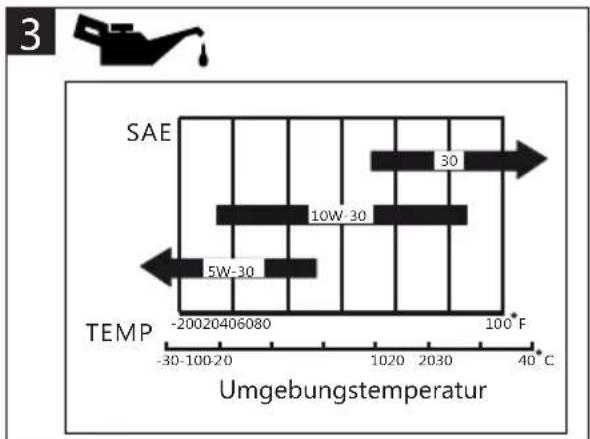
heatmap
| Temperature Range | Value | | :--- | :--- | | -20020406080 | 5W-30 | | 10W-30 | 10W-30 | | 30 | 30 | | 40°C | 100 F |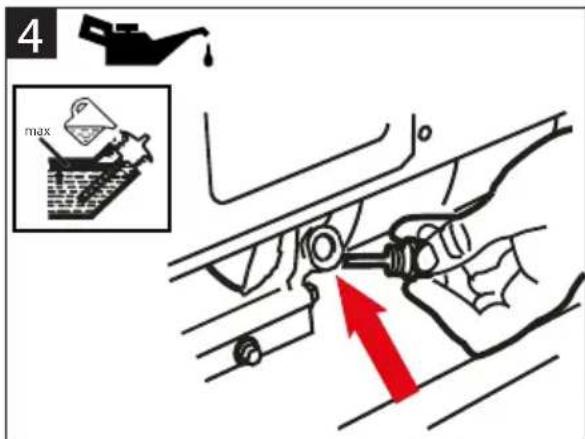
natural_image
Mechanical assembly diagram showing a valve mechanism with a red arrow indicating rotation (no text or symbols present)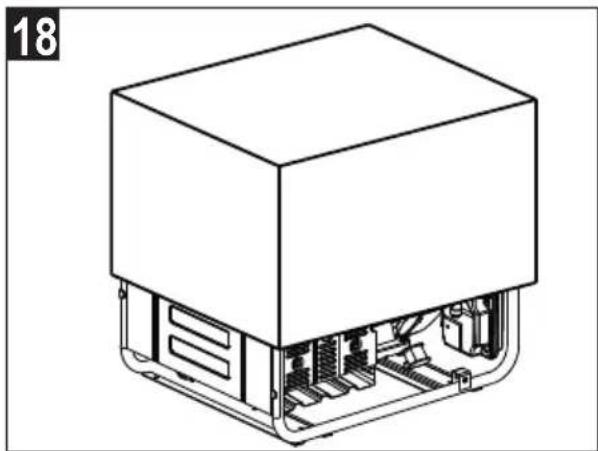
natural_image
Technical line drawing of a rectangular electronic device with internal components and mounting brackets (no text or symbols)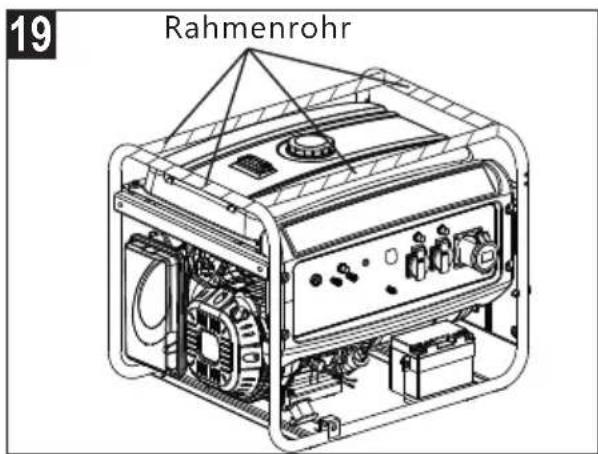
natural_image
Technical line drawing of a portable gas generator unit with visible internal components and wiring (no text or labels)Zu diesem Handbuch
11, route de Luxembourg
L-5230 Sandweiler
No. 0499
Bevollmächtigter
Andreas Hedrich
Ichenhauser Str. 14
89359 KOETZ
DEUTSCHLAND
Wolfgang Hergeth, Managing Director
About this manual
■ Please read this document before starting to use the machine. This is essential for safe working and trouble-free handling. Familiarise yourself with the control elements and the machine use prior to using it.
■ Comply with the safety and warning instructions in this documentation and on the machine
This document is a permanent component of the described product, and should remain with the machine if it is sold to someone else
Explanation of symbols

Important!
Following these warning instructions can help to avoid personal injuries and/or damage to property.

Special instructions for ease of understanding and regarding handling.

The camera symbol refers to figures.
Contents
About this manual....16
Product description....16
Safety and protective devices....16
Product overview 17
Safety instructions....18
Refuelling....19
Start-up....20
Storage 21
Transport 21
Help in case of malfunctions....22
Repair....22
Maintenance and care 22
Disposal....22
Warranty 23
EC declaration of conformity 23
Product description
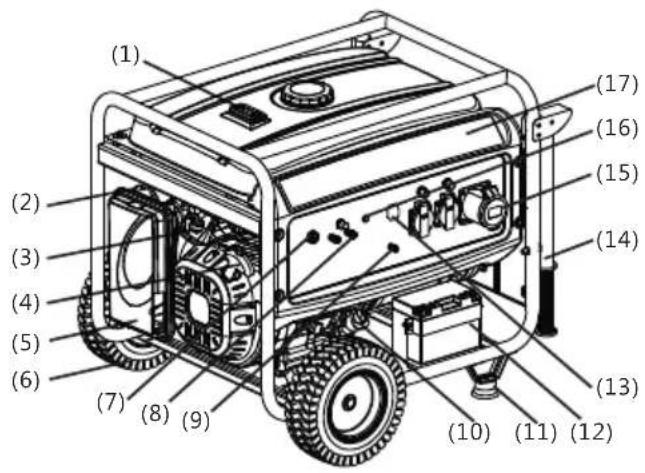
This documentation describes various models of petrol generators. Identify your model based on the product images and the description of the different options.
Designated use
This machine is designed for the operation of conventional electric devices. An electrician must be consulted prior to connecting stationary systems, such as heating, household connections, or when supplying mobile homes or caravans.
The generator is operated using unleaded petrol.
No devices, apparatuses may be connected, when starting the generator.
Any use not in accordance with this designated use shall be regarded as misuse.
Possible misuse
■ Safety devices must not be dismantled or bypassed
■ The machine is not allowed to be used in commercial applications
Safety and protective devices

Important – Danger of injury!
Do not deactivate safety and protective devices!
Product overview
Symbols on the machine
| Important!Take particular care during handling. |  | Danger of fire due to fuel or oil! | |
| Before starting operation,read the operating instructions! |  | Allow the machine to cool down prior to filling with fuel or oil | |
| Danger of poisoning due to exhaust gases! Wear ear |  tion! tion! | ||
| Do not operate the machine in closed rooms or poorly ventilated working areas (e.g. garage). | [HGBD] | Do not connect the generator to the household mains network | |
| Important! Danger of electric shock. |  | Disconnect the spark plug connector of the machine prior to any work. |
Safety instructions

Important – Danger of fatal injury!
Do not operate the generator in the case of rain, moisture or high humidity.

Important!
Only use the machine if it is in perfect technical condition!

Important – Danger of injury!
Do not deactivate safety and protective devices!

Important - Danger of fire!
If the machine is fuelled, do not store it in buildings in which petrol vapours could come into contact with naked flames or sparks!
Keep the area around the engine, exhaust, battery box and fuel tank free from dirt, petrol and oil.
Do not store any combustible or highly flammable objects or materials in the area of the exhaust outlet

Important - Danger of suffocation!
Do not operate the machine in closed rooms or poorly ventilated working areas (e.g. garage). The exhaust gases contain toxic carbon monoxide and other pollutants.

Important!
Do not connect the generator to the household mains network

Important! Danger of burns!
Parts of the generator become very hot during operation and remain hot even after the generator is switched off. Hot exhaust gases discharge from the exhaust gas silencer

Important!
Generator must be safely earthed
- Keep third parties out of the danger area
■ The machine operator or user is responsible for accidents involving other people and their property
Children, or other people who are not familiar with the operating instructions, are not allowed to use the machine.
- Keep children away from the operating range
■ Comply with the local regulations on minimum age of people operating the machine
■ Do not operate the machine if you are under the influence of alcohol, drugs or medication
■ Wear appropriate protective clothing
Long trousers
■ Sturdy and slip-resistant shoes
Ear protection
■ Use on slopes or uneven surfaces
■ Always ensure that you are standing securely
■ Only use with sufficient daylight or artificial lighting
■ Comply with working time regulations in force in your country
■ Do not leave the operational machine unsupervised
■ Do not operate the machine or the devices to be connected with damaged protective devices
■ Check the machine for damage prior to every use. Have damaged parts replaced prior to use

Check for damage on the machine and perform all necessary repairs prior to restarting the machine.
■ Switch engine off, wait for machine standstill and disconnect the spark plug connector
■ When leaving the machine
■ After malfunctions occurred
- When malfunctions and unusual vibrations occur on the machine
For transport
■ Connect spark plug connector and start engine
■ After malfunction correction (see malfunction table) and machine testing
■ After machine cleaning
■ Do not eat or drink when adding petrol or engine oil
■ Do not breath in petrol vapours
■ Never lift or carry the machine when the engine is running
■ Ensure tight fit of nuts, screws and bolts prior to use
■ Do not use machine underground
■ Do not use bare wires for the connection with electric devices - always use compatible cables and plugs
- Observe maximum cable length when using extension cords or a mobile power distribution cabinet

Observe maximum cable length when using extension cords or a mobile power distribution cabinet
for 1.5 mm ^2 max. 60 m
for 2.5 mm ^4 max. 100 m
Refuelling
The machine must be refuelled prior to start-up.

Warning - Danger of fire!
Petrol and oil are highly flammable!
Operating material
| Petrol Engine oil | ||
| Grade | Regular petrol / unleaded | see (☐) |
| Filling amount | see Technical data | see Technical data |
Safety

Warning!
Never run the engine in enclosed spaces. Danger of poisoning!
■ Use only designed containers to store petrol and oil
■ Add and empty petrol and oil outdoors only with the engine cooled down
■ Do not add petrol or oil with the engine running
■ Do not overfill tank (petrol expands)
■ Do not smoke when refuelling
■ Do not open the tank cap when the engine is running or hot
■ Replace the tank or tank cap if damaged
■ Always close the tank lid firmly
■ If petrol has leaked out:
Do not start the engine
- Avoid start attempts
Clean the machine
- Have engine cool down before refilling with petrol to avoid spilling
■ Spilled fuel can lead to damage to plastic parts. Immediately wipe off fuel. Warranty does not cover damage to plastic parts caused by fuel
■ If engine oil has leaked out:
Do not start the engine
■ Absorb leaked engine oil using an oil binding agent or cloth and dispose properly
Clean the machine

Do not dispose of waste oil:
■ in domestic waste
■ by pouring it into the canalisation, drain, or onto the ground
Drop off waste oil in a closed container at a recycling centre or a customer service centre.
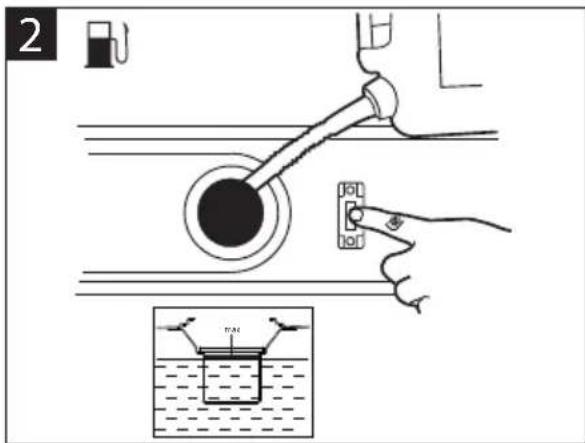
Refuelling
Filling with petrol (2)
Unscrew the tank lid and store it in a clean place.
- Fill with petrol via a funnel.
- Clean and tightly close the tank filling opening.
Filling with engine oil (4)
Unscrew the oil filling lid and store it in a clean place.
-
Fill with engine oil via a funnel.
-
Clean and tightly close the oil filling opening.
Start-up

Important!
Generator must be safely earthed

The camera symbol on the following pages refers to the figures on pages 4–7.
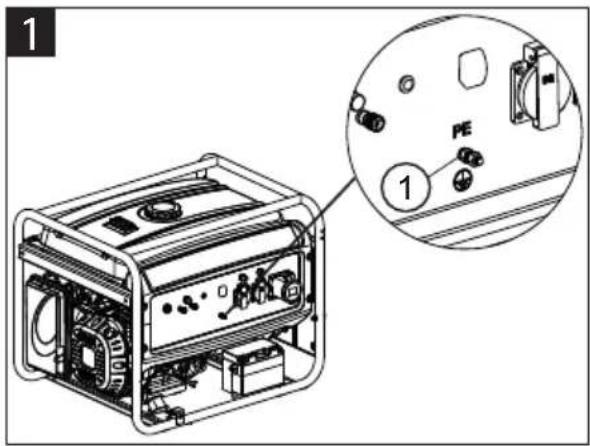
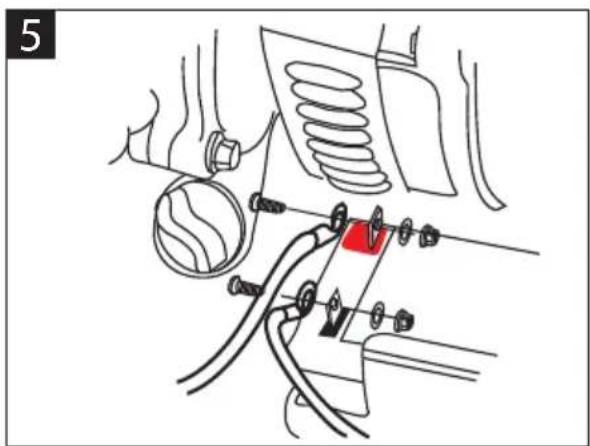
Earthing the machine

Important - Electric shock!
Do not use a bare wire for earthing.

Important!
Generator must be safely earthed

Use an earthing wire with a cross-section of at least 2.5mm^2 for earthing
Connecting the earthing wire (☐)
Press the end of the earthing wire under the nut of the earthing terminal.(☐/1)
- Secure the earthing wire by tightening the nut
- Connect the other end of the earthing wire to an earthing spike (e.g. metal rod)
- Put the earthing spike securely into the soil
Connecting the starter battery (AL-KO 6500-C only) (C6)
- Connect the red battery cable with the positive terminal of the starter battery. Tighten using screw and nut
- Connect the green battery cable with the negative terminal of the starter battery. Tighten using screw and nut
- Slide rubber grommets over the starter battery terminals after tightening

Avoid contact between the positive and negative terminal of the battery, as this could damage the battery
Opening the petrol cock (6)
- Open the petrol cock and have petrol flow into the carburettor
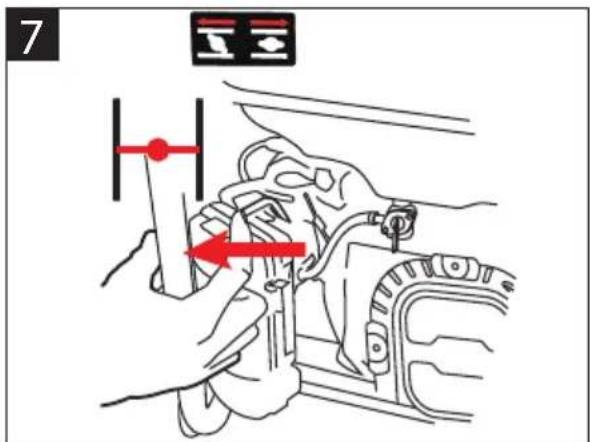
Choke (7)
- Close the choke lever during a cold start.
- When the machine is running at operating temperature, put the choke lever in the half-open position.

If the machine still does not start after two attempts, open the choke lever fully.
Starting the engine

Important – Danger of poisoning!
Never run the engine in enclosed spaces.

Important – Danger of injury!
Important – Danger of kickback!
Cable starter can return faster to the engine than the cable can be released.
Cable starter
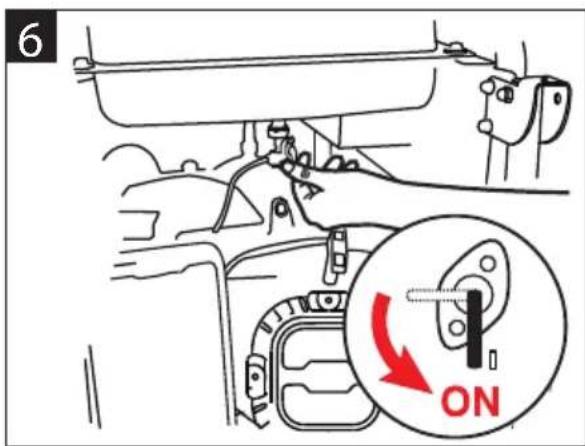
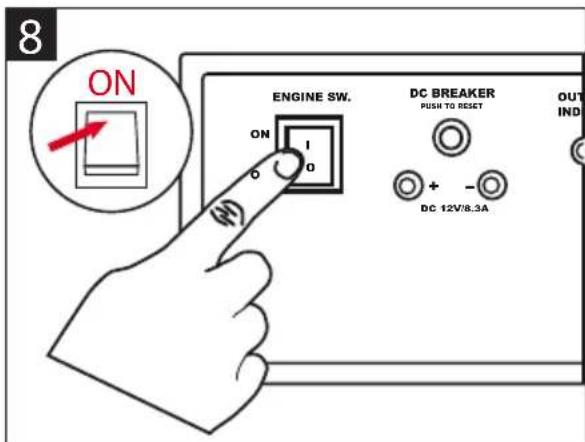
- Set the ignition circuit breaker to "ON" ( 6)
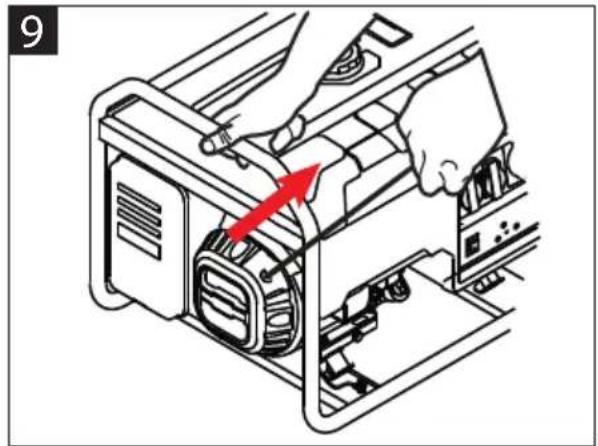
- Pull out the cable starter briskly, and then allow it to wind back in slowly (9)

If the machine still does not start after the second attempt, follow the instructions for the choke
Electrical starting (AL-KO 6500-C only)
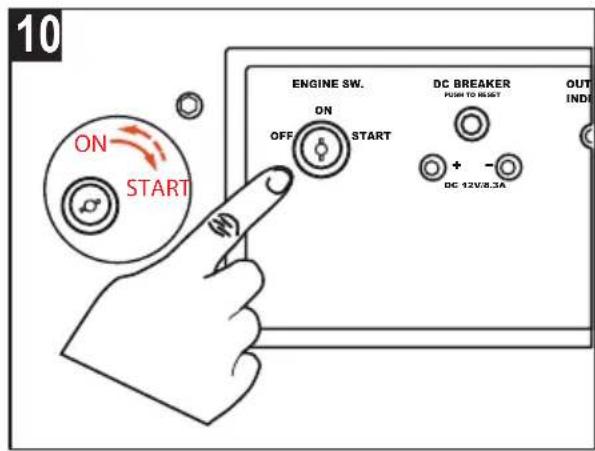
- Insert the key into the ignition
- Turn the key in the ignition clockwise into the "START" position (☐0)
- As soon as the engine is running, release the ignition (returns into the "ON" position).

The interval between starting attempts should be 10 seconds to avoid too fast discharging of the starter battery

If the machine still does not start after the second attempt, follow the instructions for the choke
Operation
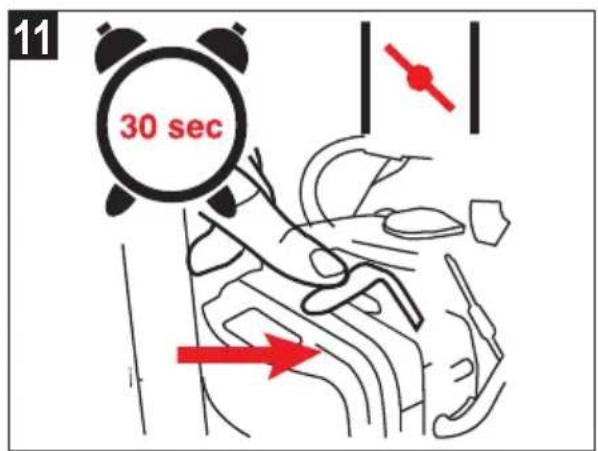
Turn back the choke lever approx. 30 seconds after the start (☐1).
Connecting power consumers

Important!
The total power of all connected consumers must not exceed the maximum rated power of the generator
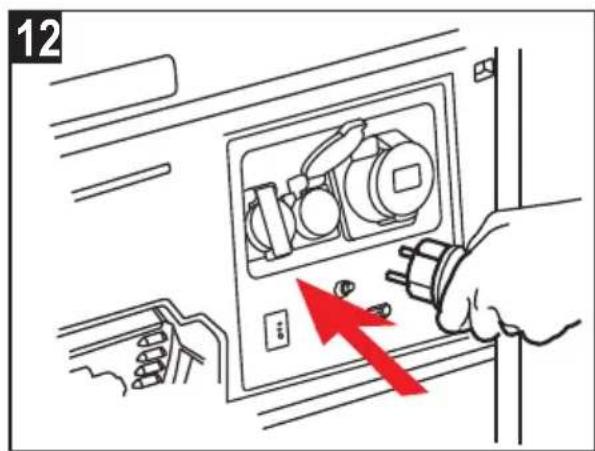
- Plug consumer into the socket of the generator ( 12)

If several consumers are connected to the generator, connect and switch on the first consumer first. Then connect and switch on further consumers.
Disconnecting power consumers
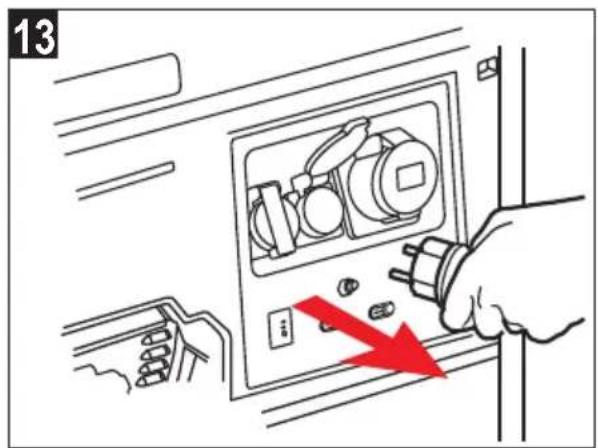
- Disconnect consumer from the socket of the generator (☐3)
Switching the engine off

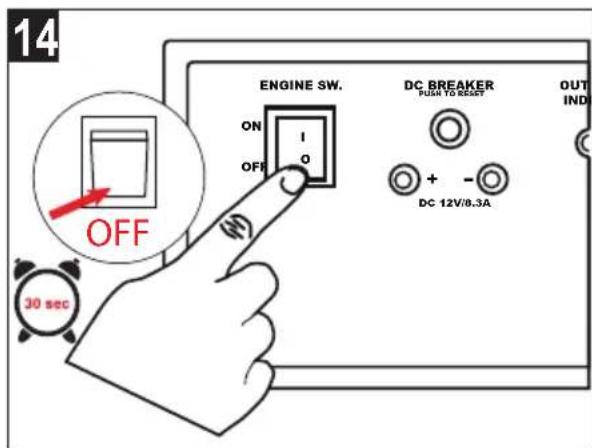
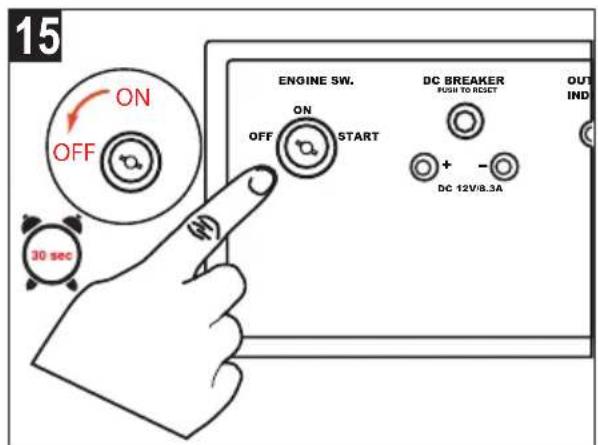
Only switch the generator off, after it has been running for 30 seconds without any load (without consumers connected)
■ Set the ignition circuit breaker to "OFF" (14)
(AL-KO 6500-C only) Turn the key in the ignition counter-clockwise into the "OFF" position (C5)
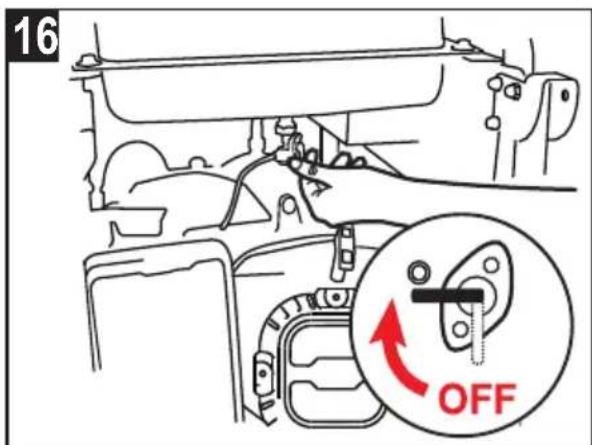
Closing the petrol cock

Important! Danger of burns!
Parts of the generator become very hot during operation and remain hot even after the generator is switched off.
Allow the generator to cool down prior to transport or anew start-up
- Close the petrol cock (16)
Storage

Important - Danger of fire!
Do not store the machine close to naked flames or sources of heat.
■ Allow the engine to cool down
■ Store machine in a dry place inaccessible to children and unauthorised persons
■ Store starter battery protected from frost
■ Recharge starter battery from time to time
■ Empty petrol tank and carburettor
■ Disconnect the spark plug connector
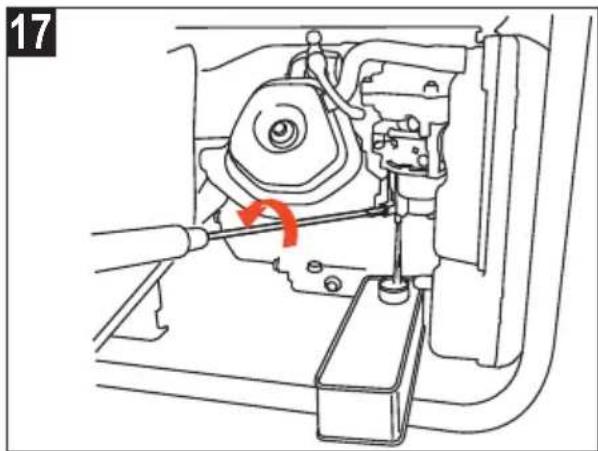
Draining the petrol

Important – Danger of explosion!
Refuelled machines can release petrol vapour into the air during storage!

Due to evaporation, petrol residues in the carburettor can lead to sticking components and thus malfunctions.
- Open the drain screw on the carburettor (☐) and drain petrol into a suitable fuel container
Covering the generator
- Store generator in a clean, dry place protected against moisture and humidity
- Cover generator using suitable means to prevent contamination and dust deposits in the machine (8)
Transport

Important!
Always transport the generator safely and horizontally in its normal operating position to prevent petrol or oil from leaking.

Important – Danger of explosion!
Refuelled machines can release petrol vapour into the air during transport!
- Lift and/or carry the generator on the frame tubes.
(9)
- Secure generator for transport. ( 20)
Repair
Repair work may be carried out only by service centres and authorised specialist workshops.
Maintenance and care

Important – Danger of injury!
- Always switch the engine off and pull the spark plug connector prior to any maintenance and care work.
- Engine may continue running. Make sure that the engine stopped after switching it off.
■ Clean the machine after every use
■ Do not spray the machine with water
Water ingress can lead to malfunctions (ignition system, carburettor)
■ Always replace defective silencers
Maintenance intervals
Before every use
■ Check the engine oil level
■ Inspect the air filter
After 20 operating hours or 1 month after first use
Oil change
Every 50 operating hours or every 3 months
■ Clean the air filter
Every 100 operating hours or every 6 months
Oil change
■ Clean the sludge trap on the petrol cock
■ Clean the spark plug
Every 300 operating hours, or once per year
■ Replace the spark plug
■ Set the valve play
In addition, every 300 operating hours
■ Clean the cylinder head
In addition, every 2 years
■ Flush the fuel tank and filter
■ Replace the petrol hose
^1) This maintenance work may be carried out only by service centres and authorised specialist companies.
Disposal

Do not dispose of worn-out machines or spent batteries (including rechargeable batteries) in domestic waste!
The packaging, machine and accessories are made from recyclable materials, and must be disposed of accordingly.
Help in case of malfunctions
| Malfunction Solution | |
| Engine does not start · Fill with petrol· Use the choke· Set the ignition circuit breaker to "ON"· Check spark plugs, and replace if necessary· Clean the air filter· Recharge the starter battery (AL-KO 6500-C only)· Disconnect power consumers | |
| Engine loses power · Clean the air filter· Total power of the consumers exceeds maximum rated power | |

If you encounter any malfunctions that are not listed in this table, or which you cannot rectify yourself, please contact our relevant customer service
Warranty
We will resolve any material or manufacturing faults on the machine during the legal warranty period for claims relating to faults, in accordance with our choice either to repair or replace. The legal warranty period is determined by the legislation of the country in which the machine was purchased.
Our warranty promise applies only if: The warranty becomes void if:
■ the machine has been handled correctly
■ the instructions for use have been complied with
■ original spare parts have been used
■ someone has attempted to repair the machine
■ any technical modifications have been made to the machine
■ the machine has not been used correctly (e.g. commercial or communal use)
The warranty excludes:
■ Paint damage that can be attributed to normal wear and tear
■ Wear parts that are marked with xxx x(x) frame on the spare parts card
Internal combustion engines – These are covered by the separate warranty provisions of the corresponding engine manufacturers
In the event of a warranty claim, please take this warranty declaration and your proof of purchase and contact your dealer or the nearest authorised customer service centre. This warranty promise does not affect your statutory rights.
EC declaration of conformity
We hereby declare that this product in the configuration marketed by us meets the requirements of the harmonised EC Directives, EC safety standards and the product-specific standards.
Product
Petrol Generator
Serial number
G4990012
Type
AL-KO 2500-C
AL-KO 3500-C
AL-KO 6500-C
Sound power level
EN ISO 3744
measured / guaranteed
93dB(A)/95dB(A) AL-KO 2500-C
94dB(A)/96dB(A) AL-KO 3500-C
95dB(A)/97dB(A) AL-KO 6500-C
Manufacturer
AL-KO Geräte GmbH
Ichenhauser Str. 14
D-89359 KOETZ
GERMANY
EC Directives
2006/42/EC
2014/35/EU
2014/30/EU
2000/14/EC
2011/65/EC
Conformity evaluation
2000/14/EC Appendix VI
Notified body
Société Nationale de Certifica-
tion et d'Homologation
11, route de Luxembourg
L-5230 Sandweiler
No. 0499
Duly authorised person
Andreas Hedrich
Ichenhauser Str. 14
D-89359 KOETZ
GERMANY
Harmonised standards
EN ISO 8528:2016
EN 60204-1:2006+A1:2009
EN 55012:2007+A1:2009
EN 61000-6-1:2007
Kötz, 2017-02-01
Wolfgang Hergeth, Managing Director
11, route de Luxembourg
L-5230 Sandweiler
No. 0499
Gevolmachtigde
Andreas Hedrich
Ichenhauser Str. 14
89359 KOETZ
DUITSLAND
Wolfgang Hergeth, Managing Director
11, route de Luxembourg
L-5230 Sandweiler
No. 0499
Fondé de pouvoir
Andreas Hedrich
Ichenhauser Str. 14
89359 KÖTZ
ALLEMAGNE
Normes harmonisées
EN ISO 8528:2016
EN 60204-1:2006+A1:2009
EN 55012:2007+A1:2009
EN 61000-6-1:2007
Kötz, 2017-02-01
11, route de Luxembourg
L-5230 Sandweiler
No. 0499
Procuratore
Andreas Hedrich
Ichenhauser Str. 14
89359 KOETZ
GERMANIA
Norme armonizzate
EN ISO 8528:2016
EN 60204-1:2006+A1:2009
EN 55012:2007+A1:2009
EN 61000-6-1:2007
Kötz, 2017-02-01
Wolfgang Hergeth, Managing Director
11, route de Luxembourg
L-5230 Sandweiler
No. 0499
Pełnomocnik
Andreas Hedrich
Ichenhauser Str. 14
89359 KOETZ
NIEMCY
Wolfgang Hergeth, Managing Director
K této příručce
11, route de Luxembourg
L-5230 Sandweiler
No. 0499
Kötz, 2017-02-01
Wolfgang Hergeth, Managing Director
A kézikönyvról
11, route de Luxembourg
L-5230 Sandweiler
No. 0499
Meghatalmazott
Andreas Hedrich
Ichenhauser Str. 14
89359 KOETZ
NÉMETORSZÁG
OBS! - Fare for forgiftning!
11, route de Luxembourg
L-5230 Sandweiler
No. 0499
Ansvarlig
Andreas Hedrich
Ichenhauser Str. 14
89359 KOETZ
TYSKLAND
Harmoniserede standarder
EN ISO 8528:2016
EN 60204-1:2006+A1:2009
EN 55012:2007+A1:2009
EN 61000-6-1:2007
Kötz, 2017-02-01
Wolffay Huyon
Wolfgang Hergeth, Managing Director
Varning – brandfara!
Varning – brandfara!
Varning – brandfara!
11, route de Luxembourg
L-5230 Sandweiler
No. 0499
Auktoriserad representant
Andreas Hedrich
Ichenhauser Str. 14
89359 KOETZ
TYSKLAND
Harmoniserade normer
EN ISO 8528:2016
EN 60204-1:2006+A1:2009
EN 55012:2007+A1:2009
EN 61000-6-1:2007
Kötz, 2017-02-01
Wolffay Huyon
Wolfgang Hergeth, Managing Director
Om denne håndboken
11, route de Luxembourg
L-5230 Sandweiler
No. 0499
Autorisert representant
Andreas Hedrich
Ichenhauser Str. 14
89359 KOETZ
TYSKLAND
Harmoniserte standarder
EN ISO 8528:2016
EN 60204-1:2006+A1:2009
EN 55012:2007+A1:2009
EN 61000-6-1:2007
Kötz, 2017-02-01
Wolfgang Hergeth, Managing Director
Tämä käyttöopas
11, route de Luxembourg
L-5230 Sandweiler
No. 0499
Valtuutettu
Andreas Hedrich
Ichenhauser Str. 14
89359 KOETZ
DEUTSCHLAND
Wolfgang Hergeth, Managing Director
O tejto príručke
11, route de Luxembourg
L-5230 Sandweiler
No. 0499
Zodpovedný zástupca
Andreas Hedrich
Ichenhauser Str. 14
89359 KOETZ
NEMECKO
Harmonizované normy
EN ISO 8528:2016
EN 60204-1:2006+A1:2009
EN 55012:2007+A1:2009
EN 61000-6-1:2007
Kötz, 2017-02-01
Wolffay Huron
11, route de Luxembourg
L-5230 Sandweiler
No. 0499
11, route de Luxembourg
L-5230 Sandweiler
No. 0499
Povjerenik
Andreas Hedrich
Ichenhauser Str. 14
89359 KOETZ
NJEMAČKA
Uskladene norme
EN ISO 8528:2016
EN 60204-1:2006+A1:2009
EN 55012:2007+A1:2009
EN 61000-6-1:2007
Kötz, 2017-02-01
Wolfgang Hergeth, Generalni direktor
Selle juhendi kohta
11, route de Luxembourg
L-5230 Sandweiler
No. 0499
Volitatud isik
Andreas Hedrich
Ichenhauser Str. 14
89359 KOETZ
SAKSAMAA
Harmoneeritud standardid
EN ISO 8528:2016
EN 60204-1:2006+A1:2009
EN 55012:2007+A1:2009
EN 61000-6-1:2007
Kötz, 2017-02-01
Wolfgang Hergeth, tegevjuht
Apie šj vadovą
11, route de Luxembourg
L-5230 Sandweiler
No. 0499
11, route de Luxembourg
L-5230 Sandweiler
No. 0499
11, route de Luxembourg
L-5230 Sandweiler
No. 0499
Кёц, 2017-02-01
11, route de Luxembourg
L-5230 Sandweiler
No. 0499
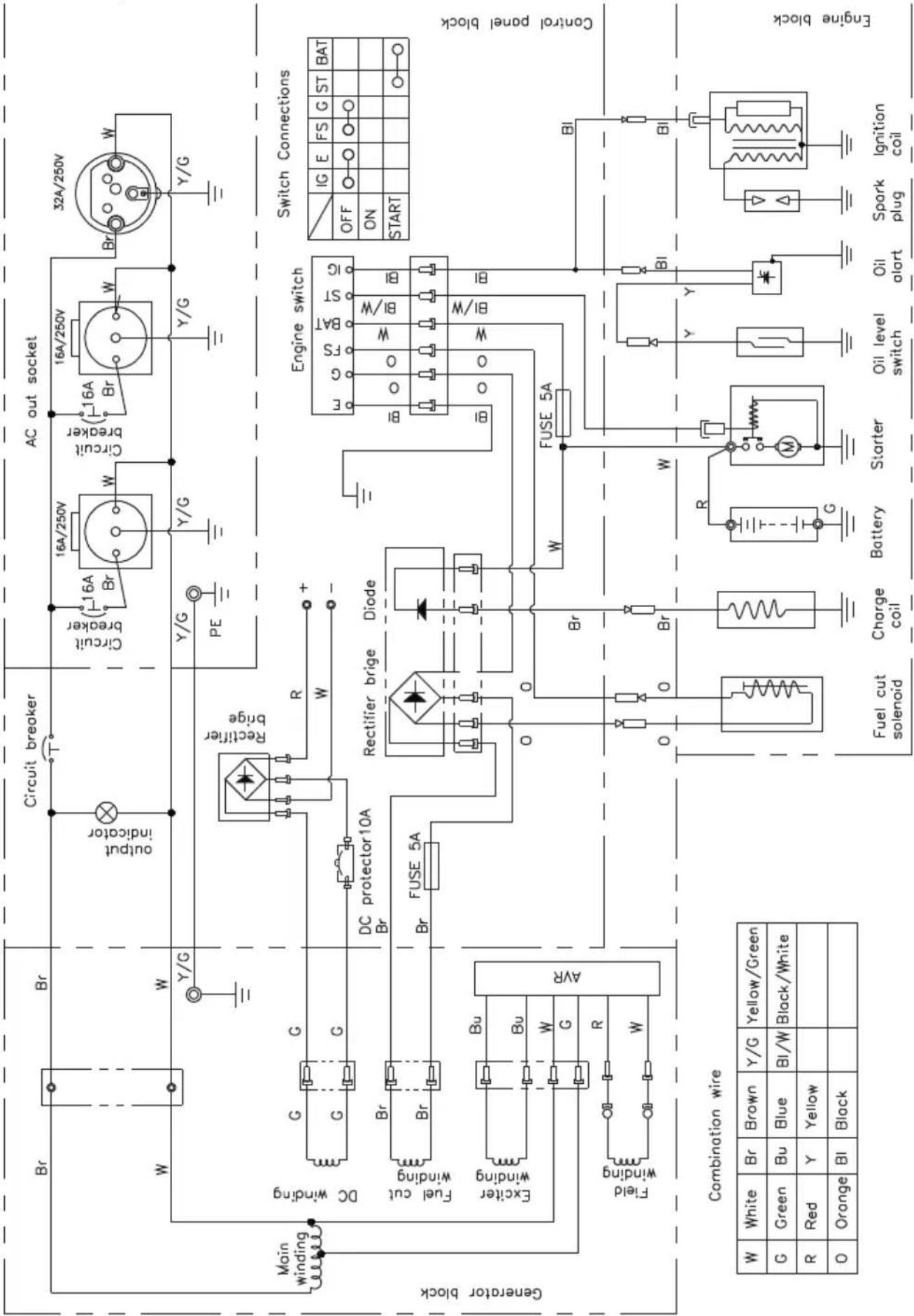
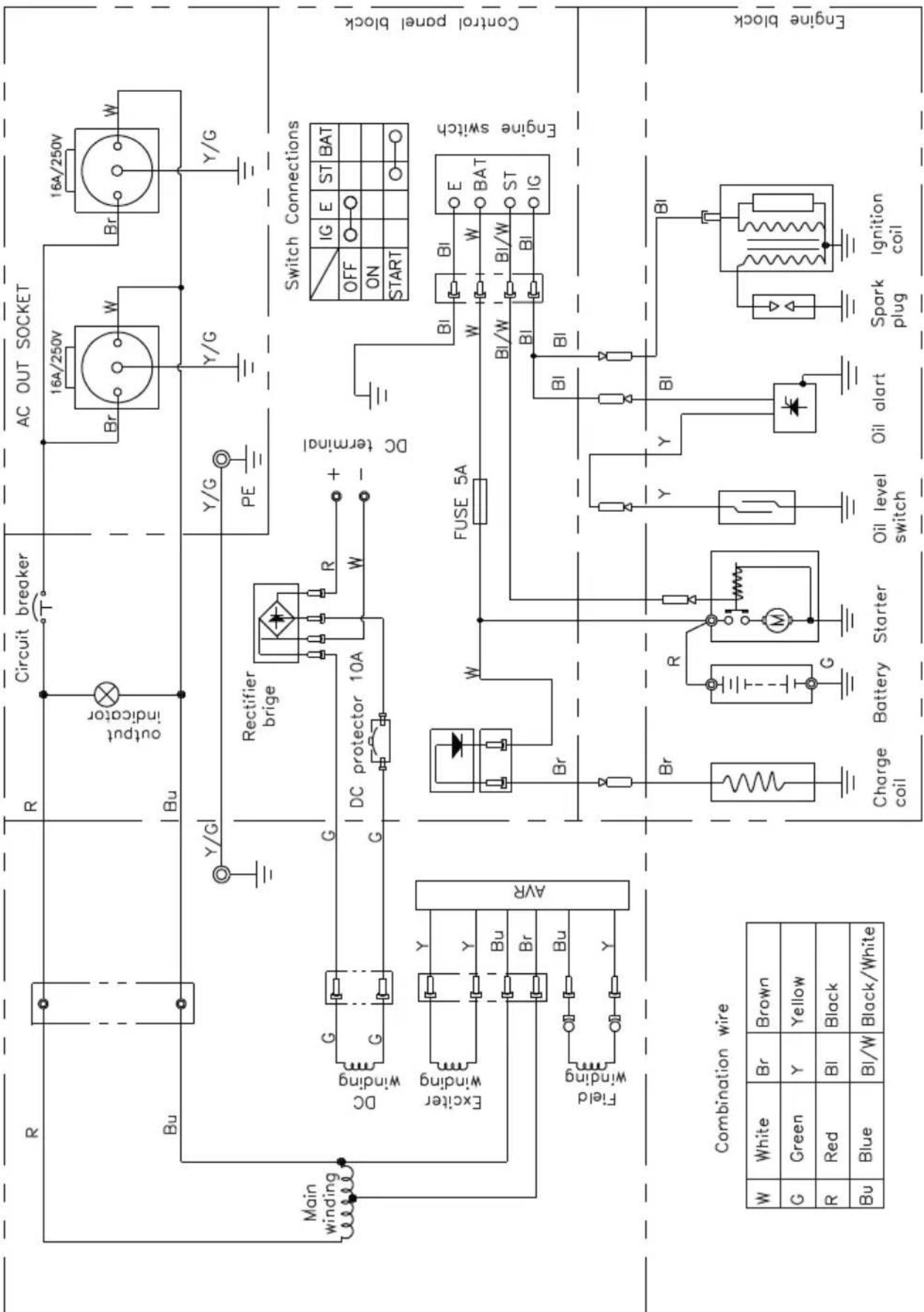
Stromlaufplan 2 2500D-C/3000D-C/3500D-C
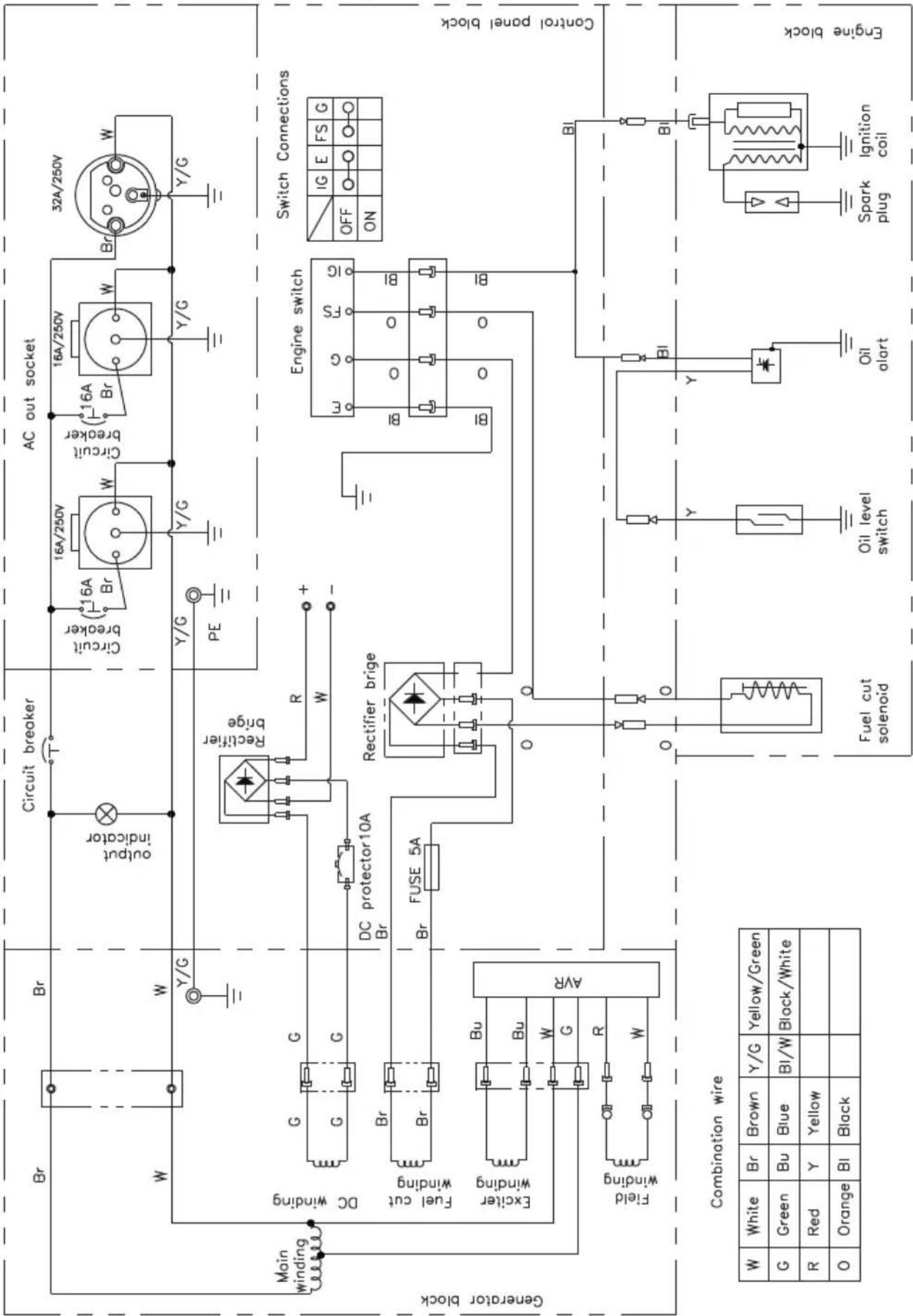
Stromlaufplan 3 5000-C/6500-C/8000-C
Stromlaufplan 4 5000D-C/6500D-C/8000D-C