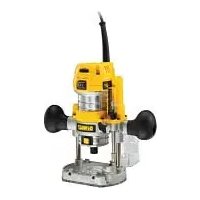
D26203 - Router DEWALT - Free user manual and instructions
Find the device manual for free D26203 DEWALT in PDF.


| Product type | Compact plunge base router |
| Brand | DeWalt |
| Model | D26203 |
| Voltage | 230 V |
| Power consumption | 900 W |
| No-load speed | 16,000 – 27,000 rpm |
| Plunge stroke | 55 mm |
| Collet size | 8 mm (GB: 1/4") |
| Max cutter diameter | 30 mm |
| Weight | 6.4 kg |
| Sound pressure level | 77 dB(A) |
| Sound power level | 88 dB(A) |
| Vibration emission value (a_h) | 7.0 m/s² |
| Vibration uncertainty (K) | 2.7 m/s² |
| Insulation type | Double insulation (class II) |
| Main functions | Compact router with plunge base, variable speed, 5-position turret stop, parallel guide, dust extraction adapter |
| Maintenance and cleaning | Clean ventilation slots with compressed air; use a damp cloth with mild soap; have brushes inspected by an authorized service center every 100 hours |
| Safety | Wear PPE (eye and ear protection); read instruction manual before use; do not use in wet conditions; hold tool firmly; disconnect before adjustment |
| Spare parts and repairability | Brushes, router bits, collets, sub-bases, parallel guides, dust extraction adapters; repair only by authorized service center |
| General information | Heavy-duty professional use; for wood, derivatives and plastics; 1 year warranty + free 1 year service contract |
Frequently Asked Questions - D26203 DEWALT
User questions about D26203 DEWALT
0 question about this device. Answer the ones you know or ask your own.
Ask a new question about this device
Download the instructions for your Router in PDF format for free! Find your manual D26203 - DEWALT and take your electronic device back in hand. On this page are published all the documents necessary for the use of your device. D26203 by DEWALT.
USER MANUAL D26203 DEWALT
English (original instructions)
Figure 4
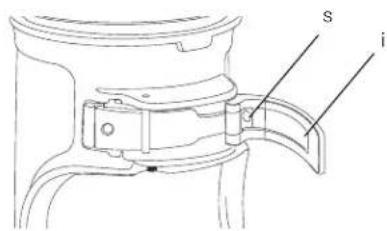
Figure 5A
D26200
natural_image
Mechanical assembly diagram showing a clamping mechanism with a downward arrow indicating force or direction (no text or symbols present)Figure 5B
D26203, D26204
natural_image
Technical line drawing of a mechanical component with circular holes and an upward arrow (no text or symbols)Figure 6
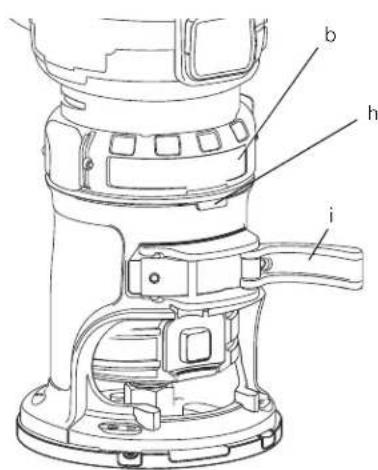
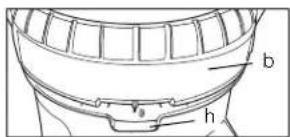
Figure 7A
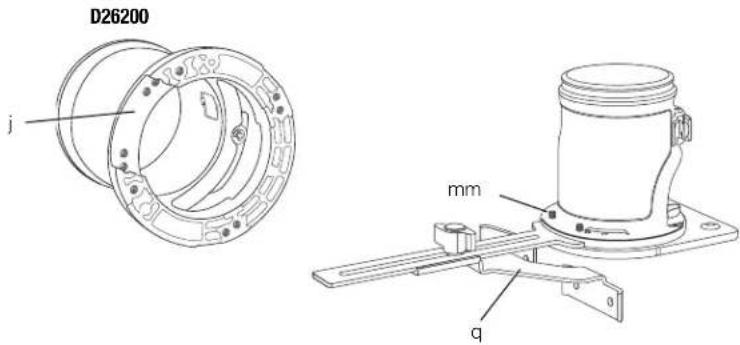
Figure 7B
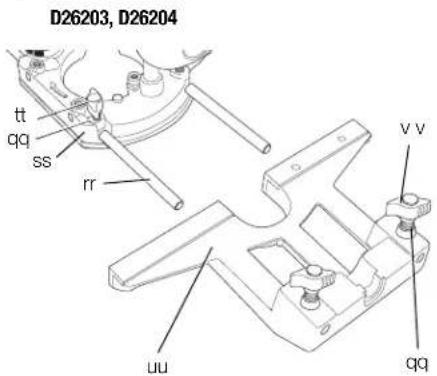
Figure 7C
D26203, D26204
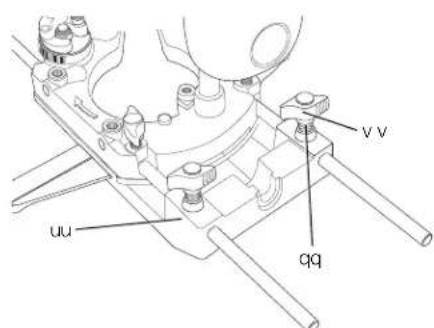
Figure 8
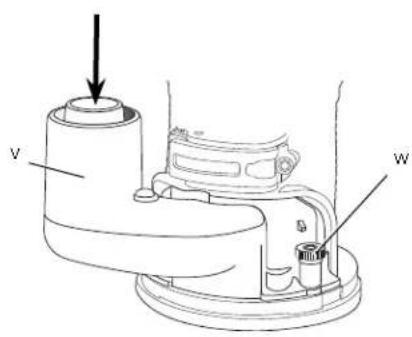
Figure 9
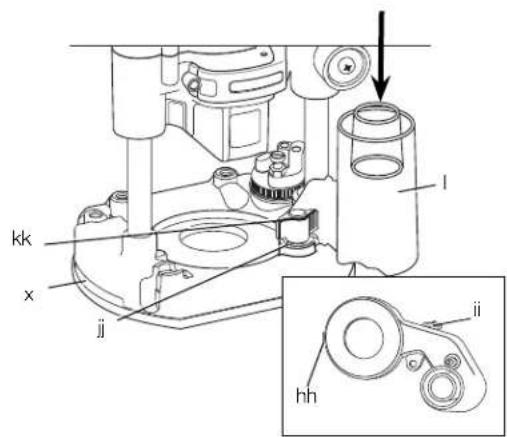
Figure 10
natural_image
Technical line drawing of a handheld device with labeled parts (no text or symbols present)Figure 11
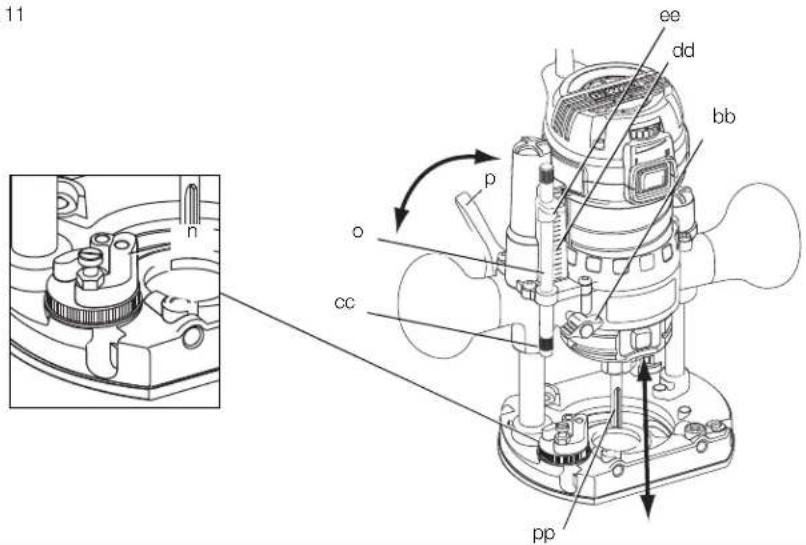
Figure 12
natural_image
Diagram of a wooden tray with rotating buttons and directional arrows indicating motion (no text or symbols)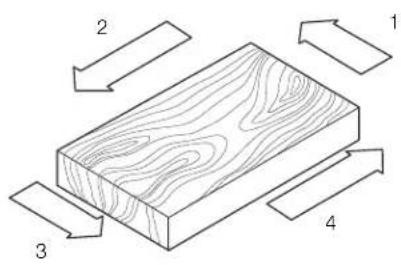
Figure 13
natural_image
Line drawing of a handheld device with a handle and connector (no text or symbols)D26200
natural_image
Line drawing of a mechanical device with hands operating it (no text or symbols)D26203, D26204
EKSTRA KRAFTIGE KOMPAKTE OVERFRÆSERED26200, D26203, D26204
Tillykke!
ADVARSEL: For at reducere

ADVARSEL: For at reducere
INDSÆT MOTOREN PÅ DYKSNITFODEN (FIG. 1, 10)
FRÆSNING MED DYKSNITFOD (FIG. 11)

SÅDAN VÆLGES OVERFRÅSERHASTIGHED (FIG. 1)
You have chosen a DEWALT tool. Years of experience, thorough product development and innovation make DEWALT one of the most reliable partners for professional power tool users.
Technical Data
| D26200 | D26203 | D26204 | |||
| Voltage V 230 230 230UK & Ireland V 115/230 115/230 | 115/230 | ||||
| Type | 1 | 1 | 1 | ||
| Power input | W | 900 900 900 | |||
| No-load speed | min^-1 | 16000–27000 | 16000–27000 | 16000–27000 | |
| Router carriage | 1 columns | 2 columns | 2 columns | ||
| Router carriage stroke | mm | 55 | 55 | 55 | |
| Revolver depth stop | 5-step,with graduation | 5-step,with graduation | 5-step,with graduation | ||
| Collet size | mm | 8 (GB: 1/4") | 8 (GB: 1/4") | 8 (GB: 1/4") | |
| Cutters diameter, max. | mm | 30 | 30 | 30 | |
| Weight | kg | 4.4 | 6.4 | 6.4 | |
| L_max (sound pressure) | dB(A) | 77 | 77 | 77 | |
| K_max (sound pressure uncertainty) | dB(A) | 3.0 | 3.0 | 3.0 | |
| L_max (sound power) | dB(A) | 88 | 88 | 88 | |
| K_max (sound power uncertainty) | dB(A) | 3.0 | 3.0 | 3.0 | |
Vibration total values (triax vector sum) determined according to EN 60745:
| Vibration emission value a _h | ||||
| a_h = | m/s ^2 | 7.0 | 7.0 | 7.0 |
| Uncertainty K = | m/s ^2 | 2.7 | 2.7 | 2.7 |
The vibration emission level given in this information sheet has been measured in accordance with a standardised test given in EN 60745 and may be used to compare one tool with another. It may be used for a preliminary assessment of exposure.

WARNING: The declared vibration emission level represents the main applications of the tool. However if the tool is used for different applications, with different accessories or poorly maintained, the vibration emission may differ. This may significantly increase the exposure level over the total working period.
An estimation of the level of exposure to vibration should also take into account the times when the tool is switched off or when it is running but not actually doing the job. This may significantly reduce the exposure level over the total working period.
Identify additional safety measures to protect the operator from the effects of vibration such as: maintain the tool and the accessories, keep the hands warm, organisation of work patterns.
| Fuses | ||
| Europe | 230 V tools | 10 Amperes, mains |
| U.K. & Ireland | 230 V tools | 13 Amperes, in plugs |
Definitions: Safety Guidelines
The definitions below describe the level of severity for each signal word. Please read the manual and pay attention to these symbols.

R: Indicates an imminently hazardous situation which, if not avoided, will result in death or serious injury.

WARNING: Indicates a potentially hazardous situation which, if not avoided, could result in death or serious injury.

N: Indicates a potentially hazardous situation which, if not avoided, may result in minor or moderate injury.
NOTICE: Indicates a practice not related to personal injury which, if not avoided, may result in property damage.

risk of electric shock.

risk of fire.
EC-DeclarationofConformity
MACHINERY DIRECTIVE

D26200, D26203, D26204
DEWALT declares that these products described under "technical data" are in compliance with: 2006/42/EC, EN 60745-1, EN 60745-2-17.
These products also comply with Directive 2004/108/EC. For more information, please contact DEWALT at the following address or refer to the back of the manual.
The undersigned is responsible for compilation of the technical file and makes this declaration on behalf of DEWALT.

Horst Grossmann
Vice President Engineering and Product Development
D-65510, Idstein, Germany
20.08.2010

WARNING: To reduce the risk of injury, read the instruction manual.
General Power Tool Safety Warnings

WARNING! Read all safety warnings and all instructions. Failure to follow the warnings and instructions may result in electric shock, fire and/or serious injury.
SAVE ALL WARNINGS AND INSTRUCTIONS FOR FUTURE REFERENCE
The term "power tool" in the warnings refers to your mains-operated (corded) power tool or battery-operated (cordless) power tool.
1) WORK AREA SAFETY
a) Keep work area clean and well lit.
Cluttered or dark areas invite accidents.
b) Do not operate power tools in explosive atmospheres, such as in the presence of flammable liquids, gases or dust. Power tools create sparks which may ignite the dust or fumes.
c) Keep children and bystanders away while operating a power tool. Distractions can cause you to lose control.
2) ELECTRICAL SAFETY
a) Power tool plugs must match the outlet. Never modify the plug in any way. Do not use any adapter plugs with earthed (grounded) power tools. Unmodified plugs and matching outlets will reduce risk of electric shock.
b) Avoid body contact with earthed or grounded surfaces such as pipes, radiators, ranges and refrigerators. There is an increased risk of electric shock if your body is earthed or grounded.
c) Do not expose power tools to rain or wet conditions. Water entering a power tool will increase the risk of electric shock.
d) Do not abuse the cord. Never use the cord for carrying, pulling or unplugging the power tool. Keep cord away from heat, oil, sharp edges or moving parts. Damaged or entangled cords increase the risk of electric shock.
e) When operating a power tool outdoors, use an extension cord suitable for outdoor
ENGLISH
use. Use of a cord suitable for outdoor use reduces the risk of electric shock.
f) If operating a power tool in a damp location is unavoidable, use a residual current device (RCD) protected supply. Use of an RCD reduces the risk of electric shock.
3) PERSONAL SAFETY
a) Stay alert, watch what you are doing and use common sense when operating a power tool. Do not use a power tool while you are tired or under the influence of drugs, alcohol or medication. A moment of inattention while operating power tools may result in serious personal injury.
b) Use personal protective equipment. Always wear eye protection. Protective equipment such as dust mask, non-skid safety shoes, hard hat, or hearing protection used for appropriate conditions will reduce personal injuries.
c) Prevent unintentional starting. Ensure the switch is in the off position before connecting to power source and/or battery pack, picking up or carrying the tool. Carrying power tools with your finger on the switch or energising power tools that have the switch on invites accidents.
d) Remove any adjusting key or wrench before turning the power tool on. A wrench or a key left attached to a rotating part of the power tool may result in personal injury.
e) Do not overreach. Keep proper footing and balance at all times. This enables better control of the power tool in unexpected situations.
f) Dress properly. Do not wear loose clothing or jewellery. Keep your hair, clothing and gloves away from moving parts. Loose clothes, jewellery or long hair can be caught in moving parts.
g) If devices are provided for the connection of dust extraction and collection facilities, ensure these are connected and properly used. Use of dust collection can reduce dust-related hazards.
4) POWER TOOL USE AND CARE
a) Do not force the power tool. Use the correct power tool for your application. The correct power tool will do the job better and safer at the rate for which it was designed.
b) Do not use the power tool if the switch does not turn it on and off. Any power
tool that cannot be controlled with the switch is dangerous and must be repaired.
c) Disconnect the plug from the power source and/or the battery pack from the power tool before making any adjustments, changing accessories, or storing power tools. Such preventive safety measures reduce the risk of starting the power tool accidentally.
d) Store idle power tools out of the reach of children and do not allow persons unfamiliar with the power tool or these instructions to operate the power tool. Power tools are dangerous in the hands of untrained users.
e) Maintain power tools. Check for misalignment or binding of moving parts, breakage of parts and any other condition that may affect the power tool's operation. If damaged, have the power tool repaired before use. Many accidents are caused by poorly maintained power tools.
f) Keep cutting tools sharp and clean. Properly maintained cutting tools with sharp cutting edges are less likely to bind and are easier to control.
g) Use the power tool, accessories and tool bits etc., in accordance with these instructions taking into account the working conditions and the work to be performed. Use of the power tool for operations different from those intended could result in a hazardous situation.
5) SERVICE
a) Have your power tool serviced by a qualified repair person using only identical replacement parts. This will ensure that the safety of the power tool is maintained.
Additional Specific Safety Rules for Compact Routers
- Use clamps or another practical way to secure and support the workpiece to a stable platform. Holding the work by hand or against your body leaves it unstable and may lead to loss of control.
- Hold power tools by recommended gripping surfaces when performing an operation where the cutting tool may contact hidden wiring or its own cord. Contact with a "live" wire will make some exposed metal parts of the tool "live" and shock the operator.
• DO NOT cut metal.
- Keep handles and gripping surfaces dry, clean, and free from oil and grease. This will enable better control of the tool.
- Maintain firm grip with both hands on router to resist starting torque.
- Keep hands away from cutting area. Never reach under the workpiece for any reason. Keep the router base firmly in contact with the workpiece when cutting. These precautions will reduce the risk of personal injury.
- Never run the motor unit when it is not inserted in one of the router bases. The motor is not designed to be handheld.
- Keep cutting pressure constant. Do not overload motor.
- Check to see that the cord will not snag or impede the routing operation.
- Use sharp cutters. Dull cutters may cause the router to swerve or stall under pressure.
- Be sure that the motor has stopped completely before you lay the router down. If the cutter head is still spinning when the tool is laid down, it could cause injury or damage.
- Be sure that the router cutter is clear of the workpiece before starting the motor. If the cutter is in contact with the workpiece when the motor starts it could make the router jump, causing damage or injury.
- ALWAYS disconnect tool from power source before making adjustments or changing cutters.
- Keep hands clear of cutter when motor is running to prevent personal injury.
- Never touch the cutter immediately after use. It may be extremely hot.
- Provide clearance under workpiece for router cutter when through-cutting.
- Tighten collet nut securely to prevent the cutter from slipping.
- Never tighten collet nut without a cutter.
- Do not use router cutters with a diameter in excess of 30 mm in this tool.
-
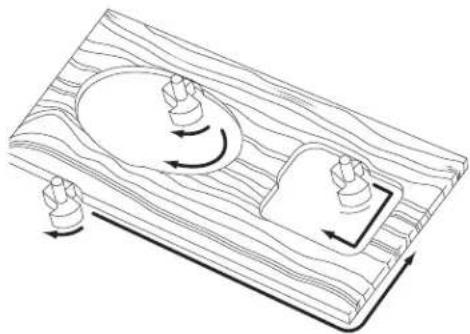
Avoid Climb-Cutting (cutting in direction opposite that shown in fig. 12). Climb-Cutting increases the chance for loss of control resulting in possible injury. When "Climb-Cutting" is required (backing around a corner), exercise extreme caution to maintain control of router. Make smaller cuts and remove minimal material with each pass.
-
Always use straight-cutters, rabbet-cutters, profile cutters, slotter cutters or grooved knives with a shank diameter of 6–8 mm which corresponds to the size of the collet in your tool.
- Always use cutters suitable for a speed of min. 30000 min ^-1 and marked accordingly.

WARNING: Never use cutters with a diameter exceeding the maximum diameter indicated in the technical data.
ResidualRisks
In spite of the application of the relevant safety regulations and the implementation of safety devices, certain residual risks cannot be avoided. These are:
- Impairment of hearing.
– Risk of personal injury due flying particles.
– Risk of burns due to accessories becoming hot during operation.
– Risk of personal injury due to prolonged use.
Markings on Tool
The following pictograms are shown on the tool:

Read instruction manual before use.

Wear ear protection.

Wear eye protection.
DATE CODE POSITION (FIG. 1)
The Date Code (y), which also includes the year of manufacture, is printed on the label.
Example:
2010 XX XX
Year of Manufacture
Package Contents
D26200
The package contains:
1 Router with fixed base
1 Fixed base dust collection
1 Basic parallel fence (D262003)
1 Collet 8 mm (GB: 1/4")
1 Wrench
ENGLISH
1 Instruction manual
1 Exploded drawing
D26203
The package contains:
1 Router with plunge base
1 Plunge base dust collection
1 Parallel fence with guide rods
1 Collet 8 mm (GB: 1/4")
1 Wrench
1 Guide bush 17 mm
1 Centering cone
1 Instruction manual
1 Exploded drawing
D26204
The package contains:
1 Router with plunge base
1 Fixed base
1 Dust collection fixed base
1 Dust collection plunge base
1 Parallel fence with guide rods
1 Basic parallel fence (D262003)
1 Collet 8 mm (GB: 1/4")
1 Wrench
1 Guide bush 17 mm
1 Centering cone
1 Kitbox
1 Instruction manual
1 Exploded drawing
- Check for damage to the tool, parts or accessories which may have occurred during transport.
• Take the time to thoroughly read and understand this manual prior to operation.
Description (fi g. 1–11)
WARNING: Never modify the power tool or any part of it. Damage or personal injury could result.
a. Quick release tabs
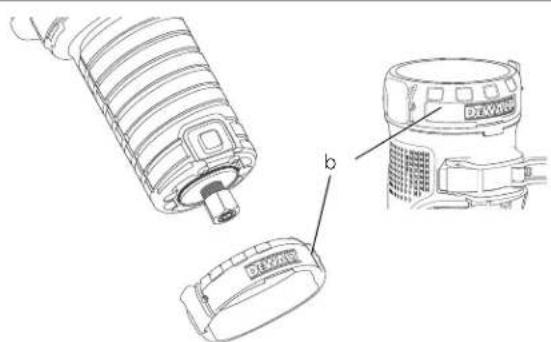
b. Depth adjustment ring
c. Variable speed dial
d. On/Off (I/O) switch
e. Spindle lock button
f. LED lights
g. Guide pin groove
h. Micro adjustment scale
i. Locking lever
j. Parallel fence slot (fixed base)
k. Subbase
[the round subbase (ff) and the D-subbase (gg) are available as an accessory.]
I. Vacuum attachment (for use with plunge base)
m. Holes for Premium parallel fence (D26203, D26204)
n. Turret stop
o. Depth adjustment rod
p. Plunge lock lever
q. Parallel fence
r. Guide pins
s. Locking lever adjustment screw
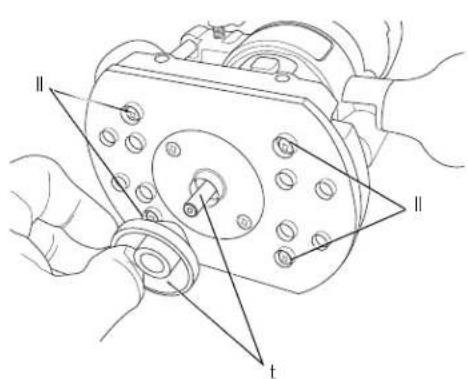
t. Centering tool
u. Collet nut
v Vacuum attachment (fixed base)
w. Screws (vacuum attachment, fixed base)
x. Parallel fence slot (plunge base)
y. Date code
z. Motor unit
aa. Motor stop
bb. Thumb screw
cc. Knurled knob
dd. Depth adjustment scale
ee. Zero adjuster tab
ff. Round subbase
gg. D-shaped subbase
hh. Tab (vacuum attachment, plunge base)
ii. Snap Tab (vacuum attachment)
jj. Plastic Washer (vacuum attachment)
kk. Thumb Screw (vacuum attachment)
II. Sub-base screws
mm. Parallel fence screws
INTENDED USE
Your heavy-duty compact router has been designed for professional heavy duty routing of wood, wood products and plastics.
DO NOT use under wet conditions or in presence of flammable liquids or gases.
These compact routers are professional power tools.
DO NOT let children come into contact with the tool. Supervision is required when inexperienced operators use this tool.
Electrical Safety
The electric motor has been designed for one voltage only. Always check that the power supply corresponds to the voltage on the rating plate.

Your DEWALT tool is double insulated in accordance with EN 60745; therefore no earth wire is required.

WARNING: 115 V units have to be operated via a fail-safe isolating transformer with an earth screen between the primary and secondary winding.
If the supply cord is damaged, it must be replaced by a specially prepared cord available through the DEWALT service organisation.
Mains Plug Replacement (U.K. & Ireland Only)
If a new mains plug needs to be fitted:
- Safely dispose of the old plug.
- Connect the brown lead to the live terminal in the plug.
- Connect the blue lead to the neutral terminal.

IG: No connection is to be made to the earth terminal.
Follow the fitting instructions supplied with good quality plugs. Recommended fuse: 13 A.
Using an Extension Cable
If an extension cable is required, use an approved 3-core extension cable suitable for the power input of this tool (see technical data). The minimum conductor size is 1.5 mm ^2 ; the maximum length is 30 m.
When using a cable reel, always unwind the cable completely.
ASSEMBLY AND ADJUSTMENTS

NG: To reduce the risk of injury, turn unit off and disconnect machine from power source before installing and removing accessories, before adjusting or changing set-ups or when making repairs. Be sure the trigger switch is in the OFF position. An accidental start-up can cause injury.
Cutters
The tooling can be used with the complete range of commercial cutters (e.g: straight, rebate, profile cutter, slotter cutter or grooved knife) with the following technical data:
- Shank diameter 6–8 mm
- Cutter speed of min. 30000/min

WARNING: Max diameter to use:
- For straight-cutters, rabbit-cutters, profile cutters, the maximum shank diameter MUST be 8 mm, the maximum diameter MUST be 36 mm, the maximum cutting depth MUST be 10 mm.
• For slotter cutters, the maximum shank diameter MUST be 8 mm and the maximum diameter MUST be 25 mm.
- For grooved knives, the maximum shank diameter MUST be 8 mm, the maximum diameter MUST be 40 mm and the maximum cutting width MUST be 4 mm.
Motor Quick Release (fi g. 2)

NG: To reduce the risk of injury, turn unit off and disconnect it from power source before installing and removing accessories, before adjusting or when making repairs.
An accidental start-up can cause injury.
- Open the locking lever (i) on the base.
- Grasp the motor unit with one hand, depressing both quick release tabs (a).
- With the other hand, grasp the base and pull motor from the base.
Cutter Installation and Removal (fi g. 3)

NG: To reduce the risk of injury, turn unit off and disconnect it from power source before installing and removing accessories, before adjusting or when making repairs. An accidental start-up can cause injury.
TO INSTALL THE CUTTER
- Remove the motor unit from the base unit, refer Motor Quick Release, if needed.
- Clean and insert the round shank of the desired router cutter into the loosened collet as far as it will go and then pull it out about 1.6 mm.
ENGLISH
- Depress the spindle lock button (e) to hold the spindle shaft in place while turning the collet nut (u) clockwise with the wrench provided.
NOTE: The unit is equipped with multiple spindle lock detents allowing an optional "manual ratchet" method of tightening the cutter.
To tighten with the manual ratchet method:
a. Without removing the wrench from the collet nut (u), release pressure on the spindle lock button (e).
b. With the wrench still on the collet nut (u), reverse the tightening direction to reset the wrench position.
c. Depress the spindle lock button (e) again a turn the wrench clockwise.
d. Repeat the procedure until the collet nut (u) reaches desired tightness.
NOTICE: Avoid possible damage to the
collet. Never tighten the collet without a cutter.
TO REMOVE THE CUTTER
- Remove the motor unit from the base unit, see Motor Quick Release.
- Depress the spindle lock button (e) to hold the spindle shaft in place while turning the collet nut (u) counterclockwise with the wrench provided.
To loosen using the manual ratchet method:
a. Without removing the wrench from the collet nut (u), release pressure on the spindle lock button (e).
b. With the wrench still on the collet nut (u), reverse the loosening direction to reset the wrench position.
c. Depress the spindle lock button (e) again and turn the wrench counterclockwise.
d. Repeat the procedure until the collet nut (u) is loose and the cutter can be removed.
Collets
NOTE: Never tighten the collet without first installing a router cutter in it. Tightening an empty collet, even by hand, can damage the collet.
To change collet sizes, unscrew the collet assembly as described above. Install the desired collet by reversing the procedure. The collet and the collet nut are connected. Do not attempt to remove the collet from the collet nut.
OPERATION
Instructions for Use
WARNING: Always observe the safety instructions and applicable regulations.
WARNING: To reduce the risk of serious personal injury, turn tool off and disconnect tool from power source before making any adjustments or removing/installing
WARNING: Do not use router cutters with a diameter in excess of 30 mm in this tool.
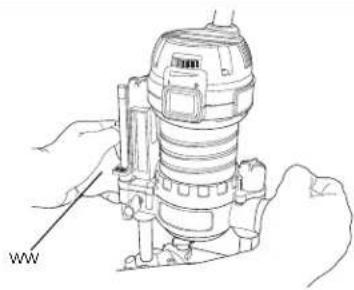
Proper Hand Position (fi g. 13)
WARNING: To reduce the risk of serious personal injury, ALWAYS use proper hand position as shown.
WARNING: To reduce the risk of serious personal injury, ALWAYS hold securely in anticipation of a sudden reaction.
D26200
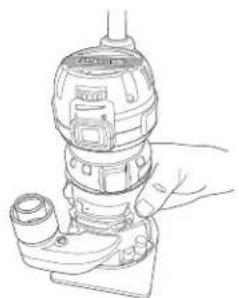
Proper hand position requires one hand to be wrapped around the base as shown.
D26203, D26204
Proper hand position when using the plunge base requires one hand on each of the plunge handles (ww) as shown.
Starting and Stopping the Motor (fi g. 1)
CAUTION: Before starting the tool, clear the work area of all foreign objects. Also keep firm grip on tool to resist starting torque.
CAUTION: To avoid personal injury and/or damage to finished work, always allow the power unit to come to a COMPLETE STOP before putting the tool down.
To turn unit on, depress the side of the dust-protected switch (d) that reads ON and corresponds to the symbol "I."
To turn the unit off, depress the side of the switch that reads OFF and corresponds with the symbol "O."
Locking Lever Adjustment (fi g. 4)
WARNING: To reduce the risk of injury, turn unit off and disconnect it from power source before installing and removing accessories, before adjusting or when making repairs.
An accidental start-up can cause injury.
Excessive force should not be used to clamp the locking lever. Using excessive force may damage the base.
When the locking lever (i) is clamped the motor should not move in the base.
Adjustment is needed if the locking lever will not clamp without excessive force or if the motor moves in the base after clamping.
To adjust the locking lever's clamping force:
- Open the locking lever (i).
- Using a hex wrench turn screw (s) in small increments.
NOTE: Turning the screw clockwise tightens the lever, while turning the screw counterclockwise loosens the lever.
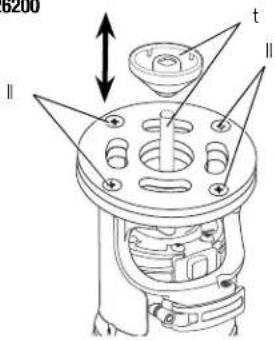
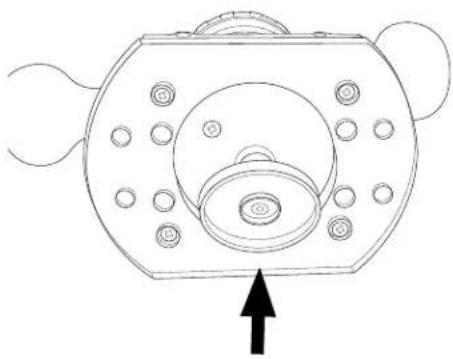
Centering the Subbase (fi g. 5)
WARNING: To reduce the risk of injury, turn unit off and disconnect it from power source before installing and removing accessories, before adjusting or when making repairs.
An accidental start-up can cause injury.
If you need to adjust, change, or replace the subbase, a centering tool is recommended, refer to Accessories. The centering tool consists of a cone and a pin. To adjust the subbase, follow the steps below.
- Loosen but do not remove the subbase screws (II) so the subbase moves freely.
- Insert the pin into the collet and tighten the collet nut.
- Insert the motor into the base and clamp the locking lever on the base.
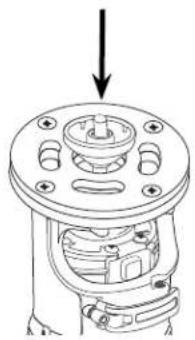
- Place the cone on the pin (t) and lightly press down on the cone until it stops as shown. This will center the subbase.
- While holding down on the cone, tighten the subbase screws.
Using Template Guides
The plunge subbase will accept template guides. On the fixed base an accessory subbase will be
needed to accept template guides. Recommended accessories for use with your tool are available at extra cost from your local dealer or authorized service center.
NOTE: The D-shape subbase does not accommodate template guides and is designed to accommodate cutters up to 30 mm in diameter.
TO USE TEMPLATE GUIDES
- Install template guide to subbase using two screws and tighten securely.
- Center the subbase. Refer to Centering The Subbase.
Adjusting the Depth of Cut (fi g. 6)
WARNING: To reduce the risk of injury, turn unit off and disconnect it from power source before installing and removing accessories, before adjusting or when making repairs. An accidental start-up can cause injury.
- Select and install the desired cutter. Refer to Cutter Installation and Removal.
- Assemble base to motor, ensuring base is attached to the depth adjustment ring (b). Place router on the work piece.
- Open the locking lever (i) and turn the depth adjustment ring (b) until the cutter just touches the work piece. Turning the ring clockwise raises the cutting head while turning it counterclockwise lowers the cutting head.
- Turn the micro adjustable scale (h) clockwise until the 0 on the scale lines up with the pointer on the bottom of the depth adjustment ring.
- Turn the depth adjustment ring until the pointer lines up with desired depth of cut marking on the micro adjustable scale.
NOTE: Each mark on the adjustable scale represents a depth change of 0.5 mm and one full (360°) turn of the ring changes the depth 12.7 mm.
- Close the locking lever (i) to lock the base.
Using a Parallel Fence (fi g. 7A)
A basic parallel fence is included with the D26200, D26204 and works well with fixed and plunge bases. The basic parallel fence D262003-XJ is available as an accessory for the other models and may be purchased from your local retailer or service center at extra cost.
- Remove the motor unit from the base unit, see Motor Quick Release.
ENGLISH
- Remove flat head screws (mm) from storage holes on parallel fence.
- Slide parallel fence into parallel fence slot (j) on side of base. Insert the two flat head screws through the appropriate holes in the sub base to secure the parallel fence. Tighten hardware.
- Follow all instructions included with the parallel fence.
NOTE: To remove the parallel fence, reverse the above procedure. After removing parallel fence always replace the two flat head screws (mm) into the storage holes on the parallel fence to prevent loss.
Using a Parallel Fence With Guide Rods (plunge base only: D26203, D26204)
A parallel fence with guide rods may be included with your plunge base unit. A premium parallel fence (model DE6913) is also available from your local retailer or service center at extra cost.
FITTING THE PARALLEL FENCE (FIG. 7B)
- Attach the guide rods (rr) to the router base (ss).
- Attach the thumb screws (tt) and springs (qq) to the base.
- Tighten the thumb screws (tt).
- Slide the parallel fence (uu) over the rods.
- Attach thumb screws (tt) and springs (qq) to the parallel fence.
- Tighten the thumb screws (v v) temporarily. Refer to Adjusting the Parallel Fence.
ADJUSTING THE PARALLEL FENCE (FIG. 1, 7C)
Follow the assembly instructions included with the parallel fence.
- Draw a cutting line on the material.
- Lower the router carriage until the cutter is in contact with the workpiece.
- Lock the plunge mechanism by releasing the plunge lock lever (p)
- Position the router on the cutting line. The outer cutting edge of the cutter must coincide with the cutting line.
- Slide the parallel fence (uu) against the workpiece and tighten the thumb screws (v v).
Vacuum Attachment (Fixed Base Only, fi g. 8)
WARNING: To reduce the risk of injury, turn unit off and disconnect it from power source before installing and removing accessories, before adjusting or when making repairs. An accidental start-up can cause injury.
To connect the router to a vacuum cleaner for dust collection, follow these steps:
- Remove the motor unit from the base unit, see Motor Quick Release.
- Attach vacuum attachment accessory (v) to the base as shown. Tighten thumb screws (w) securely by hand.
- Attach hose adapter to vacuum attachment accessory.
- When using vacuum attachment, be aware of the placement of the vacuum cleaner. Be sure that the vacuum cleaner is stable and that its hose will not interfere with the work.
Vacuum Attachment (Plunge Base Only, fi g. 9)
- Remove the motor unit from the plunge base, see Motor Quick Release.
- Slide tab (hh, inset) on vacuum attachment into slot in plunge base and snap tab (ii, inset) into hole in plunge base.
- Secure to base with supplied plastic washer (jj) and thumb screw (kk). Tighten thumb screw securely by hand.
4 Attach hose adaptor to vacuum attachment. - When using vacuum attachment, be aware of the placement of the vacuum cleaner. Be sure that the vacuum cleaner is stable and that its hose will not interfere with the work.
Set-up: Fixed Base
INSERTING THE MOTOR INTO THE FIXED BASE (FIG. 1, 2)
WARNING: To reduce the risk of injury, turn unit off and disconnect it from power source before installing and removing accessories, before adjusting or when making repairs. An accidental start-up can cause injury.
- Open the locking lever (i) on the base.
- If the depth adjustment ring (b) is not on the motor, thread the depth adjustment ring (b)
ENGLISH
onto the motor until the ring is about halfway between the top and bottom of the motor as shown. Insert the motor into the base by aligning the groove on the motor (g) with the guide pins (r) on the base. Slide the motor down until the depth adjustment ring snaps into place.
NOTE: Guide pin grooves (g) are located on either side of the motor so it can be positioned in two orientations.
-
Adjust the depth of cut by turning the depth adjustment ring. See Adjusting the Depth of Cut.
-
Close the locking lever (i) when the desired depth is achieved. For information on setting the cutting depth, see Adjusting the Depth of Cut.
Set-up: Plunge Base
INSERTING THE MOTOR INTO THE PLUNGE BASE (FIG. 1, 10)
WARNING: To reduce the risk of injury, turn unit off and disconnect it from power source before installing and removing accessories, before adjusting or when making repairs. An accidental start-up can cause injury.
- Remove the depth adjustment ring (b) from the motor. It is not used with the plunge base.
NOTE: Snap depth adjustment ring onto fixed base, when not in use, to prevent loss (fig. 10).
-
Insert the motor into the base by aligning the groove on the motor (g) with the guide pins (r) on the base. Slide the motor down until the motor stops on the motor stop (aa).
-
Close the locking lever (i).
ADJUSTING THE PLUNGE ROUTING DEPTH (FIG. 11)
WARNING: To reduce the risk of injury, turn unit off and disconnect it from power source before installing and removing accessories, before adjusting or when making repairs. An accidental start-up can cause injury.
-
Unlock the plunge mechanism by pulling down the plunge lock lever (p). Plunge the router down as far as it will go, allowing the cutter (pp) to just touch the workpiece.
-
Lock the plunge mechanism by releasing the plunge lock lever (p).
-
Loosen the depth adjustment rod (o) by turning the thumb screw (bb) counterclockwise.
-
Slide the depth adjustment rod (o) down so that it meets the lowest turret stop (n).
-
Slide the zero adjuster tab (ee) on the depth adjustment rod down so that the top of it meets zero on the depth adjustment scale (dd).
-
Grasping the top, knurled section of the depth adjustment rod (o), slide it up so that the tab (ee) aligns with the desired depth of cut on the depth adjustment scale (dd).
-
Tighten the thumb screw (bb) to hold the depth adjustment rod in place.
-
Keeping both hands on the handles, unlock the plunge mechanism by pulling the plunge lock lever (p) down. The plunge mechanism and the motor will move up. When the router is plunged, the depth adjustment rod will hit the turret stop, allowing the router to reach exactly the desired depth.
USING THE ROTATING TURRET FOR STEPPED CUTS (FIG. 11)
If the depth of cut required is more than is acceptable in a single pass, rotate the turret so that depth rod (o) lines up with taller turret stop initially. After each cut, rotate the turret so that the depth stop lines up with shorter post until the final depth of cut is reached.

WARNING: Do not change the turret stop while the router is running. This will place your hands too near the cutter head.
FINE ADJUSTMENT OF ROUTING DEPTH (FIG. 11)

IG: To reduce the risk of injury, turn unit off and disconnect it from power source before installing and removing accessories, before adjusting or when making repairs. An accidental start-up can cause injury.
The knurled knob (cc) at the bottom end of the depth adjustment rod can be used to make minor adjustments.
-
To decrease the cutting depth, rotate the knob clockwise (looking down from the top of the router).
-
To increase the cutting depth, rotate the knob counterclockwise (looking down from the top of the router).
NOTE: One complete rotation of the knob results in a change of about 1 mm in depth.
ENGLISH
CUTTING WITH THE PLUNGE BASE (FIG. 11)
WARNING: To reduce the risk of injury, turn unit off and disconnect it from power source before installing and removing accessories, before adjusting or when making repairs. An accidental start-up can cause injury.
NOTE: The depth of cut is locked in the plunge base's default state. The plunge lock requires user actuation to enable the "release to lock" plunge mechanism.
- Depress the plunge lock lever (p) and plunge the router down until the cutter reaches the set depth.
- Release the plunge lock lever (p) when desired depth is reached.
NOTE: Releasing the plunge lock lever automatically locks the motor in place.
NOTE: If additional resistance is needed use the hand to depress the plunge lock lever.
NOTE: If additional clamping strength is required, press the lock lever further to tighten in the clockwise direction.
-
Perform the cut.
-
Depressing the plunge lock lever will disable the locking mechanism allowing the router cutter to disengage from the work piece.
-
Turn the router off.
Operation: All Bases
DIRECTION OF FEED (FIG. 12)
The direction of feed is very important when routing and can make the difference between a successful job and a ruined project. The figures show the proper direction of feed for some typical cuts. A general rule to follow is to move the router in a counterclockwise direction on an outside cut and a clockwise direction on an inside cut.
Shape the outside edge of a piece of stock by following these steps:
- Shape the end grain, left to right
- Shape the straight grain side moving left to right
- Cut the other end grain side
- Finish the remaining straight grain edge
CHOOSING ROUTER SPEED (FIG. 1)
Refer to the Speed Selection Chart to choose a router speed. Turn the variable speed dial (c) to control router speed.
SOFT START FEATURE
The compact routers are equipped with electronics to provide a soft start feature that minimizes the start up torque of the motor.
VARIABLE SPEED CONTROL (FIG. 1)
This router is equipped with a variable speed dial (c) with an infinite number of speeds between 16000 and 27000 RPM. Adjust the speed by turning the variable speed dial (c).
NOTICE: In low and medium speed operation, the speed control prevents the motor speed from decreasing. If you expect to hear a speed change and continue to load the motor, you could damage the motor by overheating. Reduce the depth of cut and/or slow the feed rate to prevent tool damage.
The compact routers are equipped with electronics to monitor and maintain the speed of the tool while cutting.
SPEED SELECTION CHART
| DIAL SETTING | APPROX. RPM | APPLICATION |
| 1 16000 | Large diameter cutters2 18200 | |
| 3 20400 | ||
| 4 22600 | Small diameter cutters.Softwoods,plastics,laminates. | |
| 5 24800 | ||
| 6 27000 |
NOTE: Make several light passes instead of one heavy pass for better quality work.
MAINTENANCE
Your DEWALT power tool has been designed to operate over a long period of time with a minimum of maintenance. Continuous satisfactory operation depends upon proper tool care and regular cleaning.
WARNING: To reduce the risk of injury, turn unit off and disconnect machine from power source before installing and removing accessories, before adjusting or changing set-ups or when making repairs. Be sure the trigger switch is in the OFF position. An accidental start-up can cause injury.
Brush Inspection
For your continued safety and electrical protection, brush inspection and replacement on this tool should ONLY be performed by a DEWALT factory service center, a DEWALT authorized service center or other qualified service personnel.
At approximately 100 hours of use, take or send your tool to your nearest DEWALT factory service center or DEWALT authorized service center to be thoroughly cleaned and inspected. Have worn parts replaced and lubricated with fresh lubricant. Have new brushes installed, and test the tool for performance.
Any loss of power before the above maintenance check may indicate the need for immediate servicing of your tool. DO NOT CONTINUE TO OPERATE TOOL UNDER THIS CONDITION. If proper operating voltage is present, return your tool to the service station for immediate service.
Waxing Motor and Base
To maintain a smooth action when moving the motor unit in relation to the base, the outside of the motor unit and the inside of the base can be waxed using any standard paste or liquid wax. Per the manufacturers instructions, rub the wax onto the outside diameter of the motor unit and the inside diameter of the base. Allow wax to dry and buff off residue with a soft cloth.

Lubrication
Your power tool requires no additional lubrication.

Cleaning

WARNING: Blow dirt and dust out of the main housing with dry air as often as dirt is seen collecting in and around the air vents. Wear approved eye protection and approved dust mask when performing this procedure.

IG: Never use solvents or other harsh chemicals for cleaning the non-metallic parts of the tool. These chemicals may weaken the materials used in these parts. Use a cloth dampened only with water and mild soap. Never let any liquid get inside the tool; never immerse any part of the tool into a liquid.
Optional Accessories

WARNING: Since accessories, other than those offered by DEWALT, have not been tested with this product, use of such accessories with this tool could be hazardous. To reduce the risk of injury, only DEWALT, recommended accessories should be used with this product.
Consult your dealer for further information on the appropriate accessories.
Protecting the Environment

Separate collection. This product must not be disposed of with normal household waste.
Should you find one day that your DEWALT product needs replacement, or if it is of no further use to you, do not dispose of it with household waste. Make this product available for separate collection.

Separate collection of used products and packaging allows materials to be recycled and used again. Re-use of recycled materials helps prevent environmental pollution and reduces the demand for raw materials.
Local regulations may provide for separate collection of electrical products from the household, at municipal waste sites or by the retailer when you purchase a new product.
DEWALT provides a facility for the collection and recycling of DEWALT products once they have reached the end of their working life. To take advantage of this service please return your product to any authorised repair agent who will collect them on our behalf.
You can check the location of your nearest authorised repair agent by contacting your local DEWALT office at the address indicated in this manual. Alternatively, a list of authorised DEWALT repair agents and full details of our after-sales service and contacts are available on the Internet at: www.2helpU.com.
GUARANTEE
DEWALT is confident of the quality of its products and offers an outstanding guarantee for professional users of the product. This guarantee statement is in addition to and in no way prejudices your contractual rights as a professional user or your statutory rights as a private non-professional user. The guarantee is valid within the territories of the Member States of the European Union and the European Free Trade Area.
• 30 DAY NO RISK SATISFACTION GUARANTEE •
If you are not completely satisfied with the performance of your DEWALT tool, simply return it within 30 days, complete with all original components, as purchased, to the point of purchase, for a full refund or exchange. The product must have been subject to fair wear and tear and proof of purchase must be produced.
• ONE YEAR FREE SERVICE CONTRACT •
If you need maintenance or service for your DEWALT tool, in the 12 months following purchase, you are entitled to one service free of charge. It will be undertaken free of charge at an authorised DEWALT repair agent. Proof of purchase must be produced. Includes labour. Excludes accessories and spare parts unless failed under warranty.
• ONE YEAR FULL WARRANTY •
If your DEWALT product becomes defective due to faulty materials or workmanship within 12 months from the date of purchase, DEWALT guarantees to replace all defective parts free of charge or – at our discretion – replace the unit free of charge provided that:
• The product has not been misused;
- The product has been subject to fair wear and tear;
• Repairs have not been attempted by unauthorised persons;
• Proof of purchase is produced.
- The product is returned complete with all original components
If you wish to make a claim, contact your seller or check the location of your nearest authorised DEWALT repair agent in the DEWALT catalogue or contact your DEWALT office at the address indicated in this manual. A list of authorised DEWALT repair agents and full details of our after-sales service is available on the Internet at: www.2helpU.com
ESPAÑOL
DIRECCIONADORAS COMPACTAS DE ALTO RENDIMIENTO D26200, D26203, D26204
¡Enhorabuena!
ff. Sub-base redonda
gg. Sub-base con forma de D
Vice President Engineering and Product Development
DEWALT, Richard-Klinger-Straße 11, D-65510, Idstein, Duitsland
20.08.2010

BEWAAR ALLE WAARSCHUWINGEN EN INSTRUCTIES ALS TOEKOMSTIG REFERENTIEMATERIAAL
VARIABELE SNELHEIDSREGELING (AFB. 1)
WAARSCHUWING: Aangezien
SETT INN MOTOREN I FAST BASISPLATE (FIG. 1, 2)

SETT INN MOTOREN I DYKK-BASISPLATE (FIG. 1, 10)
JUSTERE DYKK-FRESEDYBDEN (FIG. 11)
FINJUSTERE DYKK-FRESEDYBDEN (FIG. 11)
FRESING MED DYKK-BASISPLATE (FIG. 11)
ADVARSEL: For å redusere risikoen

VELGE FRESEHASTIGHET (FIG. 1)
HASTIGHETSVALGTABELL
| HJUL-INNSTILLING | OMTRENTLIG RPM | BRUKSOMRÅDE |
| 1 16000 | Freseverktøy med stor diameter | |
| 2 18200 | ||
| 3 20400 | ||
| 4 22600 | Freseverktøy med liten diameter . Mykt tre, plast, laminater. | |
| 5 24800 | ||
| 6 27000 |
MERK: Fres i flere omganger i stedet for en tung omgang for å få bedre kvalitet på arbeidet.
VEDLIKEHOLD
Vice President Engineering and Product
Development
DEWALT, Richard-Klinger-Strasse 11,
D-65510, Idstein, Germany
20.08.2010

DATUMKODPLACERING (FIG. 1)
FÖR IN MOTORN I DEN FASTA BASEN (FIG. 1, 2)