TB4TRIPLEDOCKPD - Docking station i-TEC - Free user manual and instructions
Find the device manual for free TB4TRIPLEDOCKPD i-TEC in PDF.



| Product Type | Thunderbolt 4 Docking Station |
| Brand | i-TEC |
| Model | TB4TRIPLEDOCKPD |
| Dimensions | 217 x 81.3 x 28.81 mm |
| Weight | 460 g |
| Power Supply | Input 20 V / 8 A (160 W), power adapter included |
| Charging Power (front port) | USB-C PD 30 W |
| Host Connectivity | 1x Thunderbolt 4 (40 Gbit/s) |
| USB Ports | 1x USB-C 3.2 Gen2 (10 Gbit/s, PD 30W), 2x USB-A 3.2 Gen2, 2x USB-A 3.2 Gen1 |
| Video Outputs | 2x HDMI, 1x Thunderbolt 4 (up to 8K/60Hz, multi-screen compatible) |
| Network | 1x Ethernet 2.5 GbE (RJ-45, 10/100/1000/2500) |
| Card Readers | SD (SD 4.0) and microSD (TF) (SD 4.0) |
| Audio | 3.5 mm combo jack (microphone/headphone, 24-bit/192 kHz) |
| Security | Kensington lock on side panel |
| Supported Operating Systems | Windows 10/11, macOS, Linux (latest updates) |
| Driver Installation | No driver required (plug & play) |
| System Requirements | USB-C, USB4 or Thunderbolt 3/4/5 port with Power Delivery support and Alt DisplayPort mode |
| Maintenance and Cleaning | Disconnect before cleaning; use a soft damp cloth (water); do not use flammable products |
| Safety Instructions | Do not obstruct ventilation, avoid moisture, disconnect before storm, do not open the casing |
| Spare Parts / Repairability | Power adapter provided; for any repair, contact i-TEC support |
| General Information | Manufactured by i-TEC; compliant with EU directives; manual available at www.i-tec.pro |
Frequently Asked Questions - TB4TRIPLEDOCKPD i-TEC
User questions about TB4TRIPLEDOCKPD i-TEC
0 question about this device. Answer the ones you know or ask your own.
Ask a new question about this device
Download the instructions for your Docking station in PDF format for free! Find your manual TB4TRIPLEDOCKPD - i-TEC and take your electronic device back in hand. On this page are published all the documents necessary for the use of your device. TB4TRIPLEDOCKPD by i-TEC.
USER MANUAL TB4TRIPLEDOCKPD i-TEC
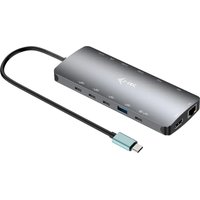
i-tec Thunderbolt™4 Triple Display Docking Station + Power Delivery 96W
User guide · Gebrauchsanweisung · Mode d'emploi Manual de instrucciones · Manuale · Uživotelská príručka Instrukcje obslugi · Uživotelská príručka
- Vartotojo vadovas Handleiding - Användarhandbok - Guia do'utilizar
EN Please read the entire instruction manual carefully. Detailed manual is available on our website www.i-tec.pro/en/ in the tab „Manuals, drivers". In case of any issues, please contact our technical support at: support@itecproduct.com
Declaration of Conformity 80-81
FCC. 82
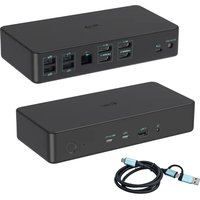
DESCRIPTION
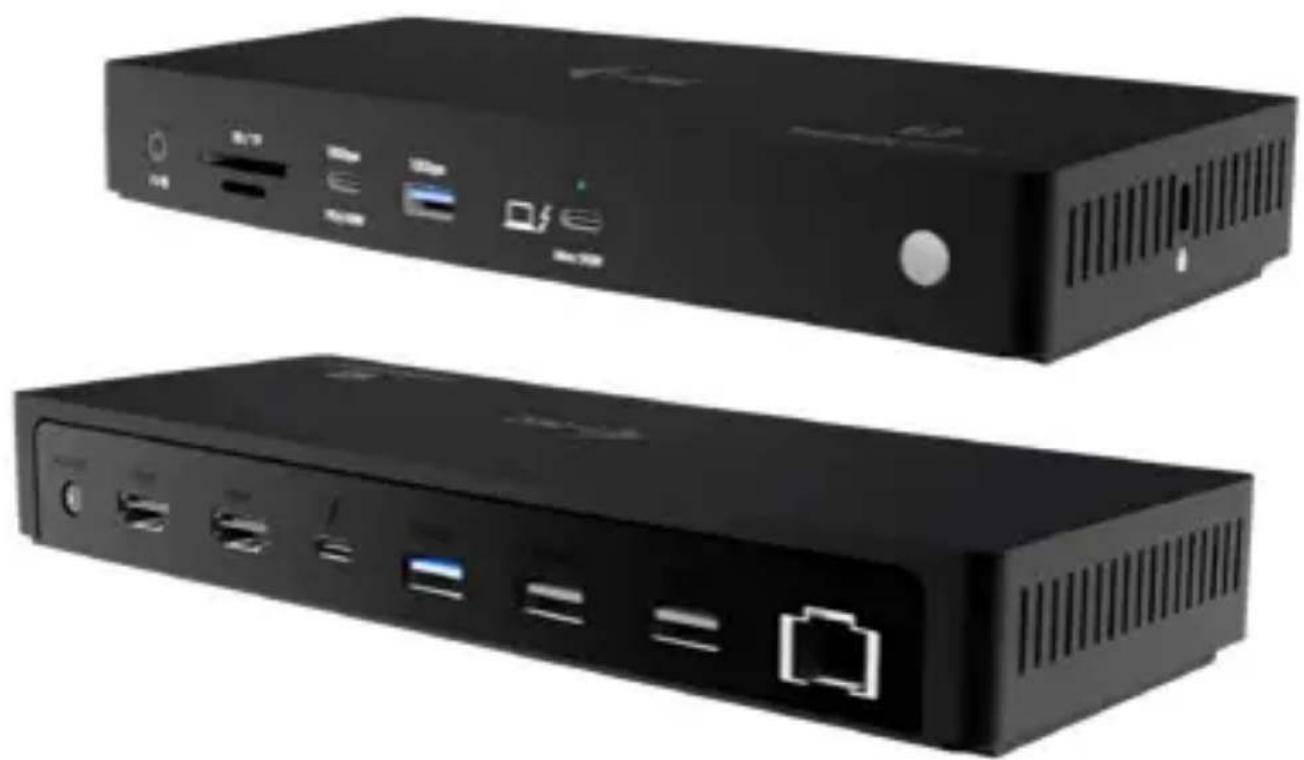
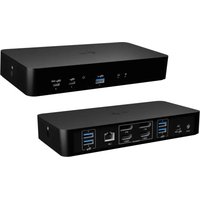
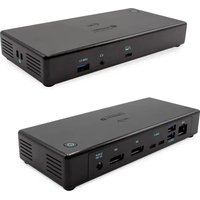
Front panel
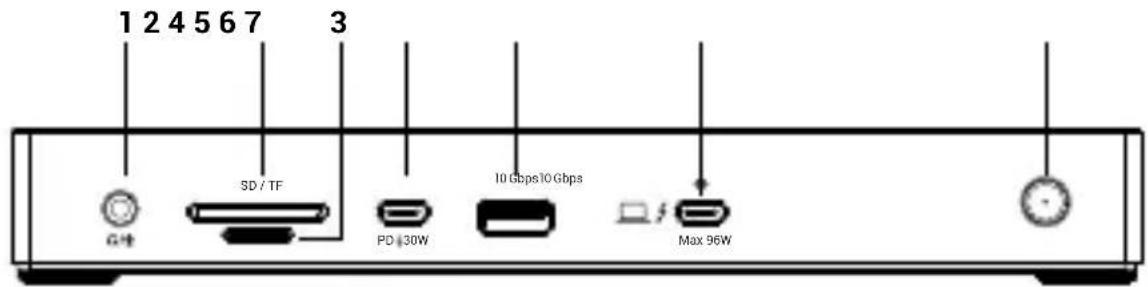
- 1 × 3.5 mm combined audio/microphone jack (playback supports 24-bit/192 kHz sampling rate)
- 1x SD card reader (SD 3.0 specification)
- 1x TF card reader (microSD) (SD 3.0 specification)
4.1x USB-C 3.2 Gen 2 (10 Gbps), PD 30W
5.1x USB-A 3.2 Gen 2 (10 Gbps) - 1x Thunderbolt™ 4 port for connecting to a laptop
- ON/OFF button for turning the docking station on and off and LED indicator
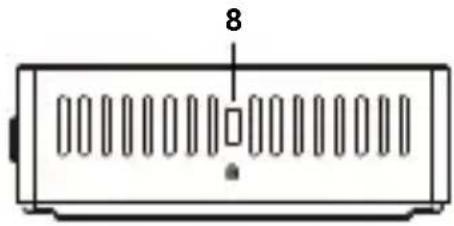
Side panel:
- Support for Kensington lock
Back panel

- 1x power input (20 V/8 A, 160 W)
- 2x HDMI
- 1x Thunderbolt™ 4
- 1x USB-A 3.2 Gen 2 (10 Gbps)
- 2x 1x USB-A 3.2 Gen 1 (5 Gbps)
- 1x Ethernet port 2.5 GLAN RJ-45, 10/100/1000/2500
SPECIFICATIONS
-
1x Thunderbolt™ 4 port for connection to a laptop
Power Delivery: 96W
Video output: -
1x Thunderbolt™4 port
- Data (40 Gbps)
- Video
- 2x HDMI
- Resolution:
-
Thunderbolt™ 3/4 host device with DisplayPort 1.4 support:
-
1 monitor - 1x TB4 or HDMI → up to 8K/60Hz or 4K/120Hz or 1440p/240Hz
- 2 monitors - HDMI + TB4 → up to 4K/60Hz + 4K/120Hz
- 2 monitors - HDMI + HDMI → up to 2x 4K/120Hz *
-
3 monitors - HDMI + HDMI + TB → up to 2x 4K/120Hz + 1x 4K/60Hz*
-
Thunderbolt™ 3 host device with DisplayPort 1.2 support:
-
1 monitor - 1x HDMI or TB4 → up to 4K/60Hz
- 2 monitors - HDMI + TB4 or 2x HDMI → up to 2x 4K/60Hz*
- 2 monitors - HDMI + TB4 or 2x HDMI up to 2x 1440p/144Hz*
-
3 monitors - HDMI + HDMI + TB → up to 2x 4K/60Hz + 1x 4K/30Hz*
-
USB-C host device with DisplayPort 1.4 support:
-
1 monitor - 1x HDMI or TB4 → up to 8K/30Hz or 4K/120Hz or 1440p/240Hz
- 2 monitors - HDMI + TB4 or 2x HDMI → up to 4K/60Hz
-
3 monitors - HDMI + HDMI + TB → up to 2x 4K/30Hz + 1x 4K/60Hz
-
USB-C host device with DisplayPort 1.2 support:
-
1 monitor - 1x HDMI or TB4 → up to 4K/30Hz
- 1 monitor - 1x HDMI or TB4 up to 1080p/120Hz
- 2 monitors - HDMI + TB4 or 2x HDMI → up to 1080p/60Hz
-
3 monitors - HDMI + HDMI + TB → up to 1x 1080p/60Hz + 2x 720p/60Hz
-
1x USB-C 3.2 Gen2 (10 Gbps), PD 30W
- 2x USB-A 3.2 Gen2 (10 Gbps)
- 2x USB-A 3.2 Gen1 (5 Gbps)
- 1x Ethernet 2.5 GLAN RJ-45 port, 10/100/1000/2500
- 1x SD card reader (SD 4.0 specification)
- 1x TF card reader (microSD) (SD 4.0 specification)
- 1x 3.5 mm combined audio/microphone jack
- 1x power input (20 V/8 A, 160 W)
- Product dimensions: 217 × 81.3 × 28.81 mm
Product weight: 460 g
SYSTEM REQUIREMENTS
Hardware requirements:
Device with a free USB-C, USB4*, or Thunderbolt™ 3/4 port
Power Delivery requirements:
Device with a free USB-C, USB4, or Thunderbolt™ 3/4 port with Power Delivery support
Video output requirements: Output cable:
Device with a free USB-C or USB4 port with DisplayPort Alternate Mode support or a Thunderbolt™ 3/4 port
Operating system:
Windows 10 / 11, macOS, and Linux with the latest updates
- macOS does not support Multi Stream Transport (MST) technology for multiple displays, which means that when connected to macOS, both monitors connected to the HDMI ports will display the same image.
DRIVER INSTALLATION
The docking station is installed automatically from the system and does not require any drivers.
HARDWARE INSTALLATION
(CONNECTING THE DOCKING STATION TO THE NOTEBOOK)
- Turn on the notebook and connect the power adapter to the docking station.
- Plug the docking station's power adapter into a 110 V / 230 V AC power outlet and press the ON button.
- Plug the TB4 cable into the TB4 port (marked with the laptop logo) on the front panel of the docking station.
- Plug the other end into an available USB-C, USB4, or ThunderboltTM 3 /4/5 port on your device.
SAFETY INSTRUCTIONS FOR USING THE DOCKING STATION
- General safety instructions
1 Follow these safety guidelines to prevent possible damage to your computer and ensure your own safety. Unless otherwise noted, all procedures in this document assume that you have read the safety information that came with your computer. Place the device on a hard, level surface. Leave approximately 10cm of clearance on all vented sides to allow air to flow for proper ventilation. Restricting airflow may damage the equipment or cause a fire.
2. Do not stack equipment on top of each other or place them so close together that they are exposed to recirculation or preheated air.
3. Make sure that nothing is resting on the equipment cables and that the cables are positioned so that they cannot be tripped over or stepped on.
4. Ensure that all cables are connected to the appropriate connectors. Some connectors look similar and can be easily confused (for example, do not plug the telephone cable into the power connector).
5 Do not place the device in an enclosed wall unit or on a soft fabric surface such as a bed, sofa, or carpet.
6. Keep the equipment away from heat sources.
7. Keep the equipment away from abnormally high or low temperatures so that it can operate within its operating range.
8. Do not insert objects into the vents or openings of the equipment. Failure to do so may result in fire or electric shock due to short circuit of internal components.
9. Do not use the unit in a humid environment, such as near a hot tub, near a sink, near a swimming pool, or in a damp basement.
10. Do not use mains-powered equipment during a storm. Battery-powered devices may be used if all cables are disconnected.
11 Avoid contact of liquids and food with the equipment.
12. Unplug the device from the electrical outlet before cleaning it. Clean the device with a soft cloth dampened with water. Do not use liquid or aerosol products that may contain flammable substances.
13. To avoid potential electrical shock hazards, do not connect or disconnect any cables or perform maintenance or reconfigure the equipment during a storm.
14. Before touching docking station components, ground yourself with a grounding bracelet or periodically touch an unpainted metal surface, such as the metal part on the back of the computer. While working, touch the unpainted metal surface regularly to remove any static electricity that could damage internal components.
15. When unplugging the cable, pull on the connector or grip, not the cable itself. Some cables have connectors with latches or screws that must be loosened before disconnecting the cable. When disconnecting cables, hold them straight to avoid bending the pins. When connecting cables, make sure that the ports and connectors are properly rotated and aligned.
GENERAL SAFETY INSTRUCTIONS REGARDING POWER SUPPLY
- Before connecting the equipment to an electrical outlet, check the rated voltage and make sure that the required voltage and frequency match the available power source.
- Make sure the computer, monitor, and connected devices have the proper rated electrical power to operate with the power adapter connected in your area.
- If the power cord is damaged, do not plug it into an electrical outlet.
- To avoid electric shock, plug the power cords of the equipment into properly grounded electrical outlets. If the equipment is equipped with a three-prong power cord, do not use adapter plugs that bypass the grounding function or remove the grounding element from the plug or adapter.
- If using an extension power cord, make sure that the total rated power of the products connected to it does not exceed the rated current of the extension cord.
- If you must use an extension cord or splitter, make sure that the extension cord or splitter is connected to a wall outlet and not to another extension cord or splitter. The extension cord or splitter must be designed for grounded plugs and plugged into a grounded outlet.
- If you are using a splitter with multiple outlets, be careful when plugging the power cord into the splitter. Some splitters may allow the plug to be connected incorrectly. Incorrect connection of the power plug can cause permanent damage to the equipment and may also cause a risk of electric shock or fire. Make sure that the grounding tip of the power plug is inserted into the grounding contact of the splitter.
- When unplugging the equipment from the power outlet, pull the plug, not the cord.
- Use only a power adapter supplied by i-tec technologies s.r.o. approved for use with this equipment. Use of any other power adapter may cause fire or explosion.
- If you use the power adapter to power a computer or charge a battery, place it in a ventilated area, such as on top of a desk or on the floor. Do not cover the power adapter with paper or other objects that may reduce cooling. Do not use the power adapter in its carrying case.
- The power adapter may become hot during normal operation of the docking station or computer.
- Use caution when handling the adapter during or immediately after operation.
- We recommend placing the adapter on the floor or table so that the indicator light is visible. This way you will know immediately when the adapter shuts down due to external influences. If for some reason the green light goes out, unplug the power cord from the outlet for 10 seconds and then plug it back in.
- Never use a power adapter that shows signs of damage or excessive wear
FREQUENTLY ASKED QUESTIONS
Available on our website www.i-tec.pro under "FAQ" for this product
GLOSSARY OF TERMS
Interface / port / connector / input / slot - the place where two devices are physically connected.
Controller - a semiconductor component (so-called chipset) in a notebook / tablet, ensuring the operation of one of the ports.
Thunderbolt™ - is a fast hardware interface that allows you to connect devices (peripherals) to your computer via an expansion bus. Thunderbolt combines PCI-Express and DisplayPort into a serial data interface. It allows for up to 6 additional Thunderbolt™ devices, and the transfer rate for Thunderbolt™ 3/4 is up to 40Gbit/s.
USB-C / USB Type-C / USB4 / Thunderbolt™ 3/4 - is a symmetrical connector Allows faster charging, power, dual-role (not only host but also guest), support for Alt Mode (DisplayPort, MHL, Thunderbolt 3, Power Delivery) and error notification via Billboard device.
USB-C Power Delivery (USB-C PD) - an optional feature of the USB-C connector. A connector with this support can both charge and be charged, and supports loads from 10W to 240W
USB 3.2 / 3.1 / 3.0 / 2.0 - standard for USB interface / port for connecting various USB devices. Various USB devices can be connected to the docking station or adapter using the USB Type-A interface. The USB type B port is used to connect the docking station or adapter to a laptop/tablet.
HDMI/Display Port - A standard for a digital graphics interface/port used to connect monitors and other graphic display devices.
LAN (Local Area Network) - local area network, now the most common is the so-called Ethernet, which reaches theoretical transfer speeds of up to 2.5 Gbit/s at the docking station.
Audio - a term for an audio input (microphone) or output device (headphones/speakers).
BESCHREIBUNG
Vorderseite

QUESTIONS FREQUEMMENT POSÉES
CASTO KLADENE OTÁZKY
This equipment is marked with the above recycling symbol. It means that at the end of the life of the equipment you must dispose of it separately at an appropriate collection point and not place it in the normal domestic unsorted waste stream. This will benefit the environment for all. (European Union only)
DEUTSCH
This equipment has been tested and found to comply within the limits of a Class B digital device pursuant to Part 15 of the FCC Rules. These limits are designed to provide reasonable protection against harmful interference in a residential installation.
- i-tec Thunderbolt™4 Triple Display Docking Station + Power Delivery 96W
- DESCRIPTION
- Front panel
- Side panel:
- Back panel
- SPECIFICATIONS
- - Resolution:
- SYSTEM REQUIREMENTS
- Hardware requirements:
- Power Delivery requirements:
- Video output requirements: Output cable:
- Operating system:
- DRIVER INSTALLATION
- HARDWARE INSTALLATION
- (CONNECTING THE DOCKING STATION TO THE NOTEBOOK)
- SAFETY INSTRUCTIONS FOR USING THE DOCKING STATION
- - General safety instructions
- GENERAL SAFETY INSTRUCTIONS REGARDING POWER SUPPLY
- FREQUENTLY ASKED QUESTIONS
- GLOSSARY OF TERMS
- BESCHREIBUNG
- Vorderseite
- QUESTIONS FREQUEMMENT POSÉES
- CASTO KLADENE OTÁZKY
- DEUTSCH
Brand : i-TEC
Model : TB4TRIPLEDOCKPD
Category : Docking station