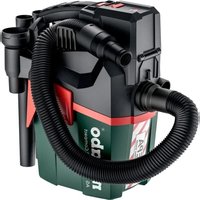
AS 18 L PC - Vacuum Cleaner METABO - Free user manual and instructions
Find the device manual for free AS 18 L PC METABO in PDF.



User questions about AS 18 L PC METABO
0 question about this device. Answer the ones you know or ask your own.
Ask a new question about this device
Download the instructions for your Vacuum Cleaner in PDF format for free! Find your manual AS 18 L PC - METABO and take your electronic device back in hand. On this page are published all the documents necessary for the use of your device. AS 18 L PC by METABO.
USER MANUAL AS 18 L PC METABO
A Ladegerate: ASC 145, ASC 55, etc.
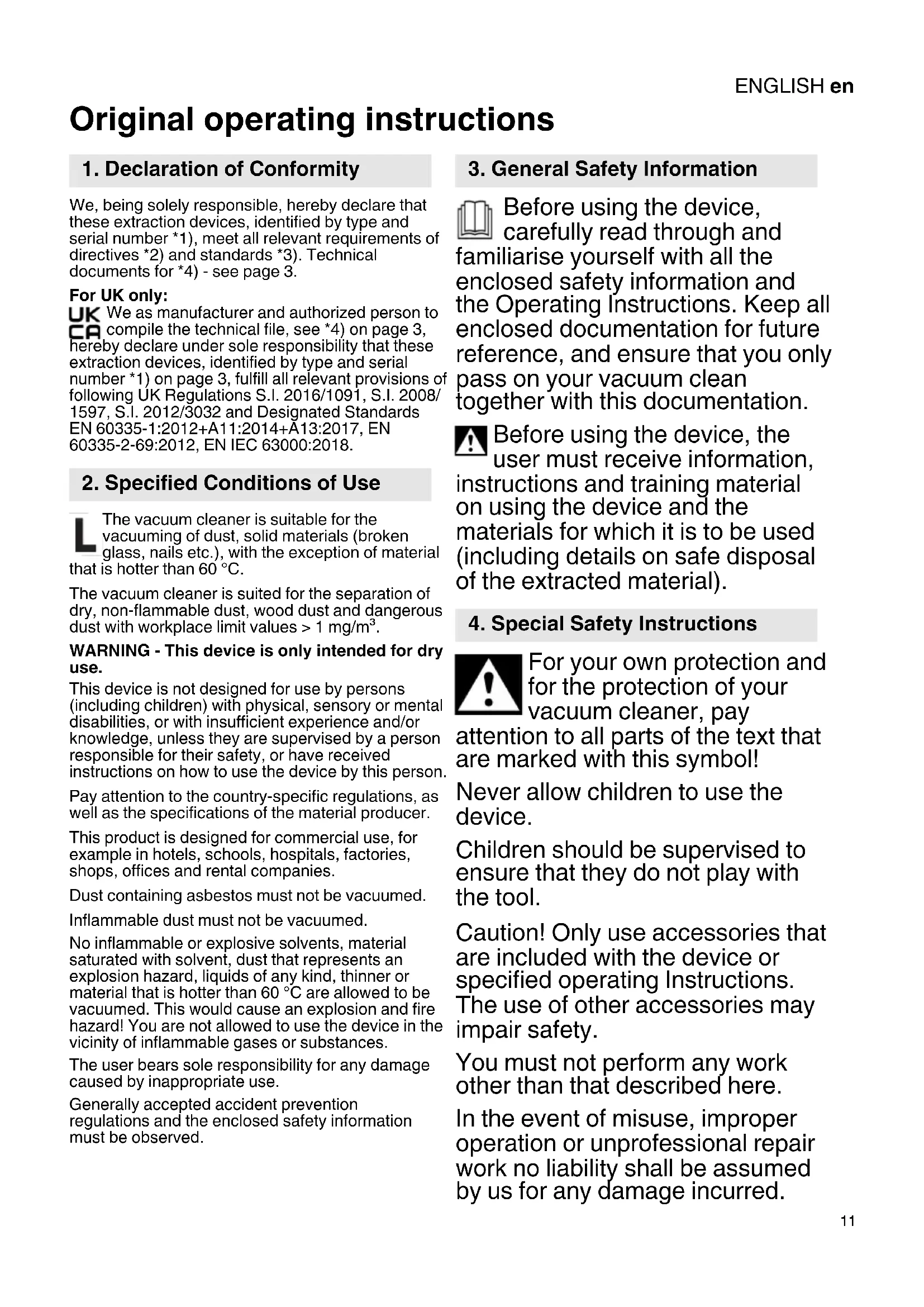
Original operating instructions
1. Declaration of Conformity
We, being solely responsible, hereby declare that these extraction devices, identified by type and serial number 1), meet all relevant requirements of directives 2) and standards 3). Technical documents for 4) - see page 3.
For UK only:
UK We as manufacturer and authorized person to compile the technical file, see *4) on page 3, hereby declare under sole responsibility that these extraction devices, identified by type and serial number *1) on page 3, fulfill all relevant provisions of following UK Regulations S.I. 2016/1091, S.I. 2008/ 1597,S.I.2012/3032 and Designated Standards EN 60335-1:2012+A11:2014+A13:2017,EN 60335-2-69:2012,EN IEC 63000:2018.
2. Specified Conditions of Use
The vacuum cleaner is suitable for the vacuuming of dust, solid materials (broken glass, nails etc.), with the exception of material that is hotter than 60^ .
The vacuum cleaner is suited for the separation of dry, non-flammable dust, wood dust and dangerous dust with workplace limit values >1mg / m^3
WARNING - This device is only intended for dry use.
This device is not designed for use by persons (including children) with physical, sensory or mental disabilities, or with insufficient experience and/or knowledge, unless they are supervised by a person responsible for their safety, or have received instructions on how to use the device by this person.
Pay attention to the country-specific regulations, as well as the specifications of the material producer.
This product is designed for commercial use, for example in hotels, schools, hospitals, factories, shops, offices and rental companies.
Dust containing asbestos must not be vacuumed.
Inflammable dust must not be vacuumed.
No inflammable or explosive solvents, material saturated with solvent, dust that represents an explosion hazard, liquids of any kind, thinner or material that is hotter than 60^ are allowed to be vacuumed. This would cause an explosion and fire hazard! You are not allowed to use the device in the vicinity of inflammable gases or substances.
The user bears sole responsibility for any damage caused by inappropriate use.
Generally accepted accident prevention regulations and the enclosed safety information must be observed.
3. General Safety Information
Before using the device, carefully read through and familiarise yourself with all the enclosed safety information and the Operating Instructions. Keep all enclosed documentation for future reference, and ensure that you only pass on your vacuum clean together with this documentation.
Before using the device, the user must receive information, instructions and training material on using the device and the materials for which it is to be used (including details on safe disposal of the extracted material).
4. Special Safety Instructions
For your own protection and for the protection of your vacuum cleaner, pay attention to all parts of the text that are marked with this symbol!
Never allow children to use the device.
Children should be supervised to ensure that they do not play with the tool.
Caution! Only use accessories that are included with the device or specified operating Instructions.
The use of other accessories may impair safety.
You must not perform any work other than that described here.
In the event of misuse, improper operation or unprofessional repair work no liability shall be assumed by us for any damage incurred.
ENGLISHen
Before fitting the battery pack, make sure that the machine is switched off.
Remove the battery pack from the machine before making any adjustments, changing tools, maintaining or cleaning.

Protect battery packs from water and moisture!

Do not expose battery packs to fire!
Do not use faulty or deformed battery packs!
Do not open battery packs!
Do not touch or short circuit battery pack contacts!

A slightly acidic, flammable fluid may leak from defective Li-ion battery packs!

If battery fluid leaks out and comes into contact with your skin, rinse immediately with dry of water. If battery fluid leaks and comes into contact with eyes, wash them with cleaner and seek medical attention immediately!
If the machine is defective, remove the battery pack from the machine.
Do not operate devices or accessories under the following conditions:
- If the device has recognisable damage (cracks/breaks),
- Battery pack is defective,
- If there is a suspected non-visible defect (after a fall).
Do not point the nozzle, hose or tube at people or animals.
Never sit or stand on the device.
The tool must be loaded with max. 100kg .
Always set up the hose so there is no danger of tripping.
Do not leave the device unattended.
The vacuum cleaner should not be used or stored outside.

IMPORTANT - This machine must only be used or stored ors.
Acids, acetone and solvents can corrode the device components.

Prior to any servicing work, cleaning of the and after each time, switch off the device and pull the mains plug.
Steam cleaners and high-pressure cleaners must not be used to clean the vacuum cleaner.
Mould contamination can result if the appliance is not cleaned for an extended period, especially if used in areas where foodstuffs are processed: Always clean and disinfect the vacuum cleaner immediately after use.
Never open the device outdoors during rain or storms.
Do not use the device in low (< - 20^) or very high (>40^) temperatures.
The device must not be operated in areas with an explosion hazard.
Ensure that the vacuum cleaner is steady.
Prior to switching on the vacuum cleaner, the suction hose must be remoed from the housing to avoid overheating.
If the extracted air is discharged into the room, ensure there is an adequate air change rate (L) in the room. Observe the regulations that apply in your country.
Caution! This device contains dust that is harmful to health. Discharge and maintenance operations (including disposal of the dust collection containers) must only be carried out by qualified specialists wearing appropriate protective clothing and equipment.

Warning - general danger!
Caution! Do not use the device until you have read the rating Instructions.
WARNING - Operating staff must be provided with appropriate instruction on how to use this vacuum cleaner.
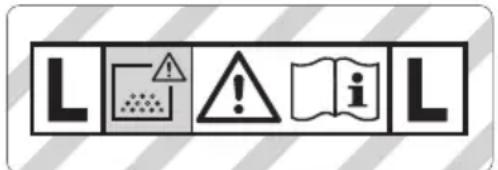
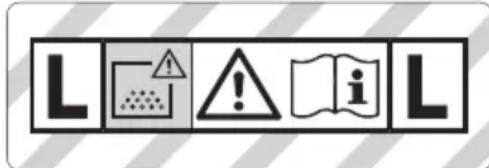
Warning sign for machines with dust class L:




While the device is suitable for extracting substances that pose a slight threat to health, it is not appropriate for reducing wood dust in inhaled air.
Dust from material such as paint containing lead, some wood species, minerals and metal may be harmful. Contact with or inhalation of the dust may cause allergic reactions and/or respiratory diseases to the operator or bystanders. Certain kinds of dust are classified as carcinogenic such as oak and
beech dust especially in conjunction with additives for wood conditioning (chromate, wood preservative).
Transport of li-ion battery packs:
The shipping of Li-ion battery pack is subject to laws related to the carriage of hazardous goods (UN 3480 and UN 3481). Inform yourself of the currently valid specifications when shipping li-ion battery packs. If necessary, consult your freight forwarder. Certified packaging is available from Metabo.
Only send the battery pack if the housing is intact and no fluid is leaking. Remove the battery pack from the machine for shipping. Prevent the contacts from short-circuiting (e.g. by protecting them with adhesive tape).
5. Overview
See page 3.
1 Dust container
2 Snap locks
3 Corner switch On/Off
4 Eyelet to attach a carry strap
5 Handle
6 Cover
7 Upper part
8 Battery pack *
9 Battery pack release button
10 Suction opening
11 Button for filter cleaning "PressClean" (PC)
12 Capacity and signal indicator (battery pack)
13 Capacity indicator button
14 Rotary switch BOOST/ ECO/ OFF
15 Unlocking mechanism cove
16 Fluted filter
17 Twist-lock fluted filter
18 Fleece filter bag
19 Carry handle dust container
20 Latches
21 Connecting sleeve
22 Suction hose
23 Battery charger
24 Spare battery pack *
25 Suction nozzles
ENGLISHen
- depending on equipment/not included in scope of delivery
6. Initial Operation

Prior to use, check that you are using a battery pack suitable for the device.
6.1 Use a fleece filter bag (18) (see fig. A, page 2)
Switch off the device, remove the mains plug and open the snap locks (2). Remove the upper part (7) of the device from the dust container (1).
We recommend using fleece filter bags for:
- Applications, where small amounts of fine dust are created (e.g. spot-grinding and grinding of paint and lacquer coatings, extraction of drilling applications with small diameters < 10mm of short duration, etc.).
- Use of machines, such as: cordless grinders, cordless litre saws, cordless jigsaws, etc. When using a fleece filter bag the filter cleaning is non-functional.
Insert a fleece filter bag (18) in the dust container (1) as shown in fig. A, page 2. Fold the carry handle of the dust container (19) in direction of latches (20) and engage. Replace the upper part (7) and close the snap locks (2).
6.2 Battery pack
Charge the battery pack (8) before use.
Recharge the battery pack if performance diminishes.
The ideal storage temperature is between 10^ and 30^ .
Capacity and signal indicator (12):
- Press the button (13); the LEDs indicate the charge level.
- The battery pack is almost flat and must be recharged if one LED is flashing.
6.3 Removing and inserting the battery pack
Remove: Press the battery pack release button (9) and remove the battery pack (8).
To insert: Slide the battery pack (8) in until it engages.
6.4 Carrying strap
If required, hook the Metabo carry strap into both eyelets (4) left and right of the device. Set the carry strap to the desired length.
Carrying:

Carry only without connected suction hose (22).

Carry the device only when switched off.

The tool must be carried only with the Metabo carry strap.
The machine must NOT be carried with the carrying strap around your neck.
7. The device
7.1 Switching on/off
Prior to switching on the vacuum cleaner, the suction hose must be removed from the housing to avoid overheating.
Prior to switching on the device set the respective suction power via the rotary switch (14):
"BOOST": high suction power
- working with a drill vacuum cleaner adapter (DDE 14, 6.30829), recommended for profiled surface such as e.g. carpets.
"ECO": medium suction power
- recommended for smooth surfaces, cordless tools with low dust generation (cordless grinders, cordless litre saws, cordless jigsaws, etc.):
"OFF": Off (transport lock)
- deactivates the corner switch (3)
Use the corner switch (3) to turn the machine On/Off.
The suction power can also be changed with the machine in operation.
7.2 PressClean
To clean the pleated filter (16) using a strong air flow: Put the rotary switch (14) in BOOST position, cover connecting sleeve (21) or suction opening (10) with the hand and press the button (11) several times (at least 3 times).
8. Use
8.1 Dry Vacuuming
WARNING - This device is only intended for dry use.
Vacuum only with dry pleated filter (16), device and accessories. If the cartridge is damp, dust may stick and form a crust.
The device must not be switched on without pleated filter in place (16).
8.2 Transport
Remove suction hose (22) from the suction opening (10) and store in housing according to fig. C on page 2. In start position 1 Insert hose end and wind the hose in the housing around the vacuum cleaner in clockwise direction.
The upper part (7) must be securely sealed to the dust container (1) - check that the snap locks (2) are closed.
Put rotary switch (14) in "OFF" position (transport lock).
Store spare battery pack (24) according to figure B on page 2. Push open downwards along the ridges (direction of arrow).
Store charger (23) according to figure B on page 2. Push into the charger storage along the ridges (direction of arrow).
9. Cleaning
9.1 General Cleaning Instructions
Clean the dust container (1) and accessories with water. Wipe the upper part (7) with a damp cloth.
Caution! This device contains dust that is harmful to health. Discharge and maintenance operations (including disposal of the dust collection containers) must only be carried out by qualified specialists wearing appropriate protective clothing and equipment.
Emptying the Container
Only permitted for dusts with occupational exposure limits >1mg / m^3
- Put rotary switch (14) in "OFF" position
- Remove battery pack (8).
- Open the snap locks (2). Remove the upper part (7) of the device from the dust container (1).
- Tip out the container.
Disposing of the Fleece Filter Bag
- Put rotary switch (14) in "OFF" position
- Remove battery pack (8).
- Open the snap locks (2). Remove the upper part (7) of the device from the container (1).
- Fold down the carry handle of the dust container (unlock).
- Carefully remove the fleece filter bag (18) and close the fleece filter bag using the drawstrings.
- Dispose of the vacuumed material in accordance with legal regulations.
Clean the pleated filter via PressClean
- Clean the pleated filter according to chapter 7.2
Clean the pleated filter manually
- Remove the pleated filter according to chapter 10.2
- Occasionally tap the pleated filter to remove (16) any dust that has gathered on it. If the filter is very dirty, you can clean it with water (max. 3x, then insert new pleated filter) and a soft brush. Allow to filter to dry properly afterwards.
10. Maintenance
10.1 General instructions
Before performing any maintenance, always switch off the device and remove the mains plug.
Clean the device (see chapter 9.).
For maintenance by the user, the vacuum cleaner must be taken apart, cleaned and maintained, to the extent possible, without endangering maintenance staff or other people.
Preventive measures
Appropriate preventive measures include: cleaning the device before disassembly; providing local filtered forced ventilation where the vacuum cleaner is disassembled; cleaning of the maintenance area and providing suitable personal protective clothing and equipment.
When carrying out maintenance or repairs, it is essential to dispose of any contaminated objects that cannot be adequately cleaned. These objects must be disposed of using impermeable bags and in accordance with the applicable regulations for removing such waste.
10.2 Replacing the pleated filter (16)
- Clean the pleated filter again before replacement ("PressClean" see chapter 7.2)
- Put rotary switch (14) in "OFF" position
- Remove battery pack (8).
- Open the snap locks (2). Remove the upper part (7) of the device from the dust container (1).
- Turn the twist lock (17) at the bottom of the upper part (see fig. A, page 2) in such a way that the pleated filter (16) can be removed.
- Seal the removed pleated filter (16) immediately in a dust-tight plastic bag and dispose of it in accordance with regulations.
- Insert new pleated filter (16), close twist lock (17).
Ensure proper and secure position.
10.3 Technical inspection
At least once a year, the manufacturer or a suitably qualified and trained person must carry out a dust test, e.g. to check for damage to the filter, verify that the device is air-tight.
11. Troubleshooting
Reduction in suction power:
See the instructions in the chapter on 9. Cleaning.
Is the pleated filter (16) dirty? - clean.
Fleece filter bag (18) full? - replace.
Is the dust container (1) full? - empty.
- Nozzle, tubes or hose blocked?- clean.
Is the battery pack (8) weak? - Charge/replace battery pack (8)
Device will not start:
- Is the battery pack (8) empty? - Charge/replace battery pack (8).
Is the rotary switch (14) in "OFF" position? - Put rotary switch (14) to "ECO" or "BOOST". See chapter 7.1.
Particles are discharged at the outlet:
- Is the pleated filter defective? - Check the pleated filter and replace if required (see chapter 10.2).
The machine has shut down by itself:
Causes and remedies:
- Battery pack almost flat: (the electronics prevent the battery pack from discharging totally and avoid damage). If one LED is flashing, the battery pack (12) is almost flat. If necessary, press the button (13) and check the LEDs (12) to see the charge level. If the battery pack is almost flat, it must be recharged.
- Battery pack is not inserted properly: Check and correct.
- Long continuous overloading of the machine will activate the temperature cut-out.
Leave the machine or battery pack to cool.
ENGLISHen
Note: if the suction hose is not removed from the housing prior to switching on the device, this will lead to overheating of the device.
Note: if the battery pack feels very warm, the pack will cool more quickly in an "AIR COOLED" charger.

Do not interfere with the device. Contact an authorized workshop or Metabo's after-hours service department (see chapter 13. on ails).
12. Accessories
Only use original Metabo battery packs and Metabo accessories.
Use only accessories that fulfil the requirements and specifications listed in these operating instructions.
If you need any accessories, check with your dealer.
A Chargers: ASC 145, ASC 55, etc.
B Battery packs with different capacities. Purchase only battery packs with the voltage matching your device: 5.2 Ah (6.25592); 4.0 Ah (6.25591); 3.0 Ah (6.25594); etc.
C Suction hose (6.30176)
D Nozzles: suction nozzle (6.30320); crevice nozzle (60.30323)
E Flat pleated filter (6.30172)
F Flat pleated filter (HEPA) (6.30175)
G Fleece filter bag (6.30173)
H Dolly (6.30174)
See www.metabo.com or the catalogue for a complete range of accessories.
13. Repairs
Repairs to devices must be carried out by qualified electricians only!
Use only original Metabo spare parts.
Contact your local Metabo representative if you have Metabo power tools requiring repairs. See www.metabo.com for addresses.
You can download a list of spare parts from www.metabo.com.
14. Environmental Protection
Observe national regulations on environmentally compatible disposal and on the recycling of disused machines, packaging and accessories.
Packaging materials must be disposed of according to their labelling in accordance with municipal guidelines. Further information can be found at www.metabo.com in the "Service" section.
Battery packs may not be disposed of with regular waste. Return faulty or used battery packs to your Metabo dealer!
Do not allow battery packs to come into contact with water!

For EU countries only: Never dispose of appliances in your household waste! According to European directive 2012/19/EU,aste Electrical and Electronic Equipment and Plementation in national law, used devices be collected separately and delivered for environmentally-friendly recycling.
Discharge the battery pack in the power tool before disposal. Prevent the contacts from short-circuiting (e.g. by protecting them with adhesive tape).
15. Technical Specifications
Explanatory notes on the specifications on page 2.
Changes due to technological progress reserved.
K = dust class. As per EN 60335-2-69.
Lxwhh=External dimensions
U = Mains voltage
S_ =Suction hose diameter
S_L =Suction hose length
p_U1 =max. vacuum (at the hose)
p_U2 =max. vacuum (at the blower)
A=Filter area
V_I / min1 = Air~flow~rate~(at~the~hose)
V_l / min2 = Air flow rate (at the blower)
D_max1 = max flow rate (at the hose)
D_max2 = max flow rate (at the blower)
V=max container volume
Typical A-effective perceived sound levels:
L_pA =Sound pressure level
During operation the noise level can exceed 80 dB(A).

Wear ear protectors!
Measured values determined in conformity with EN 60704.
- Direct current
The technical specifications quoted are subject to tolerances (in compliance with the relevant valid standards).
Transport van Li-ion-accupacks:
24 Reserve-accupack*
25 Zuigemondstuk*
Las baterías noSEOSEOSEOSEOSEOSEOSEOSEOSEOSEOSEOSEOSEOSEOSEOSEOSEOSEOSEOSEOSEOSEOSEOSEOSEOSEOSEOSEOSEOSEOSEOSEOSEOSEOSEOSEOSEOSEOSEOSEOSEOSEOSEOSEOSEOSEOSEOSEOSEOSEOSEOSEOSEOSEOSEOSEOSEOSEOSEOSEOSEOSEOSEOSEOSEOSEOSEOSEOSEOSEOSEOSEOSEOSEOSEOSEOSEOSEOSEOSEOSEOSEOSEOSEOSEOSEOSEOSEOSEOSEOSEOSEOSEOSEOSEOSEOSEOSEOSEOSEOEO
"OFF": Av (transportsakring)
-Inaktiverar hörnkontakten (3)
Slá pá/av maskinen med hörnkontakten (3).
Man kan ocksä äandra sugeffekten medan maskinen ar igang.
7.2 PressClean
,OFF": Av (transportsikring)
Kaste fleece-filterposen
E Flatt foldefilter (6.30172)
F Flatt foldefilter (HEPA) (6.30175)
G Fleece-filterpose (6.30173)
H Rullebrett (6.30174)
Det komplette tilbehorsprogrammet finner du pa www.metabo.com ell er i katalogen.
13. Reparasjon
Sorg for, at stovsugeren stared stabilt.
18 Fleece-filterpose
OFF:Fra (transportsikring)
Reservedslsister kan downloads pa www.metabo.com.
LpA =Tatθμn nxtukns πieons
peKOMeHDoBaHHbIe HNCTpyKcnei
No NcPOnb3OBAHNIO.
IcNoJIb3OBAHHe dpyrIX
PpINHaJdJeKHOCTeM MoKeT
HeratNBHO NOBnIaTb Ha
6e3OpacHOCTb.
3aPpeuaeTc npOn3BODnTb pa60tbl, He ppeDyCMOTpeHHbIe HactoJeuHnCTpyKcnEi.
Kompania He Hecet OTBETCTBEHHOCTNa yUeep6, BO3HNKShn BCJeDCTBHe NCNoJIb3OBAHn He No Ha3NaueHnIO, HapuWeHn npaBnI 3KcPnyatau nn nnn HEKBaIINΦnCnpOBaHHOro peMOHTa.
Y6eIITecb B TOM, YTO
3JIeKTPoINHCTpymENT pni
yCTaHOBKe aKKyMylTOpHOrO
6LOKa BbIKJIOUeH.
N3BLeKaIte aKKyMylTOpHbI
6LOK n3 INHCTpymEHa Tpeed
KaJdoi peRyInpOBkOi,
PepeOCHaUeHNEm,
Tex06cJIyJKNBaHNem IJIi
OuNCTKoI.

PpIMTe MepbI NO 3aunTe aKymyJrTOPHO 6loKa OT nonadaHnBlaRn!

He noDbepraTe aKcymyIaTOPbIe 6loKn BO3dEiCTBnIO OTKpbITOrO!
He nCnoJb3yIe DeΦeKTHbIe nII
DeΦopMnpoBaHHbIe
aKKymyJIaTOpHbIe 6LOKn!
He BCKpbIBaIte aKKymyJIaTOpHbIe
6LOKn!
He KacaITeCb KOHTaKTob
aKKymyJIaTOpHO 6LOKa n He
3aMbIkaIte nx HaKOpOTko!

H3 HeNCppaBHOrO liNTn- HONHO rAkhymyIaTOpHOrO 6Ioka MoKeT BbITEKaTb Cla6OKncIaI rOpUoya KNDKOCTb!

Ecnn 3JeKtpoJNT npOJIncnI nonan Ha Koxy, HemeJeHNO npOMoITe 3TOT
yuaCTOK 60JIbIIM KOJInueCTBOM BODbl. B clyuae nonaDaHnna 3JIeKTPoJInta B rIa3a npOMoITe INX YNCTOIN BOIOH n CPOUHO 6bpaTInTeCb K Bpauy!
Pn noBpeJdeHn ycTpoCTBa BbIHbTe aKKyMylrTopHbI 6lOK.
BBoD B 3KcPnyaTaunIO yCTpOiCTBa, BKnIouy a npHaJdJeKHoCTn, 3aIpeuaeTcay, ecIn:
- Ha yctpoiCTBe HMeIOTcBnIMbIe NOBpeJxDeHnA(TpeuHbI/pa3JOMbl);
- aKKymyJIaTOpHbI 6JIOK NOBpeJKeH;
-cyüeCTbyeT NOO3peHne Ha cKpbIbI NeΦeKT (B pe3yJIbTaTe ydapa).
He HappaBraIte Ha IIOdei nn HNBOTHbIX HacadKy, IlaHr nn Tpy6y.
He BCTaBaITe n He caI NTecb Ha yCTpO'CTBO.
Harpy3ka Ha yctpoiCTBO He doJHKHa npeBbIaTb 100 Kr.
LJIaHr cIeDyET yKlaIbIbTaTb TaK, YTO6bl OH He NocLyJnI npuHNo IaDeHnI.
He ocTaBraIte yCTpoiCtBO 6e3 npHcMOTpa.
He xpaHnTe n He nCnoJb3yIte nbIeCoc Ha OTKpbITOM B03dyXe.

BHHMAHNE - Данhoe yctpoiCTBO pa3peSeHo xpaHnTb
PYCCHNru
Pn6op He dolkeh 3KcIpyaTnpoBaTbcra BO B3pbIBOONacHOcpee.
Obepeyte yctoynBOe noJKeHne nJIeCoca.
Ipeed BkHoueHnem nbilecoCa BbInbTe BCacbIBaIOuN IlaHr N3 KOpnyca, uTo6bI n36eKaTb neperpeBa.
KpaTHOcTB BO3dUxOO6MeHa L B NOMEeHn DoJxHa 6bITb
IOCTaTOUHOnIprn BO3BpaTe OTΦINbTpoBaHHOro BO3dYxa B NOMEuEHe.PyKOBODCTByntecb HOpMaTHnBaMn,DeiCTByIOUzHMN BAWei CTpaHe.
BnMaHne! DaHHe yCTPOICTBO COePHT ONaChyIO dIa 3DOpOBbI PbIb. H pa6OTam IO ONOpOJHHeHIO N O6ClyKINBaHIO, BKJIouaY I3bYrTHe MeShKa-PlIeScbOpHka, DOJIHKbI DOnyCKaTbCSr TOLbKO CNeUaJIncTbI, NCNoJIb3yUoUne COOTBETCTByIOUne CpeIcTBA HHdNvDyaJIbHOJ 3aUHTbl.
IpeDynpexKdene o6 o6eoyonacnoCTn!
BHHMaHHe! He NaHnHaTe pa6oTaTb C yCTpOiCTBOM, npeDvapntelbHo He npOHTaB INHcTpPyKciH NO hCNoJIb3OBAHIO!
IPEyIeHNE- O6cIyKBaOuIeNepcoHaI dOJIKeH 6bITb HaJIeJkaUIM 06pa3OM IpoINHCTpyKTHnpOBaH IO npaBnIaM 3KcIpyaTauIi DaHHbIX PbIleCOCoB.
IpeDynpexKaIOuOa Ta6nUka
IpyIeCocOB,
IpeHa3NaueHbIX IydaJeHna
IbyIi Klacca L:
UcTpoIcTBo IpeHa3NaueHo IJyJaJIeHnI NOTeHcIaJIbHO OJaCHbIX IJRA 3DOpOBbI BSeIeCTB. UcTpoIcTBo He IOxOJT IJy OChcTKI BO3dUxa OT dpeBeCHO IbIIN.
Пыл, ВОЗнkaюцая ри образOTke MaTeрnaLoB,
COdepkaux CBnHeu, HeKOTOpbIX
BnIOB DpeBecnHbI, MInhepaIOB IN
MeTaalOB, MoKeT PpeDCTaBIArTb
ONaCHOCTb dIy 3dOpOBbY.
PnIKoCHOBeHne nII BdbixAHne
UactNt cako Nbln MOKeT CTAb
PnUnHO NOrBLeHnA
aJIeprnuecknx peakun /nLI
3a6OleBaHn DbIXaTeJIbHbIX
NyTeY pONb3OBATeJnIIN
HaxODaXxCraNo6Ln3OCTN Lluc.
HeKOTOpbIe BNDbln (HaNPmEp, PbIb, BO3HNKaHOzJa
Pn O6pa6OTke dy6a IINI 6yKa)
CHTaOTc KaHZepeRoeHHbIMN,
OCo6eHNO B KOM6HauZnC
DOIpOHNTbHBIMN
MaTePnaIamn, HcNoIb3yEmblMn
IJIa O6pa6OTkn DpeBecnHbI (CoJIh
XpOMOBOn KNCLOTbl, CpeDCTBa
3aUHTbl DpeBecnHbl).
TpaHcnpTnpoBka IHTNHOHHbIX aHHyMylrTOphbIX 6JIOHOB:
TpaHcnpTnpoBka IHTN-NOHHbIX aKKymyIaTOpHbIX 6JIOKOB
NoIpaIaTe IOD DeIcTBHe IpaBnI
IpeB03Kn ONaChbIX rpy3OB
(UN3480 n UN3481).PpN
OTnpaBKe IHTN-NOHHbIX
aKKymyIaTOpHbIX 6JIOKOB
YTOuHnte DeIcTBByIOUe
IpeDnscAHn. PpN
HEo6xOdHMocTn
IpOKOHcyJIbTnpyITeCb CO CBOeN
TpaHCnOpTHoN KOMnaHnei.
CepTnΦnIupOBaHHyU yNaKOBky
MOJHo pnpOBeCTn B φnIpMe Metabo.
Ipeed otnpaBkoJ aKKymyJIaTOpHbIX 6JOKOB y6eHTecb, YTO KOpNyc He IOBpeKdEn H JnIDKOCTb He BbITEKaET.ДЯ OTnpaBKN BbIHbTe aKKymyJIaTOpHbI 6JOK n3
YactnB B BbInyckHOM OTBepCTH:
- ChlauatbI ΦnIbTp nobpeKdEn? - PpOBepbTe cHaTbI ΦnIbTp n npn Heo6xOdHMOCTn 3aMeHnte (cM. rIaby 10.2).
YcTpoIcTBo CaMOCTOATEIbHO OTHIOUHIOCb: PnUHHbl N CNOcO6bl YcTpaHEnHn HeNCpPaBHOCTH:
- AHHyMylrTOPbHb 6Lok noTu pa3pAINcR: (3JIeKTPoHnHa 3aUuIaet aKKMyJrTOhBb 6LOK OT NOBpeKdEHHB BCJeDCTBne rIy60KOrO pa3pJa). EcIn cBeToOnoD (12) mIraeT, aKKMyJrTOhBb 6Lok NoTu pa3pAINcR. HaXmTe Ha KhoNky (13) nNo cBeToOnoDam (12) npOBepbTe cTepeHb 3apJa. EcIn aKKMyJrTOhBb 6Lok NoTu pa3pAINcR, Heo6xOJIMO CHOba 3apAINt b erO!
- AkkymyJIaTOPbIb 6IOK He npabINbHO BCTaBHeN: npOBepbTe N OTKoppeKTnpyuTe.
-Придпеловиеру3е устpoиства срабатыаet телова 3ацит.a Пождпe, поа устpoиство пл ankhymл对接ньй блк He octынт.
PnmeaHHe:ecnI DO BHLIOUeHn yCTpoiCTBa He BbHyTb BCacbIBaIOuI nn IlaHr n3 Kopnyca, 3TO npNBedeT K nepepeBy.
Yka3aHne: B clyae neperpeBa aKHyMylTOpHOro 6Ioka erOxlaJHeHne MOHNO yCKOpNTb, nCNoJIb3yra 3apJdHoe ycTpoiCTBO "AIR COOLED".
He nbitaTecb camOCToTeIbHo yctpaHntb HencnpaBHOCTb. 06paTnTecb B aBTOpN3OBaHHyO MaCTepcHyO IIN B cepBnCHyO cIyK6y Metabo (cm. rnaBy 13. «PemOHT»)
12. Ппнадлжноctи
IcnoJb3yIe ToIbKO opnHnHaJIbHbIe aKMyJIaTOpHbIe 6IoKn I npHaJaEeKHOCTN Metabo.
IcnoJb3yInTe ToblKo TaKHe npHaJaJIeHIOCTn, KOtOpBle OTBeUaIoT Tpe6ObaHnM nnapaMeTpam, nepeuNcJIeHHbIM B DaHHOM pyKOBOdCTBe NO 3KcNlyaTaun.
Длгпнобретеня пинадджнocтейnpocmOбрацаТьскTOproВьIMпpeДCTaВTEЯМ.
A 3apnHbIe ycTpoNCTBa: ASC 145, ASC 55, n T. D.
B AKKMyJIaTOPHbIe 6JIOHN pa3JIINuHoi EMKOCTH. PnHO6peTaIte ToIbKO TaKHe aHHyMyJIaTOPHbIe 6JIOHN, HAnpJKeHHe KOToPbIX COOTBeTCTBYOT BAWeMy yCTpoiCTBy: 5,2A·(6.25592);4,0A·(6.25591); 3,0A·(6.25594) n T. d.
C BcacbBaOuI WJHaR (6.30176)
D HacaKn: HacaKa-conIoo (6.30320); HacaKa nn WBOB (60.30323)
EПлоский складчатьй сильтр (6.30172)
FПлоский складчатьи Фньтр (HEPA) (6.30175)
G ΦиьТроваьньмMeшOKи3 HeTKaHOro noIOTHa (6.30173)
HПлоцанkaHa polnikax (6.30174)
PporpamMy KOMnIeKtauN npHaIaJIeXHocTei CM. Ha caIte www.metabo.com IIN B KaTAlore.
13. PeMoHT
K pemohTy yctpOCTB dOnyckaIOTc ToIbko KBaIIuΦnUPOBaHHbIe CneuaJIncTbI-3JeKTprHKn! IcnoJb3yIte TOnbKO opRHaJIbHbIe 3aNaChbIe Yactn Metabo.
LpA =ypoBHe 3ByKOBOr DaBnEHH
LwA =ypoBHeHb 3BykoBOm MOUHOCTN
KpA, KWA=Ko3ΦΦnueHT norgpeuHocTn
Bo Bpempa60tbyypoBeHbUyma MoKeT npebbiwata8 0d5(A).

HcnoIb3yIte cpeICTBa 3aunIbI opraHOB cnlyxa!
Pe3yIbTaTbI n3MepeHn noJyHeBb B COOTBeTCTBn CO CTaHdapTom EN 60704.
--- NocToHHbI TOK
Ha yka3aHHbIe TexHnueCHe xapaKTePncTnKn pacnpocTppaHIOrTa DOnycKn (npedycmOTpeHHbIe DeiCTByIOUIMN CTaHdApTaM).
EAC
HΦopMaζηДЯ noHyntaTeλ:
Ceptnfikat COOTBETCTBNA:
Дeкларачи COOTBeTCTBnR: № TC N RU D-DE.BI08.B.00942, cpoK DeiCtBna c 27.10.2016 no 25.10.2021 r.,ЗaperистрпобаHa opraHOM no cepTnФин��и npodyknu «ИBAHOBO-CEPTNΦHAT» OOO «ИbaHOBcKnФонД CepTnФин��и»; AApEc(Iop.ИфК.T.):153032, PocchickaЯ ФeDEpaци, ИbaHOBckaя obl., r. ИbaHOBO,yI. CTanHKoCTpOnTeJIe,Д.1; TeJ. (4932)77-34-67; Фасс (4932)77-34-67; E-mail: ivfs@mail.ru; ATTecTaT aKKpeDntaци № RA.RU.11BLO8 ot 24.03.16 r., BbldAn ΦeDEpaNBHOn CJyKbOи NO aKKpeDntaци
Страна ИЗROTOВLEнг: КИТай
ПОНЗВОДиTeЛь: "Metabowerke GmbH",
Metaboallee 1, D-72622 Nuertingen, Германь
ЗавOD-NЗROTOВИTeЛь:
"Metabo Powertools (China) Co. Ltd."
Bldg. 7, 3585 San Lu Road,
Pujiang Industrial Park, Min Hang District, КИТай
ИМнорТерВ Рocси:
OOO"MeTa6oЕВра3Я"
Poccna,127273,MockBa
yI. Bepe30BaA aIIeR,Д 5 a, cTp 7,oФиС 106
TeI.:+74959807841
3a6bOpHeNo 3acTocyBaTH npncTpii DnBndaJIeHHJ IeKo3aIIMNCTOrO nIly.
3a6bOpOHeNo 3aCTOCyBaTn npncTpii dna
BndaJeHHN IerKo3aHmNCTnx a60
Bn6yXoHe6e3neuHnX p03unHHNKIB, npocOeyHx
p03unHHNKOM MaTePiaJIb, Bn6yXoHe6e3neuHoro
nIy, bYdb-aknX piDNH, po3piJkyBaUb a60
MaTePiaJIb 3 TempepaTpyIO Bnue 60°C. B
IHouMy pa3i icHyc He6e3neKa Bn6byx a60 noKeHi!
3a6bOpOHeNo BnKOpNCToBvBaTn ue npncTpii
Piobn3y IerKo3aHmNCTnx ra3iB i peOBHN.
3a NOIshKOJxHHeBhAcJIIOK BnKOpNCtaHHm He 3a npN3HaueHHM BiINoBIaJIbHiCTb Hece BnKJIIOUHO KOpNCyBa.
Heo6xidno doTpmyBaTncb 3araIbHOpnHrTHnx npabnl 3anobirahn HeuacnM BnnaKam, a TAKOK npabnil TexhkiN 6e3neKN, HabeDeHNX B ciin IHCTpykii.
3. 3aŋbHI npaBnla TexhiN 6e3neH
Ipeed BnKOpncTaHnMa IpnCTPOU yBaJHo Ta IOBHiCTIO npOHTaIe npaBnla TexhIKN 6e3neKn Ta iHcTpyKciIO 3 ekCnLyataui. 36epiraTe Bci DOkymeHTN, UO BXODaTb Do KOMPJIeKTu, i 3aBKnI nepedaBaIte pa30M 3 npHcTpoEm.
Ipeed 3acTocyBaHnAm KOpNCTyBaui NOBHHI OTPmAtn iHΦopMaciIO, Bka3iBKn Ta iHCTpyKciI ΣOIO BnKOpNCTaHHa PnCtpoIO, a TaKoJx ΣOdo peOBoHN, DIA BnDaJIeHHЯKHX BiH 3aCTOCOByETbcR, BKNUChO 3 6e3neuHmN cNoCo6amn BnDaJIeHHa 3i6paHOro MaTepiAly.
4. CneuajbHi npaBnla texhikn 6e3neKn
3aДЯ Baшоi 6e3neHn Ta 3axNCTy npncTpoU BiD yuKoJxHeh DOTpMuyTEcB Bka3iBOk, P03HaueHnx ZmM CnMBOJOM!
B JIOHOMy pa3i He MoJHa DO3BOJrTH DITrM BHKOpNCTOByBaTH npNCtpii.
ДiTи NOBHHI nepe6yBaTu NiД NOCTiHm HaTJdOM, 5O6 BOHn He BnKOpNcTObYBaJI npNcTpIЯK irpaShkY.
YBara! BnKOpNCToBvIe TIlbKn
PnlaAdJa, 1o BXOAnTb B
KOMJIeKT NocTaBKn a6o
BnKOpNCTaHnjaKOro
peKOMeHNDoBaHO B iHcTpkyi3
ekCnLyataqii. BnKOpNCTaHnra
IHsoro npnaAaJa MoKe
HeratNBHO BpInHyTuHa 6e3neKy.
3a6opohraetbca BnKohyBaTn pOboTN, He npeedbauehi ciieio iHCTpykciEIO.
Kompania He Hece
BIDIOBAIbHOCTi 3a 36HTKN, YKI
BHNKIN BHACLIIDOK
BNKOPNCTaHHn He 3a
Pn3HaueHnM, NOpUWeHHn
PpABNI EKCnPyataci a6o
HeKBaJIiΦIKOBaHOro peMOHTy.
IpekeHauTeCra, 10 nIac BCTaHOBLeHHaKymyIaTOpHOro 6LoKa eJeKTPOiHcTpymeHT BnMKHeHn. Ipeed 3diIscHeHHaM 6yd-b-ayknx po6iT 3peYJIbOHaHHa, nepeoChaUeHHa,TexHiuHOro 6CbIyROBaHVHa a6O uNSeHHa Heo6xIDHO BVnHrTH aKymyJIaTOpHHa 6Lok i3 eJeKTPOIHcTpymeHTa.

3axnauTe aKymyIaTOpHi 6loKn BiD BOJOrn!

He niДаВaIte aKymyIaTOpHi 6LoHn BpInBy BiKpNToTO BOrHIO!
3a6opohno BVKOpncTOBvBATn
NoxKOJKeHia6o DeΦopMOBaHi
aKymyIaTOpHi 6loKn!
3a6opohno po3KpNbATn
aKymyIaTOpHi 6loKn!
3a6opohno TOpKaTnCSa
3aKOpOuyBaTH KOHTaKTn
aKymyIaTOpHO 6loKa!

3 HecnpaBHOIit-iOHHO aKymyTOpHOro 6loka MoJKe BNTiKaTH cIa6OKnCna IerKo3aMnCTa pIDHa! RaIeEeKTPoJIr npOIINBCr i NOTpapanb Ha uKipy, Heo6xIDHO HeraHNO IpOMHTN
IIO DiJIaHky BeJIiHO KIJIbKICTHO BODn. Y pa3i NOTpaIIaHnHa eJIeKTPoIity B OCh I HeO6xIDHO pOMHTn IX YNCTOIO BOIOIO I TepMiHOBO 3BepHyTnCS DO LiKaPra! JIKso IHcTpymeNT HeCnpaBnH, HeO6xIDHO BnIHrTn 3 HbOro aKymyJIaTOPHn 6LoK.
3a6opohreTbcB BBOHTN B
eKcnpyaTaCiIO npncTpI, BKIoUHO
3 npilaAam, 3a TaKnx yMOB:
- Ha npncTrooi E BnuDnmi NOWKOJKeHn (TpiuHH / pO3pNB);
-akymyIaTOpHn6LOK NOxKOJKeHn; - é Имовірпісъ піnxованоі HeспраВноcti (nicя падіння).
3a6opoheno cnpraMOByBaTHn HacaNky, shlaHr a6o Tpy6ky Ha IIOdei a6o TBapHH.
3a6bOpHeNo cTaBaTu a6o ciDaTu Ha npncTpii.
MaKcImaJIbHe HaBaHTaKeHnHa npncTpii cTaHOBnTb 100 Kr.
IlaHr npoklaadaiTe TaKIM YHOM, 06 BIn He CTBOPHOBAI nepeKoD npn XOdb6i.
He 3aIIuIe npncTpii 6e3 HaraJy.
He donyckaetbcekncnyaTyBaTNI 36epiratN nllococ 3a Mejamn npmiueHn npn BnCOkiBolorocti.

YBAGA! Léi npictpiD03BOJAEbC
BnKOpNCToBvBaTu a6o 36epiraTu TiiIbKn B npMiuEHHi.
KncloTN, aueToH i po3uHHNKn po3'idaHTb KOMnoHeHTn npNCtpoH.
yKPAIHcBHAuk

IpeepKoHnM TexHiuHm 06cIyroByBaHHaM i
OuHSeHHaM pNcTPOU, a TaKoJnicJa KoxHoTe CeaHcy po6OTnBmKaIte npNcTpi Ta BmMaIteaKymyTAOpHn 6lOk.
3a6opoheno 3acTocobvBaNnapoctpymeHeBi yCTaHOBN TaMnKN BnCOKOro TnCKy DJIaOuNueHnI NlOcoCa.
He6e3neKa iHΦiKuBaHnHa y pa3i, RaKIO OUnIeHHa He IpoBODnIOcR npOTrOM TpNBaIoro Yacy, OcO6JIbBO Ha NiIprHcMCTBax, 10 npaTOITb 3 XapQOBIMN pOdyKTAMN: 3aBxDN OUnIyTe Ta De3IHΦiKyIte npIcTpiI Odpa3y nICIA BnKOpNCTaHnHa.
Y JIOHOMy pa3i He BIDKpNBaTe npncTpii Ha ByIuCi PiD Yac DoUy a6o rpo3n.
3a6oponeHO BnKOpNCToByBaTn npncTpii 3a DyJHe Hn3bKnx (<20°C) a6o DyJHe BnCoHnx (>40°C) Tempepatyp.
Ipnctpi 3a6oponeho eknlyaTyBaTu y Bn6yXoHe6e3neuHOMy cepedobnui.
CTeKTe, 106 nOLOKeHnHa nnloocca 6yIo CTiHKm.
Ipepe yBimKHeHnM nnilococa BCMOKTyBaJIbHn IlaHr Heo6xIDHO 3HraTn 3 KopnyCy dJa 3an06irAHn neperpiBy.
IprnmiueHnnoBHHo MaTHn Heo6xIDHy KpaTHicTb NOBITPOO6MIny L, KOIN B IprnmiueHnnoOBepTaetbCra BiDΦilbTpObaHe Nobitpy. Heo6xIDNo DoTPmMyBaTnscBnMOr HaizioHaJIbHO 3aKOHODaBCTBa.

YBara! Yei npictriMiCTnTb Hebe3neuHnI dJa 3dOpOB' Ro6OToN 3i cnpoKHeHHa I 6cLyroBvBaHHa, BkJIIOUHO 3 MaHHa Mnilo36ipHnKa, mHHi BVKOHyBaTH nΦaxIBci 3 OpncTaHHaM BiIDNOBIDHNX 06iB iHdNbIdyaJbHOrO 3axNCTy.

PonepeJxHnI npo 3aRaJIbHy 6e3neKy!

ObepeKHo! Peped noaTkoM oboToN 3 npncTrooem 6xIDHO npouHTaTN iHCTpyKciIO cnnyataci!
PONEPEIXKENHJ:
eKcIpyaTyUOChn NepcoHaJI NOBHHEN 6yTN HaJIeJHm YHOM npoiHCTpyKToBAHn ⅢoDo npaBnI eKcIpyaTaucii 乙bOrO nHIOCOca.
PonepeJxByBaIbHa Ta6nUka IЯ npicTpoIb, pnp3NaueHnx IЯ BvdaJIeHNr PnIy KlaCy L:
PpncTpi npn3naeHn dIy BndaJIeHHn POteHcIiHO He6e3peuHnx IJa 3OpOB'peOvHN. PpncTpi HnnpaTHN IJa OUnSeHHn IOBITpy BiD DepeBHO rIy.
Пил, со Винкас пд часобрбк mATEPIaIiB,як МICTЯТь CBHHeць, DeяКИX BnIDiB DepeBHH, mINEpaJIiB i MeTalIB, мОже 6уТи He6e3пeчнIM ДЯ 3dOpOB'Я. BДnxAHNЯЧАСТOK TaKOrO ПИЛy a60 KONTaKT 3 HIM MOnGe CTAtN npuHNO aIeprIcHnx peakii Ta/ a60 3axBOPUBaHb dNxalbHx ShJxIB KOpNCtUBaHa a60 oci6, sO 3HaxOJaTBcR nOpyu.
DeaKi BnDn nnLy (Ha npKlaad nll,
IIO BHNKae Iprn Obo6ci Dy6a a6o 6ky) BBaKaOTbcra KaHcePOReHHMn,OCOJIbBO BV KOM6iHaZi3 DoaTHOBHMn MaTePiAlAmN dJa Obo6Kn DepeBHH (cIb XpOMoBOIKNCLOTn,3ac0bN 3axnCTy DepeBHH).
TpaHcnpTyBaHHЯ liTiH-iOHnHex aKymyIaTOPnHex 6JokiB:
TpaHcnpTyBaHHaJIiI-iOHnHex aKymyJIaTOpHHx 6JIOkIB peryIHOETbCra 3aKoHOM npo He6e3neuHn BaHTaJ (UN 3480 Ta UN 3481).Y pa3i BiInpaBLeHHa Heo6XiIDHO yTOUHNr YINHHi Ha DaHn MOMENT npaBnla BiInpaBLeHHa LiTiI-iOHnHex aKymyJIaTOpHHx 6JIOkIB.3a Notpe6n 3BepHIbCra 3a IHΦOpMaucieO do CBOeIT TpaHCnOpTHoi KOMNaHII. CeTpNphiIKOBaHy ynaKOBHy moJHa npIb6aTN B Metabo.
BidnpabIyTe aKymyIaTOpHi 6loKn InSe, JaKIo KOpNyc He NOsKOJKeHn Ta HemaE BVToKU pIDHN.Y pa3i BiInpaBLeHn BInMiTb aKymyJIaTOpHn 6LoK 3 iHCTpyMeHTa. BxNBaIe 3axOdn Dlan 3aNo6irAHn KOpOTKOMy 3amHKaHHIO KOHTaKTiB (HaPnKlaD, i3oJIuBaHnKleIKoIO cTpiKoHO).
5.Orna
ДиВ.стор. 3.
26 KOnTeHepIy36Opny
27ФИкаТори
28 KyTobn nepemHKaH dIy BBIMKHeHHa / BIMKHeHHA
29 Kilbua Ira KpinleHHra pemeHra Ina nepeHeceHHa
30 Puyka dIy nepeheceHHa
31 KpniuKa
32BepxHaacTnHa
33 AkymyIaTOpHn6loK*
34 KhoIIka po36IokyBaHHa aKymyTOpHOro 6Joka
35 Bnyckn OTBip
36 KhoJa dIy ouHneHHa fiIbTpap «PressClean» (PC)
37 CnHaJIbHNI iHdNkATOp eMHOCtI (akymyTAOPHN6LOK)
38 Khonka iHdkaTopa emhocti
39 NobopoTHn nepemkau BOOST/ ECO/OFF
40 Po36IokyBaHH KpHsIKN
41 Cklaaactn fIbTp
42 Nobopothm iKcaTop cHaactoro foIbTpa
43ΦIbTpbyBaJIbHm MiOc 3 HeTHaHO rNOJIOTha
44 PyuHa IJIa IepHeceHHa KOHTeHep IJIa 360py nIy
45 3acyBkn
463'eHnHyBaJIbHa MyΦTa
47 BcMoKTyBaJIbHn IJIaHr
48 3apAHH npncTpi
49 3aIacn aKymyIaTOpHn 6LoK
50 HacaKn
* 3aJIeKHO BiD KOMnJIeKTAuIi / He BXoIITb y KOMnJIeKT NocTaHaHHa
6. BbeDeHnB eKcnLyataciIO

Ipeed BBeedeHHB EeknlyaTaucio nepehoHaTncs, 0 npncptpi
BHKOPNCTOByETb3HaJIeHHM aKymyIaTOPHM6JIOKOM
6.1 BCTaBHTH fIbTpByBaJbHn MiOHN 3 HETKaHOro NolOTHa (43) (INB. MaI. A, CTOp. 2)
BIMKHyTn npncTpi, BiHKpHTn fikCaTOPn (27). 3HrTN BepxHIO yactHy (32) 3 KOHTeINHepa dIa 36Opy nnly (26).
Mn peKomeHnyeMo BHKOpNCToBvBaTHiJIbTpYBaJIbHi MiUKN 3 HeTKaHOro NOJOTHa, RAUO:
-cfepa 3acocybaHHnepe6aaye yTBOpHHeBEnKoi KJIbKOcTI dpi6HOncnepCHOro Nlny (Ha npKlaI, NiDulioBka I BndaIeHHnaKoap6obNX nokpTTiB, BndaIeHHNlNy npnCBepdInHi OTBopB 3 diaMetpom <10 MM ToO);
- BIVKOPNCTOByeTbC TaKe O6laDHaHHa, Ra akymyIaTOPHi 7JIiΦyBaIbHi MaIHHn, akymyIaTOPHi TOPIOBaIbHi NIIHn, akymyIaTOPHi I063NI KTOIO.
Pn BnKOpncTahHfIbTpYBaJIbHxMiXkIB 3 HeTKaHOro NOIoTHa FyHKcIg OUYeHHa FIObTpA He aKTbByETbcR.
BCTaBHTn fIbTpByBaIbHn MiOcK 3 HeTkaHOro
NoIoTHa (43) y KOHTeHep dJa 36Opy PnLy (26), JaK
3o6paKeHo Ha MaJ. A, CTOp. 2. PyKy dJa
peHenceHHN KOHTeHepa dJa 36Opy PnLy (44)
CKlaCTn B HApPmKy 3acyBKn (45) i 3aΦikCyBaTn 3
BiDyTHHM 3ByKom. BCTaHOBTn BEPxHIO qAcTHHy
(32) Ta 3aKpHTn fIKCaTOPn (27).
6.2 AnymyIaTOPHn 6JOK
IpepeBnKOpNCtAHHm 3apJITb aKymyJIaTOpHn6loK (33).
yKPAIHcBHAuk
Pn 3HnKeHHi NOTyKHOCTI 3aprIdt b aKymyTOpHn 6Jok.
OnTImaJIbHa TempepaTypa 36epiraHHra BiD 10^ do 30^
CnHNaBnIHdNkAToP eMHOCTi (37):
- HaTnChiTb KhoNky (38), i CbiTIOJIOJHi INdNkAToPn NOKaKHyTb pIBeHb 3apA dy aKymyIaTopa.
-Якso6лимаeОДИN CBITLOIOD,akymyIaTOpHn 6LOK MaJHe po3PraINBcR i NOro nOTpi6Ho 3aprAHTN.
6.3ПiД'eHaHHB/BiD'eHaHHaKymyIaTOpHOrO 6Loka
BnMaHHaHTNCiTB KHONkyIpa036loKyBaHH aKyMyJIaTOpHO 6Joka (34) Ta BnMIb aKyMyJIaTOpHn 6Jok (33).
BCTaHOBLeHHa: BCTaHTn aKymyIaTOPHn 6JIOK (33)do BiHyTHoI fikcauII.
6.4 Pemihb dIa nepeheceHHA
3a noTppe6n raqun peMeH dI na nepeHeceHHa Metabo 3aueeHTn 3a 06uBa KJIbUra (29) 3JIbTa Ta cnpaBa Ha npicTpoi. BiDperyIIOBAtn DOBKnHy peMeH BiIOBIDHO do notpe6n.
IpehenecenHra:
IpehenocHTN BnKJIIOUHO 6e3 NiID'EDHaHOrO BCMOKTyBaJIbHOrO WlaHra (47)
IpehenocHTn npncptpiBnKJIIOUHO y BIMKHeHOMy cTaHi.
IpehenocHTn npncTpiBnHIOUHO 3a DOnOMOIO peMeHa Metabo.
3A5OPOHEHO nepeHocHTn npncTpi, NOBicNBpupeMHb Ha shu.
7. Ппстрий
7.1 yBIMKHeHHBUMKHeHH
Ipeed yBIMKHeHHM npICtpoIO BCMOKTyBaJIbHNI ⅢaHr Heo6XiIDHO 3HRTN 3 KopnyCy dIa 3ano6irAHn neperp iy.
Ipeed yBIMKHeHHn npNCtpoIO BCTaHOBNTH BiNDOBiDHy NOTyXHICTb BCMOKTyBaHHra 3a DonOMORIO NOBOPOTHO nepemHKaHa (39).
《BOOST》:BEINka NOTyHnicb BCMOKTyBaHHa -po6OTn 3 BHKOpNCTaHHa aDAnTepa dIg BCMOKTyBaHHa npCBePdInHi OTBopiB (DDE 14,6.30829),peKOMeHNdoBaHo dIra npoΦilboBaHx NOBepXOHb,TaHX Ja KOBepXHi,BKpNTi KNlHMamH.
ECO':cepeHnIOTyHKHcTBBCMOHTyBaHHa -peKOMeHdyETbCdIraDkNxIOBepXOHb, aKymyJrTOpHnxIHCTpyMeHTiB, 0o reHepyIOb He3HaHy KJIbKICTb NlNy (akymyJrTOpHi 1iΦyBaJIbHi MaunHn, aKymyJrTOpHi TOUOBaJIbHi nIIIn, aKymyJrTOpHi IIO63nKn ToO),...
IOTyHKHcTB BCMOKTyBaHHa TaKOH MOXHa 3MiHOBaTN niD yac po60Tu npNCPTPOU.
7.2 PressClean
Дя ouHHeHHcKnaDyacToRo fIbTppa (41) CnIbHIM NOTOKOM NOBITpR: NOBepHiTb NOBOPOTnI NepemKauch (39) y noLoKeHHa BOOST, yTpmyTe 3'EDHyBaJIbHy MyfTy (46) a6o BnucKnHIO TBP (35) i OJHOaCHO HaTNCHTb KhoNky (36) KInbKa pa3iB (HaTNCHTb npHaMHI 3 pa3n).
8. EKcnnyataciia
8.1 Cyxe npn6npaHn
PONEPEJHEHH!IeHInCTpyMeHT npn3HaueHn IJI BnKOpNCtAHH B cyxnx yMOBax.
BnKohyBaTn np6bpaHn BnKJIuOHyo, KOJn CklaJaactn fIbTp (41), npncTpI Ta npnaJaCyxi. Y BOJoromy cTaHi nII MoKe npNJInHyTu i 3aTBepdITn.
3a6bOpHeHO BMnKaTH npHcTpii 6e3 BCTaHOBneHOrO cHlaJuaCtOro fInbTpA (41).
8.2 TpaHcnpTyBaHH
Bid'edHaTn BCMOKTyBaIbHn IJHaHr (47) BiD BnyckHoro OTbOpy (35) Ta po3TaUyBaTu IJHaHr B Kopnyci, Ra NOKa3aHo Ha MaI. C Ha cTOp. 2. Y BNXiDNOMy NIOJOKeHHi PO3TaUyBaTu OJIN KHeu IJHaHra BCEpeDiHi i yKnaCTu IJHaHr Y Kopnyci HABKOLO NINOCoca 3a RoDHNHHKOBOIO CTpIKKOIO.
BepxHa YacTHHa (32) Mae 6yTu HaDiHoo 3'EdHaHa 3 KOHTeHepom IaI 36Opu NnLy (26) — nepeKoHaTncs, zo oikCaTopn (27) 3akpnti.
Bka3iBka: kkuo nepey ybIMKHeHHm npncTpoH He BnHrtn BCMOkTyBaHn IaHr i3 KopnyCy, ce cnpuHHTb neperpiBaHHn npncTpoI.
Bka3iBka. JHKIO aKymyIaTOpHNI 6JOK HA JOtNk DyKe TeJIIn, OXOLOdKeHHa KymyIaTOpHOro 6Joka MoKJIInBe y 3apArdHomy npicTpoi «AIR COOLED».
He HamaraitecamaocTiHo yCyHyTn HecnpabHicTB.3BepHitbcndo aBtOpn3oBaHoro cepBichoro ceHTpy a6o B cepBicHy cIy6bY komnaHII Metabo (dNb. po3di 13. «PemOHr»)
12.Приладя
BnKOpncToByTe TlIbKn OpnHaJIbHi aKymyJTopHi 6LoKn Ta npJaIaIaMetabo.
BnKOpncToByTe TlIbKn Te npIaIra, IKe BiIOBbIaE BmOram i napametpam, HabeJeHm y ciinHCTpykui 3 ekcnnyatauii.
I npH6aHH npHJaDpeKOMeHnyEmo 3BepTaTnCn DO BaWOrO DnIepa.
I 3apndi npnctroi: ASC 145, ASC 55, too.
J AkymyIaTOpHi 6loKn pi3Hoi eMHocTi. HnyBaTu Heo6xIdNo aKymyIaTOpHi 6loKn, Hanpyra JnX BiInobiJaE BaWOMy npHaLy: 5,2 A-roD (6.25592); 4,0 A-roD (6.25591); 3,0 A-roD (6.25594) toIo;
KBCMOKToBaJIbHmIJIaHr(6.30176)
L HacaHKn: BCMOKTByBaJIbHa HacaIHa (6.30320); HacaIHa dIa IWBiB (60.30323)
LWA =piBeHb 3ByKOBOI NOTyHKHOCTi
KpA, KWA=HOeΦiζiEHT NOXn6Kn