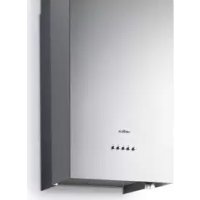
Stenar - Basket ELICA - Free user manual and instructions
Find the device manual for free Stenar ELICA in PDF.


| Brand | Elica |
| Model | Stenar |
| Category | Range hood |
| Installation type | Wall-mounted or ceiling, ducted or recirculating version |
| Power supply | 220-240 V ~ 50/60 Hz (check rating plate) |
| Minimum distance from cooking surface | 50 cm for electric cooktop, 65 cm for gas or mixed |
| Air outlet diameter | Not supplied, suitable for standard exhaust pipe |
| Grease filter | Metal, dishwasher safe, monthly cleaning |
| Activated carbon filter | Optional for recirculation version, washable or replaceable every 3-4 months |
| Lighting | Halogen 20 W max (G4) or other depending on version (see manual) |
| Controls | Push buttons, electronic 5/6 keys, display, or sensors depending on model |
| Suction speeds | 3 speeds + intensive (timed 5 min) |
| Timer | Timer function (20, 15, 10 or 5 min depending on speed) |
| Filter saturation indicator | Yes, depending on model (LED or display) |
| Automatic operation | Available on models with sensor (automatic calibration) |
| Cleaning | Exterior and interior with damp cloth and neutral detergent, no alcohol or abrasive |
| Safety | Disconnect before maintenance, do not use without filter, avoid open flames |
| Warranty | Manufacturer warranty, authorized after-sales service |
| Country of manufacture | Italy (Italian brand) |
| Standards | Compliant with WEEE directive 2002/96/EC |
Frequently Asked Questions - Stenar ELICA
User questions about Stenar ELICA
0 question about this device. Answer the ones you know or ask your own.
Ask a new question about this device
Download the instructions for your Basket in PDF format for free! Find your manual Stenar - ELICA and take your electronic device back in hand. On this page are published all the documents necessary for the use of your device. Stenar by ELICA.
USER MANUAL Stenar ELICA
EN Instruction on mounting and use
EN - Instruction on mounting and use
Consult the designs in the front pages referenced in the text by alphabet letters.
Closely follow the instructions set out in this manual. All responsibility, for any eventual inconveniences, damages or fires caused by not complying with the instructions in this manual, is declined.

Caution
WARNING! Do not connect the appliance to the mains until the installation is fully complete.
Before any cleaning or maintenance operation, disconnect the hood from the mains by removing the plug or disconnecting the home mains switch.
Always wear work gloves for all installation and maintenance operations.
The appliance is not intended for use by children or persons with impaired physical, sensorial or mental faculties, or if lacking in experience or know-how, unless they are under supervision or have been trained in the use of the appliance by a person responsible for their safety.
Children should be monitored to ensure that they do not play with the appliance.
Never use the hood without effectively mounted grating!.
The hood must NEVER be used as a support surface unless specifically indicated.
The premises must be sufficiently ventilated, when the kitchen hood is used together with other gas combustion devices or other fuels.
The suctioned air must not be conveyed into a conduit used for the disposal of the fumes generated by appliances that combust gases or other fuels.
The flaming of foods beneath the hood itself is severely prohibited.
The use of exposed flames is detrimental to the filters and may cause a fire risk, and must therefore be avoided in all circumstances.
Any frying must be done with care in order to make sure that the oil does not overheat and burst into flames.
As regards the technical and safety measures to be adopted for fume discharging it is important to closely follow the relations provided by the competent authorities.
The hood must be regularly cleaned on both the inside and outside (AT LEAST ONCE A MONTH, it is in any event necessary to proceed in accordance with the maintenance instructions provided in this manual)..
Failure to follow the instructions as concerns hood and filter cleaning will lead to the risk of fires.
Do not use or leave the hood without the lamp correctly mounted because of the possible risk of electric shocks.
We decline any responsibility for any problems, damage or fires caused to the appliance as the result of the non-observation of the instructions included in this manual.
This appliance is marked according to the European directive 2002/96/EC on Waste Electrical and Electronic Equipment
(WEEE). By ensuring this product is disposed of correctly, you will help prevent potential negative consequences for the environment and human health, which could otherwise be caused by inappropriate waste handling of this product.

The symbol on the product, or on the documents accompanying the product, indicates that this appliance may not be treated as household waste. Instead it should be taken to the appropriate collection point for the recycling of electrical and electronic equipment. Disposal must be carried out in accordance with local environmental regulations for waste disposal.
For more detailed information about treatment, recovery and recycling of this product, please contact your local authority.
Use
The hood is designed to be used either for exhausting or filter version.
Ducting version
The hood is equipped with a top air outlet B for discharge of fumes to the outside (exhaust pipe and pipe fixing clamps not provided). Filter version
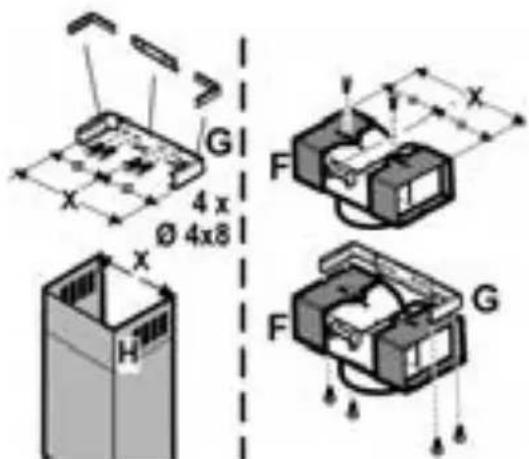
Should it not be possible to discharge cooking fumes and vapour to the outside, the hood can be used in the filter version, fitting an activated carbon filter and the deflector F on the support (bracket) G, fumes and vapours are recycled through the top grille H by means of an exhaust pipe connected to the top air outlet B and the connection ring mounted on the deflector F (exhaust pipe and pipe fixing clamps not provided).
The models with no suction motor only operate in ducting mode, and must be connected to an external suction device (not supplied).
The connecting instructions are supplied with the peripheral suction unit.
Installation
The minimum distance between the supporting surface for the cooking vessels on the hob and the lowest part of the range hood must be not less than 50cm from electric cookers and 65cm from gas or mixed cookers.
If the instructions for installation for the gas hob specify a greater distance, this must be adhered to.

Electrical connection
The mains power supply must correspond to the rating indicated on the plate situated inside the hood. If provided with a plug connect the hood to a socket in compliance with current regulations and positioned in an accessible area. If it not fitted with a plug (direct mains connection) or if the plug is not located in an accessible area apply a double pole switch in accordance with standards which assures the complete
disconnection of the mains under conditions relating to overcurrent category III, in accordance with installation instructions.
Warning! Before re-connecting the hood circuit to the mains supply and checking the efficient function, always check that the mains cable is correctly assembled.
Mounting
Expansion wall plugs are provided to secure the hood to most types of walls/ceilings. However, a qualified technician must verify suitability of the materials in accordance with the type of wall/ceiling. The wall/ceiling must be strong enough to take the weight of the hood. Do not tile, grout or silicone this appliance to the wall. Surface mounting only.
Preliminary information for installation of the hood:
Disconnect the hood during electrical connection, by turning the home mains switch off.
Remove the fat/s filter/s and the carbon filter frame.
Do not tile, grout or silicone this appliance to the wall. Surface mounting only. Do not fix chimney flue to furniture or fly over shelves unless the chimney flue can be easily removed, in case maintenance is ever required.
Assembling the chimney flue support/bracket (3 parts):
The three parts should be fixed with 4 screws, the support extension is adjustable and should correspond to the internal width of the telescopic chimney flue.
Assembling the deflector (only when a deflector composed of 3 parts is supplied - the deflector should be only for the filter version):
The three parts should be fixed with 2 screws, the deflector extension is adjustable and should correspond to the width of the chimney flue support, to which it is then fixed.
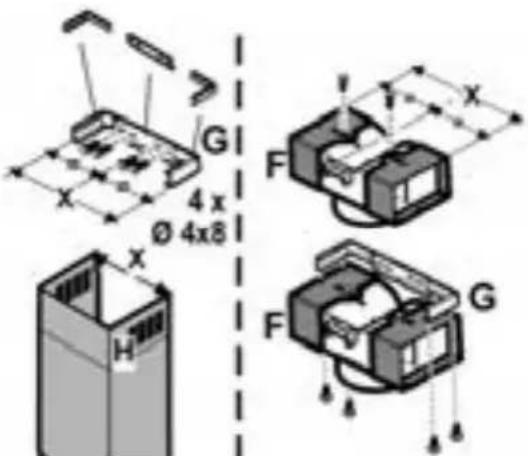
Only for the models illustrated in Fig. 1D/8D - 1E/8E - 1Q/8Q
Remove AND CONSERVE the screws that temporarily fix the flue units (for reasons of transport), the hood or the flue unit (on the basis of the model possessed) with the suction unit. The two parts should be disassembled to facilitate installation. Check how the parts are fixed together to repeat assemblage at the opportune moment.
Before fixing the hood to the suction unit check that the metal band (steam shield) that holds the lamp and the filter/s / greases is well attached to the front. If necessary adjust the
position of the band forwards until the end stop.
Attention!
The chimney is predisposed for installation of the filter Version.
In certain models where it is required to use the cooker hood in the suction version then it is possible to overturn the upper section of the chimney
and insert it inside the lower section of the chimney so that the air-exit perforations are not visible. The chimneys in which this operation is possible are recognizable by their bracket fixing points G which are repeated also in the lower side of the upper section of the chimney (see installation sequence 20a-20b).
Attention! for all pre-assembled models:
the mounting operations "1, 2, 3" should not be taken into consideration, for installation begin at operation "4".
-
Rest the suction unit on a flat surface and thread the lower part of the hood onto it (consult the figure corresponding to the model in possession - Fig. 1C/8C - 1D/8D - 1I/8I - 1E/8E - 1F/8F - 1G/8G - 1H/8H - 1R/8R - 1N-1O-1P).
-
Make all the electrical connections between the two parts (Fig. 9).
-
Permanently fix the cooker hood to the suction group with the screws (consult the figure corresponding to the model in possession - Fig. 1C/8C - 1D/8D - 1I/8I - 1E/8E - 1F/8F - 1G/8G - 1H/8H - 1R/8R - 1N-1O-1P).
-
Using a pencil, draw a line on the wall, extending up to the ceiling, to mark the centre. This will facilitate installation (Fig. 10).
-
Rest the drilling template against the wall: the vertical centre line printed on the drilling template must correspond to the centre line drawn on the wall, and the bottom edge of the drilling template must correspond to the bottom edge of the hood: bear in mind that, when installation is complete, the underside of the hood must be at least 50~cm above the cooker top in the case of electric cookers, and at least 65~cm above the cooker top in the case of gas or mixed cookers.
-
Place the lower support bracket on the perforation diagram making it coincide with the traced triangle, mark the two external holes and perforate. Remove the perforation diagram, insert two wall-dowels and fix the support bracket of the hood with two 5 × 45 ~mm screws (Fig. 10).
Attention: only the models illustrated in Fig. 1Q/10Q:
Fix the central bracket with two screws and wall-dowels above the lower bracket (see perforation diagram for positioning the holes).
- If supplied dismantled, fix the hooks to the side of the aspiration group with two screws (fig. 10a). Hang the hood onto the lower bracket.
- Adjust the distance of the hood from the wall.
- Adjust the horizontal position of the hood.
- Using a pencil mark the cooker hood permanent drill hole
inside the suction group (1 or 2 fixing points are necessary for permanent mounting) (Fig. 11).
- Remove the hood from the lower bracket.
- Drill at the point marked (Ø8mm) (Fig. 12).
- Insert 1 or 2 wall screw anchors according to requirement.
- Apply the flues support bracket ^ to the wall adherent to the ceiling, use the flues support bracket as a perforation diagram (if present, the small slot on the support must coincide with the line drawn previously on the wall) and mark two holes with a pencil. Make the holes (Ø8mm), and insert 2 dowels (Fig. 13).
- Fix the chimney support bracket to the wall using two 5 × 45 ~mm screws.
- Hook the hood onto the bottom bracket.
- Fix the hood into its final position on the wall (ABSOLUTELY ESSENTIAL) (Fig. 14).
- Connect a pipe (pipe and pipe clamps not provided, to be purchased separately) for discharge of fumes to the connection ring located over the suction motor unit.
If the hood is to be used in ducting version, the other end of the pipe must be connected to a device expelling the fumes to the outside. If the hood is to be used in filter version, then fix the deflector F to the chimney support bracket G and connect the other extremity of the pipe to the connection ring placed on the deflector F (Fig. 13-15).
- Connect the electricity.
Attention: only the models illustrated in Fig. 1Q:
Continue from the installation sequence number 23.
- Apply the chimney stacks and fasten them at the top to the chimney support „G“ (20b) using 2 screws (20a) (Fig. 16).
Only for model with optical fibers point lighting (Fig. 1G):
Check that the chimneys may be removed to permit access to the optical fibers lamp housing area.
Only for the model with control panel on chimney flue (Fig. 1L-17):
Insert the command plate from the motor group through the chimney flue slit from the inside towards the outside (20c).
Carry out the connection of the control panel to the command plate.
Attention! The terminal pivot on the plate MUST correspond to the drill hole on the connection block situated at the back of the control panel.
- Slide the bottom section of the chimney down until it completely covers the suction unit and slots into the housing provided on top of the hood (Fig. 18).
-
Fix the lower section of the chimney with two screws (only for the model in Fig. 1H/19H-1J/19J-1L/19L-1M/19M-1N/19N-1O/19O-1P/19P).
-
Only the models illustrated in Fig. 1Q:
-
Put the flues unit on the suction unit. Connect the electricity between the two parts (Fig. 9).
Fix the flue units definitively to the suction unit with the screws (consult the figure corresponding to the
model in possession) (Fig. 8Q).
Attention! Check that the lower section of the flue fits onto the central bracket (Fig. 20).
Fix the upper section of the flue units to the flues support bracket with two screws (Fig. 16).
Remount the carbon filter frame and the fat/s filter/s and check the perfect functioning of the hood.
Description of the hood
Fig. 1
- Control panel
- Grease filter
- Grease filter release handle
- Halogen lamp
- Vapour catcher
- Telescopic chimney
- Air outlet (used for filter version only)
- point lighting (only for the model in Fig. 1G)
Operation
Use the high suction speed in cases of concentrated kitchen vapours. It is recommended that the cooker hood suction is switched on for 5 minutes prior to cooking and to leave in operation during cooking and for another 15 minutes approximately after terminating cooking.
Functioning - Model with Keyboard
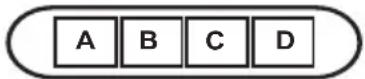
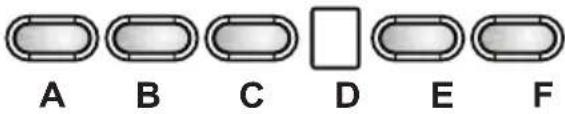
A. on/off light switch
B. on/off aspiration switch and minimum power selection
B+C. medium power selection aspiration switch
B+D. maximum power selection aspiration switch
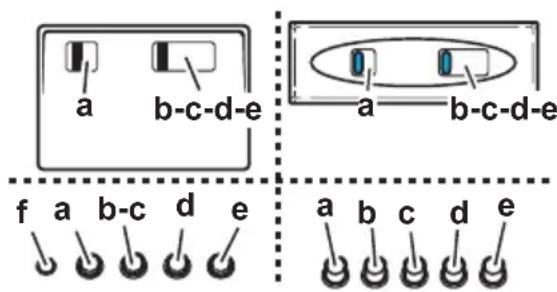
a. ON/OFF lighting
b. OFF motors
c. -d. - e. Minimum suction power (c.), medium (d.), maximum (e.).
f. Operation warning light (where present).
Note: Some models only possess one suction Power.
Attention: the models with an electric valve are supplied with 3 keys:
(a) Light ON/OFF, (b) Electric Valve Closure and (c) Opening.
Functioning - 5-key electronic model
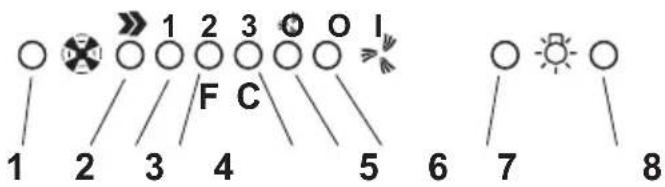
- Motor OFF button
- ON button and motor speed selection button 1 - 2 - 3 - 1 - 2 - .
- Speed 1 LED
- Speed 2 LED and metal grease filter saturation LED (in this latter case, the LED will flash - See instructions on grease filter cleaning).
Once the grease filters have been cleaned, press button 1 for about 3 seconds until you hear the acoustic signal (beep): the LED 4 will now stop flashing.
- Speed 3 LED and active carbon filter saturation LED (in this latter case, the LED will flash - See instructions on active carbon filter replacement).
Once you have replaced the charcoal filter, press button 1 for about 3 seconds until you hear the acoustic signal (beep). LED 5 will now stop flashing. Warning!
The active carbon filter saturation LED is not activated. In order to activate the active carbon filter saturation indicator, press buttons 2 and 7 simultaneously for 3 seconds. Initially, only LED 4 will flash, then after the 3 seconds have passed, LED 5 will also start flashing, indicating that the active carbon filter saturation control system is active.
To switch off the system, re-press the same two buttons: after 3 seconds LED 5 will stop flashing and the device will be switched off.
- Intensive speed LED
- Intensive speed ON switch
This speed should be used when the concentration of cooking fumes or odours is particularly strong (for example when frying, cooking fish etc.).
The fast speed will run for about 5 minutes and then return to the speed previously set automatically (1, 2 or 3), or switch off if no speed was selected.
To turn off the fast speed, before the end of the 5 minutes, press button 1 or button 2.
- OFF lamp button
- ON lamp button
If the hood fails to operate correctly, briefly disconnect it from the mains power supply for almost 5 sec. by pulling out the plug. Then plug it in again and try once more before contacting the Technical Assistance Service.
Functioning - Model with display

A. 9 OFF key (Display off) /Stand-by (led lit on the display) - press for a long time to select the function desired.
B. Lighting, on/off.
C. Timer for selected speed (visualizes the speed selected and flashing LED on the lower side of the display).
This knob permits the operation of the cooker hood for a established period:
20 minutes if the speed selected is 1
15 minutes if the speed selected is 2
10 minutes if the speed selected is 3
5 minutes if the intensive speed P is selected.
D. Display showing:
Fan speed (1-3-P).
- Change grease filters (grease filter saturation indicator - F)
After washing the anti-grease filter, depress knob A for about 3 seconds. The letter F will disappear from the display.
- Change activated carbon filters (carbon filter saturation indicator - C).
After replacing the charcoal filter, depress knob A for about 3 seconds. The letter C will disappear from the display. - When the led in the lower right side is on, it indicates that the cooker hood is ready for operation ("standby" position), the flashing LED indicates that the timer has been activated for selected speed.
Attention! The active carbon filter saturation indicator is normally deactivated, to activate it:
Set the hood on OFF (display off), press keys C and G contemporaneously for 3 secs.
Initially, only letter F will be displayed, then after the 3 seconds have passed, letter C will be displayed as well, indicating that the carbon filter saturation control system is active.
To switch off the system, re-press the same two buttons: letter C appear on display and after 3 seconds letter it disappear and the device will be switched off.
E. Knob to decrease the speed.
F. Knob to increase the speed.
G. Timed intensive speed button: the hood operates at this speed for 5 minutes and then returns to the previous settings. The display will show P and a blinking dot. This function can be cancelled by pressing button A.
If the hood fails to operate correctly, briefly disconnect it from the mains power supply for almost 5 sec. by pulling out the plug. Then plug it in again and try once more before contacting the Technical Assistance Service.
Warning! Always press the fan off button A before disconnecting the hood from the mains supply.
Functioning - Model with display

A - Lighting, on/off.
B - Fan off (Stand by)
C - Timer for selected speed (visualizes the speed selected and flashing LED on the lower side of the display).
This knob permits the operation of the cooker hood for a established period:
20 minutes if the speed selected is 1
15 minutes if the speed selected is 2
10 minutes if the speed selected is 3
5 minutes if the intensive speed P is selected.
D - Display showing:
Fan speed (1-3-P).
Change grease filters (grease filter saturation indicator - F)
After washing the anti-grease filter, depress knob B for about 3 seconds. The letter F will disappear from the display.
- Change activated carbon filters (carbon filter saturation indicator - C).
After replacing the charcoal filter, depress knob B for about 3 seconds. The letter C will disappear from the display.
- When the led in the lower right side is on, it indicates that the cooker hood is ready for operation ("standby" position), the flashing LED indicates that the timer has been activated for selected speed.
Warning!
The active carbon filter saturation function is not activated.
In order to activate the carbon filter saturation indicator, press buttons E and F simultaneously for 3 seconds. Initially, only letter F will be displayed, then after the 3 seconds have passed, letter C will be displayed as well, indicating that the carbon filter saturation control system is active.
To switch off the system, re-press the same two buttons: letter C appear on display and after 3 seconds letter it disappear and the device will be switched off.
E - Knob to decrease the speed: from intensive speed P to speed level 1.
F - Knob to increase (standby) speed to intensive speed P. Attention! Intensive speed P has a duration of 5 minutes after which the cooker hood automatically sets the speed to level 2 (suction power).
If the hood fails to operate correctly, briefly disconnect it from the mains power supply for almost 5 sec. by pulling out the plug. Then plug it in again and try once more before contacting the Technical Assistance Service.
Warning!
Always press the fan off button A before disconnecting the hood from the mains supply.
Functioning - 6-key electronic model
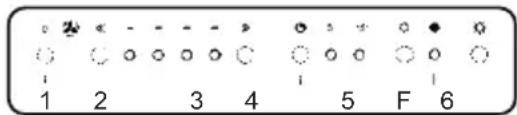
F

1-Motor OFF key.
2- Diminishes the speed.
3-Increases the speed.
4- 5/15 minutes timer. Inserts and extracts the timer.
The speed in function is turned off automatically.
5- Resets carbon filters saturation indicator.
When the F led lights up, the carbon filter should be cleaned or changed.
Press for at least 3 seconds after having changed the carbon filter. The F led will turn off to indicate the resetting of the saturation indicator.
Note: This led switches ON even if the carbon filter has not been mounted.
6- ON/OFF light.
If the hood fails to operate correctly, briefly disconnect it from the mains power supply for almost 5 sec. by pulling out the plug. Then plug it in again and try once more before contacting the Technical Assistance Service.
Electronic model with sensor

T1. Hood On/Off key
T2. Increase cyclical motor speed key.
Pressing the first time activates speed 1. A Led (1-2-3), corresponding to each speed, switches on. Led 4 flashes at intensive speed.
After 5 minutes intensive speed is reduced to the second speed. If key T2 is pressed before the end of the 5 minutes, the hood retunes to the first speed.
T5. Lights On/Off key.
Filter signals
(function active with the hood on): the fats filter signal appears after 80 hours functioning (Led 1 flashing).
The carbon filter signal appears after 320 hours (Led 2 flashing). In the case of simultaneous signalling of the fats and carbon filters, Leds 1 and 2 flash alternatively.
Reset filter signals:
press key T4 for 3 seconds until Led 1 switches off (fats filter). In the case of both filters (fats and carbon) signalling, repeat the operation just described: pressing T4 the first time switches off LEDs 1 and 2 that are flashing alternatively. Immediately afterwards Led 2 flashes again: at this point press T4 again for 3 seconds. A beep signals each time the operation is completed.
Enabling the carbon filter signal:
the hood is enabled only for the fats filter signal. To
enable the carbon filter signal: hood in Off, press keys T2 and T4 for 3 seconds. The flashing of LEDs 1 and 2 signals the completion of the setting. To disenable the carbon filter signal, repeat this operation again (always with the hood in Off). A beep signals each time the operation is completed.
Automatic calibration:
the system carries calibration out automatically about every 30 minutes (calibration of the parameters functioning of the sensors).
Manual calibration:
with the hood in Off, press keys T3 and T4 until the beep.
Automatic functioning:
to activate automatic functioning, press key T3: Led 4 switches on. To return to manual functioning, press key T1, T2 or T3.
Sensors test:
this happens continuously during automatic functioning. In the case of damage all the LEDs flash: in this case, return to manual functioning, pressing keys T1, T2 or T3.
Selecting cooking top:
this operation optimises the automatic functioning of the hood: with the hood in Off press keys T2 and T3 for about 3 seconds until the cooking top at present in use is seen:
gas top - Led 1 on
induction top - Led 2 on
electric top - Led 3 on.
Select the cooking top requested pressing T2, then press T2 and T3 simultaneously for three seconds until the Beep. Alt the end the hood switches off.
The gas top is the default state.
Attention: carry out this operation the first time the hood is switched on.
Maintenance
ATTENTION! Before performing any maintenance operation, isolate the hood from the electrical supply by switching off at the connector and removing the connector fuse.
Or if the appliance has been connected through a plug and socket, then the plug must be removed from the socket.
Cleaning
The cooker hood should be cleaned regularly (at least with the same frequency with which you carry out maintenance of the fat filters) internally and externally. Clean using the cloth dampened with neutral liquid detergent. Do not use abrasive products. DO NOT USE ALCOHOL!
WARNING: Failure to carry out the basic cleaning recommendations of the cooker hood and replacement of the filters may cause fire risks.
Therefore, we recommend oserving these instructions.
The manufacturer declines all responsibility for any damage to the motor or any fire damage linked to inappropriate
maintenance or failure to observe the above safety recommendations.
Grease filter
Fig. 2
This must be cleaned once a month (or when the filter saturation indication system - if envisaged on the model in possession - indicates this necessity) using non aggressive detergents, either by hand or in the dishwasher, which must be set to a low temperature and a short cycle.
When washed in a dishwasher, the grease filter may discolour slightly, but this does not affect its filtering capacity.
To remove the grease filter B, pull the spring release handle.
Charcoal filter (filter version only)
Fig. 3
It absorbs unpleasant odours caused by cooking.
The charcoal filter can be washed once every two months (or when the filter saturation indication system - if envisaged on the model in possession - indicates this necessity) using hot water and a suitable detergent, or in a dishwasher at 65^ (if the dishwasher is used, select the full cycle function and leave dishes out).
Eliminate excess water without damaging the filter, then remove the mattress located inside the plastic frame and put it in the oven for 10 minutes at 100^ C to dry completely. Replace the mattress every 3 years and when the cloth is damaged.
Remove the filter holder frame by turning the knobs (g) 90^ that affix the chimney to the cooker hood.
Insert the pad (i) of activated carbon into the frame (h) and fit the whole back into its housing (j).
It is possible to use a traditional carbon filter, neither washable nor regenerable, to be replaced every 3 - 4 months. The filter holder frame of the carbon filter is welded together; the eventual frame supplied with the hood is not, therefore, to be used.
Insert it into its housing and fix it turning the 2 plastic knobs.
Replacing lamps
Disconnect the hood from the electricity.
Warning! Prior to touching the light bulbs ensure they are cooled down.
For models shown in Fig. 1E + Fig. 4E:
- Press on the lamp cover and release to open.
- Replace the damaged light bulb.
Only use halogen bulbs of 20W max (G4), making sure you do not touch them with your hands.
- Close the lamp cover (it will snap shut).
For models shown in Fig. 1N/O + Fig. 4N/O:
- Unscrew the lamp cover.
- Replace the damaged light bulb.
Only use halogen bulbs of 20W max (G4), making sure you do not touch them with your hands.
- Refit the lamp cover.
For models shown in Fig.1+Fig.4 (A/B/C/D/F/H/I/K/P/Q/S/T/U/V):
-
Extract the lamp cover by levering it off with a small screwdriver or similar tool.
-
Replace the damaged light bulb. Only use halogen bulbs of 20W max (G4), making sure you do not touch them with your hands.
-
Close the lamp cover (it will snap shut).
For models shown in Fig. 1J + Fig. 4J:
- Use a small screwdriver as a lever on the borders of the lamp in order to remove the lightbulb.
- Slide out the lightbulb to be replaced and replace with a new 12V 20W 30^ Ø35 12V GU4 PHILIPS STANDARD LINE code 425409.
- Carry out the replacement and mount the new lightbulb by following instructions in the reverse.
For models shown in Fig. 1G + Fig. 5G:
Dismount the chimneys: remove the two screws (20 a) that attaches the upper chimney to the support „G“ (Fig. 16).
Remove the box „q“: remove the screw „r“ that secures the cooker hood.
Remove the lamp housing „s“: remove the screws „t“ that position the housing in the lamp housing area.
Extract the damaged lamp.
Use only PHILIPS type 14515 (GX 5.3) 12V - 75W halogen bulbs..
Reposition and secure the lamp housing ,s^ and the box ,q^ and remount the chimneys.
For models shown in Fig. 1K + Fig. 4K:
Certain versions of this cooker hood provide for an incandescent lamp at 40W maximum (E14), remove the lamp cover to access the lamp housing and carry out any replacements.
Only for the illustrated model in Fig. 1L + Fig. 6L:
- Open the front panel "v" upwards, which holds the lamp in place, ensuring to hold the lamp "z" with one hand.
- Replace the damaged lamp with one of identical technical characteristics.
Attention! To guarantee the equivalent quality of lighting, it is recommended to use the same type of lamp bulb:
Philips neon Lamp bulb 13W Code Ref. 711500644305.
Ensure that the transparent part of the lamp bulb is facing inwards so as to guarantee correct light distribution.
- Replacing the starter:
Use a starter with identical technical characteristics.
Recommended starter: Use a Philips S10 starter.
- Remount the lamp housing and the front panel in the inverse in relation to the dismounting.
Only for the models illustrated in Fig. 1M + Fig. 7M:
- Remove the grease filters.
- Remove the ceiling light unscrewing the 3 screws that fix it to the hood (hold the ceiling light to prevent it falling).
- Change the damaged bulb with one with identical technical characteristics.
Changing the starter
Use a starter with identical technical characteristics.
Starter advised: use a Phillips S10 starter.
- Remount the ceiling light and the grease filters in the reverse manner to the montage.
If the lights do not work, make sure that the lamps are fitted properly into their housings before you call for technical assistance.
Assembler le support cheminée (3 parties):
techniquesidentiques.
Starter conseillés :Utiliser les starter Philips S10.
D. -Display - viser:
- Hastigetene (1-2-3-P),
Electrical and Electronic Equipment (WEEE)
6- ON/OFF Belysning.
ANVAND INTE ALKOHOL!
Pn6bOp He nOxOHT dIy IcNoIb3OBAHnI DeTbMn INn IInaMn, HEnoIHOUeHHbIMN NO CBOIM yMCTBeHHbIM INn CEHCOPHBIM cNOco6HOCTaMn, INn HE oBnaAIOUmMn DOCTaTOHbIM ONbITOM INn 3HaHnMn, eCNI He NOD npICMOtpom, INn ECNI OHI He 6blIN OByeHbI NOnb3OBAHnIO annapatypo co CTOpOHbI INuca, OTBeauOJero 3a INX 6e3onacHOctb.
He octabte deteien 6e3 npncmoTpa, yTo6bI OHn He irpajn C np6opom.
He nCnoJb3yIe BbITaKky, ecn peWetKa HnpaBnIbHo CMOHTnpoBaHa!
Kateropueckn 3anpeuaeTcN cnoIb3oBaTb BbITkky B KaueCTBe ONOPHO NIOCKOCTN, eCNI 3TO CneuaJIbHO He orOBopeHo.
ObecneBte Hndnexkaun Bo3dyxoo6MeH nomeueHna, KOrda BblncnIb3ynte BbITaKky B kyxhe OndHOpeMeHHo C npyHMnp6opamn C ra3OBbIM CkNraHem NnC nNTaHEm DpyHMn ropouHMn.
BbIgBaemBn BO3dyx He DoJxhen Bbl6pCbBaTcHapyxyepe3 BO3dyxoBO,NCnOJIb3yeMbI DnB Bbl6pOCA DbIMOB OT np6opOB Cra30BbIM CxNIRAHEm NIN C NITaHEm DpyrIMN roPOnuMn.
Kateropueeckn 3anpeuaetcra roTOBNTb 6IIOda "noI IaMeHem", NockoJIbky CBObOdHoe IIaMRA MOxET NOBpeDHTb IIbTpbl n CTaTb npuHoi NoXapa; IO3tOMy, BO3depKINBaITecb OT 3T0R B IIObOM cIyuae.
XapeHbe B 06nIbHom Macne IOnJxHO npOn3BODnTbcra NOD NOCTOARHHbIM KOHTpONEM, IMeB BVdy, YTO neperpeToe MACNO MOKET BOcPNaMeHrTbcra.
UTo KacaetcayTexHnuecknxMepuYcNoBnNo TexHnke 6e3oNaChocTnpO TBODe DbIMOB,TO npIePknBaNTecb CTporo npaBn,IpeDyCMOTpeHHbIX pErlaMeHTOM MeCThblX KOMNETHTbIX Bnacte.
Pon3BOJnTe nepnoDnueckyO OuHCTky BbITaKKn KaK BHyTpN, TaK n ChapyKn (IO KPAHHEI MEPE PA3 B MECAL, BO BCaKOM Cnyae C Co6JIHODeHNEM ycNOBn, KOtOpblcneuaJIbHO npedYCMOTpeHbIB HnHCTpyKUnx PO 06ClykBaHnIO DaHHoro pyKOBoCTBa).
HecobJIOHe HNCTpyKuIN NO ONUCTKe BbITaKKN I N0 3aMeH e ONUCTKe QnIbTPOB MOXe CTAb npUHNHO NoXapa. He nCNoJIb3OBAb TnIN OCTaBnTb BbITaKKy 6e3 npaBnBHO yCTaHOBNeHHbIX JAMNOueK B CBraN C BO3MOxHBIM PNCKOM yDapa 3JIeKTPnuEeCKM TOKOM.
Mbl CHMaem Cce6yIO OTBeTCTBHeHOctb 3a HEnoJaKn, yuep6 nIi cropanhe npnbopa BCJeDCTBne HecO6NHOeHn HNCTpyKUIN, pINBEeHHbIX B DaHHOM pyKOBOdCTBE.
JaHHoe n3dene npomapKnpoBaHO B COOTBETCTBnC EbponeckoN DnpeKTnBO 2002/96/EC no ytnn3aunn 3Jektpnueckoro n 3JektponHoro o6opydoBaHna (WEEE).
ObecneuB npabnblHyU ytnn3aunDaHHoro n3deJnna, BbI NOMOKeTe npedotBpaTntb NOTeHuaNbHbIe HeratNBbIe NocJeCTBnI dIg OkpykaIoSeI Cpebl I 3doOpBByJeNoBeka, KOtOpBe MOrN6bl IMeTb MeCTo B IpOTNBOM cnyae.

CIMBOI Ha cAMOM 3deJIN INI COPOBOnTeJIbHOI DOKyMeHTaUH yKa3bIbAeT, YTO npN yTNIN3aUN DaHHORO N3eJIN C HMM HeJIb3r O6pa7aTbcR KAK C OBiHyBMn 6bITOBbIMN OTXoAmu. BMeCTO 3TOrO, ERO CNeDyET CdaBaTb B COOTBeTCTByOuMn NyHKT pNEmKn 3JIeKtpueckoro N 3JIeKTPOHHO 06OpuyOBAHn IIN
nocJeDyUoSeyTuNn3aun.
CdaHa HcnoDMdoJXHa npOn3BoDnTbcB CooTBeCTBm C MeCTHbIMNnpaBnAmnNo yTuJIn3aUINOTXoIOB.
3a 60Jee noDpObHOn nHΦopMaüne O npaBnax oBaPaeHn C TaKIMN N3DeJIYMaMn, IN yTnIIN3aUIn N nepepa6oTKn ObaPauTeCb B MeCTbIE OpraHbI Bnactn, B Cnyk6y No yTnIIN3aUIn OTXODOB INN B Mara3HN, B KOTOpOM Bbl npno6peJIu DaHHoe N3dJIe.
Побзованe
BbTgKa cKoHcTpynpObaHa npa pa60tBpeKmE OTBOa BO3dyxa HApKy nn peuKpynau Bo3dyxa.
IcnoJIHeHne c OTbOdom Bo3dyxa
BbIgKa Ch6KeHa BepxHIM BbIOHbIM OTBepCTnEM B IJIy BbIbOca DbIMOB HApxy (VcnoJHeHne C OTBOOM BO3dyxa HApxy-BbIOHna Tpy6a N XOMyTbI KpeJIeHnHE BxOJrB KOMNKeT).NcNoJHeHne C OTBOOM BO3dyxa
Ecn OTbOD DbIMOB IN napOB HApyKHe BO3MOXeH Bbl MOXeTe NOIb3OBA TbcB bITaKKoB Pexnme CpeuNpkyLnei E np NOMOUs yroIbHbIX QINbTPOB U yCTAHOBKn DeQLeKTopa F Ha KPOHtEH G. TaKIM O6pa3OM OOnuEHHBI ON DBIMOBbIX napOB BO3dyx BO3BpaaaetcB INOMEueHne Upe3 BepxHOIO peWetKy H N BBIOdHyTO Tpy6y, NOCDoeDnHReMyK BepxHEmy BBIOHOmy OTBepCTnO B, INP NOMOUs COeHNHTeJIbHOrO KOJIbCa, CMOHtPOBaHHoro Ha DeQLeKTope F (BBIOHOra Tpy6a IN XOMyTb KpeIIeHnR He BXoJrB KOMPiKeT NoCTABKN).
Moenn BbITIeK 6e3 MOTOPHO 6Ioka MoryT pa6OtaTB ODHOM pexnme OTBOa BO3dyxa HapyKy, NO3tomy OH NdoJXHbI 6bITb IOdCOeINHeHbIK BHeUHeN BbITJXHO
yCTaHOBKe (He BXOJNT B NOCTaBky). HcTpyKmno COeHnHnM nOCTaJIOTc C nepupeepnHbIM BbITxKhbIM y3IOM.
YcTaHOBka
PacctoHne HxKHe IpaHb BbTJkKn HnO npHo nnocckbIO NOcCoydbI Ha xyKOHHO pnte DOJXHO 6bITb He Mehee 50cm -nIa 3JeKtpnuecknx PINT, n He Mehee 65cm dNra3OBbIX NNI KOMbHnpOBaHHbIX PINT. EcInB INHCTpyKUHX IO yCTaHOBe ra3OBoi pNTb OROBOpeHO 6oJIbWeepacctoHne,TOyUTNE 3TO.

3neKtpnueckoe coeHHeHne
Hanpexe HcTdoJxHO COOTBeCTBOBaTb HapxehnIO, yka3aHHOMy Ha Tabnue TeXnuecknx DaHHbIX, KOtopa pa3mehe BHTpn np6op.a. EcnB BbIgKca Ch6keha BNko, NOkNouHTe ee K StenCebHomy pa3beMy, OTBeauOHe DeiCTByUoMn PpaBnAm, KOTOpBm DOJKeH 6bIb pacnoLoXeH B IerKO DoCTynHom MceTe. Ecn Jx BeTjKa He Ch6keHa BNko (DJIa npMOro NOKluOHeHna K cTe), INN WTeNCelhBn pa3bem He pacNOoxeH B DoCTynHom MeTe, TO NCNoJb3ynte HaNExKaun DByXNoHCHbB BIKNUOaTeNb, ObecneuBaHOuNi NoHoe pa3Mbikane CTe N pni BO3HNKHOBeHn YcNoBn NepeHaepxJekHn 3-e KaterOpn, B COOTBeCTBn C nHCTpyKzmaMn no yctahOBke.
BHIMAHHE: npexde yem NOKIOHNTb K cETn NITAHN 3JIeKTPnueckyo CNCTeMy BbTJXKN I pOBepNTb NCpABHOe HKnOHNPOBAHne ee yBeINTEcb B TOM, YTO KaBEn b NITAHN PpaBnIbHO CMOHTnpoBaH.
YcTaHOBka
BbIgka cha6keHa IIO6eMaN dnn KpeHnEe B 6oJIbUHHCTBe CTeH/NOTOKOB. Ondako, Heo6xOIMo 6paTntbcra K KBaIIINΦuINpOBaHHOMy TexHnky u y6eITbCBA TOM, YTO MaTePnaJIbI pInrOdHbI dner DaHHoro Tnna CteHbI/ NOTOKA. CteHa/NOTOLK DOJXHbI ObNaadTaB DoCTaTOHOn npouHOCTbO C yueToM Maccbl Prn6opa.
PpeBapnteIbHbIe CBeDeHnNo yCTaHOBKe BbITJxKn:
OTcoeINHnTe BbITKky OT CETn, DeNCTByr Ha a3bl 3JekTpueckoro CoeINHeHnHa o6uem 3JekTpoUnte.
CHMNTe pIbTp/bI 3aepKKn Knpa n depKaTeNb yroIbHoro pIbTpa.
POnc6opka onOpHOro KpOHTeHa dJa KpeIeHnKaMnHOB (u3 3-x ceKun)
CoeMHnTe 3 yactn onopHoro kpoHwTeHa 4-My wypnAmn, WnpHa KPOHwTeHa DoNkHa 6bItb paBHO BHyTpHe HmHHe TeNECKONuYeCKOro KamnHa.
Ioc6opka deΦneKTopa (Tolbko KOrda NoctabJareTcA deΦneKTopom, coCToHm n3 3 qacte - deΦneKTop mCNoJIb3yeTcA JnMb B HcNOJIHeHH C peuRpyJusNe Bo3dyxa)
CoeHnTe 3 Yactn DePnEKTopa 2-My WypynMaN, WnpHa DePnEKTopa DOnxHa 6bTb paBHO nOpHOro KPOHtEnHa NOKAMNH.
TolbkoДЯ MODEJIeN, NOKa3aHHbIX Ha Pnc. 1D/8D - 1E/8E -1Q/8Q
BbHbTe COXPAHNTE WpynbI BpemEHoro (nra TpaHCnOpTnpoBKN) KpeJIeHNA BbITAXK NIN y3eN KaMHOB (B COOTBeTCTBn C BaWeJ MoJeNbO) C BbITAXHBIM 6nOKOM. nra ydo6CTBa yctAHOBKn, pa36epnte DBe YactN npOBepTe, KAkIM o6pa30M OHN CKpeJIeHbI MExdy Co6oN, YTO6bl HaJnxKaune Noo6paTb INx CHOBA B HxKHOe Bpemr.
Ipekjde yem 3akpenTb KOpnyc BbITJxKKN BbITJXHOMy 60kOy y6eNTecb B TOM, YTO MeTaNuecka NpAnKa (3kpA H npa), Hecuza JAMNbl I pndTp/bi 3aepKKn Jnpa HndHexaapeaMeueHa no OTHOseHIO K NpueBOY qactn. Pn Heo6xOIMOCtN, OtperynpyTe nnojKeHne PnAHN, NoDOrHAB ee K nepdHeqactn Do KOHcxa Xoda.
BhimaHne!
KamHH NOIroTOBJIeH DnY yCTaHOBKn B IcNoJIHeHN C peuHPkyJNAeN BO3dyxa.
B HeKOTOpbIX MoDEJx, ecn Bbl 3axoTne nCNoIb30BaTb
BbITKkyIpa6Otbl BpeXmme OTBOda BO3dyxa,TO MOxTe nepeBepHytb BepxHIO CEKUNo KAMnHa N BCTaBnTbe B HIXHO CekUIO, TAKIM O6pa3OM, YTO6bl OTBepCTna IINBbODa BO3dyxa cTaan HeBNUIMbIM. KamnHbI, Ie daHHaONepaunr BO3MOxHa y3Habaembl Tem, YTO MecTa KpePJIeHnKpOHHTeHa G (cm.Cxemy yctahOBKn 20a-20 b) BO3npOn3BeDeHbI TaKKe Ha HIXHei CTopoHe BepxHei CekUIN KAMnHa.
BHHMaHHe!IJI BcEx IOJco6paHHbIX MoJeIe:
Oepaun no yctahOBke "1,2,3" He doJxHb6bItb yHTehb; BblONHInTe yCTAHOBky,HaunHaC onepaun 4.
- YIIOXInTe BbITaIKHOH 6JOK Ha IIIOCKOe OCHOBaHne IN BCTaBBte B Hero, CHN3y, HIXKHOU qAcTb BbITaIKKN (CMOTpeTB pncyHok, OTHCsIuNCra K BaueM moJeIN. Hanp.-Pnc. 1C/8C-1D/8D-1I/8I-1E/8E-1F/8F- 1G/8G-1H/8H-1R/8R-1N-1O-1P).
- BbINOHNHe 3JIeKTPnueCKoe CoeINHeHne DByx qacte (Pnc.9).
- 3aKpeHnTe OKoHcTeJbHo BbITaKKy K BbITaHHOMy 6Iooey WypynAmn (CMOTpeTb pncyHok, OTHOscAunCk K BaueMmOeHn. Hanp. - Pnc. 1C/8C - 1D/8D - 1I/8I - 1E/8E - 1F/8F - 1G/8G - 1H/8H - 1R/8R - 1N-1O-1P).
- KapaHdaWOM, HauepTnte Ha CTeHe Do NToNka JINHHIO, COOTBeTCTByUOyU OceBOJ JINHH YCTaHaBnBaEMOn BbITJKK: 3TO 6bnerHT onepaun No yCTaHOBKe (Pnc. 10)..
5.ПиСLOHHTe W6HON KCTHe: CpeHЯ BepTKaJIbHa JINHЯ, HAnecEHHa Ha 6HOn DOJXHa COBnaAdTaC OceBOI BepTKaJIbHOJ LInHnei, HaupeHHeHn Ha CTHe; KpOme TOrO, HIXHЯ KpOMka 6A6NoHa COOTBeTCTByET HIXHRe IpaHb BbITJxKn. ImeTe B BVdy, YTO NO 3aBepSeHN yCTaHOBKn HIXHЯ rpaHb BbITJxKn DOJXHa HaxODITbcr Ha paCtOraHN He MeHee 50 CM OT 3JIeKTpuYeCKoI PNTbl, 65 CM OT ra3OBoN IN KOMbHHPOBaHHoIIPTbl - IIOJXHTe HIXHNI ONOPbI KPOHSTeH Ha 7a6bONB COOTBeTCTBnC 3aHTpNXOBaHHbIM npMoyroJIbHNKOM, OTMeTbTe DBA BHeWHIX OTBepCTN IN PocCBepNTe IN, CHMMtE 7a6bNOH, BCTaBBte 2 IIO6eJI N 3akpenITE ONOPbIK KOHSTeH NOD BbITxKky 2-My WypynAMN 5x45 MM (Pnc.10).
BHHMaHHe! ToIbKO dIa MoDeJeNo PnC. 1Q/10Q:
3aKpeHnTe ceHTpaIbHbI KPOHHTeHn HAD HIXHM KPOHHTeHOM 2-Mr WypyIaMn N DIO6JIaMn (NIOIOXHeHne OTBepCTn IOKa3aHO Ha CXeMe CBePJIeHn).
- EcnOnI NoCTabHeBb pa3o6paHOM BnDE, 3aKpeNITe IODBeCKN BbITJXHO 6JOKa DByM WypynAmn (Pnc. 10a).HaJeHbTe BbITJXKY Ha HxKbHKn KPOHHTeH.
- OtperynpyuTe pacctOarHne BbITJAKNOT CteHbl
- OtperynpyTe NOIOXeHne BbITaKKn no ropn3oHTaJI
- N3HyTpN BbITJXHOrO 6IOKa, OTMeTbTe KapaHaOM OTBepCTne DnA OKOHATeJIbHOrO KpeJIeHnB BbITJxKn (1 INN 2 MeCTa DnA OKOHATeJIbHOrO KpeJIeHnR) (Pnc. 11).
- CHHIMTE BBITXKky C HNXKHERO KPOHHTeHa.
- No pa3metke npojeaaiTe oTbepcTne (L8 MM) (Pnc. 12).
- BCTaBbTe 1 uJIn 2 dO6eJIa, KaK 3To Heo6xoIIMo.
- 3akpeHnTe onOpHbI KPOHHTeH nOd kAMnHbI "G" K CTHe
CMEXHO K IOTONKY; NcNOJB3yIte OOnOpHbIKPOHHTeIN NOI KaMnHb B KaYeCTBe 7a6bNoHa (ecNIO OHmEeTcA, MAIOE OBaJIbHOe OTBepCTHe B KPOHHTeHrEOJXHO COOTBETCTBOBaTb C INHMe, paHee HaupeHHeHHo Ha CTHe), OTMeTBTe KapaHdaWOM 2 OTBepCTn, npOJaIe Te OTBepCTnR (K8 MM), BCTabIbe 2 IIO6eII (Pnc.13).
- 3aKpeHnTe onOpHbI KPOHHTeH nOd KaMnH K cTeHe 2-My wypynAmn 5x45 MM.
- NpOBeCnTe BbITaKky K HxHkEmy KoHOuTeHy.
- 3akpenite OKOHaTeNbHO BbITJxKy K CTeHe (HEPNPEMHHO HEO6XODMO!)(Pnc.14).
- ПОДВЕДЛТЕ ВERTИЦИНУ TPy6у (Tpy6a И XOMYТБI KpenJIeHnA He BXODT B KOMNJIeKT NOCTABKN) K BbITJXHOB BTyIKe, pacNoIoxKeHHo HAD 6IOKOM 3IeKTPoIDBnIrAteJIЯ. ПОДВЕДЛТЕ ДPyRoi KOHeU Tpy6bl K CnCTeMe OTBOJa, B Cnyuae IcNoIb3OBAHnA BbITJXKN B pexIMe OTBOJa DblMOB HApyKy.
EcIn BbXOTnTE nCIOJIb3OBAbTB bBITJAKKBy B pexIme peunPKyIaun Bo3dyxa, 3akpeINTe DeΦneKTOp F K KPOHHTey H G nOdBvEInTe DpyroN KOHeu Tpy6bl K coedHHTeNbHO BTyJKe, paCNOJoxKeHHo Ha deΦneKTope F (Pnc.13-15).
- BbInonHHte 3eKtpuueckoe noKIOUeHne.
BHMaHHe! ToJbKO dIy MoDeJeNo Pnc. 1Q:
CneyuTe nocneIOBaTeIbHOCTn yCTAHOBKn C HOMepa 23.
- NocTabbTe kAMnHbI n 3aKpeNITe nx 2-My uypnAmn (20a) K onOpHomy KPOHHTeyHy G (20b) (Pnc. 16).
Дяонй Мо徳и c nyHKTamN ocBeeHnHa onTnuecknx BONOKhX (Pnc.1G):
Y6eHNTecb TOM, YTO MOXHO DEMOHTNPOBaTb KaMnHbI N o6ecneuHb TaKIM O6pa30m DoCTyn K NOIOCTN NOJ lamny ONTNueCKNX BOLOKOH.
ToIbko dnn MoeHn c naHeNbO ynpaBneHn Ha kAmnHe (Pnc.1L-17):
PpOyCTnTe PnOckn PpOBoD ynpaBHeHna, BbIOJaIeOcC MoTOpHO 6Ioka Ype3 OTBepCTne B KAMHe, n3HyTpN HApKy (20c). POnCOeINHTe PpOBoK NaHenn ynpaBHeHna.
BHMaHHe! Wtbp HakoHeuHa Ka npoBaDa DOJKeH COOTBeCTBOBaT OTBepCTnIO, PpOeJaHHOMy B UOKone pa3bema, pacNoJoxEHHoro Ha 3aHne CTOpOHe NaHEn ynpaBJIeHN.
- Onyctnte HnKHOIO CEKUHO KAMHa (TEM CAMbIM NOKpbIBaI NOJIHOCTbIO BbITJXH0N 6JIOK) IN pa3MeCTNTe ee B COOTBcTCTByOuE m He3De HaD BbITJXKoR (Pnc. 18).
- 3aKpeHnTe HnXhIOc Keuio KaMHa DByMa WypyPamN (ToIbKO B MoDeiNo Pnc. 1H/19H-1J/19J-1L/19L- 1M/19M-1N/19N-1O/19O-1P/19P).
23.ToIbkoJnMaMoJeNeNoPnc.1Q:
HaedeHbTe y3eK KaMnHOB Ha BbITaXKnO 6nok.
BbInonHnTe 3NeKtpnueckne coeINHeHHM MeKdy DByMa CEkUma (Pnc.9).
3akpenTe OOKHuaTeIbHo y3eI KaMHOB K BbITXHOMy 6nOky Wypynm (cm. pucyHOK, COOTBeTCTByUoI BaWei MoDeN) (Pnc. 8Q). BHImaHne! Y6eNTecb B TOM, YTO HxKJRA CEKLIA
KAMHa 3aueHnnaC cIeHTpaJIbHbIM KPOHHTeHOM (Pnc.20).
3akpeNTe BepxHIO CEKNU KAMHa K ONOpHOMy KPOHHTeyHy NOd KAMNbI 2-Mr WpypAmn (Pnc.16). YcTaHOBtTe BHOBb DEpxaTeJb yroJIbHOrO FmIbTpna n FmIbTp/bl 3aDepxkKn Jnpa n npOBepbTe NcnpabHoe FyHKUHOHPOBaHne BbITAKKn.
OnncahHe BbITXKn
Pnc.1
- NaheJIb ynpaBneHnIa
- ΦινλTp 3aDéρχκη κυρα
- Pyuka oTuenHnna 4aJepKn Jupa
- TanaoreHHa naMaHa
- OtkuHoi 3kpA
- KamNH TeJIeCKOnIueCKn
- BbIOB BO3dyxa (TolbKO B pexKmpeu npkyraun)
- Пунковocbeшну (ToIbKO moJelno PnC. 1G)
ФункционюВанe
IOnb3yntecb HHTeHCNBHbIM pexKIMOM pa60tbl BbITAKKN B cnuyae oco6o BbICOKO KoHcHTpaun KyxOHhbIX nCnapeHn. Mbl peKomeHdyem BKIOUHTb BbITAKKY 3a 5 MNHyT do Haana npocceca npiroTOBHeHn PNsN N OCTaBtB ee BKIOUeHHoB TeueHne 15 MNHyT np6bn3ntelbHO no OKOHaHN npocceca.
CBeToIIO4 IpeKpaTIT MmraHne.
- CBeToHIOD CNrHaHn3aUuN CkOpocTn 3 n HacbIeHn yroIbHO rPpa (npn 3tOM CBeToHIOD Muaet - CM. INCTpyKUnn PO 3aMeHe yroJIbHbIX FInbTPOB).
PpombIb Hn 3aMeHbYrOJIbHbI ΦnJIbTp, HaxMnte KnaBnUy 1 B TeueHne 3 cekHy npi6JIu3nteNbHO, noka CnCTema He bblaact 3BykoBoi CNrHaI (6n).
BHHMaHHe! YcTpoIcTBo CnHaJIIN3aUNO HaCbIeHNyroJIbHOrO qNJIbTpA He aKTHBnPoBaH.
EcnBbXOTHeNCnOJIb3OBaTb yOrIbHbIMnФIbTp, aKTNBnpyTe yCTpOInCTBO CNrHaIN3aUIMn O HAcblueHMn yOrIbHO rIbTa, Haxmam OndHOBpeMeHHo KNaBnU 2 n7 B TeueHne 3 cekyHd: B Hauane 3TO rpocecca MnaeT OINH CBeToIDNo4, a NO NCTeueHN 3-x cekyHd HaHTet MIRatb TAKKe CBETOnIOd 5; 3TO dAcr 3HaTb O TOM, YTO CNrHaIN3aUIMn HAcblueHMn yOrIbHO rΦnlbTp aKTNBnPOBaHa.
YTo6bI De3aKTbNbUPOBaTb ee, HaxMITE ONrTB-TaKn DBe KlaBnH: NO NCTeueHm 3 cekyHd CBeTOnd 5 npEkpATNT MIRAHne n yCTpOINCTBO CnHaHn3aunn De3aKTbNbUPOBaHO.
- CBeToIIOJ cnHaJIIN3aIu INHTeHCNBHO peKIMpa60TbI.
- KnaBnBa BKnHcyHn INTeHCNBHO pexmAp a60tbl. Mbl peKOMeHyem npImeHrTb INTeHCNBHYO CTyneHb npN Oc06o BbICOKo KOHcHTpaunn DbIMOB n 3aNaXOB (HaNPmep, KOrDa B KyxHe Japr Tpb6y nnnpOdyKtbl B 60JbWOM KOnuYeCTBe Macna). Iocne TorO, KaN INTeHCNBbI pexmPa60tbl BKNIOUeH ON 6yDet dNITbcR npImepHO 5 MNHyT, NO NCTeueHn KOTOpBX BbITraKKa nepeKlIOuHTcRa Ha paAee Ha6paHHyO CKOpOCTb (c 1-0n 3-0), nn Je COBCem BbIKIOHTCRA, ecnn HnKaakar CKOpOCTb He 6bIna 3aDana 3apaHe. YTO6bl npEkpATnB INTeHCNBbI pexmPa60tbl DO NCTeueHn 5-MnHyTHOH 3aDePkNN, HaxMnte KnaBnUy 1 nn KnabNuy 2.
- KnaBnua BbIKJUoyehnnoNCBeTkn
- KnaBnBa BkHueHn NOcBtKn
Pn BO3HKnHOBeHHn HEnoJaOK B pa6ote, npexJe yem 6bpatntbcra K cnyk6e TexnomOuN OTOcoEINHTe BbITJxKy OT ceTn no KpaHne Mepe Ha 5 cek, BbIHyB BNkky, 3aTeM nOdkJIIOUHTe ee BHOb. EcIn HenoJaKa B pa6ote 6ydet npoJoNkaTcR, TO BB3bBaIte TexnomOuIb.
Modenb c nncnneem

A. Knabnna Bbl (Dncnnne OTKnueH) / ToTOBO (CBetoIOIO rOpHT Ha dncnnee)- HxKAB DOIRO, HabepeTe Jkelaemyo fynkuuio.
B. Knabuwa BKJ/BbIKJ noCDBeTkn
C. Taɪmep 3aɪaHɒn CKOpOCTn (OTobpaKaæT 3aɪaHHyOCKOpOCTb, C MɪrɑHnEM CBETOnOda Ha HɪxHæn CTopoHe INdɪkɑTopa).
JaHHa KnaBnHa No3BOJrET BbITXKe pa6oTaB B TeueHne 3aDaHHoro nepnoDa BpeMeH:
20 MInyT,ecn6bJaHa6paHaCKOpocTb1
15 MInHyT, KCJIN 6bJIa Ha6paHa CKOpocTb 2
10 MInyT,ecn6bIHa H6paHa CKOpoc3
5 MInHyT,ecn6bHnHa6paHnHTeHcBHyIpeXmP
D. Dicnnei; Ha Hero BbBODNTcHINdkaunr:
OckopocTnx (1-2-3-P)
- O Heo6xOdHMOCTn B 3aUcTKe fNbTpOB 3aepKKn Knpa (INHdkatop HacbIeHnA fNbTpOB - Ha DInCnIee IIOBnEeTc86yKBaF).
PombIbФnIbTp 3aepKKn Xnpa, HaxMNTe KnaBnUy A np6JIn3nteNbHO Ha 3 cekynbl. BykBa F nCue3HET Ha DCNJIee.
O Heo6xOIMOCn B 3ameHe yroIbHoro fInIbTpap (INHdkatop HacblueHnry yrolbHoro fInIbTppa-Ha DnCIIee IIOBnEeTc86yKBa C).
3aMeHb yroIbHbI ΦnIbTp, HaxMnte KnaBnUy A np6Iu3nteHbHO Ha 3 cekHybl. BykBa C nCye3HeT ha dncnnee.
CBeToIOB Bn3y, cnpBa: KOrda OH 3aXKeH 6e3 MrrAHnraet 3HaTb O rTOBHOCTN BblrKKn K cyHKUHOHPOBAHNO (noIOxHeNE OxuDAHn/standby); MrrAOUcNI CBeToIOO yKa3bIbAeT Ha TO, YTO BKJIQUeH TaMep H6paHHo CKOpOCTN.
BHHMaHHe! HnIkaTOp HacblueHna yroJIbHO rO pHaJIbTp a HopMaJIbHo OTKJIOUeH. Ira aKtINBaUN erO:
yCTaHOBnTe BbITXk Ky B COCTOJHne BblK (INCNNeI OTKnHoueH), HaxMnTe OndHOBpeMeHHo Ha 3 cekynbl KJIaBnUn C nG.
Chayana, Ha dincnee noBnEeTc6yKbF (HnDnKaTop HacbiueHnMaTAnIneCCKofo nIbTpTa 3aepkKn Knpa), 3aTeM noCTeHnN 3 cekHy nOraBnEeTc TaKe 6yKBa C (HnDnKaTop HacbiueHnYrObnHoro fNtbpTa), yTo Daet 3HaTb O TOM, YTO daHHbInnHnDnKaTop aKTNBnPOBaH.
IЯ De3akTbauu ero nobTopTe onepaun do Tex nop, noka HndkaTOp C hacbueHn yroIbHoro qnilbtpa He rachet.
E. Knabwa CHnJxHeHr CKOpOCTN.
F. Knabnwa yBennuHnA cKOpocTn cpe3epBHOrO pexmMa
G. Knabnua HHTeHcBHO pexmca 3aepKoB BpeMeHn: BbTgKa pa60taet npn 3ToN CKOpOCT N TeueHne 5 MIn, 3aTeM BHOBb nepeBODITcB PaHee 3aDaHHbI peXIM.
Ha dncnnee oTo6paXaetc 6yKbP N Mrraoa TaOka. 3Ty dyHKUIO MOXHO OTMeHNTb HaxKaTne KJabuun A.
B cnyuayx HeNCnPabHocTe B pa6ote, npexJe yem 6bpaTntbcB aDpec Cnyk6bl TexHnuecko NOMOuNT OKIIOUHTe np6op OT cETn IO KpAHeM Mepe Ha 5 cek, BbHyB BNky, 3aTEM NOBTOPOHO NOKIOHOTe erO. Ecn nAhOMaJIbHaar pa6ota 6ydet npoDOJXkaTbcra, 6bpaTntecb B cnYk6by TEXHnuecko NOMOuN.
BHHMaHHe! PpeXeJe YEm OTKJIIOHTb BblTgKBy OT cETN HaxMITE KnaBnUy A.
Mo#eIb c dncnJneem
A-KnabNwa BKJI/BbIKNoCDBeTkn
B-Knabuwa BbIK moTopa (no3nua "oxndaHna/stand-by")
C-TaMep 3aHaHOn CKOpOCTn (OTo6paKaet 3aHaHHyOCKOpocTb, C MrraHEm CBeToNDoHa HnKHeN CTopoHeNHdNKaTopa).
JaHHa KnaBnHa No3BONrET BbITrKke pa6oTaTb B TeueHHe 3aDaHHoro NepnoDa BpeMeH:
20 MInHyT,ecn6bJaHa6paHa cKOpocTb 1
15 MInHyT, KCJIN 6bJIa Ha6paHa CKOpocTb 2
10 MNHyT, ecn 6bJa Ha6paHa ckopoctb 3
5 MInHyT,ecIN 6bIHa6paHnHTeHCnBbIpeKIM P
D- DnCnne;Ha HrO BbBOBNTcHnNkaUa
Ockopoctx(1-2-3-P)
O Heo6xOaHMoCTB 3aUcTKe HnIbTpOB 3aepKKn Xnpa (HnDnKaTOp HacblueHn FnIbTpOB-Ha DnCnnee NOBnEeTc86yKBaF).
IombIB Фиьтр 3aepKKn Xnpa, HaxMnte KnaBnUy B np6n3nteNbHo Ha 3 cekynbl. BykBa F nuchet Ha nCnnee.
O Heo6xOaHMoCTn B 3aMeHe yroIbHoro mNbTppa (Hndnkatop HacblueHna yroIbHoro mNbTppa-Ha dncnnee noBnreTc8yKbaC).
3aMeHHB yroIbHbI ΦnIbTp, HaxMMTe KnaBnUy B np6n3nteJbHo Ha 3 ceKyuHdbI. BykBa C nCye3HeT Ha dncnnee.
CBeToIONoB Hn3y, Cnpaba: KOrda OH 3aXKeH 6e3 MInraHna Daet 3HaTb O rTOBHOCTN BbITRAKK N cyHKUHOHPOBAHNO (noIOxHeNe OxuDAnH/standby"); MInraHOUsn CBeToIONo yKa3bIBaET Ha To, YTO BKIOUeH TaImeP Ha6paHHo CKOPOCTN.
BHHMaHHe! INHnKaTOp HacblueHn yroIbHO rHnIbTa HOpMaJIbHO De3aKTHBnPOBaH, Ira aKTNbauN erO HaxMITE OndHObpemEHNO KnaBnE EHa 3cekyHdbI. Chayana, Ha nCnnee noRbIeTc6yKba F (INHnKaTOp HacblueHn MetaIIuYeCKoro fNlTpA 3aepkKn Xnpa), 3aTeM NOCTeueHn 3 ckyHn NOBJIeTc TaKKe 6yKBA C (INHnKaTOp HacblueHn yroIbHO rHnIbTa), YTO daET 3HaTb O TOM, YTO DaHHbIn INHnKaTOp aKTNbPOBaH. Ira de3aKTHBaUH erO NOBtOpTE onepaHIO Do Tex NOP, NOKa INHnKaTOp C HacblueHn yroIbHO rHnIbTa He raCHet.
E-KnabuHa cHKeHcKOpocTn: c nHTeHCNBHOpeXIMa
PHaCKOpocTb1.
F- KnaBnua yBeIuHEnHa cKOpocTn Cpe3epBHOrO peKIma ("stand-by") Ha cKOpocTb P.
BHHMaHHe! HHTeHCnBHa CkOPOCTb DnITcRa Ha 5 MNHyT, IIO NCTeueHn KOTOpbIX BbITaKKa NepeBOJNTcA bATOMaTHueckn Ha CKOPOCTb (MOUHOCTb BbITaKKn) 2.
B cnlyaX HeNCnPabHocTe B pa6ote, npexJe Cem 6bTaTbcB aadpec CnykbI TexNuecko NOMOu OTKnIOUHTe np6Op OT cETn PO KpaHHe Mpe Ha 5 cek, BbHyB BNJky, 3aTeM NOBTOpHO NOkJIIOHTe erO. EcIn aHOMaNbHa pa6ota 6ydet npdoJHKatbc, 6bPaTntecb B cnky6y texNuecko NOMOu.
BhImaHne! IpeJKe Yem OTKnIOHTb BbITXKBy OT cETn HaxMnte KnaBnUy A.
Modenb 3neKtpoHHa6-N KnaBnHa
1-KnaBnua BbIKJ MoTopa
2- YmehbwaetCKopoctb
3- YBeJIHnIbAeT CKOpocTb
4-TaMep C BbldepkKo 5-15 MNHyT
BkHIOaET N BbIKHOaET TaIMeP
AbTomatueckn octaHOB npTekuwei ckopoCTN
5-C6poc HndnKaTopa HacbIeHna yroIbHbIXΦnIbTpOB 3axirahme cBeToDnOda F O3Haayet, YTO Heo6xOIMO MbITb INI 3aMeHrTb yroIbHbIMΦnIbTp.
3aMeHb yroIbHbI pHnIbTp, HaxMITE KnaBnUy He MeHee Yem Ha 3 cek, npn 3tOM rAWeHne CBeToDnOda F Daet 3HaTb, TTO npOn3oWeJc6poc INHdkatopa HacbIeHn4 PnIbTp.
PpmeaHne! 3ToT cBeToDnOd 3axnraetc TaKke B cnUyae, ecIn yroIbHbI ΦnIbTp He CMOHTnpoBaH.
6-BKJI/BbIKI noocBeTkn
Pn Bo3HKnHOBeHHn HEnoJaOK B pa6Ote, npexKe Yem 6bpaTntbcra K cnyK6e TexnomoU nOTcoEduHnTe BblTjKky OT cEtN no KpaHne Mepe Ha 5 cek, BblHyB BnKy, 3aTeM noDKIIOuHTe ee BHOb. Ecn HenoJaKa B pa6Ote 6ydet npoDJIkaTbcra, TO Bbl3bIAuTe TexnomoUb.
3NeKtpoHHa Moenb C yBCTBNTeHbIM 3JeMeHTOM

T1.KnaBnwa BKN/BlkJI BbITaxnn
T2.KnaBnua uKKnHOro HapacTaHnA CKOpOCTn MToopa. NepBoe haxKaTne KnaBnU nAKTNBn3npyET CKOpOCTb 1. KaJDoN CKOpOCTn COOTBeTCTByET 3aXnraHne OndHoro CBeToOnoDa (1-2-3). BKnIOueHne INHTeHCNBHOI CKOpOCTn MOTopa Bbl3bIbAE T MIRaHne CBeToOnoDa 4. IIO nCTeueHn5 MNHyT BblTAAkka nepeBOADITcA C
HHTEHCBHOCKOCTHa BTOpyo CKOPoCTb.Pn HaxKaTHN KJIaBUN T2 Do NCTeueHn 5-n MNHyT BbITJKA BO3BpaUaETcK NEPBOI CKOCTn.
T5.Knabwa BKN/BbIKJ noCBeTkn
CnHaIm3aunuΦnIbTpOB
(Функця aKTHBn3NpOBaHa npn BKNHoyHbByTJkKe): CnHaNt3aZnA qHbTpap3aepKKnXnpa npocxOoNT no nCTeueHH 80 cacob pa6oTb1 (CBToNDo1 Mraet).CnHaNt3aZnayrOblHO pnoCXoDnT no nCTeueHH 320 cacob pa6oTb1 (CBToNDo1 2 Mraet).B cnUyae OndHOHOBPemEHOn CnHaNt3aZnN PhnlbTp a3aepKKn Xnpa n yroIbHoro QnIbTpacBcTeODnObl 1 n2MraOTnoopeENo.
C6poc cnHann3aunn nJbTpOB:
Haxmte KnaBnWy T4 Ha 3 ckyHdbi, noka He rachet CBETODIO1 (ΦnIbTp 3aepKKn Jnpa). B cnyae OndHOBPemHHo CnHaJIIN3aunn Obox ΦnIbTPOB (ΦnIbTp a 3aepKKn Jnpa N yroIbHorO ΦnIbTpa) NOBTOPe ONcAHHyBblwe onepaun: Haxtne KnaBnWu T4 nepBbI pa3 Bbl3Baet raueHne CBETODIOB 1 N 2, MrrAIOUx NooopeDNo, a BCJe3a 3TIM npocXoIT NOBTOpHoe MrrAHNc CBETODNOa 2. Teneb, Haxmte BHOb KnaBnWy T4 Ha 3 ckyHdbI. 3ByKOBoN CnHaJnN3npyET KaxDbI pa3 npocseDwyonepaunio.
AKTINBaunCnHaHn3aunnyroJbHorOΦJIbTpap:
BbITJXKa PpeBapnteJIbHO HaJIaxKeHa HcHnIIN3aIIO OndHO JINMb 0nIbTp a 3aepKKn Knpa. IJa AKTINBaIg CnIHAN3aIy yrOblHO FInbTp: npeBeEg BbITJkky B COCToHHe BbIK, HaxMITE KnaBnT N2 i T4 Ha 3ceKyHdbI. MrrAhnCBeToNDOB 1 i 2 Daet 3HaTb O npOncSeJeWe AKTINBaIu. DnJa De3aKTHBaIu CnIHAN3aIu YrOblHO r nnbTa noBtOpTe daHHyo onepauHoo (BbITJxKa haxOanTCB Ce Xe B coCToHm BbIK). 3ByKOBoi CNHAn Daet 3HaTb KaXDbI pa3 o npOncSeJeWe onepaun.
ABTOMATNuecka Hactpoika:
CnCTema OcyuieCTBnIeT ABTomuYeCKyU HAcTpOmy npimepno Ype3 KaJbIe 30 MInyT (HAcTpOmy napameTPOB yHKUHOHpOBaHnry CyBCTBntbHbIX 3JIemEHTOB).
PyHoi peKm HacToPouKn:
PnBbIKJIOueHHo BbITJXKe, HaxMMTe KNaBUN T3 nT4 np6JIIN3NTeNbHO Ha 3 cekyHdbI, Do BKNIOueHHa 3ByKOBOrO CnHaHa.
ABTomatueckoe yHKcnoHPOBaHne:
Дя abTomatueckoro Функуноваин Нжмite KnaBny T3; npn 3TOM 3aXkETcBcTeOno4.ДЯ BO3Bpata KpyHomy pexmMy HaxmTe KnaBny T1, T2 nT3.
TecnpoBaanue yBCTBnteIbHbIX 3JeMeHToB:
ocyuectbIeTcB 6ecnpepbIBHO B aBTOMaTHueCKOM peKIMpepaBOTbl. B cnyae abapnn, BCE CBeToNDobmiMraOT. B daHHom cnyae, BO3BpaauTeCb K pyuHomy pexmy haxkatneM knaBnwe T1, T2 nT3.
Ha6upaHne kxyoHHo nnTbI:
3Ta onepaunno3BOJnEeONTUMN3npoBaTb
ABTomatUneckn peKmnpa60Tb1 BbITXKN: npBbIKIOueHHo BbITXKE, HAKMITE KnaBUN T2 n T3
PnIMepHo Ha 3 cekyHbl, Noka He OTo6paNTcA
NCNOB3yeMbTINPiNTbl:
Tazobar nnta-3axatCBeToOno1.
HnykTBnA npTa-3aKat CBeToDnO2.
3neKtpuecka nnta-3axat cBeToDnO3.
Ha6epTe 3aHaHHy O NHTy HaxKaTne M KnaBnTn T2, 3aTeM HaxMMTe ODHOBpeMeHNO KnaBnTn T2 n T3 Ha 3 cekHyDbI Do BkIOueHn 3ByKOBO rHana, nocHe Yero BblTAAKb BblKNIOuHaeTCra.
IyoMOnuHaHHo,Ha6paHa r3oBaar nHtA.
BHHMaHHe! BbInonHnTe 3Ty onepaun npn nepBOM BKJIIOUeHN BbITAKKIN.
yxo
BHHMaHHe! Ppexde Yem BbINOHNHTb IIO6yO onepaunio no ChTke Nnn TexHNueckOMy 06cnyXNBaHNO, OTcoeINHnTE BbITAXKBy OT 3JIeKTPocetN, OTcoeINHnBAKNy INI rnaBHy BblkNoUcaTeNb NOMeHnA.
OuNTka
BbIgKa DOnJHn NoDBepratbcra YactoT OcNCTKe KaK BHyTpN, TAK n ChapyKn (no KpaHne Mepe C ToT JKe NepNoDInuHocTbIO, QTO n yXo3 aΦnIbTpamn dIa3epeKKn Knpa). DnA NcCTKn NCIOJIb3yIte CneuaJIbHyO TpRNIky, CMOeHHyHO HeITpAlbHbIM XnIDKIM MOUcM CpeCDtBOM. He npImeHnTe cpeCTBa, CoedePkaune abpa3INBhIe MaTePnaJIbl.
HE IIPUMEHAITE CnIPT!
BHHMaHHe: He c6bIIODeHHe npaBnJ uNCTKn npu6opa n 3aMeHbI pINbTPOB MOKET npuBeCTN K PnCKy BO3HNKHOBEHn NOxapa. I03ToMy peKOMeHdyem c6bIIOdaTb npuBeDEHHbI e HnCTpyKUn.
CHImaeTcJIO6aOTBETCTBeHHOCTbCB3N CBO3MOXHbIMN NOBpeXDeHnMn DBnraTeJI N C NoXapAMn, BO3HNKUHMN BCNEdCTBnE HnPaBnIbHO pEmoHTa Nn HecO6NoDeHn BblweONuCaHbIX npedynpeXdeHn.
ΦnIbTpbl 3aIepKKn Knpa
Pnc.2
HnIbTp CneDyeT 3aunatb exemecryHO (nn KOrda CnCTema Hndkaun HacblueHna FnbTPOB, eOnn OHa NMeetc B Bawein moeinn, yka3bIBaet Ha daHHyO Heo6xOIMoctb) HaearpceCINBbIMN MOUIMN CpeDCTBaMn, BpyHyO nnB NOcyDOMoeHNO MaUNHe Pn Hn3KoT empePte N KOHOOMHOMCNIKJIe MbITbJ.
PmMbIbE B NocydomoeyHOMaunHe MoXeT IMeT MeCTO HeKOTOpoe obecuBceuBaHne pntpa 3aepxKn Knpa, Ho erO pntp yioa XapaKTepnCTnka ocTaETc a6coNtHO HEN3MeHHo.
IIN CHTINHINbTpA 3aepKKn Knpa TnHbTe K ce6e NOINpykHeHHyO pyky OTcENHeHHNpBtpa (B).
YroIbHbI ΦnIbTp (ToIbKO B peXnMe peunpkyJauu)
Pnc.3
YdaanrHnnpaTHbIe 3anaXn KxHN.
YroIbHbI OINbTp MOxHO MbITb KaJbIe DBa Mecraa (NII KOrda CnCTema HNDkaunn HacblueHnaOHeBTPOB, ECNI OHa NMeetc B BaWe MoJeN, Yka3bIbaET Ha DaHHyO Heo6XoDMocTb) B TepNo BoE C HApEnKaUmm MOUmm CpeDCTBAMn INB NOCyDOMoeuHOn MaunHe Pn Temnepatype 65^ C (B NocJeDHeM cnyae, BbINOHNTe NOHbI ZKJI MbITb8e3 NocyDbI BHyTpN NOCyDOMoeuHO MaunHbI).
YdaIInTe n3nnWeK BObbl OCTOpOxH0, YTO6bI He NOBpeIbTbΦnIbTp, 3aTEM CHIMNTE NOnyUkY N3 NlaCTMaCCOBpPambl NByIepXnBaIte ee B Neyn B TeueHne 10 MmHT npi TemnepaType 100^ C Dnra ObecneueHn noHnB BicuKn.
3aMeHnTe noDyKky KaKdIe 3 roJa n KaK TOnbKO NoIOTHO OKaKeTcNoBpeXdeHHbIM.
CHIMITE ONOPHYO pamy noD fNJIbTp, NOBepHyB Ha 90° pyKoRTKn (g), KOToPbIe KpeIaT erO K BbITaKke.
Bctabte ry6aTabi 3JemeH yroIbHoro funIbtpa (i) BpaMy (h) nOBtOpHo yCTaHOBITE NOcO6paHHbI y3eB rHe3do (j).
Bo3MOxHo HcNoB3OBAb yrOJbHbI ΦnIbTp TpaNIOHOHorToTnA, He NpOJIeXaUnn IpomMbIe n pereHepaun, 3aMeHReMbI kaxDbIe 3-4 Mecaua.
Pama n yroIbHbI qnIbTp npuBapeHbI dpyR K dpyr; No3TOMy pama, ecn OHa NOCTaBJIeHa BmecTe C BbITJIKoN He DoxHa NCIOJIb3OBAtbcra.
Дя yctaHOBKn, BCTaBbTe ΦиьTpВ COOTBetCTByIOucee rHe3do n 3akpeNITe erO, DeIcTByr Ha COOTBetCTByIOuine yCTpoiCTBa.
3aMeHa JAmn
OTKJIIOHTe np60p OT 3NEKTPOCETN.
BhImaHne!IpeKdyeem npkacaTbcra K Iamnam ybeuTecb B TOM, UTO OHN OCTbIN.
PpmeHnteIbHo K MoJeIaM no Pnc.1E+Pnc.4E:
- Haxmnte Ha nIpaoh n otnyctnte ero nnr OTKpbIBaHn.
- 3aMeHnte nepepeBwUo lamny. IcnoIb3yIte dIra 3Toro IuMb raIoreHHbIe lamnbl Ha 20 Bt mAc.(G4), He npKacaccb K Hm pykamn.
- 3akpoTe piaoH (KpeIeHne 3aueJIkoN).
PnmuMeHnteBHO K MoJeM no Pnc. 1N/O + Pnc. 4N/O:
- OTKpyTne 3aunTHbIKoNNaK JAMnOuKN.
- 3aMeHnTe nepeoropeBwUo lamny. IcnoIb3yIte dIra 3Toro JIMb ranoReHHbI daMnbl Ha 20 Bt mAcC (G4), He npKacacbc K Hm pyKaMn.
- BHOBb npnKpyTnte 3aunThbIKoNnKa IaMnOuKn.
PpmeHnteBHO K MoedJn no Pnc. 1+Pnc.4 (A/B/C/D/F/H/I/K/P/Q/S/T/U/V):
-
BbIbTe 3aunTHbIe 3JeMeHT npn NOMOu H6oJbUoN OTBepTKn C HOKeBOI rOIOBKn IIN NOo6HOrO INCTpyMeHTa.
-
3aMeHnTe nepeOpEwU JAMny.
IcnoJIb3yInTe dIg ITOrO IINuB rAnOReHHbIe DaMnbl Ha 20 Bt MaKc (G4), He npKacacb K Hm pykAmn. - 3akpoTe pnafoh (kppeHne 3aueKoN).
PpmeHnteIbHO K MoednAM no Pnc. 1J+ Pnc. 4J:
- BbHbTe JAMny npn NOMOuN He6oBsoN OTBepTKN C HOKeBOI TOnOBKOu INN NOO6HOrO IHCTpyMeHTA.
- 3aMeHnTe nepepeBwU yI aMny.
NcnoJIb3yIte IINuH HOByIO rAnoreHHyIO IaMny TIna, Ha 12 B, 20 Br 30e K35 GU4. - BctaBbTe HOByo NaMny, BbINOHNB Opeauno B o6paTHoNocJeDoBaTeJbHOCtN.
ПриMuHHTeJIbHo K MoIeIaM no Pnc. 1G+Pnc.5G: DeMOHTnpyuTe KaMHbI: ChmMtTe IBa Wypya (20a) KpeJIeHna BepxHero KaMHa K KpoHtTeiHy "G" (Pnc. 16).
Y6epnte Kopo6ky "q", BbHbTe Wypyn "r" KpenJIeHnR ee K BbITaXKe.
CHIMTe natpoH "s", BbIHbTe wypyn "t" KpeJIeHn erO K NOOCTH NOD JAMNY.
BbHbTe neperopeBwJIO lammy.
IcnoB3yTe ToIbKO raIoreHHbIe IaMnbl PHILIPS Tuna 14515 (GX5.3), 12B-75BT.
Повторно установпей пон "s", коробку "q", за tem Каминь.
PpIMHeHTeIbHO K MoDeJIaM nO PnC. 1K:
HekotopbIe nCNoJIHeHn DaHHoB BbITaKKn ChabKeHbI NaAMnHaKaIINBaHn Ha 40 BT MaKC. (E14); CHIMITE NtbpI 3aepKKn Xnpa DnA DoCTyNa K NOIOCTN NOJ NaMnI N 3aMeHIne nepeRopeBswyo JAmny.
PpmeHntbHO TOnbKO K MoeNn no Pnc. 1L + Pnc. 6L:
- OtkpoTe KbepeXy nepeDOK "v", Ha KOtOpBn ONnpaETcR nnaΦOH, npndeepKuBa pykO nnAΦOH "z".
- 3aMeHnTe neperopeBsyI JAmny JAmnoI C ToI JeTexHnueckO XapakTepuCTnKoI.
BHMaHHe!IJIyOeCneueHnToJKeOCBeUeHNOCTM MblpeKoMeHdyemPpImHeTbJaMnblTOrOKe Tnna:
HeoHOByI JAMny FmNnC Ha 13 Bt KoD. No 8711500644305.
UTo6bI ObecneuTb HAnnexauee pacnpoctpaehnecBcTa y6eNTecb B TOM, UTO npO3paHna CTOpoha lamblb ObaPaeHa K BHyTpHeHy qactn,
- 3aMeHa cTApTepa:
IcnoJIb3yInTe CTapTepbl C ToI Ke TeXHnuecko XapaKTePncTnKo.
PekomeHdyeMbIe TnIbI cTapTePoB:ΦnIInc S10.
4.YcTaHOBnTe BHOBB nAfoH n nepeoK, BbINOHNBO onepaUIO B o6paTHO NocneObaTeJbHOCTN.
ToIbKO dIa MoIeN, Ioka3aHHoHa PnC. 1M + PnC. 7M:
- BbIbIte ΦnIbTpbl 3aIepKKn Knpa.
- CHIMnTe nnaOH,OTBepHyB 3 wpypa, KpeIaXe IOK BbITJxK (PnI 3OM, ydepKnBaIe nnaoh pykamn, TTO6bl OH He ynaI).
- 3aMeHnTe neperopeBsyuIaMny IaMnOc TOn JxetexHnueckoXapakTepncTKoN.
3aMeHa cTapTepa:
Ic noJIb3yIte cTaTeP c ToJ Xe TeXHnueCKo xapaKTepeNCTIKoN. PekomeHdyeMbI TIN cTapTepa: ΦnInnc S10.
4. BHOb yCTaHOBtTe PnAfoH n φnIbTpbl 3aDepXKn Xnpa, BBINOJIHB ONEpaCNUO B O6paTHoN NocneIOBaTeIbHoCTn.
Ecni CnCTema NODCBETKHe pa6oTaT, npOBepbTe KoppeKTHyU yCTaHOBky IaMn B rHe3dax, npExJe Yem ObaPATNbCBy CEHTp TEXHueCKO NHOMOJI.
a Led 2 blinkaji alternatively.
Reset signalizovani stavu filtru:
E. Takim przyciskiemMZmniejszycpredkosc.
F. Takim przyciskiem dla zȩwyszyc prędkość.
G. Przycisk walks up and down the stairs. Okap begets his way to the museum. Okap's way is about 10 miles from the museum. Okap walks up and down the stairs in a total of 20 minutes. Okap walks up and down the stairs in a total of 30 minutes. Okap walks up and down the stairs in a total of 40 minutes. Okap walks up and down the stairs in a total of 50 minutes. Okap walks up and down the stairs in a total of 60 minutes. Okap walks up and down the stairs in a total of 70 minutes. Okap walks up and down the stairs in a total of 80 minutes. Okap walks up and down the stairs in a total of 90 minutes. Okap walks up and down the stairs in a total of 100 minutes. Okap walks up and down the stairs in a total of 110 minutes. Okap walks up and down the stairs in a total of 120 minutes. Okap walks up and down the stairs in a total of 130 minutes. Okap walks up and down the stairs in a total of 140 minutes. Okap walks up and down the stairs in a total of 150 minutes. Okap walks up and down the stairs in a total of 160 minutes. Okap walks up and down the stairs in a total of 170 minutes. Okap walks up and down the stairs in a total of 180 minutes. Okap walks up and down the stairs in a total of 190 minutes. Okap walks up and down the stairs in a total of 200 minutes. Okap walks up and down the stairs in a total of 210 minutes. Okap walks up and down the stairs in a total of 220 minutes. Okap walks up and down the stairs in a total of 230 minutes. Okap walks up and down the stairs in a total of 240 minutes. Okap walks up and down the stairs in a total of 250 minutes. Okap walks up and down the stairs in a total of 260 minutes. Okap walks up and down the stairs in a total of 270 minutes. Okap walks up and down the stairs in a total of 280 minutes. Okap walks up and down the stairs in a total of 290 minutes. Okap walks up and down the stairs in a total of 300 minutes. Okap walks up and down the stairs in a total of 310 minutes. Okap walks up and down the stairs in a total of 320 minutes. Okap walks up and down the stairs in a total of 330 minutes. Okap walks up and down the stairs in a total of 340 minutes. Okap walks up and down the stairs in a total of 350 minutes. Okap walks up and down the stairs in a total of 360 minutes. Okap walks up and down the stairs in a total of 370 minutes. Okap walks up and down the stairs in a total of 380 minutes. Okap walks up and down the stairs in a total of 390 minutes. Okap walks up and down the stairs in a total of 400 minutes. Okap walks up and down the stairs in a total of 410 minutes. Okap walks up and down the stairs in a total of 420 minutes. Okap walks up and down the stairs in a total of 430 minutes. Okap walks up and down the stairs in a total of 440 minutes. Okap walks up and down the stairs in a total of 450 minutes. Okap walks up and down the stairs in a total of 460 minutes. Okap walks up and down the stairs in a total of 470 minutes. Okap walks up and down the stairs in a total of 480 minutes. Okap walks up and down the stairs in a total of 490 minutes. Okap walks up and down the stairs in a total of 500 minutes. Okap walks up and down the stairs in a total of 510 minutes. Okap walks up and down the stairs in a total of 520 minutes. Okap walks up and down the stairs in a total of 530 minutes. Okap walks up and down the stairs in a total of 540 minutes. Okap walks up and down the stairs in a total of 550 minutes. Okap walks up and down the stairs in a total of 560 minutes. Okap walks up and down the stairs in a total of 570 minutes. Okap walks up and down the stairs in a total of 580 minutes. Okap walks up and down the stairs in a total of 590 minutes. Okap walks up and down the stairs in a total of 600 minutes. Okap walks up and down the stairs in a total of 610 minutes. Okap walks up and down the stairs in a total of 620 minutes. Okap walks up and down the stairs in a total of 630 minutes. Okap walks up and down the stairs in a total of 640 minutes. Okap walks up and down the stairs in a total of 650 minutes. Okap walks up and down the stairs in a total of 660 minutes. Okap walks up and down the stairs in a total of 670 minutes. Okap walks up and down the stairs in a total of 680 minutes. Okap walks up and down the stairs in a total of 690 minutes. Okap walks up and down the stairs in a total of 700 minutes.