USER MANUAL HTM1722V HOTPOINT
Instructions for use
Mode d'emploi
Gebruiksaanwijzing
Before using the appliance carefully read these safety instructions.
Keep them close at hand for future reference. These instructions and the appliance itself provide important safety warnings, to be observed at all times. The manufacturer declines any liability for failure to observe these safety instructions, for inappropriate use of the appliance or incorrect setting of controls.
SAFETY WARNINGS
Very young (0-3 years) and young children (3-8 years) shall be kept away from the appliance unless continuously supervised.
Children from 8 years old and above and persons with reduced physical, sensory or mental capabilities or lack of experience and knowledge can use this appliance only if they are supervised or have been given instructions on safe use and understand the hazards involved.
Children must not play with the appliance. Cleaning and user maintenance must not be carried out by children without supervision.
PERMITTED USE
This appliance is solely for domestic, not professional use.
Do not use the appliance outdoors.
Do not store explosive or flammable substances such as aerosol cans and do not place or use gasoline or other flammable materials in or near the appliance: a fire may break out if the appliance is inadvertently switched on.
CAUTION: The appliance is not intended to be operated by means of an external timer or separate remote controlled system.
This appliance is intended to be used in household and similar applications such as:
- staff kitchen areas in shops, offices and other working environments;
- farm houses and by clients in hotels, motels and other residential type environments;
- bed and breakfast type environments;
- catering and similar non-retail applications.
The bulb used inside the appliance is specifically designed for domestic appliances and is not suitable for general room lighting within the home (EC Regulation 244/2009).
The appliance is arranged for operation in places where the temperature comes within the
following ranges, according to the climatic class given on the rating plate. The appliance may not work properly if it is left for a long time at a temperature outside the specified range.
Climatic Class Amb. T. (°C)
SN From 10 to 32
N From 16 to 32
ST From 16 to 38
T From 16 to 43
This appliance does not contain CFCs. The refrigerant circuit contains R600a (HC).
Appliances with Isobutane (R600a): isobutane is a natural gas without environmental impact, but is flammable.
Therefore, make sure the refrigerant circuit pipes are not damaged. Pay special attention in case of damaged pipes emptying the refrigerant circuit.
WARNING: Do not damage the appliance refrigerant circuit pipes.
WARNING: Keep ventilation openings, in the appliance enclosure or in the built-in structure, clear of obstruction.
WARNING: Do not use mechanical, electric or chemical means other than those recommended by the Manufacturer to speed up the defrost process.
WARNING: Do not use or place electrical devices inside the appliance compartments if they are
not of the type expressly authorised by the Manufacturer.
WARNING: Ice makers and/or water dispensers not directly connected to the water supply must be filled with potable water only.
WARNING: Automatic icemakers and/or water dispensers must be connected to a water supply that delivers potable water only, with main water pressure between 0.17 and 0.81 MPa (1.7 and 8.1 bar).
Do not swallow the contents (nontoxic) of the ice packs (in some models).
Do not eat ice cubes or ice lollies immediately after taking them out of the freezer since they may cause cold burns.
For products designed to use an air filter inside an accessible fan cover, the filter shall be always in position when the refrigerator is in function.
Do not store glass containers with liquids in the freezer compartment since they may break.
Do not obstruct the fan (if available) with food items.
After placing the food check if the door of compartments closes properly, especially the freezer door. Damaged gasket must be replaced as soon as possible.
Use the refrigerator compartment only for storing fresh food and the freezer compartment only for storing frozen food, freezing fresh food, and making ice cubes.
Avoid storing unwrapped food in direct contact with the internal surfaces of the refrigerator or freezer compartments.
Appliances may have special compartments (Fresh Food Compartment, Zero Degree Box, etc.).
Unless otherwise specified in the specific product booklet, they can be removed while maintaining equivalent performance.
C-Pentane is used as a blowing agent in the insulation foam and is a flammable gas.
INSTALLATION
Installation and repairs must be carried out by a qualified technician, in compliance with the manufacturer's instructions and local safety regulations. Do not repair or replace any part of the appliance unless specifically stated in the user manual.
Children should not perform installation operations. Keep children away during installation. Keep the packaging materials (plastic bags, polystyrene parts, etc.) out of reach of children during and after installation.
The appliance must be handled and installed by two or more persons. Use protective gloves to unpack and install the appliance.
Be careful not to damage the floors (e.g., parquet) when moving the appliance.
Install the appliance on a floor or support strong enough to take its weight and in a place suitable for its size and use.
After unpacking the appliance, make sure that it has not been damaged during transport. In the event of problems, contact the dealer or your nearest Aftersales Service.
The appliance must be disconnected from the power supply before any installation operation.
During installation, make sure the appliance does not damage the power cable.
To guarantee adequate ventilation, leave a space on both sides and above the appliance.
The distance between the rear of the appliance and the wall behind it should be 50 mm, to avoid access to hot surfaces. Reducing this space will increase the energy consumption of the product.
Only activate the appliance when the installation has been completed.
Wait at least two hours before switching the appliance on, to ensure that the refrigerant circuit is fully efficient.
Make sure the appliance is not near a heat source.
ELECTRICAL WARNINGS
For installation to comply with current safety regulations, an omnipolar switch with a minimum contact gap of 3 mm is required, and the appliance must be earthed.
If the fitted plug is not suitable for your socket outlet, contact a qualified technician.
The power cable must be long enough to connect the appliance, once fitted in its housing, to the main power supply. Do not pull the power supply cable. If the power cable is damaged, replace it with an identical one.
The power cable must only be replaced by a qualified technician in compliance with the manufacturer's instructions and current safety regulations.
Contact an authorized service center.
For appliances with a fitted plug, if the plug is not suitable for your socket outlet, contact a qualified technician.
Do not use extension leads, multiple sockets, or adapters.
Do not operate this appliance if it has a damaged mains cord or plug, if it is not working properly, or if it has been damaged or dropped. Keep the cord away from hot surfaces.
The electrical components must not be accessible to the user after installation.
Do not touch the appliance with any wet part of the body and do not operate it when barefoot.
CLEANING AND MAINTENANCE
Wear protective gloves for cleaning and maintenance.
The appliance must be disconnected from the power supply before any maintenance operation.
Never use steam cleaning equipment.
Do not use abrasive or harsh cleaners such as window sprays, scouring cleansers, flammable fluids, cleaning waxes, concentrated detergents, bleaches or cleansers containing petroleum products on plastic parts, interior and door liners or gaskets. Do not use paper towels, scouring pads, or other harsh cleaning tools.
SAFEGUARDING THE ENVIRONMENT
DISPOSAL OF PACKAGING MATERIALS
The packaging material is 100% recyclable and is marked with the recycle symbol.
The various parts of the packaging must therefore be disposed of responsibly and in full compliance with local authority regulations governing waste disposal.
SCRAPPING OF HOUSEHOLD APPLIANCES
When scrapping the appliance, make it unusable by cutting off the power cable and removing the doors and shelves (if present) so that children cannot easily climb inside and become trapped. This appliance is manufactured with recyclable or reusable materials.
Dispose of it in accordance with local waste disposal regulations.
For further information on the treatment, recovery and recycling of household electrical appliances, contact your competent local authority, the collection service for household waste or the store where you purchase the appliance.
This appliance is marked in compliance with European Directive 2012/19/EU, Waste Electrical and Electronic Equipment (WEEE). By ensuring this product is disposed of correctly, you will help prevent potential negative consequences for the environment and human health, which could otherwise be caused by inappropriate waste handling of this product.
The symbol on the product or on the accompanying documentation indicates that it should not be treated as domestic waste but must be taken to an appropriate collection center for the recycling of electrical and electronic equipment.
ENERGY SAVING TIPS
Install the appliance in a dry, well-ventilated room far away from any heat source (e.g., radiator, cooker, etc.) and in a place not exposed directly to the sun. If required, use an insulating plate.
To guarantee adequate ventilation, follow the installation instructions.
Insufficient ventilation on the back of the product increases energy consumption and decreases cooling efficiency.
The internal temperatures of the appliance may be affected by the ambient temperature, frequency of door opening, as well as the location of the appliance. Temperature setting should take into consideration these factors.
Reduce door opening to a minimum.
When thawing frozen food, place them in the refrigerator. The low temperature of the frozen products cools the food in the refrigerator.
Allow warm food and drinks to cool down before placing them in the appliance.
Positioning of the shelves in the refrigerator has no impact on the efficient usage of energy. Food should be placed on the shelves in such a way to ensure proper air circulation (food should not touch each other and distance between food and rear wall should be kept).
You can increase storage capacity of frozen food by removing baskets and, if present, Stop Frost shelf, maintaining an equivalent energy consumption.
High energy class products are fitted with high-efficiency motors that remain operational for longer, but have a low power consumption.
Do not worry if the engine continues to run for longer periods.
This appliance has been designed, constructed and distributed in compliance with the requirements of European Directives: LVD 2014/35/EU, EMC 2014/30/EU and RoHS 2011/65/EU.
This appliance has been designed, constructed and distributed in compliance with the Ecodesign and Energy Labeling Requirements of EC
Directives: 2009/125/EC and 2010/30/EU.
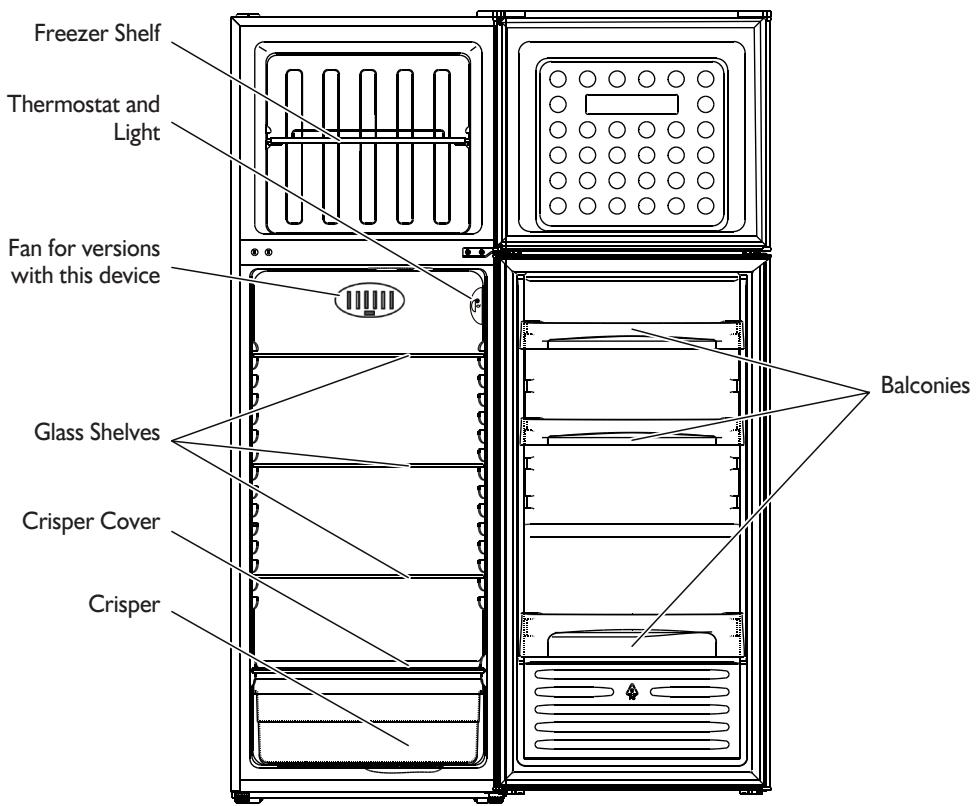
This illustration is only for hinting, for the detail please check your appliance.
HOW TO OPERATE THE REFRIGERATOR COMPARTMENT
This appliance is a refrigerator with a *** star freezer compartment.
Defrosting of the refrigerator compartment is completely automatic.
Switching on the refrigerator for the first time: Insert the plug into the mains socket.
The thermostat is used to adjust the temperature of both compartments: refrigerator and freezer.
How to adjust the temperature of the compartments:
- For correct operation and optimum storage of food, follow instructions given in the enclosed product sheet for thermostat adjustment.
- To adjust the temperature in the refrigerator compartment, set the thermostat control knob to:
- lowest/MIN numbers for the LEAST COLD internal temperatures;
- highest/MAX numbers for the COLDEST internal temperatures.
Thermostat set to 0: no operation, no light.
- Press the corresponding button (fig. G) to activate the anticondensation device.
Note:
The ambient air temperature, frequency of door opening and the position of the appliance can affect internal temperatures. These factors must be taken into account when setting the thermostat.
How to use the refrigerator compartment
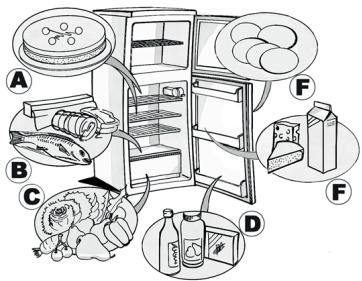
Position the food as illustrated in the figure.
A. Cooked food B. Fish, meat C. Fruit and vegetables D. Bottles E. Eggs F. Butter, cheese and dairy products
Note:
- The space between the shelves and the rear wall of the refrigerator compartment must be unobstructed to allow circulation of air.
- Do not place food in direct contact with the rear wall of the refrigerator compartment.
- Do not place hot food in the refrigerator or freezer.
- Store liquids in closed containers.
- Storing vegetables with a high water content can result in condensation in the crisper drawer: this will not affect the correct operation of the appliance.
fig. G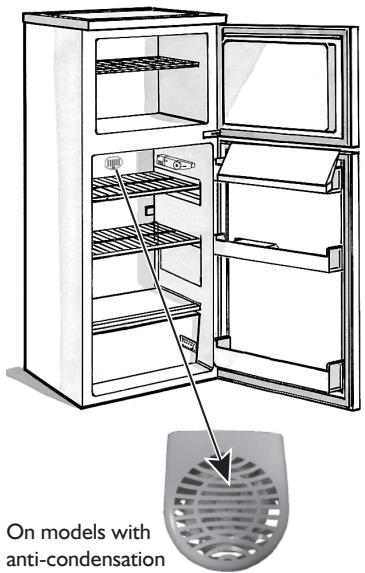
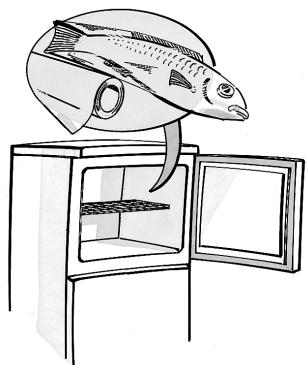
The freezer is a star compartment.
This compartment can be used to store frozen foods for the period of time indicated on packaging. The freezer can also be used to freeze fresh food by positioning it on the rack; place frozen food in the lower part of the compartment so that there is no contact with fresh food that has yet to be frozen.
The quantity of fresh food that can be frozen in 24 hours is shown on the rating plate.
Important:
Before freezing, wrap and seal fresh food in:
- aluminium foil, cling film, air and water-tight plastic bags, polythene containers with lids or freezer containers suitable for freezing fresh food.
- In the event of a power cut, the freezer compartment will maintain a sufficiently low temperature for food storage. However, it is advisable to avoid opening the compartment door during such periods.
Important:
The table alongside shows the recommended maximum storage time for frozen fresh foods.
When purchasing frozen food products:
- Ensure that the packaging is not damaged (frozen food in damaged packaging may have deteriorated). If the package is swollen or has damp patches, it may not have been stored under optimal conditions and defrosting may have already begun.
- When shopping, leave frozen food purchases until last and transport the products in a thermally insulated cool bag.
- Place the items in the freezer compartment as soon as you get home.
- If food has defrosted even partially, do not re-freeze it. Consume within 24 hours.
- Avoid, or reduce temperature variations to the minimum. Respect the best-before date on the package.
- Always observe the storage information on the package.
Making ice cubes
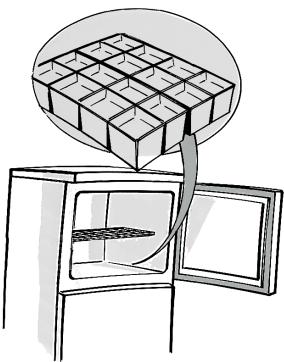
- Fill the ice cube tray 3/4 with water and place it at the bottom of the freezer compartment.
If the tray sticks to the bottom of the compartment, do not use pointed or sharp instruments to detach it.
MONTHS FOOD
HOW TO DEFROST AND CLEAN THE FREEZER
Defrost the freezer compartment once or twice a year, or when the ice on the walls reaches a thickness of about 3 mm. If possible, defrost the freezer when it is nearly empty.
- Remove the food from the freezer, wrap in newspaper and group together in a cool place or in a portable cooler.
- Disconnect the appliance from the mains power supply.
- Leave the door open to allow the frost to melt.
- Remove the defrost water from the compartment bottom.
- Clean the interior with a sponge dampened in lukewarm water and neutral detergent.
Do not use abrasive products.
- Rinse the interior and dry thoroughly.
Note: Do not use sharp or pointed metal instruments to scrape off ice; do not heat the freezer compartment artificially.
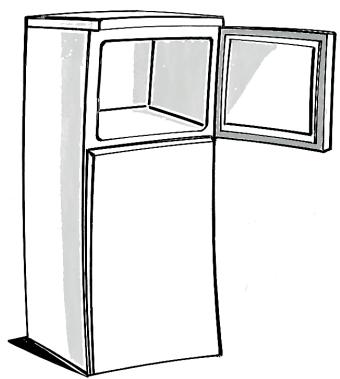
HOW TO CLEAN THE REFRIGERATOR COMPARTMENT
Periodically clean the inside of the refrigerator compartment.
Defrosting of the refrigerator compartment is completely automatic.
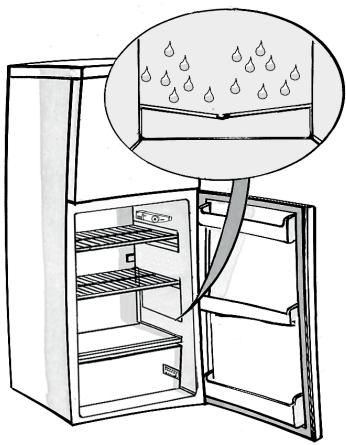
Droplets of water on the rear wall of the refrigerator compartment indicate that the periodic automatic defrost cycle is in progress.
The defrost water is automatically routed to a drain outlet and into a container from which it evaporates.
Before carrying out any cleaning operations, disconnect the appliance from the power supply.
- Use a sponge dampened in lukewarm water and/or neutral detergent.
- Rinse and dry with a soft cloth.
Do not use abrasive substances.

CLEANING AND MAINTENANCE
Vacation
- Empty the refrigerator and freezer compartments.
- Disconnect the appliance from the power supply.
- Defrost the freezer compartment, and clean and dry both compartments.
- Leave the doors open to prevent formation of unpleasant odours.
TROUBLESHOOTING GUIDE
I. The appliance is not working.
- Is there a power failure?
- Is the plug properly inserted in the socket?
- Is the double-pole switch on?
- Has the fuse blown?
- Is the power cord damaged?
- Is the thermostat set to 0 (Stop)?
2. Temperature inside the compartments is not low enough.
Is the door shut properly? - Is the appliance installed near a heat source? - Is the thermostat setting correct? - Are the air circulation grilles blocked?
3. Temperature inside the refrigerator compartment is too low.
- Is the thermostat setting correct?
4. Water collects at the bottom of the refrigerator compartment.
- Is the defrost water drain blocked?
5. The inside light is not working.
Perform the checks for problem I, and then:
- Disconnect the appliance from the power supply.
To inspect the bulb, refer to the instructions and illustration on the attached table.
- Check the bulb and replace it, if necessary, with a new one. Replace using maximum 15W bulb.
6. Excessive frost build-up in the freezer compartment
Is the door shut properly? - Is food obstructing proper door closure?
Attention:
- The front edge of the appliance may be hot. This prevents the formation of condensation and is not a defect.
- Gurgling and hissing noises due to expansion in the refrigerant circuit are normal.
AFTER-SALES SERVICE
I. See if you can solve the problem yourself with the help of the "Troubleshooting guide"). 2. Switch the appliance on again to see if the problem has been solved. If it has not, disconnect the appliance from the power supply and wait for about an hour before switching on again. 3. If the problem persists after this course of action, contact After-sales Service.
Specify:
the nature of the problem the appliance model,
- the Service number (the number after the word SERVICE on the rating plate on the inside of the appliance)
- your full address
- your telephone number and area code.
SERVICE
0000 000 0000
Note
The door opening direction can be changed. If this procedure is performed by the After-Sales Service it is not covered by warranty.
DOORS REVERSIBILITY
Tool required: Philips screwdriver, Flat bladed screwdriver, Hexagonal spanner.
- Ensure the unit is unplugged and empty.
- To take the door off, it is necessary to tilt the unit backwards. You should rest the unit on something solid so that it will not slip during the door reversing process.
- All parts removed must be saved to do the reinstallation of the door.
- Do not lay the unit flat as this may damage the coolant system.
- It's better that 2 people handle the unit during assembly.
I. Unscrew top hinge cover and then unscrew the top hinge.
Then lift upper door and place it on a soft pad to avoid scratch and damage.
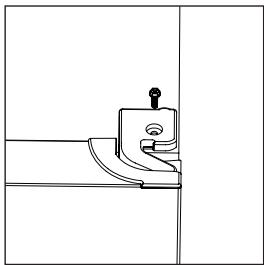
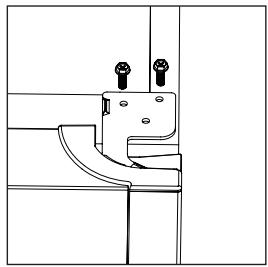
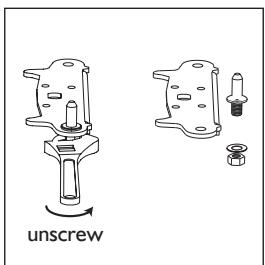
- Remove the pin with a screwdriver and flip the hinge bracket. Then refit the pin to hinge bracket.
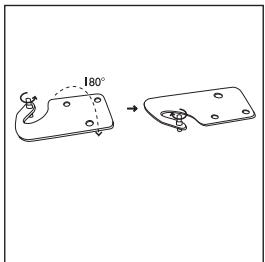
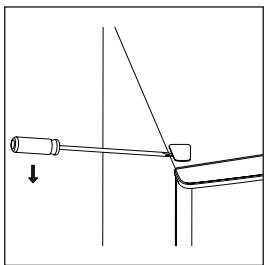
- Remove the top left screw cover.
- Unscrew the middle hinge.
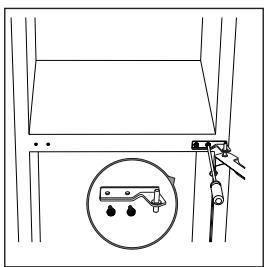
- Move the hinge hole cover in the lower door to the other side. Then lift the lower door and place it on a soft pad to avoid scratches.
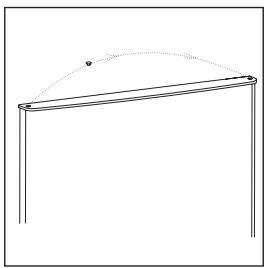
- Move the hinge hole covers from the left side to the right side.
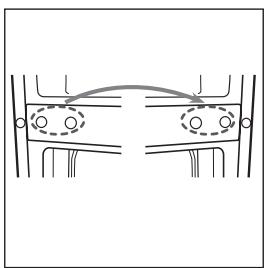
- Unscrew the bottom hinge. Then remove the adjustable feet from both sides.
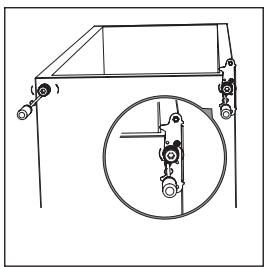
- Unscrew and remove the bottom hinge pin, turn the bracket over, and replace it.
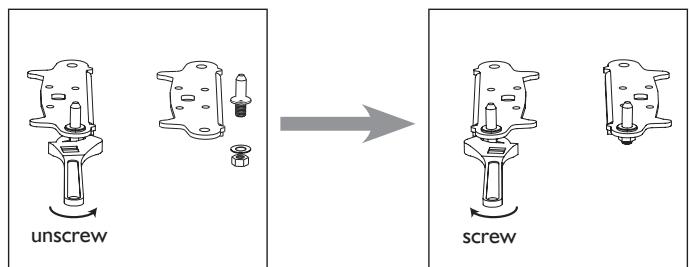
- Refit the bracket, fitting the bottom hinge pin. Replace both adjustable feet. Transfer the lower door to the proper position.
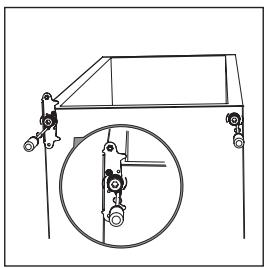
- Make the middle hinge reverse direction 180°, then transfer it to the left proper position. Make the middle hinge pin go into the upper hole of the lower door, then tighten the bolts.
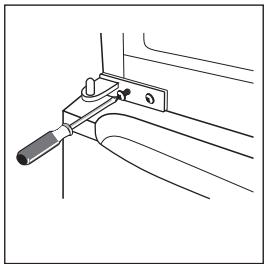
II. Place the upper door back on. Ensure the door is aligned horizontally and vertically so that the seals are closed on all sides before finally tightening the top hinge. Then insert the top hinge and screw it to the top of the unit, and then fix the hinge cover (in the accessory bag) with a screw.
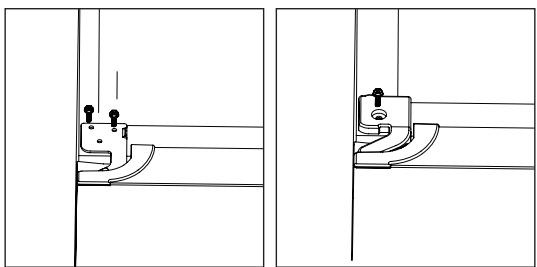
- Fix the screw cover.
INSTALLATION
REAR SPACER
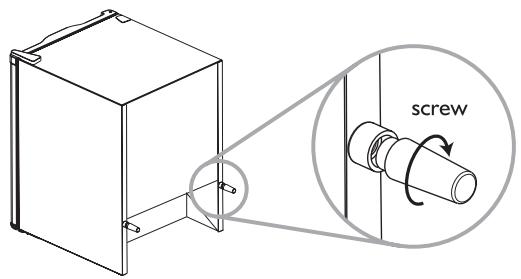
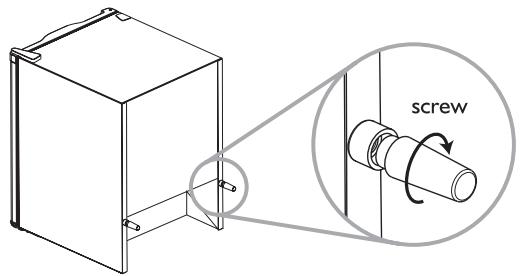
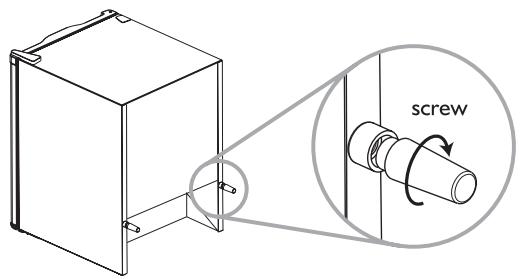
Screw the rear spacers at the rear of the unit.
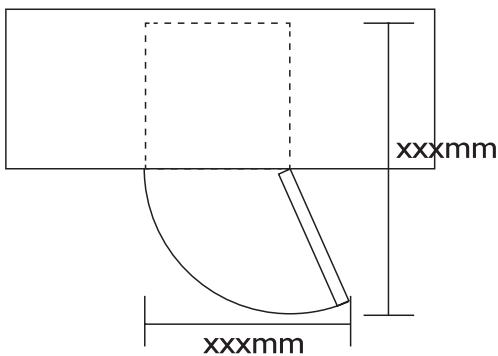
SPACE REQUIREMENT
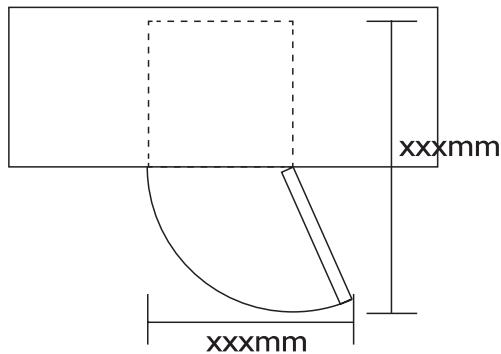
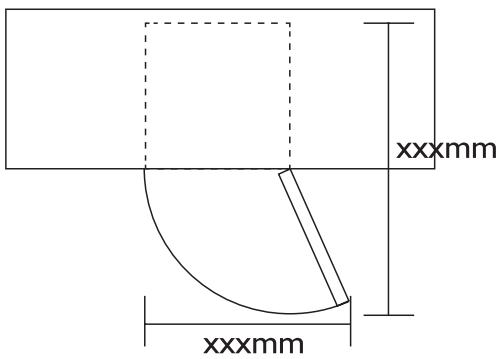
- Keep enough space for the door to open.
- Keep at least 50mm gap at two sides.
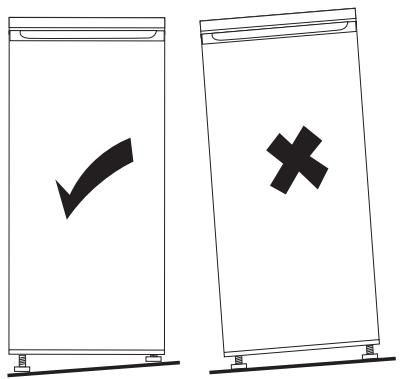
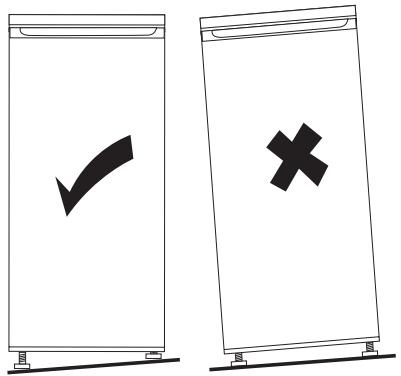
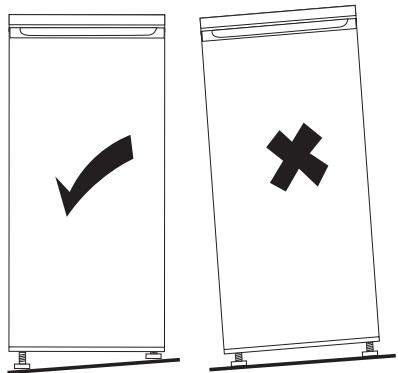
LEVELLING THE UNIT
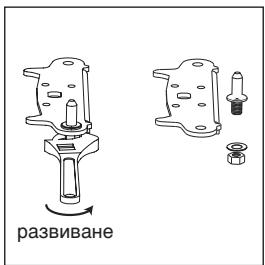
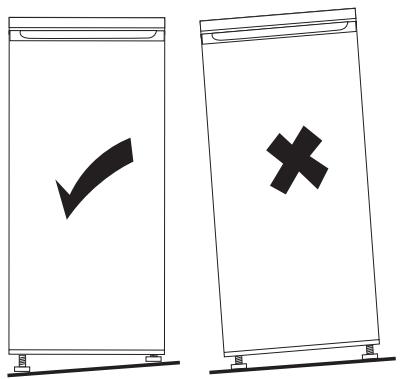
To do this adjust the two levelling feet at front of the unit.
If the unit is not level, the doors and magnetic seal alignments will not be covered properly.
ELECTRICAL CONNECTION FOR GREAT BRITAIN AND IRELAND ONLY
Warning - this appliance must be earthed
Fuse replacement
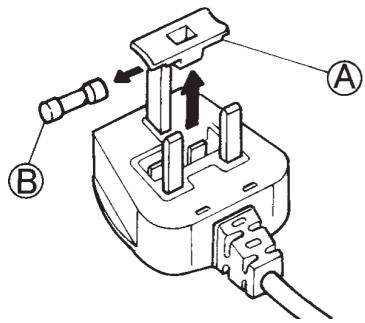
If the mains lead of this appliance is fitted with a BS I363A I3a fused plug, to change a fuse in this type of plug use an A.S.T.A. approved fuse to BS I362 type and proceed as follows:
- Remove the fuse cover (A) and fuse (B).
- Fit replacement I3A fuse into fuse cover.
- Refit both into plug.
Important:
The fuse cover must be refitted when changing a fuse and if the fuse cover is lost the plug must not be used until a correct replacement is fitted.
Correct replacement are identified by the colour insert or the colour embossed in words on the base of the plug. Replacement fuse covers are available from your local electrical store.
For the Republic of Ireland only
The information given in respect of Great Britain will frequently apply, but a third type of plug and socket is also used, the 2-pin, side earth type.
Socket outlet / plug (valid for both countries)
If the fitted plug is not suitable for your socket outlet, please contact After-sales Service for further instruction. Please do not attempt to change plug yourself. This procedure needs to be carried out by a qualified technician in compliance with the manufactures instructions and current standard safety regulations.
SAFETY INSTRUCTIONS
SAFETY WARNINGS
WARNINGS REGARDING ELECTRICITY
LEVELING THE APPLIANCE
DBT 201/35/UE, CEM 2014/30/UE e RSP 2011/65/UE.
TROUBLESHOOTING GUIDE
PLACING THE PRODUCT
CLEANING AND MAINTENANCE
CLEANING AND MAINTENANCE
MUST BE READ AND OBSERVED
Temperature adjustment:
REMOTE ELEMENT
DECLARATION OF CONFORMITY
IMPORTANT SAFETY INSTRUCTIONS
Before using the appliance, carefully read this instruction manual.
Do not allow children to play with the appliance. Cleaning and user maintenance shall not be made by children without supervision.
INTENDED USE
This appliance is intended for household use only, not for professional purposes.
Do not use the appliance outdoors.
Do not store explosive or flammable materials, such as aerosol cans, and do not place or use gasoline or other flammable materials inside or near the appliance: otherwise, accidental ignition may cause a fire.
WARNING: This appliance is not intended for operation by an external timer or a separate remote control system.
This appliance is intended for household and similar uses, such as:
In staff kitchen areas in shops, offices and other working environments;
In farm houses;
- By clients in hotels, motels and other residential type environments;
- In bed and breakfast type environments.
The appliance is designed for household use and is not intended for use in lighting applications (Regulation EC 244/2009).
If the appliance has a power cord with a plug that does not match your electrical outlet, contact a qualified electrician.
Do not use extension cords, multi-socket outlets, or adapters.
Do not operate the appliance if the power cord or plug is damaged, or if it malfunctions or has been dropped. Keep the power cord away from hot surfaces.
After installation, the electrical components of the appliance must not be accessible to the user.
Do not touch the appliance with wet parts of the body and do not use it while standing on a wet floor.
CLEANING AND CARE
Wear protective gloves when performing cleaning and maintenance.
Before carrying out any maintenance operations, the appliance must be disconnected from the power supply.
Do not use steam cleaning devices.
Do not use abrasive or harsh cleaning agents, such as oven sprays, abrasive powders, flammable liquids, cleaning waxes, concentrated detergents, stain removers or cleaning agents containing petroleum products, or cleaners for plastic parts, internal and door gaskets. Do not use paper towels, abrasive sponges, or other harsh cleaning tools.
ENVIRONMENTAL PROTECTION RECOMMENDATIONS
DISPOSAL OF PACKAGING MATERIAL
The packaging material can be fully recycled, as confirmed by the corresponding symbol.
The various parts of the packaging must be disposed of responsibly, in full compliance with local waste disposal regulations.
DISPOSAL OF USED DEVICES
Before disposing of the device, bring it to a non-working state; for this, disconnect the power cable and remove the cover and screws (if any) to prevent children from accidentally getting trapped inside. The materials used in the manufacture of this product are subject to secondary processing or reuse.
Disposal of the device must be carried out in compliance with applicable local waste disposal regulations.
More detailed information on how to handle used electrical appliances, as well as their collection and recycling, can be obtained from the relevant local authority, the household waste collection service, or the store where this product was purchased.
This device is marked in accordance with European Directive 2012/19/EU on waste electrical and electronic equipment (WEEE). By ensuring proper disposal of this product, you can help prevent potential negative consequences for the environment and human health, which could otherwise occur.
The symbol on the product or its accompanying documentation indicates that this device should not be disposed of with household waste; instead, it must be taken to a designated collection point for the recycling of electrical and electronic equipment.
RECOMMENDATIONS FOR ENERGY SAVING
Place the appliance in a dry, well-ventilated room away from heat sources (e.g., radiators, stoves, etc.) and not exposed to direct sunlight. If necessary, use an insulating panel. For proper ventilation, follow the installation instructions. Insufficient air circulation at the rear of the appliance increases energy consumption and reduces cooling efficiency. The internal temperature of the appliance is affected by the ambient temperature, the frequency of door openings, and the installation location. The temperature should be set taking these factors into account. Open the doors as rarely as possible. To thaw frozen products, place them in the refrigerator compartment. The low temperature of frozen products helps cool the products stored in the refrigerator. Allow hot dishes and drinks to cool before placing them in the refrigerator. The arrangement of products in the refrigerator does not affect its energy efficiency. Products should be placed on shelves in such a way that proper air circulation is ensured (packages with products should not touch each other; also, leave a gap between them and the rear wall of the compartment). You can increase the usable volume for storing frozen products by inserting baskets and, if available, the Stop Frost shelf; this consumes negligible energy. High energy efficiency class appliances are equipped with energy-efficient motor-compressors that may operate for longer periods but consume negligible energy.
Do not worry if the motor-compressor operates for an extended period.
DECLARATION OF CONFORMITY
This appliance has been designed, manufactured, and put on the market in accordance with the requirements of the following directives:
European Union:
LVD 2014/35/EU, EMC 2014/30/EU, and RoHS 2011/65/EU.
This appliance has been designed, manufactured, and put on the market in accordance with the eco-design and labeling requirements indicating the energy consumption, as specified in the following European Union directives: 2009/125/EC and 2010/30/EU.
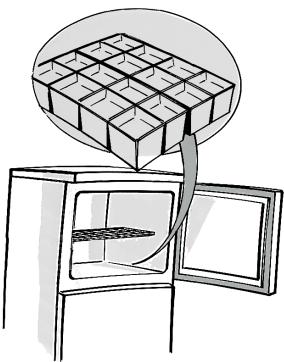
ICE CUBE TRAY
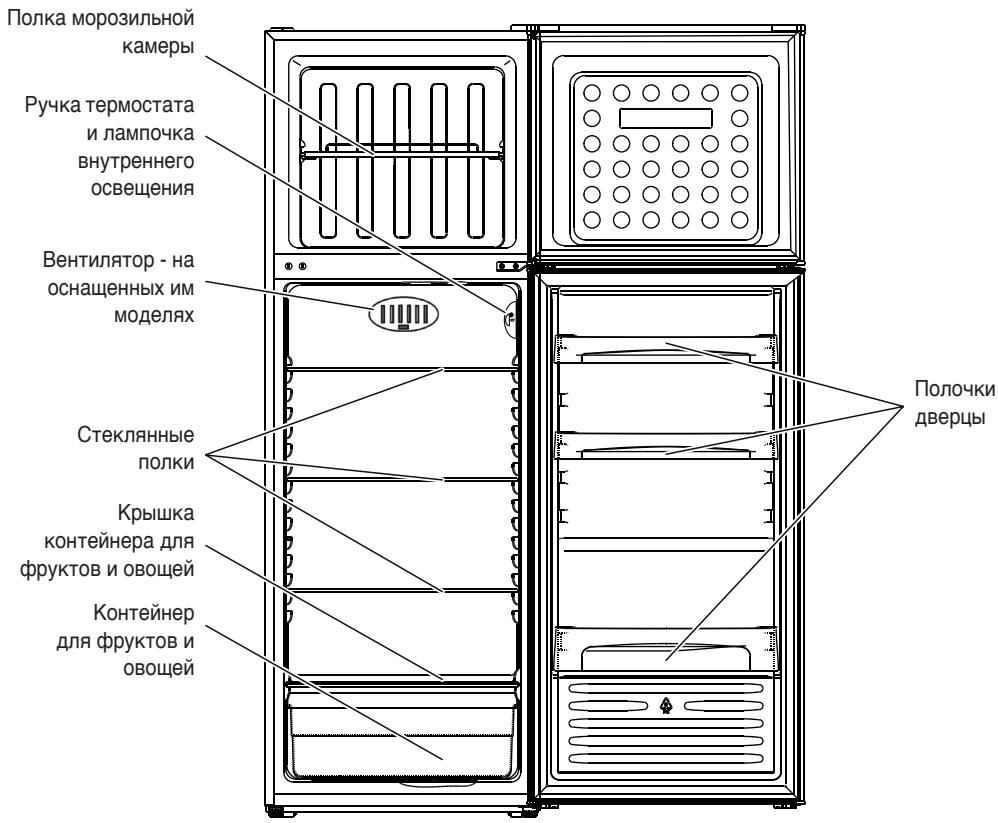
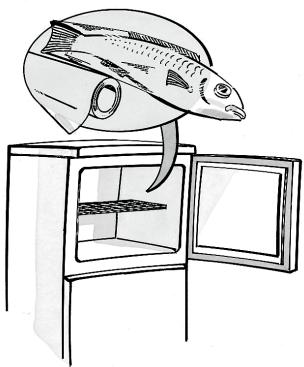
Making ice cubes
Fill the ice cube tray with water up to 3/4 of its volume and place it on the bottom of the freezer compartment.
If the tray sticks to the bottom of the freezer compartment, do not use sharp or cutting objects to detach it.
| ЧИСЮ
MEСАЦЕВ | ПОДУKTБI |
| 1-3 | |
| 4-7 | |
| 8-12 | |
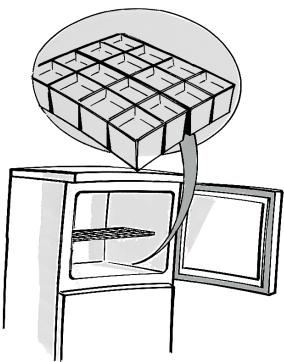
DEFROSTING AND CLEANING THE FREEZER COMPARTMENT
It is recommended to defrost the freezer compartment once or twice a year or when the ice layer on the walls reaches about 3 mm. If possible, defrost the freezer compartment when it is almost empty.
1. Remove all products, wrap them in newspaper and place them tightly together in a cool place or in a thermos. 2. Disconnect the appliance from the power supply. 3. Leave the door open to ensure the defrost water that accumulates on the chamber walls drains away. 4. Remove the defrost water from the chamber floor. 5. Wipe the interior with a cloth soaked in
warm water with the addition of a neutral detergent.
Do not use abrasive agents.
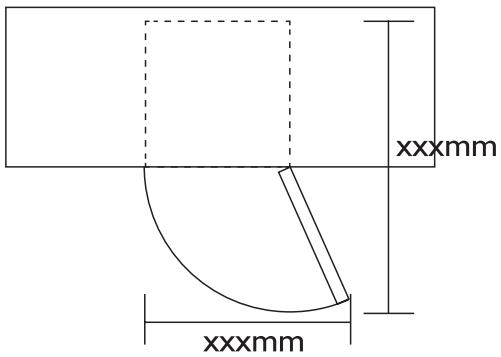
REQUIRED FREE SPACE
Leave free space in front of the appliance necessary for opening the door. Leave at least 50 mm of free space on both sides of the appliance.
LEVELING THE APPLIANCE
Level the appliance using the two adjustable feet located on its lower side.
If the appliance is not leveled, the door will not close properly against the magnetic gaskets.
SAFETY INSTRUCTIONS
WARNING: Do not damage the refrigerant circuit of the appliance. WARNING: Do not use electrical appliances inside the food storage compartments of the appliance, unless they are of the type recommended by the manufacturer.
WARNING: Do not use mechanical, electrical, or chemical means to accelerate the defrosting process, other than those recommended by the manufacturer.
WARNING: Do not use or place electrical devices inside the compartments of the appliance, unless they are of the type recommended by
the manufacturer.
WARNING: Devices for water distribution that are not directly connected to the water supply must be filled with drinking water only.
WARNING:
The appliance must be connected to the water supply using the new inlet hose supplied with the appliance. The water supply pressure must be between 0.17 and 0.81 MPa (1.7 and 8.1 bar).
Do not use the raw (untreated) ice cubes from the ice cube trays (if available).
Do not place hot food or drinks in the freezer compartment until they have cooled to room temperature, as this may cause "steam burns".
For the freezer, the ventilation grille is designed to be used with the fan. The grille must be installed in place when the freezer is operating.
Do not place glass containers with hot liquids in the freezer compartment, as they may crack.
Do not place food in front of the fan (if present) that could obstruct its operation.
After placing food in the storage compartments, check that the compartment doors close properly (especially the freezer door).
Do not touch the appliance with wet hands and do not use it when barefoot.
CLEANING AND MAINTENANCE
Wear protective gloves during cleaning and maintenance. Disconnect the appliance from the power supply before any maintenance.
Never use the appliance for cleaning with water.
Do not clean the plastic parts, the appliance exterior, and the door gaskets with abrasive or aggressive cleaning agents, such as oven sprays, metal scouring pads, abrasive cleaners, concentrated detergents, bleach, or products containing petroleum. Do not use abrasive sponges, metal scouring pads, or other coarse cleaning tools.
ENVIRONMENTAL PROTECTION
DISPOSAL OF PACKAGING MATERIALS
The packaging materials are 100% recyclable and are marked with the corresponding symbol.
All parts of the packaging must be disposed of separately in full compliance with local regulations responsible for waste collection and disposal.
DISPOSAL OF HOUSEHOLD APPLIANCES
When disposing of the appliance, direct it to a designated collection point for waste electrical and electronic equipment. Remove the power cord and dispose of the plug and any locks (if present) so that children cannot close the door and become trapped. This appliance is made from recyclable materials and is suitable for repeated use. When disposing of it, follow local regulations for waste disposal. For more information regarding the treatment, recovery, and recycling of household electrical appliances, contact your local council, the waste collection service, or the store where you purchased the appliance. This appliance bears the mark of compliance with European Directive 2012/19/EC regarding waste electrical and electronic equipment (WEEE).
By correctly disposing of this product, you help prevent potential negative consequences for the environment and human health that could arise from improper disposal.
The symbol on the product or its accompanying documentation indicates that this product should not be treated as household waste but must be handed over to a designated collection point for recycling of electrical and electronic equipment.
ENERGY SAVING TIPS
Install the appliance in a dry, well-ventilated room.
Place it away from any heat sources (e.g., radiators, gas stoves, etc.) and in a location not exposed to direct sunlight. If necessary, use an insulating plate.
To ensure proper ventilation, follow the installation instructions.
Insufficient ventilation around the appliance increases energy consumption and reduces cooling efficiency.
The ambient temperature, the frequency of door opening, and the location of the appliance can affect the temperature inside. These factors should be considered when setting the temperature.
Open the door as little as possible.
When storing frozen products, place them in the freezer. The low temperature of frozen products helps cool the food in the refrigerator.
Allow hot food and drinks to cool before placing them in the refrigerator. The arrangement of shelves in the refrigerator does not affect the efficient use of electricity. Food should be arranged on the shelves so that proper air circulation is ensured (food items should not touch each other and should be at a distance from the rear wall).
You can increase the storage capacity for frozen food by removing the drawers (if present) and not freezing shelves, while the energy consumption of the
Type C BnCOK KnaC Ha eHeprInHa eΦeKTHBHOCT Ca ObOpyDbaHn C BnCOKoeΦeKTHBeH MOTop, KOITo pa6OTn NO-bJIO Bpeme, HO IMa HnCKO Ntpe6JIeHne Ha eHeprNIA.
He ce tpeboxkeTe, aKO MOTOpbT paobTu no-dIbIro Bpeme.
He n3noJ3BaIte a6pa3nBn npenapatn.
6.ИЗМиTe OTbTpE nNoCsuWeTe nIdeaJIHo.
3a6eJexKa: He n3noJ3BaIte ocTp n nn pexeun MetaJIHn nHCTpymEnTH 3a ocTbprBaHe Ha neJa He 3aqrBaIte n3KycTBeHO OTdJeIeHneTo Ha pfpu3epa.
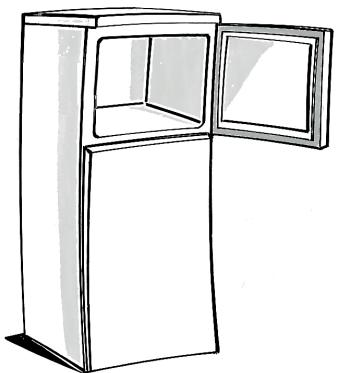
ПОчNTBAHE HA OTДЕЛECHNETO HA XЛАДИЛНИKA
POnuCTBaIte nepNoDnUHO OTdeJeHneTo Ha XJaAnNHnKa.
Pa3mpa3raBaHTo Ha OTdeIeHHeTo Ha XJaIINHnKa e HAnbJHo aBTOMaTHNo.
BoDnHTe KaKn OTBbTpE no 3aJHaTa CTeHa Ha OTdJeIeHHeTo Ha XJaIINHnKa ca 3HaK, ye Ce n3BbPswBa nepeoOnuHnT UKnBJI Ha aBTOMaTHUHO pa3Mpa3RaBaHe. BoDaTA O Tpa3Mpa3RbAHeTO ce HAcOyBa aBTOMaTHUHO KbM OTbOp 3a OTTuHaHe N OTTam B KOHTeHep, OT KOITo Ce n3napBa.
Ipei Da npictbnte KbM noocctbaHe, n3KJIIOUcTe ypea ot KOHTaKTa.
- I3noI3BaIe rIb6a, HanoEHa c XnaIka BOda nII NxaIka BOda c HeYtpaJIeH MInJIeN npenapat.
- N3mNTe nNoDcUweTe c MeKa KbPna.
He n3noJ3BaIte a6pa3nBn npenapaTn.
- MoHTnpaTe KaNaYeTo Ha NaHTaTa.
MOHTAX
Read the instructions before using the device.
FREE SPACE
Leave enough space for opening the door. - Leave at least 50 cm from both sides.
LEVELLING THE DEVICE
To level the device, adjust the two levelling feet at the front of the device.
If the device is not level, the door and the magnetic seals will not be aligned properly.
SAFETY INSTRUCTIONS
IMPORTANT TO READ AND FOLLOW
Do not use the device if your hands or feet are wet, and do not operate it with bare feet.
CLEANING AND MAINTENANCE
Wear protective gloves for cleaning and maintenance.
The device must be disconnected from the power supply before any maintenance operation.
Never use equipment for cleaning with water vapor.
Do not use abrasive or other cleaning agents such as glass cleaners, polishes, wax cleaners, concentrated detergents, bleach, or cleaning products containing petroleum derivatives on plastic parts, interior surfaces, or seals. Do not use paper towels, rags, or other coarse cleaning materials.
3AHTNTA ППОДHE CPEДИНDE
ODIJIAGAHE MATEPNIJAJA 3A INAKOBAHE
MaTePnJaI 3a naKoBaHc e moKe peuKJInpaTn 100% n O3HaueH je CmB6OJom peuKJInpaHa.
CToRa ce pa3He DeIIOBe naKOBaHa mOpa OJIOXHTn Ha ODROBOPaH NaHH y3 nyHy YcARlaUeHOCT ca npabINMa JOKaJIHx TeNa BInactu Koje ce OAnOce Ha OJNarAbe OTnJa.
PACXOIOBAHBEYPEJAJA3A DOMAHNCTBO
IpnuiKOM pacxOIOBaHa ypehaja yuHnHte da 6ynde HeynoTpe6bNIB pnceuaHem HanoJhor eJeKTPnHOR Kabna n cKnDaHem Bpata n nonua (aKO cy npncytHe) Tako da deca He Mory Iako Da ce nonHy y Hbera N da octaHy 3apo6bBeHa.
Obaj ypehaj npon3BeDen je od MaTepnjana Koje je moHyhe peuKlnpaTu nn noHOBO ynotpe6nt.
OndaxnTe nx y carnaChocTn ca lokAnHm npOnncMa O oJlaRaHy OTnada.
Дабисту добли више Инфорmaцида опразд,在овьаньу и рсukлakи
eilektpnunx ypejaja 3a DomahinHCTBO,MOIMOBac DA KOHTAKTIPATE JOKALHO NaIeJXHO TEJOCEPBNC 3a cakynbAbe OTNADA nOdomaHnHCTBa
nIN pOdoBnUy y KojoC tE KUnlIn ypejaj.Obai ypejaj o3nauehen je y carlaacnoCTNaEBPONCKOM DinekeTUBOM 2012/19/EU o OTnAnHOJ
eilektpnhoJ n eileKtpoHcKOJ onpemN (WEEE).
TIme wTo hete obe36eDHTn Da ce OBajnpOn3BOD oNDIOxN Ha npabuHaN HauH NOMoHn
hete Da ce cnpeye HeratNBHe nocleDiue 3a
npinpoHy cpeDHy n BydCKO 3dpavBe,koje bInhaue MorNo Da y3pOKyje HeNoDeCHO pyKOBaBe
OTnADOM OBOR npOn3BODa.
CmboJ Ha npo3bOdy nIi Ha npatehoj DOKyMeHTaunjn Noka3yje da OBaj ypehaj He Tpeba da ce TpeTnpa kao OTnaJy DOMaHnCTBy Hero da Mopa da ce ODBe3e do OndroBapayHer CEHTpa 3a peuKnlaxy eJeKTPnUHe I eJeKTPOHcKe onpeme.
CABETI 3A YUITEY EJIEKTPNUHE EHEPNIJE
Upehaj nHCTaInpajTe y cyBoj, do6po npOBeTpEHO npocToPun daNEKO od 6nlo KOr n3Bopa TOnlOte (Hnp. paJnaTOp, uTeHbAk nT.I.) nHa MeCTy KOJE Hnje dInpeKTHO n3IoXKeHO cyHcy. Ppema NotpeBn yNtpeBnte n3oJaNoHy pIouy.
Дабисте 3агаразновали ограварajу hy BeHTnlaunjy, Слдnte ynyTCTBa 3a Инстanaunjy. HeIOBObHa BeHTnlaunja Ha no3aDHH npOn3BODa NOBeHahBa NOTpoWHy eHepRnje n CmaHBye epNkacHOCT XlaJehBa.
Ha TemnepaType y uhytpaHbOCTn ypehajamory da yTuCy am6jentHa TemnepaTypa, yuctaoct OTbapaBa Bpata,KaO nIokaunjaypehaja. KoD noDeuBaHaTa TemnepaTepoTe pakoTope.
OtvapaHe Bpata CmaHbnte Ha HajMaHy Moryhymepy.
To defrost the freezer, place it in the refrigerator. Do not place frozen products in the refrigerator.
Let the food and its packaging cool before putting it in the refrigerator.
Placing food in the refrigerator does not affect the efficient operation of the appliance. Food should be placed on the shelves in such a way as to ensure proper air circulation (food must not be in the humid compartment, but should be kept at a distance from the food and the rear wall).
The capacity for storing frozen food can be increased by removing the drawers, and if present, the shelves for freezing, keeping one drawer for the storage of frozen food.
Do not worry if the motor continues to run for a long period.
Declaration of Conformity
This appliance has been designed, constructed and distributed in accordance with the requirements of the following European Directives:
LVD 2014/35/EU, EMC 2014/30/EU and RoHS 2011/65/EU.
This appliance has been designed, constructed and distributed in accordance with the requirements of the EU Ecodesign and Energy Labeling Directives: 2009/125/EC and 2010/30/EU.
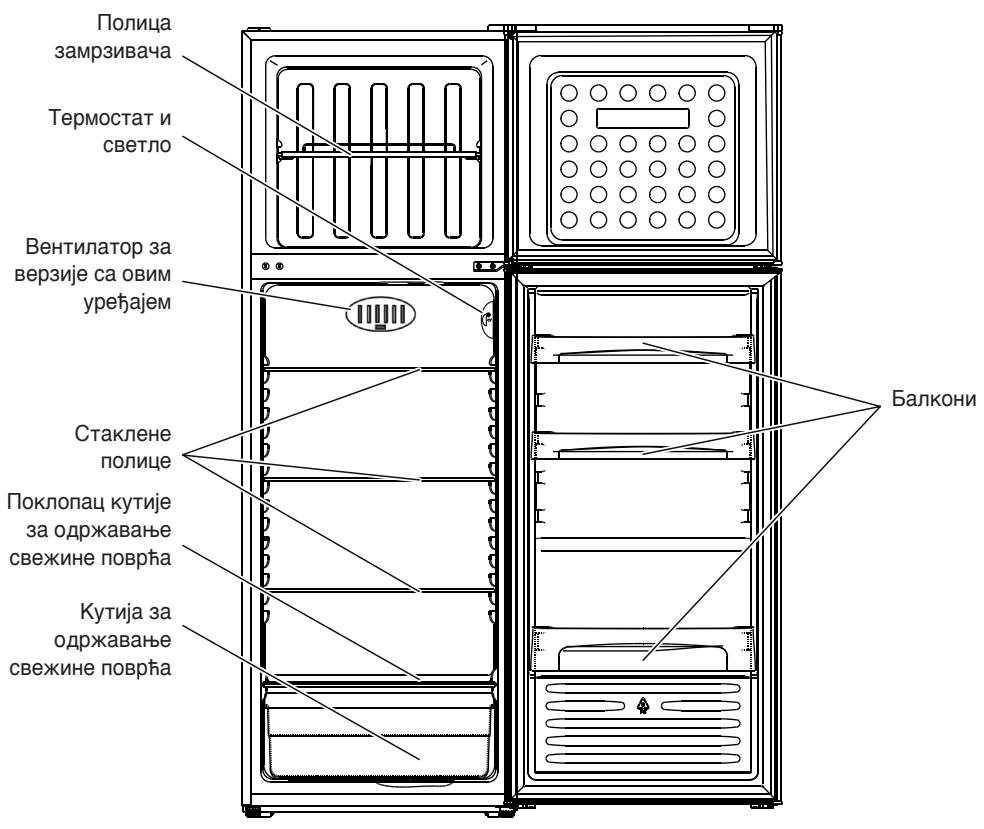
This illustration is for reference only; for details, please consult your appliance.
This appliance is a refrigerator with a freezer compartment marked with **** stars.
Defrosting of the refrigerator compartment is completely automatic.
Connecting the refrigerator
Plug the power cord into the electrical outlet.
Thermostatic core for setting the temperature of the hood: example of adjustment.
Set the hood temperature:
Press the rear button on the rear side of the unit.
REPEAT REQUEST
Leave enough space for the door to open. Keep a distance of 50 mm on both sides.
LEVELLING THE UNIT
To level it, place the two levelling feet in the front part of the unit.
If the unit is not levelled, the alignment of the magnetic doors will not be correct.
SAFETY INSTRUCTIONS
MUST READ AND FOLLOW