
AW 130 - Pressure washer HiKOKI - Free user manual and instructions
Find the device manual for free AW 130 HiKOKI in PDF.


| Product type | High-pressure cleaner |
| Brand | HiKOKI |
| Model | AW 130 |
| Voltage | 220 V - 240 V, single-phase, 50/60 Hz |
| Power consumption | 1600 W |
| Max. discharge pressure | 9.0 MPa |
| Max. admissible pressure | 13.0 MPa |
| Max. water flow | 6.0 L/min |
| Max. supply temperature | 40 °C |
| High-pressure hose length | 10 m |
| Dimensions (L × W × H) | 325 mm × 260 mm × 790 mm |
| Weight | 8.3 kg |
| Included accessories | Trigger gun, HP hose 10 m, variable nozzle, turbo nozzle, detergent nozzle, quick connector (black), water supply connector, nozzle cleaning needle, cable reel, handle (with screws) |
| Main functions | Straight jet, wide jet (spray), rotating turbo nozzle, detergent injection |
| Safety mechanisms | Power switch, trigger safety, pressure switch, thermal protection |
| Sound pressure level | 77 dB(A) (uncertainty 3 dB) |
| Sound power level | 92 dB(A) (uncertainty 3 dB) |
| Vibration (emission value) | 1.8 m/s² (uncertainty K=1.5 m/s²) |
| Regular maintenance | Clean the strainer, clean the nozzle with the cleaning needle, check the screws, dry after use |
| Repairability | Repairs only by HiKOKI authorized service center |
| Warranty | Conforms to national regulations; see provided certificate |
Frequently Asked Questions - AW 130 HiKOKI
User questions about AW 130 HiKOKI
0 question about this device. Answer the ones you know or ask your own.
Ask a new question about this device
Download the instructions for your Pressure washer in PDF format for free! Find your manual AW 130 - HiKOKI and take your electronic device back in hand. On this page are published all the documents necessary for the use of your device. AW 130 by HiKOKI.
USER MANUAL AW 130 HiKOKI
natural_image
Line drawing of a pressure<|im_start|> Puerto Rico water heater with coiled tubing (no text or symbols)
Do not use the appliance without reading the handling instruction. Benutzen Sie das Gerät nicht, ohne die Gebrauchsanleitung gelesen zu haben. N'utilisez pas l'appareil avant d'avoir lu les instructions d'utilisation. Non utilizzare l'apparecchio senza aver letto le istruzioni per l'uso. Gebruik dit toestel niet voordat u de gebruiksaanwijzing hebt gelezen. No utilice el aparato sin leer las instrucciones de manejo. Não utilize o aparelho sem ler as instruções de utilização. Nie wolno używać urządzenia przed przeczytaniem instrukcji obsługi. Csak a kezelési utasítás elolvasása után használja a készüléket. Aygiti kullanım talimatını okumadan kullanmayın. Не використовуйте пристрій, не прочитавши попередньо інструкції з експлуатації. Не используйте устройство без прочтения инструкции по эксплуатации.

Handling instructions Bedienungsanleitung Mode d'emploi Istruzioni per l'uso Gebruiksaanwijzing Instrucciones de manejo


natural_image
Line drawing of a person spraying water with a hose (no text or symbols)


natural_image
Line drawing of a vacuum cleaner with attached hoses and power cord (no text or symbols)
| English Deutsch Français Italiano | ||||
| 1 | 14 to 15 mm 14 bis 15 mm 14 à 15 mm 14 - 15 mm | |||
| 2 | 20 mm or less 20 mm oder weniger 20 mm au maximum 20 mm o meno | |||
| 3 | Cord holder Kabelhalter Enrouleur de câble Supporto del cavo | |||
| 4 | Washer protrusion Reinigervorsprung Saillie du nettoyeur | Sporgenza dell'idropulitrice | ||
| 5 | Handle | Griff | Poignée | Impugnatura |
| 6 | Screw | Schraube | Vis | Vite |
| 7 | Power plug | Netzstecker | Fiche d'alimentation | Spina di alimentazione |
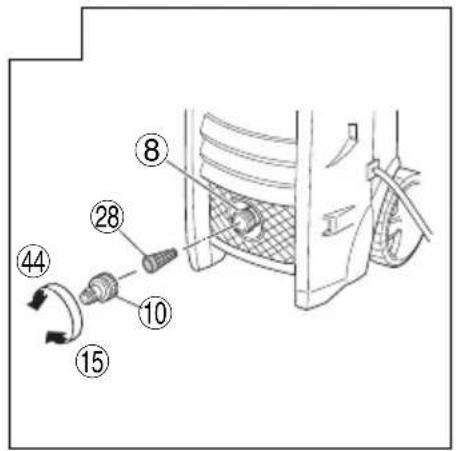
| 8 | Water feed inlet | Wasserzulauföffnung | Entrée d'alimentation en eau | Ingresso di alimentazione dell'acqua |
| 9 | Water feed inlet cap | Kappe für Wasserzulauföffnung | Bouchon de l'alimentation en eau | Tappo dell'ingresso di alimentazione dell'acqua |
| 10 | Water feed connector | Wasserzulaufanschluss | Connecteur d'alimentation en eau | Connettore di alimentazione dell'acqua |
| 11 | Water outlet Wasserauslass | Sortie d'eau Uscita dell'acqua | ||
| 12 | Water outlet cap | Wasserauslasskappe | Bouchon de la sortie d'eau | Tappo dell'uscita dell'acqua |
| 13 | O-ring | O-Ring | Joint torique | O-ring |
| 14 | Ring | Ring | Joint | Anello |
| 15 | Tighten | Festziehen | Serrez | Serrare |
| 16 | Trigger gun Auslöserpistole | Pistolet à gâchette | Pistola a grilletto | |
| 17 | Connector | Anschluss | Connecteur | Connettore |
| 18 | Nozzle | Düse | Buse | Ugello |
| 19 | Protrusion | Vorsprung | Saillie | Sporgenza |
| 20 | Spray | Sprühen Vaporisateur | Spruzzo | |
| 21 | Jet | Strahl | Jet | Getto |
| 22 | Detergent nozzle | Reinigungsmitteldüse | Buse de détergent | Ugello del detergente |
| 23 | Water supply pipe | Wasserversorgungsrohr | Conduite d'alimentation en eau | Tubo di alimentazione acqua |
| 24 | Bottle | Flasche Flacon | Flacone | |
| 25 | Suction hose | Ansaugschlauch | Tuyau d'aspiration | Tubo flessibile di aspirazione |
| 26 | Hose band | Schlauchklemme | Collier de serrage du tuyau | Fascetta fermatubo |
| 27 | Moisten the inside with water | Die Innenseite mit Wasser befeuchten | Humidifiez l'intérieur à l'eau | Inumidire l'interno con acqua |
| 28 | Strainer Sieb | filter | Crépine Filtro | |
| 29 | Slotted screwdriver | Schlitzschraubenzieher | Tournevis pour écrous à fente | Cacciavite a lama piatta |
| 30 | One-touch joint | Gelenk auf Knopfdruck | Raccord rapide | Raccordo rapido |
| 31 | Insert the suction hose | Den Ansaugschlaucheinschieben | Insérez le tuyau d'aspiration | Inserire il tubo flessibile di aspirazione |
| 32 | Pass it through the ring first | Zuerst durch den Ring führen | Commencez par le passer dans le joint | Inserirlo prima nell'anello |
| 33 | Hose end | Schlauchende | Extrémité du tuyau | Estremità tubo flessibile |
| 34 | Insert it past this point | Über diesen Punkt hinaus einschieben | Insérez au-delà de ce point | Inserirlo oltre questo punto |
| 35 | Accumulated water | Angesammeltes Wasser | Réservoir d'eau | Acqua accumulata |
| 36 | High-pressure hose | Hochdruckschlauch | Tuyau à haute pression | Tubo flessibile ad alta pressione |
| 37 | Switch | Schalter | Interrupteur | Interruttore |
| 38 | Trigger | Auslöser | Gâchette | Grilletto |
| 39 | Center of the trigger | Mitte des Auslösers | Centre de la gâchette | Centro del grilletto |
| 40 | Push | Schieben | Pousser | Premere |
| English Deutsch F | Français Italiano | |||
| 41 | Trigger stopper Auslöserstopper Sécurité de la gâchette F | Fermo del grilletto | ||
| 42 | Lock Verriegeln Verrou Blocco | |||
| 43 | Release Entriegeln Relâchez Rilascio | |||
| 44 | Loosen Lockern Desserrez Allentare | |||
| 45 | Nozzle cleaner pin Düsenreinigungsstift | Broche de nettoyage de la buse | Pulitore dell'ugello | |
| 46 | Hole of the nozzle | Düsenöffnung | Orifice de la buse | Foro dell'ugello |
| 47 | Variable nozzle | Variable Düse | Buse variable | Ugello variabile |
| 48 | Turbo nozzle | Turbodüse | Buse turbo | Ugello turbo |
| 49 | Detergent bottle nozzle | Düse der Reinigungsmittelflasche | Buse du flacon de détergent | Ugello del flacone del detergente |
| Nederlands Español | Português Polski | |||
| 1 | 14 tot 15 mm de 14 a 15 mm | 14 a 15 mm 14 do 15 mm | ||
| 2 | 20 mm of minder 20 mm o menos 20 mm ou menos 20 mm lub mniej | |||
| 3 | Snoerhouder Soporte del cable Suporte do cabo Uchwyt przewodu | |||
| 4 | Uitsteeksel hogedrukreiniger | Saliente de la máquina de limpieza | Saliência do dispositivo Występ myjki | |
| 5 | Hendel Empuñadura Pega | Uchwyt | ||
| 6 | Schroef | Tornillo | Parafuso | Wkręt |
| 7 | Stekker | Enchufe Ficha de alimentação | Wtyczka zasilania | |
| 8 | Invoer watertoevoer | Entrada de alimentación de agua | Entrada de alimentação de água | Wlot zasilania wodą |
| 9 | Dop invoer watertoevoer | Tapa de entrada de alimentación de agua | Tampa da entrada de alimentação de água | Pokrywa wlotu zasilania wodą |
| 10 | Aansluiting watertoevoer | Conector de alimentación de agua | Conector de alimentação de água | Złącze zasilania wodą |
| 11 | Waterafvoer | Salida de agua | Saída de água | Wylot wody |
| 12 | Dop waterafvoer | Tapa de salida de agua | Tampa da saída de água | Pokrywa wylotu wody |
| 13 | O-ring | Junta tórica | O-ring | Pierścień O-Ring |
| 14 | Ring | Anilla | Anel | Pierścień |
| 15 | Vastzetten | Apretar | Apertar | Dokręcić |
| 16 | Pistool met trekker | Pistola de gatillo | Pistola | Pistolet |
| 17 | Aansluiting | Conector | Conector | Złącze |
| 18 | Sproeier | Boquilla Bocal | Dysza | |
| 19 | Uitsteeksel | Saliente Saliência Występ | ||
| 20 | Sproeien | Rociado | Pulverização Natrysk | |
| 21 | Straal | Chorro | Jato | Strumień |
| 22 | Sproeier voor reinigingsmiddel | Boquilla de detergente | Bocal de detergente | Dysza detergentu |
| 23 | Watertoevoerbuis | Tubería de alimentación de agua | Tubo de alimentação de água | Przewód zasilania wodą |
| 24 | Fles | Bote | Garrafa | Butelka |
| 25 | Aanzuigslang | Manguera de aspiración | Mangueira de aspiração | Wąż ssący |
| 26 | Slangklem | Abrazadera de la manguera | Banda da mangueira | Opaska węża |
| 27 | Maak de binnenkant nat met water | Humedezca la parte interior con agua | Humedecer o interior com água | Zwilżyć wnętrze wodą |
| 28 | Filter | Filtro | Filtro | Filtr siatkowy |
| 29 | Sleufschroevendraaier | Destornillador plano | Chave de fenda | Wkrętak płaski |
| 30 | Snelkoppeling | Junta de un toque | Junta de um toque | Szybkozłącze |
| 31 | Aanzuigslang inschuiven | Introduzca la manguera de aspiración | Insira a mangueira de aspiração | Włożyć wąż ssący |
| 32 | Eerst door de ring steken | Pásela primero por la anilla | Passar primeiro pelo anel | Najpierw przeprowadzić go przez pierścień |
| 33 | Slanguiteinde | Extremo de manguera | Extremidade da mangueira | Koniec węża |
| 34 | Inschuiven tot voorbij dit punt | Introdúzcalo pasado este punto | Inserir para além deste ponto | Wsunąć go za ten punkt |
| 35 | Verzameld water | Agua acumulada | Água acumulada | Nagromadzona woda |
| 36 | Hogedrukslang | Manguera de alta presión | Mangueira de alta pressão | Wąż wysokiego ciśnienia |
| 37 | Schakelaar | Interruptor | Interruptor | Przełącznik |
| 38 | Trekker | Gatillo | Gatillo | Spust |
| 39 | Midden van de trekker | Centro del gatillo | Centro do gatillo | Środek spustu |
| 40 | Drukken | Presionar | Pressionar | Przycisk |
| 41 | Trekkerstop Tope del gatillo | Batente do gatilho Ogranicznik spustu | ||
| 42 | Vergrendelen Bloquear Bloqueio Blokada | |||
| 43 | Ontgrendelen Soltar Soltar | Zwolnienie | ||
| 44 | Loszetten Soltar Desapertar | Poluzować | ||
| 45 | Reinigingspen voor sproeier | Clavija de limpieza de la boquilla | Pino de limpeza do bocal | Kołek do czyszczenia dyszy |
| 46 | Gat in de sproeier | Orificio de la boquilla | Orificio do bocal | Otwór dyszy |
| 47 | Variabele sproeier | Boquilla variable | Bocal variável | Dysza regulowana |
| 48 | Turbosproeier | Boquilla turbo Bocal turbo | Dysza Turbo | |
| 49 | Sproeier fles met reinigingsmiddel | Boquilla de bote de detergente | Bocal da garrafa de detergente | Dysza butelki z detergentem |
| Magyar Türkçe Український Русский | ||||
| 1 | 14 - 15 mm | 14 ila 15 mm | 14-15 мм | от 14 до 15 мм |
| 2 | 20 mm vagy kevesebb | 20 mm veya daha az | 20 mm або менше | 20 mm или меньше |
| 3 | Kábel tartó | Kablo tutucu | Тримач шнура | Держатель шнура |
| 4 | Mosó nyúlvány | Yıkayıcı çıkıntısı | Виступ на мийці | Выступ мойки |
| 5 | Markolat | Tutamak | Ручка | Рукоятка |
| 6 | Csavar | Vida | Гвинт | Винт |
| 7 | Tâpfeszültség dugó | Elektrik fişi | Штепсель | Штепсельная вилка |
| 8 | Vízellátó bemenet | Su besleme girişi | Отвір подачі води | Входное отверстие подачи воды |
| 9 | Vízellátó bemenet sapka | Su besleme girişi kapağı | Заглушка отвору подачі води | Крышка входного отверстия подачиводы |
| 10 | Vízellátó csatlakozó | Su besleme bağlantısı | Штуцер для подачі води | Разъем подачи воды |
| 11 | Víz kimenet | Su çıkışı | Отвір подачі води | Выходное отверстие для воды |
| 12 | Víz kimenet sapka | Su çıkışı kapağı | Заглушка отвору подачі води | Крышка выходного отверстия для воды |
| 13 | O-gyűrű | Halka conta | Кільце ущільнення | Уплотнительное кольцо |
| 14 | Rögzítőgyűrű | Halka | Муфта | Кольцо |
| 15 | Meghúzni | Sıkın | Закрутіть | Закрутите |
| 16 | Működtető pisztoly | Tetikleme tabancası | Пістолет із пусковим вимикачем | Курковый пистолет |
| 17 | Csatlakozó | Bağlantı aparatı | Штуцер | Разъем |
| 18 | Szórófej | Ağızlık | Насадка | Сопло |
| 19 | Nyúlvány | Çıkıntı | Виступ | Выступ |
| 20 | Permet Sprey | Розпилення | Распыление | |
| 21 | Sugár | Püskürtme | Струмінь | Струя |
| 22 | Tisztítószer szórófej | Deterjan ağızlığı | Насадка для розпилення миючого засобу | Сопло для моющего средства |
| 23 | Vízellátó cső | Su sağlama borusu | Трубка подачі води | Труба подачи воды |
| 24 | Tartály | Şişe | Пляшка | Бутылка |
| 25 | Szívó tömlő | Emiş hortumu | Шланг забору | Всасывающий шланг |
| 26 | Tömlő bilincs | Hortum bandı | Шланговий хомут | Ремень шланга |
| 27 | Nedvesítse meg a belsejét vízzel | İç kısmı su ile nemlendirin | Зволожити всередині | Смочите внутри водой |
| 28 | Szűrő | Süzgeç | Сітчастий фільтр | Сетчатый фильтр |
| 29 | Laposfejű csavarhúzó | Düz tornavida | Пласка викрутка | Плоская отвертка |
| 30 | Gyorscsatlakozó | Tek dokunuşlu mafsal | Муфта швидкого з'єднання | Соединение одним касанием |
| 31 | Illessze be a szívó tömlőt | Emiş borusunu yerleştirин | Вставте шланг забору | Вставьте всасывающий шланг |
| 32 | Először vezesse át a gyűrún | Öncelikle halkadan geçirин | Спочатку одягніть муфту | Пропустите его сначала сквозь кольцо |
| 33 | Tömlő vége | Hortum ucu | Кінець шлангу | Конец шланга |
| 34 | Tolja túl ezen a ponton | Bu noktadan geçirин | Вставте далі цієї точки | Вставьте его за эту точку |
| 35 | Összegyült víz | Biriken su | Зібрана вода | Накопленная вода |
| 36 | Magasnyomású tömlő | Yüksek basınçlı hortum | Шланг високого тиску | Шланг высокого давления |
| 37 | Kapcsoló | Sviç | Переключіть | Переключатель |
| 38 | Ravasz | Tetik | Пусковий вимикач | Курок |
| 39 | A ravasz közepe | Tetik merkezi | Центр пускового вимикача | Центр курка |
| 40 | Nyomni | Ítin | Натиснути | Нажать |
| Magyar Türkçe Український Русский | |||
| 41 | Ravasz rögzítő Tetik stoperi | Стопор пускового вимикача | Ограничитель курка |
| 42 | Zár Kilit Заблокувати Блокировка | ||
| 43 | Kioldó | Serbest bırakма | Відпустити |
| 44 | Meglazítani | Gevşetin | Відкрутити |
| 45 | Szórófej tisztító tüske | Ağızlık temizleme iğnesi | Спиця для очищення насадки |
| 46 | A szórófej nyílása | Ağızlık deliği | Отвір насадки |
| 47 | Állítható szórófej | Değişken ağızlık | Регульована насадка |
| 48 | Turbó szórófej | Turbo ağızlık | Турбонасадка |
| 49 | Tisztítószer tartály szórófej | Deterjan şişesi ağızlığı | Насадка для пляшки з миючим засобом |
| English Deutsch | Français | Italiano | ||
| Symbols⚠ WARNINGThe following show symbols used for the machine. Be sure that you understand their meaning before use. | Symbole⚠ WARNINGDie folgenden Symbole werden für diese Maschine verwendet. Achten Sie darauf, diese vor der Verwendung zu verstehen. | Symboles⚠ AVERTISSEMENTLes symboles suivants sont utilisés pour l’outil. Bien se familiariser avec leur signifi cation avant d’utiliser l’outil. | Simboli⚠ AVVERTENZADi seguito mostriamo i simboli usati per la macchina. Assicurarsi di comprenderne il signifi cato prima dell’uso. | |
 | To reduce the risk of injury, user must read instruction manual.Failure to follow the warnings and instructions may result in electric shock, fi re and/or serious injury. | Der Anwender muss die Bedienungsanleitung lesen, um das Risiko einer Verletzung zu verringern.Wenn die Warnungen und Anweisungen nicht befolgt werden, kann es zu Stromschlag, Brand und/oder ernsthaften Verletzungen kommen. | Pour réduire les risques de blessures, l’utilisateur doit lire le manuel d’utilisation.Tout manquement à observer ces avertissements et instructions peut engendrer des chocs électriques, des incendies et/ou des blessures graves. | Per ridurre il rischio di lesioni, l’utente deve leggere il manuale delle istruzioni.La mancata osservanza degli avvertimenti e delle istruzioni potrebbe essere causa di scosse elettriche, incendi e/o gravi lesioni. |
 | Only for EU countriesDo not dispose of electric tools together with household waste material!In observance of European Directive 2012/19/EU on waste electrical and electronic equipment and its implementation in accordance with national law, electric tools that have reached the end of their life must be collected separately and returned to an environmentally compatible recycling facility. | Nur für EU-Länder Werfen SieElektrowerkzeuge nicht in den Hausmüll!Gemäss Europäischer Richtlinie 2012/19/EU über Elektro- und Elektronik- Altgeräte und Umsetzung in nationales Recht müssen verbrauchte Elektrowerkzeuge getrennt gesammelt und einer umweltgerechaten Wiederververitung zugeführt werden. | Pour les pays européens uniquementNe pas jeter les appareils électriques dans les ordures ménagères!Conformément à la directive européenne 2012/19/UE relative aux déchets d’équipements électriques ou électroniques (DEEE), et à sa transposition dans la législation nationale, les appareils électriques doivent être collectés à part et être soumis à un recyclage respectueux de l’environnement. | Solo per Paesi UENon gettare le apparecchiature elettriche tra i rifi uti domestici.Secondo la Direttiva Europea 2012/19/UE sui rifi uti di apparecchiature elettriche ed elettroniche e la sua attuazione in conformità alle norme nazionali, le apparecchiature elettriche esauste devono essere raccolte separatamente, al fi ne di essere reimpiegate in modo eco-compatibile. |
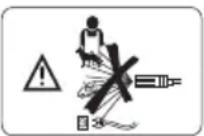 | High-pressure water can be dangerous if used incorrectly. High-pressure water jets must not be directed at people, electrical equipment or the washer itself. | Wasser unter hohem Druck kann bei falscher Benutzung gefährlich sein. Der Hochdruckstrahl darf nicht auf Menschen, elektrische Anlagen, oder den Reiniger selbst gerichtet werden. | L’eau sous haute pression peut être dangereuse si elle n’est pas utilisée correctement. Un jet d’eau sous haute pression ne doit pas être dirigé vers des personnes, des équipements électriques ou le nettoyeur. | L’acqua ad alta pressione può essere pericolosa, se utilizzata in modo scorretto. Non puntare il getto ad alta pressione dell’idropulitrice verso persone, apparecchiature elettriche o l’idropulitrice stessa. |
 | Water that has passed through the backfl ow valve cannot be used for drinking. | Wasser, das durch das Rückfl ussventil gefl ossen ist, ist nicht trinkbar. | L’eau qui est passée à travers le clapet anti-retour n’est pas potable. | L’acqua che ha attraversato la valvola antirifl usso non è potabile. |
| ~ | Alternating current Wechselstrom Courant alternatif Corrente alternata | |||
 | Class II tool Werkzeug der Klasse II Outil classe II Attrezzo di Classe II | |||
 | Warning Warnung Avertissement Avvertenza | |||
| V | Volts Volt Volts Volt | |||
| A | Amperes Ampere Ampères Ampere | |||
| Hz | Hertz | Hertz | Hertz | Hertz |
| W | Watts | Watt | Watts | Watt |
| kg | Kilograms | Kilogramm | Kilogrammes Kilogrammi | |
| MPa | Megapascals | Megapascal | Mégapascals | Megapascal |
| Nederlands Español Português Polski | ||||
| Symbolen⚠ WAARSCHUWINGHieronder vindt u de symbolen die voor dit toestel worden gebruikt. Zorg ervoor dat u de betekenis van de symbolen begrijpt voordat u het toestel begint te gebruiken. | Símbolos⚠ ADVERTENCIAA continuación se muestran los símbolos usados para la máquina.Asegúrese de comprender su signifi cado antes del uso. | Símbolos⚠ AVISOA seguir aparecem os símbolos utilizados pela máquina. Assimile bem seus signifi cados antes do uso. | Symbole⚠ OSTRZEŻENIENastępujące oznaczenia to symbole używane w instrukcji obsługi maszyny.Upewnij się, że rozumiesz ich znaczenie zanim użyjesz narzędzia. | |
 | Om het risico op verwondingen te verminderen, moet de gebruiker de instructiehandleiding lezen.Als u geen rekening houdt met de waarschuwingen en met de instructies, stelt u zichzelf bloot aan allerlei gevaren, zoals elektrische schokken, brand en/of ernstige blessures. | Para reducir el riesgo de lesiones, el usuario deberá leer el manual de instrucciones.Si no se siguen las advertencias e instrucciones, podría producirse una descarga eléctrica, un incendio y/o daños graves. | Para reduzir o risco de lesão, o utilizador deve ler o manual de instruções.Se não seguir todas as instruções e os avisos, pode provocar um choque eléctrico, incêndio e/ou ferimentos graves. | Aby zmniejszyć ryzyko odniesienia obrażeń, użytkownik powinien przeczytać instruccję obsługi.Nieprzestrzeganie ostrzeżeń oraz wskazówek bezpieczeństwa może spowodować porażenie prądem elektrycznym, pożar i/lub odniesienie poważnych obrażeń. |
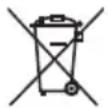 | Alleen voor lidstaten van de EU Verwijder elektrische gereedschappen niet samen met huishoudelijk afval. In overeenstemming met de Europese Richtlijn 2012/19/EU betreff ende afgedankte elektrische en elektronische apparatuur en de omzetting van deze richtlijn in nationale wetgeving moeten elektrische gereedschappen na afl oop van hun nuttige levensduur afzonderlijk worden opgehaald en naar een milieuvriendelijk recyclagebedrijf worden gebracht. | Sólo para países de la Unión Europea¡No deseche los aparatos eléctricos junto con los residuos domésticos!De conformidad con la Directiva Europea 2012/19/UE sobre residuos de aparatos eléctricos y electrónicos y su aplicación de acuerdo con la legislación nacional, las herramientas eléctricas cuya vida útil haya llegado a su fin se deberán recoger por separado y trasladar a una planta de reciclaje que cumpla con las exigencias ecológicas. | Apenas para países da UENão deixe ferramentas eléctricas no lixo doméstico!De acordo com a directiva europeia 2012/19/UE sobre ferramentas eléctricas e electrónicas usadas e a transposição para as leis nacionais, as ferramentas eléctricas usadas devem ser recolhidas em separado e encaminhadas a uma instalação de reciclagem dos materiais ecológica. | Dotyczy tylko państw UENie wyrzucaj elektronarzędzi wraz z odpadami z gospodarstwa domowego!Zgodnie z Europejską Dyrektywą 2012/19/UE w sprawie zużytego sprzętu elektrotechnicznego i elektronicznego oraz dostosowaniem jej do prawa krajowego, zużyte elektronarzędzia należy posegregować i zutylizować w sposób przyjazny dla środowiska. |
 | Water onder hoge druk kan gevaarlijk zijn als het niet op de juiste manier wordt gebruikt.Waterstralen onder hoge druk mogen niet op mensen, elektrische apparatuur of de hogedrukreiniger zelf worden gericht. | El agua a alta presión puede ser peligrosa si se utiliza incorrectamente.Los chorros de agua a alta presión no deben dirigirse hacia las personas, el equipo eléctrico o la misma máquina de limpieza. | A água a alta pressão pode ser perigosa quando utilizada incorretamente. Os jatos de água a alta pressão não devem ser direcionados para pessoas, equipamento eléctrico ou o próprio dispositivo. | Woda pod wysokim ciśnieniem może być niebezpieczna, jeżeli jest nieprawidłowo wykorzystywana. Strumienia wody pod wysokim ciśnieniem nie wolno kierować na ludzi, urządzenia elektryczne lub samą myjkę. |
 | Water dat doorheen de terugslagklep geleid is, mag niet als drinkwater worden gebruikt. | El agua que ha pasado por la válvula antirretorno no puede utilizarse para beber. | A água que passe pela válvula de refl uxo não pode ser utilizada para beber. | Wody, która przeszła przez zawór zwrotny nie wolno wykorzystywać do picia. |
| ~ | Wisselstroom | Corriente alterna | Corrente alternada | Prąd przemienny |
 | Gereedschap van Klasse II | Herramienta de Clase II F | Feramenta de classe II Narzędzie klasy II | |
 | Waarschuwing Advertencia Aviso | Ostrzeżenie | ||
| V | Volt | Voltios | Volts | Wolty |
| A | Ampère | Amperes | Amperes | Ampery |
| Hz | Hertz | Hertz o hercios | Hertz | Herce |
| W | Watt | Watts o vatios | Watts | Waty |
| kg | Kilogram | Kilogramos | Quilogramas | Kilogramy |
| MPa | Megapascal | Megapascales | Megapascais | Megapaskale |
| Magyar | Türkçe Український Русский | |||
| Jelölések⚠ FIGYELEMAz alábbiakban a géphez alkalmazott jelölések vannak felsorolva. A gép használata előtt feltétlenül ismerje meg ezeket a jelöléseket. | Simgeler⚠ DÍKKATAşagida, bu alet için kullanılan simgeler gösterilmiştir. Aleti kullanmadan önce bu simgelerin ne anlama geldiğini anladiğınızdan emin olun. | Символи⚠ ПОПЕРЕДЖЕННЯТут показані символи, використані в керівництві. Будь ласка, переконайтеся, що правильно розумієте їхне значення. | Символы⚠ ПРЕДУПРЕЖДЕНИЕНиже приведены символы, используемые для машины. Перед началом работы обязательно убедитесь в том, что Вы понимаете их значение. | |
 | A sérülések kockázatának csökkentése érdekében, a használónak el kell olvasnia a használati útmutatót.A fi gyelmeztetések és utasítások be nem tartása áramütést, tűzet és/vagy súlyos sérülést eredményezhet. | Kullanıcı yaralanma riskini azaltmak için kullanım kılavuzunu okumalıdır. Uyarılara ve talimatlara uyulmaması elektrik çarpmasına, yangına ve/ veya ciddi yaralanmaya neden olabilir. | Щоб зменшити ризик отримання травми, користувач повинен прочитати інструкції з експлуатації. Невиконання цих правил та інструкцій може призвести до удару струмом, пожежі та/або серйозної травми. | Чтобы уменьшить опасность получения травм, пользователь должен прочитать руководство по эксплуатации. Не выполнение правил и инструкцій может привести к поражению электрическим током, пожару и/или серьезной травме. |
 | Csak EU-országok számára Az elektromos kéziszerszámokat ne dobja a háztartási szemétbe! A használt villamos és elektronikai készülékekről szóló 2012/19/EU irányelv és annak a nemzeti jogba való átültetése szerint az elhasznált elektromos kéziszerszámokat külön kell gyűjteni, és környezetbarát módon újra kell hasznosítani. | Sadece AB ülkeleri için Elektrikli el aletlerini evdeki çöp kutusuna atmayınız! Kullanılmış elektrikli aletleri, elektrik ve elektronikli eski cihazlar hakkındaki 2012/19/AB Avrupa yönergelerine göre ve bu yönergeler ulusal hukuk kurallarina göre uyarlanarak, ayrı olarak toplanmalı ve çevre şartlarına uygun bir şekilde tekrar değerlendirmeye gönderilmelidir. | Лише для країн ЄСНЕ викидайте електричні інструменти із побутовими відходами! Згідно Європейської Директиви 2012/19/ЄС про відходи електронного та електричного виробництва і її запровадження згідно місцевих законів, електроінструменти, які відслужили робочий строк слід утилізувати окремо і повертати до установ, що займаються екологічною переробкою брухту. | Только для стран ЕСНе выкидывайте электроприборы вместе с обоычным мусором! В соответствии с свропейской директивой 2012/19/ЄС об утилизации старых электрических и электронных приборов и в соответствии с местными законами электроприборы, бывшие в эксплуатации, должны утилизовываться отдельно безопасным для окружающей среды способом. |
 | A magasnyomású víz veszélyes lehet, ha helytelenül használja. A magasnyomású vízsugarat nem szabad közvetlenül ember, elektromos berendezés vagy maga a mosó felé irányítani. | Yüksek basınçlı su hatalı kullanıldığında tehlike arz edebilir. Yüksek bacinçlı su půskürtme işlemi insanlara, elektrikli ekipmanlara veya yıkayıcının kendisi üzerine doğru uygulanmamalıdır. | Струмінь води, який подається під високим тиском, може становити небезпеку, якщо ним користуватися неправильно. Заборонено спрямовувати струмінь води під високим тиском на людей, електричне обладнання або саму мийку. | Вода под высоким давлением может быть опасна при неправильном использовании. Нельзя направлять струи воды под высоким давлением на людей, электрическое оборудование или саму мойку. |
 | A visszafolyó szelepen áthaladó víz nem iható. | Ters akım vanasından geçen su içme amaçlı olarak kullanılamaz. | Воду, яка пройшла через клапан повернення, заборонено пити. | Воду, прошедшую через клапан противотока, нельзя использовать для питья. |
| ~ | Váltóáram | Alternatif akım | Змінний струм | Переменный ток |
| [zw05] | II. osztályú szerszám | Sınıf II aracı | Інструмент Класу II | Инструмент класса II |
| [1522] | Figyelem Dikkat Попереджения Предупреждение | |||
| V | Volt | Volt | Вольт | Вольты |
| A | Amper | Amper | Ампер | Амперы |
| Hz | Hertz | Hertz | Герц | Герцы |
| W | Watt | Watt | Ватт | Ватты |
| kg | Kilogramm | Kilogram | Кілограмм | Килограммы |
| MPa | Megapascal | Megapaskal | Мегапаскаль | Мегапаскали |
GENERAL POWER TOOL SAFETY WARNINGS
WARNING
Read all safety warnings and all instructions.
Failure to follow the warnings and instructions may result in electric shock, fire and/or serious injury.
Save all warnings and instructions for future reference.
- Make sure the work area is always kept neat and tidy.
Failure to observe this may result in accidents.
- Take the surrounding environment into consideration when using the washer.
○ Make sure the work area is brightly lit.
○ Do not use the washer near flammable liquid or gas.
- Beware of electric shocks.
Do not touch anything that is earthed (grounded) when using the High Pressure Washer. (For example, pipes, heaters, microwave ovens, refrigerators, etc.)
- Do not use the washer near children.
○ People other than the person using the washer must not be allowed to touch the washer or the cord.
○ People other than the person using the washer must not come near the work area.
- Store the washer in a safe place when not in use.
Store the washer in a dry, high location or protected with a lock out of the reach of children.
- Do not use the washer in inappropriate ways.
○ Use the High Pressure Washer within the limits of its capabilities to ensure safe and efficient results.
○ Do not use the washer for any purpose other than that for which it was designed.
- Wear safe clothing when using the washer.
Use safety boots, gloves, helmets with visors and earplugs in accordance with necessity.
- Use protective goggles and dust-protection masks when using the washer.
There is a chance that splashes and dust may enter the eyes and mouth when using the washer.
- Do not handle the power cord roughly.
Do not carry the High Pressure Washer with only the power cord or pull the plug from the socket while holding the power cord.
- Keep the power cord away from heat, oil and sharp corners.
- Make sure the item being cleaned is firmly fixed in place.
There are cases in which the power of the water pressure will cause light objects to fly off. Do not use the washer on light objects that cannot be fixed in place.
-
Maintain a proper stance when using the washer. Make sure your feet are always placed firmly on the ground to maintain balance.
-
Pay close attention to maintaining the High Pressure Washer.
○ Clean the washer regularly to ensure safe and efficient use.
○ Refer to the instruction manual when replacing supplied parts.
○ Regularly check the power cord and ask your dealer for repairs in the event of it being damaged.
○ If using an extension cord, check it regularly and replace it in the event of it being damaged.
○ Make sure the grip is always kept dry and clean, and do not allow oil of grease to come into contact with it.
- Switch off and unplug the High Pressure Washer in the following situations:
○ When it is not in use and when it is being repaired.
○ When attaching or detaching supplied or purchased parts.
○ In other situations in which risks seem apparent.
- Always remove equipment used for adjustment purposes.
Check to make sure that all equipment used for adjustment purposes has been removed before switching on the power.
- Avoid accidentally switching on the power.
○ Make sure you do not accidentally switch on the power to the washer when it is plugged in.
☐ Check to make sure that the washer is switched off before plugging it into the power supply.
-
Inadequate extension cords can be dangerous.
-
Pay attention at all times when using the washer.
○ Pay attention to the methods of use stipulated in the instruction manual and the surrounding environment when using the High Pressure Washer.
○ Do not use the washer when tired.
-
Only use specified accessories and attachments. Using accessories and attachments other than those specified in the instruction manual or in HiKOKI catalogs may result in accidents or injuries and must be avoided at all costs.
-
High Pressure Washer repairs to be performed only by experts.
○ The High Pressure Washer conforms to all relevant safety regulations and must not be modified.
All repairs must be requested to HiKOKI authorized service centers. Attempting to carry out repairs without the correct skills may result in accidents or injuries.
-
Do not use the machine if a supply cord or important parts of the machine are damaged, e.g. safety devices, high pressure hoses, trigger gun.
-
Use a power supply that conforms to the voltage listed on the name plate.
Failure to observe this may result in the washer operating at higher speeds than normal, leading to overheating and the outbreak of smoke and fire, which may cause damage or injuries.
- Use an independent power socket with a rated value of 15 A or more.
Sharing a power socket with other equipment may result in the breaker shutting down.
- Hold the trigger gun firmly in both hands when using the washer.
Failure to observe this may result in injury.
- High-pressure water can be dangerous if used incorrectly.
High-pressure water jets must not be directed at people, animals, easily-broken items, electrical equipment or the washer itself.
- Do not use gasoline, oil, organic solvents or other infl ammable or toxic liquids, or any other inappropriate liquid.
Failure to observe this may result in explosions, the outbreak of fi re or smoke, or other accidents, which may cause damage or injury.
- When washing automobile tires, make sure that the tip of the nozzle is kept at least 50cm distant from the surface being washed.
Failure to observe this may result in damage to the tire or brakes, which may cause serious accidents.
- Do not touch the power plug or power socket with wet hands.
Failure to observe this may result in electric shocks.
-
High pressure cleaners shall not be used by children or untrained personnel.
-
Water that has flown through backflow preventers is considered to be non-potable.
Make sure that a backflow valve is used without fail when connecting the washer to a drinking water faucet. Water that has passed through the backflow valve cannot be used for drinking.
- Make sure that water is not splashed onto the High Pressure Washer, power cord, extension cable, power plug, power socket or other areas. Also, neither exposes it to rain nor use it in the rain.
Failure to observe this may result in electric shocks.
-
Do not hold the trigger gun when fi xing it in place.
-
If the washer is not functioning normally or is emitting strange noises or vibrations switch it off immediately and contact HiKOKI authorized service centers to request inspections or repairs.
Continued use may result in injury.
- If the washer is accidentally dropped or banged into something solid, inspect it for damage, cracks and malformation.
Failure to observe this may result in injury.
-
Do not direct the jet against yourself or others in order to clean clothes or foot-wear.
-
Always switch off the mains disconnecting switch when leaving the machine unattended.
CAUTION
-
Purge all of the pressure within the washer before disconnecting the high-pressure hose.
-
Attach all supplied accessories correctly in accordance with the instruction manual.
Failure to observe this may result in the accessories becoming detached or in injury.
- Check to make sure that no foreign matter is adhering to the object being washed.
Failure to observe this may result in the matter flying off and causing unexpected injury.
- Do not spray a jet of water at the areas surrounding labels on the object being washed.
Failure to observe this may result in the labels peeling off.
-
Grip the handle firmly when carrying the washer.
-
Do not use any accumulated water other than clean water from the faucet (water containing dirt, mud, sand, etc.) when using the auto-suction function.
-
Children should be supervised to ensure that they don't play with the appliance.
SPECIFICATIONS
| Model AW130 | |
| Voltage (by areas) ^*1 | Single-phase AC 50/60 HzVoltage 220 V to 240 V |
| Power input ^*1 | 1600 W |
| Max. discharge pressure (1MPa: 10.2 kgf/cm ^2 ) 9.0 MPa | |
| Max permissible pressure 13.0 MPa | |
| Max feed pressure 0.7 MPa | |
| Max water discharge 6.0 L/min | |
| Permissible temperature | 40 °C or less |
| Water feeding method | Faucet connection type |
| Dimensions (Length × Width × Depth) | 325 mm × 260 mm × 790 mm(Including the handle, power cord holder and water feed connector) |
| Weight ^*2 | 8.3 kg |
*1 Be sure to check the nameplate on product as it is subject to change by areas.
*2 Weight: Excluding the power cord, weight consists of trigger gun, high-pressure hose, variable nozzle, water feed connector and accessory holder.
STANDARD ACCESSORIES
(1) Trigger gun ....1
(2) High-pressure hose (10 m) ....1
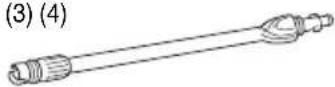
(3) Variable nozzle .....1
(4) Turbo nozzle 1
(5) Detergent bottle nozzle ....1
(6) One-touch joint (black)
(For use with the strainer hose) ....1
(7) Water feed connector ....1
(8) Nozzle cleaner pin ....1
(9) Cord holder ....1
(10) Handle (with 4 attachment screws) ....1
(1) (2)
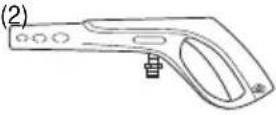
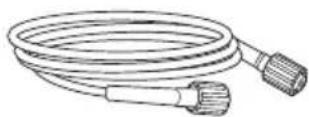
(3) (4)
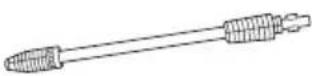
(5) (6)

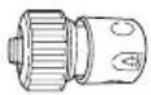
(7) (8)

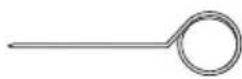
(9) (10)

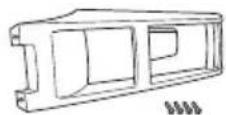
OPTIONAL ACCESSORIES (sold separately)
Items shown in are sold separately. Contact HiKOKI authorized service centers for replacements if the standard accessories become damaged or broken.
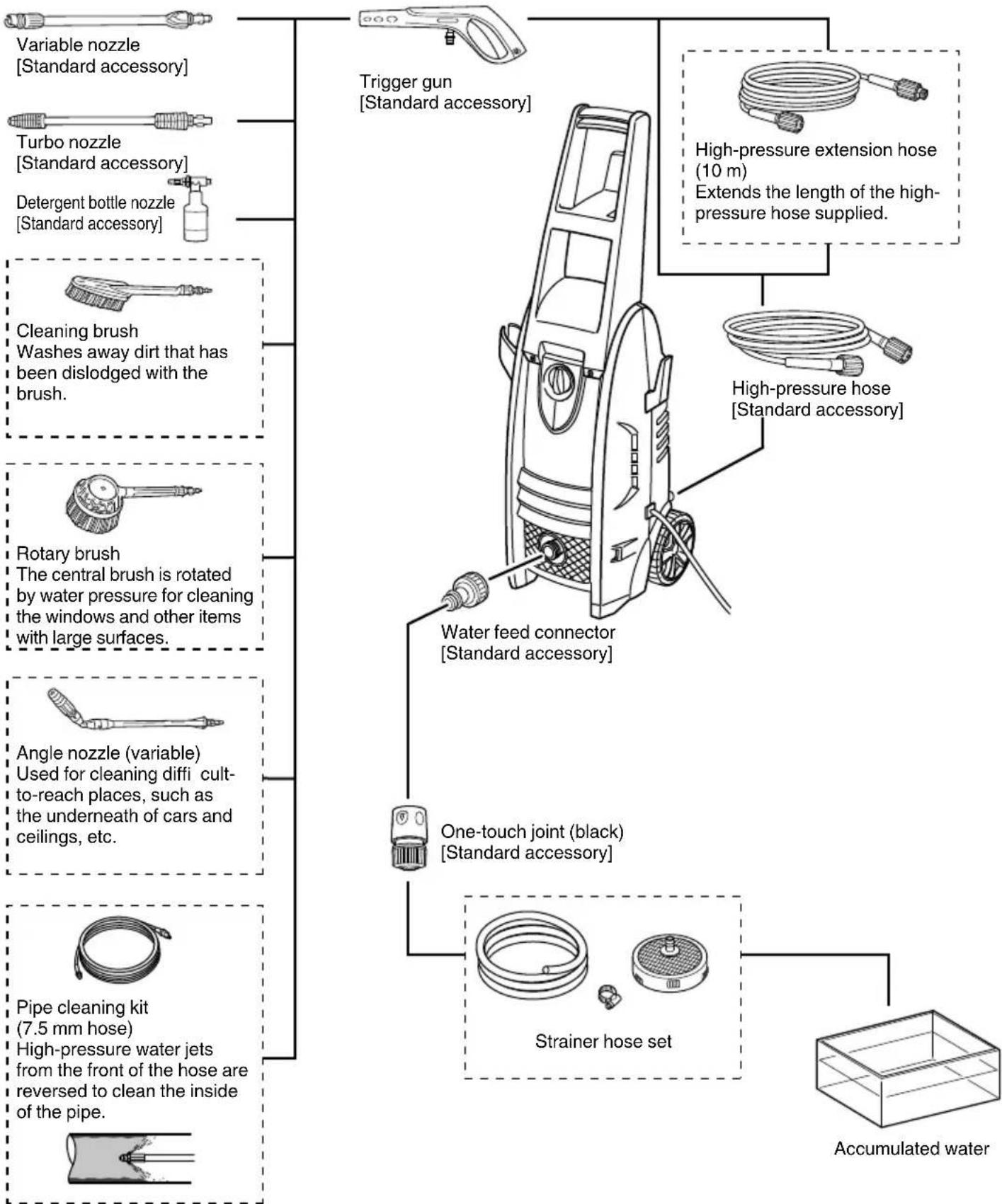
flowchart
graph TD
    A["Variable nozzle [Standard accessory"]] --> B["Trigger gun [Standard accessory"]]
    C["Turbo nozzle [Standard accessory"]] --> B
    D["Detergent bottle nozzle [Standard accessory"]] --> B
    E["Cleaning brush"] --> F["Washes away dirt that has been dislodged with the brush."]
    G["Rotary brush"] --> H["The central brush is rotated by water pressure for cleaning the windows and other items with large surfaces."]
    I["Angle nozzle (variable)"] --> J["Used for cleaning diffi cult-to-reach places, such as the underneath of cars and ceilings, etc."]
    K["Pipe cleaning kit (7.5 mm hose)"] --> L["High-pressure water jets from the front of the hose are reversed to clean the inside of the pipe."]
    M["Water feed connector [Standard accessory"]] --> N["One-touch joint (black) [Standard accessory"]]
    O["Strainer hose set"] --> P["Accumulated water"]
    Q["High-pressure extension hose (10 m) Extends the length of the high-pressure hose supplied."] --> R["High-pressure hose [Standard accessory"]]
    S["Water feed connector"] --> T["One-touch joint (black) [Standard accessory"]]
APPLICATIONS
○ Cleans screen doors, window glass, floors, walls, etc.
○ Cleans automobiles, motorbikes, etc.
○ Cleans mud off gardening equipment and agricultural equipment.
PRIOR TO OPERATION
1. Installation of an earth leakage circuit breaker
It is recommended that an earth leakage circuit breaker is connected to the washer to shut off the power if leaking current exceeds 30 mA for 30 milliseconds in order to prevent electric shocks.
2. Keep the work area neat and tidy
Dirty water will be sprayed about when using the washer. It is therefore necessary to check the area to make sure there are no hindrances, and keep the work area neat and tidy.
3. Situating the washer
Select fl at locations where the washer will not be splashed with water when cleaning.
4. Using extension cords
Make sure the cord is thick enough to provide a constant supply of electricity, and use cords that are as short as possible.
Acceptable cord thicknesses (Nominal cross sectional area cable) and cord length are indicated in the table below.
| Cord Thickness (mm ^2 ) Cord Length (m) | |
| 1 12.5 | |
| 1.5 20 | |
| 2.5 30 | |
5. Prepare a water feed hose (Fig. 1)
Prepare the following when using water feed hoses:
○ Hoses that can withstand pressure (equipped with meshes)
○ Hoses with an inner diameter of 14 to 15 mm.
○ Hoses with an outer diameter of 20 mm or less.
6. Attaching the cord holder (Fig. 2)
Align the groove on the cord holder with the protrusion on the washer and insert it as far as it will go.
7. Attaching the handle (Fig. 3)
Use a Phillips screwdriver to firmly tighten all four screws.
INSPECTIONS PRIOR TO USE
WARNING
Check the following before using the washer. Check the items listed in 1 and 2 before plugging into the power socket.
1. Check to make sure the switch is at the "OFF" position (Fig. 4)
Plugging the washer into the power socket with the switch set at "ON" will cause the washer to immediately begin operating, which may result in unexpected injuries.
2. Check the power supply
Only use a rated voltage.
Do not use motor engines are direct current. Failure to observe this will not only result in damage to the washer, it is also very dangerous.
3. Check the power socket
If the power socket is loose or the plug is easily dislodged, it needs to be repaired.
It is dangerous to use it in this condition. Consult with your local electrical engineering outlet.
ATTACHING PARTS
Make sure all parts are correctly attached in the following sequence in order to guarantee safe usage.
WARNING
Switch off the washer and disconnect it from the power socket without fail to prevent unexpected accidents.
1. Attach the water feed connector to the water feed inlet on the washer (Fig. 5)
Remove the cap on the washer's water feed inlet and firmly attach the water feed connector. Loose connections may result in water leaks.
2. Attaching the high-pressure hose to the washer's water outlet (Fig. 6)
Both ends of the high-pressure hose have the same configuration, so either end may be connected.
Remove the water outlet cap from the washer, insert the high-pressure hose into the water outlet and then rotate the high-pressure hose ring to fix it in place.
NOTE
○ Moisten the O-ring with water if it is difficult to insert the hose.
○ If it is not possible to tighten the ring, it means that the high-pressure hose has not been inserted far enough.
3. Attach the high-pressure hose to the trigger gun. (Fig. 7)
Grip the thick end of the high-pressure hose, insert it into the connector on the trigger gun, and then rotate the ring on the hose to fix it in place.
NOTE
○ Moisten the O-ring with water to facilitate the connection if it is difficult to insert the hose.
○ If the ring cannot be tightened, it means that the end of the high-pressure hose has not been sufficient inserted.
4. Attach the nozzle to the trigger gun.
(1) Align the protrusion on the nozzle with the entry hole on the trigger gun and press it into place.
NOTE
○ Remove all dirt, mud and other matter from the trigger gun's entry hole and the protrusion on the nozzle.
○ Moisten the O-ring with water to facilitate the connection if it is difficult to insert the nozzle.
(2) Press down firmly on the nozzle and then rotate it in the direction of the arrow until it stops (half rotation.)
(3) Check to make sure that the nozzle cannot be pulled out once it has been attached.
Press down firmly on the nozzle and then rotate it counterclockwise until it stops. The nozzle can be withdrawn at that position.
USING DIFFERENT NOZZLES
Variable nozzle (Fig. 10)
The variable nozzle can be used to alternation between "Jet" and "Spray".
Rotate the end on the nozzle clockwise for "Jet", and counter-clockwise for "Spray".
- Jet washer
A water jet is discharged in a direct line to remove stubborn mud and other dirt from agricultural machinery, etc.
- Spray washer
The water is discharged in a wide fan for cleaning walls, motorbikes and automobiles, etc.
The entire nozzle can be rotated by approximately 90 degrees to change the shape of the spray between horizontal and vertical.
NOTE
○ Set the spray adjustment to "Jet" first of all, and then gradually move it to the "Spray" position while pulling the trigger.
Note that there is a chance of the water being sprayed horizontally over a wide area if this is rotated fully to the "Spray" position.
Note that the nozzle may be damaged if it is forced to move past the stop position when alternating between "Jet" and "Spray".
Turbo nozzle
The turbo nozzle rotates as it sprays high-pressure jets of water for efficient washing.
NOTE
The turbo nozzle only discharges powerful jets of water when set at the "Jet" mode.
Avoid using this on items that are easily broken or for which coatings are easily peeled.
Detergent bottle nozzle (Fig. 11 and 12)
Sprays water mixed with detergent.
Uses neutral detergents available on the open market.
(1) Insert the water feed pipe into the detergent nozzle.
(2) Pour an undiluted neutral detergent into the bottle and then screw the bottle onto the detergent nozzle.
(3) Attaching and removing the detergent bottle nozzle is the same as explained for other nozzles.
When inserting the detergent bottle, make sure that the trigger gun is pointing in the direction shown in the illustration on the right.
(4) Aim the detergent nozzle at the article to be washed and pull the trigger on the trigger gun to spray a mixture of water and detergent at low pressure.
WARNING
Do not use acidic or alkali detergents. Use only neutral detergents available on the open market.
Using detergents other than neutral detergents or chemical agents may result in accidents or malfunctions.
NOTE
Moisten the O-ring with water if it is difficult to insert the nozzle.
USING THE STRAINER HOSE SET (sold separately)
The separately-sold strainer hose set is equipped with a function that will automatically suck water from a water tank, etc., when attached to the AW130.
The maximum height of suction (lifting range) is approximately 0.5 m.
Attach this correctly in accordance with conditions.
Suction height when the height of the water feed outlet is lower than the maximum height of the suction hose: From the maximum height of the suction hose to the surface of the water.

Suction height when the height of the water feed outlet is the same as the maximum height of the suction hose: From the water feed outlet to the surface of the water.
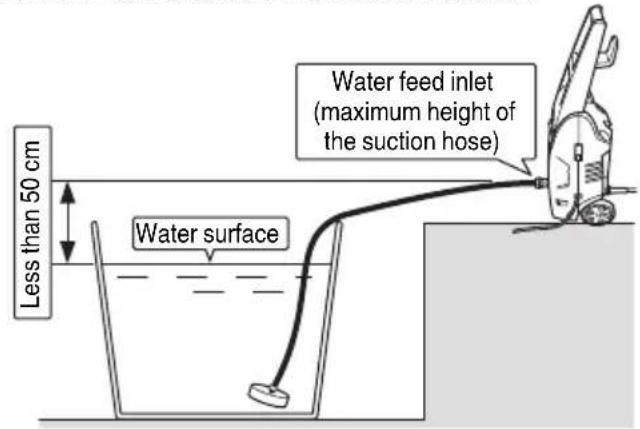
1. Attaching the strainer to the suction hose (Fig. 13)
(1) Pass the suction hose through the hose band supplied and then gently moisten the inside of the suction hose with water.
(2) Insert the strainer as far as it will go, and then firmly tighten the hose band with a fl at-headed screwdriver.
2. Attaching the one-touch joint (black) to the suction hose (Fig. 14)
Attach the one-touch joint (black) supplied as a standard accessory to the suction hose.
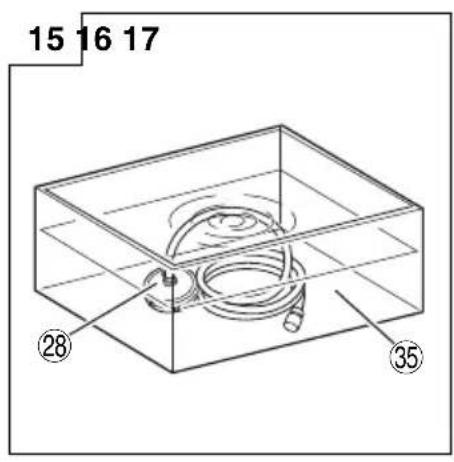
3. Starting the suction hose water suction process (Fig. 15)
Sink the strainer hose set into a container filled with water.
Start off the suction process (introduce water to the suction hose.)
NOTE
Do not use anything other than clean water (river or pond water, muddy water containing sand granules.)
Failure to observe this may result in malfunctions.
○ Set the switch at "ON" without the nozzle attached.
Failure to observe this may result in dry operations, leading to malfunctions.
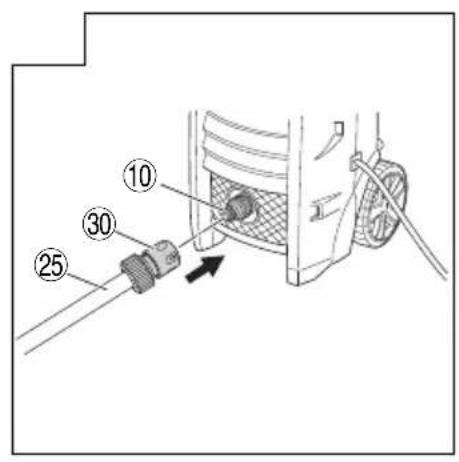
4. Insert the one-touch joint into the water feed connector (Fig. 16)
Withdraw the one-touch joint from the accumulated water and insert it into the water feed connector on the washer while making sure that the water inside the hose does not escape.
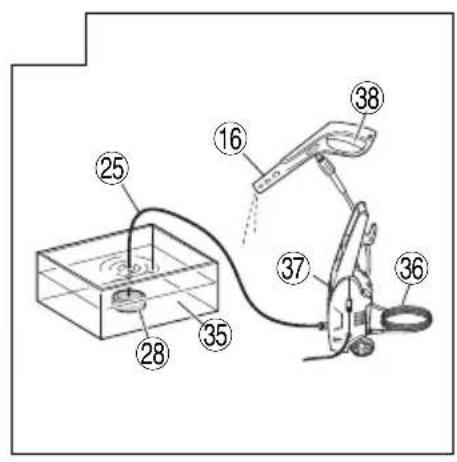
- Check to make sure the water is flowing out (Fig. 17)
(1) Connect the trigger gun from which the nozzle has been removed to the high-pressure hose.
(2) Plug in the power socket and set the switch to "ON".
(3) Pull the trigger gun's trigger, and then set the switch to "OFF" after checking that sufficient water is flowing out.
- Attach the nozzle.
NOTE
Set the switch at "OFF" if water does not flow out within two minutes.
Failure to observe this may result in malfunctions (dry operations.)
7. Washing
Set the switch at "ON" and pull the trigger gun's trigger to commence washing.
8. Cleaning
Remove all dirt from the strainer's grill, wash it with water and store it after it has dried.
WASHING
WARNING
○ Do not switch the washer on while the trigger is being pulled.
Failure to observe this may result in high-pressure water being sprayed immediately, leading to unexpected accidents.
○ Do not point the nozzle at people or animals.
Failure to observe this may result in injury.
CAUTION
○ Set the switch to "OFF" immediately if the hose becomes detached from the faucet or washer, and if water is no longer being fed to the washer.
Failure to observe this may result in immediate malfunctions (dry operations.)
○ Set the switch to "OFF" without fail when temporarily suspending operations.
Failure to observe this may result in the motor automatically starting up.
○ Place your finger in the center of the trigger during operations (Fig. 18)
Failure to observe this may result in injury from pinched fingers.
Grip the gun and nozzle firmly with both hands.
○ The trigger gun may kick back when water is discharged.
NOTE
○ Do not use the water hose when it is wound onto the reel. Failure to observe this may result in insufficient water feed.
○ Commence initial washing approximately 2 to 3 meters away from the targeted item, and then move gradually closer while checking the level of cleaning until you reach a distance in which soiling is effectively washed away.
The pressure of the spray from the washer is approximately 20-times greater than tap water. High-pressure water jets may therefore damage or peel the coating from the items being washed.
There are cases when the water spray will appear unstable owing to the fact that air that has built up in the pump and hose is purged together with the water immediately after use. In this event, allow the water to flow out until it stabilizes.
○ Leave two or more seconds gap between pulling and releasing the trigger.
Failure to observe this may result in the pressure switch malfunctions.
☐ Do not use the washer for more than thirty consecutive minutes without giving it a break.
1. Open the faucet to its fullest.
Point the nozzle in a safe direction and then fully open the faucet. Check to make sure no water is leaking from the joints.
Release the trigger stopper with the washer switched off, pull the trigger on the trigger gun to discharge a small amount of water from the nozzle with just the pressure from the tap water. Check to make sure that no water is leaking.
NOTE
Do not switch the washer on with the faucet turned off.
Failure to observe this may result in malfunctions.
2. Set the switch to the "ON" position (Fig. 19)
The motor will start operating when the washer is switched on. The motor will automatically switch off once sufficient water pressure has built up inside the washer.
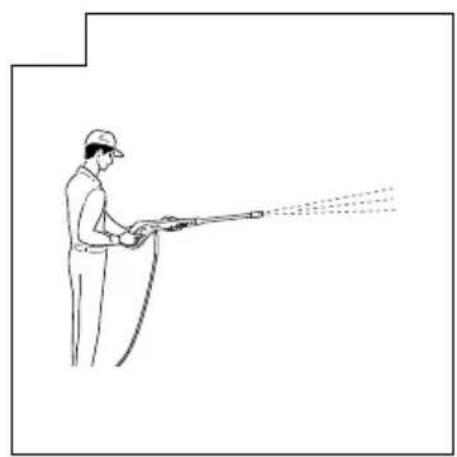
3. Pull the trigger (Fig. 20)
Hold the trigger gun firmly in both hands, point the nozzle at the item to be washed, and then pull the trigger.
The high-pressure water jet will spray out.
Adjust the nozzle between "Jet" and "Spray" in accordance with need.
Trigger stopper (Fig. 21)
The trigger gun is fitted with a trigger stopper to prevent the trigger from being pulled.
The trigger is locked and released by pressing the stopper in the direction shown by the arrows.
NOTE
Lock the trigger with the trigger stopper during pauses and after washing has been completed.
ON COMPLETION OF USE
Once the targeted item has been washed, drain the residual water from the washer and store it in a well-ventilated location to dry.
There are cases in which water left in the hose may freeze during the winter, so drain as much water as possible and store it indoors.
WARNING
Make sure all residual water is drained from the washer, the trigger gun and the hose, etc., after use.
Failure to observe this may result in freezing, leading to malfunctions.
1. Draining water from the washer
(1) Stop the water supply.
(2) Set the switch to "ON" and pull the trigger on the trigger gun to drain the water from the inside of the washer. Continue this until water is no longer discharged (approximately 30 to 60 seconds.)
(3) Press the trigger stopper on the trigger gun to lock it in place.
2. Set the switch to "OFF".
(1) Switch off the washer.
(2) Unplug the power cord from the mains socket.
NOTE
Leaving the washer switched on may result in dry operations, leading to malfunctions.
3. Removing the high-pressure hose (Fig. 22)
(1) Loosen the ring.
(2) Remove the high-pressure hose from the washer's water outlet.
(3) Drain all residual water from the high-pressure hose.
4. Drain the water from the washer (Fig. 23)
(1) Tilt the washer to drain out the residual water.
(2) Wipe away all moisture with a dry cloth.
CAUTION
Water left in the washer may freeze in the winter, which could result in damage to the pump.
SAFETY MECHANISMS
The washer is equipped with the following safety mechanisms to ensure safe usage.
Power switch
This prevents the washer from being unintentionally operated.
Trigger gun equipped with a lock
This prevents the trigger from being pulled, unintentionally operating the washer.
Pressure switch
This prevents the pressure inside the washer from exceeding permissible levels. Releasing the lever on the trigger gun causes the valve operated by water pressure to halt pump operations, which allows the pressure to be released through the water feed. The pump is started again when the lever is pulled.
Thermal protector
This protects the motor by halting operations when abnormal heat is detected in the motor. It will start operating again when the motor cools down.
MAINTENANCE AND INSPECTION
WARNING
Switch off the washer and disconnect the plug from the power socket without fail when inspecting and cleaning it.
1. Inspecting the washer and hoses (Fig. 24)
Check to make sure that there is no damage, cracks or malformations.
Make sure you clean the hole on the nozzle with the nozzle cleaner pin supplied on a regular basis.
NOTE
Detach the trigger gun and clean the nozzle hole.
2. Inspecting the strainer (Fig. 25)
Wash all blockages out of the grid with water on a regular basis.
NOTE
Withdraw the strainer from the water feed inlet with the use of fl at radio pliers.
3. Clean the washer
Squeeze the excess moisture from a cloth soaked in soap and water and wipe the washer.
Do not use gasoline, thinner, benzene, kerosene, etc. Failure to observer this may result in malformations.
4. Check for loose screws.
Check for loose screws on a regular basis and tighten any screws that are loose. Failure to observe this could be dangerous.
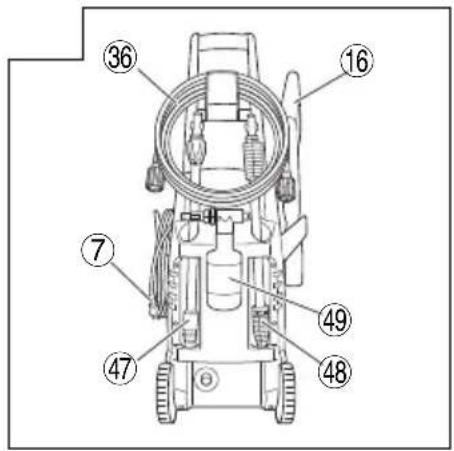
5. Tidying up and storing the washer after use (Fig. 26)
The accessories can be stored inside the washer as shown in Fig. 26 when not in use and when being carried around.
Avoid the following environments and store the washer and accessories in a safe, dry location when not in use.
☐ Do not store within the reach of children, or in locations where children can use it.
○ Do not store in location where rain can reach it, such as in front of the house, or in locations with high humidity.
○ Do not store in locations that are subject to drastic changes in temperature or direct sunlight.
○ Do not store in locations containing volatile substances that may ignite or explode.
6. Replacing supply cord
If the replacement of the supply cord is necessary, it has to be done by a HiKOKI Authorized Service Center to avoid a safety hazard.
7. Service parts list
CAUTION
Repair, modification and inspection of HiKOKI Power Tools must be carried out by a HiKOKI Authorized Service Center.
This Parts List will be helpful if presented with the tool to the HiKOKI Authorized Service Center when requesting repair or other maintenance.
In the operation and maintenance of power tools, the safety regulations and standards prescribed in each country must be observed.
MODIFICATIONS
HiKOKI Power Tools are constantly being improved and modified to incorporate the latest technological advancements.
Accordingly, some parts may be changed without prior notice.
TROUBLESHOOTING
Use the inspections in the table below if the tool does not operate normally. If this does not remedy the problem, consult your dealer or the HiKOKI Authorized Service Center.
| Symptom Possible | cause Remedy | |
| The motor won't operate when the trigger is pulled. | The power plug is not plugged into the power socket. | Plug the power cord into the power socket. |
| The switch is set at “OFF” Switch the washer or. | ||
| The extension cord is unplugged or severed midway. | Replace the extension cord or check it with a different electrical appliance. | |
| The thermal protector has been activated. Remedy the problem in accordance with the details listed in “Safety Mechanisms” on page 21. | ||
| The motor continues operating when the trigger is released. | The water volume or pressure from the faucet is too low. | Open the faucet fully.Unravel any twists in the water hose and high-pressure hose.Check to make sure that the inner diameter of the water hose is correct.Check to make sure that the water hose is not wound onto the reel. |
| Water is leaking. Check the hose connections. | ||
| Water is not being discharged. | The water hose is not connected. Connect the water hose. | |
| The water hose or high-pressure hose is twisted. | Unravel the twists. | |
| The backflow valve on the one-touch joint is not operating. | Check to make sure that the inner diameter of the water hose is correct. | |
| The trigger stopper is locked. Remedy the problem in accordance with the details listed in “Trigger Stopper” on page 20. | ||
| The faucet it turned off. Open the faucet fully. | ||
| The nozzle is blocked. Clean the end of the nozzle with the nozzle cleaner pin supplied. | ||
| The strainer is blocked. Wash the strainer, which is incorporated into the water feed inlet, in accordance with the details listed in “Inspecting the Strainer” on page 21. | ||
| The water pressure won't rise. | The power plug is not plugged into the power socket. | Plug the power cord into the power socket. |
| The switch is set at “OFF”. Switch the washer on. | ||
| The water volume or pressure from the faucet is too low. | Open the faucet fully.Unravel any twists in the water hose and high-pressure hose.Check to make sure that the inner diameter of the water hose is correct.Check to make sure that the water hose is not wound onto the reel. | |
| The nozzle is blocked. Clean the end of the nozzle with the nozzle cleaner pin supplied. | ||
| The electrical voltage is too low. | Check to make sure that the thickness and length of the extension cord is appropriate. | |
| Water is leaking. Check the hose connections. | ||
GUARANTEE
We guarantee HiKOKI Power Tools in accordance with statutory/country specific regulation. This guarantee does not cover defects or damage due to misuse, abuse, or normal wear and tear. In case of complaint, please send the Power Tool, undismantled, with the GUARANTEE CERTIFICATE found at the end of this Handling instruction, to a HiKOKI Authorized Service Center.
NOTE
Due to HiKOKI's continuing program of research and development, the specifications herein are subject to change without prior notice.
Information concerning airborne noise and vibration
The measured values were determined according to EN60335 and declared in accordance with ISO 4871.
Measured A-weighted sound power level: 92 dB (A)
Measured A-weighted sound pressure level: 77 dB (A)
Uncertainty KpA: 3 dB (A).
Wear hearing protection.
Vibration total values (triax vector sum) determined according to EN60335.
Vibration emission value a_h = 1.8 m/s^2
Uncertainty K = 1.5m / s^2
The declared vibration total value has been measured in accordance with a standard test method and may be used for comparing one tool with another.
It may also be used in a preliminary assessment of exposure.
WARNING
☐ The vibration emission during actual use of the power tool can differ from the declared total value depending on the ways in which the tool is used.
○ Identify safety measures to protect the operator that are based on an estimation of exposure in the actual conditions of use (taking account of all parts of the operating cycle such as the times when the tool is switched off and when it is running idle in addition to the trigger time).
Trekkerstop (afb. 21)
natural_image
Line drawing of a quill pen with inkwell (no text or symbols)| English | Português | ||
| GUARANTEE CERTIFICATE1 Model No.2 Serial No.3 Date of Purchase4 Customer Name and Address5 Dealer Name and Address(Please stamp dealer name and address) | CERTIFICADO DE GARANTIA1 Número do modelo2 Número do série3 Data de compra4 Nome e morada do cliente5 Nome e morada do distribuidor(Por favor, carímbe o nome e morada do distribuidor) | ||
| Deutsch Polski | |||
| GARANTIESCHEIN1 Modell-Nr.2 Serien-Nr.3 Kaufdaturn4 Name und Anschrift des Kunden5 Name und Anschrift des Händlers(Bitte mit Namen und Anschrift des Handlers abstempeln) | GWARANCJA1 Model2 Numer seryjny3 Data zakupu4 Nazwa klienta i adres5 Nazwa dealera i adres(Pieczęć punktu sprzedaży) | ||
| Français | Magyar | ||
| CERTIFICAT DE GARANTIE1 No. de modèle2 No de série3 Date d'achat4 Nom et adresse du client5 Nom et adresse du revendeur(Cachet portant le nom et l'adresse du revendeur) | GARANCIA BIZONYLAT1 Típusszám2 Sorozatszám3 A vásárlás dátuma4 A Vásárló neve és címe5 A Kereskedő neve és címe(Kérjük ide elhelyezni a Kereskedő nevének és címének pecsétjét) | ||
| Italiano Türkçe | |||
| CERTIFICATO DI GARANZIA1 Modello2 N° di serie3 Data di acquisto4 Nome e indirizzo dell'acquirente5 Nome e indirizzo del rivenditore(Si prega di apporre il timbro con questi dati) | GARANTI SERTÍFÍKASI1 Model No.2 Seri No.3 Satin Alma Tarihi4 Müşteri Adı ve Adresi5 Bayi Adı ve Adresi(Lütfen bayi adını ve adresini kaşe olarak basın) | ||
| Nederlands Український | |||
| GARANTIECERTIFICAAT1 Modelnr.2 Serienr.3 Datum van aankoop4 Naam en adres van de klant5 Naam en adres van de dealer(stempel met naam en adres van de dealer) | ГАРАНТИЙНИЙ СЕРТИФИКАТ1 No моделі2 No серії3 Дата придбання4 Im'я і адреса кліента5 Im'я і адреса дилера(Будь ласка, поставте печатку з іменем і адресою дилера) | ||
| Español Русский | |||
| CERTIFICADO DE GARANTÍA1 Número de modelo2 Número de serie3 Fecha de adquisición4 Nombre y dirección del cliente5 Nombre y dirección del distribuidor(Se ruega poner el sello del distribuidor con su nombre y dirección) | ГАРАНТИЙНЫЙ СЕРТИФИКАТ1 Модель No2 Серийный No3 Дата покупки4 Название и адрес заказчика5 Название и адрес дилера(Пожалуйста, внесите название и адрес дилера) | ||
HiKOKI
| 1 | |
| 2 | |
| 3 | |
| 4 | |
| 5 |
Siemensring 34, 47877 willich, Germany
Tel: +49 2154 49930
Fax: +49 2154 499350
URL: http://www.hikoki-powertools.de
Hikoki Power Tools Netherlands B.V.
Brabanthaven 11, 3433 PJ Nieuwegein, The Netherlands
Tel: +31 30 6084040
Fax: +31 30 6067266
URL: http://www.hikoki-powertools.nl
Hikoki Power Tools (U.K.) Ltd.
Precedent Drive, Rooksley, Milton Keynes, MK 13, 8PJ,
United Kingdom
Tel: +44 1908 660663
Fax: +44 1908 606642
URL: http://www.hikoki-powertools.uk
Hikoki Power Tools France S.A.S.
Hikoki Power Tools Belgium N.V./S.A.
Koningin Astridlaan 51, B-1780 Wemmel, Belgium
Tel: +32 2 460 1720
Fax: +32 2 460 2542
URL http://www.hikoki-powertools.be
Hikoki Power Tools Italia S.p.A
Via Piave 35, 36077, Altavilla Vicentina (VI), Italy
Tel: +39 0444 548111
Fax: +39 0444 548110
URL: http://www.hikoki-powertools.it
Hikoki Power Tools Ibérica, S.A.
C/ Puigbarral, 26-28, Pol. Ind. Can Petit, 08227 Terrassa
(Barcelona), Spain
Tel: +34 93 735 6722
Fax: +34 93 735 7442
URL: http://www.hikoki-powertools.es
Hikoki Power Tools Romania S.R.L.
Ring Road, No. 66, Mustang Traco Warehouses, Warehouse
No.1, Pantelimon City, 077145, Ilfov County, Romania
natural_image
Line drawing of a quill pen with inkwell (no text or symbols)| English Italia ho | ||
| EC DECLARATION OF CONFORMITYWe declare under our sole responsibility that High Pressure Washer, identified by type and specific identification code *1), is in conformity with all relevant requirements of the directives *2) and standards *3). Technical fi le at *4) – See below.The European Standard Manager at the representative office in Europe is authorized to compile the technical fi le.2000/14/ECType of equipment: High Pressure WasherType name: AW130Conformity assessment procedure: Annex VMeasured sound power level: 92 dBGuaranteed sound power level: 95 dBThe declaration is applicable to the product affi xed CE marking. | DICHIARAZIONE DI CONFORMITÀ CEDichiariamo sotto la nostra esclusiva responsabilità che la idropulitrice ad alta pressione, identificata dal tipo e dal codice identificativo specifico *1), è conforme a tutti i requisiti pertinenti delle direttive *2) e degli standard *3). Documentazione tecnica presso *4) – Vedere sotto.Il gestore delle norme europee presso l'ufficio di rappresentanza in Europa è autorizzato a compilare il fascicolo tecnico.2000/14/CETipo di apparecchiatura: Idropulitrice ad alta pressioneNome di tipo: AW130Procedimento di valutazione conformità: Allegato LVivello di potenza sonora misurato: 92 dBLa dichiarazione è applicabile ai prodotti cui sono applicati i marchi CE. | |
| Deutsch NederlandsEG-KONFORMITÄTSERKLÄRUNGWir erklären in alleiniger Verantwortung, dass der durch den Typ und den spezifischen Identifizierungscode *1) identifizierte Hochdruckreiniger allen einschlägigen Bestimmungen der Richtlinien *2) und Normen *3) entspricht. Technische Unterlagen unter *4) – Siehe unten.Die Leitung der repräsentativen Behörde für europäische Normen und Richtlinien ist berechtigt, die technischen Unterlagen zusammenzustellen.2000/14/EGArt der Ausrüstung: HochdruckreinigerTypname: AW130Übereinstimmungsbeurteilungsverfahren: Annex VGemessener Schalleistungspegel: 92 dGBarantierter Schalleistungspegel: 95 dBDie Erklärung gilt für die an dem Produkt angebrachte CE-Kennzeichnung. | EC VERKLARING VAN CONFORMITEITWij verklaren onder onze eigen verantwoordelijkheid dat Hogedrukreiniger, geïdentificeerd door het type en de specifieke identificatiecode*1), voldoet aan alle relevante bepalingen van de richtlijnen*2) en normen*3). Technische documentatie bij*4) – zie onder.De Europese Normen Manager bij de vertegenwoordiging in Europa is gemachtigd om het technisch dossier samen te stellen.2000/14/ECType apparatuur: HogedrukreinigerTypenaam: AW130Conformiteitsevaluatieprocedure: Bijlage VGemeten geluidsvermogensniveau: 92 dBGegarandeerd geluidsvermogensniveau: 95 dBDeze verklaring is van toepassing op producten voorzien van de CE-markeringen. | |
| FrançaisDECLARATION DE CONFORMITE CENous déclarons sous notre entière responsabilité que le Nettoyeur haute pression, identifié par le type et le code d'identification spécifique *1) est en conformité avec toutes les exigences applicables des directives *2) et des normes *3). Dossier technique en *4) - Voir ci-dessous.Le Gestionnaire des normes européennes du bureau de représentation en Europe est autorisé à constituer le dossier technique.2000/14/CEType de matériel: Nettoyeur haute pressionNom du type: AW130Procédure d'évaluation de conformité: Annex VNiveau de puissance sonore mesuré: 92 dBNiveau de puissance sonore garanti: 95 dBCette déclaration s'applique aux produits désignés CE. | EspañolDECLARACIÓN DE CONFORMIDAD DE LA CEDeclaramos bajo nuestra única responsabilidad que la Arandela de alta presión, identificada por tipo y por código de identificación específico *1), está en conformidad con todas las disposiciones correspondientes de las directivas *2) y de las normas *3).Documentación técnica en *4) – Ver a continuación.El Director de Normas Europeas en la oficina de representación en Europa está autorizado para elaborar el expediente técnico.2000/14/CETipo de dispositivo: Arandela de alta presiónNombre del modelo: AW130Procedimiento de evaluación de conformidad: Annex VNivel de potencia acústica medida: 92 dBNivel de potencia acústica garantizada: 95 dBLa declaración se aplica al producto con marcas de la CE. | |
| *1) AW130 C345803R C345653S*2) 2006/42/EC, 2000/14/EC, 2014/30/EU, 2011/65/EU*3) EN60335-1:2012+A11:2014EN60335-2-79:2012EN55014-1:2006+A1:2009+A2:2011EN55014-2:1997+A1:2001+A2:2008EN61000-3-2:2014EN61000-3-3:2013 | ||
| *4) Representative office in EuropeHikoki Power Tools Deutschland GmbHSiemensring 34, 47877 Willich, GermanyHead office in JapanKoki Holdings Co., Ltd.Shinagawa Intercity Tower A, 15-1, Konan 2-chome,Minato-ku, Tokyo, Japan | 29. 11. 2019Naoto YamashiroEuropean Standard Manager29. 11. 2019  A. NakagawaCorporate Offi cer A. NakagawaCorporate Offi cer | |
| Português | Türkçe | ||
| DECLARAÇÃO DE CONFORMIDADE CEDeclaramos, sob nossa única e inteira responsabilidade, que Anilha de Alta Pressão, identifi cada por tip identificação específico *1), está em conformidade com todos os requerimentos relevantes das diretivas *2) e normas *3). Ficheiro técnico em *4)-Consulte abaixo.O Gestor de Normas Europeias no escritório de representação na Europa está autorizado a compilar o fi cheiro técnico.2000/14/CETipo de equipamento: Anilha de alta pressãoNome do tipo: AW130Procedimento de avaliação de conformidade: Annex VNivel medido de potência de som: 92 dBNivel garantido de potência de som: 95 dBA declaração aplica-se aos produtos com marca CE. | AT UYGUNLUK BEYANITip ve özel tanım koduyla *1) tanımlı Basıncılı Yıkama Makinesi'nin direktödijep*2)ve standartların *3) tüm ilgili gereksinimlerine uygung olduğunu tamamen kendi sorumluluğumuz altında beyan ederiz. Teknik dosya *4)'dedir – Aşağıya bakın.Avrupa'daki temsilcilik ofisindeki Avrupa Standartları Yöneticisi, teknik dosyayi derlemek için yetkilendirilmiştir.2000/14/ATCihazin tipi: Basıncılı yikama makinesiTip adı: AW130Uygunluk değerlendirme prosedürü: EK VOlçülen ses gücü seviyesi: 92 dBGaranti edilen ses gücü seviyesi: 95 dBBeyan, üzerinde CE işareti bulunan ürünler için geçerlidir. | ||
| Polski УкраїнськийDEKLARACJA ZGODNOŚCI Z WEOświadczamy na własną wyłączną odpowiedzialność, że Myjka wysokociśnieniowa podanego typu i oznaczona unikalnym kodem identyfikacyjnym *1) jest zgodna ze wszystkimi właściwymi wymogami dyrektyw *2) i norm *3). Dokumentacja techniczna w – Patrz poniżej.Menedżer Norm Europejskich przedstawicielstwa firmy w Europie jest upoważniony do sporządzania dokumentacji technicznej.2000/14/WETyp urządzenia: Myjka wysokociśnieniowaNazwa modelu: AW130Procedura oceny zgodności: Annex VZmierzony poziom mocy dźwięku: 92 dBGwarantowany poziom mocy dźwięku: 95 dBNiniejsza deklaracja ma zastosowanie do produktu opatrzonego znakiem CE. | ДЕКЛАРАЦІЯ ВІДПОВІДНОСТІ ЄСМИ заявляемо під нашу винключну відповідальність, що Мийка високого тиску, визначена за типом та унікальним ідентифікаційним кодом *1), відповідає всім відповідним (вімогам директив *2) та стандартів *3). Технічна документація на *4) - Див. нижче.Відповідальний за дотримання європейських стандартів у представництві в Європі уповноважений заповнювати технічний паспорт.2000/14/ЄСТип обладнання: Мийка високого тискуНазва моделі: AW130Експертиза на відповідність стандартам: Додаток VВиміряний рівень акустичної потужності: 92 dBGарантований рівень акустичної потужності: 95 dBCя декларація дійсна щодо виробу, маркованого СЕ. | ||
| Magyar | Русский | ДЕКЛАРАЦІЯ СООТВЕТСТВИЯ ЕСМы с полной ответственностью заявляем, что мойка высокого давления, идентифицируемая по типу и соответствующему идентификационному коду *1), отвечает всем соответствующим требованиям директив *2) и стандартов *3).Техническая документация в *4) – см. ниже.Менеджер по европейским стандартам в представительстве в Европе уполномочен составлять техническую документацию.2000/14/ЕСТип оборудования: Мойка высокого давленияМодель: AW130Процедура определения соответствия: Дополнение VИзмеренный уровень мощности звука: 92 дБГарантированный уровень мощности звука: 95 дБДанная декларация относится к изделиям, на которых имеется маркировка СЕ. | |
| EK MEGFELELŐSÉGI NYILATKOZATA kizárólagos felelősségünkre kijelentjük, hogy az Magasnyomású mosó, amely típus és egyedi azonosító kód *1) alapján azonosított, megfelel az irányelvek vonatkozó követelményeinek *2) és szabványainak *3). Műszaki fájl a *4) - Lásd alább.Az EU képviseleti iroda európai szabványügyi menedzsere jogosult a műszaki dokumentáció összeallitására.2000/14/EKA berendezés típusa: Magasnyomású mosóTípus neve: AW130Megfelelőségi eljárás: Annex VMért hangteljesítmény szint: 92 dBGarantált hangteljesítmény szint: 95 dBJelen nyilatkozat a terméken feltüntetett CE jelzésre vonatkozik. | |||
| *1) AW130 C345803R C345653S*2) 2006/42/EC, 2000/14/EC, 2014/30/EU, 2011/65/EU*3) EN60335-1:2012+A11:2014EN60335-2-79:2012EN55014-1:2006+A1:2009+A2:2011EN55014-2:1997+A1:2001+A2:2008EN61000-3-2:2014EN61000-3-3:2013 | |||
| *4) Representative office in EuropeHikoki Power Tools Deutschland GmbHSiemensring 34, 47877 Willich, GermanyHead offi ce in JapanKoki Holdings Co., Ltd.Shinagawa Intercity Tower A, 15-1, Konan 2-chome,Minato-ku, Tokyo, Japan | 29. 11. 2019Naoto YamashiroEuropean Standard Manager29. 11. 2019A NakagawaCorporate Offi cer | ||
- GENERAL POWER TOOL SAFETY WARNINGS
- WARNING
- CAUTION
- STANDARD ACCESSORIES
- OPTIONAL ACCESSORIES (sold separately)
- APPLICATIONS
- PRIOR TO OPERATION
- Installation of an earth leakage circuit breaker
- Keep the work area neat and tidy
- Situating the washer
- Using extension cords
- Prepare a water feed hose (Fig. 1)
- Attaching the cord holder (Fig. 2)
- Attaching the handle (Fig. 3)
- INSPECTIONS PRIOR TO USE
- Check to make sure the switch is at the "OFF" position (Fig. 4)
- Check the power supply
- Check the power socket
- ATTACHING PARTS
- Attach the water feed connector to the water feed inlet on the washer (Fig. 5)
- Attaching the high-pressure hose to the washer's water outlet (Fig. 6)
- NOTE
- Attach the high-pressure hose to the trigger gun. (Fig. 7)
- Attach the nozzle to the trigger gun.
- USING DIFFERENT NOZZLES
- Variable nozzle (Fig. 10)
- - Jet washer
- - Spray washer
- Turbo nozzle
- Detergent bottle nozzle (Fig. 11 and 12)
- USING THE STRAINER HOSE SET (sold separately)
- Attaching the strainer to the suction hose (Fig. 13)
- Attaching the one-touch joint (black) to the suction hose (Fig. 14)
- Starting the suction hose water suction process (Fig. 15)
- Insert the one-touch joint into the water feed connector (Fig. 16)
- Washing
- Cleaning
- WASHING
- Open the faucet to its fullest.
- Set the switch to the "ON" position (Fig. 19)
- Pull the trigger (Fig. 20)
- Trigger stopper (Fig. 21)
- ON COMPLETION OF USE
- Draining water from the washer
- Set the switch to "OFF".
- Removing the high-pressure hose (Fig. 22)
- Drain the water from the washer (Fig. 23)
- SAFETY MECHANISMS
- Power switch
- Trigger gun equipped with a lock
- Pressure switch
- Thermal protector
- MAINTENANCE AND INSPECTION
- Inspecting the washer and hoses (Fig. 24)
- Inspecting the strainer (Fig. 25)
- Clean the washer
- Check for loose screws.
- Tidying up and storing the washer after use (Fig. 26)
- Replacing supply cord
- Service parts list
- MODIFICATIONS
- TROUBLESHOOTING
- GUARANTEE
- Information concerning airborne noise and vibration
- Trekkerstop (afb. 21)
- Hikoki Power Tools Netherlands B.V.
- Hikoki Power Tools (U.K.) Ltd.
- Hikoki Power Tools France S.A.S.
- Hikoki Power Tools Belgium N.V./S.A.
- Hikoki Power Tools Italia S.p.A
- Hikoki Power Tools Ibérica, S.A.
- Hikoki Power Tools Romania S.R.L.
Brand : HiKOKI
Model : AW 130
Category : Pressure washer