
TP-VC 18/10 Li BL L - Vacuum Cleaner EINHELL - Free user manual and instructions
Find the device manual for free TP-VC 18/10 Li BL L EINHELL in PDF.
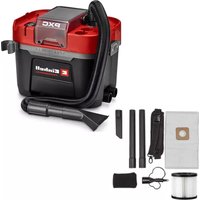


| Product type | Cordless wet and dry vacuum |
| Brand | Einhell |
| Model | TP-VC 18/10 Li BL L |
| Power supply | 18 V lithium-ion battery (not included) |
| Tank volume | 10 L |
| Max. vacuum pressure | 180 hPa (mbar) |
| Dust class | L (for dust with OEL > 1 mg/m³) |
| Weight (without battery) | Approx. 3.6 kg |
| Sound pressure level | 71 dB(A) (uncertainty K=2 dB(A)) |
| Number of suction levels | 2 (I and II) |
| Functions | Dry vacuuming, wet vacuuming, blowing, inflation |
| Included filters | Pleated filter (for dry), foam filter (for liquids), dirt collection bag |
| Included accessories | Flexible suction hose, 2 suction tubes, flat nozzle, suction nozzle, hose holder, carrying belt, inflation adapter |
| Safety | Float safety valve (automatic shut-off when max fill level reached) |
| System compatibility | Compatible with E-Case system (direct mounting or via adapter plate) |
| Maintenance | Regular cleaning of tank and filters; annual leak test by a professional |
| Storage | In a dark, dry, frost-free place (5-30 °C) |
| Wear parts | Battery, filters, collection bag, nozzles |
| Warranty and customer service | See conditions at www.Einhell-Service.com |
Frequently Asked Questions - TP-VC 18/10 Li BL L EINHELL
User questions about TP-VC 18/10 Li BL L EINHELL
0 question about this device. Answer the ones you know or ask your own.
Ask a new question about this device
Download the instructions for your Vacuum Cleaner in PDF format for free! Find your manual TP-VC 18/10 Li BL L - EINHELL and take your electronic device back in hand. On this page are published all the documents necessary for the use of your device. TP-VC 18/10 Li BL L by EINHELL.
USER MANUAL TP-VC 18/10 Li BL L EINHELL
EN Original operating instructions Cordless wet and dry vacuum cleaner
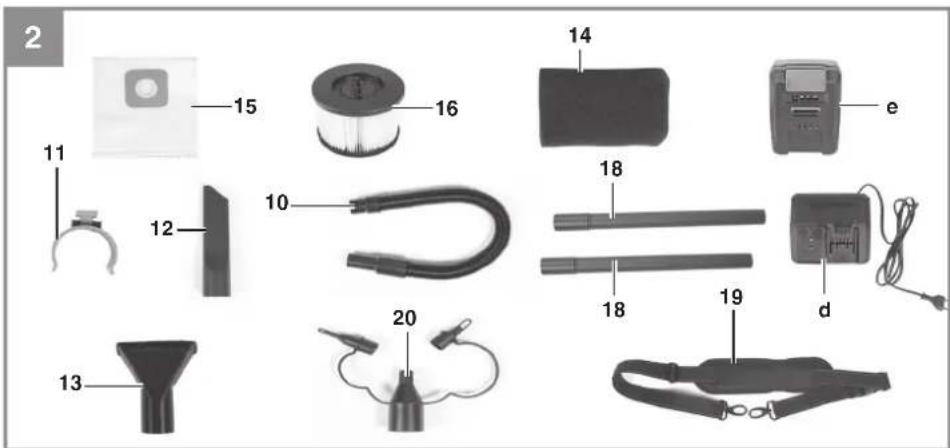
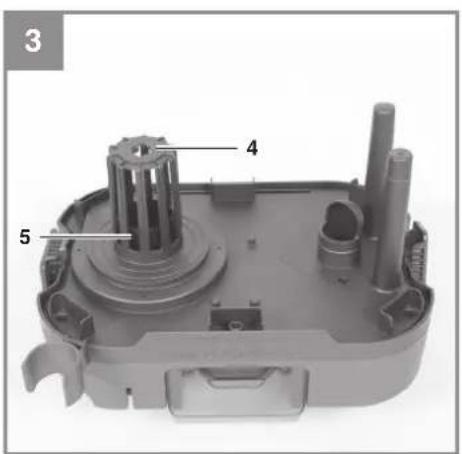
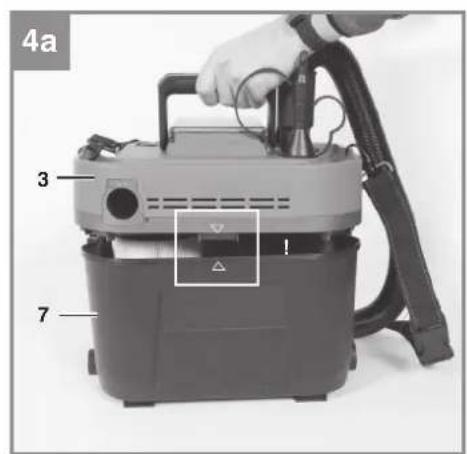
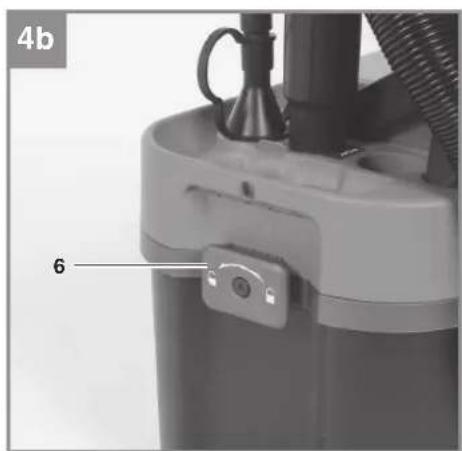
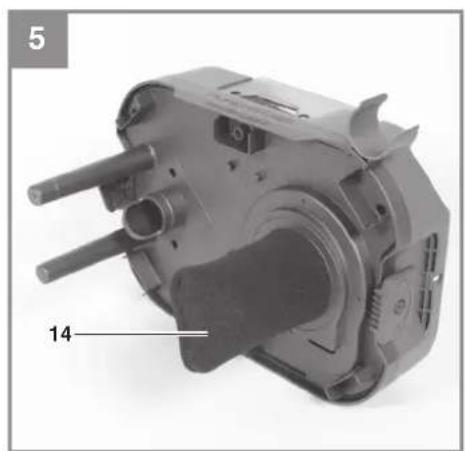
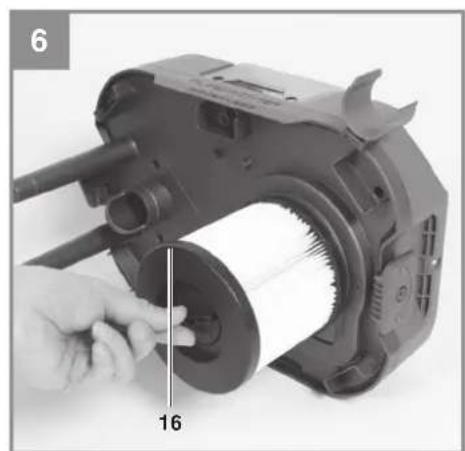
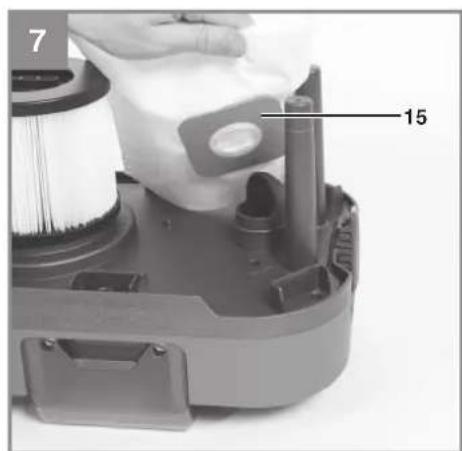
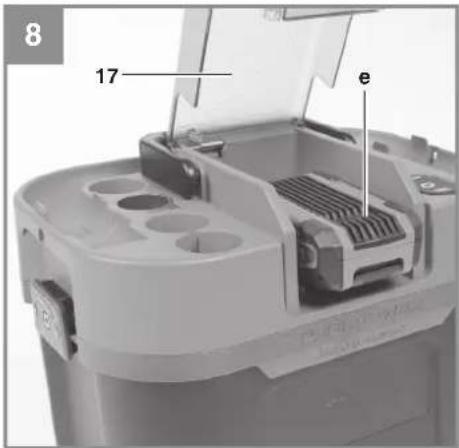
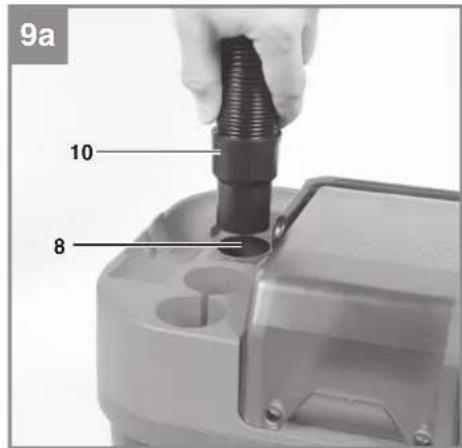
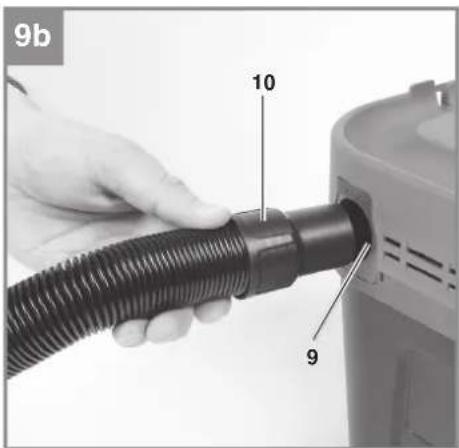
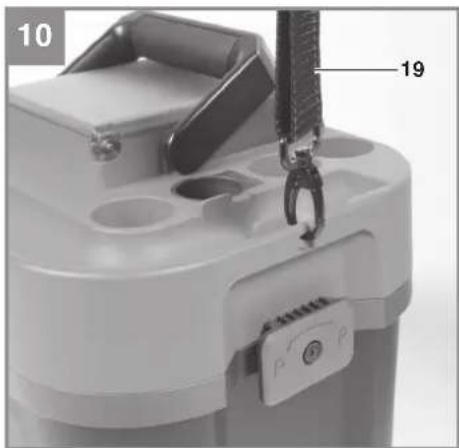
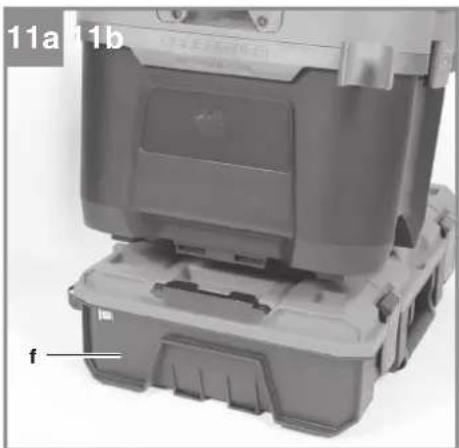
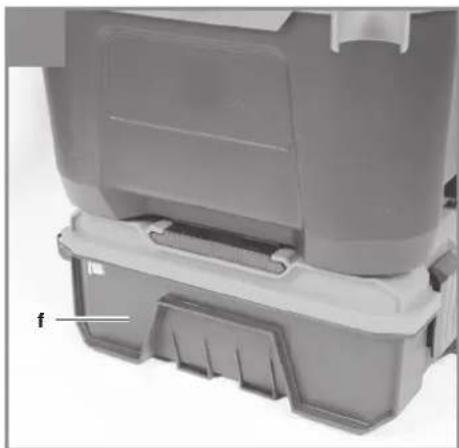
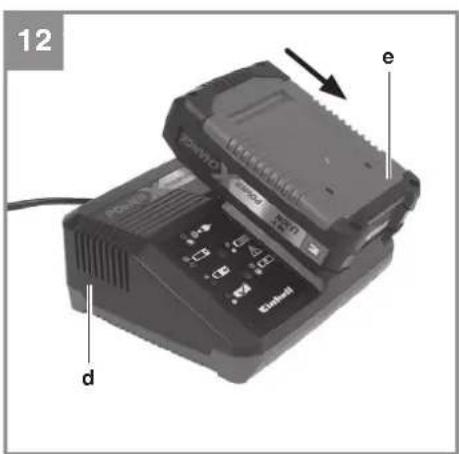
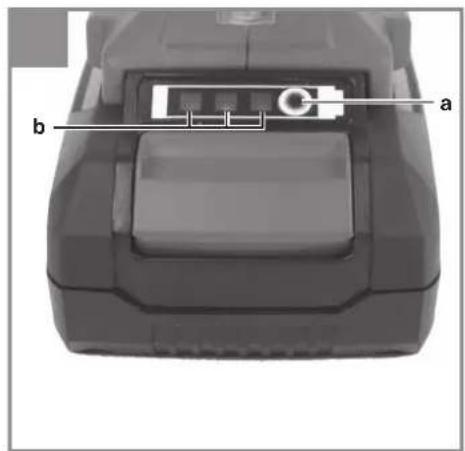
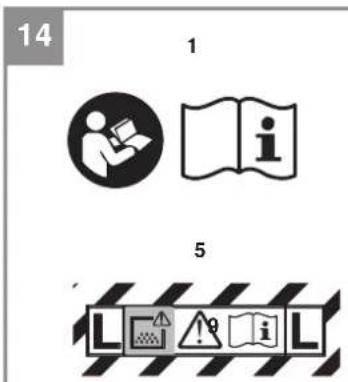
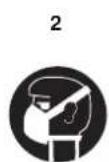


Table of contents
- Safety regulations
- Layout and items supplied
- Proper use
- Technical data
- Before starting the equipment
- Operation
- Cleaning, maintenance and ordering of spare parts
- Disposal and recycling
- Storage
- Charger indicator
Danger!
When using the equipment, a few safety precautions must be observed to avoid injuries and damage. Please read the complete operating instructions and safety regulations with due care. Keep this manual in a safe place, so that the information is available at all times. If you give the equipment to any other person, hand over these operating instructions and safety regulations as well. We cannot accept any liability for damage or accidents which arise due to a failure to follow these instructions and the safety instructions.
Explanation of the symbols used (see Fig. 14)
- Danger! - Read the operating instructions to reduce the risk of injury.
- Caution! Wear a dust mask. Dust which is harmful to health can be generated when machining wood and other materials. Never use the machine to work on materials containing asbestos!
- Beware of general danger.
- Warning! The equipment contains harmful dust. Leave the emptying of the dust collection tank and all maintenance work, including the disposal of the dust collection tank, to specially trained persons wearing the appropriate protective equipment.
- Suitable for the separation of dust with an exposure limit value greater than 1 mg/m3 .
1. Safety regulations
The corresponding safety information can be found in the enclosed booklet.
WARNING!
Read all safety warnings, instructions, illustrations and specifications provided with this power tool. Failure to follow all instructions listed below may result in electric shock, fire and/or serious injury.
Save all warnings and instructions for future reference.
- Important: Read the operating instructions before assembling and using for the first time. • Never clean the equipment with solvents.
- Never leave the equipment unattended when ready for use.
- Keep away from children.
- Never vacuum the following: burning matches, smoldering ash, and cigarette butts; combustible, caustic, inflammable, or explosive
substances, vapors, or liquids. - This equipment is not suitable for vacuuming dust that can be harmful to health. • Store the machine in a dry indoor location. • Never use the machine if it is damaged. - Have the machine serviced only by an authorized after-sales service outlet. - Use the equipment only to carry out work for which it has been designed. • Take extra care when cleaning steps. - Use only genuine accessories and spare parts.
This equipment can be used by children aged 8 years and older and by people with limited physical, sensory, or mental capacities or those with no experience and knowledge if they are supervised or have received instruction on how to use the equipment safely and understand the dangers that result from such use. Children are not allowed to play with the equipment. Unless supervised, children are not allowed to clean the equipment or carry out user-level maintenance work.
2. Layout and items supplied
2.1 Layout (Fig. 1-4)
- Handle
- On/Off switch
- Head
- Filter basket
- Safety float valve
- Locking hook
- Tank
- Suction hose connector
- Blow connector
- Flexible suction hose
- Suction hose holder
- Crevice nozzle
- Suction nozzle
- Foam filter
- Collection bag
- Pleated filter
- Battery cover
- Suction tube
- Shoulder strap
- Inflation adapter
2.2 Items supplied
Please check that the article is complete as specified in the scope of delivery. If parts are missing, please contact our service center or the
sales outlet where you made your purchase at the latest within 5 working days after purchasing the product and upon presentation of a valid bill of purchase. Also, refer to the warranty table in the service information at the end of the operating instructions.
- Open the packaging and take out the equipment with care.
- Remove the packaging material and any packaging and/or transportation braces (if available).
- Check to see if all items are supplied.
- Inspect the equipment and accessories for transport damage. If possible, please keep the packaging until the end of the guarantee period.
Danger!
The equipment and packaging material are not toys. Do not let children play with plastic bags, foils or small parts. There is a danger of swallowing or suffocating!
Flexible suction hose, suction tube (2x), suction hose holder, crevice nozzle, suction nozzle, foam filter, collection bag, pleated filter, shoulder strap, inflation adapter, original operating instructions, safety instructions.
3. Proper use
The wet and dry vacuum cleaner is designed for wet and dry vacuuming using the appropriate filter. The equipment is not suitable for the vacuuming of combustible or explosive substances.
Wet/dry vacuum cleaners to dust class L can only be used for dry vacuuming of harmful dust with an exposure limit value greater than 1 mg/m³ (dust class L) if the appropriate pleated filter is used.
The equipment is to be used only for its prescribed purpose. Any other use is deemed to be a case of misuse. The user / operator and not the manufacturer will be liable for any damage or injuries of any kind caused as a result of this.
4. Technical data
Motor power supply: 18 V DC. Max underpressure: 180 hPa (mbar). Dust class: L. Sound pressure level LdA: 71 dB(A). Uncertainty KpA: 2 dB(A). Tank volume: 10 l. Weight (without battery): approx. 3.6 kg.
5. Before starting the equipment
5.1 Assembling the equipment
Fitting the equipment head (Fig. 4a-4b)
The equipment head (3) is fastened to the tank (7) by the locking hook (6). To remove it, release the locking hook (6) and lift the head (3) off.
Use the markings on the housing to ensure proper alignment when putting the head back on. The head (3) can only be fitted in one specific position. Then lock the locking hook (6) to securely fasten the equipment head (3).
5.2 Fitting the filters
Important!
Never use the wet/dry vacuum without a filter! Always make sure that the filters are securely seated!
Fitting the foam filter (Fig. 5)
For wet vacuuming, slip the supplied foam filter (14) over the filter basket.
Fitting the pleated filter (Fig. 6)
For dry vacuuming always use the supplied additional pleated filter (16). Fit the pleated filter (16) onto the filter basket (4) and secure it with the filter fastening cap. Make sure that no air is sucked through the filter basket (4) without being filtered.
Fitting the collection bag (Fig. 7)
For vacuuming fine, dry dirt it is recommended that you fit the collection bag (15). Slip the collection bag (15) over the intake opening. The collection bag (15) is suitable for dry vacuuming only. The collection bag makes it easier to dispose of the vacuumed dust.
5.3 Fitting the suction hose (Fig. 9a-9b)
Connect the suction hose (10) to the corresponding connector on the wet/dry vac, depending on the application required.
Vacuuming
Connect the suction hose (10) to the suction hose connector (8).
Blowing
Connect the suction hose (10) to the blow connector (9).
5.4 Suction nozzles
Suction nozzle (Fig. 2)
The suction nozzle (13) is suitable for vacuuming solids and liquids on small to medium-sized surfaces. It can be used in a variety of ways, especially on smooth surfaces or low pile rugs.
Crevice nozzle (Fig. 2)
The crevice nozzle (12) is designed for vacuuming solids and liquids in corners, edges and other areas that are difficult to access.
5.5 Charging the battery (Fig. 12)
- Take the battery pack out of the equipment. Do this by pressing the pushlock button on the side.
- Check that your mains voltage is the same as that marked on the rating plate. Insert the power plug of the charger (d) into the socket outlet. The green LED will begin to blink.
- Insert the battery (e) into the charger (d).
- In the section entitled "Charger indicator" you will find a table with an explanation of the LED display on the charger.
The battery can become a little warm during the charging. This is normal.
If the battery pack fails to charge, check:
• whether there is voltage at the socket outlet. • whether there is good contact at the charging contacts.
If the battery pack still fails to charge, please send
• the charger
• and the battery pack
to our customer service center.
To ensure that items are properly packaged and delivered when you send them to us, please contact our customer service or the point of sale at which the equipment was purchased.
When shipping or disposing of batteries and cordless tools, always ensure that they are packed individually in plastic bags to prevent short circuits and fires.
To ensure that the battery pack provides long service, you should take care to recharge it promptly. You must recharge the battery pack when you notice that the performance of the device drops. Never allow the battery pack to become fully discharged. This will cause it to develop a defect.
Fitting the battery (Fig. 8)
Open the battery cover (17). To do so, flip the cover up as shown in Fig. 8. Then slot the battery (e) into the mount and push it forward until you hear the battery engage.
Battery capacity indicator (Fig. 13)
Press the button for the battery capacity indicator (a). The battery capacity indicator (b) shows the charge status of the battery using 3 LEDs.
All 3 LEDs are lit:
The battery is fully charged.
2 or 1 LED(s) are lit:
The battery has an adequate remaining charge.
1 LED flashes:
The battery is empty, recharge the battery.
All LEDs blink:
The battery temperature is too low. Remove the battery from the equipment, keep it at room temperature for one day. If the fault reoccurs, this means that the rechargeable battery has undergone exhaustive discharge and is defective. Remove the battery from the equipment. Never use or charge a defective battery.
Fitting the shoulder strap (Fig. 10)
Use the carabiner hooks to latch the shoulder strap (19) onto the holders provided. Make sure that the hooks are fully latched to ensure a firm hold. The strap length can be adjusted to suit your needs.
6. Operation
6.1 On/Off switch (Fig. 1)
Switch position 0: Off
Switch position I: Vacuum setting 1
Switch position II: Vacuum setting 2
6.2 Dry vacuuming
Use the pleated filter (16) for dry vacuuming (see section 5.2).
Always make sure that the filters are securely seated!
6.3 Wet vacuuming
For wet vacuuming, use the foam filter (14) (see section 5.2).
Always make sure that the filter is securely seated!
When wet vacuuming, the safety float valve (Fig. 3/5) closes when the maximum tank level is reached. At the same time, the suction noise of the equipment will change and become louder. You must then switch off the equipment and empty the tank.
Danger!
The wet/dry vacuum is not suitable for the vacuuming of combustible liquids!
For wet vacuuming, use only the supplied foam filter!
6.4 Blowing
Connect the suction hose (10) to the blow connector (9) on the wet/dry vacuum.
6.5 Use with an E-Case (Fig. 11a, 11b)
The equipment is compatible with the E-Case System. Depending on the E-Case model, there are several ways to attach it:
• Using an adapter plate: For older E-Cases with no additional mounting points. - Fitting it directly: With newer E-Cases that have integrated half-size attachment options. This allows for flexible use with different E-Case versions.
6.6 Inflation adapter (Fig. 2)
The inflation adapter (20) can be combined with the equipment's blowing function to inflate air mattresses, for example. The equipment's normal vacuum function can be used to deflate air mattresses.
7. Cleaning, maintenance and ordering of spare parts
Danger!
Always pull out the battery before starting any cleaning work.
Warning!
Maintenance and cleaning work must be performed in such a way that no danger is created for maintenance personnel or any other persons.
When maintenance and repair work is carried out, all contaminated parts which cannot be sufficiently cleaned must be packed in impermeable bags and disposed of in accordance with the applicable regulations in force in your country.
In the maintenance work area:
- Ensure that filtered forced ventilation is provided • Wear personal protective equipment
- Clean the maintenance work area after completion of the maintenance work
7.1 Cleaning the equipment
- Keep all safety devices, air vents and the motor housing free of dirt and dust as far as possible.
• We recommend cleaning the equipment immediately each time after use.
7.2 Cleaning the equipment head (Fig. 1)
Clean the equipment regularly with a damp cloth and some soft soap. Do not use cleaning agents or solvents; these might be aggressive to the plastic parts in the equipment.
7.3 Cleaning the tank (Fig. 1)
The tank can be cleaned with a damp cloth and some soft soap or under running water, depending on the amount of dirt.
7.4 Cleaning the filter
Cleaning the pleated filter (Fig. 2)
Clean the pleated filter (16) regularly by carefully tapping it and cleaning it with a fine brush or hand brush.
Cleaning the foam filter (Fig. 2)
Clean the foam filter (14) with a little soft soap under running water and allow it to air-dry.
7.5 Maintenance
At regular intervals and before each use, check that the filters in the wet/dry vacuum are securely fitted.
A dust-related inspection, e.g. for damage to the filter or for leaks in the vacuum cleaner, must be carried out at least once a year by the manufacturer or an instructed person.
7.6 Ordering replacement parts:
Please quote the following data when ordering replacement parts:
• Type of machine • Article number of the machine • Identification number of the machine • Replacement part number of the part required
For our latest prices and information please go to www.Einhell-Service.com
8. Disposal and recycling
The equipment is supplied in packaging to prevent it from being damaged in transit. The raw materials in this packaging can be reused or recycled. The equipment and its accessories are made of various types of material, such as metal and plastic. Never place defective equipment in your household refuse. The equipment should be taken to a suitable collection center for proper disposal. If you do not know the whereabouts of such a collection point, you should ask in your local council offices.
9. Storage
Store the equipment and accessories in a dark and dry place at above freezing temperature. The ideal storage temperature is between 5 and 30°C. Store the electric tool in its original packaging.
EN
10. Charger indicator
| Indicator status Explanations and actions | ||
| Red LED Green LED | ||
| Off | Flashing | Ready for useThe charger is connected to the mains and is ready for use; there is no battery pack in the charger |
| On Off Charging | The charger is charging the battery pack in quick charge mode. The charging times are shown directly on the charger.Important! The actual charging times may vary slightly from the stated charging times depending on the existing battery charge. | |
| Off | On | The battery is charged and ready for use. (READY TO GO)The unit then changes over to gentle charging mode until the battery is fully charged.To do this, leave the rechargeable battery on the charger for approx. 15 minutes longer.Action:Take the battery pack out of the charger. Disconnect the charger from the mains supply. |
| Flashing Off | Adapted charging | The charger is in gentle charging mode.For safety reasons the charging is performed less quickly and takes more time. The reasons can be:- The rechargeable battery has not been used for a very long time.- The battery temperature is outside the ideal range.Action:Wait for the charging to be completed; you can still continue to charge the battery pack. |
| Flashing Flashing Fault | Charging is no longer possible. The battery pack is defective.Action:Never charge a defective battery pack.Take the battery pack out of the charger. | |
| On On Temperature fault | The battery pack is too hot (e.g. due to direct sunshine) or too cold (below 0°C ).Action:Remove the battery pack and keep it at room temperature (approx. 20°C ) for one day . | |
EN
Disposal
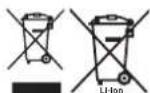
Power tools, rechargeable batteries, accessories and packaging should be sorted for environmental-friendly recycling.
Do not dispose of power tools and batteries/rechargeable batteries into household waste!
Only for EU countries:
According to the Directive 2012/19/EU on waste electrical and electronic equipment and its transposition into national law, power tools that are no longer usable, and, according to the Directive 2006/66/EC, defective or drained batteries must be collected separately and disposed of in an environmentally correct manner.
If disposed incorrectly, waste electrical and electronic equipment may have harmful effects on the environment and human health, due to the potential presence of hazardous substances.
Only for United Kingdom:
According to The Waste Electrical and Electronic Equipment Regulations 2013 (SI 2013/3113) (as amended) and the Waste Batteries and Accumulators Regulations 2009 (SI 2009/890) (as amended), products that are no longer usable must be collected separately and disposed of in an environmentally friendly manner.
The reprinting or reproduction by any other means, in whole or in part, of documentation and papers accompanying products is permitted only with the express consent of the Einhell Germany AG.
Subject to technical changes
EN
Service information
We have competent service partners in all countries named on the guarantee certificate whose contact details can also be found on the guarantee certificate. These partners will help you with all service requests such as repairs, spare and wearing part orders or the purchase of consumables.
Please note that the following parts of this product are subject to normal or natural wear and that the following parts are therefore also required for use as consumables.
| Category Example | |
| Wear parts* Battery, Combination nozzle, crevice nozzle, upholstery nozzle, electric tool adapter, etc. | |
| Consumables* | Pleated filter, foam filter, dirt bag, additional filter, etc. |
| Missing parts | |
* Not necessarily included in the scope of delivery!
In the effect of defects or faults, please register the problem on the internet at www.Einhell-Service.com. Please ensure that you provide a precise description of the problem and answer the following questions in all cases:
• Did the equipment work at all or was it defective from the beginning? • Did you notice anything (symptom or defect) prior to the failure? • What malfunction does the equipment have in your opinion (main symptom)? Describe this malfunction.
FR
Sommaire
2006/42/EC Annex IV Notified Body: Reg. No.: □2000/14/EC_2005/88/EC Annex V □ Annex VI Noise: measured LWA = dB (A) ; guaranteed LWA = dB (A) P = kW; L/∅ = cm Notified Body: □2012/46/EU_(EU)2016/1628 Emission No.
Standard references: EN IEC 60335-1; EN IEC 60335-2-2; EN IEC 55014-1; EN IEC 55014-2
Subject to change without notice
Archive-File/Record: NAPR027643
Documents registrar: Sergey Hirsekorn
Wiesenweg 22, D-94405 Landau/Isar
- EV Cordless wet and dry vacuum cleaner. - PF Aspirateur sans fil pour le nettoyage à sec et humide - IT Aspiratore a batteria - DA Opsuger til våd og tør rengøring - SV Sladdlös våt- och torrdammsugare - CS Akumulátorový vysavač pro vysávání za mokra a za sucha - SK Akumulátorový mokro-suchý vysávač - RO Aspirator cu acumulator pentru curățare umedă și uscată - SL Akumulatorski sesalnik za suho in mokro sesanje - HU Akkumulátoros porszívó száraz és nedves takarításhoz - EL Ηλεκτρική σκούπα για υγρό και στεγνό καθάρισμα - PT Aspirador universal sem fio - BS Akumulatorski usisivač za mokro i suho čišćenje - PL Akumulatorowy odkurzacz do pracy na sucho i na mokro - TR Akülü ıslak-kuru elektrikli süpürge - VI Máy hút bụi không dây cho làm sạch khô và ướt - ET Aku-tolmuimeja märg- ja kuivpuhastuseks - LT Akumuliatorinis dulkių siurblys šlapiam ir sausam valymui - LV Akumulatora putekļsūcējs mitrai un sausai tīrīšanai - BS Akumulatorski usisivač za suho i mokro čišćenje - SK Akumulátorový vysávač na suché a mokré vysávanie - HR Akumulatorski usisivač za suho i mokro čišćenje

Declaration of conformity
We, Einhell UK Ltd
Champions Business Park, First Floor Unit 10, Arrowe Brook Rd, Upton, Wirral CH49 0AB, United Kingdom
declare the conformity to UK standards and legislation was assessed for:
Cordless wet and dry vacuum cleaner TP-VC 18/10 Li BL L (Einhell)
UK legislation
□ Simple Pressure Vessels (Safety) Regulation □ Electrical Equipment (Safety) Regulation □ Radio Equipment Regulation □ Personal Protective Equipment Regulation ☐ The Ecodesign for Energy-Related Products and Energy Information Regulation X The Restriction of the Use of Certain Hazardous Substances in Electrical and Electronic Equipment Regulation □ Noise Emission in the Environment by Equipment for use Outdoors Regulation X Electromagnetic Compatibility Regulation □ Measuring Instruments Regulation ☐ Pressure Equipment (Safety) Regulation
Annex V
Annex VI
Noise: measured L WA = dB (A); guaranteed L WA = dB (A) P = kW; L/∅ = cm UK Approved Body:
□ Supply of Machinery (Safety) Regulation
Annex IV
UK Approved Body:
UKTE Certificate No.:
Standards: BS EN IEC 60335-1; BS EN IEC 60335-2-2; BS EN IEC 55014-1; BS EN IEC 55014-2
Wirral, 2025.05.03
Tom Chambers, Managing Director Einhell UK Ltd.
Archive-File/Record: NAPR027643
Article Number: 23.471.55 I.-No.: 21014
Subject to change without notice Wiesenweg 22, 94405 Landau/Isar, Germany
Documents registrar: Sergey Hirsekorn
EH 07/2025 (01)


- TABLE OF CONTENTS
- DANGER
- EXPLANATION OF THE SYMBOLS USED (SEE FIG. 14)
- SAFETY REGULATIONS
- WARNING
- LAYOUT AND ITEMS SUPPLIED
- LAYOUT (FIG. 1-4)
- ITEMS SUPPLIED
- PROPER USE
- TECHNICAL DATA
- BEFORE STARTING THE EQUIPMENT
- ASSEMBLING THE EQUIPMENT
- FITTING THE FILTERS
- IMPORTANT
- FITTING THE FOAM FILTER (FIG. 5)
- FITTING THE PLEATED FILTER (FIG. 6)
- FITTING THE COLLECTION BAG (FIG. 7)
- FITTING THE SUCTION HOSE (FIG. 9A-9B)
- VACUUMING
- BLOWING
- SUCTION NOZZLES
- SUCTION NOZZLE (FIG. 2)
- CREVICE NOZZLE (FIG. 2)
- CHARGING THE BATTERY (FIG. 12)
- FITTING THE BATTERY (FIG. 8)
- BATTERY CAPACITY INDICATOR (FIG. 13)
- ALL 3 LEDS ARE LIT
- OR 1 LED(S) ARE LIT
- LED FLASHES
- ALL LEDS BLINK
- FITTING THE SHOULDER STRAP (FIG. 10)
- OPERATION
- ON/OFF SWITCH (FIG. 1)
- DRY VACUUMING
- WET VACUUMING
- USE WITH AN E-CASE (FIG. 11A, 11B)
- INFLATION ADAPTER (FIG. 2)
- CLEANING, MAINTENANCE AND ORDERING OF SPARE PARTS
- IN THE MAINTENANCE WORK AREA
- CLEANING THE EQUIPMENT
- CLEANING THE EQUIPMENT HEAD (FIG. 1)
- CLEANING THE TANK (FIG. 1)
- CLEANING THE FILTER
- CLEANING THE PLEATED FILTER (FIG. 2)
- CLEANING THE FOAM FILTER (FIG. 2)
- MAINTENANCE
- ORDERING REPLACEMENT PARTS
- DISPOSAL AND RECYCLING
- STORAGE
- EN
- CHARGER INDICATOR
- DISPOSAL
- ONLY FOR EU COUNTRIES
- ONLY FOR UNITED KINGDOM
- SERVICE INFORMATION
- FR
- SOMMAIRE
- DECLARATION OF CONFORMITY
- CORDLESS WET AND DRY VACUUM CLEANER TP-VC 18/10 LI BL L (EINHELL)
- UK LEGISLATION
Brand : EINHELL
Model : TP-VC 18/10 Li BL L
Category : Vacuum Cleaner