Vado - Car seat Kinderkraft - Free user manual and instructions
Find the device manual for free Vado Kinderkraft in PDF.



| Product type | Child car seat group 0+ to II |
| Weight group | Birth to 25 kg (group 0+: ≤13 kg, group I: 9-18 kg, group II: 15-25 kg) |
| Safety standard | UN R44/04 |
| Installation | Rearward facing (RWF) for 0+ and I; Forward facing (FWF) for I and II |
| Fixations | ISOFIX + Top Tether |
| Harness | Integrated 5-point harness, removable for group II |
| Backrest recline | 4 adjustable positions (including very reclined position for RWF) |
| Headrest adjustment | 11 heights |
| Cover material | Washable fabric (30°C, delicate cycle) |
| Cover cleaning | Wash at 30°C, do not wring or tumble dry |
| Harness cleaning | Warm soapy water |
| Warranty | 24 months (extendable to 10 years with online registration) |
| Included accessories | Infant insert, shoulder pads, Top Tether strap, belt guides |
| Plastic maintenance | Water and mild soap, no solvents |
Frequently Asked Questions - Vado Kinderkraft
User questions about Vado Kinderkraft
0 question about this device. Answer the ones you know or ask your own.
Ask a new question about this device
Download the instructions for your Car seat in PDF format for free! Find your manual Vado - Kinderkraft and take your electronic device back in hand. On this page are published all the documents necessary for the use of your device. Vado by Kinderkraft.
USER MANUAL Vado Kinderkraft
natural_image
Gray circular button with a white play triangle icon (no text or symbols)See HOW TO use me!
at youtube.com/kinderkraftofficial or kinderkraft.com

natural_image
Line drawing of a car comfort seat with no text or symbolsCZ NÁVOD K OBSLUZE
text_image
A B C D E F G H I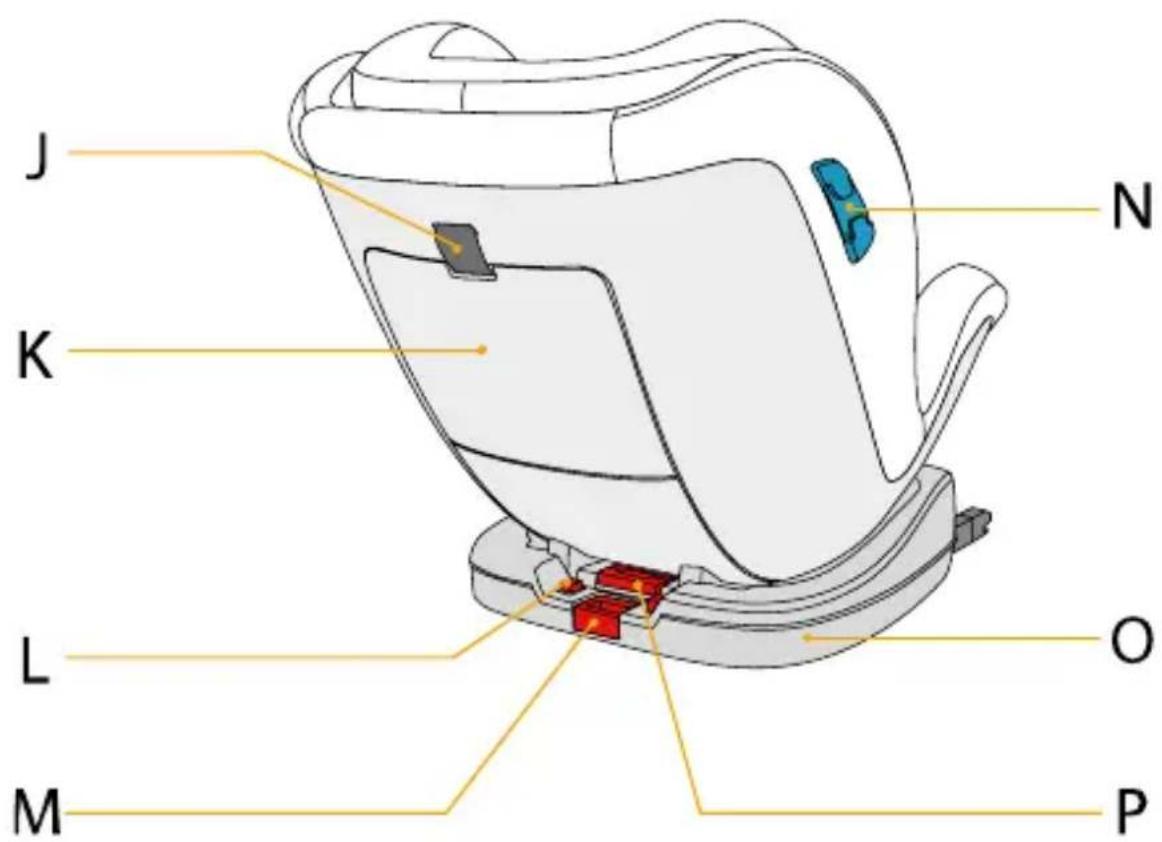
text_image
J K L M N O P4.1

natural_image
Line drawing of hands holding a medical device (no text or symbols)4.2a
natural_image
Diagram of a car seatbelt mechanism with directional arrows indicating movement (no text or symbols)4.2b

text_image
Illustration of a child in a car seat with checkmarks and a red X mark indicating failure or rejection.4.3

text_image
Illustration showing car seat adjustment with arrows indicating movement, accompanied by a magnified view of the seat being adjusted.4.4a
text_image
Diagram showing car seatbelt buckle adjustment with arrows indicating changes in seatbelt usage4.4b
text_image
Diagram illustrating a medical procedure involving two surgical clips and a hand holding a device, with blue arrows indicating direction of movement.4.4c

natural_image
Top-down anatomical diagram of a car seatbelt and seat, showing no text or labels4.4d

text_image
Illustration of a child wearing a seatbelt with red and green checkmarks indicating incorrect or correct actions.4.4e

text_image
CLICK4.5
natural_image
Illustration of a child in a car seat and its side view showing the same seat with a bandage and cord (no text or symbols present)5.1a

text_image
Illustration showing car seat assembly steps with Chinese text labels indicating key states of fastening5.1b

text_image
Diagram illustrating vehicle seatbelt usage with red and green checkmark indicators5.1c
text_image
Diagram of car seatbelt buckle assembly with Chinese annotations showing adjustment steps5.1d

text_image
Diagram showing car seatbelt buckle adjustment with highlighted cable attachment point and blue directional arrows indicating movement.5.1e
text_image
Diagram illustrating car seatbelt usage with checkmark and cross symbols indicating different states or conditions5.1f

natural_image
Illustration of a car seatbelt with a yellow band and blue buttons, showing a close-up of the band (no text or symbols present)5.1g
natural_image
Illustration of a hand holding a yellow bandaged object with a black clip attached, next to a white sheet (no text or symbols)
text_image
A B C5.1h
natural_image
Illustration of a hand using a yellow airplane seatbelt to lift a car (no text or symbols)
natural_image
Two orange belt switches with a red X mark and green checkmark inside a red circle (no text or symbols)5.2a

text_image
Diagram showing car seat assembly with red arrows indicating left and right movement directions, and a magnified inset showing hand fastening.5.2b

text_image
Diagram showing a hand holding a key inserted into a car seat, with arrows indicating movement or positioning.5.2c
text_image
Diagram showing car seatbelting instructions with check and cross icons indicating correct and incorrect states5.2d

text_image
Diagram illustrating a medical procedure for catheter insertion, showing step-by-step insertion and magnified detail of the procedure.5.2e
natural_image
Illustration of a hand holding a tool interacting with a device (no text or symbols visible)
text_image
A B C5.2f

natural_image
Illustration of a hand holding a yellow cable with a red arrow indicating upward motion (no text or symbols)
natural_image
Illustration of two belt buckle clips with a red X mark and green checkmark (no text or symbols)5.3a

natural_image
Line drawing of a car seat with seatbelt and seat, no text or symbols present5.3b
text_image
Diagram showing car seat assembly with red arrows indicating left side and right side of seat, and a close-up of the hand holding a cable.5.3c

text_image
Click5.3d

text_image
Diagram showing car seatbelting instructions with checkmark and cross symbols indicating selection or cancellation5.3e

text_image
Click5.3f
text_image
Click5.3g

natural_image
Diagram of a mechanical assembly with orange and red components, no visible text or symbols5.3h

natural_image
Illustration of a child wearing a seatbelt and orange belt, with arrows indicating seat movement (no text or symbols)6.1a

natural_image
Illustration of a car seatbelt being adjusted for a seatbelt, showing hand placement and red arrows indicating adjustment (no text or symbols)6.1b

natural_image
Mechanical assembly diagram showing a piston and crankshaft mechanism with a blue arrow indicating rotation (no text or symbols)6.1c
natural_image
Illustration of hands assembling or adjusting a mechanical component with orange and blue directional arrows (no text or symbols)6.1d
natural_image
Illustration of a hand holding a tool with directional arrows indicating movement or process (no text or symbols present)6.1e
natural_image
Illustration of hands holding two plastic containers with orange connectors, showing fluid flow direction (no text or symbols)6.1f

natural_image
Illustration of a hand using a tool to press down a car (no text or symbols visible)6.1g

natural_image
Illustration of a hand holding a small object with an arrow indicating direction (no text or symbols)6.1h

text_image
Diagram showing hand positioning of a car tire with an orange tape and magnified detail view6.2a

natural_image
Illustration of a car seat with blue airflow arrows indicating movement or flow (no text or symbols)6.3a

natural_image
Diagram of a car seat with blue airflow indicators and a 'Sv2' label at the bottom (no text or symbols on the diagram itself)6.3b

natural_image
Illustration of a hand holding a small orange object with a blue arrow indicating direction (no text or symbols)6.3c
natural_image
Illustration of a hand using a tool to adjust or install a component, with no visible text or symbols.6.3d

natural_image
Illustration of hands holding a device with arrows indicating movement or force (no text or symbols)6.3e

natural_image
Illustration of a hand holding a tool with arrows indicating process flow (no text or symbols)6.3f

natural_image
Illustration of hands assembling a mechanical component with orange and gray components (no text or symbols)6.3g

natural_image
Illustration of a car seat with white and gray seats, no text or symbols presentCZ
Please carefully read the instruction manual before using the child car seat. Ensuring the safety of your child is your responsibility, and failure to read this manual may affect it.
1. Elements of the safety seat (Fig. 1)
A. Headrest
I. Belt route guider
B. Shoulder pads J. Top tether strap (in the compartment)
C. Crotch strap K. Opened compartment
D. Harness adjustment strap L. Base safety button
E. ISOFIX attachments M. ISOFIX attachment release button
F. Headrest adjustment button N. Belt route guide (back mounting)
G. Harness buckle O. Base
H. Tilt adjustment lever P. Base release lever
2. Use
The safety seat is designed for children in the weight group from 0+ to 2, i.e. from birth to the body weight of 25 kg (from birth up to 7 years of age).
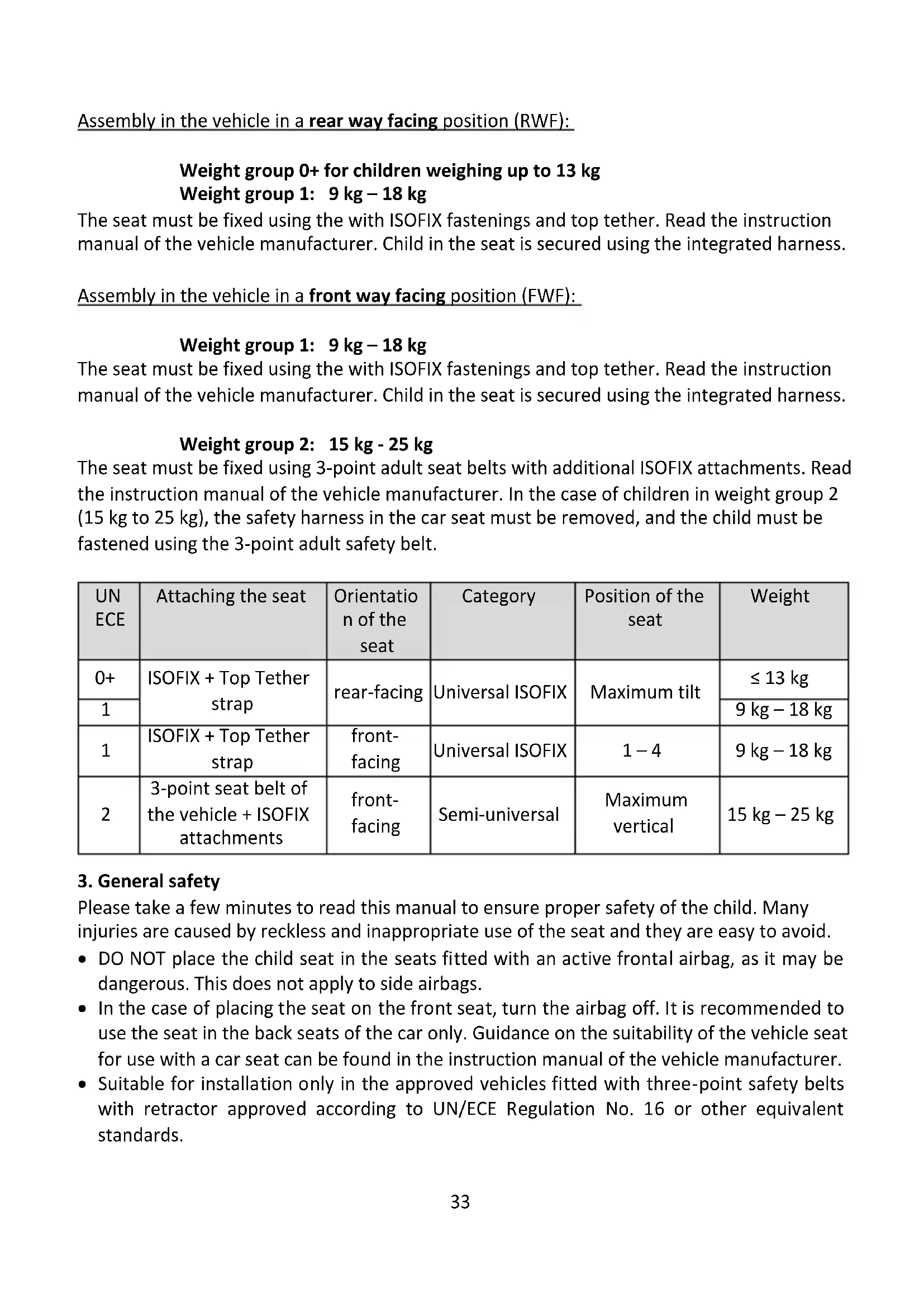
Weight group 0+ for children weighing up to 13 kg
Weight group 1: 9 kg – 18 kg
The seat must be fixed using the with ISOFIX fastenings and top tether. Read the instruction manual of the vehicle manufacturer. Child in the seat is secured using the integrated harness.
Assembly in the vehicle in a front way facing position (FWF):
Weight group 1: 9 kg – 18 kg
The seat must be fixed using the with ISOFIX fastenings and top tether. Read the instruction manual of the vehicle manufacturer. Child in the seat is secured using the integrated harness.
Weight group 2: 15 kg - 25 kg
The seat must be fixed using 3-point adult seat belts with additional ISOFIX attachments. Read the instruction manual of the vehicle manufacturer. In the case of children in weight group 2 (15 kg to 25 kg), the safety harness in the car seat must be removed, and the child must be fastened using the 3-point adult safety belt.
| UN ECE | Attaching the seat | Orientation of the seat | Category | Position of the seat | Weight |
| 0+ | ISOFIX + Top Tether strap | rear-facing | Universal ISOFIX | Maximum tilt | ≤ 13 kg |
| 1 | 9 kg – 18 kg | ||||
| 1 | ISOFIX + Top Tether strap | front-facing | Universal ISOFIX | 1 – 4 | 9 kg – 18 kg |
| 2 | 3-point seat belt of the vehicle + ISOFIX attachments | front-facing | Semi-universal | Maximum vertical | 15 kg – 25 kg |
3. General safety
Please take a few minutes to read this manual to ensure proper safety of the child. Many injuries are caused by reckless and inappropriate use of the seat and they are easy to avoid.
- DO NOT place the child seat in the seats fitted with an active frontal airbag, as it may be dangerous. This does not apply to side airbags.
- In the case of placing the seat on the front seat, turn the airbag off. It is recommended to use the seat in the back seats of the car only. Guidance on the suitability of the vehicle seat for use with a car seat can be found in the instruction manual of the vehicle manufacturer.
-
Suitable for installation only in the approved vehicles fitted with three-point safety belts with retractor approved according to UN/ECE Regulation No. 16 or other equivalent standards.
-
Note that any straps attaching the child seat to the vehicle must be tight; the restraint harness must fit the child's body and the belt/harness must not be twisted.
- The seat should be replaced if it has been subjected to violent stresses in an accident.
- The seat must not be subject to any modifications.
- The child safety seat should be protected from direct sunlight, otherwise heated parts can burn your child.
- Never leave your child in the seat unattended.
- It should be noted that any bags and other items must be sufficiently secured, in particular on the parcel shelf, as otherwise in the event of a collision this can lead to injury.
- The seat cannot be used without the cover.
- Do not use replacement covers other than those recommended by the manufacturer, since it is an integral part of the safety seat.
- It is recommended to keep the car seat instruction manual for the entire period of its use.
- Do not use other attaching points than those described in the instruction manual and marked on the child seat.
- All rigid items and plastic parts of the child seat must be located and installed in such a way to avoid, under normal operating conditions of the vehicle, blocking by a sliding seat or vehicle door.
- Regularly check the technical condition of the harness, paying special attention to the fasteners/holders, seams and adjustment elements.
- Discontinue use of the car seat if its parts are damaged or loosened.
- In case of an emergency situation, it is important to quickly unfasten the seat belts. This means that the harness release button is not fully secured; make sure that your child does not play with the buckle.
- The back of the seat must rest against the back of the car seat. Please make sure that the headrest does not create an unwanted space between the car seat backrest and back seat of the vehicle. Some car headrests may prevent proper installation of the car seat so they must be disassembled first.
- Make sure that the belt is properly placed in the guides. The safety belt buckle must be below the belt guide of the child safety seat (the buckle must not be in contact with the guide). If in doubt about this issue, contact the child seat manufacturer.
- You should give your child a good example and always fasten your belts. An adult with unfastened safety belts may also be a threat to the child.
- Before each trip by car, make sure that the seat is properly secured.
- The car seat must be protected even when not in use. Unattached seat can cause injuries to passengers even during emergency braking.
4. Securing your child
4.1 Seat cushion
The cushion, together with the headrest pad, improves comfort and provides additional support for very small children. We recommend using the cushion (Fig. 4.1) until the child
reaches the weight of 13 kg. We recommend using additional internal foam filling until the child reaches the weight of 5.5 kg. The foam filling can be removed using the removable pocket at the back of the newborn cushion.
4.2 Headrest height
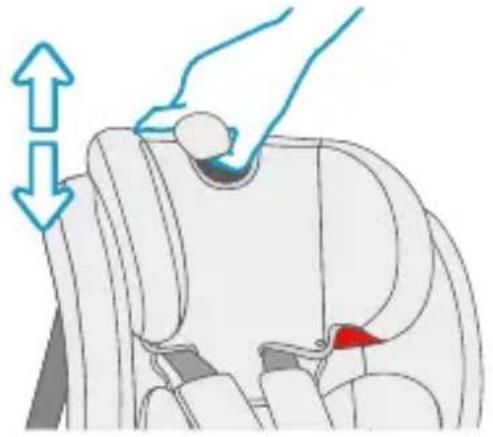
Pull the headrest adjustment button, lift or push-in the headrest to adjust its height (Fig. 4.2a). The headrest may be adjusted in 10 different heights.
- In the case of weight group 0+ and 1, the headrest can be adjusted at 8 different heights without removing the shoulder strap pads. The proper shoulder strap height should be set to make the strap entering the car seat backrest just above the child's shoulders or equally with their height. Ensure that the shoulder straps fit well to the child's shoulders.
- The remaining 3 positions for weight group 2 can be adjusted by removing the shoulder strap pads and hiding the harness (see Section 6.1). The shoulder belt should be positioned between the shoulder and the neck of the child. The headrest should fit well to the child's head.
4.3 Backrest tilt adjustment mechanism (Fig. 4.3).
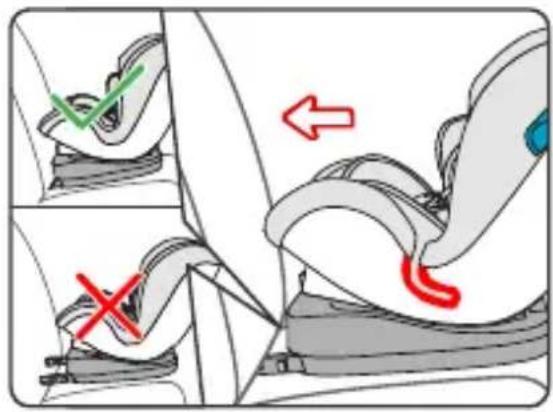
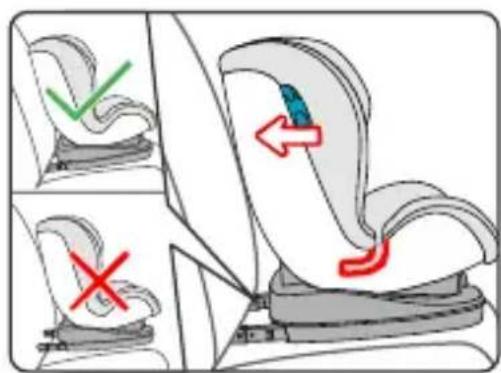
The tilt of the safety seat can be adjusted in 4 positions using the lever (H). Pull the lever, and then slide the seat. Release the lever in the desired position. Move the seat slightly until you hear a clearly audible “click” – the seat is secured in position.
In groups 0+ and 1 (up to 18kg) with the rear-facing seat, use maximum tilt position.
In group 1 (9kg-18kg) with the front-facing seat, all positions may be used.
In group 2 (15kg -25kg) with the front-facing seat, use the most vertical (straight) position.
4.4 Securing your child with the harness
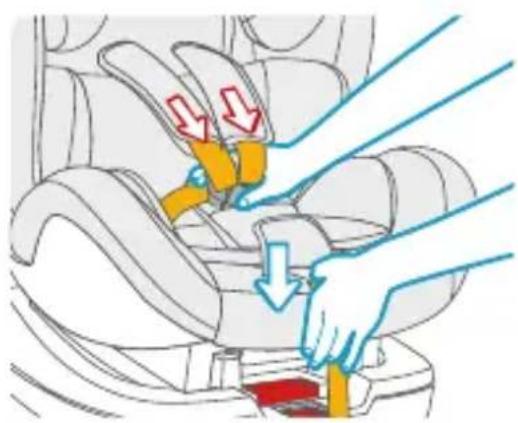
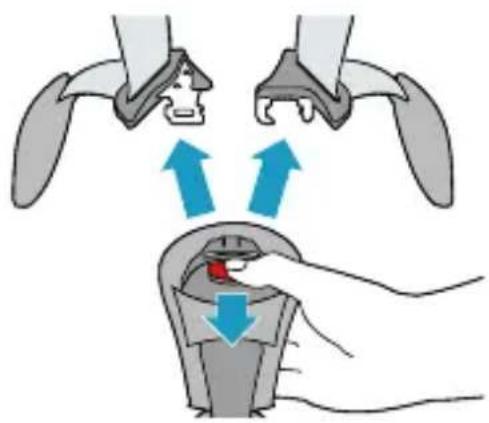
- Loosen the harness straps by pressing the button at the adjustment strap (D) and pulling the harness. Remember! Do not pull the shoulder pads (Fig. 4.4a). Unlock the buckle (Fig. 4.4b).
- Place harness straps on the sides of the seat (Fig. 4.4c). Place your child in the seat.
- Adjust the headrest to the child's height Fig. 4.4d) (see also Section 4.2).
- Join two buckle latches to engage them and insert them into the buckle (G) until you hear a “click” (Fig. 4.4e).
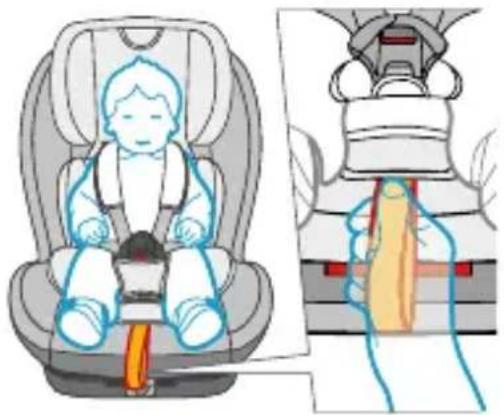
4.5 Tightening the harness (Fig. 4.5)
- Pull the shoulder straps to eliminate play in the hip strap so that the harness lies flat.
- Pull the harness with the harness adjustment strap (D), until the harness lies flat and close to the child's body. Ensure that the shoulder straps fit well to the child's shoulders. Proper tension is ensured, if you can insert one finger (approx. 1 cm) between the shoulder strap and the chest of the child.
NOTE The harnesses lap straps must be placed as low as possible on the child's hips. Make sure that the harness straps are not twisted.
5. Installation in the vehicle
In case of sudden braking or an accident, persons not using seat belts can cause damage to other passengers.
Always check the following:
- The seat backrests are locked in the vehicle (i.e. foldable back seat is locked).
- All heavy objects and sharp edges are secured (e.g. on the rear parcel shelf).
- All passengers fastened their seat belts.
- The safety seat is always protected, even if the child is not in it.
Vehicle security
Seat covers in some vehicles can be made of soft materials so the safety seat may leave some traces. They can be avoided by placing a blanket or towel under the safety seat.
5.1 Installing the child's seat rearward facing, for children in weight group 0+ and 1 (up to 18 kg) using ISOFIX system and the top tether strap.
IMPORTANT The instruction manual of the vehicle manufacturer specifies the location of the ISOFIX attachment points and the top tether strap, and other necessary information regarding the installation of the seat in the car. The user MUST read the instruction manual of the vehicle manufacturer.
- Press and hold the locking button (L), and concurrently pull the lever (P) outwards. You may then disconnect the base of the safety seat. Install the safety seat on the base, rearward facing (Fig. 5.1a). Press the locking button (L), and the fixings of the safety seat will latch in place.
NOTE! Check whether the seat is well protected on the basis, all fixings are properly locked, and the seat components do not separate (Fig. 5.1b).
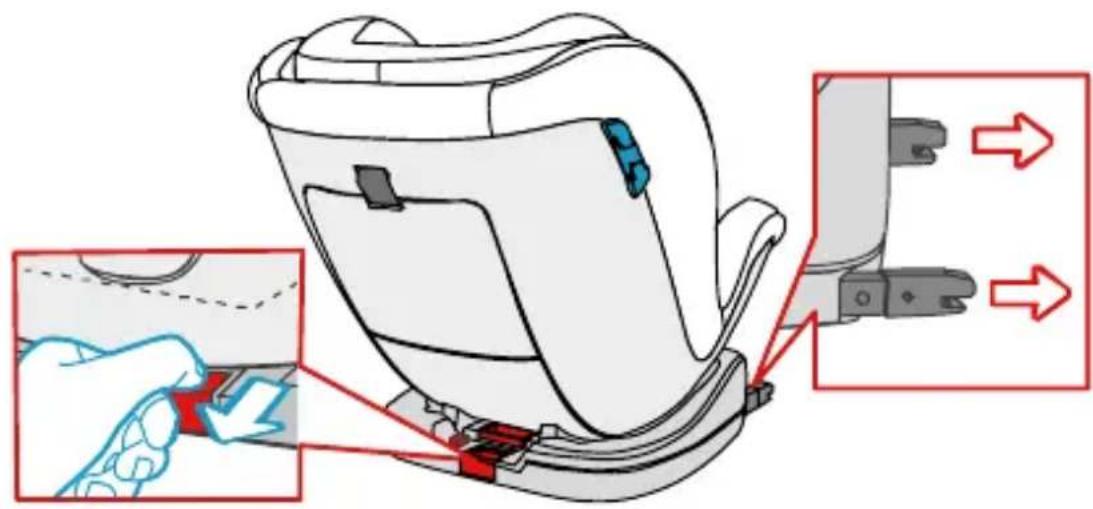
- Pull the attachments release buttons (M) and simultaneously pull the black strap on the opposite side of the seat base to pull out the ISOFIX attachments (Fig. 5.1c). The strap is located between the ISOFIX attachments.
- Open the cover (K) of the compartment located on of backrest of the seat.
- Take out the strap with the hook (J), then place it on the child headrest and close the compartment cover.
- Place the child seat on the vehicle's seat close to the backrest. The child seat must be placed in the rearward-facing position. The tilt of the backrest of the seat must be set in the most inclined position.
- Grab the seat with both hands and push the two fixing hooks to the car seat attachments (Fig. 5.1d).
- When you hear the "click" of each of ISOFIX attachments, pull the attachment release button (M) and simultaneously push the child seat firmly to the backrest (Fig. 5.1e). NOTE! The locking attachments are secure only when both button markers are green.
- Grab the child seat and make sure it is securely fastened without play. If it moves and ISOFIX attachments slip out, repeat the previous steps.
- Now attach the top tether strap. Press the button releasing the top tether strap buckles (J) to adjust its length. The strap must be long enough to allow placing the hook in the attachment point in the back seat. The strap should pass through the blue strap guide (N) (Fig. 5.1f).
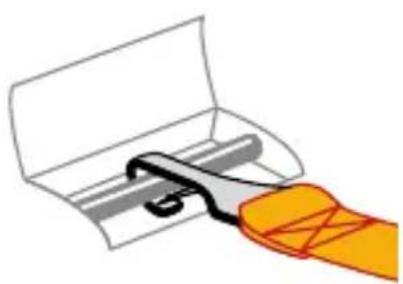
- Place the top tether hook in the attachment point of the vehicle recommended in the instruction manual of the vehicle manufacturer (Fig. 5.1g).
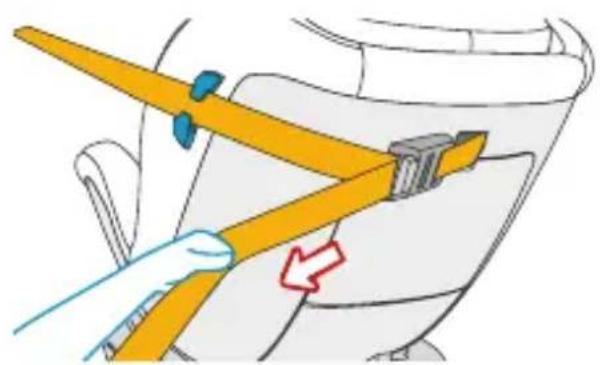
- Pull the other end of the top tether strap in order to tighten it. The top tether strap is properly tightened, when the green indicator in buckle is visible (Fig. 5.1h).
- Secure the child in the seat in accordance with Sections 4.4 and 4.5.
5.2 Installing the child's seat in weight group 1 (9-18kg) using ISOFIX system and the top tether strap.
IMPORTANT The instruction manual of the vehicle manufacturer specifies the location of the ISOFIX attachment points and the top tether strap, and other necessary information regarding the installation of the seat in the car. The user MUST read the instruction manual of the vehicle manufacturer.
- Press and hold the locking button (L), and concurrently pull the lever (P) outwards. You may then disconnect the base of the safety seat. Install the safety seat on the base, forward facing (contrary to what is shown in Fig. 5.1a). Press the locking button (L), and the fixings of the safety seat will latch in place.
NOTE! Check whether the seat is well protected on the basis, all fixings are properly locked, and the seat components do not separate (Fig. 5.1b). - Pull the attachments release buttons (M) and simultaneously pull the black strap on the opposite side of the seat base to pull out the ISOFIX attachments (Fig. 5.2a). The strap is located between the ISOFIX attachments.
- Open the cover (K) located on of backrest of the seat.
- Take out the strap with the hook (J), then place it on the child headrest and close the cover.
- Place the child seat on the vehicle's seat close to the backrest. The child seat must be placed in the front-facing position.
- Set the backrest of the child seat in a convenient position (one of 4 positions).
NOTE: Any change in the tilting of the child seat during its use, requires the re-adjustment of the top tether strap.
- Grab the seat with both hands and push the two fixing hooks to the car seat attachments (Fig. 5.2b)..
- When you hear the "click" of each of ISOFIX attachments, pull the attachment release button (M) and simultaneously push the child seat firmly to the backrest (Fig. 5.2c).
NOTE! The locking attachments are secure only when both button markers are green.
- Grab the child seat and make sure it is securely fastened without play. If it moves and ISOFIX attachments slip out, repeat the previous steps.
-
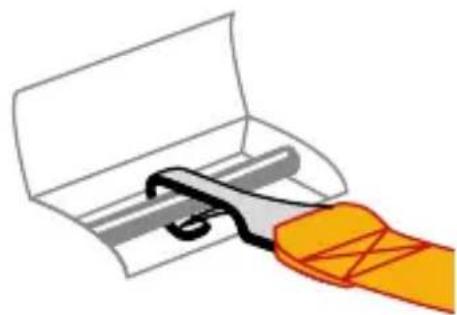
Now attach the top tether strap. Press the button releasing the top tether strap buckles (J) to adjust its length. The strap must be long enough to allow placing the hook in the attachment point in the back seat (Fig. 5.2d).
-
Place the top tether hook in the attachment point of the vehicle recommended in the instruction manual of the vehicle manufacturer (Fig. 5.2e).
- Pull the other end of the top tether strap in order to tighten it. The upper strap is properly tightened, when the green indicator in buckle is visible (Fig. 5.2f).
- Secure the child in the seat in accordance with Sections 4.4 and 4.5.
5.3 Installing the front-facing child safety seat for weight group 2 (15kg-25kg) using the vehicle 3-point safety belts and additional lower ISOFIX attachments
IMPORTANT The instruction manual of the vehicle manufacturer specifies the location of ISOFIX fixing points and other necessary information regarding the installation of the seat in the car. The user MUST read the instruction manual of the vehicle manufacturer.
- Before installation, hide the seat harness, see Section 6.1 (Fig. 5.3a).
Remember: Store the baby cushion and protective pads in a safe place for the future use.
• Install the seat on the base front-facing.
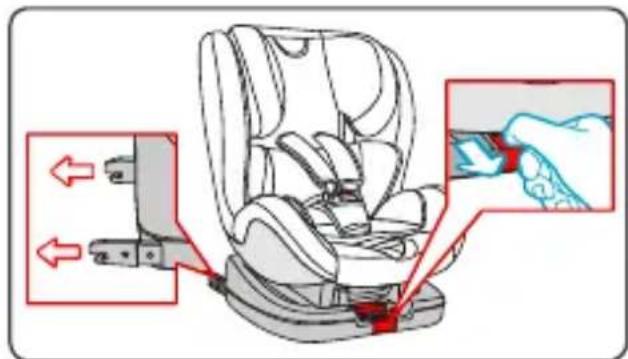
NOTE! Check whether the seat is well protected on the basis, all fixings are properly locked, and the seat components do not separate. - Pull the attachments release buttons (M) and simultaneously pull the black strap on the opposite side of the seat base to pull out the ISOFIX attachments (Fig. 5.3b). The strap is located between the ISOFIX attachments.
- Place the child seat on the vehicle's seat close to the backrest. The child seat must be placed in the front-facing position.
- The tilt of the backrest of the seat must be set in the straight (most vertical) position.
- Grab the seat with both hands and push the two fixing hooks to the car seat attachments (Fig. 5.3c)..
- When you hear the "click" of each of ISOFIX attachments, pull the attachment release button (M) and simultaneously push the child seat firmly to the backrest (Fig. 5.3d). NOTE! The locking attachments are secure only when both button markers are green.
- Grab the child seat and make sure it is securely fastened without play. If it moves and ISOFIX attachments slip out, repeat the previous steps.
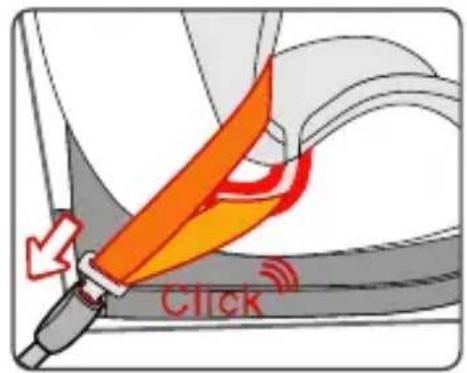
- Place the child in the seat and fasten the vehicle seat belt, making sure you hear a “click” (Fig. 5.3e).
- Guide the vehicle's seat belt through both lap belt guides (I), as shown in Fig. 5.3f.
- Pull the shoulder strap through the red guide under the headrest (Fig. 5.3g).
- Adjust the headrest to the child's height (see Section 4.2).
- Tighten the vehicle seat belt by pulling the first section of the hip belt, and then the shoulder belt section (Fig. 5.3h).
Make sure that the hip belt is stretched as low as possible over the child's hips, placed in the guides and fixed in the buckle. The shoulder belt should be positioned between the shoulder and the neck of the child.
5.4 Removing the seat (ISOFIX fastening system)
- Press the release buttons (E) located on ISOFIX attachments. The attachments are released and the colour of the markers turns red. Press the button (M) and slide ISOFIX arms back into the child seat base.
6.1 Removing the 5-point harness
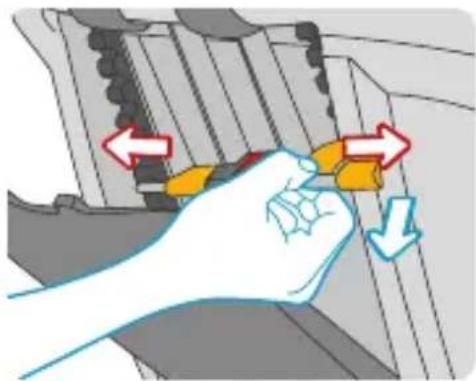
- Loosen the harness straps by pressing the button at the adjustment strap (D) and pulling the harness straps (Fig. 6.1a), unlock the buckle (G). Open the compartment (K) on the back of the seat (Fig. 6.1b).
- Pull the shoulder straps out from the metal connector (Fig. 6.1c).
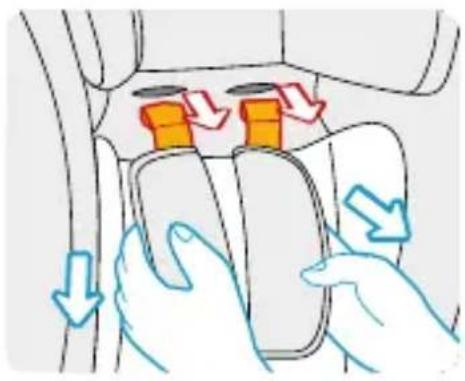
- Slide the shoulder pad straps down the metal crossbar. The straps must slide through a narrow gap which is created between the end of the metal crossbar and the shell of the seat. You can press the headrest adjustment button (F) to facilitate this action.
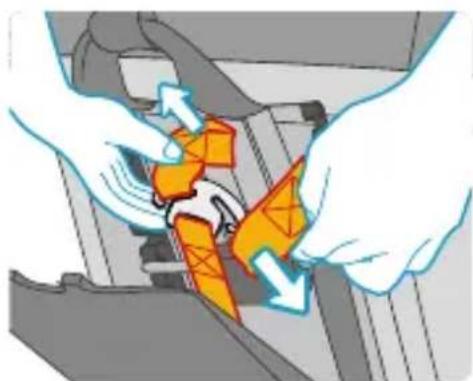
- Pull the harness and pad straps out of the holes in the backrest (Fig. 6.1e).
- Remove/raise the cover from the seat, starting from the front edge of the seat shell. Slide the pad from the crotch strap (C) and insert the buckle through the opening in the cover.
- Then insert the buckle to the hole in the seat; the hole is located under the foam layer (Fig. 6.1f).
- Harness strap ends are mounted in the seat. Slide the metal buckles off the strap ends (Fig. 6.1g, 6.1h), and then pull the straps out.
- Slide the cover on the seat, inserting the fabric into the gaps around the seat.
6.2 Removing the cover (Fig. 6.2a)
- Hide the harness and remove the cushions – if they are installed (see Section 6.1).
- Remove/raise the cover from the seat, starting from the front edge of the seat shell. Detach the latches inside the seat (in the seat corners).
- Carefully remove the cover from the elements next to the belt guide (I) and then pull the fabric out of the strap guide (N). Lift the cover to remove it from the seat.
- Slide the cover off the sides of the headrest and remove it from the seat.
6.3 Installing the cover and harness (Fig. 6.3a)
- Put the cover on the seat shell, and insert the cover fabric into the gaps in the backrest edges. Put the cover on the headrest.
- Slide the harness strap ends through the holes in the seat. Slide the metal buckles on the strap ends (Fig. 6.3b) and then slide the straps through the holes in the seat cover.
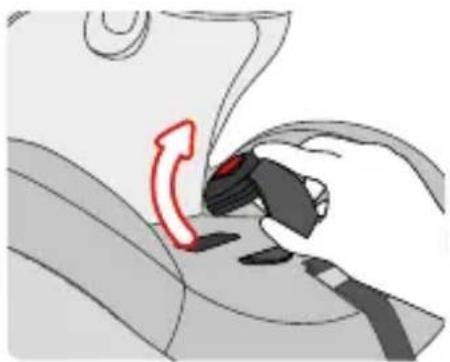
- Pull the buckle (G) out of the opening in the seat (Fig. 6.3c) and through the opening in the cover. Attach the crotch strap pad (C).
- Slide the shoulder pads on the harness straps and slide the strap ends through the holes in the backrest (Fig. 6.3d). Make sure that the straps are not twisted, and the latches mounted on the straps fit the buckle (G).
-
Slide the shoulder pad strap ends on the metal bar (Fig. 6.3e). You can press the headrest adjustment button (F) to facilitate this action.
-
Put together the shoulder straps and the harness adjusting strap using the metal connector (Fig. 6.1f). Make sure that the harness straps are not twisted.
- Slide the cover on the seat, fasten the latches inside the seat (in the seat corners).
- Adjust the fabric to the gaps around the guide (I), and insert the fabric into the gaps around the seat (Fig. 6.3g).
- Check that the harness straps are not twisted.
6.4 Cleaning
Use the original cover only, since it is essential for the safety of the seat.
NOTE Do not use the seat without the cover.
- The cover can be removed and washed in mild detergent using delicate washing program (30°C). Observe the washing instructions on the label placed on the cover. The cover may not be spun or tumble dried (as it may result in separation of the material layers).
- Plastic parts can be cleaned with water and soap. Do not use aggressive cleaning agents (such as solvents).
- The harness may be cleaned using warm water and soap.
7. Warranty
- All Kinderkraft products are covered by a 24-month warranty. The warranty period begins on the date of releasing the product to the Buyer.
- The warranty is valid for products sold in the following countries: France, Spain, Germany, Poland, United Kingdom, Italy.
- In countries not listed above warranty terms and conditions are determined by the Seller.
- It is possible to extend the warranty period to 120 months (10 years). Full text of the terms and conditions and warranty extension registration form are available at WWW.KINDERKRAFT.COM
- The warranty is valid only in the country where the purchase was made.
-
Complaints should be submitted by completing the form available at WWW.RMA.KINDERKRAFT.COM
-
The warranty shall not cover:
a. claims arising from product specifications, as long as they comply with those specified by the manufacturer in the instruction manual or other documents of a legislative nature;
b. product damage caused by improper maintenance or use of inadequate chemicals;
c. colour change (discolouration) when the product has been exposed to direct sunlight against the instructions provided in the instruction manual;
d. tear, wear, crack of fabric/plastic that is the fault of the Customer;
e. reduction in the quality of the product and consumables due to normal wear and tear;
f. products which have not been used according to specifications;
- The warranty period for accessories attached to the device is 6 months from the date of sale, with the exception of mechanical damage.
- These guarantee terms and conditions are complementary to the Customer's rights in relation to 4KRAFT sp. z o.o. The warranty shall not exclude, limit or suspend the rights of the Customer arising from the provisions on the warranty for defects in the goods sold.
- Full text of Warranty Terms and Conditions is available at WWW.KINDERKRAFT.COM
ES
In the interests of our Clients - we are at your disposal! If you have a problem with the product you received, contact us in the most convenient way for you!