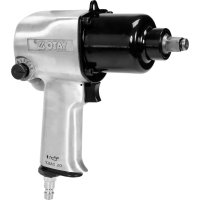
YT09525 - Screwdriver Yato - Free user manual and instructions
Find the device manual for free YT09525 Yato in PDF.


| Product type | Pneumatic impact wrench |
| Brand | Yato |
| Model | YT09525 |
| Length | 190 mm |
| Weight | 2.6 kg |
| Air connector diameter (inlet) | 6.3 mm (1/4") |
| Hose inner diameter | 10 mm (3/8") |
| No-load speed | 7000 min⁻¹ |
| Max torque | 850 Nm |
| Square drive size | 12.5 mm (1/2") |
| Maximum operating pressure | 0.6 – 0.8 MPa |
| Recommended operating pressure | 0.63 MPa |
| Required air flow (at 0.63 MPa) | 119 L/min |
| Sound pressure (LpA) | 92 ± 3 dB(A) |
| Sound power (LwA) | 103 ± 3 dB(A) |
| Vibrations (ISO 28927-2) | 5.47 ± 1.5 m/s² |
| Power source | Compressed air |
| Main functions | Tightening and loosening bolts, heavy-duty use |
| Maintenance and cleaning | Regular lubrication with SAE 10 oil, filter cleaning, condensate draining |
| Safety | Wear goggles, gloves, hearing protection; do not exceed max pressure; disconnect before maintenance |
Frequently Asked Questions - YT09525 Yato
User questions about YT09525 Yato
0 question about this device. Answer the ones you know or ask your own.
Ask a new question about this device
Download the instructions for your Screwdriver in PDF format for free! Find your manual YT09525 - Yato and take your electronic device back in hand. On this page are published all the documents necessary for the use of your device. YT09525 by Yato.
USER MANUAL YT09525 Yato
-
adjustment of pressure
-
air inlet
- air inlet connector
- trigger
- turning rotation switch
- collector
- tool
- hose socket
- hose
- hose connector
- greaser
- reducer
- filter
15.compressor
D
Read the operating instruction
Wear protective goggles
Schutzbrille tragen
Pb3OBaBcra3aunTHbIMnOykAMn
KopntyTeCb 3axncHMM OkyIpaM
Vartok apsauginius akinius
Jalieto drosibas brilles
Pouzivej ochranné bryle
Použivaj ochranné okuliare
Wear hearing protectors
Gehorschutz tragen
Tb30BaTcBcpeCTBaMn 3aunItb cnlya
KopntyTebc 3acobam 3axncty cynyx
Vartoti ausines klausai apsaugoti
Jalieto dzirdes drošibas fidzekli
Pouzivejchraniice sluchu
Oil application spot
Öl-Anwendungsstelle
MecTo noDauu Macna
Micue BBeDHeHMaCJIa
Pneumatic wrench is a tool that is powered with a stream of compressed air at appropriate pressure. Wrenches installed on a collector make screwing down and unscrewing possible, particularly where a high turning moment is required. The tool is not supposed to function in a continuous manner. Correct, reliable and safe functioning of the tool depends on correct operation, therefore:
Before operation of the tool can be commenced, the whole manual must be read and kept.
The supplier cannot be held responsible for any damages or injuries which are caused by using the tool in a manner that does not correspond to its purpose, not observing safety regulations or the recommendations of the present instructions. Using the tool in a manner that does not correspond to its purpose also cancels the guarantee.
EQUIPMENT
The pneumatic wrench is equipped with a connector that facilitates its connection to the pneumatic system.
TECHNICAL DATA
| Parameter Measurement unit Value | ||
| Catalogue number YT-09525 | ||
| Length [mm] 190 | ||
| Weight [kg] 2,6 | ||
| Diameter of the air connection (PT) [mm / "] 6,3 / 1/4 | ||
| Inside diameter of the air supply hose [mm / "] 10 / 3/8 | ||
| Rotations | [min-1] 7000 | |
| Maximum turning moment [Nm] 850 | ||
| Size of the collector | [mm / "] | 12,5 / 1/2 |
| Maximum working pressure | [MPa] | 0,6 - 0,8 |
| Recommended working pressure | [MPa] | 0,63 |
| Required air flow (at 6.3 bar) | [l/min] | 119 |
| Acoustic pressure LpA (ISO 15744) [dB(A)] | 92 ± 3 | |
| Acoustic power LwA (ISO 15744) | [dB(A)] | 103 ± 3 |
| Vibrations (ISO 28927-2) | [m/s2] 5,47 ± 1,5 |
GENERAL SAFETY CONDITIONS
WARNING! During operation of a pneumatic tool, it is recommended to always observe the basic safety regulations including those mentioned below, in order to diminish the risk of fire, electric shock and injury.
Before operation of the tool can be commenced, the whole manual must be read and kept.
ATTENTION! Read all the instructions mentioned below. If they are not observed, there is a risk of electric shock, fire or injury. The notion of "pneumatic tool" that is used in the instructions refers to all tools that are powered with a stream of compressed air at appropriate pressure.
OBSERVE THE FOLLOWING INSTRUCTIONS
General safety rules
For multiple hazards, read and understand the safety instructions before installing, operating, repairing, maintaining, changing accessories on, or working near the assembly power tool for threaded fasteners. Failure to do so can result in serious bodily injury. Only qualified and trained operators should install, adjust or use the assembly power tool for threaded fasteners. Do not modify this assembly power tool for threaded fasteners. Modifications can reduce the effectiveness of safety measures and increase the risks to the operator. Do not discard the safety instructions; give them to the operator. Do not use the assembly power tool for threaded fasteners if it has been damaged. Tools shall be inspected periodically to verify that the ratings and markings required by this part of ISO 11148 are legibly marked on the tool. The employer/user shall contact the manufacturer to obtain replacement marking labels when necessary.
Projectile hazards
Failure of the workpiece, of accessories or even of the inserted tool itself can generate high-velocity projectiles. Always wear impact-resistant eye protection during the operation of the assembly power tool for threaded fasteners. The grade of protection required should be assessed for each use. Ensure that the workpiece is securely fixed.
Entanglement hazards
Entanglement hazards can result in choking, scalp ing and/or lacerations if loose clothing, personal jewellery, neckware, hair or gloves are not kept away from the tool and accessories. Gloves can become entangled with the rotating drive, causing severed or broken fingers. Rotating drive sockets and drive extensions can easily entangle rubber-coated or metal-reinforced gloves. Do not wear loose-fitting gloves or gloves with cut or frayed fingers. Never hold the drive, socket or drive extension. Keep hands away from rotating drives.
Operating hazards
The use of the tool can expose the operator's hands to hazards including crushing, impacts, cuts and abrasions and heat. Wear suitable gloves to protect hands. Operators and maintenance personnel shall be physically able to handle the bulk, weight and power of the tool. Hold the tool correctly; be ready to counteract normal or sudden movements and have both hands available. Maintain a balanced body position and secure footing. In cases where the means to absorb the reaction torque are requested, it is recommended to use a suspension arm whenever possible. If that is not possible, side handles are recommended for straightcase and pistol-grip tools. Reaction bars are recommended for angle nutrunners. In any case, it is recommended to use a means to absorb the reaction torque above 4Nm for straight tools, above 10Nm for pistol-grip tools, and above 60Nm for angle nutrunners. Release the start-and-stop device in the case of an interruption of the energy supply. Use only lubricants recommended by the manufacturer. Fingers can be crushed in open-ended crow-foot nutrunners. Do not use in confined spaces and beware of crushing hands between tool and workpiece, especially when unscrewing.
Repetitive motions hazards
When using a power tool for, the operator can experience discomfort in the hands, arms, shoulders, neck, or other parts of the body. While using an assembly power tool for threaded fasteners, the operator should adopt a comfortable posture whilst maintaining secure footing and avoiding awkward or off-balanced postures. The operator should change posture during extended tasks, which can help avoid discomfort and fatigue. If the operator experiences symptoms such as persistent or recurring discomfort, pain, throbbing, aching, tingling, numbness, burning sensations or stiffness, these warning signs should not be ignored. The operator should tell the employer and consult a qualified health professional.
Accessory hazards
Disconnect the assembly power tool for threaded fasteners from the energy supply before changing the inserted tool or accessory. Do not touch sockets or accessories during impacting, as this increases the risk of cuts, burns or vibration injuries. Use only sizes and types of accessories and consumables that are recommended by the assembly power tool for threaded fasteners manufacturer. Use only impact-wrench-rated sockets in good condition, as poor condition or hand sockets and accessories used with impact wrenches can shatter and become a projectile.
Workplace hazards
Slips, trips and falls are major causes of workplace injury. Be aware of slippery surfaces caused by the use of the tool and also of trip hazards caused by the air line or hydraulic hose. Proceed with care in unfamiliar surroundings. Hidden hazards, such as electricity or other utility lines, can exist. The assembly power tool for threaded fasteners is not intended for use in potentially explosive atmospheres and is not insulated against coming into contact with electric power. Make sure there are no electrical cables, gas pipes, etc., that can cause a hazard if damaged by use of the tool.
Dust and fume hazards
Dust and fumes generated when using assembly power tools for threaded fasteners can cause ill health (for example, cancer, birth defects, asthma and/or dermatitis); risk assessment and implementation of appropriate controls for these hazards are essential. Risk assessment should include dust created by the use of the tool and the potential for disturbing existing dust. Direct the exhaust so as to minimize disturbance of dust in a dust-filled environment. Where dust or fumes are created, the priority shall be to control them at the point of emission. All integral features or accessories for the collection, extraction or suppression of airborne dust or fumes should be correctly used and maintained in accordance with the manufacturer's instructions. Use respiratory protection in accordance with employer's instructions and as required by occupational health and safety regulations.
Noise hazards
Unprotected exposure to high noise levels can cause permanent, disabling, hearing loss and other problems, such as tinnitus (ringing, buzzing, whistling or humming in the ears). Risk assessment and implementation of appropriate controls for these hazards are essential. Appropriate controls to reduce the risk may include actions such as damping materials to prevent workpieces from "ringing". Use hearing protection in accordance with employer's instructions and as required by occupational health and safety regulations. Operate and maintain the assembly power tool for threaded fasteners as recommended in the instruction handbook, to prevent an unnecessary increase in noise levels. If the assembly power tool for threaded fasteners has a silencer, always ensure it is in place and in good working order when the assembly power tool for threaded fasteners is operating. Select, maintain and replace the consumable/inserted tool as recommended in the instruction handbook, to prevent an unnecessary increase in noise.
Vibration hazards
Exposure to vibration can cause disabling damage to the nerves and blood supply of the hands and arms. Keep the hands away from the nutrunner sockets. Wear warm clothing when working in cold conditions and keep your hands warm and dry. If you experience numbness, tingling, pain or whitening of the skin in your fingers or hands, stop using the assembly power tool for threaded fasteners, tell your employer and consult a physician. Operate and maintain the assembly power tool for threaded fasteners as recommended in the instruction handbook, to prevent an unnecessary increase in vibration levels. Do not use worn or ill-fitting sockets or extensions, as this is likely to cause a substantial increase in vibration. Select, maintain and replace the consumable/inserted tool as recommended in the instruction handbook, to prevent an unnecessary increase in vibration levels. Sleeve fittings should be used where practicable. Support the weight of the tool in a stand, tensioner or balancer, if possible. Hold the tool with a light but safe grip, taking account of the required hand reaction forces, because the risk from vibration is generally greater when the grip force is higher.
Additional safety instructions for pneumatic power tools
The following additional warnings (or equivalent) shall be given with all pneumatic assembly power tools for threaded fasteners.
Air under pressure can cause severe injury:
-
always shut off air supply, drain hose of air pressure and disconnect tool from air supply when not in use, before changing accessories or when making repairs;
-
never direct air at yourself or anyone else.
Whipping hoses can cause severe injury. Always check for damaged or loose hoses and fittings. Cold air shall be directed away from the hands. Do not use quick-disconnect couplings at tool inlet for impact and air-hydraulic impulse wrenches. Use hardened steel (or material with comparable shock resistance) threaded hose fittings. Whenever universal twist couplings (claw couplings) are used, lock pins shall be installed and whipcheck safety cables shall be used to safeguard against possible hose-to-tool and hose-and-hose connection failure. Do not exceed the maximum air pressure stated on the tool. For torque-control and continuous-rotation tools, the air pressure has a safety critical effect on performance. Therefore, requirements for length and diameter of the hose shall be specified. Never carry an air tool by the hose.
CONDITIONS OF OPERATION
Make sure the source of compressed air may create appropriate working pressure and guarantee the required flow of the air. If the pressure of the air is too high, use a reduced with a safety valve. The pneumatic tool must be powered through a filter and a greaser. It will guarantee simultaneously cleanliness and lubrication of the air with oil. The state of the filter and the greaser must be checked before each use and, if necessary, the filter must be cleaned or the oil supplied in the greaser. It will guarantee proper operation of the tool and will prolong its durability.
It is necessary to correctly adapt the reaction stick to a given task.
In the case additional holders or supporting stands are used; make sure the tool has been correctly fixed.
Adopt a correct position that will allow you to react to normal or unexpected movements of the tool that may be caused by the turning moment.
Wrenches and other inserted tools must be adapted to work with pneumatic tools. The inserted tools must be in good working order and must be cleaned and not damaged. Their size must fit the dimensions of the collector. It is prohibited to modify the sockets of the wrenches or the collector.
Before each use of the tool, make sure that no element of the pneumatic system is damaged. If there are any damaged elements, they should be immediately replaced with new, faultless elements of the system.
Before each use of the pneumatic system, dry the humidity that condensates inside the tool, the compressor and the dusts.
Connection of the tool to the pneumatic system
The drawing shows the recommended manner of connection of the tool to the pneumatic system. The presented connection guarantees the most effective operation of the tool and will prolong its durability.
Place a couple of drops of oil (of viscosity SAE 10) to the air inlet.
Into the thread of the air inlet, turn strongly an appropriate terminal that makes it possible to connect an air supply hose. (II) Install an appropriate terminal on the collector of the tool. During work with pneumatic tools, use solely the equipment approved for work with percussive tools.
Adjust a correct direction of rotation. F indicates clockwise rotation, R - anticlockwise rotation.
Where it is possible, adjust the pressure (turning moment).
Connect the tool to the pneumatic system using a hose of internal diameter 1/2 ". Make sure the resistance of the hose is at least 1.38MPa. (III)
Work with thimble percussive wrenches
Before screwing with a wrench starts, place the screw or the nut on the thread manually (at least two turns).
Make sure the size of the wrench is correct for the screwed element. A wrong size may be a cause of damage to the wrench, the screw or the nut.
Unscrewing and tightening
Adjust the pressure in the pneumatic system so as it does not exceed the maximum value for the given tool.
Set up the appropriate direction of rotation for the tool (F - tightening, R - unscrewing), and the appropriate turning moment. (V)
Install an appropriate thimble wrench on the collector of the tool. (IV)
Connect the key to the pneumatic system.
Place the key with the thimble installed on the element to be unscrewed or tightened.
Gradually release the trigger of the tool.
Once the work has been concluded, dismantle the pneumatic system and perform appropriate maintenance of the tool.
MAINTENANCE
Never use gasoline, solvents or another inflammable liquid to clean the tool. The fumes may ignite causing an explosion of the tool and serious injuries.
Solvents used to clean the tool holder and the body of the tool may soften the tightening of the machine. Dry thoroughly the tool before you start working with it.
If any irregularities in the functioning of the tool are detected, it must be immediately disconnected from the pneumatic system.
All elements of the pneumatic system must be protected from dirt.
Dirt in the pneumatic system may damage the tool and other elements of the pneumatic system.
Maintenance of the tool before every use
Disconnect the tool from the pneumatic system.
Before each use of the tool, place a small amount of maintenance liquid (e.g. WD-40) through the air inlet.
Connect the tool to the pneumatic system and start it for approximately 30 seconds. It will allow spreading the maintenance liquid inside the tool and cleaning it.
Disconnect the tool from the pneumatic system again.
Place a small amount of SAE 10 oil inside the tool through the air inlet and other appropriate holes. It is recommended to use SAE 10 oil whose purpose is maintenance of pneumatic tools. Connect the tool and start it for a while.
Attention! WD-40 cannot be used as appropriate lubricating oil.
Wipe out the excess of oil that comes out through the outlets. If the oil is left, it may damage the tightening of the tool.
Other maintenance actions
Before each use of the tool, make sure there are no signs of damage on the tool. Collectors, tool holders and spindles must be kept clean.
Every six months, or every 100 hours of operation, send the tool for revision which must be realized by qualified personnel in the repair shop. If the tool was used without the recommended air supply system, increase the frequency of overhauls of the tool.
Defects
Stop operation of the tool immediately if any defect in its functioning has been detected. Work with a damaged tool may be a cause of injuries. All repair and replacement of the elements of the tool must be performed by qualified personnel in an authorized repair shop.
| Defect | Possible solution |
| The rotation of the tool is too slow or it is impossible to start the tool | Introduce a small amount of WD-40 through the air inlet. Start the tool for a couple of seconds. It is possible that the blades adhere to the rotor. Start the tool for approximately 30 seconds. Lubricate to tool with a small amount of oil. Attention! Excessive amount of oil may cause a drop in the power of the tool. In such a case, clean the power transmission. |
| The tool starts but then slows down | The compressor does not provide an appropriate flow of the air. The tool starts with the air collected in the tank of the compressor. While the tank is being emptied, the compressor cannot follow up refilling the tank. Connect the tool to a more effi cient compressor. |
| Insuffi cient power | Make sure the inside diameter of the installed hoses is not lower than 1/2". Check the regulator of pressure - pressure must be set at the maximum value. Make sure the tool is properly cleaned and lubricated. If there are no results, send the tool for repair. |
Once the functioning has been concluded, the casing, ventilation slots, switches, additional handle and protections must be cleansed with a stream of air (at a pressure not exceeding 0.3MPa ), with a brush or a cloth without any chemical substances or cleaning liquids. Tools and handles must be cleansed with a clean cloth.
Worn tools are recyclable waste - it is prohibited to dispose of them throwing them away along with domestic waste, since the tools contain substances that are harmful for people and the environment! We ask for your active assistance in economic management of natural resources and protection of the natural environment by sending the tools to a worn tools disposal point. In order to reduce the quantity of waste that is disposed if, it is necessary to recycle them.
MERKMALE DES WERKZEUGES
Ipeepa60bC yctpoNCTBOM Heo6xOIMNO IOpO6HO O3HaKOMnTbCc CopeKaHEm HnctpyKm n c6peyee.
IocTabuIK He OTBeuaet 3a BCraeckn yUep6, HaneceHbB pe3yIbTaTe NOb3OBAHn yCTpoiCTBOM BONpeKn erO npedHa3Ha-ueHIO, HecobIOeHn npabIN 6e3oNaChocTN uYka3AHn n3 HAcToIe INcTpyKUn. NOb3OBAHne yCTpoiCTBOM BOPeKn erOpedHa3HaueHIO Bbl3bIAeT TAKKe NOTepIO rapaHTnHbIX npab NOTpeBntEnNo NObOdy HapUWeHnRAPaHTnHoro DOROBopa.
OCHAJIEHNE
IHeBMaTnueckn KIOH OCHAeHa CoeHNHTeNEM, C NOMOUIKOTOPORO ee MOXHO NOKNIQUHTB K HEBMaTHuECKO CNCTeMe.
TEXHUNECKNE DAHHbIE
OnachOCTN, CBA3aHHbIe C MeCTOM pa60tbl
CkOJIbXeHnI, CNOTbIKAHnI nIaDeHnI YBIAIOCTr IaABHbIMn PpUINHAM TpaBM. OcTepeRaTcckONb3Knx NOBepxHOctE, 6bPA3OBaHHbIX B pe3yIbTaTE NcNOb3OBaHn IHCtpyMeHTa, a TaKke CNOTbIKAHn O IJNaHn INHeBMATueCKo yCTaHObKn. Co6NIOdAeTb OCTopoXHocTB H He3hAKOMO o6CTahOBKe. MoryT IMeTb MeCTo CkpItbte OnaCHOCTN, TaKne KAK 3NeKtpuYeCTBO IIN DpyRnE KOMMyHkaUm. INEBMaTHueCKn IHCTpyMeHT He npedHa3HaueH dJIra NcNoB3OBaHn BO B3pbBoOnaChbIX 30Hax N He IMeET 3NEKTPoH3OJaUm. Y6eINTCB, qTO OTCyTCTByOT KaKne-1N60 3NeKtpuWeCKne npoBaOa, ra3OBbl E Tpy6bl N.T.I., KOtOpbl E MoryT CO3DaTb ONaCHOCTB BClyuae NobPexJeHn BO BPEM IAcNOb3OBaHn IHCTpyMeHTa.
OnachOCTn, Cb3aHbIe c npamn n nbInbIO
IbIbI Ib npbl, oba3oBaHHBte B pe3yIbTaTe IcNoIb3oBAHnI NHeBMaTHueCKOrIO HNCTpyMeHTa, MoryT cTaTB pIpyHON yXuHHeHn 3doOpOBBy (Haipmep, paK, BpoXeHHbIe NopOKn, actMa n/nn depMaNT). Po3tOMy Heo6xOJIMo OueHITb PnCKn I BHeDPnTb COOTBeTCTByIOUne CpeDCTBa KOHTpONHaD DaHHbIMn PaKTopAMN. OueHkA PnCKOB DoJIxHA BKNIOUATb OueHKY BnHnHnPBIN, oba3oBaHNO B pe3yIbTaTe IcNoIb3oBAHnI NCHtpMeHTa, IN BO3MOXHOCTb NOHNrB BO3dYxCuJeCTByUoSei PBIN. ITOK BbIXOJaEro Bo3dyxa Heo6xOJIMO HApPABnTb TAKIM Opa3OM, YTObI CBcETN K MNHMMy IOHNrTE PbIN B 3aBJIeHHoB CpeDe. B MeCTax Bo3HKnHOBeHnI PbIN nII napOB, IN KOHTpOB B IVctOHnke Bb6poca DoJKeH cTaTB npOpntetOM. BCE INTE-
RUS
rnpobAHbIe yHKnH nOBOpDObAHne dna c6opa, n3BneueHn PbInn (Dbima) IIN6O yMeHbWeHn ee KOJIueCTBa DOJXHb INCNOJb3OBaTbCS npabNtbo H N OBCnyKnbTaBcR B COOTBeTCTBn C INHCTpyKUyMn pON3BOAnTeJ. NcNoJb3oBaTb CpeDCTBa 3auNTbOpraHO DbIXAHn B COOTBeTCTBn C yKa3aHnMn pa6oToaTeJ n CoTJaCHO Tpe6OBaHm n rnrHe H 6e3OnaCHOCTn.
Onachoctn, Bb3BaHHbIe yMOM
Bo3deICTBne 7yMa BbICOKO YoOBH 6e3 HaJIeKaeJeu 3aunTb MoKet CtaTb npuHOn NoCToHHo H HeOBpaTMOM NOpePn cnyxa, a TAKKe Dpyrnx npoblem, Taknx KAK, yM B ywax (3BOH, JxKxKaHne, CBNT uIN rYdeHne). HeoXoIMo OueHtB PnCKN INBHePnTB COOTBeCTByIOUWe CpeCDTa KOHTpON HAd DaHHbIMn CpAKTopAMn. COOTBeCTByIOUm KOHTpON C CEJIbO CHNXeHn PnCKa MOKET BkIHOATb NCNOB3OBAHNe DEMNΦpyuOux MATEPNAOB, PpeDTBPAUaHOUX ,3BOH" ObpaBaTbIBaEMOROPeDMeTA. NcNoB3OBAbT bpeCTBa 3auNTb CnyxA CNEyET B COOTBeCTBUN C INCHPTyKUaRMn pa6oTdoTeR N B COOTBeCTBUN C Tpe6oBaHnMn NO INTNHe N 630NaChOCTN. 3KcNPyatauN I TexNHueCKOE 6cnjXNBaHne INHeBMAtuYeCKoro INCTpyMeHaTO DNJXHbO CyUeCTBnTBCR B COOTBeCTBUN C INCHPTyKUaRMn NO 3KcNPyatauN - 3TO N03BOIT N36ExKaTb HEHyHXORO YBEInueHnYoOBH Ma. Ecn nHEBMAtuYeckn INHCTpyMeHT OShaee HrruWiteLem, Bcerda HeoBXoIMo Y6eDntbcra, 4TO BO BPemr NCNoB3OBAHn INHCTpyMeHTA OH yCTAHOBen npabINbHO. Bb6npaTb, 6cnjXBaTb N 3aMeHrTa N3HOweHHbIe CmeHHbIe pa6oHne INHCTpyMeHTb CneDyET corlacoHO INCHPTyKUaTn NO 3KcNPyatauN. 3To N03BOIT N36ExaTb HEHyHXORO YBEInueHn Wyma.
OnachocTN, Bb3BaHHbe Bn6paunmN
Bn6paTMAOeT npNBecTI K Heo6paTMOMy NOBpeXeHIO HepBOB IN KPOBOChA6KeHNA KCTeN I pyK PyKn CneJeYET DEpKaTaB Ha COOTBcTBvUoIeM paCCToAHm OT naTPOHa DpeIN. Heo6xoJIMo TEnIoo ODeBAbCS BO BpeMpa60tB xOLONDHy IOrOy, INpy DOJIHXbl 6bl TB TeNlBIMn u cyxIMn. B clyuae OHemeHNA, NOKaJIbBaHna, 60nn nIIN pnp NObeEHNN KOxN HA NaIbuaX npKax, Heo6xoJIMO npEkapATb pa60taB c NHEBMATueckn IMCTpyMeHTOM, COo5uNTb pa60toaTeIO IN o6paTntbc K BpaCy. Co6IIOHeHye yka3AHn IHCTpyKznn PO kCNPIyataun BO BPEM NCNOB3OBaHn INTexHNECKORO 6cLynKBaHn INHEBMATueckoro INCTpyMeHTA N3BOJNT IN36ExaTb HEHyXHO YBeINuHn EYOBRA B6paUN. He NCNoB3OBaTb INHOWeHHbIX INI INTO pInaCoBAAHbIX HacaOD, NCKOJIbKy 3TO MOeT npNBecTI K 3HAHTeNBHom yBEINuHn UPOBn Bn6paUN. Bb6paTb, 6cLynKBaTb IN3MOEHHbIX CMeHHbIe pa60une INCTpyMeHTbl CNeDyET cGlnacHO INCTpyKznn I TO N3BOJNT IN36ExaTb HEHyXHO YBeINuHn Bn6paUN. I TO BO3MOXHO CTMOHTAX CNeDyET BbINOHNrB C INCNOB3OBaHnEM 3aUnTHbIX 3kPaHOB. EcNI 3TO BO3MOXHO INCTpyMeHT CNeDyET NODepKJBAtb C NOMOUBIO CTOnK, HATXJITeN I INI banaHCnpA. INCTpyMeHT Heo6xoJIMo DEPxAbTB NERKO, HO HApEXHIO, YUYtBBA Bo3MOXHbIe CNBI peAKUIN, NOCKONbKY ONACHOCb, Bbl3BaHHa Bn6paUeN, KAK PABINLO, BO3pactaET pni BOJIWem ycININ 3aXIMMa.
IOnIOJIHInTeBbIe IINCTpyKcIIN NO 6e3ONaCHOCHTI JN THeBMaTNUeCKNX INHCTpyMeHTOB
CzatbI B03dyx MoKET npuBecTn K cepbe3HbIM TpaBMam:
-
Bcerda OTKnHcyTb NOaCyB O3DyXa, CTpaBnTB DaBHeHne BO3DyXa 13 WHaHra NOTCOeHNHTb HCTpyMeH T ONoaHn BO3DyXa, ECIN: INCHTpymEHT He IcNOnb3yETcA, npeed 3ameHOn pInHaIeJxHOCTeH ININ BO BPem BblONHeHn peMOHTbIX pa60T;
-
HNKoIa He HapabnTb CtpyIO BO3dyxa Ha Ce6a nn Dpynx JIoJe.
Ydap shaHrom moKet npBecTN K cepBe3hIM TpaBMam. Bcerda Heo6xOIMO npOBepaTb shaHn I coeHNHeHn Ha npDmet HauHnI NOpeXeHn, a TaKKe He Ocna6heHn IIN OHn. He cneJyET HApabNtB Ha pyKn Ctpyo XoNOHO BO3dyxa. He NCIOBAt b 6bICTropa3bEmHbe CoeHNHeHn Ha BXOe YdapHbIX N Bo3NyUHoo-riPabNuecknx INCTpyMeHTOB. NcNoB3OAtb pe3b6obBle CoeHNHeHn N3 3akaJIeHHOn CTann (nn MATEpHaNA c aHanOrNHy OpoNCHToHo). KaJdbi pa3, KorDa nCNObl3yOTc yHInBepcaIbHbIe BINTOBble CoeHNHeHn (WTHTOBle CoeHNHeHn), Heo6xOIMO npImeHn CTepxHN I coeHNHTen, npDeOxApaHIOune OT B03MOXbIX NOpeXeHn CoeHNHeHn MExdy WlaHramn, a TaKke MeKdy WlnAHRom n INCTpyMeHTOM. He npEbnwAbykA3aHHOR dIg INCTpyMeHTa MaKcMajbHO rABNeHn BO3dyxa. DAbLeHne BO3dyxa IMeET KpNTUeCKoe 3HaueHne dIg Be3ONaCHO t N BInRrHa pON3BOIDTeNBocht B CnCTemax C perynypEmbIM BpaAuaOUM MOMHTOM, a TAkke INCTpyMeHTOB C NoctOHHbIM N ObopotAm. B 3OM Clyae, DoJXhbl 6bITb COxPAHeHbI Tpe6OBaHn K DInHe I DmaMeTy WlnAHO 3AnpeSeHO nepeHocntb INCTpyMeHT, DEpJa erO 3a WlnAhr.
3KCNJLYATAUHNOHHbIe YCIOBnA
Heo6xodnmo y6eHtbcraB TOM, yTO nCTOCHNK KOMnPecCnpoBaHoro BO3dyxa o6cneuHbaet Tpe6yemoe pa6ooye daBneHne i COOTBETCTbYIOUee TeueHne BO3dyxa. B cnyae ue3mepHO DabNeHna BO3dyxa NITAHN CNEyET BOCNOJb3OBaTbca peDyKTopOM C ppeOxpaHntIbHbIM KNAHOM. IHeBMATNUeCKOE yCTPOINCTBO DONKHO NITATCB C NCNOJb3OBaHnEM CNCTeMbI qINbTPa i MacNeHNK. 3To o6cneuHT uNCTOTy i ONDOBpeMeHHO yBnaJXHeHne BO3dyxa MacnOM. CoCTOHNHE qINbTPa i MacNeHNk Heo6xODnMO npOBepaTb Pede KaJbIM NycKom I B cnyae NOTpe6HoCTN OUCHNTb qINbTPnN Do6aBNTb MacNa B MacNeHNK. 3To o6cneuHT NaJIeKaJyUO kCNpNyaTaUIO yCTPOINCTBA i NOBICNT erO XNBvyeCTb.
Heo6xOdmo npaBnIbHO npncNocobntb peakTbHyIO TaHry K daHHomy Bnu dy pa6Tobl.
B cnyuae npimeHHeHn IOnonHnteHbIX pyKoTOK nIOnOpHbIX cToek CJeNyET y6eNtbcra B TOM, TTO IHCTpyMeHT npaBnJIbHO nHaJExHo 3akpenJIeH.
Heo6xOIMO npHnTb COOTBcTCTBEHHyIO No3y, o6eCneHbAioUyIO npOTNbOeIcTBNE HopMaJIbHbIM IIN HeoxNdaHHbIM DBNKeHNrM yCTPOJCTBa, Bbl3BaHHbIM MOMENTOM BpaueHnI.
3aepaaetcpejkaTpynI npytn TenaB 30He DeiCTBna peakTNBHOJ WtAHn, 3TO rpo3NT cepbe3HbIMN TeJeCHbIMN NOpeXeHnA M.
RUS
IpymHaemble TopObIe KIOHn I dpyrHe IHCTpyMeHTbl DOJXHbI 6bITb aadTnpoBaHHbIMK pa6ote C nHEBMaTneckIMN yctpoCTBAMn. BcTaBnaEme IbCTpyMeHTbl DOJXHbI 6bITb YnCTbIMN, NcPpABhIMN u6e3 NOpeXdHn, a nx pa3Mep-cOBndaTb c pa3Mepom nobOka. 3anpeuaetra nepeDeIbAbaT rHe3da KIOUey HnI NobOka.
ПОЛБ3OBAHNE YCTPOIYCTBOM
IpeedKaKdbimNyckom yctpoicTBa cIeJyETy6eHnTbC B TOM,HTO He NOBpeDJIcH N OINH 3JeMeH THeBMATueeCKo CNTeMbI. Ecnno6hApXeHbIOBpeKeHn, cIeJyET HEmeJNeHHO 3aMeHtB HeNCpABHbE 3JeMeHtB CNTeMbI HOBBIMN.
Ipei KaKdbim IpiMeHHeM NHeBMaTnueCKo CnCTeMbI CneNyET JIKBnIDnPOBaT KoHNDeHCnPOBaHHyO Bnary BHyTpN yCtpoiCTBa, KOMnPecccopa n UHaHOB.
IodkniueHye ycmpoicmea KnHeBmamueckou cucmeMe
Ha pncyHke n3o6paXeH peKomeHDoBaHHb cnoc6 noKnIouHeHn yCTpoiCTBa K nHEBMaTueckO cnCTeme. Ya3aHHb cnoc6 oecneuBaet Hanbolee 0fpeKTnBHOe noJIb3oBAHne yCTpoiCTBOM I NOBbIaET erO KNByEcTb.
BBeTn HeckoIbKO kaneIb Macna B3KocTn SAE 10 uepe3 BxoHoe Bo3dyHoe OTBepCTne.
Kpe3b6e BxOJHOro BO3dyuHOro OTBepCTnHaIeXHO npIKpyTntb COOTBeTCTBeHHyIO HacaIky, oEecneHBAIOUyIO NOkJIouHeHne IaHra noaun Bo3dyxa. (II)
YcTaHOBnTb COOTBeCTBeHHyU HacaIky Ha NoOBdke ycToPcIcTa. Bo Bpempa60tbc nHeBMaTHueckmN yCToPcIcTBAMN NOB3OBAeBCr NCKIOHTeBHo OChaSeHEm, PpeHa3NaeHHbIM dJa pa60tbc cyapHBIMyCToPcIcBAmN.
Bb6paTbTre6yemoe HnnpabJIeHne BpaIeHn. BykBa F 0o3Haayet o6opOby no yacobon cTepeKe, 6yKBa R - o6opOby npOTNB acobon cTepeKN.
Tam, rTe 3TO BO3MOxHO, OTperyIINPOBaTb DaBneHHe (MomeHT BpaueHnra).
IopKIOHTb yCTPOINCTBO K INHEBMATUeCKO CNCTeMe, NOJIb3yrcb IJAAHROM BHyTpeHHeo DnAmETpa 1/2". Y6eINTbcraB TOM, TTO npOuHocTB IJAAHpa paBA MInHMym 1,38MPa. (III)
3aBcTn yCTpOJIbKO CeKHyI, YTO6bl y6eITbcra B TOM, YTO OHO He N3daet HNKaKnx IIOo3pntbHbIX 3ByKOB IN HE Bn6bpnpyET.
Ioi3oaeHue ydapHBIMu mOpOEBIMU KIOUaMu
Ipeed Tem, KaK Hauatb 3aKpyuBaTb 6oNT NIN rAky KIOHcEM, CJeDyET BpyHyO HABNHTb 6oNT NIN rAky Ha pe3b6y (MHNIMyMDBa o6opota).
Y6eIITbcB TOM, YTO pa3Mep TopoBOrO KJIoua COBnAaET C 3akpyuHbEmbIM NIN OTkpyuHbEmbIM 3JeMeHTOM. HecOBnaDeHne pa3MepOB MOKeT Bbl3BaTb NOJOMKy KaK KJIoua, TAK N 60JIa NIN raiKn.
3akpyuuaHue u omkpyuuaHue
TakIM o6pa3OM OTpeYnIPOBaTB DBAJIeHMe B INHeBMaTIueCKo CNTeMe, YTO6bI He IpeBbICITb MaKcIMaJIbHbI yPOBeHb dIra daHHoro yCTpoCTBa.
Bb6paTb Tpe6yemoe Hnnpabnene BpaueHn INCTpyMeHTa (F-3akpyuHaHne, R-OTkpyuHaHne), a TaKke Tpe6yEmbM oMeHT BpaueHn. (V)
YcTaHOBnTB Ha NOBOKe yCTPOIcTBA COOTBeTCTBEHbI TOPObbIKJIOU. (IV)
IopKJIIOHTb KIIIOU K INeBMaTnueckoCnCTeMe corlacho Cnocoby.
HaTeb KJIIOc yCTaHOBJeHHo HacaIKO Ha OTKpyuHbAeMbI INI3aKpyuHbAeMbI 3JEMeHT.
IocTeHHeHo HaxmMaTb Ha BbIKIOuYateB yCTpoiCTBa.
Iocne 3aBepHnna paObTb paOsbpaTb nHeBMaTHueckyIO CnCTeMy I npOBecTN KOHcePbaNIO ycTpoNCTBa.
KOHCEPBAUJIA
3anpeaetcnoBb0BaTbC6eH3nHOM,pactBopntenmnnpyroTropoyeXJIKOCTbBO BpemQCHyUcTPOCTBA.1capenMOryT BocPnAmEHtCB,CbI3bIBaB3pbIBYCTpOnCTBaN cepbe3hble TeneChbI NOBpeKdHn.
Pactbopnten, npmeHemble BO BpeM OnCTKn NaTPOHa yCTpoNCTBa n KOpnyca, MoryT Bb3BaTb yxuHHeHne ynIOTHm. B C8a3n C 3TNM cNeDyET CTapaTeJIbHO pOcCyUHTb yCTpoNCTBO nepeH HauJOM paBoTbl.
Ecnn Ocbapykehki KaKne-Jn6o nepebON B pa6ote yCTpoNCTBa, CNeNyET HeMeIeHHO OTKJIIOHTb yCTPOINCTBO OT INHEBMATNcCKOINCTEMbl.
Bce 3nEMeHTbI nHEBMaTNUeCKo CnCTeMbI DoJNKhbl 6bItb 3aunuieHHbIMN O T 3arpa3HeHNI. 3arpa3HeHNI, npOHnKaIOUne B nHEBMaTNUeCKyO CNCTeMy, MOrY BbI3BaTb NOLOMKy YcTPOINCTBa N dpyrNX 3nEMeHTOB INHEBMaTNUeCKO CNCTeMbI.
KoHcepeaun ycmpoucmea neped kaxkbim nyckom
OTKJIIOHTyYCTPOCTBOOTHEBMATNUeCKOINCTEMbl.
Ipeed Kaqdbim nyckom cneyET BBecTN He6oJIbwoe KOJnueCTBO MOUoien KnuKocTn (HaNP.,WD-40) Upe3 BxOdHoe BO3dyHoe OTBepCTne.
IopKJIIOHTb yCTpOncTBO K IHeBMaTHuecko CnCTeMe n 3aBeCTn npImepHO Ha 30 cekyHd. BlaarOapra tOMy MoIOUaJxNdkocTb
RUS
pa3oIeTcBHytpu yCTpOCTBa nOuNCTtEro.
CHOBAOTKNIOHTyycTPOINCTBOOTNHEBMATNUeCKO CNTEmbl.
He6oJIbIooe KOnuueCTBO Macna SAE 10 BBecTN BHyTpB yCtpoiCTBaYepe3 BXoJHOe BO3yUHoe OTBepCTne NOTBepCTn, npEHa3HaueHHble dTn 3To n cenn. PekomeHdyTeCA NOb3ObaTcR Maclom SAE 10, npEHa3HaueHHbIM dNkOHcePbaunn NHeBMaTHuecknx yCtpoiCTB. IOnKJIIOHTb yCtpoiCTBO n 3aBeCTn erHa KpaTkoE Bpem.
BHHMaHHe! 3aPpeaaetc noIb3oBaTbcwD-40 kak MacJom, npedHa3NaeHHbIM dIra CMA3Kl.
BbIepeTb MaIIO, KoToPOe IpoHKnIO Uepe3 BbIXOHNbIe OTBepCTnA. OcTaBaUeecMaIIO MoKeT NOBpeINbYpNtOHHeYcTPOINCTBa.
Ppoue paobombl no koncepbauu
Ipeed Kaqdbim npimeHemem yctpoCTBa npOBepntb, HET Jn Ha ycTpoiCTBe BUNMbIX CneIOB IIO6bIX NOBpeKdHNI. IOBOdkN, naTPOhbl NnnHdeEN CneDyET COePKaTb B YNCTOTe.
Yepe3 KaKdbix 6 MecaueB nnn 100 cacob pa6oTb cneDyET OTdaTb yCTpoiCTBO Ha OCMOTp KBAHnΦnnpoBaHHOMy nepcohany peMOHTHOI MaCTepcKo. Ecn yCTpoiCTBO NcNoJIb3ObaNocb 6e3 npimeHeHn peKOMeHDoBaHHo CnCTembl IOnaHn Bo3dyxa, To cNeDyET YBeINuHTb YactOTy OCMOTPOB yCTpoiCTBa.
YcmpaHHeHneNoepKdeHui
Heo6xOIMO npepBaTb pa60y ycToHcBOM cpa3y ke nocne toro, kak 6blno o6hApuyKeHO JIO6oe nobpekdeHne. POnIb3OBaHne HncnpabHbIM yCToPcTBOM MOKeT Bbl3BaTb TeJeCHbIe NOBpeKdEHHa. Bcyeckne peMOHTbI INN 3aMeHbI 3TeMeHTOB ycToPcTBa DOJIkeH pOBoNDt b KBaINOpuPoBaHHbI nepcoHaN yONJHomOueHHoro peMOHTHO pPeDpNnTn.
XAPAKTEPNUCTNKA IPIPUCTPOIO
IHeBMATUHNNKIOU - npncTpi 3 XKNBHeHHM CTPyMeHem KOMnpecObaHOro NOBITpN iD BiINOBiHN M TnCKOM. 3a DonomoroTO TopueBHX KNOUB, kI HADRAIObC HxOMyTNK, MOXHa 3akpyuByatn Ta BiIDkpyuByatn 6oNTN, OcObIMBO TAm, De NOTpiBHN BnCOkNI MOMeHT oBeptAHNa. IpaBnIbHa, 6e3BiDMOBHa Ta 6e3neuHa npaq r npncTpoIO 3aJIeXntb BiI npabInbHOI ekcnnyatauii, y 3Bra3Ky 3 YIM:
Ipeep noaTkom po60tn npncpoem Heo6xidno DeTaJIbHO O3HaOMnTncra 3 iHctpykuieio Ta 36epertn ii.
IocTaybHnK He BiJNOBiae 3a uKOdy Ta tineChi ykoJxHeHnaHecei B peyIbTaTI KOpNCTyBaHH npnCTpoem BCynepeu Ioro npn3HaueHHo, HeNoTpMaHnH npabun texhikn 6e3neKn Ta Bka3IBOK 3 daHOIHCTpykui. KopNCTyBaHH npnCTpoem BCynepeu Ioro npn3HaueHHIO BnKNkAc TAKOx BTPaTy rapaHTiMHnx npab KopNCTyBaHa 3 ORnAHy Ha npoyuHnra papaHTiHoro dorOBopy.
OCHAUHH
IHeBMaTuHn KInO uOChAueHa 3eHyBaUeM, 3a DonOMoROIO RaKOrO MoXHa npNEdHaTn II Do IHeBMaTuHoiCnCTeMH.
TEXHUYI DAHI
- HIKOJI He HAnpaBnTn CTpyMiHb Nobitpr Ha Ce6e abo IHsInx IIOJe.
Udap UHaHROM MoKe np3BecTN Do cepNo3Hx TpaBM. 3aBXKn Heo6xHNO nepeBiprTa UHaHNr i 3'EdHaHHa Odo HaaBHOCTI NOKoJXeHb, a TAKOc Yn BOH He ocna6neHi. He cNl HnPabTn Ha pyk CTpyMih XoNoHOro nobITpr. He BnKOpNCTOByBatn 5BnDop03'EMnHex 3'EDHaHHb Ha BXoDi NobITpDo ydAPHX Ta NobITpno-riPabLIuHnx IHCTpymTeB. BnKOpNCBOyBaTn p3b6obi 3'EDHaHHa I3 3arapTOBaHOI CTani (afo MaTepiany 3 aHaONiYHO MUIHCTO). KoxeH pa3, KOJI NIKOPNCTOBYOTcb YHBepcAInbHI TBnHTOBI 3'EDHaHHa (UtnoTobi 3'EDHaHH), Heo6xHIO 3actOCOByBaTn Ctepkhi Ta 3'EnHyBaHi, 10 3axNuAotb 3'EDHaHHa mix UNaHram Ta 3'EDHaHHa MIX UNaHrom i INCTpyMeHOM BiD MOKINBx NOnKOJXeHb. He npeBnuyBaTH Bka3aHoro dI INCTpyMeHtMaMKImalbHoro TnCKy NobITp. Tnck NobITpMa KpnTmHe 3naeHHa Dn8 6e3NeKn Ta BnInBaE Ha npOdyKTHBHCb y CNCTeMax i3 perynBoAHM KpyTHM MOMETOM, a TAKOx INCTpyMeHtIB 3 noCTIHMM o6opotAm. Y ubomy BnAnky, NOBHHI 6ytN doTPmAHi BmOrn 5oDo DOBXHH Ta diAMetpy UNaHrib. KateropnuHO 3abOpOHe NopeHoCtivn IHCTpyMeH, TpmaOun HOro 3a UNaHr.
EKCPIIYATAUIIH I YMOBI
Heo6xio HepeKohatnca y Tomy, 00 dxpeNo KOMPecOBaHOrO nobITpy 3ae3neuey notpibHm poobuH Tnck Ta BiIOBHN o6ir nobITpy nHeBMATnHi CnCTeMI. Y BnAky HAdMIPHO TnCKy nobITpy CnCTeMI XNBHeHH CnID CKOpNCTaTNC PedyKTOpom 3 aNo6iXHM kIanaHOM. XNBHeHH NHeBMATnuHOro npCtPOU NOBHH BOIByBaTNC 3 BnKOpNCTaHHm CnCTeMI φInbTpTa MaclnKn. Lc 3ae3neuey uCTOTy ta OndOacHo 3BOLOXeHH NOBITpy Macnom. CtaH φInbTpTa MaCLnKn CnID nepeBiprTa nepeD KOxHMM Nyckom Ta B pasi NOTpeBn DoDatm Macna y MacnHky, Jkso NoRr He BnCTaHaE.
3aBMy 36e3neyEbC npabnha ekcnnyatauig npctpo Ta BnO8KyeTbc nepioI noI rno npae3daTHocTI. HeoXiHNo HaneKHM YHOM npCTOCyBaTu peAKTNBy uTaHry Do daHO BVdy po60tN.
Y BnnaKky KopncTyBaHHN DoaTkoBmnykamn abo onOpHmnci nepeKaHATNCy TOMy, 0e enMeHT npabNbHO Ta HadiHIO 3akpinneHn. HeobxioH npinHrtn BiINOBIDHy no3y, 0o 3ae3neUc npOTuHIO HopMaJIbHM a6o HeoukyBaHIM pyxam npicTPOIO, BKNlHKaHMM MOMHTOM oepTaHHN.
3a6b0pOHeTcBc TpMaTn pyKn Ta iHsi YacTInH TiNa y 3oHi II peAKTINBHOI UTAHN, OCKiNbKN Ie 3arpoKYe NOBaXHMN TiIECHMMYuSKoDKeHHMNI.
TopeBi KInOHi Ta iHsi IHcTpymeHTN, Aki BnKOpNCbOByIOBcR, NOBHHI 6yTu npNCTOBaHMn Do pOBOTn 3 NHEBMaTHHMn PnCTpOAMn. IHcTpymeHTN, IIO pNcHHyIObC, NOBHHI 6yTu nCTmN, CnpABHMn Ta 6e3 NoWKoJKeHb, a ix po3Mip - BiNDobiTaTPO3mipy XOMyTKa. 3abopOHReTbCnepepo5nra Tn H3da KInOHi Ta XOMyTKa.
KOPNUCTYBAHHI PNUCTPOEM
Ipeed KOxHIM NyckOM npicToPO Heo6xIDHO nepeKoHaTnCry TOMy, 0 He NOWKoDKeHNI OINH eJeMeHT INHeBMaTHUHO CNTe-
UA
M. JI KIO BIKPITO NOWKODKHeH, CII HERAIHO 3aMIHTN HecnPabHI eJemeHTN CNTeMH HOBIMN.
IpeepKoXHM NyckOM PHeBMaTHUHO CnCTeMn Heo6xIDHO N036yTnCBAONr, 00 KOHDeHCyETbCBAcepeDNI pncTpOu, KOMnpecopat a JnaHrib.
TocTyNoBO HaTnCKaTH Ha BmNKaH npCTpOIO.
Iicra 3aBepenHpaobto pO3ibpatn HEBMaTuHy CnCTemy Ta npOBecTu KOHceBaui npiCtpoU.
KOHCEPBAUJ
Hi B komy pa3i He KopnctyBaTnc 6eH3nHOM, po3HHKOM a6o iHIO pJIbHO pIHHO dIg OcHCTKn npCtpo. Bnnap MOkyTB 3aropitncBnKNIKAOHn BN6x npCtpoTo Ta nobaxhi tinechi yuKOxKeHHa.
P03HHHKn, 10 BnKOpNCOTByOyTcRdIg OChCTkn natpoHa Ta KopnyCa, MoKyTB BnKmKaTn noipIeHnry yUilBnHOuXeEneMeHTIB.
Y 3B83ky 3 ZIMCnID CTapaHNO BucyWHTnpCTPI nped NOaTko p60tn.
Kaio BnKpTo 6yI nepe6oI y po6ti npncTpo, cnId heraiHO BiEHaTH npCtpi BID nHEMaTuHoi CnCTeM.
Bci eIeMeHTn IHeBMATNUHOOI CNCTeMn NOBHHI 6yTu 3axuueHMn BiD 3a6pydHHeHH. Bpyd, 10 npOHkae y nHeBMATNUHy CNCTeMy, MOxE BKNJIKATN 3HNUeHHN pncTpoTo a Hwix eIeMeHTIB IHeBMATNUHOI CNCTeMn.
KoHcepeauia npucmpoio neped kOxHUM nyckom
BiEHaTn npicpti Bi nHeBMaTHNoHoi CnCTeMn.
IpeepKoXHMn yckomdoatn HeBEnky KInbkiCTb MmOoyoi piHn (Hanp.,WD-40) uepe3 BxIDHn nobitprHHn OTBip.
PnEHNr npncptpi Do nHEBMATNUHooCNCTEMn Ta 3aBecn npn6n3HO Ha 30 cekyHd. 3abJKNbOMy MNoHa pOiHa poiJeTBCR BCEpENHI npncptpo Ta OHCTNtB Ioro. 3HOBy BiEHNr npncptpi BID nHEBMATNUHooCNCTEMn.
HebeNky kInbKicTb Macna SAE 10 Doatn BCEepiny npctpoU uepe3 BxIDHn nobITpyHn OTBip ta np3haeHi nIy cboOo OTBOp. PekomeHdyEcBkBaTN Macno SAE 10, np3HaueHe dJa KOHcePbaui II NHEBMaTHHX npCTpoIB. PpneHaTu npCTpi Ta 3aBeCTn Ioro Ha KopoTKn Yac.
Ybara! Macnom WD-40 He moKHa KopncTyBaTnCra JK Macnom, npn3HaueHm DJIr 3MaUyBaHH.
Bnteptn 3aIIuKn Macna, 10 BnIuN Hepe3 BuxiDi Hi OTbOpn. 3aIIuKn Macna MoKytb BnINBaTn Ha NoripweHra ciJIbHocti npuctpoio.
IHHI KOHcepauiHi npoedypu
IpeepKoXHMnPyCKOM npicTpOHeo6xIDHO nepeBipTN, Hn Ha Hbomy HeMaE BnIMmX cniiB pi3HOMaHiTHnx NOkOKeHb.
XomTuKn, natoHn dIy IHcTpymeHTi Ta WmHdEni cIi yTPmyBaTu y uNCTOTi.
Yepe3 Koxnix 6 Micaiv abo 100 roDIN poBOn cnID BiDAtn npCtpi Ha orIgkBaJIiPikOBaHOMy nepcoHany peMOHTHO 3aKnaIy. JkiO npCTpi BnKOpNCTOByBaBC 6e3 3actOCOByBaHH peKOMHeBOAHO iNCTEM NiDaHi NOBITpR, Heo6xIdNo YactiWe BiDnabATn Ioro Ha orIy.
YcyeaHHnnowkOxKeHb
Heo6xio HepepBaTu pOBoTy npncTpoem 3pa3y X nCnra TorO, k BnKpnTO 6yB-Ke neoWkoJKeHn. Po6ToHa HcnpaBnM npntPoEM MoKe CTATN npuHHIO TineChnx yUKOJKeHb. Byb-kynn peMOHT afo 3amHy enemeHTIB npncTPOIO MOKe npOBOnTI nnue KbanifikOBaHN nepcoHAn yNOBHOBaXeHOro peMOHTHO 3aknaIy.
CONDITIONS D'EXPLOitation
DEKLARACJA ZGODNOSCI DECLARATION OF CONFORMITY DECLARATIE DE CONFORMITATE
0122/YT-09525/EC/2022
Deklarujemy z peña odpwiedzialnosci, ze nižej wymienione wyroby: We declare and guarantee with full responsibility that the following products: Declaram s guarantam pe proprie raspundere ca produsele urmatoare:
Klucz pneumatyczny; 0,6-0,8 MPa; 850 Nm; 7000 min -1 ; nr kat.: YT-09525
Pneumatic wrench; 0,6-0,8 MPa; 850 Nm; 7000 min -1 ; item no. YT-09525
Cheie pneumatica; 0,6-0,8 MPa; 850 Nm; 7000 min -1 ; cod articol. YT-09525
do k'torych odnosi sie niniejsza deklaracja, są zgodne z ponizszymi normami: meet requirements of the following European Standards / Technical Specifications: satisfac cerintele Standardelor europene / Specifica'ilor tehnice urmatoare:
EN ISO 11148-6:2012
i spelniaja wymagania dyrektyw: and fulfill requirements of the following European Directives: si satisfac cerintele Direcivelor europene urmatoare:
2006/42/WE Maszyny i urzadzenia bezpieczenstwa
2006/42/EC Machinery and safety elements
2006/42/WE Directiva pentru Utilajeși dispositive de siguranta



- D
- EQUIPMENT
- TECHNICAL DATA
- GENERAL SAFETY CONDITIONS
- OBSERVE THE FOLLOWING INSTRUCTIONS
- General safety rules
- Projectile hazards
- Entanglement hazards
- Operating hazards
- Repetitive motions hazards
- Accessory hazards
- Workplace hazards
- Dust and fume hazards
- Noise hazards
- Vibration hazards
- CONDITIONS OF OPERATION
- MAINTENANCE
- Defects
- MERKMALE DES WERKZEUGES
- OCHAJIEHNE
- TEXHUNECKNE DAHHbIE
- RUS
- Onachoctn, Bb3BaHHbIe yMOM
- OnachocTN, Bb3BaHHbe Bn6paunmN
- 3KCNJLYATAUHNOHHbIe YCIOBnA
- ПОЛБ3OBAHNE YCTPOIYCTBOM
- KOHCEPBAUJIA
- Ppoue paobombl no koncepbauu
- YcmpaHHeHneNoepKdeHui
- XAPAKTEPNUCTNKA IPIPUCTPOIO
- OCHAUHH
- TEXHUYI DAHI
- EKCPIIYATAUIIH I YMOBI
- KOPNUCTYBAHHI PNUCTPOEM
- UA
- KOHCEPBAUJ
- YcyeaHHnnowkOxKeHb
- CONDITIONS D'EXPLOitation
- DEKLARACJA ZGODNOSCI DECLARATION OF CONFORMITY DECLARATIE DE CONFORMITATE
Brand : Yato
Model : YT09525
Category : Screwdriver