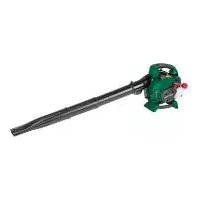
PBLS 26 A1 - Leaf blower PARKSIDE - Free user manual and instructions
Find the device manual for free PBLS 26 A1 PARKSIDE in PDF.


| Product type | 2-in-1 thermal blower and vacuum |
| Brand | Parkside |
| Model | PBLS 26 A1 |
| Dimensions (L × W × H) | 1081 × 236 × 351 mm |
| Total weight | 6.4 kg |
| Weight in blower mode | 4.8 kg |
| Weight in vacuum mode | 5.8 kg |
| Engine | 2-stroke, air-cooled, 25.4 cm³, 0.9 kW (1.22 HP) |
| Fuel | Mixture of unleaded petrol (RON 95 or 98) and 2-stroke oil (ISO-L-EGD/JASO FD) in a ratio of 40:1 |
| Fuel tank capacity | 0.42 L |
| Spark plug | L8RCT |
| Idle speed | 3000 ± 300 min⁻¹ |
| Max air speed in blower mode | 266 km/h |
| Max air flow in blower mode | 950 m³/h |
| Max air speed in vacuum mode | 212 km/h |
| Shredding ratio | 10:1 |
| Collection bag volume | 50 L |
| Sound pressure level (LpA) | 87 dB(A) |
| Guaranteed sound power level (LwA) | 109 dB |
| Upper handle vibrations (ahv) | 5.28 m/s² |
| Lower handle vibrations (ahv) | 5.56 m/s² |
| Warranty | 3 years |
Frequently Asked Questions - PBLS 26 A1 PARKSIDE
User questions about PBLS 26 A1 PARKSIDE
0 question about this device. Answer the ones you know or ask your own.
Ask a new question about this device
Download the instructions for your Leaf blower in PDF format for free! Find your manual PBLS 26 A1 - PARKSIDE and take your electronic device back in hand. On this page are published all the documents necessary for the use of your device. PBLS 26 A1 by PARKSIDE.
USER MANUAL PBLS 26 A1 PARKSIDE
natural_image
Black Parkside air Lebanon spray gun with attached sensor array (no text or symbols on main body)
PETROL LEAF VACUUM/BLOWER - PBLS 26 A1
BENZIN-LAUBSAUGER/-BLÄSER - PBLS 26 A1
ASPIRATEUR SOUFFLEUR THERMIQUE - PBLS 26 A1
GB IE NI CM MT O O
Operating and Safety Instructions
Translation of the original operating instructions
Read carefully before use and store safely for future reference.
FR OH BE
ASPIRATEUR SOUFFLEUR THERMIQUE
Before reading, unfold the page with the illustrations and then familiarise yourself with all the functions of the product.
DE AT CH
GB / IE / NI / CY / MTOperating and Safety Instructions Page 1
Table of contents
1 Explanation of the symbols on the product.... 2
2 Introduction.... 3
3 Product description (Fig. 1-17).... 3
4 Scope of delivery (fig. 1, 2, 5) 3
5 Proper use 3
6 Safety instructions 4
7 Technical data 7
8 Unpacking.... 7
9 Assembly 8
10 Before commissioning....9
11 Commissioning.... 10
12 Cleaning and maintenance.... 13
13 Transport 15
14 Storage 15
15 Repair & ordering spare parts.... 15
16 Disposal and recycling.... 16
17 Troubleshooting.... 16
18 EU Declaration of Conformity 17
19 Warranty certificate.... 18
20 Exploded view 216
1 Explanation of the symbols on the product
Symbols are used in this manual to draw your attention to potential hazards. The safety symbols and the accompanying explanations must be fully understood. The warnings themselves will not rectify a hazard and cannot replace proper accident prevention measures.
 | Before commissioning, read and observe the operating manual and safety instructions! |  | Tank contents. Petrol: ROZ 95 / ROZ 98 |
 | Wear hearing protection. | 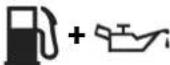 | Mixing ratio of fuel to 2-stroke engine oil 40:1 |
 | Wear safety goggles. |  | On/off switcha = offb = on |
 | Wear safety gloves! |  | "Cold start" start lever (choke)"Warm start and working" start lever (choke) |
 | Wear sturdy footwear! | 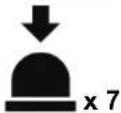 | Press the fuel pump (primer) 7 times. |
 | Make sure that other persons maintain a sufficient safety distance. |  | Max. air speed |
 | Attention! The exhaust pipe and other parts of the engine become very hot during operation, do not touch! | 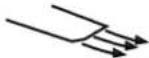 | Max. air volume |
 | Danger of injury! Never have your hands near the blades. |  | Guaranteed sound power level of the product. |
 | Risk of injury due to rotating cutting roller! Keep hands and feet outside the openings when the product is running. | 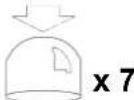 | Press the fuel pump (primer) 7 times. |
 | Danger due to parts flying off while the engine is running. | 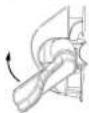 | Use choke. |
 | Attention flammable substances. Fire, naked flames and smoking prohibited. | 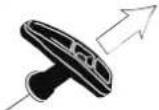 | Pull the pull starter. |
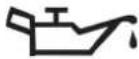 | 2-stroke engine oil: ISO - L - EGD / JASO FD |  | The product complies with the applicable European directives. |
2 Introduction
Manufacturer:
Scheppach GmbH
Günzburger Straße 69
D-89335 Ichenhausen
Dear Customer
We hope your new product brings you much enjoyment and success.
Note:
In accordance with the applicable product liability laws, the manufacturer of this product assumes no liability for damage to the product or caused by the product arising from:
- Improper handling
• Non-compliance with the operating manual
• Repairs carried out by third parties, unauthorised specialists - Installing and replacing non-original spare parts
- Improper use
Note:
The operating manual is part of this product.
It includes important instructions for the safe, proper and economic operation of the product, for avoiding danger, for minimising repair costs and downtimes and for increasing the reliability and extending the service life of the product. In addition to the safety instructions in this operating manual, you must also observe the regulations applicable to the operation of the product in your country.
Familiarise yourself with all operating and safety instructions before using the product. Only operate the product as described and for the specified areas of application. Keep the operating manual in a good place and hand over all documents when passing the product on to third parties.
3 Product description (Fig. 1-17)
- Blast pipe flat nozzle
- Blast pipe round nozzle
- Blast pipe
3a. Blast pipe attachment point
3b. Blast pipe pin
3c. Blast pipe locking screw - Motor unit blast connection
4a. Blast connection clamping screw
4b. Blast connection attachment point - Throttle lock
- Throttle
- Top handle
- Motor unit
- Vacuum connection protective grille
9a. Vacuum connection protective grille lock
10 On/Off button - Spark plug connector cover
11a. Spark plug connector cover screw - Outlet tube
12a. Outlet tube attachment point - Pull starter
- Fuel pump (primer)
- Bottom handle
- Fuel tank
- Fuel tank cap
- Collection bag
- Air filter cover
19a. Air filter screw
19b. Air filter foam insert
19c. Air filter fleece insert
19d. Air filter metal insert
20. Vacuum tube
20a. Vacuum tube grooves
20b. Vacuum tube pin
20c. Vacuum tube locking screw
21. Vacuum tube suction nozzle
22. Choke lever
23. Vacuum connection
24. Spark plug connector
24a. Spark plug
4 Scope of delivery (fig. 1, 2, 5)
Item Quantity Designation
| 1 1 | Flat nozzle |
| 2 1 | Round nozzle |
| 3 1 | Blast pipe |
| 3 a 1 | Locking screw (blast pipe) |
| 8 1 | Motor unit |
| 12 1 | Outlet tube |
| 18 1 | Collection bag |
| 20 1 | Vacuum tube |
| 20 a 1 | Locking screw (vacuum tube) |
| 21 1 | Suction nozzle (vacuum tube) |
| A 1 | Mixing container |
| B 1 | Spark plug wrench |
| C 1 | Allen key, 4 mm |
5 Proper use
Only use the cordless leaf vacuum/blower for the following purposes:
- In blowing mode for collecting leaves or general garden waste such as prunings or for removing them from hard-to-reach places.
- In suction mode for vacuuming and shredding dry leaves and other light, loose and non-combustible garden waste.
- The product must not be used for collecting flammable or explosive products, hot embers, ashes, burning cigarettes and pieces of branches, sharp objects, metal objects, stones and other objects that could be dangerous for the operator. This can result in injuries and can damage the product.
Do not blow or suck up materials that are hazardous to health!
The product may only be used in the intended manner. Any use beyond this is improper. The user/operator, not the manufacturer, is responsible for damages or injuries of any type resulting from this.
An element of the intended use is also the observance of the safety instructions, as well as the assembly instructions and operating information in the operating manual.
Persons who operate and maintain the product must be familiar with the manual and must be informed about potential dangers.
The liability of the manufacturer and resulting damages are excluded in the event of modifications of the product.
The product may only be operated with original parts and original accessories from the manufacturer.
The safety, operating and maintenance specifications of the manufacturer, as well as the dimensions specified in the technical data, must be observed.
Please note that our products were not designed with the intention of use for commercial or industrial purposes. We assume no guarantee if the product is used in commercial or industrial applications, or for equivalent work.
Explanation of the signal words in the operating manual
DANGER
Signal word to indicate an imminently hazardous situation which, if not avoided, will result in death or serious injury.
WARNING
Signal word to indicate a potentially hazardous situation which, if not avoided, could result in death or serious injury.
CAUTION
Signal word to indicate a potentially hazardous situation which, if not avoided, could result in minor or moderate injury.
ATTENTION
Signal word to indicate a potentially hazardous situation which, if not avoided, could result in product or property damage.
6 Safety instructions
General safety instructions
WARNING
For your own safety, please thoroughly read this manual and the general safety instructions before turning the product on. If you give the product to third parties, always include these usage instructions.
WARNING
Use only the fuels recommended in these instructions.
WARNING
Do not use fuel that has not been correctly mixed with 2-stroke oil. This may cause permanent engine damage and will void the manufacturer's warranty on this product. Never use a fuel mixture that has been stored for more than 90 days.
Keep all safety information and instructions for future reference!
6.1 Briefing
- Read the entire operating manual before using the product.
- Familiarise yourself with the controls and the proper use of the product.
- Learn how to turn off the product in an emergency.
-
Only use the product as intended for:
-
The movement and accumulation of leaves and grass of various, but limited, weight and of small size, by blowing.
– Vacuum collection of leaves and grass, various wastes of limited weight and small size, excluding liquids of any kind. - The product must not be used for collecting flammable or explosive products, hot embers, ashes, burning cigarettes and pieces of branches, sharp objects, metal objects, stones and other objects that could be dangerous for the operator. This can result in injuries and can damage the product.
• Children may not work with this product.
- The product shall not be operated by persons (including children) with reduced physical, sensory or mental abilities or who have inadequate experience or knowledge.
- Never operate the product while people, especially children, or animals are nearby.
- Never permit other persons who are not familiar with these operating instructions to use the product. Local regulations may stipulate a minimum age for users.
- Do not use the product while tired or under the influence of drugs, alcohol or medication. Do not use products if you are tired.
- If the device is passed on to a third party then pass all of the documentation on with it.
- Note that the operator or user is responsible for accidents or hazards to other people or their property.
- Always carry out a visual inspection before use to check that the shredder, the bolts of the shredder and other fasteners are secured, that the housing is undamaged and that the guards and shields are in place. Replace worn or damaged components in sets to maintain balance. Replace damaged or illegible labelling.
6.2 General information
- Dress properly. Do not wear loose clothing or jewellery. Keep your hair and clothing away from moving parts. Loose clothes, jewellery or long hair can be caught in moving parts.
- Tie long hair back in a hair net.
- Always wear safety gloves, safety goggles, hearing protection, sturdy shoes and long trousers when working with this product.
- Always switch off the engine of the product when you put the product down and before working on the product.
- Check the covers and protective devices for damage and correct seating. Replace them if necessary.
- Never operate the product with defective guards or without safety devices.
WARNING
Fuel is highly flammable:
- Store fuel in tanks specifically designed for this purpose.
- Before refuelling, switch off the combustion engine and let it cool down.
- Refuel outdoors only and do not smoke while refuelling.
- Open the fuel cap carefully and slowly. Wait for the pressure to equalise and only then remove the fuel filler cap completely.
- Use a suitable funnel or filler pipe for refuelling so that no fuel can spill onto the combustion engine and housing.
Do not overfill the fuel tank!
- Fuel must be filled before starting the engine. While the engine is running or immediately after switching off the product, do not open the fuel filler cap or add fuel.
- If fuel overflows, no attempts should be made to start the engine. Instead, the product must be removed from the area contaminated with fuel. Do not try to start the engine until the fuel vapours have evaporated.
• Always wipe up spilled fuel immediately. - Start the product at a distance of at least 3 m from the fuel filling point.
- If fuel has got on clothing, it must be changed.
- The tank cover must be properly screwed on and tightened after each refuelling operation. The product must not be put into operation without the original tank cover screwed on.
- Replace defective silencers.
-
Always carry out a visual inspection before using of the product. Check in particular:
-
The throttle lever must move freely and should return to the neutral position independently and quickly.
- The on/off switch must be easy to operate.
- All electrical cables such as spark plug cables and the spark plug connector must be in perfect condition to avoid sparks. The spark plug connector must be firmly seated on the spark plug.
- Keep the handle dry, clean and free of oil and grease. Handles and guards must be undamaged.
- The fan must be undamaged.
- The collection bag must be undamaged.
- Before starting work, always remove any objects lying on the ground that
– could be thrown when operating the product (when using as a blower)
– could jam the vacuum tube (when using as a leaf vacuum)
– could represent a hazard (stones, sticks, wire, bones, etc.)
6.3 Operation
- Keep hands and feet away from the rotating parts.
- Do not run the combustion engine in closed rooms in which hazardous carbon monoxide can collect.
- Do not fit any products or accessories to the product that are not provided by or approved by the manufacturer.
- Keep your work area clean and well-lit. Cluttered or dark areas invite accidents.
- Do not use a product that has a defective switch. Any product that cannot be switched on or off is dangerous and must be repaired.
- Never use the product:
- Without having mounted all accessories intended for the respective use (when used as a leaf vacuum or blower)
- Whilst other persons, in particular children or animals, are nearby.
- In enclosed spaces, in an explosive environment, where flammable liquids, gases or dusts may be located.
- Always ensure that you have a safe and firm footing so that you can control the product and maintain your working posture even in the event of unexpected movements.
- If possible, avoid working on wet or slippery ground. Avoid working on uneven or steep ground that does not guarantee the operator a safe working posture.
- Move slowly, do not run. Pay attention to the ground conditions and any obstacles.
- Make sure the product is fully assembled before starting it.
- Start the product at a distance of at least 3m from the fuel filling point.
- People should keep a safe distance of at least 15 metres from the work area.
-
Do not point the silencer and thus the exhaust gases at combustible materials.
-
Do not make any modifications to the engine.
- Do not overload the product. Use the correct tool for your application. The correct tool will do the job better and safer at the rate for which it was designed.
- Make sure that the product does not come into contact with foreign bodies or with foreign bodies and dust that may be stirred up by the air.
- Never point the air stream at people or animals.
- Never insert objects into the openings of the product and avoid sucking in large objects that could damage the fan.
- Keep your hands away from the intake grille and the air outlet during use and never block the fan.
- Stop the engine:
- When converting the product from a leaf vacuum to a leaf blower.
- When you are leaving the product unattended.
– Before refuelling. - When you move to a different working area.
- Stop the engine and disconnect the spark plug connector:
– Before cleaning and maintenance work.
- If a foreign body is sucked in. Check the product for damage before operating it again.
- If the product starts to produce unusual vibrations.
- When you are not using the product.
- Do not leave the product on leaves, dry grass or other combustible material when the engine is hot. Fire hazard!
-
Do not work with the product in an explosive environment where flammable liquids, gases or dusts may be located. The product creates sparks which may ignite the dust or vapours.
-
Warning! Do not work near open windows. Watch out for children, pets and blow away foreign objects safely.
- Keep children and other people away while using the product. Distractions may cause you to lose control of the product.
- Avoid abnormal postures. Keep proper footing and balance at all times. This enables better control of the tool in unexpected situations.
- Stay alert, watch what you are doing and use common sense when operating the tool. Do not use any tool while you are tired or under the influence of drugs, alcohol or medication. A moment of carelessness when using the tool can result in serious injuries.
- Prevent unintentional starting. Carrying tools with your finger on the switch on invites accidents.
- Remove any adjusting tools or spanners before turning the tool on. A tool or spanner that is located in a rotating device part may result in injuries.
- It is recommended to operate the product only at reasonable times - not early in the morning or late at night when others may be disturbed.
- Before starting to blow, loosen foreign objects with a rake and broom.
- In dusty conditions, lightly moisten the surface or use an irrigation attachment if available.
- It is recommended to use the entire nozzle attachment so that the airflow can work close to the ground.
6.4 Maintenance and storage
- Take care of tools. Check for misalignment or binding of moving parts, breakage of parts and any other condition that may affect the tool's operation. Have damaged parts repaired before using the device. Many accidents are caused by poorly maintained tools.
- Do not carry out any work on the product that is not described in this manual.
- Never store the product with fuel in the tank inside a building in which fuel vapours may come into contact with naked flames or sparks.
- Allow the engine to cool down before maintenance and cleaning work, as well as before storage.
- Keep the engine, silencer and fuel tank free of dust, branches and leaves. Fire hazard!
- Only empty the tank outdoors or in well-ventilated rooms.
- Wear gloves when carrying out maintenance tasks.
- For safety reasons, never operate the product with worn or damaged parts. Damaged parts must be replaced or repaired. Only use original spare parts. Defective parts can cause injuries or damage the product.
- Remove all tools used for maintenance before operating or storing the product.
- Store the product out of the reach of children.
6.5 Transport
- If the product is to be worn, you must:
- Switch off the engine and disconnect the spark plug connector.
- Carry the product by the handles. Do not lift the product by the tube.
- When transporting in a vehicle, remove the tubes and load the product in such a way that there is no danger to persons. The product should be secured to prevent it toppling during transport in vehicles in order to ensure that fuel does not escape and to prevent damage and injuries.
6.6 Environmental protection
- Make sure that no fuel gets into the soil.
- Dispose of packaging and waste materials in accordance with applicable local laws.
- Fuel residues, oils and liquids used for cleaning must be disposed of in an environmentally friendly manner!
- Dispose of the product properly in accordance with the regulations in force in your country.
6.7 Safe use of fuels
WARNING
Fuels and fuel vapours are flammable and can cause serious damage if they are inhaled or come into contact with the skin. You should therefore exercise caution when handling fuel, and ensure good ventilation.
- Before refuelling, switch off the combustion engine and let it cool down.
- Refuel outdoors only and do not smoke while refuelling. Avoid naked flames (danger of explosion!).
- Wear gloves when refuelling.
- Be careful not to spill fuel or oil.
- If fuel overflows, no attempts should be made to start the engine. Instead, the product must be removed from the area contaminated with fuel. Do not try to start the engine until the fuel vapours have evaporated. If fuel or oil is spilled over it, change your clothing immediately.
- Make sure that no fuel gets into the soil.
- The tank cover must be properly screwed on and tightened after each refuelling operation. The product must not be put into operation without the original tank cover screwed on.
- For safety reasons, check fuel line, fuel tank, fuel cap and connections regularly for damage, ageing (brittleness), tight fit and leaks and replace if necessary.
- Only transport and store fuel in containers (canisters) designed for this purpose.
- Keep fuel away from children.
- Do not transport or store fuels in the vicinity of combustible or highly flammable materials/substances, or near sparks or naked flames.
- Start the product at a distance of at least 3 m from the fuel filling point.
- Keep handles and grasping surfaces dry, clean and free from oil and grease. Slippery handles and grasping surfaces do not allow for safe handling and control of the tool in unexpected situations.
- Before refuelling, switch off the combustion engine and let it cool down.
6.8 Residual risks
Despite use as intended, specific risk factors cannot be entirely eliminated. Due to the design and layout of the product, the following risks remain:
- Injury due to ejected parts.
- Breakage and ejection of knife pieces.
- Risk of carbon monoxide poisoning if the device is used in enclosed or poorly ventilated areas.
- Risk of burns when touching hot components.
- Damage to hearing if the stipulated hearing protection is not worn.
Thoughtfulness and caution reduce the risk of personal injury and damage.
Furthermore, despite all precautions having been met, some non-obvious residual risks may still remain.
Residual risks can be minimised if the "Safety Instructions" and the "Intended Use" together with the operating manual as a whole are observed.
7 Technical data
| Dimensions | |
| L x W x H 1081 x 236 x 351 mm | |
| Total weight 6.4 kg | |
| Drive | |
| Type of motor 2-stroke engine, air-cooled | |
| Displacement 25.4 cm ^3 | |
| Engine output 0.9 kW (1.22 PS) | |
| Spark plug L8RCT | |
| Idle speed 3000 ± 300 rpm | |
| Max. tank volume 0.42 l | |
| Mixing ratio fuel / oil 40:1 | |
| Fuel/oil Super E10 / 2-stroke engineoil | |
| Leaf vacuum | |
| Max. air speed | 212 km/h |
| Shredding rate | 10:1 |
| Collection bag volume | 50 l |
| Leaf vacuum weight 5.8 kg | |
| Leaf blower | |
| Max. air speed | 266 km/h |
| Max. air volume | 950 m ^3 /h |
| Leaf blower weight | 4.8 kg |
Subject to technical changes!
Noise and vibration
WARNING
Noise can have serious effects on your health. If the machine noise exceeds 85 dB, please wear suitable hearing protection for you and persons in the vicinity.
The noise levels have been determined in accordance with EN ISO 3744:1995.and ISO 11094:1991. Total vibration emission values (vector sum of three directions) determined per ISO 22867.
Noise data
| Sound pressure level L_pA | 87 dB |
| Measurement uncertainty K_pA | 3 dB |
| Measured sound power level L_wA | 107 dB |
| Measurement uncertainty K_wA | 1.87 dB |
| Guaranteed sound power level L_wA | 109 dB |
The specified device emissions values have been measured in accordance with a standardised test procedure and can be used for the comparison of one tool with another.
The specified device emissions values can also be used for an initial estimation of the load.
If necessary, adhere to rest periods and limit the duration of work to the bare minimum.
Vibration parameters
| Top handle a_hv | 5.28 m/s ^2 |
| Bottom handle a_hv | 5.56 m/s ^2 |
| Measurement uncertainty K_h | 1.5 m/s ^2 |
Keep the noise level and vibration to a minimum!
- Only use faultless products.
- Adapt your working methods to the product.
- Do not overload the product.
- Have the product checked if necessary.
- Switch the product off if it is not in use.
- Wear gloves.
- Maintain and clean the product at regular intervals.
WARNING
In case of extended working periods, the operating personnel may suffer circulatory disturbances in their hands (vibration white finger) due to vibrations.
Raynaud's syndrome is a vascular disease that causes the small blood vessels on the fingers and toes to cramp in spasms. The affected areas are no longer supplied with sufficient blood and therefore appear extremely pale. The frequent use of vibrating products can cause nerve damage in people whose circulation is impaired (e.g. smokers, diabetics).
If you notice unusual adverse effects, stop working immediately and seek medical advice.
Observe the following information to reduce hazards:
- Keep your body and especially your hands warm in cold weather.
- Take regular breaks and move your hands to promote circulation.
- Ensure as little vibration as possible of the product via regular maintenance and stable parts on the product.
8 Unpacking
- Open the packaging and carefully remove the product.
- Remove the packaging material, as well as the packaging and transport safety devices (if present).
- Check whether the scope of delivery is complete.
-
Check the product and accessory parts for transport damage. Immediately report any damage to the transport company that delivered the Product. Later claims will not be recognised.
-
If possible, keep the packaging until the expiry of the warranty period.
- Familiarise yourself with the product by means of the operating manual before using for the first time.
- With accessories as well as wearing parts and replacement parts use only original parts. Spare parts can be obtained from your specialist dealer.
- When ordering please provide our article number as well as type and year of manufacture for the product.
ATTENTION
The product and the packaging material are not children's toys! Do not let children play with plastic bags, films or small parts! There is a danger of choking or suffocating!
9 Assembly
Note:
Always set up the product on a level and stable surface.
The product can be used both as a petrol leaf blower and as a petrol leaf vacuum. It is necessary to set up the product in accordance with the respective purpose.
During assembly and maintenance work, the following tools are required:
- Allen key, 4 mm (C)
- Spark plug wrench slotted screwdriver (B)
9.1 Petrol leaf blower assembly (Fig. 2 + 3)
9.1.1 Fitting the blast pipe (4) to the motor unit (8) (Fig. 2)
- Remove the clamping screw (4a) on the blast connection (4) of the motor unit (8). Use the 4 mm Allen screw (C) provided for this.
- Align the attachment point (3a) of the blast pipe (3) with the fastening point (4b) of the blast connection (4).
- Slide the blast pipe (3) into the blasting connection (4).
- Re-tighten the clamping screw (4a). Use the 4 mm Allen screw (C) provided for this.
9.1.2 Fitting the flat nozzle (1) / round nozzle (2) to the blast pipe (3) (Fig. 3)
The petrol leaf blower can be operated with a flat nozzle (1) or a round nozzle (2).
- Align the flat nozzle (1) / round nozzle (2) with the pin (3b) of the blast pipe (3).
- Push the flat nozzle (1) / round nozzle (2) and the blast pipe (3) together and turn them 90° clockwise.
- Insert the locking screw (3c) and firmly tighten it. Use the slotted screwdriver provided with the spark plug wrench (B).
Note:
The petrol leaf blower is correctly mounted when the flat nozzle (1) / round nozzle (2) points towards the ground.
Note:
The petrol leaf blower cannot be started if the blast pipe (3) is not fitted.
9.2 Petrol leaf vacuum/blower assembly (Fig. 4 - 9)
WARNING
Danger of personal injury!
Never use the leaf vacuum/blower with only one assembled suction tube part.
9.2.1 Fitting the vacuum tube (20) to the motor unit (8) (Fig. 4 + 5)
- Open the protective grille (9) by sliding the catch (9a) to the side. Use the slotted screwdriver provided with the spark plug wrench (B).
- Fold open the protective grille (9).
- Fit the vacuum tube (20) to the vacuum connection (23). The grooves (20a) in the vacuum tube (20) must match the pins on the vacuum connection (23).
- Turn the vacuum tube (20) clockwise as far as it will go to secure the vacuum tube (20).
9.2.2 Fitting the suction nozzle (21) to the vacuum tube (20) (Fig. 6)
- Align the suction nozzle (21) with the pin (20b) of the vacuum tube (20).
- Push the suction nozzle (21) and the vacuum tube (20) together and turn them 90° clockwise.
- Insert the locking screw (20c) and firmly tighten it. Use the slotted screwdriver provided with the spark plug wrench (B).
9.2.3 Fitting the outlet tube (12) to the blast connection (4) of the motor unit (8) (Fig. 7)
- Remove the clamping screw (4a) on the blast connection (4) of the motor unit (8). Use the 4 mm Allen screw (C) provided for this.
- Align the attachment point (12a) of the outlet tube (12) with the fastening point (4b) of the blast connection (4).
- Slide the outlet tube (12) into the blasting connection (4).
- Insert the clamping screw (4a) again and firmly tighten it. Use the 4 mm Allen screw (C) provided for this.
9.2.4 Fitting the collection bag (18) to the outlet tube (12) (Fig. 8)
WARNING
Danger of injury!
If the collection bag is not secured during operation of the cordless leaf vacuum/blower, this can lead to injuries from flying parts.
- Only use the leaf vacuum when the collection bag is properly fitted.
- Close the zip of the collection bag.
-
Ensure that the collection bag is not damaged.
-
Insert the open end of the outlet tube (12) into the opening provided for it in the collection bag (18).
- Secure the collection bag (18) to the outlet tube (12) with the Velcro strip.
- Disassembly takes place in reverse order.
9.2.5 Adjusting the carrying strap of the collection bag (18) (Fig. 9)
Note:
Never wear the carrying strap diagonally across your shoulder and chest, but only on one shoulder, this allows you to quickly remove the product from your body in the event of danger.
- Hook the carrying strap of the collection bag (18) over your right shoulder.
- Adjust the height of the carrying strap. Make sure that the collection bag (18) is not kinked at the transition to the outlet tube (12).
Note:
The petrol leaf vacuum/blower is correctly mounted when
- The outlet tube (12) points slightly downwards and to the right side of the operator.
- The rounded part of the suction nozzle (21) points towards the ground.
Note:
The petrol leaf vacuum/blower cannot be started if the vacuum tube is not fitted.
10 Before commissioning

WARNING
Health hazard!
Inhalation of fuel / lubricating oil vapours and exhaust gases can cause serious damage to health, unconsciousness and in extreme cases death.
- Do not breathe fuel / lubricating oil vapours and exhaust gases.
- Operate the product outdoors only.
ATTENTION
Always make sure the product is fully assembled before commissioning!
10.1 Check before operation
- Check all sides of the engine for oil or fuel leaks.
- Check the fuel level – the fuel tank should be at least half-full.
- Check the condition of the air filter.
- Check the condition of the fuel lines.
- Look for signs of damage.
- Check that all protective covers are in place and all screws, nuts and bolts are tightened.
- Ensure that the product is sufficiently ventilated.
- Make sure that the spark plug connector is attached to the spark plug.
- Keep the handle dry, clean and free of oil and grease. Handles and guards must be undamaged. Important for safe guidance of the power tool.
- Check the smooth running of all moving parts.
- Prepare the product for the respective use and make sure that all parts are correctly assembled.
10.2 Filling up fuel/oil mixture
This product is equipped with a 2-stroke engine that requires a mixture of petrol and 2-stroke oil.
Special 2-stroke oil for air-cooled 2-stroke engines with a mixing ratio of 40:1 must be used.

WARNING
Do not use fuel that has not been correctly mixed with 2-stroke oil. This may cause permanent engine damage and will void the manufacturer's warranty on this product. Never use a fuel mixture that has been stored for more than 90 days.
10.2.1 Suitable fuel
Use only unleaded petrol (min. RON 95).
Note:
Unleaded petrol tends to form deposits in the storage container and tank if stored for longer than 1 month. Always use fresh petrol!
10.2.2 Suitable oil
Only use high-quality 2-stroke engine oil in accordance with the specification ISO - L - EGD / JASO FD. Suitable oils are available from specialist retailers.
Prepare a fuel-oil mixture in a ratio of 40 to 1 in accordance with the fuel mixture table.
Note
Do not use 2-stroke oil that recommends a mixing ratio of 100:1. The engine guarantee of the manufacturer becomes invalid in the event of damage to the engine due to insufficient lubrication.
Never use oil for 4-stroke engines or water-cooled 2-stroke engines. This can cause the spark plug to become fouled, the exhaust part to become blocked or the piston ring to become stuck.
10.2.3 Fuel mixture

WARNING
Fuels and fuel vapours are flammable and can cause serious damage if they are inhaled or come into contact with the skin. You should therefore exercise caution when handling fuel, and ensure good ventilation.

WARNING
Avoid direct skin contact with fuel and inhalation of fuel vapours. Wear safety gloves.

WARNING
Petrol and the fuel-oil mixture are highly flammable!
- Only transport and store fuel in containers (canisters) designed for this purpose.
- Keep fuel tanks out of reach of children.
- Do not smoke when dealing with fuel.
- Do not mix the fuel mixture in the tank.
10.2.4 Preparing the fuel-oil mixture
- Use only a mixture of unleaded petrol (min. RON 95) and special 2-stroke engine oil (ISO - L - EGD / JASO FD).
- Put unused fuel in a designated and approved container and store it in a dark, cool room.
- Never use beverage bottles or similar to dispose of or store operating materials, such as fuel. People, especially children, could be tempted to drink from it.
- Add the 2-stroke oil in accordance with the fuel mixture table.
Fuel mixing table
| Fuel 2-stroke engine oil (40:1) | |
| 1 litre 0.025 litres | |
| 2 litres 0.050 litres | |
| 5 litres 0.125 litres | |
- Fill about half of the required amount of fuel into the enclosed mixing container (A).
- Add the 2-stroke oil in accordance with the fuel mixture table.
- Pour in the remaining quantity of fuel.
- Close the mixing container (A) and shake the fuel-oil mixture thoroughly.
Notes:
- Do not use a fuel-oil mixture that has been stored for more than 90 days.
- Fuel-oil mixtures that have not been used for one month or longer can clog the carburettor or impair engine operation.
- Keep containers for fuel and fuel-oil mixture separate to avoid misfuelling with normal petrol.
10.3 Fill in fuel-oil mixture

DANGER
Risk of fire and explosion!
Only fill the fuel when the engine is switched off and has cooled down. Do not smoke when refuelling the product.

WARNING
Only refuel the product outdoors or in sufficiently ventilated rooms.
- Set the product down on a flat surface with the tank cap (17) facing upwards.
- Always clean the area around the fuel tank cap (17) before filling to prevent dirt from falling into the fuel tank (16). Use a dry, lint-free cloth for this purpose.
- Carefully open the fuel cap (17) to release any excess pressure that may have formed in the fuel tank (16).
- Shake the mixing container (A) with the fuel-oil mixture thoroughly.
- Open the mixing container (A) carefully and allow any overpressure to dissipate first.
-
Turn the chain oil tank cap (17) anti-clockwise and open it. The fuel filler cap (17) is connected to an anti-loss device in the fuel tank (16) and thus cannot fall off.
-
Pour the fuel mixture into the fuel tank (16). Do not spill fuel when refuelling and do not fill the fuel tank (16) to the brim.
- Close the tank cover (17) again.
- Clean the fuel cap and the surroundings. Wipe up spilled fuel immediately.
- Check the fuel tank (16) and fuel lines for leaks.
11 Commissioning
ATTENTION
Always make sure the product is fully assembled before commissioning!

WARNING
Please observe the legal provisions from the noise protection ordinance.

WARNING
Move at least 3 m away from the refuelling area before starting the engine.
11.1 Starting the engine (Fig. 1, 10-13)

DANGER
Danger of poisoning!
Only use the product outdoors and never in closed or poorly ventilated rooms.
ATTENTION
- Always pull the pull starter out straight.
- Hold the handle of the pull starter firmly when the pull starter winds back in.
- Do not let the pull starter whip back in. This can result in damage.
- Do not pull the pull starter all the way out. This prevents the starter cable breaking.
- In case of cool weather, it may be necessary to repeat the starting process numerous times.
Notes:
- Set the product down on a solid surface before starting the engine.
- Only use the fuel pump "primer" when the engine is cold!
- If the engine is being started for the first time, several tries are required to start until the fuel has been delivered from the tank to the engine.
11.1.1 Starting the motor when cold (Fig.11, 12)
When the engine is "cold":
- Set the "choke lever" (22) to the position.
- In colder temperatures, press the fuel pump "primer" (14) seven times. This makes it easier to start the engine.
- Hold the product firmly by the top handle (7) and pull the pull starter (13) out slowly until you feel the first resistance.
-
Now pull the pull starter (13) several times more forcefully until the engine starts briefly and then stops again.
-
As soon as the engine has stopped, actuate the throttle (6). The choke lever (22) will automatically spring back to the "warm start" operating position ||
- Now pull the pull starter (13) and the engine should start. If the engine does not start, repeat the process.
- Allow the product to run for 1-2 minutes.
Note:
The product has an auto-choke function. As soon as you operate the throttle lever, the choke lever jumps into position ||
With high outside temperatures, it may be necessary to start the engine without the choke even when the engine is cold!
11.1.2 Starting with a warm engine (Fig.11, 12)
The product stood still for less than 15–20 minutes.
When the engine is "warm":
- The choke lever (22) does not have to be set to position if the engine is warm.
- Hold the product firmly by the top handle (7) and pull the pull starter (13) out slowly until you feel the first resistance.
- Now pull the pull starter (13) quickly. The product should start after 2 pulls. If the product has still not started, repeat the procedure described under 11.1.1.
Note:
- If the engine does not start even after several attempts, read the 17 chapter.
11.2 Adjusting the engine speed (Fig. 1)
The engine speed should be adapted to the type of material to be removed:
- Use the product at low speed for light material on the ground.
- Use the product at average speed to move grass and light leaves on asphalt or firm ground.
-
Use the product at high speed for heavier materials such as dirt.
-
Set the desired engine speed for operating the product using the throttle lever (6). The throttle lever position can be adjusted with the throttle lever lock (5).
Note:
Avoid running the engine at full power for the first 6-8 operating hours.
11.3 Switch off the engine (Fig. 1, 10)
11.3.1 Emergency stop procedure
If it is necessary to stop the product immediately, press the on/off button (10) to position "0" and keep it pressed in this position until the engine has come to a standstill.
11.3.2 Normal procedure
- Loosen the throttle lock (5).
- Release the throttle (6).
- Press the on/off button (10) to position "0" and keep it pressed in this position until the engine has come to a standstill.
11.4 Operating the petrol leaf blower (Fig. 1)
WARNING
Danger of injury!
If you direct the airflow at people, animals or objects, this can cause injury and damage.
– Direct the air flow away from you.
- Never direct the airflow at other people, animals or objects.
- Do not blow away hard objects such as stones or branches.
WARNING
Danger of injury
Objects hurled away and rotating parts can cause severe injuries.
- Make sure that other persons maintain a sufficient safety distance.
- Keep uninvolved persons away from the product.
– Hold the product in front of you. - Never point the product at yourself, other people or animals.
– Always make sure that no objects or dust are blown in the direction of people or animals and make sure that objects will not be damaged. - Always observe the wind direction and never work against the wind.
Hold the top handle (7) of the product while operating the leaf vacuum/blower.
The speed should be adapted to the type of material to be removed.
11.5 Operating the petrol leaf vacuum/blower (Fig. 1)
WARNING
Danger of injury!
If the collection bag is not secured during operation of the cordless leaf vacuum/blower, this can lead to injuries from flying parts.
- Only use the leaf vacuum when the collection bag is properly fitted.
- Close the zip of the collection bag.
- Ensure that the collection bag is not damaged.
CAUTION
Hold the product with both hands during the work. Grasp both handles.
Notes:
When operating the cordless leaf vacuum/blower, we recommend a medium/high speed.
Do not vacuum too many leaves at once, do not collect any wet grass or leaves, this can lead to blockages. Do not vacuum any hard materials.
A leaf blower is not a wet vacuum cleaner!
Please avoid vacuuming wet materials (leaves, dirt as well as twigs, branches, pine cones, grass, soil, sand, bark mulch/chippings, etc.).
Do not vacuum on damp or wet lawns, grass or meadows, as incorrect use may lead to blockages in the shredding chamber and thus to reduced performance.
The collection bag works like a filter, similar to an ordinary household vacuum cleaner. For this reason, it is best not to fill the collection bag completely and remove bulky objects immediately.
- Place your left hand on the top handle (7) and your right hand on the bottom handle (15).
- Hold the bottom handle (15) so that the collection bag (18) is on the right side of the operator.
- During collection, hold the rounded end of the suction nozzle (21) a few centimetres above the ground.
Note:
To avoid unnecessary wear on the collection bag, avoid dragging it across the ground while working.
11.5.1 Emptying the collection bag (18) (Fig. 1, 9)
If the collection bag is too full this reduces the performance of the product and can cause the motor to overheat.
- Switch off the engine.
- Wait until the product has come to a standstill.
- Open the zip of the collection bag (18) and empty the collection bag (18) without detaching it from the outlet tube (12).
11.5.2 Removing blockages (Fig. 1, 5, 15)

WARNING
Danger of injury!
If you remove blockages with your bare hands, you may injure yourself.
- Wear protective gloves.
- Use suitable tools (e.g. a wooden stick).
Note:
When using the product as a leaf vacuum, there is a risk of sucking in objects that may block the product and the rotor.
- Switch off the engine.
- Remove the spark plug connector cover (11) by loosening the screw (11a). Use the 4 mm Allen screw (C) provided for this.
- Pull off the spark plug connector (24).
- Remove the vacuum tube (20).
- Check the tube for blockages. Gently tap the pipe or use a wooden stick to loosen blockages. If necessary, tap the tube lightly on the ground to loosen the blockage.
- Remove the foreign object from the vacuum inlet.
- Make sure that nothing is blocking the rotor before using the product again.
11.6 Working instructions
Notes:
- Some noise pollution from this product is unavoidable. Postpone noisy work to approved and designated times. If necessary, adhere to rest periods and limit the duration of work to the bare minimum.
- For your personal protection and the protection of nearby persons, wear suitable hearing protection.
The product may only be used for the following purposes:
- As a blower for piling up dry foliage or blowing it away from hard-to-reach places.
- As a suction unit for sucking up dry foliage.
With the suction function, the product also serves as a shredder. The dry leaves are shredded, their volume reduced and prepared for possible composting. The intensity of the shredding depends on the size of the leaves and the residual moisture they still contain.
Any other use may result in damage to the product and pose a danger to the user.
- Before switching on the product, make sure that it is not directed towards people or animals.
- Hold the product with both hands during the work. Grasp both handles.
- Lightly dampen surfaces in dusty conditions.
11.6.1 When used as a petrol leaf blower
- You will achieve optimum results when using the blower at a distance of 5 - 10 cm from the ground.
- Point the air jet forward and move slowly to blow leaves or garden waste together or remove them from hard-to-reach places.
- Use rakes and brooms to loosen up waste before blowing.
- Start work with the highest blowing power to quickly collect the leaves lying around. Select a lower blowing power to compact the previously collected pile of leaves.
- Always observe the wind direction and never work against the wind.
11.6.2 When used as a petrol leaf vacuum
- Make sure that not too many leaves are sucked in at the same time. This will prevent the suction tube from clogging and the shredder from jamming.
11.7 End of work (Fig. 15)
- Switch off the engine.
- Remove the spark plug connector (24) to prevent unintentional commissioning.
- Clean the product.
12 Cleaning and maintenance
WARNING
Have maintenance and repair tasks that are not described in this operating manual, carried out by a specialist workshop. Use only original spare parts.
There is a risk of accident! Always carry out maintenance work when the engine is switched off. There is a danger of injury! Let the product cool down before maintenance. Elements of the engine are hot. There is a danger of injury and burning!
The product can start unexpectedly and cause injuries.
- Switch the engine off before maintenance.
- Disconnect the spark plug connector from the spark plug.
- Allow the engine to cool down.
- All protective and safety equipment must be re-installed immediately after servicing and maintenance work is completed.
12.1 Cleaning
Note:
The product should be thoroughly cleaned after each use.
- Keep protective devices, air vents and the motor housing as free of dust and dirt as possible. Rub the product clean with a clean cloth* or blow it off with compressed air* at low pressure. We recommend that you clean the product directly after every use.
-
To reduce the risk of fire, regularly clean the cooling fins of the engine with compressed air. Clear the silencer area of dust, leaves or other foreign objects.
-
Ventilation openings must always be free.
- Clean the product at regular intervals using a damp cloth and a little soft soap. Do not use any cleaning products or solvents; they could attack the plastic parts of the product. Make sure that no water can penetrate the product interior.
- Never immerse the product in water or other liquids for cleaning.
Cleaning the leaf blower
- Clean the blast pipe (3) and flat nozzle (1) or round nozzle (2) with a brush when dirty.
Cleaning the leaf vacuum
- Remove the collection bag (18) after the work. Turn the collection bag (18) inside out, clean it thoroughly and dry it. This prevents the development of mould and unpleasant odours.
- A heavily soiled collection bag (18) can be washed with soap and water and then dried.
- If the zip is difficult to operate, rub the zip teeth with a dry soap bar.
- Clean the vacuum tube (20) and suction nozzle (21) and outlet tube (12) with a brush when dirty.
12.2 Maintenance
Note:
Maintain the product carefully. Check for misalignment or binding of moving parts, breakage of parts and any other condition that may affect the product's operation. Have damaged parts repaired before using the product.
Regular, careful servicing is required to guarantee the safety level and performance of the product.
Remove all tools used for maintenance before operating or storing the product.
All protective and safety equipment must be reassembled immediately after repair and maintenance work is completed.
12.2.1 Maintenance plan
Always comply with the following maintenance intervals in order to ensure problem-free operation.
Attention! The fuel/oil mixture must be filled in before the device is used for the first time.
| Component | Before every use | Every 3 months or 20h | Every 6 months or 50h | Every 12 months or 100h | Every 2 years or 300h | |
| Air filter | Check | X | ||||
| Clean | X | |||||
| Spark plug | Check and adjust | first time after 10h, then every 50h | ||||
| Replace | X | |||||
| Spark plug connector | Clean | X | ||||
| Cooling fins | Test | X | ||||
| Fasteners such as screws and nuts | Check (tighten if necessary) | X | ||||
| Fuel/oil mixture | Check | X | ||||
| Fuel tank | Check | X | ||||
| Fuel filter | Replace | See 12.2.4 | ||||
| Fuel line | Check | Before every use. Have replaced by an authorised specialist company if damaged. | ||||
| Gasifier setting | Check | If the engine stops on its own when releasing the accelerator.Only to be carried out by an authorised specialist company (see 12.2.2). | ||||
| Collection bag | Check | Before every use. Replace if damaged. | ||||
| Clean | In the event of heavy contamination. | |||||
12.2.2 Carburettor setting maintenance
If the engine stops by itself when the throttle is released, a carburettor adjustment must be made.
Have carburettor adjustments (e.g. idle speed adjustment) carried out only by qualified specialists to avoid engine damage.
12.2.3 Spark plug maintenance (Fig. 14-16)
ATTENTION
Only replace the spark plug when the engine is cold!
Check the spark plug (24a) for contamination for the first time after 10 operating hours and clean it with a copper wire brush if necessary. Then maintain the spark plug (24a) every 50 operating hours.
- Remove the spark plug connector cover (11). To do this, loosen the screw (11a). Use the 4mm Allen screw (C) provided for this.
- Pull off the spark plug connector (24).
- Loosen the spark plug (24a) with the enclosed spark plug wrench (B).
- Use a feeler gauge to set the electrode gap to 0.6 -0.7 mm.
- Refit the spark plug (24a) and take care not to overtighten it.
- The re-assembly takes place in reverse order.
12.2.4 Fuel filter maintenance (Fig.1)
Inside the fuel tank (16) there is a fuel filter that prevents impurities from entering the engine. The fuel filter should be replaced once a year by your dealer.
12.2.5 Maintenance of the air filter (Fig.17)
ATTENTION
Fouled air filters diminish the engine output due to reduced air supply to the carburettor. Regular inspection is therefore essential.

DANGER
Risk of fire and explosion!
If not cleaned correctly, fuel may ignite and even explode. This can lead to severe burns or death.
– Clean the air filter foam insert, air filter non-woven insert and the air filter metal insert by tapping or blowing them out.
- Never clean with petrol or combustible solvents.
ATTENTION
Risk of damage!
Operating the engine without a filter element or with a damaged filter element can cause engine damage.
- Never run the engine without the air filter element or with a damaged filter element. This would allow dirt into the engine, which would result in severe damage to the engine.
- The foam insert (19b) with non-woven insert (19c) and the metal insert (19d) should be checked regularly and cleaned if necessary.
- If the air is very dusty, the foam insert (19b) with non-woven insert (19c) and the metal insert (19d) must be checked more frequently.
- Loosen the air filter screw (19a) by turning anti-clockwise.
- Remove the air filter cover (19).
- Remove the foam insert (19b) with non-woven insert (19c) and metal insert (19d).
- Clean all parts by knocking them out or blowing them out with compressed air.
- The re-assembly takes place in reverse order.
12.2.6 Draining the fuel-oil mixture (Fig.1)

DANGER
Danger to life!
Fuel is toxic and highly flammable. Do not smoke when dealing with fuel.

WARNING
Health hazard!
Inhalation of fuel / lubricating oil vapours and exhaust gases can cause serious damage to health, unconsciousness and in extreme cases death.
- Do not breathe fuel / lubricating oil vapours and exhaust gases.
- Only empty the fuel outdoors or in well-ventilated rooms.

WARNING
Avoid direct skin contact with fuel and inhalation of fuel vapours. Wear safety gloves.
In case of storage over a longer period of time, the fuel must be drained.
- Make sure that no fuel gets into the soil.
- Only store fuel in containers* (canisters) designed for this purpose.
- Never use beverage bottles or similar to dispose of or store operating materials, such as fuel. People, especially children, could be tempted to drink from it.
-
Keep containers for fuel and fuel-oil mixture separate to avoid misfuelling with normal petrol.
-
Slowly remove the fuel tank (16) cap (17) to release any pressure in the tank.
- Carefully pour the fuel-oil mixture from the tank into a suitable container*.
- Drain the fuel-oil mixture completely.
- Retighten the fuel filler cap (17).
12.2.6.1 Drain fuel/oil mixture with a fuel extraction pump
- Hold a collection bucket under the hose on the fuel extraction pump*.
- Unscrew the fuel filler cap (17). The fuel filler cap (17) is connected to an anti-loss device in the fuel tank (16) and thus cannot fall off.
-
Push the hose of the fuel extraction pump* into the fuel tank (16) and drain out the fuel/oil mixture completely using the fuel extraction pump*.
-
Retighten the fuel filler cap (17).
* = not included in the scope of delivery!
12.2.6.2 Emptying the carburettor (Fig.1, 14+15)
In case of storage over a longer period of time, the carburet-tor must be emptied.
Otherwise, the remaining fuel in the carburettor will evaporate and leave a rubbery sediment behind. This could make it difficult to start and result in expensive repair work.
- Start the engine and let it run until it stops in order to remove the fuel mixture from the carburettor.
- Allow the engine to cool down (approx. 5 minutes).
- Remove the spark plug connector cover (11).
- Remove the spark plug connector (24) from the spark plug (24a).
- Remove the spark plug (24a).
- Add 1 teaspoon of clean 2-stroke oil through the cylinder hole of the spark plug mounting into the combustion chamber.
- Pull the pull starter (13) slowly several times to coat the internal components.
- Put the spark plug (24a) back in.
13 Transport
ATTENTION
Danger of burning!
Keep the hot silencer away from your body. There is a risk of burns!

WARNING
Danger of injury!
Unintended and unexpected start-up of the product may lead to injuries.
- After the engine has cooled down, pull the spark plug connector (24) off the spark plug.
- Allow the engine to cool down before transporting or loading to avoid burns and to prevent fire hazards.
- When transporting over longer distances, drain the fuel tank (16) completely.
- The product must be secured against tipping and slipping during transport in vehicles in order to prevent damage and injuries.
14 Storage

DANGER
Risk of fire and explosion!
Storing the product near potential sources of ignition can result in a fire or an explosion. This can lead to severe burns or death.
- Eliminate possible sources of ignition, such as furnaces, hot water boilers with gas, gas dryers, etc.
Store the product and its accessories in a dark, dry and frost-free place that is inaccessible to children.
The optimum storage temperature is between 5^ C and 30^ C.
Store the product in its original packaging.
Cover the product to protect it from dust or moisture. Store the operating manual with the product.
- Never store the product with fuel in the tank inside a building in which fuel vapours may come into contact with naked flames or sparks.
- Allow the engine to cool down before parking the product in enclosed spaces.
- Clean and maintain the product before storage.
- Do not store the product with the collection bag full.
- In order to avoid fire hazards, keep the engine, exhaust pipe and the area around the fuel tank free of grass, leaves and leaking grease (oil).
- Outdoor storage is not advisable. Also secure the product from unauthorised access.
If stored for more than 30 days
If the product will not be used for a period of more than 30 days, the following measures must be taken to prepare it for storage.
- Empty the fuel tank for a longer storage period.
• Empty the carburettor.
15 Repair & ordering spare parts
After repairs or maintenance, make sure that all safety-related parts are installed and are in perfect condition. All parts which may cause injury must be kept where they are inaccessible to children or others.
ATTENTION
According to the German Product Liability Act, no liability is accepted for damage caused by improper repairs or by not using original spare parts.
Such work should be performed by a customer service centre or an authorised specialists. The same applies to accessory parts.
Spare parts and accessories can be obtained from our Service Centre.
Important note in the case of repairs
- When returning the product for repair, for safety reasons, ensure that it is free of oil and fuel when it is sent to the service centre.
- To drain the fuel-oil mixture, see chapter 12.2.6.
15.1 Ordering spare parts
Please provide the following information when ordering spare parts:
- Model designation
- Item number
- Type plate data
Spare parts / accessories
| Article Article no. | |
| Air filter foam insert 59111060 | 03 |
| Spark plug | 3904801048 |
| Collection bag | 5911101023 |
15.2 Service information
With this product, it is necessary to note that the following parts are subject to natural or usage-related wear, or that the following parts are required as consumables.
Wearing parts*: Spark plug, air filter, collection bag
* = may not be included in the scope of delivery!
16 Disposal and recycling
Notes for packaging


The packaging materials are recyclable. Please dispose of packaging in an environmentally friendly manner.
You can find out how to dispose of the disused device from your local authority or city administration.
Fuels and oils
- Before disposing of the product, the fuel tank and the engine oil tank must be emptied!
- Fuel and engine oil do not belong in household waste or drains, but must be collected or disposed of separately!
- Empty oil and fuel tanks must be disposed of in an environmentally friendly manner.
17 Troubleshooting
The following table shows fault symptoms and describes remedial measures in the event of your product failing to work properly. If you cannot localise and rectify the problem with this, please contact your service workshop.
| Fault Possible cause Remedy | ||
| The product cannot be started Air | filter dirty. Clean/replace the air filter. | |
| Fuel filter blocked. Clean or replace the fuel filter. | ||
| Missing fuel supply. Check fuel tank has sufficient fuel and refill if necessary. | ||
| Fault in the fuel line. Check the fuel line for kinks or damage. | ||
| Starter unit is defective. Check the spark plug connector is seated properly. Contact the service point. | ||
| Spark plug is too dirty/too wet due to remove spark plug, clean and dry; then pull the starter cable several times; re-insert the spark plug. | ||
| Spark plug connector not plugged in. | Check the spark plug connector is seated correctly. | |
| No ignition spark. | Check the spark plug connector is seated correctly. Check spark plug for dirt and correct electrode gap. Check ignition cable for damage. Contact the service point. | |
| Motor defective. | Contact the service point. | |
| Carburettor defective. | Contact the service point. | |
| Blast/suction pipe not fully fitted. | Fit the two-part blast/suction pipe. | |
| The product can be started but switches off again immediately. | Incorrect carburettor setting (idle speed). | Contact the service point. |
| Engine runs unsteadily | Incorrect carburettor setting. | Contact the service point. |
| Air filter dirty | Clean or replace the air filter. | |
| Spark plug dirty | Clean or replace the spark plug. | |
| On/off switch defective. | Contact the service point. | |
| Smoke is produced | Incorrect fuel mixture. | Use 2-stroke mixture with the mixing ratio of 40:1. |
| Incorrect carburettor setting. | Contact the service point. | |
| Product does not work at full power | Air filter dirty. Clean or replace the air filter. | |
| Spark plug dirty | Clean or replace the spark plug. | |
| Incorrect carburettor setting. | Contact the service point. | |
| Collection bag is full. | Empty collection bag. | |
| Collection bag is contaminated. | Clean collection bag. | |
| Tube or shredder are blocked. | Remove any blockage as described in the operating manual. |
18 EU Declaration of Conformity
Translation of the original Declaration of Conformity
Manufacturer:
Scheppach GmbH
Günzburger Straße 69
D-89335 Ichenhausen
We declare under our sole responsibility that the product described here complies with the applicable directives and standards.
Brand: Parkside
Art. designation: PETROL LEAF VACUUM/BLOWER - PBLS 26 A1
Item No.: 3910127977 - 3910127979; 39101279915; 39101279959
IAN: 459314_2401
Series no.: 01001-10990
EU directives:
2014/30/EU, 2006/42/EG, 2000/14/EG_2005/88/EG, 2011/65/EU, 2016/1628/EU*
* The object of the declaration described above fulfils the regulations of the directive 2011/65/EU of the European Parliament and Council from 8th June 2011, on the restriction of the use of certain hazardous substances in electrical and electronic equipment.
Applied standards:
EN 15503:2009+A2:2015; EN ISO 14982:2009
Conformity assessment procedure:
2000/14/EG_2005/88/EC - Appendix: V
Guaranteed sound power level (LWA): 109 dB
Measured sound power level ( L_WA ): 107 dB
2016/1628/EU
Emission. No: e24*2016/1628*2021/1398SHA1/P*0328*01
Documentation authorised representative:
Tobias Ihle
Günzburger Str. 69
D-89335 Ichenhausen
Division Manager Product Center

Andreas Pecher
Head of Project Management
Warranty certificate
Dear Customer,
All of our products undergo strict quality checks to ensure that they reach you in perfect condition. In the unlikely event that your device develops a fault, please contact our service department at the address shown on this guarantee card. Of course, if you would prefer to call us then we are also happy to offer our assistance under the service number printed below. Please note the following terms under which guarantee claims can be made:
- These guarantee terms cover additional guarantee rights and do not affect your statutory warranty rights. We do not charge you for this guarantee.
- Our guarantee only covers problems caused by material or manufacturing defects, and it is restricted to the rectification of these defects or replacement of the device. Please note that our devices have not been designed for use in commercial, trade or industrial applications. Consequently, the guarantee is invalidated if the equipment is used in commercial, trade or industrial applications or for other equivalent activities. The following are also excluded from our guarantee: compensation for transport damage, damage caused by failure to comply with the installation/assembly instructions or damage caused by unprofessional installation, failure to comply with the operating instructions (e.g. connection to the wrong mains voltage or current type), misuse or inappropriate use (such as overloading of the device or use of non-approved tools or accessories), failure to comply with the maintenance and safety regulations, ingress of foreign bodies into the device (e.g. sand, stones or dust), effects of force or external influences (e.g. damage caused by the device being dropped) and normal wear resulting from proper operation of the device.
The guarantee is rendered null and void if any attempt is made to tamper with the device.
- The guarantee is valid for a period of 3 years starting from the purchase date of the device. Guarantee claims should be submitted before the end of the guarantee period within two weeks of the defect being noticed. No guarantee claims will be accepted after the end of the guarantee period. The original guarantee period remains applicable to the device even if repairs are carried out or parts are replaced. In such cases, the work performed or parts fitted will not result in an extension of the guarantee period, and no new guarantee will become active for the work performed or parts fitted. This also applies when an on-site service is used.
- In order to assert your guarantee claim, please contact the service partner shown below. If the complaint is within the guarantee period, we will provide you with a return slip, with which you can return your defective device free of charge to us. It would help us if you could describe the nature of the problem in as much detail as possible. If the defect is covered by our guarantee then your device will either be repaired immediately and returned to you, or we will send you a new device.
Of course, we are also happy offer a chargeable repair service for any defects which are not covered by the scope of this guarantee or for units which are no longer covered. To take advantage of this service, please send the device to our service address.
Processing of warranty claims
To ensure that your request is processed quickly, please follow the instructions below:
- Please have the receipt and article number (e.g. IAN 459314_2401) ready as proof of purchase for all enquiries.
- Please refer to the type plate on the product, an engraving on the product, the title page of your instructions (bottom left) or the sticker on the back or underside of the product for the article number.
- If functional faults or other defects occur, first contact the service department named below by telephone or e-mail.
- You can then send a product recorded as defective to the service address provided to you free of charge, enclosing the proof of purchase (receipt) and stating what the defect is and when it occurred.
- You can view and download these and many other manuals at parkside-diy.com. This QR code will take you directly to parkside-diy.com. Select your country and use the search mask to search for the operating instructions. Enter the article number (IAN) 459314_2401 to access the operating instructions for your article.
Service contact (GB): Service contact (IE):
Name: Forest Park & Garden
Coed Court, Taffsmead Road
Treforest, Ind. Estate,
Pontypridd CF375SW
Name: Forest Park & Garden
Coed Court, Taffsmead Road
Treforest, Ind. Estate,
Pontypridd CF375SW
Tel: 00800 4003 4003 Tel: 00800 4003 4003
E-Mail: service.GB@scheppach.com E-Mail: service.IE@scheppach.com
Location: Great Britain
Location: Great Britain

Service contact (NI): Service contact (CY): Service contact (IT):
Name: Forest Park & Garden
Coed Court, Taffsmead Road
Treforest, Ind. Estate,
Pontypridd CF375SW
Name: GEORGE C
SOLOMONIDES & SON LTD
PO.BOX 56236 / 169,
LEONTIOS A'
GR - 3022 LIMASSOL/CYPRUS
Name: TeleMarCom European
Services GmbH
Am Ziegelweiher 24
DE - 61130 Nidderau
Tel: 00800 4003 4003
E-Mail: service.NI@scheppach.com
Location: Great Britain
Tel: 00800 4003 4003
E-Mail: service.CY@scheppach.com
Location: Cyprus
Tel: 00800 4003 4003
E-Mail: service.IT@scheppach.com
Location: Germany
Inhaltsverzeichnis
Günzburger Straße 69
D-89335 Ichenhausen
Verehrter Kunde
Günzburger Straße 69
D-89335 Ichenhausen
Division Manager Product Center

Andreas Pecher
Head of Project Management
Garantieurkunde
Günzburger Straße 69
D-89335 Ichenhausen
Cher client,
Günzburger Straße 69
D-89335 Ichenhausen
Division Manager Product Center

Andreas Pecher
Head of Project Management
Certificat de garantie
Chère Cliente, Cher Client,
Günzburger Straße 69
D-89335 Ichenhausen
Geachte klant,
Günzburger Straße 69
D-89335 Ichenhausen
Division Manager Product Center

Andreas Pecher
Head of Project Management
Garantiebewijs
Geachte klant,
Servicecontact (NL): Servicecontact (BE):
Naam: TeleMarCom European
Services GmbH
Am Ziegelweiher 24
DE - 61130 Nidderau
Naam: TeleMarCom European
Services GmbH
Am Ziegelweiher 24
DE - 61130 Nidderau
Telefoon: 00800 4003 4003 Telefoon: 00800 4003 4003
E-mail: service.NL@schep-
pach.com
Günzburger Straße 69
Günzburger Straße 69
D-89335 Ichenhausen
Division Manager Product Center

Head of Project Management
Günzburger Straße 69
89335 Ichenhausen, Germania
Egregio cliente,
Günzburger Straße 69
D-89335 Ichenhausen
Division Manager Product Center

Head of Project Management
PDF ONLINE parkside-diy.com
Obsah
Günzburger Straße 69
D-89335 Ichenhausen
Vážený zákazníku,
Günzburger Straße 69
D-89335 Ichenhausen
Division Manager Product Center

Andreas' Pecher
Head of Project Management
Záruční list
Važena zakaznice, važeny zakazniku,
Günzburger Straße 69
D-89335 Ichenhausen
Vážený zákazník,
Günzburger Straße 69
D-89335 Ichenhausen
Division Manager Product Center

Head of Project Management
Záručný list
Günzburger Straße 69
D-89335 Ichenhausen
Tisztelt Ügyfelünk!
Günzburger Straße 69
D-89335 Ichenhausen
Division Manager Product Center

Andreas Pecher
Head of Project Management
JÓTÁLLÁSI TÁJÉKOZTATÓ
Günzburger Straße 69
D-89335 Ichenhausen
Szanowny Kliencie
Günzburger Straße 69
D-89335 Ichenhausen
LIŚCI/DMUCHAWA - PBLS 26 A1
Nr art.: 3910127977 - 3910127979;
39101279915; 39101279959
IAN: 459314_2401
Division Manager Product Center

Andreas Pecher
Head of Project Management
Gwarancja
Drodzy Klienci,
Günzburger Straße 69
D-89335 Ichenhausen, Tyskland
Kære kunde
Günzburger Straße 69
D-89335 Ichenhausen, Tyskland
Division Manager Product Center

Head of Project Management
Garantibevis
Kære kunde,
Notizen
CE
SCHEPPACH GMBH
Günzburger Str. 69
D-89335 Ichenhausen


FSC
www.fsc.org
MIX
Paper from responsible sources
C144507 C144507 C144507SC

FSC
www.fsc.org
MIXTE