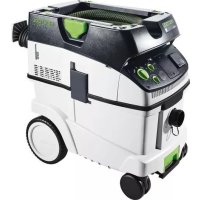
CTM 36L M Class - Industrial vacuum cleaner FESTOOL - Free user manual and instructions
Find the device manual for free CTM 36L M Class FESTOOL in PDF.



| Product type | Industrial vacuum cleaner class M |
| Brand | Festool |
| Model | CTM 36L M Class |
| Container volume | 36 L |
| Dimensions (L x W x H) | 630 x 365 x 596 mm |
| Weight | 15.2 kg (model with AutoClean) |
| Power consumption | 350 - 1200 W |
| Max. connection value at device socket (EU) | 2400 W |
| Max. volume flow | 234 m³/h (3900 l/min) |
| Max. vacuum pressure | 24000 Pa |
| Filter area | 6318 cm² |
| Suction hose | D 27 mm x 3.5 m, antistatic |
| Mains cable length | 7.5 m |
| Sound pressure level (EN 60704-2-1) | 71 dB(A); uncertainty K=3 dB |
| Protection class | IP X4 |
| Dust class | M (suitable for hazardous dusts up to 0.1 mg/m³) |
| Main functions | AutoClean (automatic filter cleaning), volume flow monitoring, antistatic system, power tool socket, AUTO/MAN mode, power regulation |
| Maintenance and cleaning | Replacement of filter bag, disposal bag, main filter; cleaning of level sensors after liquid vacuuming |
| Safety | Thermal protection, parking brake, automatic shut-off in case of liquid, sealing plug, acoustic warning signal |
| Spare parts and repairability | Original Festool spare parts; repair by approved workshop; annual technical inspection recommended |
| General information | Industrial use according to EN 60335-1 and EN 60335-2-69; suction of dry dust and liquids |
Frequently Asked Questions - CTM 36L M Class FESTOOL
User questions about CTM 36L M Class FESTOOL
0 question about this device. Answer the ones you know or ask your own.
Ask a new question about this device
Download the instructions for your Industrial vacuum cleaner in PDF format for free! Find your manual CTM 36L M Class - FESTOOL and take your electronic device back in hand. On this page are published all the documents necessary for the use of your device. CTM 36L M Class by FESTOOL.
USER MANUAL CTM 36L M Class FESTOOL
natural_image
Three industrial vacuum cleaner machines with black and white models, displayed against a plain background (no visible text or symbols)1
natural_image
Diagram of a mechanical component with a knob and directional arrow, no readable text or symbols present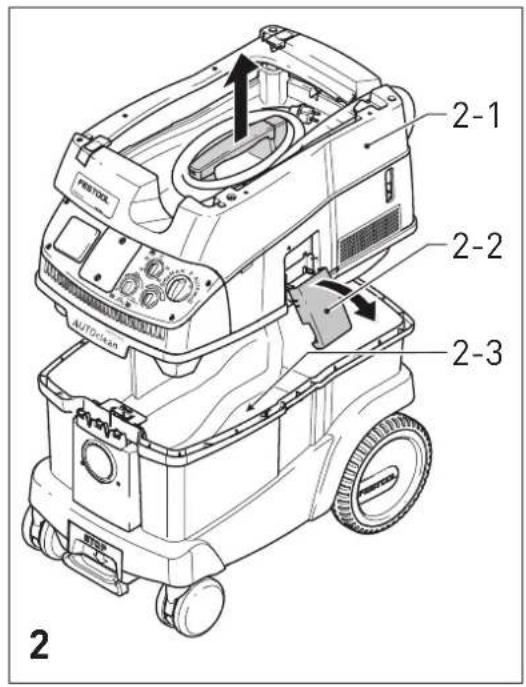
natural_image
Technical line drawing of a vehicle's rear wheel assembly with attached sensor and tire components (no text or symbols)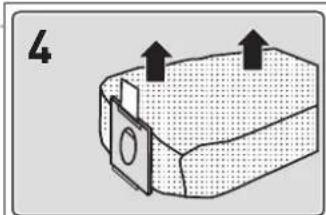
natural_image
Diagram of a mechanical component with two upward arrows indicating direction (no text or symbols)
natural_image
Mechanical assembly diagram showing a valve mechanism with directional arrows (no text or symbols)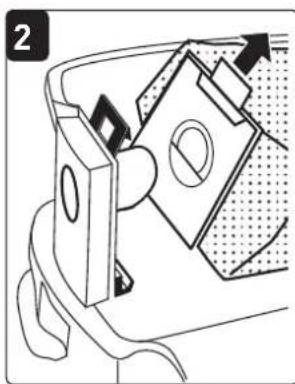
natural_image
Diagram of a mechanical device with directional arrows indicating movement or force (no text or symbols present)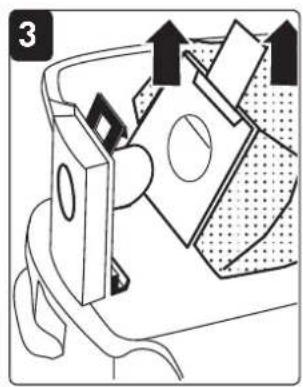
natural_image
Mechanical assembly diagram showing a component with arrows indicating motion or force direction (no text or symbols)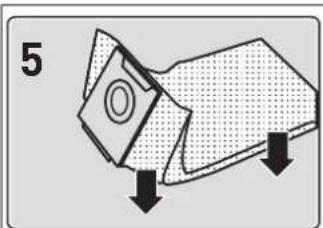
natural_image
Diagram of a mechanical component with downward arrows indicating motion or force (no text or symbols)
natural_image
Mechanical assembly diagram showing a component with directional arrows indicating motion (no text or symbols)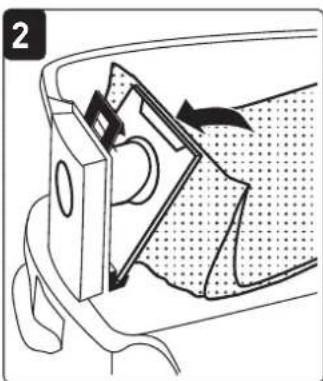
natural_image
Technical diagram of a mechanical component with arrows indicating motion or assembly (no text or symbols)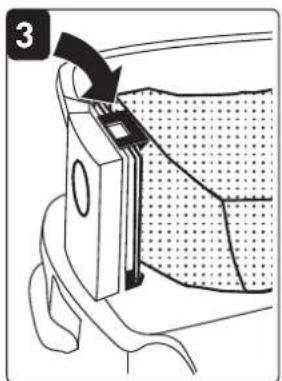


natural_image
Diagram of a car interior with gear and dashboard components (no text or symbols)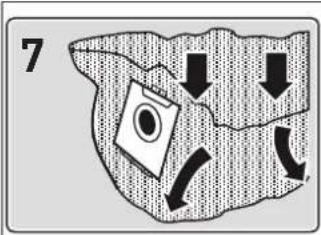
- ENS-CT26 ENS-CT36 ENS-CT48
natural_image
Diagram showing a boat being charged with a weight, no text or symbols present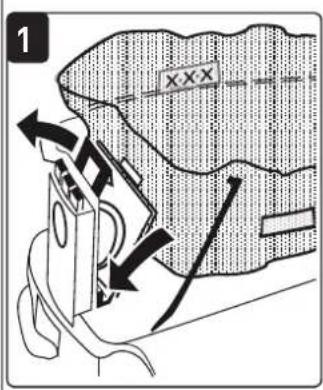
Original operating manual
The specified illustrations appear at the beginning of the Operating Instructions.
1 S y m b o

Warning of general danger

Risk of electric shock

Read the Operating Instructions/Notes!

Wear a dust mask.

Warning! The machine may contain hazardous dust!

Do not throw in the household waste.
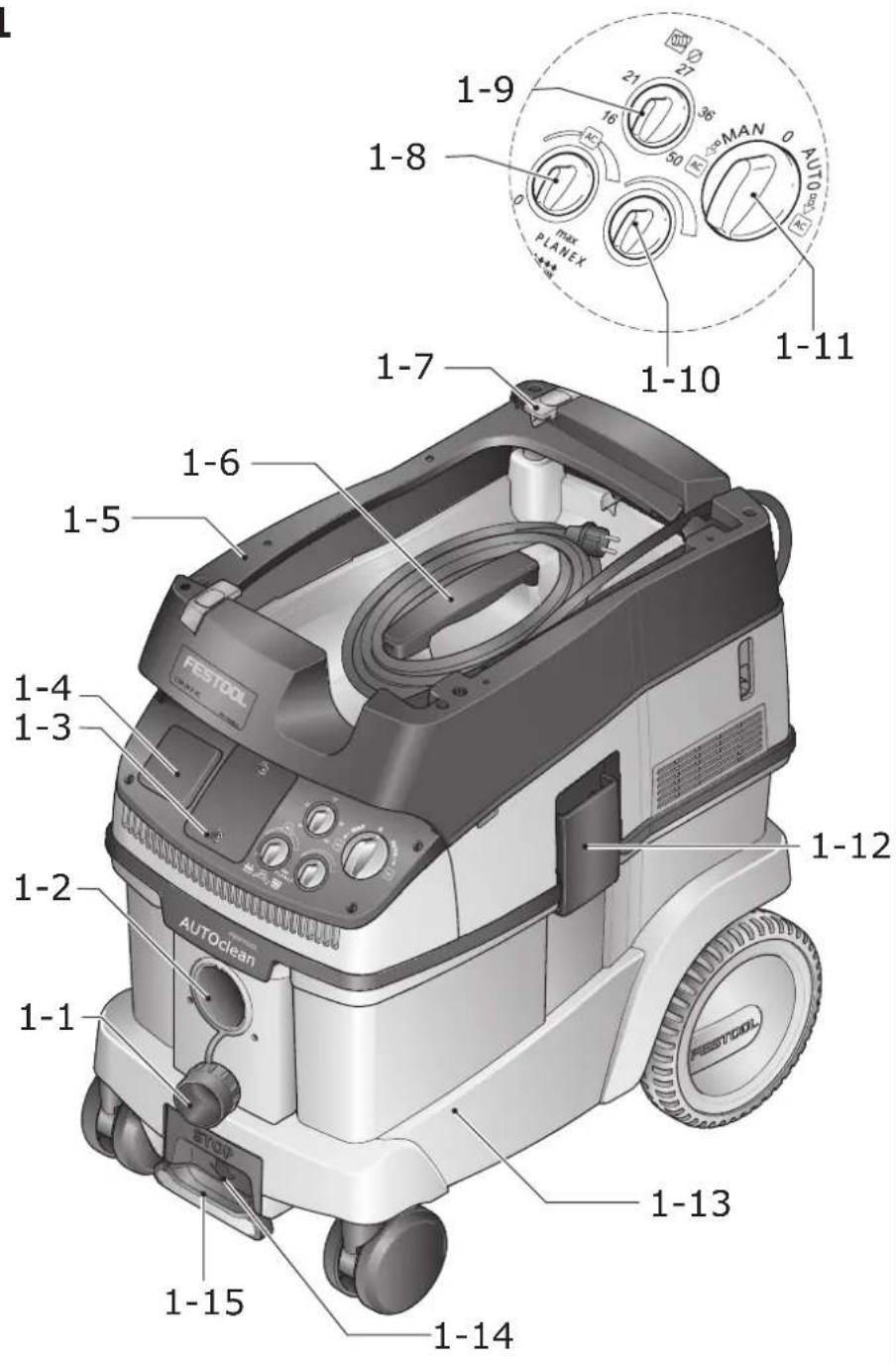
2 Machine features
[1-1] Sealing plug
[1-2] Intake opening
[1-3] Module slot (compressed air module for CTM 36 E LE, CTM 36 E LE AC, CTM 48 E LE, CTM 48 E LE AC)
[1-4] Appliance socket
[1-5] Hose store
[1-6] Handle
[1-7] SysDoc
[1-8] Automatic cleaning (only versions with AutoClean)
[1-9] Hose diameter setting
[1-10] Suction power adjuster
[1-11] Switch
[1-12] Locking clip
[1-13] Dust container
[1-15] Brake
3 T e c h n i c a l d a t
Mobile dust extractors
| Power consumption 350 - 1200 W | ||
| Maximum appliance socket connected load | EU | 2400 W |
| CH, DK | 1100 W | |
| GB 240 V/ 110 V | 1800 W/ 500 W | |
| Max. suction capacity (air), turbine 234 m3/h (3900 l/min) | ||
| Max. vacuum, turbine 24000 Pa | ||
| Filter surface area 6318 cm2 | ||
| Suction hose D 27 mm x 3,5 m-AS | ||
| Length of the net cable 7,5 m | ||
| Sound pressure level as per EN 60704-2-1 / Uncertainty K 71 dB(A) / 3 dB | ||
| Protection category IP X4 | ||
| Container capacity | CTM 26 E, CTM 26 E AC | 26 L |
| CTM 36 E, CTM 36 E LE, CTM 36 E AC, CTM 36 E LE AC, CTM 36 E AC-LHS | 36 L | |
| CTM 48 E, CTM 48 E LE, CTM 48 E AC, CTM 48 E LE AC | 48 L | |
| Dimensions L x W x H | CTM 26 E, CTM 26 E AC | 630 x 365 x 540 mm |
| CTM 36 E, CTM 36 E LE, CTM 36 E AC, CTM 36 E LE AC, CTM 36 E AC-LHS | 630 x 365 x 596 mm | |
| CTM 48 E, CTM 48 E LE, CTM 48 E AC, CTM 48 E LE AC | 740 x 406 x 1005 mm | |
| Weight | CTM 26 E | 13,9 kg |
| CTM 26 E AC | 14,7 kg | |
| CTM 36 E, CTM 36 E LE | 14,4 kg | |
| CTM 36 E AC, CTM 36 E LE AC, CTM 36 E AC-LHS | 15,2 kg | |
| CTM 48 E, CTM 48 E LE | 18,8 kg | |
| CTM 48 E AC, CTM 48 E LE AC | 19,6 kg | |
4 l n t e n
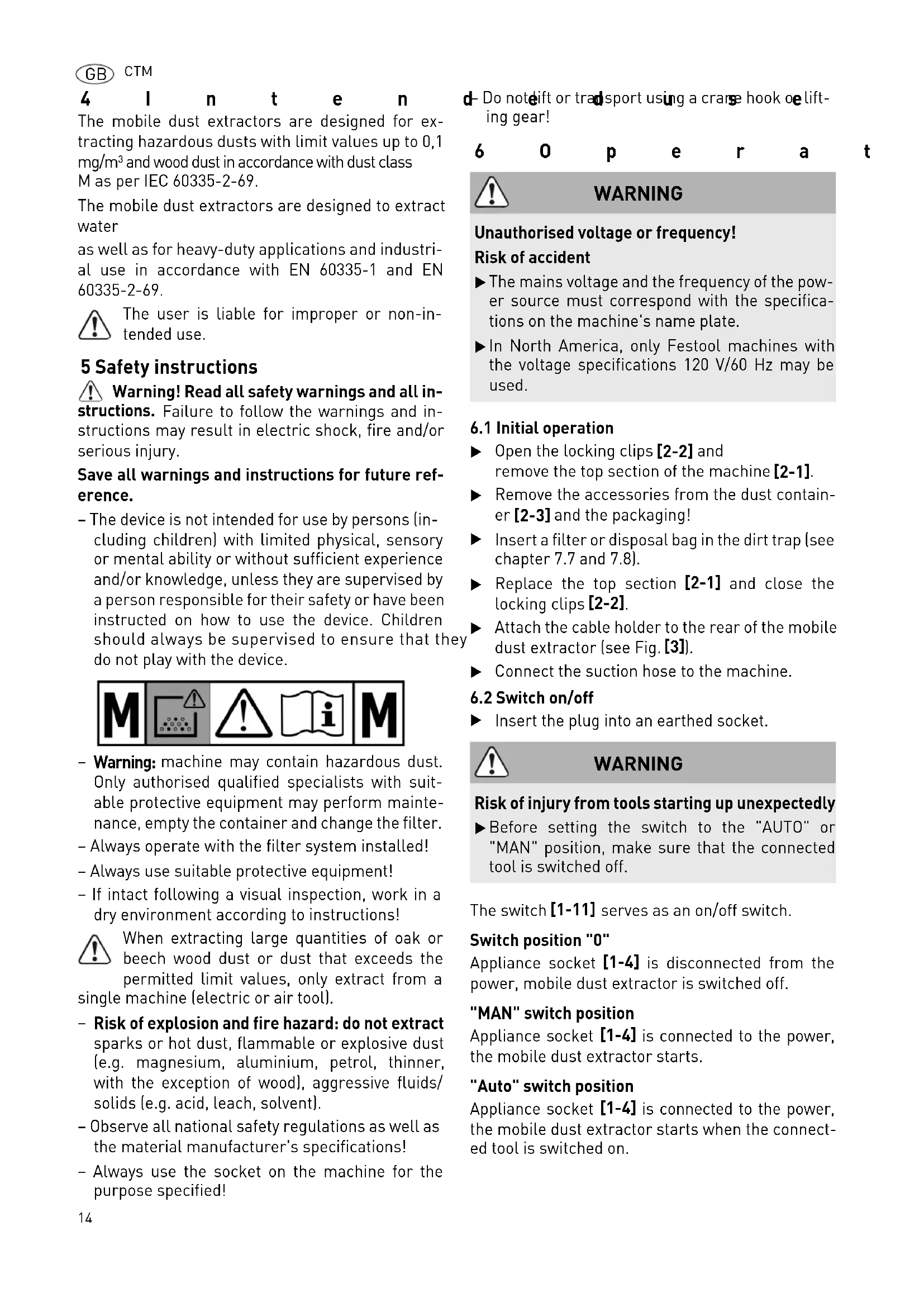
The mobile dust extractors are designed for extracting hazardous dusts with limit values up to 0,1 mg/m ^3 and wood dust in accordance with dust class M as per IEC 60335-2-69.
The mobile dust extractors are designed to extract water
as well as for heavy-duty applications and industrial use in accordance with EN 60335-1 and EN 60335-2-69.

The user is liable for improper or non-in-tended use.
5 Safety instructions
Warning! Read all safety warnings and all instructions. Failure to follow the warnings and instructions may result in electric shock, fire and/or serious injury.
Save all warnings and instructions for future reference.
- The device is not intended for use by persons (including children) with limited physical, sensory or mental ability or without sufficient experience and/or knowledge, unless they are supervised by a person responsible for their safety or have been instructed on how to use the device. Children should always be supervised to ensure that they do not play with the device.

- Warning: machine may contain hazardous dust. Only authorised qualified specialists with suitable protective equipment may perform maintenance, empty the container and change the filter.
- Always operate with the filter system installed!
- Always use suitable protective equipment!
- If intact following a visual inspection, work in a dry environment according to instructions!
When extracting large quantities of oak or beech wood dust or dust that exceeds the permitted limit values, only extract from a single machine (electric or air tool).
- Risk of explosion and fire hazard: do not extract sparks or hot dust, flammable or explosive dust (e.g. magnesium, aluminium, petrol, thinner, with the exception of wood), aggressive fluids/solids (e.g. acid, leach, solvent).
- Observe all national safety regulations as well as the material manufacturer's specifications!
- Always use the socket on the machine for the purpose specified!
d- Do note lift or transport using a crane hook oelifting gear!
6 0 p e r a t

WARNING
Unauthorised voltage or frequency!
Risk of accident
The mains voltage and the frequency of the power source must correspond with the specifications on the machine's name plate.
▶ In North America, only Festool machines with the voltage specifications 120 V/60 Hz may be used.
6.1 Initial operation
▶ Open the locking clips [2-2] and remove the top section of the machine [2-1].
▶ Remove the accessories from the dust container [2-3] and the packaging!
▶ Insert a filter or disposal bag in the dirt trap (see chapter 7.7 and 7.8).
▶ Replace the top section [2-1] and close the locking clips [2-2].
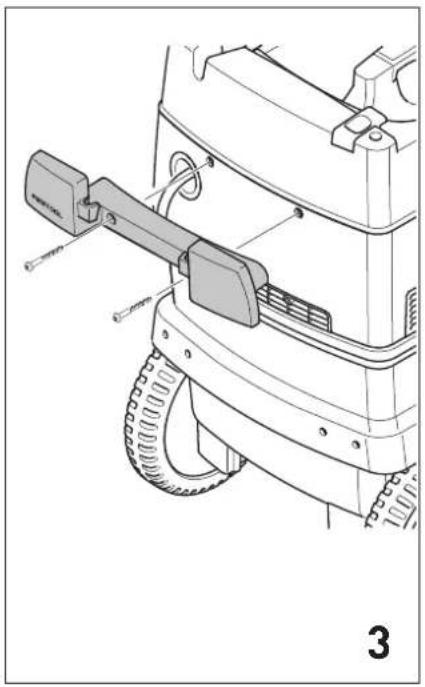
▶ Attach the cable holder to the rear of the mobile dust extractor (see Fig. [3]).
▶ Connect the suction hose to the machine.
6.2 Switch on/off
▶ Insert the plug into an earthed socket.

WARNING
Risk of injury from tools starting up unexpectedly
▶ Before setting the switch to the "AUTO" or "MAN" position, make sure that the connected tool is switched off.
The switch [1-11] serves as an on/off switch.
Switch position "0"
Appliance socket [1-4] is disconnected from the power, mobile dust extractor is switched off.
"MAN" switch position
Appliance socket [1-4] is connected to the power, the mobile dust extractor starts.
"Auto" switch position
Appliance socket [1-4] is connected to the power, the mobile dust extractor starts when the connected tool is switched on.
7 S e t t i
7.1 Adjusting the hose diameter
▶ Adjust the hose diameter adjuster [1-9] to match the diameter of the connected hose.
① The monitoring devices will measure the air speed in the extractor hose correctly as a result (see chapter 7.9).
7.2 Connecting electric power tools


WARNING
Risk of injury
▶ Observe the maximum appliance socket connected load (see chapter "Technical data")
▶ Switch off the electric power tool.
▶ Connect the electric power tool to the appliance socket [1-4].
7.3 Connecting pneumatic tools

WARNING
Risk of injury
▶ Switch off the air tool.
Automatic on/off switch for air tools (CTM 36 E LE, CTM 36 E LE AC, CTM 48 E LE, CTM 48 E LE AC or accessories)
with compressed air module in module slot[1-3]
Recommendation:
- Attachment of service unit VE (495886): compressed air filtered and lubricated
- Use of IAS system with IAS connector (454757) for Festool air tools
Requirement: tool with operating pressure of 6 bar!
7.4 Adjusting the suction power
▶ Use the rotary knob [1-10].
7.5 Applying the brake
Folding out the black brake lever [1-15] prevents the mobile dust extractor from rolling. To achieve this, lift the front end of the mobile dust extractor slightly and push the black brake lever downwards until it latches into place. Push the green lever [1-14] again to release.
7.6 Temperature cut-out
A temperature cut-out switches the mobile dust extractor off when it reaches a critical temperature to prevent overheating.
n▶ Switch off the mobile dust extractor, allow to cool for about 5 minutes then switch on again.
① Not possible to switch on: contact Festool service workshop.
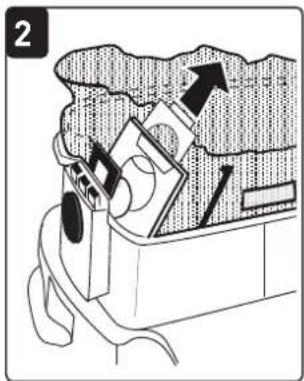
7.7 Changing the filter bag [SC FIS-CT 26/36/48]
Removing the filter bag [4]
▶ Open the locking clips [2-2] and remove the top section of the machine [2-1].
▶ Remove the filter bag.
▶ Dispose of the used filter bag in accordance with statutory regulations.
▶ Clean the dust container [2-3].
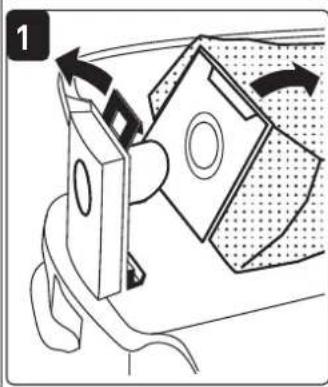
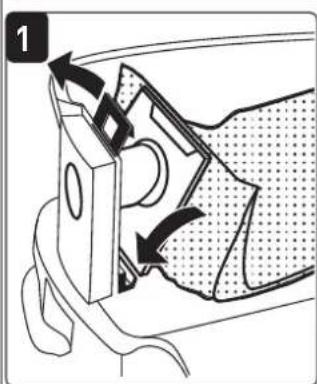
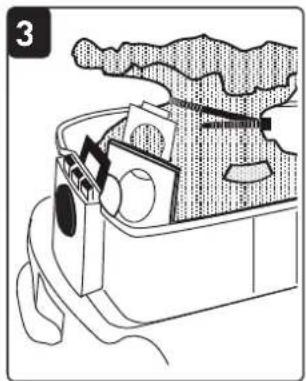
Inserting the filter bag [5]
▶ Insert a new filter bag (SC FIS-CT 26/36/48) in the inlet port of the dust container and interlock it. Important: be aware that the locking engages.
▶ Replace the top section [2-1] and close the locking clips [2-2] .
① Make sure that the filter bag is not pinched between the top and bottom sections.
7.8 Changing the disposal bag
Removing the disposal bag [6]
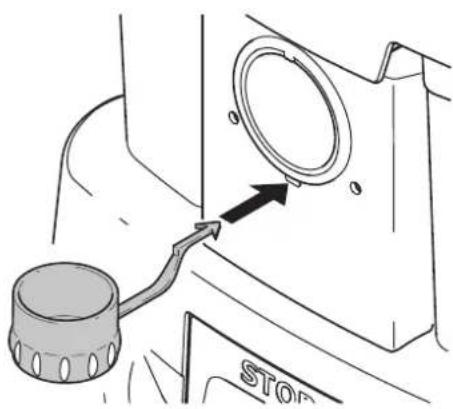
▶ Close off the extractor opening [1-2] using the sealing plug [1-1].
▶ Open the locking clips [2-2] and remove the top section of the machine [2-1].
▶ Close the disposal bag.
▶ Remove the disposal bag.
▶ Dispose of the used disposal bag in accordance with statutory regulations.
▶ Clean the dust container [2-3].
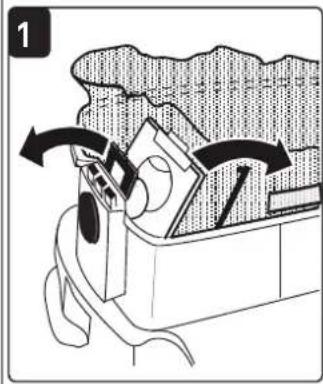
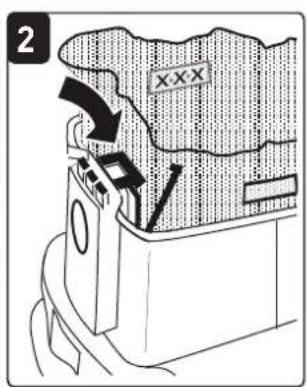
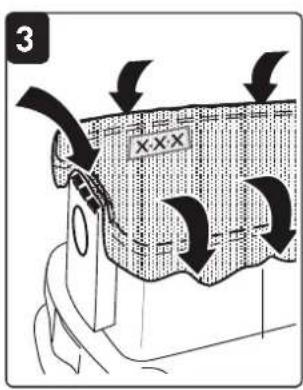
Inserting the disposal bag [7]
▶ Insert a new disposal bag (ENS-CT26/36/48) on the inlet nozzle of the container and lock in position.
Important: The lateral openings on the disposal bag must be positioned inside the container. Make sure that the bolt engages.
▶ Place the disposal bag over the edge of the container.
![FESTOOL CTM 36L M Class - Inserting the disposal bag [7] - 1](/content/2026/03/535985/images/813781cf1afe9bdb22f07cfbc9941615fb39895a1a77f850700fd0fdf50e7251.jpg)
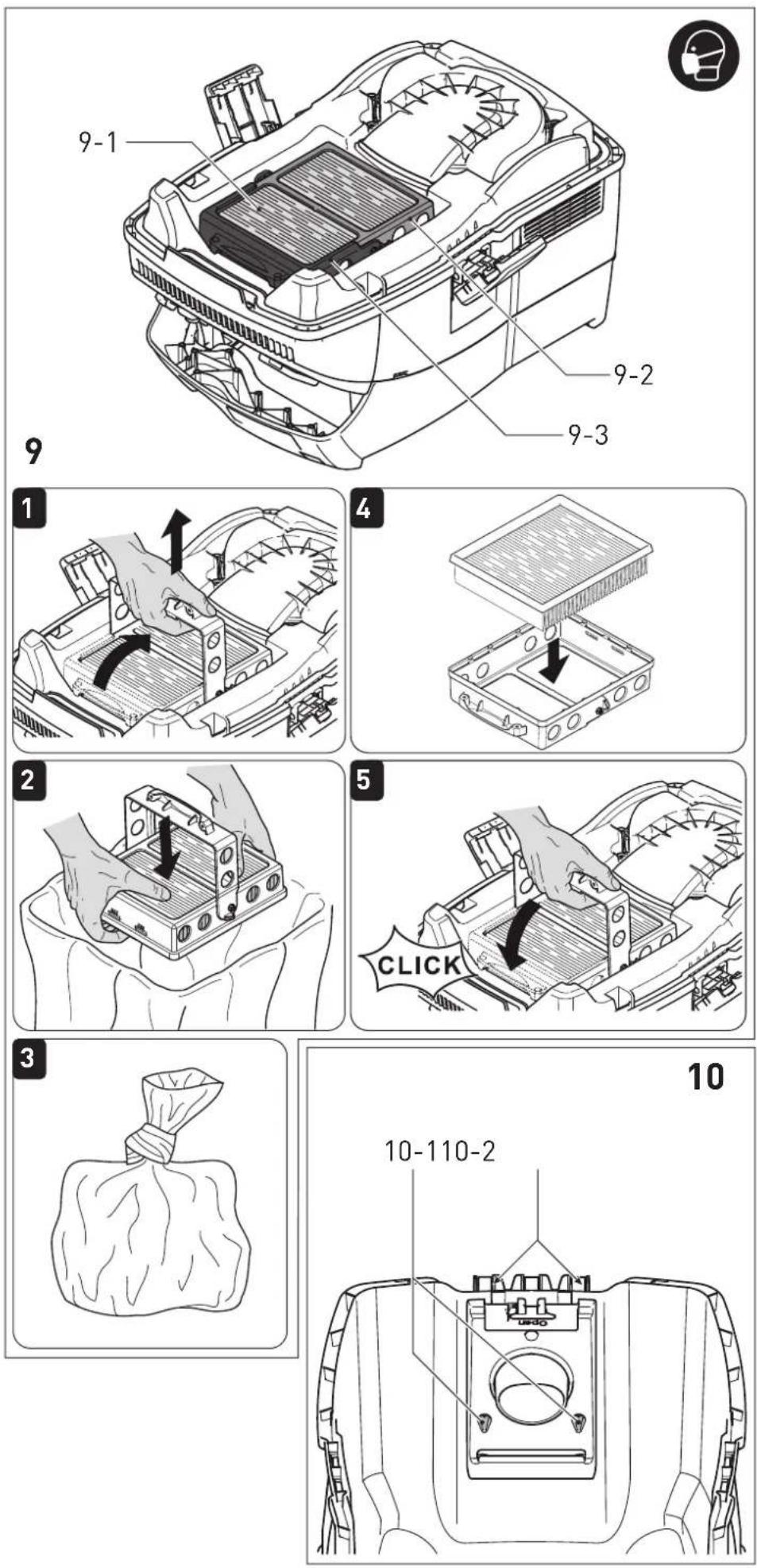
Make sure that the contacts [10-2] are free.
▶Replace the top section [2-1] and close the locking clips [2-2].
7.9 Volumetric flow monitoring
An acoustic warning signal sounds if the air speed in the suction hose falls below 20 m/s.
| Possible causes Solution | |
| Value set on the suction power adjuster [1-10] is too low. | Set the suction power adjuster to a higher value (see Chapter 7.4). |
| Rotary knob [1-9] not set to the correct hose diameter. | Set the knob to the correct hose diameter (see Chapter 7.1). |
| Suction hose blocked or kinked. Remove blockage | or kink. |
| Filter bag full. Insert a new filter bag (see Chapter | 7.7). |
| Filter element clogged. Change the filter element | (see Chapter 9.1).Only AUTOClean: Clean filter element (see chapter 8.2). |
| Monitoring electronics malfunction. Send to a Fest | tool service workshop for repair. |
| Wet extraction. Functional reliability not affected, | no actions required. |
8 W o r k i
8.1 Handling
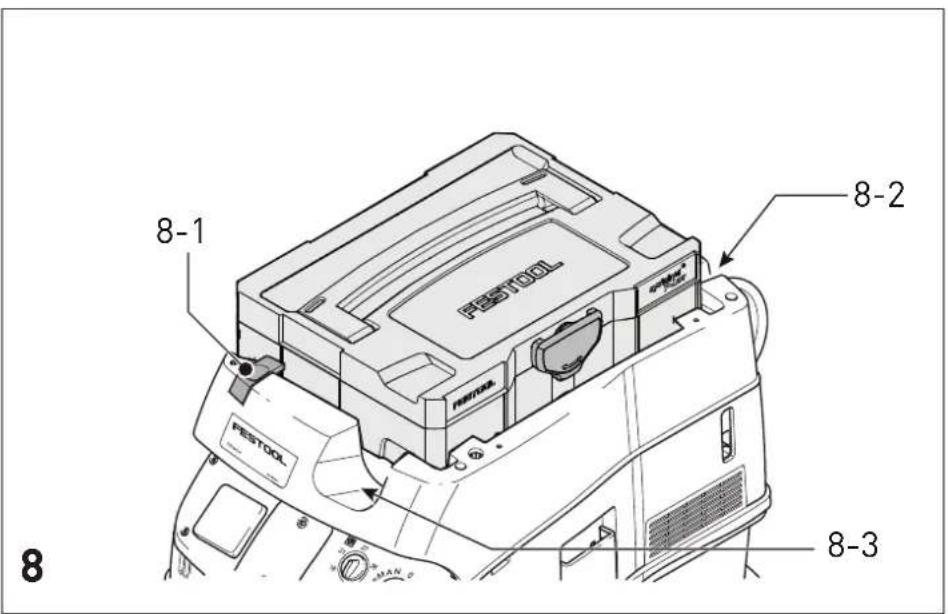
Hose store: after finishing work, you can feed the suction hose through the recess [8-3] and place it in the hose store. You can do the same with the mains cable through the other recess [8-2].
SysDoc Systainer attachment system: a Systainer can be attached to the storage area via the two slides [8-1] .
8.2 AUTO Clean - Cleaning the main filter (only versions with AutoClean)
To maintain a constant suction power when extracting fine dust, you can adjust the frequency of the automatic [1-8] cleaning system in infinite variables using the rotary knob. Always use the automatic cleaning system in combination with a disposal bag (in line with dust class 'M' requirements).

Before performing wet extraction tasks or working with a filter bag, set the [1-8] rotary knob to position 0.
▶ Set the automatic cleaning function to the highest setting when [1-8] extracting large quantities of dust.
Manual cleaning
Turn the switch [1-11] to the AC symbol.
We recommend cleaning the main filter completely if severely clogged:
▶ Cover the end of the nozzle or suction hose with your hand for 2 seconds.
▶ Turn the switch [1-11] to the AC symbol.
① When the CT-VS closing slide is used (order no.: 497926), the filter can be cleaned fully without removing the connected electric power tools.
h intensive applications that generate adherent dust, it may be necessary to clean the filter element mechanically under certain circumstances (extract). Wear a dust mask!
8.3 Special features of the CTM 36 E AC-LHS
To use the mobile dust extractor in combination with the PLANEX:
▶ Use kink-resistant suction hose D 36 mm x 3.5 m-AS.
▶ Use a special suction sleeve for connecting the PLANEX.
▶ Use closing slide CT-VS between the intake opening [1-2] and suction hose.
▶ Attach the tool holder.
▶ Always use with a disposal bag!
8.4 Extracting dry materials


CAUTION
Hazardous dust
Damage to the respiratory passage
▶ Use a filter or disposal bag when extracting hazardous materials!
▶ Do not use the machine if the volumetric flow monitoring function is inactive.
Observe the following when extracting dust generated by operating electric power tools:
If the exhaust air is discharged back into the room, the air renewal rate L within the room must be sufficient. The volume of air discharged back into the room must not exceed 50% of the fresh air volume flow (room volume V_R x air renewal rate L_W ). Observe all the relevant regional regulations.
Remember: A moist main filter clogs more quickly when extracting dry materials. Therefore, dry the main filter before extracting dust or replace the damp filter with a dry one.
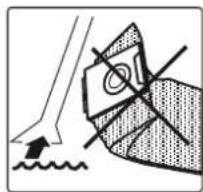
8.5 Extracting wet materials/liquids

Remove the filter or disposal bag!
Recommendation: use special wet filter (NF-CT).
The dust extractor stops automatically when the maximum level is reached.
After wet extraction, allow the main filter to dry!

CAUTION
Escaping foam and fluids
▶ Switch off and empty the machine immediately.
8.6 The antistatic system
Friction inside the extraction hose causes static electricity to develop during extraction. Operating personnel may receive unpleasant electric shocks while working. The mobile dust extractor is fitted with an antistatic system as standard to discharge any static electricity that may develop. However, always use the enclosed antistatic extraction hose.
8.7 After finishing work
▶ Only versions with AutoClean the main filter automatically or manually (see chapter 8.2).
▶ Switch off the mobile dust extractor and pull out the mains plug.
▶ Wind up the mains power cable.
▶ Empty the dirt trap.
▶ Close off the extractor opening [1-2] using the sealing plug [1-1] .

WARNING
Hazardous dust
Damage to the respiratory passage
▶ Wipe down the mobile dust extractor and clean all accessories thoroughly using the extractor (inside and out) before removing from the working area.
▶ Parts that you were not able to clean thoroughly must be sealed in an airtight plastic bag prior to transportation.
▶ Wear a dust mask!

The machine shall be stored indoors only.
Place the mobile dust extractor in a dry room inaccessible to unauthorised users.
9 Service and maintenance

WARNING
Risk of injury, electric shock
▶ Always disconnect the mains plug from the socket before performing maintenance work on the machine!
▶ All maintenance and repair work which requires the motor housing to be opened must only be carried out by an authorised service workshop.

Customer service and repair only through manufacturer or service workshops: Please find the nearest address at:
www.festool.com/Service
Use only original Festool spare parts! Order No. at:
www.festool.com/Service
Damaged safety devices and components must be repaired or replaced in
a recognised specialist workshop, unless otherwise indicated in the operating manual.
Observe the following instructions:
- The manufacturer or an instructed person must perform a dust test at least once a year to determine whether the filter is damaged, the machine is sealed properly and the monitoring features are functioning correctly.
- Anything that cannot be cleaned must be discarded in impermeable bags. Observe applicable disposal regulations!
- For user servicing, the machine must be dismantled, cleaned and serviced, as far as is reasonably practicable, without causing risk to the maintenance staff and others. Suitable precautions include, decontamination before dismantling, provision from local filtered exhaust ventilation where the machine is dismantled, cleaning of the maintenance area and suitable personal protection.
9.1 Changing the filter element
NOTE
Motor damage
▶ Never operate the extractor without a filter element fitted as the motor may become damaged.
▶ Open the locking clips [2-2] and remove the top section of the machine [2-1].
▶ Turn the top section of the machine so that the main filter is facing upwards (Fig.[9]).
▶ Fold over the lever [9-3] and remove the retainer. [9-2]
▶ Remove the used main filter and replace [9-1] with a new one.
▶ Dispose of the used filter in accordance with statutory regulations.
▶ Insert the retainer [9-2] and fold over the lever [9-3] until it engages.
▶ Replace the top section [2-1] and close the locking clips [2-2].
9.2 Emptying the dust container
The dust container [2-3] can be emptied once the top section has been removed.
▶ After extracting fluids, clean the fill level sensors [10-1] regularly with a soft cloth and inspect for damage.
10 Accessories
The order numbers for the accessories and filters can be found in the Festool catalogue or on the Internet at "www.festool.com".
10.1 Modules
The following modules for upgrading the mobile dust extractor are available in the accessories programme. Modules must be fitted to the module slot [1-3] by an authorised service workshop:
- Compressed air module,
- Socket module with permanent power supply,
- Socket module with automatic switch-on unit (not suitable for GB 110 V version),
- Energy box module (EAA) for using the automatic switch-on unit on the EAA.
You can find more detailed information on the modules at "www.festool.com".
11 Environment
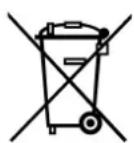
Do not dispose of the device in household waste! Recycle devices, accessories and packaging. Observe applicable country-specific regulations.
EU only: European Directive 2002/96/
EC stipulates that used electric power tools must be collected separately and disposed of at an environmentally responsible recycling centre.
12 EU Declaration of Conformity
| Mobile dust extractor Serial no. | |
| CTM 26 E 495865, 495866, 495870, | 496948 |
| CTM 26 E AC 496313, 496544, 496545,496550, 497990, 497991,497992 | |
| CTM 36 E 495867, 495868, 495871, | 496949 |
| CTM 36 E AC, CTM 36 EAC-LHS | 496546, 496547, 496548,496551, 497069, 497073,497072, 497076, 497070 |
| CTM 36 E LE 495869, 496947, 496950 | |
| CTM 36 E LE AC 496549 | |
| CTM 48 E | 498006, 498007 |
| CTM 48 E LE | 498008 |
| CTM 48 E AC | 498021, 498022 |
| CTM 48 E LE AC 498023 | |
| Year of CE mark: | |
| CTM 26 E, CTM 36 E,CTM 36 E LE | 2009 |
| CTM 26 E AC, CTM 36 EAC, CTM 36 E LE AC,CTM 36 E AC-LHS | 2010 |
| CTM 48 E, CTM 48 E LE,CTM 48 E AC, CTM 48 ELE AC | 2011 |
| We declare under sole responsibility that this product complies with the following directives and standards: | |
| 2006/42/EG, 2004/108/EG, 2011/65/EU (from 01.01.2013), EN 60335-1, EN 60335-2-69, EN 55014-1, EN 55014-2, EN 61000-3-2, EN 61000-3-3. | |
Head of Research, Development and Technical Documentation
27.10.2010
Information on REACH: www.festool.com/reach
[1-2] Aanzuigopening
[1-3] Moduleslot (persluchtmodule bij CTM 36 E LE, CTM 36 E LE AC, CTM 48 E LE, CTM 48 E LE AC)
[1-4] Toestelcontactdoos
[1-5] Slangdepot
[1-6] Handgreep
[1-7] SysDoc
[1-8] Automatische reiniging (alleen varianten met AutoClean)
[1-9] Instelling slang diameter
[1-10] Zuigkrachtregeling
[1-11] Apparaatschakelaar
[1-12] Sluitklem
[1-13] Vuilcontainer
[1-15] Rem
(SC FIS-CT 26/36/48)