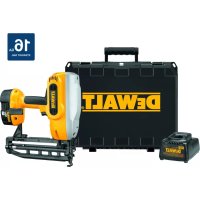
DC616K - Stapler DEWALT - Free user manual and instructions
Find the device manual for free DC616K DEWALT in PDF.


| Product Type | Cordless Stapler |
| Brand | DeWalt |
| Model | DC616K |
| Rated Voltage | 18 V |
| Fastener Type | 16 Ga Staples, 63 mm length, 1.6 mm shank diameter |
| Magazine Angle | 0° |
| Operating Mode | Contact Activation |
| Weight (without battery) | 2.8 kg |
| Sound Pressure Level | 84 dB(A) |
| Sound Power Level | 88 dB(A) |
| Vibration Emission Value | 2.5 m/s² |
| Compatible Battery Type | NiCd, NiMH, Li-Ion 18 V (except compact battery DE9181) |
| Compatible Chargers | DE9130 (NiCd/NiMH), DE9135 (NiCd/NiMH/Li-Ion) |
| Typical Charging Time | 30 min (2.0 Ah battery) to 40 min (2.0 Ah battery) |
| Operating Modes | Sequential action and bump action |
| Depth Adjustment | 6 positions (1 to 6) |
| Contact Tip Lock | Yes, for safety |
| LED Lighting | Yes, indicator lights |
| Warranty | 1 year full + 30 day satisfaction |
| Maintenance | Regular cleaning with compressed air; no lubrication |
| Safety | Wear safety glasses and hearing protection; do not use on a ladder |
Frequently Asked Questions - DC616K DEWALT
User questions about DC616K DEWALT
0 question about this device. Answer the ones you know or ask your own.
Ask a new question about this device
Download the instructions for your Stapler in PDF format for free! Find your manual DC616K - DEWALT and take your electronic device back in hand. On this page are published all the documents necessary for the use of your device. DC616K by DEWALT.
USER MANUAL DC616K DEWALT
RSEL: For at reducere
You have chosen a DEWALT tool. Years of experience, thorough product development and innovation make DEWALT one of the most reliable partners for professional power tool users.
Technical Data
| DC616 | DC618 | |||
| Voltage V | DC | 18 | 18 | |
| Type | 1 | 1 | ||
| Actuating mode | contact | |||
| actuating | ||||
| Magazine angle | 0° | 20° | ||
| Fasteners | ||||
| type | 16 Ga | 16 Ga | ||
| length | mm | 63 | 63 | |
| shank diameter | mm | 1.6 | 1.6 | |
| angle | 0° | 20° | ||
| Weight (without battery pack) | ||||
| kg | 2.8 | 2.8 | ||
| Lsa (sound pressure) | dB(A) | 84 | 84 | |
| Kaa (sound pressure uncertainty) | dB(A) | 4 | 4 | |
| Lya (sound power) | dB(A) | 88 | 88 | |
| Kya (sound power uncertainty) | dB(A) | 3 | 3 | |
Vibration total values (triax vector sum) determined according to EN 60745:
| Vibration emission value an | |||
| an= | m/s2 | 2.5 | 2.5 |
| Uncertainty K = | m/s2 | 2.5 | 2.5 |
The vibration emission level given in this information sheet has been measured in accordance with a standardised test given in EN 60745 and may be used to compare one tool with another. It may be used for a preliminary assessment of exposure.

WARNING: The declared vibration emission level represents the main applications of the tool. However if the tool is used for different applications, with different accessories or poorly maintained, the vibration emission may differ. This may significantly increase the
exposure level over the total working period.
An estimation of the level of exposure to vibration should also take into account the times when the tool is switched off or when it is running but not actually doing the job. This may significantly reduce the exposure level over the total working period.
Identify additional safety measures to protect the operator from the effects of vibration such as: maintain the tool and the accessories, keep the hands warm, organisation of work patterns.
| Battery pack | DE9096 | DE9503 | DE9180 | |
| Battery type | NiCd | NIMH | Li-Ion | |
| Voltage | Voc | 18 | 18 | 18 |
| Capacity | Ah | 2.4 | 2.6 | 2.0 |
| Weight | kg | 0.68 | 1.0 | 1.0 |
| Charger | DE9130 | DE9135 | ||
| Mains voltage | Vc | 230 | 230 | |
| Battery type | NiCd/NiMH | NiCd/NiMH/Li-Ion | ||
| Approx. charging time | min | 30 40 | ||
| (2.0 Ah battery packs) | (2.0 Ah battery packs) | |||
| Weight | kg | 0.5 | ||
| Fuses | ||
| Europe | 230 V tools | 10 Amperes, mains |
| U.K. & Ireland | 230 V tools | 13 Amperes, in plugs |
Definitions: Safety Guidelines
The definitions below describe the level of severity for each signal word. Please read the manual and pay attention to these symbols.

DANGER: Indicates an imminently hazardous situation which, if not avoided, will result in death or serious injury.

WARNING: Indicates a potentially hazardous situation which, if not avoided, could result in death or serious injury.
ENGLISH
CAUTION: Indicates a potentially
hazardous situation which, if not avoided, may result in minor or moderate injury.
NOTICE: Indicates a practice not related to personal injury which, if not avoided, may result in property damage.
Denotes risk of electric shock.
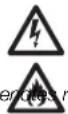
risk of fire.
EC-DeclarationofConformity
MACHINERY DIRECTIVE

DC616, DC618
DEWALT declares that these products described under "technical data" are in compliance with: 2006/42/EC, EN 60745-1, EN 792-13.
These products also comply with Directive 2004/108/EC. For more information, please contact DEWALT at the following address or refer to the back of the manual.
The undersigned is responsible for compilation of the technical file and makes this declaration on behalf of DEWALT.
Horst Grossmann
Vice President Engineering and Product Development
WARNING: To reduce the risk of injury, read the instruction manual.
General Power Tool SafetyWarnings

WARNING! Read all safety warnings and all instructions. Failure to follow the warnings and instructions may result in electric shock, fire and/or serious injury.
SAVE ALL WARNING AND INSTRUCTIONS FOR FUTURE REFERENCE
The term "power tool" in the warnings refers to your mains-operated (corded) power tool or battery-operated (cordless) power tool.
1) WORK AREA SAFETY
a) Keep work area clean and well lit. Cluttered or dark areas invite accidents.
b) Do not operate power tools in explosive atmospheres, such as in the presence of flammable liquids, gases or dust. Power tools create sparks which may ignite the dust or fumes.
c) Keep children and bystanders away while operating a power tool. Distractions can cause you to lose control.
2) ELECTRICAL SAFETY
a) Power tool plugs must match the outlet. Never modify the plug in any way. Do not use any adapter plugs with earthed (grounded) power tools. Unmodified plugs and matching outlets will reduce risk of electric shock.
b) Avoid body contact with earthed or grounded surfaces such as pipes, radiators, ranges and refrigerators. There is an increased risk of electric shock if your body is earthed or grounded.
c) Do not expose power tools to rain or wet conditions. Water entering a power tool will increase the risk of electric shock.
d) Do not abuse the cord. Never use the cord for carrying, pulling or unplugging the power tool. Keep cord away from heat, oil, sharp edges or moving parts. Damaged or entangled cords increase the risk of electric shock.
e) When operating a power tool outdoors, use an extension cord suitable for outdoor use. Use of a cord suitable for outdoor use reduces the risk of electric shock.
If operating a power tool in a damp location is unavoidable, use a residual current device (RCD) protected supply. Use of an RCD reduces the risk of electric shock.
3) PERSONAL SAFETY
a) Stay alert, watch what you are doing and use common sense when operating a power tool. Do not use a power tool while you are tired or under the influence of drugs, alcohol or medication. A moment of inattention while operating power tools may result in serious personal injury.
b) Use personal protective equipment. Always wear eye protection. Protective equipment such as dust mask, non-skid safety shoes, hard hat, or hearing protection used for appropriate conditions will reduce personal injuries.
c) Prevent unintentional starting. Ensure the switch is in the off position before connecting to power source and/or battery pack, picking up or carrying the tool. Carrying power tools with your finger on the switch or energising power tools that have the switch on invites accidents.
d) Remove any adjusting key or wrench before turning the power tool on. A wrench or a key left attached to a rotating part of the power tool may result in personal injury.
e) Do not overreach. Keep proper footing and balance at all times. This enables better control of the power tool in unexpected situations.
f) Dress properly. Do not wear loose clothing or jewellery. Keep your hair, clothing and gloves away from moving parts. Loose clothes, jewellery or long hair can be caught in moving parts.
g) If devices are provided for the connection of dust extraction and collection facilities, ensure these are connected and properly used. Use of dust collection can reduce dust-related hazards.
4) POWER TOOL USE AND CARE
a) Do not force the power tool. Use the correct power tool for your application. The correct power tool will do the job better and safer at the rate for which it was designed.
b) Do not use the power tool if the switch does not turn it on and off. Any power tool that cannot be controlled with the switch is dangerous and must be repaired.
c) Disconnect the plug from the power source and/or the battery pack from the power tool before making any adjustments, changing accessories, or storing power tools. Such preventive safety measures reduce the risk of starting the power tool accidentally.
d) Store idle power tools out of the reach of children and do not allow persons unfamiliar with the power tool or these instructions to operate the power tool. Power tools are dangerous in the hands of untrained users.
e) Maintain power tools. Check for misalignment or binding of moving parts, breakage of parts and any other condition that may affect the power tool's operation. If damaged, have the power tool repaired before use. Many accidents are caused by poorly maintained power tools.
1) Keep cutting tools sharp and clean. Properly maintained cutting tools with sharp cutting edges are less likely to bind and are easier to control.
g) Use the power tool, accessories and tool bits etc., in accordance with these instructions taking into account the working conditions and the work to be performed. Use of the power tool for operations different from those intended could result in a hazardous situation.
5) BATTERY TOOL USE AND CARE
a) Recharge only with the charger specified by the manufacturer. A charger that is suitable for one type of battery pack may create a risk of fire when used with another battery pack.
b) Use power tools only with specifically designated battery packs. Use of any other battery packs may create a risk of injury and fire.
c) When battery pack is not in use, keep it away from other metal objects like paper clips, coins, keys, nails, screws or other small metal objects that can make a connection from one terminal to another. Shorting the battery terminals together may cause burns or a fire.
Under abusive conditions, liquid may be ejected from the battery, avoid contact. If contact accidentally occurs, flush with water. If liquid contacts eyes, additionally seek medical help. Liquid ejected from the battery may cause irritation or burns.
6) SERVICE
a) Have your power tool serviced by a qualified repair person using only identical replacement parts. This will ensure that the safety of the power tool is maintained.
Additional Specific Safety Rules for Cordless Nailers
Always wear safety glasses.
Always wear ear protection.
- Only use fasteners of the type specified in the manual.
- Do not use any stands for mounting the tool to a support.
ENGLISH
- Do not disassemble or block any parts of the fastener driving tool such as the safety yoke.
- Prior to each operation check that the safety and triggering mechanism is functioning properly and that all nuts and bolts are tight.
- Do not use the tool as a hammer.

WARNING: Do not use the tool on a ladder.
- Never point any operational fastener driving tool at yourself or at any other person.
- While working, hold the tool in such a way that no injuries can be caused to the head or to the body in the event of a possible recoil due to a disruption in the energy supply or hard areas within the workpiece.
- Never actuate the fastener driving tool into free space.
In the work area, carry the tool at the workplace using only one handle, and never with the trigger actuated. - Consider the conditions in the work area. Fasteners can penetrate thin workpieces or slip off corners and edges of the workpiece, and thus put people at risk.
- Do not drive fasteners close to the edge of the workpiece.
- Do not drive fasteners on top of other fasteners.
ResidualRisks
In spite of the application of the relevant safety regulations and the implementation of safety devices, certain residual risks cannot be avoided. These are:
Impairment of hearing.
Risk of personal injury due flying particles.
- Risk of burns due to accessories becoming hot during operation.
Risk of personal injury due to prolonged use.
Markings on Tool
The following pictograms are shown on the tool:

Read instruction manual before use.

Wear ear protection.

Wear eye protection.

Do not use the tool on a ladder.

Tool voltage.

Length of nails.

Nail thickness.

Loading capacity.

Magazine angle 20^ : DC618

Magazine angle 0°: DC616

Depth settings.
DATE CODE POSITION
The Date Code, which also includes the year of manufacture, is printed into the housing surface that forms the mounting joint between tool and battery.
Example:
2010 XX XX
Year of Manufacture
Important Safety Instructions for All Battery Chargers
SAVE THESE INSTRUCTIONS: This manual contains important safety and operating instrc tions for the DE9130/DE9135 battery chargers.
Before using charger, read all instructions and cautionary markings on charger, battery pack, and product using battery pack.

DANGER:Electrocution hazard. 230 volts are present at charging terminals.Do not probe with conductive objects.Electric shock or electrocution may result.

WARNING: Shock hazard. Do not allow any liquid to get inside charger. Electric shock may result.

CAUTION: Burn hazard. To reduce the risk of injury, charge only DEWALT rechargeable batteries. Other types of batteries may burst causing personal injury and damage.
CAUTION: Under certain conditions, with the charger plugged in to the power supply, the exposed charging contacts inside the charger can be shorted by foreign material. Foreign materials of a conductive nature such as, but not limited to, steel wool, aluminum foil, or any buildup of metallic particles should be kept away from charger cavities. Always unplug the charger from the power supply when there is no battery pack in the cavity. Unplug charger before attempting to clean.
SAVE THESE INSTRUCTIONS
Chargers
The DE9130 charger accepts 7.2-18 V NiCd and NiMH batteries.
The DE9135 charger accepts 7.2-18 V NiCd/NiMH/Li-ion batteries.
These chargers require no adjustment and are designed to be as easy as possible to operate.
Charging Procedure (fi g. 1)

R:Electrocution hazard. 230 volts present at charging terminals. Do not probe with conductive objects. Danger of electric shock or electrocution.
- Plug the charger (k) into an appropriate outlet before inserting battery pack.
- Insert the battery pack into the charger. The red (charging) light will blink continuously indicating that the charging process has started.
- The completion of charge will be indicated by the red light remaining ON continuously. The pack is fully charged and may be used at this time or left in the charger.
NOTE: To ensure maximum performance and life of NiCd, NiMH and Li-Ion batteries, charge the battery for a minimum of 10 hours before first use.
ENGLISH
Charging Process
Refer the table below for the state of charge of the battery pack.
State of charge
charging
fully charged
hot/cold pack delay
replace battery pack
problem
Automatic Refresh
The automatic refresh mode will equalise or balance the individual cells in the battery pack at its peak capacity. Battery packs should be refreshed weekly or whenever the pack no longer delivers the same amount of work.
To refresh your battery pack, place the battery in the charger as usual. Leave the battery pack for at least 10 hours in the charger.
Hot/Cold Pack Delay
When the charger detects a battery that is too hot or too cold, it automatically starts a Hot/Cold Pack Delay, suspending charging until the battery has reached an appropriate temperature. The charger then automatically switches to the pack charging mode. This feature ensures maximum battery life.
LI-ION BATTERY PACKS ONLY
Li-ion batteries are designed with an Electronic Protection System that will protect the battery against overloading, overheating or deep discharge.
The tool will automatically turn off if the Electronic Protection System engages. If this occurs, place the Li-ion battery on the charger until it is fully charged.
Important Safety Instructions for All Battery Packs
When ordering replacement battery packs, be sure to include catalog number and voltage.
The battery pack is not fully charged out of the carton. Before using the battery pack and charger, read the safety instructions below. Then follow charging procedures outlined.
READ ALL INSTRUCTIONS
- Do not charge or use battery in explosive atmospheres, such as in the presence of flammable liquids, gases or dust. Inserting or removing the battery from the charger may ignite the dust or fumes.
- Charge the battery packs only in DEWALT chargers.
DO NOT splash or immerse in water or other liquids.
- Do not store or use the tool and battery pack in locations where the temperature may reach or exceed 40^ ( 105^ ) (such as outside sheds or metal buildings in summer).
DANGER: Never attempt to open the battery pack for any reason. If battery pack case is cracked or damaged, do not insert into charger. Do not crush, drop or damage battery pack. Do not use a battery pack or charger that has received a sharp blow, been dropped, run over or damaged in any way (i.e., pierced with a nail, hit with a hammer, stepped on). Electric shock or electrocution may result. Damaged battery packs should be returned to service centre for recycling.
CAUTION: When not in use, place tool on its side on a stable surface where it will not cause a tripping or falling hazard. Some tools with large battery packs will stand upright on the battery pack but may be easily knocked over.
SPECIFIC SAFETY INSTRUCTIONS FOR NICKEL CADMIUM (NiCd) OR NICKEL METAL HYDRIDE (NiMH)
- Do not incinerate the battery pack even if it is severely damaged or is completely worn out. The battery pack can explode in a fire.
- A small leakage of liquid from the battery pack cells may occur under extreme usage or temperature conditions. This does not indicate a failure.
However, if the outer seal is broken: a. and the battery liquid gets on your skin, immediately wash with soap and water for several minutes.
b. and the battery liquid gets into your eyes, flush them with clean water for a minimum of 10 minutes and seek immediate medical attention. (Medical note: The liquid is 25 - 35% solution of potassium hydroxide.)
SPECIFIC SAFETY INSTRUCTIONS FOR LITHIUM ION (Li-Ion)
- Do not incinerate the battery pack even if it is severely damaged or is completely worn out. The battery pack can explode in a fire. Toxic fumes and materials are created when lithium ion battery packs are burned.
- If battery contents come into contact with the skin, immediately wash area with mild
soap and water. If battery liquid gets into the eye, rinse water over the open eye for 15 minutes or until imitation ceases. If medical attention is needed, the battery electrolyte is composed of a mixture of liquid organic carbonates and lithium salts.
- Contents of opened battery cells may cause respiratory irritation. Provide fresh air. If symptoms persist, seek medical attention.

WARNING: Burn hazard. Battery liquid may be flammable if exposed to spark or flame.
Battery Cap (fi g. 2)
A protective battery cap is supplied to cover the contacts of a detached battery pack. Without the protective cap in place, loose metal objects could short circuit the contacts, causing a fire hazard and damaging the battery pack.
- Take off the protective battery cap (m) before placing the battery pack in the charger or tool.
- Place the protective cap over the contacts immediately after removing the battery pack from the charger or tool.

WARNING: Make sure the protective battery cap is in place before storing or carrying a detached battery pack.
Battery Pack
BATTERY TYPE
The DC616 and DC618 operate on 18 volt battery packs.
NOTICE:DO NOT USE THE DE9181
18V COMPACT LITHIUM BATTERY IN THE DC618 AND DC616, as this may cause damage to the tool and battery and could result in intermittent tool performance.
Storage Recommendations
- The best storage place is one that is cool and dry away from direct sunlight and excess heat or cold. For optimum battery performance and life, store battery packs at room temperature when not in use.
NOTE: Li-ion battery packs should be fully charged when stored.
- Long storage will not harm the battery pack or charger. Under proper conditions, they can be stored for up to 5 years.
Labels on Charger and Battery Pack
In addition to the pictographs used in this manual, the labels on the charger and the battery pack show the following pictographs:

Read instruction manual before use.

Battery charging.

Battery charged.

Battery defective.

Hot/cold pack delay.

Do not probe with conductive objects.

Do not charge damaged battery packs.

Use only with DEWALT battery packs, others may burst, causing personal injury and damage.

Do not expose to water.

Have defective cords replaced immediately.

Charge only between 4^ C and 40^ C.

Discard the battery pack with due care for the environment.

Do not incinerate the battery pack NiMH, NiCd+ and Li-Ion.

NIMH Charges NiMH and NiCd NiCd battery packs.

Li-on Charges Li-ion battery packs.

See technical data for charging time.
ENGLISH
Package Contents
The package contains:
1 Nailer
1 Charger
2 Battery packs
1 Safety glasses
1 Kitbox (K-models only)
1 Instruction manual
1 Exploded drawing
NOTE: Battery packs and chargers are not included with N-models.
- Check for damage to the tool, parts or accessories which may have occurred during transport.
Take the time to thoroughly read and understand this manual prior to operation.
Description (fi g.1)
WARNING: Never modify the power tool or any part of it. Damage or personal injury could result.
a. On/off switch
b. Contact trip lock-off
c. Depth adjustment wheel
d. Headlights
e. Contact trip
f. Magazine
g. Mode selector switch
h. Belt hook
i. Battery pack
j. Release buttons
k. Charger
- Charger indicator (red)
INTENDED USE
Your DC616, DC618 nailer has been designed for driving fasteners into wooden workpieces.
DO NOT use under wet conditions or in presence of flammable liquids or gases.
These nailers are professional power tools.
DO NOT let children come into contact with the tool. Supervision is required when inexperienced operators use this tool.
Electrical Safety
The electric motor has been designed for one voltage only. Always check that the battery pack
voltage corresponds to the voltage on the rating plate. Also make sure that the voltage of your charger corresponds to that of your mains.

Your DEWALT charger is double insulated in accordance with EN 60335; therefore no earth wire is required.
If the supply cord is damaged, it must be replaced by a specially prepared cord available through the DEWALT service organisation.
Mains Plug Replacement (U.K. & Ireland Only)
If a new mains plug needs to be fitted:
- Safely dispose of the old plug.
- Connect the brown lead to the live terminal in the plug.
- Connect the blue lead to the neutral terminal.
WARNING: No connection is to be made to the earth terminal.
Follow the fitting instructions supplied with good quality plugs. Recommended fuse: 3 A.
Using an Extension Cable
An extension cord should not be used unless absolutely necessary. Use an approved extension cable suitable for the power input of your charger (see technical data). The minimum conductor size is 1mm^2 ; the maximum length is 30m .
When using a cable reel, always unwind the cable completely.
ASSEMBLY AND ADJUSTMENTS

WARNING: Prior to assembly and adjustment, always remove the battery pack. Always switch off the tool before inserting or removing the battery pack.

WARNING: Use only DEWALT battery packs and chargers.
Inserting and Removing the Battery Pack from the Tool (fi g. 2)
WARNING: To reduce the risk of
serious personal injury, turn tool off and disconnect battery pack before making any adjustments or removing/installing attachments or accessories. An accidental start-up can cause injury.
NOTE: Make sure your battery pack (i) is fully charged.
TO INSTALL THE BATTERY PACK INTO THE TOOL HANDLE
- Align the notch inside the tool's handle with the battery pack.
- Slide the battery pack firmly into the handle until you hear the lock snap into place.
TO REMOVE THE BATTERY PACK FROM THE TOOL
- Press the release buttons (j) and firmly pull the battery pack out of the tool handle.
- Insert battery pack into the charger as described in the charger section of this manual.
Low Battery Indicator (fi g. 1)
The low battery indicator is an integrated feature in the headlights (d). It will blink 4 times to indicate that the battery pack needs to be recharged and the tool will automatically shut down.
Switch off the tool and take out the battery pack (i) to charge it as soon as the indicator blinks.
WARNING: The tool remains non-operational as long as a low battery pack is attached to it.
Mounting the Belt Hook (fi g. 3)
- Insert the belt hook (h) into the mounting hole on either side of the tool.
- Pass the screw (n) through the mounting hole in the opposite side. Tighten the screw.
Loading the Tool (fi g. 4)
The tool can be loaded using either of the below methods.
LOCK AND LOAD METHOD
- Lock the nail pusher (o) in the back position.
- Select an appropriate collated nail stick. See "Technical data".
- Insert the nails into the loading slot in the bottom of the magazine (f).
- Unlatch the nail pusher by pulling reward and carefully slide the nail pusher forward to press against the nails.
LOAD AND DRAW METHOD
- Insert the nails into the loading slot in the bottom of the magazine (f).
- Draw the nail pusher (o) back until behind the nails.
- Release the nail pusher to press against the nails.
UNLOADING THE TOOL
- Lock the nail pusher (o) in the back position.
- Remove the nails from the magazine (f).
Adjusting the Driving Depth (fi g. 5)
The driving depth can be adjusted to the type of fastener used.
- Adjust the driving depth as required, choosing a setting from 1 (shallow) to 6 (deep).
To reduce the depth, turn the depth adjustment wheel (c) clockwise.
To increase the depth, turn the depth adjustment wheel counterclockwise.
Selecting the Mode (fi g. 6)
To select sequential action mode, slide the mode selector switch (g) to the left.
To select bump action mode, slide the mode selector switch (g) to the right.
Contact Trip Lock (fi g. 7)
This tool is equipped with a contact trip lock-off (b) which prevents the tool from fi ring a nail.
To release the contact trip lock (b), pull the switch upward.
To engage the contact trip lock, push the switch downward.
WARNING: Make sure the contact trip lock (b) is engaged and the battery pack is removed before making any adjustments or when tool is not in immediate use.
No-mark Tip (fi g. 8)
Place the no-mark tip (p) over the contact trip (e) when the tool is used on wood.
Store the no-mark tip at the holder (q) whenever it is not to be used.
WARNING: Make sure the contact trip lock (b) is engaged and the battery pack is removed before installing or removing the no-mark tip.
Headlights (fi g. 1)
This tool has headlights (d) located on each side. The headlights will light upon inserting the battery pack and upon activating the trigger or releasing the contact trip. The lights will automatically go off after 10 seconds of non-operation.
The headlights also function as a low battery indicator and a jammed nail indicator. For a further
ENGLISH
explanation of these functionalities, refer to the relating instructions in this manual.

IG: The headlights are intended for lighting the immediate work surface. Do not use the headlights as the only light source.
OPERATION
Instructions for Use
WARNING: Always observe the safety instructions and applicable regulations.
WARNING: To reduce the risk of serious personal injury, turn tool off and disconnect tool from power source before making any adjustments or removing/installing attachments or accessories.
Proper Hand Position (fi g. 11)
WARNING: To reduce the risk of serious personal injury, ALWAYS use proper hand position as shown.
WARNING: To reduce the risk of serious personal injury, ALWAYS hold securely in anticipation of a sudden reaction.
Proper hand position requires one hand on the main handle of the tool (t) as shown.
Preparing the Tool (fi g. 9)
- Remove all nails from the magazine.
- Lock the nail pusher (o) in the back position.
- Check if the contact trip (e) and nail pusher (o) can move freely.
- Reload the nails to the magazine.
WARNING: Do not use the tool if the contact trip or nail pusher cannot move freely.
Actuating the Tool (fi g. 1)
The tool can be operated using one of two modes: sequential action mode or bump action mode.
SEQUENTIAL ACTION MODE
The sequential action mode is used for intermittent nailing when very careful and accurate placement is desired.
- Select the sequential action mode.
- Release the contact trip lock (b).
-
Push the contact trip (e) against the work surface.
-
Pull the trigger (a) to actuate the tool. Each trigger pull with the contact trip pushed against the work surface will drive one nail.
Bump Action (fi g. 1)
The bump action mode is used for rapid nailing on flat, stationary surfaces.
- Release the contact trip lock (b).
- Select the bump action mode.
- To drive a single nail: Operate the tool as described for sequential action.
TO DRIVE SEVERAL NAILS
Pull the trigger (a) first, and then push the contact trip (e) repeatedly against the work surface.
WARNING: Do not keep the trigger depressed when the tool is not in use. Keep the contact trip (b) in the locked position to prevent accidental actuation when the tool is not in use.
Clearing a Jammed Nail (fi g. 1, 10)
If a nail becomes jammed in the nosepiece, the headlights (d) will blink continuously.
- Remove the battery pack (i).
- Engage the contact trip lock (b).
- Remove all nails from the magazine (f).
- Release the latch (r) on top of the nosepiece.
- Retract the barrel (s) so the jammed nail is exposed.
- Remove the nail, using pliers if necessary.
- If the driver blade is in the down position, insert a screwdriver into the nosepiece and push the blade back in position.
- Lower the barrel back in place.
- Re-engage the latch.
WARNING: If nails become jammed in the nosepiece frequently, have the toolserviced by an authorised DEWALT service centre.
MAINTENANCE
Your DEWALT power tool has been designed to operate over a long period of time with a minimum of maintenance. Continuous satisfactory operation depends upon proper tool care and regular cleaning.

NG: To reduce the risk of serious personal injury, turn tool off and disconnect battery pack before making any adjustments or
removing/installing attachments or accessories. An accidental start-up can cause injury.
The charger is not serviceable. There are no serviceable parts inside the charger.

Lubrication
Your power tool requires no additional lubrication.

WARNING: Do not lubricate the tool as it will damage the internal parts.

Cleaning

WARNING: Blow dirt and dust out of the main housing with dry air as often as dirt is seen collecting in and around the air vents. Wear approved eye protection and approved dust mask when performing this procedure.
WARNING: Never use solvents or other harsh chemicals for cleaning the non-metallic parts of the tool. These chemicals may weaken the materials used in these parts. Use a cloth dampened only with water and mild soap. Never let any liquid get inside the tool; never immerse any part of the tool into a liquid.
CHARGER CLEANING INSTRUCTIONS
WARNING: Shock hazard. Disconnect the charger from the AC outlet before cleaning. Dirt and grease may be removed from the exterior of the charger using a cloth or soft non-metallic brush. Do not use water or any cleaning solutions.
Troubleshooting
If your tool seems not to operate properly, follow the instructions below. If this does not solve the problem, please contact your repair agent.
Tool does not work
Headlights do not switch on
- Replace the battery pack.
- Release the contact trip lock-off.
- Remove the battery pack, wait for at least 3 seconds, then re-insert it.
Headlights are on but motor does not run
- Release the trigger or contact trip and re-depress.
- Release the contact trip lock-off.
Headlights are on and motor runs
- Please contact your repair agent.
Tool does not drive fasteners
- Load fasteners into the magazine.
Make sure to use fasteners of the type specified.
Clean the nosepiece.
Clean the magazine.
Tool does not drive fasteners fully
- Remove nails.
- Remove the battery pack, wait for at least 5 seconds, then re-insert it.
- Fire one time to reset tool.
- Adjust the driving depth.
- Choose the appropriate material or fastener length.
Fasteners jam in tool
Make sure to use fasteners of the type specified.
- Choose the appropriate material or fastener length.
- Replace the battery pack.
Clean the nosepiece.
Clean the magazine.
Optional Accessories

WARNING: Since accessories, other than those offered by DEWALT, have not been tested with this product, use of such accessories with this tool could be hazardous. To reduce the risk of injury, only DEWALT, recommended accessories should be used with this product.
Consult your dealer for further information on the appropriate accessories.
ENGLISH
Protecting the Environment
Separate collection. This product must not be disposed of with normal household waste.
Should you find one day that your DEWALT product needs replacement, or if it is of no further use to you, do not dispose of it with household waste. Make this product available for separate collection.

Separate collection of used products and packaging allows materials to be recycled and used again. Re-use of recycled materials helps prevent environmental pollution and reduces the demand for raw materials.
Local regulations may provide for separate collection of electrical products from the household, at municipal waste sites or by the retailer when you purchase a new product.
DEWALT provides a facility for the collection and recycling of DeWALT products once they have reached the end of their working life. To take advantage of this service please return your product to any authorised repair agent who will collect them on our behalf.
You can check the location of your nearest authorised repair agent by contacting your local DEWALT office at the address indicated in this manual. Alternatively, a list of authorised DEWALT repair agents and full details of our after-sales service and contacts are available on the Internet at:
www.2helpU.com.

Rechargeable Battery Pack
This long life battery pack must be recharged when it fails to produce sufficient power on jobs which were easily done before. At the end of its technical life, discard it with due care for our environment:
- Run the battery pack down completely, then remove it from the tool.
- Li-Ion, NiCd and NiMH cells are recyclable. Take them to your dealer or a local recycling station. The collected battery packs will be recycled or disposed of properly.
GUARANTEE
DeWALT is confident of the quality of its products and offers an outstanding guarantee for professional users of the product. This guarantee statement is in addition to and in no way prejudices your contractual rights as a professional user or your statutory rights as a private non-professional user. The guarantee is valid within the territories of the Member States of the European Union and the European Free Trade Area.
30 DAY NO RISK SATISFACTION GUARANTEE
If you are not completely satisfied with the performance of your DEWALT tool, simply return it within 30 days, complete with all original components, as purchased, to the point of purchase, for a full refund or exchange. The product must have been subject to fair wear and tear and proof of purchase must be produced.
- ONE YEAR FREE SERVICE CONTRACT
If you need maintenance or service for your DEWALT tool, in the 12 months following purchase, it will be undertaken free of charge at an authorised DEWALT repair agent. Proof of purchase must be produced. Includes labour. Excludes accessories and spare parts unless failed under warranty.
- ONE YEAR FULL WARRANTY
If your DEWALT product becomes defective due to faulty materials or workmanship within 12 months from the date of purchase, DEWALT guarantees to replace all defective parts free of charge or - at our discretion - replace the unit free of charge provided that:
The product has not been misused;
The product has been subject to fair wear and tear;
- Repairs have not been attempted by unauthorised persons;
Proof of purchase is produced;
The product is returned complete with all original components.
If you wish to make a claim, contact your seller or check the location of your nearest authorised DEWALT repair agent in the DEWALT catalogue or contact your DEWALT office at the address indicated in this manual. A list of authorised DEWALT repair agents and full details of our after-sales service is available on the Internet at:
www.2helpU.com.
CLAVADORADC616, DC618
Enhorabuena!
Suspension de charge.

Batterie rechargeable
BEWAAR ALLE WAARSCHUWINGEN EN INSTRUCTIES ALS TOEKOMSTIG REFERENTIEMATERIALAAL
Lage Accu-indicator (afb. 1)
Snelvuurstand (afb. 1)
ALS U MEERDERE SPIJKERS WILT AFVUREN:
Verktoyets spenning.

Spikerengde.

Spiker diameter.

Magasinkapasitet.

Magasinwinkel 20°: DC618

Vice President Engineering and Product Development
DEWALT, Richard-Klinger-Strasse 11, D-65510, Idstein, Germany
1.3.2010

- ETT ARS FULLSTANDIG GARANTI
AToppIyTe TnV mTatapia e pAiko TPOC TO TEPiBaalov TpToTIO.

Mny aTROTEppwveTe TIG TTATAPIEs NiMH, NiCd+ KAI Li-Ion.

Z
1
A
H

Doo
L
TAT
goi
EC

A
V
OECTI
aT
E)
M
1K
a
E
56
Nepiexómeva oukeuaoiaç
Tn ouakeuaoia nepieXetai.
1 KappwTIKO TIOToAeTO
1ΦopTIOI
2 Paketa mataipov
1Zeuyapiyuaiaaoqaaiea
1 Kouti KIT (móvo yia ta movtéλa K)
1 Eyxepioo oyiyuw
1 Avαλικό Οχεδίο
ZHMIEQH: OI mataies kai oqptiotc dev Tepiaaabovotrai taovtla nOeipacN.
EAeYETViaTUXOvZnuiEoTO epyaleio, OTA Tmuaata n Ta TAPeAkoEvA, OI OTIOIEs MTopei va ouveBnoav kata n diapkeia nC metapopac.
Pniv aTTO xpon, apiepwoe XPOV yia va diaBaote TPOEeTKa KAI VA KA tavonoe To TAPOV EYxepioio.
EAAHNIKA
περιγραφή (εικ. 1)
IPOEIOIOHEM: Mny IpoTOniOaTe Tnre To nAekptko Epyaio n otoiobntote Tumu a rou. Mtopeia va PpokAne n npoosnKOS TpaumatouoS.
a. Diakottnc evepyotoinan/catvepepyoioinonc (on/off)
b. AocpaAeia EptTtoknEVEpyTOInTHETTAPNS
C. Tpoxoc pubuianc baoous
d. Mtpootiva quta
e. Evepyotroinns Etnaipns
f.
g. diaokottns etiioyns aeitoupyias
h. Aykiotpo Zwyns
i. PaKeTo pTaApWv
j. Koumtia aataoppaiion
k.ΦoptioTns
1. EvdeiEg FOptIOG (Kokivn)
IPOBAEIONOMENXPH
To Kapawto DC616, DC618 exe oxebiaotei via kappwma kappiwv se fuliva teuaxia epyaoiac.
NA MH xpnoiopoTioeirai UTO upec ouvneKec n 1e TnV TAPouoia eupAeKTwU pyw n aepiw.
AUTa Ta KApPwTikéivai ETTAYVEAATIKa nAekptiKa epyaleia.
MHN aPivete Tiaia va epxovtae Ettan to epyaio. Aattieirai nntiaeyn otav to epyaio to xpanoiotiouovnteipoi xnpotec.
Hεκτρικήσαφάλεια
O nAektpikos kivntnpac exei oxediaote yia
Aleitoupyla mvo oE mila taon. EAEyETe TaVTOTE eAV
n taon nts tataipas avtianopkiveta Tny taon
Tou avaypapetai otnv iNakbaMe ta deojeva.
Etionc, BeaaiWeite ot na ton Tou pOpiotn
avtiOxie otny taon Tou nAektpikou bIKtuou.

O opTnTc Tc DEWALT diaTei DittAn To TpOToTTO EN 60335. Ka aouveia, dev ataTeiai kawio yiwos
Eav to kalwio tropoadoiac utootei
Baa, npetie va atikataotaei aro eidiKa
diapopwve kawio nou diatbetai meow tns
uttpeiac eutnpentnnc ts DEWALT.
Xpno npoektaon
PPETIEVAxpiouoiouVTaTPOeKTaeic
EKOTc kai av eivai attoauTWC aTAPAHTNO.
XpOoiTOIOHnTE EYKEKPIEvN TPOeTKaON,
kataaann via Tnv eioo peuatoCtou optiOn
OAC (avatpeTe OTA texvikadodoueva).To EaXIOTo
MEyEOC TO aywoy Evai 1 mm2, evw to MEyIOTo
mIKoc evai 30 m.
Otvx npoiotnoite KaWio oe poAo, va CETuilye TnVToTe KaWio EvTeAω.
SYNAPMOAOFH2H KAI PYOMIIEI
IPOEIOIHs: Piv ano tn ouvapaooyon kai n puoiion, va apapeite ravto nV mpatia. Na atevpeyotoei ravto to epyaleio npotou roTOneTe n apapeoTe nV mpatia.
IPOEIOIHs:Na xpoiouoie Imuataies kai opiotcs atokkiaikac Tc DEWALT.
ToTOnTnKai aPaipeoN Tns mTatapiaac an to epyaaleio (EK.2)
IPOEIOIH2H: Tia va
eAattwoteTov KIVduvo OoBapou
PpOswtiko Tpaupanouo,
aTepeytoieTe Epyaleio Kai
AnosuvdeTe Nv Mntapia PIV
anto nV npayatopoinan ruxov
puuiaewn'tnv toTetn/
aipaeon ppoapntmuw n
PapeKoEvW. Hruaia EKKivnO
mTnpei va npokaloei Tpaupanoi.

- Definitions: Safety Guidelines
- ENGLISH
- EC-DeclarationofConformity
- MACHINERY DIRECTIVE
- DC616, DC618
- General Power Tool SafetyWarnings
- SAVE ALL WARNING AND INSTRUCTIONS FOR FUTURE REFERENCE
- 1) WORK AREA SAFETY
- 2) ELECTRICAL SAFETY
- 3) PERSONAL SAFETY
- 4) POWER TOOL USE AND CARE
- 5) BATTERY TOOL USE AND CARE
- 6) SERVICE
- Additional Specific Safety Rules for Cordless Nailers
- ResidualRisks
- Markings on Tool
- DATE CODE POSITION
- Important Safety Instructions for All Battery Chargers
- SAVE THESE INSTRUCTIONS
- Chargers
- Charging Procedure (fi g. 1)
- Charging Process
- Automatic Refresh
- Hot/Cold Pack Delay
- LI-ION BATTERY PACKS ONLY
- Important Safety Instructions for All Battery Packs
- READ ALL INSTRUCTIONS
- SPECIFIC SAFETY INSTRUCTIONS FOR NICKEL CADMIUM (NiCd) OR NICKEL METAL HYDRIDE (NiMH)
- SPECIFIC SAFETY INSTRUCTIONS FOR LITHIUM ION (Li-Ion)
- Battery Cap (fi g. 2)
- Battery Pack
- BATTERY TYPE
- NOTICE:DO NOT USE THE DE9181
- Storage Recommendations
- Labels on Charger and Battery Pack
- Package Contents
- Description (fi g.1)
- INTENDED USE
- Electrical Safety
- Mains Plug Replacement (U.K. & Ireland Only)
- Using an Extension Cable
- ASSEMBLY AND ADJUSTMENTS
- Inserting and Removing the Battery Pack from the Tool (fi g. 2)
- TO INSTALL THE BATTERY PACK INTO THE TOOL HANDLE
- TO REMOVE THE BATTERY PACK FROM THE TOOL
- Low Battery Indicator (fi g. 1)
- Mounting the Belt Hook (fi g. 3)
- Loading the Tool (fi g. 4)
- LOCK AND LOAD METHOD
- LOAD AND DRAW METHOD
- UNLOADING THE TOOL
- Adjusting the Driving Depth (fi g. 5)
- Selecting the Mode (fi g. 6)
- Contact Trip Lock (fi g. 7)
- No-mark Tip (fi g. 8)
- Headlights (fi g. 1)
- OPERATION
- Instructions for Use
- Proper Hand Position (fi g. 11)
- Preparing the Tool (fi g. 9)
- Actuating the Tool (fi g. 1)
- SEQUENTIAL ACTION MODE
- Bump Action (fi g. 1)
- TO DRIVE SEVERAL NAILS
- Clearing a Jammed Nail (fi g. 1, 10)
- MAINTENANCE
- removing/installing attachments or accessories. An accidental start-up can cause injury.
- Lubrication
- Cleaning
- CHARGER CLEANING INSTRUCTIONS
- Troubleshooting
- Tool does not work
- Headlights do not switch on
- Headlights are on but motor does not run
- Headlights are on and motor runs
- Tool does not drive fasteners
- Tool does not drive fasteners fully
- Fasteners jam in tool
- Optional Accessories
- Protecting the Environment
- Rechargeable Battery Pack
- GUARANTEE
- DAY NO RISK SATISFACTION GUARANTEE
- - ONE YEAR FREE SERVICE CONTRACT
- - ONE YEAR FULL WARRANTY
- CLAVADORADC616, DC618
- Enhorabuena!
- Batterie rechargeable
- BEWAAR ALLE WAARSCHUWINGEN EN INSTRUCTIES ALS TOEKOMSTIG REFERENTIEMATERIALAAL
- Lage Accu-indicator (afb. 1)
- Snelvuurstand (afb. 1)
- ALS U MEERDERE SPIJKERS WILT AFVUREN:
- - ETT ARS FULLSTANDIG GARANTI
- Nepiexómeva oukeuaoiaç
- EAAHNIKA
- περιγραφή (εικ. 1)
- IPOBAEIONOMENXPH
- Hεκτρικήσαφάλεια
- Xpno npoektaon
- SYNAPMOAOFH2H KAI PYOMIIEI
- ToTOnTnKai aPaipeoN Tns mTatapiaac an to epyaaleio (EK.2)
Brand : DEWALT
Model : DC616K
Category : Stapler