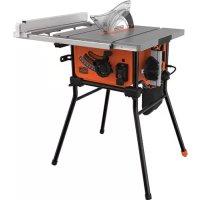
BLACK & DECKER BES720 - Saw

BES720 - Saw BLACK & DECKER - Free user manual and instructions

Find the device manual for free BES720 BLACK & DECKER in PDF.

📄 112 pages PDF ⬇️ English EN 💬 AI Question 🖨️ Print
Notice BLACK & DECKER BES720 - page 5
Manual assistant
Powered by ChatGPT
Waiting for your message
Product information

Brand : BLACK & DECKER

Model : BES720

Category : Saw

Download the instructions for your Saw in PDF format for free! Find your manual BES720 - BLACK & DECKER and take your electronic device back in hand. On this page are published all the documents necessary for the use of your device. BES720 by BLACK & DECKER.
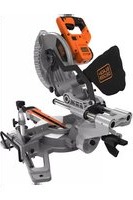
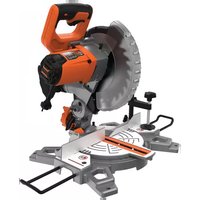
USER MANUAL BES720 BLACK & DECKER

J15 ENGLISH (Original instructions)

Intended use Your BLACK+DECKER BES720 table saw has been designed for the cutting and cross-cutting of all types of timber com- mensurate with the machine’s size. This tool is intended for consumer user only. Safety instructions General power tool safety warnings

Warning! Read all safety warnings, instructions,illustrationsandspecications provided with power tool. Failure to follow the warnings and instructions listed below may result in electric shock, re and/ or serious injury. Save all warnings and instructions for future reference. The term "power tool" in all of the warnings listed below refers to your mains operated (corded) power tool or battery oper- ated (cordless) power tool.

a. Keep work area clean and well lit. Cluttered or dark areas invite accidents. b. Do not operate power tools in explosive atmospheres, suchasinthepresenceofammableliquids,gases or dust. Power tools create sparks which may ignite the dust or fumes. c. Keep children and bystanders away while operating a power tool. Distractions can cause you to lose control.

2. Electrical safety

a. Power tool plugs must match the outlet. Never modify the plug in any way. Do not use any adapter plugs with earthed (grounded) power tools. Unmodied plugs and matching outlets will reduce risk of electric shock. b. Avoid body contact with earthed or grounded surfaces such as pipes, radiators, ranges and refrigerators. There is an increased risk of electric shock if your body is earthed or grounded. c. Do not expose power tools to rain or wet conditions. Water entering a power tool will increase the risk of electric shock. d. Do not abuse the cord. Never use the cord for carrying, pulling or unplugging the power tool. Keep cord away from heat, oil, sharp edges or moving parts. Damaged or entangled cords increase the risk of electric shock. e. When operating a power tool outdoors, use an extension cord suitable for outdoor use. Use of a cord suitable for outdoor use reduces the risk of electric shock. f. If operating a power tool in a damp location is unavoidable, use a residual current device (RCD) protected supply. Use of an RCD reduces the risk of electric shock.

ENGLISH (Original instructions)

a. Stay alert, watch what you are doing and use common sense when operating a power tool. Do not use a powertoolwhileyouaretiredorundertheinuence of drugs, alcohol or medication. A moment of inattention while operating power tools may result in serious personal injury. b. Usepersonalprotectiveequipment.Alwaysweareye protection. Protective equipment such as a dust mask, non-skid safety shoes, hard hat, or hearing protection used for appropriate conditions will reduce personal injuries. c. Prevent unintentional starting. Ensure the switch is in the off-position before connecting to power source and/or battery pack, picking up or carrying the tool. Carrying power tools with your nger on the switch or energising power tools that have the switch on invites accidents. d. Remove any adjusting key or wrench before turning the power tool on. A wrench or a key left attached to a rotating part of the power tool may result in personal injury. e. Do not overreach. Keep proper footing and balance at all times. This enables better control of the power tool in unexpected situations. f. Dress properly. Do not wear loose clothing or jewellery. Keep hair and clothing away from moving parts. Loose clothes, jewellery or long hair can be caught in moving parts. g. If devices are provided for the connection of dust extraction and collection facilities, ensure these are connected and properly used. Use of dust collection can reduce dust-related hazards. h. Donotletfamiliaritygainedfromfrequentuseoftools allow you to become complacent and ignore tool safety principles. A careless action can cause severe injury within a fraction of a second.

4. Power tool use and care

a. Do not force the power tool. Use the correct power tool for your application. The correct power tool will do the job better and safer at the rate for which it was designed. b. Do not use the power tool if the switch does not turn it on and off. Any power tool that cannot be controlled with the switch is dangerous and must be repaired. c. Disconnect the plug from the power source and/or the battery pack from the power tool before making any adjustments, changing accessories, or storing power tools. Such preventive safety measures reduce the risk of starting the power tool accidentally. d. Store idle power tools out of the reach of children and do not allow persons unfamiliar with the power tool or these instructions to operate the power tool. Power tools are dangerous in the hands of untrained users. e. Maintain power tools and accessories. Check for misalignment or binding of moving parts, breakage of parts and any other condition that may affect the power tools operation. If damaged, have the power tool repaired before use. Many accidents are caused by poorly maintained power tools. f. Keep cutting tools sharp and clean. Properly maintained cutting tools with sharp cutting edges are less likely to bind and are easier to control. g. Use the power tool, accessories and tool bits etc. in accordance with these instructions, taking into account the working conditions and the work to be performed. Use of the power tool for operations different from those intended could result in a hazardous situation. h. Keep handles and grasping surfaces dry, clean and free from oil and grease. Slippery handles and greasy surfaces do not allow for safe handling and control of the tool in unexpected situations.

a. Haveyourpowertoolservicedbyaqualiedrepair person using only identical replacement parts. This will ensure that the safety of the power tool is maintained. Safety instructions for table saws

1. Guarding related warnings

a. Keep guards in place. Guards must be in working order and be properly mounted. A guard that is loose, damaged, or is not functioning correctly must be repaired or replaced. b. Always use saw blade guard and riving knife for every through-cutting operation. For through-cutting operations where the saw blade cuts completely through the thickness of the workworkpiece, the guard and other safety devices help reduce the risk of injury. c. Immediately reattach the guarding system after completing an operation (such as rebating, dadoing or resawingcuts)whichrequiresremovaloftheguard and riving knife. The guard and riving knife help to reduce the risk of injury. d. Make sure the saw blade is not contacting the guard, riving knife or the workpiece before the switch is turned on. Inadvertent contact of these items with the saw blade could cause a hazardous condition. e. Adjust the riving knife as described in this instruction manual. Incorrect spacing, positioning and alignment can make the riving knife ineffective in reducing the likelihood of kickback.7 ENGLISH (Original instructions) f. For the riving knife to work, they must be engaged in the workpiece. The riving knife is ineffective when cutting workpieces that are too short to be engaged with the riving knife. Under these conditions a kickback cannot be prevented by the riving knife. g. Use the appropriate saw blade for the riving knife. For the riving knife to function properly, the saw blade diameter must match the appropriate riving knife and the body of the saw blade must be thinner than the thickness of the riving knife and the cutting width of the saw blade must be wider than the thickness of the riving knife.

2. Cutting procedures warnings

a. DANGER:Neverplaceyourngersorhandsinthe vicinity or in line with the saw blade. A moment of inattention or a slip could direct your hand towards the saw blade and result in serious personal injury. b. Feed the workpiece into the saw blade only against the direction of rotation. Feeding the workpiece in the same direction that the saw blade is rotating above the table may result in the workpiece, and your hand, being pulled into the saw blade. c. Never use the mitre gauge to feed the workpiece when ripping and do not use the rip fence as a length stop when cross cutting with the mitre gauge. Guiding the workpiece with the rip fence and the mitre gauge at the same time increases the likelihood of saw blade binding and kickback. d. When ripping, always apply the workpiece feeding force between the fence and the saw blade. Use a push stick when the distance between the fence and the saw blade is less than 150 mm, and use a push block when this distance is less than 50 mm. "Work helping" devices will keep your hand at a safe distance from the saw blade. e. Use only the push stick provided by the manufacturer or constructed in accordance with the instructions. This push stick provides sufcient distance of the hand from the saw blade. f. Never use a damaged or cut push stick. A damaged push stick may break causing your hand to slip into the saw blade. g. Do not perform any operation "freehand". Always use either the rip fence or the mitre gauge to position and guide the workpiece. "Freehand" means using your hands to support or guide the workpiece, in lieu of a rip fence or mitre gauge. Freehand sawing leads to misalignment, binding and kickback. h. Never reach around or over a rotating saw blade. Reaching for a workpiece may lead to accidental contact with the moving saw blade.

i. Provide auxiliary workpiece support to the rear and/or

sides of the saw table for long and/or wide workpieces to keep them level. A long and/or wide workpiece has a tendency to pivot on the table's edge, causing loss of control, saw blade binding and kickback. j. Feed workpiece at an even pace. Do not bend or twist the workpiece. If jamming occurs, turn the tool off immediately, unplug the tool then clear the jam. Jamming the saw blade by the workpiece can cause kickback or stall the motor. k. Do not remove pieces of cut-off material while the saw is running. The material may become trapped between the fence or inside the saw blade guard and the saw blade pulling your ngers into the saw blade. Tum the saw off and wait until the saw blade stops before removing material. l. Use an auxiliary fence in contact with the table top when ripping workpieces less than 2 mm thick. A thin workpiece may wedge under the rip fence and create a kickback.

3. Kickback causes and related warnings

Kickback is a sudden reaction of the workpiece due to a pinched, jammed saw blade or misaligned line of cut in the workpiece with respect to the saw blade or when a part of the workpiece binds between the saw blade and the rip fence or other xed object. Most frequently during kickback, the workpiece is lifted from the table by the rear portion of the saw blade and is propelled towards the operator. Kickback is the result of saw misuse and/or incorrect operating procedures or conditions and can be avoided by taking proper precautions as given below. a. Never stand directly in line with the saw blade. Always position your body on the same side of the saw blade as the fence. Kickback may propel the workpiece at high velocity towards anyone standing in front and in line with the saw blade. b. Never reach over or in back of the saw blade to pull or to support the workpiece. Accidental contact with the saw blade may occur or kickback may drag your ngers into the saw blade. c. Never hold and press the workpiece that is being cut off against the rotating saw blade. Pressing the workpiece being cut off against the saw blade will create a binding condition and kickback. d. Align the fence to be parallel with the saw blade. A misaligned fence will pinch the workpiece against the saw blade and create kickback. e. Use extra caution when making a cut into blind areas of assembled workpieces. The protruding saw blade may cut objects that can cause kickback.8 ENGLISH (Original instructions) f. Support large panels to minimise the risk of saw blade pinching and kickback. Large panels tend to sag under their own weight. Support(s) must be placed under all portions of the panel overhanging the table top. g. Use extra caution when cutting a workpiece that is twisted, knotted, warped or does not have a straight edge to guide it with a mitre gauge or along the fence. A warped, knotted, or twisted workpiece is unstable and causes misalignment of the kerf with the saw blade, binding and kickback. h. Never cut more than one workpiece, stacked vertically or horizontally. The saw blade could pick up one or more pieces and cause kickback.

i. When restarting the saw with the saw blade in the

workpiece, centre the saw blade in the kerf so that the saw teeth are not engaged in the material. If the saw blade binds, it may lift up the workpiece and cause kickback when the saw is restarted.

i. Keepsawbladesclean,sharp,andwithsufcientset.

Never use warped saw blades or saw blades with cracked or broken teeth. Sharp and properly set saw blades minimise binding, stalling and kickback.

4. Table saw operating procedure warnings

a. Turn off the table saw and disconnect the power cord when removing the table insert, changing the saw blade or making adjustments to the riving knife or saw blade guard, and when the machine is left unattended. Precautionary measures will avoid accidents. b. Never leave the table saw running unattended. Turn it off and don't leave the tool until it comes to a complete stop. An unattended running saw is an uncontrolled hazard. c. Locate the table saw in a well-lit and level area where you can maintain good footing and balance. It should be installed in an area that provides enough room to easily handle the size of your workpiece. Cramped, dark areas, and uneven slippery oors invite accidents. d. Frequentlycleanandremovesawdustfromunderthe saw table and/or the dust collection device. Accumulated sawdust is combustible and may self-ignite. e. The table saw must be secured. A table saw that is not properly secured may move or tip over. f. Remove tools, wood scraps, etc. from the table before the table saw is turned on. Distraction or a potential jam can be dangerous. g. Always use saw blades with correct size and shape (diamond versus round) of arbour holes. Saw blades that do not match the mounting hardware of the saw will run off-centre, causing loss of control. h. Never use damaged or incorrect saw blade mounting meanssuchasanges,sawbladewashers,boltsor nuts. These mounting means were specially designed for your saw, for safe operation and optimum performance.

i. Never stand on the table saw, do not use it as a

stepping stool. Serious injury could occur if the tool is tipped or if the cutting tool is accidentally contacted. j. Make sure that the saw blade is installed to rotate in the proper direction. Do not use grinding wheels, wire brushes, or abrasive wheels on a table saw. Improper saw blade installation or use of accessories not recommended may cause serious injury. Additional safety instructions for table saws u The intended use is described in this instruction manual. The use of any accessory or attachment or performance of any operation with this tool other than those recom- mended in this instruction manual may present a risk of personal injury and/or damage to property. u Do not use cracked/bent/damaged/deformed saw blades.u Do not use blades of larger or smaller diameter than recommended. For the proper blade rating refer to the technical data. Use only the blades specied in this manual, complying with EN 847-1.

Warning! Contact with or inhalation of dusts arising from sawing applications may endanger the health of the operator and possible bystanders. Wear a dust mask specically designed for protection against dust and fumes and ensure that persons within or entering the work area are also protected. u Do not work with material containing asbestos. Asbestos is considered to be carcinogenic. u Wear gloves when handling saw blades and rough material (saw blades should be carried in a holder when practicable). u Wear hearing protection to reduce the risk of induced hearing loss. u Consider using specially designed noise-reduction blades.u Wear eye protection to reduce the risk of personal injury.u Use the dust bag provided when sawing wood.u Select the correct blade for the material to be cut.u Do not operate the machine without the guard in position. Do not operate the machine if the guard does not function or is not maintained properly. u Before each cut ensure that the machine is stable.u Keep handles dry, clean and free from oil and grease.u Keep the surrounding area of the machine well maintained and free of loose materials, e.g. chips and off-cuts. u Ensure the machine and the work area are provided with adequate general or localised lighting. u Do not allow untrained people to operate this machine.u Ensure that the blade is mounted correctly before use. Make sure that the blade rotates in the correct direction. Keep the blade sharp. Follow instruction for lubricating and changing accessories.9 ENGLISH (Original instructions) u Injuries caused by touching any rotating/moving parts. u Impairment of hearing. u Risk of accidents caused by the uncovered parts of the rotating saw blade. u Risk of injury when changing any parts, blades or acces- sories. u Risk of squeezing ngers when opening the guards. u Health hazards caused by breathing dust developed when sawing wood, especially oak, beech and MDF. u Injuries caused by prolonged use of a tool. When using any tool for prolonged periods ensure you take regular breaks. Noise The declared noise emission values have been measured in accordance with a standard test method and may be used for comparing one tool with another. The declared noise emission values may also be used in a preliminary assessment of exposure. Warning! The noise emissions during actual use of the power tool can differ from the declared values depending on the ways in which the tool is used especially what kind of workpiece is processed. Warning! Always wear proper personal hearing protec- tion. Under some conditions and duration of use, noise from this product may contribute to hearing loss. Be aware of the following factors inuencing exposure to noise: u Use saw blades designed to reduce the emitted noise, u Use only well sharpened saw blades, and u Use specically designed noise-reduction saw blades. Labels on tool The following pictograms along with the date code are shown on the tool: Warning! To reduce the risk of injury, the user must read the instruction manual. Wear safety glasses or goggles Wear ear protection Wear a dust mask This product is not to be used by children under 16 Keep hands away from blade Wear gloves when handling saw blades u Ensure the speed marked on the saw blade is at least equal to the speed marked on the saw. u Always unplug the machine before carrying out any maintenance or when changing the blade. u Never perform any cleaning, maintenance, removal of any off-cuts or other parts of the work piece from the cutting area when the machine is running and the saw head is not in the rest position. u Make sure all locking knobs and handles are tight before starting any operation. u Never attempt to stop the machine in motion rapidly by jamming a tool or other means against the blade; serious accidents can be caused unintentionally in this way. u Before using or tting any accessory consult the instruc- tion manual. The improper use of an accessory can cause damage. u Never make the warning signs on the power tool unrecog- nisable. u Never stand on the power tool. Serious injuries could occur when the power tool tips over or when coming in contact with the saw blade. u Do not take hold of the saw blade after working before it has cooled. The saw blade becomes very hot while work- ing. u To avoid injury from materials being thrown, unplug the saw to avoid accidental starting, and then remove small materials. u Before use and after any maintenance the blade guard must be checked to ensure proper function. This test must be performed with the saw switched off and unplugged. If the guard fails to operate correctly, have your power tool serviced by a qualied repair agent. Call BLACK+DECKER customer services for you nearest service agent. u This table saw has been designed for sawing wood, plastic and nonferrous metal only. Do not use the saw to cut other materials than those recommended by the manufacturer. u Do not take hold of the saw blade after working before it has cooled. The saw blade becomes very hot while work- ing.

Warning! Cutting plastics, sap coated wood, and other materials may cause melted material to accumulate on the blade tips and the body of the saw blade, increasing the risk of the blade overheating and binding while cutting. Residual risks The following risks are inherent to the use of saws: Even with the application of the relevant safety regulations and the implementation of safety devices, certain residual risks can not be avoided. These include:10 ENGLISH (Original instructions) Do not expose the appliance to rain or high humidity. Disconnect the mains plug if the cord becomes damaged or entangled. Electrical safety

This tool is double insulated; therefore no earth wire is required. Always check that the power supply corresponds to the voltage on the rating plate. u If the supply cord is damaged, it must be replaced by the manufacturer or an authorised Stanley FatMax Service Centre in order to avoid a hazard. Voltage drops Inrush currents cause short-time voltage drops. Under unfa- vourable power supply conditions, other equipment may be affected. If the system impedance of the power supply is lower than 0.361, disturbances are unlikely to occur. Using an extension cable Always use an approved extension cable suitable for the power input of this tool (see technical data). Before use, inspect the extension cable for signs of damage, wear and ageing. Replace the extension cable if damaged or defective. When using a cable reel, always unwind the cable completely. Use of an extension cable not suitable for the power input of the tool or which is damaged or defective may result in a risk of re and electric shock. Features This tool includes some or all of the following features.

5a. Rip fence storage

15. Locking handle for rip fence

Assembly uOpen the box and lift the saw out. u Place the saw on a smooth, at surface such as a workbench or strong table. Assembling the leg stand (Fig. A, B & C) Note: The leg stands have been designed so they can only be assembled one way. ensure that the legs always slope outwards as shown on front cover and assembly drawing on page 2. uUnscrew and remove all four leg stand locking knobs (12) as shown in gure A. uPlace the table saw upside down on a stable surface, and insert the leg stands (9) as shown in gure B. Ensure correct orientation. uReplace the leg stand locking knobs (12) ensuring they pass through the holes on the leg stands (9) and tighten securely, as shown in gure B. uThe table saw comes with a leg stand level adjustor (22), this can be adjusted to compensate for irregular oors, as shown in gure C. Riving knife set-up (Fig. D, E & F) Warning! For transport reasons, the riving knife (3) has been xed in the lower position before initial commissioning. Only work with the machine if the riving knife (3) is in the upper position. Fitting the riving knife (3) in the upper position is as follows: uRemove the securing screw (20a) on the table insert (20) and lift the table insert clear from the saw, as shown in gure D. uRaise the saw blade and riving knife assembly by turning the blade elevation handle (11) anti clockwise, as shown in gure E. uLoosen the locking handle (3a) and pull the riving knife (3) into the upper position, as shown in gure F. uReturn the locking handle (3a) to the locked position. Blade guard assembly (Fig. G) uThe blade guard (2) is supplied with a pre-assembled bolt (2a) xed into the correct position.11 ENGLISH (Original instructions) uPosition the bolt (2a) into the recess (3b) on the riving knife (3) and push towards the rear of the riving knife until it locks into position, as shown in gure G. Saw blade assembly/replacement Warning! Ensure the machine is disconnected from the power source. Wear safety gloves. uDisassemble the saw blade guard (2). uRemove the table insert (20). uLoosen the saw blade nut by placing the spanner wrench (17) on the nut and countering with another spanner wrench (17) on the ange. Warning! Turn the nut in the rotational direction of the saw blade. uRemove the outer ange and take out the saw blade from the inner ange, with diagonal downward movement. uCarefully clean the ange before xing the new saw blade. uInsert the new saw blade and fasten the outer ange. Warning! The teeth of a new blade are very sharp and can be dangerous. Make sure the teeth point down at the front of the table, aligned with the arrow marked on the saw blade guard (2). On/Off switch (8) uTo switch the machine on, lift the black paddle cover and press the green start button. uTo switch the machine off, press the black paddle. Cutting depth Turn the blade elevation handle (11) to set the blade to the required cutting depth. uTurn anti-clockwise; to increase the cutting depth. uTurn Clockwise; to reduce the cutting depth. After each new adjustment it is advisable to carry out a trial cut in order to check the set dimensions. Rip fence assembly (Fig. H, & I) uFix the rip fence (5) at the back side and press the locking handle (15) downwards. uWhen disassembly, pull the locking handle (15) up and remove the rip fence (5). uThe rip fence can be tightened with the rear nut (5b). Setting the cutting width (Fig. J) The rip fence (5) is used for lengthwise cutting of material. uPlace the rip fence (5) on the guide rail (18) to the right or left of the saw blade. uThe scale on the guide rail (18) can be used to show the gap between fence rail and saw blade (4), only when the table is not in the extended position (Fig. L) uSet the rip fence (5) to the required specication on the sight-glass and secure it with the locking handle for the rip fence (15). Auxilliary stop (Fig. J1) When sawing narrow workpieces and bevel angles, the auxil- liary stop (5c) must be mounted to the rip fence (5) as shown in gure J1. When sawing narrow workpieces they can become jammed between the rip fence and the saw blade, be caught by the rotation of the saw blade, and be thrown from the machine. Therefore adjust the auxilliary stop (5c) in such a manner that its guiding edge is located between the front saw blade tooth and the front end of the riving knife. Using the mitre gauge (Fig. K) uPush the miter gauge into a slot (1a) on the saw table (1). uLoosen the locking handle (6a). uRotate the miter gauge (6b) until the required angle is set. uThe scale (6c) shows the set angle. uRe-tighten the locking handle (6a). Extension table (Fig. L) The extension table (16) can be used for particularly wide workpieces. uLoosen the locking handle (14) and pull out the table width extension to the required length. Setting the blade angle (Fig. M) Set the required bevel angle from 0 to 45 degree. uLoosen the bevel adjustment locking knob (10). uPush in the blade tilting wheel (13) and turn to the desired angle. uSet up the desired angle then lock the knob (10) again. Working instructions After each new adjustment it is advisable to carry out a trial in order to check the set dimensions. After switching on the saw, wait for the blade to reach its maximum speed of rotation before commencing with the cut. Secure long workpiece against falling off at the end of the cut (e.g. with a roller stand etc.) Take extra care when starting the cut! Making longitudinal cuts Longitudinal cutting (also known as slitting) is when you use the saw to cut along the grain of the wood. Press one edge of the workpiece against the rip fence (5) with the at side on the saw table (1). The blade guard (2) must always be lowered over the workpiece. When you make a longitudinal cut, never adopt a working position that is in line with cutting direction.12 ENGLISH (Original instructions) uSwitch on the saw.uPlace your hands (with ngers closed) at on the workpiece and push the workpiece along and into the blade (4). uGuide at the side with your left or right hand (depending on the position) only as far as the front edge of the saw blade guard (2). uAlways push the workpiece through to the end of the riving knife (3) using the push stick (19) as shown in gure N. uThe offcut piece remains on the saw table (1).uSecure long workpiece against falling off at the end of the cut ) with a roller stand etc. Warning! Always use the push stick (19) when ripping small workpieces. Do not cut excessively small workpieces. Cross Cutting uLock the miter gauge (6) at 0 degreeuSet the bevel angle to 0 degreeuAdjust the saw blade (4) heightuHold the workpiece at on the table (1) and against the fence. Keep the workpiece away from the blade. uKeep both hands away from the path of the saw blade.uSwitch the machine on and allow the saw blade to reach full speed. uHold the workpiece tightly against the fence and slowly move the workpiece together with the fence assembly until the workpiece comes underneath the upper blade guard. uAllow the teeth to cut, and do not force the workpiece through the saw blade. The saw blade speed should be kept constant. After completing the cut, switch the machine off, allow the saw blade to stop and remove the workpiece. Warning! Never push or hold the cut-off-side of the work- piece. Blade jamming handling uEnsure the machine is disconnected from the power source. uRemove the workpiece. Be careful of your hands not touching the saw blade. uPress the overloaded protector (21) and connect the plug again, the machine can resume working. After use u After use, wipe off chips and dust adhering to the tool with a cloth or the like. u Lubricate the sliding portions with machine oil to prevent rust. Protecting the environment

Separate collection. Products and batteries marked with this symbol must not be disposed of with normal household waste. Products and batteries contain materials that can be recovered or recycled reducing the demand for raw materials. Please recycle electrical products and batteries according to local provisions. Further information is available at www.2helpU.com Technical data BES720 Type 1Voltage V 230Frequency Hz 50Power input W 1800No-load speed /min 5200Blade diameter mm 254Blade body thickness mm 2.0Allowed range of kerf width mm 2.8Bore size mm 30Riving knife thickness mm 2.5Max. cutting depth at 45º mm 58Max. cutting depth at 90º mm 80Blade bevel range 0 - 45ºweight kg 27.56Level of sound pressure according to EN 62841:

(sound power) 108 dB(A), Uncertainty (K) 3 dB(A) EC declaration of conformity MACHINERY DIRECTIVE

BES720 Table Saw Black & Decker declares that these products described under "technical data" are in compliance with: EN62841-1:2015, EN62841-3-1:2014+A11:2017, These products also comply with Directive 2006/42/EC, 2014/30/EU and 2011/65/EU. For more information, please contact Black & Decker at the following address or refer to the back of the manual.13 (Übersetzung der ursprünglichen Anweisungen) DEUTSCH ENGLISH (Original instructions) (Übersetzung der ursprünglichen Anweisungen) DEUTSCH The undersigned is responsible for compilation of the technical le and makes this declaration on behalf of Black & Decker. A. P. Smith Technical Director Black & Decker Europe, 210 Bath Road, Slough, Berkshire, SL1 3YD United Kingdom 29/03/2019 Guarantee Black & Decker is condent of the quality of its products and offers consumers a 24 month guarantee from the date of purchase. This guarantee is in addition to and in no way prejudices your statutory rights. The guarantee is valid within the territories of the Member States of the European Union and the European Free Trade Area. To claim on the guarantee, the claim must be in accordance with Black & Decker Terms and Conditions and you will need to submit proof of purchase to the seller or an authorised re- pair agent. Terms and conditions of the Black & Decker 2 year guarantee and the location of your nearest authorised repair agent can be obtained on the Internet at www.2helpU.com, or by contacting your local Black & Decker ofce at the address indicated in this manual. Please visit our website www.blackanddecker.eu to register your new Black & Decker product and receive updates on new products and special offers. Verwendungszweck Ihre BLACK+DECKER Tischsäge BES720 wurde für das Schneiden und Querschneiden aller Holzarten entwickelt, die der Maschinengröße entsprechen. Dieses Gerät ist nicht für den gewerblichen Einsatz vorgesehen. Sicherheitshinweise Allgemeine Sicherheitswarnungen für das Gerät

2. Advarsler for saging