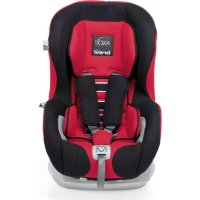
Axo - Car seat Brevi - Free user manual and instructions
Find the device manual for free Axo Brevi in PDF.



| Product type | Child car seat Group 1 |
| Brand | Brevi |
| Model | Axo |
| Category | Car seat |
| Child weight | 9 to 18 kg |
| Approximate age | 9 months to 4 years |
| Orientation | Forward facing |
| Installation | Vehicle 3-point safety belt |
| Harness type | 5-point, height-adjustable with headrest |
| Recline positions | 4 positions |
| Headrest adjustment | 6 positions |
| Shock absorption device | Yes (SA-ATS) |
| Side protection | Yes |
| Safety standard | ECE R44/04 |
| Attachment type | Universal |
| Belt clip | Unidirectional and self-locking |
| Removable cover | Yes, hand wash at 30°C |
| Care | Clean with soapy water, no solvents |
| Recommended spare parts | Use only those provided by the manufacturer |
Frequently Asked Questions - Axo Brevi
User questions about Axo Brevi
0 question about this device. Answer the ones you know or ask your own.
Ask a new question about this device
Download the instructions for your Car seat in PDF format for free! Find your manual Axo - Brevi and take your electronic device back in hand. On this page are published all the documents necessary for the use of your device. Axo by Brevi.
USER MANUAL Axo Brevi
Car seat for children, Group 1, for children weighing from 9 to 18kg (from 9 months to 4 years approximately).
IMPORTANT: Read the instructions carefully before using the seat and observe the illustrations well during the installation.
WARNING: This car seat is a safe product, but only if the instructions of use are followed and respected.
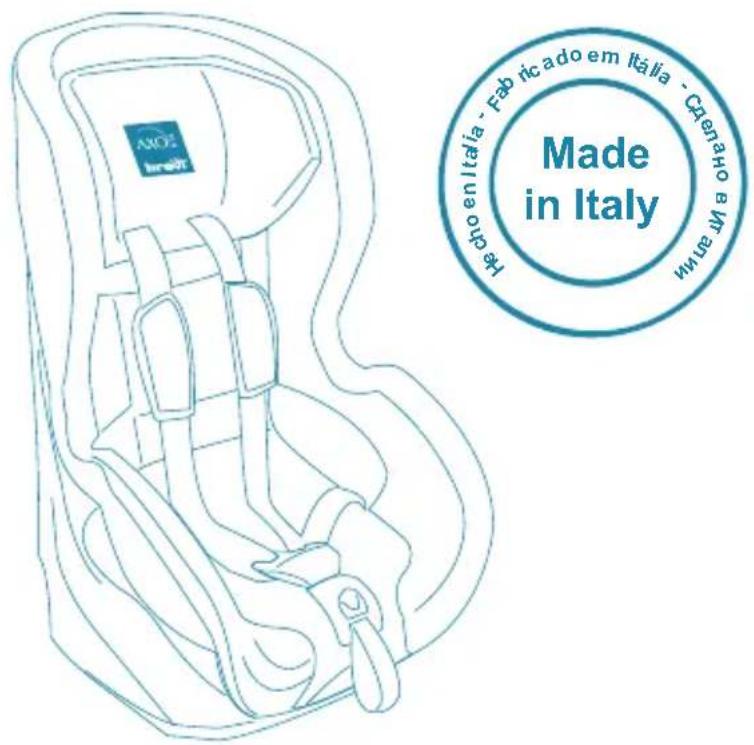
I SEGGIOLINO AUTO PER BABBINI GRUPPO 1: Istruzioni d'uso
CAR SEAT FOR CHILDREN GROUP 1: Instructions for use
D KINDER-AUTOSITZ KLASSE 1: Gebrauchsanleitung
F SIÉGE AUTO POUR ENFANTS GROUPE 1: Notice d'emploi
E SILLA DE AUTO PARA NINOS GRUPO 1: Instrucciones de uso
P CADEIRA AUTO PARA CRIANÇAS GRUPO 1: Instruções de'utilização
SLO OTROŠKI AVTOSEDEŠ
SKUPINA 1: Navodila za uporabo
PL FOTELIK SAMOCHODOWY DLA TWOJEGO DZIECKA GRUPA 1:Instrukcja obslugi
H AUTOS GYERMEKULES 1 CSOPORT: Hasznalati utmutató
HR DJECJA STOLICA ZA AUTO GRUPA 1: Upstva za upotrebu
RUS ABTOMOBUHOE KPECIOI JIADETEN IYPNA1:INCTpyKUINIO pIMMeHeHHO
BILBARNSTOL GRUPP 1:Bruksanvisning
NL AUTOSTOELTJE VOOR KINDEREN GROEP 1: Gebruiksaanwijzing
GR KAOIEMATAKI AYTOKINHTOY IIA IAIIA
OMAAA1:Ooyniesxponoews
RO SCAUNEL AUTO PENTRU COPII GRUPA 1: Instructiuni de folosire
D
WARNING: This is an unapproved version of the German Federal Aviation Act 1974. The German Federal Aviation Act (FAA) provides for the development of民用 aircraft and military aircraft, including nuclear-powered aircraft, civil transport, and commercial aircraft.
F
A. Shock Absorber and Automatic Tensioning H. Harness adjustment belt
System SA-ATS (^ pag.8)
B. Adjustable headrest (6 positions)
C. Reclinable backrest (4 positions)
Seat belt clamps (unidirectional and stopping)
E. Centralized harness Adjustment
F. Shell ventilation
G. Side Impact Protection (^* pag.8)
DEUTSCH
() "SA-ATS" means "Shock Absorber and Automatic Tensioning System". This child seat is equipped with an added safety device, providing a proved shock absorption and the automatic retraction of the harness, attenuating the consequences due to a frontal accident.
(^*) this child seat is designed to provide a superior protection in case of lateral shocks.
D
Dear Customer,
Thank you for choosing AXO, Group 1 seat.
This car seat has been designed for transportation in automobile of children from 9 to 18kg (9 months to 4 years of age approximately).
As every parent knows, your child's safety is vital when travelling by car.
Nothing is more important than ensuring that your child is secured and protected during the journey. All Brevi car seats are rigorously tested to the very latest "European Safety Standards". To reach this Standard each car seat has to pass a stringent series of tests. All of this ensures that you can be confident that your car seat is one of the safest and most comfortable car seats available.
I. General Information
This car seat has been designed and tested to comply with the latest European Standards for Safety Equipment (ECE R44-04) for group 1 car seats, for transportation in autovehicle of children from 9 to 18kg (9 months to 4 years of age approximately).
All ages given are approximate, because all children grow at different rates, the weights given are the main safety issue.
II. Notice
This is a "universal" child restraint. It is approved to ECE regulation 44.04 for general use in vehicles and will fit most, but not all, car seats.
- A correct fit is likely if the vehicle manufacturer has declared in the vehicle hand book that the vehicle is capable of accepting "universal" child restraint for this age group.
- This child restraint has been declared "universal" under more stringent conditions than those applied to earlier designs which do not carry this notice.
- If in doubt, contact either the child restraint manufacturer or the retailer.
- Please make sure to always use and install this seat correctly, as instructed in this manual.
Only suitable if the vehicle is fitted with a 3-point static or 3-point retractor seat belts, approved to
un/ece no. 16 or other equivalent standards.
III. Advises
a) Things to do
Before fitting your car seat, read these instructions carefully. Remember, an incorrect installation could be dangerous.
Save these instructions in a safe place, preferably in the car seat instructions compartment below the seat frame, or in the vehicle so that you can find them for future reference.
Ensure that once the child seat is fitted, none of its harness straps or of the car seat belts can become trapped by the vehicle seat moving parts or the vehicle's door.
Make sure every time you use the car seat that the vehicle's seat belt is tight and the car seat is held firmly in place.
Check every time you fit the child seat that the vehicle seat belt has not become twisted.
Check every time you place your child in the car seat that the safety harness is properly adjusted and the buckle is correctly locked.
Car interiors may become very hot when left standing in direct sunlight - it is therefore recommended that the car seat, when not in use, is covered by a towel etc.; this prevents components, particularly those attached to the child seat, becoming hot and burning the child.
Regularly check the car seat for signs of wear, especially the cover, the harness webbing and its buckle.
Before travelling, check that luggage or any moving object, especially heavy or sharp objects, are secured in the car; loose objects are liable to cause injury in the event of an accident.
When travelling with other passengers, for safety reason, lighter occupants should be preferably in the rear of the vehicle and the heavier occupant in the front passenger seat; moreover, check that all passengers travelling with you have their seat belt fastened.
Whenever the car seat is left in the vehicle without the child in it, always ensure it is correctly fitted using the vehicle's seat belt, preventing it from being thrown about in an accident.
b) Things NOT to do
Never use the child seat without fastening the
child's harness correctly and never attempt to use it without fastening it into the car, as described in these fitting instructions.
- Never place any padding between the base of the car seat and the vehicle's seat, as this could impair the safety of the car seat.
Do not add to or modify this product, in any way.
Never use spare parts that are not recommended or supplied by the manufacturer.
Should any unauthorized modification be made to this child seat, its safety could be jeopardized; the manufacturer solely being authorized to make any modification.
Do not leave a child unattended in the seat or in the vehicle, at any time.
Never allow children to play with the car seat.
Never install nor take out of the car this child seat with your child in it.
This car seat must not be used without the cover.
The seat cover should not be replaced with any other than the one recommended by the manufacturer, since the cover constitutes an integral part of this restraint.
Do not allow your car seat to come into contact with corrosive substances e.g. battery acid, solvents etc.;
The buckle on the car seat is not fully tamper proof; - you should dissuade your child from playing with it.
Refrain from using it as a toy or as a seat at home.
Never use this product if it has been in an accident, or if it has become badly worn.
If your car seat has been involved in an accident at a collision speed above 10km / h even though minor, you MUST dispose of it and purchase a new one; even if your car seat shows no signs of damage, there may be weaknesses that you are unable to see; if this car seat is involved in another accident it may fail to protect your child.
For this reason we suggest that you NEVER use or purchase a second hand car seat.
c) In the event of an emergency
In an emergency your child can be released - quickly by pressing the red button on the car seat harness buckle (see fastening the harness on Pic. 15).
d) Checking the vehicle seat belt
Installation of this child seat in the vehicle is only suitable if the vehicle is equipped with
3-point seat belts with retractor, approved to UN/ECE Regulation No.16 or other equivalent standards.
- The stability of the car seat can be affected by the position of the vehicle seatbelt buckle; if it happens to be positioned as in Pic. 2, this child seat is not suitable for use with your belt or your vehicle
IV. Fitting Instructions
Warning:
*Only use the car seat in the forward facing position.
Use this child seat ONLY for securing your child in your vehicle.
This seat CANNOT be used against the direction of travel.
Please always observe your country regulations;
Should your vehicle be equipped with front airbag, please observe any instructions in the vehicle owner's manual
a) Installation of the child seat
Place the child seat on the appropriate ve-1. hicle seat, facing forward (in the direction of travel).
Make sure the backrests of the vehicle se-2. ats are locked.
Ensure the vehicle seat backrest is in the 3. most upright and adjusted to the rearward position.
Press the child seat firmly against the 4. vehicle seat and back of the vehicle seat (fig 3).
Grip the reclining lever (Fig. 4) and pull the 5. seat forward until it's totally reclined (Fig. 5), to operate more easily.
Pull to open the locking lever of the red belt 6. clamp on the opposite side of the vehicle seat buckle (Fig. 6);
Pull out the car safety seat belt and place 7. it between the backrest and the seat frame (Fig. 7).
Slot the buckle tongue in the car seat buc-8.
kle (Fig. 8) until it clicks in;
Pass the lap section (Fig. 9) in the lower 9. red belt guides on both sides of the seat frame.
Insert the diagonal seat belt section throu-10.
gh the red belt clamp (Fig. 10). Warning: Ensure that the belt has not been twisted (fig. 11);
Place your knee on the child seat to press it 11. into the vehicle seat.
Pull tightly upwards the diagonal section of 12
the seat belt through the belt clamp (Fig. 10) until there is no slack; then close the belt clamp (Fig. 12-13). Caution! The diagonal seat belt section (14-B) may be clamped using only the belt clamp on the opposite side of the vehicle seat buckle;
Ensure the child seat is now held firmly and 13. securely in the vehicle seat.
You may now use the child seat at your 14. chosen position, by using the reclining lever (Fig. 21-22).
Tips
For your child's maximum safety, please double check that:
The child seat is properly and firmly fixed in the vehicle's seat.
The lap belt section (Fig. 14-A) runs through both the red lower belt guides (Fig. 9), and has not been twisted (Fig. 11).
The diagonal belt section (Fig. 14-B) is clamped only with the red belt clamp, which is on the opposite side of the vehicle seat buckle.
The car seat belt is properly engaged in the buckle and not twisted.
b) Securing the child in the seat
Your child seat has a simple-to-use safety harness.
Open it and loosen the shoulders' straps (Fig. 15 and 16), holding the harness release button down.
Place your child in the child seat and fit the left and right tongues together (Fig.17), then push them into the buckle until they 'click' into place, indicating that the buckle is correctly locked (Fig. 18);
Following Fig. 19, position the straps over the shoulders (A) and across the lap (B) and the buckle (C) between the child's legs;
Pull the harness adjustment strap (Fig. 1-H), at the front of the car seat, until the harness is a comfortable, snug fit on the child's body.
The harness should be tightened until it gives a firm, snug fit, but does not cause your child any discomfort; Warning: The crotch buckle (Fig. 19-C) has a fixed length and cannot be adjusted. Do not pull on the chest pads.
To unlock the safety harness, press the red 7. button on the buckle (Fig.15).
c) Adjusting the safety harness and headrest
A correctly adjusted headrest and harness 1.
ensure optimal protection for your child in the safety seat.
The harness height adjustment of this seat 2. is integrated in the headrest adjustment and is achieved by moving the car seat headrest up or down.
Always check the height of the shoulder 3. straps and make sure they are correctly adjusted at the same level of the shoulders or slightly above (Fig.20)
To raise or lower the shoulder straps and 4. the headrest: grip the lever (Fig. 21) in the rear of the backrest and move upwards or downwards until the shoulder straps are adequately leveled.
Release the lever to lock the headrest and 5. the harness in the required position.
d) Loosening the safety harness
Press the harness release button, at the 1. front of the car seat (Fig. 1-E).
Hold the harness release button down and 2. pull the shoulder straps towards you.
Notes: To better protect your child:
Make sure your child is securely fastened in the safety seat and the harness snugly fits over his/her body.
2- Never leave your child unattended in the safety seat or in the vehicle.
When installing your child on the rear seat of the vehicle, move the front seat forward far enough to avoid his feet hitting the backrest of the front seat (this may also prevent risk of injury, in the case of an accident).
When entering in or exiting your child from the vehicle, do it only on the safe side of the street, away from traffic.
During long journeys stop regularly, children get tired easily.
5. Ensure that no part of the safety harness webbing has become twisted.
Remember: No matter how well a car seat has been designed, if it is fitted in the vehicle incorrectly then it may fail to protect your child in the event of an accident.
e) Reclining the car seat
This seat can be reclined on 4 different positions (Fig. 22).
f) Removing the child seat
Grip the reclining lever (Fig. 4) and pull the 1. seat forward to the reclined position.
Open the clamp (Fig. 12) in which the seat 2. belt is engaged and take the belt off.
Release the vehicle seat belt from its buc-3. kle.
Take the lap seat belt section off the red belt 4 guides and withdraw the vehicle seat belt to remove the child seat from your vehicle.
VI. Malfunctions
In case of incidental dropping or any evident damage, your child seat must be inspected by the manufacturer.
Any malfunction of the harness may endanger your child protection.
In case of buckle malfunction, do not use this seat and consult your detailer.
V. Final Check-list
Check that the harness shoulder straps are in the correct position for your child, firmly and comfortably fit on your child's body (Fig. 20).
Check that the vehicles seat belt is correctly fitted around the car seat.
Check that the vehicle's seat belt has not become twisted or trapped in any way.
Check that the vehicle's seat belt is fully tightened and the car seat is held firmly against the vehicle's seat.
Check that the child seat harness is correctly adjusted and tightened and the straps are not twisted.
Check that the buckle on the child seat safety harness is correctly locked (Fig. 18).
Check that the chest pads are always in the right position on your child's body.
Check regularly all important parts for possible damage.
Check the correct operation of all components.
Check that the child seat does not get jammed in the car door, seat runners, etc., in order to prevent breakage, damage, wearing etc;
Remember: No matter how well a car seat has been designed, if it is fitted in the vehicle incorrectly then it may fail to protect your child in the event of an accident.
Even when the car seat has been left fitted in the vehicle, always check that the vehicle's seat belt is correctly positioned and tightened before placing your child in the car seat.
Always follow this check list above before starting any journey with the car seat fitted in your vehicle.
VII. Care & maintenance instructions
Warning: Never lubricate any component of your child seat, just keep it nice and clean.
Plastic parts can be easily cleaned by using just soapy water; never use solvents, alcohol or any harsh cleaning agents.
Cleaning: when your cover gets dirty, remove it (see below) and hand-wash it at 30^ ; do not use chemical cleaners; do not machine-wash; do not wring, nor tumble-dry; do not iron. Please observe the instructions on its washing label.
a) Removing the fabric cover:
Loosen the shoulders' straps as much as 1. possible.
Grip the lever (P) in the front to recline 2. completely the seat.
Undo the shoulder straps behind the back-3. rest (Fig. 23 and 24) and slide them both through the slots in the backrest and the headrest from the front of the child seat and through the shoulders' pads (fig. 25).
Turn outwards the plastic strips sawn on 4. the left and right sides of the cover edges and unhook the cover in the front.
Open the harness buckle.5
Remove the cover of the headrest and the 6. strap pads.
Slide the cover off the harness buckle and 7. the seat.
b) Re-fitting the cover
Follow the reverse procedure of removal - above, making sure to thread correctly the shoulder straps and not to twist them.
Warning: Do not add to or modify this product in any way. Never use spare parts that are not recommended or supplied by the manufacturer.
WARNING: TO AVOID DANGER OF SUFFOCATION, REMOVE THIS PLASTIC BAGBEFORE USING THIS PRODUCT.
THIS PLASTIC BAG SHOULD THEN BE
Warning:
Any child seat tightly fixed on the vehicle seat may leave signs, due to the measures to be adopted in compliance with the Safety Standards. This seat is designed to minimize this phenomenon. The manufacturer is not liable for possible signs resulting from the normal use of this seat.
PnauabapnHOn cHTyaunpe6eHOKdoJxhen
6bItb 6bICTpo OCBO6OxKeH HaxKaTHeM
KpaCHOH KHOHKN, paCNOJIOKeHHoHa 3aMKe ydepKbBAUxnx pemHei (Pnc.15).
d) Пюверka ремнй 6e3опасноctma ABTOMO6nla
YcTaHObKa DaHHoro KpeCna B aBTOMoBnIb
pa3peSeHa TOnIbKO npu ycNobHn HAnuHn TpExToeUHOro peMn 6e3OnaChOCTn C B7rInBaIOUIM MExaHn3MOM, OOn6peHHORo PerIaMeHTOM UN/ECE N°16 nnn 3KBINBaJIeHTbIMn HopMaMn.
CtabnIbHocTb Kpecna MOKeT 6blb HapyuHeHa NIOJKeHHem 3aMka peMHra
6e30nacHOCTn aBTOMo6nla; ecn 3aMOK pemHg 6e30nacHOCTn aBTOMo6nla pacnloKeH TaK, KaK nokazHo Ha Pnc.2,
aBTOKpeCNO He MoKeT 6bITb NcIOJIb3OBAHO C TaKIM pEMHem IIN aBTOMoBuJEM.
IcnoJb3ypaBiar (pnc.4) notaHyTb 1 KpeCNO Bneped HAKIOHNB erO nonHOCTbIO.
OTKpbIb yCTpOoiCTBO 6IOKnPOBKn peMna 2.
6e3oNaCHOCTN (Pnc.12) n BbITaUHTb
peMeHb.
OTcoeHHTb pemeHb 6e3onacHOCTn OT 3. 3aMka.
Ocbobodtbo nocohon otdepeMHn 34. Kpacbix HappaBnUoXn N PNOHOCbBO BblHyTb peMHn DnB03MOxHOCTN CHrTna Kpecna.
V. Cnncok DeiCTBn dIy KOHeuHoro KOHTpOJIa
PpOBepbTe,HTo6bIpemHn6blnnpaBnIbHOpacnoJoxHeHa npeaypebeHka n He npuHHnEmy Heydo6CTB (pnc.20).
Y6eNTecb, YTO peMeHb 6e3OnaCHOCTn ABTomO6NJHaJExKHO 3akpePJIeH BOKpyr KpeCna.
PpOBepbTe, yTO6bI pemeHb ABTOM6nJI He 6bl I nepeKpyeH nJN 3a5nOKupoBaH.
Y6eHNTecb, yTO peMeHb npNCTeHT npaBnJIbHO, a KpeCNo KpeNKo 3aФнксИрOBaHo Ha cnDEHm ABTomObIJa.
Y6eIntecb, yTo peMHn npaBnIbHo paCNOJIOXKeHb I He nepePJIteHbI.
Y6eIntecb, yTO 3AMOK rpynnbl peMHe npabunbHO 3aCterHyT (Pnc.18).
Y6eIITecb, yTO IneYeBbIe peMHIN npaBnIbHO paCIOJIOXKeHbI.
PeryIpaHNo npOBepeTte, YTO6bIO OCHOBHbIE 3nEmeHTbI He 6bln nobpeKdEhbl.
PpOBepaTe yHKUHOHUPOBaHne BCEx KOMPOHEHTOB.
6eDntecb, YTO KpeCNo He 3a6JIOKIpObaHO DBepueH, HnPaBnIHOUMN CnDEHnA, BO n36exKaHnRA NOJOMKn, NOBpeXDeHnA INI INPekDeBpeMeHHOrO n3HOca KpeCna I T.D.
TamrKa:He cmToTnHa CBOH npoeKTHbIe XapaKTepnCTnKn, npn HEnpaBnblHom NcNoJIb3OBAHn ABTOmOBnIbHOe DeTCKoe KpeCNO MoKeT He 3aUNITb BaWero pe6eHKa B cnyae abapnn.
JaKe ecn CnJeHne NOCToHHO 3aKpeNHeB MaUHe, KaXdbpa3 nepe NocAdkO pe6eHka npOBeprTe npaBnIbHOcTb NoLoKeHn KpeNHeHn peMnBe3OpacHoCTn.
KepeK KaXdoI Noe3dkoN C DeTCKIM KpecJOM, BbINOJIHrTe BCE DeIcTBnI N3 DaHHoro nepeuHra.
BhIMaHne
JIIO6oe DeTCKoe aBTOMoBnIbHoe Kpecno OCTaBnIeT CneIbHa NaccaxnPcKOM CnDeHn ABTOMOBnI, B pe3yIbTaTe aAdnTaCn pa3MepOB Kpecna DnE rO npOCHy UCTaHOBKn. IpoeK T daHHoro Kpecna PpeDyCMatpNBaET MNHMn3aCmIO DaHHoro 0ΦΦeKTa B npeJenax BO3MOxHoro. POn3BOdntel He Hecet OTBETCTBEHNOCTN 3a NOBJIeHne CNEoB OT KpecNa Ha NaccaxnPcKOM CnDEHn B pe3yIbTaTe O6bIuHoro NCNOJb3OBaHn Kpecna.
VI. Поломки
B cnyuae napeHnKpeCna nnHaIyHn BnIMbIX NOBpeXdeHn, o6paTntEc b K npodabuy.
JIIO6a HENOJaKa B rpynne pEmHei MoKet IOBJIyraTb Ha 6e3OnacHocTb pe6eHka.
B cIyuae aHOMaJIbHOrO cyHKcIOHUPOBaHn3aMka, He nCNoJIb3OBAt b KpeCNo I o6paTITbcK npoDaBu.
VII. Yxod n TexHnueckoe 06cnykBaHne
BHMaHHe cMa3bIbAte KOMnOHeHTbI DeTcKOro aBTOMo6nIbHoTo KpeCna, DoCTaTOUHO IpocTo IOpDePxNBAtB INX UNTOTy.
Пл actmaccobbie DeTaJI N leKo OuHsaIOTc npn NOMOUI BODb IN MbIa; He McNoJIb3yIte pactBOPHTeIN, aIKOROl b IIN arpeCCNBbIe YICTaUne cpeIcTBa.
UcCTKa: np3aerpa3HeHneObNk, Heo6xOIMMO CHrTbe (CM. Hxke) N BblMbITb BpyHyIO np NiMOnuN BoBbl 30°; He NCNoJIb3yIte XmMnueckme MOUxix CpeDCTB; He CTnpaIte B CTnpaIbHOJ MaunHe; He OTXImaIte N He cyuInTe B cyuINbHOJ MaunHe; He rJaIbTe. Co6IoudaIte INHcTpkyCUn, yka3aHHBe Ha COOTBeTCTByIOSeI 3TNKeTke.
a)ДлСНТЯТКАнБОйбИВК.
MaKcImMaJIbHoe ocIa6nTb peMHI.1.
Pn nOmoi npbUpara (L) MaKcImaJIbHo 2. NaKIOHHTb KpeCNo
OTcoeHNITb B 3aHneJ uactn Kpecna 3. Dba pemHra (Pnc.23 n 24) IN BbyHyTb nx Upe3 neTn, paCNOJoxEHHbIe B CnIHKe IN NOrONoBnKe, Upe3 nIeYeBbIe peMHn, paCNOJoxEHHbIe B IpeDHeJ qactn Kpecna (pnc.25).
BbIBePhyTb HApJyKu PnactNKOBbIe NpOcKn,4.
pacnoNoXeHHbIe Ha JbeBoN I npaBoN
CTopoHax OmbKIn NOTcTeRHyTb OmbKBy B
pepeHne YacTn..
OTcoeHINHTb pemHn OT 3aMka.5.
CHaTbOBnBky NOIroNobHnka n IJIeYeBbIX 6. pEmHei (Pnc.26).
ChTb 0Bky c 3aMka KpeCna, paCnoJIOKeHHOro MeKdy HOr peBeHka n C camoro KpeCna.
IpeynpeKdEHe: He BHOCHTb H3MeHenB H3DeJIne H He do6aBnTb K Hemy HOBbIX DeTaJIeN. He nCNoJIb3OBAtB 3aNcACTN, KOTOpblie He 6blI IN peKOMeHDoBaHbI HII NOCTaBJIeHbI npOdaBcOM.
BHIMAHNE: BO 136EXAHNE ONACHOCTN UdyuHEHn, IEPED NcnoJIb3OBAHnEM DAHHoI O3DEJnH AACTOATEBHO PEKOMEHyETCA YDAJNTb PIACTIKOBYIO 3AUHTY.
Kara foralder,
WARNING: TO AVOID DANGER OF SUFFOCATION, REMOVE THIS PLASTIC BAGBEFORE USING THIS PRODUCT. THIS PLASTIC BAG SHOULD THEN BE DESTROYED OR KEPT AWAY FROM BABIES AND CHILDREN.
Dragi Pärinji,