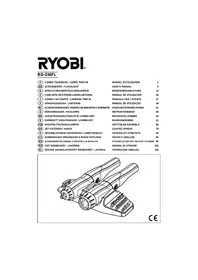
BD-336FL - Drill RYOBI - Free user manual and instructions
Find the device manual for free BD-336FL RYOBI in PDF.



| Brand | RYOBI |
| Model | BD-336FL |
| Product Type | Cordless Screwdriver / Flashlight Combo |
| Motor Voltage | 3.6 V DC |
| No-Load Speed | 180 min⁻¹ |
| Max Torque | 5.6 Nm |
| Hex Shank | 6.4 mm |
| Power Supply | Built-in rechargeable battery (Ni-Cd or Ni-MH) via 230 V ~ 50 Hz, 7 W mains charger |
| Charging Time | 6 to 8 hours |
| Recommended Charger | BC-336FL |
| Main Functions | Reversible screwdriver with torque adjustment, flashlight, head tilt (straight or pistol) |
| Switch | Reversing switch for rotation direction |
| Included Accessories | Screwdriver, flashlight, screwdriver bits, stand/charger with bit storage, user manual |
| Sound Pressure Level | 54 dB(A) |
| Sound Power Level | 67 dB(A) |
| Vibration (weighted acceleration) | 0.3 m/s² |
| Safety | Detailed safety instructions: wear safety glasses, avoid explosive environments, etc. |
| Maintenance and Cleaning | Clean with a dry cloth; do not use solvents; use genuine Ryobi replacement parts |
| Spare Parts and Repairability | Repairs by Ryobi Authorized Service Center; replacement bulb ref. 7803001 |
| Warranty | 24 months against manufacturing defects |
| General Information | Manufactured by Ryobi; complies with EN50144, EN55014, etc. |
Frequently Asked Questions - BD-336FL RYOBI
User questions about BD-336FL RYOBI
0 question about this device. Answer the ones you know or ask your own.
Ask a new question about this device
Download the instructions for your Drill in PDF format for free! Find your manual BD-336FL - RYOBI and take your electronic device back in hand. On this page are published all the documents necessary for the use of your device. BD-336FL by RYOBI.
USER MANUAL BD-336FL RYOBI
MERCI D'AVOIR ACHETÉ UN PRODUIT RYOBI.
CHARACTERISTIQUES PRODUIT
Your new screwdriver/flashlight combo has been engineered and manufactured to Ryobi's high standard for dependability, ease of operation, and operator safety. Properly cared for, it will give you years of rugged, trouble-free performance.

CAUTION:
Carefully read through this entire operator's manual before using your new screwdriver/ flashlight combination.
Pay close attention to the Rules for Safe Operation,Warnings, and Cautions. If you use your screwdriver and flashlight properly and only for what they are intended, you will enjoy years of safe, reliable service.
Thank you again for buying Ryobi tools.
SAVE THIS MANUAL FOR FUTURE REFERENCE
INTRODUCTION
Your screwdriver/flashlight combo has many features for making the use of this tool more pleasant and enjoyable. Safety, performance, and dependability have been given top priority in the design of this screwdriver/flashlight combo making it easy to maintain and operate.

WARNING:
Do not attempt to operate this tool until you have read thoroughly and understand completely all instructions, safety rules, etc. contained in this manual. Failure to comply can result in accidents involving fire, electric shock, or serious personal injury. Save the operator's manual and review it frequently for continuing safe operation and instructing others who may use this tool.

The operation of any power tool can result in foreign objects being thrown into your eyes, which can result in severe eye damage. Before beginning tool operation, always wear safety goggles or safety glasses with side shields and a full face shield when needed. We recommend Wide Vision Safety Mask for use over eyeglasses or standard safety glasses with side shields.
GENERAL SAFETY RULES
SAVE THESE INSTRUCTIONS

WARNING:
Read and understand all instructions. Failure to follow all instructions listed below, may result in electric shock, fire and/or serious personal injury.
WORK AREA
- Keep your work area clean and well lit. Cluttered benches and dark areas invite accidents.
- Do not operate power tools in explosive atmospheres, such as in the presence of flammable liquids, gases, or dust. Power tools may create sparks which may ignite the dust or fumes.
- Keep bystanders, children, and visitors away while operating a power tool. Distractions can cause you to lose control.
ELECTRICAL SAFETY
- Do not abuse the cord. Never use the cord to carry the charger. Keep cord away from heat, oil, sharp edges, or moving parts. Replace damaged cords immediately. Damaged cords may create a fire.
- A battery operated tool with integral batteries or a separate battery pack must be recharged only with the specified charger for the battery. A charger that may be suitable for one type of battery may create a risk of fire when used with another battery. Use battery only with charger listed.
MODEL CHARGER
BD-336FL BC-336FL
- Use battery operated tool only with specifically designated battery pack. Use of any other batteries may create a risk of fire. Use only with battery pack with battery pack listed.
PERSONAL SAFETY
- Stay alert, watch what you are doing and use common sense when operating a power tool. Do not use tool while tired or under the influence of drugs, alcohol, or medication. A moment of inattention while operating power tools may result in serious personal injury.
- Dress properly. Do not wear loose clothing or jewelry. Contain long hair. Keep your hair, clothing, and gloves away from moving parts. Loose clothes, jewelry, or long hair can be caught in moving parts.
English
GENERAL SAFETY RULES
- Avoid accidental starting. Be sure switch is in the locked or off position before inserting battery pack. Carrying tools with your finger on the switch or inserting the battery pack into a tool with
- Remove adjusting keys or wrenches before turning the tool on. A wrench or a key that is left attached to a rotating part of the tool may result in personal injury.
- Do not overreach. Keep proper footing and balance at all times. Proper footing and balance enables better control of the tool in unexpected situations. Do not use on a ladder or unstable support.
Use safety equipment. Always wear eye protection. Dust mask, non-skid safety shoes, hard hat, or hearing protection must be used for appropriate conditions.
TOOL USE AND CARE
Use clamps or other practical way to secure and support the workpiece to a stable platform. Holding the work by hand or against your body is unstable and may lead to loss of control.
- Do not force tool. Use the correct tool for your application. The correct tool will do the job better and safer at the rate for which it is designed.
- Do not use tool if switch does not turn it on or off.
A tool that cannot be controlled with the switch is dangerous and must be repaired.
- Disconnect battery pack from tool or place the switch in the locked or off position before making any adjustments, changing accessories, or storing the tool. Such preventive safety measures reduce risk of starting the tool accidentally.
Store idle tools out of reach of children and other untrained persons. Tools are dangerous in the hands of untrained users.
- When battery pack is not in use, keep it away from other metal objects like: paper clips, coins, keys, nails, screws, or other small metal objects that can make a connection from one terminal to another. Shorting the battery terminals together may cause sparks, burns, or a fire.
- Check for misalignment or binding of moving parts, breakage of parts, and any other condition that may affect the tool's operation. If damaged, have the tool serviced before using. Many accidents are caused by poorly maintained tools.
- Use only accessories that are recommended by the manufacturer for your model. Accessories that may be suitable for one tool, may create a risk of injury when used on another tool.
SERVICE
- Tool service must be performed only by qualified repair personnel. Service or maintenance performed by unqualified personnel may result in a risk of injury.
- When servicing a tool, use only identical replacement parts. Follow instructions in the Maintenance section of this manual. Use of unauthorized parts or failure to follow Maintenance Instructions may create a risk of shock or injury.
SPECIFIC SAFETY RULES
Hold tool by insulated gripping surfaces when performing an operation where the cutting tool may contact hidden wiring. Contact with a "live" wire will make exposed metal parts of the tool "live" and shock the operator.
ADDITIONAL SAFETY RULES
- Know your power tool. Read operator's manual carefully. Learn its applications and limitations, as well as the specific potential hazards related to this tool. Following this rule will reduce the risk of electric shock, fire, or serious injury.
A WARNING:
Some dust created by power sanding, sawing, grinding, drilling, and other construction activities contains chemicals known to cause cancer, birth defects or other reproductive harm. Some examples of these chemicals are:
- lead from lead-based paints,
- crystalline silica from bricks and cement and other masonry products, and
- arsenic and chromium from chemically-treated lumber.
Your risk from these exposures varies, depending on how often you do this type of work. To reduce your exposure to these chemicals: work in a well ventilated area, and work with approved safety equipment, such as those dust masks that are specially designed to filter out microscopic particles.
English
SPECIFIC SAFETY RULES
CORDLESS TOOL RULES
- Cordless tools do not have to be plugged into an electrical outlet; therefore, they are always in operating condition. Be aware of possible hazards when not using your cordless tool or when changing accessories. Following this rule will reduce the risk of electric shock, fire, or serious personal injury.
- Do not place cordless tools or their batteries near fire or heat. This will reduce the risk of explosion and possibly injury.

WARNING:
Batteries vent hydrogen gas and can explode in the presence of a source of ignition, such as a pilot light.
To reduce the risk of serious personal injury, never use any cordless product in the presence of open flame. An exploded battery can propel debris and chemical. If exposed, flush with water immediately.
- Do not charge cordless tool in a damp or wet location. Following this rule will reduce the risk of electric shock.
For best results, your cordless tool should be charged in a location where the temperature is more than 10°C but less than 38°C . Do not store outside or in vehicles.
Under extreme usage or temperature conditions, battery leakage may occur. If liquid comes in contact with your skin, wash immediately with soap and water, then neutralize with lemon juice or vinegar. If liquid gets into your eyes, flush them with clean water for at least 10 minutes, then seek immediate medical attention. Following this rule will reduce the risk of serious personal injury.

WARNING:
A damaged battery is subject to explosion. To avoid serious personal injury, properly dispose of a damaged battery.
CHARGER SAFETY INSTRUCTIONS
- Save these instructions. This manual contains important safety and operating instructions for charger. Following this rule will reduce the risk of electric shock, fire, or serious personal injury.
Before using battery charger, read all instructions and cautionary markings in this manual, on battery charger, and product using battery charger. Following this rule will reduce the risk of electric shock, fire, or serious personal injury.
To reduce risk of injury, charge only nickelcadmium and nickel metal hydride type rechargeable batteries. Other types of batteries may burst causing personal injury and damage. Following this rule will reduce the risk of electric shock, fire, or serious personal injury.
- Do not expose charger to wet or damp conditions. Following this rule will reduce the risk of electric shock, fire, or serious personal injury.
Use of an attachment not recommended or sold by the battery charger manufacturer may result in a risk of fire, electric shock, or injury to persons. Following this rule will reduce the risk of electric shock, fire, or serious personal injury.
- To reduce risk of damage to charger body and cord, pull by charger plug rather than cord when disconnecting charger. Following this rule will reduce the risk of electric shock, fire, or serious personal injury.
Make sure cord is located so that it will not be stepped on, tripped over, or otherwise subjected to damage or stress. Following this rule will reduce the risk of serious personal injury.
An extension cord should not be used unless absolutely necessary. Use of improper extension cord could result in a risk of fire and electric shock. If extension cord must be used, make sure:
a. That pins on plug of extension cord are the same number, size and shape as those of plug on charger.
b. That extension cord is properly wired and in good electrical condition.
- Do not operate charger with a damaged cord or plug. If damaged, have replaced immediately by a qualified serviceman. Following this rule will reduce the risk of electric shock, fire, or serious personal injury.
- Do not operate charger if it has received a sharp blow, been dropped, or otherwise damaged in any way; take it to a qualified serviceman. Following this rule will reduce the risk of electric shock, fire, or serious personal injury.
- Do not disassemble charger; take it to a qualified serviceman when service or repair is required. Incorrect reassembly may result in a risk of electric shock or fire. Following this rule will reduce the risk of electric shock, fire, or serious personal injury.

English
SPECIFIC SAFETY RULES
To reduce the risk of electric shock, unplug charger from outlet before attempting any maintenance or cleaning. Turning off controls will not reduce this risk. Following this rule will reduce the risk of electric shock, fire, or serious personal injury.
- Disconnect charger from power supply when not in use. Following this rule will reduce the risk of electric shock, fire, or serious personal injury.

DANGER:
RISK OF ELECTRIC SHOCK. DO NOT TOUCH UNINSULATED PORTION OF OUTPUT-CONNECTOR OR UNINSULATED BATTERY-TERMINAL.
- Save these instructions. Refer to them frequently and use them to instruct others who may use this tool. If you loan someone this tool, loan them these instructions also. Following this rule will reduce the risk of electric shock, fire, or serious personal injury.
■ SERVICE
Now that you have purchased your tool, should a need ever exist for repair parts or service, simply contact your nearest Ryobi Authorized Service Center.
SPECIFICATION
| Motor (Screwdriver) | 3.6 Volts DC |
| Collet (Screwdriver) | 6.4 mm |
| No Load Speed (Screwdriver) | 180 min-1 |
| Switch (Screwdriver) | Reversible |
| Maximum Torque (Screwdriver) | 5.6 Nm |
| Charger Rating | 230 ~ 50Hz 7W |
| Charge Time | 6 - 8 hours |
UNPACKING
INSTRUCTIONS
Your screwdriver/flashlight combo has been shipped completely assembled.
-
Carefully remove the screwdriver, flashlight, and accessories from the box. Make sure that all items listed in the packing list are included.
Inspect the screwdriver/flashlight combo carefully to make sure no breakage or damage has occurred during shipping. -
Do not discard the packing material until you have carefully inspected and satisfactorily operated the tools.
PACKING LIST
- Screwdriver
- Flashlight
-Bits
Bulb - Cradle/Charger with bit storage
Operator's Manual

WARNING:
If any parts are missing, do not operate this tool until the missing parts are replaced. Failure to do so could result in possible serious personal injury.
FEATURES
SWITCH
Your flashlight has a conveniently located trigger switch.
STICK/PISTOL ROTATION BUTTON
Your screwdriver and flashlight are both equipped with an angle adjustment feature that allows you to adjust the angle of the tools.
FORWARD (F) REVERSE (R) SWITCH
Your screwdriver has a conveniently located switch that allows you to easily change the direction of the bit rotation.
ADJUSTMENTS
TORQUE ADJUSTMENT
You can easily adjust the torque of the screwdriver. The maximum torque is 5.6 Nm.
Fig.1
A. COLLLET
B. TORQUE ADJUSTMENT CAP
C/E. STICK/PISTOL ROTATION BUTTON
D. FORWARD (F) REVERSE (R) SWITCH
F. SWITCH
G. LIGHT
English
ADJUSTMENTS

WARNING:
Do not attempt to modify this tool or create accessories not recommended for use with this tool. Any such alteration or modification is misuse and could result in a hazardous condition leading to possible serious personal injury.

WARNING:
Your screwdriver / flashlight charging cradle should never be connected to power supply when you are assembling parts, making adjustments, cleaning, performing maintenance, or when not in use.
Disconnecting your tools will prevent accidental starting that could cause serious injury.
INSERTING/REMOVING BITS
See Figure 2.
Follow these directions when inserting and removing bits.
Fig. 2
A. COLLET
B. BIT
To insert bit: Insert shank end of bit into collet.
To remove bit: Remove bit when finished and place in storage cradle.
ADJUSTING TORQUE (SCREWDRIVER)
See Figure 3.
Follow these directions when adjusting torque.
Fig. 3
A. TO INCREASE TORQUE
B. TO DECREASE TORQUE
Locate arrow on torque adjustment cap.
To increase torque: Turn torque adjustment cap counterclockwise.
To decrease torque: Turn torque adjustment cap clockwise.
ADJUSTING TOOL ANGLE
See Figure 4.
Follow these directions when adjusting tool angle.
Fig. 4
A. MOVE DOWN
B. PRESS
Press angle adjustment button.
Move head of tool down until it snaps into place.
NOTE: To return tool to original position, press angle adjustment button and move head of tool up until it snaps into place.
MOUNTING CRADLE/CHARGER
See Figure 5.
Follow these directions when mounting the cradle/ charger.
Locate a convenient electrical outlet.
NOTE: Temporarily place the tools in the cradle/charger to make sure they will not interfere with surrounding objects.
- Place cradle/charger in the desired location.
Mark holes with pencil.
Remove cradle/charger.
Drill four pilot holes.
Position cradle/charger, aligning holes in cradle/charger with pilot holes.
- Secure cradle/charger with four (4) screws provided.
OPERATION
CHARGING TOOLS
See Figure 6.
Follow these directions when charging the tools.
- Place screwdriver and flashlight in charging stand making sure input jack and charger plug are properly connected.
Align grooves on screwdriver and flashlight with tabs on charging stand then push on screwdriver and flashlight to snap into place.
The light emitting diode (LED) lights up when the cradle/ charger is properly connected to the power supply. This light indicates the tools are charging and will remain on until the cradle/charger is disconnected from the power supply.

English
OPERATION
After normal usage, a minimum of ten 6 - 8 hours charging time is required for the tools to be fully charged. Battery life is extended if the tools are removed after charging.
Do not place cradle/charger in an area of extreme heat or cold. It works best at normal room temperature.
Follow these directions when turning the flashlight on and off.
To turn flashlight on:Depress the switch once.
To turn flashlight off: Depress the switch again.
CHANGING SCREWDRIVER ROTATION
See Figure 8.
Follow these directions when changing the screwdriver rotation.
To insert a screw: Depress the up arrow.
To remove a screw: Depress the down arrow.
MAINTENANCE

WARNING:
When servicing use only identical Ryobi replacement parts. Use of any other parts may create a hazard or cause product damage.
GENERAL
Avoid using solvents when cleaning plastic parts. Most plastics are susceptible to damage from various types of commercial solvents and may be damaged by their use. Use clean cloths to remove dirt, carbon dust, etc.
WARNING:
Do not at any time let brake fluids, gasoline, petroleum-based products, penetrating oils, etc. come in contact with plastic parts. They contain chemicals that can damage, weaken, or destroy plastic.
BITS
Keep bits clean. Remove all accumulated build-up from bits after each use. Replace bits when they become dull.
REPLACING BULB
See Figure 9.
When purchasing a replacement bulb, request part number 7803001.
Follow these directions when replacing the bulb.
- Remove the end cap by turning it counterclockwise, and then by pulling it off.
Turn bulb until notch aligns with tab.
Remove old bulb.
Insert new bulb, aligning notch with tab.
Turn bulb a quarter turn. - Replace end cap by aligning the bulb with the hole, pushing the cap down, and then by turning the cap clockwise.

Deutsch
DREHMOMENT AM AKKUSCHRAUBER
Siehe Bild 3.
Bild 3
UTILIZACAO E MANUTENCAO
VEILIGHEIDSVOORSCHRIFTEN VOOR ACCUGEVOEDE APPARATEN
TIL LYKKE MED DET NYE RYOBI PRODUKT.
OPS/ETNING AF HOLDER/OPLADER
BETJENING OG VEDLIKEHOLD
Fest arbeidsstykket pa et stabilt underlag ved hjelp av en skruestikke erer skruetvinge. Hold icke arbeidsstykket med handen eller mot kroppen; ellers blir du staende i en lite stabil stilling og kan miste kontroll over verktayet.
- Ikke tving verktøyet ditt. Bruk verktøyet som eigener seg til arbeidet du skal utføre. Verktøyet er mer effektiv og sikkert hvis det brukes i det turtallet det er konstrukiert for.
Bruk ici apparatet hvis du ici fár startet uller stoppet det med strømbryteren. Et verktoy som ici kan slas pa og av skikkelig er farlig og ma absolutt repareres.
Ta batteriet ut av verktoyet og pase at strombryteren er sperret eller star pa "av" fer du foretar innstlinger, skifter tilbehør erller rydder verktoyet. Disse sikkerhetsmessige forholdsreglene reduserer faren for utilsikit start av verktoyet.
Akooutheta Tnapakotw oynie otav tponoieite nkyiom twv epyaewv.
X.4
A. ANATPEVTE THN KEΦAANH TOY EPΓAENEIOY ΠPOΣ TA MΠPOΣTA
B. ΠΑTHΣTE TO ΔΙΑΚΟΝΤΗ
Eλnviiká
PYOMIeH
- PatnoTe To δiakontn anaopαλionc tnc kλionc.
AvaTpEysTe TnV Kepaan Tou epyaaleiou npoc Ta npooTa EwO otou aoqaiiaeoi Otn θEon "moToTeo".
B. NYOMJA MEG A GOMBOT
INSTALACE NABIJECI ZAKLADNY
Viz obrzek c.5.
PpeJMe cemIOJIb3OBaTbCRAOTBpTKoI INoHApEM BHMHATEJIbHO INIOJIHOCTbIO IPOyTHTE HAcTOIIepe pyKOBJCTBO IIOKcIIyAraHHN.
Oco6oe BHHMaHHe 6opatIte Ha npabHa texHnKn 6e3oNaChOHTn, npdynpKJdHenn H npdoctepKeHH. PIn npabHJIbHOM H IeLecoo6pa3HOM HcIIob3OBaHH N KOM6HHOpBaHbHe OTBepTKa H pOHaPb Ipocnykat Bam JIoJIte rOblb b NoJHO 6e3oNaCHOTn.
XPAHHTE HACTOIIEE PYKOBODCTBO IJIYIOCEJUYIOIHX KOHCYJBTAIIH.
BBEIEHHE
Pa3JIHbIe 6yHKUHN KOM6HHNPOBaHHbIX OTBepTKn H oHApA
JIaHOT X IIOCTbIMN H IIPIHTbIMN B HcIOJIb3OBAHHN.
JIa IIOCToTB I bIOJb3OBAHHN I O6cJIyKJBbAHN IOc06oe
BHHMaHE I pIpa3pAbOTke 6blIO yJeIeHO 6eONaHocCTn,
PpOH3BOJInTeJbHOCTN HaIEJXHOCTN.
IPEyIPIEXJEHNE: IpejE yem noIb3OB
IpeKJHe MeN POJIb3OBAbTcHnCTpyMeHTOM, IpoUHTHe NIOHMte HnCTpyKUnn HnpAUNla TeXHHKn 6e3ONaHocTHn H3 HacToHcero pyKOBoCTBa. HeCo6bONHeHne IpaBnT EeHHKn 6e3ONaHocTHm MoKeT NOBLeu3a COoH HeCuaCThBe ClyuHa: HOkap, yAp TOKom, a TaKxe TReKeJIbe TeJeLChBe IOBpeKJHeHn. XpAHNTe NaTOHce pyKOBoCTBO n peYJrAHOpeyNTbIaIte erO, YTObI pa6oTaTb B POJIHOH 6e3ONaHocTHn HnHΦOpMHoBaT bpyTHN POJIb3OBAtTeJ.

IIpn pa6oTe c 3JIeKtpHuecKHMn HHCTpyMeHTamn
IeTALN MOYr BbICKOHTb H IONaCTb R Ia3a3,
Bb3BaB TaJKeJIbe rAa3HbIe paHeHH. IIpeXeJc Hnaatb pa6Oy, HAnEhTe 3aIuTHnb OUYK C
6OKOBIMn IPOTEKTOPAMn HIN, IIpn
Heo6xOJHMOcTH, IeJIbHOe 3aIuHTHOe 3a6paIIO
LIua. Mbl COBETyEM BCEM, KTO IOnJIb3yETcR
OyKAMn C KoppeKIIeH, 3aIuIIaTb IH MACKOH HIN
CTaHdAPrTHbIMn OUYKaMn C 6OKOBIMn
IpoTeKTopAMn.
OBIIHE HNCTPYKUNI IO TEXHNIKE BE30IACHOCTH
XPAHHTE HACTOIIHE IHCTPYKIIIN ITOEXHNIKE BE30IACHOCTH.
IIPEDUYIIPEXJEHNE:
BHHMaTeJIbHOIPOoTHTeHIOIMHTe BCE IHcTpyKuHH. HecO6JIIOJeHe IpaBnJI TEXHKn 6e3OnaCHoCTn MoKeT IOBJeUb 3a cO6oH HeCuaCTHbIe CUYuAn: IOXap, yAp TOKOM,a TaKxE TJaXeJIbe TeJleChbIe NOBpeJdEHn.
PABOUEEMECTO
CneHrte 3a HcTOTOn H xopoHm OcbEeHHem Cboero paOoHrMe cTa H BepCTaK BeJyK T HeCuaCTbM CJIyAaM.
He IIOIb3yItec 3eKtpnueckHMn HnCTpyMeHTAMn BO B3pIbOoNacHcpe, HnPmep pIOM c IerKO BOCIIaMeHReMbIM KHNKOCTMn, Ra3OM HJIN IIbIbIO. NckpbI h3 eKtpnueckxHnHCTpyMeHTOB MORYT BOCIIaMeHHTB IN JIN B3OPBATb.
He noDnyckaTte DetTe H noctOpOHnHex K pa6ooyemy MeCTy BO BpEma pa60tBu C 3eKtpnueckm HnChtpymertOM. Bb MoKeTe OTBLeuBcH N oTePrtb KOHTPOJIb NaI HnCTpymertOM.
3JEKTPNUECKA B3OIIACHOCTb
- Diepxhnte ceteBoH Ⅲhyp B xopoHem cocToaHH, HoJaIbIe O T HCTOuHHKOB TeJIa, MaCLa, pexyIHX npEmeTob H IOBnIKbIX TaCteH. HNKoRda He bepHe 3apAHO yctpoHcTBO 3a ceteBoH Ⅲhyp. IopBxJdeHbI ceteBO Ⅲhyp JIOJKeH 6bITb He3AmEJIInTEJIbHO 3aMeHEH: OH MOKeT Bb3BaTb NIOXap.
3apjaKeTe 6aTaPeO CBOeO HnCTpyMeNTA (BcTpoEHHyIO HIN OTDeJIbHyIO) TOIbKO B peKoMeHIOBaHOM 3apJHMOn yCTpoIcTbe. 3apJHOe ycPoIHCTBO, TIOHO DE OJHH6bTapeN, MOKeT Bb3BaTb IIOKap IIpH HcIOJIb3OBaHN C IpyTHM THIOM 6aTapeN. 3apJaKe6bApTe Ntbo KOB HnHexe IpeueHcJIeHbIX 3a9JIbHX VcTPOIHCTBX.
MOДЕЛь 3APДHOE YCTPOICTBO BD-336FL BC-336FL
IcnoJIb3yIte CBOH HnCTpymET ToJIbKO c peKoMeHNObaHbIMH 6aTapeMH. IcnoJIb3OBAHne npYHX 6aTapeM MOKET B6J3BATb NIOjAp.
Pysckn
OBIIHE HNCTPYKUNI NO TEXHNIKE BE30NACHOCTN
JIINHABE3OIIACHOCTb
6yIbTe paccydTeIbHbIMn. He nIb3yItecb HcTpymentamn B yctabHem cocToHHn. He TopoHHteB. He noIb3yItecb HcTpymentom B cocToHHn aIKORoJIbHO rHn HapKOTHeCKOrO OIIHNa, aTAKke IOI BO3eCTBHe MeIHkAMeHTOB. He 3a6bBAIte, YTOIOCTAUHO cekYHbIb HEBHmAHn, YTO6bTIgKeIIOPAHHTbC.
IIOJb3yItec bAeKBAthoJ OeKdoJ.He HaeBaJIte HINpOky OeKdyHIn 6NHyTePHIO.OHHMOrTy NOHAcTbNOBHNKhpieaCTH.IoKpbIaJIte DIIHHbIe BOIOCSbI IOLOBHBIM yOOpOM.
H36eatae cIyauHHoro 3ayncca Hnctprymeta. IpejEe yem yctanabIbTaBb6batapeHo, y6edntecb, YTObbl BbIKIOUaTeJI bOIOJKeHH NBl KJI. HIN 6bl3a6IOKpOBaH. IpeHocKa IHcTpyMeHTC pAJIbEm Ha BbIKIOUaTeJI HIN C yCTaHOBJIeHHo 6batapee IIpn BKJIIOUeHHOM BbIKIOUaTeJI BeJeT K HeCuaTbIM CJIyAAm.
IpeBkJIIOueHHeM HnCTpyMeHTa BbIbTe H3 HeRr BCE 3aTJXHbIe KIOuH. 3aTJXHOI KIOUc Ha IIOBIXHOI DeTajIN HHCTpyMeHTa MOKeT BbIBaTb TJeJIbIe TeJIecHbIe IOBPEKJENbIy.
Bcerda IepKHe paBHOBeche. Kpenko IepKHTecb Ha HOrax H He BtIaHBaIte pyKn CInIIkOM JaJIeKO. YcToHnBOe paOoYe noIOJoxHe neIO3BOJIeT LyUHHe KOHTpOJIHPOBaTb IHCTpymEnB CciYae HEOKHaHHOCTH. HeIoJIb3yIteCb IHCTpymENT om Ha IecTHNHe iHnHa npTyroH HeycToHNoB IOBepXHOCTH.
IIOJIb3yItec b aekBAtbIMn 3aunITbIMn cpeCTBaMn. Bcerda 3aunuaite Ila3a. PnH npayKbIX pa6oTax Mbl COBeTyEM IOJIb3ObaTbc pe3HNObBIMn IepnatKaMn H HeCKOJIb3aJIIe ObyBJU. Pn H eOxOJHMocTH IOJIb3yIteb kackoN, qJIINKOBIM 3a6paIOM JIJIaIa N CpeCTBaMn 3aIHTb CI Lyxa.
HCHOJIb3OBAHNE IOBcIyKINBAHNE
3aKpeHJIte 3arOTOBky cTpy6HHAMn HnTHcKaHM Ha yctOuHBOM cyHOpTe. He dApKHTe 3arOTOBKY b pykax n He npHKMaiTe ee K ce6e: Bbl OkakKeTeCb B HeyCToHIVBOM IOIOJKeHN MOKeTe IOTeprTb KOHTpOJIb HAI HHCTPymEtOM.
He fopchpyte Hnctpyment. HcnoIb3yIte Hnctpyment, NdoXoJMaII nn daHnoi pa60tBu. Hncptymet 6bye pa60taB npOn3BOJTeJIbeHn HaJeKHe BpeKHe, IIO KOTOPORO OH6bl pa3pa60taH.
He noIb3yIteB HnCTpyMeHToM,ecIIh BkIOHOaTeIb He pa6oTaert. Ecln HnCTpyMeHT HeIb3Y BkIOHOHT bII HbIKIOHOHT,-3TO npEiCTabJIeT ONaCHoCTb.Ero Heo6XoJIMO cpoHOOTpEmOHTHoPobATb.
IpeJnHactpoKoH,cmHoH aKccccyapOB HnY kJaKnO CHMaIte C HNCTpymeHa 6aTapeHO nPbOepraTe, YTO6bblBkIOHOaTeJIb CT0JI BIOIOKeHH NBIJK.II IN 6BJ3a6IOKNPOBaH.3TH npOphiJAKTThueckHe MepbI 6e3ONaHocCTn COKpaAaHOT pNCK cNyuaHOrO 3aNycca HNCTpymeHTa.
B Hepa6o0ee BpemH HnCTpyMeHT DoIIXeH 6bITc CIOXeH B HAIEXHOM Mecte (Ha BHCOTe HIN IOI 3AMKOM), BHe HpeJeIOB DocraAeMoCTH DetEe. B Pykax HeONbITbIX JIOJEH NCTpyMeHT bIpeJCTabJIHOr ONaCHOTc.
B Hepa6ooye BpeM JepKHTe 6aTapeo HoJaIbIhe ot MetaJIINuCeCKHX npedMETOB: Ckpenok, MoHET, KIOueei, RBO3dEHN BHTOB H IPOuHX MeJIKHX MetaJIINuCeCKHX npedMETOB, MoryIHHx 3AMKHyTB KOHTAKTB 6aTapeH. EcJIN 3AMKHyTB KOHTAKTB 6aTapeH, 3TO MOKET BII3BaTb HCKpbl, OKOHN IIIN IOXap.
IpOBepaTe IHHHeHocTb IOBbHexbIX DeTaJIe. IIpOBepaTe HeIOCTHOCTb DeTAJIe.IIpOBepaTe c6Opky H Bce 3JIeMeHTb,OT KOTOpbIX 3ABHcHT pa6Ota HnCTpyMeHTa.EcH BbI 3aMeTHJ INoIOMky DeTAJIe, OTpeMOHTpyTe HN pExZe MeH CnOJIb3ObaTb HnCTpyMeT. MHOHe HeCuaCTbIe CInyAn IpoCXoIAT H3-3A HenpaBbHbHO yXoJa 3a HnCTpyMeHTaMn.
IIOJIb3yIteBcToJIbko peKoMeHDoBaHHbIMn H3rOToBHTeJem Akceccyapamn. AkceccyaupbI OT OJHOro HhCTpyMeHTa MOyT IpeJCTabJIbTb ONaCHocT,ecJIN Hx HcNOJIb3OBaTb C dpyHM hNCTpyMeHTOM.
OBCJYKHBAHNE
06cIyKbAHHe 3TOro HHCTpyMeHa TIOJIKHO npOIBOHTbc KBAJIHΦIIuPBOAHbIM TEXHHKOM. EcJIH NkBAJIHΦIIuPBOAHbI TexHKn 3aIeTc8 o6cIyKbAHnEM HJI PeMOHTOM HHCTpyMeHa, OH MOKeT cepbe3HO IopAHHTbcra.
Ipn 06cIyKbAHHH NOJI3yITecb ToJIbKO MapoYHbIMn 3aJuaCTMaH. Co6JIIOaJIte HNCTpyKuHH N3 pa3JeJa "O6cIyKbAHHe" HactnoIeTO pykoBDCTBa. HcNoJIb3OBAHHe IPOvHX 3aJVActTe HIN Heco6JIIOJeHne HHCTpyKUII IO O6cIyKbAHHH BoJEt K UdpTy TOKOM HJI TJAKeJIbIM TeJIeCHbIM IOBpeJKeHNM.
Pysckn
CIIIEHJAJIbHbIE IIPABUNJATEXHINKBE30IACHOCTU
IIpn paObe7 B IOBepxHocT8, 3a KoTOpbIMN MOryt 6bItb CnpTaHaHbI 3eKTPnueCkHe IPOBOJa, dApKeHte HnCTpyMENT ToIbko 3a HIOJIHOBaHbHBe cactH. IIpn cOnpIKoCObEHInc IPOBOAMn IOI NaIpaJKeHem MeTaJIINeCKHe qACht INHCTpyMEnta MOrYT 3eKTPnE3OBATbcraH NIOJIeYb yIAP TOKOM.
IIPOUHE IIPABHJA TEXHHKBE3OIIACHOCTH
OBlaJeTe CBOHM HNCTpyMeHTOM. BHMaTeJIbHO npOHTHe HACToJIeepyKOBOpCTBO NO 3KcJIlyaTaUHH. O3HaKOMbTeCb CnpBbAMn POJIb3OBAHn HNCTpyMeHTOM, ORpaHHeHNm H NToEHpAJIbHbIMn PnCKaMn, CBOHCTBeHbIMn 3ToMy HNCTpyMeHTy. Co6IIOHeHne 3TOrO npABHJa IpeIOxpaHReT OT yJapOB TOKOM, IOkapa H TKeJIbIX TeJIeCHbIX IOBpeJdeHII.

IPEJUYIPEXJEHNE:
HeKoTOpbIe BnBbI PbIIN OT IIINHΦOBKn, paCNIJIKN, φOpMOBKn, CBePJIeHN I npYrNX CTpOHTeJIbHbIX onepaIIIN COePjXaT KAIepeReHHbe XMHKAtBi, cNoC6bIe BbI3BaT bPoJxJeHHBe aHOMaJIHN H npO6JIbMe 6ecIIIOJHa. HnKe pNBeDeH cINcOK TaKHX XMHKAtoB:
- CBINHeII, B KpaKcX Ha CBINHIOBOI OCHOBe,
-KPHTaJIH3OBOHnII NECOK, COJepKaIiINcB HNeKToTOPbIX MAPkAX IeMeHtA, KnpIHua II pOuHx KAMEHbIX CTPOITReIb.HbIX MATEpHaiJax, - Мьшьк И Хом В нековотьх влжх образотаного дерва.
PHCKH IopapaHHe 3THMH XHMKATAMH 3aBHCsT OT aactotb H TnHa paOt.Bo H36eXAHHe KOHTAKTa C 3THMH XHMKATAMH,paOToIte B IIPOBeTPBaemOM IHomeJIeHH,HHCTpyMeTMH, HMEHOHHM cTeIHhKAT 6e30IaCHoCTn, TaHKMH KAK peCIIHpAToPamH JIJI φ HJTBPOBKH MHKPOCKOHueCKHX YAcTHII.
IIPABHJA TEXHHKBE3OIIACHOCTNJIY PABOTbICAIIIAPATAMHA BATAPEE
He 3a6bIbaIte, TTO HNCTpyMeHtIb Ha 6aTaapee BcERda roTobI K paOBe, H60 Hx He HAO BKJIIOuTb B cTeB. He 3a6bIbaIte O pHKcAox, C8Ba3aHbIX C HNCTpyMeHTAMn B hepaoooy Bpemn H BO Bpemn Cmehb AkccceyapOB. TaKm O6pa3OM, MOxHO H6eXaTb Yupa TOkOM, Ioojapa n T8KeJIbIX paHeHII.
He octabTnIe HnCTpymEn Ha 6aTapee B6Iu3H Orna HIn HcToHnKa TeiJa. TaKHM O6pa3OM, MoKHO h36eKaTb B3pHa Ia PaeHHJ.

IIPEDUYIPKJEHNE:
BaTapeH BbIeJIaHOT BoIOPOI H MOrTy B3OpBaTcBpHnA HAIINHHNCTOuyHKnA 3aJxHaHnA, KaK HApHmep RopeJIKN. Bo I36eKaHnHe TJeKeIbIX TeJeLecBHX IOBpeJxHn, HNKoRJa He POJIb3yInTeCb HnCTpyMeHToM Ha BaTapee B6tINH OTKpbItORo OTHN. Bo BpEwBpTaBA BpTaBpAeHapTeApOCTaIKxHMHKAtOB MOrTy paCnPbckatbc. EcIIN eTO pONHOIIHO, HEMeJIeHNO IpOtpTrte NopakEnHyO 3OHy INChToBIOIo
He 3apKaHte HcTpyMeHT Ha 6aTapee BO BnJaxKbIx H MokpbIX MeCTax. TAKHM O6pa3OM MOKHO H36EkaTb ynapa TOKOM.
Длг haH6OJIbIeH npOHTBIOHTeJIbHOCTn HcTpyMeNTdoJIkeH npOxoIITb 3apIky npH TeMneparuty oT 10°C do 38°C. He ocTaJIrIte HcTpyMeNT bABTOmO6JIeHIIHa yIInie.
IpnnoJIb3ObaHHHnHCTpyMeHTOMB3KcTpeMaJIbHbIX yCIOBnXIIINTeMnepatypax H36aTapenMoKeT BbITEKaTHJHKoCTb.EcInJHKoCTb H36aTapen NoHaNA KOKy,HemDeHNoIPOmOte NopaxeHeHOe MecTO BOIOCMblIOm,3aTeM CMAkBte JImHOHbIM cOKOM HIN YKcYCOM.EcIn JHKoCTb H36aTapen NoHaBA B Ilaa,IpomOte Hx UHCTOBoIOB TceHne KAK MHHMy 10MHHyT,3aTeM HEmdeJeHNO6bpaTHTECB KoBpaY II IN BCKopyIOHMOH. TaKM O6pa3OM MOKHO H36eKaTb TAgKeJIbX paHEHN.

IIPEUYIPEXJEHNE:
NOBpeKJehnag 6aTapeR moKet B3OpBaTbc.Bo N36eKaHne TaeKJIbX TeJeChbX NOBpeKJehn, BbIopCbIbaTe NOBpeKJehnBe 6aTapeR, co6JIIOJa COOTBcTCTBHyOIIe IpaBIAJI TExHKHI 6eONaCHOCT.
IIPABNJIA TEXHKN B3OIIACHOCTN JJI 3APJHBIX YCTPOICTB
XpaHHTe HactoIHe HnctpyKuHH. HactoIeepykoBOCTBO COdepjNT BaxHbIe HnctpyKuHH nOpabHnAm TexHKn630nAcHocTH npH pa6ote c3apnHm yctpoiCTBOM.TaHKm 6p3aO3M,MOxHO H36EkaTb ynapa TOKOM,POkapa N TAgKeJIbIX paHeHH.
IpeKHe Yem HOB3OBaTbC3 3apAHHbM yctPoHCTBOM IJI6 batapeHN BHHMaTeIbHO IpOyTHTE IpaBHa TExNHIKI 6e30NaChocHT MJI 3apAHHbIX yctPoHCTB N 6atapei, OHHCaHbIE B HAcToHMe pyKoBOcTBe. TaKH M o6p3OM, MoKHO H36eKaTaB yJapa TOKOM, HoKapa H TaeKeJIbIX paHeHII.
Pysckn
CIIIIHJIbHbIE IIPABUNJA TEXHNKU BE30IINACHOCTN
Bo n36eXaHHe paHEnH He 3apJxKaIte HnKeJIb-KaMHeBle HnKHeJI-MetAIIIOHNpHnHbIe 6atapeH. BatapeH ppyrO ToTHa MoRyT B3OpBaTcS HnCnOHTb HnCTpMeyt, a TaKke NOBLeYb TJeKJIbe TeIecHbIe NOBpeXeHHeN TaHKm O6pa3OM, MOxHO n36eXaTb yIapa TOKOM, IIOKapa I TReKeJIbX paHEnH.
He octabJIeTaeapHoe yctpoCTBO IOI JOxMeHnB b cboCTh. TaKHM opa3OM, MOJKHO H36eKaTb Ydapa TOKOM, KOJaPa I TAKKeJIbX paHENH.
He noIb3yytec bakcecccyapamH, he peKomeHdoBaanbIMn HneocTabJIeHHbIMn H3rTOBtBeTJEM. TaKHM o6pa3OM, MOxHO h36exKaTb yJaPa TOKOM, POxapa N T8KeJbIX paAHenH.
TtO6bI He HcnpTnB 3apAHOe yCTPOEHTBO H cTeBOH hyp,He dePraite 3aTeBO EHHyp,TtO6bI BbHYb BHKy H03pETKH.TaKHM O6pa3OM,MOxHO H36eKaTb yJapa TOKOM,POXAPA H T8KeJIbIX paHEHNI.
IIOBepbTe,HTO6bl ceteBoH IIHyp 6bl paCNOIOxKe HAK,HTO6bl HNKTO He MOI NO HEMy npoHTN,3aNYtaTbca BHEHINHOBpeHt bero Hnue. TaKHM o6pa3OM, MOKHO H36eKatb ynapa TOKOM, IOKaHa N T8KeJIbIX paHeHH.
■IIOJIb3yIteCb yJINHHTeJIeM ToJIbKo B CJIyae KpaIIHe HEO6XOJHIMOCtH. IcIOJIb3OBAHHe HeaJIeKbAHTHO r yJINHHTeJIa BeIeT K IOkApY HIn yIapY TOKOM. EcJIH HeO6XOJHMO IOJIb3OBAtBc r yJINHHTeJIeM, IIPOBePbTe, YTO6bI:
a.BHJKA 3aApIHHOro yCTpOINCTBa HMeJIa CTOLbKO JKe KOHTAKTOB, COKBJKO Hpo3eTKa YdIHINHTeJIa, YTObI OHN bJIIn OIOHO rA3mepA IOnOH fOpMBy.
b.yIINHHTJIb 6bIIB XOPOIeM COCTOHHN IIOCTaTOOHMOE JIOKTHOHTN, YTO6JI INPOBOINHT Heo6XoHNMOE 3JIeKTIOUeCTBO.
He noIb3yItec3 3apIaHbIM yCTpoIcTBOM,ecIIIN BJIka HIn cTeBoI IIhyp IOBpeKdEHI. Ecln OHHIOBpeKdEHI, OTaIe Hx B peMOHT KBAIIHΦHIIpObaHMoY texHHky. TaKHm 6pa3OM, MOHXo H36eKATb yIapa TJOkAp ITOJKeJIbIX paHeHII.
HeNoIb3yItecb 3apAaHbIM yctpoHCTBOM,ecn OHO NoIyUHIO yIap,ynaIO HIN bIIO NOBpeXeHOn HAue. OtIaIte erO B peMOHT KBAJIHΦHHOpOBaHOMy TEXHky.TaKHM o6pa3oM,MOxHO N36eKaTb yIapa TOKOM,IOXapa H TIXKeJIbIX paHENH.
He pa36hpaaTe 3apJHoe yctpoHCTBO.OTdabaHTe erO JIpeMOHTbIX H cepBnchix pa6OT KBAJIINHIIPOBaHOMy TEXnKHy. HenpaBnIbHa c6OpKa aHApata MoKeT NOBLeYb 3a c6o8 oyap TokOM HInnoKap.TaKM ObpA3OM,MOKHO h6EkaTb yJaPa TOKOM,IOXapa H TaKeJbIX paHeHHI.
Bo H36eXaHHe yIapa TOkOM OTKJIHOuAte 3apJHoe yctpoIcTbO H3 cetn IpeP o6ClyJXHBaHem. TTo6bl npEoITbpaHTb pNcKn yIapa ToKOM, HeIOcTaTOUHO npocTo HaxKaTb Ha BbIKHOuAteJIb. TaKHM o6pa3OM, MOxHO H36eXaTb yIapa TOKOM, IOXapa N TgKeJIbIX paHeHH.
B Hepa6oee Bpem OTKIOuayIe 3apJHOe yctpoCTBO Hc cTeH. TaKHM o6pa3OM, MOKHO H6eKaIb yIAPA TOKOM, IOKApA N T8KeJIbIX paHENH.
A ONACHOCTb:
PNC YJAPA TOKOM. HE JOTPAIBAHTECB JO HE3AN3OJIHPOBAHHOJCAHNT BIXOINHBIX KOHTAKTOB HN JOHE3AN3OJIHPOBAHHOJ CAHNT KOHTAKTOB BATAPEN.
CoxpaHnTe HactoJHcE pykoBODCTBO.PeryIpaHO nepuHTbBauteero HnHfOpMnpyte npyrnx HoIb3OBeTJe. EcnB Bb oJalXhBAeTe HnCTpyMeNT, npKJaIbBaHTKe Hemy HactoJHcEe pykoBODCTBO IOKCNyataaun. TAKIM Oba3OM,MOxHO n36eKaTb yapatoKOMIOxapa N TAgKeJIbX paHeHH.
OBCJYKINBAHNE
MaKChMaJIbHaNcHJIaTЯKKNOTBepTKN
5.6 Nm
Bpem3apn
6-8acob
MoIHHoCTb3aPJIKN
230B 50H2,7BT

Pysckn
PACIIAKOBKA
HHCTPYKUHN
KoM6HHPOBAHHbIe OTBepTKa HΦOHApb IocTabJIaHOTcB IIOJINOM cOpe.
Akkypatho BbHbTe OTBepKy, oHaapn AaKeeccyapbl H3 Kopo6Kn. IIpoBepIte KOMJIeKTHOcTb AkceccyapOB IHO HnKe IpnBeJeHHOMY CINCKy.
BHHMaTeJbHo IPOBepbTe pa6ooye coctOHHne KOM6HHpOBaHHbIX OTBeTKN HΦoHaPia NocJe DoCTaBHn.
He bIb6paBbAaTe ynaKOBky, noka BHHMaTeJIbHo He npOBepHnCocToHnne OTBeTpKn H oHaAp, He HHBeTAPn3HpObaAaHkCeccyapbH He onpO6oBaJn HHCTpyMeHTb bPaOte.
CINCOK AKCECCYAPOB
- OTBeptKa
- PhoHaPb
- HacaKn JIA OTBeptTKN
- JIamnoyka
3apJHoe yctpoIcTBO / cyIIIOPT c OTJeJIeHHaMn IJI HacaIOK OTBePTKN
PykoBOIOCTBOIIOKCIJIyataaHH

IIPEIYIIPEXJEHNE:
EcnB B KOMnJIeKTe He XBATAet JeTaJIeH,He nOJIb3yIteCb HNCTPymEtOM,He yCTaHOBBHx. HecO6JIIOJeHc ETOr IpaBnla TeXHHK 6eONACOHCTM MOKeT IOBJIeB 3a CO6OB TJKeJIbIe TEJIeCHbIOBpeXJHIIH.
XAPAKTEPHCTKIN
KYPOK-BbIKJIOHATEJIb
ΦoHaBp HmeeT ΦyHKIIOHOHaJIbHbI KypO-KbIKIOHaTeJIb.
KHOIIKA BJOIKPOBKN HAKJOHA
OTBepTKa H foHapb HMeIOT KHOKN 6JIOKHPOBKN HaKJIOHa, IO3BOJHOIIHe BbIpaTb IIOJOKeHHe IIpMOn HIN IHCTOJIeTOM.
IIPEKJIIOYATEJIb HAIPIPABJIEHHN BPAIIEHHN (F:Bnepe;R:na3aJ)
Функиональьнй Ппеклоча Teь OTВЕТКИ ПОЗБЛЯТ MEнЯт haHnpaBJIeHNe BpAJIeHn HacaIKN.
PEYJINPOBKA
PEYJINPOBKA CNJIbI 3ATXKKN
CM.Puc.1.
CJIa 3aTJKKn OTBepTKn MoKeT 6bITb H3MeHeHa Do mAKChMym 5,6Nm.
Puc.1
A. IIECTIIAJIbI INATPOH
B. KOIbIO PEGYJINPOBKN CHJIbI 3ATJKKN
C/E. KHOIIKA BJOKIPOBKN HAKJOHA
D. IPEKJIIOYATEJIb HAIPIPABJEHINBPAIIEHHN (F:enepeo;R:na3a)
F. KYPOK-BbIKIIOYATEJIb
G. CBETOBOДАТУК

IIPEIYIIPEXJEHNE:
HeIbTaIteCb MoINHnHPOBaTb HNCTpyMeHT HIn I npHcNoCa6JIbBATb K HeMy akceccyapbl, He peKoMeHNOBaHbIe H3rOToBHTeM. IIOIo6Hbe MoINHnKaaHH II ppe6pa3OBaHH IIpeCTabJIOT co60I HeNPaBnJIbHOe HcNIOJb3OBaHHne HNCTpyMeHTa I MOryt Co3dAaTOIaCHbcIe TuCAaHH, BIEKeUHc 3a co60I TgXeJIbIe TeLeChbIe NOBpeJxDeHH.

IIPEIYIIPEXJEHNE:
YCTAHOBKA 3APJHNO YCTPOICTBA/CYIIIOPTA
C.M. Puc. 5.
Ipn yctaHOBKe 3apAHHoro yctpoiCTBa/cyinnopTa IIOJIb3yITecb CJeIyOuIMNH HCHtpyKIIHM.
Bb6epHrTe IeKo IOcTynHyo pO3eTKy.
IIPIHMEUAHNE: IpeBbapHTeJIbHO IIOMeCTHHe HNCTpyMeHTbI B3a4JIHOyeTPOChETBO/cyIINOPT, YTO6bI y6eJITbCra, YTO OH He MeIIaHOT OKpyKaOHIM IIpeJMetAM.
- IIpnJIOKHTe H yctaHOBHTe 3apJHoe yctpoIcTBO/cyIIOpt K IIpeJycMOTpeHHOMy MeCTy.
OTMeTbTe KapaHdaIOM IOJIoxHe HKepeJx HBIX OTBepCTnHa BbIbpaHHOM MeTe.
Y6epHte 3apAHHoe ycTpoHcTBo/cyIIOPT.
IipocBepJIHTe YtebIpe OTBepCTHBA BbIbpaHHOM MecTe.
CObMeCTHHe KpeIeJHbIe OTBepCTHn 3aApIHHoYcTpoIcTBa/CyIIIOpta COTBepCTHmN B BbIbpaHHOMMeCTe.
3aKpeHnTe 3apJHnOe yTpoHCTBO/cyIIOPT Ha 3OM MeTe YeTbIPbM BHNtAMH H3 KOMIIIEKTA.
PA6OTA
3APRAKA OTBEPTKIN FOHAPR
CM.Puc.6.
IIpn 3apJKe HNcTpymeHToB IOJIb3yIiTeCb cJeIyUOuMMn HNcTpkyKIIaMn.
YtahOBHTe OTBepTKy H foHapb B 3apaIHOoe yctpOCTBO KIOPOBcpe IIOKJIIOueHHe BNJKN 3apIAHORO yctpOCTBa K p03ETke.
HabeIe Na3bl OteBPKn H oOpaHa BaBleMKn B 3apAHHom yToPoiCTBe/CyIIIOHe N BCTaJIbIe B HNX HHCTpyMeHTbl, IOKA OHN He 3aIIeJHKYTCs.
Korla 3aparHoe yctpoiCtBO/cytnIOPT BKIIOueHO, 3axHraetcB cBTOBO BATnuNK. CBeTobO BATnuHK IOKa3bHaet, YTO HnCTpymentb3aparKaIOTcR. Korla 3aparHoe yctpoiCtBO/ cyIIOPT BbIKIOueHO, DAtnuHK raeHT.
IocJIe HcIOJIb3OBaHHB O6blUHOM peXHMe,ДЯI IOIIHOI 3apJKN IIHCTPmEHTOB Heo6xoIMO OT 6do8 YacOB. YTO6bl IpoIDNTB cPoK ClyJb6I bTaapei CHMaJIte IIHCTpMEnTbI c 3apJINHOrO yCTPOIHCTBa IocJIe 3apJKN.
He IepKHTe 3apAINHOe yCTPOINCTBO B 3KCTpeMaJIbHbIX TempePAtpax. 3apAINHOe yCTPOINCTBO pa6OtaET c Hn60JIbIeN pONH2oINTeJIbHOCTbIO npH KOMHaTHoI TempeHpatye.
PABOTA FOHAPR
CM.Puc.7.
JIyBkIIOUeHn H BbIKIOUeHn foHaap IIOJb3yIITecb CJJeYIOIHMH IHCTpyKIIHMN.
Haxmte oHH pa3 Ha Kypok, YTO6bI BKJIHOHTb 0Hapb.
HaXMMTe ChOba Ha KypoK, YTO6bI BbIKJIOuHTb FOHaApb.

Pysckn
PABOTAC DPEJbIO
CMEHA HAIPIPABJEHIN BPAIIEHIN OTBEPTKH
C.M. Puc. 8.
PnCmEHaIpaBJIeHnBbIeHHNOTBePTKNIOJIb3yITecb CJJeYIOIHMH INHCTpyKIIHMI.
TTo6b3aBHHHBAb,HaKMHTe Ha cTpEJIky BBepX.
T06bI OTBHHUHbT,HaKMnTe Ha cTpEJIky BHN3.
OBCJYXHBAHNE

IPEUYIPEXJEHNE:
Ipn 06cJyKbAHHH NOJIb3yITeCt TOLko MapoYhMb3aIChactmR Ryobi. IcNoJIb3ObaHne IIOb6bIXpyrHex3aIyAcTeM MoKeIpeDCTabTb OAnochOCTb IIINIOBpeDHTb HHTCPymEHT.
OBHNE HHCTPYKUN
HKnOrJa He NoJIb3yIteCb pactBOPrHTeJAMn IJIa YIcHTKn IIaIactMaccobBxI deJIaJIe. BoJIbIIHHCTBOIaTMcA MocKeT NOBpeITbcrOf O6bUHbIXpactBOPrHTeJIe.
IIa ChrTHraP3H, IIbIIN Ipi. IIOJIb3yIteCb YHcTcO TpIaIKoI.

IPEJUYIPEXJEHNE:
IIactMaccobIeTeaHINHKoTJaHeJIOJIxHbI cOnPhKaCAtcBc T TOPMO3HOJIKKOCtBHO,6EH3HHOM, HeTeIpoNyKTAmH, EJKHMACMaJIHn IIp.3TH XHMKAATbCoIEpKATBeIeCTBA,CIOOCbIe NOBpeITb,OClaOBHTNIPA3pyIHITbIIactMaccy.
HACADKNIJIOTBEPTKNI
CJIeHITe 3a UNCTOTOn HacaiIOK IJIa OTBePTKn. OUnIIaHTe HacaIKN NIOcE KaJdIoro HcNOJIb3OBAHnI. MeHaIte HacAIKn, KOrJa OHN H3AIAINBAAHOTc.
CMEHA JIAMIOQUKH
Cm.Puc.9.
IIpnIIOKUJIke 3aIaIcHoi IaMIOUKN yKa3bIbAHTe apTHKUJI 7803001.
Pn Cme He lamIOuKHe IOJIb3yIeTecb cJeDuOuHmH HcTpyKUHMM.
CHIMMTE 3aIHTbKoJIHauOK,OTBHTHB eRO BJIeBO H IOTJHyB.
■IOBepHHTe JAMNIOUky, COBMecTHB ee Ia3bI c BbIeMKamn BeepejkaTeJIe.
CHMHTe cTapyUoJaMIOuOyKy.
BcTabBe HOBYIO JAMNIOyK, COBMecTHB ee Ia3bI C BbIeMKaMH BeeJepeKaTeJIe.
IIOBepHHTe JAMIOUky Ha YeTBeptb 6oPota.
YcTaHOBHTe Ha MeCTO 3aIHTHbI KOJIInAqOK: IJIA ETORO COBMeCTHHe LAIMIOUYKy C OTBcPcTHeM B KOJIInAqKe, PIIJKMNTE KOJIInAqOK H IOBepHnTe erO BIPaBO, YTO6b3 a6JIOKINPOBaTb.

Roman
VÄ MULTUMIM PENTRU INCREDEREA CE NE ACORDATI CUMPÄRÄND UN PRODUS RYOBI.
Chitul surubelnita / lanterna a fost conceputi fabricat de catre Ryobi dupa criterii de exigentare care fac din el un produs fiabil, uor de utilizes sigur. Daca avei grijia sa intretineti corect acest chit suralbinita / lanterna, veiti profita de un produs rezistent si performant, in toata siguranta, ani de zile.

ATENTIE:
Citi ci atentie tot manualul deutilizare inante deautiliza chitul surubinita /lanterna.
F. SPUST-WYLACZNIK
G. WIAZKA SWIETLNA

Polski
REGULOWANIE

OSTRZEZENIE:
GARANTIE - CONDITIONS
All Ryobi products are guaranteed against manufacturing defects and defective parts for a period of twenty four (24) months from the date stated on the original invoice drawn up by the retailer and given to the end user.
Deterioration caused by normal wear and tear, unauthorized or improper use or maintenance, or overload are excluded from this guarantee as are accessories such as battery packs, light bulbs, blades, fittings, bags, etc. In the event of malfunction during the warranty period, please take the NON-DISMANTLED product, along with the proof of purchase, to your retailer or nearest Authorized Ryobi Service Centre.
This warranty in no way affects your legal rights concerning defective products.

F DÉCLARATION DE CONFORMITÉ
We declare under our sole responsibility that this product is in conformity with the following standards or standardized documents.
EN50144, EN55014, EN292-2, EN61000, 98/37/EC, 89/336/EEC
Name of company: Address:
RYOBI TECHNOLOGIES S.A.
Z.I. PARIS NORD II
209, RUE DE LA BELLE ÉTOILE
95700 ROISSY EN FRANCE
FRANCE
Name of company: Address:
RYOBI TECHNOLOGIES (UK) LTD. ANVIL HOUSE, TUN5 LANE, HENLEY-ON-THAMES, OXFORDSHIRE, RG9 1SA UNITED KINGDOM
Name of company: Address:
RYOBI TECHNOLOGIES GMBH
ITTERPARK 7
D-40724 HILDEN
GERMANY
Type: BD-336FL
Name/Title:
Derrick Marshall Managing Director
Signature:
Name/Title:
Walter Martin Eichinger General Manager
Signature:


- MERCI D'AVOIR ACHETÉ UN PRODUIT RYOBI
- CHARACTERISTIQUES PRODUIT
- CAUTION
- SAVE THIS MANUAL FOR FUTURE REFERENCE
- INTRODUCTION
- WARNING
- GENERAL SAFETY RULES
- SAVE THESE INSTRUCTIONS
- WORK AREA
- ELECTRICAL SAFETY
- PERSONAL SAFETY
- ENGLISH
- TOOL USE AND CARE
- SERVICE
- SPECIFIC SAFETY RULES
- ADDITIONAL SAFETY RULES
- A WARNING
- CORDLESS TOOL RULES
- CHARGER SAFETY INSTRUCTIONS
- DANGER
- SPECIFICATION
- UNPACKING
- INSTRUCTIONS
- PACKING LIST
- FEATURES
- SWITCH
- STICK/PISTOL ROTATION BUTTON
- FORWARD (F) REVERSE (R) SWITCH
- ADJUSTMENTS
- TORQUE ADJUSTMENT
- FIG.1
- INSERTING/REMOVING BITS
- FIG. 2
- ADJUSTING TORQUE (SCREWDRIVER)
- FIG. 3
- ADJUSTING TOOL ANGLE
- FIG. 4
- MOUNTING CRADLE/CHARGER
- OPERATION
- CHARGING TOOLS
- CHANGING SCREWDRIVER ROTATION
- MAINTENANCE
- GENERAL
- BITS
- REPLACING BULB
- DEUTSCH
- DREHMOMENT AM AKKUSCHRAUBER
- BILD 3
- UTILIZACAO E MANUTENCAO
- VEILIGHEIDSVOORSCHRIFTEN VOOR ACCUGEVOEDE APPARATEN
- TIL LYKKE MED DET NYE RYOBI PRODUKT
- OPS/ETNING AF HOLDER/OPLADER
- BETJENING OG VEDLIKEHOLD
- X.4
- EΛNVIIKÁ
- PYOMIEH
- INSTALACE NABIJECI ZAKLADNY
- XPAHHTE HACTOIIEE PYKOBODCTBO IJIYIOCEJUYIOIHX KOHCYJBTAIIH
- BBEIEHHE
- IPEYIPIEXJEHNE: IPEJE YEM NOIB3OB
- OBIIHE HNCTPYKUNI IO TEXHNIKE BE30IACHOCTH
- XPAHHTE HACTOIIHE IHCTPYKIIIN ITOEXHNIKE BE30IACHOCTH
- IIPEDUYIIPEXJEHNE
- PABOUEEMECTO
- 3JEKTPNUECKA B3OIIACHOCTB
- PYSCKN
- OBIIHE HNCTPYKUNI NO TEXHNIKE BE30NACHOCTN
- JIINHABE3OIIACHOCTB
- HCHOJIB3OBAHNE IOBCIYKINBAHNE
- OBCJYKHBAHNE
- CIIIEHJAJIBHBIE IIPABUNJATEXHINKBE30IACHOCTU
- IIPOUHE IIPABHJA TEXHHKBE3OIIACHOCTH
- IPEJUYIPEXJEHNE
- IIPABHJA TEXHHKBE3OIIACHOCTNJIY PABOTBICAIIIAPATAMHA BATAPEE
- IIPEDUYIPKJEHNE
- IIPEUYIPEXJEHNE
- IIPABNJIA TEXHKN B3OIIACHOCTN JJI 3APJHBIX YCTPOICTB
- CIIIIHJIBHBIE IIPABUNJA TEXHNKU BE30IINACHOCTN
- A ONACHOCTB
- OBCJYKINBAHNE
- PACIIAKOBKA
- HHCTPYKUHN
- CINCOK AKCECCYAPOB
- IIPEIYIIPEXJEHNE
- XAPAKTEPHCTKIN
- KYPOK-BBIKJIOHATEJIB
- KHOIIKA BJOIKPOBKN HAKJOHA
- IIPEKJIIOYATEJIB HAIPIPABJIEHHN BPAIIEHHN (F:BNEPE;R:NA3AJ)
- PEYJINPOBKA
- PEYJINPOBKA CNJIBI 3ATXKKN
- PUC.1
- YCTAHOBKA 3APJHNO YCTPOICTBA/CYIIIOPTA
- PA6OTA
- 3APRAKA OTBEPTKIN FOHAPR
- PABOTA FOHAPR
- PABOTAC DPEJBIO
- CMEHA HAIPIPABJEHIN BPAIIEHIN OTBEPTKH
- OBCJYXHBAHNE
- IPEUYIPEXJEHNE
- OBHNE HHCTPYKUN
- HACADKNIJIOTBEPTKNI
- CMEHA JIAMIOQUKH
- ROMAN
- VÄ MULTUMIM PENTRU INCREDEREA CE NE ACORDATI CUMPÄRÄND UN PRODUS RYOBI
- ATENTIE
- POLSKI
- REGULOWANIE
- OSTRZEZENIE
- GARANTIE - CONDITIONS
- F DÉCLARATION DE CONFORMITÉ
- TYPE: BD-336FL
Brand : RYOBI
Model : BD-336FL
Category : Drill