
CS1800E - Customer Service EGO - Free user manual and instructions
Find the device manual for free CS1800E EGO in PDF.


| Product type | Cordless chainsaw |
| Brand | EGO |
| Model | CS1800E |
| Battery voltage | 18 V |
| Battery capacity | 2.5 Ah (type BA1400) |
| Guide bar length | 40 cm (16 in) |
| Chain pitch | 3/8" Low Profile |
| Chain gauge | 1.1 mm (0.043") |
| Chain speed at idle | 14 m/s |
| Weight (without battery) | 4.5 kg |
| Weight (with battery) | 5.5 kg |
| Sound pressure level | 90 dB(A) |
| Lubrication system | Automatic, 100 ml oil tank |
| Chain tensioning | Tool-less, adjustment knob |
| Chain brake | Yes, inertia |
| Trigger lock | Yes |
| Battery protection | Weather resistant (IPX4) |
| Typical runtime | Up to 80 cuts in 4x4" wood |
| Charge time | 50 min with standard charger |
| Power source | Removable 18 V lithium-ion battery |
| Maintenance | Clean chain and bar after use; sharpen regularly |
| Safety | Chain brake, trigger lock, kickback protection |
| Spare parts and repairability | Chain, bar, battery, charger, oil available; modular design |
Frequently Asked Questions - CS1800E EGO
User questions about CS1800E EGO
0 question about this device. Answer the ones you know or ask your own.
Ask a new question about this device
Download the instructions for your Customer Service in PDF format for free! Find your manual CS1800E - EGO and take your electronic device back in hand. On this page are published all the documents necessary for the use of your device. CS1800E by EGO.
USER MANUAL CS1800E EGO
natural_image
Black triangular warning symbol with exclamation mark (no text or numbers)EN Cordless chain saw 3
DE Akku-kettensäge 7
FR Tronçonneuse sans fil 12
ES Motosierra inalámbrica 17
PT Motosserra sem fios 22
IT Motosega cordless 27
NL Accu kettingzaag 32
DK Ledningsfri motorsav 37
SE Sladdlös kedjesåg 41
FI Akkukäyttöinen moottorisaha 45
NO Trådløs motorsag 49
RU Беспроводная цепная пила 53
PL Bezprzewodowa pilarka łańcuchowa 58
CZ Akumulátorová řetězová pila 63
SK Akumulátorová reťazová píla 67
HU Vezeték nélküli láncfűrész 72
natural_image
Illustration of a manual power saw cutting through a wooden log with arrows indicating motion (no text or symbols)
natural_image
Diagram of a mechanical chain drive with gear and blade, showing internal gear teeth and cutting edge (no text or labels)
natural_image
Line drawing of hands operating a brushless machine component (no text or symbols)
natural_image
Illustration of a hand using a chainsaw to cut wood grain, showing blade and gear (no text or symbols)
natural_image
Illustration of a hand using a cutting machine to cut wood or tree (no text or symbols present)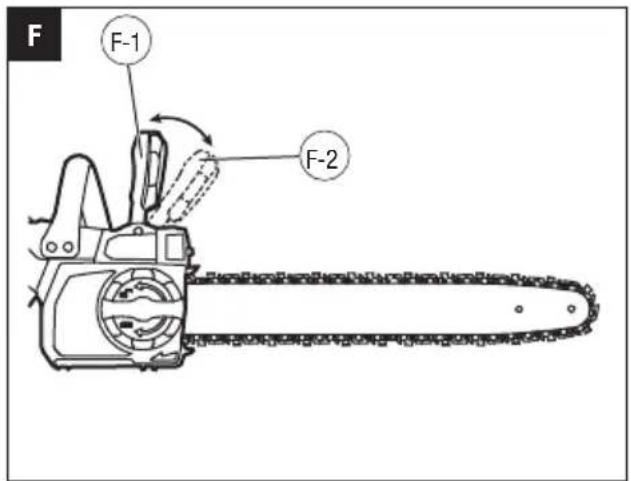
GENERAL POWER TOOL SAFETY WARNINGS
WARNING: Read all safety warnings, instructions, illustrations and specifications provided with this power tool. Failure to follow all instructions listed below may result in electric shock, fire and/or serious injury
SAVE ALL WARNINGS AND INSTRUCTIONS FOR FUTURE REFERENCE.
The term “power tool” in the warnings refers to your mains-operated (corded) power tool or battery-operated (cordless) power tool.
WORK AREA SAFETY
- Keep work area clean and well lit. Cluttered or dark areas invite accidents.
■ Do not operate power tools in explosive atmospheres, such as in the presence of flammable liquids, gases or dust. Power tools create sparks which may ignite the dust or fumes. - Keep children and bystanders away while operating a power tool. Distractions can cause you to lose control.
ELECTRICAL SAFETY
■ Power tool plugs must match the outlet. Never modify the plug in any way. Do not use any adaptor plugs with earthed (grounded) power tools. Unmodified plugs and matching outlets will reduce risk of electric shock
■ Avoid body contact with earthed or grounded surfaces, such as pipes, radiators, ranges and refrigerators. There is an increased risk of electric shock if your body is earthed or grounded.
■ Do not expose power tools to rain or wet conditions. Water entering a power tool will increase the risk of electric shock.
- Do not abuse the cord. Never use the cord for carrying, pulling or unplugging the power tool. Keep cord away from heat, oil, sharp edges or moving parts. Damaged or entangled cords increase the risk of electric shock.
- When operating a power tool outdoors, use an extension cord suitable for outdoor use. Use of a cord suitable for outdoor use reduces the risk of electric shock.
■ If operating a power tool in a damp location is unavoidable, use a Ground-fault circuit interrupter protected supply. Use of GFCI reduces the risk of electric shock.
PERSONAL SAFETY
■ Stay alert, watch what you are doing and use common sense when operating a power tool. Do not use a power tool while you are tired or under the influence of drugs, alcohol medication. A moment of inattention while operating power tools may result in serious personal injury.
■ Use personal protective equipment. Always wear eye protection. Protective equipment such as a dust mask, non-skid safety shoes, hard hat or hearing protection used for appropriate conditions will reduce personal injuries.
■ Prevent unintentional starting. Ensure the switch is in the off-position before connecting to power source and/or battery pack, picking up or carrying the tool. Carrying power tools with your finger on the switch or energizing power tools that have the switch on invites accidents.
■ Remove any adjusting key or wrench before turning the power tool on. A wrench or a key left attached to a rotating part of the power tool may result in personal injury.
■ Do not overreach. Keep proper footing and balance at all times. This enables better control of the power tool in unexpected situations.
■ Dress properly. Do not wear loose clothing or jewellery. Keep your hair, clothing and gloves away from moving parts. Loose clothes, jewelry or long hair can be caught in moving parts.
■ If devices are provided for the connection of dust extraction and collection facilities, ensure these are connected and properly used. Use of dust devices can reduce dust-related hazards.
■ Do not let familiarity gained from frequent use of tools allow you to become complacent and ignore tool safety principles. A careless action can cause severe injury within a fraction of a second
POWER TOOL USE AND CARE
■ Do not force the power tool. Use the correct power tool for your application. The correct power tool will do the job better and safer at the rate for which it was designed.
■ Do not use the power tool if the switch does not turn it on and off. Any power tool that cannot be controlled with the switch is dangerous and must be repaired.
■ Disconnect the plug from the power source and/or the battery pack from the power tool before making any adjustments, changing accessories, or storing power tools. Such preventive safety measures reduce the risk of starting the power tool accidentally.
EN
■ Store idle power tools out of the reach of children and do not allow persons unfamiliar with the power tool or these instructions to operate the power tool. Power tools are dangerous in the hands of untrained users.
- Maintain power tools and accessories. Check for misalignment or binding of moving parts, breakage of parts and any other condition that may affect the power tool's operation. If damaged, have the power tool repaired before use. Many accidents are caused by poorly maintained power tools.
- Keep cutting tools sharp and clean. Properly maintained cutting tools with sharp cutting edges are less likely to bind and are easier to control.
■ Use the power tool, accessories and tool bits etc. in accordance with these instructions, taking into account the working conditions and the work to be performed. Use of the power tool for operations different from those intended could result in a hazardous situation.
- Keep handles and grasping surfaces dry, clean and free from oil and grease. Slippery handles and grasping surfaces may lead to unsafe handling and/or loss of control of the tool.
BATTERY TOOL USE AND CARE
■ Recharge only with the charger specified by the manufacturer. A charger that is suitable for one type of battery pack may create a risk of fire when used with another battery pack.
■ Use power tools only with specifically designated battery packs. Use of any other battery packs may create a risk of injury and fire.
- When battery pack is not in use, keep it away from other metal objects, like paper clips, coins, keys, nails, screws or other small metal objects, that can make a connection from one terminal to another. Shorting the battery terminals together may cause burns or a fire.
■ Under abusive conditions, liquid may be ejected from the battery; avoid contact. If contact accidentally occurs, flush with water. If liquid contacts eyes, additionally seek medical help. Liquid ejected from the battery may cause irritation or burns.
- Do not use a battery pack or tool that is damaged or modified. Damaged or modified batteries may exhibit unpredictable behavior resulting in fire, explosion or risk of injury.
■ Do not expose a battery pack or tool to fire or excessive temperature. Exposure to fire or temperature above 130°C may cause explosion.
■ Follow all charging instructions and do not charge the battery pack or tool outside the temperature range specified in the instructions. Charging improperly or at temperatures outside the specified range may damage the battery and increase the risk of fire.
SERVICE
■ Have your power tool serviced by a qualified repair person using only identical replacement parts. This will ensure that the safety of the power tool is maintained.
■ Never service damaged battery packs. Service of battery packs should only be performed by the manufacturer or authorized service providers.
CHAIN SAW SAFETY WARNINGS
- Keep all parts of the body away from the saw chain when the chain saw is operating. Before you start the chain saw, make sure the saw chain is not contacting anything. A moment of inattention while operating chain saws may cause entanglement of your clothing or body with the chain.
■ Always hold the chain saw with your right hand on the rear handle and your left hand on the front handle. Holding the chain saw with a reversed hand configuration increases the risk of personal injury and should never be done. - Hold the chain saw by insulated gripping surfaces only, because the saw chain may contact hidden wiring. Saw chains contacting a “live” wire may make exposed metal parts of the power tool “live” and could give the operator an electric shock.
■ Wear eye protection. Further protective equipment for hearing, head, hands, legs and feet is recommended. Adequate protective clothing will reduce personal injury by flying debris or accidental contact with the saw chain. - Do not operate a chain saw in a tree, on a ladder, from a rooftop, or any unstable support. Operation of a chain saw in this manner could result in serious personal injury.
■ Always keep proper footing and operate the chain saw only when standing on fixed, secure and level surface. Slippery or unstable surfaces such as ladders may cause a loss of balance or control of the chain saw. - When cutting a limb that is under tension be alert for spring back. When the tension in the wood fibers is released the spring loaded limb may strike the operator and/or throw the chain saw out of control.
- Use extreme caution when cutting brush and saplings. The slender material may catch the saw chain and be whipped toward you or pull you off balance.
- Carry the chain saw by the front handle with the chain saw switched off and away from your body. When transporting or storing the chain saw always fit the guide bar cover. Proper handling of the chain saw will reduce the likelihood of accidental contact with the moving saw chain.
■ Follow instructions for lubricating, chain tensioning and changing accessories. Improperly tensioned or lubricated chain may either break or increase the chance for kickback.
- Cut wood only. Do not use chain saw for purposes not intended. For example: do not use chain saw for cutting plastic, masonry or non-wood building materials. Use of the chain saw for operations different than intended could result in a hazardous situation.
- Do not attempt to fell a tree until you have an understanding of the risks and how to avoid them. Serious injury could occur to the operator or bystanders while felling a tree.
■ This chain saw is not intended for tree felling. Use of the chain saw for operations different than intended could result in serious injury to the operator or bystanders.
■ Follow all instructions when clearing jammed material, storing or servicing the chain saw. Make sure the switch is off and the battery pack is removed. Unexpected actuation of the chain saw while clearing jammed material or servicing may result in serious personal injury.
CAUSES AND OPERATOR PREVENTION OF KICKBACK
Kickback may occur when the nose or tip of the guide bar touches an object, or when the wood closes in and pinches the saw chain in the cut (Fig. A).
Tip contact in some cases may cause a sudden reverse reaction, kicking the guide bar up and back towards the operator (Fig. B).
Pinching the saw chain along the top of the guide bar may push the guide bar rapidly back towards the operator (Fig. C).
Either of these reactions may cause you to lose con-trol of the saw which could result in serious personal injury. Do not rely exclusively upon the safety devices built into your saw.
As a chain saw user, you should take several steps to keep your cutting jobs free from accident or injury.
Kickback is the result of tool misuse and/or incorrect operating procedures or conditions and can be avoided by taking proper precautions as given below:
- Maintain a firm grip, with thumbs and fingers encircling the chain saw handles, with both hands on the saw and position your body and arm to allow you to resist kickback forces (Fig. D). Kickback forces can be controlled by the operator, if proper precautions are taken. Do not let go of the chain saw.
- Do not overreach and do not cut above shoulder height. This helps prevent unintended tip contact and enables better control of the chain saw in unexpected situations.
■ Only use replacement bars and chains specified by the manufacturer. Incorrect replacement bars and chains may cause chain breakage and/or kickback.
- Follow the manufacturer's sharpening and maintenance instructions for the saw chain. Decreasing the depth gauge height can lead to increased kickback.
■ Make sure that the area in which you are cutting is free from obstructions. Do not let the nose of the guide bar contact a log, branch, fence, or any other obstruction that could be hit while you are operating the saw.
■ Always cut with the unit running at full speed. Fully squeeze the switch trigger and maintain cutting speed.
■ With a basic understanding of kickback, you can reduce or eliminate the element of surprise. Sudden surprise contributes to accidents.
■ Keep proper footing and balance at all times.
- Push and Pull – The reaction force is always opposite to the direction the chain is moving where wood contact is made. Thus, the operator must be ready to control the PULL when cutting on the bottom edge of the bar, and the PUSH when cutting along the top edge (Fig. E).
KICKBACK SAFETY DEVICES ON THIS CHAIN SAW CHAIN BRAKE
The chain saw comes equipped with a chain brake, which stops both the motor and the motion of the chain when kickback occurs. The chain brake can be activated by the forward motion of the chain kickback brake handle as the saw rotates backward during kickback; it can also be activated by the inertial forces generated during rapid pushback.
WARNING: Never modify or attempt to disable the chain brake.
Make sure that the chain brake is working properly before using the chain saw. The chain kickback brake handle should move back and forth easily.
EN
To test the operation of the chain brake, perform the following steps (Fig. F):
■ Place the chain saw on a flat bare surface and make sure no objects or obstructions that could come in contact with the bar and chain are in the immediate vicinity.
■ Disengage the chain brake by pulling the chain kickback brake handle towards the front handle.
■ Start the chain saw.
■ Push the chain kickback brake handle towards the front of the saw. A properly functioning hand brake will stop the movement of the chain immediately. If the chain brake is not working properly, do not use the chain saw until it has been repaired by a qualified service technician.
| F-1 | Chain kickback brake handle in operating position |
| F-2 | Chain kickback brake handle in brake position |

WARNING: Confirm that the chain brake works properly before each use.

WARNING: If the chain brake is clogged with wood s, the function of the chain brake may deteriorate. says keep the device clean.
The rakers (depth gauges) ahead of each cutter can minimize the force of a kickback reaction by preventing the cutters from digging in too deeply at the kickback zone. Only use a replacement chain that is equivalent to the original chain or has been certified one.

CAUTION: As saw chains are sharpened during their full life, they lose some of the low kickback qualities extra caution should be used.
ADDITIONAL WARNINGS
■ A chain saw is intended for two-handed use.
Serious injury to the operator, helpers, and/or bystanders can result from one-handed operation.
■ Avoid unintentional contact with the stationary saw chain or guide bar rails. These can be very sharp. Always wear gloves and long pants or chaps when handling the chain saw, saw chain, or guide bar.
■ Never operate a chain saw that is damaged or improperly adjusted or that is not completely and securely assembled. Be sure that the saw chain stops moving when the trigger switch is released.
- Inspect the work piece for nails, wire, or other foreign objects prior to cutting.
■ When bucking, secure the work piece prior to cutting. When felling or pruning, identify and secure hazardous branches.
■ Aggressive or abusive cutting or misuse of the chain saw can cause premature bar, chain, and/or sprocket wear, as well as broken chain or bar, leading to kickback, chain throw or the ejection of material.
■ Never use the guide bar as a lever. A bent guide bar can cause premature bar, chain, and/or sprocket wear, as well as a broken chain or bar, leading to kickback, chain throw or the ejection of material.
■ Cut only one work piece at a time.
■ Do not charge the battery pack in rain or in wet locations.
■ Plan the work, ensuring an obstacle-free work area and, in the case of felling, at least one escape path from the falling tree.
■ When felling, keep bystanders at least two tree lengths away.
■ If situations occur which are not covered in this manual, use care and good judgment. Contact EGO Customer Service for assistance.
GUIDE BAR
This saw comes equipped with a guide bar that has a small radius nose. Small radius noses generally have less potential for kickback. When replacing the guide bar, be sure to order the bar listed in this manual.
SAVE THESE INSTRUCTIONS!
KETTINGZAAG VEILIGHEIDSWAARSCHUWINGEN
SIKKERHET I ARBEIDSOMRÅDET
BRUK OG VEDLIKEHOLD AV ELEKTROVERKT∅Y
BEZPIECZEŃSTWO W MIEJSCU PRACY
■ grades of the government agency, government agencies, government agencies, government agencies, government agencies, government agencies, government agencies, government agencies, government agencies, government agencies, government agencies, government agencies, government agencies, government agencies, government agencies, government agencies, government agencies, government agencies, government agencies, government agencies, government agencies, government agencies, government agencies, government agencies, government agencies, government agencies, government agencies, government agencies, government agencies, government agencies, government agencies, government agencies, government agencies, government agencies, government agencies
■ მოერიდეთ სხულთა დამინებული სავნების გედაპორებიან კონტაცტს, როფორიყა მოლები, რადიატორები, ქერები და მაცივრები. ელექტრული მოკის მიღების რისკი იზრდება თუ თქვენი სხული დამიწებულთა.
y_0 = y_1 = y_2 = y_3 = y_4 = y_5 = y_6 = y_7 = y_8 = y_9 = y_10 = y_11 = y_12 = y_13 = y_14 = y_15 = y_16 = y_17 = y_18 = y_19 = y_20 = y_21 = y_22 = y_23 = y_24 = y_25 = y_26 = y_27 = y_28 = y_29 = y_30 = y_31 = y_32 = y_33 = y_34 = y_35 = y_36 = y_37 = y_38 = y_39 = y_40 = y_41 = y_42 = y_43 = y_44 = y_45 = y_46 = y_47 = y_48 = y_49 = y_50 = y_51 = y_52 = y_53 = y_54 = y_55 = y_56 = y_57 = y_58 = y_59 = y_60 = y_61 = y_62 = y_63 = y_64 = y_65 = y_66 = y_67 = y_68 = y_69 = y_70 = y_71 = y_72 = y_73 = y_74 = y_75 = y_76 = y_77 = y_78 = y_79 = y_80 = y_81 = y_82 = y_83 = y_84 = y_85 = y_86 = y_87 = y_88 = y_89 = y_90 = y_91 = y_92 = y_93 = y_94 = y_95 = y_96 = y_97 = y_98 = y_99 = y_100
zsdfdgbqds zdoomsbqds (boomdou bodgynngdss) ymzgmo dfngmo zdoomou fob dgusdmms dgsdgmml yzgygdol mfgos dfngmo zdoomou yzgygdol bmbsd o hslmdou bmddu ddgogmdou gboom. zsdmoygbgo dbmmmo olgmo xsfzo hmdkmo gdz0zsgbghmos omogbsmymol sb bgmongozgndgymos bgmbou xsfzo dg3cmolsb.
g_0b_0g_0 g g_0b_0k_0g_0 g g_0b_0k_0g_0
KA
OPŠTA SIGURNOSNA UPOZORENJA ZA ELEKTRIČNI ALAT
⚠ UPOZORENJE: Pročitajte sva sigurnosna upozorenja, uputstva, ilustracije i specifikacije priložene uz ovaj električni alat. Nepridržavanje svih dolenavedenih uputstava može da dovede do strujnog udara, požara i/ili ozbiljne povrede.
SAČUVAJTE SVA UPOZORENJA I UPUTSTVA ZA BUDUĆU UPOTREBU.

- GENERAL POWER TOOL SAFETY WARNINGS
- SAVE ALL WARNINGS AND INSTRUCTIONS FOR FUTURE REFERENCE.
- WORK AREA SAFETY
- ELECTRICAL SAFETY
- PERSONAL SAFETY
- POWER TOOL USE AND CARE
- EN
- BATTERY TOOL USE AND CARE
- SERVICE
- CHAIN SAW SAFETY WARNINGS
- CAUSES AND OPERATOR PREVENTION OF KICKBACK
- KICKBACK SAFETY DEVICES ON THIS CHAIN SAW CHAIN BRAKE
- ADDITIONAL WARNINGS
- GUIDE BAR
- SAVE THESE INSTRUCTIONS!
- KETTINGZAAG VEILIGHEIDSWAARSCHUWINGEN
- SIKKERHET I ARBEIDSOMRÅDET
- BRUK OG VEDLIKEHOLD AV ELEKTROVERKT∅Y
- BEZPIECZEŃSTWO W MIEJSCU PRACY
- OPŠTA SIGURNOSNA UPOZORENJA ZA ELEKTRIČNI ALAT
- SAČUVAJTE SVA UPOZORENJA I UPUTSTVA ZA BUDUĆU UPOTREBU.
Brand : EGO
Model : CS1800E
Category : Customer Service