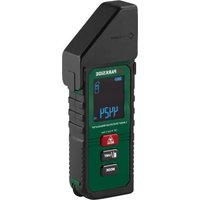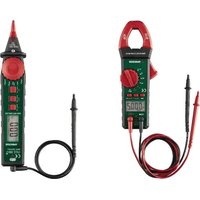
PZM 2 B4 - Measuring equipment PARKSIDE - Free user manual and instructions
Find the device manual for free PZM 2 B4 PARKSIDE in PDF.


| Product type | Digital clamp meter (clamp multimeter) |
| Brand | Parkside |
| Model | PZM 2 B4 |
| Power supply | 2 alkaline batteries 1.5 V type AAA/Micro/LR03 |
| Display | LCD screen 3 5/6 digits (max. 6,000) |
| Overvoltage category | CAT III 600 V |
| Jaw opening capacity | max. 26 mm |
| Max measurable wire diameter | approx. ∅ 27 mm |
| Protection rating | IP20 |
| DC voltage (V=) | 6 V / 60 V / 600 V ; accuracy ±(0.8%+5) to ±(1.2%+5) |
| AC voltage (V∼) | 6 V / 60 V / 600 V ; 40‑400 Hz ; True RMS |
| AC current (A∼) | 6 A / 60 A / 600 A ; 50‑60 Hz ; True RMS |
| Resistance (Ω) | 600 Ω to 60 MΩ (6 ranges) |
| Diode test | Yes (open circuit voltage ~3.2 V, current ~1.8 mA) |
| Continuity test | Yes (threshold <30 Ω with audible alarm) |
| Capacitance (C) | 6 nF to 6,000 μF (7 ranges) |
| Frequency (Hz) | 6 Hz to 1 MHz (7 ranges) |
| Special functions | HOLD, REL (relative mode), backlight, auto power off (10 min) |
| Included accessories | 2 test leads, 2 AAA batteries, user manual |
| Warranty | 3 years (France/Belgium) |
| Approximate weight | approx. 300 g |
| Approximate dimensions | approx. 220 × 70 × 35 mm |
Frequently Asked Questions - PZM 2 B4 PARKSIDE
User questions about PZM 2 B4 PARKSIDE
0 question about this device. Answer the ones you know or ask your own.
Ask a new question about this device
Download the instructions for your Measuring equipment in PDF format for free! Find your manual PZM 2 B4 - PARKSIDE and take your electronic device back in hand. On this page are published all the documents necessary for the use of your device. PZM 2 B4 by PARKSIDE.
USER MANUAL PZM 2 B4 PARKSIDE
Operating instructions
DE / AT / BE / CH
ZANGENAMPEREMETER
Bedienungsanleitung
FR / BE / CH
AMPÈREMÈTRE À PINCE
Mode d'emploi
NL / BE
AMPÈREMETER
Gebruiksaanwijzing
CZ
KLEŠTOVÝ MULTIMETR
Návod k obsluze
PL
MIERNIK CĘGOWY PRĄDU
Instrukcja obsługi
SK
KLIEŠTOVÝ MULTIMETER
Návod na obsluhu
ES
natural_image
Diagram of a folded panel or folding structure with patterned panels and arrows indicating rotation (no text or symbols)English Operating instructions Page 1
Contents
1. Introduction 3
1.1. Information about these instructions for use .... 3
1.2. Intended use .... 3
1.3. Warnings and symbols used ..... 3
2. Safety 6
2.1. Basic safety instructions ..... 6
2.2. Safety instructions for handling batteries 9
3. Operating elements / parts 10
4. Using the device 11
4.1. Check package contents ..... 1 1
4.2. Inserting/replacing the batteries .12
5. Operation and use 12
5.1. Switching the device on/off.....12
5.2. Display backlight ..... 1 2
5.3. Automatic switch-off function . . . 1 3
5.4. Hold measured value ..... 1 3
5.5. Relative mode ..... 1 3
5.6. Removing/attaching the caps . . .15
5.7. Measuring DC voltage (V==) .... 1 5
5.8. Measuring AC voltage (V \~) .... 1 5
5.9. Measuring alternating current strength (A\~) 16
5.10. Measuring resistance (Ω) ..... 1 6
5.11. Diode test (▶) ..... 17
5.12. Continuity test (•) 17
5.13. Measuring capacitance ( ± ) .... 1 8
5.14. Measuring frequency (Hz) ..... 1 8
- Troubleshooting 19
- Cleaning 19
- Storage 20
- Disposal 20
9.1. Disposal of batteries .....20
- Appendix 21
10.1. Technical data ..... 2 1
10.2. Meter specifications ..... 2 2
10.3. Kompernass Handels GmbH warranty 26
10.4. Service 30
10.5. Importer 30
1. Introduction
1.1. Information about these instructions for use
Congratulations on the purchase of your new device. You have selected a high-quality device. The operating instructions are part of this device. They contain important information about safety, usage and disposal. Before using the device, please familiarise yourself with all operating and safety instructions. The device may only be used as described and for the specified application areas. Hand over all documents when passing the device on to third parties.
1.2. Intended use
The device is used exclusively for the precise measurement of DC and AC voltage, AC current, resistance, capacitance and frequency and for diode and continuity testing indoors. Observe the laws and regulations of the country in which you are using the device. Commercial or industrial use is not permitted. No liability will be assumed in cases of improper use. No liability will be assumed for damage caused by misuse or improper handling, the use of force or unauthorised modification. The risk is borne solely by the user.
1.3. Warnings and symbols used
The following warnings and symbols are used in these operating instructions, on the packaging and on the device:
 | WARNING! A warning with this symbol and the signal word "WARNING" indicates a potentially hazardous situation which could result in death or serious injury if not avoided. |
 | ATTENTION! A warning with this symbol and the signal word "ATTENTION" indicates a potential situation which could result in property damage if not avoided. |
 | Note: A note provides additional information that will assist you in using the device. |
 | Read the instructions. |
 | Protection class II: Protection by double or reinforced insulation between live and touchable parts. |
 | WARNING! Risk of electric shock! |
 | DC current/voltage |
 | AC current/voltage |
 | DC or AC (direct current or alternating current) |
 | Earthing terminal |
 | The connection and removal of dangerous, energised conductors is permitted. |
 | Do not dispose of electrical appliances in the household waste! |
  | Dispose of the packaging in an environmentally-responsible manner. |
  | The packaging is made of recyclable materials. Observe the labelling on the packaging material when sorting for disposal: The material is labelled with abbreviations (a) and numbers (b) with the following meanings:1-7: plastics, 20-22: paper and cardboard, 80-98: composites. |
 ES/PT ES/PT | The packaging contains paper and/or cardboard components. |
   | FR: The product, its pack aging and the operating instructions are recyclable. They are subject to an extended manufacturer responsibility and will be collected separately. |
2. Safety
This section contains important safety instructions for handling the device. This device complies with the statutory safety regulations. Improper use may result in personal injury and property damage.
2.1. Basic safety instructions
⚠ WARNING! To ensure safe operation of the device, follow the safety guidelines set out below:
■ Do not allow children to play with the packaging material! Keep all packaging materials away from children.
- Keep electrical appliances out of the reach of children. People with disabilities should only use electrical appliances within the scope of their abilities. Never allow children or people with disabilities to use electrical appliances unsupervised. They may not recognise potential dangers.
■ Do not use the device in locations where there is a risk of fire or explosion, e.g. in the vicinity of inflammable liquids or gases.
- Check the device before every use to make sure it is in perfect condition. Inspect the insulation in the area of the connections particularly carefully. Do not use the device if it is damaged in any way.
■ Contact a technician if you are not sure how to use or connect the device.
■ To avoid electric shock, do not use the device with the battery compartment cover open. Remove all connected devices before opening the battery compartment cover.
■ Set the device to the correct measurement mode before starting the measurement.
■ For current measurements, switch off the current of the device under test before connecting the device.
- When working with a circuit, first connect the black test probe to the circuit before connecting the red test probe to the circuit. When disconnecting the test probes from the circuit, first remove the red test probe from the circuit and then the black test probe from the circuit.
■ Never connect a voltage source to the test probes when a current measurement, diode test, resistance measurement or continuity test is selected. Otherwise the device could be damaged.
■ Always remove the test probes from the device under test before changing the measuring mode.
■ The voltage between the measuring device connection points and the earth must not exceed 600 V DC/AC voltage in CAT III.
■ Take particular care when working with voltages above 33 V AC or 70 V DC. Touching electrical conductors at these voltages can lead to a fatal electric shock.
■ To avoid electric shock, do not touch the measuring points directly or indirectly during the measurement. When measuring with the test probes, keep your fingers behind the finger guard.
■ Protect the device from wetness or direct sunlight.
- Do not expose the device to any extremes of temperature or temperature fluctuations. For example, do not leave it lying in a car for extended periods. After exposure to large temperature fluctuations, allow the device to acclimatise before using it again. The precision of the device can be adversely affected by extreme temperatures or temperature fluctuations.
■ Never immerse the device in water or other liquids, and never expose the device to spraying or dripping water. Use the device only in dry indoor areas.
- Avoid hefty knocks or dropping the device.
- Do not make any unauthorised modifications or alterations to the device.
■ Never open the device housing. None of the components in the device can be serviced or replaced by the user.
■ Switch the device off immediately and remove the batteries from the device if you notice unusual noises, a burning smell or smoke. Have the device checked by a qualified specialist before using it again.
2.2. Safety instructions for handling batteries
⚠ WARNING! Mishandling the batteries can cause fires, explosions, leakages or other hazards!

Keep batteries out of the reach of dren.
■ Make sure that no one can swallow the batteries.
■ If a battery is swallowed, seek medical assistance immediately.
■ Always use the stated battery type.

Never try to recharge non-rechargea-batteries.
■ Remove rechargeable batteries from the device before recharging them.
Do not throw batteries into a fire or water.
■ Never expose batteries to high temperatures or direct sunlight.

Never open or deform batteries.

Do not short-circuit the terminals.
■ Remove depleted batteries from the device and dispose of them safely.
■ Do not use different types of batteries together or mix new batteries with used batteries.

Always ensure that the batteries installed in the device with the cor-ly aligned polarity.
If you do not intend to use the device for an extended period, remove the batteries.
- Check the condition of the batteries at regular intervals. Leaking batteries can cause injuries as well as damage to the device.
■ Always use protective gloves when handling leaking batteries! Clean the battery and device contacts and the battery compartment with a dry cloth. Do not let the chemicals get into contact with your skin and mucous membranes, especially your eyes. In case of contact with chemicals, wash the affected area with plenty of water and immediately seek medical attention.
3. Operating elements / parts
(For illustrations see fold-out pages)
Fig. A:
① Test clamp
② Control dial
③ SELECT button
4 HOLD *button
⑤ Display
6 connection
⑦ COM connection
8 Test probes
8. Test probe cap
8b Connection cap
⑨ Battery compartment cover
⑩ REL button
11 Trigger
Fig. B:
⑫ Absolute value of the detected input voltage ≥ 30 V
13 Automatic switch-off function
14 Units of measurement
15 REL Relative mode
16 Continuity test
⑰ Diode test
18 AUTOMATIC range
19 Low battery level
20 H Hold measured value
21 DDC
22 Negative
23 AC AC
4. Using the device
4.1. Check package contents
- 1× clamp meter
- 2× test probes
- 2× 1.5 V= alkaline batteries of type AAA/Micro/LR03
● These operating instructions
◆ Remove all components from the packaging. Remove all packaging materials and the protective film from the display ⑤.
Note: Check the package for completeness and signs of visible damage. If the delivery is incomplete or damage has occurred as a result of defective packaging or during transport, contact the customer service hotline (see 10.4. Service section).
4.2. Inserting/replacing the batteries The device is delivered and operated with two 1.5 V --alkaline batteries, type AAA/Micro/LR03. If the display ⑤ indicates low battery level □ ⑲, you must replace the batteries.
⚠ WARNING! Switch off the device and remove the test probes Ⓤ from the circuit if necessary.
- Loosen the screw on the battery compartment cover ⑨ and remove the battery compartment cover ⑨.
- Remove any used batteries and insert two new batteries into the battery compartment. Make sure that the polarity is correct, as indicated in the battery compartment.
♦ Replace the battery compartment cover ⑨ and tighten the screw.
5. Operation and use
5.1. Switching the device on/off
- Turn the control dial ② clockwise from OFF to another position. The display ⑤ switches on automatically.
- Turn the control dial ② anti-clockwise to OFF. The display ⑤ switches off automatically.
5.2. Display backlight
- Briefly press and hold the HOLD * button ④ to switch on the backlight.
- Briefly press and hold the HOLD * button ④ again to switch off the backlight.
(i) Note: The backlight switches off automatically after approx. 15 seconds.
5.3. Automatic switch-off function
The automatic switch-off function is activated when the symbol ⏻ 13 appears on the display 5. The device automatically switches to standby mode if it is not operated for longer than approx. 10 minutes.
◆ Press any button to activate the device from standby mode.
Deactivate the automatic switch-off function:
♦ Turn the control dial ② clockwise from OFF to another position and hold down the SELECT ③ at the same time.
The symbol ② ⑬ disappears and the automatic switch-off function is deactivated.
(i) Note: When the device is switched on again, the automatic switch-off function is reactivated.
5.4. Hold measured value
◆ Press the HOLD ✦ button ④ to hold the current measured value. The indication H ⑳ appears on the display ⑤.
◆ Press the HOLD button ④ again to release the held measured value. The indication H ⑳ disappears from the display ⑤.
5.5. Relative mode
In relative mode, the device saves the current measured value as a reference for subsequent measurements.
- Set the device to the desired measurement mode.
- Connect the device to the desired circuit (or the desired object) to obtain a measured value. This measured value is then used as a reference for subsequent measurements.
◆ Press the REL button 10 to switch to relative mode. The current measured value is saved. O and R15 are shown on the display 5.
① Note: If the display ⑤ shows OL("over range"), the device cannot switch to relative mode.
The difference between the saved reference value and the new measurement is shown on the display ⑤ for subsequent measurements.
◆ Press the REL button 10 to exit relative mode. The indication REL5 disappears from the display 5.
(i) Note: (1) The actual value of the tested object must not exceed the scale end value of the current range when using relative mode (exception: this does not apply to the capacitance function). (2) To avoid incorrect measurement results, do not switch to relative mode if the indication H20 is shown on the display 5. (3) is shown on the display 5 if the measurements are “over range”. (4) When switching to relative mode: If the device is in automatic range mode, it switches to manual range mode and remains in the current range (exception: this does not apply to the functions for measuring capacitance and alternating current). (5) Relative mode is not available for frequency measurements.
5.6. Removing/attaching the caps
◆ Remove the cap from the test probe connection 8.
- If necessary, pull the cap off the test probe 8 to access deeper contacts.
◆ After completing your measurements, replace all caps / .
5.7. 0HDVXULQJ '& YROWDJH 9.)
WARNING! Risk of electric shock and damage to property! Do not apply a voltage of > 600 V between the connections.
◆ Connect the black test probe 8 to the connection 7.
◆ Connect the red test probe 8 to the connection 6.
♦ Turn the control dial 2 to V.
- Connect the test probes 8 to the device under test or the circuit to be tested.
The measured value is shown on the display 5. If the indication s appears on the display 5, you have measured a negative DC voltage.
5.8. 0HDVXULQJ \$& YROWDJH 9.)
WARNING! Risk of electric shock and damage to property! Do not apply a voltage of > 600 V between the connections.
◆ Connect the black test probe 8 to the connection 7.
◆ Connect the red test probe 8 to the connection 6.
♦ Turn the control dial 2 to V.
- Connect the test probes 8 to the device under test and the circuit to be tested.
The measured value is shown on the display 5.
5.9. Measuring alternating current strength (A\~)
⚠ WARNING! Risk of electric shock and damage to property! Do not apply a voltage of > 600 V between the connections.
If necessary, disconnect both test probes ⑧ from the device.
♦ Turn the control dial ② to A\~.
◆ Press the trigger ⑪ to open the test clamp ①.
◆ Place the test clamp ① around the conductor to be measured.
◆ Close the test clamp ①.
♦ Position the conductor in the centre of the test clamp ① between the two – markings (see Fig. C).
The measured value is shown on the display 5.
Note: Only one conductor may be clamped (see Fig. C). Simultaneous measurement of two or more conductors leads to an incorrect measured value. Position the conductor in the centre of the test clamp ①. This reduces the probability of a measurement error.
5.10. Measuring resistance (Ω)
♦ Disconnect the power supply to the circuit to be tested before measuring.
◆ Discharge all capacitors.
◆ Connect the black test probe ⑧ to the COM connection ⑦.
◆ Connect the red test probe ⑧ to the connection ⑥.
♦ Turn the control dial ② to Ω
- Connect the test probes ⑧ to the resistor to be tested.
The measured value is shown on the display 5.
① Note: If the input is not connected (i.e. for an open circuit), “over range”) is shown on the display ⑤.
5.11. Diode test (▶+)
◆ Connect the black test probe ⑧ to the COM connection ⑦.
◆ Connect the red test probe ⑧ to the connection ⑥.
♦ Turn the control dial ② to ▶+ / ·).
◆ Press the SELECT button ③ until →17 appears on the display ⑤.
◆ Connect the red test probe ⑧ to the anode of the diode to be tested.
◆ Connect the black test probe ⑧ to the cathode of the diode to be tested.
The approximate forward voltage drop of the diode is shown on the display ⑤.
① Note: If the connections are reversed, OL is shown on the display ⑤.
5.12. Continuity test ( )
♦ Disconnect the power supply to the circuit to be tested before measuring.
◆ Discharge all capacitors.
◆ Connect the black test probe ⑧ to the COM connection ⑦.
◆ Connect the red test probe ⑧ to the connection ⑥.
♦ Turn the control dial ② to ▶+ / ··
◆ Press the SELECT button ③ until ••16 appears on the display ⑤.
- Connect the test probes ⑧ to the circuit to be tested.
If the resistance is approx. < 30 Ω, the built-in buzzer sounds.
5.13. Measuring capacitance ( × )
Connect the black test probe ⑧ to the COM connection ⑦.
Connect the red test probe ⑧ to the connection ⑥.
♦ Turn the control dial ② to +.
- Press the REL button ⑩ if a measured value other than o is shown on the display ⑤. The measured value is set to o and REL appears on the display ⑤.
◆ Discharge the capacitor to be tested.
Connect the test probes ⑧ to the two leads of the capacitor.
The measured value is shown on the display ⑤.
5.14. Measuring frequency (Hz)
Connect the black test probe ⑧ to the COM connection ⑦.
Connect the red test probe ⑧ to the connection ⑥.
♦ Turn the control dial ② to Hz.
Connect the test probes ⑧ to the device under test and the circuit to be tested.
The measured value is shown on the display 5.
(i) Note: (1) The voltage of the input signal should be between 1 V RMS and 20 V RMS. The higher the signal frequency, the higher the required input voltage. (2) The frequency of the input signal must be > 2 Hz.
6. Troubleshooting
| Fault Remedy | |
| The display 5 does not change. The indication H 20 appears on the display 5. | Press the HOLD * button 4 to release the held measured value. The indication H 20 disappears from the display 5. |
| The indication for low battery level 19 appears on the display 5. | Insert two new batteries. |
7. Cleaning
⚠ WARNING! Risk of electric shock! Switch off the device and remove the test probes ⑧ from the circuit if necessary.
ATTENTION! Damage to the device! The device is not waterproof. To avoid irreparable damage to the device, do not immerse the device in water and make sure that no moisture can get into it during cleaning. Do not use caustic, abrasive or solvent-based cleaning agents. They can damage the surfaces of the device.
- Clean the surfaces of the device with a soft, dry cloth.
8. Storage
◆ Remove the batteries and store the device and batteries in a clean, dry location without exposure to direct sunlight.
9. Disposal
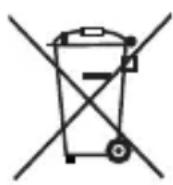
The symbol of the crossed-out wheelie bin means that this appliance may not be disposed of in regular household waste at the end of its service life. The appliance must be deposited at an established collection point, recycling centre or disposal company.
Please erase all personal data before returning an appliance.
Before returning an appliance, please remove any batteries that are not permanently enclosed within the old appliance as well as any light sources that can be removed without destroying the appliance. Then dispose of these items separately.
The packaging is made from environmentally friendly material which can be disposed of at your local recycling plant.
Dispose of the packaging in an environmentally friendly manner.
9.1. Disposal of batteries

Batteries/rechargeable batteries must be treated as hazardous waste and must therefore be disposed of in an environmentally sound manner by appropriate bodies (dealers, specialist dealers, public municipal
bodies, commercial disposal companies).
Batteries/rechargeable batteries may contain toxic heavy metals.
The heavy metals contained are identified by letters below the symbol:
Cd= cadmium, Hg=mercury, Pb=lead.
For this reason, do not dispose of batteries/rechargeable batteries in domestic waste.
Take them to a specialist collection point.
Only return batteries that are fully discharged.
10. Appendix
10.1. Technical data
| Operating voltage | 2× 1.5 V=alkaline batteries of type AAA/Micro/LR03 |
| LCD display | 3 5/6 digits (max. measured values: 6000) |
| Sampling rate approx. 3 times/s | |
| Probe length approx. 94 cm | |
| Overvoltage category | CAT III 600 V |
| Jaw opening range max. 26mm | |
| Max. measurable conductor diameter | approx. ∅ 27 cm |
| IP protection type IP20 | |
10.2. Meter specifications
The following accuracy data and other specifications of the device apply for a period of one year after calibration and at a temperature of +18 to +28 °C and a relative humidity of up to 75 %.
The accuracy specifications are as follows:
■ (% of the measured value)
■ + (number of least significant digits)
Unless otherwise specified, the accuracy is between 5 and 100 % of the range. Under deviating conditions, the accuracies/specifications given below cannot be guaranteed.
DC voltage (V=)
| Measuring range | Resolution Accuracy |
| 600 mV | 0.1 mV ±(0.5 % +3) |
| 6 V | 0.001 V ±(0.8 % +5) |
| 60 V | 0.01 V ±(0.8 % +5) |
| 600 V | 0.1 V ±(0.8 % +5) |
Input impedance: approx. 10 MΩ Overload protection: 600 V DC/AC RMS Maximum permissible input voltage: 600 V DC
AC voltage (V\~)
| Measuring range | Resolution Accuracy |
| 6 V | 0.001 V ± (0.8 % +5) |
| 60 V | 0.01 V ± (1.2 % +5) |
| 600 V | 0.1 V ± (1.2 % +5) |
Input impedance: approx. 10 MΩ
Overload protection: 600 V DC/AC RMS
Maximum permissible
input voltage: 600 V AC RMS
Frequency range: 40–400 Hz
Measured value: True RMS
Crest factor: 3.0
Alternating current strength (A\~)
| Measuring range | Resolution Accuracy | |
| 6 A | 0.001 A ± (4 % | +15) |
| 60 A | 0.01 A | ± (2.5 % +10) |
| 600 A | 0.1 A | ± (2.5 % +10) |
Max. permissible
input current: 600 A AC RMS
Frequency range: 50–60 Hz
Measured value: True RMS
Crest factor: 3.0
Resistance (Ω)
| Measuring range | Resolution Accuracy |
| 600 Ω | 0.1 Ω ± (1.0 % +15) |
| 6 kΩ | 0.001 kΩ ± (0.8 % +3) |
| 60 kΩ | 0.01 kΩ ± (0.8 % +3) |
| 600 kΩ | 0.1 kΩ ± (0.8 % +3) |
| 6 MΩ | 0.001 MΩ ± (0.8 % +3) |
| 60 MΩ | 0.01 MΩ ± (1.0 % +25) |
Open-circuit voltage: < 0.7 V
(i) Note: When measuring the resistance of any circuit/component (especially with low resistance), the resistance of the connected test probes/cables must be taken into account in order to improve the accuracy of the measured value.
Diode test (▶+)
| Measuring range | Description Accuracy | |
 | The display5 shows the approximate forward voltage drop of the diode to be tested. | Open-circuit voltage: approx. 3.2 VTest current: approx. 1.8 mA |
Continuity test (•)
| Measuring range | Description Accuracy | |
| •••• | Resistance ≤ 30 Ω: The built-in buzzer sounds. | Open-circuit voltage: approx. 1.0 V |
| Resistance ≥ 30 to ≤ 100 Ω: The built-in buzzer may or may not sound. | ||
| Resistance ≥ 100 Ω: The built-in buzzer does not sound. | ||
Capacitance (+)
| Measuring range | Resolution Accuracy |
| 6 nF 0.001 nF ± (5.0 % +10) | |
| 60 nF 0.01 nF ± (3.0 % +10) | |
| 600 nF 0.1 nF ± (3.0 % +10) | |
| 6 μF 0.001 μF ± (3.0 % +10) | |
| 60 μF 0.01 μF ± (3.0 % +10) | |
| 600 μF 0.1 μF ± (3.0 % +10) | |
| 6000 μF 1 μF ± (5.0 % +5) | |
Frequency (Hz)
| Measuring range | Resolution Accuracy | |
| 6 Hz | 0.001 Hz ± (1.0 % +5) | |
| 60 Hz | 0.01 Hz ± (1.0 % +5) | |
| 600 Hz | 0.1 Hz ± (1.0 % +5) | |
| 6 kHz | 0.001 kHz ± (1.0 % +5) | |
| 60 kHz | 0.01 kHz ± (1.0 % +5) | |
| 600 kHz | 0.1 kHz ± (1.0 % +5) | |
| 1 MHz | 0.001 MHz ± (1.0 % +5) | |
| >1 MHz | Not spec-ified | Not specified |
Required input voltage: 1–20 V RMS
(i) Note: (1) Never measure frequencies with a voltage of >20 V. Risk of damage to property. (2) The frequency of the input signal should be more than 2 Hz to avoid signal loss.
10.3. Kompernass Handels GmbH warranty
Dear Customer,
This appliance has a 3-year warranty valid from the date of purchase. If included with the product on delivery, the battery packs of the X12V and X20V Team series also come with a 3-year warranty from the date of purchase. If this product has any faults, you, the buyer, have certain statutory rights. Your statutory rights are not restricted in any way by the warranty described below.
Warranty conditions
The warranty period starts on the date of purchase. Please keep your receipt in a safe place. This will be required as proof of purchase.
If any material or manufacturing fault occurs within three years of the date of purchase of the product, we will either repair or replace the product for you or refund the purchase price (at our discretion).
This warranty service requires that you present the defective appliance and the proof of purchase (receipt) within the three-year warranty period, along with a brief written description of the fault and of when it occurred.
If the defect is covered by the warranty, your product will either be repaired or replaced by us. The repair or replacement of a product does not signify the beginning of a new warranty period.
Warranty period and statutory claims for defects
The warranty period is not prolonged by repairs effected under the warranty. This also applies to replaced and repaired components. Any damage and defects present at the time of purchase must be reported immediately after unpacking. Repairs carried out after expiry of the warranty period shall be subject to a fee.
Scope of the warranty
This appliance has been manufactured in accordance with strict quality guidelines and inspected meticulously prior to delivery.
The warranty covers material faults or production faults. The warranty does not cover product parts that are subject to normal wear and tear and can therefore be considered wearing parts, such as saw blades, replacement blades, abrasive papers, etc. or for damage to fragile parts, such as switches or parts made of glass.
The warranty does not apply if the product has been damaged, improperly used or improperly maintained. The directions in the operating instructions for the product regarding proper use of the product are to be strictly followed. Uses and actions that are discouraged in the operating instructions or which are warned against must be avoided.
This product is intended solely for private use and not for commercial purposes. The warranty shall be deemed void in cases of misuse or improper handling, use of force and modifications/repairs which have not been carried out by one of our authorised Service centres.
The warranty does not apply to
■ Normal reduction of the battery capacity over time
■ Commercial use of the product
■ Damage to or alteration of the product by the customer
■ Non-compliance with safety and maintenance instructions, operating errors
■ Damage caused by natural hazards
Warranty claim procedure
To ensure quick processing of your case, please observe the following instructions:
■ Please have the till receipt and the item number (IAN) 496234_2504 available as proof of purchase.
■ You will find the item number on the type plate on the product, an engraving on the product, on the front page of the operating instructions (below left) or on the sticker on the rear or bottom of the product.
If functional faults or other defects occur, please first contact the service department listed below by telephone or use our contact form, which you can find on parkside-diy.com in the Service category.
■ You can return a defective product to us free of charge to the service address that will be provided to you. Ensure that you enclose the proof of purchase (till receipt) and information about what the defect is and when it occurred.

You can view and download these instructions along with many other manuals at parkside-diy.com. This QR code will take you directly to parkside-diy.com. Select your country and use the search box to search for the operating instructions. Enter the article number (IAN) 496234_2504 to find the operating instructions for your article.
10.4. Service
GB Service Great Britain
Tel.: 0800 051 897 0
Contact form on parkside-diy.com
IE Service Ireland
Tel.: 1800 851251
Contact form on parkside-diy.com
NI Service Northireland
Tel.: 08081 013435
Contact form on parkside-diy.com
MT Service Malta
Tel.: 80065168
Contact form on parkside-diy.com
IAN 496234_2504
10.5. Importer
Please note that the following address is not the service address. Please use the service address provided in the operating instructions.
KOMPERNASS HANDELS GMBH
BURGSTRASSE 21
44867 BOCHUM
GERMANY
www.kompernass.com
Inhaltsverzeichnis
1. Einführung 33
KOMPERNASS HANDELS GMBH
BURGSTRASSE 21
44867 BOCHUM
DEUTSCHLAND
www.kompernass.com
Table des matières
1. Introduction 67
Tension continue (V=)
| Plage de mesure | Résolution Précision |
| 600 mV 0,1 mV ±(0,5 % +3) | |
| 6 V 0,001 V ±(0,8 % +5) | |
| 60 V 0,01 V ±(0,8 % +5) | |
| 600 V 0,1 V ±(0,8 % +5) | |
la surcharge : 600 V DC/AC RMS
Tension d'entrée
max. admissible : 600 VDC
Tension alternative (V \~)
la surcharge : 600 V DC/AC RMS
Tension d'entrée
max. admissible : 600 V CA RMS
KOMPERNASS HANDELS GMBH
BURGSTRASSE 21
44867 BOCHUM
ALLEMAGNE
www.kompernass.com
Inhoud
1. Inleiding 107
KOMPERNASS HANDELS GMBH
BURGSTRASSE 21
44867 BOCHUM
DUITSLAND
www.kompernass.com
Obsah
1. Úvod 139
KOMPERNASS HANDELS GMBH
BURGSTRASSE 21
44867 BOCHUM
NĚMECKO
www.kompernass.com
Spis treści
1. Wstep 169
KOMPERNASS HANDELS GMBH
BURGSTRASSE 21
44867 BOCHUM
NIEMCY
www.kompernass.com
Obsah
1. Úvod 201
KOMPERNASS HANDELS GMBH
BURGSTRASSE 21
44867 BOCHUM
NEMECKO
www.kompernass.com
Índice
1. Introducción 231
KOMPERNASS HANDELS GMBH
BURGSTRASSE 21
44867 BOCHUM
ALEMANIA
www.kompernass.com
Indholdsfortegnelse
1. Introduktion 263
KOMPERNASS HANDELS GMBH
BURGSTRASSE 21
44867 BOCHUM
TYSKLAND
www.kompernass.com
Indice
1. Introduzione 293
KOMPERNASS HANDELS GMBH
BURGSTRASSE 21
44867 BOCHUM
GERMANIA
www.kompernass.com
Tartalomjegyzék
1. Bevezető 325
KOMPERNASS HANDELS GMBH
BURGSTRASSE 21
44867 BOCHUM
NÉMETORSZÁG
www.kompernass.com
PDF ONLINE
parkside-diy.com

KOMPERNASS HANDELS GMBH
BURGSTRASSE 21
44867 BOCHUM
GERMANY
www.kompernass.com