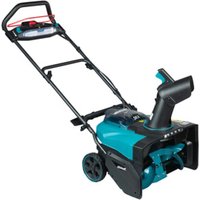
SN001G - Snow blower MAKITA - Free user manual and instructions
Find the device manual for free SN001G MAKITA in PDF.


| Product type | Cordless snow blower |
| Brand | Makita |
| Model | SN001G |
| Clearing width | 530 mm |
| Max. clearing depth | 300 mm |
| No-load speed | 1,400 - 2,100 min⁻¹ |
| Discharge chute rotation | 180° (lever-controlled) |
| Chute deflector angle | 20° - 60° |
| Dimensions (unfolded) | 1,370 mm x 540 mm x 975 mm |
| Dimensions (folded) | 800 mm x 540 mm x 700 mm |
| Rated voltage | 36 V - 40 V DC max. |
| Net weight | 17.6 to 18.8 kg |
| Protection rating | IPX4 |
| Sound pressure level (LₚA) | 70 dB(A) or less |
| Vibration (aₙ) | 2.5 m/s² or less |
| Compatible batteries | BL4020, BL4025, BL4040*, BL4040F*, BL4050F*, BL4080F* |
| Compatible chargers | DC40RA, DC40RB, DC40RC, DC40WA |
| Main functions | Variable speed, chute direction adjustment, front light, battery charge indicator, clearing tool included |
| Maintenance and cleaning | Clean exterior with damp cloth, check bolt tightening, replace worn scraper at authorized service center |
| Safety | Automatic stop on overload/overheat/discharge, safety button, battery lock, IPX4 protection |
| Spare parts and repairability | Repair only by authorized Makita service center, original parts recommended |
| General information | Folding handle, protective cover included, use on fresh or packed snow up to 300 mm |
Frequently Asked Questions - SN001G MAKITA
User questions about SN001G MAKITA
0 question about this device. Answer the ones you know or ask your own.
Ask a new question about this device
Download the instructions for your Snow blower in PDF format for free! Find your manual SN001G - MAKITA and take your electronic device back in hand. On this page are published all the documents necessary for the use of your device. SN001G by MAKITA.
USER MANUAL SN001G MAKITA
natural_image
Line drawing of a snowman lawn mower with attached blades and wheels (no text or symbols)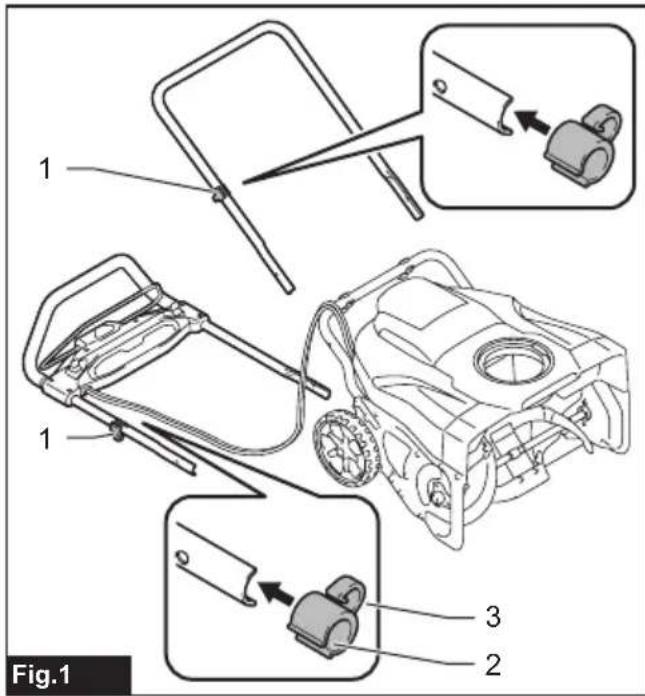
natural_image
Technical diagram of a lawn mower system with mechanical components and a hand tool, shown from two different angles (no text or labels)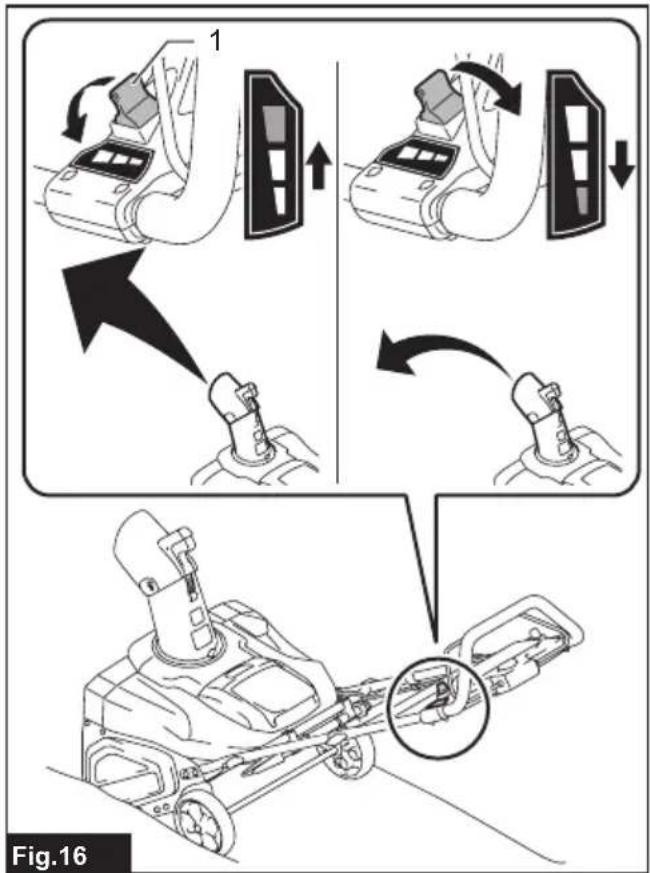
natural_image
Illustration of a person using a lawn mower in a garage, with an inset showing hand holding a tool (no text or symbols)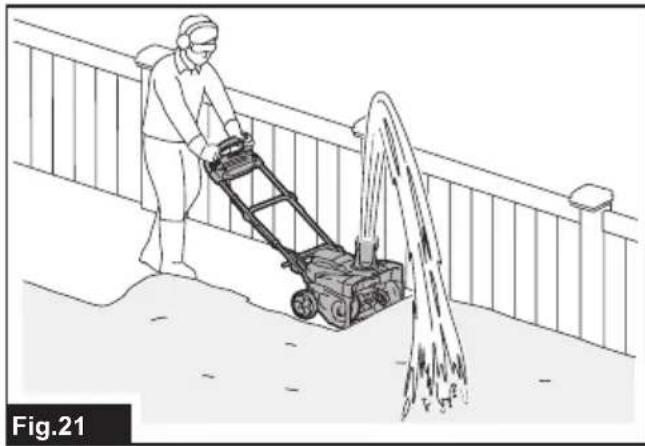
natural_image
Line drawing of a person using a lawn mower to clean water near a railing (no text or symbols)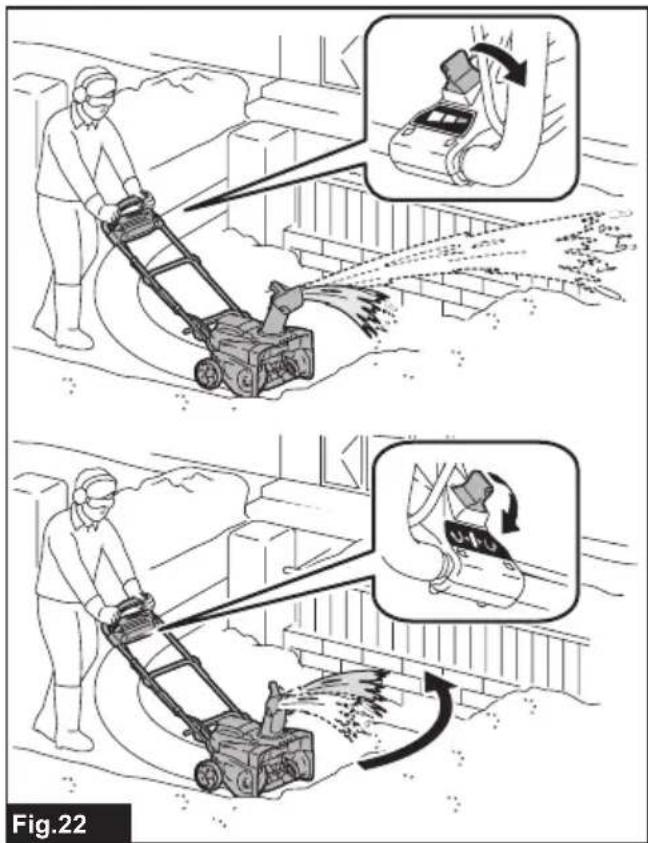
natural_image
Two-panel illustration showing a person using a lawn mower to lift water, with close-ups of the blade and blade (no text or symbols)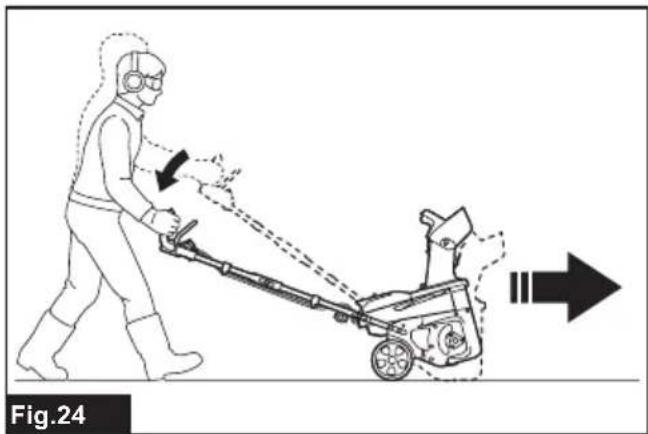
natural_image
Illustration of a person in protective gear using a lawn mower to lift a turbine, with directional arrows indicating motion (no text or symbols)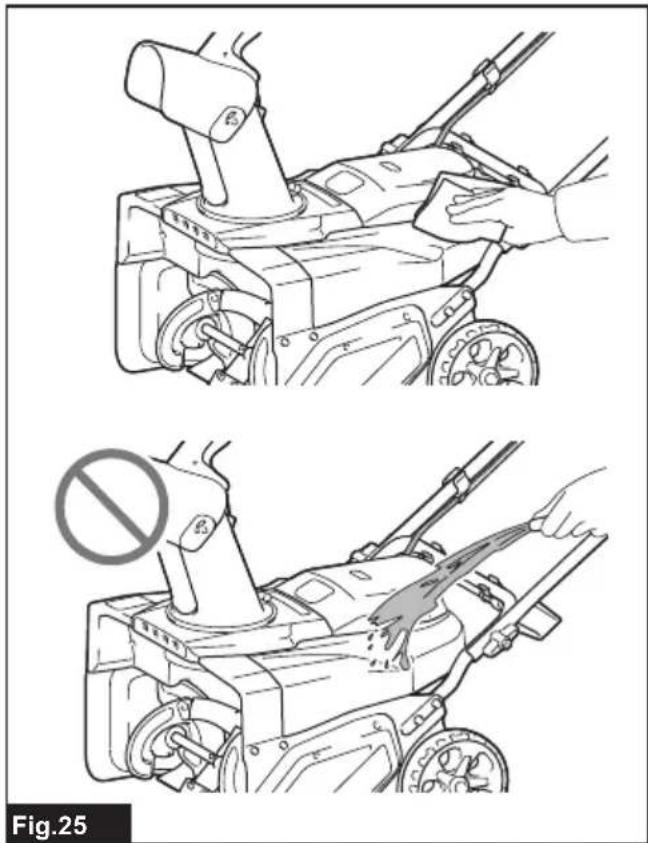
natural_image
Two technical diagrams showing a manual lawn mower with a hand operating it, one without a prohibition sign (no text or symbols on the diagram itself)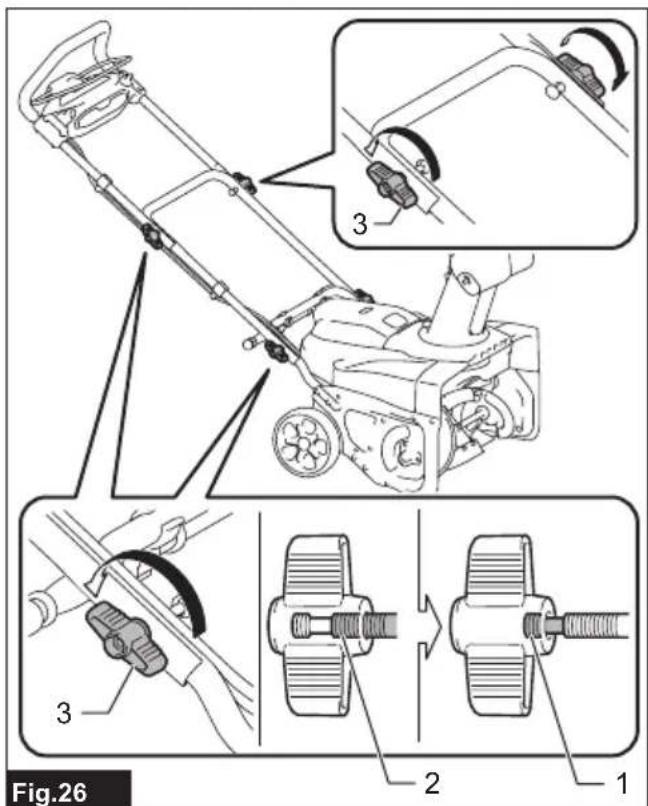
natural_image
Technical line drawing of a mechanical assembly with no visible text or symbols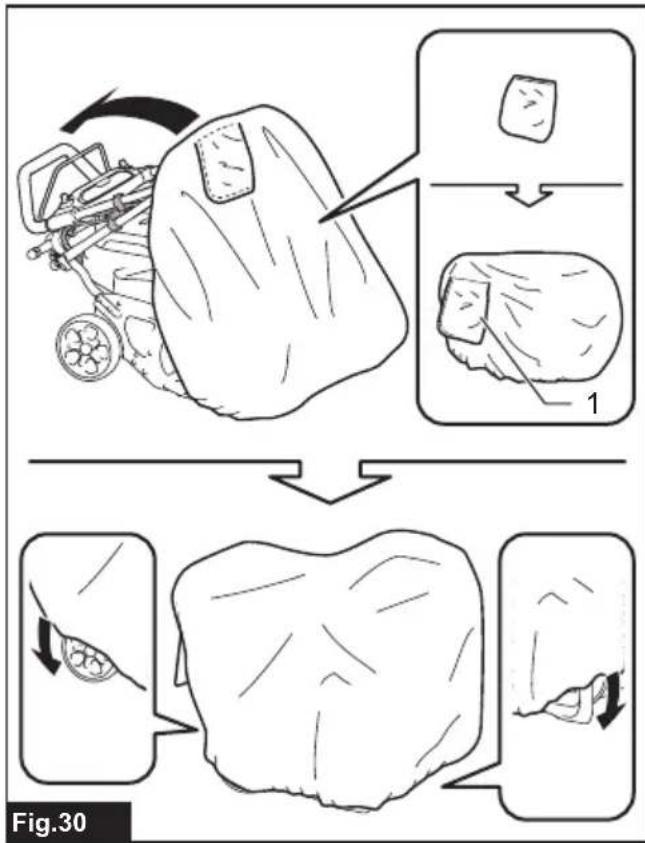
flowchart
graph TD
    A["Carriage with a box"] --> B["Step 1: Cutting into part"]
    B --> C["Step 2: Staining tissue"]
    C --> D["Step 3: Cutting into tissue"]
    D --> E["Fig.30"]
SPECIFICATIONS
| Model: SN001G | ||
| Snow clearing width 530 mm | ||
| No load speed 1,400 - 2,100 min | -1 | |
| Snow clearing depth *1*2(Maximum) | 300 mm | |
| Direction of discharge chute 180° | ||
| Dimensions(L x W x H) | unfolded 1,370 mm x 540 mm x 9 | 75 mm |
| folded 800 mm x 540 mm x 700 mm | ||
| Rated voltage D.C. 36 V - 40 V max | ||
| Net weight 17.6 - 18.8 kg | ||
| Protection degree IPX4 | ||
^*1 Clearing depth varies depending on snow conditions.
^2 Depth measured when clearing freshly fallen snow.
- Due to our continuing program of research and development, the specifications herein are subject to change without notice.
• Specifications may differ from country to country.
- The net weight value includes the lightest and heaviest combination of the attachment(s) and battery cartridge(s) which are specified in the instruction manual.
Applicable battery cartridge and charger
| Battery cartridge BL4020 / BL4025 / BL4040* / BL4040F* / BL4050F* / BL4080F* | *: Recommended battery |
| Charger DC40RA / DC40RB / DC40RC / DC40WA |
- Some of the battery cartridges and chargers listed above may not be available depending on your region of residence.
WARNING: Only use the battery cartridges and chargers listed above. Use of any other battery cartridges and chargers may cause injury and/or fire.
| Symbols | |
| The followings show the symbols which may be used for the equipment. Be sure that you understand their meaning before use. | |
| [Tx2c] Take particular care and attention. | |
 Read instruction manual. Read instruction manual. | |
 Wear a helmet, goggles and ear protection. Wear a helmet, goggles and ear protection. | |
 Keep hands, feet and any body parts away from rotating auger to avoid injury. Keep hands, feet and any body parts away from rotating auger to avoid injury. | |
 Do not use hands to unclog chute. Do not use hands to unclog chute. | |
 Wear safety gloves and protective footwear. Wear safety gloves and protective footwear. |
| WARNING! Disconnect battery before maintenance. | |
| Store battery cartridges indoor at room temperature. Low temperature significantly declines the battery performance. | |
| Stop motor before removing any debris. The rotating part will continuously run for several seconds after you turn off machine. | |
| Guaranteed sound power level according to EU Outdoor Noise Directive. | |
| Sound power level according to Australia NSW Noise Control Regulation. |
Intended use
This cordless snow blower is intended for removing and clearing away snow from sidewalks, decks, driveways and other flat paved surfaces. Do not use it for other purposes.
Noise
The typical A-weighted noise level determined according to ISO8437-4:
Sound pressure level ( L_pA ): 70 dB(A) or less Uncertainty (K): 3 dB (A)
NOTE: The declared noise emission value(s) has been measured in accordance with a standard test method and may be used for comparing one tool with another.
NOTE: The declared noise emission value(s) may also be used in a preliminary assessment of exposure.
WARNING: Wear ear protection.
WARNING: The noise emission during actual use of the power tool can differ from the declared value(s) depending on the ways in which the tool is used especially what kind of workpiece is processed.
⚠ WARNING: Be sure to identify safety measures to protect the operator that are based on an estimation of exposure in the actual conditions of use (taking account of all parts of the operating cycle such as the times when the tool is switched off and when it is running idle in addition to the trigger time).
Vibration
The continuous vibration total value (tri-axial vector sum) determined according to ISO8437-4: Vibration emission (a_h):2.5m / s^2 or less Uncertainty (K): 1.5m / s^2
NOTE: The declared vibration total value(s) has been measured in accordance with a standard test method and may be used for comparing one tool with another. NOTE: The declared vibration total value(s) can also be used in a preliminary assessment of exposure.
WARNING: The vibration emission during actual use of the power tool can differ from the declared total value(s) depending on the ways in which the tool is used.
WARNING: Be sure to identify safety measures to protect the operator that are based on an estimation of exposure in the actual conditions of use (taking account of all parts of the operating cycle such as the times when the tool is switched off and when it is running idle in addition to the trigger time).
Declarations of Conformity
For European countries only
The Declarations of conformity are included in Annex A to this instruction manual.
SAFETY WARNINGS
General power tool safety warnings
⚠ WARNING Read all safety warnings, instructions, illustrations and specifications provided with this power tool. Failure to follow all instructions listed below may result in electric shock, fire and/or serious injury.
Save all warnings and instructions for future reference.
The term "power tool" in the warnings refers to your mains-operated (corded) power tool or battery-operated (cordless) power tool.
Work area safety
- Keep work area clean and well lit. Cluttered or dark areas invite accidents.
- Do not operate power tools in explosive atmospheres, such as in the presence of flammable liquids, gases or dust. Power tools create sparks which may ignite the dust or fumes.
- Keep children and bystanders away while operating a power tool. Distractions can cause you to lose control.
Electrical safety
- Power tool plugs must match the outlet. Never modify the plug in any way. Do not use any adapter plugs with earthed (grounded) power tools. Unmodified plugs and matching outlets will reduce risk of electric shock.
-
Avoid body contact with earthed or grounded surfaces, such as pipes, radiators, ranges and refrigerators. There is an increased risk of electric shock if your body is earthed or grounded.
-
Do not expose power tools to rain or wet conditions. Water entering a power tool will increase the risk of electric shock.
- Do not abuse the cord. Never use the cord for carrying, pulling or unplugging the power tool. Keep cord away from heat, oil, sharp edges or moving parts. Damaged or entangled cords increase the risk of electric shock.
- When operating a power tool outdoors, use an extension cord suitable for outdoor use. Use of a cord suitable for outdoor use reduces the risk of electric shock.
- If operating a power tool in a damp location is unavoidable, use a residual current device (RCD) protected supply. Use of an RCD reduces the risk of electric shock.
- Power tools can produce electromagnetic fields (EMF) that are not harmful to the user. However, users of pacemakers and other similar medical devices should contact the maker of their device and/or doctor for advice before operating this power tool.
Personal safety
- Stay alert, watch what you are doing and use common sense when operating a power tool. Do not use a power tool while you are tired or under the influence of drugs, alcohol or medication. A moment of inattention while operating power tools may result in serious personal injury.
- Use personal protective equipment. Always wear eye protection. Protective equipment such as a dust mask, non-skid safety shoes, hard hat or hearing protection used for appropriate conditions will reduce personal injuries.
- Prevent unintentional starting. Ensure the switch is in the off-position before connecting to power source and/or battery pack, picking up or carrying the tool. Carrying power tools with your finger on the switch or energising power tools that have the switch on invites accidents.
- Remove any adjusting key or wrench before turning the power tool on. A wrench or a key left attached to a rotating part of the power tool may result in personal injury.
- Do not overreach. Keep proper footing and balance at all times. This enables better control of the power tool in unexpected situations.
- Dress properly. Do not wear loose clothing or jewellery. Keep your hair and clothing away from moving parts. Loose clothes, jewellery or long hair can be caught in moving parts.
- If devices are provided for the connection of dust extraction and collection facilities, ensure these are connected and properly used. Use of dust collection can reduce dust-related hazards.
- Do not let familiarity gained from frequent use of tools allow you to become complacent and ignore tool safety principles. A careless action can cause severe injury within a fraction of a second.
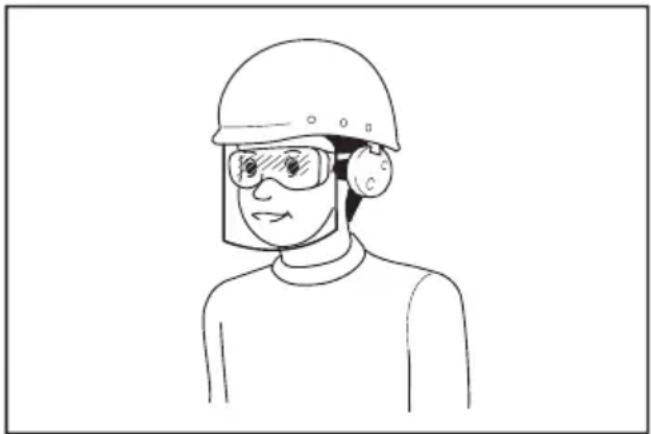
- Always wear protective goggles to protect your eyes from injury when using power tools. The goggles must comply with ANSI Z87.1 in the USA, EN 166 in Europe, or AS/NZS 1336 in Australia/New Zealand. In Australia/New
Zealand, it is legally required to wear a face shield to protect your face, too.
natural_image
Line drawing of a person wearing a hard hat and safety goggles (no text or symbols)It is an employer's responsibility to enforce the use of appropriate safety protective equipments by the tool operators and by other persons in the immediate working area.
Power tool use and care
- Do not force the power tool. Use the correct power tool for your application. The correct power tool will do the job better and safer at the rate for which it was designed.
- Do not use the power tool if the switch does not turn it on and off. Any power tool that cannot be controlled with the switch is dangerous and must be repaired.
- Disconnect the plug from the power source and/or remove the battery pack, if detachable, from the power tool before making any adjustments, changing accessories, or storing power tools. Such preventive safety measures reduce the risk of starting the power tool accidentally.
- Store idle power tools out of the reach of children and do not allow persons unfamiliar with the power tool or these instructions to operate the power tool. Power tools are dangerous in the hands of untrained users.
- Maintain power tools and accessories. Check for misalignment or binding of moving parts, breakage of parts and any other condition that may affect the power tool's operation. If damaged, have the power tool repaired before use. Many accidents are caused by poorly maintained power tools.
- Keep cutting tools sharp and clean. Properly maintained cutting tools with sharp cutting edges are less likely to bind and are easier to control.
- Use the power tool, accessories and tool bits etc. in accordance with these instructions, taking into account the working conditions and the work to be performed. Use of the power tool for operations different from those intended could result in a hazardous situation.
- Keep handles and grasping surfaces dry, clean and free from oil and grease. Slippery handles and grasping surfaces do not allow for safe handling and control of the tool in unexpected situations.
- When using the tool, do not wear cloth work gloves which may be entangled. The entanglement of cloth work gloves in the moving parts may
result in personal injury.
Battery tool use and care
- Recharge only with the charger specified by the manufacturer. A charger that is suitable for one type of battery pack may create a risk of fire when used with another battery pack.
- Use power tools only with specifically designated battery packs. Use of any other battery packs may create a risk of injury and fire.
- When battery pack is not in use, keep it away from other metal objects, like paper clips, coins, keys, nails, screws or other small metal objects, that can make a connection from one terminal to another. Shorting the battery terminals together may cause burns or a fire.
- Under abusive conditions, liquid may be ejected from the battery; avoid contact. If contact accidentally occurs, flush with water. If liquid contacts eyes, additionally seek medical help. Liquid ejected from the battery may cause irritation or burns.
- Do not use a battery pack or tool that is damaged or modified. Damaged or modified batteries may exhibit unpredictable behaviour resulting in fire, explosion or risk of injury.
- Do not expose a battery pack or tool to fire or excessive temperature. Exposure to fire or temperature above 130 °C may cause explosion.
- Follow all charging instructions and do not charge the battery pack or tool outside the temperature range specified in the instructions. Charging improperly or at temperatures outside the specified range may damage the battery and increase the risk of fire.
Service
- Have your power tool serviced by a qualified repair person using only identical replacement parts. This will ensure that the safety of the power tool is maintained.
- Never service damaged battery packs. Service of battery packs should only be performed by the manufacturer or authorized service providers.
- Follow instruction for lubricating and changing accessories.
Snow blower safety warnings
General
- This machine is capable of amputating hands and feet and throwing objects. Failure to observe the following safety instructions could result in serious injury.
Training
- Read, understand and follow all instructions on the machine and in the manual before operating the snow blower. Be thoroughly familiar with the controls and the proper use of the machine. Know how to stop the snow blower and disengage the controls quickly.
-
Never allow children to operate the machine. Never allow adults to operate the machine without proper instruction.
-
Keep the area of operation clear of all persons, particularly small children.
- Exercise caution to avoid slipping or falling, especially when operating the machine in reverse.
- Exposing to vibration for long and continuous periods injures blood vessels or nervous system of the operator and causes the symptoms in the fingers, hands, arms or shoulders. Job rotation and suitably timed rest breaks may help to reduce vibration exposure. For persons unfamiliar with the work, such as the elderly, be especially careful about the strain on body.
- Pay due attention to your surroundings when using the machine on public roads. Always consult and follow your local regulations and codes regarding traffic safety.
Preparation
- Thoroughly inspect the area where the machine is to be used and remove all doormats, sleds, boards, stones, power cables, wood branches, gravels and other foreign objects. Note that some objects can be missed when covered with snow. Thrown objects can cause personal injury.
- Do not operate the machine without wearing adequate winter garments. Avoid loose fitting clothing that can get caught in moving parts. Wear footwear that will improve footing on slippery surfaces.
- Always wear safety glasses or eye shields during operation or while performing an adjustment or repair to protect eyes from foreign objects that may be thrown from the machine.
- Never attempt to make any adjustments while the motor is running.
- Use personal protective equipment. Always wear eye protection. Protective equipment such as a dust mask, non-skid safety shoes, hard hat or hearing protection used for appropriate conditions will reduce personal injuries.
- Clear the snow accumulated on the machine roof before installing and removing the battery cartridge.
Operation
- Do not put hands or feet near or under rotating parts. Keep clear of the discharge opening at all times.
- Do not operate the snow blower on gravel drives and walks. Exercise extreme caution when crossing gravel drives or walks. Stay alert for hidden hazards or operating near public roads.
- After striking a foreign object, stop the motor, remove the battery from the machine, thoroughly inspect the snow blower for any damage, and repair the damage before restarting and operating the snow blower.
- If the machine should start to vibrate abnormally, stop the motor and check immediately for the cause. Vibration is generally a warning of
trouble.
-
Stop the motor and remove the battery from the machine whenever you leave the operating position, before unclogging the impeller housing or discharge chute, and when making any repairs, adjustments or inspections.
-
Exercise extreme caution when operating on slopes.
-
Never operate the machine without proper guards and other safety protective devices in place and working.
-
Never direct the discharge toward people or areas where property damage can occur. Keep children and others away.
-
Do not overload the machine capacity by attempting to clear snow at too fast a rate.
-
Never operate the machine at high transport speeds on slippery surfaces. Look behind and use care when operating in reverse.
-
Disengage power to the impeller when the machine is transported or not in use.
-
Use only attachments and accessories approved by the manufacturer of the machine.
-
Never operate the machine without good visibility or light. Always be sure of your footing, and keep a firm hold on the handles.
-
Walk; never run. Failure to do so may cause a slip, trip, fall colliding accident resulting in personal injuries.
-
Never touch a hot motor or machine.
-
Keep all parts of your body and loose clothing away from the moving parts. This reduces the chance of injury to you from contact with the moving parts.
-
Avoid operating the machine in rain or on wet slope, slippery place and unstable surfaces.
-
Carefully keep balance of the machine during your emergency stop maneuver. Losing machine control before the rotating parts stop completely may cause serious injury to you and others in the work area.
-
Never operate the machine while people, especially children, or pets are nearby. Discharged snow or other objects can cause serious injury.
-
During operation, keep bystanders or animals at least 15 m (50 ft) away from the machine. Stop the machine as soon as someone approaches. When working with two or more people, keep a distance of at least 15 m (50 ft) or more between each other, and put a supervisor.
-
The machine can only be operated by one operator. Do not operate the machine by two or more people at the same time.
-
Machine components may freeze under certain conditions in freezing temperatures. Do not use the machine while its mechanical parts are freezing.
-
Do not use the machine on frozen lakes, rivers, or similar surfaces. Broken ice may pose a risk of falling through the ice resulting in death or serious injury.
-
Do not operate the machine in falling snow, rain or wet conditions. Do not expose the
machine to rain or moisture. Water entering the machine may increase the risk of electric shock or malfunction that could result in personal injury.
- Do not operate the machine in explosive atmospheres, such as in the presence of flammable liquids, gases or dust. The machine creates sparks which may ignite the dust or fumes.
Clearing a clogged discharge chute
-
Hand contact with the rotating impeller inside the discharge chute is the most common cause of injury associated with snow blowers. Never use your hand to clean out the discharge chute.
-
To clear the chute:
— Shut the machine off and remove the battery.
— Wait 10 seconds to be sure the impeller has stopped rotating.
— Always use a clean-out tool, not your hands.
Maintenance and storage
- Check bolts at frequent intervals for proper tightness to be sure the equipment is in safe working condition.
- Always refer to instruction manual for important details if the snow blower is to be stored for an extended period.
- Maintain or replace safety labels, as necessary.
- Run the machine a few minutes after blowing snow to prevent freeze-up of the impeller.
- When cleaning, repairing or inspecting the snow blower, stop the motor and make certain the impeller and all moving parts have stopped. Remove the battery from the machine to prevent someone from accidentally starting the motor.
- Remove any wrench before turning the machine on. A wrench left attached to the machine may result in personal injury.
Electrical and battery safety
- Do not dispose of the battery(ies) in a fire. The cell may explode. Check with local codes for possible special disposal instructions.
- Do not open or mutilate the battery(ies). Released electrolyte is corrosive and may cause damage to the eyes or skin. It may be toxic if swallowed.
- Do not charge battery in rain, in snow, or in wet locations.
- Do not charge the battery outdoors.
- Do not handle charger, including charger plug, and charger terminals with wet hands.
- Avoid dangerous environment. Do not use the machine in damp or wet locations or expose it to rain. Water entering the machine will increase the risk of electric shock.
Additional safety instructions
-
Check Damaged Parts - Before further use of the appliance, a guard or other part that is damaged should be carefully checked to determine that it will operate properly and perform its intended function. Check for alignment of moving parts, binding of moving parts, breakage of parts, mounting, and any other condition that may affect its operation. A guard or other part that is damaged should be properly repaired or replaced by an authorized service center unless indicated elsewhere in this manual.
-
Avoid unintentional starting. Do not carry the machine when the battery cartridge is installed and with finger on the switch. Make sure that the switch is off when installing the battery cartridge.
SAVE THESE INSTRUCTIONS.
WARNING: DO NOT let comfort or familiarity with product (gained from repeated use) replace strict adherence to safety rules for the subject product.
MISUSE or failure to follow the safety rules stated in this instruction manual may cause serious personal injury.
Important safety instructions for battery cartridge
- Before using battery cartridge, read all instructions and cautionary markings on (1) battery charger, (2) battery, and (3) product using battery.
- Do not disassemble or tamper with the battery cartridge. It may result in a fire, excessive heat, or explosion.
- If operating time has become excessively shorter, stop operating immediately. It may result in a risk of overheating, possible burns and even an explosion.
-
If electrolyte gets into your eyes, rinse them out with clear water and seek medical attention right away. It may result in loss of your eyesight.
-
Do not short the battery cartridge:
(1) Do not touch the terminals with any conductive material.
(2) Avoid storing battery cartridge in a container with other metal objects such as nails, coins, etc.
(3) Do not expose battery cartridge to water or rain.
A battery short can cause a large current flow, overheating, possible burns and even a breakdown.
-
Do not store and use the tool and battery cartridge in locations where the temperature may reach or exceed 50 °C (122 °F).
-
Do not incinerate the battery cartridge even if it is severely damaged or is completely worn out. The battery cartridge can explode in a fire.
-
Do not nail, cut, crush, throw, drop the battery cartridge, or hit against a hard object to the battery cartridge. Such conduct may result in a fire, excessive heat, or explosion.
-
Do not use a damaged battery.
-
The contained lithium-ion batteries are subject to the Dangerous Goods Legislation requirements.
For commercial transports e.g. by third parties, forwarding agents, special requirement on packaging and labeling must be observed.
For preparation of the item being shipped, consulting an expert for hazardous material is required. Please also observe possibly more detailed national regulations.
Tape or mask off open contacts and pack up the battery in such a manner that it cannot move around in the packaging.
-
When disposing the battery cartridge, remove it from the tool and dispose of it in a safe place. Follow your local regulations relating to disposal of battery.
-
Use the batteries only with the products specified by Makita. Installing the batteries to non-compliant products may result in a fire, excessive heat, explosion, or leak of electrolyte.
-
If the tool is not used for a long period of time, the battery must be removed from the tool.
-
During and after use, the battery cartridge may take on heat which can cause burns or low temperature burns. Pay attention to the handling of hot battery cartridges.
-
Do not touch the terminal of the tool immediately after use as it may get hot enough to cause burns.
-
Do not allow chips, dust, or soil stuck into the terminals, holes, and grooves of the battery cartridge. It may cause heating, catching fire, burst and malfunction of the tool or battery cartridge, resulting in burns or personal injury.
-
Unless the tool supports the use near high-voltage electrical power lines, do not use the battery cartridge near high-voltage electrical power lines. It may result in a malfunction or breakdown of the tool or battery cartridge.
-
Keep the battery away from children.
SAVE THESE INSTRUCTIONS.
CAUTION: Only use genuine Makita batteries. Use of non-genuine Makita batteries, or batteries that have been altered, may result in the battery bursting causing fires, personal injury and damage. It will also void the Makita warranty for the Makita tool and charger.
NOTICE: Makita is not responsible for any accidents resulting from the use of non-genuine Makita batteries or batteries that have been modified. Genuine Makita batteries have been rigorously evaluated for compatibility with Makita tools and chargers, in line with applicable legislation and safety standards.
Tips for maintaining maximum battery life
- Charge the battery cartridge before completely discharged. Always stop tool operation and charge the battery cartridge when you notice less tool power.
- Never recharge a fully charged battery cartridge. Overcharging shortens the battery service life.
- Charge the battery cartridge with room temperature at 10 °C - 40 °C (50 °F - 104 °F). Let a hot battery cartridge cool down before charging it.
- When not using the battery cartridge, remove it from the tool or the charger.
- Charge the battery cartridge if you do not use it for a long period (more than six months).
ASSEMBLY
⚠ WARNING: Always be sure that the battery cartridge is removed before carrying out any work on the machine. Failure to remove the battery cartridge may result in serious personal injury from accidental start-up.
WARNING: Never start the machine unless it is completely assembled. Operation of the machine in a partially assembled state may result in serious personal injury.
Handle set up
Middle handle installation
- Attach a cord clip to each of the middle handle and the upper handle before assembly. Pass the handle end through the clamp. Then turn the cord clip until its clip opening faces down.
▶ Fig.1: 1. Cord clip 2. Clamp 3. Clip opening
NOTICE: Attach cord clips to the correct positions as instructed in this manual so that the cabtire cords are not caught on or around the handle components.
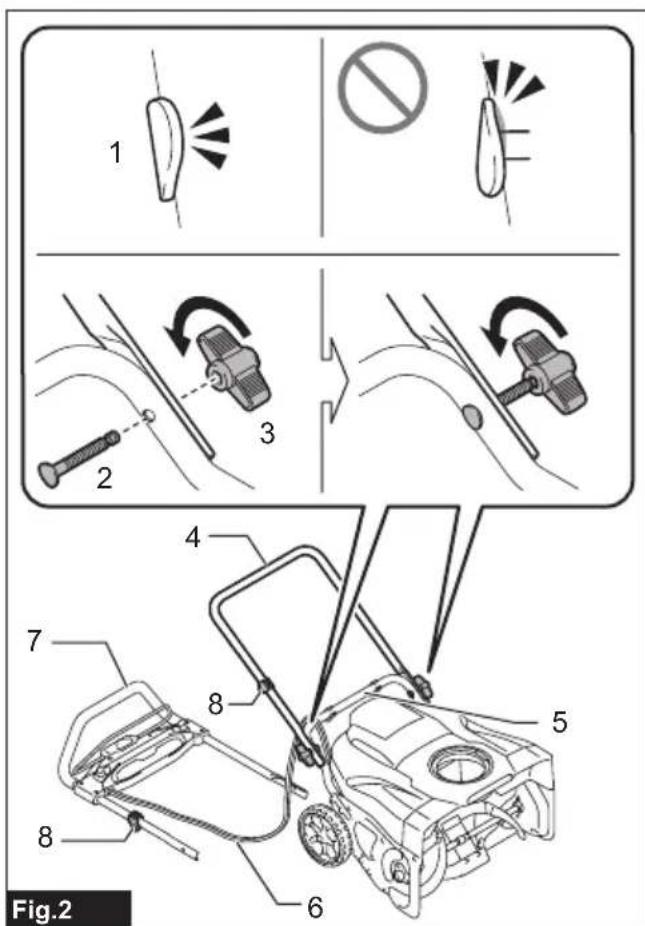
- Attach the open ends of the middle handle to the side frames of the lower handle.
NOTICE: Be careful to lay the cabtire cords inside the middle handle frame to prevent a tangle of cords.
NOTE: Gently pull the handle ends apart to widen the handle as you slide them over the lower handle.
-
Align the holes in the middle and lower handles so that the retaining bolts can be inserted.
-
Insert the retaining bolts through the holes from inside the handle frames, and fasten the handles with the handle knobs from outside.
▶ Fig.2: 1. Bolt head 2. Retaining bolt 3. Handle knob 4. Middle handle 5. Lower handle 6. Cabtire cords 7. Upper handle 8. Cord clip
NOTE: Mind that the double-threaded bolt requires you to tighten the handle knob twice; first (outward) thread for roughly fastening the handle components and second (inward) thread for securing the handle components.
NOTE: Make sure to insert a bolt correctly so the curved bolt head fits perfectly onto the handle frame.
Upper handle installation
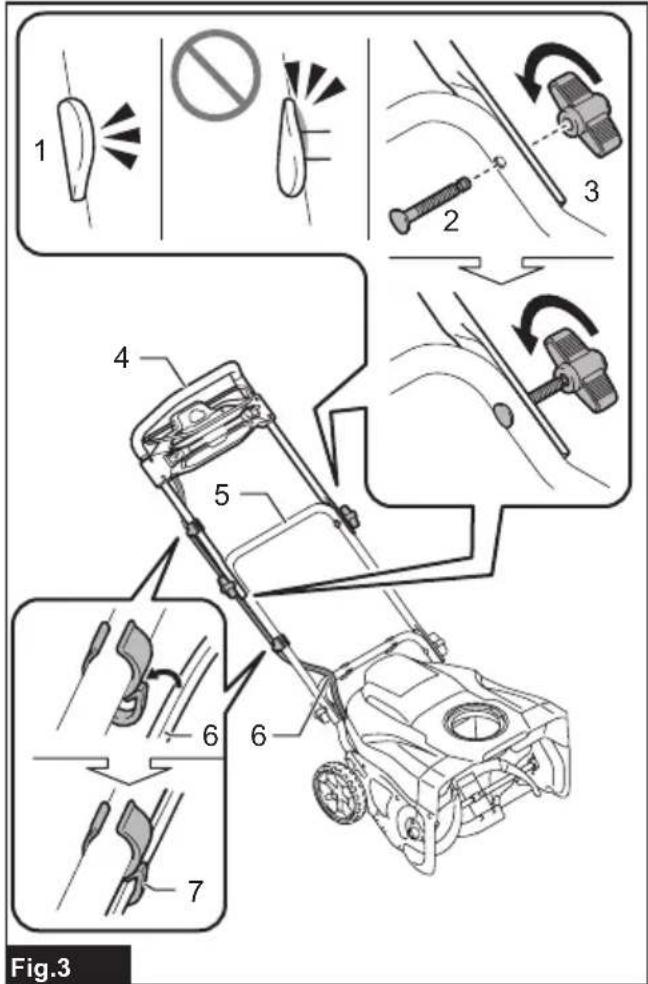
- Attach the open ends of the upper handle to the side frames of the middle handle.
NOTICE: Be careful to lay the cabtire cords under the middle handle frame to prevent a tangle of cords.
NOTE: Gently pull the handle ends apart to widen the handle as you slide them over the middle handle.
- Align the holes in the upper and middle handles so that the retaining bolts can be inserted.
- Insert the retaining bolts through the holes from inside the handle frames, and fasten the handles with the handle knobs from outside.
▶ Fig.3: 1. Bolt head 2. Retaining bolt 3. Handle knob 4. Upper handle 5. Middle handle 6. Cabtire cords 7. Cord clip
NOTE: Mind that the double-threaded bolt requires you to tighten the handle knob twice; first (outward) thread for roughly fastening the handle components and second (inward) thread for securing the handle components.
NOTE: Make sure to insert a bolt correctly so the curved bolt head fits perfectly onto the handle frame.
- Manage the cabling comfortably with the 2 cord clips. Clamp the cords straight to the middle and upper handle frames. Allow the cords to run along and inside the handles.
Snow remover installation
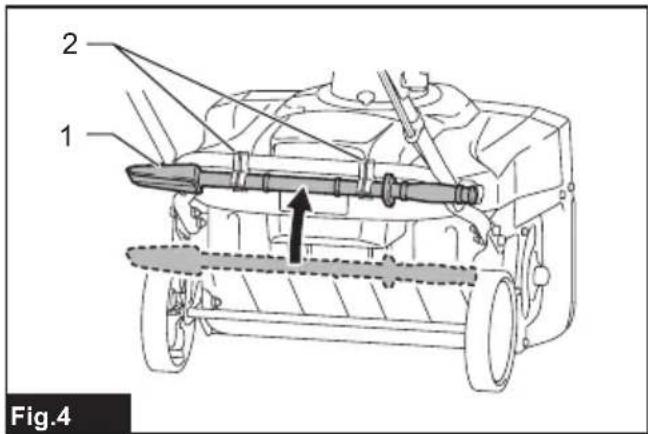
Attach the snow and ice remover to the tool holders on the lower handle after assembling handle components.
▶ Fig.4: 1. Snow and ice remover 2. Tool holders
Discharge chute set up
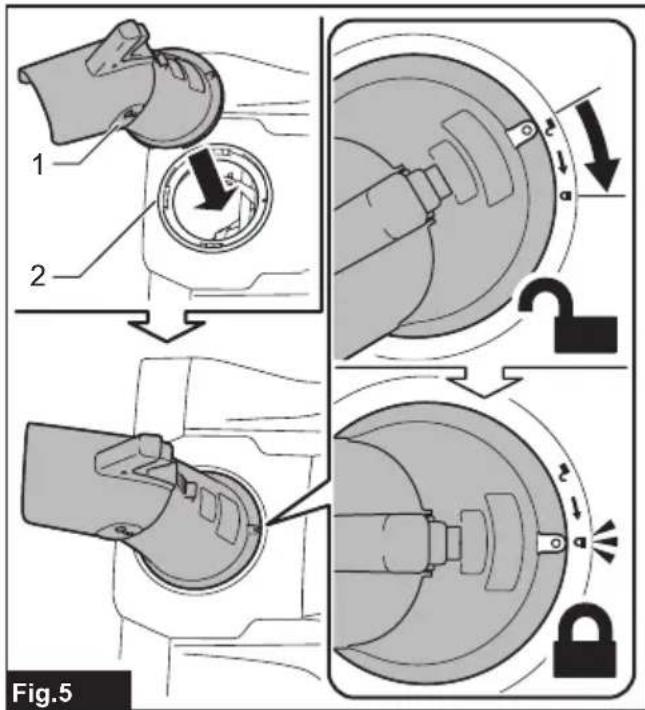
- Align the pilot hole on the discharge chute with the symbol on the chute housing.
- Turn the discharge chute in the direction as indicated by the arrow mark on the chute housing until the pilot hole ⏻ aligns with the symbol ⏻.
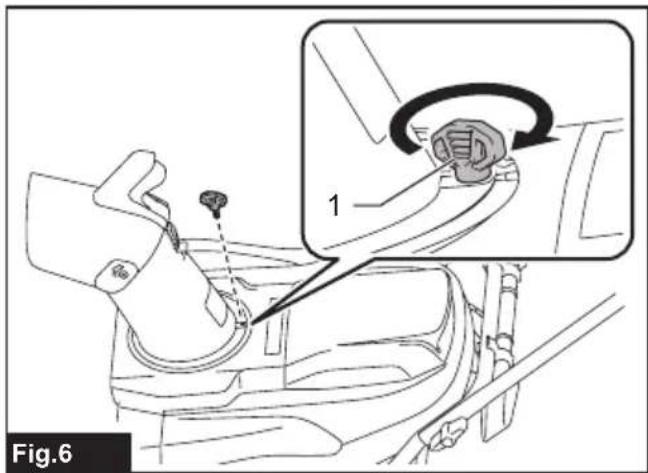
▶ Fig.5: 1. Discharge chute 2. Chute housing - Finger tighten the chute screw to secure the discharge chute in place.
▶ Fig.6: 1. Chute screw
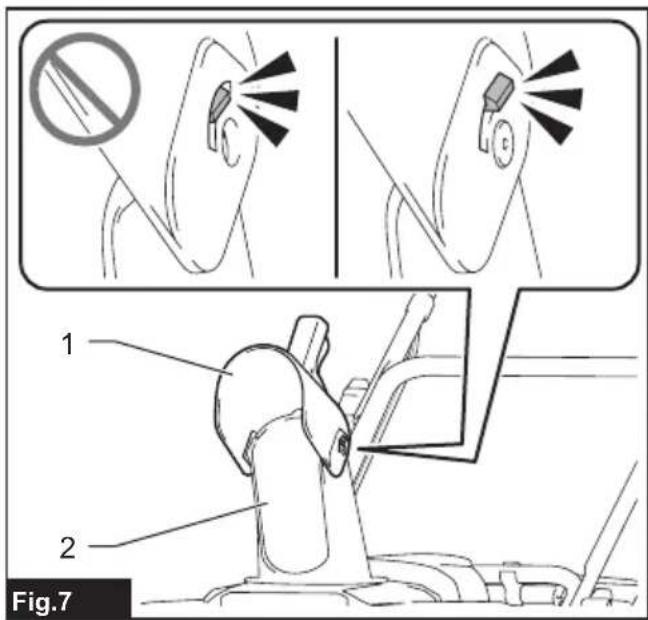
NOTICE: Be sure that the deflector on the discharge chute is fully assembled. Partially assembled deflector may cause an insufficient snow discharge.
▶ Fig.7: 1. Deflector 2. Discharge chute
FUNCTIONAL DESCRIPTION
A CAUTION: Always be sure that the machine is switched off and the battery cartridge is removed before adjusting or checking function on the machine.
Installing or removing battery cartridge
⚠️CAUTION: Always switch off the machine before installing or removing of the battery cartridge.
⚠️CAUTION: Hold the machine and the battery cartridge firmly when installing or removing battery cartridge. Failure to hold the machine and the battery cartridge firmly may cause them to slip off your hands and result in damage to the machine and battery cartridge and a personal injury.
⚠️CAUTION: Make sure that you lock the battery cover before use. Otherwise, mud, dirt, or water may cause damage to the machine or the battery cartridge.
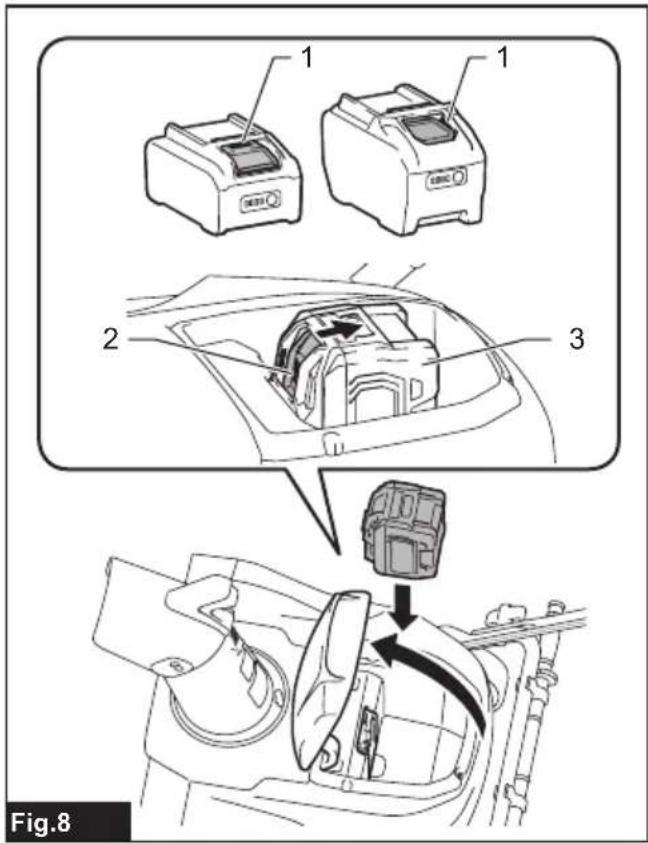
⚠️CAUTION: Always install the battery cartridge fully until the red indicator cannot be seen.
⚠️CAUTION: Do not install the battery cartridge forcibly. If the cartridge does not slide in easily, it is not being inserted correctly.
⚠️CAUTION: Hold the battery cover open while installing or removing the battery cartridge.
To install the battery cartridge;
- Lift up the battery cover to open.
- Align the tongue on the battery cartridge with the slot on the machine. Slide the battery cartridge until it locks in place with a little click.
▶ Fig.8: 1. Red indicator 2. Button 3. Battery cartridge
- Close the battery cover.
To remove the battery cartridge;
- Lift up the battery cover to open.
- Pull out the battery cartridge from the machine while sliding the button on the front of the cartridge.
- Close the battery cover.
Machine / battery protection system
The machine is equipped with a machine/battery protection system. This system automatically cuts off power to the motor to extend machine and battery life. The machine will automatically stop with indicator lights during operation if the machine or battery is placed under one of the following conditions:
Overload protection
When the battery is operated in a manner that causes it to draw an abnormally high current, the machine automatically stops and the front lights flash. In this
situation, turn the machine off and stop the application that caused the machine to become overloaded. Then turn the machine on to restart.
Overheat protection
When the battery is overheated, the machine stops automatically and the front lights flash. In this case, let the battery cool before turning the machine on again.
Overdischarge protection
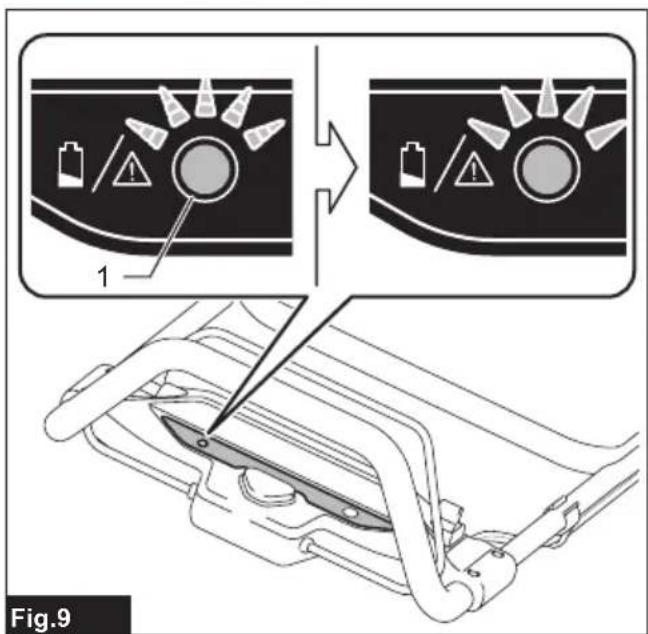
When the battery capacity becomes low, the machine stops automatically and the indicator lamp blinks. If the machine does not run even after you re-trigger the switch and the indicator lamp lights up, battery power is not enough to operate. Remove the battery from the machine and charge the battery.
▶ Fig.9: 1. Indicator lamp
Protections against other causes
Protection system is also designed for other causes that could damage the machine and allows the machine to stop automatically. Take all the following steps to clear the causes, when the machine has been brought to a temporary halt or stop in operation.
- Turn the machine off, and then turn it on again to restart.
- Charge the battery(ies) or replace it/them with recharged battery(ies).
- Let the machine and battery(ies) cool down.
If no improvement can be found by restoring protection system, then contact your local Makita Service Center.
NOTICE: If the machine stops due to a cause not described above, refer to the section for troubleshooting.
Indicating the remaining battery capacity
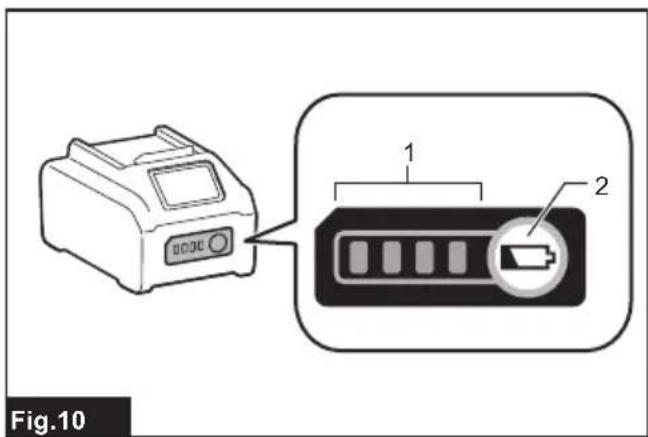
Press the check button on the battery cartridge to indicate the remaining battery capacity. The indicator lamps light up for a few seconds.
▶ Fig.10: 1. Indicator lamps 2. Check button
| Indicator lamps Remaining | capacity | ||
| Lighted Off | Blinking | ||
| 75% to 100% | |||
| 50% to 75% | |||
| 25% to 50% | |||
| 0% to 25% | |||
| Charge the battery. | |||
| The battery may have malfunctioned. | |||
NOTE: Depending on the conditions of use and the ambient temperature, the indication may differ slightly from the actual capacity.
NOTE: The first (far left) indicator lamp will blink when the battery protection system works.
Switch action
⚠ WARNING: Before installing the battery cartridge, always check to see that the switch lever actuates properly and returns to the original position when released. Operating the machine with a switch that does not actuate properly can lead to loss of control and serious personal injury.
WARNING: NEVER tape down or defeat purpose and function of the lock-off button and switch lever.
NOTE: The machine does not start without pressing the lock-off button even if the switch lever is pulled.
NOTE: The machine may not start due to the overload when you try to operate the machine on heavy snow. In this case, set the working speed slower and slow down your pace.
This machine is equipped with the lock-off button. If you notice anything unusual with the lock-off button, stop the operation immediately and have it checked by your nearest Makita Authorized Service Center.
- Install the battery cartridge, and then close the battery cover.
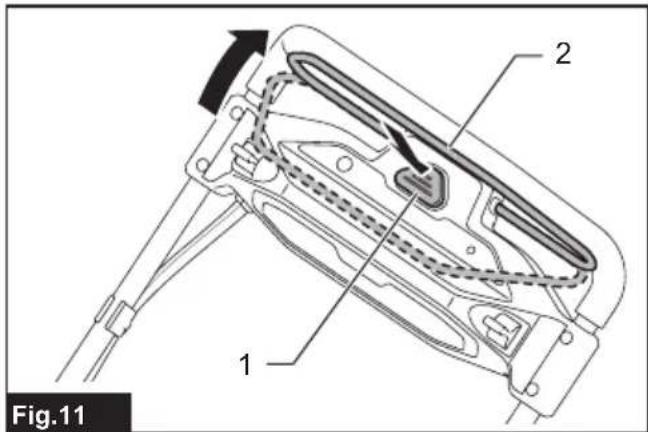
- Depress and hold down the lock-off button. Then pull the switch lever towards you.
You can release the lock-off button after the motor starts running.
▶ Fig.11: 1. Lock-off button 2. Switch lever
- Release the switch lever to stop the motor.
Front lights
⚠️CAUTION: Do not look in the light or see the source of light directly.
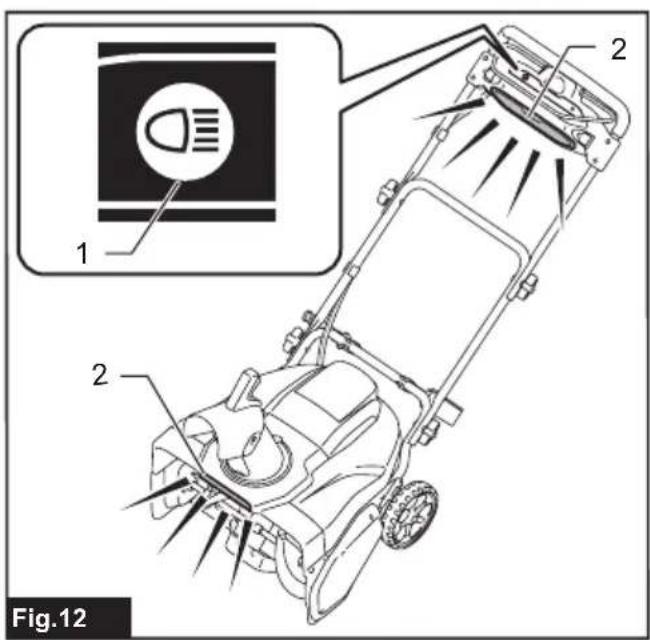
The front lights can illuminate your way ahead in a dark area. To turn on the front lights, press down the light button.
▶ Fig.12: 1. Light button 2. Front lights
Indicator lamp
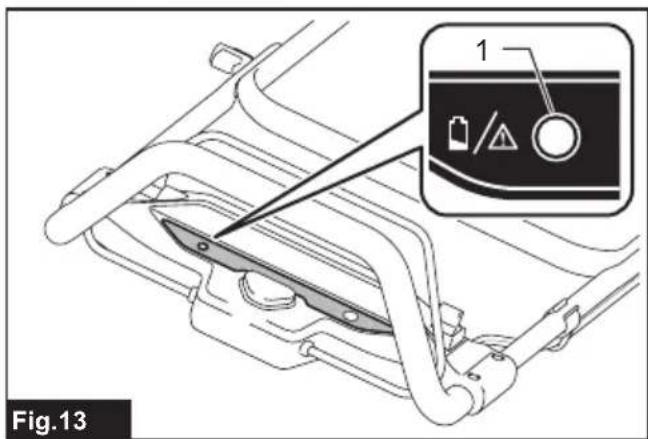
The lamp located on the control panel indicates the remaining battery power. The lamp starts blinking when the battery capacity becomes lower than 20%. Further
use of remaining battery capacity will stop the machine with the indicator lamp lighting up.
▶ Fig.13: 1. Indicator lamp
Snow and ice remover
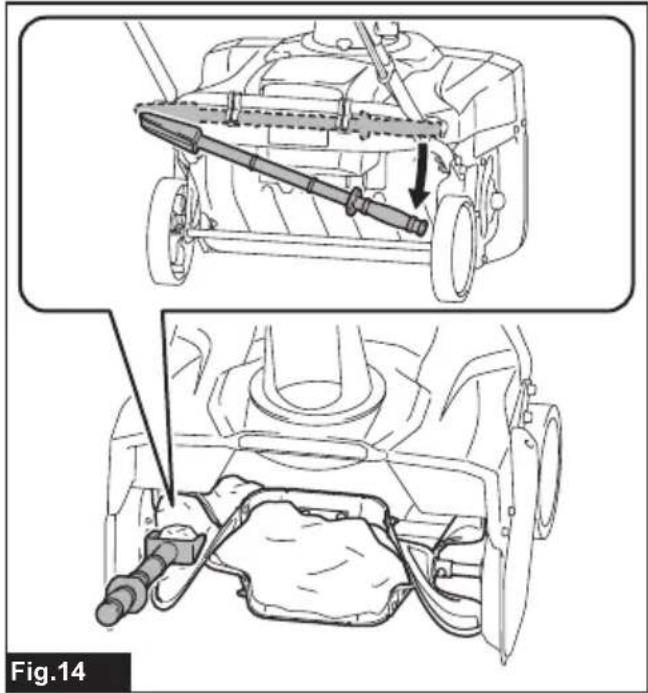
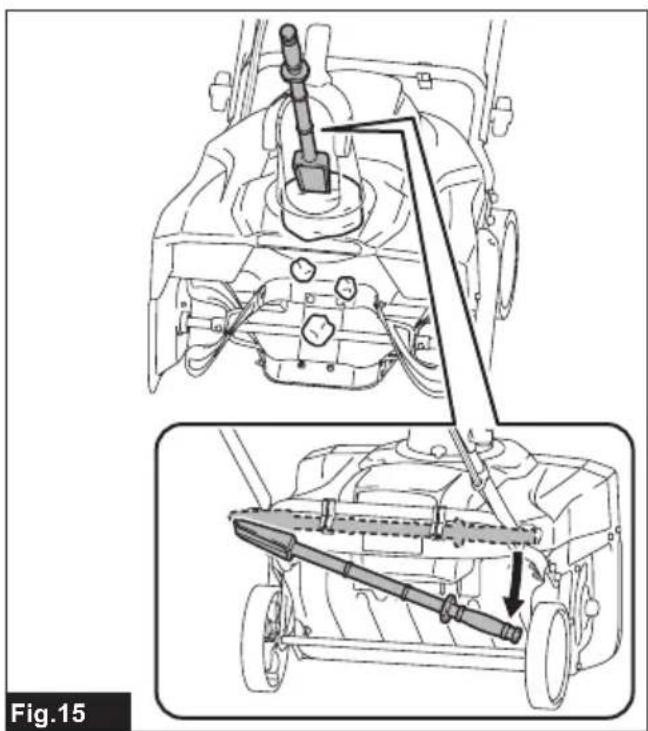
Use a manual snow removal tool that helps clear snow and ice accumulated in the snow intake hood (auger hood) and discharge chute housing. The tool can be mounted on the lower handle within easy reach.
Removing snow from difficult-to-reach areas ▶ Fig.14
Clearing snow from unwanted places
▶ Fig.15
OPERATION
WARNING: Be extra careful to maintain control of the machine at all times. Do not allow the machine to deflect the discharge towards you or anyone in the work vicinity. Failure to keep proper control of the machine could result in serious injury to you and bystanders.
WARNING: Keep your hands and feet away from the auger.
⚠️ CAUTION: Make sure to securely install the discharge chute in the machine whenever before starting work.
CAUTION: Never use the machine on a roof-top, high place, steep slope, ice or other unstable surface. It otherwise may result in serious injury.
CAUTION: Never point the machine at yourself, bystanders or animals. Discharged snow or other objects can cause serious injury.
CAUTION: Be aware of the direction of the wind. Adjust the snow blowing direction according to the wind direction so that discharged snow will not create a hazard to the operator or people around.
CAUTION: Clear away stones, wires, rubble, crud, weeds and any other obstacles in the working area before snow season begins.
CAUTION: Always remove the battery cartridge and wear gloves before clearing the foreign objects that block up the flow of snow.
Blower settings
WARNING: Never put your hand or foot under the machine body when making any adjustment.
CAUTION: Never direct the snow discharge chute at the operator, bystanders, vehicles, or nearby windows. The discharged snow or foreign objects that are accidentally collected may cause serious personal injury. Always point the discharge chute in the opposite direction from potential hazards.
Blower speed adjustment
Adjust the blower speed according to the snow conditions.
Move the speed control lever forwards to increase the motor speed and move the lever backwards to reduce the speed.
▶ Fig.16: 1. Speed control lever
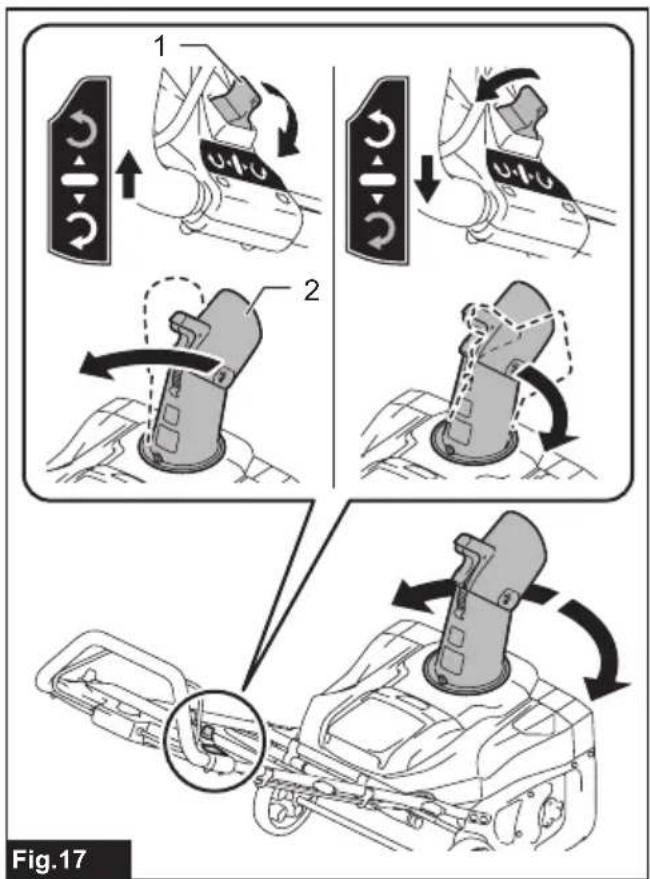
Discharge direction adjustment
The discharge chute can be angled to the left or right between 0 to 90 degrees, allowing the snow to be thrown precisely where you require.
Move the chute direction lever forwards to turn the discharge chute counterclockwise up to 90 degrees left and move the lever backwards to turn the chute clockwise up to 90 degrees right.
▶ Fig.17: 1. Chute direction lever 2. Discharge chute
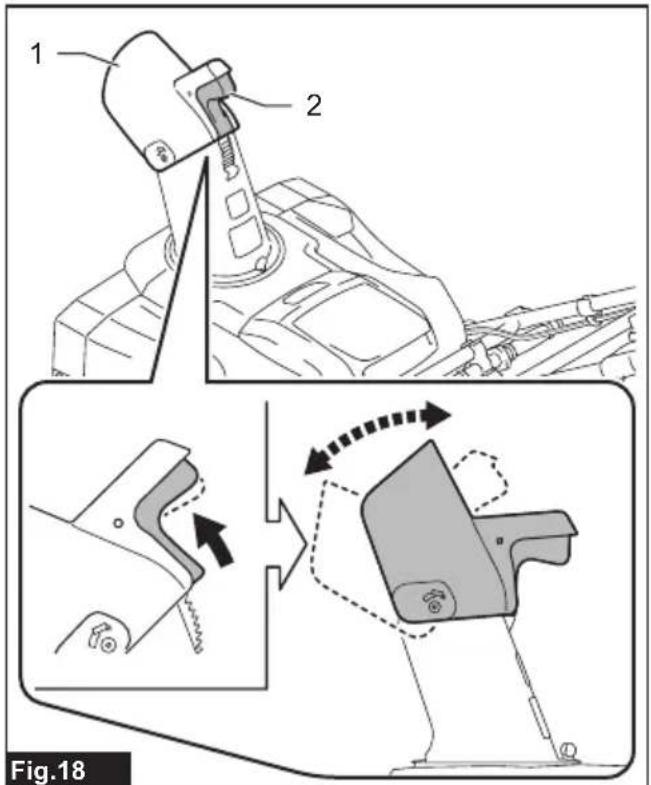
Discharge angle adjustment
The chute deflector can be angled up between 20 to 60 degrees, allowing the snow to be thrown precisely where you require.
Squeeze the release trigger to unlock the deflector position. Raise or lower the deflector to the desired height of snow stream you wish to throw.
▶ Fig.18: 1. Chute deflector 2. Release trigger
Applications
The machine is designed for clearing snow from narrow paths, sidewalks, steps, decks, and smaller driveways when snow depth is under 300 mm.
Clearing depth varies depending on snow conditions.
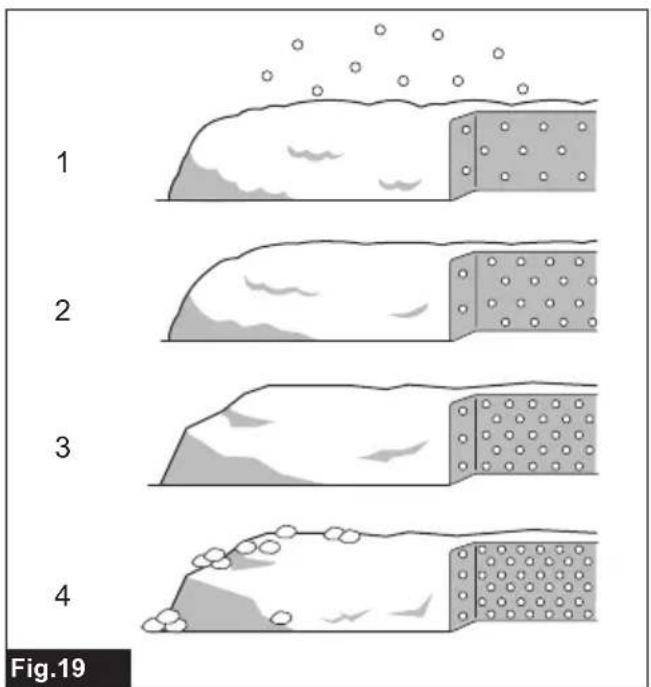
Applications under typical snow conditions
▶ Fig.19
| Application | Fig. | Snow type | Snow condition | Snow density (g/L) |
| Practical 1 | Freshly fallen snow | Powder snow that falls through dry air and cold temperatures. Soft, loose, falls easily through the fingers. | 50 - 150 | |
| Practical 2 | Settled snow | Snow crystals grow and bond together. Cohesive, porous structure similar to a sponge made of ice. | 150 - 300 | |
| Impractical | 3 | Hard-packed snow | Compressed snow that has undergone a cycle of melting and refreezing, resulting in a hard and icy crust on top of the snowpack. Formed when moist or wet snow cover freezes after a drop in temperature. | 300 or heavier |
| Application | Fig. | Snow type | Snow condition | Snow density (g/L) |
| Impractical | 4 | Corn snow | Relatively moist snow that is thawed on the surface and is wet and heavy. Melted then re-frozen but been broken up into corn-like granules. | 300 or heavier |
Operation basics
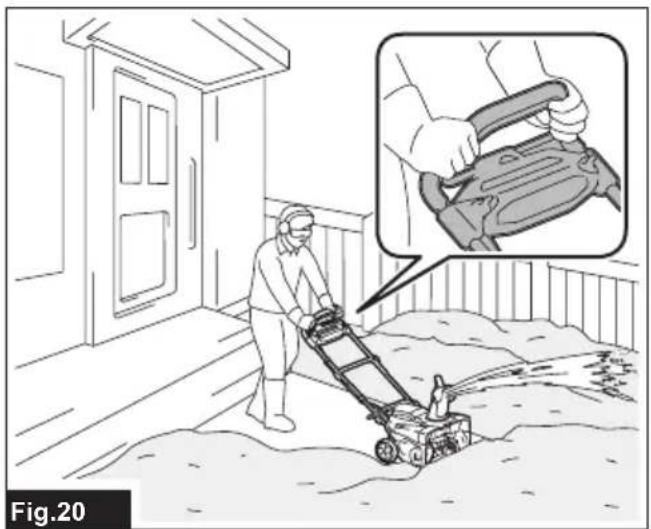
Hold the upper handle firmly with both your hands as shown in the figure.
Open your stance so that the body weight is evenly distributed over both feet.
Place the scraper (under cover at the bottom of the machine) flat on the ground. Turn the snow intake hood (auger hood) around towards the way you want to remove the snow.
Switch the machine on. Push the machine forward. Carefully control the steering angle and forward speed according to snow depth and weight.
▶ Fig.20
NOTICE: In strong crosswinds, start on the upwind side and then work downwind.
NOTE: Be sure to maintain a comfortable posture while working. Try placing the scraper flat on the ground (snow) surface and push the snow machine forward, putting your weight on it.
NOTE: Make a back-and-forth pattern to clear the snow from the area. Making multiple passes can be easier and often gives better results than trying to clear a heavy snowfall with just one attempt.
Snow blowing operation
CAUTION: Beware of snow, stones and other foreign objects that could be thrown forward regardless of discharge direction setting.
Adjust the snow blowing angle according to the wind direction, wall, and any obstruction in your way.
▶ Fig.21
⚠️ CAUTION: Always switch the machine off before adjusting chute deflector angle.
NOTE: Pay attention to the wind when adjusting the direction of snow release. Even a small breeze has the potential to affect your performance.
Cases in point
Understand how to control the steering and chute direction as well as the auger speed before using the machine.
Snow blowing in closed section
— Lower the auger speed by pushing the speed control lever forwards.
— Change the snow throwing direction to the left or right by using the chute direction lever.
▶ Fig.22
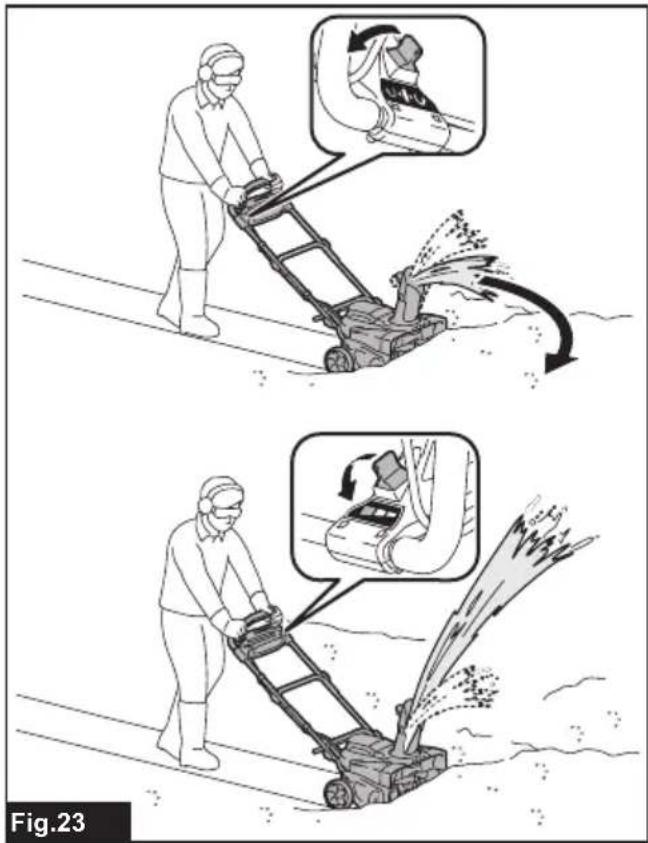
Snow blowing in open site
— Increase the auger speed by pulling the speed control lever backwards.
— Set the snow throwing direction at an open angle by using the chute direction lever.
▶ Fig.23
NOTE: When moving on between work sites, lift the auger hood up above the ground so the weight of the machine is on the wheels. Then push or pull the machine.
▶ Fig.24
MAINTENANCE
⚠ WARNING: Always be sure that the battery cartridge is removed from the machine before storage, travel between work sites, inspection and maintenance.
WARNING: Wear gloves when performing inspection or maintenance.
WARNING: Always wear the safety goggles or safety glasses with side shields when performing inspection or maintenance.
⚠️CAUTION: Before carrying the machine, make sure to remove the battery cartridge. Lift and carry the machine carefully with both your hands.
NOTICE: Never use gasoline, benzine, thinner, alcohol or the like. Discoloration, deformation or cracks may result.
To maintain product SAFETY and RELIABILITY, repairs, any other maintenance or adjustment should be performed by Makita Authorized or Factory Service Centers, always using Makita replacement parts.
Routine maintenance
- Remove the battery cartridge, and then close the battery cover.
- Wipe dirt and dust off the upper deck and outer surface of the machine using a damp cloth with mild detergent or cleaning brush.
- Place the machine on its side. Clean debris, dust or other objects on the underside of the machine body.
▶ Fig.25
NOTICE: Do not wash the machine with water.
-
Check all nuts, bolts, screws, etc. for tightness.
-
Inspect moving parts for damage, breakage, and wear. Damaged or missing parts should be repaired or replaced.
- Store the machine in a safe dry place out of the reach of children.
Folding handle

CAUTION: Always hold the handle using your hand while disassembly. It makes the folding eration safe and easy.
The handle can be folded to make the machine easy to hand carry and keep anywhere in less space.
- Turn the discharge chute around forwards using the chute direction lever.
- Remove the battery cartridge from the machine. Then close the battery cover.
- Loosen all the handle knobs on the middle and upper handles.
Unfasten the second (inward) thread to set the handle components free to be folded.
▶ Fig.26: 1. First (outward) thread 2. Second (inward) thread 3. Handle knob
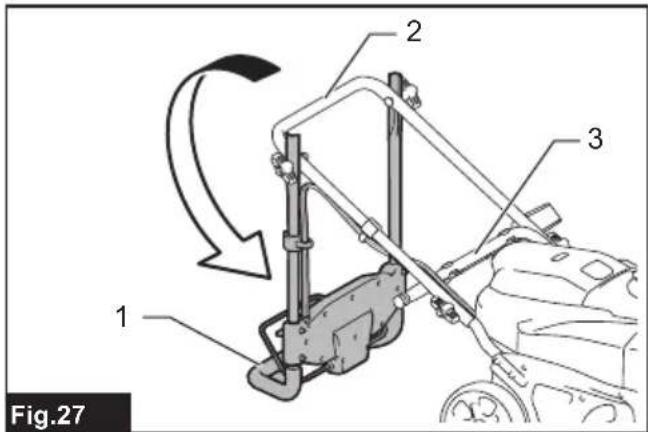
- Pull the upper handle grip back with your one hand while holding the middle handle grip with your other hand to stabilize the machine.
▶ Fig.27: 1. Upper handle grip 2. Middle handle grip 3. Lower handle grip - Raise the middle handle by pulling it upwards into the upright position with your one hand on the middle handle grip, and the other hand on the lower handle grip.
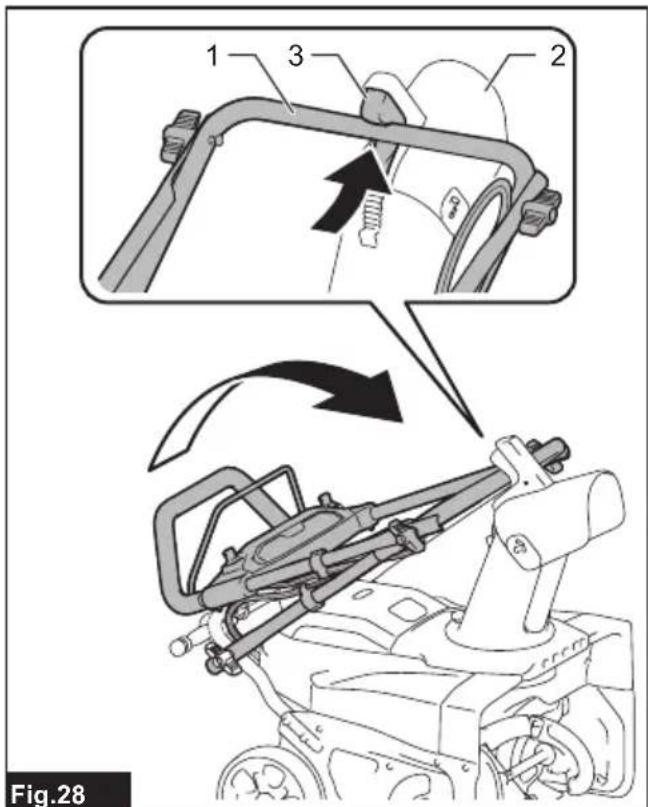
- Push the middle handle down forwards to fold the handle into a rest position.
- Fully lower the chute deflector angle. Then push the middle handle grip further down forward until it rests on the release trigger on the discharge chute.
▶ Fig.28: 1. Middle handle grip 2. Discharge chute 3. Release trigger
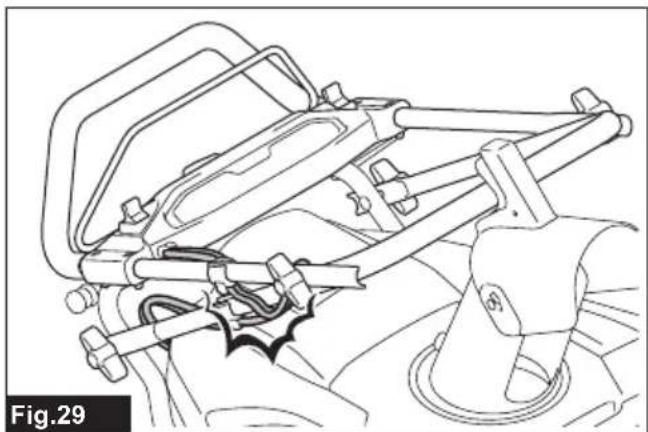
NOTICE: Ensure that the cabtire cords are not caught on or around the handle components.
▶ Fig.29
Covering
The packable cover provides years of carefree protection against dust and sun damage. An elasticized bottom keeps the cover stable in wind.
- Unfold the cover and lay it flat.
Ensure a fastener pocket comes aligned with the back end of the machine.
- Pull the front end of the cover over the scraper bar of the machine.
- Wrap the machine from front to back, ensuring the cover wraps the deck, handle, and rear section completely.
- Tuck the cover under the wheels and ensure it wraps the full depth of the machine at the sides.
▶ Fig.30: 1. Fastener pocket
NOTE: After use, fold the cover to match the width of the fastener pocket. Pull the pocket inside out. Fold and push the rest of the cover into the pocket.
Storing
NOTICE: Store battery cartridges indoor at room temperature. Low temperature significantly declines the battery performance.
Store the machine indoors in a cool, dry and locked place. Do not store the machine in locations where the temperature may reach or exceed 40 °C (104 °F).
- Remove the battery cartridge.
-
Clean the machine.
-
Refer to the chapter "Folding handle" to fold the upper and middle handles.
- As for storage when not in use for an extended period during off-season, thoroughly maintain and clean the auger and machine body. Make sure all parts of the machine are completely dry to prevent rust.
Replacing scraper
NOTICE: Replacement needs to be performed by Makita Authorized or Factory Service Centers, always using Makita replacement parts.
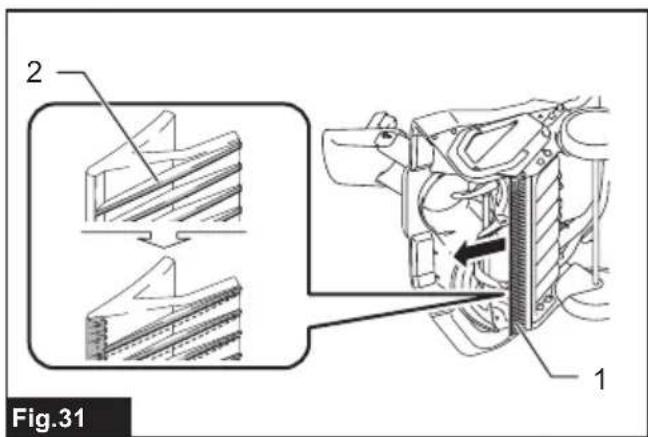
The scraper (under cover at the bottom of the machine) requires to be replaced when the scraper ribs are worn out due to friction.
▶ Fig.31: 1. Scraper 2. Scraper rib
TROUBLESHOOTING
Before asking for repairs, conduct your own inspection first. If you find a problem that is not explained in the manual, do not attempt to disassemble the machine. Instead, ask Makita Authorized Service Centers, always using Makita replacement parts for repairs.
| State of abnormality Probable cause | (malfunction) Remedy | |
| The handle is not in position. | The handle is not installed properly. | Make sure the bolts are correctly installed through the handle. Check to see if the handle knobs are tight. Refer to this manual to assemble the handle. |
| The machine does not start. | The battery cartridge is discharged. | Charge the battery cartridge. |
| The battery cartridge is too cold. Remove the battery cartridge from the machine. Place the battery cartridge on charger and allow it to charge for 10 minutes. Remove the battery cartridge from charger and reinstall it in for use. | ||
| The battery cartridge is not attached properly. | Refer to this manual to properly attach the battery cartridge. | |
| The battery cartridge is damaged. Replace with new battery cartridge. | ||
| The switch is defective. Replace with a new one. Ask your local authorized service center for repair. | ||
| The auger is jammed. Remove the battery cartridge from the machine, inspect auger, remove debris. | ||
| The motor is on, but the auger does not turn. | The belt is damaged. Replace with a new one. Ask your local authorized service center for repair. | |
OPTIONAL ACCESSORIES
⚠️CAUTION: These accessories or attachments are recommended for use with your Makita machine specified in this manual. The use of any other accessories or attachments might present a risk of injury to persons. Only use accessory or attachment for its stated purpose.
If you need any assistance for more details regarding these accessories, ask your local Makita Service Center.
• Makita genuine battery and charger
NOTE: Some items in the list may be included in the product package as standard accessories. They may differ from country to country.
SPÉCIFICATIONS
natural_image
Line drawing of a person wearing a hard hat and safety goggles (no text or symbols)natural_image
Line drawing of a person wearing a helmet and safety goggles (no text or symbols)natural_image
Line drawing of a person wearing a helmet and safety goggles (no text or symbols)⚠ WAARSCHUWING: Draag gehoorbescherming.
VEILIGHEIDSWAAR- SCHUWINGEN
natural_image
Line drawing of a person wearing a hard hat and safety goggles (no text or symbols)▶ Fig.1: 1. Kabelklem 2. Klem 3. Klemopening
OPTIONELE ACCESSOIRES
natural_image
Line drawing of a person wearing a helmet and safety goggles (no text or symbols)natural_image
Line drawing of a person wearing a helmet and safety goggles (no text or symbols)natural_image
Line drawing of a person wearing a helmet and safety goggles (no text or symbols)natural_image
Line drawing of a person wearing a hard hat and safety goggles (no text or symbols)natural_image
Line drawing of a person wearing a helmet and safety goggles (no text or symbols)natural_image
Line drawing of a person wearing a helmet and safety goggles (no text or symbols)natural_image
Line drawing of a person wearing a hard hat and safety goggles (no text or symbols)TIETO POKYNY USCHOVAJTE.
TIETO POKYNY USCHOVAJTE.
natural_image
Line drawing of a person wearing a hard hat and safety goggles (no text or symbols)TYTO POKYNY USCHOVEJTE.
VOLITELNÉ PŘÍSLUŠENSTVÍ
natural_image
Line drawing of a person wearing a helmet and safety goggles (no text or symbols)natural_image
Line drawing of a person wearing a helmet and safety goggles (no text or symbols)natural_image
Line drawing of a person wearing a helmet and safety goggles (no text or symbols)

- Intended use
- Noise
- Vibration
- Declarations of Conformity
- SAFETY WARNINGS
- General power tool safety warnings
- Save all warnings and instructions for future reference.
- Work area safety
- Electrical safety
- Personal safety
- Power tool use and care
- Battery tool use and care
- Service
- Snow blower safety warnings
- General
- Training
- Preparation
- Operation
- Clearing a clogged discharge chute
- Maintenance and storage
- Electrical and battery safety
- Additional safety instructions
- SAVE THESE INSTRUCTIONS.
- Important safety instructions for battery cartridge
- Tips for maintaining maximum battery life
- ASSEMBLY
- Handle set up
- Middle handle installation
- Upper handle installation
- Snow remover installation
- Discharge chute set up
- FUNCTIONAL DESCRIPTION
- Installing or removing battery cartridge
- To install the battery cartridge;
- To remove the battery cartridge;
- Machine / battery protection system
- Overload protection
- Overheat protection
- Overdischarge protection
- Protections against other causes
- Indicating the remaining battery capacity
- Switch action
- Front lights
- Indicator lamp
- Snow and ice remover
- Blower settings
- Blower speed adjustment
- Discharge direction adjustment
- Discharge angle adjustment
- Applications
- Applications under typical snow conditions
- Operation basics
- Snow blowing operation
- Cases in point
- Snow blowing in closed section
- Snow blowing in open site
- MAINTENANCE
- Routine maintenance
- Folding handle
- Covering
- Storing
- Replacing scraper
- TROUBLESHOOTING
- OPTIONAL ACCESSORIES
- VEILIGHEIDSWAAR- SCHUWINGEN
- OPTIONELE ACCESSOIRES
- TIETO POKYNY USCHOVAJTE.
- TYTO POKYNY USCHOVEJTE.
- VOLITELNÉ PŘÍSLUŠENSTVÍ
Brand : MAKITA
Model : SN001G
Category : Snow blower