RCCTIF-88 - Freezer Royal Catering - Free user manual and instructions
Find the device manual for free RCCTIF-88 Royal Catering in PDF.
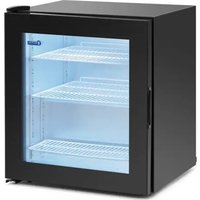


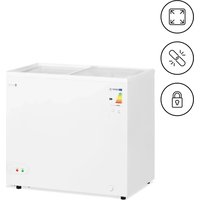
| Product type | Mini freezer (chest) |
| Brand | Royal Catering |
| Model | RCCTIF-88 |
| Rated voltage | 230 V~ / 50 Hz |
| Rated current | 1.2 A |
| Climate class | 4 (ambient temperature +16°C to +43°C) |
| Refrigerant | R290 (50 g) - flammable |
| Insulating blowing gas | Cyclopentane |
| Interior lamp power | 1 W |
| Protection class | I (grounding required) |
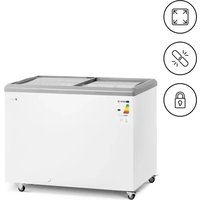
| Dimensions (W x D x H) | 518 x 595 x 690 mm |
| Weight | 35 kg |
| Defrost type | Manual (recommended 1 to 2 times per year) |
| Interior lighting | Yes, with separate switch |
| Temperature adjustment | Rotary knob (0 = off, min to max position) |
| Recommended storage temperature | At least -18°C |
| Minimum distance from heat sources | 30 cm (stove), 50 cm (radiator) |
| Required ventilation distance | 10 cm on sides, 20 cm at rear |
| Usage | Indoor, commercial |
| Power supply | Wall outlet with ground (original plug) |
Frequently Asked Questions - RCCTIF-88 Royal Catering
User questions about RCCTIF-88 Royal Catering
0 question about this device. Answer the ones you know or ask your own.
Ask a new question about this device
Download the instructions for your Freezer in PDF format for free! Find your manual RCCTIF-88 - Royal Catering and take your electronic device back in hand. On this page are published all the documents necessary for the use of your device. RCCTIF-88 by Royal Catering.
USER MANUAL RCCTIF-88 Royal Catering
| DE | Produktname | Mini-Kühlschrank |
| EN | Product name | Mini freezer |
| PL | Nazwa produktu | Mini zamrażarka |
| CZ | Název výrobku | Mini mrazák |
| FR | Nom du produit | Mini congélateur |
| IT | Nome del prodotto | Mini congelatore |
| ES | Nombre del producto | Mini congelador |
| HU | Termék neve | Mini fagyasztó |
| DA | Produktnavn | Mini-fryser |
| FI | Tuotteen nimi | Minipakastin |
| NL | Productnaam | Mini vriezer |
| NO | Produktnavn | Minifryser |
| SE | Produktnamn | Minifrys |
| PT | Nome do produto | Mini congelador |
| SK | Názov produktu | Mini mraznička |
| BG | Име на продукта | Мини фризер |
| EL | Όνομα προϊόντος | Μίνι καταψύκτης |
| HR | Naziv proizvoda | Mini zamrzivač |
| LT | Produkto pavadinimas | Mini šaldiklis |
| RO | Numele produsului | Mini congelator |
| SL | Ime izdelka | Mini zamrzovalnik |
| DE Modell | EN Product model | PL Model produktu | CZ Model výrobku | FR Modèle | IT Modello | ES Modelo | HU Modell | DA Model | FI Tuotteen malli | NL Productmodel | NO Produktmodell | SE Produktmodell | PT Modelo do produto | SK Model | BG Модел на продукт | EL Movtėλο προϊόντος | HR Model proizvoda | LT: Gaminio modelis | RO: Model de produs | SL: Model izdelka | RCCTIF-88 | |
| DE Hersteller | EN Manufacturer | PL Producent | CZ Výrobce | FR Fabricant | IT Produttore | ES Fabricante | HU Termelő | DA Producent | FI Valmistaja | NL Producent | NO Produsent | SE Tillverkare | PT Fabricante | SK Výrobca | BG Производител | EL Κατασκευαστής | HR Proizvođač | LT Gamintojas | RO Producător | SL Proizvajalec | expondo Polska sp. z o.o. sp. k. | |
| DE Anschrift des Herstellers | EN Manufacturer Address | PL Adres producenta | CZ Adresa výrobce | FR Adresse du fabricant | IT Indirizzo del produttore | ES Dirección del fabricante | HU A gyártó címe | DA Producentens adresse | FI Valmistajan osoite | NL Adres producent | NO Produsentens adresse | SE Tillverkarens adress | PT Endereço do fabricante | SK Adresa výrobcu | BG Адрес на производителя | EL: Διεύθυνση κατασκευαστή | HR Adresa proizvođača | LT Gamintojo adresas | RO Adresa producătorului | SL Naslov proizvajalca | ul. Nowy Kisielin – Innowacyjna 7, 66-002 Zielona Góra | Poland, EU | |

This User Manual has been translated using machine translation. We have made every effort to ensure the translation is accurate, but please note that automated translations are not perfect and are not meant to replace human translators. The official version of the User Manual is in English. Any differences between the translated version and the original English are not legally binding. If you have any questions about the accuracy of the translation, please refer to the English version, which is the official reference. More language versions are available upon request via info@expondo.com.
Technical data
| Parameter description | Parameter value |
| Product name | Mini freezer |
| Model | RCCTIF-88 |
| Rated voltage [V~] / frequency [Hz] | 230~ / 50 |
| Rated current [A] | 1.2 |
| Climate class | 4 |
| Insulation blowing gas | Cyclopentane |
| Refrigerant | R290/50g |
| Lamp power [W] | 1 |
| Protection class | I |
| Dimensions [width x length x height; mm] | 518x595x690 |
| Weight [kg] | 35 |
Note: The ambient temperature of the appliance should be within the range from +16 to 43°C.
1. General description
The user manual is designed to assist in the safe and trouble-free use of the device. The product is designed and manufactured in accordance with strict technical guidelines, using state-of-the-art technologies and components. Additionally, it is produced in compliance with the most stringent quality standards.
DO NOT USE THE DEVICE UNLESS YOU HAVE THOROUGHLY READ AND UNDERSTOOD THIS USER MANUAL.
To increase the product life of the device and to ensure trouble-free operation, use it in accordance with this user manual and regularly perform maintenance tasks. The technical data and specifications in this user manual are up to date. The manufacturer reserves the right to make changes associated with quality improvement. The device is designed to reduce noise emission risks to a minimum, taking into account technological progress and noise reduction opportunities.
Legend

The operation manual must be reviewed.
Never dispose of electrical equipment together with household waste. The product must be recycled.
This machine conforms to the CE declarations.
WARNING! or CAUTION! or REMEMBER! Applicable to the given situation. (general warning sign)
ATTENTION! Fire hazard - flammable materials!
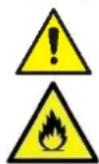

PLEASE NOTE! Drawings in this manual are for illustration purposes only and in some details may differ from the actual product.
2. Safety instructions

ATTENTION! Read all safety warnings and all instructions. Failure to follow the warnings and instructions may result in electric shock, fire and/or serious injury or even death.
The terms "device" or "product" are used in the warnings and instructions to refer to: Mini Freezer.
2.1. Electrical safety
a) The plug must fit the socket. Do not modify the plug in any way. Using original plugs and matching sockets reduces the risk of electric shock.
b) Avoid touching earthed elements such as pipes, heaters, boilers and refrigerators. There is an increased risk of electric shock if the earthed device is exposed to rain, comes into direct contact with a wet surface or is operating in a damp environment. Water getting into the device increases the risk of damage to the device and of electric shock.
c) Do not touch the device with wet or damp hands.
d) Use the cable only for its designated use. Never use it to carry the device or to pull the plug out of a socket. Keep the cable away from heat sources, oil, sharp edges or moving parts. Damaged or tangled cables increase the risk of electric shock.
e) If working with the device outdoors, make sure to use an extension cord suitable for outdoor use. Using an extension cord suitable for outdoor use reduces the risk of electric shock.
f) If using the device in a damp environment cannot be avoided, a residual current device (RCD) should be applied. The use of an RCD reduces the risk of electric shock.
g) Do not use the device if the power cord is damaged or shows obvious signs of wear. A damaged power cord should be replaced by a qualified electrician or the manufacturer's service centre.
h) To avoid electric shock, do not immerse the cord, plug or device in water or other liquids. Do not use the device on wet surfaces.
i) ATTENTION! DANGER TO LIFE! While cleaning, never immerse the device in water or other liquids.
j) Do not use in very humid environments or in the direct vicinity of water tanks.
k) Prevent the device from getting wet. Risk of electric shock!
I) Please read the instructions carefully and make sure that you have understood them well.
m) Keep the manual near the equipment so that it can be read at any time.
n) Always use grounded power sources that provide the correct voltage (as indicated on the device label).
o) If in doubt, have an electrician verify that the connection is properly grounded.
p) Never use a defective power cable.
q) Do not open the unit in a damp or wet environment, or if your hands or body are damp or wet.
r) Protect the unit from solar radiation.
s) Use the device in a protected location to avoid damaging the equipment or endangering others.
t) Ensure the device can cool properly and avoid placing it too close to other heat-producing devices.
u) Before cleaning the machine, disconnect it from the power source.
v) Use a soft, damp cloth for cleaning. Avoid detergents and ensure no liquid enters the unit.
w) No internal component of this device requires user maintenance.
x) The device must only be connected to a wall-mounted outlet; do not use a multiple outlet adapter or extension cord with multiple sockets.
y) If the power supply to the appliance is interrupted, wait about 5 minutes before reconnecting it to avoid damage.
z) Before first use, ensure that the current type and mains voltage match the data on the nameplate.
aa) Opening the device without our approval voids the warranty!
2.2. Safety in the workplace
a) Make sure the workplace is clean and well lit. A messy or poorly lit workplace may lead to accidents. Try to think ahead, observe what is going on and use common sense when working with the device.
b) Do not use the device in a potentially explosive environment, for example in the presence of flammable liquids, gases or dust. The device generates sparks which may ignite dust or fumes.
c) If you discover damage or irregular operation, immediately switch the device off and report it to a supervisor without delay.
d) If you are unsure about whether the product is operating correctly or if you find damage, please contact the manufacturer's service centre.
e) Only the manufacturer's service centre may make repairs to the product. Do not attempt to make repairs yourself!
f) In case of fire, use a powder or carbon dioxide (CO2) fire extinguisher (one intended for use on live electrical devices) to put it out.
g) Children or unauthorised persons are forbidden to enter a work station. A distraction may result in loss of control over the device.
h) Use the device in a well-ventilated space.
i) The device produces dust and debris during operation. It is important to protect bystanders from their harmful effects.
j) Regularly inspect the condition of the safety labels. If the labels are illegible, they must be replaced.
k) Keep packaging elements and small assembly parts in a place not available to children.
l) It is forbidden to place the device on a combustible surface.
m) It is forbidden to place the device near an open flame, electric stoves, coal stoves or other heat sources, as well as near direct sunlight. High temperatures can damage the cooling capacity and increase the consumption of electricity.
n) In order to avoid damaging the compressor during transport, the fridge should not be tilted by more than 45 degrees.
o) Do not use the fridge in unheated rooms or in locations with high air humidity.

Remember! When using the device, protect children and other bystanders.
2.3. Personal safety
a) Do not use the device when tired, ill, or under the influence of alcohol, narcotics, or medication that can significantly impair the ability to operate the device.
b) The device is not designed to be handled by persons (including children) with limited mental and sensory functions or persons lacking relevant experience and/or knowledge unless they are supervised by a person responsible for their safety or they have received instruction on how to operate the device.
c) The device can be handled only by physically fit persons who are capable of handling it, properly trained, familiar with this manual, and trained within the scope of occupational health and safety.
d) When working with the device, use common sense and stay alert. Temporary loss of concentration while using the device may lead to serious injuries.
e) Use personal protective equipment as required for working with the device, specified in section 1 "Legend". The use of correct and approved personal protective equipment reduces the risk of injury.
f) To prevent the device from accidentally switching on, make sure the switch is in the OFF position before connecting to a power source.
g) Do not overestimate your abilities. When using the device, keep your balance and remain stable at all times. This will ensure better control over the device in unexpected situations.
h) Do not wear loose clothing or jewellery. Keep hair, clothes, and gloves away from moving parts. Loose clothing, jewellery, or long hair may get caught in moving parts.
i) If suction is to be connected to the device, check all connections and make sure they are tight. Using a dedusting system may reduce the risks associated with dust.
j) Remove all adjusting tools or spanners before turning the device on. A tool or spanner left in the revolving part of the device may cause injury.
k) Compressed air may cause serious injury.
l) Use eye, ear, and respiratory protection.
m) The device is not a toy. Children must be supervised to ensure that they do not play with the device.
n) Do not put your hands or other items inside the device while it is in use! o) It is recommended that hands be dry when performing activities that require putting hands into the freezer, because otherwise it may result in damage to the skin from frost. p) It is forbidden to move, adjust, or rotate the device during operation.
2.4. Safe device use
a) Please read and understand these instructions carefully before using the device! Observe the safety guidelines carefully to prevent damage from improper use. b) Keep this manual for future reference. If the device is passed on to third parties, the manual must be passed on with it. c) Do not store potentially explosive substances in the appliance, e.g., cans containing compressed flammable gas. d) Children may not play with the appliance. e) Only use this device indoors and for its intended purpose. f) CAUTION! Leaking refrigerant can cause eye damage or loss of sight if it gets into the eyes. Should this happen, rinse the eyes immediately with plenty of water and consult a physician. g) We do not offer any warranty for damages resulting from improper use or incorrect operation. h) Before using this device for the first time, check whether the main voltage type and current comply with the data indicated on the type plate. i) This device is not intended for use by persons (including children) with limited physical, sensory, or mental capabilities or lack of experience and/or knowledge, unless they are supervised by a person responsible for their safety or have received instruction on how to use the device. j) ELECTRIC SHOCK HAZARD! Do not attempt to repair the unit yourself. In case of device failures, repairs must be carried out by qualified experts. k) Check the main plug and the power cable regularly. If the power cable for this device is damaged, it must be replaced by the manufacturer, its customer service, or another qualified person to prevent hazards. l) Prevent damage to the power cable by avoiding crushing, breaking, or abrasion on sharp edges, and keep it away from hot surfaces and open flames. It may also not hang or be immersed in water. m) Do not overload the device. Use the appropriate tools for the given task. A correctly selected device will perform the task for which it was designed better and in a safer manner. n) Do not use the device if the "ON/OFF" switch does not function properly (does not switch the device on and off). Devices that cannot be switched on and off using the "ON/OFF" switch are hazardous, should not be operated, and must be repaired. o) Ensure the plug is disconnected from the socket before attempting any adjustments, accessory replacements, or before putting the device aside. Such precautions reduce the risk of accidentally activating the device. p) Disconnect the device from the power supply before commencing adjustment, cleaning, and maintenance. Such a preventive measure reduces the risk of accidental activation. q) When not in use, store in a safe place, away from children and people not familiar with the device who have not read the user manual. The device may pose a hazard in the hands of inexperienced users. r) Keep the device in perfect technical condition. Before each use, check for general damage, especially moving components for cracked parts or elements, and for any other conditions that may impact the safe operation of the device. If damage is discovered, hand over the device for repair before use. s) Keep the device out of the reach of children. t) Device repair or maintenance should be carried out by qualified persons, only using original spare parts. This will ensure safe use. u) To ensure the operational integrity of the device, do not remove factory-fitted guards and do not loosen any screws. v) When transporting and handling the device between the warehouse and the destination, observe the occupational health and safety principles for manual transport operations that apply in the country where the device will be used. w) Avoid situations where the device stops working during use due to excessive loading. This may result in overheating of the drive elements and damage to the device.
x) Do not touch articulated parts or accessories unless the device has been disconnected from the power source. y) Do not leave this appliance unattended while it is in use. z) Clean the device regularly to prevent stubborn grime from accumulating. aa) The specified vibrations emission was measured using standard measurement methods. Vibrations emissions may change if the device is used in different surroundings. bb) The device is not a toy. Cleaning and maintenance may not be carried out by children without supervision by an adult person. cc) Do not run the device when empty. dd) Keep the device away from sources of fire and heat. ee) It is not allowed to store glass vessels with freezing fluids in the appliance. ff) Do not use malfunctioning or damaged device. gg) Parts or accessories not recommended by the manufacturer cannot be used in the device. The act of using parts not recommended by the manufacturer, resulting in loss of warranty and can lead to a direct threat to the life or health of the user. hh) It is forbidden to move, adjust, and rotate the device in the course of work. ii) Under no circumstances should the housing be opened. jj) Do not store heavy, poisonous or corrosive objects in the device. kk) ATTENTION! The ventilation openings of the appliance should always be free from blockages. ll) ATTENTION! Do not use any electrical appliances or machines in order to accelerate defrosting. mm) ATTENTION! Pay special attention not to damage the elements of coolant circuit. nn) ATTENTION! Do not use any electrical appliances inside the chamber of the appliance which serves to store food. oo) ATTENTION! The appliance in its design contains flammable gases serving for insulation. For this reason at the end of its service life the appliance should be handed over for disposal by professionals. pp) ATTENTION! The plug of the appliance should be connected to the socket in a place enabling its easy and quick disconnection. qq) ATTENTION! Installation of the appliance must be carried out by a qualified person.

ATTENTION! Despite the safe design of the device and its protective features, and despite the use of additional elements protecting the operator, there is still a slight risk of accident or injury when using the device. Stay alert and use common sense when using the device.
Failure to follow safety recommendations and instructions may result in serious injuries or death!
3. Use guidelines
The product is intended for commercial use and is a compact refrigeration appliance used to store and freeze food.
The user is liable for any damage resulting from non-intended use of the device!
3.1. Device description
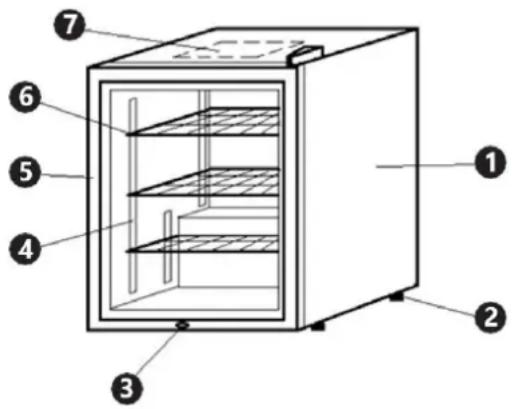
1- Housing
2- Adjustable Feet
3- Lock
4- Rack of Shelves
5- Glazed Door
6- Shelves
7- Internal Lighting
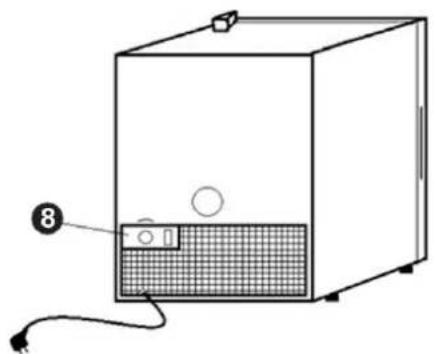
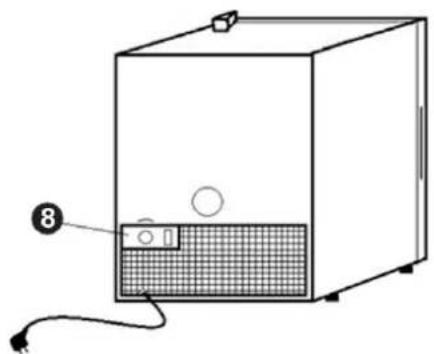
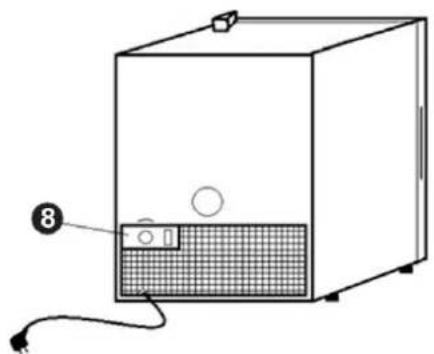
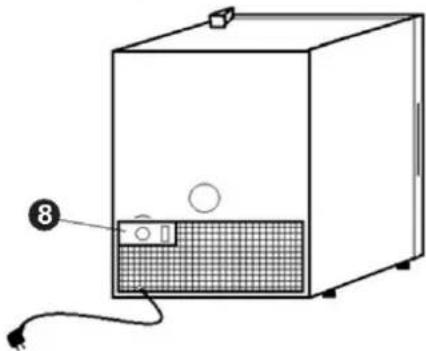
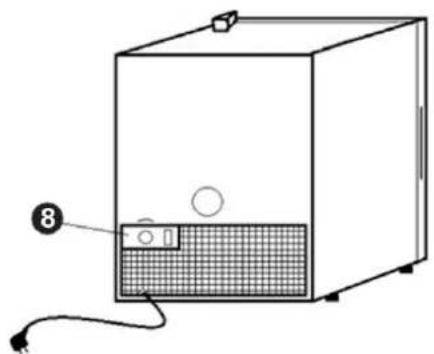
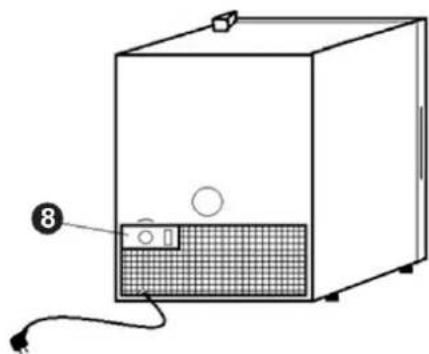
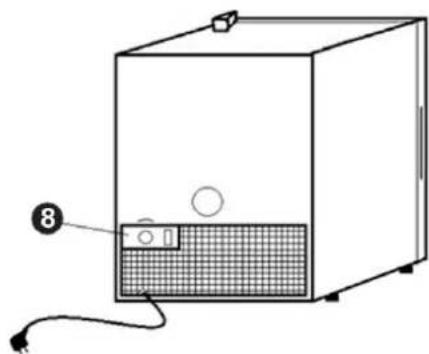
8- Control Panel
3.2. Preparing for use
Appliance Location
The temperature of the environment must not be higher than 40°C and the relative humidity should be less than 85%. Ensure good ventilation in the room in which the device is being used. There should be at least 10 cm distance between each side of the device and the wall or other objects. The device should always be used when positioned on an even, stable, clean, fireproof and dry surface, and be out of the reach of children and persons with limited mental and sensory functions. Position the device such that you always have access to the power plug. The power cord connected to the appliance must be properly grounded and correspond to the technical details on the product label.
Before the First Use
Upon receipt of the goods, check the packaging for defects and open the packaging if there are no damages. If the packaging is damaged, please contact your transport company and distributor within 3 days, and document the damages as detailed as possible. Do not turn the package upside down! When transporting the package, please ensure that it is kept horizontal and stable.
Disposing of the Packaging
Please keep all packaging materials (cardboard, plastic tape and Styrofoam), so that in case of a problem, the devices can be sent back to the service centre in accurate condition!
General Hints for the User
The appliance must be cleaned after unpacking and before its connection to the power supply network. Once the freezer has reached the set temperature, it can be filled with frozen food (in case of intention to put fresh food it is necessary to comply with the parameter informing about the maximum weight of frozen food during 24 hours and the instructions for freezing of fresh food contained in this document). It is forbidden to fill the freezer with warm liquids and food and any food products put into the appliance should be covered. Food products and drinks should be stored in sealed airtight containers. In order to ensure adequate air circulation inside the appliance it is recommended to place products in such a manner in order to maintain distance between them. If the door is opened too often, there is increased energy consumption, which could lead to possible damage. Always close the door of the appliance when it is not in use. Do not use screwdrivers or other metal tools in order to remove ice layers that are formed on the walls of the appliance during its use. After closing the cover, do not open it again suddenly and with use of force, the gasket located around the closure of the appliance chamber can hinder to open it for about 1 or 2 minutes. After this time, the appliance should
open normally. In case of you do not use the appliance for a longer time, in order to save electricity, it is necessary to disconnect the cleaned appliance from the electricity, to clean and leave the door open in order to prevent gathering of unpleasant odours inside the appliance.
3.3. Assembling the device
Installation and Assembly
Care must be taken so that the appliance will be in an upright position at least 2 hours before its first activation.
CAUTION!
• Correct connection of the device to the single socket with earth is the guarantee of proper work. • In the case of inappropriate installation, the machine may cause injury. - Place the appliance on a flat, stable surface that will withstand its weight together with its contents. - In order to provide adequate ventilation, keep at least 20 cm of space between the appliance and the wall or other objects. • The device should be placed in a cool, well-ventilated, and dry room, away from heat sources. - Ensure at least 30 cm clearance from gas or electric cookers and 50 cm distance from radiators or ovens. - Not exposing the device to heat sources during its operation increases the compressor efficiency and reduces energy consumption.
First start up
- Unpack the whole appliance.
- Make sure that no packing material has been left in the compressor chamber.
- Remove all documents and other accessories from the inside of the appliance.
- Install all additional components of the appliance.
- Level the appliance.
- Clean and dry the interior.
- Close the cover / door of the appliance.
- Connect the appliance plug to the socket.
- Set the cooling power to the maximum.
- Do not open the appliance for about 4-6 hours.
- Insert frozen products into the freezer
- If you need to freeze fresh food, it is necessary to follow the instructions for freezing fresh food contained in this document.
Do not store any glass bottles with liquids, because they increase their volume during freezing and may be damaged. Never store explosive substances in the freezer.
Height adjustment / levelling
In order to adjust the height or level of the freezer, it is necessary to unscrew or screw in the feet of the appliance.
Height adjustment of shelves
- Remove the shelf.
- Remove the shelf support and set it to the desired height.
- Set the remaining supports.
- Slide the shelf onto the support.
3.4. Device use
Freezing of Fresh Food
- Place the packaged fresh food in the freezer, paying attention so that it will not come in direct contact with already frozen products because they may defrost and shorten their shelf-life. It is recommended
that fresh food be placed near the wall or bottom of the freezer, in these places it is the coldest. Do not exceed the allowed freezer food quantity for a given appliance (X kg / 24h). Check this value in the technical data of the appliance or on the rating plate.
- Set the cooling power to the maximum.
- After 24 hours, it is necessary to change the location of the frozen food so that it will be possible to freeze other products.
- Set the cooling power which will be appropriate for the filling of the freezer.
- It is possible to check the temperature inside the appliance, for example with a thermometer whose scale allows measuring temperatures lower than -20°C. The temperature of food storage in the freezer should be at least -18°C.
Switching on the Appliance
- Close the appliance door.
- Connect the appliance plug to the power supply. The appliance will start normal operation and the power light will switch on, but the cooling will start only after setting a cooling power other than 0. (Setting cooling power to 0 stops the cooling process, but it does not turn off the appliance).
Description of the Control Panel
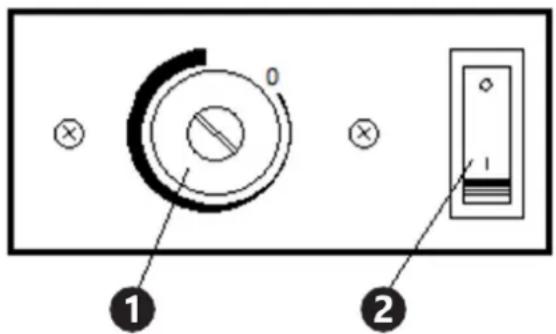
1- Adjustment knob of cooling power. 0 means no cooling (in order to set the right temperature using the adjustment knob, it is recommended to use a flat tool, for example, a screwdriver). 2- Light switch.
To obtain the lowest possible cooling temperature, the ambient temperature should be around 25°C.
Selection of Temperature Settings
In order to turn on: turn the temperature adjustment knob on the right to the level (other than 0) which is required:
• minimum (light cooling) • maximum (lowest temperature) The temperature should be set depending on: - ambient temperature • quantity of stored food - opening frequency
Maximum Filling Height of The Freezer
Never fill the freezer until the edge being in contact with the cover. Always keep the distance between the cover and the frozen products. Set the temperature adjustment knob depending on the filling of the freezer.
Defrosting
Under normal conditions of use (3-4 openings per day), the freezer should be defrosted once or twice a year. If the freezer is opened more frequently, it should be defrosted more often.
The appliance must be defrosted especially when the thickness of the ice layer on its walls reaches about 5-7 mm. Ice layers on the internal walls reduce the appliance's efficiency.
Ice layers can be scraped with a plastic scraper. Do not use metal objects to scrape ice from the appliance. Warning! Never use electrical appliances (e.g., hair dryer) or open flames (e.g., candles) to defrost freezers. The plastic parts of the interior can melt, and the emanating vapors can ignite from sparks or flames.
To defrost, proceed as follows:
- Make sure the appliance plug is removed from the socket.
- It is recommended to use a plastic bowl or other sealed container to collect leaking water during defrosting.
- Make sure your hands are dry when performing subsequent activities to avoid damage caused by negative temperatures (wearing gloves is recommended).
- Remove the frozen products and ensure that the water melting from them will not cause any danger or damage. It is recommended to place them in a sealed container.
- It is recommended to scrape off the thickest layers of ice.
- If necessary, defrosting can be accelerated by placing a dish with warm water (not boiling or hot!) inside the freezer.
- Wait until the ice inside the freezer has melted. During defrosting, you can remove water from the inside with a sponge.
- Before using the appliance again, clean the inside of the appliance.
- Plug the holes (on the bottom of the freezer and in its front bottom part) with stoppers.
- Close the cover/door and connect the appliance to the power supply.
- Set the cooling power to the maximum.
- Insert products to be frozen into the freezer.
Note: It is necessary to turn on the lighting individually, depending on the needs.
Exchange of Internal Lamp
• Replacement or repair of the lamp should be made by a qualified specialist. - Before replacing the lamp and any maintenance work, it is necessary to disconnect the plug of the appliance from the socket. • The lamp is located on the top wall of the appliance. - If you need to replace the lamp, remove the cover screws, remove the cover, replace the lamp with a new one with the same parameters, and then reinstall the cover with the screws.
3.5. Transportation and storage
During transport, the machine should be protected from shaking, falling and turning upside down. Store it in a properly ventilated place with dry air and without any corrosive gas.
STORAGE TIPS
Store the unit in a dry, cool place, free from moisture and direct exposure to sunlight.
3.6. Cleaning and maintenance
a) It is recommended to wash the freezer regularly. b) Before the start of cleaning of the appliance or before performance of any repair or maintenance work, it is necessary to disconnect the appliance from the power supply and wait until it has cooled down. c) Do not use for washing any caustic cleaners, such as cleaning powders, agents with alcohol content, thinners, diluents, etc., and do not allow water to enter the freezer interior. Never immerse the appliance, cord or plug in water or any other liquid. It is forbidden to clean the device with a water jet. d) The interior of the device should be cleaned with a disinfectant suitable for the food industry. To clean, use a damp, soft cloth and then dry thoroughly. Dry the surface with a soft, dry cloth.
e) The following actions should be taken if the machine is not used for a long period of time: Disconnect the appliance completely from the power supply and remove all food products from it. Then wash the entire appliance with a damp, soft cloth and mild cleaning agent, rinse with clean water and dry thoroughly, for some time leave the door open, so that the appliance will be completely dry. f) From time to time, check that the cable is not damaged. Do not use the appliance if the cable is damaged. A damaged cable must be replaced by a service or a qualified electrician. g) In the event of damage or malfunction, please contact your dealer or our service. Maintenance and repair work must be done only by qualified personnel using original spare parts and accessories. Attempts to make repairs on your own can lead to a direct threat to life or health, and will void the warranty!
Check Regularly the Device
Regularly check the machine for signs of damage. If the machine is damaged, please stop using it immediately and contact your customer service to solve the problem.
What to do in case of a problem?
Please contact your customer service and prepare the following information:
Invoice number and serial number (the latter is to be found on the technical plate on the device).
If relevant, take a picture of the damaged, broken, or defective part.
It will be easier for your customer service clerk to determine the source of the problem if you give a detailed and precise description of the matter. The more detailed your information, the better customer service will be able to solve your problem rapidly and efficiently!
CAUTION: Never open the device without the authorization of your customer service. This can lead to a loss of warranty!
DISPOSING OF USED DEVICES
Do not dispose of this device in municipal waste systems. Hand it over to an electric and electrical device recycling and collection point. Check the symbol on the product, instruction manual and packaging. The plastics used to construct the device can be recycled in accordance with their markings. By choosing to recycle you are making a significant contribution to the protection of our environment.
Contact local authorities for information on your local recycling facility.

1- Housing
2- Adjustable feet
3- Lock
4- Shelf for shelves

1- Housing
1- Housing
2- Adjustable feet
3- Locking
4- Shelves
5- Glass door
6- Shelves
1- Housing
1- Housing
2- Adjustable feet
3- Locking
1- Housing
1- Housing
NOTE! Fire risk - flammable materials!

1- Housing
2- Adjustable feet
3- Locking
1- Housing 2- Adjustable feet 3- Lock 4- Shelf unit 5- Glass door 6- Shelves 7- Interior lighting 8- Control panel
1- Housing
1- Housing
1- Housing
2- Adjustable feet
3- Lock
4- Shelf rack
5- Glazed door
6- Shelves
1- Housing
1- Housing
2- Adjustable feet
3- Lock
4- Shelf rack
5- Glazed door
6- Shelves
7- Interior lighting
8- Control panel
1- Housing
2- Adjustable feet
3- Locking
4- Shelf rack
5- Glazed door
6- Shelves
For the disposal of the device please consider and act according to the national and local rules and regulations.
CONTACT
expondo Polska sp. z o.o. sp. k.
- GENERAL DESCRIPTION
- DO NOT USE THE DEVICE UNLESS YOU HAVE THOROUGHLY READ AND UNDERSTOOD THIS USER MANUAL
- LEGEND
- SAFETY INSTRUCTIONS
- ELECTRICAL SAFETY
- SAFETY IN THE WORKPLACE
- PERSONAL SAFETY
- SAFE DEVICE USE
- USE GUIDELINES
- DEVICE DESCRIPTION
- PREPARING FOR USE
- APPLIANCE LOCATION
- BEFORE THE FIRST USE
- DISPOSING OF THE PACKAGING
- GENERAL HINTS FOR THE USER
- ASSEMBLING THE DEVICE
- INSTALLATION AND ASSEMBLY
- CAUTION
- FIRST START UP
- HEIGHT ADJUSTMENT / LEVELLING
- HEIGHT ADJUSTMENT OF SHELVES
- DEVICE USE
- FREEZING OF FRESH FOOD
- SWITCHING ON THE APPLIANCE
- DESCRIPTION OF THE CONTROL PANEL
- SELECTION OF TEMPERATURE SETTINGS
- MAXIMUM FILLING HEIGHT OF THE FREEZER
- DEFROSTING
- EXCHANGE OF INTERNAL LAMP
- TRANSPORTATION AND STORAGE
- STORAGE TIPS
- CLEANING AND MAINTENANCE
- CHECK REGULARLY THE DEVICE
- DISPOSING OF USED DEVICES
- CONTACT
Brand : Royal Catering
Model : RCCTIF-88
Category : Freezer