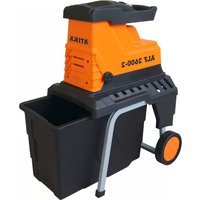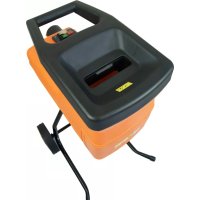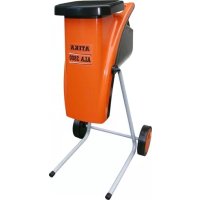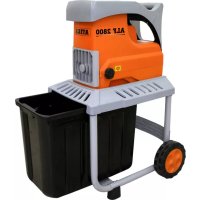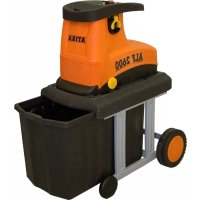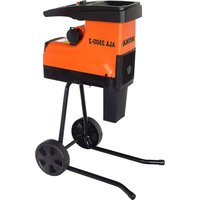
ALA 2500-2 - Mechanical chipper ATIKA - Free user manual and instructions
Find the device manual for free ALA 2500-2 ATIKA in PDF.


| Product type | Mechanical chipper (garden shredder) |
| Brand | ATIKA |
| Model | ALA 2500-2 |
| Power supply | 230-240 V~, 50 Hz |
| Motor power (P1) | 2500 W |
| Motor power (S1) | 2000 W |
| Motor speed | 2500 min⁻¹ |
| Cutting cylinder speed | 40 min⁻¹ |
| Maximum branch diameter | 40 mm (fresh wood) |
| Weight | 25.4 kg |
| Protection class | I (grounded) |
| Protection rating | IP X4 |
| Sound pressure level (LPA) | 83.7 dB(A) (K=1.5 dB) |
| Guaranteed sound power level (LWA) | 92 dB(A) |
| Safety devices | Overload protection, rotation direction reverser, zero-voltage release |
| Recommended residual current device | 30 mA circuit breaker |
| Delivery contents | Pre-assembled unit, 2 wheels, 2 feet, axle, wheel cover, collection bag, screw packet, instruction manual, warranty declaration |
| Assembly | Requires mounting of feet, axle, and wheels (tools provided) |
| Maintenance | Clean with damp cloth and soft brush; do not use high-pressure cleaner or solvents; lubricate bare metal parts |
| Intended use | Shredding of branches up to 40 mm, moist garden waste in alternation with branches |
| Non-intended use | Glass, metal, plastic, stones, kitchen waste, soil-covered roots |
| Warranty | See attached warranty declaration |
| Spare parts | Use exclusively ATIKA original parts |
Frequently Asked Questions - ALA 2500-2 ATIKA
User questions about ALA 2500-2 ATIKA
0 question about this device. Answer the ones you know or ask your own.
Ask a new question about this device
Download the instructions for your Mechanical chipper in PDF format for free! Find your manual ALA 2500-2 - ATIKA and take your electronic device back in hand. On this page are published all the documents necessary for the use of your device. ALA 2500-2 by ATIKA.
USER MANUAL ALA 2500-2 ATIKA
Original instructions
Remove all parts from the packaging.
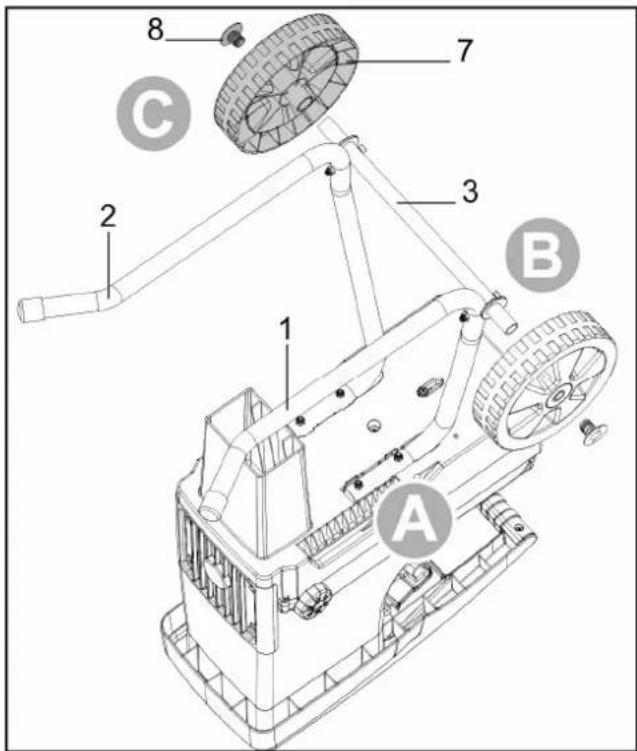
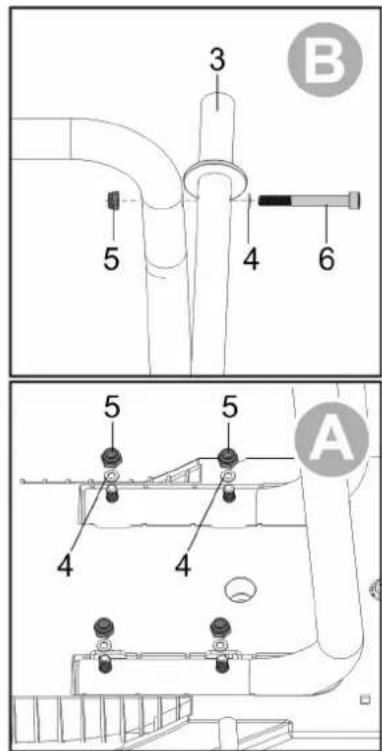
A. Mount each of the two supporting legs (1/2) with washers (4) and self-locking nuts (5) using the nut wrench supplied on the housing.
B. Mount the wheel axle (3) with the 2 screws M6 x 50 (6), washers (4) and nuts (5) using the socket wrench and nut wrench supplied on the carriage.
C. Push the wheels (7) onto the axle. Fasten the wheel cover (8) in the wheel axle using a hammer. Sch
Description
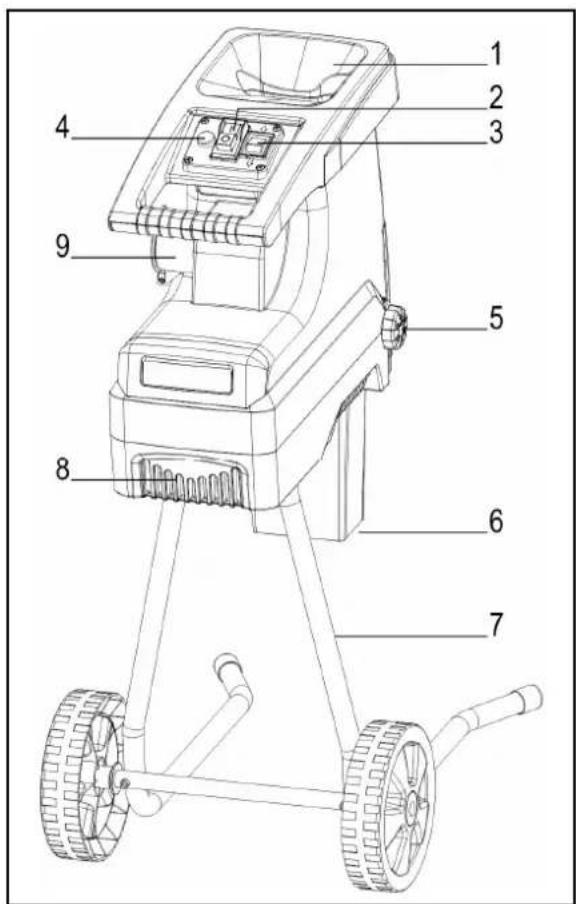
- Hopper opening for material to be shredded
- On/Off switch
- Direction of rotation selector switch
- Reset button / motor protection
- Adjusting knob for cutting roller
- Ejection slot
- Carriage
- Ventilation slots
- Power supply plug
① Keep the operating instructions in a safe place for future use.
Pass the operating instructions on to all persons who work with the machine.

You may not start to operate the machine until you have read these operating instructions, observed all the instructions given and installed the machine as described!
This machine must not be operated / used by children, persons with restricted physical, sensory or mental abilities or a lack of experience and/or know-how or by persons who are not familiar with the instructions.
The machine must not be operated by children or young people under 16 years of age. National and local regulations may determine a different age restriction for the user.
Children must be supervised to make sure that they do not play with the device. Do not allow children to perform cleaning and maintenance tasks.
The device must not be operated at elevations above 2000 m a.s.l..
If the power cord (if so equipped) of this appliance is damaged it must be replaced by the manufacturer or its customer service or a similarly qualified person in order to avoid hazards.
Contents
| Assembly | 12 |
| Extent of delivery 13 | |
| EC Declaration of Conformity 13 | |
| Operating times 13 | |
| Symbols on the machine 14 | |
| Symbols in the operating manual 14 | |
| Proper use 14 | |
| Residual risks 14 | |
| Safety instructions 15 | |
| Commissioning | 16 |
| Working with the garden shredder 17 | |
| Adjusting the fixed counter blade 18 | |
| Maintenance / Cleaning / Storage 18 | |
| Dislocation / Transport 19 | |
| Technical data 19 | |
| Operational faults 20 | |
| Guarantee | 20 |
| Spare parts 107 |
Extent of delivery
After unpacking, check the contents of the box
that it is complete
check for possible transport damage.
Report any damage or missing items to your dealer, supplier or the manufacturer immediately. Complaints made at a later date will not be acknowledged.
1 pre-assembled device unit
1 standing leg (left)
1 standing leg (right)
1 axle
2 wheels
- 2 wheel covers
1 screw bag
1 collection sack
1 operating manual
1 warranty declaration
EC Declaration of Conformity
No. (S-No.): 28667
according to EC directive: 2006/42/EC
We,
Altrad Lescha Atika GmbH
Josef-Drexler-Str. 8 - 89331 Burgau - Germany
herewith declare under our sole responsibility that the product Gartenhacksler (Garden Shredder) type / model ALA 2500-2
Serial number: 000001 - 025000
is conform with the above mentioned EC directive as well as with the provisions of the guidelines below: 2014/30/EU, 2011/65/EU and 2000/14/EC+2005/88/EC.
Following harmonized standards have been applied:
EN60335-1:2012+A11+A13+A1+A14+A2+A15;
EN 50434:2014; EN 62233:2008
EN IEC 55014-1:2021; EN IEC 55014-2:2021;
EN IEC 61000-3-2:2019+A1; EN IEC 61000-3-11:2019
Conformity assessment procedure: 2000/14/EC - Appendix V and 2005/88/EC.
Measured level of the acoustic output L_WA 90 dB (A).
Guaranteed level of the acoustic output L_WA 92 dB (A).
Keeping of technical documents at:
Altrad Lescha Atika GmbH - Technical department
Josef-Drexler-Str. 8 - 89331 Burgau - Germany
Burgau, 13.11.2023
Engineering design management
Operating times
Please observe as well the regional regulations for noise protection.
Symbols on the machine

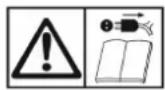
Carefully read the operating manual and the safety instructions before starting the machine and observe the instructions when operating.
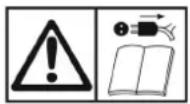
Switch off the machine and pull the mains plug before performing settings, cleaning the machine or if the cable is entangled or damaged.

Danger - objects may be thrown out at high speed when motor is running. Keep bystanders, pets and domestic animals out of the danger area.
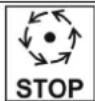
Wait until all machine parts have come to a dead stop before touching them.
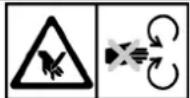
Danger - rotating blades. Keep hands and feet out of openings while machine is running.

Wear eye and ear protection.
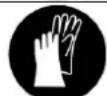
Wear protective gloves.

Protect against humidity.
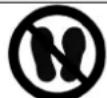
Do not use as footstep.
Material is cut
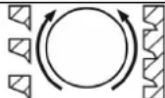
Material is not cut
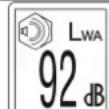
Guaranteed sound power level L_WA92 dB (A) (measured to 2000/14/EC)

This product complies with European regulations specifically applicable to it.
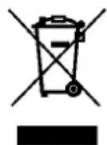
Electrical devices do not go into the domestic rubbish. Give devices, accessories and packaging to an ecofriendly recycling.
According to the European Directive 2012/19/EU on electrical and electronic scrap, electrical devices that are no longer serviceable must be separately collected and brought to a facility for an environmentally compatible recycling.
Symbols Operating manual

Potential hazard or hazardous situation. Failure to observe this instruction may lead to injuries or cause damage to property.

Important information on proper handling. Failure to observe this instruction may lead to faults.

User information. This information helps you to use all the functions optimally.

Assembly, operation and servicing. Here you are explained exactly what to do.
Proper use
The proper use includes the shredding of
- all types of branches up to a max. diameter (depending on wood species and freshness)
- wilted, moist garden refuse that has already been stored for several days, alternating with branches
Shredding of glass, metal, plastic parts, plastic bags, stones, fabric cut-offs, roots with soil, waste without solid consistency (e.g. kitchen scraps) is explicitly excluded.
The garden shredders are suitable for private use in gardens and allotments.
As garden shredders for private gardens and allotments are considered such devices that are not applied in public facilities, parks, and sports facilities as well as in agriculture and forestry on a commercial basis.
The intended usage also includes compliance with the operating, servicing and repair conditions prescribed by the manufacturer and following the safety instructions included in the instructions.
Any other use is deemed not to be use as prescribed. The manufacturer is not liable for any type of damage resulting from this: the user bears the sole risk.
Unauthorised modifications on the garden shredder exclude a liability of the manufacturer for damages of any kind resulting from it.
Only persons who are familiarised with the device and informed about possible risks are allowed to prepare, operate and service this device. Repair works may only be carried out by us or by a customer service agent nominated by us.
Residual risks

Even if used properly, residual risks can exist even if relevant safety regulations are complied with due to the sign determined by the intended purpose.
Residual risks can be minimised if the "Safety information" and the "Intended usage" as well as the whole of the operating instructions are observed.
Observing these instructions, and taking proper care, will reduce the risk of personal injury or damage to the equipment.
- Risk of injury to the fingers and hands, if your hand grasps through an opening and reaches the blade unit.
-
Risk of injury to the fingers and hands, when carrying out assembly work and cleaning on the blade unit.
-
Injury by the chopped material spinning away near the hopper.
- Risk from electricity when using improper electrical connections.
- Touching live parts of opened electrical components.
- Impairment of hearing when working on the machine for longer periods of time without ear protection.
In addition, in spite of all the precautionary measures taken, non-obvious residual risks can still exist.
Safety instructions
Before commissioning this product, read and keep to the following advice. Also observe the preventive regulations of your professional association and the safety provisions applicable in the respective country, in order to protect yourself and others from possible injury.
Pass the safety instructions on to all persons who work with the machine.
Keep these safety instructions in a safe place.
Repair works on the shredder must be carried out by the manufacturer or by companies appointed by the manufacturer respectively.
- Make yourself familiar with the equipment before using it, by reading and understanding the operating instructions.
- Do not use the machine for unsuitable purposes (see "Proper use" and "Working with the garden shredder").
- Provide a safe standing position and keep at any time the balance. Do not lean forward. When placing material into the shredder, always stand on the same level as the machine.
- When working on slopes always make sure to have a safe standing position.
- Only move the machine at walking speed, never run with it (changing locations).
- Be observant. Attend to what you do. Start working with rationality. Do not use the device when you are tired or under the influence of drugs, alcohol or medicaments. One moment of carelessness when using the device can result in serious injuries.
- Always wear safety goggles, work gloves and noise protection when working with the machine.
-
Always wear suitable work clothing when operating the machine:
-
do not wear loose-fitting clothes or jewellery; they can catch in moving parts.
slip-proof shoes
Trousers to protect the legs -
no loose clothing or such with hanging bands or drawstrings
-
Do not work with the device barfooted or only with thongs on your feet.
- Within his area of work the operator is responsible for third parties.
- Do not allow children to play with this machine.
- Keep children away from machine.
-
Never operate the machine if other persons, especially children, or animals are in the immediate vicinity.
-
The operator is responsible for accidents or hazards which occur to other persons or their properties.
- Never leave the device unattended.
- Keep your workplace in an orderly condition! Untidiness can result in accidents.
- Choose a working position alongside the equipment or behind it. Never stand near the ejection opening.
- Never reach into the filling or ejection opening.
- Keep your face and body away from the filling opening.
- Do not overload the machine! You work better and safer in the given performance range.
- Only operate the machine with complete and correctly attached safety equipment and do not alter anything on the machine that could impair the safety.
- Never try to bypass the interlocking function of the safety device.
- Do not alter the motor controller setting, since the rotary speed controls the safe maximum operating speed, and protects the motor and all rotating parts against damage due to excess speed. Contact the customer service in case of problems.
- Do not operate without the funnel.
- Close machine properly before enabling motor.
- Do not modify the device or parts of the device respectively.
-
Do not hose down the device with water. (Origin of danger electric current).
Take into consideration environmental influences: -
Do not use the device in moist or wet ambience.
- Do not leave the machine standing in the rain.
- Do not work in bad weather conditions (e.g. rain, risk of lightning).
-
Provide for good illumination.
-
To prevent danger of injury to fingers during assembly or cleaning operations wear protecting gloves.
- Do not transport the device when the motor is running.
-
Switch off the machine and pull the mains plug from the socket and make sure that all moving parts have come to a complete standstill before:
-
attaching or removing the collecting bag
performing maintenance and cleaning work - eliminating faults
- checking the connection cable for damage and entanglement during operation
- transporting
carrying out repair work -
leaving unattended (even during short interruptions)
-
If the machine's filling funnel or ejection slot is blocked switch off the motor and disconnect the mains plug before removing material from the filling funnel or ejection slot.
-
Do not touch dangerous moving parts before the machine has been isolated from the electric supply and such moving parts have come to a dead stop.
- The power or extension cable must be separated from the supply mains immediately if they are damaged during use. Do not touch the cable before it is disconnected from mains. Do not use the machine if the cable is damaged or worn.
-
Check the machine for possible damage:
-
Before further use of the machine the safety devices must be checked carefully for their proper and intended function.
-
Check whether movable parts function perfectly and do not stick or whether parts are damaged. All parts must be correctly installed and fulfil all conditions to ensure perfect operation of the machine.
- Damaged safety devices and parts must be properly repaired or exchanged by a recognized, specialist workshop; insofar as nothing else is stated in the instructions for use.
-
Damaged or illegible safety labels have to be replaced.
-
Store unused equipment in a dry, locked place out of the reach of children.
- Store the machine in a place where fuel vapours cannot come close to open flames or sparks. Always allow the machine to cool down before storing it.
- Maintain the machine with care and keep it clean.

Electrical safety
- 1.5mm^2 for cable lengths up to 25m
-
2.5mm^2 for cable lengths over 25m
-
Design of the connection cable according to IEC 60 245 (H 07 RN-F) with a core cross-section of at least
- Long and thin connection lines result in a potential drop. The motor does not reach any longer its maximal power; the function of the device is reduced.
- Plugs and coupler outlets on connection cables must be made of rubber, plasticised PVC or other thermoplastic material of same mechanical stability or be covered with this material.
- The connector of the connection cable must be splashproof.
- When running the connection line observe that it does not interfere, is not squeezed, bended and the plug connection does not get wet.
- Keep the extension cable away from dangerous moving parts to prevent damages to the cable, which can result in touching live parts.
- Wind off completely the cable when using a cable drum.
- Do not use the cable for purposes for which it is not meant. Protect the cable against heat, oil and sharp edges. Do not use the cable to pull the plug from the socket.
- Regularly check the extension cables and replace them if they are damaged.
- Please note that no damage cable must be connected to the power supply and no damaged cable may be touched before it was separated from the power supply since damaged cables may touch active components.
- Do not use any defective connection cables.
- When working outdoors, only use extension cables especially approved and appropriately labelled for outdoor use.
- Do not set up any provisional electrical connections.
- Never bypass protective devices or deactivate them.
- Only hook up the machine by means of a fault-current circuit breaker (30 mA).

The electrical connection or repairs to electrical parts of the machine must be carried out by a certified electrician or one of our customer service points. Local regulations - especially regarding protective measures - must be observed.

Repairs to other parts of the machine must be carried out by the manufacturer or one of his customer service points.

Use only original spare. Accidents can arise for the user through the use of other spare parts. The manufacturer is not liable for any damage or injury resulting from such action.
Behaviour in an emergency situation
- Initiate all required first aid measures suited for the injury and seek qualified medical advice as quickly as possible.
- Protect the injured person against further injuries and immobilise the injured person.
Commissioning
- Check that the machine is completely and correctly assembled.
- Make sure before starting the machine that the feeding device (the filling hopper) is empty.
- To avoid toppling, place the shredder on a firm horizontal surface.
- Avoid working on moist surfaces. A moist surface affects the safe footing of the machine and increases the risk of accidents.
- Do not use this machine on a paved or gravel-covered area on which thrown out material can cause injury.
- Do not work directly near swimming pools or garden ponds.
- The machine should only be operated in the open. Always maintain a safe distance (at least 2m ) from walls or other fixed objects.
-
Do not operate the machine in bad weather conditions.
Before each use, -
Check the supply / extension cable for damages (cracks, cuts or the like) or ageing (brittleness).
Do not use defective supply or extension cables. - Check there are no damage at the machine (see safety instructions).
- Make sure that the shredder tool is neither worn out nor damaged and that it is properly secured.
- Check that all screws, nuts and bolts as well as other fasteners are securely tightened.
- Check that covers, deflectors and protective shields are on their correct position and in good working condition.
Mains connection
- Compare the voltage given on the machine model plate e.g. 230V with the mains voltage and connect the machine to the relevant and properly earthed plug.
- Connect the machine via a circuit breaker switch (residual-current-operated circuit switch) 30mA .
- Always use three-conductor extension cables with connected earthing conductor and sufficient cross section.
Mains fuse
| Switzerland | UK | ||
| 2500 W | 16 A time-lag | 13 A time-lag | |
Electrical mains supply impedance
When conditions in the electrical mains supply are unfavourable, voltage reductions for short periods can occur during the process of turning on the equipment, which can adversely affect other equipment (e.g., the flickering of a lamp). No breakdowns are to be expected if the maximum, electrical mains supply impedances given in the table are met.
| Power consumption P1(W) | Electrical mains supply impedance Zmax(Ω) |
| 2500 | 0,21 |
On/Off switch
Do not use any device where the switch can not be switched on and off. Damaged switches must be repaired or replaced immediately by the customer service.
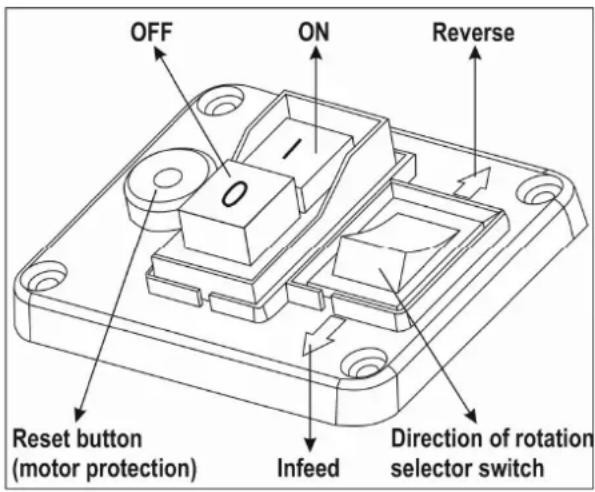

Switch on
Press the green button

Switch off
Press the red button

Restart protection in case of power failure
In case of a power failure, the device switches off automatically (zero-voltage initiator). To restart, press the green button again.

Motor protection
The motor is equipped with a safety switch and switches off automatically when overloaded. After a cooling-down break (approx. 5 min), the motor may be restarted. Press the
- reset button (motor_protection)
- green button to restart.
Direction of rotation selector switch
Only actuate the direction of rotation selector switch while the shredder is switched off.
Position

The material is drawn in by the cutting roller and shredded.

Position
The blades operate in the opposite direction and jammed material is released.
Keep depressing the green button of the on/off switch once you have placed the direction of rotation selector switch into the position. The cutting roller is placed into the opposite direction. If you release the on/off switch, the shredder automatically stops.
Hints
Large objects or pieces of wood may be removed after the shredder has been operated several times both in cutting and in release direction.
Use a tamper or hook to remove jammed objects from the hopper or ejection slot.

Always wait until the shredder has come to a completely stand still before restarting it.
Working with the garden shredder
- Choose a working position alongside the equipment or behind it. Never stand near the ejection opening.
- Provide a safe standing position and keep at any time the balance. Do not lean forward. When placing material into the shredder, always stand on the same level as the machine.
- Always keep away from the ejection area when starting the machine.
- Longer material that is protruding from the device could spring back when it is drawn in by the blades! Observe safety distance!
- Never reach into the filling or ejection opening.
- Keep your face and body away from the filling opening.
- Never place hands, other parts of the body or clothing into the filler funnel, ejection channel or in the vicinity of other moving parts.
- Check that no chopped residues are in the filling hopper before switching on the device.
- Do not tilt or transport the machine (relocation) while the motor is running.
- Make sure that the motor is free from waste material and other material accumulation to protect it against damage and to prevent fire.
- When filling, be careful that no pieces of metal, stones, bottles or other objects unintended for processing, enter the filling hopper.
-
Power off the device before attaching or removing the collecting bag.
-
Immediately switch off the equipment and allow it to come to a stop, if foreign objects enter the filling hopper or if the equipment starts to make unusual noises or vibrates. Remove the mains plug and carry out the following checks:
inspect for damage,
- replace or repair damaged parts,
- check the equipment and tighten loose parts.
You must not repair the equipment yourself if you are unauthorized to do so.
What can I shred?
Yes:
- all types of branches up to a max. diameter, depending on wood species and freshness.
- withered garden refuse which has lain a number of days.
Only shred in alternation with branches.
No:
- glass, metal, plastic, plastic bags, stones, cloth, roots with soil
- refuse which does not have a solid consistency, e. g. kitchen waste
Special tips on shredding:
Always fill the material to be shredded into the filling hopper from the right.
- Branches, twigs and wood should be broken down immediately after they have been cut
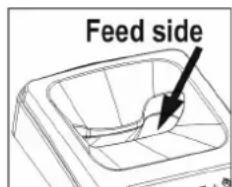
Material of this kinds gets very hard when it is dry, and the maximum allowed branch diameter to be processed has to be reduced.
Remove any side shoots from branches with a large number of twigs.
How to shred garden and kitchen waste with hight water content and a tendency to clog
to prevent the machine from clogging, alternate waste with wood containing material.
Do not allow the shredded material to pile up too high in the area of the ejection opening. This can lead to shredded material blocking the ejection channel, and backing up to the filler opening.
Clean out the filler opening and ejection channel thoroughly if the machine becomes blocked. Before doing this, switch the motor off and disconnect the machine from the mains power supply.
Please do not exceed the maximum branch diameter specified (cutting fresh wood) for your appliance (see Technical data). Depending on the wood's nature and freshness the maximum branch diameter the machine can process may be smaller.
The cutter automatically draws the shredding material into the machine through the slow rotation of the cutting rollers.
Automatic switch-over in the direction of rotation:
If the unit suddenly clogs, the blades may start to turn in the opposite direction and push the shredded material back out.
Switch off unit
Wait until the blades come to a standstill
Switch unit back on and use material which is easier to process.
If the machine is overloaded, a protective motor switch ensures that the machine turns itself off automatically.
- Turn the shredder on again after about 5 minutes.
- If you cannot turn on the machine after this waiting time refer to „Operational faults".
Adjusting the fixed counter blade
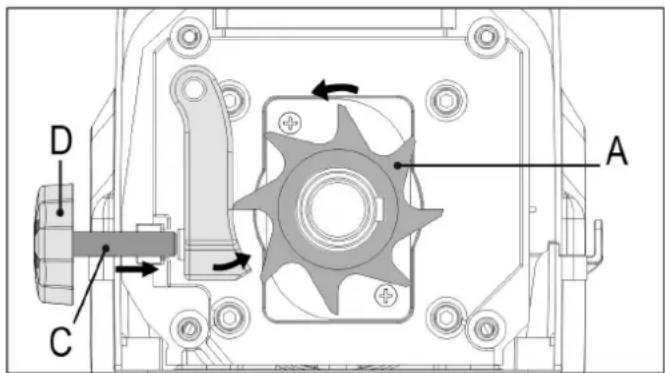
It is possible to adjust the counter blade (B) at the cutting roller (A) free of clearance. For an effective operation, an as small as possible clearance should be maintained.
Soft material or wet branches may tear instead of being cut. A counter blade that is worn after repeated use may also lead to this problem.
Setting the clearance.
Switch on the device.
There is an adjustment device on the right hand side of the plastic housing. To adjust the distance turn the adjusting knob (D) clockwise so that the screw (C) moves toward the cutting roller. (A). Turn until fine aluminium chips are falling from the ejection slot.
Maintenance / Cleaning / Storage
Each time before starting maintenance work:
- Switch off the motor and pull out the mains plug.
- Allow the machine to cool down.
Risk of injury through moving hazardous parts.
Wear protective gloves in order to avoid injury to the hands.
When the machine is stopped for purpose of maintenance, storage or accessory replacement make sure that the energy source is isolated and the mains plug is disconnected. Make sure that all movable parts are stationary and the key (if applicable) is removed. Allow the machine to cool down before maintenance, adjustment etc.
The cutters will not come to a standstill immediately after cut-off. Before starting any service work wait until all parts are stationary.
When performing maintenance operations on the cutting tool be aware that it can still move due to the start
mechanism even if the motor does not run by the cover interlocking.
Be sure to have removed any tools from the machine after completion of service work.
-
Generally garden shredders require little maintenance. To maintain their efficiency and a long life, observe the following:
-
Keep vent slits clean and free from obstructions.
- Check the locking screws (tighten where necessary).
Clean the device after shredding.
To clean your product only use a warm moist cloth and a soft brush.
Never use cleaning agents or solvents. Otherwise the device may be damaged irreversibly. Plastic parts may be corroded by chemicals.
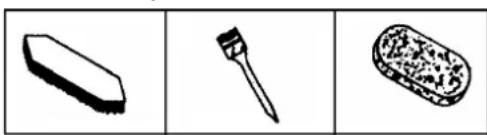
- Do not clean the machine with running water or high-pressure cleaners.
-
After each operation treat bare metal parts with an environment-compatible biodegradable spray oil to protect them against corrosion.
-
the cutting roller and shaving plate are expendable parts, though with normal use and correct adjustment they have a service life of many years.
- Replace worn and damaged single parts as a whole set to prevent any unbalance.
Dislocation / Transport
Before each dislocation / transport
- Switch off device.
Wait for standstill of the device.
Pull out mains plug.
Dislocation:
Only move the machine at walking speed, never run with it (changing locations).
Transport:
When transporting the product within a car put it in the boot or on a separate loading area.
Do not throw the device when loading it. Secure the device against tipping over or damages.
Technical data
| Typ / Model ALA 2500-2 | |
| Year of construction see last page | |
| Motor AC-Motor 230-240 V~, 50 Hz, 2500 min | -1 |
| Motorrating P1 (P40) 2500 W | |
| Motorating P1 (S1) 2000 W | |
| Rotational speed cutting roller 40 min | -1 |
| On/off switch with | overload protection; cutting and reverse function, zero-voltage initiator |
| Weight | 25.4 kg |
| Ecooustic pressure level at work LPA (mesured to 2000/14/EC) | 83.7 dB (A) K = 1:5 dB (A) |
| Measured level of the acoustic output LWA (mesured to 2000/14/EC) | 90.4 dB (A) |
| Guaranteed level of the acoustic output LWA (mesured to 2000/14/EC) | 92 dB (A) |
| max. branch diameter (only for freshly cut wood) | ∅ max. 40 mm |
| Safety class | I |
| Protection class IP X4 | |
| Mains fuse | 16 A time-lag |
| UK | 13 A time-lag |
| Operating mode: (S1) (P40) | |
| Continuous operation | Continuous intermittent operation |
| for 10 min.: | |
| 4 min. continuous operation | |
| 6 min. operation at no or low load | |
Technical modifications reserved!
Operational faults
Before each fault elimination:
- Switch off device.
Wait for standstill of the device. - Pull out mains plug.
| Fault Possible cause Remedy | ||
| Motor does not start | No power supplyMains cable defectiveMachine overloaded (motor protection) | Check fuseshave these checked (electrician)Allow the device to cool down.Press the1. reset button (motor protection)2. green button ☐ to restart. |
| Motor hums but does notstart | Cutting roller blockedCapacitor faulty | Switch off the device.Turn the direction of rotation selector switch into positionSwitch on device until the jam has been cleared.Switch device off again. Turn back the direction ofrotation selector switch to positionBring machine to manufacturer or authorised workshopfor repair. |
| Shredding material is notdrawn into the shredder | The cutting roller is running in reverse.Wrong switch positionShredding material caught in funnel | Switch off device and switch over direction of rotationselector switch.Switch off device. Switch the direction of rotation selector switch into positionSwitch on device torelease the material to be shredded, remove any foreignmatter.Switch off device again. To continue work, place thedirection of rotation selector switch back into positionPush down with a branch and shredAdjust fixed counter blade as described under „adjustingthe fixed counter blade". In case of severe wear, replacecutting roller. |
| Shredding material too soft or wetCutting roller worn | ||
| Shredding material not cutcleanly | Fixed counter blade not adequatelyadjusted | Adjust fixed counter blade |
| Device starts but blocksunder as slight load andswitches off via protectivemotor switch. | Extension cable too long or cross-section to small.Socket too far from mains supply andcross-section of mains cable too small | Extension cable at least 1.5 mm2, maximum 25 m long.If a longer cable is used, minimum cross-section 2.5mm2. |
In case of further faults or inquiries please contact your local dealer.
Guarantee
Please observe the enclosed terms of guarantee.
Assemblage
Flytning / Transport
conform directivei 2006/42/UE
Prin prezenta, noi
Altrad Lescha Atika GmbH
Josef-Drexler-Str. 8, 89331 Burgau - Germany
Conformity assessment procedure
2000/14/UE - Appendix V §i 2005/88/UE