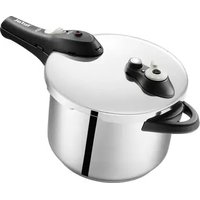
Secure 5 P25042 - Saucepan TEFAL - Free user manual and instructions
Find the device manual for free Secure 5 P25042 TEFAL in PDF.


User questions about Secure 5 P25042 TEFAL
0 question about this device. Answer the ones you know or ask your own.
Ask a new question about this device
Download the instructions for your Saucepan in PDF format for free! Find your manual Secure 5 P25042 - TEFAL and take your electronic device back in hand. On this page are published all the documents necessary for the use of your device. Secure 5 P25042 by TEFAL.
USER MANUAL Secure 5 P25042 TEFAL
natural_image
Close-up of a stainless steel cooking pot with a black handle and lid, containing ice and a white liquid (no text or symbols visible)- Retirez la soupape.
Important safety information
For your safety, this appliance complies with applicable standards and regulations:
- Pressure vessel directive
- Materials in contact with food
- This appliance is designed for domestic use.
- Take time to read all of the instructions and always refer back to the "User's Guid
- Just like for any other cooking appliance, always pay close attention to it, especially use in the presence of children.
- Never place your pressure cooker in a hot oven.
- Always be very careful when moving your pressure cooker under pressure. Never touch faces. Use the handles and knobs. Use gloves where necessary.
- Never use your pressure cooker for any purpose other than the one it was designed
- Your pressure cooker cooks under pressure. Scalding injuries may result from unsuitable Always make sure that the pressure cooker is properly closed before starting to use to the “Closing” heading.
- Always make sure that the operating valve is in the open (pressure released) position attempting to open your pressure cooker.
- Never force your pressure cooker open. Always make sure that the pressure inside it helped. Refer to the “Safety” heading.
- Never use your pressure cooker without any liquid in it forth this will seriously damage it make sure that there is enough liquid in it during cooking.
- Use heat source(s) that are compatible with your pressure cooker, in line with the itions for use.
- Never fill your pressure cooker more than two-thirds full (the maximum mark).
- For food that expands during cooking, like rice or dried vegetables or fruit sauces, your pressure cooker more than half full.
- After cooking meat with a superficial outer skin (e.g. tongue...) that may expand w pressure, never stab themeat while the skin looks swollen under pressure for you ma ded. We recommend that you pierce the meat before cooking.
- For paste-like food (e.g. split peas, rhubarb...), the pressure cooker should be slightly prior to opening to ensure that these foods do not spray out.
- Always make sure that the operating and safety valves are not blocked before use. the “Before cooking” heading.
- Never use your pressure cooker to deep fry using oil under pressure.
- Never take any action on the safety systems other than that which is described in tructions for cleaning and maintenance.
- Only use TEFAL genuine spares designed for your model of appliance. This especially only using secureder body and lid.
- Alcohol vapour is inflammable. Bring alcohol to the boil some two minutes before p lid on. Watch over your appliance when making alcohol based recipes.
- Never use your pressure cooker to store acid or salty foods prior to and after cooking may damage your pressure cooker body.
Keep these instructions
Description diagram
A - Operating valve
B - Operating valve seat
C - Safety valve
D - Pressure indicator
E - Opening button
F - Long lid handle
G - Lid positioning mark
H - Operating valve positioning mark
I - Lid seal
J - Steaming basket
K - Steaming basket support
L - Long pressure cooker body handle
M- Pressure cooker body
N - Short pressure cooker handle
O - Maximum filling mark
Characteristics
Pressure cooker base diameter - model references
| Capacity | Cooker diameter | Base diameter | Stainless steel model |
| 4 L | 22 cm | 19 cm | P25042 |
| 6 L | 22 cm | 19 cm | P25007 |
| 7 L | 22 cm | 19 cm | P25008 |
Standards information:
Upper operating pressure limit: 80 kPa (12 psi).
Maximum safety pressure limit: 170 kPa (25 psi).
Compatible heat sources
GAS
SOLID
HOTPLATE
CERAMIC
or HALOGEN
INDUCTION
ELECTRIC


- The SECURE⑤ pressure cooker can be used on all heat sources, except on Aga cookers.
- When using an electric hob or induction, make sure that the size of the hot plate does not exceed the size of the pressure cooker base.
- On a ceramic or halogen hob, always make sure that the pressure cooker base is clean and dry.
- On a gas hob, the flame should not lick past the diameter of the pressure cooker base.
- The following secure broker accessories are available from shops:
| Accessory | Reference number |
| Seal | X2010003 |
- To replace other parts or have repairs performed, please call on your local TEFAL Approved Service Centre.
- Only use TEFAL genuine parts designed for your product model.
Use
Opening
- Using your thumb, pull on the opening knob (E) and move it back to the Fig 1
Hold the long pressure cooker handle (L) with your left hand, while turning the long lid handle (F) anticlockwise with your right hand, until it opening - Then lift the lid off.
Closing
- Place the lid down flat on the pressure cooker taking care to line up the triangles on the lid and the pressure cooker handle - Fig 3
- Turn the lid to the left until it stops - Fig 3
- Push the opening knob (E) to move it to the position - Fig 4
Minimum filling
- Always pour a minimum amount of liquid of at least 250 ml (two glasses) into the pressure cooker.
For steaming
- At least 750 ml (6 glasses) of water must be poured
- Place the basket (J) onto the support (K) provided for this purpose - Fig 5
in. Food placed in the steaming basket must not touch the pressure cooker lid.
- Never fill your pressure cooker more than two-thirds full (maximum mark) Fig 6
For some food
- For food that expands during cooking, like rice or dried vegetables or stewed fruit...never fill your pressure cooker more than half full Fig 6
Using the operating valve (A)
To cook delicate food and vegetables
- Move the 1 on the valve (A) opposite the mark (H). Pressure 1 operates at 7lb (7 psi).
To cook meat and frozen foods
- Move the ^2 on the valve (A) opposite the mark (H). Pressure ^2 operates at 12 lb (12 psi)
To release steam
- Move the on the valve (A) opposite the mark (H).
To remove the operating valve
- Let the appliance cool down before removing the valve (A).
- Press down on the valve and turn it to align its position
- with the mark (H) Fig 7
- Remove the valve.
To refit the operating valve
- Place the operating valve in place taking care to align it
- with the mark (H).
- Press the valve then turn it until the desired position is reached.
Using for the first time
- Fill the pressure cooker to the two-thirds mark (the maximum mark) with water.
- Place the basket support (K) in the bottom of the pressure cooker and place the basket (J) on top of it.
- Close the pressure cooker.
- Move the operating valve (A) to position 2.
- Place the pressure cooker on a heat source set to maximum power.
-
Once steam starts to escape from the valve, turn the heat down and set a timer for 20 minutes.
-
Once the 20 minutes are up, turn off the heat.
- Turn the operating valve (A) to position
- Once the pressure indicator (D) drops back: your pressure coker is no longer under pressure.
- Open the pressure cooker.
- Rinse the pressure cooker with water and dry it.
- Note: The presence of stains on the inside of the pressure cooker base has no effect on the quality of the metal. This is simply a scale deposit. To remove these deposits, you can use a scouring pad and some diluted vinegar.
Before cooking
- Before each use of the pressure cooker, always remove the valve (A) (Refer to the “Using the operating valve” heading) and visually check that the operating valve seat (B) is not blocked. If necessary, clean it with a toothpFig 8
- Check that the safety valve (C) can move: Refer to the “Cleaning and maintenance” heading.
- Fit the operating valve (A) and select the position or 2.
- Always make sure that the pressure cooker is properly closed before starting to heat it. The opening button (E) must be in the position.
- Place the pressure cooker on a heat source set to maximum power.
During cooking
- Once the operating valve (A) starts to continually release steam and a regular hissing sound can be heard, cooking h started. Reduce the heat setting.
- Set a timer for the cooking time stated in your recipe.
- Once the cooking time is up, turn off the heat.
Finishing cooking
To release the steam
- Once the heat is turned off, you have two options: If food or liquid starts to
- Slow pressure release: gradually turn the operating valve (A) to the position. Make sure that the cooker is positioned so that the steam is directed away from you. Once the pressure indicator (D) drops down: your pressure cooker is no longer under pressure. This is used for stews, back to position and getables, meat joints and fish dishes.
- Fast pressure release: place your pressure cooker under cold running water, directing the flow onto the metal part of the lid. Once the pressure indicator (D) drops down: your pressure cooker is no longer under pressure. Turn the operating valve (A) to the position. This is used for sition, making sure soups, rice, pasta, milk puddings, egg custards, cake and pudding mixes, recipes containing rice or pasta and recipes with a high liquid content. If in doubt, use the fast pressure release method.
- Now you can open it.
Cleaning and maintenance
Cleaning the pressure cooker
Browning and scratching that may appear following long periods of use are normal and will not affect the performance of the pressure cooker
You can wash the pressure cooker body and the basket in a dishwasher.
Never wash the lid in a dishwasher.
For a longer pressure cooker life: do not overheat your pressure cooker pan when it is empty.
- For best appliance operation, be sure to follow these cleaning and maintenance recommendations every time the pressure cooker is used.
- Always wash the pressure cooker after use with warm water with a little washing up liquid added. Do the same for the basket.
- Never use bleach or chlorine products.
- Never overheat the pressure cooker body when it is empty.
To clean the inside of the pressure cooker
- Clean it with a scouring pad and washing up liquid.
- If the inside of the stainless steel cooker shows iridescent reflections, clean it with vinegar.
To clean the outside of the pressure cooker
- Clean it with a sponge and washing up liquid.
To clean the lid
- Wash the lid under a gentle stream of running warm water using a sponge and washing up liquid.
To clean the lid seal
- After using the pressure cooker, always clean the seal (I) and its groove.
• To refit the seal, refer to the drawings 9 - 10
To clean the operating valve (A)
- Remove the operating valve (A): Refer to the “Using the operating valve” heading.
- Clean the operating valve (A) under running tap water Fig 11
To clean the operating valve seat located in the lid
- Remove the valve (A).
- Visually inspect the seat and the steam release pipe in daylight to make sure that it is round and clear. If necessary, clean it with a Toothpick Fig. 8
Never use a cutting or pointed object to do this, you can use a cotton bud.
To clean the safety valve (C)
- Clean the part of the safety valve located inside the lid by placing it under running water.
- Check that it works properly by lightly pressing on the plunger which should move without difficulty Fig 12
To replace your pressure cooker seal
- Replace your pressure cooker seal every year.
- Replace your pressure cooker seal if it shows any signs of splitting or damage.
- Always use a TEFAL genuine seal that matches your model of pressure cooker.
Always have your pressure cooker checked by a TEFAL Approved Service Centre after ten years of use.
To store your pressure cooker
- Turn the lid over and place it on the pressure cooker body
Safety
Your pressure cooker is provided with a number of safety mechanisms:
- Closure safety:
- If the appliance is not properly closed, the pressure indicator cannot rise and therefore the pressure cooker will never come up to pressure.
- Opening safety:
- While the pressure cooker is under pressure, the opening knob cannot be activated. Never force the pressure cooker open. Never tamper with the pressure indicator. Always make sure that the pressure inside the pressure cooker has been released.
- Two excess pressure safety features:
- First feature: the safety valve (C) releases pressure and the steam will escape horizontally from the top of the lid
- Fig 13
- Second feature: the seal (I) lets steam escape vertically from the side of the-liFig 14
If one of the two excess pressure safety systems is triggered:
- Turn off the heat.
- Allow the pressure cooker to cool down completely.
- Open it.
- Check and clean the operating valve (A), the operating valve seat and pipe (B), the safety valve (C) and the seal (I).
Recommendations for use
1 - The steam is very hot when it leaves the operating valve
2 - As soon as the pressure indicator rises, you can no longer open your pressure cooker.
3 - Just like for any other cooking appliance, always pay clos attention to it, especially during use in the presence of children. Never leave unattended whilst in use.
4 - Beware of the horizontal steam jet.
5 - To move the pressure cooker, always use both of the handles.
6 - Never leave food in your pressure cooker.
7 - Never use bleach or chlorine products for they could affe the quality of the stainless steel.
8 - Never wash the lid in the dishwasher. Never leave the lic soak in water.
9 - Replace the seal every year.
10 - A pressure cooker may only be cleaned when cold and when empty.
11 - Always have your pressure cooker checked by a TEFAL Approved Service Centre after ten years of use.
Guarantee
- Your new TEFAL pressure cooker comes with a ten-year guarantee for use under the conditions set out in these instructions. This guarantee covers:
- Any defects relating to the metal structure of the pressure cooker body,
- Any premature deterioration of the metal base.
- For other parts, a one year parts and labour guarantee is provided (except where applicable law in your own country states otherwise). This guarantee covers any defects or manufacturing faults.
- The contractual guarantee cover is provided only on presentation of a valid proof of purchase which shows the date of purchase.
• The guarantee cover excludes:
- The normal life of the seal, pressure control valve or lockin indicator seal is limited. These parts are excluded from the guarantee and will require periodic renewal.
- Any damage consecutive to a failure to follow the major recommendations made or due to negligent use, especially:
- Dropping, falls, bangs or knocks, placing in an oven...
- Washing the lid in the dishwasher.
- Only TEFAL Approved Service Centres are authorised to provide service under guarantee.
- Please call the Helpline number below for the address of your nearest TEFAL Approved Service Centre.
Helpline: 0845 602 1454 - UK
(01) 677 4003 - Ireland
Or consult our web site: www.tefal.co.uk
TEFAL and your Frequently Asked Questions
| Problems Recommendations | |
| If the pressure cooker has heated up under pressure with no liquid inside: | Have your pressure cooker inspected by a TEFAL Approved Service Centre. |
| If the pressure indicator did not rise and nothing escapes from the valve during cooking: | This is normal for the first few minutes.If the problem persists, check that:- There is enough heat, if not, turn up the heat.- The amount of liquid in the pressure cooker is adequate.- The operating valve is set to2.- The pressure cooker is properly closed and the opening button is in the position.- The lid seal has not perished. |
| If the pressure indicator has risen but still nothing escapes from the valve during cooking: | This is normal for the first few minutes.If the problem persists, place your appliance under cold water. Then open it.Clean the operating valve and the valve Figt 8 and check that the safety valve can be pushed in without difficulty - Fig 12. |
| If steam escapes from around the lid, check: | That the lid is properly closed and the opening button is in the position.The seal is correctly fitted into the lid.That the seal is in good condition, and if necessary, replace it.That the lid, the seal, its seat in the lid, the safety valve and the operating valve are clean.That the rim of the pressure cooker body is in good condition and not damaged. |
| If food has burnt on the bottom of the pressure cooker: | Leave the pressure cooker to soak for a while before washing.Never use bleach or chlorine products. |
| If you cannot open the lid: | Check that the pressure indicator is down.If not: release pressure and if necessary cool the pressure cooker under a stream of cold water. |
| If food is not cooked or has burnt, check: | The cooking time.The heat level.Whether the operating valve was in the right position.The amount of liquid. |
Regulation markings
| Marking Location | |
| Manufacturer's identification or trademark Lid handle | |
| Year and batch of manufacture Inside the lid | |
| Model referenceOperating pressure (PF)Max. safety pressure (PS)Capacity | On the outside of the pressure cooker body |
Table of cooking times
These cookingtimesareapproximate and mayneed slightadjustmentaccording topersonalta Vegetables ____
| Preparation | Cooking | FRESH PRODUCE Valve position 1 | FROZEN PRODUCE Valve position 2 | |
| Artichoke Whole | - steam | 18 min. | ||
| - immersion | 15 min. | |||
| Asparagus - immersion | 5 min. | |||
| Beetroot, red Peel after cooking - steam | 20-30 min depending on size | |||
| Broccoli Florets - steam | 3 min. 3 min. | |||
| Brussels sprouts | - steam | 7 min. | 5 min. - immersion | |
| Cabbage, green | sliced | - steam | 6 min. | |
| leaves | - steam | 7 min. | ||
| Carrots | sliced | - steam | 7 min. 5 min. | |
| Cauliflower | Florets - immersion | 3 min. 4 min. | ||
| Celery | 5-cm pieces | - steam | 6 min. | |
| - immersion | 10 min. | |||
| Courgettes | 2.5-cm slices | - steam | 6 1/2 min. | 9 min |
| - immersion | 2 min. | |||
| Endives | - steam | 12 min. | ||
| Green beans | Whole or sliced | - steam | 8 min. 9 min. | |
| Green lentils(dried pulses) | - immersion | 10 min. | ||
| Leek | 5-cm slices | - steam | 2 1/2 min. | |
| Mushrooms | sliced | - steam | 1 min. 5 min. | |
| whole | - immersion | 1 1/2 min. | ||
| Peas | - steam | 1 1/2 min. | 4 min. | |
| Potatoes (such as King Edwards) | quartered | - steam | 12 min. | |
| - immersion | 6 min. | |||
| Pumpkin (mashed) | pieces | - immersion | 8 min. | |
| Rice (Long grain white) | see note below | - immersion | 7 min. | |
| Spinach | - steam | 5 min. 8 min. | ||
| - immersion | 3 min. | |||
| Split peas(dried pulses) | - immersion | 14 min. | ||
| Turnips | 2.5-cm cubes | - steam | 7 min. | |
| - immersion | 6 min. | |||
Steam = cooked in the steam basket
Immersion = cooked directly in water
RICE : never fill more than half full including liquid as rice froths and boils up cooking. Use 225 g rice and 1.75 litre water from a boiling kettle.
Meat - Fish
| Weight | FRESH PRODUCE Valve position 2 | FROZEN PRODUCE Valve position 2 | |
| Beef | 1 kg (topside) | 40 min (medium)* | 1 hr (medium)* |
| Chicken | 1.2 kg (whole) | 27 min Do not | cook from frozen |
| Lamb | 1.3 kg (half leg) | 50 min (medium)* | 1hr 10 min (1 kg half leg - medium)* |
| Monkfish | 0.6 kg (fillets) | 4 min | 6 min |
| Pork | 1 kg (leg joint) | 35 min Do not | cook from frozen |
| Salmon | 0.6 kg (4 steaks) | 6 min | 8 min |
| Tuna | 0.6 kg (4 steaks) | 7 min | 9 min |
Cook for an additional 5 minutes for well done meat.
Golden rules when pressure cooking (for UK Consumers)
- The minimum quantity of liquid required for normal cooking is 250 ml (½ pint) for first ¼ hour cooking. For each additional ¼ hour, or part of ¼ hour, add a further ml (¼ pint) of liquid. For example, 45 minutes cooking requires 600 ml (1 pint) of quid. Note: This is only a general guide. Certain foods, such as rice, pulses, steamed puddings and Christmas puddings may require extra water (see text below).
- When steaming foods in the basket use a minimum of 750 ml (1¼ pint) water in cooker.
- Always use a liquid that gives off steam when boiled e.g. water stock, wine, beer, or milk. Never use oil or fat. All pressure cooking requires some liquid.
- Whatever the size of pressure cooker, the maximum filling level when all the ingredients and liquid have been added are:
Solid foods e.g. vegetables, meat joints: no more than two-thirds full Liquids and cereals e.g. soups, stews, rice, cereal and pasta: no more than Pulses e.g. dried beans and dried peas: no more than one-third full
- When cooking pulses they swell up and tend to froth up. Use 1.2 litres (2 pints) w for every 450 g (1 lb) pre-soaked weight of pulses. Remember all dried peas and dr beans, must be soaked in boiling water for 1 hour before cooking. Drain, rinse thoroughly and cook in fresh water. Never eat uncooked beans or peas. Soaking is not cessary for red lentils. The high temperatures achieved in the pressure cooker ensure that any natural toxins in the pulses are destroyed. Canned beans and pulses can simply be drained and rinsed before adding to the pressure cooker.
- For steamed suet puddings, sponge puddings or Christmas puddings, a short pre-steeding time is best to enable the raising agent to activate and prevent a heavy, closure. Extra liquid is required so use a minimum of 1 12 pint/900 ml of boiling water, a combined steaming and cooking time of up to 1 hour. For each additional 14 hour of cooking, or part of 14 hour, add a further 14 pint/150 ml of boiling water. Pre-steeding is done with the operating valve in the steam release position on a low heat the required time. Then turn the operating valve to either 1 or 2, and increase the to bring to full pressure. Lower the heat and pressure cook for the required time. Pressure 1 operates at 7 lb (7 psi) and pressure 2 at 12 lb (12 psi)
- Never cook dumplings with the lid tightly closed, as they could rise up and block the fatty devices. Cook the stew and at the end of cooking, release the steam and cook gently for about 10 - 15 minutes without the lid on.
- Pressure cooking times vary according to the size of individual pieces or thickness of the food, not the weight.
- To prevent discolouration of the interior, caused by mineral deposits in hard water areas, add a tablespoon of lemon juice or vinegar.
- Cooking containers must withstand temperatures of 130°C (250°F). Any covering on containers, e.g. foil, greaseproof paper or cling film, must be securely tied otherwise they could block the safety devices. Do not use plastic lids as they prevent steam fi being in contact with the food. Also, they could distort and come off during cooking which could block the safety outlets.
- Accurate timing is essential when pressure cooking to prevent overcooking, especially with vegetables, fruit and fish.
For at slippe damp ud