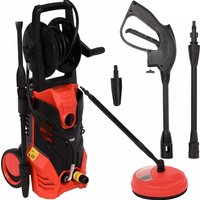
YT-85915 - Pressure washer Yato - Free user manual and instructions
Find the device manual for free YT-85915 Yato in PDF.



| Product Type | Electric High Pressure Washer |
| Brand | Yato |
| Model | YT-85915 |
| Supply Voltage | 220-240 V ~ 50 Hz |
| Rated Power | 2000 W |
| Maximum Pressure | 15 MPa (150 bar) |
| Rated Pressure | 10 MPa (100 bar) |
| Water Consumption | 6 L/min |
| Max Lance Flow Rate | 10 L/min |
| Max Inlet Water Temperature | 50 °C |
| Insulation Class | II |
| Protection Rating | IPX5 |
| Weight | 8.2 kg |
| Sound Pressure Level | 85,8 dB(A) |
| Sound Power Level | 95,39 dB(A) |
| Vibration Level | 2,64 m/s² |
| Included Nozzles | Adjustable nozzle, concentrated spray tip, brush nozzle, lance extension |
| Detergent Tank | Yes, integrated |
| High Pressure Hose Length | Approx. 10 m (integrated reel) |
| Safety | Trigger lock, overpressure protection, auto shut-off when trigger is released |
| Maintenance | Clean water inlet strainer, unclog nozzle with included needle, drain water before storage |
Frequently Asked Questions - YT-85915 Yato
User questions about YT-85915 Yato
0 question about this device. Answer the ones you know or ask your own.
Ask a new question about this device
Download the instructions for your Pressure washer in PDF format for free! Find your manual YT-85915 - Yato and take your electronic device back in hand. On this page are published all the documents necessary for the use of your device. YT-85915 by Yato.
USER MANUAL YT-85915 Yato
CAUTION! Please read the instructions before using the machine.
natural_image
Black and white photo of a CEC water heater with attached hose and control lever (no visible text or symbols)PL DE RU UA LT LV CZ SK HU RO ES FR IT NL GR
natural_image
Close-up of mechanical components with no visible text or symbols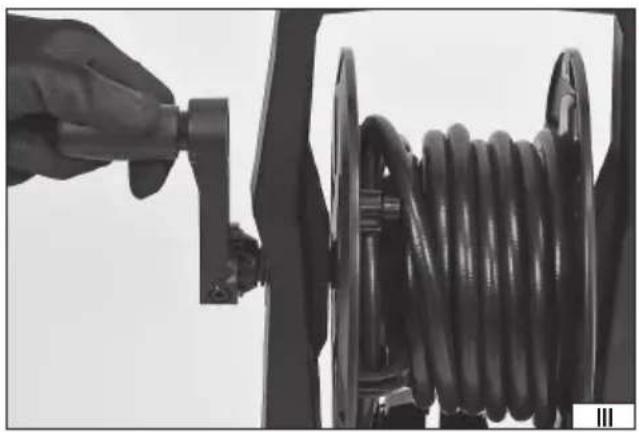
natural_image
Close-up of a hand adjusting a mechanical component next to a coiled black cable (no text or symbols visible)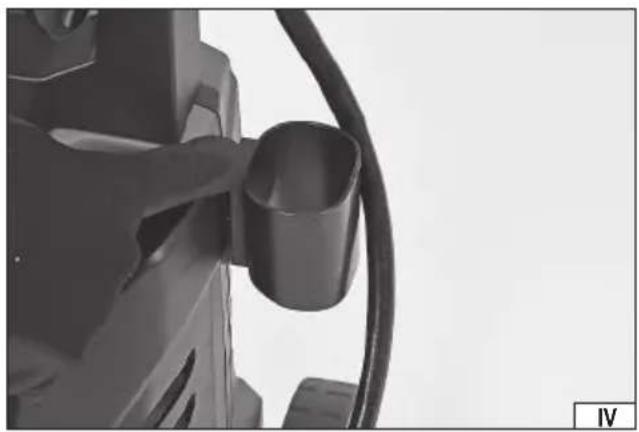
natural_image
Close-up of a mechanical component with a cylindrical cup and attached cable (no visible text or symbols)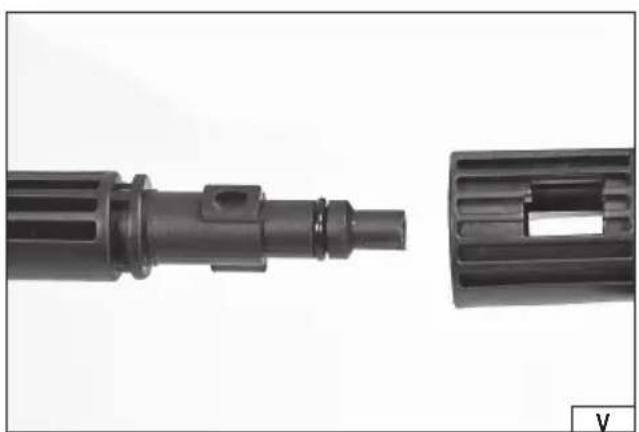
natural_image
Close-up of a mechanical component with two views: one showing a shaft and end caps, the other showing a cutaway view (no text or symbols visible)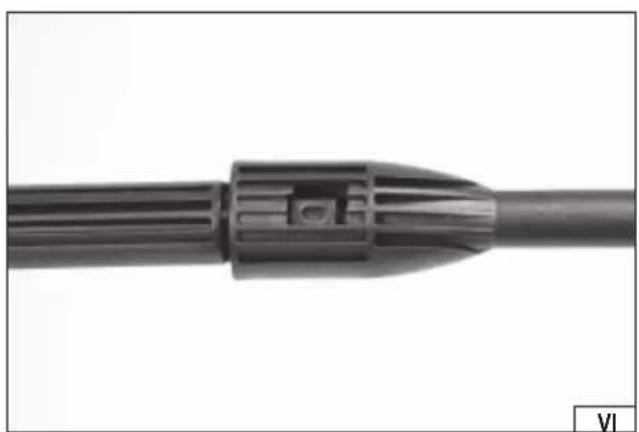
natural_image
Close-up of a black cylindrical electronic component with a pointed tip and ribbed end (no visible text or symbols)natural_image
Close-up of a hand holding a cylindrical electronic device with two arrows pointing to the ports (no visible text or symbols)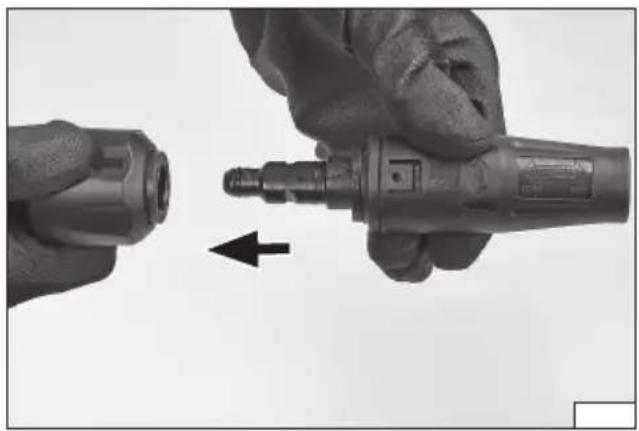
natural_image
Close-up of hands holding a mechanical tool with a black arrow pointing to the component (no text or symbols visible)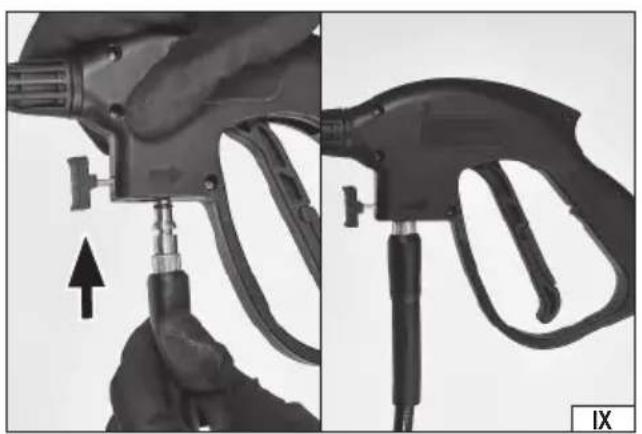
natural_image
Close-up of a hand using a gas pump tool to adjust the valve (no text or symbols visible)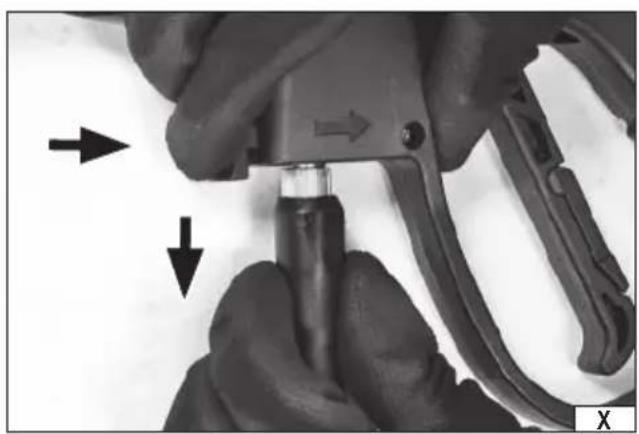
natural_image
Close-up of gloved hands using a pliers to adjust a mechanical component (no text or symbols visible)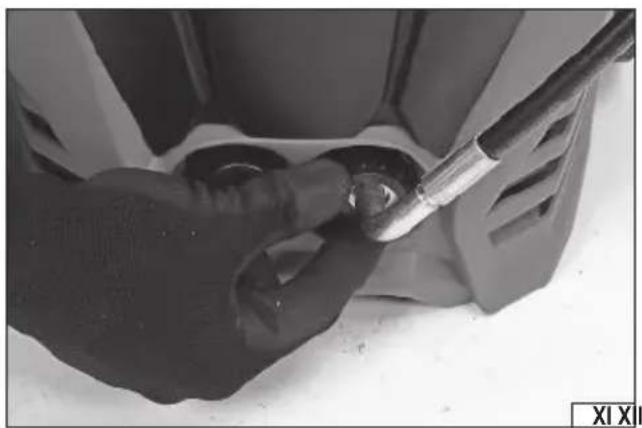
natural_image
Close-up of a hand using a tool to adjust or repair a mechanical component (no visible text or symbols)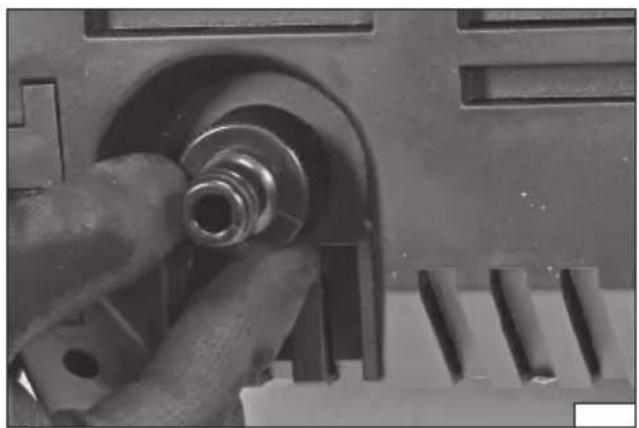
natural_image
Close-up of a hand adjusting a metal pipe fitting into a mechanical housing (no visible text or symbols)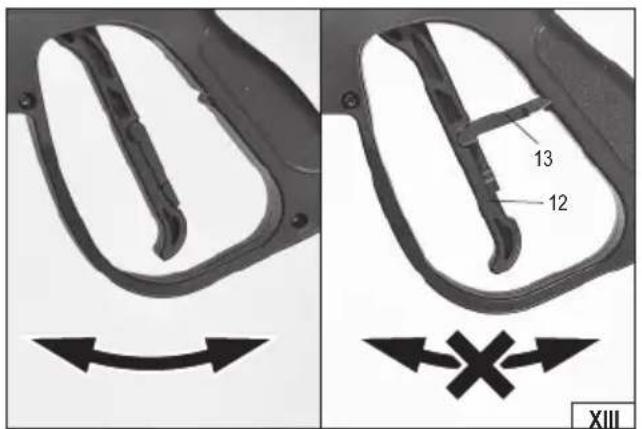
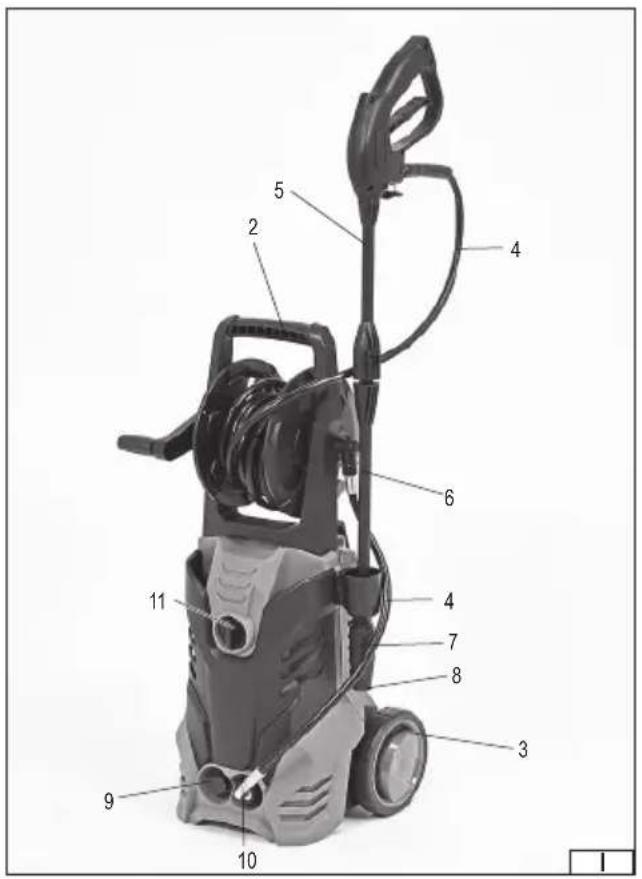
PL
-
washer
-
handle
-
wheel
-
high-pressure hose
-
lance grip
-
lance nozzle
-
adjustable attachment
-
detergent tank
-
water inlet
-
water outlet
-
ON/OFF switch
-
lance trigger
-
trigger lock
-
lance holder
-
hose connector
-
lance extension
-
brush attachment
-
concentrated jet attachment
UA
Guaranteed sound power level
Read the operating instruction
Wear hearing protectors
Gehörschutz tragen
Wear protective goggles
Schutzbrille tragen
This symbol indicates that waste electrical and electronic equipment (including batteries and storage cells) cannot be disposed of with other types of waste. Waste equipment should be collected and handed over separately to a collection point for recycling and recovery, in order to reduce the amount of waste and the use of natural resources. Uncontrolled release of hazardous components contained in electrical and electronic equipment may pose a risk to human health and have adverse effects for the environment. The household plays an important role in contributing to reuse and recovery, including recycling of waste equipment. For more information about the appropriate recycling methods, contact your local authority or retailer.
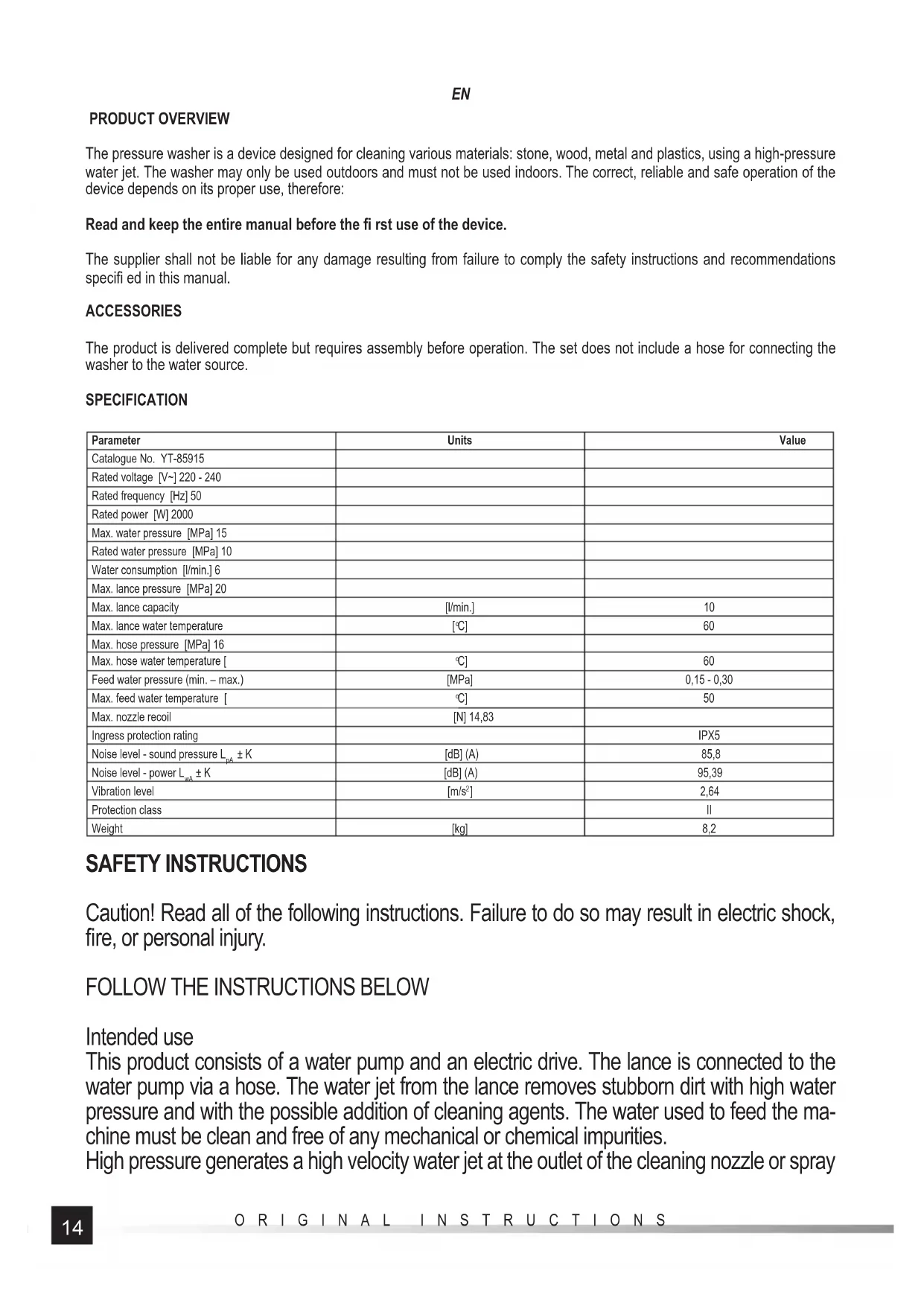
The pressure washer is a device designed for cleaning various materials: stone, wood, metal and plastics, using a high-pressure water jet. The washer may only be used outdoors and must not be used indoors. The correct, reliable and safe operation of the device depends on its proper use, therefore:
Read and keep the entire manual before the first use of the device.
The supplier shall not be liable for any damage resulting from failure to comply the safety instructions and recommendations specified in this manual.
ACCESSORIES
The product is delivered complete but requires assembly before operation. The set does not include a hose for connecting the washer to the water source.
SPECIFICATION
| Parameter | Units | Value |
| Catalogue No. YT-85915 | ||
| Rated voltage [V~] 220 - 240 | ||
| Rated frequency [Hz] 50 | ||
| Rated power [W] 2000 | ||
| Max. water pressure [MPa] 15 | ||
| Rated water pressure [MPa] 10 | ||
| Water consumption [l/min.] 6 | ||
| Max. lance pressure [MPa] 20 | ||
| Max. lance capacity | [l/min.] | 10 |
| Max. lance water temperature | [°C] | 60 |
| Max. hose pressure [MPa] 16 | ||
| Max. hose water temperature [ | °C] | 60 |
| Feed water pressure (min. – max.) | [MPa] | 0,15 - 0,30 |
| Max. feed water temperature [ | °C] | 50 |
| Max. nozzle recoil | [N] 14,83 | |
| Ingress protection rating | IPX5 | |
| Noise level - sound pressure L_pA ± K | [dB] (A) | 85,8 |
| Noise level - power L_wA ± K | [dB] (A) | 95,39 |
| Vibration level | [m/s2] | 2,64 |
| Protection class | II | |
| Weight | [kg] | 8,2 |
SAFETY INSTRUCTIONS
Caution! Read all of the following instructions. Failure to do so may result in electric shock, fire, or personal injury.
FOLLOW THE INSTRUCTIONS BELOW
Intended use
This product consists of a water pump and an electric drive. The lance is connected to the water pump via a hose. The water jet from the lance removes stubborn dirt with high water pressure and with the possible addition of cleaning agents. The water used to feed the machine must be clean and free of any mechanical or chemical impurities.
High pressure generates a high velocity water jet at the outlet of the cleaning nozzle or spray
EN
head. As a result, even the most stubborn dirt or paint layers can be removed. The washer can be used to clean
terrace slabs, pavements, façades and vehicles.
The water flow at the outlet of the nozzle is very sharp, so there is an increased risk of accidents and damage to the cleaned surface.
The device may only be used at temperatures above 0 ^ .
Improper use
The pressure washer must not be used for the following purposes: spraying hot water (above 50 °C ); cleaning electrical equipment; as a pump; spraying flammable liquids; spraying liquids other than water. Do not use the device to spray sea water.
WARNING! Danger of explosion - Do not spray flammable liquids.
Do not spray toxic, corrosive or hazardous liquids.
Do not use the washer as a fire extinguisher. A high-pressure water jet can move the fire source before extinguishing it. The water vapour produced by contact between water and fire is very hot and can cause severe burns.
Safety of use
When using the machine, wear personal protective equipment such as safety footwear with an anti-slip sole, protective gloves, splash protection clothing, helmet with a visor and hearing protection.
WARNING! The high-pressure jet can be dangerous. The high-pressure jet must not be directed towards people, live electrical equipment or the device itself. Also beware of reflected water jets, which can also be dangerous.
WARNING! High-pressure washers must not be used by children or untrained persons. The device may not be used by children or persons with reduced physical, sensory or mental capabilities, or persons without experience or knowledge. It is important to ensure that children do not see the product as a toy. Children should not be allowed to clean or maintain the product without the supervision of an adult.
WARNING! Do not use the machine if people are within its working range, unless they are wearing protective clothing.
WARNING! Do not point the high-pressure jet at yourself or others to clean clothing or footwear.
The washer is not intended to transport water intended for consumption. The water coming from the washer nozzle is not drinkable. The washer may only be connected to a drinking water source using a separator which prevents the return flow of water from the washer to the drinking water system. A B-family A-type separator compliant with EN 12729 shall be used.
Do not use the product in an explosive environment containing flammable liquids, gases, or vapours.
Do not place the device near any heat or fire sources.
WARNING! The device is designed to be used with a cleaning agent supplied or recommended by the manufacturer. Use of any other agent or chemical may affect the safety of use of the device. Use only cleaning agents intended for use in pressure washers.
WARNING! Do not use the device if the power cord or important parts of the device, e.g.
EN
safety components, high-pressure hoses or lances are damaged.
WARNING! To ensure the safety of the machine, use only original spare parts provided by the manufacturer or approved by the manufacturer.
WARNING! High-pressure hoses, couplings and connectors are important for the safety of the machine. Use only hoses, couplings and connectors recommended by the manufacturer. WARNING! The machine must be disconnected from the power supply for cleaning or maintenance activities and for replacing parts or converting the machine to another function. Pull the machine's power cord plug out of the socket.
WARNING! Always turn the machine off using the switch if it is left unattended. During operation, the machine must be under continuous supervision of the operator.
Place the washer on a flat, level and hard surface. The washer ventilation openings must not be obstructed during operation. The surroundings of the washer should be well-ventilated.
The high-pressure water jet causes the lance to recoil in the direction opposite to that of the water jet. Always hold the lance with both hands, and assume appropriate position to prevent the effects of the lance recoil.
Electrical safety
The electrical connection must be made by a qualified electrician and be in accordance with IEC 60364-1. It is recommended to use a residual current device in the power supply system of this device which interrupts the line voltage when the short-circuit current exceeds 30 mA for 30 ms, or a device which provides earthing.
Make sure that the power parameters comply with the ones shown on the device's rating plate before connecting the device's power cord plug to the power supply.
The plug of the power cord must match the power socket. Do not modify the plug. Do not use any adapters to fit the plug to the socket. An unmodified plug, which matches the socket, reduces the risk of an electric shock.
WARNING! Using inappropriate extension cords may be dangerous. If an extension cord is used, it should be suitable for outdoor use, and the couplings should be dry and not lying on the ground. It is recommended to use an extension cord with sockets at least 60 mm above the ground. If extension cords are used to power the device, the cross-section of the extension cords should not be smaller than the cross-section of the device's power cord. In the case of extension cords longer than 25 m, the cross-section of the conductors should not be less than 1.5 mm ^4 .
If the device's power cord is damaged, it must be replaced at the manufacturer's authorised service centre to avoid hazards. It is not allowed to use the device with a damaged power cord. The power cord cannot be repaired and must be replaced entirely.
Do not touch the plugs and sockets with wet hands.
Always transport the machine by grasping the handle. Do not transport the product by pulling on the power cord.
Additional safety instructions
WARNING! Do not use the machine in bad weather conditions, especially in case of thunderstorms.
EN
The lance outlet must never be pointed towards people and animals. Keep your hands away from the lance outlet when using the washer.
Before each use, check the hoses and the manner of their connection. If leaks are detected, they must be removed before starting work. Replace damaged hoses with new ones which are free of damage.
The hose supplying water to the washer must be at least 5 metres long and must withstand pressure. It is recommended to use reinforced hoses made of weather-resistant materials. It is recommended to use new hoses. Old hoses can be contaminated, contain limescale deposits which can affect the performance of the washer and cause damage to the machine. Avoid bending, kinking, trampling or clamping the hose. Any action leading to the reduction in the hose cross-section can lead to its rupture. The water jet coming out of a damaged hose may be under high pressure and may pose a risk of skin penetration.
The washer may only be switched on when the high-pressure hose and the water supply hose have been correctly connected. Turn off the washer immediately with the switch and unplug the power cord from the socket if signs of malfunction are observed during operation, e.g. increased noise, increased vibrations, pressure drop. Before resuming work, the causes of malfunctioning of the washer must be eliminated. Improper operation can be caused by the accumulation of limescale deposits precipitated from water. In this case, hand the washer over to an authorised service centre.
The lance trigger can only be operated manually, do not use any trigger locks to hold it in the pressed position.
Do not let the water pump operate without water. This can damage the pump. If the water supply stops, cease work immediately and switch the washer off.
Release the pressure in the washer system before removing the high-pressure hose. To do this, direct the lance outlet to a safe place, press the trigger and wait for the water to stop flowing out.
Before storing the washer, remove all water from inside of the washer. Freezing water increases its volume and can lead to damage to the device.
Information on noise reduction
A certain amount of interference caused by this device is inevitable. Carry out loud work at designated hours. If necessary, take breaks during work and limit the work to the most necessary activities. The operator and bystanders in the vicinity of the work area should wear hearing protection.
Information on vibration reduction
The feeling of tingling or numbness of hands is a sign of excessive vibration. Limit the time of use, take appropriately long breaks, distribute the work among several people or wear anti-vibration gloves during long use of the device.
Residual risks
There are always certain residual risks which cannot be avoided, even if the device is used correctly. The following potential hazards may arise from the type and design of the tool:
EN
unintentional start-up of the product;
contact of unprotected body parts with the water jet (cutting); ejection of objects with water jet; hearing damage if the recommended hearing protection is not used; inhalation of water and detergent particles.
Failure to follow the instructions in the manual may be the cause of other hazards resulting from improper use.
PRODUCT OPERATION
Caution! All work related to the installation and connection of the washer to the water supply must be carried out with the machine power supply disconnected. The power cord plug must not be connected to the socket.
Unpacking and preparing for assembly
Unpack the product by removing all packaging components.
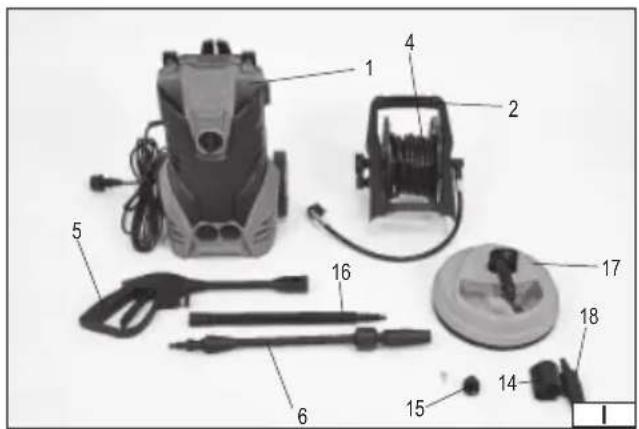
Check that all parts have been packed in accordance with Figure (I).
It is recommended to arrange all the elements on a level, flat and hard surface. This will make it easier to assemble the product.
Caution! If the water inlet/outlet is protected by a protective cap, it must be removed before the connecting the hose. It is recommended to keep the cap and install it each time the coupling is not used. This will prevent impurities from entering the water inlet/outlet.
Washer assembly
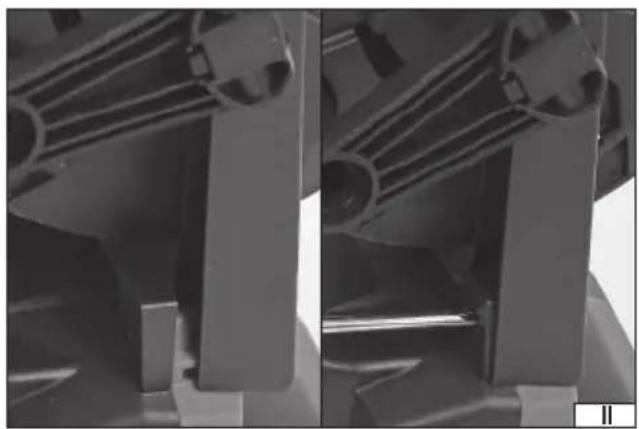
Mount the holder with the high-pressure hose reel drum on the top wall of the washer using screws (II).
The reel drum is equipped with a crank which makes it easier to fold and unfold the hose (III). The crank can be folded and the folded crank limits the rotation of the reel drum.
Slide the lance holder into the rail on the side wall of the washer (IV).
Connect the grip and the lance nozzle. To do this, insert the nozzle coupling into the grip socket so that the coupling pins hit the slots of the socket (V), and then turn the nozzle to lock it in the grip socket (VI). If the nozzle is correctly installed, it cannot be removed other than by slightly retracting the nozzle, rotating and pulling it out of the grip socket.
The nozzle has a pre-installed water jet adjustment attachment. A concentrated water jet attachment can be installed instead of that attachment.
Instead of a nozzle, a lance extension and a brush attachment for cleaning large, flat surfaces can be installed.
The nozzle attachment can be removed by moving the ring at the nozzle outlet in the direction marked with the arrow (VII). Install the nozzle attachment by sliding it into the nozzle outlet until the ratchet mechanism engages (VIII).
Connect the high-pressure hose to the lance grip by inserting the hose connector into the socket near the trigger mechanism until the ratchet mechanism engages (IX).
The hose can only be disconnected when the ratchet mechanism release button is pressed (X).
Screw the short section of the hose coming out of the side wall of the handle firmly to the washer water outlet (XI). Screw by hand, do not use any tools. The tightening force should be sufficient to ensure the tightness of the connection. Tightening too much can damage the gaskets.
The water inlet is located on the front wall of the washer. The supply hose can be connected to it either directly via a threaded coupling or via a pre-screwed connector (XII).
There is a detergent tank at the back of the washer. Unscrew the tank cap, pour in the detergent, and then screw the cap back on.
Connecting the washer to a water source
Before connecting the washer to the water source, make sure that the source supplies water under pressure and with the capacity described in the technical data table. Make sure that the water source valve is closed. If the washer is connected to a drinking water source, remember to use a separator.
The washer does not have a water suction function, the water source must supply water under pressure.
Connect the washer to the water source using a flexible hose at least 5 m long.
The hose can be connected directly to the water inlet of the washer by screwing on a threaded coupling or screwing on the connector allowing the use of standard garden hose quick-connect couplings.
After connecting the washer to the water source, open the water source valve and check the connection for leaks.
Starting and stopping the washer
After connecting the washer to the water source and checking the tightness of the connection, make sure that the switch is in the OFF position and plug the washer power cord plug into the socket.
Make sure that the lance trigger is not pressed. The lance trigger can be locked to prevent accidental pressing (XIII).
Move the switch to the ON position. The washer pump will begin working. Check for leaks in the lance/washer connection, then
EN
direct the lance outlet to a safe place, e.g. to the ground, and pull the trigger holding the lance with both hands. The water will start coming out from the nozzle outlet.
Caution! If any leaks are detected, immediately turn off the washer using the switch, then unplug the power cord from the outlet, stop the water supply to the washer, release the pressure of the water in the washer system, and then remove the cause of the leak. It is forbidden to use a washer with leaks in the water system.
Switch off the washer after finishing work, according to the following procedure. Release the pressure on the lance trigger. Turn off the washer by moving the switch to the OFF position, and then unplug the power cord from the outlet. Stop the water supply to the washer, then direct the outlet of the lance to a safe place and pull the lance trigger. Wait until the water stops flowing out of the lance. This will release the pressure of the water remaining inside the washer. Release the trigger and lock it to prevent unintentional pressing. If the washer is not to be used in the near future, disconnect it from the water source and carry out preparatory activities before storing the washer.
Working with the pressure washer
The high-pressure water jet is dangerous. Before starting to clean surfaces, make sure that they can be cleaned with a high-pressure water jet.
Never point the water jet at electrical equipment.
Increasing the distance between the nozzle outlet and the cleaned surface reduces the pressure of the water jet on the surface. Never apply the nozzle outlet to the cleaned surface, it is recommended to maintain a distance of at least 30 cm between the nozzle outlet and the cleaned surface.
If not necessary, keep moving the water jet and do not aim it at one place. This will reduce the risk of damage to the cleaned surface by prolonged exposure to high-pressure water jets.
The water jet of the high-pressure nozzle attachment can be adjusted. Rotating the nozzle housing changes the type of the water jet from a concentrated high-pressure jet to a lower-pressure dispersed jet.
If a detergent is used, use a preparation designed for pressure washers. Read and observe the information provided with the preparation. This applies in particular to dilution and use. Do not use corrosive preparations.
MAINTENANCE, TRANSPORT AND STORAGE
Clean the washer's housing with a damp cloth, then dry or leave to dry. Clean the ventilation openings with a soft brush or a soft brush with plastic bristles, or with a compressed air stream with the pressure not exceeding 0.3 MPa. The water inlet is equipped with a strainer, which must be removed, cleaned under running water and then reinstalled in the water inlet. It is forbidden to use the washer without the strainer installed in the water inlet. Deformation or reduction of the efficiency of the outlet jet can be caused by a dirty nozzle outlet. Clean the nozzle inlet with the supplied needle. Be careful when cleaning so as not to damage the nozzle. If the cleaning has no effect, hand over the washer to an authorised service centre. Do not disassemble any of the parts of the washer by yourself. Remove water from the inside of the washer before storage. This will prevent contamination of the washer by organic material which may be present in the water, and damage to the washer if exposed to temperatures below 0 °C. After using the washer and disconnecting the water supply hose, also disconnect the high-pressure hose and then run the washer for 5 seconds. This will remove as much water as possible from the inside of the washer pump. Do not run the washer for more than 5 seconds, as this will damage the washer pump.
Store the washer in dry, dark places and ensure good ventilation. Do not store the washer at temperatures below 0^ C. The place of storage should protect the device from access by unauthorised persons, especially children.
Transport the washer over short distances by grasping the handle and using the wheels of the washer. It is advisable to disconnect the lance and the high-pressure hose before transport over longer distances, and then cover the water inlet and outlet. The washer can be transported vertically or horizontally. Ensure that the high-pressure hose is not damaged or deformed during transport.
GERÄTEBESCHREIBUNG
CARACTÉRISTIQUES DU PRODUIT
DEKLARACJA ZGODNOŚCI DECLARATION OF CONFORMITY DECLARATIE DE CONFORMITATE
0225/YT-85915/EC/2025
We declare and guarantee with full responsibility that the following products:
meet requirements of the following European Standards / Technical Specifications:
and fulfill requirements of the following European Directives:
Machinery and safety elements
Restriction of the Use of Certain Hazardous Substances
Serial number: concern all serials numbers of item(s) mentioned in this declaration
The person authorized to compile the technical file:
DEKLARACJA ZGODNOŚCI DECLARATION OF CONFORMITY DECLARATIE DE CONFORMITATE
0225/YT-85915/Noise/EC/2025
We declare and guarantee with full responsibility that the following products:
meet requirements of the following European Directive: 2000/14/EC
Manufacturer quality-control system, examination of the manufacturer's technical file and periodical inspection by notified body
Measured sound power level on an equipment representative for this type:
Guaranteed sound power level for this equipment:
conformity and references of the other Community Directives applied:
- PL
- UA
- ACCESSORIES
- SAFETY INSTRUCTIONS
- FOLLOW THE INSTRUCTIONS BELOW
- Intended use
- EN
- Improper use
- Safety of use
- Electrical safety
- Additional safety instructions
- Information on noise reduction
- Information on vibration reduction
- Residual risks
- PRODUCT OPERATION
- Working with the pressure washer
- MAINTENANCE, TRANSPORT AND STORAGE
- GERÄTEBESCHREIBUNG
- CARACTÉRISTIQUES DU PRODUIT
- DEKLARACJA ZGODNOŚCI DECLARATION OF CONFORMITY DECLARATIE DE CONFORMITATE
Brand : Yato
Model : YT-85915
Category : Pressure washer