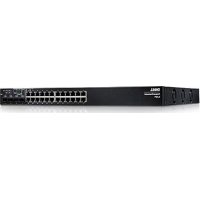
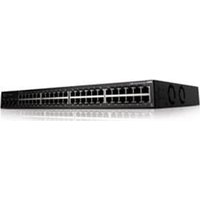
PowerConnect 6224P - Switch DELL - Free user manual and instructions
Find the device manual for free PowerConnect 6224P DELL in PDF.



| Product Type | Managed PoE Network Switch |
| Brand | Dell |
| Model | PowerConnect 6224P |
| Dimensions (approx.) | 44.5 x 30.5 x 4.4 cm (1U rack mount) |
| Weight (approx.) | 4.5 kg |
| Power Supply | 100-240 VAC, 50-60 Hz, max power consumption 150W (estimated), with optional redundant power supply support (RPS-600 or EPS-470) |
| Key Features | 24 PoE RJ-45 ports (10/100/1000), 4 combo SFP ports, stacking up to 12 units, management via CLI/Web/SNMP, VLAN, QoS, security, diagnostics |
| Maintenance and Cleaning | Clean with a soft dry cloth. Do not use liquid products. Ensure adequate ventilation. |
| Safety | Disconnect the device before installation. Do not block ventilation openings. Use within a temperature range of 0-45°C. |
| Spare Parts and Repairability | No user-serviceable parts. For repairs, contact Dell support. |
| General Information | PowerConnect 6200 series switch, with PoE power supply, suitable for enterprise networks. |
Frequently Asked Questions - PowerConnect 6224P DELL
User questions about PowerConnect 6224P DELL
0 question about this device. Answer the ones you know or ask your own.
Ask a new question about this device
Download the instructions for your Switch in PDF format for free! Find your manual PowerConnect 6224P - DELL and take your electronic device back in hand. On this page are published all the documents necessary for the use of your device. PowerConnect 6224P by DELL.
USER MANUAL PowerConnect 6224P DELL
6200 Series Stackable Switches
Getting Started Guide
使用入门指南
Příručka Začínáme
Notes, Notices, and Cautions

NOTE: A NOTE indicates important information that helps you make better use of your computer.

NOTICE: A NOTICE indicates either potential damage to hardware or loss of data and tells you how to avoid the problem.

CAUTION: A CAUTION indicates a potential for property damage, personal injury, or death.
Information in this document is subject to change without notice. © 2007 Dell Inc. All rights reserved.
Reproduction in any manner whatsoever without the written permission of Dell Inc. is strictly forbidden.
Trademarks used in this text: Dell, the DELL logo, and PowerConnect are trademarks of Dell Inc.; Microsoft and Windows are registered trademarks of Microsoft Corporation.
Other trademarks and trade names may be used in this document to refer to either the entities claiming the marks and names or their products. Dell Inc. disclaims any proprietary interest in trademarks and trade names other than its own.
Models PC6224, PC6248, PC6224P, PC6248P, and PC6224F
September 2007 P/N YC897 Rev. A02
Contents
1 Installation
Site Preparation 5
Unpacking the Switch 5
Package Contents. 5
Unpacking Steps 6
Mounting the Switch. 6
Installing in a Rack 6
Installing as a Free-standing Switch 7
Connecting a Switch to a Terminal 7
Connecting a Switch to a Power Supply 7
Assembling a Stack 8
2 Starting and Configuring the Switch
Connecting the Terminal to the Switch 10
Booting the Switch 11
Initial Configuration 12
Initial Configuration Procedure. 12
Example Session 13
3 Managing a Stack
Master and Member Switches 16
Stack Startup 16
Topology Discovery 16
Auto Stack ID Assignment 16
Firmware Version Checking 16
System Initialization.... 17
CLI/ Telnet/ Web Interface 17
Insertion and Removal of Switches. 17
Operating as Standalone Switch 17
Stack ID Renumbering. 17
User Controls 18
4 Front Panels and LEDs
Front Panels 19
LEDs 20
Systems LEDs. 20
RJ-45 LEDs (PoE) 21
XFP LED 21
SFP LED 21
Installation
This document provides basic information to install, configure, and operate Dell™ PowerConnect™ PC6224, PC6248, PC6224P, PC6248P, and PC6224F systems. For more information, see the User's Guide, which is available on your User Documentation CD, or check the Dell Support web site at support.dell.com for the latest updates on documentation and firmware.
Site Preparation
PowerConnect 6200 series switches can be mounted in a standard 48.26-cm (19-inch) rack or left freestanding (placed on a flat surface). These switches can function as stand-alone switches. They can also be installed as a stack of switches that function, and are managed, as a single entity.
Before installing the switch or switches, make sure that the chosen installation location meets the following site requirements:
- Power — The switch is installed near an easily accessible 100–250 VAC, 50–60 Hz outlet.
- Clearance — There is adequate front and rear clearance for operator access. Allow clearance for cabling, power connections, and ventilation.
- Cabling — The cabling is routed to avoid sources of electrical noise such as radio transmitters, broadcast amplifiers, power lines, and fluorescent lighting fixtures.
- Ambient — The ambient switch operating temperature range is 0 to 45°C (32 to 113°F) at a relative humidity of up to 95 percent, non-condensing.
Unpacking the Switch
Package Contents
When unpacking each switch, make sure that the following items are included:
- One PowerConnect switch
- One AC power cable
- One RS-232 cable
- One rack-mount kit for rack installation (two mounting brackets, bolts, and cage nuts)
• One set of self-adhesive rubber pads for the free-standing switch (four pads are included)
• User Documentation CD - Getting Started Guide
• Product Information Guide
Unpacking Steps
NOTE: Before unpacking the switch, inspect the container and immediately report any evidence of damage.
1 Place the container on a clean, flat surface and cut all straps securing the container.
2 Open the container or remove the container top.
3 Carefully remove the switch from the container and place it on a secure and clean surface.
4 Remove all packing material.
5 Inspect the product and accessories for damage.
Mounting the Switch
CAUTION: Read the safety information in the Product Information Guide as well as the safety information for other switches that connect to or support the switch.
The AC and DC power connectors are on the back panel of the switch. We recommend connecting a redundant power supply, such as the PowerConnect RPS-600 for non-PoE switches or the PowerConnect EPS-470 for PoE switches.
Installing in a Rack
CAUTION: Do not use rack mounting kits to suspend the switch from under a table or desk, or attach it to a wall.
CAUTION: Disconnect all cables from the switch before continuing. Remove all self-adhesive pads from the underside of the switch, if they have been attached.
CAUTION: When mounting multiple switches into a rack, mount the switches from the bottom up.
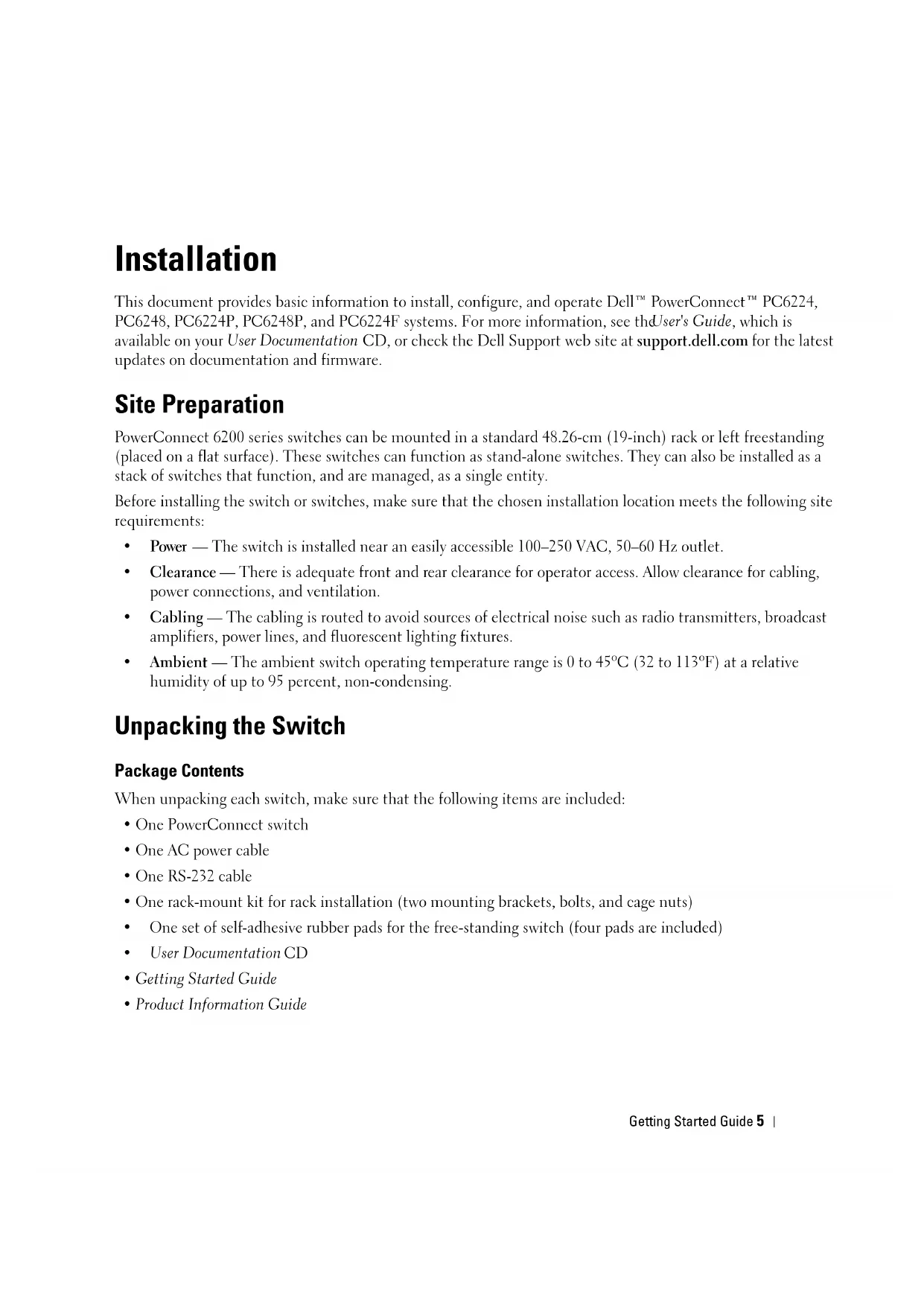
1 Place the supplied rack-mounting bracket on one side of the switch, ensuring that the mounting holes on the switch line up to the mounting holes in the rack-mounting bracket. Figure 1-1 illustrates where to mount the brackets.
Figure 1-1. Attaching the Brackets
natural_image
Front view of a network switch device with ports and connectors, showing internal structure and connection points (no text or symbols visible)2 Insert the supplied bolts into the rack-mounting holes and tighten with a screwdriver.
3 Repeat the process for the rack-mounting bracket on the other side of the switch.
4 Insert the switch into the 48.26 cm (19 inch) rack, ensuring that the rack-mounting holes on the switch line up to the mounting holes in the rack.
5 Secure the switch to the rack with either the rack bolts or cage nuts and cage nut bolts with washers (depending on the kind of rack you have). Fasten the bolts on bottom before fastening the bolts on top.

NOTICE: Make sure that the ventilation holes are not obstructed.

CAUTION: Make sure that the supplied rack bolts fit the pre-threaded holes in the rack.
Installing as a Free-standing Switch

NOTICE: We strongly recommend mounting the switch in a rack.
Install the switch on a flat surface if you are not installing it in a rack. The surface must be able to support the weight of the switch and the switch cables. The switch is supplied with four self-adhesive rubber pads.
1 Attach the self-adhesive rubber pads on each location marked on the bottom of the switch.
2 Set the switch on a flat surface, and make sure that it has proper ventilation by leaving 5 cm (2 inches) on each side and 13 cm (5 inches) at the back.
Connecting a Switch to a Terminal
1 Connect the supplied RS-232 cable to a VT100 terminal or to the serial connector of a personal computer running VT100 terminal emulation software.
2 Connect the female DB-9 connector at the other end of the RS-232 crossover cable to the serial port connector on the rear of the switch.

NOTE: If you are installing a stack of switches, connect the terminal to the Master Switch. This switch will light the Master Switch LED, the top left LED in the array on the front panel. When a stack is powered up for the first time, the switches elect the Master Switch, which may occupy any location in the stack. If you connect the terminal to a member switch, you will not be able to use the CLI.
Connecting a Switch to a Power Supply

CAUTION: Read the safety information in the Product Information Guide as well as the safety information for other switches that connect to or support the switch.
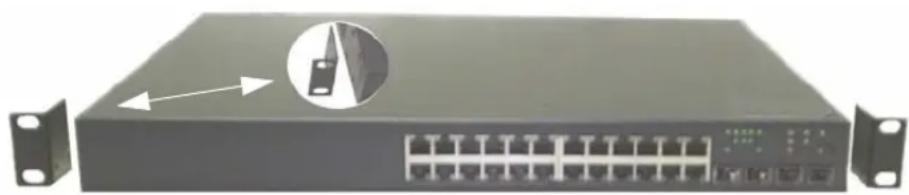
1 Connect the supplied AC power cable to the AC power connector located on the back panel. Figure 1-2 illustrates where to connect the power cable.
2 To provide a redundant source of power, connect the 12 VDC power cable from a (separately purchased) PowerConnect RPS-600 for non-PoE switches or PowerConnect EPS-470 for PoE switches to the DC power connector located on the back panel.

NOTE: Do not connect the power cable to a grounded AC outlet at this time. Connect the switch to a power source as described in the step detailed in "Starting and Configuring the Switch."
Figure 1-2. Connecting Power Cable

natural_image
Front view of a black server rack with ports and a connected cable (no visible text or labels)Assembling a Stack
You can stack PowerConnect 6200 series switches up to 12 switches high, supporting up to 576 front panel ports. Create a stack by connecting adjacent units using the stacking ports on the left side of the switch rear. See Figure 1-3.
NOTE: The switches must be turned off as they are added to a stack.
1 Install a separately purchased stacking module in rear "Bay 1" in each of the switches to be stacked.
2 Use the cables supplied with the stacking modules to connect from one switch to the next until all switches are connected in a ring.
3 Make sure that the last stacking cable is connected from the last switch to the first switch to create a loop.
4 If necessary, use a separately purchased three-meter stacking cable to connect the switches.
Figure 1-3. Connecting a Stack of Switches

natural_image
3D rendering of a server rack with multiple ports and connectors (no visible text or labels)
NOTE: Long cable not shown in Figure 1-3.
The resulting ring topology allows the entire stack to function as a single switch with resilient fail-over capabilities.
Starting and Configuring the Switch
After completing all external connections, connect a terminal to a switch to configure the switch or stack. Additional advanced functions are described in the User's Guide located on your User Documentation CD.

NOTE: Read the release notes for this product before proceeding. You can download the release notes from the Dell Support website at support.dell.com.

NOTE: We recommend that you obtain the most recent version of the user documentation from the Dell Support website at support.dell.com.
Connecting the Terminal to the Switch
To monitor and configure the switch via serial console, use the console port on the rear of the switch to connect it to a terminal desktop system running terminal emulation software. The console port connector is a male DB-9 connector, implemented as a data terminal equipment (DTE) connector.
The following is required to use the console port:
- VT100-compatible terminal or a desktop or a portable system with a serial port, running VT100 terminal emulation software.
- An RS-232 crossover cable with a female DB-9 connector for the console port and the appropriate connector for the terminal.
Perform the following tasks to connect a terminal to the switch console port:

NOTE: If you are installing a stack of switches, you need to assemble and cable the stack before powering up and configuring the stack.
1 Connect an RS-232 crossover cable to the terminal running VT100 terminal emulation software.
2 Configure the terminal emulation software as follows:
a Select the appropriate serial port (serial port 1 or serial port 2) to connect to the console.
b Set the data rate to 9600 baud.
c Set the data format to 8 data bits, 1 stop bit, and no parity.
d Set the flow control to none.
e Set the terminal emulation mode to VT100.
f Select Terminal keys for Function, Arrow, and Ctrl keys. Make sure that the setting is for Terminal keys (not Microsoft® Windows® keys).

NOTE: When using HyperTerminal with Microsoft Windows 2000, make sure that you have Windows 2000 Service Pack 2 or later installed. With Windows 2000 Service Pack 2, the arrow keys function properly in HyperTerminal's VT100 emulation. Go to www.microsoft.com for more information on Windows 2000 service packs.
3 Connect the female connector of the RS-232 crossover cable directly to the switch console port, and tighten the captive retaining bolts. The PowerConnect 6200 series console ports are located on the rear panel as shown in Figure 1-4.

NOTE: If you are installing a stack of switches, connect the terminal to the Master Switch. This switch will light the Master Switch LED, the top left LED in the array on the front panel. When a stack is powered up for the first time, the switches elect the Master Switch, which may occupy any location in the stack. If you connect the terminal to a member switch, you will not be able to use the CLI.
Figure 1-4. Connecting to the Console Port

natural_image
Exterior view of a black rectangular electronic device with two white connectors at the bottom (no visible text or symbols)Booting the Switch
1 Make sure that the switch console port is connected to a VT100 terminal or VT100 terminal emulator via the RS-232 cable.
2 Locate an AC power receptacle.
3 Deactivate the AC power receptacle.
4 Connect the switch to the AC receptacle.
5 Activate the AC power receptacle.
When the power is turned on with the local terminal already connected, the switch goes through a power-on self-test (POST). POST runs every time the switch is initialized and checks hardware components to determine if the switch is fully operational before completely booting. If POST detects a critical problem, the program flow stops. If POST passes successfully, valid firmware is loaded into RAM. POST messages are displayed on the terminal and indicate test success or failure. The boot process runs for approximately 60 seconds.
Initial Configuration
NOTE: The initial simple configuration procedure is based on the following assumptions:
- The PowerConnect switch was never configured before and is in the same state as when you received it.
- The PowerConnect switch booted successfully.
- The console connection was established and the Dell Easy Setup Wizard prompt appears on the screen of a VT100 terminal or terminal equivalent.
The initial switch configuration is performed through the console port. After the initial configuration, you can manage the switch either from the already-connected console port or remotely through an interface defined during the initial configuration.
NOTE: The switch is not configured with a default user name and password.
NOTE: All of the settings below are necessary to allow the remote management of the switch through Telnet (Telnet client) or HTTP (Web browser).
Before setting up the initial configuration of the switch, obtain the following information from your network administrator:
- The IP address to be assigned to the management VLAN through which the switch is managed.
- The IP subnet mask for the network.
- The IP address of the management VLAN default gateway for configuring the default route.
Initial Configuration Procedure
You can perform the initial configuration using the Dell Easy Setup Wizard, or by using the Command Line Interface (CLI). The Setup Wizard automatically starts when the switch configuration file is empty. You can exit the wizard at any point by entering [ctrl+z] , but all configuration settings specified will be discarded (the switch will use the default values). For more information on CLI initial configuration see the User Guide. This guide shows how to use the Setup Wizard for initial switch configuration. The wizard sets up the following configuration on the switch:
- Establishes the initial privileged user account with a valid password. The wizard configures one privileged user account during the setup.
- Enables CLI login and HTTP access to use the local authentication setting only.
- Sets up the IP address for the management VLAN.
- Sets up the SNMP community string to be used by the SNMP manager at a given IP address. You may choose to skip this step if SNMP management is not used for this switch.
- Allows you to specify the management server IP or permit management access from all IP addresses.
- Configures the default gateway IP address.
Example Session
This section describes an Easy Setup Wizard session. The following values are used by the example session:
- IP address for the management VLAN is 192.168.1.100:255.255.255.0.
- The user name is admin, and password is admin123.
• The network management system IP address is 192.168.1.10.
• The default gateway is 192.168.1.1. - The SNMP community string to be used is Dell_Network_Manager
The setup wizard configures the initial values as defined above. After you complete the wizard, the switch is configured as follows:
- SNMPv1/2c is enabled and the community string is set up as defined above. SNMPv3 is disabled by default.
- The admin user account is set up as defined.
- A network management system is configured. From this management station, you can access the SNMP, HTTP, and CLI interfaces. You may also choose to allow all IP addresses to access these management interfaces by choosing the (0.0.0.0) IP address.
- An IP address is configured for the default management VLAN (1).
- A default gateway address is configured.

NOTE: In the example below, the possible user options are enclosed in []. Also, where possible, the default value is provided in {}. If you press
The following example contains the sequence of prompts and responses associated with running an example Dell Easy Setup Wizard session, using the input values listed above.
After the switch completes the POST and is booted, the following dialog appears:
Welcome to Dell Easy Setup Wizard
The setup wizard guides you through the initial switch configuration, and gets you up and running as quickly as possible. You can skip the setup wizard, and enter CLI mode to manually configure the switch. You must respond to the next question to run the setup wizard within 60 seconds, otherwise the system will continue with normal operation using the default system configuration. Note: You can exit the setup wizard at any point by entering [ctrl+z].
Would you like to run the setup wizard (you must answer this question within 60 seconds)? [Y/N] y
Step 1:
The system is not configured for SNMP management by default. To manage the switch using SNMP (required for Dell Open Manage Network Manager) you can:
o Set up the initial SNMP version 1 & 2 now.
o Return later and set up other SNMP accounts. (For more information on setting up an SNMP version 3 account, see the user documentation).
Would you like to configure the SNMP management interface now? [Y/N]
y
To configure the SNMP management account you must specify the management system IP address and the "community string" or password that the particular management system uses to access the switch. The wizard automatically assigns the highest access level [Privilege Level 15] to this account. You can use Dell Open Manage Network Manager or other management interfaces to change this setting and to add additional management systems later. For more information on adding management systems, see the User's Guide.
To add a management station:
Please enter the SNMP community string to be used {Dell_Network_Manager}: Dell_Network_Manager
NOTE: If it is configured, the default access level is set to the highest available access for the SNMP management interface. Initially only SNMPv1/2c will be activated. SNMPv3 is disabled until you return to configure security access for SNMPv3 (e.g. engine ID, view, etc.).
Please enter the IP address of the Management System (A.B.C.D) or wildcard (0.0.0.0) to manage from any Management Station {0.0.0.0}:
192.168.1.10
Step 2:
Now we need to configure your initial privilege (Level 15) user account. This account is used to login to the CLI and Web interface. You may set up other accounts and change privilege levels later. For more information on setting up user accounts and changing privilege levels, see the User's Guide.
To set up a user account:
Please enter the user name {admin}: admin
Please enter the user password: *****
Please reenter the user password: ***
NOTE: If the first and second password entries are not identical, the user is prompted until they are.
NOTE: You can create additional user accounts after completing the Easy Setup Wizard. See the User's Guide for more information.
Step 3:
Next, an IP address is set up. The IP address is defined on the default VLAN (VLAN #1), of which all ports are members. This is the IP address you use to access the CLI, Web interface, or SNMP interface for the switch.
To set up an IP address:
Please enter the IP address of the device (A.B.C.D):
192.168.1.100
Please enter the IP subnet mask (A.B.C.D or /nn):
255.255.255.0
Step 4:
Finally, set up the gateway. Please enter the IP address of the gateway from which this network is reachable (e.g. 192.168.1.1): 192.168.1.1
This is the configuration information that has been collected:
SNMP Interface = "Dell_Network_Manager"@192.168.1.10
User Account set up = admin
Password = *****
Management IP address = 192.168.1.100:255.255.255.0
Gateway = 192.168.1.1
Step 5:
If the information is correct, please select (Y) to save the configuration, and copy to the start-up configuration file. If the information is incorrect, select (N) to discard configuration and restart the wizard: [Y/N] y
Thank you for using the Dell Easy Setup Wizard. You will now enter CLI mode.
Managing a Stack
Master and Member Switches
A stack of switches can be managed as a single entity when connected together. The stack can be managed from a web-based interface, an SNMP management station, or a CLI. When a stack is created, one switch automatically becomes the master switch. You can manually allocate an IP address to the master switch using the console, or let DHCP do so automatically. Afterwards, you can manage the entire stack through the IP address of the Master Switch. The Master Switch detects and reconfigures the ports with minimal operational impact in the event of:
- Switch failure
• Inter-switch stacking link failure - Switch insertion
- Switch removal
If the Master Switch goes off line, any of the Member Switches in the stack can replace it. The system will elect a new Master Switch and reconfigure the System Configuration for the stack.
Stack Startup
Topology Discovery
When a stack is formed, a topology discovery process builds up a database that contains information about all of the switches in the stack, including the Firmware Version, Hardware Version, Management Preference, Switch MAC Address, and Switch Serial Number. You can use the command line interface or the Web interface to view this information.

See the CLI Reference Manual and the User's Guide for assistance with the CLI and Web interface, respectively.
Auto Stack ID Assignment
During the stack formation process, every switch is assigned a Stack ID. Once Stack ID assignment is complete, each switch saves its Stack ID into the nonvolatile FLASH memory. You can use the CLI or the Web interface to view the stack IDs.
Firmware Version Checking
Following Stack ID assignment, the Master Switch performs a consistency check to make sure that all switches in the stack are running the same firmware version.
If the switch software versions do not match, then the ports on the member switch will not become valid for operation. This condition is known as the Suspended Stacking Mode. You can then synchronize the firmware on the member switch with the firmware that is running on the Master Switch.
System Initialization
If the Master Switch determines during the firmware version consistency check that all switches are running the same version of firmware, the switch will be initialized for Stacking Mode.
System Initialization for Normal Stacking Mode
The Master Switch will initialize the stack using the last saved system configuration file. For those switches that do not have a configuration file, the system will apply default settings to those switches.
If the configuration file is corrupted, the Master Switch will initialize the stack and set it to the Factory Default Configuration.
You can save the configuration file. The Master Switch will automatically distribute the configuration file to the member switches. If the Master Switch later becomes unavailable, a Member Switch can become the new Master Switch and apply the configuration file that was saved on the original Master Switch.
System Initialization for Suspended Stacking Mode
After system initialization is complete, the Master Switch will enter Suspended Stacking Mode if the firmware versions of the stack are inconsistent. In this mode, only the Master Switch is initialized with configuration file information. None of the member switches are initialized. This forces all member switches to remain in non-operational mode.
CLI/ Telnet/ Web Interface
You can use the CLI / WEB / SNMP to synchronize the firmware that is stored in the Master Switch to a member switch.
Insertion and Removal of Switches
You can insert and remove switches to/from the current stack without cycling the power. The entire network may be affected when a topology change occurs, as a stack reconfiguration will take place. A new Master Switch will not be re-elected, unless the Master Switch was removed from the stack. Stack reconfiguration takes a maximum of two minutes in a stack of twelve switches, less time for smaller stacks.
Operating as Standalone Switch
If a switch cannot detect a stacking partner on a port enabled for stacking, the switch will operate as a standalone switch. If a stacking partner is detected, the switch will always operate in stacking mode.
Stack ID Renumbering
You can manually assign Stack IDs to a switch. A switch can only be assigned a Stack ID that has not already been assigned to another switch in the stack. Any configuration information that was saved for the new Stack ID is applied to the switch that is taking that Stack ID.
User Controls
Use the following CLI commands to control this feature. See the CLI Reference Guide for details on the syntax of each command.
movemanagement
reload
member
set description
switch priority
switch renumber
stacking
show stack-port
show stack-port counters
show stack-port diag
show switch
show supported switchtype
Front Panels and LEDs
This appendix describes the front panels and LEDs of the Dell PowerConnect PC6224, PC6248, PC6224P, PC6248P, and PC6224F systems.
Front Panels
The front panels of the PowerConnect 6200 series systems are shown in the figures below.
Figure 1-1. PC 6224

Figure 1-2. PC 6248

Figure 1-3. PC 6224P

Figure 1-4. PC 6248P

Figure 1-5. PC 6224F

LEDs
The following sections list the LEDs.
Systems LEDs
Table 1-1. System LEDs
| LED State | |
| Fan Status | • Green: All Fans are operating correctly• Red: One or more fans have failed |
| Power Supply Status | • Green: PS operating correctly• Red: PS failure |
| Redundant Power Supply | • Green: Redundant supply present and operating correctly• Red: Redundant supply present and failed• Off: Redundant supply is not present |
| Diagnostic | • Blinking Green: Diagnostics in progress• Solid Green: Diagnostics completed successfully• Red: Diagnostics failed |
| Temperature | • Green: System temperature is below threshold limit• Red: System temperature is above threshold limit |
RJ-45 LEDs (PoE)
The RJ-45 ports will have two integrated LEDs (One bi-color and one single color).
Table 1-2. RJ-45 LEDs (PoE)
| LED State | |
| Left - Single color: Port link/activity | • Green: Link at 10/100/1000 MbpsSolid: Link but no activityBlinking: Link with activityOff: No Link |
| Right (POE Model) - Dual color: | • Green: The port detects power device (PD) and complies with the condition of the normal loadSolid Amber: Overload or short of terminal port or external forced voltage feeds into the portBlinking Amber: The total aggregated power exceeds predefined power budget.Off: No PD, no power feeding |
XFP LED
Table 1-3. XFP LED
| LED State | |
| Single color: | • Green Solid: Link• Green Blinking: Activity• Off: No Link |
SFP LED
Table 1-4. SFP LED
| LED State | |
| Single color: | • Green Solid: Link• Green Blinking: Activity• Off: No Link |
Dell™ PowerConnect™
6200 系列可堆叠交换机
使用入门指南
natural_image
Front view of a network switch device with ports and connectors (no visible text or labels)natural_image
Front view of a black server rack with ports and a cable connector (no visible text or labels)组装堆叠
natural_image
3D rendering of a server rack with multiple ports and connectors (no visible text or labels)注:图 1-3 中未显示长电缆。
natural_image
Exterior view of a black electronic device with two white connectors at the bottom (no visible text or symbols)引导交换机
The setup wizard guides you through the initial switch configuration, and gets you up and running as quickly as possible. You can skip the setup wizard, and enter CLI mode to manually configure the switch. You must respond to the next question to run the setup wizard within 60 seconds, otherwise the system will continue with normal operation using the default system configuration. Note: You can exit the setup wizard at any point by entering [ctrl+z]. (该安装向导将指导您完成初始交换机配置,并尽快使您开机并运行。可以跳过安装向导,进行 CLI 模式以手动配置交换机。您必须在 60 秒之内答复下一个问题才能运行安装向导,否则系统将使用默认的系统配置继续正常运行。注:可以随时通过输入 [ctrl+z] 键退出安装向导。)
Would you like to run the setup wizard (you must answer this question within 60 seconds)? (是否要运行安装向导 [必须在 60 秒内回答该问题 ]?) [Y/N] (是 / 否) y (是)
步骤1:
The system is not configured for SNMP management by default. To manage the switch using SNMP (required for Dell Open Manage Network Manager) you can: (默认情况下, 系统未配置为使用 SNMP 管理。要使用 SNMP 管理交换机 [Dell Open Manage Network Manager 要求], 您可以: )
o Set up the initial SNMP version 1 & 2 now.
o Return later and set up other SNMP accounts. (For more information on setting up an SNMP version 3 account, see the user documentation). (稍后返回,然后设置其它 SNMP 帐户。
Would you like to configure the SNMP management interface now?
Now we need to configure your initial privilege (Level 15) user account. This account is used to login to the CLI and Web interface. You may set up other accounts and change privilege levels later. For more information on setting up user accounts and changing privilege levels, see the User's Guide.(现在,需要配置初始权限 [级别 15] 用户帐户。该帐户用于登录到 CLI 界面及 Web 界面。稍后,可以设置其它帐户并更改权限级别。有关设置用户帐户和更改权限级别的详情,请参阅《用户指南》。)
To set up a user account: (要设置用户帐户:)
Please enter the user name {admin}: (请输入用户名 {admin}: )
admin<Enter>
Please enter the user password: (请输入用户密码:) *****
Please reenter the user password: (请重新输入用户密码: ) * * * * * * *
To set up an IP address: (要设置IP地址:)
Please enter the IP address of the device (A.B.C.D);
Please enter the IP subnet mask (A.B.C.D or /nn):
Finally, set up the gateway. Please enter the IP address of the gateway from which this network is reachable (e.g. 192.168.1.1):
This is the configuration information that has been collected: (以下是已收集的配置信息:)
SNMP Interface = "Dell_Network_Manager"@192.168.1.10
(SNMP 界面 = "Dell_Network_Manager"@192.168.1.10)
User Account set up = admin (用户帐户设置 = admin)
Management IP address = 192.168.1.100:255.255.255.0
If the information is correct, please select (Y) to save the configuration, and copy to the start-up configuration file. If the information is incorrect, select (N) to discard configuration and restart the wizard: (如果信息正确,请选择 (Y) 保存配置,并将其复制到启动配置文件。如果信息不正确,请选择 (N) 丢弃配置,然后重新启动向导:) [Y/N] (是/否) y (是)
movemanagement
reload
member
set description
switch priority
switch renumber
stacking
show stack-port
show stack-port counters
show stack-port diag
show switch
show supported switchtype
前面板和 LED
natural_image
Front view of a network switch device with ports and connectors, showing internal structure and connection arrows (no text or symbols)natural_image
Front view of a black server rack with ports and a connected port (no visible text or labels)Stohování
natural_image
3D rendering of a server rack with multiple ports and connectors (no visible text or labels)
natural_image
Exterior view of a black electronic device with two white connectors at the bottom (no text or symbols visible)Bootování přepínače
Welcome to Dell Easy Setup Wizard
The setup wizard guides you through the initial switch configuration, and gets you up and running as quickly as possible. You can skip the setup wizard, and enter CLI mode to manually configure the switch. You must respond to the next question to run the setup wizard within 60 seconds, otherwise the system will continue with normal operation using the default system configuration. Note: You can exit the setup wizard at any point by entering [ctrl+z].
Would you like to run the setup wizard (you must answer this question within 60 seconds)? [Y/N] y
Krok 1:
The system is not configured for SNMP management by default. To manage the switch using SNMP (required for Dell Open Manage Network Manager) you can:
o Set up the initial SNMP version 1 & 2 now.
o Return later and set up other SNMP accounts. (For more information on setting up an SNMP version 3 account, see the user documentation).
Would you like to configure the SNMP management interface now?
[Y/N] y
To configure the SNMP management account you must specify the management system IP address and the "community string" or password that the particular management system uses to access the switch. The wizard automatically assigns the highest access level [Privilege Level 15] to this account. You can use Dell Open Manage Network Manager or other management interfaces to change this setting and to add additional management systems later. For more information on adding management systems, see the User's Guide.
To add a management station:
Please enter the SNMP community string to be used {Dell_Network_Manager}:
Dell_Network_Manager
Please enter the IP address of the Management System (A.B.C.D) or wildcard (0.0.0.0) to manage from any Management Station {0.0.0.0}:
192.168.1.10
Krok 2:
Now we need to configure your initial privilege (Level 15) user account. This account is used to login to the CLI and Web interface. You may set up other accounts and change privilege levels later. For more information on setting up user accounts and changing privilege levels, see the User's Guide.
To set up a user account:
Please enter the user name {admin}: admin
Please enter the user password: *****
Please reenter the user password: *******
Next, an IP address is set up. The IP address is defined on the default VLAN (VLAN #1), of which all ports are members. This is the IP address you use to access the CLI, Web interface, or SNMP interface for the switch.
To set up an IP address:
Please enter the IP address of the device (A.B.C.D): 192.168.1.100
Please enter the IP subnet mask (A.B.C.D or /nn): 255.255.255.0
Krok 4:
Finally, set up the gateway. Please enter the IP address of the gateway from which this network is reachable (e.g. 192.168.1.1): 192.168.1.1
This is the configuration information that has been collected:
SNMP Interface = "Dell_Network_Manager"@192.168.1.10
User Account set up = admin
Password = *****
Management IP address = 192.168.1.100:255.255.255.0
Gateway = 192.168.1.1
Krok 5:
If the information is correct, please select (Y) to save the configuration, and copy to the start-up configuration file. If the information is incorrect, select (N) to discard configuration and restart the wizard: [Y/N] y
Thank you for using the Dell Easy Setup Wizard. You will now enter CLI mode.
Správa stohu
movemanagement
reload
member
set description
switch priority
switch renumber
stacking
show stack-port
show stack-port counters
show stack-port diag
show switch
show supported switchtype
natural_image
Front view of a network switch device with ports and connectors, showing internal structure and connection points (no text or symbols visible)natural_image
Front view of a black server rack with ports and a connected port (no visible text or labels)natural_image
3D rendering of a server rack with multiple ports and connectors (no visible text or labels)
natural_image
Exterior view of a black electronic device with two metallic connectors at the bottom (no visible text or symbols)Welcome to Dell Easy Setup Wizard
The setup wizard guides you through the initial switch configuration, and gets you up and running as quickly as possible. You can skip the setup wizard, and enter CLI mode to manually configure the switch. You must respond to the next question to run the setup wizard within 60 seconds, otherwise the system will continue with normal operation using the default system configuration. Note: You can exit the setup wizard at any point by entering [ctrl+z].
Would you like to run the setup wizard (you must answer this question within 60 seconds)? [Y/N] y
Étape 1:
The system is not configured for SNMP management by default. To manage the switch using SNMP (required for Dell Open Manage Network Manager) you can:
o Set up the initial SNMP version 1 & 2 now.
o Return later and set up other SNMP accounts. (For more information on setting up an SNMP version 3 account, see the user documentation).
Would you like to configure the SNMP management interface now?
[Y/N] y
To configure the SNMP management account you must specify the management system IP address and the "community string" or password that the particular management system uses to access the switch. The wizard automatically assigns the highest access level [Privilege Level 15] to this account. You can use Dell Open Manage Network Manager or other management interfaces to change this setting and to add additional management systems later. For more information on adding management systems, see the User's Guide.
To add a management station:
Please enter the SNMP community string to be used
{Dell_Network_Manager}:
Dell Network Manager

Please enter the IP address of the Management System (A.B.C.D) or wildcard (0.0.0.0) to manage from any Management Station {0.0.0.0}:
192.168.1.10
Étape 2:
Now we need to configure your initial privilege (Level 15) user account. This account is used to login to the CLI and Web interface. You may set up other accounts and change privilege levels later. For more information on setting up user accounts and changing privilege levels, see the User's Guide.
To set up a user account:
Please enter the user name {admin}: admin
Please enter the user password: *******
Please reenter the user password: *****

Next, an IP address is set up. The IP address is defined on the default VLAN (VLAN #1), of which all ports are members. This is the IP address you use to access the CLI, Web interface, or SNMP interface for the switch.
To set up an IP address:
Please enter the IP address of the device (A.B.C.D):
192.168.1.100
Please enter the IP subnet mask (A.B.C.D or /nn):
255.255.255.0
Étape 4:
Finally, set up the gateway. Please enter the IP address of the gateway from which this network is reachable (e.g. 192.168.1.1):
192.168.1.1
This is the configuration information that has been collected:
SNMP Interface = "Dell_Network_Manager"@192.168.1.10
User Account set up = admin
Password = *****
Management IP address = 192.168.1.100:255.255.255.0
Gateway = 192.168.1.1
Étape 5:
If the information is correct, please select (Y) to save the configuration, and copy to the start-up configuration file. If the information is incorrect, select (N) to discard configuration and restart the wizard: [Y/N] y
Thank you for using the Dell Easy Setup Wizard. You will now enter CLI mode.
Gestion d'une pile
movemanagement
reload
member
set description
switch priority
switch renumber
stacking
show stack-port
show stack-port counters
show stack-port diag
show switch
show supported switchtype
September 2007 P/N YC897 Rev. A02
Inhalt
1 Installation
RJ-45-LEDs (PoE) 117
XFP-LED 117
SFP-LED 117
Installation
natural_image
Front view of a network switch device with ports and connectors, showing internal structure and directional arrows (no text or symbols)natural_image
Front view of a black server rack with ports and a connected port (no visible text or labels)natural_image
3D rendering of a server rack with multiple ports and connectors (no visible text or labels)
natural_image
Exterior view of a black rectangular electronic device with two white connectors at the bottom (no visible text or symbols)Starten des Switches
Welcome to Dell Easy Setup Wizard
The setup wizard guides you through the initial switch configuration, and gets you up and running as quickly as possible. You can skip the setup wizard, and enter CLI mode to manually configure the switch. You must respond to the next question to run the setup wizard within 60 seconds, otherwise the system will continue with normal operation using the default system configuration. Note: You can exit the setup wizard at any point by entering [ctrl+z].
Would you like to run the setup wizard (you must answer this question within 60 seconds)? [Y/N] y
Schritt 1:
The system is not configured for SNMP management by default. To manage the switch using SNMP (required for Dell Open Manage Network Manager) you can:
o Set up the initial SNMP version 1 & 2 now.
o Return later and set up other SNMP accounts. (For more information on setting up an SNMP version 3 account, see the user documentation).
Would you like to configure the SNMP management interface now?
[Y/N] y
To configure the SNMP management account you must specify the management system IP address and the "community string" or password that the particular management system uses to access the switch. The wizard automatically assigns the highest access level [Privilege Level 15] to this account. You can use Dell Open Manage Network Manager or other management interfaces to change this setting and to add additional management systems later. For more information on adding management systems, see the User's Guide.
To add a management station:
Please enter the SNMP community string to be used {Dell Network Manager}:
Dell_Network_Manager
Please enter the IP address of the Management System (A.B.C.D) or wildcard (0.0.0.0) to manage from any Management Station {0.0.0.0}:
192.168.1.10
Schritt 2:
Now we need to configure your initial privilege (Level 15) user account. This account is used to login to the CLI and Web interface. You may set up other accounts and change privilege levels later. For more information on setting up user accounts and changing privilege levels, see the User's Guide.
To set up a user account:
Please enter the user name {admin}: admin
Please enter the user password: ***
Please reenter the user password: *******
Next, an IP address is set up. The IP address is defined on the default VLAN (VLAN #1), of which all ports are members. This is the IP address you use to access the CLI, Web interface, or SNMP interface for the switch.
To set up an IP address:
Please enter the IP address of the device (A.B.C.D): 192.168.1.100
Please enter the IP subnet mask (A.B.C.D or /nn): 255.255.255.0
Schritt 4:
Finally, set up the gateway. Please enter the IP address of the gateway from which this network is reachable (e.g. 192.168.1.1): 192.168.1.1
This is the configuration information that has been collected:
SNMP Interface = "Dell_Network_Manager"@192.168.1.10
User Account set up = admin
Password = * * * * * * * * *
Management IP address = 192.168.1.100:255.255.255.0
Gateway = 192.168.1.1
Schritt 5:
If the information is correct, please select (Y) to save the configuration, and copy to the start-up configuration file. If the information is incorrect, select (N) to discard configuration and restart the wizard: [Y/N] y
Thank you for using the Dell Easy Setup Wizard. You will now enter CLI mode.
movemanagement
reload
member
set description
switch priority
switch renumber
stacking
show stack-port
show stack-port counters
show stack-port diag
show switch
show supported switchtype
natural_image
Front view of a network switch device with ports and connectors, showing internal structure and connection points (no text or symbols visible)natural_image
Front view of a black server rack with ports and a connected port (no visible text or labels)natural_image
3D rendering of a server rack with multiple ports and cables (no visible text or labels)natural_image
Exterior view of a black rectangular electronic device with two metallic connectors at the bottom (no visible text or symbols)Welcome to Dell Easy Setup Wizard
The setup wizard guides you through the initial switch configuration, and gets you up and running as quickly as possible. You can skip the setup wizard, and enter CLI mode to manually configure the switch. You must respond to the next question to run the setup wizard within 60 seconds, otherwise the system will continue with normal operation using the default system configuration. Note: You can exit the setup wizard at any point by entering [ctrl+z].
Would you like to run the setup wizard (you must answer this question within 60 seconds)? [Y/N] y
Βημα 1:
The system is not configured for SNMP management by default. To manage the switch using SNMP (required for Dell Open Manage Network Manager) you can:
o Set up the initial SNMP version 1 & 2 now.
o Return later and set up other SNMP accounts. (For more information on setting up an SNMP version 3 account, see the user documentation).
Would you like to configure the SNMP management interface now?
[Y/N] y
To configure the SNMP management account you must specify the management system IP address and the "community string" or password that the particular management system uses to access the switch. The wizard automatically assigns the highest access level [Privilege Level 15] to this account. You can use Dell Open Manage Network Manager or other management interfaces to change this setting and to add additional management systems later. For more information on adding management systems, see the User's Guide.
To add a management station:
Please enter the SNMP community string to be used {Dell_Network_Manager}:
Dell_Network_Manager
Please enter the IP address of the Management System (A.B.C.D) or wildcard (0.0.0.0) to manage from any Management Station {0.0.0.0}:
192.168.1.10
Βημα 2:
Now we need to configure your initial privilege (Level 15) user account. This account is used to login to the CLI and Web interface. You may set up other accounts and change privilege levels later. For more information on setting up user accounts and changing privilege levels, see the User's Guide.
To set up a user account:
Please enter the user name {admin}: admin
Please enter the user password: ***
Please reenter the user password: *******
Next, an IP address is set up. The IP address is defined on the default VLAN (VLAN #1), of which all ports are members. This is the IP address you use to access the CLI, Web interface, or SNMP interface for the switch.
To set up an IP address:
Please enter the IP address of the device (A.B.C.D):
192.168.1.100
Please enter the IP subnet mask (A.B.C.D or /nn):
255.255.255.0
Βημα 4:
Finally, set up the gateway. Please enter the IP address of the gateway from which this network is reachable (e.g. 192.168.1.1):
192.168.1.1
This is the configuration information that has been collected:
SNMP Interface = "Dell_Network_Manager"@192.168.1.10
User Account set up = admin
Password = *****
Management IP address = 192.168.1.100:255.255.255.0
Gateway = 192.168.1.1
Βημα 5:
If the information is correct, please select (Y) to save the configuration, and copy to the start-up configuration file. If the information is incorrect, select (N) to discard configuration and restart the wizard: [Y/N] y
Thank you for using the Dell Easy Setup Wizard. You will now enter CLI mode.
Διαχειριση στοιβας
movemanagement
reload
member
set description
switch priority
switch renumber
stacking
show stack-port
show stack-port counters
show stack-port diag
show switch
show supported switchtype
natural_image
Front view of a network switch device with ports and connectors (no visible text or symbols)natural_image
Front view of a black server rack with ports and an attached cable (no visible text or labels)スタックの組み立て
natural_image
3D rendering of a server rack with multiple ports and cables (no visible text or labels)natural_image
Exterior view of a black electronic device with two white connectors at the bottom (no text or symbols visible)スイッチの起動
Welcome to Dell Easy Setup Wizard
The setup wizard guides you through the initial switch configuration, and gets you up and running as quickly as possible. You can skip the setup wizard, and enter CLI mode to manually configure the switch. You must respond to the next question to run the setup wizard within 60 seconds, otherwise the system will continue with normal operation using the default system configuration. Note: You can exit the setup wizard at any point by entering [ctrl+z].
Would you like to run the setup wizard (you must answer this question within 60 seconds)? [Y/N] y
手順1:
The system is not configured for SNMP management by default. To manage the switch using SNMP (required for Dell Open Manage Network Manager) you can:
o Set up the initial SNMP version 1 & 2 now.
o Return later and set up other SNMP accounts. (For more information on setting up an SNMP version 3 account, see the user documentation).
Would you like to configure the SNMP management interface now? [Y/N] y
To configure the SNMP management account you must specify the management system IP address and the "community string" or password that the particular management system uses to access the switch. The wizard automatically assigns the highest access level [Privilege Level 15] to this account. You can use Dell Open Manage Network Manager or other management interfaces to change this setting and to add additional management systems later. For more information on adding management systems, see the User's Guide.
To add a management station:
Please enter the SNMP community string to be used
{Dell_Network_Manager}:
Dell_Network_Manager
Please enter the IP address of the Management System (A.B.C.D) or wildcard (0.0.0.0) to manage from any Management Station {0.0.0.0}:
192.168.1.10
手順2:
Now we need to configure your initial privilege (Level 15) user account. This account is used to login to the CLI and Web interface. You may set up other accounts and change privilege levels later. For more information on setting up user accounts and changing privilege levels, see the User's Guide.
To set up a user account:
Please enter the user name {admin}:admin
Please enter the user password:*******
Please reenter the user password:*************************
Next, an IP address is set up. The IP address is defined on the default VLAN (VLAN #1), of which all ports are members. This is the IP address you use to access the CLI, Web interface, or SNMP interface for the switch.
To set up an IP address:
Please enter the IP address of the device (A.B.C.D):
192.168.1.100
Please enter the IP subnet mask (A.B.C.D or /nn):
255.255.255.0
手順4:
Finally, set up the gateway. Please enter the IP address of the gateway from which this network is reachable (e.g. 192.168.1.1):
192.168.1.1
This is the configuration information that has been collected:
SNMP Interface = "Dell_Network_Manager"@192.168.1.10
User Account set up = admin
Password = *****
Management IP address = 192.168.1.100:255.255.255.0
Gateway = 192.168.1.1
手順 5:
If the information is correct, please select (Y) to save the configuration, and copy to the start-up configuration file. If the information is incorrect, select (N) to discard configuration and restart the wizard: [Y/N] y
Thank you for using the Dell Easy Setup Wizard.You will now enter CLI mode.
スタックの管理
マスタースイッチとメンバースイッチ
movemanagement
reload
member
set description
switch priority
switch renumber
stacking
show stack-port
show stack-port counters
show stack-port diag
show switch
show supported switchtype
前面パネルと LED
© 2007 Dell Inc. All rights reserved.
natural_image
Front view of a network switch device with ports and connectors (no visible text or symbols)natural_image
Front view of a black server rack with ports and connectors (no visible text or labels)스택 만들기
natural_image
3D rendering of a server rack with multiple ports and connectors (no visible text or labels)natural_image
Exterior view of a black rectangular electronic device with two white connectors at the bottom (no visible text or symbols)스위치 부팅
Welcome to Dell Easy Setup Wizard
The setup wizard guides you through the initial switch configuration, and gets you up and running as quickly as possible. You can skip the setup wizard, and enter CLI mode to manually configure the switch. You must respond to the next question to run the setup wizard within 60 seconds, otherwise the system will continue with normal operation using the default system configuration. Note: You can exit the setup wizard at any point by entering [ctrl+z].
Would you like to run the setup wizard (you must answer this question within 60 seconds)? [Y/N] y
1단계:
The system is not configured for SNMP management by default. To manage the switch using SNMP (required for Dell Open Manage Network Manager) you can:
o Set up the initial SNMP version 1 & 2 now.
o Return later and set up other SNMP accounts. (For more information on setting up an SNMP version 3 account, see the user documentation).
Would you like to configure the SNMP management interface now?
[Y/N] y
To configure the SNMP management account you must specify the management system IP address and the "community string" or password that the particular management system uses to access the switch. The wizard automatically assigns the highest access level [Privilege Level 15] to this account. You can use Dell Open Manage Network Manager or other management interfaces to change this setting and to add additional management systems later. For more information on adding management systems, see the User's Guide.
To add a management station:
Please enter the SNMP community string to be used {Dell Network Manager}:
Dell_Network_Manager
Please enter the IP address of the Management System (A.B.C.D) or wildcard (0.0.0.0) to manage from any Management Station {0.0.0.0}:
192.168.1.10
2단계:
Now we need to configure your initial privilege (Level 15) user account. This account is used to login to the CLI and Web interface. You may set up other accounts and change privilege levels later. For more information on setting up user accounts and changing privilege levels, see the User's Guide.
To set up a user account:
Please enter the user name {admin}: admin
Please enter the user password: ***
Please reenter the user password: *****
Next, an IP address is set up. The IP address is defined on the default VLAN (VLAN #1), of which all ports are members. This is the IP address you use to access the CLI, Web interface, or SNMP interface for the switch.
To set up an IP address:
Please enter the IP address of the device (A.B.C.D):
192.168.1.100
Please enter the IP subnet mask (A.B.C.D or /nn):
255.255.255.0
4단계:
Finally, set up the gateway. Please enter the IP address of the gateway from which this network is reachable (e.g. 192.168.1.1):
192.168.1.1
This is the configuration information that has been collected:
SNMP Interface = "Dell_Network_Manager"@192.168.1.10
User Account set up = admin
Password = *****
Management IP address = 192.168.1.100:255.255.255.0
Gateway = 192.168.1.1
5단계:
If the information is correct, please select (Y) to save the configuration, and copy to the start-up configuration file. If the information is incorrect, select (N) to discard configuration and restart the wizard: [Y/N] y
Thank you for using the Dell Easy Setup Wizard. You will now enter CLI mode.
스택 관리
마스터 및 구성원 스위치
movemanagement
reload
member
set description
switch priority
switch renumber
stacking
show stack-port
show stack-port counters
show stack-port diag
show switch
show supported swichttype
전면 패널 및 LED
natural_image
Front view of a network switch device with ports and connectors (no visible text or labels)natural_image
Front view of a black server rack with ports and a connected cable (no visible text or labels)Składanie stosu
natural_image
3D rendering of a server rack with multiple ports and cables (no visible text or labels)
natural_image
Exterior view of a black rectangular electronic device with two metallic connectors at the bottom (no visible text or symbols)Welcome to Dell Easy Setup Wizard
The setup wizard guides you through the initial switch configuration, and gets you up and running as quickly as possible. You can skip the setup wizard, and enter CLI mode to manually configure the switch. You must respond to the next question to run the setup wizard within 60 seconds, otherwise the system will continue with normal operation using the default system configuration. Note: You can exit the setup wizard at any point by entering [ctrl+z].
Would you like to run the setup wizard (you must answer this question within 60 seconds)? [Y/N] y
Krok 1:
The system is not configured for SNMP management by default. To manage the switch using SNMP (required for Dell Open Manage Network Manager) you can:
o Set up the initial SNMP version 1 & 2 now.
o Return later and set up other SNMP accounts. (For more information on setting up an SNMP version 3 account, see the user documentation).
Would you like to configure the SNMP management interface now?
[Y/N] y
To configure the SNMP management account you must specify the management system IP address and the "community string" or password that the particular management system uses to access the switch. The wizard automatically assigns the highest access level [Privilege Level 15] to this account. You can use Dell Open Manage Network Manager or other management interfaces to change this setting and to add additional management systems later. For more information on adding management systems, see the User's Guide.
To add a management station:
Please enter the SNMP community string to be used {Dell_Network_Manager}:
Dell_Network_Manager
Please enter the IP address of the Management System (A.B.C.D) or wildcard (0.0.0.0) to manage from any Management Station {0.0.0.0}:
192.168.1.10
Krok 2:
Now we need to configure your initial privilege (Level 15) user account. This account is used to login to the CLI and Web interface. You may set up other accounts and change privilege levels later. For more information on setting up user accounts and changing privilege levels, see the User's Guide.
To set up a user account:
Please enter the user name {admin}: admin
Please enter the user password: *******
Please reenter the user password: *******
Next, an IP address is set up. The IP address is defined on the default VLAN (VLAN #1), of which all ports are members. This is the IP address you use to access the CLI, Web interface, or SNMP interface for the switch.
To set up an IP address:
Please enter the IP address of the device (A.B.C.D):
192.168.1.100
Please enter the IP subnet mask (A.B.C.D or /nn):
255.255.255.0
Krok 4:
Finally, set up the gateway. Please enter the IP address of the gateway from which this network is reachable (e.g. 192.168.1.1):
192.168.1.1
This is the configuration information that has been collected:
SNMP Interface = "Dell_Network_Manager"@192.168.1.10
User Account set up = admin
Password = *****
Management IP address = 192.168.1.100:255.255.255.0
Gateway = 192.168.1.1
Krok 5:
If the information is correct, please select (Y) to save the configuration, and copy to the start-up configuration file. If the information is incorrect, select (N) to discard configuration and restart the wizard: [Y/N] y
Thank you for using the Dell Easy Setup Wizard. You will now enter CLI mode.
Zarządzanie wieżą
movemanagement
reload
member
set description
switch priority
switch renumber
stacking
show stack-port
show stack-port counters
show stack-port diag
show switch
show supported switchtype
Diody LED RJ-45 (PoE)
natural_image
Front view of a network switch device with ports and connectors (no visible text or labels)natural_image
Front view of a black server rack with ports and a connected port (no visible text or labels)natural_image
3D rendering of a server rack with multiple ports and connectors (no visible text or labels)natural_image
Exterior view of a black rectangular electronic device with two metallic connectors at the bottom (no visible text or symbols)Welcome to Dell Easy Setup Wizard
The setup wizard guides you through the initial switch configuration, and gets you up and running as quickly as possible. You can skip the setup wizard, and enter CLI mode to manually configure the switch. You must respond to the next question to run the setup wizard within 60 seconds, otherwise the system will continue with normal operation using the default system configuration. Note: You can exit the setup wizard at any point by entering [ctrl+z].
Would you like to run the setup wizard (you must answer this question within 60 seconds)? [Y/N] y
Paso 1:
The system is not configured for SNMP management by default. To manage the switch using SNMP (required for Dell Open Manage Network Manager) you can:
o Set up the initial SNMP version 1 & 2 now.
o Return later and set up other SNMP accounts. (For more information on setting up an SNMP version 3 account, see the user documentation).
Would you like to configure the SNMP management interface now?
[Y/N] y
To configure the SNMP management account you must specify the management system IP address and the "community string" or password that the particular management system uses to access the switch. The wizard automatically assigns the highest access level [Privilege Level 15] to this account. You can use Dell Open Manage Network Manager or other management interfaces to change this setting and to add additional management systems later. For more information on adding management systems, see the User's Guide.
To add a management station:
Please enter the SNMP community string to be used {Dell_Network_Manager}:
Dell_Network_Manager

Please enter the IP address of the Management System (A.B.C.D) or wildcard (0.0.0.0) to manage from any Management Station {0.0.0.0}: 192.168.1.10
Paso 2:
Now we need to configure your initial privilege (Level 15) user account. This account is used to login to the CLI and Web interface. You may set up other accounts and change privilege levels later. For more information on setting up user accounts and changing privilege levels, see the User's Guide.
To set up a user account:
Please enter the user name {admin}: admin
Please enter the user password: *****
Please reenter the user password: *******
Next, an IP address is set up. The IP address is defined on the default VLAN (VLAN #1), of which all ports are members. This is the IP address you use to access the CLI, Web interface, or SNMP interface for the switch.
To set up an IP address:
Please enter the IP address of the device (A.B.C.D): 192.168.1.100
Please enter the IP subnet mask (A.B.C.D or /nn): 255.255.255.0
Paso 4:
Finally, set up the gateway. Please enter the IP address of the gateway from which this network is reachable (e.g. 192.168.1.1): 192.168.1.1
This is the configuration information that has been collected:
SNMP Interface = "Dell_Network_Manager"@192.168.1.10
User Account set up = admin
Password = *****
Management IP address = 192.168.1.100:255.255.255.0
Gateway = 192.168.1.1
Paso 5:
If the information is correct, please select (Y) to save the configuration, and copy to the start-up configuration file. If the information is incorrect, select (N) to discard configuration and restart the wizard: [Y/N] y
Thank you for using the Dell Easy Setup Wizard. You will now enter CLI mode.
movemanagement
reload
member
set description
switch priority
switch renumber
stacking
show stack-port
show stack-port counters
show stack-port diag
show switch
show supported switchtype
natural_image
Front view of a network switch device with ports and connectors, showing internal structure and connection points (no text or symbols visible)natural_image
Front view of a black server rack with ports and connectors (no visible text or labels)natural_image
3D rendering of a black server rack with multiple ports and cables (no visible text or labels)natural_image
Exterior view of a black rectangular electronic device with two white connectors at the bottom (no visible text or symbols)Welcome to Dell Easy Setup Wizard
The setup wizard guides you through the initial switch configuration, and gets you up and running as quickly as possible. You can skip the setup wizard, and enter CLI mode to manually configure the switch. You must respond to the next question to run the setup wizard within 60 seconds, otherwise the system will continue with normal operation using the default system configuration. Note: You can exit the setup wizard at any point by entering [ctrl+z].
Would you like to run the setup wizard (you must answer this question within 60 seconds)? [Y/N] y
Adm 1:
The system is not configured for SNMP management by default. To manage the switch using SNMP (required for Dell Open Manage Network Manager) you can:
o Set up the initial SNMP version 1 & 2 now.
o Return later and set up other SNMP accounts. (For more information on setting up an SNMP version 3 account, see the user documentation).
Would you like to configure the SNMP management interface now? [Y/N] y
To configure the SNMP management account you must specify the management system IP address and the "community string" or password that the particular management system uses to access the switch. The wizard automatically assigns the highest access level [Privilege Level 15] to this account. You can use Dell Open Manage Network Manager or other management interfaces to change this setting and to add additional management systems later. For more information on adding management systems, see the User's Guide.
To add a management station:
Please enter the SNMP community string to be used {Dell_Network_Manager}:
Dell_Network_Manager

Please enter the IP address of the Management System (A.B.C.D) or wildcard (0.0.0.0) to manage from any Management Station {0.0.0.0}:
192.168.1.10
Adm 2:
Now we need to configure your initial privilege (Level 15) user account. This account is used to login to the CLI and Web interface. You may set up other accounts and change privilege levels later. For more information on setting up user accounts and changing privilege levels, see the User's Guide.
To set up a user account:
Please enter the user name {admin}: admin
Please enter the user password: ********
Please reenter the user password: *****

Next, an IP address is set up. The IP address is defined on the default VLAN (VLAN #1), of which all ports are members. This is the IP address you use to access the CLI, Web interface, or SNMP interface for the switch.
To set up an IP address:
Please enter the IP address of the device (A.B.C.D):
192.168.1.100
Please enter the IP subnet mask (A.B.C.D or /nn):
255.255.255.0
Adm 4:
Finally, set up the gateway. Please enter the IP address of the gateway from which this network is reachable (e.g. 192.168.1.1): 192.168.1.1
This is the configuration information that has been collected:
SNMP Interface = "Dell_Network_Manager"@192.168.1.10
User Account set up = admin
Password = *****
Management IP address = 192.168.1.100:255.255.255.0
Gateway = 192.168.1.1
Adm 5:
If the information is correct, please select (Y) to save the configuration, and copy to the start-up configuration file. If the information is incorrect, select (N) to discard configuration and restart the wizard: [Y/N] y
Thank you for using the Dell Easy Setup Wizard. You will now enter CLI mode.
movemanagement
reload
member
set description
switch priority
switch renumber
stacking
show stack-port
show stack-port counters
show stack-port diag
show switch
show supported switchtype
The image contains a pixelated, stylized graphic that does not contain any legible text or symbols. Therefore, no OCR text can be generated.
10/100/1000 Mbps - כְרָהִי: כְרָהִי •
•
show stack-port counters
show stack-port diag
show switch
show supported switchtype
Next, an IP address is set up. The IP address is defined on the default VLAN (VLAN #1), of which all ports are members. This is the IP address you use to access the CLI, Web interface, or SNMP interface for the switch.
To set up an IP address:
Please enter the IP address of the device (A.B.C.D):
192.168.1.100
Please enter the IP subnet mask (A.B.C.D or /nn):
255.255.255.0
コラサ4:
Finally, set up the gateway. Please enter the IP address of the gateway from which this network is reachable (e.g. 192.168.1.1):
192.168.1.1
This is the configuration information that has been collected:
SNMP Interface = "Dell_Network_Manager"@192.168.1.10
User Account set up = admin
Password = *****
Management IP address = 192.168.1.100:255.255.255.0
Gateway = 192.168.1.1
17w5:
If the information is correct, please select (Y) to save the configuration, and copy to the start-up configuration file. If the information is incorrect, select (N) to discard configuration and restart the wizard: [Y/N] y
Thank you for using the Dell Easy Setup Wizard. You will now enter CLI mode.
1:
The system is not configured for SNMP management by default. To manage the switch using SNMP (required for Dell Open Manage Network Manager) you can:
o Set up the initial SNMP version 1 & 2 now.
o Return later and set up other SNMP accounts. (For more information on setting up an SNMP version 3 account, see the user documentation) Would you like to configure the SNMP management interface now? [Y/N]
y
To configure the SNMP management account you must specify the management system IP address and the "community string" or password that the particular management system uses to access the switch. The wizard automatically assigns the highest access level [Privilege Level 15] to this account. You can use Dell Open Manage Network Manager or other management interfaces to change this setting and to add additional management systems later. For more information on adding management systems, see the User's Guide.
To add a management station:
Please enter the SNMP community string to be used {Dell_Network_Manager}:
Dell_Network_Manager
Please enter the IP address of the Management System (A.B.C.D) or wildcard (0.0.0.0) to manage from any Management Station {0.0.0.0}: 192.168.1.10
2:
Now we need to configure your initial privilege (Level 15) user account. This account is used to login to the CLI and Web interface. You may set up other accounts and change privilege levels later. For more information on setting up user accounts and changing privilege levels, see the User's Guide.
To set up a user account:
Please enter the user name {admin}: admin
Please enter the user password: *****
Please reenter the user password: ***
.192.168.1.100:255.255.255.0 VLAN IP-
.admin 123 admin 123 admin
Welcome to Dell Easy Setup Wizard
The setup wizard guides you through the initial switch configuration, and gets you up and running as quickly as possible.
You can skip the setup wizard, and enter CLI mode to manually configure the switch. You must respond to the next question to run the setup wizard within 60 seconds, otherwise the system will
continue with normal operation using the default system configuration. Note: You can exit the setup wizard at any point by entering [ctrl+z].
Would you like to run the setup wizard (you must answer this question within 60 seconds)? [Y/N] y
תְרָה בַרִי אַלְבָם
RS- 1
232.
2
3
4
5
natural_image
Exterior view of a black rectangular electronic device with two white connectors at the bottom (no visible text or symbols)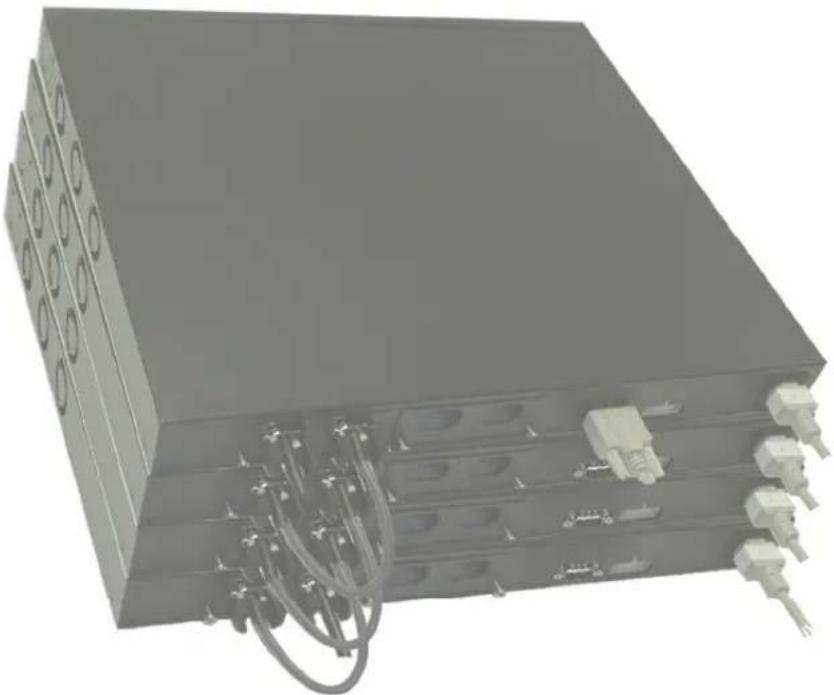
natural_image
3D rendering of a server rack with multiple ports and cables (no visible text or labels)Data Terminal Equipment (DTE)
natural_image
Exterior view of a black rectangular electronic device with ports and a connector (no visible text or symbols)תְקַרָה בְּרָה
1-3
natural_image
Front view of a network switch device with ports and connectors (no visible text or labels)2
.הכלה 3

- Series Stackable Switches
- Getting Started Guide
- Notes, Notices, and Cautions
- Contents
- Installation
- Starting and Configuring the Switch
- Managing a Stack
- Front Panels and LEDs
- Installation
- Site Preparation
- Unpacking the Switch
- Package Contents
- Unpacking Steps
- Mounting the Switch
- Installing in a Rack
- Installing as a Free-standing Switch
- Connecting a Switch to a Terminal
- Connecting a Switch to a Power Supply
- Assembling a Stack
- Starting and Configuring the Switch
- Connecting the Terminal to the Switch
- Booting the Switch
- Initial Configuration
- Initial Configuration Procedure
- Example Session
- Step 1:
- Step 2:
- Step 3:
- Step 4:
- Step 5:
- Managing a Stack
- Master and Member Switches
- Stack Startup
- Topology Discovery
- Auto Stack ID Assignment
- Firmware Version Checking
- System Initialization
- System Initialization for Normal Stacking Mode
- System Initialization for Suspended Stacking Mode
- CLI/ Telnet/ Web Interface
- Insertion and Removal of Switches
- Operating as Standalone Switch
- Stack ID Renumbering
- User Controls
- Front Panels and LEDs
- Front Panels
- LEDs
- Systems LEDs
- RJ-45 LEDs (PoE)
- XFP LED
- SFP LED
- Dell™ PowerConnect™
- 系列可堆叠交换机
- 使用入门指南
- 组装堆叠
- 注:图 1-3 中未显示长电缆。
- 引导交换机
- 前面板和 LED
- Stohování
- Bootování přepínače
- Krok 1:
- Krok 2:
- Krok 4:
- Krok 5:
- Správa stohu
- Étape 1:
- Étape 2:
- Étape 4:
- Étape 5:
- Gestion d'une pile
- Inhalt
- Starten des Switches
- Schritt 1:
- Schritt 2:
- Schritt 4:
- Schritt 5:
- Βημα 1:
- Βημα 2:
- Βημα 4:
- Βημα 5:
- Διαχειριση στοιβας
- スタックの組み立て
- スイッチの起動
- 手順1:
- 手順2:
- 手順4:
- 手順 5:
- スタックの管理
- マスタースイッチとメンバースイッチ
- 前面パネルと LED
- 스택 만들기
- 스위치 부팅
- 1단계:
- 2단계:
- 4단계:
- 5단계:
- 스택 관리
- 마스터 및 구성원 스위치
- 전면 패널 및 LED
- Składanie stosu
- Zarządzanie wieżą
- Diody LED RJ-45 (PoE)
- Paso 1:
- Paso 2:
- Paso 4:
- Paso 5:
- Adm 1:
- Adm 2:
- Adm 4:
- Adm 5:
- תְרָה בַרִי אַלְבָם
- תְקַרָה בְּרָה
Brand : DELL
Model : PowerConnect 6224P
Category : Switch