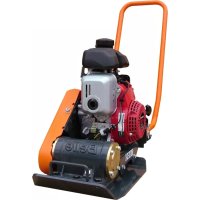
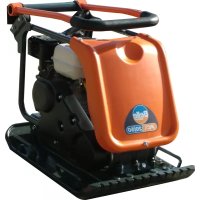
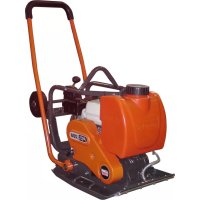
BELLE PCEL 320X - Vibratory plate Lescha - Free user manual and instructions
Find the device manual for free BELLE PCEL 320X Lescha in PDF.



| Product type | Unidirectional vibratory plate |
| Brand | Lescha |
| Model | BELLE PCEL 320X |
| Operational dimensions (L x W x H) | 720 x 320 x 980 mm |
| Storage dimensions (L x W x H) | 830 x 320 x 545 mm |
| Weight | 50 kg |
| Engine | Honda GX100, 2.2 kW (3.0 hp) at 3600 rpm |
| Fuel | Unleaded gasoline, tank 1.2 L |
| Centrifugal force | 11 kN |
| Vibration frequency | 101 Hz |
| Maximum forward speed | 23 m/min |
| Compaction force | 425 kg/m² |
| Sound power level | 105 dB(A) |
| Running time per tank | Approximately 5.6 hours |
| Engine oil | SAE 10W30, capacity 0.4 L |
| Vibrator oil | Turbine oil 32, capacity 0.22 L |
| Spark plug | BM4A or BMR4A, gap 0.6-0.7 mm |
| Warranty | 12 months for the original purchaser |
| Recommended safety equipment | Safety glasses, gloves, ear protection, safety shoes |
| Routine maintenance | Check levels, belt, air filter and spark plug regularly |
Frequently Asked Questions - BELLE PCEL 320X Lescha
User questions about BELLE PCEL 320X Lescha
0 question about this device. Answer the ones you know or ask your own.
Ask a new question about this device
Download the instructions for your Vibratory plate in PDF format for free! Find your manual BELLE PCEL 320X - Lescha and take your electronic device back in hand. On this page are published all the documents necessary for the use of your device. BELLE PCEL 320X by Lescha.
USER MANUAL BELLE PCEL 320X Lescha
natural_image
Abstract white bird-like shape on gradient background (no text or symbols)ALTRAD
GB Operators Manual 6
US Operators Manual 14
F Manuel De L'Opérateur 22
DK Betjeningsvejledning 30
D Bedienungshandbuch 38
① Manuale Dell'Operatore 46
s Bruksanvisning 54
SF Käyttöohje 62
PL Instrukcja Obsługi 70
RUS Руководство для оператора 78
EST Kasutusjuhend 86
LT Lietotāja rokasgrāmata 94
LV Naudojimo Instrukcija 102

PCEL 320X

natural_image
Technical line drawing of a mechanical pump or motor assembly (no text or symbols)- Spare Parts Book
- Pièces détachées
- Reservedele Skrift
- Ersatzteilhandbuch
- Manuale dei ricambi
- Bruksanvisning
- Varaosaluettelo
- Lista Części Zamiennych
- Запасные части Книга
- Varuosade nimekiri
- Rezerves dalu saraksts
- Atsarginiu daliu sarašas
EC DECLARATION OF CONFORMITY / DECLARATION CE DE CONFORMITE / DECLARACIÓN DE CONFORMIDAD CE / DECLARAÇÃO CE DE CONFORMIDADE / EG-VERKLARING VAN OVEREENSTEMMING / EF OVERENSSTEMMELSESERKLÆRING

We, Belle Group Sheen UK, Sheen, Nr. Buxton, Derbyshire, SK17 0EU, GB, hereby certify that if the product described within this certificate is bought from an authorised Belle Group dealer within the EEC, it conforms to the following EEC directives: 2006/42/CE (This directive replaces directive 98/37/EC), Electromagnetic Compatibility Directive 2004/108/CE (as amended by 89/336/EEC, 92/31/EEC & 93/68 EEC). The Waste Electrical and Electronic Equipment (WEEE) 2002/96/CE, the low voltage directive 2006/95/CE, BS EN ISO 12100-1:2003 Safety of machinery and associated harmonised standards, where applicable. Noise emissions conform to directive 2000/14/EC Annex VI, for machines under article 12 the notified body is AV Technology Limited, AVTECH house, Birdhall Lane, Cheadle Heath, Stockport, Cheshire, SK3 0XU, GB. Noise Technical Files are held at the Belle Group Head Office address which is stated above.

natural_image
Empty rectangular frame with dashed border (no text or symbols)Signed by:
Signature:
Medido por:
Assinado por:
Getekend door:
Uunderskrevetaf:
Ray Neilson
Managing Director - On behalf of BELLE GROUP (SHEEN) UK.
Date of Declaration....
PRODUKSJONSDATO...... VALMISTUSPÄIVÄ...... DATAPRODUKCJI
ÄLYDKRAFTNIVÄ ÄNENVOIMAKKUUDEN POZIOM MOCY MÄLT / TASO MITATTU / DZWIĘKU ZMIERZONY / ......(GARANTERT) ......(TAATTU) ......(GWARANTOWANY)
VEKT.... MASSA.... WAGA....
Unterzeichnet vo:
Firmato da:
Undertecknat:
Signatur:
Allekirjoitus:
Podpisat:

Ray Neilson
natural_image
Empty white rectangle with dashed border (no text or symbols)
Director General - in numele BELLE GROUP (SHEEN), UK
This manual has been written to help you operate and service the 'PCEL 320X 320X' Plate compactor safely. This manual is intended for dealers and operators of the 'PCEL 320X' Plate compactor.
Foreword
The ‘Machine Description’ section helps you to familiarise yourself with the machine's layout and controls.
The 'Environment' section gives instructions on how to handle the recycling of discarded apparatus in an environmentally friendly way.
The ‘General Safety’ and ‘Health and Safety’ sections explain how to use the machine to ensure your safety and the safety of the general public.
The ‘Operating Instructions’ section helps you with the setting up and use of the machine.
The 'Trouble Shooting' guide helps you if you have a problem with your machine.
The 'Service & Maintenance' section is to help you with the general maintenance and servicing of your machine.
The 'Warranty' Section details the nature of the warranty cover and the claims procedure.
Directives with regard to the notations.
Text in this manual to which special attention must be paid are shown in the following way:

CAUTION
The product can be at risk. The machine or yourself can be damaged or injured if procedures are not carried out in the correct way.

WARNING
The life of the operator can be at risk.

WARNING

WARNING
Before you operate or carry out any maintenance on this machine YOU MUST READ and STUDY this manual.
KNOW how to safely use the unit's controls and what you must do for safe maintenance. (NB Be sure that you know how to switch the machine off before you switch on, in case you get into diffi culty.)
ALWAYS wear or use the proper safety items required for your personal protection. If you have ANY QUESTIONS about the safe use or maintenance of this unit, ASK YOUR SUPERVISOR OR CONTACT: BELLE GROUP (UK): +44 (0) 1298 84606

Contents
How to use this manual....6
Warning 6
Machine Description....7
Technical Data....7
Environment 8
Reasons For compaction 8
Compaction Specification....8
Applications....9
Safety Instructions....9
Health and Safety....10
Pre-Start Checks 10
Operating Instructions 10 - 11
Trouble Shooting Guide 11
Service & Maintenance 12
Warning Decals....12
Warranty 13
Declaration of Conformity....2
Machine Description

Machine type:
Single Direction Plate Compactor
- Fuel Tank,
- Choke Lever,
- Fuel ON/OFF Lever,
- Engine Oil Filler / Dipstick,
- Throttle Lever,
- Recoil Starter Handle,
- Engine ON/OFF Switch
- Operating Handle,
- Exhaust,
- Belt Guard,
- Hand Lifting Point
- Hand Lifting Point (Strut)
DO NOT use a Mechanical Hoist on the Hand Lifting Points (No's 11 & 12)
Technical Data


| Model PCEL 320X | |
| A - Height - Operation (mm) 980 | |
| B - Length - Operation (mm) 720 | |
| C - Width (mm) 320 | |
| D - Length - Storage (mm) 830 | |
| E - Height - Storage (mm) 545 | |
| Engine Honda GX100 | |
| Engine Power (Hp/kW) 3.0/2.2 @ 3600Rpm | |
| Weight (kg) 50 | |
| Vibrator Force (kN) 11 | |
| Frequency (Hz) | 101 |
| Maximum Travel Speed (m/min) | 23 |
| Compaction Force (kg/m2) | 425 |
| 3 Axis Vibration* (m/sec2) | 2.9 |
| Usage Time (Hrs) | 5.6 |
| Sound Power Level (dB(A)) | 105 |
* Minimum level to EN500 Part 4
Safe Disposal.

Instructions for the protection of the environment. The machine contains valuable materials. Take the discarded apparatus and accessories to the relevant recycling facilities.
| Component | Material |
| Operator Handle Steel | |
| Hand Grip Rubber | |
| Base Plate Steel | |
| Eccentric weights Steel | |
| Petrol engine housing Aluminium | |
| Petrol engine covers Synthetic material | |
| Various parts Steel & Aluminium |

Reasons For Compaction
Soil, which has been disturbed or new infill, subbase and blacktop, will have small voids or air pockets which, if not compacted, will lead to one or more problems occurring.
- As traffic crosses the surface of an uncompacted area, the material is compressed. This leads to subsidence of the top surface as the material fills the voids.
- A similar situation occurs with static loads on uncompacted ground. The load (e.g. a building) will sink.
- Materials with voids are more susceptible to water seepage, leading to erosion. Water ingress may also cause the soil to expand during freezing temperatures and contract during dry spells. Expansion and contraction is a major cause of damage to building foundations and normally leads to the structure requiring underpinning.
Compaction increases the density of the material and therefore increases its load bearing capacity. Reduces air voids and therefore reduces the risk of subsidence, expansion and contraction, due to ingress of water.

Compaction Specification
Various methods have been employed in the past to specify the compaction required for various applications. The factors to consider are, material properties, layer thickness, pressure applied, vibration and number of passess. Greater understanding of how compaction works has lead to new compaction specifications being introduced. The most up to date specification is part of the U.K.'s NRSWA (New Roads & Street Works Act). Civil Engineers are now adopting these specifications to ensure good compaction for all site work.
NRSWA (HAUC specifi cation).
The specification was compiled by HAUC (Highways Authorities & Utilities Committee). The 'New Roads and Street Works Act 1991, set a new standard for road repairs and reinstatements in the UK. It covers materials, methods, equipment and safety when carrying out reinstatements on roads and footways. The reason for the act is to ensure repairs and reinstatements are carried out to a higher standard and ultimately last longer. This in turn will reduce the need for costly remedial work and reduce traffic delays.
There are two categories specified for plate compactors.
-
1400 to 1800kg/m²
-
Over 1800kg/m 4
These figures relate to the static pressure applied by the machine
Applications
Applications/materials fall into three categories:
- Cohesive materials (less than 20% granular) e.g clay, silt & heavy soils.
- Granular materials (more than 20% granular) e.g hard core, sand & light soils.
- Bituminous materials e.g asphalt (tarmac), cold lay (bitumin emulsion products).
The chart shows the HAUC specifications for layer depth and number of passes for Dual Force' plates. If standard machines are used, optimum compaction can not be guaranteed, however, if layer depths are reduced and number of passes increased, results can be improved.
Moisture content of cohesive & granular materials is critical to effective compaction. If granular material is too dry it will flow around the plate instead of compacting. If the moisture content is too high the material may dry out after compaction and shrinkage will occur.
| 1400 -1800 kg/m2 | COMPACTION PASSESS REQUIRED PER LAYER OF COMPACTED THICKNESS UP TO. | ||||||
| 40MM | 60MM | 80MM | 100MM | 150MM | 200MM | ||
| Cohesive Materials** | -* | -* | -* | NP | NP | NP | |
| Granular Materials | -* | -* | -* | 5 | NP | NP | |
| Bituminous | 6 | NP | NP | NP | NP | - | |
* Usually placed in 100mm minimum layer so not specified by HAUC.
** The nature of cohesive materials makes plate compaction diffi cult. Optimum compaction is not guaranteed and not recommended by HAUC.
Safety Instructions

For your own personal protection and for the safety of those around you, please read and ensure you fully understand the following safety information. It is the responsibility of the operator to ensure that he/she fully understands how to operate this equipment safely. If you are unsure about the safe and correct use of the 'PCEL 320X' Plate compactor, consult your supervisor or Belle Group.

CAUTION
Improper maintenance can be hazardous. Read and Understand this section before you perform any maintenance, service or repairs.
• This equipment is heavy and must not be lifted single-handedly, either GET HELP or use suitable lifting equipment.
- Cordon off the work area and keep members of the public and unauthorized personnel at a safe distance.
• Personal Protective Equipment (PPE) must be worn by the operator whenever this equipment is being used (see Health & Safety).
• Make sure you know how to safely switch this machine OFF before you switch it ON in case you get into diffi culty.
• Always switch OFF the engine before transporting, moving it around the site or servicing it.
- During use the engine becomes very hot, allow the engine to cool before touching it. Never leave the engine running and unattended.
- Never remove or tamper with any guards fitted, they are there for your protection. Always check guards for condition and security, if any are damaged or missing, DO NOT USE THE MACHINE until the guard has been replaced or repaired.
- Do not operate the MACHINE when you are ill, feeling tired, or when under the influence of alcohol or drugs.

CAUTION
Fuel is fl ammable. It may cause injury and property damage. Shut down the engine, extinguish all open fl ames and do not smoke while fi lling the fuel tank. Always wipe up any spilled fuel.
Fuel Safety.
• Before refuelling, switch off the engine and allow it to cool.
- When refuelling, DO NOT smoke or allow naked flames in the area.
- Spilt fuel must be made safe immediately, using sand. If fuel is spilt on your clothes, change them.
- Store fuel in an approved, purpose made container away from heat and ignition sources.
Vibration
Some vibration from the trowelling operation is transmitted through the handle to the operator's hands. Refer to specifications & technical data for vibration levels and usage times (recommended maximum daily exposure time). DO NOT exceed the maximum usage times.
PPE (Personal Protective Equipment).
Suitable PPE must be worn when using this equipment i.e. Safety Goggles, Gloves, Ear Defenders, Dust Mask and Steel Toe capped footwear (with anti-slip soles for added protection). Wear clothing suitable for the work you are doing. Always protect skin from contact with concrete.
Dust.
The compaction process can produce dust, which may be hazardous to your health. Always wear a mask that is suited to the type of dust being produced.
Fuel.
Do not ingest fuel or inhale fuel vapors and avoid contact with your skin. Wash fuel splashes immediately. If you get fuel in your eyes, irrigate with copious amounts of water and seek medical attention as soon as possible.
Exhaust Fumes.
Do not operate your 'PCEL 320X' indoors or in a confined space, make sure the work area is adequately ventilated.

WARNING
The exhaust fumes produced by this equipment are highly toxic and can kill!

Pre-start Checks
Pre start-up inspection.
The following Pre-start-up inspection must be performed before the start of each work session or after every four hours of use, whichever is first. Please refer to the service section for detailed guidance. If any fault is discovered, the 'PCEL 320X' must not be used until the fault is rectified.
- Thoroughly inspect the 'PCEL 320X' for signs of damage. Make sure that the belt guard is secure before using the machine.
- Check hoses, filler openings, drain plugs and any other areas for signs of leakage. Fix any leaks before operating.
- Check the engine oil level and top up as necessary.
- Check the engine fuel level and top up as necessary.
- Check for fuel and oil leaks.

Operating Instructions
• Take the compactor to where it is required.
Where it is necessary to use lifting equipment to position the 'PCEL 320X', make sure the lifting equipment has a WLL (Working Load Limit) suitable for the 'PCEL 320X's weight (see Technical Data section or machine serial plate). Attach suitable chains or slings ONLY to the lifting point on the top of the 'PCEL 320X'.
- NEVER leave the engine running whilst transporting or moving the 'PCEL 320X', even if it is only a short distance.
- Having carried out the checks listed in the 'pre start' section, you may start the engine.
The Belle Group 'PCEL 320X' range of compactors are fitted with a centrifugal clutch, this allows the engine to run at idle without driving the vibrator. As the engine speed is increased the clutch will engage and will drive the vibrator. For correct operation, the engine speed should be set to maximum.
- Set the throttle to maximum and use the control handle to steer or turn the 'PCEL 320X'.
The vibrator will not only cause the baseplate to vibrate but will also cause it to travel forward. During normal operation you should not have to push the 'PCEL 320X' but allow it to travel at its own pace. The speed of travel will be determined by the condition of the surface being compacted. If the surface to be compacted is on a slope, great care must be taken when controlling the 'PCEL 320X's direction of travel. If necessary, use a suitable rope attached to the 'PCEL 320X' at a low point on the chassis, to allow a helper to take part of the 'PCEL 320X's weight. Work up and down a slope not across.
• Work the 'PCEL 320X' over the surface in an organized pattern until the required compaction has been achieved.
Where there are a number of different layers to be compacted on top of each other, compact each layer individually.

WARNING
Before you operate or carry out any maintenance on this machine YOU MUST READ and STUDY this manual.
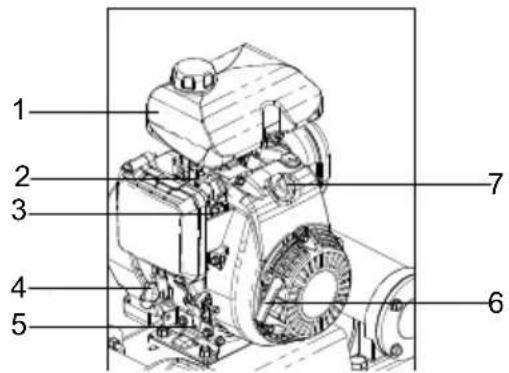
Honda GX100
- Fuel Tank,
- Choke Lever,
- Fuel ON/OFF Lever,
- Engine Oil Filler / Dipstick,
- Throttle Lever,
- Recoil Starter Handle,
- Engine ON/OFF Switch
Stopping the engine
- To stop the engine, set the throttle to idle. Allow the engine to idle for at least 2 minutes
- Turn the engine ON / OFF switch anti-clockwise to the '0' position.
- Turn the fuel off.
Starting the engine
- Open the fuel tap by moving the fuel ON / OFF lever fully to the right.
- If starting the engine from cold, set the choke ON by moving the choke lever fully to the right. If restarting a warm engine, the choke is usually not required, however, if the engine has cooled to a degree, partial choke may be required.
- Turn the engine ON / OFF switch clockwise to the 'I' position.
- Set the throttle to the idle position by moving the throttle lever fully to the bottom.
- Taking a firm hold of the control handle with one hand, grasp the recoil starter handle with the other. Pull the recoil starter until engine resistance is felt, then let starter return.
- Taking care not to pull the starter's rope fully out and pull the starter handle briskly.
- Repeat until the engine fi res.
- Once the engine fires gradually set the choke lever to the OFF position by moving it to the left.
- If the engine fails to fire after several attempts, follow the trouble-shooting guide.
- Due to the centrifugal clutch, the plate will not vibrate until the engine speed is increased.
Troubleshooting Guide

| Problem Cause Remedy | ||
| Engine will not start. No fuel. Fill fuel tank. | Open fuel tap. | |
| Engine switched off. Switch Spark plug fouled. Clean Engine cold. Close choke. | ch engine on. | |
| and reset plug gap. | ||
| Engine fl ooded. | Open choke, fully open th | tottle, pull recoil starter until engine fi res. |
| Engine still will not start Unit will not vibrate. Drive belt tension loose. Air fi Iter blocked. Drive failure. Vibrator failure. | Major Fault | Contact Agent or Belle Group. |
| Engine speed too slow. | Set engine speed control to fast. | |
| Adjust belt tension | ||
| Clean or renew air fi Iter. | ||
| Contact Agent or Belle Group. | ||
| Contact Agent or Belle Group. | ||
| Asphalt adhering to plate. Bituminous surface fl aking (laminating). | Lack of lubrication. | Use water |
| Over compaction. | Remove and relay. | |
| Low travel speed (plate sinking). | Layer thickness too deep. | Remove some of the material. |
| Moisture content too high or too low. | Remove material and adjust. | |
Service & Maintenance
Maintenance
The Belle Group 'PCEL 320X' is designed to give many years of trouble free operation. It is recommended that an approved Belle Group dealer carries out all major maintenance and repairs. Always use genuine Belle Group replacement parts, the use of spurious parts may void your warranty.
Before any maintenance is carried out on the machine, switch off the engine and disconnect the HT lead from the sparkplug. Always set the 'PCEL 320X' on level ground to ensure any fluid levels will be correctly read. Only use recommended oils (see chart on following page).
Running In Period
When the 'PCEL 320X' is first used from new, the engine oil must be changed after the initial running in period (see engine manual for full detail). The vibrator shaft case oil must be replaced after the first 100 hours use, then after every 500 working hours. For detail on vibrator shaft case oil replacement, see 'Vibrator unit'. The belt tension should be checked after 4 hours use.
| Routine Maintenance After First First month / 3 Months 6 months4 hours 20Hours 50 Hours 100 Hours | |||||
| Engine Oil Check Level | √ | ||||
| Change | √ | √ | |||
| Air Filter | Check Condition | √ | √ | ||
| Clean / Replace | √ | ||||
| Spark Plug | Check / Clean | √ | |||
| Drive Belt | Tension | √ | √ | √ | |
Oil / Fuel Type & Quantity - Spark Plug Type
| Oil type | Quantity (Litre) | Fuel Type | Capacity (Litre) | Spark Plug Type | Electrode Gap (mm) | |
| Petrol Honda GX100 | S.A.E. 10W 30 | 0.4 | Unleaded | 1.2 | BM4a or BmR4a | 0.6 - 0.7 |
| Vibrator | Turbine Oil 32 | 0.22 | N/A | N/A | N/A | N/A |
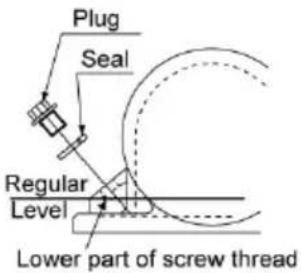
Vibrator Unit.
Remove the plug complete with seal, check that the oil level reaches the bottom thread on the oil plug hole. Top up as necessary with the correct oil (see chart).

Warning Symbols

Wear Ear Protection

Fire And Explosive Risk

Caution Taken When Handling

Wear Eye Protection

Wear Protective Footwear

Read This Manual

This Way Up

Do Not Hang
Your new Belle Group 'PCEL 320X' single direction plate compactor is warranted to the original purchaser for a period of one-year (12 months) from the original date of purchase.
The Belle Group warranty is against defects in design, materials and workmanship.
The following are not covered under the Belle Group warranty:
- Damage caused by abuse, misuse, dropping or other similar damage caused by or as a result of failure to follow assembly, operation or user maintenance instructions.
- Alterations, additions or repairs carried out by persons other than Belle Group or their recognised agents.
- Transportation or shipment costs to and from Belle Group or their recognised agents, for repair or assessment against a warranty claim, on any machine.
- Materials and/or labour costs to renew, repair or replace components due to fair wear and tear.
The following components are not covered by warranty.
Drivebelt/s
- Engine air fi Iter
- Engine spark plug
Belle Group and/or their recognised agents, directors, employees or insurers will not be held liable for consequential or other damages, losses or expenses in connection with or by reason of or the inability to use the machine for any purpose.
Warranty Claims
All warranty claims should firstly be directed to Belle Group, either by telephone, by Fax, by Email, or in writing.
For warranty claims:
Tel: +44 (0)1298 84606 Fax: +44 (0)1298 84722
Email : warranty@belle-group.co.uk
Write to:
Belle Group Warranty Department,
Sheen, Nr. Buxton
Derbyshire
SK17 0EU
England
This manual has been written to help you operate and service the 'PCEL 320X' Plate compactor safely. This manual is intended for dealers and operators of the 'PCEL 320X' Plate compactor.
Foreword
The ‘Machine Description’ section helps you to familiarise yourself with the machine's layout and controls.
The ‘Environment’ section gives instructions on how to handle the recycling of discarded apparatus in an environmentally friendly way. The ‘General Safety’ and ‘Health and Safety’ sections explain how to use the machine to ensure your safety and the safety of the general public.
The ‘Operating Instructions’ section helps you with the setting up and use of the machine.
The 'Trouble Shooting' guide helps you if you have a problem with your machine.
The 'Service & Maintenance' section is to help you with the general maintenance and servicing of your machine.
The 'Warranty' Section details the nature of the warranty cover and the claims procedure.
Directives with regard to the notations.
Text in this manual to which special attention must be paid are shown in the following way:

CAUTION
The product can be at risk. The machine or yourself can be damaged or injured if procedures are not carried out in the correct way.

WARNING
The life of the operator can be at risk.

WARNING

WARNING
Before you operate or carry out any maintenance on this machine YOU MUST READ and STUDY this manual.
KNOW how to safely use the unit's controls and what you must do for safe maintenance. (NB Be sure that you know how to switch the machine off before you switch on, in case you get into diffi culty.)
ALWAYS wear or use the proper safety items required for your personal protection. If you have ANY QUESTIONS about the safe use or maintenance of this unit, ASK YOUR SUPERVISOR OR CONTACT: BELLE GROUP (UK): +44 (0) 1298 84606

Contents
How to use this manual....14
Warning 14
Machine Description....15
Technical Data 15
Environment 16
Reasons For compaction 16
Compaction Specification....16
Applications....17
Safety Instructions....17
Health and Safety....18
Pre-Start Checks 18
Operating Instructions 18 - 19
Trouble Shooting Guide 19
Service & Maintenance 20
Warning Decals....20
Warranty 21
Machine Description

Machine type:
Single Direction Plate Compactor
- Fuel Tank,
- Choke Lever,
- Fuel ON/OFF Lever,
- Engine Oil Filler / Dipstick,
- Throttle Lever,
- Recoil Starter Handle,
- Engine ON/OFF Switch
- Operating Handle,
- Exhaust,
- Belt Guard,
- Hand Lifting Point
- Hand Lifting Point (Strut)
DO NOT use a Mechanical Hoist on the Hand Lifting Points (No's 11 & 12)
Technical Data

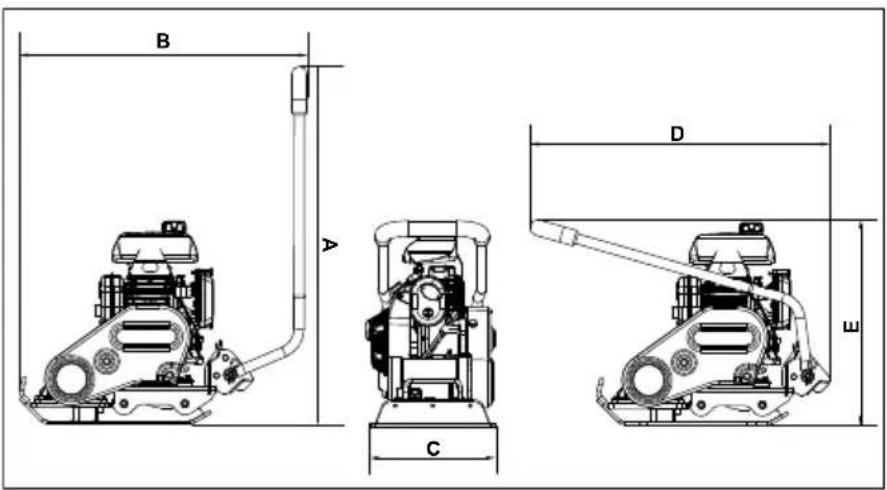
| Model PCEL 320X | |
| A - Height - Operation (in) 38.6 | |
| B - Length - Operation (in) 28.3 | |
| C - Width (in) 12.6 | |
| D - Length - Storage (in) 32.7 | |
| E - Height - Storage (in) 21.5 | |
| Engine Honda GX100 | |
| Engine Power (Hp/kW) 3.0/2.2 @ 3600Rpm | |
| Weight (lbs) 110.2 | |
| Vibrator Force (kN) 11 | |
| Frequency (Hz) | 101 |
| Maximum Travel Speed (ft/min) | 75.5 |
| Compaction Force (lbs/m2) | 937.0 |
| 3 Axis Vibration* (ft/sec2) | 9.5 |
| Usage Time (Hrs) | 5.6 |
| Sound Power Level (dB(A)) | 105 |
Safe Disposal.

Instructions for the protection of the environment. The machine contains valuable materials. Take the discarded apparatus and accessories to the relevant recycling facilities.
| Component | Material |
| Operator Handle Steel | |
| Hand Grip Rubber | |
| Base Plate Steel | |
| Eccentric weights Steel | |
| Petrol engine housing Aluminium | |
| Petrol engine covers Synthetic material | |
| Various parts Steel & Aluminium |

Reasons For Compaction
Soil, which has been disturbed or new infill, subbase and blacktop, will have small voids or air pockets which, if not compacted, will lead to one or more problems occurring.
- As traffic crosses the surface of an uncompacted area, the material is compressed. This leads to subsidence of the top surface as the material fills the voids.
- A similar situation occurs with static loads on uncompacted ground. The load (e.g. a building) will sink.
- Materials with voids are more susceptible to water seepage, leading to erosion. Water ingress may also cause the soil to expand during freezing temperatures and contract during dry spells. Expansion and contraction is a major cause of damage to building foundations and normally leads to the structure requiring underpinning.
Compaction increases the density of the material and therefore increases its load bearing capacity. Reduces air voids and therefore reduces the risk of subsidence, expansion and contraction, due to ingress of water.

Compaction Specification
Various methods have been employed in the past to specify the compaction required for various applications. The factors to consider are, material properties, layer thickness, pressure applied, vibration and number of passess. Greater understanding of how compaction works has lead to new compaction specifications being introduced. The most up to date specification is part of the U.K.'s NRSWA (New Roads & Street Works Act). Civil Engineers are now adopting these specifications to ensure good compaction for all site work.
NRSWA (HAUC specifi cation).
The specification was compiled by HAUC (Highways Authorities & Utilities Committee). The 'New Roads and Street Works Act 1991, set a new standard for road repairs and reinstatements in the UK. It covers materials, methods, equipment and safety when carrying out reinstatements on roads and footways. The reason for the act is to ensure repairs and reinstatements are carried out to a higher standard and ultimately last longer. This in turn will reduce the need for costly remedial work and reduce traffic delays.
There are two categories specified for plate compactors.
- 1400 to 1800kg / m2 2. Over 1800kg / m2
These figures relate to the static pressure applied by the machine
Applications
Applications/materials fall into three categories:
- Cohesive materials (less than 20% granular) e.g clay, silt & heavy soils.
- Granular materials (more than 20% granular) e.g hard core, sand & light soils.
- Bituminous materials e.g asphalt (tarmac), cold lay (bitumin emulsion products).
The chart shows the HAUC specifications for layer depth and number of passes for Dual Force' plates. If standard machines are used, optimum compaction can not be guaranteed, however, if layer depths are reduced and number of passes increased, results can be improved.
Moisture content of cohesive & granular materials is critical to effective compaction. If granular material is too dry it will flow around the plate instead of compacting. If the moisture content is too high the material may dry out after compaction and shrinkage will occur.
| 1400 -1800 kg/m2 | COMPACTION PASSESS REQUIRED PER LAYER OF COMPACTED THICKNESS UP TO. | ||||||
| 40MM | 60MM | 80MM | 100MM | 150MM | 200MM | ||
| Cohesive Materials** | -* | -* | -* | NP | NP | NP | |
| Granular Materials | -* | -* | -* | 5 | NP | NP | |
| Bituminous | 6 | NP | NP | NP | NP | - | |
* Usually placed in 100mm minimum layer so not specified by HAUC.
** The nature of cohesive materials makes plate compaction diffi cult. Optimum compaction is not guaranteed and not recommended by HAUC.
Safety Instructions

For your own personal protection and for the safety of those around you, please read and ensure you fully understand the following safety information. It is the responsibility of the operator to ensure that he/she fully understands how to operate this equipment safely. If you are unsure about the safe and correct use of the 'PCEL 320X' Plate compactor, consult your supervisor or Belle Group.

CAUTION
Improper maintenance can be hazardous. Read and Understand this section before you perform any maintenance, service or repairs.
• This equipment is heavy and must not be lifted single-handedly, either GET HELP or use suitable lifting equipment.
• Cordon off the work area and keep members of the public and unauthorized personnel at a safe distance.
• Personal Protective Equipment (PPE) must be worn by the operator whenever this equipment is being used (see Health & Safety).
• Make sure you know how to safely switch this machine OFF before you switch it ON in case you get into difficulty.
• Always switch OFF the engine before transporting, moving it around the site or servicing it.
- During use the engine becomes very hot, allow the engine to cool before touching it. Never leave the engine running and unattended.
- Never remove or tamper with any guards fitted, they are there for your protection. Always check guards for condition and security, if any are damaged or missing, DO NOT USE THE MACHINE until the guard has been replaced or repaired.
- Do not operate the MACHINE when you are ill, feeling tired, or when under the influence of alcohol or drugs.

CAUTION
Fuel is fl ammable. It may cause injury and property damage. Shut down the engine, extinguish all open fl ames and do not smoke while filling the fuel tank. Always wipe up any spilled fuel.
Fuel Safety.
- Before refuelling, switch off the engine and allow it to cool.
- When refuelling, DO NOT smoke or allow naked flames in the area.
- Spilt fuel must be made safe immediately, using sand. If fuel is spilt on your clothes, change them.
- Store fuel in an approved, purpose made container away from heat and ignition sources.
Vibration
Some vibration from the trowelling operation is transmitted through the handle to the operator's hands. Refer to specifications & technical data for vibration levels and usage times (recommended maximum daily exposure time). DO NOT exceed the maximum usage times.
PPE (Personal Protective Equipment).
Suitable PPE must be worn when using this equipment i.e. Safety Goggles, Gloves, Ear Defenders, Dust Mask and Steel Toe capped footwear (with anti-slip soles for added protection). Wear clothing suitable for the work you are doing. Always protect skin from contact with concrete.
Dust.
The compaction process can produce dust, which may be hazardous to your health. Always wear a mask that is suited to the type of dust being produced.
Fuel.
Do not ingest fuel or inhale fuel vapors and avoid contact with your skin. Wash fuel splashes immediately. If you get fuel in your eyes, irrigate with copious amounts of water and seek medical attention as soon as possible.
Exhaust Fumes.
Do not operate your 'PCEL 320X' indoors or in a confined space, make sure the work area is adequately ventilated.

WARNING
The exhaust fumes produced by this equipment are highly toxic and can kill!

Pre-start Checks
Pre start-up inspection.
The following Pre-start-up inspection must be performed before the start of each work session or after every four hours of use, whichever is first. Please refer to the service section for detailed guidance. If any fault is discovered, the 'PCEL 320X' must not be used until the fault is rectified.
- Thoroughly inspect the 'PCEL 320X' for signs of damage. Make sure that the belt guard is secure before using the machine.
- Check hoses, filler openings, drain plugs and any other areas for signs of leakage. Fix any leaks before operating.
- Check the engine oil level and top up as necessary.
- Check the engine fuel level and top up as necessary.
- Check for fuel and oil leaks.

Operating Instructions
• Take the compactor to where it is required.
Where it is necessary to use lifting equipment to position the 'PCEL 320X', make sure the lifting equipment has a WLL (Working Load Limit) suitable for the 'PCEL 320X's weight (see Technical Data section or machine serial plate). Attach suitable chains or slings ONLY to the lifting point on the top of the 'PCEL 320X'.
- NEVER leave the engine running whilst transporting or moving the 'PCEL 320X', even if it is only a short distance.
- Having carried out the checks listed in the 'pre start' section, you may start the engine.
The Belle Group 'PCEL 320X' range of compactors are fitted with a centrifugal clutch, this allows the engine to run at idle without driving the vibrator. As the engine speed is increased the clutch will engage and will drive the vibrator. For correct operation, the engine speed should be set to maximum.
- Set the throttle to maximum and use the control handle to steer or turn the 'PCEL 320X'.
The vibrator will not only cause the baseplate to vibrate but will also cause it to travel forward. During normal operation you should not have to push the 'PCEL 320X' but allow it to travel at its own pace. The speed of travel will be determined by the condition of the surface being compacted. If the surface to be compacted is on a slope, great care must be taken when controlling the 'PCEL 320X's direction of travel. If necessary, use a suitable rope attached to the 'PCEL 320X' at a low point on the chassis, to allow a helper to take part of the 'PCEL 320X's weight. Work up and down a slope not across.
• Work the 'PCEL 320X' over the surface in an organized pattern until the required compaction has been achieved.
Where there are a number of different layers to be compacted on top of each other, compact each layer individually.
Operating Instructions

WARNING
Before you operate or carry out any maintenance on this machine YOU MUST READ and STUDY this manual.
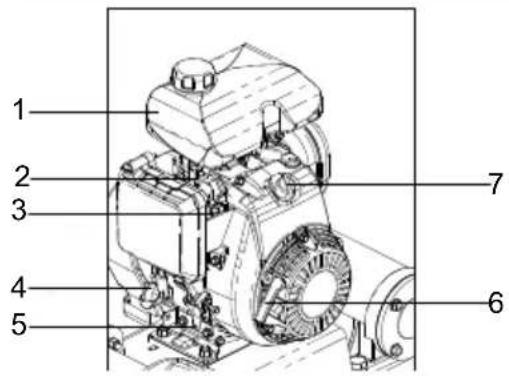
Honda GX100
- Fuel Tank,
- Choke Lever,
- Fuel ON/OFF Lever,
- Engine Oil Filler / Dipstick,
- Throttle Lever,
- Recoil Starter Handle,
- Engine ON/OFF Switch
Stopping the engine
- To stop the engine, set the throttle to idle. Allow the engine to idle for at least 2 minutes
- Turn the engine ON / OFF switch anti-clockwise to the '0' position.
- Turn the fuel off.
Starting the engine
- Open the fuel tap by moving the fuel ON / OFF lever fully to the right.
- If starting the engine from cold, set the choke ON by moving the choke lever fully to the right. If restarting a warm engine, the choke is usually not required, however, if the engine has cooled to a degree, partial choke may be required.
- Turn the engine ON / OFF switch clockwise to the 'I' position.
- Set the throttle to the idle position by moving the throttle lever fully to the bottom.
- Taking a firm hold of the control handle with one hand, grasp the recoil starter handle with the other. Pull the recoil starter until engine resistance is felt, then let starter return.
- Taking care not to pull the starter's rope fully out and pull the starter handle briskly.
- Repeat until the engine fi res.
- Once the engine fires gradually set the choke lever to the OFF position by moving it to the left.
- If the engine fails to fire after several attempts, follow the trouble-shooting guide.
- Due to the centrifugal clutch, the plate will not vibrate until the engine speed is increased.
Troubleshooting Guide

| Problem Cause Remedy | ||
| Engine will not start. No fuel. Fill fuel tank. | Open fuel tap. | |
| Engine switched off. Switch Spark plug fouled. Clean Engine cold. Close choke. | ch engine on. | |
| and reset plug gap. | ||
| Engine flooded. Open choke, fully open throttle, pull recoil starter until engine fi | engine fi | |
| Engine still will not start Major Fault Contact Agent or Belle Group. | ||
| Unit will not vibrate. | Engine speed too slow. | Set engine speed control to fast. |
| Drive belt tension loose. | Adjust belt tension | |
| Air fi iter blocked. | Clean or renew air fi iter. | |
| Drive failure. | Contact Agent or Belle Group. | |
| Vibrator failure. | Contact Agent or Belle Group. | |
| Asphalt adhering to plate. | Lack of lubrication. | Use water |
| Bituminous surface fl aking (laminating). | Over compaction. | Remove and relay. |
| Low travel speed (plate sinking). | Layer thickness too deep. | Remove some of the material. |
| Moisture content too high or too low. | Remove material and adjust. | |
Service & Maintenance
Maintenance
The Belle Group 'PCEL 320X' range is designed to give many years of trouble free operation. It is recommended that an approved Belle Group dealer carries out all major maintenance and repairs. Always use genuine Belle Group replacement parts, the use of spurious parts may void your warranty.
Before any maintenance is carried out on the machine, switch off the engine and disconnect the HT lead from the sparkplug. Always set the 'PCEL 320X' on level ground to ensure any fluid levels will be correctly read. Only use recommended oils (see chart on following page).
Running In Period
When the 'PCEL 320X' is first used from new, the engine oil must be changed after the initial running in period (see engine manual for full detail). The vibrator shaft case oil must be replaced after the first 100 hours use, then after every 500 working hours. For detail on vibrator shaft case oil replacement, see 'Vibrator unit'. The belt tension should be checked after 4 hours use.
| Routine Maintenance After First First month / 3 Months 6 months4 hours 20Hours 50 Hours 100 Hours | |||||
| Engine Oil Check Level | √ | ||||
| Change | √ | √ | |||
| Air Filter | Check Condition | √ | √ | ||
| Clean / Replace | √ | ||||
| Spark Plug | Check / Clean | √ | |||
| Drive Belt | Tension | √ | √ | √ | |
Oil / Fuel Type & Quantity - Spark Plug Type
| Oil type | Quantity (Litre) | Fuel Type | Capacity (Litre) | Spark Plug Type | Electrode Gap (mm) | |
| Gasoline Honda GX100 | S.A.E. 10W 30 | 0.4 | Unleaded | 1.2 | BM4a or BmR4a | 0.6 - 0.7 |
| Vibrator | Turbine Oil 32 | 0.22 | N/A | N/A | N/A | N/A |
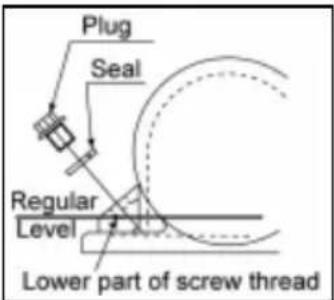
Vibrator Unit.
Remove the plug complete with seal, check that the oil level reaches the bottom thread on the oil plug hole. Top up as necessary with the correct oil (see chart).

Warning Symbols

Wear Ear Protection

Fire And Explosive Risk

Caution Taken When Handling

Wear Eye Protection

Wear Protective Footwear

Read This Manual

This Way Up

Do Not Hang
Warranty

Your new Belle Group 'PCEL 320X' single direction plate compactor is warranted to the original purchaser for a period of one-year (12 months) from the original date of purchase.
The Belle Group warranty is against defects in design, materials and workmanship.
The following are not covered under the Belle Group warranty:
-
Damage caused by abuse, misuse, dropping or other similar damage caused by or as a result of failure to follow assembly, operation or user maintenance instructions.
-
Alterations, additions or repairs carried out by persons other than Belle Group or their recognised agents.
-
Transportation or shipment costs to and from Belle Group or their recognised agents, for repair or assessment against a warranty claim, on any machine.
-
Materials and/or labour costs to renew, repair or replace components due to fair wear and tear.
The following components are not covered by warranty.
Drivebelt/s
- Engine air fi Iter
- Engine spark plug
Belle Group and/or their recognised agents, directors, employees or insurers will not be held liable for consequential or other damages, losses or expenses in connection with or by reason of or the inability to use the machine for any purpose.
Warranty Claims
All warranty claims should firstly be directed to Belle Group, either by telephone, by Fax, by Email, or in writing.
For warranty claims:
Tel: +1 540.345.5090 Fax: +1 540.345.5090
Email : BelleGroupInc@aol.com
Write to:
Belle Group Inc,
3959 Electric Road,
Roanoke, Suite 360,
VA, 24018,
USA
Type de machine :
Email : warranty@belle-group.co.uk
Prière d'écrire à :
Belle Group Warranty Department,
Sheen, Nr. Buxton
Derbyshire
SK17 0EU
Angleterre
Maskintype:
Envejs pladevibrator
Email : warranty@belle-group.co.uk
Skriv til:
Belle Group Warranty Department,
Sheen, Nr. Buxton
Derbyshire
SK17 0EU
England
Email : warranty@belle-group.co.uk
Korrespondenzanschrift:
Belle Group Warranty Department,
Sheen, Nr. Buxton
Derbyshire
SK17 0EU
England
I
Tipo di macchina;
Piastra Vibrante a senso unico.
- Fuel Tank,
- Choke Lever,
- Fuel ON/OFF Lever,
- Engine Oil Filler / Dipstick,
- Throttle Lever,
- Recoil Starter Handle,
- Engine ON/OFF Switch
Fermare il motore
Email : warranty@belle-group.co.uk
Scrivere a:
Belle Group Warranty Department,
Sheen, Nr. Buxton
Derbyshire
SK17 0EU
Inghilterra
Maskintyp:
Envägs vibroplatta
Email : warranty@belle-group.co.uk
Skriv till:
Belle Group Warranty Department,
Sheen, Nr. Buxton
Derbyshire
SK17 0EU
England
* Minimum level to EN500 Part 4
Ympäristö
Email : warranty@belle-group.co.uk
Kirjallisesti:
Belle Group Warranty Department,
Sheen, Nr. Buxton
Derbyshire
SK17 0EU
England
Belle Poland Sp. z o.o.
ul. Mszczonowska 36
96-200 Rawa Mazowiecka
POLSKA
tel.: +48 46 814 40 91; 92
fax: +48 46 814 47 00
info@belle-poland.com.pl
Тип машины:
Email : warranty@belle-group.co.uk
В письменном виде:
Belle Group Warranty Department,
Sheen, Nr. Buxton
Derbyshire
SK17 0EU
Англия
Masina tüüp:
Email : warranty@belle-group.co.uk
Aadress:
Belle Group Warranty Department,
Sheen, Nr. Buxton
Derbyshire
SK17 0EU
England
Email : warranty@belle-group.co.uk
Rakstiski
Belle Group Warranty Department,
Sheen, Nr. Buxton
Derbyshire
SK17 0EU
England
Email : warranty@belle-group.co.uk
Rašykite:
Belle Group Warranty Department,
Sheen, Nr. Buxton
Derbyshire
SK17 0EU
England
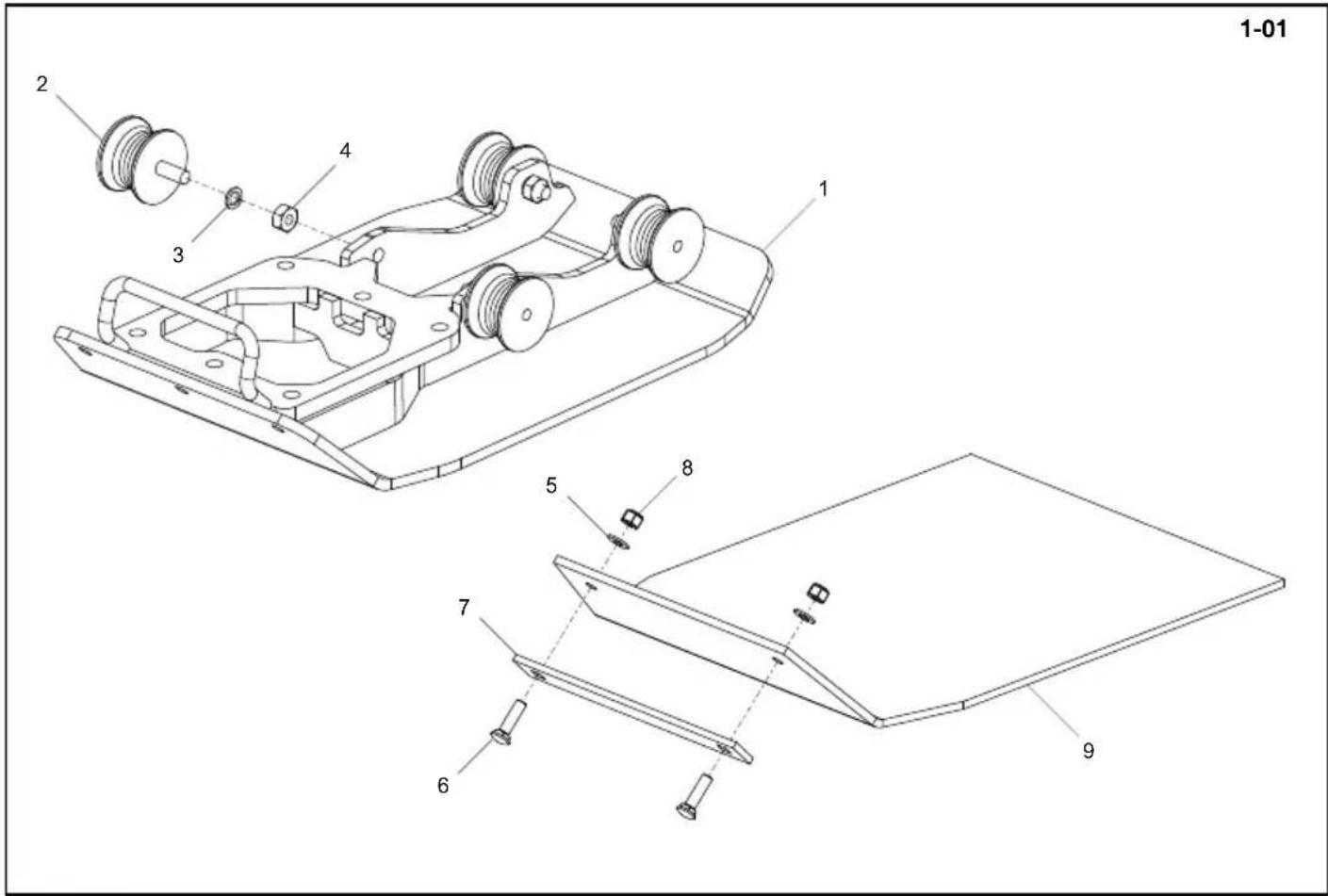
Baseplate Assembly, Plaque d'embase, Cto. Placa base, Conj. da Placa de Base
1-01
1 968/00400....Baseplate....Plaque d'embase....Placa de base....Placa de Base....1
2 21.0.292.... Anti-Vibration Mount ....Tampon antivibratoire.... Montura antivibratoria....Bloco Anti-vibração ....4
3 4/1003......Washer......Rondelle......Arandela......Anilha......M10......4
4 8/10003....Nut....Ecrou....Tuerca....Porca....M10....4
5 4/8006...... Washer ...... Rondelle ...... Arandela ...... Anilha ...... M8 ...... 6
6 00.0.860...Bolt...Boulon...Perno...Perno...M8 x 30...1
7 943/99907 .... Clamp Strip....Barrette de blocage .... Barra de fijación.... Tira de Grampeamento ....2
8 8/8008....Nut ....Ecrou ....Tuerca....Porca....M8....4
9 943/99906....Paving Pad ....Tampon de Pavage ....Tampón de Pavimentación ....Bloco de Pavimentação....1

Vloerplaat, Rüttelplatten-Zsb., Bundplade, Gruppo piastra di base
1-01
| 1 | 968/00400 | Vloerplaat | Rüttelplatten | Bundplade | Piastra di Base | 1 |
| 2 | 21.0.292 | Anti-trilbevestiging | Schwingungsdämpfer | Antivibrationsophæng | Supporto antivibrazioni | 4 |
| 3 | 4/1003 | Afdichtring | Scheibe | Spændeskive | Rondella | M10 |
| 4 | 8/10003 | Moer | Mutter | Møtrik | Dado | M10 |
| 5 | 4/8006 | Afdichtring | Scheibe | Spændeskive | Rondella | M8 |
| 6 | 00.0.860 | Bouten | Bolzen | Skruebolt | Bullone | M8 x 30 |
| 7 | 943/99907 | Clamp Strip | Barrette de blocage | Barra de fijación | Tira de Grampeamento | 2 |
| 8 | 8/8008 | Moer | Mutter | Møtrik | Dado | M8 |
| 9 | 943/99906 | Kunststof onderplaat | Blockpflasterrüttler | Belægningsklods | Pavimentazione a Blocchi | 1 |

Bedplate and Front Cover, Plaque d'assise et Capot Avant, Bancada y Cubierta delantera, Placa de Apoio e Tampa Frontal
2-01
| 1 | 968/00100 | Bedplate | Plaque d'assise | Bancada | Placa de Apoio | 1 |
| 2 | 968/00500 | Pivot | Pivot | Pivote | Pivô | 1 |
| 3 | 968/00600 | Pivot | Pivot | Pivote | Pivô | 1 |
| 4 | 968/00700 | Handle | Guidon | Manillar | Punho | 1 |
| 5 | 7/8047 | Screw | Vis | Tornillo | Parafuse | M8 x 40 |
| 6 | 8/8008 | Nut | Ecrou | Tuerca | Porca | M8 |
| 7 | 4/8003 | Washer | Rondelle | Arandela | Anilha | M8 |
| 8 | 4/8006 | Washer | Rondelle | Arandela | Anilha | M8 |
| 9 | 151.0.161 | Engine Clamp | Plaque de Serrage de Motor | Placa - Fijación motor | Placa de Base | 2 |
| 10 | 21/0157 | Anti-Vibration Mount | Tampon antivibratoire | Montura antivibratoria | Bloco Anti-vibração | 4 |
| 11 | 3/2004 | R-Clip | Collier en "R" | Abrazadera "R" | Gancho "R" | 2 |
| 12 | 7/10025 | Screw | Vis | Tornillo | Parafuse | M10 x 12 |
| 13 | 7/8008 | Screw | Vis | Tornillo | Parafuse | M8 x 16 |
| 14 | 21/0266 | Belt | Courroie | Correa | Cinta | 1 |
| 15 | 968/99901S | Belt Guard - Orange | Capot de courroie - Orange | Protector de la correa - Naranja | Guarda da Cinta - Laranja | 1 |
| 15 | 968/99901B | Belt Guard - Blue | Capot de courroie - Bleu | Protector de la correa - Azúl | Guarda da Cinta - Azul | 1 |
| 15 | 968/99901G | Belt Guard - Green | Capot de courroie - Vert | Protector de la correa - Verde | Guarda da Cinta - Verde | 1 |
| 15 | 968/99901R | Belt Guard - Red | Capot de courroie - Rouge | Protector de la correa - Roja | Guarda da Cinta - Vermelho | 1 |
| 15 | 968/99901Y | Belt Guard - Yellow | Capot de courroie - Jaune | Protector de la correa - Amarillo | Guarda da Cinta - Amarelo | 1 |
| 15 | 968/99901W | Belt Guard - White | Capot de courroie - Blanc | Protector de la correa - Blanco | Guarda da Cinta - Branco | 1 |
| 16 | 7/10004 | Screw | Vis | Tornillo | Parafuse | → 093753 |
| 16 | 7/8037 | Screw | Vis | Tornillo | Parafuse | → 093754 |
| 17 | 4/1003 | Washer | Rondelle | Arandela | Anilha | → 093753 |
| 18 | 4/1005 | Washer | Rondelle | Arandela | Anilha | → 093753 |
| 19 | 968/00300S | Handle - Orange | Guidon - Orange | Manillar - Naranja | Punho - Laranja | 1 |
| 19 | 968/00300B | Handle - Blue | Guidon - Bleu | Manillar - Azúl | Punho - Azul | 1 |
| 19 | 968/00300G | Handle - Green | Guidon - Vert | Manillar - Verde | Punho - Verde | 1 |
| 19 | 968/00300R | Handle - Red | Guidon - Rouge | Manillar - Roja | Punho - Vermelho | 1 |
| 19 | 968/00300Y | Handle - Yellow | Guidon - Jaune | Manillar - Amarillo | Punho - Amarelo | 1 |
| 19 | 968/00300W | Handle - White | Guidon - Blanc | Manillar - Blanco | Punho - Branco | 1 |
| 20 | 50/000068 | Bush | Douille | Buje | Bucha | 2 |
| 21 | 968/99905 | Rubber Stop | Butée en caoutchouc | Tope de caucho | Batente de Borracha | 1 |

Grondplaat en Voordeksel, Sohlplatte und Frontabdeckung, Fundamentplade en Forreste kappe, Piastra di Base e Copertura anteriore
2-01
| 1 | 968/00100 | Grondplaat | Sohlplatte | Fundamentplade | Piastra di Base | 1 |
| 2 | 968/00500 | Roteren | Achse | Dreje | Perno | 1 |
| 3 | 968/00600 | Roteren | Achse | Dreje | Perno | 1 |
| 4 | 968/00700 | Hendel | Griff | Händtag | Impugnatura | 1 |
| 5 | 7/8047 | Schroef | Schraube | Skrue | Vite | M8 x 40 |
| 6 | 8/8008 | Moer | Mutter | Motrik | Dado | M8 |
| 7 | 4/8003 | Afdichtring | Scheibe | Spændeskive | Rondella | M8 |
| 8 | 4/8006 | Afdichtring | Scheibe | Spændeskive | Rondella | M8 |
| 9 | 151.0.161 | Plaat - Motorklem | Halteplatte - Motor | Plade - Motorklamp | Piastra - Morsetto motore | 2 |
| 10 | 21/0157 | Anti-trilbevestiging | Schwingungsdämpfer | Antivibrationsophæng | Supporto antivibrazioni | 4 |
| 11 | 3/2004 | R-klemmen | 'R'-Schellen | 'R'-klemmer | Fermagli a "R" | 2 |
| 12 | 7/10025 | Schroef | Schraube | Skrue | Vite | M10 x 12 |
| 13 | 7/8008 | Schroef | Schraube | Skrue | Vite | M8 x 16 |
| 14 | 21/0266 | Riem | Riemen | Remmen | Cinghia | 1 |
| 15 | 968/99901S | Riembeschermkap - Oranje | Riemenabdeckung - Orange | Remskærm - Orange | Protezione Cinghia - Arancione | 1 |
| 15 | 968/99901B | Riembeschermkap - Blauw | Riemenabdeckung - Blau | Remskærm - Blå | Protezione Cinghia - Blu | 1 |
| 15 | 968/99901G | Riembeschermkap - Groen | Riemenabdeckung - Grün | Remskærm - Gron | Protezione Cinghia - verde | 1 |
| 15 | 968/99901R | Riembeschermkap - Rood | Riemenabdeckung - Rot | Remskærm - Rød | Protezione Cinghia - Rosso | 1 |
| 15 | 968/99901Y | Riembeschermkap - Geel | Riemenabdeckung - Gelb | Remskærm - Gul | Protezione Cinghia - Giallo | 1 |
| 15 | 968/99901W | Riembeschermkap - Wit | Riemenabdeckung - Weiß | Remskærm - Hvid | Protezione Cinghia - Blanco | 1 |
| 16 | 7/10004 | Schroef | Schraube | Skrue | Vite | → 093753 |
| 16 | 7/8037 | Schroef | Schraube | Skrue | Vite | → 093754 |
| 17 | 4/1003 | Afdichtring | Scheibe | Spændeskive | Rondella | → 093753 |
| 18 | 4/1005 | Afdichtring | Scheibe | Spændeskive | Rondella | → 093753 |
| 19 | 968/00300S | Hendel - Oranje | Griff - Orange | Händtag - Orange | Impugnatura - Arancione | 1 |
| 19 | 968/00300B | Hendel - Blauw | Griff - Blau | Händtag - Blå | Impugnatura - Blu | 1 |
| 19 | 968/00300G | Hendel - Groen | Griff - Grün | Händtag - Gron | Impugnatura - Verde | 1 |
| 19 | 968/00300R | Hendel - Rood | Griff - Rot | Händtag - Rød | Impugnatura - Rosso | 1 |
| 19 | 968/00300Y | Hende - Geel | Griff - Gelb | Händtag - Gul | Impugnatura - Giallo | 1 |
| 19 | 968/00300W | Hende - Wit | Griff - Weiß | Händtag - Hvid | Impugnatura - Blanco | 1 |
| 20 | 50/000068 | Bus | Buchse | Bøsning | Boccola | 2 |
| 21 | 968/99905 | Aanslagrubber | Gummianschlag | Gummistop | Arresto in gomma | 1 |
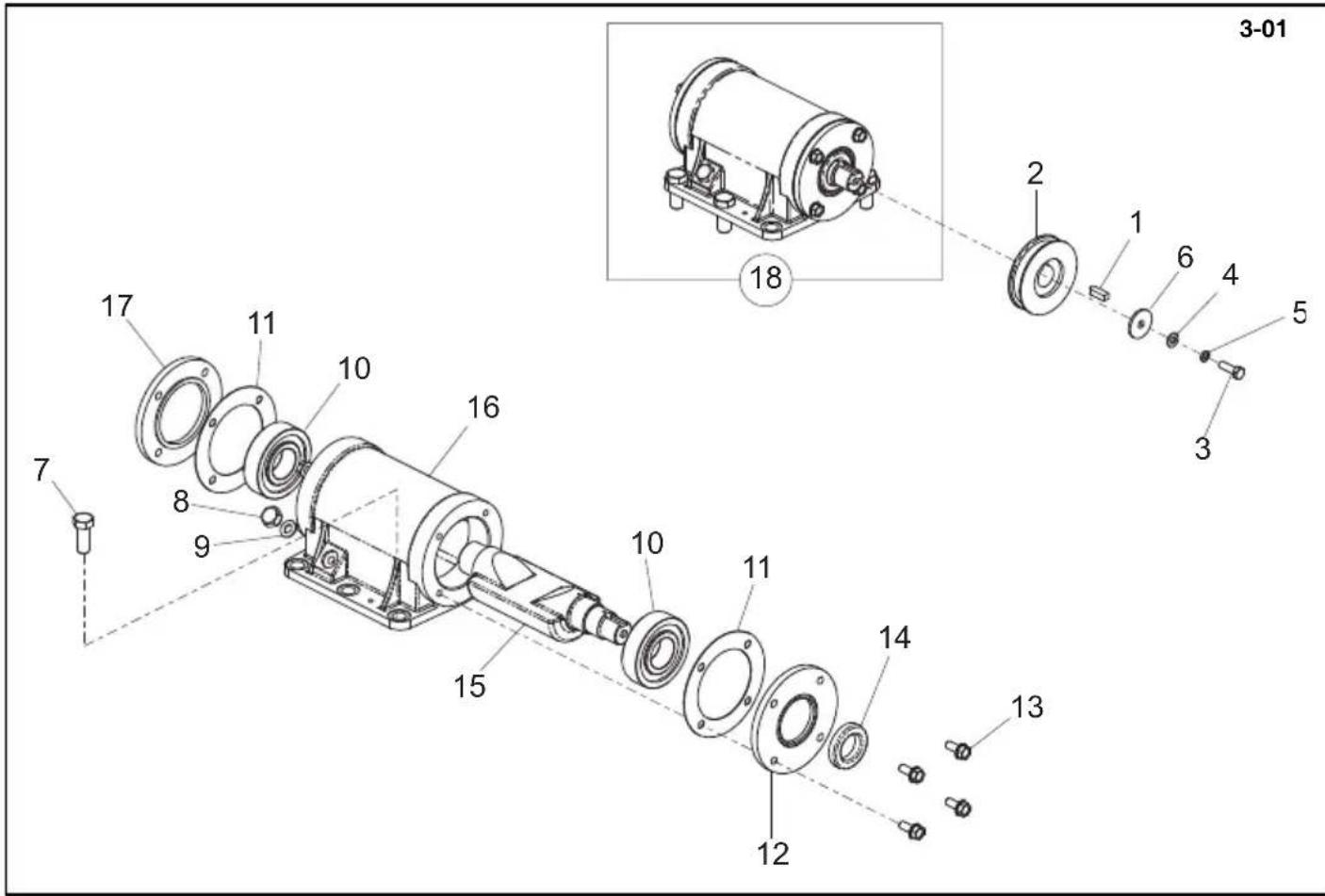
Decals, Autocollant, Rótulo, Decalque
5-01
No.1 for Light Construction Equipment
Belle Group Head Office
Sheen, Nr. Buxton
Derbyshire.
SK17 OEU
GB.
Tel: +44 (0)1298 84606
Fax: +44 (0)1298 84722
email: sales@belle-group.co.uk
Belle France SARL
1 rue de l'Equerre
ZI de Béthunes
BP 20541
95005 Cergy Pontoise Cedex
FRANCE
Tel: +33 (0) 1 34 21 45 83
Tel: +33 (0) 1 34 21 45 84
Fax: +33 (0) 1 30 37 31 28
Belle Equipos SL
Calle Doctor Calero Cial 19,
Local 22, 28220 Majadahonda
Madrid, Spain
Tel: +34 (0) 91 636 2043
Fax: +34 (0) 91 634 1535
Husumer Straße 45 a,
D-33729,
Bielefield
Deutschland
Tel : +49(0) 5217 707505
Fax : +49 (0) 5217 707506
Sales: 0800 1808069
Spares: 0800 1816673
Belle Poland sp. z.o.o.
96-200 Rawa Mazowiecka
Belle Group Portugal
Belle Group Netherlands
Tel: 0800 249861
Belle Group Belguim
Tel: 0800 80295
Belle Group Austria
Tel: 0800 291544
Belle Group Russia
64 Nevsky pr.
St, Petersburg
Russia
Tel : +7(812)314-81-34
Moscow: +7(495)589-64-32
Belle Group South East Asia
21, Jalan Ara AD 7/3B,
Pandar Sri Damansara
S2200 Kuala Lumpur, Malaysia
Tel: +60 (0) 3 62721678
+60 (0) 3 6272 9308
Fax: +60 (0) 3 6272 9528
Belle Group (GB), Shanghai Office
Room 213, Zhonghuang Building,
1007 Zhongshan Nan Er Road,
Xuhui, Shanghai 200030 China
Tel: 00 - 86 - 21 - 5461 5228
Mobile: 00 - 86 - 133 8172 2653
Fax: 00 - 86 - 21 - 5461 5369
email: morgan.liu@bellegroup.com.cn
Belle Group Inc
3959 Electric Rd
Roanoake
Suite 360
VA 24018. USA.
Tel: +1.540.345.5090
Fax: +1.540.345.5091
Toll free 866 540 5090
e-mail: sales@bellegroup.net

Belle Group World Parts Centre
Sheen, Nr. Buxton
Derbyshire.
SK17 OEU
GB.
Tel: +44 (0)1298 84606
Fax: +44 (0)1298 84722
email: parts@belle-group.co.uk
www.Altrad.com
www.BelleGroup.com

COMPACTING...
MIXING...
CONCRETING...

CUTTING...

BREAKING...
MOVING
- ALTRAD
- PCEL 320X
- EC DECLARATION OF CONFORMITY / DECLARATION CE DE CONFORMITE / DECLARACIÓN DE CONFORMIDAD CE / DECLARAÇÃO CE DE CONFORMIDADE / EG-VERKLARING VAN OVEREENSTEMMING / EF OVERENSSTEMMELSESERKLÆRING
- Foreword
- Directives with regard to the notations.
- CAUTION
- WARNING
- Contents
- Machine Description
- Technical Data
- Safe Disposal.
- Reasons For Compaction
- Compaction Specification
- NRSWA (HAUC specifi cation).
- Applications
- Safety Instructions
- Fuel Safety.
- Vibration
- PPE (Personal Protective Equipment).
- Dust.
- Fuel.
- Exhaust Fumes.
- Pre-start Checks
- Pre start-up inspection.
- Operating Instructions
- • Take the compactor to where it is required.
- - Set the throttle to maximum and use the control handle to steer or turn the 'PCEL 320X'.
- • Work the 'PCEL 320X' over the surface in an organized pattern until the required compaction has been achieved.
- Honda GX100
- Stopping the engine
- Starting the engine
- Troubleshooting Guide
- Service & Maintenance
- Maintenance
- Running In Period
- Vibrator Unit.
- Warning Symbols
- Warranty Claims
- Warranty
- Type de machine :
- I
- Fermare il motore
- Ympäristö
- Baseplate Assembly, Plaque d'embase, Cto. Placa base, Conj. da Placa de Base
- Vloerplaat, Rüttelplatten-Zsb., Bundplade, Gruppo piastra di base
- Decals, Autocollant, Rótulo, Decalque
- No.1 for Light Construction Equipment
- Belle Group Head Office
- Belle France SARL
- Belle Equipos SL
- Belle Poland sp. z.o.o.
- Belle Group Portugal
- Belle Group Netherlands
- Belle Group Belguim
- Belle Group Austria
- Belle Group Russia
- Belle Group South East Asia
- Belle Group (GB), Shanghai Office
- Belle Group Inc
- Belle Group World Parts Centre
Brand : Lescha
Model : BELLE PCEL 320X
Category : Vibratory plate