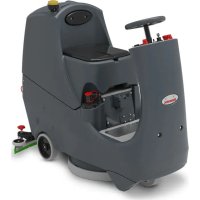
CRL8055 - Sweeper Numatic - Free user manual and instructions
Find the device manual for free CRL8055 Numatic in PDF.



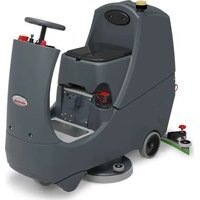
| Product Type | Ride-on scrubber-sweeper |
| Brand | Numatic |
| Model | CRL8055 (CRL8055/50T, CRL8055/100T) |
| Dimensions (L x W x H) | 1460 x 805 x 1160 mm |
| Net weight (empty) | 139.75 kg (CRL8055/50) / 150.55 kg (CRL8055/100) |
| Power supply | Lithium iron phosphate (LFP) battery 25.6 V |
| Battery capacity | 50 Ah (1 battery) / 100 Ah (2 batteries) |
| Runtime | 1 h 20 min (50 Ah) / 2 h 40 min (100 Ah) |
| Charging time | 2.5 h (50 Ah) / 5 h (100 Ah) |
| Clean water tank capacity | 80 L |
| Dirty water tank capacity | 80 L |
| Scrubbing width | 550 mm (single brush) |
| Brush rotation speed | 150 rpm |
| Travel speed | 0 to 6 km/h |
| Brush pressure | 8.4 g/cm² |
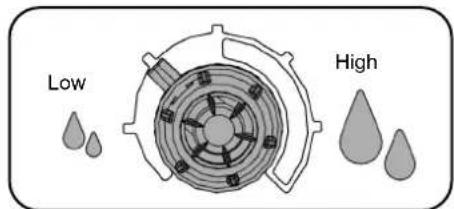
| Water flow rate | 0 to 3.5 L/min, adjustable |
| Suction flow | 24.2 L/s |
| Theoretical cleaning area | Up to 2750 m²/h (at 5 km/h) |
| Noise level | ≤ 70 dB(A) |
| Maximum slope | 11% |
| Main functions | Scrubbing, brushing, suction, drying |
| Safety | Emergency stop, anti-tip system, parking brake |
| Maintenance | Daily filter cleaning, tank emptying, squeegee inspection |
| Included accessories | User manual, 2 ignition keys, charging cable, spare fuses |
| Repairability | Spare parts available: brushes, squeegees, filters, batteries, etc. |
Frequently Asked Questions - CRL8055 Numatic
User questions about CRL8055 Numatic
0 question about this device. Answer the ones you know or ask your own.
Ask a new question about this device
Download the instructions for your Sweeper in PDF format for free! Find your manual CRL8055 - Numatic and take your electronic device back in hand. On this page are published all the documents necessary for the use of your device. CRL8055 by Numatic.
USER MANUAL CRL8055 Numatic
EN, DE, FR, NLEN, D Numtatic PT, IT, ES, PLPT, IT, ES, PL SV, FI, DASV, FI, DA
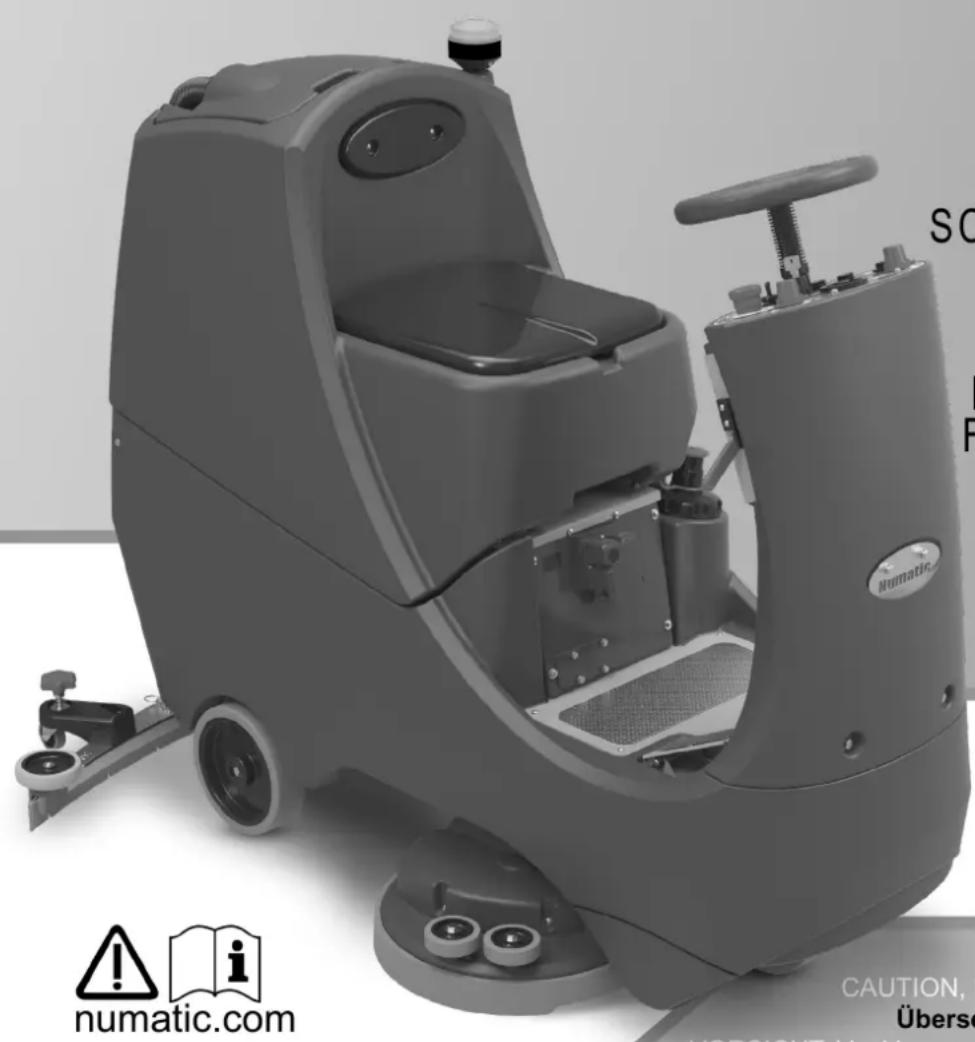
CRL8055/50TCRL8072/50TCRL8055/100TCRL8072/100T
SCRUBBER DRYERSCHEUERSAUGMASCHINEAUTOLAVEUSE SCHROBZUIGMACHINE LAVADORA-SECADORA LAVASCIUGA PAVIMENTI FREGADORA-SECADORA MASZYNA CZYSZCZACA KOMBISKURMASKIN YHDISTELMAKONE SKURE-OG TORREMASKINE
numatic.com
Original Instructions
CAUTION, Read instructions before using the machine.
Fitting the Hose Guide Page 22
Fitting the Floor Tool Page 22
Lowering the Floor Tool Page 22
Breakaway Floor Tool Page 22
Raise / Lower Brush Deck.. Page 28
Fitting the Brush . Page 28
Filling the Clean Water Tank Page 34
Fill Level Indicator Page 34
Machine Operation
Setting the Cleaning Controls Page 40
Waste Water Tank Full Page 40
Emergency Stop Button / Horn.. Page 46
Anti Tip System
Machine in Use . Page 52
Off-Aisle Cleaning
Machine Cleaning .Pages 58 & 64
Free Wheel Function Page 64
Changing Floor tool Blades.. Page 70
Machine Charging Page 76
Battery Care
Charging Lights Sequence.. Page 82
Specifications
Trouble Shooting .Pages 93 & 182
Rating Label / Personal Protective Equipment /
Recycling
Information for Scrubber Dryer.. .Pages 105-106
Recommended Spare Parts Page 137
Battery Information 149-151
Schematic Diagram
EU Declaration Document Page 188
Company Address Page 192
CRL8055/50T = 1x battery
CRL8055/100T = 2x batteries
CRL8072/50T = 1x battery
CRL8072/100T = 2x batteries
DE
CRL8072/100T = 2x batterien
FR
CRL8055/100T = 2x batteries
CRL8072/100T = 2x batteries
NL
CRL8055/50T = 1x accu
CRL8055/100T = 2x accu's
CRL8072/50T = 1x accu
CRL8072/100T = 2x accu's
PT
CRL8055/50T = 1x bateria
CRL8055/100T = 2x baterias
CRL8072/50T = 1x bateria
CRL8072/100T = 2x baterias
IT
CRL8072/50T = 1x bateria
CRL8072/100T = 2x baterías
PL
CRL8055/50T = 1x akumulator
CRL8055/100T = 2x batteries
CRL8072/50T = 1x akumulator
CRL8072/100T = 2x batteries
SV
CRL8055/50T = 1x batteri
CRL8055/100T = 2x batterier
CRL8072/50T = 1x batteri
CRL8072/100T = 2x batterier
FI
CRL8055/50T = 1x akun
CRL8055/100T = 2x akut
CRL8072/50T = 1x akun
CRL8072/100T = 2x akut
DA
CRL8055/50T = 1x batteri
CRL8055/100T = 2x batterier
CRL8072/50T = 1x batteri
CRL8072/100T = 2x batterier
PLEASE READ, BEFORE COMMENCING OPERATION
EN
After the removal of all the packaging, carefully open and check the contents.
- Owner Manual 2 x Ignition Keys Battery Charging Lead 1 x 30 Amp Fuse (Brush) 1 x 20 Amp Fuse (Vac)
- 1 x 10 Amp Fuse • 1 x 4 Amp Fuse • 1 x 2.5 Amp Fuse • Maxi Fuse-puller
DE
| 1 O | Operator control panel |
| 2 Brush deck foot pedal | |
| 3 Anti-tip buffers | |
| 4 Floor-tool raise / lower lever | |
| 5 Clean water tank fill point | |
| 6 Brush deck | |
| 7 | Fuse Panel (20A Vac / 30A Brush Motor / 4A Water pump / 10A Brush engage). |
| 8 Li-ion batteries | |
| 9 Clean water tank filter | |
| 10 On-board charger and charge indicator | |
| 11 Accelerator pedal | |
| 12 Pedestrian warning light | |
| 13 Floor-tool transit bracket | |
| 14 Air separator assembly | |
| 15 Waste water emptying hose | |
| 16 Vacuum hose | |
| 17 Clean water tank emptying hose | |
| 18 Floor-tool | |
| 19 Safety Fuse (2.5A) | |
FR
Vue d'ensemble de la machine Overzicht van de machine
EN: In the event of a breakdown contact your Numatic dealer.
| 1 Water Flow Rate 6 Forward / Reverse Switch | |
| 2 Vacuum On/Off Switch 7 Traction LED | |
| 3 Brush Engage Button 8 Emergency Stop Button | |
| 4 Horn Button 9 Maximum Speed Control | |
| 5 Hours and Battery Meter Display 10 Key Ignition Switch |
DE
-
Owner Manual
-
Battery Charging Lead
- 2 x Keys
30 Amp Fuse
20 Amp Fuse - 1 x 10 Amp Fuse
- 1 x 4 Amp Fuse
2.5 Amp Fuse
Maxi Fuse Puller
Lift top tank assembly to reveal battery compartment, ensuring you use the handle grip provided.
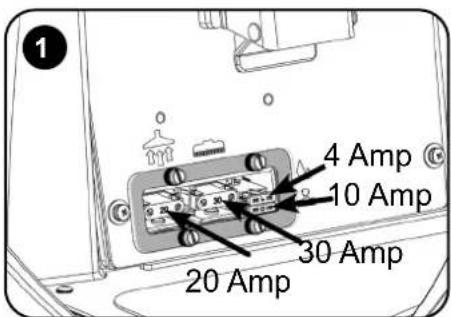
Fit vacuum and brush fuses (contained in start-up pack) into the fuse holders as illustrated.
(Fig.1)
Charge the machine to activate the batteries. After the batteries were activated, LEDs should illuminate on the top of all the batteries.
Insert Key into ignition located on the control panel (See (Fig. A)
Numatic International Ltd recommends ONLY using 911948 NX1K LFP battery type Lithium Batteries provided with this machine.
20 Amp Fuse = VacMotor
30 Amp Fuse = Brush Motor
10 Amp Fuse = Brush Engage
4 Amp Fuse = Water Pump

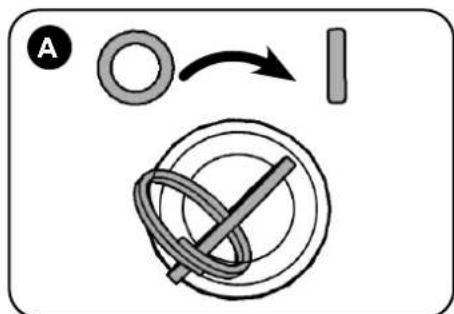
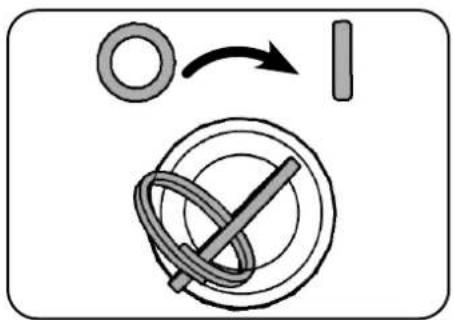
Insert the Ignition key and switch the machine on. (Fig. A)

ENSURE THAT NO METAL OBJECTS COME INTO CONTACT WITH BATTERY TERMINALS WHILE THE BATTERIES ARE EXPOSED.

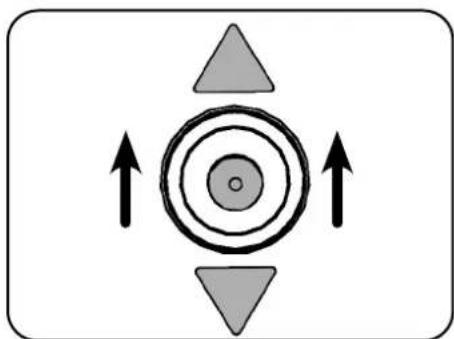
Turn the key to switch on the machine, set lever to forward.
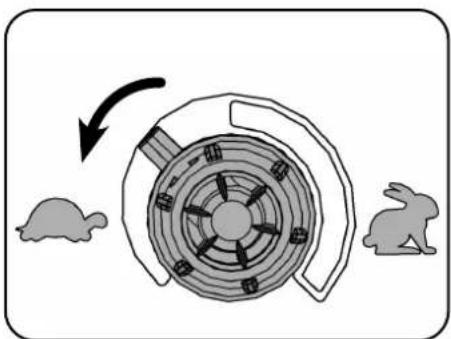
Set to slowest speed, depress accelerator and drive off the pallet using ramp provided.
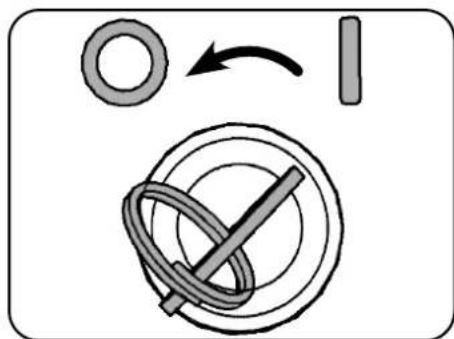
Once in a safe location switch off machine.
Note: DO NOT depress accelerator pedal while software initialises. The machine will not operate in reverse with the floor tool lowered. The seat is fitted with a pressure sensor that disables the machine until an operator is seated.

Fitting the Hose Guide
The U-bend in the hose prevents water spillage when the vacuum is switched off. Refit vacuum hose to the floor tool when finished.
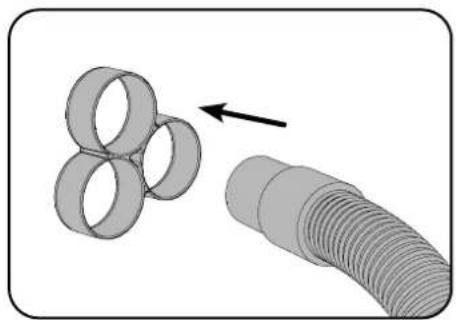
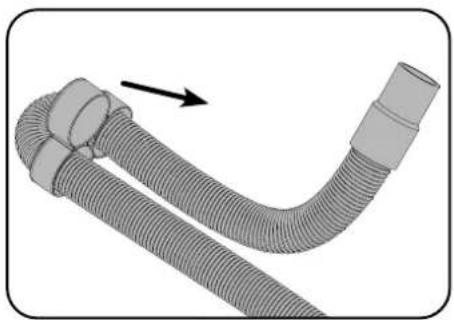
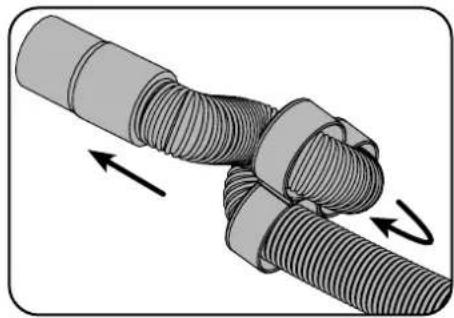
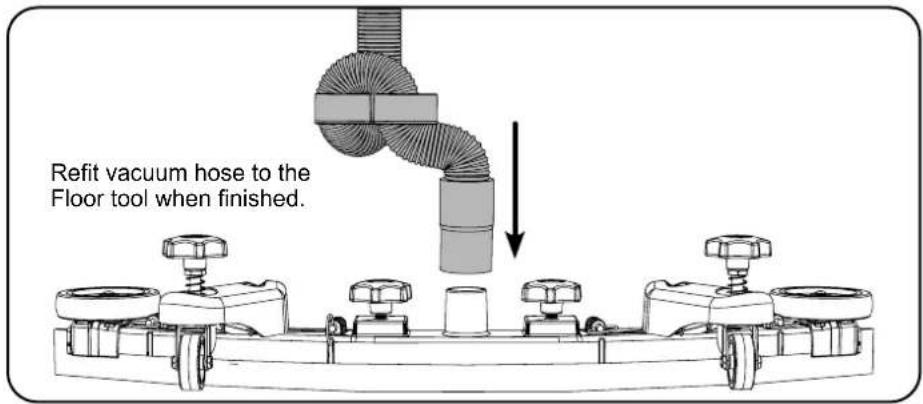
Note: DO NOT push the vacuum hose onto the floor tool with the floor tool in the raised position.
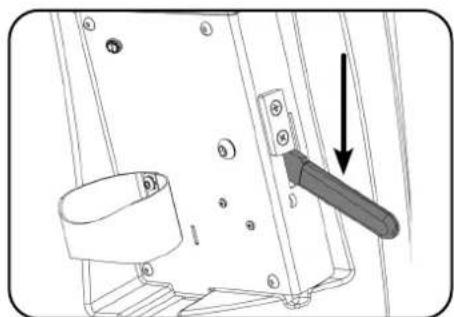
Fitting the Floor Tool
Note: Raise floor tool before driving to the cleaning area. The machine will not operate in reverse with the floor tool lowered.
Break-away Floor Tool
The floor tool design incorporates a safety knock-off feature, this allows it to safely disengage from its mounting should it become caught on an obstruction during forward movement.
Make sure you do not over tighten the retaining knobs.
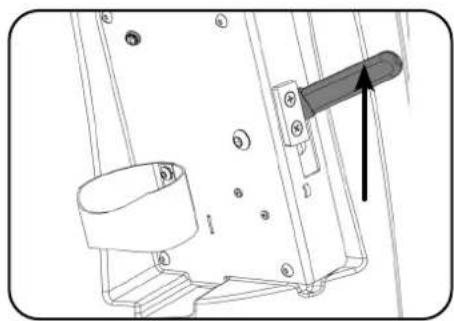
Lower the floor tool.
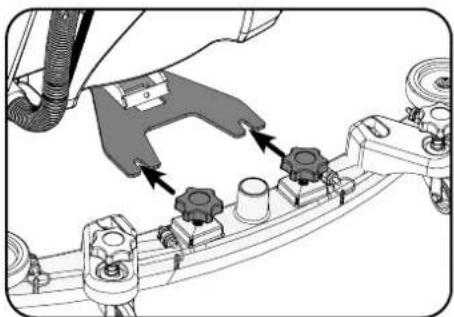
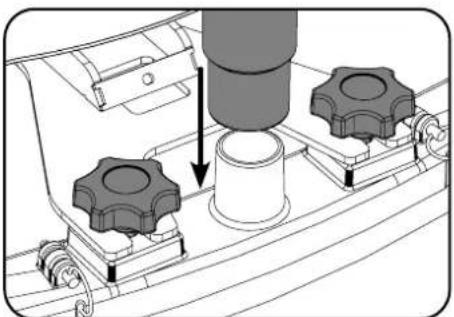
Slide floor tool onto bracket. Tighten retaining knobs to finger tight and attach hose.
Raise the floor tool.
DE
Raise Brush Deck/ Fitting the Brush/ Lower Brush Deck
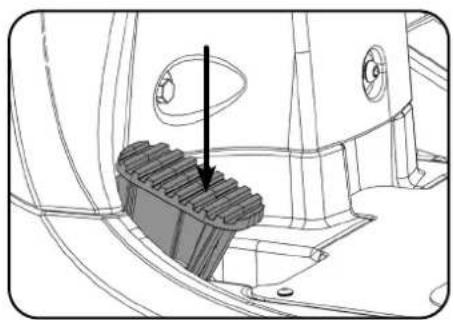
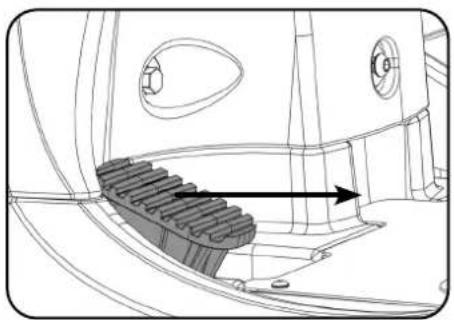
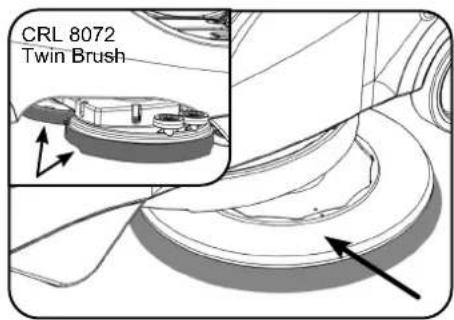
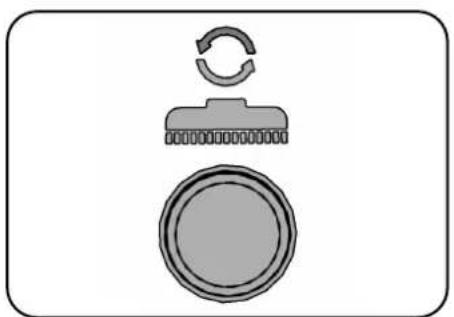
Raise brush deck. Brush deck raised position. Slide brush under machine.
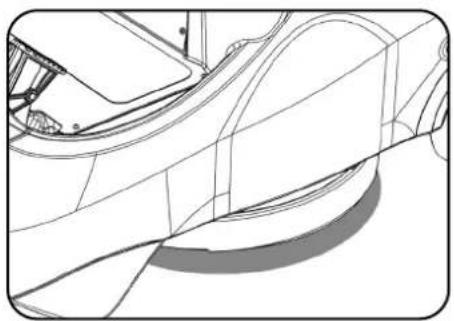
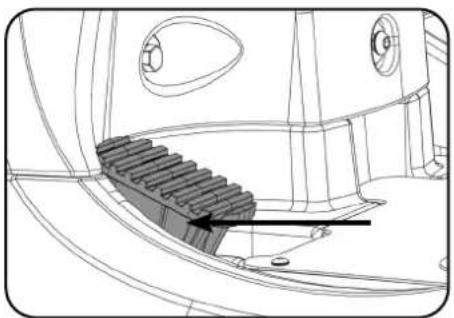
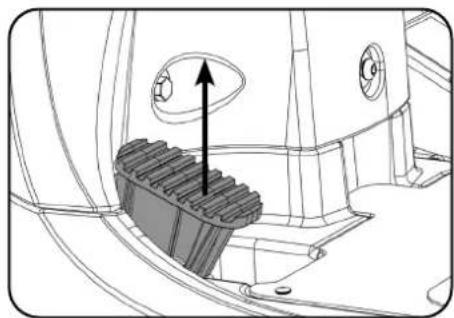
Brush in place. Lower brush deck. Brush deck lowered.
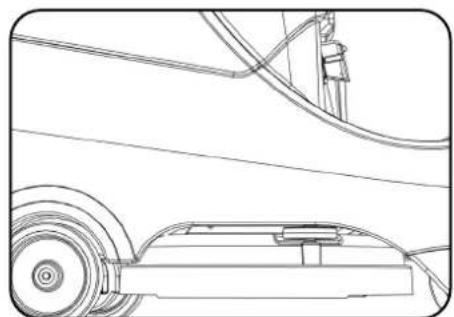
Press and hold brush engage button.Switch machine on. Machine has picked up the brush.
When fitting the brushes make sure it is done on a flat surface.
Please follow the same process to fit both brushes to the CRL8072T as is for the single brush fitting on the CRL8055T.
To disengage the brush, remove manually.
Note: Do not lift the brush deck until the brush has stopped revolving or the brush will release.
Make sure you raise the brush deck before driving to the cleaning site.
Safety Gloves are recommended for the changing of used brushes.
Floor Tool Transit Bracket
When in transit, the floor tool can be placed on the bracket at the rear of the machine. Simply slot the retaining knob into the bracket.
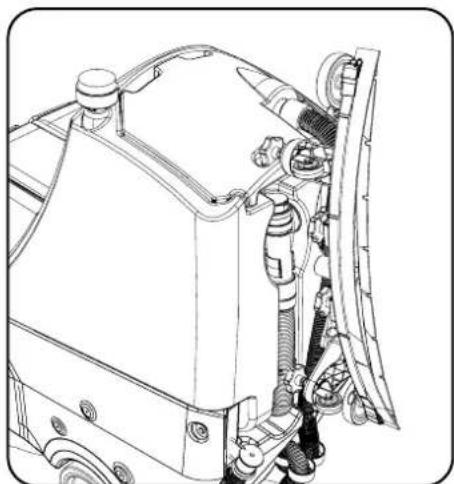
Always ensure that the machine is switched off before making any adjustments.

Filling the Clean Water Tank
The CRL 8055/8072 is equipped with a large capacity 80 litre clean water tank, allowing for large areas to be covered in a single fill.
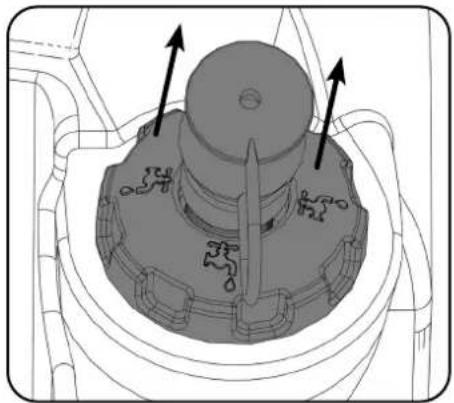
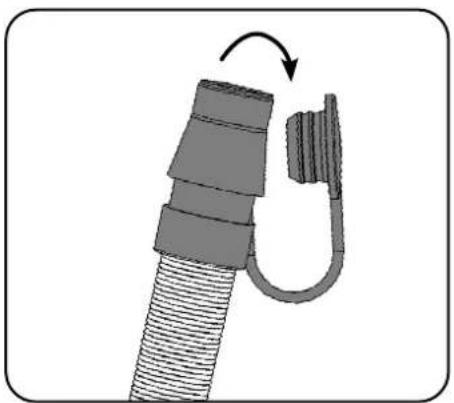
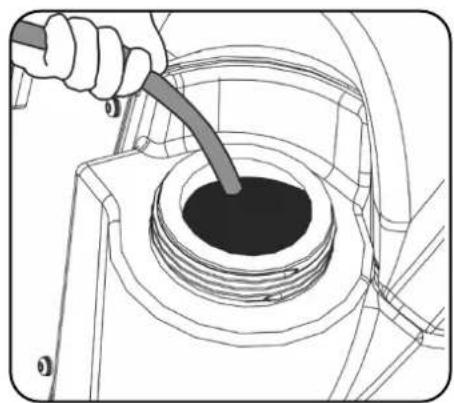
To fill clean water tank, extend fill hose. Remove rubber seal and fill. Alternatively remove filler cap completely.
Note: Great care must be taken to ensure that contaminants (leaves, hair, dirt, etc.) are not allowed to enter the clean water tank during the filling process. If using a bucket or similar, ensure it is always clean and free from debris.
Fill Level Indicator
When filling the clean water tank, do not fill above the clean water tank emptying hose retaining clip.
This can be found at the rear of the machine.
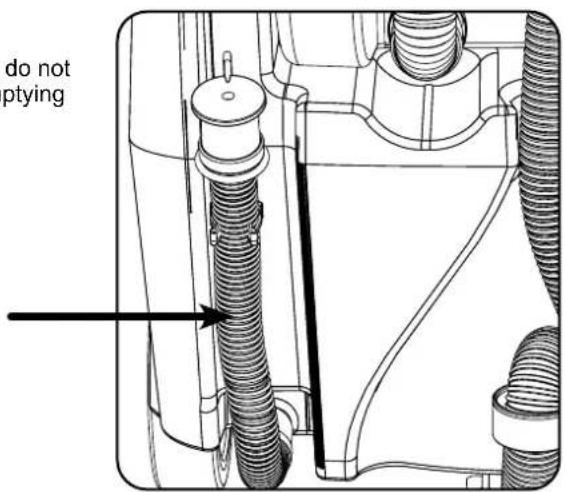
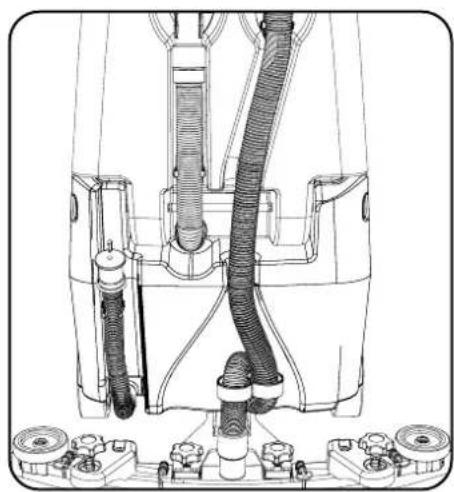

If you need to access the batteries, make sure that the waste water tank is empty before lifting.

DE
EN Machine Operation

IMPORTANT Do not operate machine unless the operator manual has been read and fully understood.

Drive the machine to the cleaning site.
Before cleaning operation, place out appropriate warning signs and sweep or dust-mop the floor.
When ready for cleaning lower the floor tool (page 6) and the brush deck (page 7).
Setting the Cleaning Controls
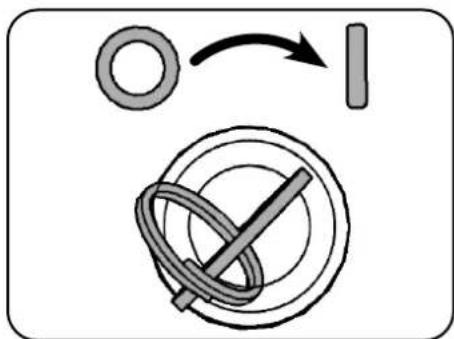
Switch machine on. Battery charge-level indicator illuminates.
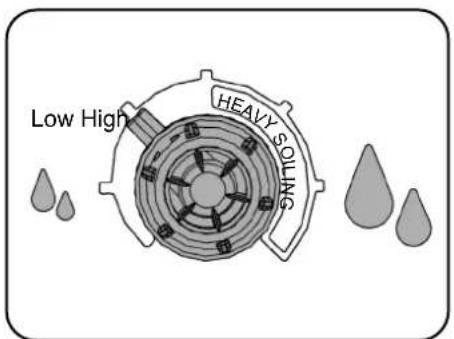
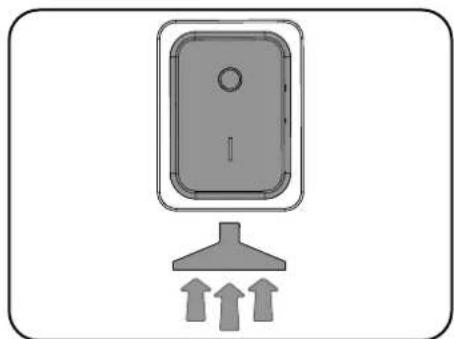
Set the water flow rate as required. Switch the vacuum motor on.
Waste Water Tank Full
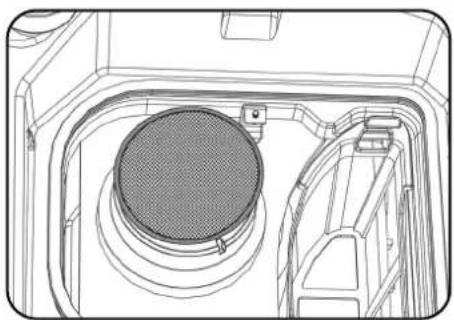
The vac shut off system stops the airflow when the top waste water tank is full.
The vac motor will continue to run, there is an audible difference in the sound when the shut off system operates.
For more details on checking and cleaning the shut off system see page 13.
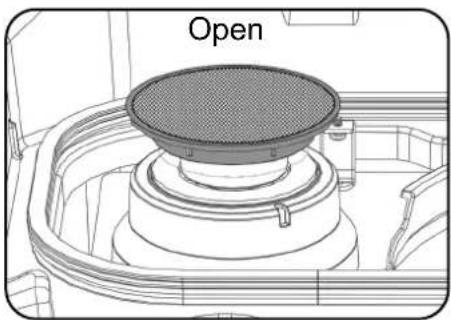
Offen/ Ouvert/ Open/ Aberto/ Aperto/ Abierto/ Otwarty/ Oppen/ Avoinna/ Aben
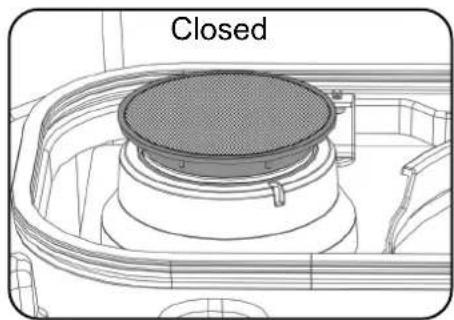
Geschlossen/Fermé/Dicht/Fechado/ Chiuso/Cerrado/Zamkniety/Stangd/ Suljettu/Lukket

Always ensure that the floor is pre-swept and relevant safety signs are displayed.

DE
Vuilwatertank is vol
EN Machine Operation
Emergency Stop Button/ Horn
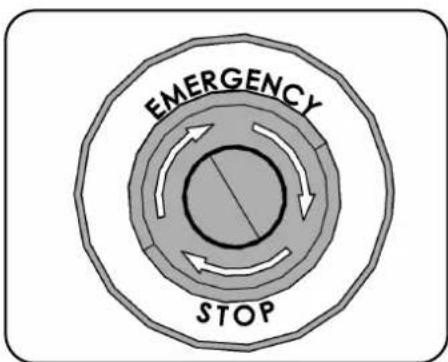
In an emergency, strike the emergency stop to disable the machine.
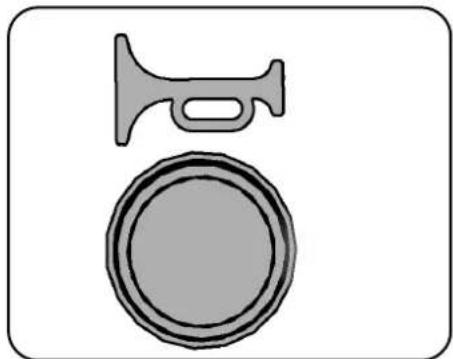
Horn button - for sounding a warning signal
Note: After the Emergency Stop button has been pressed the Traction LED will flash 7 times, pause and repeat until the Emergency Stop button has been reset and the machine switched off / on.
Maximum Speed Control
Set desired traction speed as required, depending on floor type and level of soiling.
Once the Max speed has been set using the control knob on the control panel, fine adjustments can be made using the variable control speed pedal located on the right side of the footplate.


Care must be taken to reduce speed when cornering or manoeuvring.

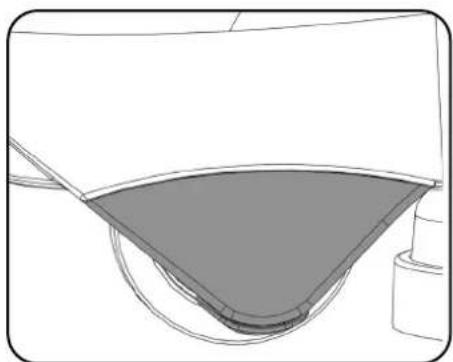
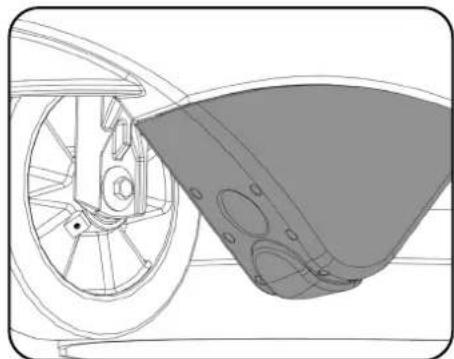
Anti-tip System
The CRL 8055/8072 is equipped with an Anti-tip system.
The machine automatically slows down preventing the machine from tipping over if cornering at speed.
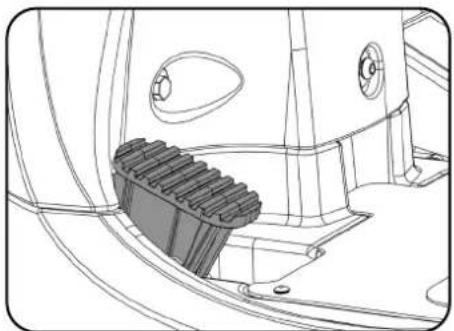
The buffers at the front are designed to prevent the machine tipping in the event of the operator turning sharply.
The buffers are designed to be replaceable when worn.
DE
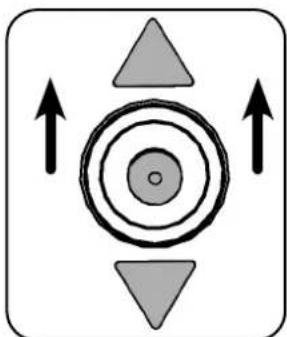
Set lever to forward.
To operate, select forward and depress the accelerator pedal.
Note: The machine will not operate in reverse with the floor tool lowered.
Vacuum pick-up and water flow will turn on if selected and providing the brush and floor tool are in the lowered position, the machine will move forward.
Clean water is dispersed evenly via 'THRU-FEED' scrubbing brushes.
The waste water is then retrieved by the suction floor tool.
Overlap each scrubbing path by 10cm to ensure an even clean.
After stopping, let the vacuum motor run for 10 seconds to collect any water left in the vacuum hose, then switch the vacuum motor off.
On heavily soiled floors use a 'double scrub' technique.
First pre-scrub the floor with the floor tool in the raised position, allow the chemicals time to work, then scrub the area a second time with the floor tool lowered.
If your machine leaves streaks on the cleaned floor, either clean the floor tool blade or adjust blade height for optimum performance.
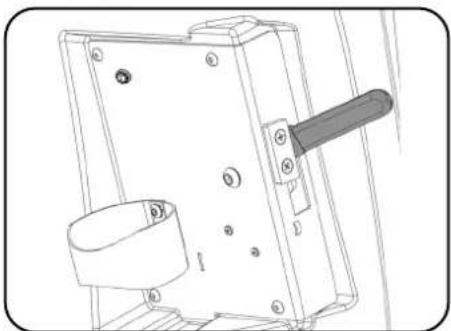
Brush deck in lowered position. Floor tool lever in lowered position.
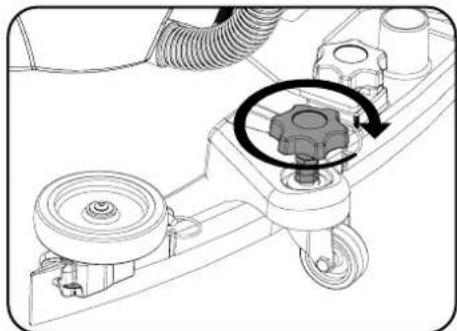
Adjusting the blade height.
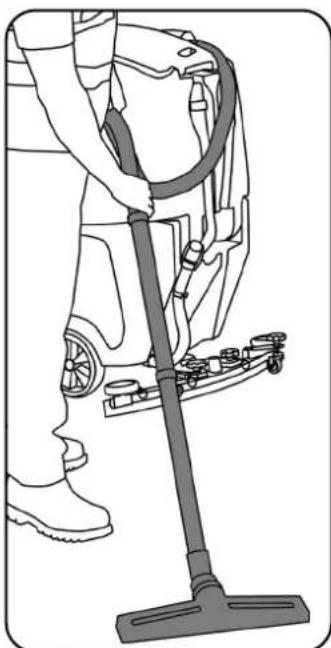
Off-aisle Cleaning Kit
(Optional Extra Accessory) 606182
The optional off-aisle cleaning kit gives added flexibility to the operator.
The kit can be used to clean hard to reach / inaccessible areas.
Remove the vacuum hose from the floor tool and attach to the off-aisle kit.
To operate the vacuum, press the vacuum switch on.
Note: Return the hose to the floor tool once finished using the off-aisle facility.
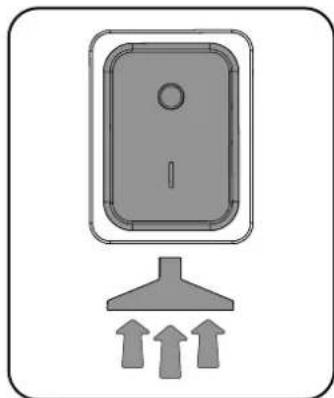
Vacuum switch.
Saugtaster/ Bouton de l'aspirateur/ Stofzuigerschakelaar/ Interruptor de vácuo/ Interruttore aspiratore/ Interruptor de aspiración/ Włącznik ssania/ Dammsugaromkopplare/ Alipainekytkin/ Vakuumkontakt
Overlap hver skrubberute med 10 cm for at sikre jævn rengøring.
Always ensure that the machine is switched off prior to any maintenance.

After use, empty waste water tank using emptying hose and flush-out with clean water.
B Remove floor tool vacuum hose ensuring you remove the U-bend clip and flush out with clean water.
Empty clean water tank, using emptying hose and again flush out with clean water.
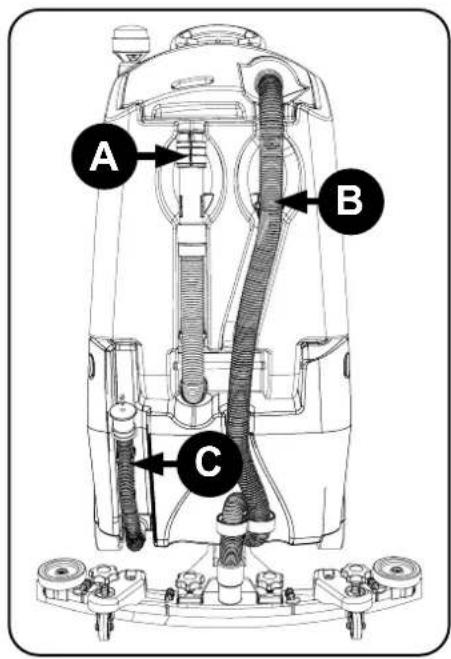
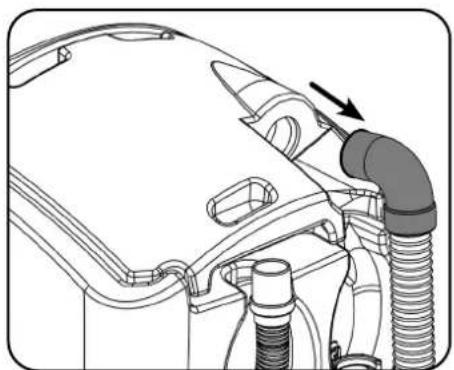
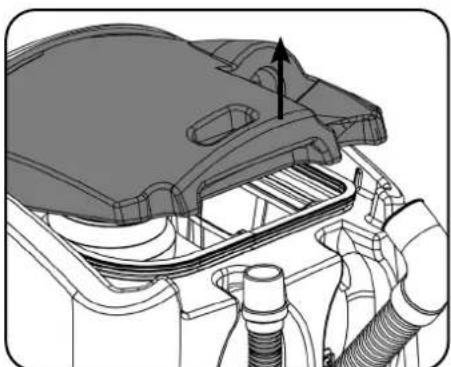
Remove hose. Remove separator and clean.
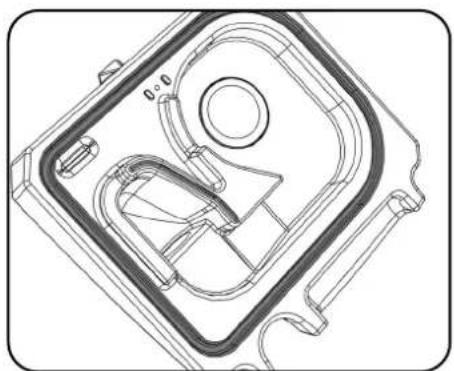
Clean and examine rubber seal during each clean.
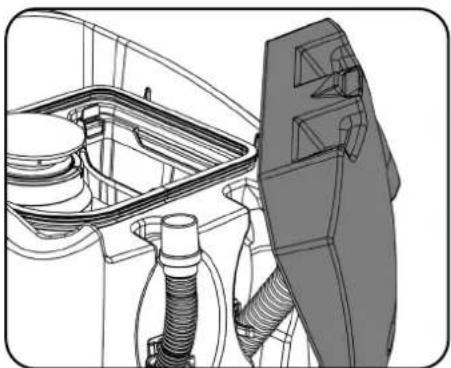
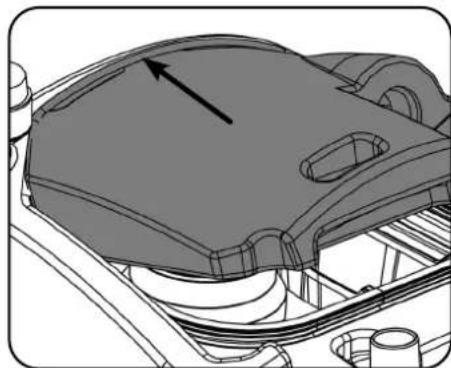
Note: The separator can be hung from either side of the top tank while you maintain the machine using the clip on the front of the lid.
When refitting the separator make sure you engage the front of the separator BEFORE pushing the separator down.
Refit the vacuum hose.
DE
Always ensure that the machine is switched off prior to any maintenance.

Located in your waste water top tank is a vacuum shut off system, this prevents suction when the waste water tank is full. It also prevents foam created by high-foaming detergents from entering the motor. Sometimes the float vents get clogged and blocked, clean to ensure correct operation. Regularly check and clean the air filter in the top of the assembly. Remove debris basket filter and rinse using clean water, and refit.
IMPORTANT: If the debris basket is allowed to become clogged, vacuum performance can deteriorate.
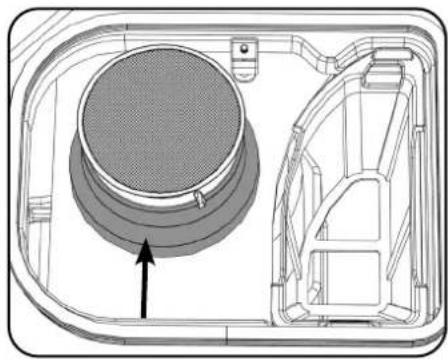
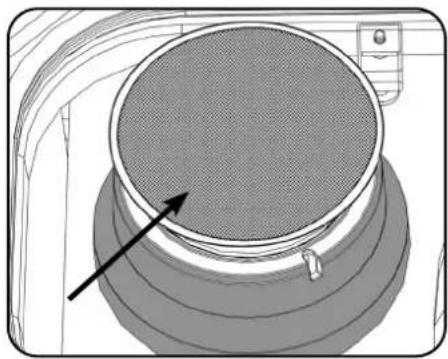
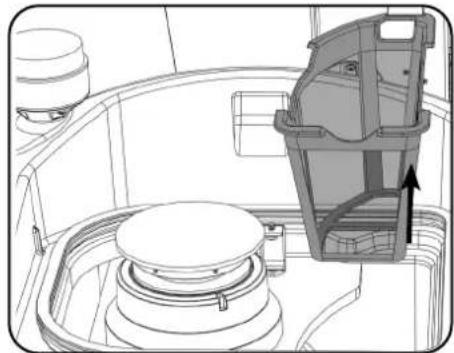
Debris basket removal.Float vent. Air filter
The clean water tank filter is located to the front of the battery compartment and should be checked at regular intervals.
Lift the filter off of the cradle, unscrew the bottom and remove, taking care not to spill any liquid on to the batteries.
Rinse using clean water and refit, refitting is reversal of removal.
Note: Any Spills should be wiped up before tank is lowered.
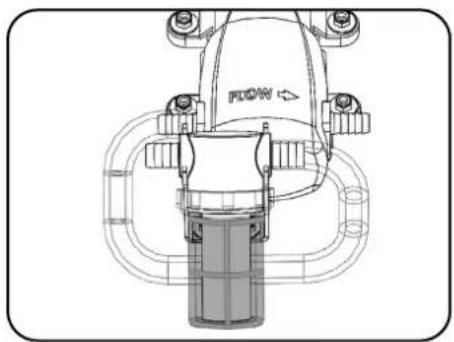
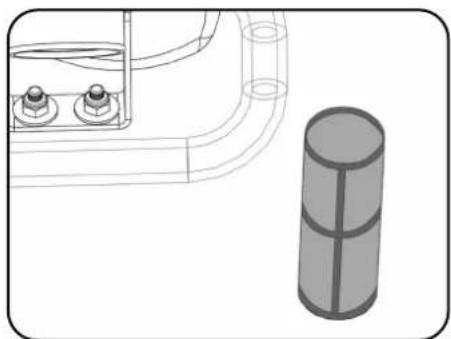
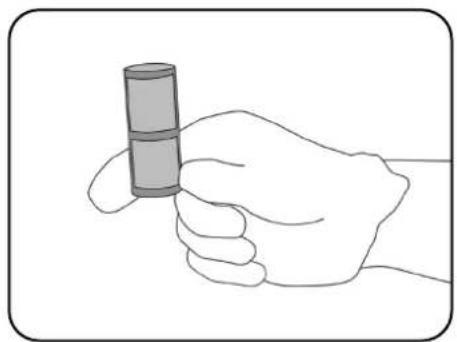
Free Wheel Function

The CRL 8055/8072 is equipped with a free wheel function that will enable the operator to move the machine.
The free wheel lever can be found on the right hand side of the rear axle.
To disengage the brake, pull the lever into the down position.
Re-engage the brake by moving the lever into the up position.
Note: When the brake is disengaged the machine has no braking facility.
Care must be taken when moving the machine in free wheel mode.

Machine shown on it's side.
DE
Always ensure that the machine is switched off prior to maintenance.

Lower the floor tool then unscrew the retaining knobs and slide it off the holding bracket.
Rinse the floor tool assembly with clean water and refit.
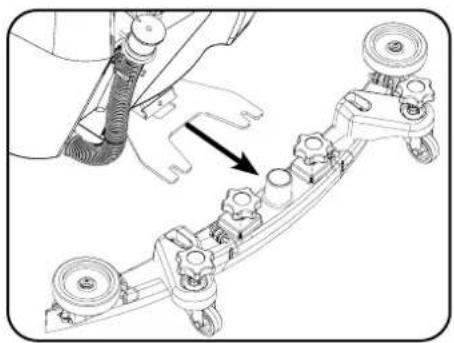
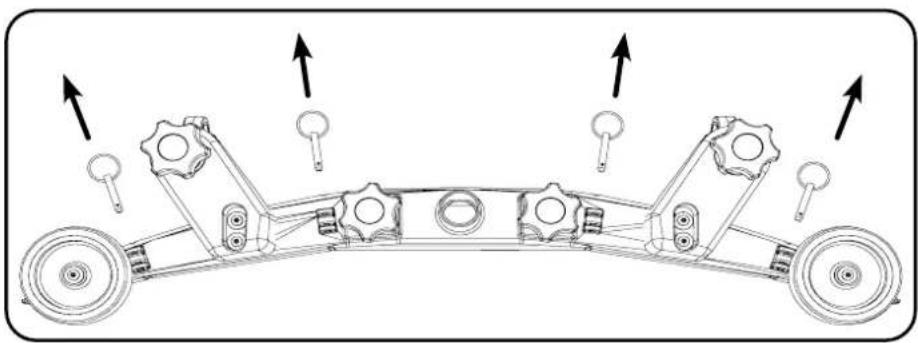
Remove floor tool. Remove four retaining pins.
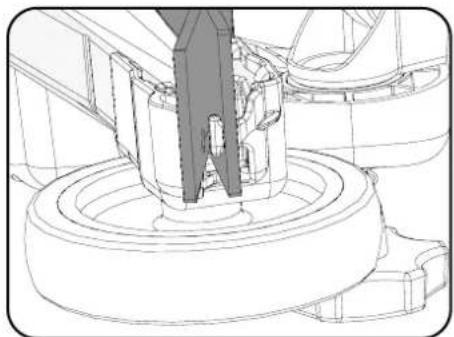
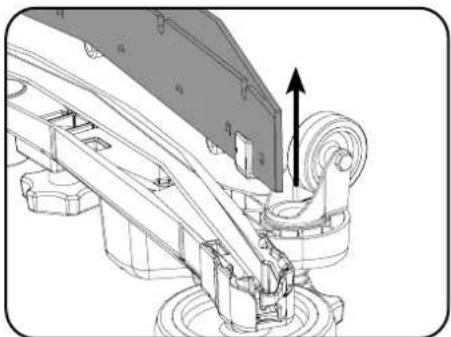
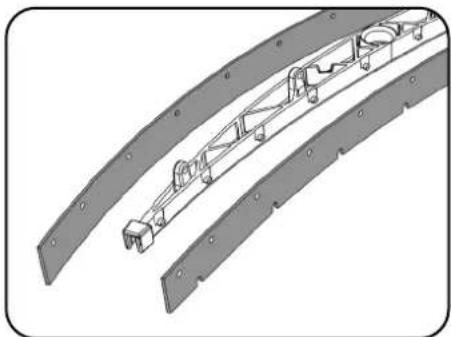
Turn the floor tool over. Separate the blade from the carrier. Peel away blades.
Periodically the floor tool blades should be examined and checked for wear and damage.
Replacement is a reversal of the removal process.
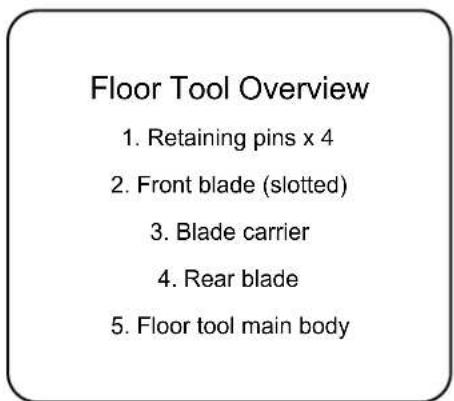
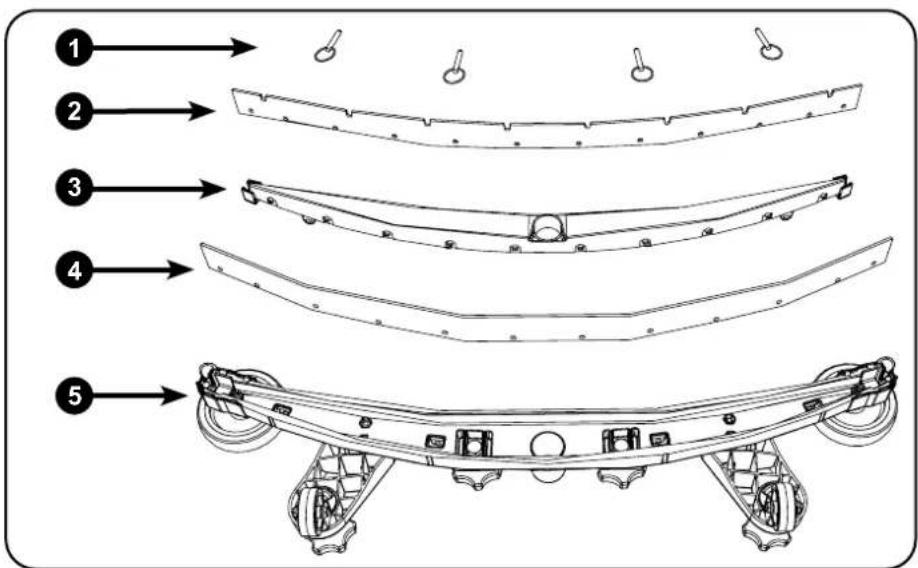
Note: The blades are designed to be reversible, thus extending their useful working life.
DE
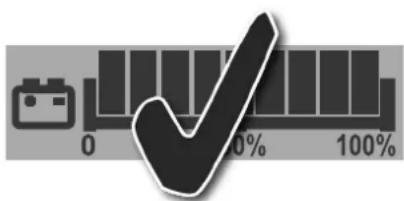
The battery meter displays the charge level of the batteries; when fully charged, all meter lights are illuminated.
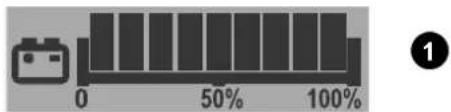
As the machine is used and the batteries are discharged, the meter lights will go out from right to left.
If the battery-charge level is allowed to discharge to the point that only one or two lights / bars remain illuminated, the operator must consider charging the machine.
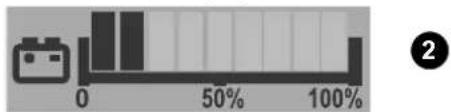

Always ensure that the machine is switched off prior to charging.

When the machine is getting close to empty the last light starts to flash, the operator should then take the machine to a suitable charging point. When the battery icon starts flashing, the vacuum and brush motors will be disabled and the user should charge the machine.
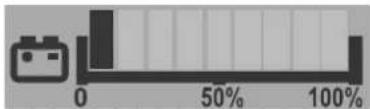
3
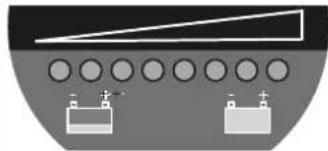
Alternative Display
When the last red light starts flashing, the vacuum and brush motors will be disabled and the user should charge the machine.
The LFP batteries are sealed for life and are totally maintenance free.
The on-board charger automatically monitors the charging process and will switch to float charge mode when the batteries are fully charged. Float charge mode allows to maintenance LFP batteries at the right level of health. The machine should be left on float charge overnight or over the weekend at least once per month or more frequently if needed.
Insert the charging lead required for your country into the charging point.
The machine charging point is located to the rear of the machine under the control panel.
Connect to a suitable power supply.
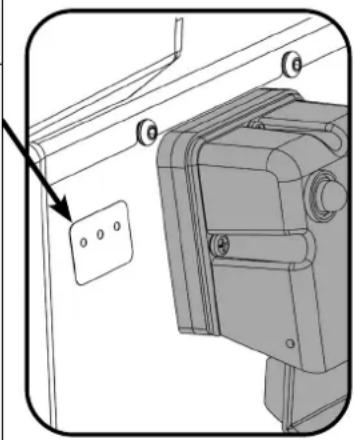
Once mains power is connected the red charging indicator will illuminate.
To ensure a full charge, from an empty state, the machine should be left for a period of 8 hrs.
Once fully charged, disconnect the charging lead from both the power supply and the machine.
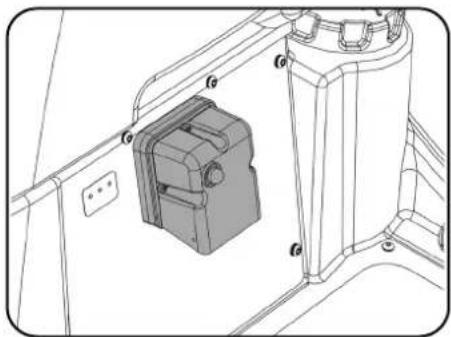
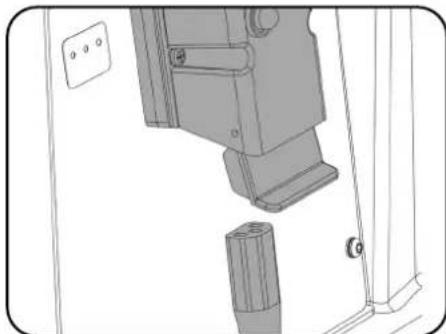
Machine charging point, above footplate. Insert country specific charging lead.
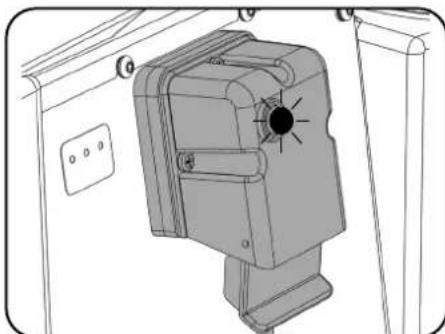
Red charging indicator illuminates when charging.
Battery Care

To ensure your machine remains at its maximum efficiency and prolong your battery life, please follow the simple steps below:

Under normal daily usage:
Re-charge the machine FULLY after each use regardless of machine operation time.
It is recommended to leave the machine connected to power grid overnight, at least once a month. If the user does not disconnect the cable after full charge it is not an issue.
Do not leave the machine in a discharged state.
Periodically inspect the battery
connections for tightness and corrosion.

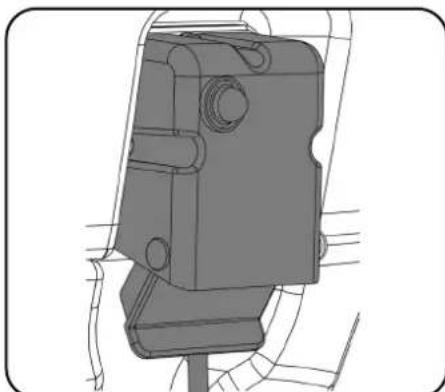
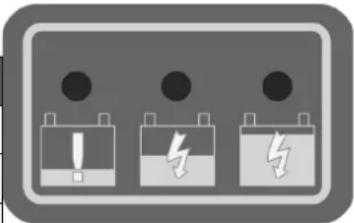
Alternative visiting
| Signal (LED) Meaning | ||||
| Red LED on First Phase (Constant Current Mode). | ||||
| Orange LED on Second Phase (Constant Voltage Mode). | ||||
| Green LED on Third Phase (Constant Voltage Mode) Charge Complete. However, after full re-charge, leaving the charger connected moves to float-charge mode to help to maintain a healthy balance between batteries. | ||||
| Red LED flashing followed by Pause | Cooling Fan Locked > 1 flash between pause. Over Voltage Protection / Output Short Circuit / Battery Reverse Polarity > 2 flashes between pause. Over Temperature Protection > 3 flashes between pause. Charge Time has exceeded 16 hrs during phase 1 or 2 > 4 flashes between pause. | |||
| Condition RED LED YELLOW LED GREEN LED | ||||
| Pre-charge Timeout | Flashing 4 Times | O | ||
| CC Timeout | O | |||
| CV Timeout | O | O | ||
| Battery Disconnection | ||||
| Note: O means illuminates continuously | ||||
Note: Re-charge the machine fully after its last use. Do not leave the machine in a discharged state.
Under abnormal use;
i.e. leaving the machine without charging for a period of time, we advise that you follow these steps:
Float charge mode allows to maintenance LFP batteries at the right level of health.
The machine should be left on float charge overnight or over the weekend at least once per month.
Charge fully the day before you start using the machine again.
Specifications
| Green Status Indicator | Fault | Possible Cause | Effect on Product | Investigate the Following | Action Required | If Fault persists |
| 1 Flash with pause | Batteries voltage low | Batteries not been charged | Operating time severely reduced or machine will not operate | Check when machine last charged Charge batteries immediately | Contact Service Agent | |
| Possible bad connection between batteries, controller, charger or fuses caused by loose connections, damaged wiring, water ingress | Switch OFF the machine :Remove FusesCheck connections to batteries, charger and fuses for loose wires or screws | Tighten loose connections and replace damaged components | ||||
| Not accepting charge due to faulty battery / cell | Check each battery Voltage individually to detect defect unit 10.5V min | Replace batteries as required | ||||
| Charger not functioning | Check battery voltage and charge current ensuring charger red fault light is extinguished | Replace charger | ||||
| 2 Flashes with pause | Traction motor disconnected | The motor has a bad connection | The motor will not operate | Check all connections and leads between motor and controller | Tighten loose connections and replace damaged components | |
| Motor disconnected | ||||||
| TCO activated(Thermal Cut Out) | ||||||
| Motor failed to open circuit | ||||||
| 3 Flashes with pause | Traction motor wiring trip | The motor has a short circuit to a battery | Motor will not operate | Check all connections and leads between the motor and controller | ||
| 4 Flashes with pause | Battery Lockout | The battery charge level has fallen below the battery lockout level and the controller is inhibiting machine functions | Machine functions not working | Check battery voltage and charge current ensuring charger red fault light is extinguished | Charge batteries immediately | |
| Check each battery voltage individually to detect defect unit 10.5V min | ||||||
| 6 Flashes with pause | Charger connected | The controller is being inhibited from driving, this may be because the battery charger is connected | Machine functions not working | Remove charger to operate machine | ||
| 8 Flashes with pause | Controller trip A controller trip is indicated | Machine functions not working | Check all connections and leads | Tighten loose connections and replace damaged components | ||
| 9 Flashes with pause | Brake deactivated or failed | Poor brake connectionsBrake failure or deactivation | Traction drive disabled | Check brake wiring and brake lever | Replace brake or wiring as necessary. Reactivate brake by engaging brake lever | |
| 10 Flashes with pause | High battery voltage | Poor connections between battery controller and traction motor | Machine functions not working | Check each battery Voltage individually to ensure voltage < 14 volts | ||
| Check connections on controller batteries and traction motor | ||||||
| Check combined battery pack voltage is < 28 volts | ||||||
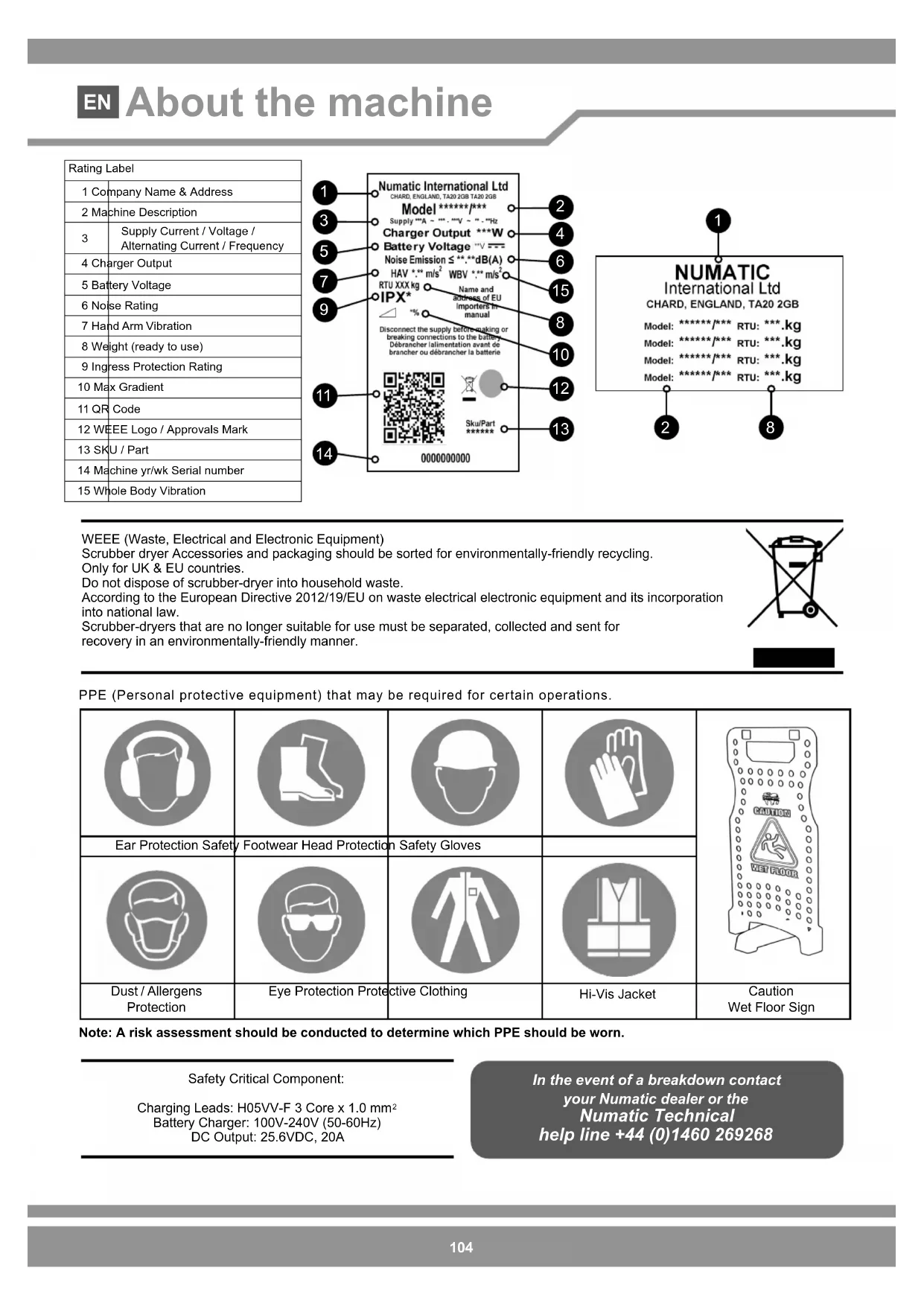
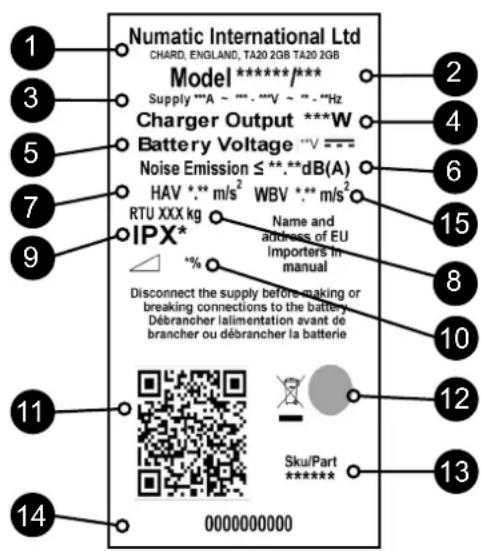
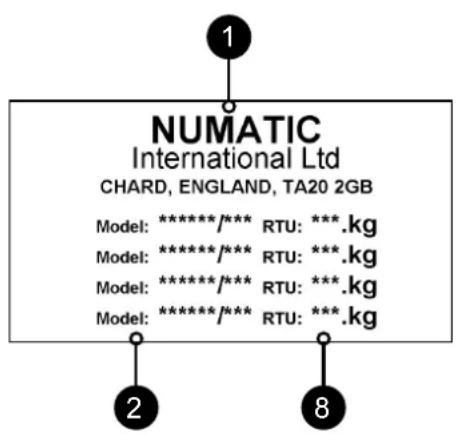
| Rating Label | |
| 1 Company Name & Address | |
| 2 Machine Description | |
| 3 | Supply Current / Voltage / Alternating Current / Frequency |
| 4 Charger Output | |
| 5 Battery Voltage | |
| 6 Noise Rating | |
| 7 Hand Arm Vibration | |
| 8 Weight (ready to use) | |
| 9 Ingress Protection Rating | |
| 10 Max Gradient | |
| 11 QR Code | |
| 12 WEEE Logo / Approvals Mark | |
| 13 SKU / Part | |
| 14 Machine yr/wk Serial number | |
| 15 Whole Body Vibration | |
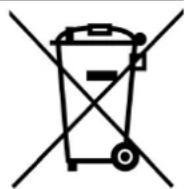
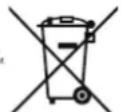
WEEE (Waste, Electrical and Electronic Equipment)
Scrubber dryer Accessories and packaging should be sorted for environmentally-friendly recycling.
Only for UK & EU countries.
Do not dispose of scrubber-dryer into household waste.
According to the European Directive 2012/19/EU on waste electrical electronic equipment and its incorporation into national law.
Scrubber-dryers that are no longer suitable for use must be separated, collected and sent for recovery in an environmentally-friendly manner.
PPE (Personal protective equipment) that may be required for certain operations.
| Ear Protection Safety Footwear Head Protection Safety Gloves | ||||
| Dust / Allergens Protection | Eye Protection Protective Clothing | Hi-Vis Jacket | Caution Wet Floor Sign | |
Note: A risk assessment should be conducted to determine which PPE should be worn.
Safety Critical Component:
Charging Leads: H05VV-F 3 Core x 1.0 mm²
Battery Charger: 100V-240V (50-60Hz)
DC Output: 25.6VDC, 20A
In the event of a breakdown contact
your Numatic dealer or the
Numatic Technical
help line +44 (0)1460 269268
EN Information for Scrubber Dryer

READ MANUAL BEFORE USE
| COMPONENT INTERVAL INSPECT FOR | |
| Charging Lead DAILY Scuffing, cracks, splits, conductors showing | |
| Brushes DAILY Bristle damage, wear, drive collar wear | |
| Squeegee Blade BEFORE EACH USE Wear, cracks, splits | |
| Filters BEFORE EACH USE Clogging and debris retention | |
| Tanks AFTER EACH USE Rinse dirty water tank after use | |

As with all electrical equipment care and attention must be exercised at all times during its use, in addition to ensuring that routine and preventative maintenance is carried out periodically in order to ensure its safe operation. Operators shall be adequately instructed on the use of these machines.
WARNING
Failure to carry out maintenance as necessary, including the replacement of parts to the correct standard
could render this equipment unsafe and the manufacturer can accept no responsibility or liability in this respect.
When ordering spare parts always quote the Model Number / Serial Number specified on the Rating Plate.
Do not use on cleaning surfaces having a gradient exceeding that marked on the machine. While on ramps or inclines, avoid sudden
stops. Avoid sharp turns. Use low speed down ramps. Clean only while descending (driving down) the ramp.
This machine is not intended for use by persons (including children) with reduced physical, sensory or mental capabilities, or lack of experience and knowledge.
Children should be supervised to ensure that they do not play with the appliance.
Only use brushes provided with the appliance or those specified in the instruction manual.
The use of other brushes may impair safety.
A full range of brushes and accessories are available for this product.
Only use brushes or pads which are suitable for the correct operation of the machine for the specific task being performed.
It is essential that this equipment is correctly assembled and operated in accordance with current safety regulations.
When using the equipment always ensure that all necessary precautions are taken to guarantee the safety of the operator and any other persons who may be affected.
Wear non slip footwear when scrubbing. Use a respiratory mask in dusty environments.
When cleaning, servicing or maintaining the machine, replacing parts or converting to another function the power source shall be switched off.
Mains operated machines shall be disconnected by removing the power plug, and battery operated machines shall be disconnected by using top ON/OFF button on the battery.
In order to prevent unauthorised use of the machine the power key must be removed after use.
Machines left unattended shall be secured against unintentional movement.
When detergents or other liquids are used, read the manufacturer's instructions.

CAUTION
This machine is not suitable for picking-up hazardous dust.
This machine is not to be stored outdoors or in wet conditions.
This machine is for indoor use only.
NOTES: This machine is intended for commercial use, for example in hotels, schools, hospitals, factories, shops, offices and rental businesses.
This product meets the requirements of IEC 60335-2-72
| DO | ·Ensure only competent persons unpack/assemble the machine. ·Keep your machine clean. ·Keep your brushes in good condition. ·Replace any worn or damaged parts immediately. ·Regularly examine the power cord for damage, such as cracking or ageing. If damage is found, replace the cord before further use. ·Only replace the power cord with the correct Numatic approved replacement parts. ·Ensure that the work area is clear of obstructions and /or people. ·Ensure that the working area is well illuminated. ·Pre-sweep the area to be cleaned. |
DON'T
Use steam cleaners or pressure washers to clean the machine or use in the rain.
- Allow any inexperienced repairs. Call the experts.
- Leave the brush pad on the machine when not in use.
- Allow the machine to be used by inexperienced or unauthorised operators or without appropriate training.
Use the machine without the solution tanks properly positioned on the machine, as shown in the instructions
Expect the machine to provide trouble-free, reliable operation unless maintained correctly.
- Lift or pull the machine by any of the operating triggers, use the main handle.
- Allow water solutions to ingress to the battery.
- Remove the handle from the machine except for service and repair.
Precautions when working with batteries
- Always wear protective clothing e.g. face visor, gloves and overalls when working with batteries.
- Whenever possible always use a properly designated and well-ventilated area for charging.
Do not smoke or bring naked fl ames into the charging area.
- Remove any metallic items from hands, wrists and neck i.e. rings, chains etc. before working on a battery.
- Never rest tools or metallic objects on top of the battery.
- When charging is complete disconnect from the mains supply.
- The batteries must be removed from the machine before it is scrapped.
- The machine must be disconnected from the supply when removing the battery.
- To remove the batteries:-- Disconnect machine from the mains supply (if charging) and ensure batteries are switched off using the button that is placed on the battery top. Disconnect hoses from separator and tanks.
Remove separator and tanks. Unscrew battery strap fi xings and remove.
Undo battery terminals and remove. Remove batteries.
- The batteries are to be disposed of safely, as according to local government guidelines.
- Only use genuine Numatic replacement batteries.
- Do not allow the batteries to become fully discharged; it may not be possible to re-charge them. Batteries should not be discharged below 22.5 volts with 10 amps fl owing.
- Do not allow one battery to be discharged separately to the other.
- Do not mix batteries from different machines.
- The batteries fi tted to this product are Lithium-ion (Li-ion), Lithium Iron phosphate (LFP) type. The fitting of any other type of battery may cause a safety hazard.
- Switch off the battery using top ON/OFF button before cleaning or maintenance.
Battery Care
- Battery Storage:
a. Batteries must be stored in a dry, level and clean location not exceeding a temperature range of 15^ 25^ .
b. Batteries must by fully charged every 6 months when on-the-shelf or if the battery voltage reduces to 25V.
c. Batteries must be put into use within 12 months of the date of manufacture, failure to do so will lead to reduced capacity in the fi eld. (battery date code) -
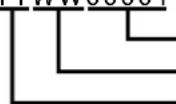
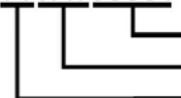
ZP19006FYYW W0 0001
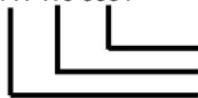
Serial number Week of Production Year of Production
d. If a battery does not want to switch ON and the green LED on the top is not illuminating, irreversible damage has occurred. Under this condition, a battery should not enter into service and should be disposed of according to local authority guidelines.
2. During Use:
a. Batteries must be recharged after every use regardless of machine run time.
b. If the machine is to be left dormant for any length of time complete the following:
i. Fully charge the batteries.
ii. Do not leave batteries dormant for more than 6 months.
Daily
Keep the machine clean.
Ensure brushes/ pads/ squeezegee/ fi liters are in good condition.
Check for any worn or damaged parts and replace immediately.
Drain and rinse dirty water tank after every use.
Store machine with brush deck secured in the elevated position.
Weekly - as daily and
Check brush or pad and skirt and rinse.
Check floor tool blades for wear and wipe clean.
Clean separator assembly including fi lter and check condition of seal.
Flush out system with clean water and clean fl iters.
Batteries
Always re-charge the batteries after use.
Charge for a minimum of 4 hours. Leave the battery on charge overnight, at least once per month.
After it has been fully charged, this will prolong battery life.
| Make | Voltage | Capacity/Energy | Weight | Size |
| NX1K Battery | 25.6 V | 50Ah / 1280 Wh | 10.8 kg | 315mm (L) x 132mm (W) x 185mm (H) |
Numatic Lithium-ion Rechargeable Battery
25.6V | 50Ah | 1280Wh | LFP26148129





It is important that you observe the following information and warnings!
| Emergency Contact Information | ||
| Address: CBAK BATTERY HEADQUARTERS Shenzhen BAK ENERGY Co. LTD, 2603A BAK Tech Bldg, 9th Keyan Rd, Hi-tech Park, Nanshan Dist, Shenzhen City, China | NUMATIC INTERNATIONAL LTD Millfield Road, Chard, Somerset, TA20 2GB, UK | |
| Tel: Fax | 0086-755-832837100086-755-8328649 | 0044-146-0686000044-146-068458 |
| www.numatic.com | www.numatic.de | www.numatic.ch | www.numatic.frwww.numatic.nl | www.numatic.co.za | www.numatic.pt | www.numatic.eswww.numatic.it | www.numatic.dk | ||
1. DEFECTIVE BATTERIES
- If a customer wishes to return a battery to a supplier after removing from product, then collection of the battery must be arranged by the supplier; however, Faulty batteries must not be returned through the postal system or by courier.
- If on return to a supplier, OR at a customer base, a suspected defective battery shows any signs of impact damage, distortion, blistering, loose parts or leakage then on no account should it be offered for condition checking. It must be considered defective and the procedures described from item 6 below should be followed.
- If, on return to a supplier, OR at a customer base, a suspected defective battery, that shows No signs of impact damage, distortion, blistering, loose parts or leakage, may be offered for condition checking with an appropriate battery condition checking device operated by a competent person.
- If checking shows the battery to be defective then the procedures described from item 6 below should be followed.
- On no account must any further attempt to recharge be made. A defective battery should not be stored inside buildings on any account.
- The defective battery must be switched off, and all electrical terminals sufficiently insulated to remove risk of short circuit. The defective battery can then be stored in a locked battery waste container which should be plastic or plastic lined and placed away from buildings and combustible materials and clearly signed as a defective battery container with appropriate warnings. Defective batteries should be sent for waste disposal / recycling according to your country waste regulations.
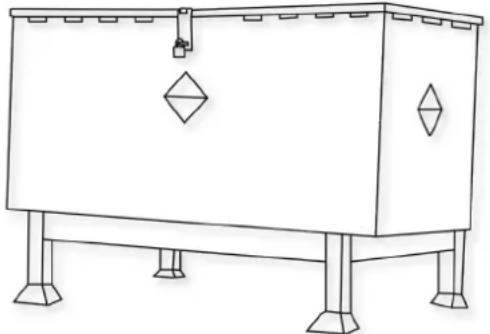
An example of a waste battery storage bin well away from buildings.
2. HANDLING AND STORAGE
EN
DANGER!
Improper handling can lead to an explosion or ignite a fire!
Store batteries out of reach of children.
- Only trained staff can fix the battery in the machine.
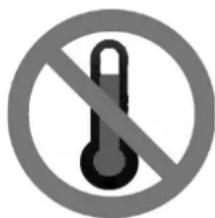
Storage temperature range: -10^ 40^ . - Temperatures must not exceed 40^ .
- Relative humidity range: 20% to 80% .
Optimum preservation of functionality: 15^ 25^ .
WARNING:
- Do not open the battery, disassemble it or allow it to fall from a substantial height.
- Protect the battery against short-circuiting - danger of explosion!
- Protect the battery against rain, do not immerse in liquids - danger of short-circuiting.
- Protect the battery against direct sunlight, heat and fire.
- Do not incinerate the battery - danger of explosion!
- Do not use defective or deformed batteries.
- Use only original Numatic specific appliances to charge and discharge batteries.
- Use only an external supply with the following specifications: 100 - 240V 6.8A
STORAGE:
Good batteries should be stored in a protected area away from sources of direct heat and sunlight and should be kept dry.
- The temperature should not exceed 40^ but preferably not be above 25^ to maintain good battery performance.
- Storage area should be of low humidity, non dusty and a non corrosive atmosphere.
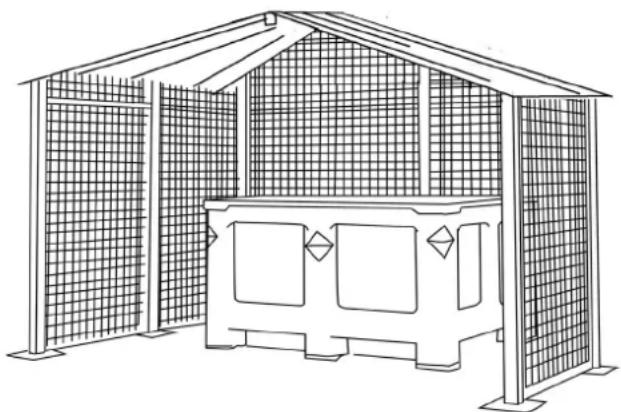
- An example of a well protected area with a cage to protect against accidental impact damage and with the batteries stored in a protective container to protect from heat, impact and accidental spillage of liquids.
- Care when handling / moving with forklift trucks or pallet trucks is needed at all times to avoid any physical damage to the batteries.
- If a good battery at any time is mishandled or subjected to any conditions that may damage it, as described in the battery Instruction manual supplied, it must then be considered as defective and procedures followed from Item 1 of this document overleaf.
3. HAZARDS IDENTIFICATION
- Electrolyte may escape from damaged batteries. Avoid contact.
- Contact can cause skin irritation, burns and chemical burns.
If liquid comes into contact with eyes, seek medical attention. - Avoid inhaling any vapours formed or released from the battery - Contains caustic alkaline electrolytes.
- Warning - Risk of fire - This battery contains No user serviceable parts.
4. FIRST AID MEASURES
EN
In the event of contact with released electrolyte or electrolyte vapours:
Eye contact - flush eyes for at least 15 minutes with plenty of clean water without rubbing and seek medical attention.
Skin contact - wash affected areas of skin with plenty of water and soap; if irritation persists, seek medical attention.
- Inhalation - provide fresh air or administer oxygen immediately and seek medical attention.
- Ingestion - if electrolyte has been ingested, seek medical attention immediately.
Information for physicians:
- Contains caustic alkaline electrolytes in cells with Lithium Iron Phosphate - NO LITHIUM METAL OR LITHIUM ALLOYS.
5. FIRE FIGHTING MEASURES
EN
- In case of fire - Keep clear of vapours and gases generated, take wind direction into consideration. If possible without danger, remove batteries from the vicinity of the fire. In principle, cooling or extinguishing with water is possible, but should only be done by trained personnel with sufficiently large quantities of water.
If the hazard situation is unclear, extinguish only with ABC powder extinguishers (Class D extinguishers for fires involving metals are especially suitable).
Fire fighters should only approach the fire wearing protective clothing and self-contained breathing apparatus. - Once the fire has been extinguished, as a rule, the area should be monitored (fire watch) and cleaned up by trained and appropriately equipped personnel; fire residue should be contained and disposed of properly.
6. EXPOSURE CONTROLS, PERSONAL PROTECTION
EN
Respiratory Protection:
- In case of battery venting, providing as much ventilation as possible. Avoid confined areas with venting batteries.
- Respiratory Protection is not necessary under conditions of normal use.
Ventilation:
- Not necessary under conditions of normal use.
Protective Gloves:
- Not necessary under conditions of normal use.
Other Protective Clothing or Equipment:
- Not necessary under conditions of normal use.
Personal Protection is recommended for venting batteries: Respiratory Protection, Protective Gloves, Protective Clothing and safety glass with side shields.
7. ACCIDENTAL RELEASE
EN
Disposal - Wear protective clothing and equipment, wipe up with absorbent textile and dispose of as hazardous waste at collection points for hazardous waste according to national regulations.
8. DO
EN
-
Use NUMATIC batteries only with NUMATIC appliances and charge them only using NUMATIC chargers.
-
Charge battery before use.
- Store the battery out of the reach of children.
- Protect from rain - do not immerse in fluids.
- Protect from direct sunlight, heat, and open flames.
- Keep a battery that is not in use away from metal objects, (e.g. nails, coins, jewellery).
- Follow the disposal advice of the manufacturer and any internal waste management guidance.
- Use and store the battery with-in temperature range (as shown in Temperature Range Table).
- Always switch off the battery using the button by holding it for 6 seconds, before disconnection and handling.
To activate / turn ON the battery please hold the top button for 6 seconds or alternatively charge the battery using original Numatic specific chargers. - Be aware of the risk of terminals of the battery-operated appliance or battery being short circuited by metal objects.
Warning: The battery must only be charged by the Numatic Charger supplied with the product and under NO circumstances should an alternative non Numatic charger be used as there is a risk of severe damage and fire could result.
Note* "If batteries are subjected to temperatures beyond normal operating limits automatic shutdown will occur. Under these conditions allow the batteries to acclimatise at room temperature (18°C - 22°C) for several hours to allow the battery to wake up".
| Temperature Range Table | |
| CHARGING 5°C~35°C | |
| DISCHARGING -10°C~35°C | |
| STORAGE OPTIMUM 15°C~25°C | |
| STORAGE LIMIT -10°C~40°C |
9. DO NOT
- Throw battery into fire - risk of explosion!
- Charge or use a defective, damaged or deformed battery.
- Open, damage or drop the battery.
- Expose the battery to microwaves or high pressure.
- Bridge (short circuit) the battery terminals with metallic objects since this may damage the battery.
- Use metal containers for transporting batteries.
- Expose the batteries to high temperatures including direct sunlight.
- Crush, break open or physically abuse the batteries or the equipment that contains them.
10. DISTRIBUTOR TAKE-BACK / DISPOSAL
EN
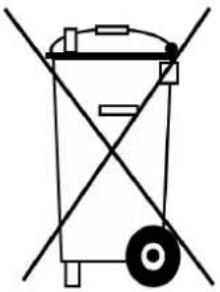
- On the basis of the Battery Directive, the manufacturers take responsibility for financing collection, treatment and recycling of batteries used in devices. To this end, batteries must be handed over for disposal to the collection systems established for this under national law. Disposal of batteries together with household waste is prohibited; batteries must be collected separately according to type.
- Return the battery free of charge to your NUMATIC servicing dealer for disposal or hand it over to an appropriate public collection point.
11. CHARGING BATTERIES
EN
The charger is intended for use only in the machine where it has been installed. The charger is intended for use with the detachable power cord supplied, the power unit is capable of operating at different voltages without user adjustment. If the charger is damaged or does not charge anymore, please return to service centre.
CAUTION!
- Check the mains cord regularly for any sign of damage.
- Do not use damaged devices.
If the mains cord of the charger is damaged, it must be replaced by an original NUMATIC mains cord available from the manufacturer or service agent.
12. WARRANTY
EN
Lithium-Ion Battery Warranty
Warranty: Commercial Use
a. Batteries are warranted for (3 Years) as standard. *Note: Numatic dealerships outside of the UK may provide longer warranty periods. Please confirm with your Numatic dealership on purchase of your product.
b. To claim warranty the following details must be supplied
i. Serial number of the machine
ii. Battery date code
iii. Date purchased
iv. Proof of Purchase
v. Maintenance history and charging regime
Failure to use the correct Numatic charger will void your warranty.
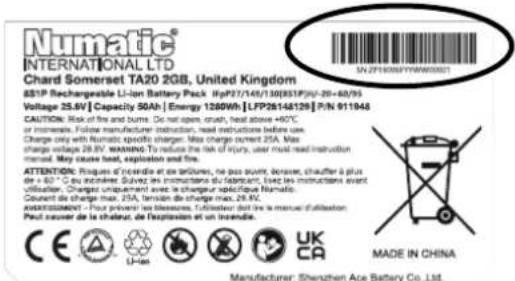
ZP19006-01FYYWW00001
Serial number
Week of production
Year of production
1. SCHADHAFTE BATTERIEN
Chard Somerset TA20 2GB, United Kingdom
SSP Rechargeable Li-ion Battery Pack (PP27/549/130[851P]/-20+60/95
Voltage 25.6V Capacity 50Ah Energy 1280Wh LFP26146129 P/
CAUTION: Risk of fire and burns. Do not open, clean, read or show 40T or more in an industrial factory. Follow manufacturers instructions, read instructions before use
Charge only with Numatic specifc charger. Max charge-current 25A. Max
Charge voltage 28.5V WARNING To reduce the current. May cause heat, explosion and fire
AANNNNNEENNNNNNNNNNNNNNNNNNNNNNNNNNNNNNNNNNNNNNNNNNNNNNNNNNNNNNNNNNNNNNNNNNNNNNNNNNNNNNNNNNNNNNNNNNNNNNNNNNNNNNNNNNNNNNNNNNNNNNNNN
。


Manufacturer: Shenzhen Ace Battery Co., Ltd.
ZP19006-01FYYWW00001
Seriennummer
Herstellungswoche
Herstellungsjahr
1. BATTERIES DÉFECTUEUSES
9.WATU NIET MOETDOEN
NL
Chard Somerset TA20 2GB, United Kingdom
$11 RP Rechargeable Li-ion Battery Pack (pP27/148/30851P) 16-20-60/95 Vibration of the Power Supply 16-20-60/95
VOLAGE 25.0L Capacity SOAH Energy 1200W (LPF-2814612) CAUTION: Risk of fire and burns. Do not open, brush, heat above +62^ .
or innsides. Folse manufacturer instruction, read instructions before use.
Charge only with nonionic species. Max charge current 20A; max charge voltage 28.5V. WRANING To reduce the risk of injury, user must read instruction
A
A
Générate charge max. 25A, tension de change max. 25.8K

Manufacturer: Shenzhen Ace Battery Co., Ltd.
ZP19006-01FYYWW00001
1. BATTERIE DIFETTOSE
Manufacturer: Shenzhen Ace Battery Co. Ltd.
1. BATORIAS DEFECTUOSAS
Numatic International LTD
Chard Somerset TA20 2GB, United Kingdom
881P Rechargeable Li-Ion Battery Pack IfpP27/548/1.30[851P]/-20+60/95
VOLTAGE 25.8V Capacity 50Ah Energy 1280W LFP26146125 P/N 911944 CAUTION: Risk of the and turn, Do not open or close, best ash above 40^
determined for the use of this equipment. No special order required. See also Note 40 of comments. Follow manufacturer instruction, need instructions before use
Charge only with Numatic specific charge. Max charge current 25A. Max charge voltage 28.B.V. WARNING To reduce the risk of injury, user must read instruction
manual May cause heat, explosion and fire.
MADE IN CHINA
Manufacturer: Shenzhen Ace Battery Co., Ltd.
ZP19006-01FYYWW00001
Numero de série
Manufacturer: Shenzhen Ace Battery Co. Ltd
Serienummer
Produktionsuge
Produktionsar
| PROBLEM CAUSE SOLUTION | ||
| Machine will not operate Low battery charge | Machine is connected and chargingWaste tank full switch stuck or cloggedKey is off or missingHandle safety fuse blown | Charge batteries (page 76-92)Take off charge (page 76-81)Inspect & clean switch inside tank (page 58-69)Insert key & turn to operating positionReplace fuse (or contact service engineer) |
| Vacuum will not operate Missing or blown fuse | Waste tank full switch stuck or cloggedVacuum switch not engagedWaste water tank full | Fit or replace fuse (page 16-21)Inspect & clean switch inside tank (page 58-69)Press switchEmpty waste water tank (page 40-45) |
| Poor water pick-up Waste water tank full | Clogged / blocked vacuum hoseLoose hose connectionsDebris basket filter clogged / blockedSeparator filter clogged / blockedPoor separator sealDamaged separator sealDamaged / split vacuum hoseDamaged floor tool bladesLow battery chargeFloor tool incorrectly adjusted | Empty waste water tank (page 40-45)Remove and clean (page 58-69)Push tight connections (page 22-27)Remove and clean (page 58-69)Remove and clean (Page 58-69)Clean and refit (page 58-69)Renew (contact service dept)Renew (contact service dept)Renew (contact service dept)Re-charge batteries (page 76-92)Adjust floor tool |
| No brush / scrub function No brushes fitted | Brush deck raisedMissing or blown fuses | Check and fit (page 28-33)Lower brush deck (page 28-33)Fit or replace fuse (page 16-21) |
| Little or no water flow Clean water tank empty | Clean water tank filter blocked / cloggedWater flow not onBrush deck raised | Fill clean water tank (page 34-39)Remove and clean (page 58-69)Switch on water flow (Page 52-57)Lower brush deck (page 28-33) |
| Machine just 'stops' during operating | Brush motor fuse blown due to high load | Replace fuse & reduce load (page 16-21) |
Warning Do not fit a replacement fuse link having a higher rating than the value stated on the fuse label.
DE
Reservedele
For declaration of conformity for model CRL8072.TM see supplement sheet part no 920007
DEC-055 V3.4
Notes
| This Machine Has Been Packed With The Following | |
| Brush / Pad | |
| Floor Tool | |
| Charging Lead | |
| Battery | |
| Fuse Pack | |
| Signed | |
Distributed by:
Numatic
numatic.com
Numatic International Limited (Head Office)
Chard, Somerset TA20 2GB, UNITED KINGDOM
Tel: 01460 68600 numatic.com
Numatic International GmbH
Numatic International Denmark
Numatic International BV
Numatic International (PTY) Ltd.
Cnr. 16th & Pharmaceutical Road, Randjes Park, Midrand 1685, SOUTH AFRICA
Tel: +27 (0) 861 686 284 numatic.co.za
Numatic International ULDA
Rua Francisco da Silva Duarte, n°79
4475-269 Santa Maria de Avioso, Castelo da Maia, PORTUGAL
Tel: +351 220 047 700 numatic.pt
Numatic International Spain, S.L.U.
Av. Baix Llobregat, 5-7, Oficina bajos 1 (Parc Negocis Mas Blau II)
08820 EI Prat de Llobregat (Barcelona), SPAIN
Tel: +34 93 647 22 22 numatic.es
Numatic International Italy S.R.L
Via Luigi Galvani, 2, Z.I. Talponedo, 33080 Porcia (PN), ITALY
Tel: +39 (0) 434 046 211 numatic.it
- Machine Operation
- DE
- FR
- NL
- PT
- IT
- PL
- SV
- FI
- DA
- PLEASE READ, BEFORE COMMENCING OPERATION
- EN
- ENSURE THAT NO METAL OBJECTS COME INTO CONTACT WITH BATTERY TERMINALS WHILE THE BATTERIES ARE EXPOSED.
- Fitting the Hose Guide
- Fitting the Floor Tool
- Break-away Floor Tool
- Floor Tool Transit Bracket
- Filling the Clean Water Tank
- Fill Level Indicator
- EN Machine Operation
- Setting the Cleaning Controls
- Waste Water Tank Full
- Vuilwatertank is vol
- Emergency Stop Button/ Horn
- Maximum Speed Control
- Anti-tip System
- Off-aisle Cleaning Kit
- Always ensure that the machine is switched off prior to any maintenance.
- Free Wheel Function
- Always ensure that the machine is switched off prior to maintenance.
- Battery Care
- Under normal daily usage:
- Alternative visiting
- Under abnormal use;
- EN Information for Scrubber Dryer
- WARNING
- CAUTION
- DON'T
- Precautions when working with batteries
- During Use:
- Daily
- Numatic Lithium-ion Rechargeable Battery
- 25.6V | 50Ah | 1280Wh | LFP26148129
- DEFECTIVE BATTERIES
- HANDLING AND STORAGE
- DANGER!
- WARNING:
- STORAGE:
- HAZARDS IDENTIFICATION
- FIRST AID MEASURES
- In the event of contact with released electrolyte or electrolyte vapours:
- Information for physicians:
- FIRE FIGHTING MEASURES
- EXPOSURE CONTROLS, PERSONAL PROTECTION
- Respiratory Protection:
- Ventilation:
- Protective Gloves:
- Other Protective Clothing or Equipment:
- ACCIDENTAL RELEASE
- DO
- DO NOT
- DISTRIBUTOR TAKE-BACK / DISPOSAL
- CHARGING BATTERIES
- CAUTION!
- WARRANTY
- SCHADHAFTE BATTERIEN
- BATTERIES DÉFECTUEUSES
- 9.WATU NIET MOETDOEN
- BATTERIE DIFETTOSE
- BATORIAS DEFECTUOSAS
- Reservedele
- For declaration of conformity for model CRL8072.TM see supplement sheet part no 920007
- Notes
- Numatic
Brand : Numatic
Model : CRL8055
Category : Sweeper