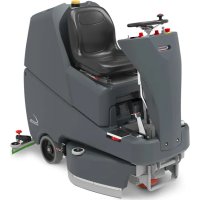
TRL720 - Sweeper Numatic - Free user manual and instructions
Find the device manual for free TRL720 Numatic in PDF.



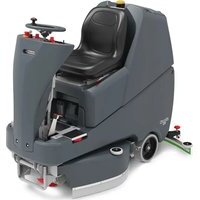
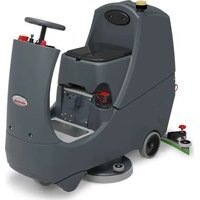
| Product type | Ride-on scrubber dryer |
| Brand | Numatic |
| Model | TRL720 |
| Cleaning width | 720 mm (2 brushes 370 mm) |
| Squeegee width | 700 mm (2 discs 360 mm) |
| Clean water tank capacity | 120 L |
| Dirty water tank capacity | 120 L (upper tank) |
| Adjustable water flow | 0 - 3 L/min |
| Travel speed | 0 - 6.5 km/h |
| Brush pressure | 19.8 G/cm² (max) |
| Brush rotation speed | 150 rpm |
| Brush motor | 24 V, 600 W |
| Suction motor | 24 V, 600 W, 178 mbar |
| Battery | Lithium-ion (LFP) 25.6 V, 50 Ah (NX1K) or options 150-300 Ah |
| Runtime (depending on battery) | 4 to 8 hours |
| Charge time | 7.5 to 15 hours (depending on capacity) |
| Net weight (empty) | 282.6 kg (with 150 Ah batteries) |
| Total weight in working order | Approx. 357.6 kg (with 75 kg operator) |
| Dimensions (L x W x H) | 1580 x 740 x 1425 mm |
| Maximum gradient | 11% |
| Noise level | ≤ 70 dB(A) |
| Hand-arm vibration | ≤ 2.5 m/s² |
| Whole-body vibration | ≤ 0.5 m/s² |
| Main functions | Washing, scrubbing, suction, recovery of dirty water |
| Safety equipment | Emergency stop, horn, seat occupancy sensor, warning lights |
| Daily maintenance | Drain and rinse dirty water tank, check brushes, squeegee and filters |
| Spare parts available | Brushes, squeegee, filters, fuses, batteries, hoses, etc. |
| Repairability | Maintenance possible by qualified personnel, electrical diagrams and spare parts provided |
Frequently Asked Questions - TRL720 Numatic
User questions about TRL720 Numatic
0 question about this device. Answer the ones you know or ask your own.
Ask a new question about this device
Download the instructions for your Sweeper in PDF format for free! Find your manual TRL720 - Numatic and take your electronic device back in hand. On this page are published all the documents necessary for the use of your device. TRL720 by Numatic.
USER MANUAL TRL720 Numatic
EN, DE, FR, NLEN, DE Mathatic PT, IT, ES, PLPT, IT, ES, PL SV, FI, DASV, FI, DA 2K 1K
TRL720/150T/200T/250T/300T
Original Instructions
CAUTION, Read instructions before using the machine.
Downloaded on the App Store
Google play
Machine Overview.. 9/10
Control Panel Overview.. Page 13
Machine Set up Guide Page 15-43
Fitting Dump Hose Page 21
Fitting the Hose Guide Page 21
Fitting the Floor Tool Page 21
Lowering the Floor Tool Page 21
Breakaway Floor Tool Page 21
Fitting the Side Pod Skirts.. Page 26
Fitting the Brushes Page 26
Filling the Clean Water Tank . Page 32
Fill Level Indicator Page 32
Adjusting the Seat Page 38
Raise/Lower Brush Deck Page 38
Machine Operation Page 44-61
Setting the Cleaning Controls Page 44
Waste Water Tank Full Page 50
Emergency Stop Button / Horn.. Page 50
Machine in Use
Off-Aisle Cleaning
Machine Cleaning Page 62-73
Changing Floor tool Blades.. Page 74
Free Wheel Function Page 80
Machine Charging Page 86
Battery Care Page 86
Charging Lights Sequence.. Page 92
Schematic Diagram Page 92
Specifications
Trouble Shooting Page 114/203
Rating Label / Personal Protective Equipment / Recycling
Information for Scrubber Dryer.. Page 126-127
Battery Information Page 158-191
Recommended Spare Parts Page 192
EU Declaration Document Page 214
Company Address Page 216
TVL850/200 = 4x batteries
TVL850/250 = 5x batteries
TVL850/300 = 6x batteries
DE
TVL850/200 = 4x batteries
TVL850/250 = 5x batteries
TVL850/300 = 6x batteries
NL
TVL850/150 = 3x accu's
TVL850/200 = 4x accu's
TVL850/250 = 5x accu's
TVL850/300 = 6x accu's
PT
TVL850/150 = 3x batteries
TVL850/200 = 4x batteries
TVL850/250 = 5x batteries
TVL850/300 = 6x batteries
IT
TVL850/200 = 4x batteries
TVL850/250 = 5x batteries
TVL850/300 = 6x batteries
SV
TVL850/250 = 5x akut
TVL850/300 = 6x akut
DA
After the removal of all the packaging, carefully open and check the contents.
- Owner manual • Battery charging lead • 2 x Keys • 20 Amp fuse • 30 Amp fuse • 4 Amp fuse • Maxi fuse-puller
DE
LLASIGENOMINNANDUPABORJARBETET
| 1 Operator control panel |
| 2 Brush load adjuster knob |
| 3 Brush deck release lever |
| 4 Brush deck foot pedal |
| 5 Clean water tank fill point |
| 6 Side pod and skirt |
| 7 Brush deck |
| 8 Side pod lever |
| 9 Floor tool raise / lower lever |
| 10 Seat adjustment lever |
| 11 Separator release catches |
| 12 Pedestrian warning light |
| 13 Accelerator pedal |
| 14 Steering wheel |
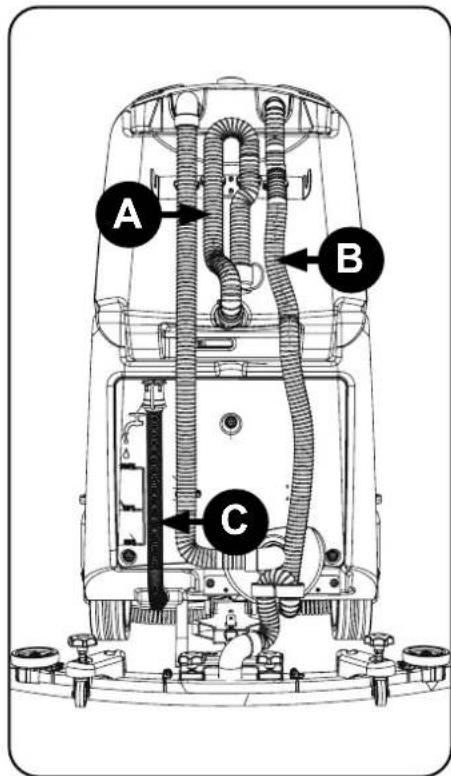
| 15 Clean water tank emptying hose |
| 16 Vacuum hose |
| 17 Air separator assembly |
| 18 Waste water emptying hose |
| 19 Floor tool vacuum hose |
| 20 Semi parabolic floor tool |
| 21 Fuse panel |
| 22 Towing point |
| 23 2.5 Amp safety fuse |
| 24 Li-ion batteries |
| 25 Charger |
FR
| 1 Hours and battery meter display 6 Water flow rate | ||
| 2 Forward / Reverse switch 7 Traction LED | ||
| 3 Suction On / Off switch 8 Emergency stop button | ||
| 4 Horn button 9 On / Off switch | ||
| 5 Maximum speed control |
Numatic Technical help line +44 (0)1460 269268
DE
Machine Set-up Guide

PLEASE READ BEFORE COMMENCING ANY OPERATION AFTER THE REMOVAL OF ALL THE PACKAGING, CAREFULLY OPEN AND CHECK THE CONTENTS.

CONTENTS
- Owner manual
- Battery charging lead
- 2 x Keys
20 Amp fuse
30 Amp fuse
4 Amp fuse
Maxi fuse-puller
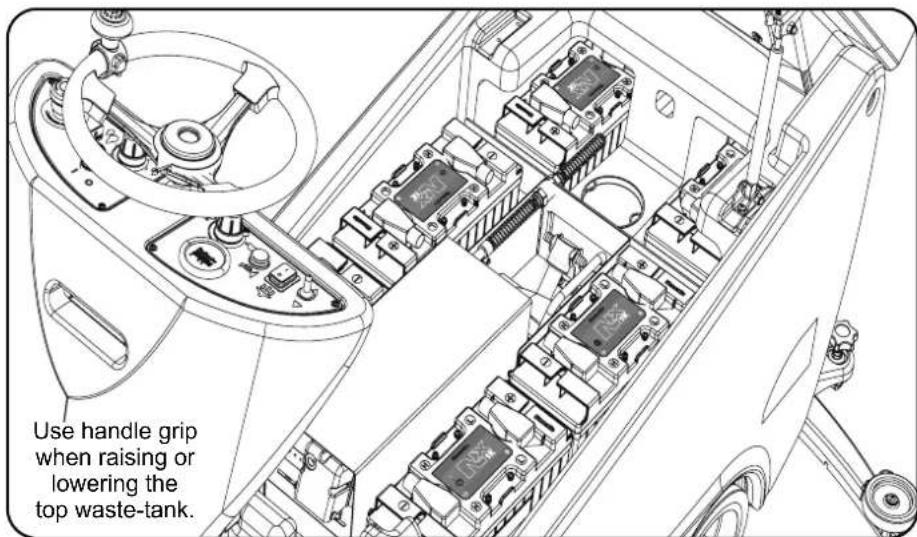
Lift top tank assembly to reveal battery compartment, ensuring you use the handle grip provided.
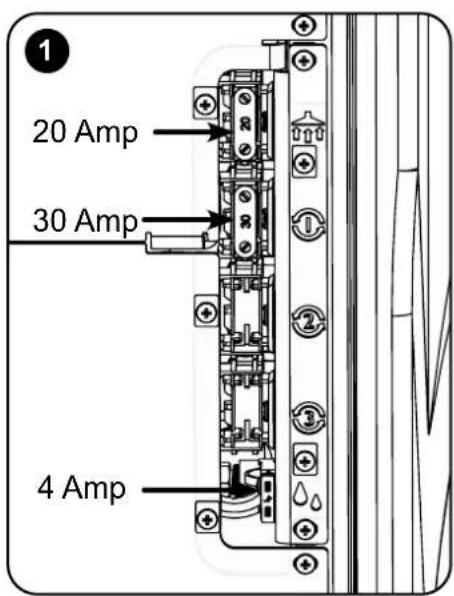
Fit vacuum and brush fuses (contained in start-up pack) into the fuse holders as illustrated. (Fig. 1)
Charge the machine to activate the batteries. After the batteries are activated, LEDs should illuminate on the top of all the batteries.
Insert Key into ignition located on the control panel. (Fig.A)
Numatic International Ltd recommends ONLY using 911948 NX1K LFP battery type Lithium Batteries provided with this machine.
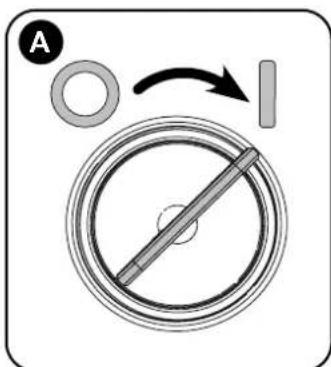
Insert the Ignition key and switch the machine on. (Fig. A)

ENSURE THAT NO METAL OBJECTS COME INTO CONTACT WITH BATTERY TERMINALS WHILE THE BATTERIES ARE EXPOSED.

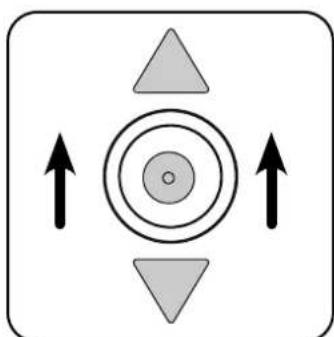
Turn the key to switch on the machine, set lever to forward.
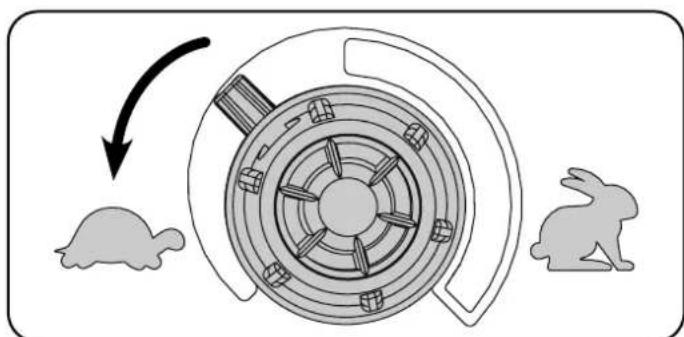
Set to slowest speed, depress accelerator and drive off the pallet using ramp provided.
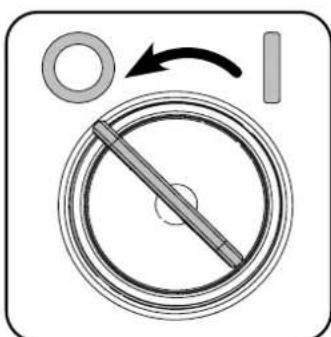
Once in a safe location switch off machine.
Note: DO NOT depress accelerator pedal while software initialises. The machine will not operate in reverse with the floor tool lowered. The seat is fitted with a pressure sensor that disables the machine until an operator is seated.
Machine Set-up Guide
Fitting Dump Hose
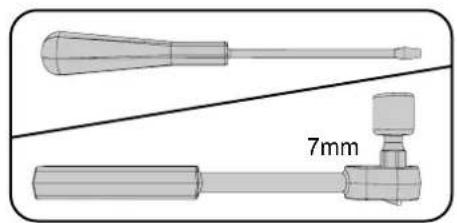
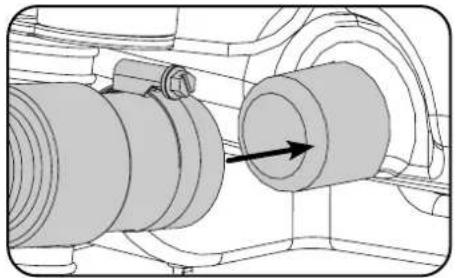
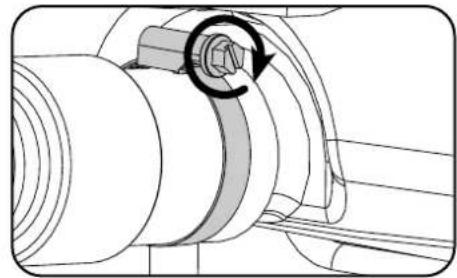
Fitting the Hose Guide
The U-bend in the hose prevents water spillage when the vacuum is switched off. Refit vacuum hose to the floor tool when finished.
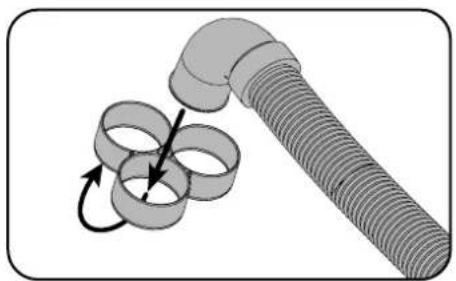
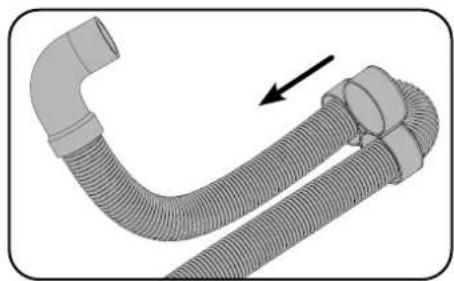
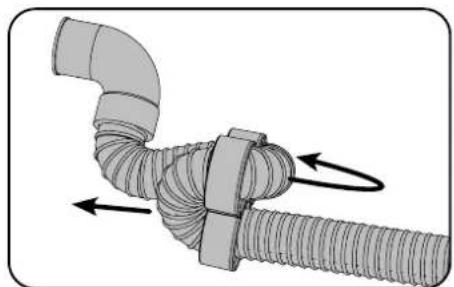
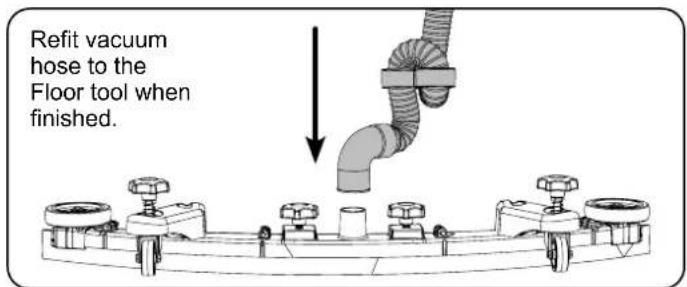
Note: DO NOT push the vacuum hose onto the floor tool with the floor tool in the raised position.
Fitting the Floor Tool
Note: Raise floor tool before driving to the cleaning area. The machine will not operate in reverse with the floor tool lowered.
Lower the floor tool arm by moving the release lever to the upper position (Fig.1).
Break-away Floor Tool
The floor tool design incorporates a safety knock-off feature, this allows it to safely disengage from its mounting should it become caught on an obstruction during forward movement.
Make sure you do not over tighten the retaining knobs.
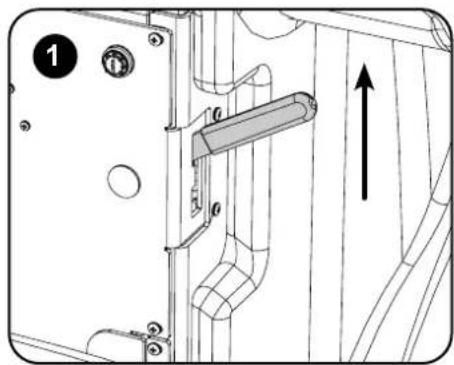
Lower the floor tool.
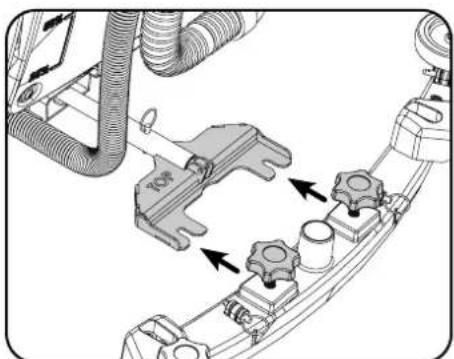
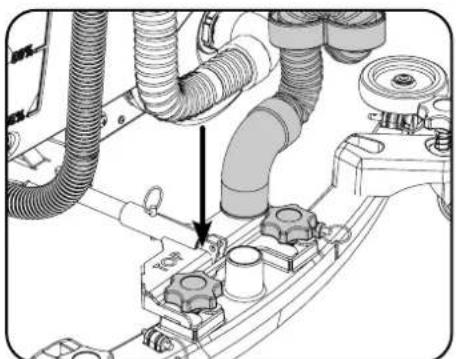

Slide floor tool onto bracket. Raise the floor tool. Tighten retaining knobs to finger tight and attach hose.
Machine Set-up Guide

ALWAYS ENSURE THAT THE MACHINE IS SWITCHED OFF BEFORE MAKING ANY ADJUSTMENTS.

Fitting the Side Pod Skirts
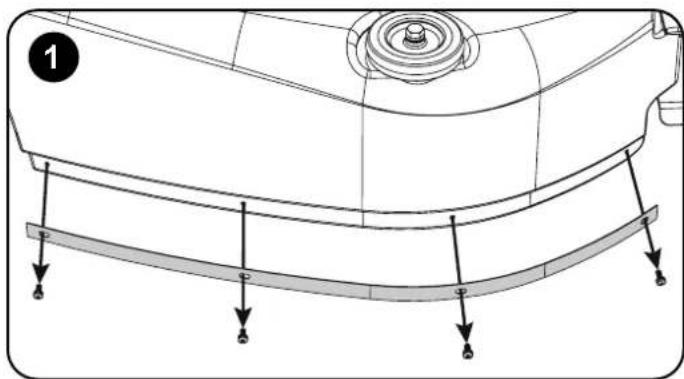
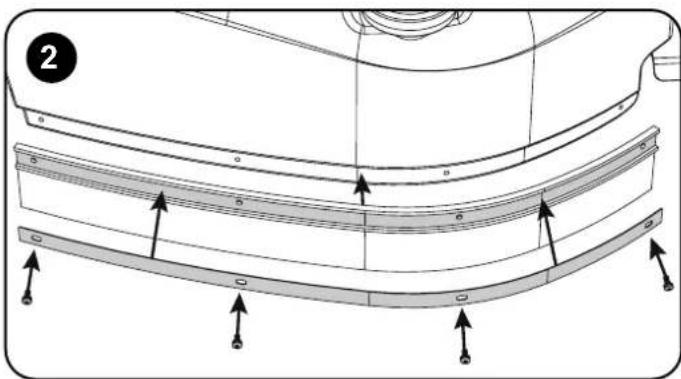
To fit the side pod skirts, first remove the steel retaining strip already fitted to the pod (Fig.1). Align the steel retaining strip within the locating grooves of the rubber skirt and refit using existing screws (Fig.2). Periodically the side skirts should be examined and checked for wear and damage. Replace as shown above.
Fitting the Brushes
Push in side pod. Pull the side pod lever and set to the top position.
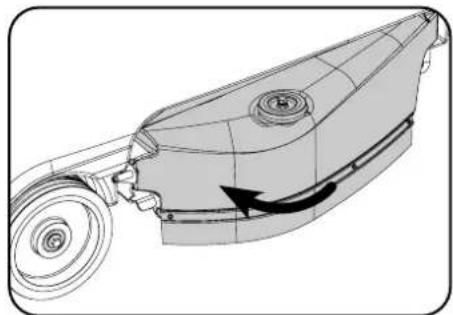
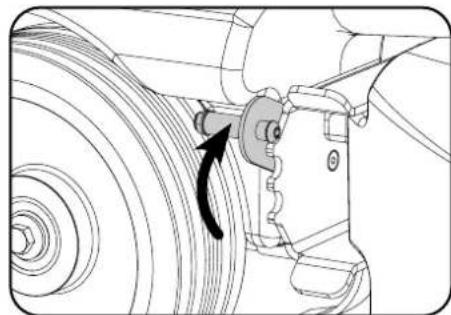
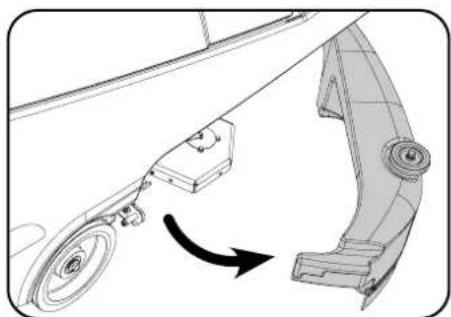
The side pod will now pull open
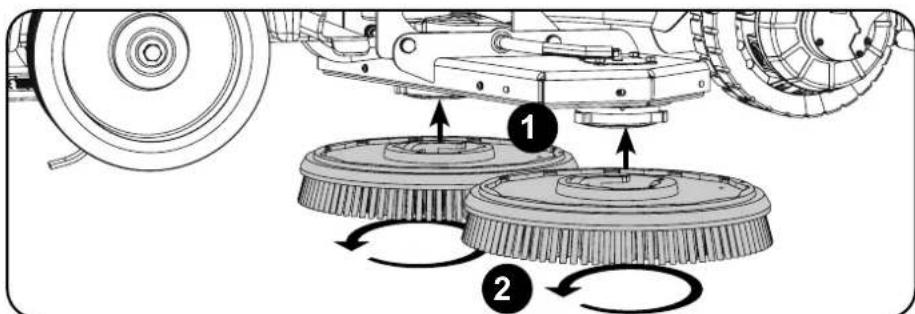
Slide brush under the chuck and raise into place, turn the brush anti-clockwise to locate and lock into position. Repeat the process with the second brush on the opposite side.
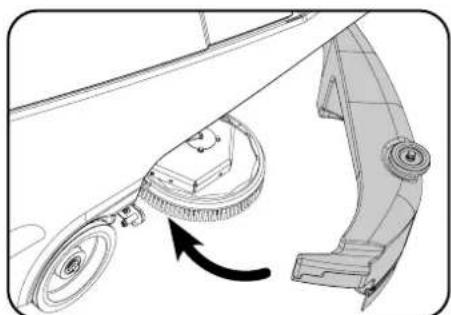

Close side pod and move pod lever back into the locked position.
Safety gloves are recommended for the changing of used brushes.
Machine Set-up Guide

ALWAYS ENSURE THAT THE MACHINE IS SWITCHED OFF BEFORE MAKING ANY ADJUSTMENTS.

Filling the Clean Water Tank
The TRL720 is equipped with a large capacity 120 litre clean water tank, allowing for large areas to be covered in a single fill.
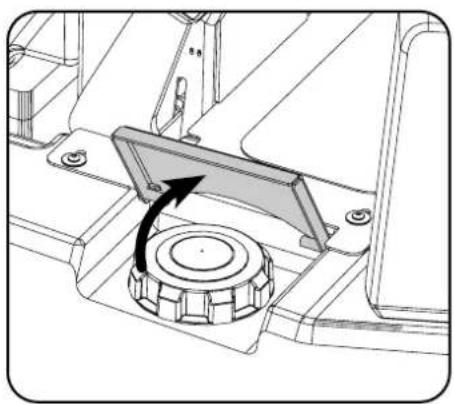
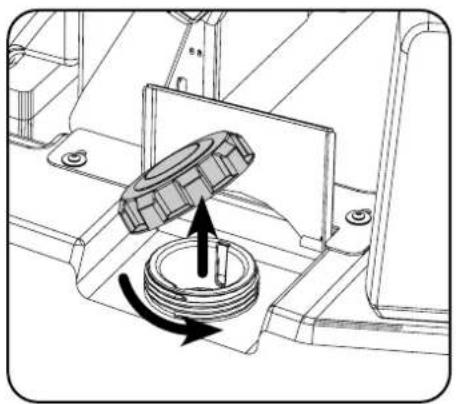
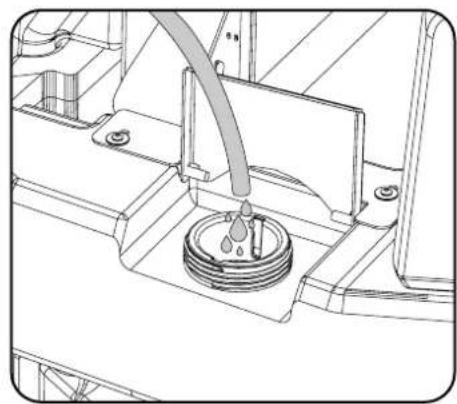
To fill clean water tank, lift cover flap. Unscrew and remove filler cap. Fill tank using a hose
or other preferred method.
Add cleaning chemicals to the tank following the manufacturers guidelines.
Note: A filter basket ensures that contaminants (i.e. leaves, hair, dirt, etc.) are not allowed to enter the clean water tank during the filling process. Periodically inspect and clean if necessary.

WHEN HANDLING AND MIXING CHEMICALS
Always ensure that chemical manufacturer's safety guidelines are followed.

Fill-Level Indicator
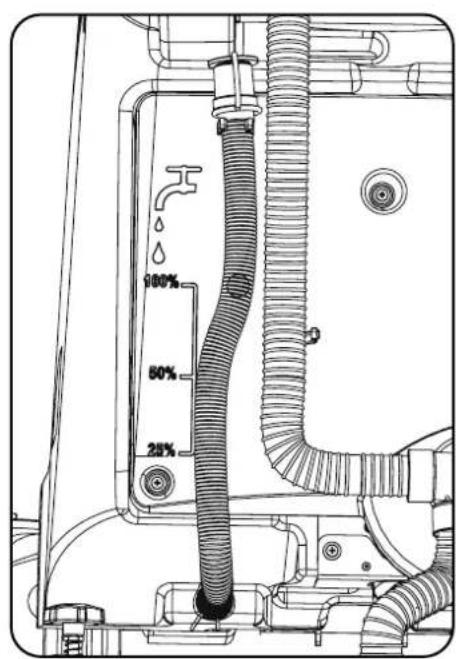
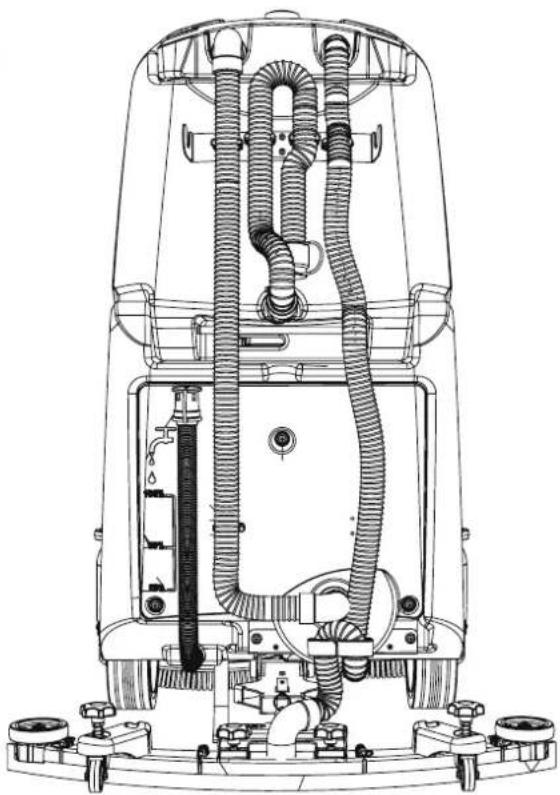
The water level in the clean water tank can be measured using the visible float inside the clean water dump hose located on the rear of the machine.
Do not overfill the clean water tank.
Machine Set-up Guide

IMPORTANT
Do not operate machine unless the operator manual has been read and fully understood.

Adjusting the Seat
Sitting in the driving position, adjust the seat forwards or backwards as necessary by using the lever found on the left-hand side.
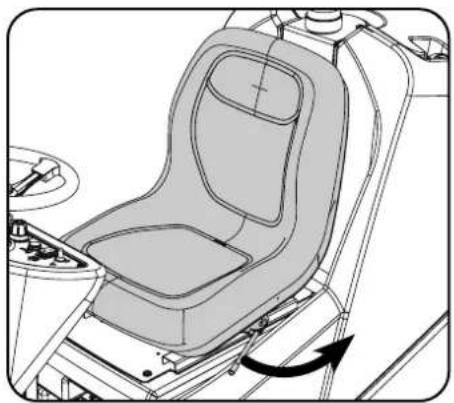
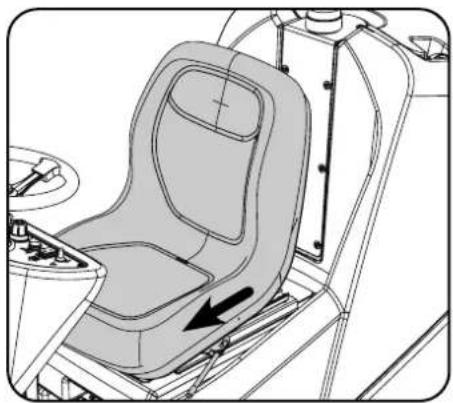
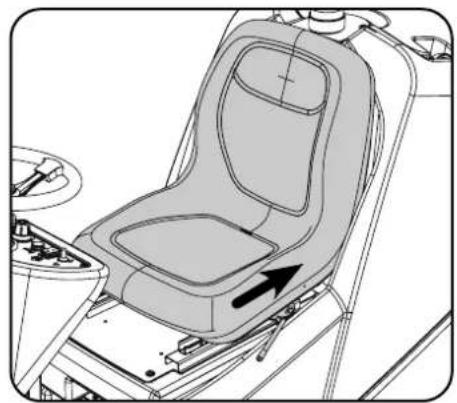
Note: The seat is fitted with a pressure sensor that disables the machine until an operator is seated.
Raise/ Lower Brush Deck
After preparing the floor, we are now ready to set the controls to suit the cleaning conditions. Before any settings can be applied, ensure the brush deck is lowered.
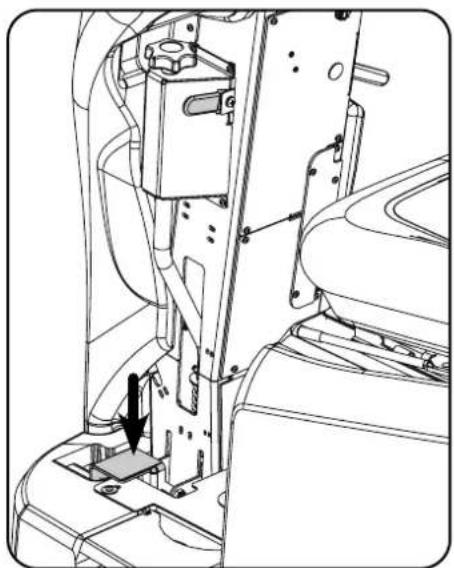
Depress left-hand pedal
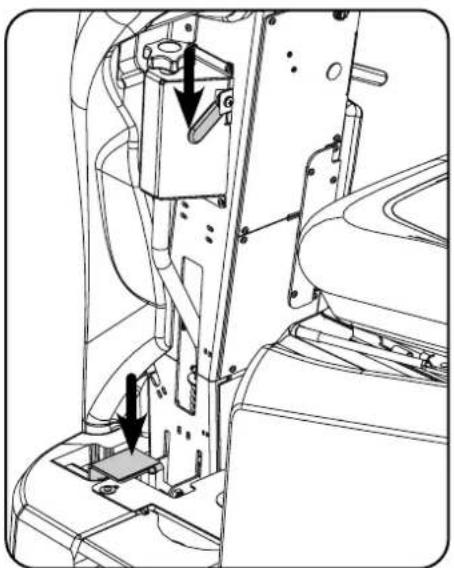
While depressing left-hand foot pedal press down the release lever
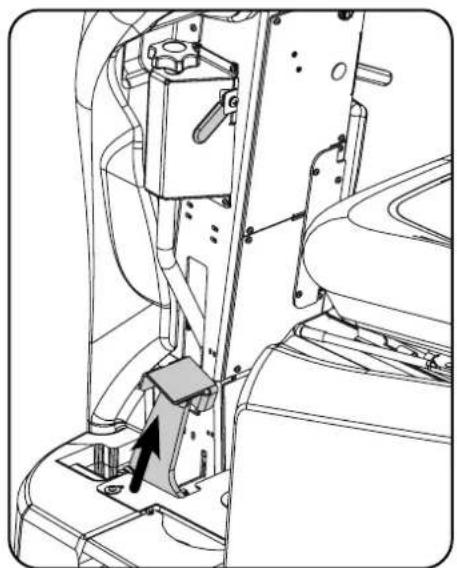
Gently release the foot pedal to lower the brush deck
Wichtig
Drive the machine to the cleaning site.
Before cleaning operation, place out appropriate warning signs and sweep or dust-mop the floor.
When ready for cleaning lower the floor tool (page 6) and the brush deck (page 10).
Setting the Cleaning Controls
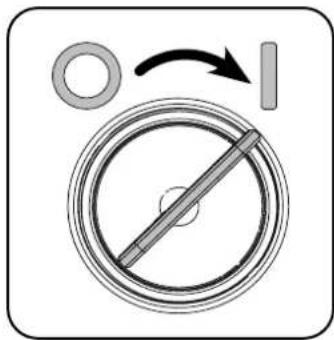
Insert the Ignition key and switch the machine on.
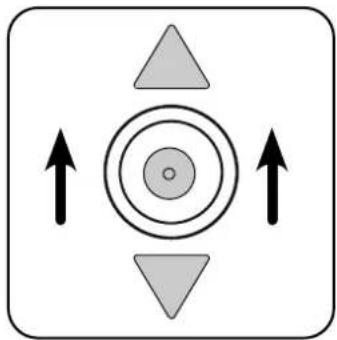
Set direction switch to forward.
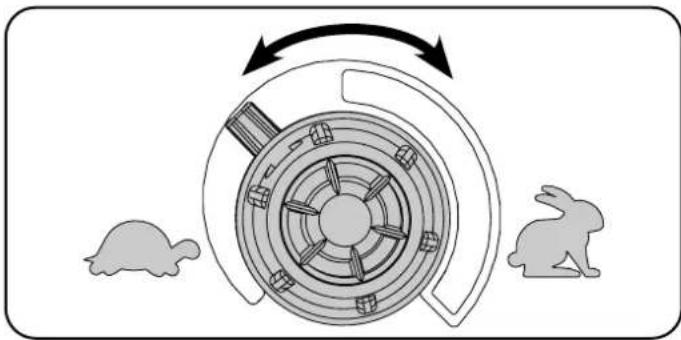
Turn speed dial to set desired cleaning speed.

NOTE: MACHINE WILL NOT REVERSE WITH FLOOR TOOL IN LOWERED POSITION

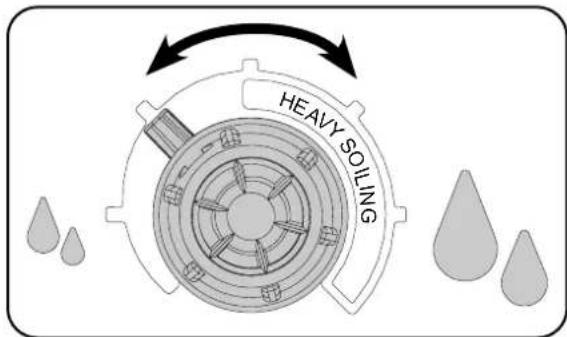
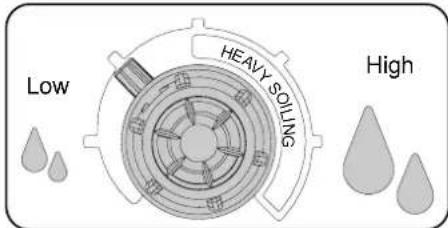
Turn dial to set desired water flow.
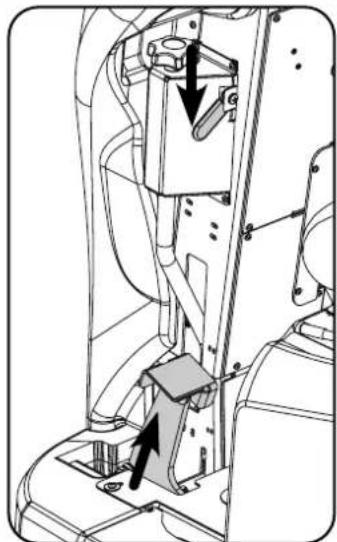
Lower brush deck by pushing down on the left pedal, lower handle and raise foot pedal.
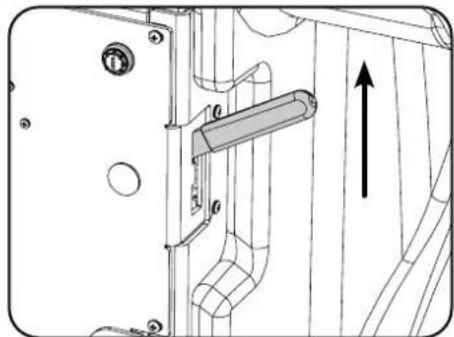
Lower floor tool by lifting lever
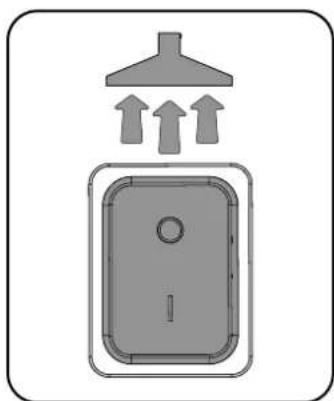
Press the vacuum switch to the on position to turn on suction.
The machine is now set up ready to start cleaning, depress the accelerator pedal to start cleaning process.
Adjust waterflow and speed according to floor type and level of soiling
The vacuum shut off system stops the airflow when the top waste water tank is full. A float ball rises as the water level rises, when the waste water tank is full the float ball blocks the vacuum hole to prevent any liquid entry.
The vacuum motor will continue to run, there is an audible difference in the sound when the waste water tank is full.
A secondary shut off will engage if the water exceeds the float ball shutting off the vacuum until the water level is lowered.
Located in your waste-water (top) tank is a full tank switch, this stops your machine from working once the waste-water reaches its maximum limit.
Sometimes the switch gets clogged and blocked, clean to ensure correct operation.
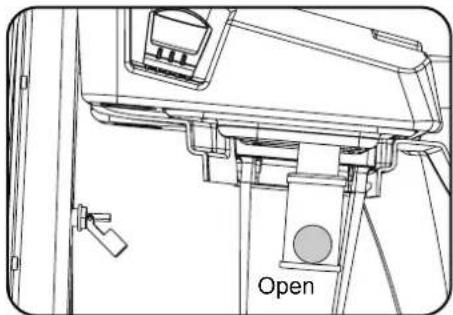
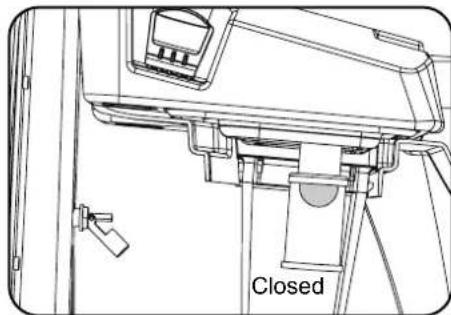
Float Ball Shut Off
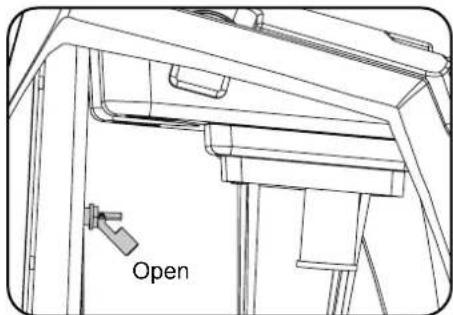
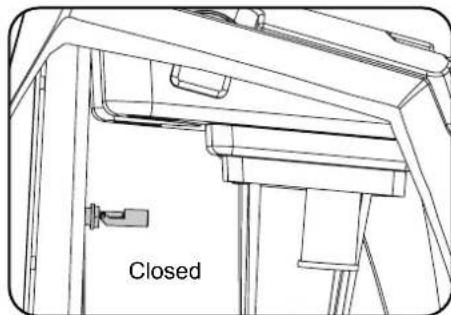
Full Tank Switch
Emergency Stop Button/ Horn
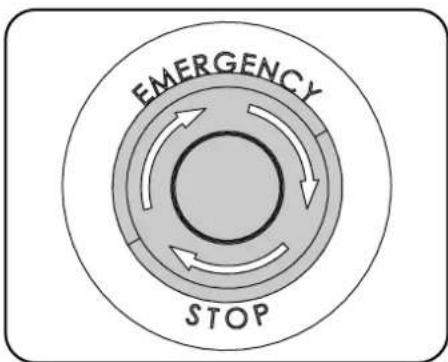
In an emergency, strike the emergency stop to disable the machine.
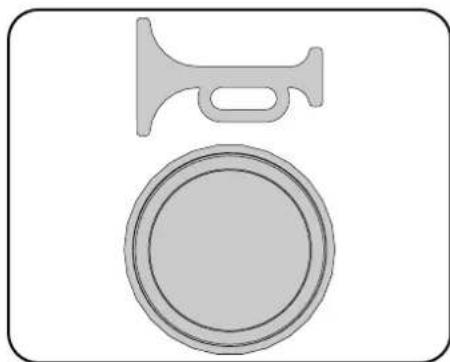
Horn button - for sounding a warning signal
Note: After the Emergency Stop button has been pressed the Traction LED will flash 7 times, pause and repeat until the Emergency Stop button has been reset and the machine switched off / on.
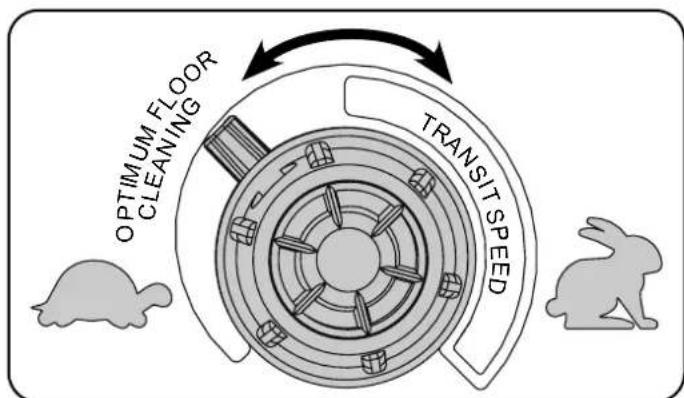
Maximum Speed Control
Set desired traction speed as required, depending on floor type and level of soiling.
Once the Max speed has been set using the control knob on the control panel, fine adjustments can be made using the variable control speed pedal located on the right side of the footplate.
Vuilwatertank is vol
OPTIMAL GOLVRENGÖRING
TRANSPORTHASTIGHT

Set lever to forward.
To operate, select forward and depress the accelerator pedal.
Vacuum pick-up and water flow will turn on if selected and providing the brush and floor tool are in the lowered position, the machine will move forward.
Clean water is dispersed evenly via 'THRU-FEED' scrubbing brushes.
The waste water is then retrieved by the suction floor tool.
Overlap each scrubbing path by 10cm to ensure an even clean.
After stopping, let the vacuum motor run for 10 seconds to collect any water left in the vacuum hose, then switch the vacuum motor off.
On heavily soiled floors use a 'double scrub' technique.
First pre-scrub the floor with the floor tool in the raised position, allow the chemicals time to work, then scrub the area a second time with the floor tool lowered.
If your machine leaves streaks on the cleaned floor, either clean the floor tool blade or adjust blade height for optimum performance.

NOTE: MACHINE WILL NOT REVERSE WITH FLOOR TOOL IN THE LOWERED POSITION

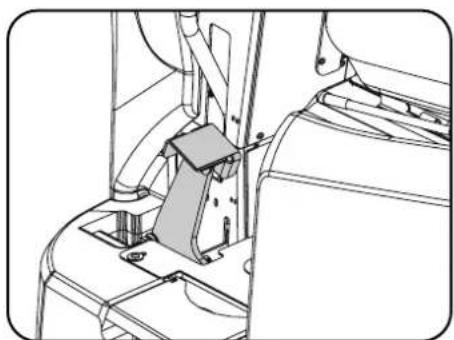
Brush deck in lowered position.
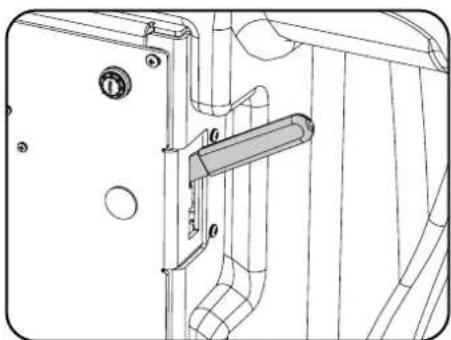
Floor tool lever in lowered position.
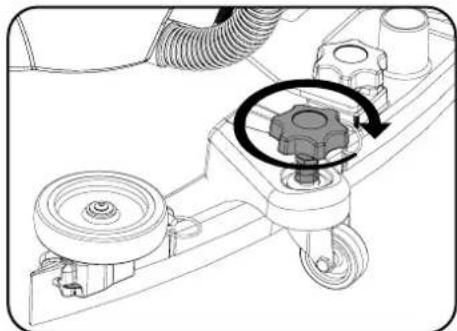
Adjusting the blade height.
Off-aisle Cleaning Kit
(Optional Extra Accessory) 606182
The optional off-aisle cleaning kit gives added flexibility to the operator.
The kit can be used to clean hard to reach / inaccessible areas. Remove the vacuum hose from the floor tool and attach to the off-aisle kit.
To operate the vacuum, press the vacuum switch on.
Note: Return the hose to the floor tool once finished using the off-aisle facility.
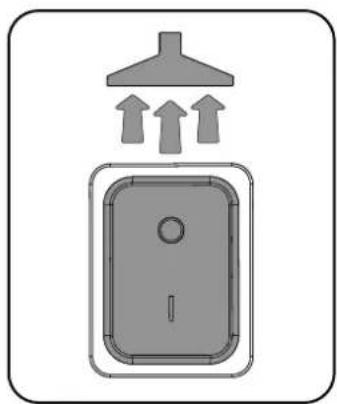
Vacuum switch.
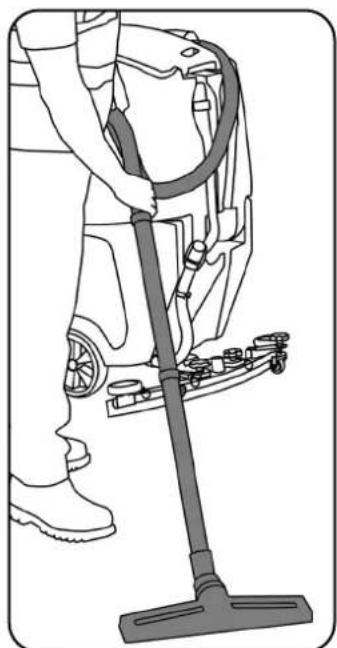
Maschine im Einsatz
AND INTE MASKINEN PAGOLVSOM LUTAR MER AN 11%
Maskinen i drift
Overlap hver skrubberute med 10 cm for at sikre jævn rengering.
After use, empty waste water tank using emptying hose and flush out with clean water.
Remove floor tool vacuum hose ensuring you remove the U-bend clip and flush out with clean water.
Empty clean water tank, using emptying hose and flush out with clean water.
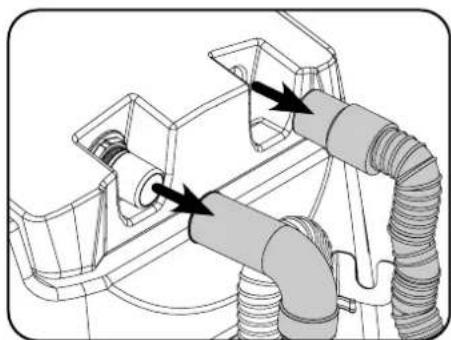
Remove hoses
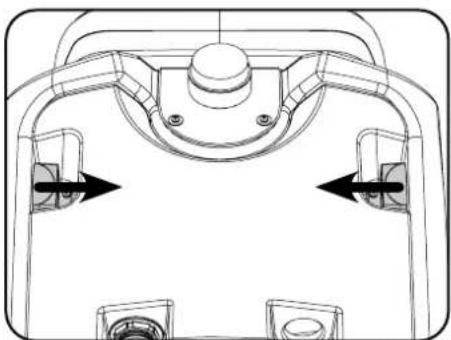
Press in the 2 retaining handles of the separator
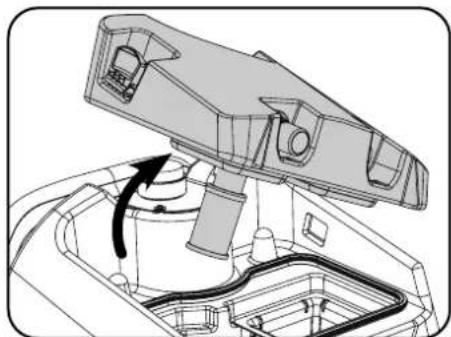
Hold the handles and lift the separator away from the machine

Clean and examine rubber seal during each clean

Remove and clean vacuum shut off filter
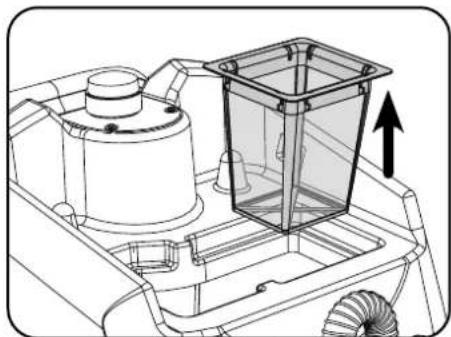
Hold the handles and lift the separator away from the machine
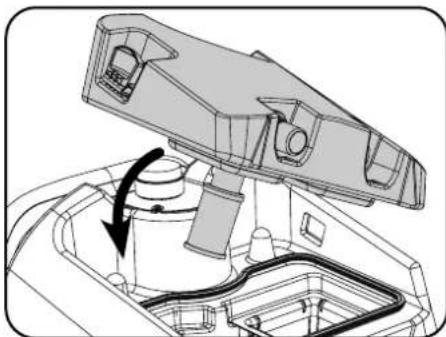
Clean and examine rubber seal during each clean
Located in your waste water top tank is a vacuum shut off system, this prevents suction when the waste water tank is full.
It also prevents foam created by highfoaming detergents from entering the motor.
Sometimes the float vents get clogged and blocked, clean to ensure correct operation. Remove debris basket filter and rinse using clean water, and refit. Refit both of the vacuum hoses.


IMPORTANT: IF THE DEBRIS BASKET IS ALLOWED TO BECOME CLOGGED, VACUUM PERFORMANCE CAN DETERIORATE.
Retire as mangueiras
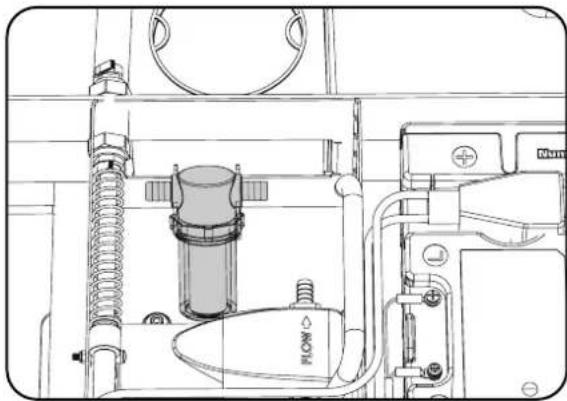
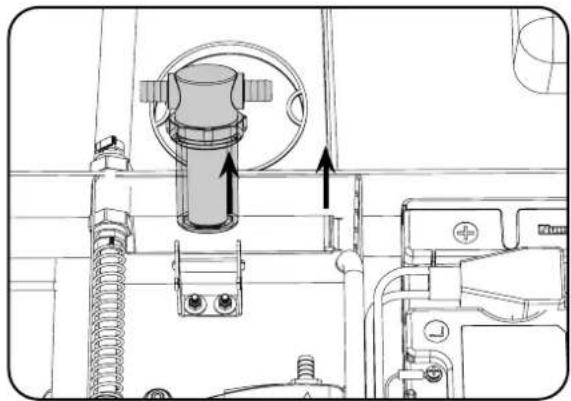
The clean water pump filter is located to the rear of the battery compartment, and should be checked before each use.
Lift the filter off of the cradle, unscrew the bottom and remove, taking care not to spill any liquid on to the batteries.
Rinse using clean water and refit, refitting is reversal of removal.
NOTE: Any spills should be wiped up before tank is lowered.

Fuses
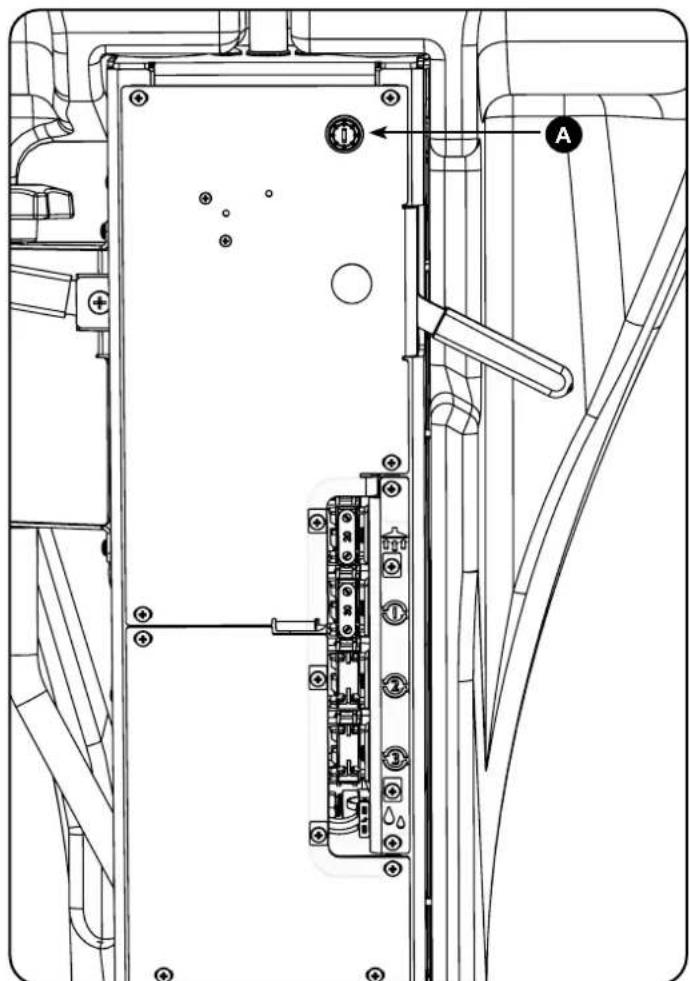
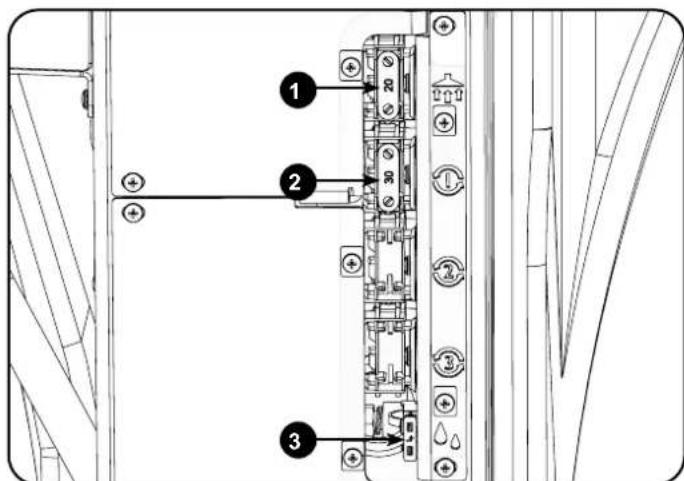
Located on the inside of the steering column is the machines fuse box containing the fuses.
To the right of the fuses are the symbols identifying what the fuse links to.
Fuses in order:
A - 2.5 Amp safety fuse
1 - 20 Amp fuse for Vacuum Motor
2 - 30 Amp fuse for Motor Brush 1
3-4 Amp fuse for Water Pump.
Changing the Floor Tool Blades

ALWAYS ENSURE THAT THE MACHINE IS SWITCHED OFF PRIOR TO MAINTENANCE.

Lower the floor tool then unscrew the retaining knobs and slide it off the holding bracket.
Rinse the floor tool assembly with clean water and refit.
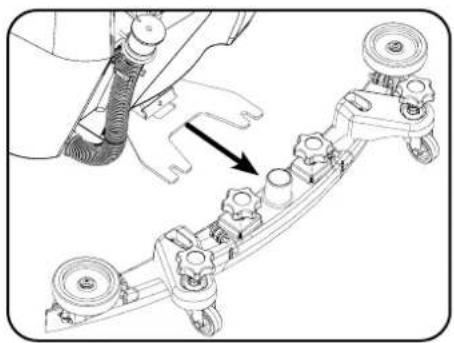
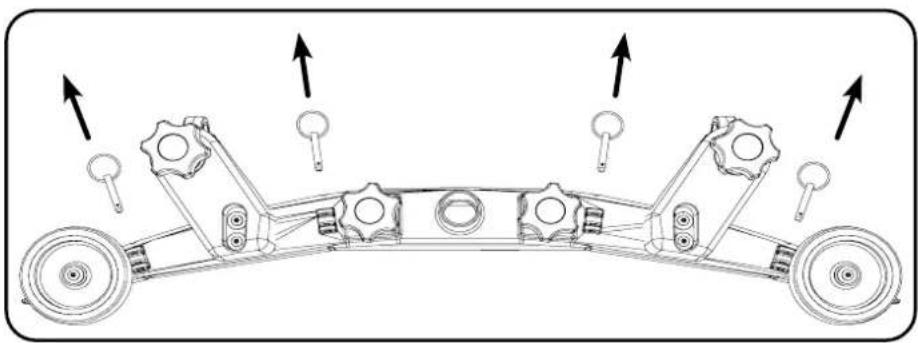
Remove floor tool. Remove four retaining pins.
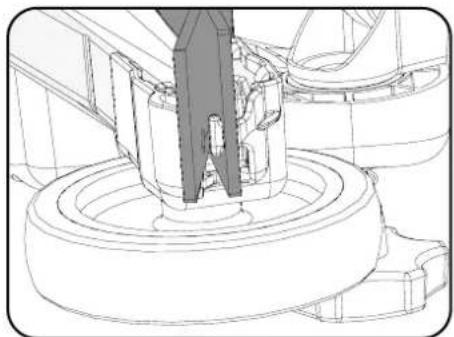

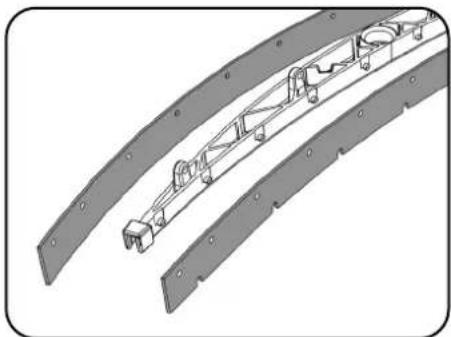
Turn the floor tool over. Separate the blade from the carrier. Peel away blades.
Periodically the floor tool blades should be examined and checked for wear and damage.
Replacement is a reversal of the removal process.
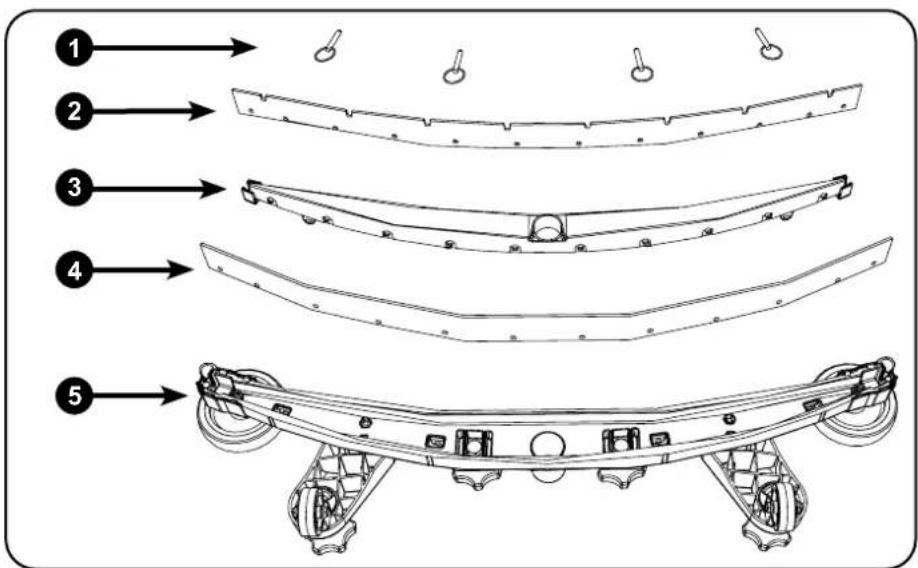
Note: The blades are designed to be reversible, thus extending their useful working life.
Free Wheel and Towing

ALWAYS ENSURE THAT THE MACHINE IS ON LEVEL GROUND BEFORE DISENGAGING BRAKE ARM. NEVER DISENGAGE THE BRAKE WHEN THE MACHINE IS ON A SLOPE / GRADIENT. NEVER TOW THE MACHINE WITH THE BRAKE ENGAGED AND POWER PLUG CONNECTED! REMOVE BATTERY FUSES

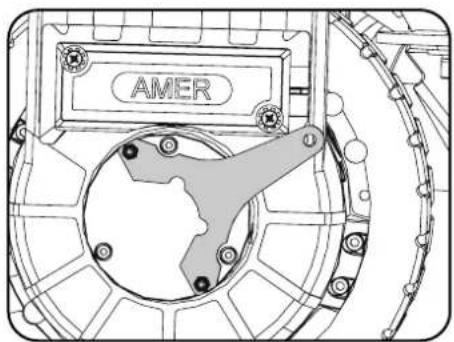
The TVL850 is equipped with a free wheel function that will enable the operator to move / tow the machine. The motor brake is disengaged by opening the brake arm on the side of the drive wheel.
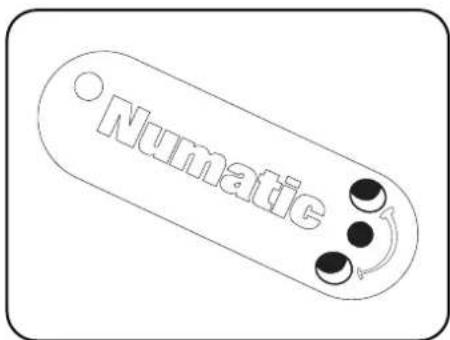
Your start-up kit includes a brake drive disengage key (329945).
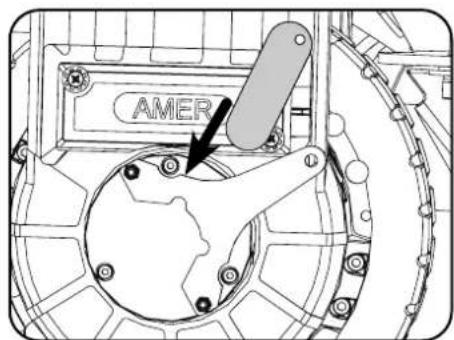
Insert the disengage key between the brake arm and drive housing.
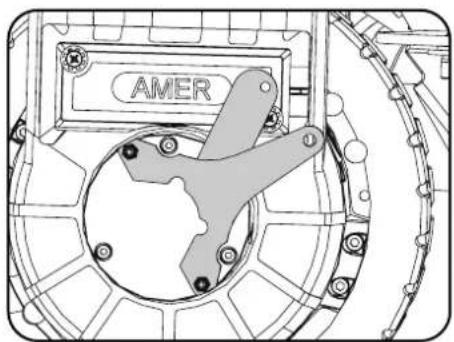
Once the key has been inserted the motor brake will be fully disengaged. The machine will now be in full free wheel mode.
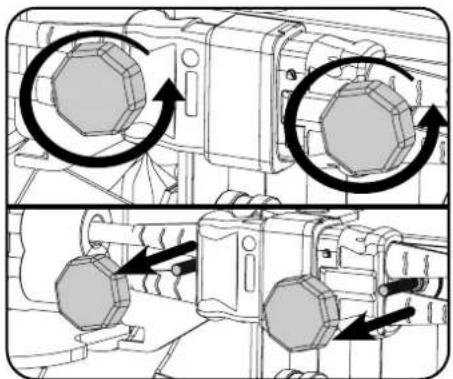
Undo and remove the two retaining knobs.

Pull the power connector block apart.
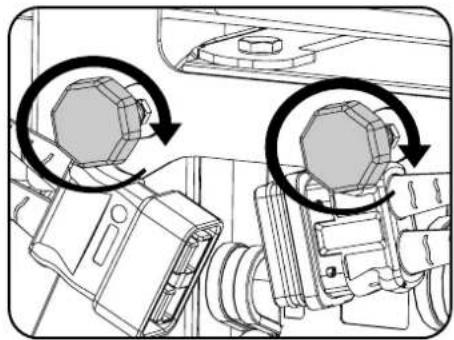
Refit the retaining knobs.
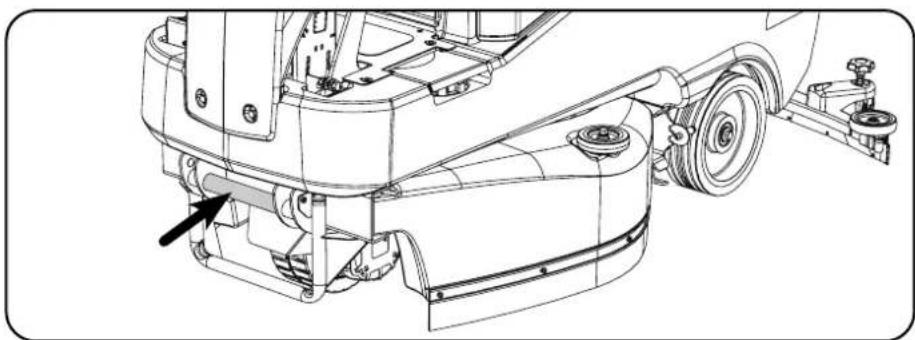
Care must be taken when towing;
WHEN TOWING DO NOT EXCEED
AVERAGE SPEED OF 3 KPH.
The machine can be towed from the front bar as indicated.
When destination place reached, remove brake disengage key, connect power plug.

WARNING!
WHEN THE BRAKE IS DISENGAGED AND POWER PLUG IS DISCONNECTED THE MACHINE IS IN FREE WHEEL MODE AND HAS NO BRAKE FACILITY, WHEN TOWING THE MACHINE ENSURE THAT A SUITABLE TOW BAR IS USED.

Remember to remove the brake disengage key when you reach your final destination / before using the machine. NOT FOLLOWING DESCRIBED METHOD COULD DAMAGE MAIN CONTROL UNIT AND VOID THE WARRANTY.

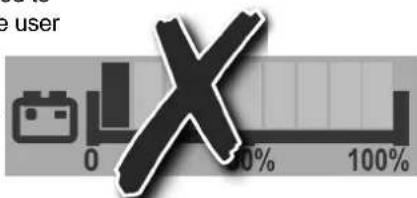
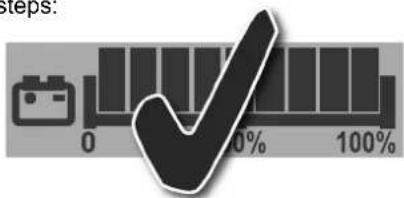
The battery meter displays the charge level of the batteries; when fully charged, all meter lights are illuminated.
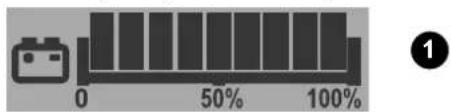
As the machine is used and the batteries are discharged, the meter lights will go out from right to left.
If the battery-charge level is allowed to discharge to the point that only one or two lights / bars remain illuminated, the operator must consider charging the machine.
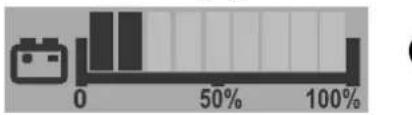
2
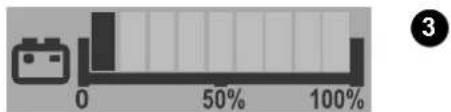
When the machine is getting close to empty the last light starts to flash, the operator should then take the machine to a suitable charging point. When the battery icon starts flashing, the vacuum and brush motors will be disabled and the user should charge the machine.
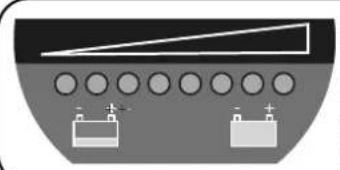
Alternative Display
When the last red light starts flashing, the vacuum and brush motors will be disabled and the user should charge the machine.
The LFP batteries are sealed for life and are totally maintenance free.
The on-board charger automatically monitors the charging process and will switch to float charge mode when the batteries are fully charged. Float charge mode allows to maintenance LFP batteries at the right level of health. The machine should be left on float charge overnight or over the weekend at least once per month or more frequently if needed.
Insert the charging lead required for your country into the charging point.
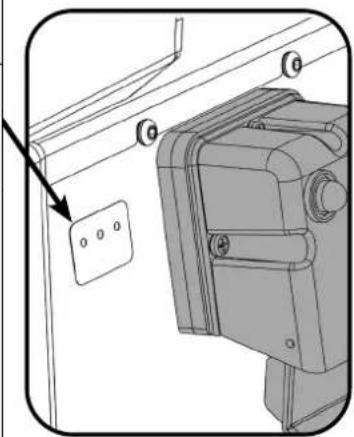
The machine charging point is located to the rear of the machine under the control panel.
Connect to a suitable power supply.
Once mains power is connected the red charging indicator will illuminate.
To ensure a full charge, from an empty state, the machine should be left for a period of 8 hrs.
Once fully charged, disconnect the charging lead from both the power supply and the machine.
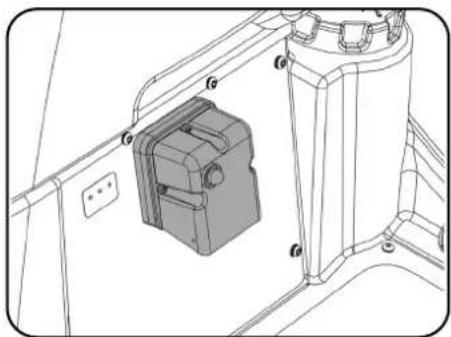

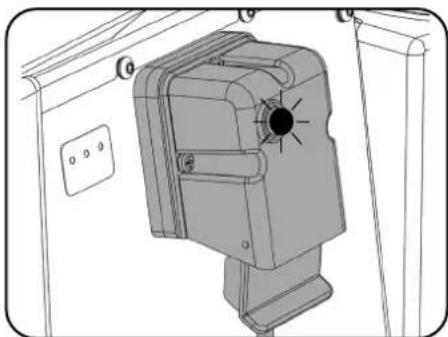
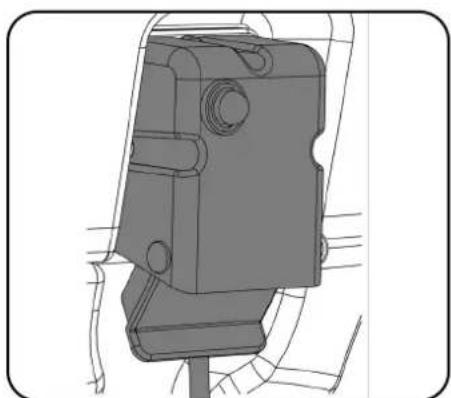
Machine charging point, above footplate. Insert country specific charging lead.
Red charging indicator illuminates when charging.
Battery Care

TO ENSURE YOUR MACHINE REMAINS AT ITS MAXIMUM EFFICIENCY AND PROLONG YOUR BATTERY LIFE, PLEASE FOLLOW THE SIMPLE STEPS BELOW:

Under normal daily usage:
Re-charge the machine FULLY after each use regardless of machine operation time.
It is recommended to leave the machine connected to power grid overnight, at least once a month. If the user does not disconnect the cable after full charge it is not an issue.
Do not leave the machine in a discharged state.
Periodically inspect the battery connections for tightness and corrosion.
STellenSIE IMMER SICHER, DASS DIE MASCHINE AUSGESCHALTETIST, BEVOR SIE MIT DEM LADEN BEGINNEN.
Charging Light Sequence
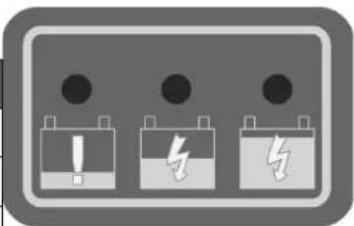
| Signal (LED) Meaning | ||||
| Red LED on First Phase (Constant Current Mode). | ||||
| Orange LED on Second Phase (Constant Voltage Mode). | ||||
| Green LED on | Third Phase (Constant Voltage Mode) Charge Complete. However, after full re-charge, leaving the charger connected moves to float-charge mode to help to maintain a healthy balance between batteries. | |||
| Red LED flashing followed by Pause | Cooling Fan Locked > 1 flash between pause. Over Voltage Protection / Output Short Circuit / Battery Reverse Polarity > 2 flashes between pause. Over Temperature Protection > 3 flashes between pause. Charge Time has exceeded 16 hrs during phase 1 or 2 > 4 flashes between pause. | |||
| Condition RED LED YELLOW LED GREEN LED | ||||
| Pre-charge Timeout | Flashing 4 Times | O | ||
| CC Timeout | O | |||
| CV Timeout | O | O | ||
| Battery Disconnection | ||||
| Note: O means illuminates continuously | ||||
Note: Re-charge the machine fully after its last use. Do not leave the machine in a discharged state.
Under abnormal use;
i.e. leaving the machine without charging for a period of time, we advise that you follow these steps:
Float charge mode allows to maintenance LFP batteries at the right level of health.
The machine should be left on float charge overnight or over the weekend at least once per month.
Charge fully the day before you start using the machine again.
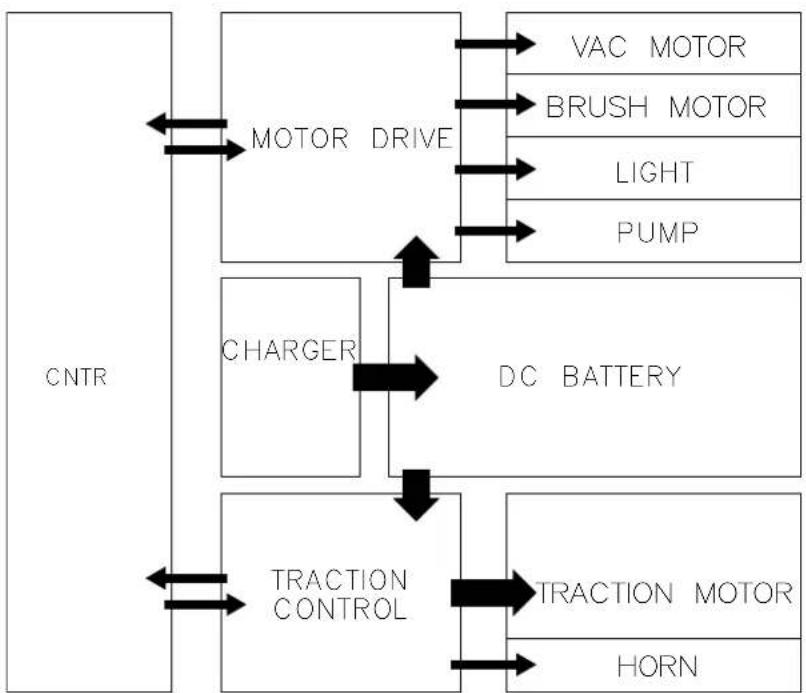
Schematic Diagram
| Make | Voltage | Capacity/Energy | Weight | Battery Size |
| NX1K Battery | 25.6 V | 50Ah / 1280 Wh | 10.8 kg | 315mm (L) x 132mm (W) x 185mm (H) |
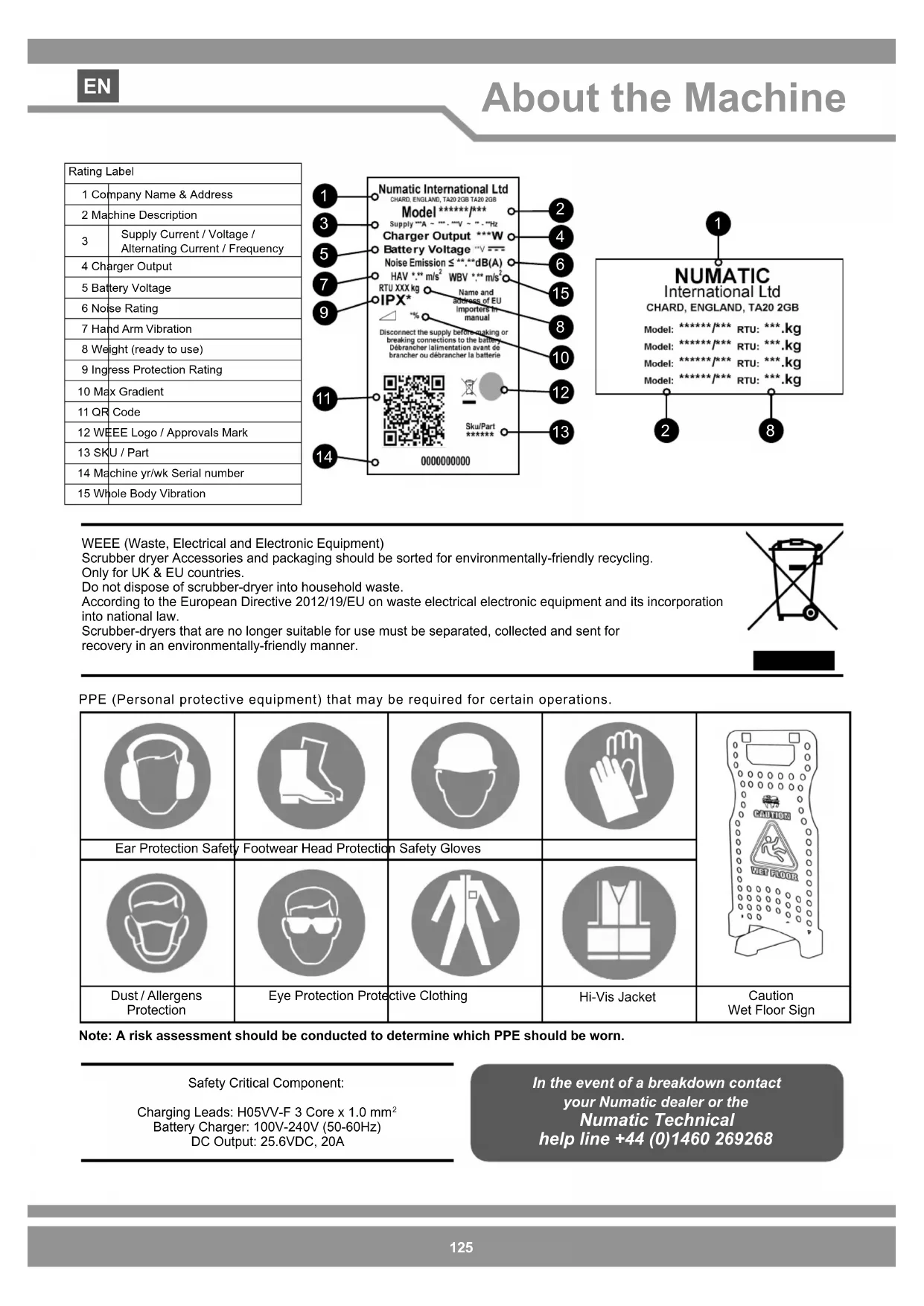
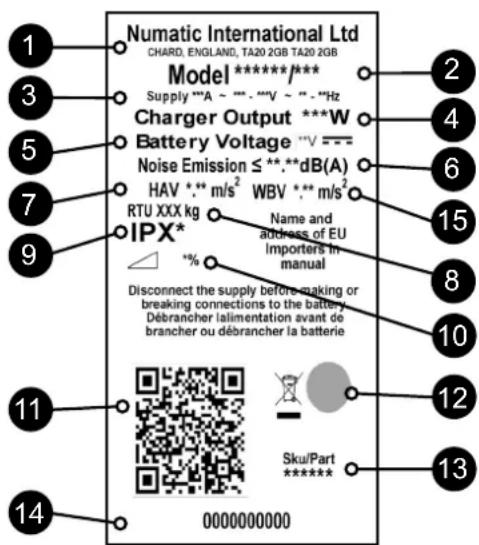
| Rating Label | |
| 1 Company Name & Address | |
| 2 Machine Description | |
| 3 | Supply Current / Voltage / Alternating Current / Frequency |
| 4 Charger Output | |
| 5 Battery Voltage | |
| 6 Noise Rating | |
| 7 Hand Arm Vibration | |
| 8 Weight (ready to use) | |
| 9 Ingress Protection Rating | |
| 10 Max Gradient | |
| 11 QR Code | |
| 12 WEEE Logo / Approvals Mark | |
| 13 SKU / Part | |
| 14 Machine yr/wk Serial number | |
| 15 Whole Body Vibration | |
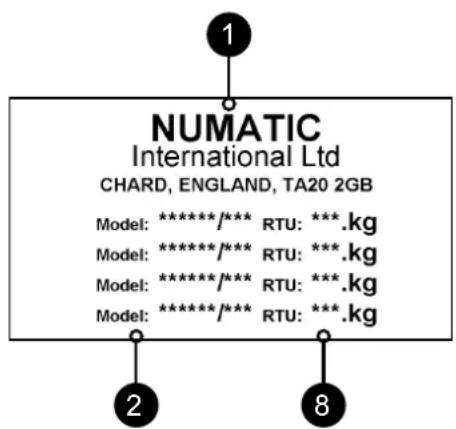
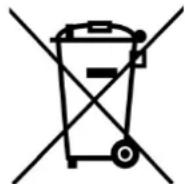
WEEE (Waste, Electrical and Electronic Equipment)
Scrubber dryer Accessories and packaging should be sorted for environmentally-friendly recycling.
Only for UK & EU countries.
Do not dispose of scrubber-dryer into household waste.
According to the European Directive 2012/19/EU on waste electrical electronic equipment and its incorporation
into national law
Scrubber-dryers that are no longer suitable for use must be separated, collected and sent for
recovery in an environmentally-friendly manner.
PPE (Personal protective equipment) that may be required for certain operations.
| Ear Protection Safety Footwear Head Protection Safety Gloves | ||||
| Dust / Allergens Protection | Eye Protection Protective Clothing | Hi-Vis Jacket | Caution Wet Floor Sign | |
Note: A risk assessment should be conducted to determine which PPE should be worn.
Safety Critical Component:
Charging Leads: H05VV-F 3 Core x 1.0 mm²
Battery Charger: 100V-240V (50-60Hz)
DC Output: 25.6VDC, 20A
In the event of a breakdown contact
your Numatic dealer or the
Numatic Technical
help line +44 (0)1460 269268
COMPONENT INTERVAL INSPECT FOR
| Charging Lead DAILY Scuffing | cracks, splits, conductors showing | |
| Brushes DAILY Bristle damage, wear, drive collar wear | ||
| Squeegee Blade BEFORE EACH USE Wear, cracks, splits | ||
| Filters BEFORE EACH USE Clogging and debris retention | ||
| Tanks AFTER EACH USE Rinse dirty water tank after use | ||

WARNING
As with all electrical equipment care and attention must be exercised at all times during its use, in addition to ensuring that routine and preventative maintenance is carried out periodically in order to ensure its safe operation. Operators shall be adequately instructed on the use of these machines.
Failure to carry out maintenance as necessary, including the replacement of parts to the correct standard
could render this equipment unsafe and the manufacturer can accept no responsibility or liability in this respect.
When ordering spare parts always quote the Model Number / Serial Number specifi ed on the Rating Plate.
Do not use on cleaning surfaces having a gradient exceeding that marked on the machine. While on ramps or inclines, avoid sudden stops. Avoid sharp turns. Use low speed down ramps. Clean only while descending (driving down) the ramp.
This machine is not intended for use by persons (including children) with reduced physical, sensory or mental capabilities, or lack of experience and knowledge.
Children should be supervised to ensure that they do not play with the appliance.
Only use brushes provided with the appliance or those specified in the instruction manual.
The use of other brushes may impair safety.
A full range of brushes and accessories are available for this product.
Only use brushes or pads which are suitable for the correct operation of the machine for the specific task being performed.
It is essential that this equipment is correctly assembled and operated in accordance with current safety regulations.
When using the equipment always ensure that all necessary precautions are taken to guarantee the safety of the operator and any other persons who may be affected.
Wear non slip footwear when scrubbing. Use a respiratory mask in dusty environments.
When cleaning, servicing or maintaining the machine, replacing parts or converting to another function the power source shall be switched off.
Mains operated machines shall be disconnected by removing the power plug, and battery operated machines shall be disconnected by using top ON/OFF button on the battery.
In order to prevent unauthorised use of the machine the power key must be removed after use.
Machines left unattended shall be secured against unintentional movement.
When detergents or other liquids are used, read the manufacturer's instructions.

CAUTION
This machine is not suitable for picking-up hazardous dust.
This machine is not to be stored outdoors or in wet conditions.
This machine is for indoor use only.
NOTES: This machine is intended for commercial use, for example in hotels, schools, hospitals, factories, shops, offices and rental businesses.
This product meets the requirements of IEC 60335-2-72
| DO | ·Ensure only competent persons unpack/assemble the machine. ·Keep your machine clean. ·Keep your brushes in good condition. ·Replace any worn or damaged parts immediately. ·Regularly examine the power cord for damage, such as cracking or ageing. If damage is found, replace the cord before further use. ·Only replace the power cord with the correct Numatic approved replacement parts. ·Ensure that the work area is clear of obstructions and /or people. ·Ensure that the working area is well illuminated. ·Pre-sweep the area to be cleaned. |

DON'T
Use steam cleaners or pressure washers to clean the machine or use in the rain.
- Allow any inexperienced repairs. Call the experts.
- Leave the brush pad on the machine when not in use.
- Allow the machine to be used by inexperienced or unauthorised operators or without appropriate training.
Use the machine without the solution tanks properly positioned on the machine, as shown in the instructions
Expect the machine to provide trouble-free, reliable operation unless maintained correctly.
- Lift or pull the machine by any of the operating triggers, use the main handle.
- Allow water solutions to ingress to the battery.
- Remove the handle from the machine except for service and repair.

READ MANUAL BEFORE USE
Precautions when working with batteries
- Always wear protective clothing e.g. face visor, gloves and overalls when working with batteries.
- Whenever possible always use a properly designated and well-ventilated area for charging.
Do not smoke or bring naked fl ames into the charging area.
- Remove any metallic items from hands, wrists and neck i.e. rings, chains etc. before working on a battery.
- Never rest tools or metallic objects on top of the battery.
- When charging is complete disconnect from the mains supply.
- The batteries must be removed from the machine before it is scrapped.
- The machine must be disconnected from the supply when removing the battery.
- To remove the batteries:-- Disconnect machine from the mains supply (if charging) and ensure batteries are switched off using the button that is placed on the battery top. Disconnect hoses from separator and tanks.
Remove separator and tanks. Unscrew battery strap fi xings and remove.
Undo battery terminals and remove. Remove batteries.
-
The batteries are to be disposed of safely, as according to local government guidelines.
-
Only use genuine Numatic replacement batteries
- Do not allow the batteries to become fully discharged; it may not be possible to re-charge them. Batteries should not be discharged below 22.5 volts with 10 amps fl owing.
- Do not allow one battery to be discharged separately to the other.
- Do not mix batteries from different machines.
- The batteries fitted to this product are Lithium-ion (Li-ion), Lithium Iron phosphate (LFP) type.
The fitting of any other type of battery may cause a safety hazard. - Switch off the battery using top ON/OFF button before cleaning or maintenance.
Battery Care
- Battery Storage:
a. Batteries must be stored in a dry, level and clean location not exceeding a temperature range of 15^ 25^ .
b. Batteries must by fully charged every 6 months when on-the-shelf or if the battery voltage reduces to 25V
c. Batteries must be put into use within 12 months of the date of manufacture, failure to do so will lead to reduced capacity in the fi eld. (battery date code) -
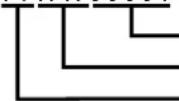
ZP19006F YYW W0 0001

Serial number
Week of Production
Year of Production
d. If a battery does not want to switch ON and the green LED on the top is not illuminating, irreversible damage has occurred. Under this condition, a battery should not enter into service and should be disposed of according to local authority guidelines.
- During Use:
a. Batteries must be recharged after every use regardless of machine run time.
b. If the machine is to be left dormant for any length of time complete the following:
i. Fully charge the batteries.
ii. Do not leave batteries dormant for more than 6 months.
Daily
Keep the machine clean.
Ensure brushes/ pads/ squeezegee/ fi lters are in good condition.
Check for any worn or damaged parts and replace immediately.
Drain and rinse dirty water tank after every use.
Store machine with brush deck secured in the elevated position.
Weekly - as daily and
Check brush or pad and skirt and rinse.
Check floor tool blades for wear and wipe clean.
Clean separator assembly including fi lter and check condition of seal.
Flush out system with clean water and clean filters.
Batteries
Always re-charge the batteries after use.
Charge for a minimum of 4 hours. Leave the battery on charge overnight, at least once per month.
After it has been fully charged, this will prolong battery life.
Numatic Lithium-ion Rechargeable Battery
25.6V | 50Ah | 1280Wh | LFP26148129





It is important that you observe the following information and warnings!
| Emergency Contact Information | ||
| Address: CBAK BATTERY HEADQUARTERS Shenzhen BAK ENERGY Co. LTD, 2603A BAK Tech Bldg, 9th Keyan Rd, Hi-tech Park, Nanshan Dist, Shenzhen City, China | NUMATIC INTERNATIONAL LTD Millfield Road, Chard, Somerset, TA20 2GB, UK | |
| Tel: Fax | 0086-755-832837100086-755-8328649 | 0044-146-0686000044-146-068458 |
| www.numatic.com | www.numatic.de | www.numatic.ch | www.numatic.frwww.numatic.nl | www.numatic.co.za | www.numatic.pt | www.numatic.eswww.numatic.it | www.numatic.dk | ||
1. DEFECTIVE BATTERIES
- If a customer wishes to return a battery to a supplier after removing from product, then collection of the battery must be arranged by the supplier; however, Faulty batteries must not be returned through the postal system or by courier.
- If on return to a supplier, OR at a customer base, a suspected defective battery shows any signs of impact damage, distortion, blistering, loose parts or leakage then on no account should it be offered for condition checking. It must be considered defective and the procedures described from item 6 below should be followed.
- If, on return to a supplier, OR at a customer base, a suspected defective battery, that shows No signs of impact damage, distortion, blistering, loose parts or leakage, may be offered for condition checking with an appropriate battery condition checking device operated by a competent person.
- If checking shows the battery to be defective then the procedures described from item 6 below should be followed.
- On no account must any further attempt to recharge be made. A defective battery should not be stored inside buildings on any account.
- The defective battery must be switched off, and all electrical terminals sufficiently insulated to remove risk of short circuit. The defective battery can then be stored in a locked battery waste container which should be plastic or plastic lined and placed away from buildings and combustible materials and clearly signed as a defective battery container with appropriate warnings. Defective batteries should be sent for waste disposal / recycling according to your country waste regulations.
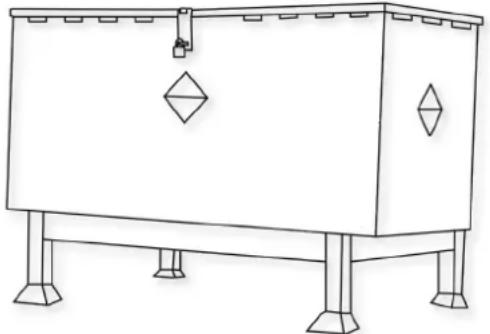
An example of a waste battery storage bin well away from buildings.
2. HANDLING AND STORAGE
EN
DANGER!
Improper handling can lead to an explosion or ignite a fire!
Store batteries out of reach of children.
- Only trained staff can fix the battery in the machine.
Storage temperature range: -10^ 40^ . - Temperatures must not exceed 40^ .
- Relative humidity range: 20% to 80% .
Optimum preservation of functionality: 15^ 25^ .
WARNING:
- Do not open the battery, disassemble it or allow it to fall from a substantial height.
- Protect the battery against short-circuiting - danger of explosion!
- Protect the battery against rain, do not immerse in liquids - danger of short-circuiting.
- Protect the battery against direct sunlight, heat and fire.
- Do not incinerate the battery - danger of explosion!
- Do not use defective or deformed batteries.
- Use only original Numatic specific appliances to charge and discharge batteries.
- Use only an external supply with the following specifications: 100 - 240V 6.8A
STORAGE:
Good batteries should be stored in a protected area away from sources of direct heat and sunlight and should be kept dry.
- The temperature should not exceed 40^ but preferably not be above 25^ to maintain good battery performance.
- Storage area should be of low humidity, non dusty and a non corrosive atmosphere.
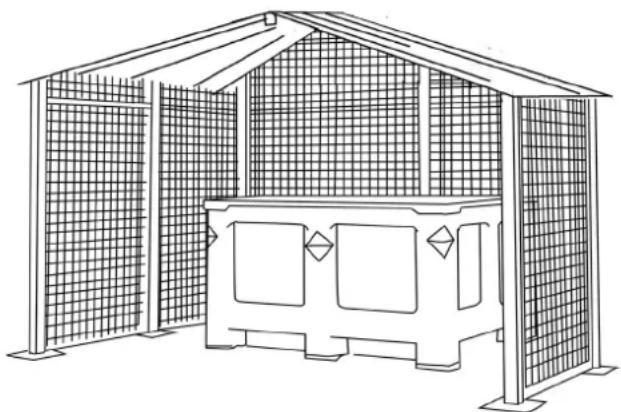
- An example of a well protected area with a cage to protect against accidental impact damage and with the batteries stored in a protective container to protect from heat, impact and accidental spillage of liquids.
- Care when handling / moving with forklift trucks or pallet trucks is needed at all times to avoid any physical damage to the batteries.
- If a good battery at any time is mishandled or subjected to any conditions that may damage it, as described in the battery Instruction manual supplied, it must then be considered as defective and procedures followed from Item 1 of this document overleaf.
3. HAZARDS IDENTIFICATION
- Electrolyte may escape from damaged batteries. Avoid contact.
- Contact can cause skin irritation, burns and chemical burns.
If liquid comes into contact with eyes, seek medical attention. - Avoid inhaling any vapours formed or released from the battery - Contains caustic alkaline electrolytes.
- Warning - Risk of fire - This battery contains No user serviceable parts.
4. FIRST AID MEASURES
EN
In the event of contact with released electrolyte or electrolyte vapours:
Eye contact - flush eyes for at least 15 minutes with plenty of clean water without rubbing and seek medical attention.
Skin contact - wash affected areas of skin with plenty of water and soap; if irritation persists, seek medical attention.
- Inhalation - provide fresh air or administer oxygen immediately and seek medical attention.
- Ingestion - if electrolyte has been ingested, seek medical attention immediately.
Information for physicians:
- Contains caustic alkaline electrolytes in cells with Lithium Iron Phosphate - NO LITHIUM METAL OR LITHIUM ALLOYS.
5. FIRE FIGHTING MEASURES
EN
- In case of fire - Keep clear of vapours and gases generated, take wind direction into consideration. If possible without danger, remove batteries from the vicinity of the fire. In principle, cooling or extinguishing with water is possible, but should only be done by trained personnel with sufficiently large quantities of water.
If the hazard situation is unclear, extinguish only with ABC powder extinguishers (Class D extinguishers for fires involving metals are especially suitable).
Fire fighters should only approach the fire wearing protective clothing and self-contained breathing apparatus. - Once the fire has been extinguished, as a rule, the area should be monitored (fire watch) and cleaned up by trained and appropriately equipped personnel; fire residue should be contained and disposed of properly.
6. EXPOSURE CONTROLS, PERSONAL PROTECTION
EN
Respiratory Protection:
- In case of battery venting, providing as much ventilation as possible. Avoid confined areas with venting batteries.
- Respiratory Protection is not necessary under conditions of normal use.
Ventilation: - Not necessary under conditions of normal use.
Protective Gloves: - Not necessary under conditions of normal use.
Other Protective Clothing or Equipment: - Not necessary under conditions of normal use.
Personal Protection is recommended for venting batteries: Respiratory Protection, Protective Gloves, Protective Clothing and safety glass with side shields.
7. ACCIDENTAL RELEASE
EN
Disposal - Wear protective clothing and equipment, wipe up with absorbent textile and dispose of as hazardous waste at collection points for hazardous waste according to national regulations.
8. DO
EN
- Use NUMATIC batteries only with NUMATIC appliances and charge them only using NUMATIC chargers.
- Charge battery before use.
- Store the battery out of the reach of children.
- Protect from rain - do not immerse in fluids.
- Protect from direct sunlight, heat, and open flames.
- Keep a battery that is not in use away from metal objects, (e.g. nails, coins, jewellery).
- Follow the disposal advice of the manufacturer and any internal waste management guidance.
- Use and store the battery with-in temperature range (as shown in Temperature Range Table).
- Always switch off the battery using the button by holding it for 6 seconds, before disconnection and handling.
- To activate / turn ON the battery please hold the top button for 6 seconds or alternatively charge the battery using original Numatic specific chargers.
- Be aware of the risk of terminals of the battery-operated appliance or battery being short circuited by metal objects.
Warning: The battery must only be charged by the Numatic Charger supplied with the product and under NO circumstances should an alternative non Numatic charger be used as there is a risk of severe damage and fire could result.
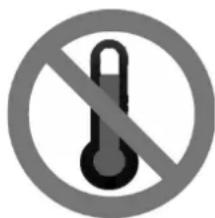
Note* "If batteries are subjected to temperatures beyond normal operating limits automatic shutdown will occur. Under these conditions allow the batteries to acclimatise at room temperature (18°C - 22°C) for several hours to allow the battery to wake up".
| Temperature Range Table | |
| CHARGING 5°C~35°C | |
| DISCHARGING -10°C~35°C | |
| STORAGE OPTIMUM 15°C~25°C | |
| STORAGE LIMIT -10°C~40°C |
9. DO NOT
- Throw battery into fire - risk of explosion!
- Charge or use a defective, damaged or deformed battery.
- Open, damage or drop the battery.
- Expose the battery to microwaves or high pressure.
- Bridge (short circuit) the battery terminals with metallic objects since this may damage the battery.
- Use metal containers for transporting batteries.
- Expose the batteries to high temperatures including direct sunlight.
- Crush, break open or physically abuse the batteries or the equipment that contains them.
10. DISTRIBUTOR TAKE-BACK / DISPOSAL
EN
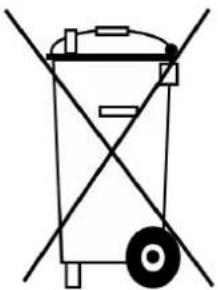
- On the basis of the Battery Directive, the manufacturers take responsibility for financing collection, treatment and recycling of batteries used in devices. To this end, batteries must be handed over for disposal to the collection systems established for this under national law. Disposal of batteries together with household waste is prohibited; batteries must be collected separately according to type.
- Return the battery free of charge to your NUMATIC servicing dealer for disposal or hand it over to an appropriate public collection point.
11. CHARGING BATTERIES
EN
The charger is intended for use only in the machine where it has been installed. The charger is intended for use with the detachable power cord supplied, the power unit is capable of operating at different voltages without user adjustment. If the charger is damaged or does not charge anymore, please return to service centre.
CAUTION!
- Check the mains cord regularly for any sign of damage.
- Do not use damaged devices.
If the mains cord of the charger is damaged, it must be replaced by an original NUMATIC mains cord available from the manufacturer or service agent.
12. WARRANTY
EN
Lithium-Ion Battery Warranty
Warranty: Commercial Use
a. Batteries are warranted for (3 Years) as standard. *Note: Numatic dealerships outside of the UK may provide longer warranty periods. Please confirm with your Numatic dealership on purchase of your product.
b. To claim warranty the following details must be supplied
i. Serial number of the machine
ii. Battery date code
iii. Date purchased
iv. Proof of Purchase
v. Maintenance history and charging regime
Failure to use the correct Numatic charger will void your warranty.

ZP19006-01FYYWW00001

1. SCHADHAFTA BATTERIEN
Chard Somerset TA20 2GB, United Kingdom
SSP Rechargeable Li-ion Battery Pack (PP27/549/130[851P]/-20+60/95
Voltage 25.6V Capacity 50Ah Energy 1280Wh LFP26146129 P/
CAUTION: Risk of fire and burns. Do not open, clean, read or show +40% or in unclean. Follow manufacturer instructions, read instructions before use
Charge only with Numatic specifc charger. Max charge-current 25A. Max
charge voltage 28.5V WARNING To reduce thefavourite May cause heat, explosion and fire
AANNNNNEENNNNNNNNNNNNNNNNNNNNNNNNNNNNNNNNNNNNNNNNNNNNNNNNNNNNNNNNNNNNNNNNNNNNNNNNNNNNNNNNNNNNNNNNNNNNNNNNNNNNNNNNNNNNNNNNNNN
。


Manufacturer: Shenzhen Ace Battery Co., Ltd.
ZP19006-01FYYWW00001
Seriennummer
Herstellungswoche
Herstellungsjahr
1. BATTERIES DÉFECTUEUSES
9.WATU NIET MOETDOEN
NL
Numatic International LTD
Chard Somerset TA20 2GB, United Kingdom
851P Rechargeable Li Ion Battery Pack IFPP27/48/130(B51P)/6/-20-60/95Volume 25X1 Capacity 90A/L (1) 120000L 120000L 120000L 120000L
VAGE 20.4V Capacity SUN | ENERGY 120W | CP-2618125 CAUTION: Risk of fire and burns. Do not open, exhaust, heat above +62°C
or insoles . Fokka manufacturer instruction , read instructions before use .Cherry can with automatic specific shaper . How much current ?44 . How
charge voltage 28.5V. WARNING To reduce the risk of injury, user must read instruction
manual May cause heat,explosion and fire.
ATTEN TION: Roupes d'Inferm e et de Grouper, ne pas qu'en, saufur, chatter a p de +50^ du journier. Gourin les instructions du journai, une les instructions au
utilisation. Chargez unquivalent avec le chargeur specifique Numatic.
Countant de charge max. 25A, tension de charge max. 28.9N.
AVERISSEMENT - Pourvenir le bleusures, l'utilisateur doit àPeut sauser de la sphéaure, la transposition et un impôt d'immédi
C∈△
MADE IN CHINA
Manufacturer: Shenzhen Ace Battery Co., Ltd.
ZP19006-01FYYWW00001

1. BATTERIE DIFETTOSE
Manufacturer: Shenzhen Ace Battery Co. Ltd.
1. BATORIAS DEFECTUOSAS
CAUTION: Risk of the and Sums. Do not open, clean, host above 40^ or incinerate. Failure may cause injury, and incineration before use
Charge only with Numatic specific charger. Max charge current 25A. Max
charge voltage 28.8V. Warning-To reduce the risk of injury, user must read instruction
mend May cause heat , explosion and fire .ANTHOMOGENIC BLOODS AND SPONSLES OF THE
Manufacturer:Shenzhen Ace Battery Co.,Ltd.
ZP19006-01FYYWW00001
Numero de série
Manufacturer: Shenzhen Ace Battery Co. Ltd.
1. DEFEKTA BATTERIER
Nmatic INTERNATIONAL LTD
Chard Somerset TA20 2GB, United Kingdom
23P Rechargeable Lohn Battery Pack 10pF/74/50/30/21/50/20-60/55Volume 35.5/10Gbps 80Ah / Electron 1700W / USB 4.0/USB 1.0/2.0/1.0/1.4
CAUTION: Risk of fire and burns. Do not open, chain, nest above H2C.
or thine rernent. Falsow manfacture instruction, read institutions before sio
Charge only with numeric specific charges. Max charge current 20A. Max charge voltage 28V, maximum. To reduce the risk of injury, user must read instruction
manual May cause heat, explosion and fire
ATTENTION: Régis奎 d'ordre et de brûnnes, ne passant aucqu'enchant, sauf à plus le ci-dessus des personnes ayant l'autorisation à l'origine du mandat.
Alliteration, Changer unification and a changer spicifie Numata
Cousant des change max. 274, Tensin des change max. 286, AENIANTIS - Paire anioise les fauences. Faucaudat que la
Peuee eae de la chalre de Iexpiaion et un inmndie.


MADE IN CHINA
Manufacturer: Shenzhen Ace Battery Co. Ltd
Serienummer
Produktionsuge
Produktionsar
| PART NO. BRUSHES PART NO. SIDE SKIRTS | |||
| 903994 370MM NYLOSCRUB BRUSH 206947 SPLASH SKIRT | |||
| 918293 | 370MM TEN-TEC BRUSH | PART NO. | HOSES |
| 606302 370MM LONGLIFE BRUSH (GREEN) 908990 DUMP HOSE 1100MM X Ø38MM (TOP TANK) | |||
| 606303 370MM LONGLIFE BRUSH (RED) 900901 | HOSE CLOSURE REPLACEMENT(35MM-38MM STRETCH HOSE) | ||
| 606400 | 360MM PADLOC DRIVE BOARD | 908821 | SUCTION HOSE 1700MM X Ø38MM |
| 900524 360MM NULOC2 DRIVE BOARD 237718 HOSE GUIDE | |||
| PART NO. | FLOOR TOOL | 213060 | VAC HOSE 1060MM X Ø38MM |
| 905047 | 750 TWINTEC ALUMINIUM FLOOR TOOL (38MMHOSE,RED TRIM,SERILOR BLADES) | 903977 | DUMP HOSE ASSEMBLY C/W RED HOSE CAP(Bottom TANK) |
| 900519 | ALUMINIUM 750 FLOOR TOOL.REPLACEMENTSERILOR GREEN POLYURETHANE BLADES | 237754 35 | 38MM BLACK HOSE CLIP |
| PART NO. | KEYS | 901916 | 28MM HOSE CLIP |
| 907208 | SPARE SET OF KEYS (010K95, FOR 020SCA1/907149) | PART NO. | GENERAL |
| PART NO. | FUSES | 908342 | TANK FILTER (RED) |
| 916942 | TVL SPARE FUSE PACK | 904197 | RED BOTTOM TANK FILLING FILTER |
| PART NO. | SEAT COVER | 904198 | RED FILLER CAP |
| 280001 | RIDE-ON SEAT COVER | 206953 | FLOOR TOOL DETENT PIN |
| PART NO. | STRainer/FILTER | 909396 | FLOAT BASKET FILTER |
| 208888 | EXTENDED STRainer | PART NO. | CHARGING LEAD |
| 208890 | EXTENDED STRainer CLEAR BOWL | 221079 | YELLOW CABLE EURO TYPE CHARGING LEAD |
| 208830 | STRainer GASKET | 220386 | UK TYPE CHARGING LEAD |
| 208889 EXTENDED STRainer 50 MESH SCREEN | |||
| TEILE-NR. | BÜRSTEN TEILE-NR. | SEITLICHE SCHÜRZEN | ||
| 903994 NY | LOSCRUB-BÜRSTE 370 MM 206947 SPRITZSCHUTZSC | HÜRZE | ||
| 918293 | TEN-TEC-BÜRSTE 370 MM | TEILE-NR. | SCHLÄUCHE | |
| 606302 370 | MM LONGLIFE-BÜRSTE (GRÜN) 908990 | ABLASSSCHLAUCH 1100 MM X Ø38 MM (OBERER TANK) | ||
| 606303 | 370 MM LONGLIFE-BÜRSTE (ROT) | 900901 | SCHLAUCHVERSCHLUSERSATZ | |
| 606400 | PADLOC-MONTAGEPLATTE 360 MM | 908821 | (STRETCH-SCHLAUCH 35-38 MM) | |
| 900524 | NULOC2-MONTAGEPLATTE 360 MM | 237718 | SAUGSCHLAUCH 1700 MM X Ø38 MM | |
| TEILE-NR. | ABSTREIFER | 213060 | SCHLAUCHFÜHRUNG | |
| 904694 | 850 TWINTEC ALUMINIUM-ABSTREIFER (SCHLAUCH 38 MM, ROTE TRIMMUNG, SERILOR-BLÄTTER) | 903977 SA | JGSCHLAUCH 1060 MM X Ø38 MM | |
| 900520 | 850 ALUMINIUM-ABSTREIFER, GRÜNE SERILOR-ERSATZBLÄTTER AUS POLYURETHAN | 237754 | ABLASSSCHLAUCH-BAUGRUPPE C/W ROTESCHLAUCHKAPPE | |
| TEILE-NR. | SCHLÜSSEL | 901916 | (UNTERER TANK) | |
| 907208 | ERSATZSCHLÜSSEL (010K95, FÜR 020SCA1/907149) | TEILE-NR. | SCHWARZE SCHLAUCHKLEMME 35-38 MM | |
| TEILE-NR. | SICHERUNGEN | 908342 | SCHLAUCHKLEMME 28 MM | |
| 916942 | TVL-ERSATZSICHERUNGSPAKET | 904197 | ALLGEMEIN | |
| TEILE-NR. | SITZABDECKUNG | 904198 | TANKFILTER (ROT) | |
| 280001 | AUFSITZ-SITZABDECKUNG | 206953 | ROTER EINFÜLLFILTER FÜR DEN UNTEREN TANK | |
| TEILE-NR. | SIEB/FILTER | 909396 | ROTE EINFÜLLKAPPE | |
| 208888 | ERWEITERTES SIEB | TEILE-NR. | ABSTREIFER-HALTESTIFT | |
| 208890 | ERWEITERTE SIEBREINIGUNGSSCHALE | 221079 | GELBES KABEL EUROTYP LADEKABEL | |
| 208830 | SIEBDECKEL | 220386 | LADEKABEL | |
| 208889 ER | WEITERTES SIEB 50 MASCHENSIEB | |||
| N° DE RÉF. | BROSSES N° DE RÉF. JUPES LATERALES | ||
| 903994 | BROSSE NYLOSCRUB 370 MM 206947 JUPE SPLASH | ||
| 918293 | BROSSE TEN-TEC 370 MM | N° DE RÉF. | TUYAUX |
| 606302 | BROSSE LONGLIFE 370 MM (VERTE) 908990 | TUYAU DE VIDANGE 1100 MM X Ø38MM (RÉSERVOIR SUPérieUR) | |
| 606303 | BROSSE LONGLIFE 370 MM (ROUGE) | 900901 | FERMETURE DE TUYAU DE RE-CHANGE |
| 606400 | PLATEAU D'ENTRAîNEMENT PADLOC 360 MM | 908821 | (TUYAU EXTENSIBLE 35 MM-38 MM) |
| 900524 | PLATEAU D'ENTRAîNEMENT NU-LOC2 360 MM | 237718 | TUYAU D'ASPIRATION 1700 MM X Ø38 MM |
| N° DE RÉF. | SUCEUR | 213060 | GUIDE DE TUYAU |
| 904694 | SUCEUR TWINTEC 850 EN ALU-MINIUM (TUYAU DE 38 MM, GARNI-TURE ROUGE, RACLETTES SERI-LOR) | 903977 TU | YAU D'ASPIRATION 1060 MM X Ø38 MM |
| 900520 | SUCEUR 850 EN ALUMINIUM. RA-CLETTES SERILOR VERTES DE REMPLACEMENT EN POLYURÉ-THANE | 237754 | ENSEMBLE TUYAU DE VIDANGE AVEC CAPUCHON ROUGE |
| N° DE RÉF. | CLÉS | 901916 | (RÉSEROIR INFÉRIEUR) |
| 907208 | DOUBLES DE CLÉS (010K95, POUR 020SCA1/907149) | N° DE RÉF. | COLLIER DE SERRAGE NOIR DE 35-38 MM |
| N° DE RÉF. | FUSIBLES | 908342 | COLLIER DE SERRAGE DE 28 MM |
| 916942 | ENSEMBLE DE FUSIBLES TVL DE RECHANGE | 904197 | DIVERS |
| N° DE RÉF. | HOUSE DE SIÈGE | 904198 | FILTRÉ DE RÉSEROIR (ROUGE) |
| 280001 | HOUSE DE SIÈGE D'AUTOLA-VEUSE | 206953 | FILTRÉ DE REMPLISSAGE DE RÉ-SERVOIR À FOND ROUGE |
| N° DE RÉF. | CRÉPINE/FILTRÉ | 909396 | BOUCHON DE REMPLISSAGE ROUGE |
| 208888 | CRÉPINE ÉLARGIE | N° DE RÉF. | GOUILLE DE FIXATION DE SU-CEUR |
| 208890 | CUVE TRANSPARENTE POUR LA CRÉPINE ÉLARGIE | 221079 | CÂBLE DE CHÂUNE DE TYPE EUROPEEN |
| 208830 | JOINT DE CRÉPINE | 220386 | CÂBLE DE CHARGE DE TYPE BRITANNIQUE |
| 208889 GRILLE À MAILLE 50 POUR LA CRÉPINE ÉLARGIE | |||
| ONDERDEELNR. BORSTELS ONDERDEELNR. SPATSCHERMEN | |||
| 903994 370MM | NYLOSCHROB BORSTEL 206947 SPATSCHERM | ||
| 918293 370MM | TEN-TEC BORSTEL | ||
| 606302 LONGLIFE-BORSTEL 370 MM (GROEN) 908990 | AFVOERSLANG 1100MM X Ø38MM (BOVENSTE TANK) | ||
| 606303 | LONGLIFE-BORSTEL 370 MM (ROOD) | 900901 | VERVANGING SLANGAFDICTING |
| 606400 | SCHIJFPLAAT PADLOC (360MM) | 908821 | (FLEXIBELE SLANG 35 MM-38 MM) |
| 900524 | 360MM NULOC2 AANDRIJFSCHIJF | 237718 | ZUIGSLANG 1700 MM X Ø 38 MM |
| ONDERDEELNR. | VLOERELEMENT | 213060 | HANDLEIDING VOOR SLANGEN |
| 904694 | 850 TWINTEC ALUMINIUM VLOERELEMENT (38MM SLANG, RODE RAND, SERILOR WISSERS) | 903977 ZUIGSLANG 1060 MM X Ø 38 MM | |
| 900520 | ALUMINIUM 850 VLOERELEMENT VERVANGING SERILOR GROEN POLYURETHANE WISSERS | 237754 | AFVOERSLANGMONTAGE MET RODE DOP |
| ONDERDEELNR. | SLEUTELS | 901916 | (ONDERSTE TANK) |
| 907208 | RESERVESLEUTELS (010K95, VOOR 020SCA1/907149) | ONDERDEELNR. | ZWARTE SLANGKLEM 35-38 MM |
| ONDERDEELNR. | ZEKERINGEN | 908342 | SLANGKLEM 28 MM |
| 916942 | TVL RESERVEZEKERINGEN | 904197 | ALGEMEEN |
| ONDERDEELNR. | ZETELAFDEKKING | 904198 | TANKFILTER (ROOD) |
| 280001 | RIDE-ON ZETELAFDEKKING | 206953 | RODE FILTER VOOR HET VULLEN VAN DE ONDERSTE TANK |
| ONDERDEELNR. | ZEEF/FILTER | 909396 | RODE VULDOP |
| 208888 | VERLENGDE ZEEF | ONDERDEELNR. | VLOERELEMENT DRUKPIN |
| 208890 | VERLENGDE ZEEF DOORZICHTIGE BAK | 221079 | GELE LAADKABEL EUROPEES TYPE |
| 208830 | ZEEFPAKKING | 220386 | LAADSNOER |
| 208889 VERLENGDE ZEEF MAASWIJDTE 50 | |||
| REFERÊNCIA ESCOVAS REFERÊNCIA ABAS LATERAIS | |||
| 903994 ESCOVA NYLOSCRUB DE 370 MM 206947 ABA ANTI-SALPICOS | |||
| 918293 ESCOVA TEN-TEC DE 370 MM | S | ||
| 606302 ESCOVA DE LONGA DURAÇÃO DE 370 MM (VERDE) 908990 | MANGUEIRA DE DESCARGA 1100 MM X Ø38 MM (DEPÔSITO SUPERIOR) | ||
| 606303 | ESCOVA DE LONGA DURAÇÃO DE 370MM (VERMELHA) | 900901 SUBSTITUIÇÃO DE FECHO DA MANGUEIRA | |
| 606400 | PLACA DE ACIONAMENTO PADLOC DE 360MM | 908821 | (MANGUEIRA ELASTICA DE 35 MM-38 MM) |
| 900524 PLACADE ACIONAMENTO NULOC2 DE 360 MM 237718 | MANGUEIRA DE ASPIRAÇÃO 1700 MM X Ø38 MM | ||
| REFERÊNCIA | FERRAMENTA DE PISO | 213060 | GUIA DE MANGUEIRA |
| 904694 | FERRAMENTA DE PISO EM ALUMínIO 850 TWINTEC (MANGUEIRA DE 38 MM, REVESTIMENTO EM VERMELHO, LÁMINAS SERILOR) | 903977 MANGUEIRA DE VÁCUO 1060 MM X Ø38 MM | |
| 900520 | FERRAMENTA DE PISO EM ALUMínIO 850. LÁMINAS SERILOR DE POLIURETANO VERDE PARA SUBSTITUÇÃO | 237754 | CONJUNTO DE MANGUEIRA DE DESCARGA INCLUI TAMPA DE MANGUEIRA EM VERMELHO |
| REFERÊNCIA | CHAVES | 901916 | (DEPÔSITO INFERIOR) |
| 907208 | CONJUNTO DE CHAVES SOBRESSELENTES (010K95, PARA 020SCA1/907149) | REFERÊNCIA | COTOVELO DA MANGUEIRA EM PRETO DE 35-38 MM |
| REFERÊNCIA | FUSÍVEIS | 908342 | COTOVELO DA MANGUEIRA 28 MM |
| 916942 | CONJUNTO DE FUSÍVEIS SOBRESSELENTES TVL | 904197 GERAL | |
| REFERÊNCIA | COBERTURA DO BANCO | 904198 | FILTRO DO DEPOßITO (VERMELHO) |
| 280001 | COBERTURA DO BANCO RIDE-ON | 206953 | FILTRO DE ENCHIMENTO DO DEPOßITO INFERIOR VERMELHO |
| REFERÊNCIA | FILTRO | 909396 | TAMPA DE ENCHIMENTO VERMELHA |
| 208888 FILTRO ALARGADO | REFERÊNCIA | PINO DE RETENÇA DA FERRAMENTA DE PISO | |
| 208890 | COPO TRANSPARENTE DO FILTRO ALARGADO | 221079 | CABO DE CARREGAMENTO TIPO EURO, AMARELO |
| 208830 | JUNTA DO FILTRO | 220386 | CABO DE CARREGAMENTO |
| 208889 FILTRO ALARGADO COM MALHA DE 50 | |||
| N. PARTE SPAZZOLE N. PARTE RIPARI LATERALI | |||
| 903994 SPAZZOLA NYLOSCRUB DA 370 MM 206947 RIPARO ANT SPRUZZI | |||
| 918293 SPAZZOLA TEN-TEC DA 370 MM | N. PARTE | FLESSIBILI | |
| 606302 SPAZZOLA LONGLIFE (VERDE) DA 370 MM 908990 | FLESSIBLE DI SCARICO 1100 MM X Ø38 MM (SERBATOIO SUPERiore) | ||
| 606303 SPAZZOLA LONGLIFE (ROSSA) DA 370 MM | 900901 | RICAMBIO CHIUSURA FLESSIBLE | |
| 606400 SCHEDA DI COMANDO PADLOC DA 360 MM | 908821 | (TUBO ESTENSIBLE 35 MM-38 MM) | |
| 900524 SCHEDA DI COMANDO NULOC2 DA 360 MM 237718 FLESSIBILE DI ASPRAZIONE 1700 MM X Ø38 MM | |||
| N. PARTE TERGIPAVIMENTO | 213060 | GUIDA FLESSIBLE | |
| 904694 TERGIPAVIMENTO ALLUMINIO TWINTEC 850 (FLESSIBLE 38 MM, FINIZIONE ROSSA, LAME SERILOR) | 903977 FLESSIBLE DI ASPIRAZIONE 1060 MM X Ø38 MM | ||
| 900520 RICAMBIO TERGIPAVIMENTO ALLUMINIO 850 LAME IM POLIURETANO VERDI SERILOR | 237754 | COMPLESSIVO FLESSIBLE DI SCARICO CON TAPPO ROSSO | |
| N. PARTE CHIAVI | 901916 | (SERBATOIO INFERiore) | |
| 907208 SET CHIAVI DI RICAMBIO (010K95, PER 020SCA1/907149) | N. PARTE | FERMATUBI NERO PER FLESSIBLE 35-38 MM | |
| N. PARTE FUSIBILI | 908342 | FERMATUBI PER FLESSIBLE 28 MM | |
| 916942 RICAMBIO PACCO FUSIBILI TVL | 904197 | GENERALE | |
| N. PARTE COPRISEDILE | 904198 | FILTRO SERBATOIO (ROSSO) | |
| 280001 COPRISEDILE PER SEDILE CON UOMO A BORDO | 206953 | FILTRO DI RIEMPIMENTO SERBATOIO INFERiore ROSSO | |
| N. PARTE FILTRO | 909396 | TAPPO BOCCHETTONE RIEMPIMENTO ROSSO | |
| 208888 FILTRO ESTESO | N. PARTE | PERNI DI RITEGNO TERGIPAVIMENTO | |
| 208890 COPPA TRASPARTENTE FILTRO ESTESO | 221079 | CAVO DI RICARICA GIALLO TIPO EURO | |
| 208830 GUARNIZIONE FILTRO | 220386 | CAVO DI RICARICA | |
| 208889 RETE 50 FILTRO ESTESO | |||
| N.O DE ARTICULO | CEPILLOS | N.O DE ARTICULO | FALDONES LATERALES |
| 903994 CEPILO NYLOSCRUB DE 370 mm | 206947 | FALDón ANTISALPICADURA | |
| 918293 CEPILO TEN-TEC DE 370 mm | N.O DE ARTICULO | TUBOS | |
| 606302 CEPILO LONGLIFE DE 370 MM (VERDE) | 908990 | TUBO DE VACIADO DE 1100 MM X Ø38 MM (DEPÔSITO SUPERIOR) | |
| 606303 CEPILO LONGLIFE DE 370 MM (ROJO) | 900901 | SUSTITUCión DEL CIERRE DE LA MANGUERA | |
| 606400 PLATO IMPULSOR PADLOC DE 360 MM | 908821 | (MANGUERA EXTENSIBLE DE 35 MM-38 MM) | |
| 900524 PLATO IMPULSOR NULOC2 DE 360 mm 237718 TUBO DE ASPIRACION DE 1700 MM X Ø38 MM | |||
| N.O DE ARTICULO | BOQUILLA DE ASPIRACION 213060 GUIA DE TUBO | ||
| 904694 | BOQUILLA DE ASPIRACION DE ALUMINIO TWINTEC 850 (TUBO DE 38 MM, DETalles ROJOS, GOMAS SERILOR) | 903977 TUBO DE ASPIRACION DE 1060 MM X Ø38 MM | |
| 900520 | GOMAS DE POLIURETANO VER-DES MARCA SERILOR DE RE-PUESTO PARA BOQUILLA DE AS-PIRACION DE ALUMINIO 850 | 237754 | TUBO DE VACIADO JUNTO CON CAPUCHON DE TUBO ROJO |
| N.O DE ARTICULO | LLAVES 901916 (DEPÔSITO INFERIOR) | ||
| 907208 | JUEGO DE LLAVES DE REPUESTO (010K95, PARA 020SCA1/907149) | N.O DE ARTICULO | ABRAZADERA DE TUBO NEGRA DE 35-38 MM |
| N.O DE ARTICULO | FUSIBLES 908342 ABRAZADERA DE TUBO DE 28 MM | ||
| 916942 | PAQUETE DE FUSIBLES DE RE-PUESTO PARA TVL | 904197 | ARTICULOS GENERALES |
| N.O DE ARTICULO | FUNDA DE ASIENTO | 904198 | FILTRO DE DEPÔSITO (ROJO) |
| 280001 | FUNDA DE ASIENTO 206953 | FILTRO ROJO DE LLENADO DEL DEPÔSITO INFERIOR | |
| N.O DE ARTICULO | COLADOR/FILTRO 909396 TAPÔN ROJO DE LLENADO | ||
| 208888 | COLADOR LARGO | N.O DE ARTICULO | PASADOR DE RETENÇÃO DE BO-QUILLA DE ASPIRACION |
| 208890 | RECIPIENTE TRANSPARENTE DEL COLADOR LARGO | 221079 CABLE DE CARGA AMARILLO PARA EUropa | |
| 208830 | JUNTA DE COLADOR 220386 CABLE DE CARGA | ||
| 208889 | TAMIZ DE MALLA 50 DEL COLA-DOR LARGO | ||
| NR KAT. SZCZOTKI NR KAT. OSŁONY BOCZNE | |||
| 903994 | SZCZOTKA NYLOSCRUB 370MM | 206947 | OSŁONA ANTYBRYZGOWA |
| 918293 | SZCZOTKA TEN-TEC 370MM | NR KAT. | WEŁZE |
| 606302 SZCZOTKA LONGLIFE 370 MM (ZIELONA) 908990 | WAZ SPUSTOWY 1100MM X Ø38MM (ZBIORNIK GÓRNY) | ||
| 606303 | SZCZOTKA LONGLIFE 370MM (CZERWONA) | 900901 | WYMIANA ZAMKNIĆIA WEŁA |
| 606400 | PLEYTA PADLOC DRIVE 360MM | 908821 | (ELASTYCZY WAZ 35 MM-38 MM) |
| 900524 | TARCZA NAPEDOWA NULOC2 360 mm | 237718 | WAZ SSACY 1700MM X Ø38MM |
| NR KAT. | SSAWA | 213060 | PROWADNICA WEŁA |
| 904694 | SSAWA ALUMINIOWA 850 TWINTEC (WAZ 38MM, CZERWONE WYKOÑCZNIE, PIÓRA SERILOR) | 903977 | WAZ SSACY 1060MM X Ø38MM |
| 900520 | SSAWA ALUMINIOWA 850. WYMIENNE ZIELONE PIÓRA POLIURETANOWE SERILOR | 237754 | ZESPÓŁ WEŁA SPUSTOWEGO C/W CZERWONY KOLPAK NA WAZ |
| NR KAT. | KLUCZYKI | 901916 | (ZBIORNIK DOLNY) |
| 907208 | ZAPASOWY ZESTAW KLUCZYKÓW (010K95, FOR 020SCA1/907149) | NR KAT. CZARNY ZACISK WEŁA 35-38MM | |
| NR KAT. | BEZPIECZNIKI | 908342 | ZACISK WEŁA 28MM |
| 916942 | ZESTAW ZAPASOWYCH BEZPIECZNIKÓW TVL | 904197 | INFORMACEJ OGÓLNE |
| NR KAT. | POKRYCIE SIEDZENIA | 904198 | FILTR ZBIORNIKA (CZERWONY) |
| 280001 | POKRYCIE SIEDZENIA MASZYNY SAMOJEZDNEJ | 206953 | CZERWONY FILTR NAPELNIAJACY ZBIORNIKA DOLNEGO |
| NR KAT. | FILTR | 909396 | CZERWONY KOREK WLEWOWY |
| 208888 | ROZSZERZONY FILTR | NR KAT. | KOLEK ZACZEPOWY SSAWY |
| 208890 | MISKA PRZEZROCZYSTA ROZSZERZONEGO FILTRA | 221079 ZÓLTY PRZEWÓD DO LADOWANIA TYPU EURO | |
| 208830 | USZCZELKA FILTRA | 220386 | KABEL DO LADOWANIA |
| 208889 OSŁONA SIATKI 50, ROZSZERZONY FILTR | |||
| ARTIKELNR | BORSTAR ARTIKELNR SIDOKJOLAR | ||
| 903994 370 | MM NYLOSCRUB-BORSTE 206947 STÄNKSKYDD | ||
| 918293 | 370 MM TEN-TEC-BORSTE | ARTIKELNR | SLANGAR |
| 606302 | 370 MM LONGLIFE-BORSTE (GRÖN) | 908990 | TÖMNINGSSLANG 1 100 MM X Ø |
| 606303 370 | MM LONGLIFE-BORSTE (RÖD) 900901 | BYTE AV SLANGHÖLJE(35-38 MM STRETCHSLANG) | |
| 606400 | 360 MM PADLOC-DRIVPLATTA | 908821 | SUGSLANG 1 700 MM X Ø 38 MM |
| 900524 | 360 mm NULOC2-DRIVPLATTA | 237718 | SLANGHÄLLARE |
| ARTIKELNR | GOLVREDSKAP | 213060 | VAC HOSE 1060MM X Ø38MM |
| 904694 | 850 TWINTEC GOLVVERKTYG I ALUMINIUM (38MM SLANG, RÖD KANT, SERILORBLAD) | 903977 | TÖMNINGSSLANGSYSTEM MED RÖTT SLANGLOCK(TANKENS UNDERSIDA) |
| 900520 | GOLVVERKTYG I ALUMINIUM 850. RESERVDELSERILOR GRÖNA POLYURETANBLAD | 237754 35- | 38 MM SVART SLANGKLÄMMA |
| ARTIKELNR | ENHETER | 901916 | 28 MM SLANGKLÄMMA |
| 907208 | EXTRA NYCKELSATS (010K95, FÖR020SCA1/907149) | ARTIKELNR | ALLMÄNT |
| ARTIKELNR | SÄKRINGAR | 908342 | TANKFILTER (RÖTT) |
| 916942 | TVL EXTRA SÄKRINGSPAKET | 904197 | PÄFYLLNINGSFILTER FÖR TANK MED RÖD BOTTEN |
| ARTIKELNR | SATESKLÄDSEL | 904198 | RÖTT PÄFYLLNINGSLOCK |
| 280001 | SATESÖVERDRAG | 206953 | SPÄRNSTIFT FÖR GOLVVERKTYG |
| ARTIKELNR | SIL/FILTER | 909396 | FLYTKORGSFILTER |
| 208888 | FÖRLÄNGD SIL | ARTIKELNR | LADDNINGSKABEL |
| 208890 | FÖRLÄNGD SIL GENOMSKINLIG SKål | 221079 | GUL KABEL AV EURO-TYP MED LADDNINGSKABEL |
| 208830 | SILPACKNING | 220386 | LADDNINGSKABEL AV BRITTISK TYP |
| 208889 SILNAT FÖR FÖRLÄNGD SIL 50 | |||
| OSANRO HARJAT OSANRO SIVUHELMAT | ||
| 903994 NY-OSCRUB-HARJA, 370 MM 206947 ROISKEHELMA | ||
| 918293 TEN-TEC-HARJA, 370 MM | OSANRO | LETKUT |
| 606302 LONGLIFE-HARJA (VIHREÄ), 370 MM 908990 | TYHJENNYSLETKU, 1100 MM X Ø 38 MM (YLÄSÄILIÖ) | |
| 606303 LONGLIFE-HARJA (PUNAINEN), 370 MM | 900901 | LETKUN VAIHTOSULJIN |
| 606400 PADLOC-KÄYTTÖLEVY, 360 MM | 908821 | (35-38 MM:N LAAJENNETTAVA LETKU) |
| 900524 NULOC2-KÄYTTÖLEVY, 360 MM 237718 IMULETKU, 1700 MM X Ø 38 MM | ||
| OSANRO LATTIATYÖKALU | 213060 | LETKUNOHJAIN |
| 904694 ALUMIININEN 850 TWINTEC -LATTIATYÖKALU (38 MM:N LETKU, PUNAINEN REUNUS, SERILOR-LAVAT) | 903977 ALIPAINELETKU, 1060 MM X Ø 38 MM | |
| 900520 ALUMIININEN 850-LATTIATYÖKALU, VIHREÄT POLYUTERAANISET SERILOR-VAIHTOLAVAT | 237754 | TYHJENNYSLETKUKOKOONPANO, PUNAINEN LETKUN KORKKI |
| OSANRO AVAIMET | 901916 | (ALASÄILIÖ) |
| 907208 VARA-AVAIMET (010K95, MALLIIN 020SCA1/907149) | OSANRO | 35-38 MM:N MUSTA LETKUN PIDIKE |
| OSANRO SULAKKEET | 908342 | 28 MM:N LETKUN PIDIKE |
| 916942 TVL-VARASULAKEPAKETTI | 904197 | YLEISET |
| OSANRO ISTUIMEN PÄÄLLINEN | 904198 | SÄILIÖN SUODATIN (PUNAINEN) |
| 280001 PÄALTÄJETTAVAN KONEEN ISTUIMEN PÄÄLLINEN | 206953 | PUNAINEN ALASÄILIÖN TÄYTTÖSUODATIN |
| OSANRO SIIVILÄ/SUODATIN | 909396 | PUNAINEN TÄYTTÖAUKON KORKKI |
| 208888 LAAJENNETTU SIIVILÄ | OSANRO | LATTIATYÖKALUN KIINNITYSTAPPI |
| 208890 LAAJENNETUN SIIVILÄN KIRKAS KULHO | 221079 | KELTAINEN LATAUSJOHTO, EUROOPPALAINEN MALLI |
| 208830 SIIVILÄTIIVISTE | 220386 | LATAUSJOHTO |
| 208889 LAAJENNETUN SIIVILÄN 50 VERKKOSUODATIN | ||
| DELNR. BØRSTER DELNR. SIDESKØRTER | |||
| 903994 370 | MM NYLOSCRUB-BØRSTE 206947 STÆNKSKØRT | ||
| 918293 370 | MM TEN-TEC-BØRSTE | ||
| 606302 370 | MM LONGLIFE-BØRSTE (GRØN) 908990 | DRÆNSSLANGE 1.100 MM X Ø 38 MM (ØVERSTE TANK) | |
| 606303 | 370 MM LONGLIFE-BØRSTE (RØD) | 900901 | UDSKIFTNING AF SLANGELUKNING |
| 606400 | 360 MM PADLOC-DREVPLADE | 908821 | (35 MM-38 MM STRÆKSLANGE) |
| 900524 360 | MM NULOC2-DREVPLADE 237718 SUGESLANGE 1700 | MM X Ø 38 MM | |
| DELNR. GULVENHED 213060 SLANGESTYR | |||
| 904694 | 850 TWINTEC GULVENHED I ALUMINIUM (38 MM SLANGE, RØD BEKLæDNING, SERILOR-KLINGER) | 903977 VA | KUUMSLANGE 1.060 MM X Ø 38 MM |
| 900520 | 850-GULVENHED I ALUMINIUM. GRØNNE SERILOR-UDSKIFTNINGSKLINGER I POLYURETAN | 237754 | DRÆNSSLANGEENHED K/M RØD SLANGD/AEKSEL |
| DELNR. NØGLER 901916 (NEDERSTE TANK) | |||
| 907208 | EKSTRA NØGLES/AET (010K95, TIL 020SCA1/907149) | DELNR. | 35-38 MM SORT SLANGEKLEMME |
| DELNR. | SIKRINGER | 908342 | 28 MM SLANGEKLEMME |
| 916942 | EKSTRA TVL-SIKRINGSPAKKE | 904197 | GENERELT |
| DELNR. | SÆDEBETR/AK | 904198 | TANKFILTER (RØDT) |
| 280001 SÆDEBETR/AK | 206953 | RØDT FILTER TIL PAFYLDNING AF NEDERSTE TANK | |
| DELNR. | SIGTE/FILTER | 909396 | RØDT PAFYLDNINGSD/AEKSEL |
| 208888 | FORLÆNGET SIGTE | DELNR. | LASESTIFT TIL GULVENHED |
| 208890 | FORLÆNGET SIGTE KLAR SKål | 221079 | GUL OPLADNINGSLEDNING, EURO-TYPE |
| 208830 | FILTERPAKNING | 220386 | OPLADNINGSLEDNING |
| 208889 UD | VIDET FILTER 50, MASKESIGTE | ||
| PROBLEM CAUSE SOLUTION | ||
| Machine will not operate Low battery chargeMachine is connected and chargingWaste tank full switch stuck or cloggedKey is off or missingHandle safety fuse blown | Charge batteries (page 86/92)Take off charge (page 86/92)Inspect & clean switch inside tank (page 50)Insert key & turn to operating positionReplace fuse (or contact service engineer) | |
| Vacuum will not operate Missing | or blown fuseWaste tank full switch stuck or cloggedVacuum switch not engagedWaste water tank full | Fit or replace fuse (page 15/68)Inspect & clean switch inside tank (page 50)Press switch (Page 44)Empty waste water tank (page 62) |
| Poor water pick-up Waste water tank fullClogged / blocked vacuum hoseLoose hose connectionsDebris basket filter clogged / blockedSeparator filter clogged / blockedPoor separator sealDamaged separator sealDamaged / split vacuum hoseDamaged floor tool bladesLow battery chargeFloor tool incorrectly adjusted | Clogged / blocked vacuum hoseLoose hose connectionsDebris basket filter clogged / blockedSeparator filter clogged / blockedPoor separator sealDamaged separator sealDamaged / split vacuum hoseDamaged floor tool bladesLow battery chargeFloor tool incorrectly adjusted | Empty waste water tank (page 62)Remove and clean (page 62)Push tight connections (page 21)Remove and clean (page 62)Remove and clean (Page 62)Clean and refit (page 62)Renew (contact service dept)Renew (contact service dept)Renew (contact service dept)Re-charge batteries (page 86/92)Adjust floor tool |
| No brush / scrub function No brushes fittedBrush deck raisedMissing or blown fuses | Check and fit (page 26)Lower brush deck (page 38)Fit or replace fuse (page 15/68) | |
| Little or no water flow Clean water tank emptyClean water tank filter blocked / cloggedWater flow not onBrush deck raised | Fill clean water tank (page 32)Remove and clean (62)Switch on water flow (Page 44)Lower brush deck (page 38) | |
| Machine just 'stops' duringoperating | Brush motor fuse blown due to high load Replace fuse & reduce load (page 15/68) | |
Warning Do not fit a replacement fuse link having a higher rating than the value stated on the fuse label.
DEC-056 V2.3 For declaration of conformity for model TRL720.TM see supplement sheet part no 920000
DEC-056 V3.4
DEC-056 V2.3
Chard.
Authorised Signatory: Mr. Matthew Coles
Signed: M C a l s Date: 1st February 2024
Signed: M. Date: 1stFebruary 2024 2006/42/EC Machinery Directive EN60335-1:2012 + AC:2014 + A11:2014 + A13:2017
desus est contorme aux directives et normes standardien mukassti
| This Machine Has Been Packed With The Following | |
| Brush / Pad | |
| Floor Tool | |
| Charging Lead | |
| Battery | |
| Fuse Pack | |
| Signed | |
Distributed by:
Numatic
numatic.com
Numatic International Limited (Head Offi ce)
Chard, Somerset TA20 2GB, UNITED KINGDOM
Tel: 01460 68600 numatic.com
Numatic International GmbH
Numatic International Denmark
Numatic International BV
Numatic International (PTY) Ltd.
Cnr. 16th & Pharmaceutical Road, Randjes Park, Midrand 1685, SOUTH AFRICA
Tel: +27 (0) 861 686 284 numatic.co.za
Numatic International ULDA
Rua Francisco da Silva Duarte, n°79
4475-269 Santa Maria de Avioso, Castelo da Maia, PORTUGAL
Tel: +351 220 047 700 numatic.pt
Numatic International Spain, S.L.U.
Av. Baix Llobregat, 5-7, Oficina bajos 1 (Parc Negocis Mas Blau II)
08820 EI Prat de Llobregat (Barcelona), SPAIN
Tel: +34 93 647 22 22 numatic.es
Numatic International Italy S.R.L
Via Luigi Galvani, 2, Z.I. Talponedo, 33080 Porcia (PN), ITALY
Tel: +39 (0) 434 046 211 numatic.it
- EN, DE, FR, NLEN, DE Mathatic PT, IT, ES, PLPT, IT, ES, PL SV, FI, DASV, FI, DA 2K 1K
- TRL720/150T/200T/250T/300T
- DE
- NL
- PT
- IT
- SV
- DA
- LLASIGENOMINNANDUPABORJARBETET
- Machine Set-up Guide
- PLEASE READ BEFORE COMMENCING ANY OPERATION AFTER THE REMOVAL OF ALL THE PACKAGING, CAREFULLY OPEN AND CHECK THE CONTENTS.
- CONTENTS
- ENSURE THAT NO METAL OBJECTS COME INTO CONTACT WITH BATTERY TERMINALS WHILE THE BATTERIES ARE EXPOSED.
- Fitting Dump Hose
- Fitting the Hose Guide
- Fitting the Floor Tool
- Break-away Floor Tool
- ALWAYS ENSURE THAT THE MACHINE IS SWITCHED OFF BEFORE MAKING ANY ADJUSTMENTS.
- Fitting the Side Pod Skirts
- Fitting the Brushes
- Filling the Clean Water Tank
- WHEN HANDLING AND MIXING CHEMICALS
- Fill-Level Indicator
- IMPORTANT
- Adjusting the Seat
- Raise/ Lower Brush Deck
- Wichtig
- Setting the Cleaning Controls
- NOTE: MACHINE WILL NOT REVERSE WITH FLOOR TOOL IN LOWERED POSITION
- Emergency Stop Button/ Horn
- Maximum Speed Control
- To operate, select forward and depress the accelerator pedal.
- NOTE: MACHINE WILL NOT REVERSE WITH FLOOR TOOL IN THE LOWERED POSITION
- Off-aisle Cleaning Kit
- (Optional Extra Accessory) 606182
- Maschine im Einsatz
- AND INTE MASKINEN PAGOLVSOM LUTAR MER AN 11\%
- Fuses
- Changing the Floor Tool Blades
- ALWAYS ENSURE THAT THE MACHINE IS SWITCHED OFF PRIOR TO MAINTENANCE.
- Free Wheel and Towing
- WARNING!
- Alternative Display
- Battery Care
- TO ENSURE YOUR MACHINE REMAINS AT ITS MAXIMUM EFFICIENCY AND PROLONG YOUR BATTERY LIFE, PLEASE FOLLOW THE SIMPLE STEPS BELOW:
- Under normal daily usage:
- Charging Light Sequence
- Schematic Diagram
- READ MANUAL BEFORE USE
- Precautions when working with batteries
- Daily
- Batteries
- Numatic Lithium-ion Rechargeable Battery
- 25.6V | 50Ah | 1280Wh | LFP26148129
- DEFECTIVE BATTERIES
- HANDLING AND STORAGE
- EN
- DANGER!
- WARNING:
- STORAGE:
- HAZARDS IDENTIFICATION
- FIRST AID MEASURES
- In the event of contact with released electrolyte or electrolyte vapours:
- Information for physicians:
- FIRE FIGHTING MEASURES
- EXPOSURE CONTROLS, PERSONAL PROTECTION
- Respiratory Protection:
- ACCIDENTAL RELEASE
- DO
- DO NOT
- DISTRIBUTOR TAKE-BACK / DISPOSAL
- CHARGING BATTERIES
- CAUTION!
- WARRANTY
- SCHADHAFTA BATTERIEN
- BATTERIES DÉFECTUEUSES
- 9.WATU NIET MOETDOEN
- BATTERIE DIFETTOSE
- BATORIAS DEFECTUOSAS
- DEFEKTA BATTERIER
- Nmatic INTERNATIONAL LTD
- DEC-056 V2.3 For declaration of conformity for model TRL720.TM see supplement sheet part no 920000
- Numatic
Brand : Numatic
Model : TRL720
Category : Sweeper