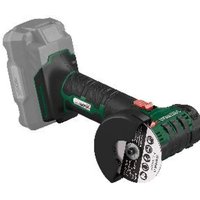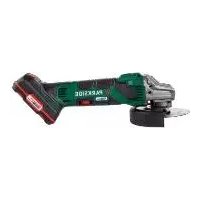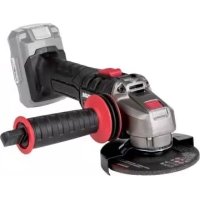
PWSAM 20Li B2 - Uncategorized PARKSIDE - Free user manual and instructions

Find the device manual for free PWSAM 20Li B2 PARKSIDE in PDF.

📄 250 pages PDF ⬇️ English EN 💬 AI Question 🖨️ Print
Notice PARKSIDE PWSAM 20Li B2 - page 27
Manual assistant
Powered by ChatGPT
Waiting for your message
Product information

Brand : PARKSIDE

Model : PWSAM 20Li B2

Category : Uncategorized

Download the instructions for your Uncategorized in PDF format for free! Find your manual PWSAM 20Li B2 - PARKSIDE and take your electronic device back in hand. On this page are published all the documents necessary for the use of your device. PWSAM 20Li B2 by PARKSIDE.

USER MANUAL PWSAM 20Li B2 PARKSIDE
GB / MT Translation of the original instructions Page

  • Table of Contents Introduction p. 27
  • Proper use p. 27
  • Scope of delivery/accessories p. 28
  • Overview p. 28
  • Description of functions p. 28
  • Technical data p. 28
  • Safety information p. 30
  • Meaning of the safety information p. 30
  • Pictograms and symbols p. 30
  • General Power Tool Safety Warnings p. 31
  • Safety information for angle grinders p. 34
  • Residual risks p. 38
  • Preparation p. 38
  • Control elements p. 38
  • Attaching and removing the attachment tool p. 38
  • Fitting and removing the attachment on the guard cover p. 39
  • Checking the battery charge level p. 39
  • Charging the battery p. 39
  • Operation p. 40
  • Working instructions p. 40
  • Inserting and removing the battery p. 41
  • Adjusting the guard cover p. 41
  • Switching on and off p. 41
  • Transport p. 41
  • Cleaning, maintenance and storage p. 42
  • Cleaning p. 42
  • Maintenance p. 42
  • Storage p. 42
  • Troubleshooting p. 42
  • Disposal/environmental protection p. 43
  • Disposal instructions for rechargeable batteries p. 43
  • Service p. 44
  • Guarantee p. 44
  • Repair service p. 45
  • Service Centre p. 45
  • Importer p. 45
  • Spare parts and accessories p. 46
  • Translation of the original EC declaration of conformity p. 46
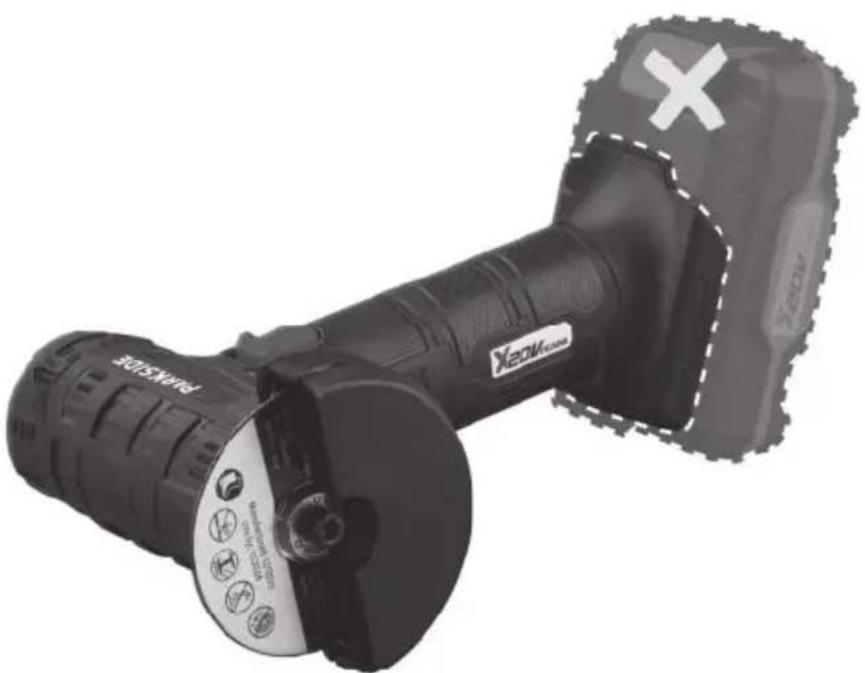
  • Exploded view Introduction Congratulations on purchasing your new cordless angle grinder (hereafter referred to as device or power tool). You have chosen a high-quality device. This device was quality-tested and subjec- ted to a final inspection during production, therefore ensuring proper functioning of your device. The instruction manual forms part of this device. It contains important information on safety, use and disposal. Read the instruction manual carefully. Familiarise yourself with the controls and how to use the device correctly. Use the device only as described and for the stated fields of application. Store the instruction manual carefully and ensure that all documents are handed over in the event that the device is passed on to another user. Proper use This power tool is intended to function as a grinder and or cut-off tool. Operations such as sanding, wire brush- ing, polishing or hole cutting are not to be performed with this power tool. Do not use liquid coolants such as water. Do not workGB p. 249

with materials that contain hazardous sub- stances, e.g. asbestos or lead. Only operate in dry areas. The device is intended for use by adults. Children under the age of 16 may not use the device, except under supervision. Any other use that is not expressly permit- ted in this instruction manual may pose a serious hazard to the user and result in damage to the device. The operator or user of the machine is responsible for any accidents or personal injury and/or mater- ial damage to third parties or their prop- erty. The machine is intended to be used by do-it-yourselfers. It was not designed for heavy commercial use. The warranty is void in the case of commercial use. The manufacturer is not liable for damage caused by improper use or incorrect oper- ation. The device is part of the X20VTEAM series and can be operated with bat- teries of the X20VTEAM series. Bat- teries of the X20VTEAM series may only be charged using chargers of the X20VTEAM series. Scope of delivery/ accessories Unpack the device and check that everything is present. Dispose of the packaging material prop- erly.

  • Cordless Angle Grinder
  • Cutting disc PTS 76 (metal, ⌀76mm ×
  • Guard cover, Attachment
  • Translation of the original instructions The rechargeable battery and charger are not included in deliv- ery. Overview The illustrations for the device can be found on the front fold-out page. 1Attachment 2Lock (Attachment) 3Direction of rotation arrow 4Spindle lock 5On/Off switch 6Handle (Insulated gripping surface) 7Button (Charge level indicator) 8Charge level indicator 9Battery 10Battery release 11Battery holder 12Charger 13Storage case Fig.A 14Hex key 15Clamping screw 16Clamping flange 17Cutting disc 18Guard cover 19Mounting flange Description of functions The very fast rotating attachment tool en- ables clean grinding and cutting of metal. Please refer to the descriptions below for information on how the operating ele- ments work. Technical data Cordless Angle Grinder ........................... PWSAM 20-Li B2 Rated voltage U .............................20V ⎓ Weight with battery (20V, 2Ah) .1.22 kg No-load rotation speed n

=3dB Sound pressure level (L

.............................. ≤ 80 m/s diameter .......................................⌀76mm Borehole .......................................⌀10mm Thickness .........................................1.2 mm Levels of noise and vibration were determ- ined according to the standards and regu- lations in the declaration of conformity. The specified total vibration value and the stated noise emission value have been measured according to a standardised test method and can be used to compare one power tool with another. The specified total vibration value and the stated spe- cified noise emission value can also be used for a provisional assessment of the load. WARNING! The vibration and noise emissions may deviate from the specified values during actual use of the power tool, depending on how the power tool is be- ing used. Try to keep the exposure to vi- brations as low as possible. An example of a measure to reduce vibration exposure is limiting the working hours. All parts of the operating cycle have to be considered while doing so (for example, times when the power tool is switched off and times when it is switched on but running without any load). WARNING! Grinding thin metal sheet or other well vibrating structures with a large surface area can result in increased noise exposure and a much (up to 15dB) higher overall noise emis- sion than the specified noise emission val- ues. Use heavy flexible damping mats or similar to prevent sound radiation from such workpieces. Take into account the in- creased noise emission and wear appro- priate hearing protection. Charging time The device is part of the X20VTEAM series and can be operated with bat- teries of the X20VTEAM series. Bat- teries of the X20VTEAM series may only be charged using chargers of the X20VTEAM series. We recommend that you operate this appliance with the following bat- teries only: PAP 20 B1, PAP 20 B3, Smart PAPS 204 A1, Smart PAPS 208 A1 We recommend charging these batteries with the following chargers: PLG 20 A3, PLG 20 A4, PLG 20 C1, PLG 20 C2, PLG 20 C3, PLG 201 A1, PDSLG 20 A1, PDSLG 20 B1, Smart PLGS 2012 A1 Rechargeable battery and charger tech- nical data: See separate manual. The charging time is influenced by factors such as the temperature of the environ- ment and the battery, as well as the mains voltage applied, and may therefore devi- ate from the specified values.GB

Safety information This section deals with the basic safety in- structions for using the device. WARNING! Injury and property damage due to improper handling of battery. Observe the safety information and notes on charging and proper use as shown in the instruction manual for your battery and charger from the series X20VTEAM. A detailed description of the charging process and further informa- tion can be found in these separate oper- ating instructions. Meaning of the safety information DANGER! If you do not observe this safety instruction, an accident will occur. The result of which is severe bodily injury or death. WARNING! If you do not observe this safety instruction, an accident may occur. The result of which is likely severe bodily injury or death. CAUTION! If you do not observe this safety instruction, an accident will occur. The result of which is likely minor or mod- erate bodily injury. NOTICE! If you do not observe this safety instruction, an accident will occur. The res- ult of which is possible damage to prop- erty. Pictograms and symbols Symbols on the device The device is part of the X20VTEAM series and can be operated with bat- teries of the X20VTEAM series. Bat- teries of the X20VTEAM series may only be charged using chargers of the X20VTEAM series. Attention! Read the instruction manual Injury hazard caused by rotating tool! Keep hands away.GB

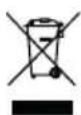
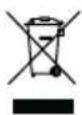
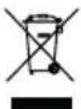
Remove the battery before main- tenance work. Use eye protection Use hearing protection Use protective gloves Use respiratory protection Direction of rotation (Clamping screw) Direction of rotation (Cutting disc) Waste electrical and electronic equipment (WEEE) must not be dis- posed of with domestic waste. Symbols on the accessories Read the instruction manual Use eye protection Use hearing protection Use protective gloves Use respiratory protection Use foot protection Do not use for side grinding metal Do not use for wet grinding Do not use defective discs. General Power Tool Safety Warnings WARNING! Read all safety warnings, instructions, illustra- tions and specifications provided with this power tool. Failure to follow all instructions listed below may result in electric shock, fire and/or serious injury. Save all warnings and instructions for future reference. The term “power tool” in the warnings refers to your mains-operated (corded) power tool or battery-operated (cordless) power tool.

a) Keep work area clean and well lit. Cluttered or dark areas invite acci- dents. b) Do not operate power tools in explosive atmospheres, such as in the presence of flam- mable liquids, gases or dust. Power tools create sparks which may ignite the dust or fumes. c) Keep children and bystanders away while operating a power tool. Distractions can cause you to lose control.

2. ELECTRICAL SAFETY

a) Power tool plugs must match the outlet. Never modify the plug in any way. Do not use any adapter plugs with earthed (grounded) power tools. Unmodified plugs and match- ing outlets will reduce risk of electric shock. b) Avoid body contact with earthed or grounded sur- faces, such as pipes, radiators, ranges and refrigerators. There is an increased risk of electric shock if your body is earthed or grounded.GB

c) Do not expose power tools to rain or wet conditions. Water en- tering a power tool will increase the risk of electric shock. d) Do not abuse the cord. Nev- er use the cord for carrying, pulling or unplugging the power tool. Keep cord away from heat, oil, sharp edges or moving parts. Damaged or en- tangled cords increase the risk of elec- tric shock. e) When operating a power tool outdoors, use an extension cord suitable for outdoor use. Use of a cord suitable for outdoor use reduces the risk of electric shock. f) If operating a power tool in a damp location is unavoidable, use a residual current device (RCD) protected supply. Use of an RCD reduces the risk of electric shock.

a) Stay alert, watch what you are doing and use common sense when operating a power tool. Do not use a power tool while you are tired or under the influ- ence of drugs, alcohol or medic- ation. A moment of inattention while operating power tools may result in serious personal injury. b) Use personal protective equip- ment. Always wear eye protec- tion. Protective equipment such as a dust mask, non-skid safety shoes, hard hat or hearing protection used for ap- propriate conditions will reduce per- sonal injuries. c) Prevent unintentional starting. Ensure the switch is in the off- position before connecting to power source and/or battery pack, picking up or carrying the tool. Carrying power tools with your finger on the switch or energising power tools that have the switch on in- vites accidents. d) Remove any adjusting key or wrench before turning the power tool on. A wrench or a key left attached to a rotating part of the power tool may result in personal in- jury. e) Do not overreach. Keep prop- er footing and balance at all times. This enables better control of the power tool in unexpected situ- ations. f) Dress properly. Do not wear loose clothing or jewellery. Keep your hair and clothing away from moving parts. Loose clothes, jewellery or long hair can be caught in moving parts. g) If devices are provided for the connection of dust extraction and collection facilities, ensure these are connected and prop- erly used. Use of dust collection can reduce dust-related hazards. h) Do not let familiarity gained from frequent use of tools al- low you to become complacent and ignore tool safety prin- ciples. A careless action can cause severe injury within a fraction of a second.

4. POWER TOOL USE AND CARE

a) Do not force the power tool. Use the correct power tool for your application. The correct power tool will do the job better and safer at the rate for which it was de- signed. b) Do not use the power tool if the switch does not turn it on andGB

off. Any power tool that cannot be controlled with the switch is dangerous and must be repaired. c) Disconnect the plug from the power source and/or remove the battery pack, if detach- able, from the power tool be- fore making any adjustments, changing accessories, or stor- ing power tools. Such preventive safety measures reduce the risk of start- ing the power tool accidentally. d) Store idle power tools out of the reach of children and do not allow persons unfamiliar with the power tool or these in- structions to operate the power tool. Power tools are dangerous in the hands of untrained users. e) Maintain power tools and ac- cessories. Check for misalign- ment or binding of moving parts, breakage of parts and any other condition that may affect the power tool’s oper- ation. If damaged, have the power tool repaired before use. Many accidents are caused by poorly maintained power tools. f) Keep cutting tools sharp and clean. Properly maintained cutting tools with sharp cutting edges are less likely to bind and are easier to control. g) Use the power tool, accessories and tool bits etc. in accordance with these instructions, taking into account the working con- ditions and the work to be per- formed. Use of the power tool for operations different from those inten- ded could result in a hazardous situ- ation. h) Keep handles and grasping surfaces dry, clean and free from oil and grease. Slippery handles and grasping surfaces do not allow for safe handling and control of the tool in unexpected situations.

5. BATTERY TOOL USE AND CARE

a) Recharge only with the charger specified by the manufacturer. A charger that is suitable for one type of battery pack may create a risk of fire when used with another battery pack. b) Use power tools only with spe- cifically designated battery packs. Use of any other battery packs may create a risk of injury and fire. c) When battery pack is not in use, keep it away from other metal objects, like paper clips, coins, keys, nails, screws or other small metal objects, that can make a connection from one terminal to another. Short- ing the battery terminals together may cause burns or a fire. d) Under abusive conditions, li- quid may be ejected from the battery; avoid contact. If con- tact accidentally occurs, flush with water. If liquid contacts eyes, additionally seek medical help. Liquid ejected from the battery may cause irritation or burns. e) Do not use a battery pack or tool that is damaged or modi- fied. Damaged or modified batteries may exhibit unpredictable behaviour resulting in fire, explosion or risk of in- jury. f) Do not expose a battery pack or tool to fire or excessive tem- perature. Exposure to fire or temper- ature above 130°C may cause explo- sion.GB

g) Follow all charging instructions and do not charge the battery pack or tool outside the tem- perature range specified in the instructions. Charging improperly or at temperatures outside the spe- cified range may damage the battery and increase the risk of fire.

a) Have your power tool serviced by a qualified repair person us- ing only identical replacement parts. This will ensure that the safety of the power tool is maintained. b) Never service damaged bat- tery packs. Service of battery packs should only be performed by the man- ufacturer or authorized service pro- viders. Safety information for angle grinders Safety warnings common for grinding and cutting-off operations

  • This power tool is intended to function as a grinder and or cut- off tool. Read all safety warn- ings, instructions, illustrations and specifications provided with this power tool. Failure to fol- low all instructions listed below may result in electric shock, fire and/or seri- ous injury.
  • Operations such as sanding, wire brushing, polishing or hole cutting are not to be performed with this power tool. Operations for which the power tool was not de- signed may create a hazard and cause personal injury.
  • Do not convert this power tool to operate in a way which is not specifically designed and specified by the tool manufac- turer. Such a conversion may result in a loss of control and cause serious per- sonal injury.
  • Do not use accessories which are not specifically designed and specified by the tool manu- facturer. Just because the accessory can be attached to your power tool, it does not assure safe operation.
  • The rated speed of the access- ory must be at least equal to the maximum speed marked on the power tool. Accessories run- ning faster than their rated speed can break and fly apart.
  • The outside diameter and the thickness of your accessory must be within the capacity rat- ing of your power tool. Incor- rectly sized accessories cannot be ad- equately guarded or controlled.
  • The dimensions of the access- ory mounting must fit the di- mensions of the mounting hard- ware of the power tool. Ac- cessories that do not match the mount- ing hardware of the power tool will run out of balance, vibrate excessively and may cause loss of control.
  • Do not use a damaged access- ory. Before each use inspect the accessory such as abrasive wheels for chips and cracks, backing pad for cracks, tear or excess wear, wire brush for loose or cracked wires. If power tool or accessory is dropped, inspect for damage or install an undamaged ac- cessory. After inspecting and in- stalling an accessory, position yourself and bystanders away from the plane of the rotatingGB

accessory and run the power tool at maximum no-load speed for one minute. Damaged accessor- ies will normally break apart during this test time.

  • Wear personal protective equipment. Depending on ap- plication, use face shield, safety goggles or safety glasses. As appropriate, wear dust mask, hearing protectors, gloves and workshop apron capable of stopping small abrasive or workpiece fragments. The eye protection must be capable of stopping flying debris generated by various ap- plications. The dust mask or respirator must be capable of filtrating particles generated by the particular applica- tion. Prolonged exposure to high intens- ity noise may cause hearing loss.
  • Keep bystanders a safe dis- tance away from work area. Anyone entering the work area must wear personal protective equipment. Fragments of workpiece or of a broken accessory may fly away and cause injury beyond immediate area of operation.
  • Hold the power tool by insu- lated gripping surfaces only, when performing an opera- tion where the cutting access- ory may contact hidden wiring. Cutting accessories contacting a “live” wire may make exposed metal parts of the power tool “live” and could give the operator an electric shock.
  • Position the cord clear of the spinning accessory. If you lose control, the cord may be cut or snagged and your hand or arm may be pulled into the spinning accessory.
  • Never lay the power tool down until the accessory has come to a complete stop. The spinning ac- cessory may grab the surface and pull the power tool out of your control.
  • Do not run the power tool while carrying it at your side. Accident- al contact with the spinning accessory could snag your clothing, pulling the accessory into your body.
  • Regularly clean the power tool’s air vents. The motor’s fan will draw the dust inside the housing and excessive accumulation of powdered metal may cause electrical hazards.
  • Do not operate the power tool near flammable materials. Sparks could ignite these materials.
  • Do not use accessories that re- quire liquid coolants. Using wa- ter or other liquid coolants may result in electrocution or shock. Kickback and related warnings Kickback is a sudden reaction to a pinched or snagged rotating wheel, back- ing pad, brush or any other accessory. Pinching or snagging causes rapid stalling of the rotating accessory which in turn causes the uncontrolled power tool to be forced in the direction opposite of the accessory’s rotation at the point of the binding. For example, if an abrasive wheel is snagged or pinched by the workpiece, the edge of the wheel that is entering into the pinch point can dig into the surface of the material causing the wheel to climb out or kick out. The wheel may either jump to- ward or away from the operator, depend- ing on direction of the wheel’s movement at the point of pinching. Abrasive wheels may also break under these conditions. Kickback is the result of power tool misuse and/or incorrect operating procedures orGB

conditions and can be avoided by taking proper precautions as given below.

  • Maintain a firm grip with both hands on the power tool and position your body and arms to allow you to resist kickback forces. Always use auxiliary handle, if provided, for max- imum control over kickback or torque reaction during start-up. The operator can control torque reac- tions or kickback forces, if proper pre- cautions are taken.
  • Never place your hand near the rotating accessory. Accessory may kickback over your hand.
  • Do not position your body in the area where power tool will move if kickback occurs. Kick- back will propel the tool in direction opposite to the wheel’s movement at the point of snagging.
  • Use special care when work- ing corners, sharp edges, etc. Avoid bouncing and snagging the accessory. Corners, sharp edges or bouncing have a tendency to snag the rotating accessory and cause loss of control or kickback.
  • Do not attach a saw chain woodcarving blade, segmen- ted diamond wheel with a peri- pheral gap greater than 10 mm or toothed saw blade. Such blades create frequent kickback and loss of control. Safety warnings specific for grinding and cutting-off operations
  • Use only wheel types that are specified for your power tool and the specific guard designed for the selected wheel. Wheels for which the power tool was not de- signed cannot be adequately guarded and are unsafe.
  • The grinding surface of centre depressed wheels must be mounted below the plane of the guard lip. An improperly moun- ted wheel that projects through the plane of the guard lip cannot be ad- equately protected.
  • The guard must be securely attached to the power tool and positioned for maximum safety, so the least amount of wheel is exposed towards the operator. The guard helps to protect the operator from broken wheel frag- ments, accidental contact with wheel and sparks that could ignite clothing.
  • Wheels must be used only for specified applications. For ex- ample: do not grind with the side of cut-off wheel. Abrasive cut- off wheels are intended for peripheral grinding, side forces applied to these wheels may cause them to shatter.
  • Always use undamaged wheel flanges that are of correct size and shape for your selected wheel. Proper wheel flanges support the wheel thus reducing the possibility of wheel breakage. Flanges for cut-off wheels may be different from grinding wheel flanges.
  • Do not use worn down wheels from larger power tools. A wheel intended for larger power tool is not suitable for the higher speed of a smal- ler tool and may burst.
  • When using dual purpose wheels always use the correct guard for the application being performed. Failure to use the cor- rect guard may not provide the desiredGB

level of guarding, which could lead to serious injury. Additional safety warnings specific for cutting-off operations

  • Do not “jam” the cut-off wheel or apply excessive pressure. Do not attempt to make an excess- ive depth of cut. Overstressing the wheel increases the loading and sus- ceptibility to twisting or binding of the wheel in the cut and the possibility of kickback or wheel breakage.
  • Do not position your body in line with and behind the rotat- ing wheel. When the wheel, at the point of operation, is moving away from your body, the possible kickback may propel the spinning wheel and the power tool directly at you.
  • When the wheel is binding or when interrupting a cut for any reason, switch off the power tool and hold it motionless un- til the wheel comes to a com- plete stop. Never attempt to remove the cut-off wheel from the cut while the wheel is in mo- tion otherwise kickback may occur. Investigate and take corrective action to eliminate the cause of wheel binding.
  • Do not restart the cutting op- eration in the workpiece. Let the wheel reach full speed and carefully re-enter the cut. The wheel may bind, walk up or kickback if the power tool is restarted in the work- piece.
  • Support panels or any over- sized workpiece to minimize the risk of wheel pinching and kickback. Large workpieces tend to sag under their own weight. Supports must be placed under the workpiece near the line of cut and near the edge of the workpiece on both sides of the wheel.
  • Use extra caution when mak- ing a “pocket cut” into existing walls or other blind areas. The protruding wheel may cut gas or water pipes, electrical wiring or objects that can cause kickback.
  • Do not attempt to do curved cutting. Overstressing the wheel in- creases the loading and susceptibility to twisting or binding of the wheel in the cut and the possibility of kickback or wheel breakage, which can lead to serious injury. Additional safety instructions
  • Never keep the fingers between the grinding disc and spark protection or in close proximity to the guard covers. There is a risk of crushing.
  • The rotating parts of the device cannot be covered due to functional reasons. Therefore, proceed cautiously and se- cure the workpiece in order to avoid slipping which could cause your hands to come into contact with the grinding disc.
  • The workpiece becomes hot during grinding. Do not touch the machined area, allow it to cool down. There is a risk of burns. Do not use coolants or the like.
  • Do not work with the device if you are tired or have consumed alcohol or tab- lets. Always have a break on time.
  • Switch off the device and remove the battery (9). Make sure that all moving parts have come to a complete stop:
  • to loosen a blocked insertion tool
  • in case of unusual soundsGB
  • before checking the device, clean- ing it or performing maintenance work on it
  • Only use accessories recom- mended by PARKSIDE. Unsuitable accessories may cause electric shock or fire. Residual risks There will always be residual risks even if you operate this power tool according to the instructions. The following hazards may occur in connection with the type and design of this power tool:
  • Eye damage if no suitable eye protec- tion is worn.
  • Lung damage if suitable respiratory protection is not worn.
  • Hearing damage if suitable ear protec- tion is not worn.
  • Health injuries resulting from the effect of hand/arm vibration in the event that the tool is used over a longer period of time or is not used and maintained properly.
  • Damage to health as a result of:
  • touching the area of the grinding tool which is not covered;
  • ejection of parts of workpieces or damaged grinding discs. WARNING! Danger due to electro- magnetic field generated while the tool is in operation. Under certain circumstances, this field may negatively affect active or passive medical implants. In order to re- duce the danger of serious or fatal injur- ies, we recommend that individuals who wear medical implants should consult their doctor and the manufacturer of the im- plant before operating the machine. Preparation WARNING! Risk of injury due to unintentional start-up. Only insert the re- chargeable battery into the device once the device is fully prepared for use. Control elements Familiarise yourself with the operating ele- ments before using the device for the first time.
  • Locks the spindle when attaching/ removing the attachment tool.
  • Switching on: Press down and push forward
  • Lock: Tilt down in front
  • Switching off: Release; if locked: press at the back Attaching and removing the attachment tool Notes
  • DANGER! Risk of injury! Only use attachment tools recommended by the manufacturer.
  • Cutting and grinding discs
  • Only use undamaged attachment tools. Tools required
  • Hex key (14) Procedure (Fig.A)

1. Press and hold the spindle lock

2. Loosen the clamping screw (15) with

the hex key (14). You can release the spindle lock (4).

3. Removing attachments: Remove

the attachment tool from the mounting flange (19).GB

Fitting attachments: Place the at- tachment tool on the mounting flange (19). The label on the cutting/grinding disc should always face the tool. The run- ning direction of the disc must match the direction of rotation arrow (3).

4. Position the clamping flange (16).

The side with the marking on the clamping flange must be visible.

5. Press and hold the spindle lock

6. Tighten the clamping screw (15) with

the hex key (14). You can release the spindle lock (4). Fitting and removing the attachment on the guard cover Notes

  • Always and only use the guard cover with attachment for abrasive cutting. In other applications, the attachment and work-piece may interfere with each oth- er, resulting in insufficient control. Requirements
  • Battery removed from device Fitting the attachment (1) (Fig.B)

1. Disassemble the attachment tool.

2. Place the attachment (1) on the guard

cover (18) and turn the attachment (1) until it audibly clicks into place. Removing the attachment (1) (Fig.B)

1. Release one of the two locks (2) on the

attachment (1) by pushing the lock (2) outwards.

2. Slide the released lock (2) over the

guard cover (18) until the attachment is removed after half a turn. Checking the battery charge level LEDsMeaning red, orange, greenBattery charged red, orangeBattery partially charged redBattery needs to be charged

1. Press the button (7) next to the charge

level indicator button (8) on the battery (9). The LEDs of the charge level indicator show how much charge remains in the battery.

2. Charge the battery (9) when only the

red LED on the charge level indicator (8) is illuminated. Charging the battery See also the charger instruction manual. Notes

  • If warm, allow the battery to cool be- fore charging.
  • Do not expose the battery to direct sun- light for long periods and do not place it on a radiator (max. 50°C). Charging the battery

1. Remove the battery (9) from the

2. Push the battery (9) into the charging

slot of the battery charger (12).

3. Connect the battery charger (12) to a

4. After charging, disconnect the battery

charger (12) from the mains.

5. Pull the battery (9) out of the battery

Control LEDs on the charger (12): greenredMeaning lights up—• Battery is fully charged

  • stand-by (No battery inserted) —lights upBattery is charging —flashesBattery is over- heated flashesflashesBattery is defective Operation Working instructions
  • WARNING! Risk of injury! If pos- sible, use clamps to hold the workpiece in place. Never hold a small workpiece in one hand and the device in the other while using the device.

DANGER! Risk of injury! Ensure that you have sufficient space in which to work, and that you do not endanger other people.

  • Adjust the guard cover such that any sparks or detached parts cannot hit either the user or any bystanders. The guard cover must also be posi- tioned such that the sparks cannot ig- nite combustible parts, including those in the surroundings.
  • The power tool must not be used with a cutting stand.
  • Only switch on the device when the at- tachment tool is not touching the work- piece.
  • Excessive pressure reduces the perform- ance of the power tool and leads to faster wear of the attachment tool.
  • Always work in the counter-direction. This ensures that the device is not pushed out of the cut through lack of control. The direction of rotation arrow (3) sym- bolises the running direction of the at- tachment tool.
  • After a heavy load, let the device idle for a few minutes to cool down the at- tachment tool.
  • Do not touch the attachment tool until it has cooled down. Abrasive cutting Requirements
  • Cutting disc NOTICE! Property damage. Never use a roughing disc for cutting!
  • Cutting disk types: diamond stud- ded, bonded reinforced, segmented
  • Attachment (1) mounted on guard cov- er (18) Notes
  • In general, work with a low feed rate. Exert only moderate pressure on the work-piece. Information on building statics Slits in structural walls are subject to the country-specific regulations. These regula- tions must be observed without fail. Before beginning work you should ask the structural engineer, architect or relevant construction supervisor for advice. Roughing Requirements
  • Roughing wheel NOTICE! Property damage. Never use a cutting disc for roughing!
  • Guard cover without attachment WARNING! Risk of injury due to loss of control. Remove the attachment (1) of the guard cover (18) to avoid bumping the work-piece.GB
  • In general, work with a low feed rate. Exert only moderate pressure on the work-piece.
  • A working angle of 30° to 40° achieves the best results for roughing. Inserting and removing the battery WARNING! Risk of injury due to unintentional start-up. Only insert the re- chargeable battery into the device once the device is fully prepared for use. NOTICE! Risk of damage! An incorrect battery can damage the device and bat- tery. Inserting the battery

1. Push the battery (9) along the guide in-

to the battery holder (11). You will hear the battery click into place. Removing the battery

1. Press and hold the battery release (10)

2. Pull the battery out of the battery hold-

2. Hold the unit by the handle (6) with

one hand while turning the guard cov- er (18) to the working position with the other. Adjust the guard cover (18) so that any sparks or detached parts cannot hit either the user or any bystanders. Position the guard cover (18) so that the sparks do not ignite any combust- ible parts, including those in the sur- roundings. Switching on and off Switching on

1. DANGER! Risk of injury! The

device must only be operated with the guard cover (18) fitted. Adjust the guard cover (18) so that any sparks or detached parts cannot hit either the user or any bystanders.

2. Press the on/off switch (5) down and

slide the on/off switch (5) forward.

3. Lock the on/off switch (5): Tilt the on/

off switch (5) upwards.

4. Check that the attachment tool is run-

ning smoothly. If not: Replace the at- tachment tool.

5. Wait until the device has reached full

rotational speed. Due to the intelligent energy manage- ment system, the motor starts after a delay (soft start/Softstart).

6. Guide the attachment tool against the

workpiece. Switching off

1. Remove the attachment tool from the

2. Slide the on/off switch (5) to the rear.

3. Wait until the power tool has stopped

before placing it down.

4. Remove the rechargeable battery (9)

from the device if you are leaving the device unattended or if you have fin- ished working. Transport Information on transporting the device:

  • Switch off the device and remove the battery (9). Make sure that all moving parts have come to a complete stop.
  • Remove the attachment tool.
  • Always carry the device by the handle (6).GB

Cleaning, maintenance and storage WARNING! Risk of injury due to un- intentional start-up. Protect yourself when performing maintenance or cleaning work. Switch off the device and remove the bat- tery (9). You should have any repair and mainten- ance work that is not described in these instructions carried out by our Service Centre. Only use original replacement parts. Cleaning Cleaning WARNING! Electric shock! Never spray down the device with water. NOTICE! Risk of damage. Chemical sub- stances may attack the plastic parts of the machine. Do not use any cleaning agents or solvents.

  • Keep the ventilation slits, motor housing and handles of the machine clean. Use a damp cloth or brush to do this. Maintenance The device is maintenance free. Storage Always store the device and accessories:
  • protected against dust
  • out of the reach of children The storage temperature for the re- chargeable battery and the device is between 0°C and 45°C. Avoid extreme cold or heat during storage to ensure the battery output is not adversely affected. Remove the rechargeable battery from the device before storing the device (see the separate operating instructions for the bat- tery and charger). Storing cutting/grinding discs
  • unstacked Troubleshooting The following table will assist you in fixing faults: ProblemPossible causeError correction Rechargeable battery (9) not inserted Inserting the battery, p.41 On/Off switch (5) is brokencontact the service centre. Rechargeable battery (9) dis- charged Charging the battery, p.39 Device does not start Defective motorcontact the service centre.GB

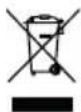
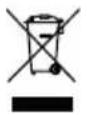
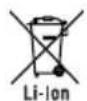
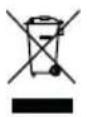
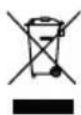
ProblemPossible causeError correction Clamping screw (15) looseTighten the clamping screw (15), Attaching and removing the attachment tool, p.38 Attachment tool does not move although motor is run- ning Workpiece, workpiece rem- nants or remnants of attach- ment tools blocking the drive Remove blockages Reduce pressure on attach- ment tool Engine is slowing down and stops Device is overloaded through workpiece Workpiece unsuitable Clamping screw (15) looseTighten the clamping screw (15), Attaching and removing the attachment tool, p.38 Attachment tool does not rotate smoothly, abnormal noises can be heard Attachment tool defectiveChange grinding disc Device works with interrup- tions Internal loose contact On/Off switch (5) is broken contact the service centre. Disposal/ environmental protection Remove the battery from the device and recycle the device, battery, accessories and packaging in an environmentally- friendly manner. Waste electrical and electronic equipment (WEEE) must not be disposed of with domestic waste. The symbol of the crossed-out wheeled bin means that this product must not be dis- posed of as unsorted municipal waste at the end of its useful life. Directive 2012/19/EU on waste electrical and electronic equip- ment: Consumers are legally obliged to recycle electrical and electronic equipment in an environmentally sound manner at the end of its life. In this way, environmentally friendly and resource-saving recycling is ensured. Depending on the implementation in na- tional law, you may have the following op- tions:

  • Hand over to an official collection point,
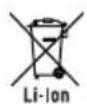
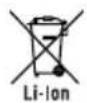
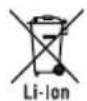
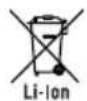
  • Return to the manufacturer/distributor. This does not affect accessories enclosed with the old devices or tools without any electrical components. Disposal instructions for rechargeable batteries Do not throw batteries into domest- ic waste, fire (risk of explosion) or water. Damaged batteries can harm the environment and your health if poisonous fumes or liquids escape.GB

Dispose of the batteries according to local standards. Defective or used bat- teries must be recycled in accordance with Directive 2006/66/EC. Hand in the batteries at a used battery collection point where they are recycled in an environmentally friendly manner. For more information, please contact your local waste management provider or our service centre. Dispose of batteries in a discharged state. We recommend covering the contacts with an adhesive strip to protect against short circuits. Do not open the battery. Service Guarantee Dear Customer, This product is provided with a 3 year guarantee from the date of purchase. In case of defects, you have statutory rights against the seller of the product. These statutory rights are not restricted by our guarantee presented below. Terms of Guarantee The guarantee period begins on the date of purchase. Please retain the original re- ceipt. This document is required as proof of purchase. If a material or manufacturing defect oc- curs within three years of the date of pur- chase of this product, we will repair or replace – at our choice – the product for you free of charge. This guarantee re- quires the defective product and proof of purchase to be presented within the three- year period with a brief written description of what constitutes the defect and when it occurred. If the defect is covered by our guaran- tee, you will receive either the repaired product or a new product. No new guar- antee period begins on repair or replace- ment of the product. Guarantee Period and Statutory Claims for Defects The guarantee period is not extended by the guarantee service. This also applies for replaced or repaired parts. Any dam- ages and defects already present at the time of purchase must be reported imme- diately after unpacking. Repairs arising after expiry of the guarantee period are chargeable. Guarantee Cover The product has been carefully produced in accordance with strict quality guidelines and conscientiously checked prior to deliv- ery. The guarantee applies for all material and manufacturing defects. This guarantee does not extend to cover product parts that are subject to normal wear and may therefore be considered as wearing parts (e.g. Cutting disc) or to cover damage to breakable parts. This guarantee shall be invalid if the product has been damaged, used incor- rectly or not maintained. Precise adher- ence to all of the instructions specified in the operating manual is required for prop- er use of the product. Intended uses and actions against which the operating manu- al advises or warns must be categorically avoided. The product is designed only for private and not commercial use. The guarantee will be invalidated in case of misuse or im- proper handling, use of force, or interven- tions not undertaken by our authorised ser- vice branch.GB

Processing in Case of Guarantee To ensure efficient handling of your query, please follow the directions below:

  • Please have the receipt and identific- ation number (IAN449842_2310) ready as proof of purchase for all en- quiries.
  • Please find the item number on the rat- ing plate.
  • Should functional errors or other de- fects occur, please initially contact the service department specified below by telephone or by e-mail. You will then receive further information on the processing of your complaint.
  • After consultation with our customer service, a product recorded as defect- ive can be sent postage paid to the service address communicated to you, with the proof of purchase (receipt) and specification of what constitutes the defect and when it occurred. In or- der to avoid acceptance problems and additional costs, please be sure to use only the address communicated to you. Ensure that the consignment is not sent carriage forward or by bulky goods, express or other special freight. Please send the appliance inc. all accessories supplied at the time of purchase and ensure adequate, safe transport pack- aging. Repair service For repairs that are not covered by warranty , contact the service centre. They will gladly create a cost estimate for you.
  • We can only work on devices which are sent in properly packed and with postage paid. Note: Please send your device cleaned and with an indication of the defect to the address named for the service centre.
  • The following are not accepted: devices sent in without prepaid post- age, sent as bulky goods, sent as an Express shipment, or devices sent as any other form of special freight.
  • We will dispose of defective devices you ship to us free of charge. Service Centre

Spare parts and accessories You can get spare parts and accessories from www.grizzlytools.shop. If you have any problems with your order, contact us via our online shop. If you have any other questions, contact the Service Centre, p.45 Pos. nr.NameOrder No. 15, 16Clamping screw, Clamping flange91110347 17Cutting disc (metal)91110348 Translation of the original EC declaration of conformity Product: Cordless Angle Grinder Model: PWSAM 20-Li B2 Serial number: 000001–125000 The object of the declaration described above is in conformity with the relevant Union harmonisation legislation: 2006/42/EC • 2014/30/EU • 2011/65/EU &(EU)2015/863 Product with battery SmartPAPS204 A1/ SmartPAPS208 A1: 2014/53/EU The object of the declaration described above is in conformity with Directive 2011/65/EU of the European Parliament and of the Council of 8 June 2011 on the restriction of the use of certain hazardous substances in electrical and electronic equipment. To ensure conformity, the following harmonised standards and national standards and regulations have been applied: EN 62841-1:2015/A11:2022 •EN IEC 62841-2-3:2021/A11:2021 EN IEC 55014-1:2021 •EN IEC 55014-2:2021 •EN IEC 63000:2018 Product with battery SmartPAPS204 A1/SmartPAPS208 A1: EN 301 489-1 V2.2.3:2019 •Draft EN 301 489-17 V3.2.6:2023 EN 300 328 V2.2.2:2019 •EN 50663:2017 This declaration of conformity is issued under the sole responsibility of the manufacturer: Grizzly Tools GmbH & Co. KG Stockstädter Str. 20 63762 Großostheim GERMANY

Christian Frank Authorised representative of documentationFR