EasyManual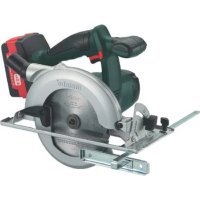
KSA 18 LTX - Saw METABO - Free user manual and instructions
Find the device manual for free KSA 18 LTX METABO in PDF.



User questions about KSA 18 LTX METABO
0 question about this device. Answer the ones you know or ask your own.
Ask a new question about this device
Download the instructions for your Saw in PDF format for free! Find your manual KSA 18 LTX - METABO and take your electronic device back in hand. On this page are published all the documents necessary for the use of your device. KSA 18 LTX by METABO.
USER MANUAL KSA 18 LTX METABO
Original instructions We declare under our sole responsibility: These cordless circular saws, identified by type and serial number *1), comply with all relevant requirements of the directives *2) and standards *3). Technical file at *4) - see page 3. This machine is suitable for sawing wood, plastics and other similar materials. The machine is not designed for plunge cuts. The user bears sole responsibility for damage caused by improper use. Generally accepted accident prevention regulations and the enclosed safety information must be observed. WARNING – Reading the operating instructions will reduce the risk of injury. WARNING Read all safety warnings and instructions. Failure to follow all safety warnings and instructions may result in electric shock, fire and/or serious injury. Keep all safety instructions and information for future reference. Before using the power tool, carefully read through and familiarise yourself with all the enclosed safety information and the Operating Instructions. Keep all enclosed documentation for future reference, and pass on your power tool only together with this documentation. For your own protection and for the protection of your power tool pay attention to all parts of the text that are marked with this symbol! Cutting procedure
DANGER: Keep hands away from cutting
area and the blade. Keep your second hand on auxiliary handle, or motor housing. If both hands are holding the saw, they cannot be cut by the blade.
Do not reach underneath the workpiece. The safety guard cannot protect you from the blade below the workpiece.
Adjust the cutting depth to the thickness of the workpiece. Less than a full tooth of the blade teeth should be visible below the workpiece.
Never hold piece being cut in your hands or across your leg. Secure the workpiece to a stable platform. It is important to support the work properly to minimise body exposure, blade binding, or loss of control.
Hold the power tool by insulated gripping surfaces only, when performing an operation where the cutting tool may contact hidden wiring. Contact with a "live" wire will also make exposed metal parts of the power tool "live" and could give the operator an electric shock.
When ripping, always use a rip fence or straight edge guide. This improves the accuracy of cut and reduces the chance of blade binding.
Always use blades with correct size and shape (diamond versus round) of arbour holes. Blades that do not match the mounting hardware of the saw will run eccentrically, causing loss of control.
Never use damaged or incorrect blade washers or bolt. The blade washers and bolt were specially designed for your saw, for optimum performance and safety of operation. Kickback causes and related warnings - kickback is a sudden reaction to a pinched, bound or misaligned saw blade, causing an uncontrolled saw to lift up and out of the workpiece toward the operator; - when the blade is pinched or bound tightly by the kerf closing down, the blade stalls and the motor reaction drives the unit rapidly back toward the operator; - if the blade becomes twisted or misaligned in the cut, the teeth at the back edge of the blade can dig into the top surface of the wood causing the blade to climb out of the kerf and jump back toward the operator. Kickback is the result of saw misuse and/or incorrect operating procedures or conditions and and can be avoided by taking proper precautions as given below.
Maintain a firm grip with both hands on the saw and position your arms to resist kickback forces. Position your body to either side of the blade, but not in line with the blade. Kickback could cause the saw to jump backwards, but kickback forces can be controlled by the operator, if proper precautions are taken.
When blade is binding, or when interrupting a cut for any reason, release the trigger and hold the saw motionless in the material until the blade comes to a complete stop. Never attempt to remove the saw from the work or pull the saw backward while the blade is in motion or kickback may occur. Investigate and take corrective actions to eliminate the cause of blade binding.
When restarting a saw in the workpiece, centre the saw blade in the kerf and check that saw teeth are not engaged into the material. If the saw blade is binding, it may walk up or kickback from the workpiece as the saw is restarted.
Support large panels to minimise the risk of blade pinching and kickback. Large panels tend to sag under their own weight. Supports must be placed under the panel on both sides, near the line of cut and near the edge of the panel.
3. General Safety Instructions
Do not use dull or damaged blades. Unsharpened or improperly set blades produce narrow kerf causing excessive friction, blade binding and kickback.
Blade depth and bevel adjusting locking levers must be tight and secure before making cut. If blade adjustment shifts while cutting, it may cause binding and kickback.
Use extra caution when sawing into existing walls or other blind areas. The protruding blade may cut objects that can cause kickback. Lower guard function
Check lower guard for proper closing before each use. Do not operate the saw if lower guard does not move freely and close instantly. Never clamp or tie the lower guard into the open position. If the saw is accidentally dropped, lower safety guard may be bent. Raise the lower guard with the retracting handle (25)and make sure it moves freely and does not touch the blade or any other part, in all angles and depths of cut.
Check the operation of the lower safety guard spring. If the safety guard and the spring are not operating properly, they must be serviced before use. Lower safety guard may operate sluggishly due to damaged parts, gummy deposits, or a build-up of debris.
Lower guard may be retracted manually only for special cuts such as "plunge cuts" and "compound cuts". Raise lower guard by retracting handle (25) and as soon as blade enters the material, the lower guard must be released. For all other sawing, the lower guard should operate automatically.
Always observe that the lower safety guard is covering the blade before placing saw down on bench or floor. An unprotected, coasting blade will cause the saw to walk backwards, cutting whatever is in its path. Be aware of the time it takes for the blade to stop after switch is released. Do not use grinding wheels. Keep hands away from the rotating tool! Remove chips and similar material only with the machine at standstill. Wear ear protectors. Wear protective goggles. Press the spindle locking button only when the motor is at a standstill. Do not reduce the speed of the saw blade by pressing on the sides. The movable safety guard must not be clamped in the pulled-back position for sawing. The movable safety guard must move freely, automatically, easily and exactly back into its end position. When sawing materials that generate large quantities of dust, the machine must be cleaned regularly. Make sure that the safety appliances, e.g. the movable safety guard, are in perfect working order. Materials that generate dusts or vapours that may be harmful to health (e.g. asbestos) must not be processed. Check the workpiece for foreign bodies. When working, always make sure that no nails or other similar materials are being sawed into. If the saw blade blocks, turn the motor off immediately. Do not try to saw extremely small workpieces. During machining, the workpiece must be firmly supported and secured against moving. Reducing dust exposure: WARNING - Some dust created by power sanding, sawing, grinding, drilling, and other construction activities contains chemicals known to cause cancer, birth defects or other reproductive harm. Some examples of these chemicals are: - Lead from lead-based paints, - Crystalline silica from bricks and cement and other masonry products, and - Arsenic and chromium from chemically treated lumber. Your risk from these exposures varies, depending on how often you do this type of work. To reduce your exposure to these chemicals: work in a well ventilated area, and work with approved safety equipment, such as those dust masks that are specially designed to filter out microscopic particles. This also applies to dust from other materials such as some timber types (like oak or beech dust), metals, asbestos. Other known diseases are e.g. allergic reactions, respiratory diseases. Do not let dust enter the body. Observe the relevant guidelines and national regulations for your material, staff, application and place of application (e.g. occupational health and safety regulations, disposal). Collect the particles generated at the source, avoid deposits in the surrounding area. Use suitable accessories for special work. In this way, fewer particles enter the environment in an uncontrolled manner. Use a suitable extraction unit. Reduce dust exposure with the following measures: - do not direct the escaping particles and the exhaust air stream at yourself or nearby persons or on dust deposits, - use an extraction unit and/or air purifiers, - ensure good ventilation of the workplace and keep clean using a vacuum cleaner. Sweeping or blowing stirs up dust. - Vacuum or wash the protective clothing. Do not blow, beat or brush. Clean gummy or glue-contaminated saw blades. Contaminated saw blades cause increased friction, jamming of the saw blade and increase the risk of back-kicks. Avoid overheating of the saw tooth tips. Avoid melting of the material when sawing plastic. Use a saw blade that is suitable for the material being sawn.ENGLISH en
Protect battery packs from water and moisture! Do not use faulty or deformed battery packs! Do not expose battery packs to naked flame! Do not open battery packs! Do not touch or short-circuit battery packs! Remove the battery pack from the machine when not in use. Remove the battery pack from the machine before any adjustment or maintenance is carried out. Before fitting the battery pack, make sure that the machine is switched off. Slightly acidic, flammable fluid may leak from defective Li-ion battery packs! If battery fluid leaks out and comes into contact with your skin, rinse immediately with plenty of water. If battery fluid leaks out and comes into contact with your eyes, wash them with clean water and seek medical treatment immediately. LED working light (8) : Do not observe the LED radiation directly with optical instruments. See page 2. 1 Scale (diagonal cut angle) 2 Locking screw (diagonal cuts) 3 Spindle locking button 4Locking button 5Trigger switch 6 Connector (extraction connection piece / dust ejection) 7Guide plate 8LED lights 9 Parallel stop 10 Cutting indicator 11 Locking screw (parallel guide) 12 Battery pack 13 Battery pack release 14 Depot for hexagon wrench 15 Hexagon spanner 16 Adjusting screw (adjust saw blade angle) 17 Lock nut (adjust saw blade angle) 18 Scale (depth of cut) 19 Locking screw (depth of cut) 20 Saw blade fixing screw 21 Outer saw blade flange 22 Saw blade 23 Movable safety guard 24 Inner saw blade flange 25 Lever (swivelling back the movable guard) 26 Capacity and signal indicator 27 Capacity indicator button
- Integral LED working light for illuminating the cutting line
- Safety brake for stopping saw blade quickly when switching off the machine.
- Electronic overload protector with integral temperature monitor protects the machine and the battery pack.
- Electronic single-cell monitor that extends the service life of the battery pack.
Remove the battery pack from the machine before any adjustment or maintenance is carried out. Before fitting the battery pack, make sure that the machine is switched off.
Charge the battery pack before use (12)
If performance diminishes, recharge the battery pack. "Li-Power" li-ion battery packs have a capacity and signal indicator: (26) - Press the (27) button, the LEDs indicate the charge level. - If one LED is flashing, the battery pack is almost flat and must be recharged. Removal: Press the battery pack release (13) button and pull the battery pack (12) upwards. Inserting: Slide in the battery pack (12) until it engages.
7.2 Setting depth of cut
Loosen the locking screw (19). Read the depth of cut that has been set from the scale (18). Tighten the locking screw again. It is advisable to set the depth of cut in such a way that no more than half of each tooth on the saw blade juts out under the workpiece. See illustration on page 3.
7.3 Slanting saw blade for diagonal cuts
Loosen the locking screw (2). Tilt the motor part against the guide plate (7). Read the angle which has been set from the scale (1). Tighten the locking screw again.
7.4 Correcting the saw blade angle
If, at 0°, the saw blade is not at right angles to the guide plate: release lock nut (17) and correct saw blade angle with adjusting screw (16). Then retighten the lock nut.
7. Initial Operation, SettingENGLISHen
7.5 Extraction connection piece / dust
ejection Sawdust extraction: connect a suitable dust extraction unit with suction hose to the connection piece to extract the sawdust. (6) Sawdust ejection: Turn the nozzle (6) to the desired position (away from body if possible).
The machine's multifunctional monitoring system If the machine switches off automatically, the machine electronics have activated automatic protection mode. A warning signal sounds (continuous beeping). The beeping stops after a maximum of 30 seconds or when the trigger is released (5). In spite of this protective function, overloading is still possible with certain applications and can result in damage to the machine. Causes and remedies:
1. Battery pack almost flat (the electronics
prevent the battery pack from discharging totally and avoid irreparable damage). If one LED is flashing (26), the battery pack is almost flat. If necessary, press the (27) button and check the LEDs (26) to see the charge level. If the battery pack is almost flat, it must be recharged.
2. Long continuous overloading of the machine will
activate the temperature cut-out. Leave the machine or battery pack to cool. Note: If the battery pack feels very warm, the pack will cool more quickly in your "AIR COOLED" charger. Note: The machine will cool more quickly if you operate it at idling speed.
3. If the current is too high (for example, if the
machine seizes continuously for long periods), the machine switches off. Switch off the machine at the trigger (5). Then continue working as normal (in this case, read in particular the safety instructions in Chapter 4...Kickback... in addition to all other safety instructions). Try to prevent the machine from seizing.
8.2 Switching on and off
Do not switch the machine on or off while the saw blade is touching the workpiece. Let the saw blade reach its full speed before making a cut. When the hand-held circular saw is added, the movable guard is swung backwards by the workpiece. When sawing, never remove the machine from the material with the saw blade turning. Allow the saw blade to come to a standstill. If the saw blade blocks, turn the machine off immediately. Sawing along a straight line: the cutting indicator is used here (10). The left notch (marked 0°) indicates the direction of the cut if the saw blade is held vertically. The right notch (marked 45°) indicates the direction of the cut if the saw blade is held at 45°. Sawing along a rail secured on the workpiece: In order to achieve an exact cutting edge, you can attach a rail to the workpiece and then guide the hand-held circular saw by means of the guide plate along this rail. Sawing with parallel stop: For cuts parallel to a straight edge. The parallel guide (9) can be inserted from either side into the support provided for it. Read the cut width from the right or left of the cutting display (10). Tighten the locking screw (11). It is best to calculate the exact cut width by making a test cut. Sawing with guide rail
For straight, tear-free cut edges, precise to the millimetre. The anti-slip coating keeps the surface safe and protects the workpiece against scratches. For guide rail 6.31213, see chapter on Accessories. Battery pack heat generation: Under extremely hard application conditions (e.g. sawing thick wooden planks), the heavy load can cause the battery pack to heat (> 60 °C). To conserve the battery pack, allow it to cool down before continuing work.
The powerful LED (8) illuminates the cutting line when the machine is switched on. Dust deposits must be regularly removed from the machine. This includes cleaning the ventilation slits on the motor with a vacuum cleaner. Changing saw blades Remove battery pack from machine. Press in the spindle locking button (3) and hold in place. Turn the saw spindle slowly with the spanner in the saw blade fixing screw (20) (15)until the lock catches. Unscrew the saw blade fixing screw in a clockwise direction and remove the outer saw blade flange (21). Pull back the movable safety guard (23) and remove the saw blade. Ensure that the inner saw blade flange (24) is inserted the correct way round (the collar faces the saw blade). Insert a new saw blade, making sure the direction of rotation is correct. The direction of rotation is indicated by arrows on the saw blade and safety guard. The contact areas between the inner saw
blade flange (24), the saw blade (22), the outer saw blade flange (21) and the saw blade fixing screw (20) must be clean. Put on the outer saw blade flange (21). Ensure that the outer saw blade flange (21) is inserted the correct way round (inscription facing outwards). Tighten the saw blade fixing screw (20) using the hexagon wrench (15)
Use only sharp, undamaged saw blades. Do not use any cracked saw blades or blades that have changed their shape. Do not use any saw blades made from high- alloy high-speed steel (HSS). Do not use any saw blades which do not conform to the specified rating. The saw blade must be suitable for the no-load speed. Use a saw blade that is suitable for the material being sawn. Always use saw blades that comply with standard EN 847-1.
Use only genuine Metabo accessories. If you need any accessories, check with your dealer. For dealers to select the correct accessory, they need to know the exact model designation of your power tool. See page 4. A Guide rail (guide plate 6.31019 is required) BGuide plate. For securing the circular saw on the guide rail
C 2 clamp clips. To secure the guide rail. D Circular saw blades. For wood and similar materials. Medium cutting quality. E Battery pack FChargers G Metabo universal vacuum cleaner HSuction hose IAdapter Repairs to electrical tools must be carried out by qualified electricians ONLY! If you have Metabo electrical tools that require repairs, please contact your Metabo service centre. For addresses see www.metabo.com. You can download spare parts lists from www.metabo.com. Metabo's packaging can be 100% recycled. Scrap power tools and accessories contain large amounts of valuable resources and plastics that can be recycled. These instructions are printed on chlorine-free bleached paper. Battery packs must not be disposed of with regular waste. Return faulty or used battery packs to your Metabo dealer! Do not allow battery packs to come into contact with water! Only for EU countries: Never dispose of power tools in your household waste! In accordance with European Guideline 2002/96/EC on used electronic and electric equipment and its implementation in national legal systems, used power tools must be collected separately and handed in for environmentally compatible recycling. Explanatory notes on the specifications on page 3. Changes due to technological progress reserved. U = Voltage of battery pack
90° = Adjustable depth of cut (90°)
45° = Adjustable depth of cut (45°) A = Adjustable diagonal cut angle Ø = Saw blade diameter d = Saw blade drill diameter a = Max. base body thickness of saw blade b = Max. cutting width of saw blade m=Weight Measured values determined in conformity with EN 60745. Direct current The technical specifications quoted are subject to tolerances (in compliance with the relevant valid standards). Emission values Using these values, you can estimate the emis- sions from this power tool and compare these with the values emitted by other power tools. The actual values may be higher or lower, depending on the particular application and the condition of the tool or power tool. In estimating the values, you should also include work breaks and periods of low use. Based on the estimated emission values, specify protective measures for the user - for example, any organisa- tional steps that must be put in place. Vibration total value (vector sum of three directions) determined in accordance with EN 60745:
h,D =Uncertainty (vibration) Typical A-effective perceived sound levels:
=Sound pressure level
=Acoustic power level
= Uncertainty During operation the noise level can exceed 80 dB(A). Wear ear protectors!