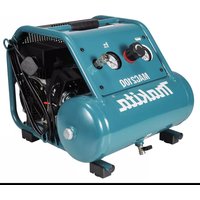
AT638A - Electric stapler MAKITA - Free user manual and instructions
Find the device manual for free AT638A MAKITA in PDF.


User questions about AT638A MAKITA
0 question about this device. Answer the ones you know or ask your own.
Ask a new question about this device
Download the instructions for your Electric stapler in PDF format for free! Find your manual AT638A - MAKITA and take your electronic device back in hand. On this page are published all the documents necessary for the use of your device. AT638A by MAKITA.
USER MANUAL AT638A MAKITA
WARNING: Please read the instructions and warnings for this tool carefully before use. Failure to do so could lead to serious injury.
- Due to our continuing program of research and development, the specifications herein are subject to change without notice.
- Specifications may differ from country to country.
Symbols
The followings show the symbols used for the equipment. Be sure that you understand their meaning before use.

Read instruction manual.

Wear safety glasses.

The tool has the capability of operating in contact actuation mode.
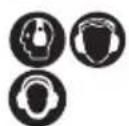
Wear ear protection.

Do not use on scaffoldings, ladders.
Intended use
The tool is intended for fastening on interior work and furniture work.
The tool is for high-volume professional application only. Do not use it for any other purpose. It is not designed to drive fasteners on a hard surface like steel and concrete.
Noise
The typical A-weighted noise level determined according to ISO11148-13 (EN12549):
NOTE: The declared noise emission value(s) has been measured in accordance with a standard test method and may be used for comparing one tool with another.
NOTE: The declared noise emission value(s) may also be used in a preliminary assessment of exposure.
WARNING: Wear ear protection.
WARNING: The noise emission during actual use of the power tool can differ from the declared value(s) depending on the ways in which the tool is used especially what kind of workpiece is processed.
WARNING: Be sure to identify safety measures to protect the operator that are based on an estimation of exposure in the actual conditions of use (taking account of all parts of the operating cycle such as the times when the tool is switched off and when it is running idle in addition to the trigger time).
Vibration
The vibration total value determined according to ISO11148-13 (ISO8662-11):
NOTE: The declared vibration total value(s) has been measured in accordance with a standard test method and may be used for comparing one tool with another.
NOTE: The declared vibration total value(s) may also be used in a preliminary assessment of exposure.
WARNING: The vibration emission during actual use of the power tool can differ from the declared value(s) depending on the ways in which the tool is used especially what kind of workpiece is processed.
WARNING: Be sure to identify safety measures to protect the operator that are based on an estimation of exposure in the actual conditions of use (taking account of all parts of the operating cycle such as the times when the tool is switched off and when it is running idle in addition to the trigger time).
EC Declaration of Conformity
For European countries only
The EC declaration of conformity is included as Annex A to this instruction manual.
SAFETYWARNINGS
Pneumatic nailer/stapler safety warnings
WARNING: Read all safety warnings and all instructions. Failure to follow the warnings and instructions may result in serious injury, electric shock and/or fire.
Save all warnings and instructions for future reference.
For personal safety and proper operation and maintenance of the tool, read this instruction manual before using the tool.
General safety
- Any other use except for intended use of this tool is forbidden. Fastener driving tools with continual contact actuation or contact actuation shall only be used for production applications.
- Keep fingers away from trigger when not operating this tool and when moving from one operating position to another.
- Multiple hazards. Read and understand the safety instructions before connecting, disconnecting, loading, operating, maintaining, changing accessories on, or working near the tool. Failure to do so can result in serious bodily injury.
- Keep all body parts such as hands and legs etc. away from firing direction and ensure fastener cannot penetrate workpiece into parts of the body.
- When using the tool, be aware that the fastener could deflect and cause injury.
- Hold the tool with a firm grasp and be prepared to manage recoil.
-
Only technically skilled operators should use the fastener driving tool.
-
Do not modify the fastener driving tool. Modifications may reduce the effectiveness of safety measures and increase the risks to the operator and/or bystander.
- Do not discard the instruction manual.
- Do not use a tool if the tool has been damaged.
- Be careful when handling fasteners, especially when loading and unloading, as the fasteners have sharp points which could cause injury.
- Always check the tool before use for broken, misconnected or worn parts.
- Do not overreach. Only use in a safe working place. Keep proper footing and balance at all times.
- Keep bystanders away (when working in an area where there is a likelihood of through traffic of people). Clearly mark off your operating area.
- Never point the tool at yourself or others.
- Do not rest your finger on the trigger when picking up the tool, moving between operating areas and positions or walking, as resting finger on trigger can lead to inadvertent operation. For tools with selective actuation, always check the tool before use to ascertain the correct mode is selected.
- Only wear gloves that provide adequate feel and safe control of triggers and any adjusting devices.
- When resting the tool, lay it down on the flat surface. If you use the hook equipped with the tool, hook the tool securely on the stable surface.
- Do not operate when under the influence of alcohol, drugs or the like.
Projectile hazards
- The fastener driving tool shall be disconnected when unloading fasteners, making adjustments, clearing jams or changing accessories.
- During operation be careful that fasteners penetrate material correctly and cannot be deflected/misfired towards operator and/or any bystanders.
- During operation, debris from workpiece and fastening/collation system may be discharged.
- Always wear protective goggles to protect your eyes from injury when using power tools. The goggles must comply with ANSI Z87.1 in the USA, EN 166 in Europe, or AS/NZS 1336 in Australia/New Zealand. In Australia/New Zealand, it is legally required to wear a face shield to protect your face, too.
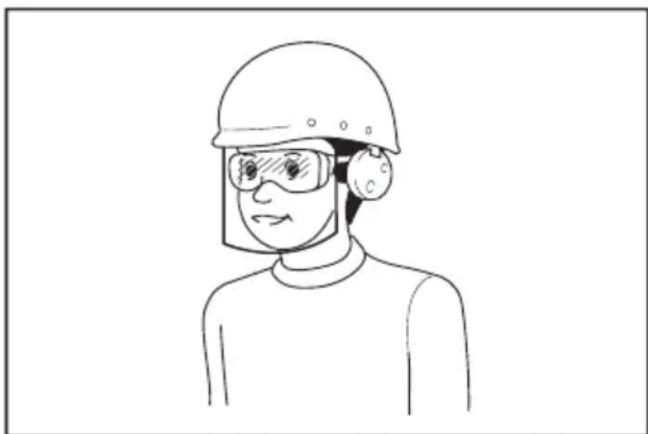
It is an employer's responsibility to enforce the use of appropriate safety protective equipments by the tool operators and by other persons in the immediate working area.
- The risks to others shall be assessed by the operator.
- Be careful with tools without workpiece contact as they can be fired unintentionally and injure operator and/or bystander.
- Ensure tool is always safely engaged on the workpiece and cannot slip.
- Wear hearing protection to protect your ears against exhaust noise and head protection. Also wear light but not loose clothing. Sleeves should be buttoned or rolled up. No necktie should be worn.
Operating hazards
- Hold the tool correctly: be ready to counteract normal or sudden movements such as recoil.
- Maintain a balanced body position and secure footing.
- Appropriate safety glasses shall be used and appropriate gloves and protective clothing are recommended.
- Appropriate hearing protection shall be worn.
- Use the correct energy supply as directed in the instruction manual.
- Do not use the tool on moving platforms or back of trucks. Sudden movement of the platform may lose control of the tool and cause injury.
- Always assume that the tool contains fasteners.
- Do not rush the job or force the tool. Handle the tool carefully.
- Watch your footing and maintain your balance with the tool. Make sure there is no one below when working in high locations, and secure the air hose to prevent danger if there is sudden jerking or catching.
- On rooftops and other high locations, drive fasteners as you move forward. It is easy to lose your footing if you drive fasteners while inching backward. When driving fasteners against perpendicular surface, work from the top to the bottom. You can perform driving operations with less fatigue by doing so.
- A fastener will be bent or the tool can become jammed if you mistakenly drive fastener on top of another fastener or strike a knot in the wood. The fastener may be thrown and hit someone, or the tool itself can react dangerously. Place the fasteners with care.
- Do not leave the loaded tool or the air compressor under pressure for a long time out in the sun. Be sure that dust, sand, chips and foreign matter will not enter the tool in the place where you leave it setting.
- Never attempt to drive fasteners from both the inside and outside at the same time. Fasteners may rip through and/or fly off, presenting a grave danger.
Repetitive motions hazards
- When using a tool for long periods, the operator may experience discomfort in the hands, arms, shoulders, neck, or other parts of the body.
- While using a tool, the operator should adopt a suitable but ergonomic posture. Maintain secure footing and avoid awkward or off-balanced postures.
- If the operator experiences symptoms such as persistent or recurring discomfort, pain, throbbing, aching, tingling, numbness, burning sensation, or stiffness, do not ignore these warning signs. The operator should consult a qualified health professional regarding overall activities.
- The continuous use of the tool may cause repetitive strain injury due to recoil produced by the tool.
- To avoid repetitive strain injury, the operator should not overreach or use excessive force. Additionally, the operator should take a rest when feeling fatigue.
- Conduct a risk assessment regarding repetitive motion hazards. It should focus on muscular-skeletal disorders and be preferentially based on the assumption that decreasing fatigue during work is effective in reducing disorders.
Accessory and consumable hazards
- Disconnect the energy supply to the tool, such as air or gas or battery as applicable, before changing/replacing accessories such as workpiece contact, or making any adjustments.
- Use only the sizes and types of accessories that are provided by the manufacturer.
- Use only lubricants recommended in this manual.
Workplace hazards
- Slips, trips and falls are major causes of workplace injury. Be aware of slippery surfaces caused by use of the tool and also of trip hazards caused by the air line hose.
- Proceed with additional care in unfamiliar surroundings. Hidden hazards may exist, such as electricity or other utility lines.
- This tool is not intended for use in potentially explosive atmospheres and is not insulated from coming into contact with electric power.
- Make sure there are no electrical cables, gas pipes etc. that could cause a hazard if damaged by use of the tool.
- Keep work area clean and well lit. Cluttered or dark areas invite accidents.
- There may be local regulations concerning noise which must be complied with by keeping noise levels within prescribed limits. In certain cases, shutters should be used to contain noise.
Dust and exhaust hazards
-
Always check your surroundings. The air exhausted from the tool may blow dust or objects and hit operator and/or bystanders.
-
Direct the exhaust so as to minimize disturbance of dust in a dust filled environment.
- If dust or objects are emitted in the work area, reduce the emission as much as possible to reduce the health hazards and risk of injury.
Noise hazards
- Unprotected exposure to high noise levels can cause permanent, disabling, hearing loss and other problems such as tinnitus (ringing, buzzing, whistling or humming in the ears).
- Conduct a risk assessment regarding noise hazards in the work area and implement appropriate controls for these hazards.
- Appropriate controls to reduce the risk may include actions such as damping materials to prevent workpieces from "ringing".
- Use appropriate hearing protection.
- Operate and maintain the tool as recommended in these instructions, to prevent an unnecessary increase in noise levels.
- Take noise reduction measures, for example placing workpieces on sound damping supports.
Vibration hazards
- The vibration emission during operation depends on the gripping force, the contact pressure force, the working direction, the adjustment of energy supply, the workpiece, the workpiece support. Conduct a risk assessment regarding vibration hazards and implement appropriate controls for these hazards.
- Exposure to vibration can cause disabling damage to the nerves and blood supply of the hands and arms.
- Wear warm clothing when working in cold conditions, keep your hands warm and dry.
- If you experience numbness, tingling, pain or whitening of the skin in your fingers or hands, seek medical advice from a qualified occupational health professional regarding overall activities.
- Operate and maintain the tool as recommended in these instructions, to prevent an unnecessary increase in vibration levels.
- Hold the tool with a light, but safe, grip because the risk from vibration is generally greater when the grip force is higher.
Additional warnings for pneumatic tools
- Compressed air can cause severe injury.
- Always shut off air supply, and disconnect tool from air supply when not in use.
- Always disconnect the tool from the compressed air supply before changing accessories, making adjustments and/or repairs, when moving away from an operating area to a different area.
- Keep fingers away from trigger when not operating the tool and when moving from one operating position to another.
- Never direct compressed air at yourself or anyone else.
-
Whipping hoses can cause severe injury. Always check for damaged or loose hoses or fittings.
-
Never carry a pneumatic tool by its hose.
- Never drag a pneumatic tool by its hose.
- When using pneumatic tools, do not exceed the maximum operating pressure ps max.
- Pneumatic tools should only be powered by compressed air at the lowest pressure required for the work process to reduce noise and vibration, and minimize wear.
- Using oxygen or combustible gases for operating pneumatic tools creates a fire and explosion hazard.
- Be careful when using pneumatic tools as the tool could become cold, affecting grip and control.
Additional warnings for tools with contact actuation capability

- Do not rest your finger on the trigger when picking up the tool, moving between operating areas and positions or walking, as resting finger on trigger can lead to inadvertent operation. For tools with selective actuation, always check the tool before use to ascertain the correct mode is selected.
- This tool has either selective actuation for contact actuation or continuous contact actuation by actuation mode selectors or is a contact actuation or continuous actuation contact tool and has been marked with the symbol above. Its intended uses are for production applications such as pallets, furniture, manufactured housing, upholstery and sheathing.
- If using this tool in selective actuation mode, always ensure it is in the correct actuation setting.
- Do not use this tool in contact actuation for applications such as closing boxes or crates and fitting transportation safety systems on trailers and lorries.
- Be careful when changing from one driving location to another.
Safety devices
- Make sure all safety systems are in working order before operation. The tool must not operate if only the trigger is pulled or if only the contact arm is pressed against the wood. It must work only when both actions are performed. Test for possible faulty operation with fasteners unloaded and the pusher in fully pulled position.
- Securing the trigger in the ON position is very dangerous. Never attempt to fasten the trigger.
- Do not attempt to keep the contact element depressed with tape or wire. Death or serious injury may occur.
- Always check contact element as instructed in this manual. Fasteners may be driven accidentally if the safety mechanism is not working correctly.
Service
- Perform cleaning and maintenance right after finishing the job. Keep the tool in tip-top condition. Lubricate moving parts to prevent rusting and minimize friction-related wear. Wipe off all dust from the parts.
- Ask Makita authorized service center for periodical inspection of the tool.
- To maintain product SAFETY and RELIABILITY, maintenance and repairs should be performed by Makita Authorized Service Centers, always using Makita replacement parts.
- Follow local regulations when disposing of the tool.
SAVE THESE INSTRUCTIONS.
WARNING: DO NOT let comfort or familiarity with product (gained from repeated use) replace strict adherence to safety rules for the subject product. MISUSE or failure to follow the safety rules stated in this instruction manual may cause serious personal injury.
PARTS DESCRIPTION
▶ Fig.1: 1. Trigger 2. Nose adapter (contact element) 3. Hook 4. Magazine
INSTALLATION
Selecting compressor
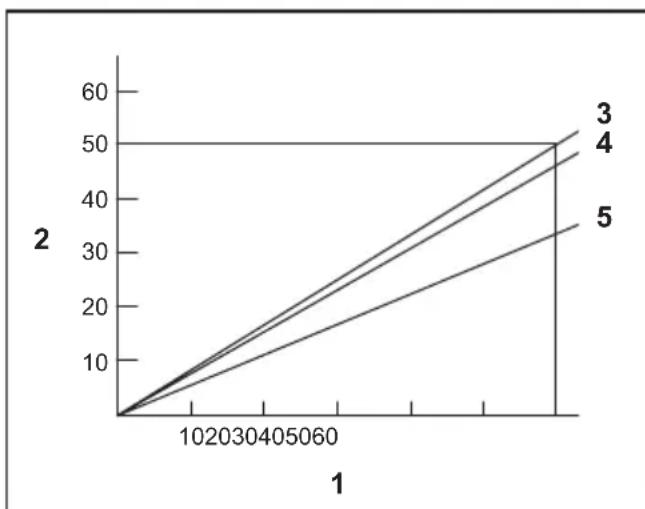
1. Stapling frequency (times/min) 2. Compressor air output per minute (L/min) 3. 0.83MPa (8.3 bar) 4. 0.66 MPa (6.6 bar) 5. 0.49MPa (4.9 bar)
The air compressor must comply with the requirements of EN60335-2-34.
Select a compressor that has ample pressure and air output to assure cost-efficient operation. The graph shows the relation between stapling frequency, applicable pressure and compressor air output.
Thus, for example, if stapling takes place at a rate of approximately 60 times per minute at a compression of 0.83MPa (8.3 bar), a compressor with an air output over 50 liters/minute is required.
Pressure regulators must be used to limit air pressure to the rated pressure of the tool where air supply pressure exceeds the tool's rated pressure. Failure to do so may result in serious injury to tool operator or persons in the vicinity.
Selecting air hose
CAUTION: Low air output of the compressor, or a long or smaller diameter air hose in relation to the stapling frequency may cause a decrease in the driving capability of the tool.
Fig.2
Use an air hose as large and as short as possible to assure continuous, efficient stapling operation.
With an air pressure of 0.49MPa (4.9 bar), an air hose with an internal diameter of over 6.5mm and a length of less than 20m is recommended when the interval between each stapling is 0.5 seconds.
Air supply hoses shall have a minimum working pressure rating of 1.03MPa (10.3 bar) or 150 percent of the maximum pressure produced in the system whichever is higher.
Lubrication
Fig.3
To insure maximum performance, install an air set (oiler, regulator, air filter) as close as possible to the tool. Adjust the oiler so that one drop of oil will be provided for every 50 staples.
When an air set is not used, oil the tool with pneumatic tool oil by placing 2 (two) or 3 (three) drops into the air fitting. This should be done before and after use. For proper lubrication, the tool must be fired a couple of times after pneumatic tool oil is introduced.
Fig.4: 1. Pneumatic tool oil
FUNCTIONAL DESCRIPTION
CAUTION: Before adjusting or checking function on the tool, always release the trigger and disconnect the air hose from the tool.
Adjusting depth of stapling
Fig.5: 1. Adjuster
To adjust the depth of stapling, turn the adjuster. The depth of stapling is the deepest when the adjuster is turned fully in the A direction shown in the figure. It will become shallower as the adjuster is turned in the B direction.
If staples cannot be driven deep enough even when the adjuster is turned fully in the A direction, increase the air pressure.
If staples are driven too deep even when the adjuster is turned fully in the B direction, decrease the air pressure.
Generally speaking, the tool service life will be longer when the tool is used with lower air pressure and the adjuster set to deeper depth of staple driving.
Hook
CAUTION: Never hook the tool at high location or on potentially unstable surface.
CAUTION: Do not hang the hook from the waist belt. If the stapler accidentally drops, it may result in misfiring and personal injuries.
Fig.6: 1.Hook
The hook is convenient for hanging the tool temporarily.
Air duster
CAUTION: Do not aim the ejection port of the air duster to someone. Also, keep your hands and foot away from the ejection port. If the air duster button is accidentally pushed, it may cause a personal injury.
CAUTION: Always check your surroundings before using the air duster. Blown dust or objects may hit someone.
CAUTION: Do not connect or disconnect the air hose while pushing the air duster button.
The air supplied to the tool can also be used as an air duster. You can clean the work area by pressing the button on the grip end.
Fig.7: 1. Button
NOTICE: After using the air duster, the driving force of the tool will temporarily decline. Wait until the air pressure recovers in this case.
NOTICE: Perform a test blow if you use the air duster immediately after the oil was applied. The oil may be sprayed with the air.
ASSEMBLY
CAUTION: Before carrying out any work on the tool, always release the trigger and disconnect the air hose from the tool.
CAUTION: Load the same type, size and uniform length of staples when loading multiple strips of staples in the magazine.
Loading stapler
NOTE: Always hold the rear of the sliding door when you press the lever. The sliding door opens suddenly with the lever pressed when staples are stored in the magazine.
- Press the lever and open the sliding door of the magazine.
▶ Fig.8: 1. Lever 2. Sliding door - Insert a strip of staples into the opening of the magazine all the way.
Fig.9 - Close the sliding door until the sliding door is locked.
Fig.10
Dimensions of staples
Only the following fasteners can be used with the tool.
18 Gauge crown staples
Fig.11
Maximum
Fig.12: (1) 38 mm
Minimum
Fig.13: (1) 1.25mm (2) 13mm (3) 3.5mm (4) 1.05mm
Removing staples
To remove staples, follow the procedures of "Loading stapler" in reverse.
Nose adapter
To prevent the surface of workpiece from being scratched or damaged, use the nose adapter.
Fig.14: 1. Nose adapter 2. Contact element
A spare nose adapter is stored in the place shown in the figure.
Fig.15: 1. Spare nose adapter
Connecting air hose
Fig.16: 1. Air fitting 2. Air socket
Slip the air socket of the air hose onto the air fitting on the stapler. Be sure that the air socket locks firmly into position when installed onto the air fitting.
A hose coupling must be installed on or near the tool in such a way that the pressure reservoir will discharge at the time the air supply coupling is disconnected.
OPERATION
CAUTION: Make sure all safety systems are in working order before operation.
Selecting the operation mode
CAUTION: Always make sure that the actuation mode selector is properly set to the position for the desired stapling mode before stapling.
Fig.17: 1.Actuation mode selector
Single sequential actuation mode:
You can drive one staple by one sequential operation. Select this mode when driving a staple carefully and accurately.
To choose this mode, set the actuation mode selector to the position.
Contact actuation mode:
You can drive staples repetitively by placing the contact element with the trigger held.
To choose this mode, set the actuation mode selector to the position.
Checking proper action before operation
Before operation, always check following points.
Make sure that the tool does not operate only by connecting the air hose.
Make sure that the tool does not operate only by pulling the trigger.
Make sure that the tool does not operate only by placing the contact element against the workpiece without pulling the trigger.
In single sequential actuation mode, make sure that the tool does not operate when pulling the trigger first and then placing the contact element against the workpiece.
Single sequential actuation
Place the contact element against the workpiece and pull the trigger fully.
After stapling, release the contact element, and then release the trigger.
Fig.18
CAUTION: Do not place the contact element against the workpiece with excessive force. Also, pull the trigger fully and hold it on for 1-2 seconds after stapling.
Even in the "Single sequential actuation" mode, half-pulled trigger causes an unexpected stapling, when the contact element re-contacts the workpiece.
Contact actuation

Pull the trigger first and then place the contact element against the workpiece.
Fig.19
Empty indicator
When the remaining number of staples in the magazine becomes low, the empty indicator turns to red. Reload the staples when the empty indicator becomes red.
Fig.20: 1. Empty indicator
Removing jammed staples
CAUTION: Always return the trigger and disconnect the hose before removing jammed staples.
CAUTION: Do not use deformed staples or strip of staples. Failure to do so causes poor staple feeding.
NOTE: Always hold the rear of the sliding door when you press the lever. The sliding door opens suddenly with the lever pressed when staples are stored in the magazine.
Follow the procedure of "Removing staples" to remove the strip of staples, and remove jammed staples from the staple rail.
MAINTENANCE
CAUTION: Before attempting to perform inspection or maintenance, always release the trigger and disconnect the air hose from the tool.
NOTICE: Never use gasoline, benzine, thinner, alcohol or the like. Discoloration, deformation or cracks may result.
Staples
Handle staple strips and their box carefully. If the staple strips have been handled roughly, they may be out of shape, causing poor staple feed.
Avoid storing staples in a very humid or hot place or place exposed to direct sunlight.
Maintenance of stapler
Always check the tool for its overall condition and loose screws before operation. Tighten as required.
With tool disconnected, make daily inspection to assure free movement of the contact element and trigger. Do not use tool if the contact element or trigger sticks or binds.
When the tool is not to be used for an extended period of time, lubricate the tool using pneumatic tool oil and store the tool in a safe place. Avoid exposure to direct sunlight and/or humid or hot environment.
Fig.21
Maintenance of compressor, air set and air hose
After operation, always drain the compressor tank and the air filter. If moisture is allowed to enter the tool, it may result in poor performance and possible tool failure.
Fig.22:1.Drain cock
Fig.23:1.Air filter
Check regularly to see if there is sufficient pneumatic tool oil in the oiler of the air set. Failure to maintain sufficient lubrication will cause O-rings to wear quickly.
Fig.24: 1. Oiler 2. Pneumatic tool oil
Keep the air hose away from heat (over 60^ , over 140^ ), away from chemicals (thinner, strong acids or alkalis). Also, route the hose away from obstacles which it may become dangerously caught on during operation. Hoses must also be directed away from sharp edges and areas which may lead to damage or abrasion to the hose.
To maintain product SAFETY and RELIABILITY, repairs, any other maintenance or adjustment should be performed by Makita Authorized or Factory Service Centers, always using Makita replacement parts.
OPTIONAL ACCESSORIES
CAUTION: These accessories or attachments are recommended for use with your Makita tool specified in this manual. The use of any other accessories or attachments might present a risk of injury to persons. Only use accessory or attachment for its stated purpose.
If you need any assistance for more details regarding these accessories, ask your local Makita Service Center.
Staples
Air hose
- Safety goggles
NOTE: Some items in the list may be included in the tool package as standard accessories. They may differ from country to country.
ACCESSIONS EN OPTION
VEILIGHEIDSWAARSCHUWINGEN
OPTIONELE ACCESSOIRES
Para retiring grapas
Eknoi n oyno (a): 5,0 m/s2
Móvo yia xwpe ts Eupwnns
H oumuoppwos EK Tepiaa avetai wS Napaptnma A oTo TAPov EYxEipioo obnyiw.
IPOEIAOIOIHSEIEAΦAΛEIA
PpOeIoToiInoEIs aOΦaλEiaC yia Tov KApΦwTnpa/ouppaTTIKo TTIEOμEvou aεpa
A PPOEIOHOH: AiaBaoTe oAeT TtpoEIOIHOEi OaPaeiaC kai oAeT tC onyiec. H un Tnpon Tuv TPOeIOIoiOeWv KAI Tuv onyiwv MTOpe i va onnyoEi OE ooapop Tpaupatioo, nKtpoTTAnjia kai/n TTUPKayia.
UaTe oEc TIG POeIOToiN- 0EIC KAI TIG OByIc yia eAloxvTKn TapatouTn.
TnV npoosn oac aopaia kai yia tn owtn aeitoupyia kauvtnpon tou epyaeiou, diaaote to npov eyxepidio odnyiw npotou xpnoiopoitoineTo epyaeio.
ΓeviKn aσραλεια
- Anayopeetai OToiadnTote aann xpnoan autou Tou epyaleiou EKTOS Tnv Tnpoopioevn. Ta epyaleia kappawatoosuvdntpwwu Evexoevn EvpyoToinon Epanc n Evpytoinon Etnapns 0 npTei va xpnoiotoiuvtai mvo ia epapoyes napaywns.
- KpatnoTe ta baktula aac paakpi aTo n oKavdaan otav dev teete auto to epyaeeio ae leitoupyia kai otav to petakivee ato tn ia eon aeitoupyiace aaan.
-
Nolaaloi kivduvoi. Aiaaote kai katavonote TIG oyniec aopalaia cpiiv ouvdeote, aTOOuvdeote, ooptwote, teote e aeitoupyia, Ouvtnpnoete, aaaaetee eapntmuata n epyaote Kovta oTo epyaleio. Av dev to kavete auto, Mtopevi exei wc anotelaeogua oobapo oomega tiko Tpaumatuo.
-
KpatnoTe ola ta hepn tou oomega tos oac, otwcs xepia kai nobia, kTλ. paia aTnTo nv kateu-thuvon trupobotnnc kai povtiote o ouvdtnpac va unv mtopei va dieioofoi to Teuxio epyaiaac e hepn tou oomega toc.
-
Otav xpoioutoie To epyaleio, va yywipzete oI O uovetnpac mTopei va ektpaTei kaiva Tpokaloei Tpaumatuo.
-
KpatnoTe To epyaIeio TOnu KaI KAI TPOeToIaOteiTe va diaxeipiotei Te nV aTuAIn.
-
Movo texvika eidikeuévoi xeipiotc a TpeTeva xpoiopoioouv to epyaiaio kapwmuotoc uovetnpw.
-
Mny tpoTnToieTe To epyaleio KApawato Scuvdtnpa. OI tpoTTOIOINoei MtOpei va eiwouv Tnv aTROTEAeouatIKoTnta Tov MuTpW aOpaaleia kai va auNsoov Touc KIVduVouc YIA TOV Xeipotn n/Kai Touc Tapeupikokevouc.
-
Mny aToppiyeTo EyXeiipidio oBnyiwv.
-
Mny xpooiopoioioeEv aepyaleio av to epyaia napouoiacei qnua.
-
Ppooexete otav xepiote ouvdtpe, iiaitepa otav touc qoaptwveT KAI EKoppwVET, ETEIDn oi ouvdtpecs exouaixmupeus tou mtopov va pokalaeouv tpaumatio.
-
Piv aTn xPnO, va eEyxETe navTa to epyaIio yia oTaaouEvA, avthetaaueva ouvEe- meva n 0papvea Eapntua.
-
Mny TeVTwveote UTEpOlaika. XpnoimuToiNoTe Muvo o aopaa h xwo epyaiaC. Kpatate TnVTA Otaepo natma kai tny Iooppotia oac.
-
Kpatate Touc napepiokoevouc jakpi (otav epyaceote oia nepioxn otou utapxei n tiavotnta va nepvouv avpwooi ano ekei). Etniunavete uocnveia otaiayopeueta i eioos cTnv npioxnpyaoias ca.
-
Mn OtpépεTE TOTe TO εpyaλεio TPOCS TO ΜEPOS σας ἡπρος ΟΤΟΙΟδήποτε αλλο ὄτομο.
-
Mny akoumtate to daKTulo oac otn skavdaan otav onkowete TO epyaleio,TO metakiveite MEtau Tepioxuv n theewv leitoupyiac n otav Tepnatate, ETEIOIeva daKTulo TOU akoumuTaei OTN OAKVdALN mTopei va oynoe i aEaIANTN LEITOUPYia. Ia epyaleia e ETIAEKTKI N evpyoToinon, va eEyxete naVTa to epyaleio TPIV aTTO xPOn, ia va oiyoupeute ie OTI EIIExTNKE OOWOTOC tpntoc LEITOUPYiac.
-
Na φοράτε μόνο γάντια Σου παρέχουν επαρκή αἰσθηση, ασφάλεία και ἐλέγχο τής σκανδάλης και έποιώνδήποτε μθμιστικων διατάξων.
-
Otaov xpooiotoiie to epyaleio, totoe Tnote to 0e mia eniteon entipaveia.Av xpoi- pootoine To yavTo nou utapxeI oTo epya- Ieo, va yavTcwoTe to epyaleio me aospalaeia 6e mia staepn etipaveia.
- Mny To xpnoiopoieite otav bpiokote uTo Tnv eTnpEia aAkoO, qapukw v npopoiov ouoiw.
KivduvoI EkToSeuOns
-
To εργαλειο καφωματος συνδεπρων θα πρέπειν είαι αποσυδεδεμενο κατα την εκφόptωση συνδεπρων, την πραγματοποι-ησηρuθμισεων, την εκκαθαρίση εμπλοκων ἡ την αλλayn εξαρτηματων.
-
KaTaNiapkeia TcN LEIToupyiac, va PPOE- XETe WOTe OI OUVETnpeC VA DIEIOuov To UAIKO 6WOTa KAI VA MNV MTOpOv VA EKTPaTouv/Tupo0tntoov LAVOaOeVa PPOs TO XEPiotn n/Kai Touc TapeupioKoEvouc.
- KaTaNtbiapkeia TcAeIToupyia, mTpei va EKKevwOouv Opaoumaa aTO TEaXIO Epya iac KAI TO OoTNMa KAPWmuos/oppaqns.
- Na φopáte πávτa προσαteutiká yuaia yia va προσαteúete ta maia oac αnto tpaumatioó otav xnpoioutoie ηκtpiKa εpyaleia. Ta πpooata- teutiká yuaia πpete iva oumuopwovotai μe to πpótuTO ANSI Z87.1 OTIG HNA, to pótuTO EN 166 Θnv Eupwnn n to pótuTO AS/NZS 1336 Θnv Auotpalia/Néa Znaivδia. Σnv Auotpalia/Nεa Znaivδia, aattietai atno to vómo va φopáte kai πpocwiδa yia tvπpocstia tou ppoawou ca.

O epyo8otns exeiv nV eUovn va EITIaAlei Tn xpnoan katalnnau PPOOTATEUKO E0TIAOou aQaaieias antou cXeipiotc Tou epyaieiou kai ano aa atoua Tnou pioKovtai Otnv aeon TEPIOxN epyaoiaC.
- O xeiipiotnC 0a TpeTcV a aioooynoeI Touc Kivduouc yia aaouc.
- PooexeEe epyaia Tou dEv exouv Etnapn e To Teuaxio epyaiae Tneioid nTnpoei va Tnpo- botnOuv kata aaoos Kai va Tpaupatioov Tov Xepiotn h/kai Touc napepuiokoeouc.
- Beaiwtheta ot to epyaiaio ivai navta deoueuevo me aopalaia oTo Teuaxio epyaoiaac kai dev mtopei va yloiortnoei.
- OpaTe TPOOTATEUTIka aKoNs yia va TPOOATA TEUETa autia oac aTTO thOpuTo Tou aepa Eaywyns, KaWc KAI TPOOTATEUTIKePaaNc. OpaTe Etnioc eAqpiia, aa oxipapoi pouxa Ta mavikia 0a npTei va ivai koumuEv a n yapioeva TPOC ta naw.Mnv opate ypabata.
Kivovoi eitoupyiac
Kivouoi TavaIaImuEvw kivnoewv
- KaTaN xPnON evos epyaEoiou ia eyaan xpoVK nepioo, evac xeipiotns mtopei va biwoei duopopia oTa xepia, touc bpaxioves, touc woucs, tovauxeva kai aaaa mepn tou oWmuToC tou.
- Evx npoiomoi evaepyaleio, oxiipotns 0 a TpETe va uioetnoi ia kataaannkai epyovuikn otao. diatnpnoTe aoqaaec natma KAI aTTOPOUYETIc aEIEcKAI AVIOOPPOTEC OTaeic.
- Av O xeiipotnc biwoe iouptwupa ot woc eti- movn kai eavaaauabavoev n duopopia, novo, Ktuio, alyo, uupnykiaogu, oubiaogua, aoon kaoun aakayia, dev npetne i va ayvonoei auta ta npoeiodtointik a onadia. O xeiipotnc npetne i va oubouleute evav apo- dio eTayEmuatia oTo xwpTo nC uyieic, yia Tc suvoalkebpaotnpiotntctou.
-
H ouvexoevn xpion tou epyaieou mtopei va npokaleoi kakwoeic loyew enavaaumavoe vnc katantovonc tou oepiaovta otnv avatu liq nou npayei to epyaieio.
-
Tia va atropeuxei o tpaupatioios loyew enavaaamabavoe ncaatovnons, o xeiipotnc dev pTei va TeVTwve TEUPoIKA n va xpnoipootiei utepboikn duvaun. EITIEOV, o xeiipotnc 0a pTei va ekoupacetai otav viwei koupaevoC.
- Aieayyete aiooynon kivduvovxetikae Touc kivduvouc nTc enavaalapavoevcns KInon. Oa pnte va eNtkevtpwOei oE nuokelteiKc diatapaxcKa, KaT Tpotiunon, Va Baoizetai OTNV UToeOn otn n Eiwon KOTW- ons katn ti dApkeia tnc epyaiaic ivai atoteAeopatikn otn n Eiwon Twv diatapaxwv.
Kivovoi ta aptnata kai avawoiua
- ATOOUVBcE TnV EVEpyeiaKn TApoxn TPOCS TO EPyaleio, OITWc aepa n aepio n mTATAPia, OTWc Eapuocetai, npiiv aaaaetc/avtikataoTnoTe Eapntmuata OTWc TnV eTAApN TEuaiou Epyaoias n Ppaayatottoinoe OToiabnTote puOsiŋ.
- Na xpoiopoioite movo ta ueyehn kai tuouc Twv Eapntmuatowv Tou TapexovtaaTOV KAATAKEUAOTn.
- Na xpoiouoieIe movo IITAVTKa TOU OUVIO TWVTAe auto To EYXeiPio.
KivduvoI OTO xwpo Epyaia
- To ylaotpnma, to okovtamka kai ot Ttoweic eivai oi kupiec airtie syia tpaumatioo oTo xwpo epyaosiac. Ipooexete yi oiaothepec ETIpaveiesiou dnoiuoyouvtai anto tn xpnoi Tou epyaaleiou kai etionyia kivduvouc oAi- 0nngTou npokalouvtai ano tvukauTTO oo hnaTnsypuuc aepa.
- Ε ayvwoTo TepiβaAov, va Tpoxwpate με TEPIOOOTepn TPOOXn. MTOpei va utapxouv Kpuoi Kivduovoi, oTWC nAektpikeγpaμeç n γpaμeç aAawv Tapoxwv.
- AutoTo EpyaIeio 6ev Tpoopipetai yia xpon oE duynTikwS EKPNKTiKec atmoopaiec kai 6ev eivai movwepvoia TIV TEPITIWON ETTAqns nE Nktpko pua.
- Beβaiωθeite oti δεν utápxouv ηλεκτρια καλωδia, σωληνες αερiou, kTλ. Tous θμTropouσav va προκαλεσουv KIVduvo OTNV ΠερΠτωη Tous UTOOSU Vζημία aπo Tn xρησι Tous εργαλείου.
- Diatnpie Tnv PEPIOX epyaoia K aOpn Ka EtnapKwC Wtioevn. OkaTaoTatoI n oKoTeivoi Xwpoi TpooeAkuov Ta atuxmuata.
- Ithavc va uipotavtai totiko kavovioi avapopika e to bOpu, e touc otioouc kai a npTei va oumopwveote biatnpwta ts n oTaeun OpuBou Evtoc twv PpOdiayepamuevw opiwv. 2e opioeves TepTTwoic, 0a npTei va xpnoiIOIOUVTai TETaQpata ia TOV pEpiopioo Tou bOpou.
KivouoiokovnskaiEaiongs
- Na eIeyxTe navTa to TepiBaalov oac. O aepac ToueEpxetai anTo epyaleio mTopei va quan- OKoyn h avtkeieva kai va xTuTnOouv Tov Xeipiotn h/kai Touc napeupiokóevouc.
- KATEUθUVETην ΕΑΤΙΟιη με τρότο ωοτενα ελαχιστοποιθει πδιαραξη της σκόνης ενα περβαλλον με τολλή σκόνη.
- Av ekluétai Okov n avtikeiemeva otnv Tepioxn epyaiaç, meiwote tyn EKIOUMN oOo to duvato TepiooTepo, ia va meiwouov oi kivduvoi uyeia cKaowc kai o kivduvoctpaumatioou.
KivouoBopou
- H antpootateutn ekteon o uynna einnede a 0opuou mtopei va Tpokaloei moviun atw- 5ia akons kai aaaa TpoBAnata otwC eBo n (koubovua, bouia, oupiyn ano
- AIEayayete aioynon KIOBuvw OXETIKA TE Tous KIOBuvouc 0opuou OTNV TEPIOXn EPYaOia c Kai uoToinote Touc katAALNauoc EEyxouc YIA autoUs Touc KIOBuvouc.
- OI katáalnloi éEyxoi yia th μeiwon tou kivduvou mtopei va tepiaaβavovu evépyies oTWC TIV aTIOBEOON uIKwv wote va aTOTpATTI TO «KouboviOμa» Tuv TEpaXiw Epyoiaç.
- Na xpnoiotoiieite kataaann npoostia akois.
- XpnoiopoioTe kai ouvtnpnto To epyaaleio otwocuviotatai OTIC napouoe s obnyie, yia va aTOpTae i n Tepittn auXgnon Tuv EITIEWv 0opou.
- AβETε μΕΤα γι ηι ΜεΙωη Κου θΟύβου, γι παράδειγμα ην Στοθέτησι τυν τεμαχίων εργασίας σε Θπριγματα απόσβεος θΟύβων.
Kivduovoi Sovnon
- H EKTOUIN DOVNOEwV KATA T N LEITOUPYIA EApTatai aTO T NO Duvamn KpatmuatoC, TNV TIEoN ETTaPNS, TNV KAteuBuvon EPyaoiaC, T NpuOIOI TNC EVEPYEIAKns TAPoxns, TO TEpaxio EPyAOIAC KAI T N OTnPIEN Tou TEpaXIOU EPyaoiaC. AIEgayayete aIIOLOynOn KIVUVWv OxETIKa ME Touc KIVUVouC DOVNOeWV KAI ULOTIOInote Touc KATAALNLOUC ELevyous VIA autouc Touc KIVDuvouc.
- H ekθεση στη δόνησι μπορείνα προλέσει ζημία στα νεύρα και τη παροχή αἰματος στα χερία και βραχioνες.
- Na φopáte ζεστα pouxa otav εpyáζεOTE Ε Kpueç συνθήκες, va διatηρεITE ta xépiα σας ζεστα kai Θεγνα.
- Av biwoete mooudiaoqa, mupnykiaoqa, TROV n LEUKAVON OTO DEPua TuvbakTu- Lwv n Tuvxepiwv oac, avaqntnoTE IATPIKn Ouuboulan aTIO apoobio ETVayyEmuatia OTO Xwpo TNC UyeiaC, avapopika e TIG SuvoaikeS dpaoptnpiotneC.
- XpnoiiooTKe kai ouvtnpnoTe to epyaleio oTWC ouviotatai OTIC napouoe s obnyie, yia va aTOpTne i Tepittn auXnon Tuv EITMEWbovnOnc.
- Na kpatate To epyaieio eaappa, aaaa a ophialeia, eneion o kivuvoc ano tn dovnon n eviKa eyaalutepos otav n duvaun kpa-tnmuot civai uynlotepn.
PpOeTc PPOEIOIOEIG YIA TVEUATIa Epyaia
- O TETIEOeVoc aepac mTOpEi va Tpokaaeoi oBapop tpaumatioo.
- Na biakotte TavTnV npoxn aepa kai va anouvdeTe to epyaieio ano Tnv npoxn aepa otav dev xpoioutoiteiai.
-
Na aTOouvEETe naVTo EpyaIio aTNO tvn TAPoXn TEIEOevou aepa niv aAALAcTeE EApntmuata, npayatotroite puOmuic n/Kai ETIOKEUc, otavetakiveiTe aTIO ia TEPIOxN LEIToupyiaC oE biaopetikn TEPIOxN.
-
KpatnoTe ta daKtuL aoc paKpia aTTO n OavDaan otav dev teTETe TO epyaieo e aeitoupyia KaI otav to metakiveite aTTO n ia then aeitoupyia c e aaan.
- Mny OTpeFE TOTe TOV TETIEOevo aepa TPOC to HPOs OAC n PPOc OTIOIDHnTote AALo aTOpo.
- OI EUKaPTTOI OwAnVEc TOnu BpiKoVTai EKTOS ELeyxou MTopoov va Tpokaloei oOapo Tpaumatoo. Na ELeyXeTe TavTa Yia KATE- Otpaumevouc n XaApoUs EukaPTTOUc OwAnVesnEvowEIC.
- Mny Kpatate TOTe Eva TVEUmaTko EpyaAio aTOv EUKaPTTO Owlnva.
- Mny oupe TOTe eva TVEUATIO epyaiao aTO TOV EUKaPTTO OwIyA.
- Otav xpoioptoiieite TVEUPaTiképyaIεia, myn Eeepvate n eviotn tien λeitoupyias (ps max).
- Ta TVEUATIKA epyaia 8a TpTei va tpofo- botovtai mvo u Tneieo evo aepa stn xaun- Aotepn tiocn Tou ataitei Tai iTv epyoia, TPOKEIeovu aeiwoe i OopuBoC kai n Dovnqkai va EaXIOToToinEi n 8op
- H xpno n oguov n kaouw aepiw yia tn λeitoupyia nveupatikwv epyaleiwv dnioupyei kivduvo TUPkayic kai ekpnngc.
- Pooexeotav xnoiopoioite TVEuMATa epyaia eTne to epaaio mtopeia va yivei Kpuo, eTnpaeovtac to kpatma kai tov Exyxo.
PpOeTeC PPOEIOIOne iA epyaia a E duVatoTnTa EvpyoToiOns Etnqns

- Mny akoumtate To daKTulo oac otn OkaVdaan otav onkWvete To epyaleio, to metakiveite meta Su Tepioxuv n theeewv aeitoupyiac n otav TepTATATE, ETEIOEva daKTUo Tou akoumuai OTN oKavdaan mTOpei va oynoei OE ahtan n aeitoupyia. Ia epyaleia e ETTIAKTIKI EVEPYOToinon, va eEyxETe TAVTA TO epyaleio TTPIA tO TXPON, VIa VA Oiyoupeuteite OTI EITIAEXTNKE OOWOTOC pTPOTOS AEITOUpyiac.
- Auto To epyaieio exi eite EIIAEKTKIevep- yotoinon yia evpyoToinon en aqns n ouvexouevn evpyoToinon enaqns me EIIOyeic TpoTou evpyoToinon n eivai eva epyaio eEvpyoToinon enaqns n ouvexoEvn evepyotoinon enaqns kai exei EITIOAvaTei ME TO avwTePw OuBoLo. OI PPOOpICoeves xpnoEIG Tou eivai oEapauoyc npaywyng, OTWs TaaTeC, EITINAA, TpokataaKeuaoEv aOTITIA, ETVDooeic kai TepiBnmuata.
- Av xpoiouoieute auto to epyaeeio oetpoto ETIAEKTIKNS evpyotoinos,vaeBaiwveTe TAVTA otI pioKetaI OTN OOTn puOmuon EVpyotoinos.
-
Mn xpnoiotoiite auto to epyaiaioe evepyotoinon eTAPNS yia epapouevc OTWCS TO kIeioi oKoutiw n KIBWTIW KAI Tn OTEpewOn ouotnauw v aopalouc metapopac e TpEIAEP npoptnya.
-
PooexeTe otav aaaaCte Te nToia ToTOnoEsigma KapwmuToG stny aaAa.
UOKeuec aopaaia
ΦYΛΑΕTE AYTE Σ TΙΣ OΔHΓΕΣ.

NPOEIOHOIH: MHN eITIpeTcOTNV eon n OTNV Eoikeiwn oac ME TO TPOIOV tou aTOKtbnke ano EtnaveiAnmuevn xpion) avIKATAOtne i nv auotnpn npnon twv vovw aaqaleiac Tou TAPOVTOC epyaleiou. ANOAZMENH XPHSH n aEIAva aKoALou6 TE touc kavoe c aoqaleiac Tou biatutWovO To TAPOV Exyepiio Obnyiw mTOpEVA TPOAeoi ObaPp TPOOWTIKO Tpaumatioo.
IIEPIIgPAQH EAPTHMATQN
Eik.1: 1. kavdaan 2. Pooapoyeaç puyxouc (sigma eio napns) 3. Avtzo4. Emuipnpa
TONOTheta
Eπiλoyn σuμπiεσtŋ

1.Σuxvotntaoupapn(φopε/λeTTO)2.EaywnαepaσuμπeotnavλeTTo(λITPO/λeTTO)3.0,83 MPa(8,3bar)4.0,66 MPa(6,6bar)5.0,49 MPa(4,9bar)
O ouuTIEOTnC aepa TpeTc va oumuopovetai tic attainoeic Tou EN60335-2-34.
EπIεTe evav ouμTIEOTn Tou exe EπapKn Tieon Kai αnto0oan aepa wote va eασφaλiει oikovopika aTtOdo-tkni λeitoupyia. H ypaikn npapaTaon deixvεi n oxeon μeTaG ouxVOTnacoupapqns, εφapuOoiŋs πieoNc Ka ato0oans aepa ouTIEOTn.
, i a p a i ,a u p p a a b a i XwpauepuoTepiTou 60 opec to AETTOe OUPTIeO 0,83 MPa (8,3 bar), aataeitai OUMTIeOTnC EEOO aepa uynlntepnTw5 AITpWV/AATTIO.
Oi puoiotc trioan pentei va xnpoiopoiouvtai ia va Tpiepiogouv tnv tiieon aepa otny ovopaotikn tiocn tou epyaaleiou n tiieon tropoodooiaac aepa utepbaivei tv ovopaaotikn tiieon tou epyaaleiou. Av dev npnoei autn noonyia, mtopei va tpokntheta oobapoc tpauaiooc stov xeipntou epyaaleiou n oe atoua Tou Bpiokovtai kovta otny tpioxn epyaiaac.